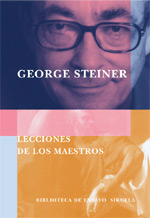
ジョージ・スタイナー
Francis George Steiner,
1929-2020
☆
フランシス・ジョージ・スタイナー[Francis George
Steiner][2]、FBA(1929年4月23日 -
2020年2月3日)[3][4]は、フランスとアメリカの文学評論家、エッセイスト、哲学者、小説家、教育者であった[5]。彼は、言語、文学、社会の
関係、そしてホロコーストの影響について幅広く執筆した[6]。2001年にガーディアン紙に掲載された記事では、スタイナーは「多言語を話す博識者」と
評されている[7]。
スタイナーを敬愛する者たちにとって、彼は「今日の文学界における偉大な知性の持ち主」である[3]。英国の小説家A. S.
バイアットは、彼を「非常に、非常に、非常に遅れて登場したルネサンス人...
現代を駆り立てる思想に対する本能を備えたヨーロッパの形而上学者」と評している。[7]
ブリティッシュ・カウンシルの元文学ディレクター、ハリエット・ハーヴェイ・ウッドは、彼を「予言的で破滅的な、素晴らしい講師」と評し、「彼は半ページ
ほどの走り書きのメモを持って現れ、それを決して参照することはなかった」と述べた。[7]
スタイナーは、ジュネーブ大学(1974年~1994年)の英語・比較文学教授、オックスフォード大学(1994年~1995年)の比較文学教授および
フェロー、ハーバード大学(2001年~2002年)の詩学教授、ケンブリッジ大学チャーチル・カレッジの特別フェローを務めた。[2]
| Francis George
Steiner,[2] FBA (April 23, 1929 – February 3, 2020)[3][4] was a French
and American literary critic, essayist, philosopher, novelist and
educator.[5] He wrote extensively about the relationship between
language, literature and society, as well as the impact of the
Holocaust.[6] A 2001 article in The Guardian described Steiner as a
"polyglot and polymath".[7] To his admirers, Steiner is "among the great minds in today's literary world".[3] English novelist A. S. Byatt described him as a "late, late, late Renaissance man ... a European metaphysician with an instinct for the driving ideas of our time".[7] Harriet Harvey-Wood, a former literature director of the British Council, described him as a "magnificent lecturer – prophetic and doom-laden [who would] turn up with half a page of scribbled notes, and never refer to them".[7] Steiner was Professor of English and Comparative Literature in the University of Geneva (1974–94), Professor of Comparative Literature and Fellow in the University of Oxford (1994–95), Professor of Poetry in Harvard University (2001–02) and an Extraordinary Fellow of Churchill College, Cambridge.[2] |
フランシス・ジョージ・スタイナー[Francis George
Steiner][2]、FBA(1929年4月23
日 -
2020年2月3日)[3][4]は、フランスとアメリカの文学評論家、エッセイスト、哲学者、小説家、教育者であった[5]。彼は、言語、文学、社会の
関係、そしてホロコーストの影響について幅広く執筆した[6]。2001年にガーディアン紙に掲載された記事では、スタイナーは「多言語を話す博識者」と
評されている[7]。 スタイナーを敬愛する者たちにとって、彼は「今日の文学界における偉大な知性の持ち主」である[3]。英国の小説家A. S. バイアットは、彼を「非常に、非常に、非常に遅れて登場したルネサンス人... 現代を駆り立てる思想に対する本能を備えたヨーロッパの形而上学者」と評している。[7] ブリティッシュ・カウンシルの元文学ディレクター、ハリエット・ハーヴェイ・ウッドは、彼を「予言的で破滅的な、素晴らしい講師」と評し、「彼は半ページ ほどの走り書きのメモを持って現れ、それを決して参照することはなかった」と述べた。[7] スタイナーは、ジュネーブ大学(1974年~1994年)の英語・比較文学教授、オックスフォード大学(1994年~1995年)の比較文学教授および フェロー、ハーバード大学(2001年~2002年)の詩学教授、ケンブリッジ大学チャーチル・カレッジの特別フェローを務めた。[2] |
| Early life Frances George Steiner was born on April 23, 1929, in Neuilly-sur-Seine, near the capital of France, Paris, to Viennese Jewish parents Else (née Franzos) and Frederick Georg Steiner.[8] He had an elder sister, Ruth Lilian, who was born in Vienna in 1922.[2] Else Steiner was a Viennese grande dame.[9] Frederick Steiner had been a senior lawyer at Austria's central bank, the Oesterreichische Nationalbank;[9] in Paris he was an investment banker.[10] Five years before Steiner's birth, his father had moved his family from Austria to France to escape the growing threat of anti-Semitism. He thought "Jews were endangered guests wherever they went, and wanted to equip his children [...] with languages to earn a living, the ability to pack a suitcase rather than a steamer trunk, and take joy in the adventure."[7] Steiner grew up with three mother tongues: German, English, and French; his mother was multilingual and would often "begin a sentence in one language and end it in another".[7] When he was six years old, his father, who believed in the importance of classical education, taught him to read the Iliad in the original Greek.[7][11][12] His mother, for whom "self-pity was nauseating",[7] helped Steiner overcome a handicap he had been born with, a withered right arm. Instead of allowing him to become left-handed, she insisted he use his right hand as an able-bodied person would.[7] Steiner's first formal education took place at the Lycée Janson-de-Sailly in the 16th arrondissement of Paris. In 1940, during World War II, Steiner's father was in New York City on an economic mission for the French government when the Germans were preparing to invade France, and he got permission for his family to travel to New York. Steiner, his mother, and his sister Lilian, left by ship from Genoa.[10] Within a month of their move, the Nazis occupied Paris, and of the many Jewish children in Steiner's class at school, he was one of only two who survived the war.[7] Again his father's insight had saved his family, and this made Steiner feel like a survivor, which profoundly influenced his later writings. "My whole life has been about death, remembering and the Holocaust."[7] Steiner became a "grateful wanderer", saying that "Trees have roots and I have legs; I owe my life to that."[7] He spent the rest of his school years at the Lycée Français de New York in Manhattan, and became a United States citizen in 1944.[4] After high school, Steiner went to the University of Chicago, where he studied literature as well as mathematics and physics, and obtained a BA degree in 1948. This was followed by an MA degree from Harvard University in 1950. He then attended Balliol College, Oxford, on a Rhodes Scholarship.[4] |
幼少期 フランシス・ジョージ・スタイナーは、1929年4月23日、フランスの首都パリ近郊のヌイイ・シュル・セーヌで、ウィーン出身のユダヤ人であるエルゼ (旧姓フランゾス)とフレデリック・ジョージ・スタイナーの間に生まれた。[8] 彼には、1922年にウィーンで生まれた姉、ルース・リリアンがいた。[2] エルゼ・スタイナーはウィーンの貴婦人であった。[9] フレデリック・スタイナーは、オーストリア中央銀行であるオーストリア国立銀行の上級弁護士であった。[9] パリでは、投資銀行家であった。[10] スタイナーが生まれる5年前、父親は反ユダヤ主義の脅威の高まりから逃れるため、家族をオーストリアからフランスに移住させていた。彼は「ユダヤ人はどこ へ行っても危険にさらされている」と考え、子供たちに「生計を立てるための言語能力、トランクではなくスーツケースを詰める能力、そして冒険を楽しむ能 力」を身につけさせたいと願っていた。[7] スタイナーは、ドイツ語、英語、フランス語の 3 つの母国語で育った。母親は多言語を話し、「ある言語で文を始め、別の言語で文を終える」ことがよくあった。[7] 6歳のとき、古典教育の重要性を信じていた父親は、ギリシャ語の原文で『イリアス』を読むことを彼に教えた。[7][11][12] 「自己憐憫は嫌悪感を抱かせる」[7] という母親は、スタイナーが生まれつきの障害である右腕の萎縮を克服するのを助けた。彼が左利きになることを許す代わりに、彼女は、健常者と同じように右 腕を使うよう彼に強く求めた。[7] スタイナーの最初の正式な教育は、パリ16区にあるジャンソン・ド・セリー高校で行われた。1940年、第二次世界大戦中、ドイツがフランス侵攻の準備を 進めていた頃、スタイナーの父親はフランス政府の経済使節としてニューヨークに滞在しており、彼は家族をニューヨークに呼び寄せる許可を得た。スタイナー は、母親と妹のリリアンとともに、ジェノヴァから船で渡った[10]。移住から 1 ヶ月も経たないうちに、ナチスはパリを占領し、スタイナーの学校のクラスにいた多くのユダヤ人の子供たちのうち、戦争を生き延びたのは 2 人だけだった[7]。再び、父親の洞察力が家族を救ったことで、スタイナーは自分が生存者であると感じ、それは彼の後の著作に深い影響を与えた。「私の人 生は、死と記憶、そしてホロコーストについてだった」[7]。スタイナーは「感謝の放浪者」となり、「木には根があり、私には足がある。そのおかげで私は 生き延びた」と語った[7]。彼は残りの学生時代をマンハッタンのニューヨーク・フレンチ・リセで過ごし、1944年に米国市民権を取得した。[4] 高校卒業後、スタイナーはシカゴ大学に進学し、文学、数学、物理学を学び、1948年に学士号を取得した。その後、1950年にハーバード大学で修士号を 取得。その後、ローズ奨学金を得て、オックスフォード大学のベリオール・カレッジに留学した。[4] |
| Career From 1956 to 1958, Steiner was a scholar at the Institute for Advanced Study in Princeton, New Jersey.[8] He also held a Fulbright professorship in Innsbruck, Austria, from 1958 to 1959.[8] In 1959, he was appointed Gauss Lecturer at Princeton, where he lectured for another two years.[8] He then became a founding fellow of Churchill College, Cambridge in 1961. Steiner was initially not well received at Cambridge by the English faculty.[13] Some disapproved of this charismatic "firebrand with a foreign accent"[7] and questioned the relevance of the Holocaust he constantly referred to in his lectures. Bryan Cheyette, professor of 20th-century literature at the University of Southampton said that at the time, "Britain [...] didn't think it had a relationship to the Holocaust; its mythology of the war was rooted in the Blitz, Dunkirk, the Battle of Britain."[7] While Steiner received a professorial salary, he was never made a full professor at Cambridge with the right to examine. He had the option of leaving for professorships in the United States, but Steiner's father objected, saying that Hitler, who said no one bearing their name would be left in Europe, would then have won. Steiner remained in England because "I'd do anything rather than face such contempt from my father."[7] He was elected an Extraordinary Fellow of Churchill College in 1969.[14] After several years as a freelance writer and occasional lecturer, Steiner accepted the post of Professor of English and Comparative Literature at the University of Geneva in 1974; he held this post for 20 years, teaching in four languages.[8] He lived by Goethe's maxim that "no monoglot truly knows his own language."[7] He became professor emeritus in the University of Geneva upon his retirement in 1994 and an Honorary Fellow of Balliol College, Oxford, in 1995. He also held the positions of the first Lord Weidenfeld Professor of Comparative European Literature and Fellow of St Anne's College, Oxford, from 1994 to 1995,[15] and Norton Professor of Poetry at Harvard University from 2001 to 2002.[16] Steiner was called "an intelligent and intellectual critic and essayist."[3] He was active on undergraduate publications while at the University of Chicago and later became a regular contributor of reviews and articles to many journals and newspapers including The Times Literary Supplement and The Guardian. He wrote for The New Yorker for over thirty years, contributing over two hundred reviews.[17] While Steiner generally took things very seriously, he also revealed an unexpected deadpan humor: when he was once asked if he had ever read anything trivial as a child, he replied, Moby-Dick.[7] |
経歴 1956年から1958年まで、スタイナーはニュージャージー州プリンストンの高等研究所の学者であった[8]。また、1958年から1959年まで、 オーストリアのインスブルックでフルブライト教授を務めた[8]。1959年、プリンストン大学のガウス講師に任命され、さらに2年間講義を行った。その 後、1961年にケンブリッジ大学チャーチル・カレッジの創設フェローとなった。スタイナーは当初、ケンブリッジの英語学部からあまり歓迎されなかった。 カリスマ的な「外国訛りの過激派」を嫌う者もおり、彼が講義で絶えず言及するホロコーストの関連性について疑問を呈する者もいた。サウサンプトン大学の 20 世紀文学教授であるブライアン・チェイエットは、当時「英国は、自国とホロコーストには何の関係もないと考えていた。英国の戦争神話は、ブリッツ、ダンケ ルク、英国戦に根ざしていた」と述べている[7]。スタイナーは教授の給与は受け取っていたが、ケンブリッジ大学では試験実施権を持つ正教授には決してな らなかった。彼は米国で教授職に就く選択肢もあったが、スタイナーの父親は、その名を持つ者をヨーロッパから一掃すると宣言したヒトラーが勝利することに なると反対した。スタイナーは「父親のそのような軽蔑に直面するくらいなら、どんなことでもする」という理由で英国に残った[7]。1969年にチャーチ ル・カレッジの特別フェローに選出された。[14] フリーランスの作家や臨時講師として数年間過ごした後、スタイナーは1974年にジュネーブ大学の英語・比較文学教授の職を受け入れた。彼はこの職を20 年間務め、4つの言語で教鞭をとった。[8] 彼は、ゲーテの「単一言語話者は自分の言語を真に理解することはできない」という格律を信条として生きていた。[7] 1994年に退職すると、ジュネーブ大学の名誉教授となり、1995年にはオックスフォード大学ベリオール・カレッジの名誉フェローとなった。また、 1994年から1995年まで、オックスフォード大学セント・アンズ・カレッジの初代ワイデンフェルド比較ヨーロッパ文学教授およびフェロー[15]、 2001年から2002年までハーバード大学のノートン詩学教授を務めた。[16] スタイナーは「知性にあふれた批評家、エッセイスト」と呼ばれた[3]。シカゴ大学在学中は学部生向けの出版物に積極的に寄稿し、その後『タイムズ・リテ ラリー・サプリメント』や『ガーディアン』など、多くの雑誌や新聞に定期的に書評や記事を寄稿した。30年以上にわたり『ニューヨーカー』誌に寄稿し、 200本以上の書評を執筆した。[17] スタイナーは概して物事を非常に真剣に受け止める人物だったが、予想外の無表情なユーモアも披露したことがある。子供の頃、つまらない本を読んだことがあ るかと尋ねられたとき、彼は「白鯨」と答えたのである。[7] |
| Views Steiner was regarded as a polymath and is often credited with having recast the role of the critic by having explored art and thought unbounded by national frontiers or academic disciplines. He advocated generalisation over specialisation, and insisted that the notion of being literate must encompass knowledge of both arts and sciences. Steiner believed that nationalism is too inherently violent to satisfy the moral prerogative of Judaism, having said "that because of what we are, there are things we can't do."[7] Among Steiner's non-traditional views, in his autobiography titled Errata (1997), Steiner related his sympathetic stance towards the use of brothels since his college years at the University of Chicago. As Steiner stated, "My virginity offended Alfie (his college room-mate). He found it ostentatious and vaguely corrupt in a nineteen-year-old... He sniffed the fear in me with disdain. And marched me off to Cicero, Illinois, a town justly ill famed but, by virtue of its name, reassuring to me. There he organized, with casual authority, an initiation as thorough as it was gentle. It is this unlikely gentleness, the caring under circumstances so outwardly crass, that blesses me still."[18] Central to Steiner's thinking, he stated, "is my astonishment, naïve as it seems to people, that you can use human speech both to love, to build, to forgive, and also to torture, to hate, to destroy and to annihilate."[17] Steiner received criticism and support[19][20] for his views that racism is inherent in everyone and that tolerance is only skin deep. He is reported to have said: "It's very easy to sit here, in this room, and say 'racism is horrible'. But ask me the same thing if a Jamaican family moved next door with six children and they play reggae and rock music all day. Or if an estate agent comes to my house and tells me that because a Jamaican family has moved next door the value of my property has fallen through the floor. Ask me then!"[19] |
見解 スタイナーは博識者として知られ、国境や学問分野に縛られない芸術や思想を探求することで、批評家の役割を再構築したとよく評価されている。彼は専門化よ りも一般化を提唱し、教養とは芸術と科学の両方の知識を含むべきだと主張した。スタイナーは、ナショナリズムは本質的に暴力的であり、ユダヤ教の道徳的権 利を満足させるには不適切であると信じており、「我々が我々である以上、できないことがある」と述べた[7]。 スタイナーの型破りな見解のうち、自伝『Errata』(1997年)の中で、スタイナーはシカゴ大学在学中から売春宿の利用に理解を示していたことを述 べている。スタイナーは「私の童貞は、アルフィー(大学のルームメイト)を怒らせた。彼は、19歳の私が童貞であることに、見せびらかしで、どこか堕落し ていると感じたのだ」と述べている。彼は軽蔑の眼差しで、私の恐怖を嗅ぎ取った。そして、悪名高いイリノイ州シセロという町へ、私を連れて行った。その町 の名前は、私にとって安心できるものだった。そこで彼は、さりげない威厳をもって、徹底的でありながらも優しい、ある種の「入門式」を企画した。この、一 見無骨に見える状況下での思いやり、このありそうもない優しさが、今でも私を幸せにしてくれているのだ。」[18] スタイナーの考えの中心は、「人々に素朴に見えるかもしれないが、人間の言葉を使って愛し、築き、許すことも、また拷問し、憎しみ、破壊し、滅ぼすこともできるという、私の驚きである」と彼は述べている。 スタイナーは、人種主義は誰にでも内在しており、寛容は表面的なものに過ぎないという彼の見解について、批判と支持の両方を受けた。彼はこう言ったと伝え られている。「この部屋に座って『人種主義はひどい』と言うのはとても簡単だ。しかし、6人の子供を持つジャマイカ人の家族が隣に引っ越してきて、一日中 レゲエやロック音楽を流しているとしたら、同じことを私に聞いてみてほしい。あるいは、不動産業者が私の家にやってきて、ジャマイカ人の家族が隣に引っ越 してきたために私の不動産の価値が大幅に下落したと告げたとしたら、そのときに私に聞いてみてほしい!」[19] |
| Works Steiner's literary career spanned half a century. He published original essays and books that address the anomalies of contemporary Western culture, issues of language and its "debasement" in the post-Holocaust age.[7][21] His field was primarily comparative literature, and his work as a critic tended toward exploring cultural and philosophical issues, particularly dealing with translation and the nature of language and literature.[22] Steiner's first published book was Tolstoy or Dostoevsky: An Essay in Contrast (1960), which was a study of the different ideas and ideologies of the Russian writers Leo Tolstoy and Fyodor Dostoevsky. The Death of Tragedy (1961) originated as his doctoral thesis at the University of Oxford and examined literature from the ancient Greeks to the mid-20th century. His best-known book, After Babel (1975), was an early and influential contribution to the field of translation studies. It was adapted for television as The Tongues of Men (1977),[23] and was the inspiration behind the creation in 1983 of the English avant-rock group News from Babel.[24] Works of literary fiction by Steiner include four short story collections, Anno Domini: Three Stories (1964), Proofs and Three Parables (1992), The Deeps of the Sea (1996), and A cinq heures de l'après-midi (2008); and his controversial[25] novella, The Portage to San Cristobal of A.H. (1981). Portage to San Cristobal, in which Jewish Nazi hunters find Adolf Hitler (the "A.H." of the novella's title) alive in the Amazon jungle thirty years after the end of World War II, explored ideas about the origins of European anti-semitism first expounded by Steiner in his critical work In Bluebeard's Castle (1971). Steiner has suggested that Nazism was Europe's revenge on the Jews for inventing conscience.[7] Cheyette sees Steiner's fiction as "an exploratory space where he can think against himself." It "contrasts its humility and openness with his increasingly closed and orthodox critical work." Central to it is the survivor's "terrible, masochistic envy about not being there – having missed the rendezvous with hell".[7] No Passion Spent (1996) is a collection of essays on topics as diverse as Kierkegaard, Homer in translation, Biblical texts, and Freud's dream theory. Errata: An Examined Life (1997) is a semi-autobiography,[3] and Grammars of Creation (2001), based on Steiner's 1990 Gifford Lectures delivered at the University of Glasgow, explores a range of subjects from cosmology to poetry.[26] Steiner's last book, A Long Saturday: Conversations, was written with Laure Adler; it was published in French in 2014 and in English in 2017.[8] |
作品 スタイナーの文学活動は半世紀にわたった。彼は、現代西洋文化の異常性、言語の問題、そしてホロコースト後の時代における言語の「堕落」について論じた独 自のエッセイや書籍を出版した[7][21]。彼の専門分野は主に比較文学であり、批評家としての彼の仕事は、文化や哲学の問題、特に翻訳や言語と文学の 本質を探求する傾向があった[22]。 スタイナーが最初に出版した著書は『トルストイかドストエフスキーか:対照論』(1960年)であり、ロシアの作家レオ・トルストイとフョードル・ドスト エフスキーの異なる思想やイデオロギーについて考察したものである。『悲劇の死』(1961年)は、オックスフォード大学での博士論文を起源とし、古代ギ リシャから20世紀半ばまでの文学を考察したものである。彼の最も有名な著書『バベルの後に』(1975年)は、翻訳学の分野における初期の影響力のある 貢献であった。この本はテレビドラマ『The Tongues of Men』(1977年)[23] に脚色され、1983年に英国のアヴァンギャルド・ロック・グループ「News from Babel」の結成のきっかけとなった[24]。 スタイナーの文学作品には、4冊の短編集『Anno Domini: Three Stories』(1964年)、『Proofs and Three Parables』(1992年)、『The Deeps of the Sea』(1996年)、『A cinq heures de l'après-midi』(2008年)、そして物議を醸した[25] 中編小説『The Portage to San Cristobal of A.H. スタイナーは、ナチス狩りを行うユダヤ人たちが、第二次世界大戦終結から 30 年後にアマゾンのジャングルでアドルフ・ヒトラー(小説のタイトルにある「A.H.」)が生きているのを見つけるという『サン・クリストバルへの旅』で、 ヨーロッパの反ユダヤ主義の起源について考察している。この考えは、スタイナーが批評作品『青ひげの城』(1971 年)で最初に論じたものである。スタイナーは、ナチズムは良心を発明したユダヤ人に対するヨーロッパの復讐であったと示唆している[7]。チェイエット は、スタイナーの小説を「彼が自分自身に反論できる探求の場」と捉えている。それは「彼の謙虚さと開放性を、ますます閉鎖的で正統的な批評作品と対比させ ている」のだ。その中心にあるのは、生存者たちの「地獄との約束の場に立ち会えなかったことに対する、ひどく自虐的な羨望」である。[7] 『情熱の消耗』(1996年)は、キルケゴール、ホメロスの翻訳、聖書のテキスト、フロイトの夢理論など、さまざまなトピックに関するエッセイ集である。 『誤謬:吟味された人生』(1997年)は半自伝的著作であり[3]、『創造の文法』(2001年)は、スタイナーが1990年にグラスゴー大学で行った ギフォード講義に基づいており、宇宙論から詩まで幅広い主題を探求している。[26] スタイナーの最後の著書『長い土曜日:対話』は、ローレ・アドラーと共同執筆したもので、2014年にフランス語で、2017年に英語で出版された。 [8] |
| Personal life After his doctoral thesis at Oxford, a draft of The Death of Tragedy (later published by Faber and Faber), was rejected, Steiner took time off from his studies to teach English at Williams College and to work as leader writer for the London-based weekly publication The Economist between 1952 and 1956. It was during this time that he met Zara Shakow, a New Yorker of Lithuanian[7] descent. She had also studied at Harvard and they met in London at the suggestion of their former professors. "The professors had had a bet ... that we would get married if we ever met."[27] They married in 1955, the year he received his DPhil from Oxford University.[7] They had a son, David Steiner (who served as New York State's Commissioner of Education from 2009 to 2011) and a daughter, Deborah Steiner (Professor of Classics at Columbia University). He last lived in Cambridge, England.[2] He died at home on February 3, 2020, at the age of 90, and Zara Steiner died from pneumonia ten days later.[1][8] |
個人的な生活 オックスフォード大学で博士論文を執筆した後、スタイナーは『悲劇の死』(後にファーバー・アンド・ファーバー社から出版)の草稿が却下されたため、 1952年から1956年まで、ウィリアムズ大学で英語を教え、ロンドンを拠点とする週刊誌『エコノミスト』の論説委員として働くために、学業を休んだ。 この間に、リトアニア系のニューヨーカー、ザラ・シャコウと出会った。彼女もハーバード大学で学んでおり、元教授の提案でロンドンで出会った。「教授たち は、もし二人が出会ったら結婚するだろうという賭けをしていた」[27]。二人は1955年、彼がオックスフォード大学で博士号を取得した年に結婚した [7]。彼らには、息子であるデビッド・スタイナー(2009年から2011年までニューヨーク州教育長官を務めた)と、娘であるデボラ・スタイナー(コ ロンビア大学古典学教授)がいた。彼は最後にイギリスのケンブリッジに住んでいた。彼は2020年2月3日、90歳で自宅で亡くなり、ザラ・スタイナーは 10日後に肺炎で亡くなった。[8] |
| Awards and honors George Steiner received many honors, including: A Rhodes Scholarship (1950)[4] A Guggenheim Fellowship (1970/1971)[14] Chevalier de la Légion d'Honneur by the French Government (1984)[26] The Morton Dauwen Zabel Prize from The American Academy of Arts and Letters (1989) The King Albert Medal by the Belgian Academy Council of Applied Sciences[26] An honorary fellow of Balliol College, Oxford (1995)[28] The Truman Capote Lifetime Achievement Award by Stanford University (1998)[21] The Prince of Asturias Award for Communication and Humanities (2001)[29] Fellowship of the British Academy (1998)[3] Honorary Fellow of the Royal Academy of Arts[28] Honorary Doctorate of Literature degrees from: University of East Anglia (1976) University of Leuven (1980) Mount Holyoke College (1983) Bristol University (1989) University of Glasgow (1990) University of Liège (1990) University of Ulster (1993) Durham University (1995) University of Salamanca (2002) Queen Mary University of London (2006) Alma Mater Studiorum – Università di Bologna (2006) Honoris Causa – Faculty of Letters – University of Lisbon (2009) He has also won numerous awards for his fiction and poetry, including: Remembrance Award (1974) for Language and Silence: Essays 1958–1966. PEN/Macmillan Silver Pen Award (1992) for Proofs and Three Parables.[3] PEN/Macmillan Fiction Prize (1993) for Proofs and Three Parables.[3] JQ Wingate Prize for Non-Fiction (joint winner with Louise Kehoe and Silvia Rodgers) (1997) for No Passion Spent. |
受賞歴と栄誉 ジョージ・スタイナーは、以下のような多くの栄誉を受けた。 ローズ奨学金(1950年)[4] グッゲンハイム・フェローシップ(1970年/1971年)[14] フランス政府によるレジオンドヌール勲章シュヴァリエ(1984年) [26] アメリカ芸術文学アカデミーよりモートン・ドーウェン・ザベル賞(1989年) ベルギー応用科学アカデミー評議会よりアルベール王メダル[26] オックスフォード大学ベリオール・カレッジ名誉フェロー(1995年)[28] スタンフォード大学よりトルーマン・カポーティ生涯功労賞(1998年)[21] アストゥリアス皇太子賞(コミュニケーション・人文科学部門)(2001年)[29] 英国学士院フェロー(1998年)[3] 王立芸術アカデミー名誉フェロー[28] 名誉文学博士号: イースト・アングリア大学(1976年) ルーヴェン大学(1976年) (1980) マウント・ホリヨーク大学 (1983) ブリストル大学 (1989) グラスゴー大学 (1990) リエージュ大学 (1990) アルスター大学 (1993) ダラム大学 (1995) サラマンカ大学 (2002) ロンドン大学クイーン・メアリー校 (2006) アルマ・マテル・ストゥディオルム – ボローニャ大学 (2006) 名誉博士号 – リスボン大学文学部 (2009) 彼はまた、小説と詩作において数多くの賞を受賞している。その中には以下が含まれる: 『言語と沈黙:エッセイ集 1958–1966』に対してレメンブランス賞 (1974)。 PEN/マクミラン・シルバーペン賞(1992年)『証明と三つの寓話』に対して。 PEN/マクミラン小説賞(1993年)『証明と三つの寓話』に対して。 JQ ウィンゲートノンフィクション賞(ルイーズ・キーホー、シルビア・ロジャースと共同受賞)(1997年)『燃え尽きた情熱』に対して。 |
| George Steiner bibliography |
|
| References 01. Schudel, Matt (February 16, 2020). "Zara Steiner, distinguished scholar of diplomatic history, dies at 91". The Washington Post. Retrieved February 16, 2020. "The Papers of George Steiner". Archivesearch. Retrieved October 6, 2021. [Steiner] has not used the name Francis since his undergraduate days. Hahn, Daniel. "George Steiner". Contemporary Writers in the UK. Archived from the original on October 1, 2007. Retrieved March 26, 2008. Lehmann-Haupt, Christopher; Grimes, William (February 3, 2020). "George Steiner, Prodigious Literary Critic, Dies at 90". The New York Times. Retrieved February 4, 2020. Murphy, Rex. "ERRATA: An Examined Life by George Steiner". Canadian Broadcasting Corporation, January 3, 1998. Archived from the original on January 24, 2008. Retrieved March 26, 2008. Cheyette, Bryan. "Between Repulsion and Attraction: George Steiner's Post-Holocaust Fiction". Jewish Social Studies. Archived from the original on February 18, 2020. Retrieved March 26, 2008. Jaggi, Maya (March 17, 2001). "George and his dragons". The Guardian. London. Retrieved March 27, 2008. Herman, David. "Steiner, (Francis) George (1929–2020), writer and literary critic". Oxford Dictionary of National Biography (online ed.). Oxford University Press. doi:10.1093/odnb/9780198614128.013.90000381704. (Subscription, Wikipedia Library access or UK public library membership required.) Steiner, George. "Büchner lives on". The Times Literary Supplement, December 13, 2006. London. Retrieved March 27, 2008.[dead link] 10. Edward Hughes, Ben Hutchinson, "George Steiner" in Biographical Memoirs of Fellows of the British Academy (British Academy, 2022), pp. 392–410 Baker, Kenneth (April 12, 1998). "Steiner's Memoir a Sketchy Mix of Reminiscence and Complaint". San Francisco Chronicle. Retrieved July 26, 2012. "Errata: An Examined Life". University of Chicago Magazine. Retrieved March 27, 2008. "Letters to the Editor: George Steiner, Maugham in China, George Sand, etc". The Times Literary Supplement. March 27, 2020. ISSN 0307-661X. Retrieved March 29, 2020. Homberger, Eric (February 5, 2020). "George Steiner obituary". The Guardian. Retrieved February 6, 2020. "The Weidenfeld Chair in Comparative European Literature". St Anne's College, Oxford. Archived from the original on December 30, 2013. Retrieved December 28, 2013. "George Steiner named Norton Professor". The Harvard Gazette. March 15, 2001. Retrieved February 6, 2020. "Grammars of Creation" (PDF). National Adult Literacy Database. Archived from the original (PDF) on April 13, 2007. Retrieved March 26, 2008. Steiner, George (1997). Errata, Yale University Press, 1997, pp. 43–44. Simpson, Aislinn; Salter, Jessica (August 11, 2008). "Cambridge academic says he would not tolerate Jamaican neighbours". The Daily Telegraph. London. 20. Johns, Lindsay (September 3, 2008). "Out of touch, but not a racist". The Guardian. London. "Literary Critic George Steiner wins Truman Capote Award". Stanford Online Report. Archived from the original on August 22, 2007. Retrieved March 26, 2008. Steiner, George (2013). After Babel: Aspects of Language and Translation. Open Road Media. ISBN 978-1-4804-1185-2. OCLC 892798474. Maia, Rita Bueno; Pinto, Marta Pacheco; Pinto, Sara Ramos (April 1, 2015). How Peripheral is the Periphery? Translating Portugal Back and Forth: Essays in Honour of João Ferreira Duarte. Cambridge Scholars Publishing. pp. 244–245. ISBN 978-1-4438-8304-7. "November News 2005". Paris Transatlantic. November 2005. Retrieved February 4, 2020. Rosenbaum, Ron (March 17, 2002). "Mirroring Evil? No, Mirroring Art Theory". The New York Observer. Retrieved February 28, 2008. "The Gifford Lectures: George Steiner". www.giffordlectures.org. August 18, 2014. Retrieved February 4, 2020. Cowley, Jason (September 22, 1997). "A traveller in the realm of the mind". The Times. Archived from the original on August 11, 2007. Retrieved March 27, 2008. "Professor George Steiner, 23 April 1929 – 3 February 2020". Churchill College Cambridge. February 4, 2020. Archived from the original on February 4, 2020. Retrieved February 6, 2020. 29 "George Steiner". Prince of Asturias Awards. Archived from the original on October 11, 2007. Retrieved April 8, 2008. |
参考文献 01. シュデル、マット (2020年2月16日). 「外交史の著名な学者、ザラ・スタイナーが91歳で死去」. ワシントン・ポスト. 2020年2月16日取得. 「ジョージ・スタイナーの論文」. アーカイブサーチ. 2021年10月6日取得. [スタイナー] は、大学時代以来、フランシスという名前を使用していない。 ハーン、ダニエル。「ジョージ・スタイナー」。英国の現代作家。2007年10月1日にオリジナルからアーカイブ。2008年3月26日取得。 レーマン・ハウプト、クリストファー;グライムズ、ウィリアム(2020年2月3日)。「驚異的な文学評論家、ジョージ・スタイナー、90歳で死去」。ニューヨーク・タイムズ。2020年2月4日取得。 マーフィー、レックス。「正誤表:ジョージ・スタイナーによる『吟味された人生』」。カナダ放送協会、1998年1月3日。2008年1月24日にオリジナルからアーカイブ。2008年3月26日取得。 チェイエット、ブライアン。「嫌悪と魅力の間:ジョージ・スタイナーのホロコースト後の小説」。ユダヤ社会科学。2020年2月18日にオリジナルからアーカイブ。2008年3月26日取得。 ジャギ、マヤ(2001年3月17日)。「ジョージと彼のドラゴンたち」。ガーディアン。ロンドン。2008年3月27日取得。 ハーマン、デイヴィッド。「スタイナー、(フランシス) ジョージ (1929–2020)、作家、文学評論家」。オックスフォード国民伝記大辞典 (オンライン版)。オックスフォード大学出版局。doi:10.1093/odnb/9780198614128.013.90000381704。(購 読、ウィキペディア図書館へのアクセス、または英国の公共図書館の会員資格が必要)。 スタイナー、ジョージ。「ビュヒナーは生き続ける」。タイムズ文学別冊、2006年12月13日。ロンドン。2008年3月27日取得。[リンク切れ] 10. エドワード・ヒューズ、ベン・ハッチンソン、「ジョージ・スタイナー」『英国アカデミーフェロー伝記回顧録』(英国アカデミー、2022年)、392-410ページ ベイカー、ケネス(1998年4月12日)。「スタイナーの回顧録は、追憶と不満が雑多に混ざり合ったものだ」。サンフランシスコ・クロニクル。2012年7月26日取得。 「正誤表:吟味された人生」。シカゴ大学マガジン。2008年3月27日取得。 「編集者への手紙:ジョージ・スタイナー、中国におけるモーガム、ジョージ・サンドなど」。タイムズ文学別冊。2020年3月27日。ISSN 0307-661X。2020年3月29日取得。 ホムバーガー、エリック(2020年2月5日)。「ジョージ・スタイナーの死亡記事」。ガーディアン。2020年2月6日取得。 「比較ヨーロッパ文学のワイデンフェルド教授職」。オックスフォード大学セント・アンズ・カレッジ。2013年12月30日にオリジナルからアーカイブ。2013年12月28日取得。 「ジョージ・スタイナー、ノートン教授に任命される」。ハーバード・ガゼット。2001年3月15日。2020年2月6日取得。 「創造の文法」 (PDF)。全米成人識字データベース。2007年4月13日にオリジナル (PDF) からアーカイブ。2008年3月26日取得。 スタイナー、ジョージ (1997)。『エラッタ』、イェール大学出版、1997年、43-44ページ。 シンプソン、アイズリン;ソルター、ジェシカ (2008年8月11日)。「ケンブリッジの学者は、ジャマイカ人の隣人を容認しないと述べている」。デイリー・テレグラフ。ロンドン。 20. ジョンズ、リンジー(2008年9月3日)。「現実離れしているが、人種差別主義者ではない」。ガーディアン。ロンドン。 「文学評論家ジョージ・スタイナーがトルーマン・カポーティ賞を受賞」。スタンフォード・オンライン・レポート。2007年8月22日にオリジナルからアーカイブ。2008年3月26日取得。 スタイナー、ジョージ (2013). 『バベルの後に:言語と翻訳の諸相』. オープン・ロード・メディア. ISBN 978-1-4804-1185-2. OCLC 892798474. マイア、リタ・ブエノ; ピント、マルタ・パチェコ; ピント、サラ・ラモス (2015年4月1日). 周辺はどれほど周辺なのか?ポルトガルを翻訳する:ジョアン・フェレイラ・ドゥアルテに捧げるエッセイ。ケンブリッジ・スカラーズ出版。244-245 ページ。ISBN 978-1-4438-8304-7。 「2005年11月のニュース」。パリ・トランスアトランティック。2005年11月。2020年2月4日取得。 ローゼンバウム、ロン(2002年3月17日)。「悪を映し出す?いいえ、芸術理論を映し出す」。ニューヨーク・オブザーバー。2008年2月28日取得。 「ギフォード・レクチャー:ジョージ・スタイナー」。www.giffordlectures.org。2014年8月18日。2020年2月4日取得。 カウリー、ジェイソン(1997年9月22日)。「心の領域における旅人」。タイムズ紙。2007年8月11日にオリジナルからアーカイブ。2008年3月27日取得。 「ジョージ・スタイナー教授、1929年4月23日~2020年2月3日」。ケンブリッジ大学チャーチル・カレッジ。2020年2月4日。2020年2月4日にオリジナルからアーカイブ。2020年2月6日に取得。 29 「ジョージ・スタイナー」。アストゥリアス皇太子賞。2007年10月11日にオリジナルからアーカイブ。2008年4月8日に取得。 |
| Sources Averil Condren, Papers of George Steiner, Churchill Archives Centre, 2001 The Harvard Gazette (27.09.01) |
出典 アヴェリル・コンドレン、ジョージ・スタイナーの論文、チャーチル・アーカイブズ・センター、2001年 ハーバード・ガゼット(2001年9月27日) |
| Further reading Chatterley, Catherine D. (2011). Disenchantment : George Steiner and the meaning of western civilization after Auschwitz. Syracuse, NY: Syracuse University Press. ISBN 9780815609605. Scott, Nathan A.; Sharp, Ronald A., eds. (1994). Reading George Steiner. Baltimore: Johns Hopkins University Press. ISBN 0801848881. |
追加文献(さらに読む) チャタレー、キャサリン・D. (2011)。『幻滅:ジョージ・スタイナーとアウシュヴィッツ後の西洋文明の意味』。ニューヨーク州シラキュース:シラキュース大学出版。ISBN 9780815609605。 スコット、ネイサン A.、シャープ、ロナルド A. 編 (1994). 『ジョージ・スタイナーを読む』 ボルチモア:ジョンズ・ホプキンズ大学出版局。ISBN 0801848881。 |
| https://en.wikipedia.org/wiki/George_Steiner |
リ ンク
文 献
そ の他の情報
CC
Copyleft,
CC, Mitzub'ixi Quq Chi'j, 1996-2099