グアラニー
Guaraní people
A
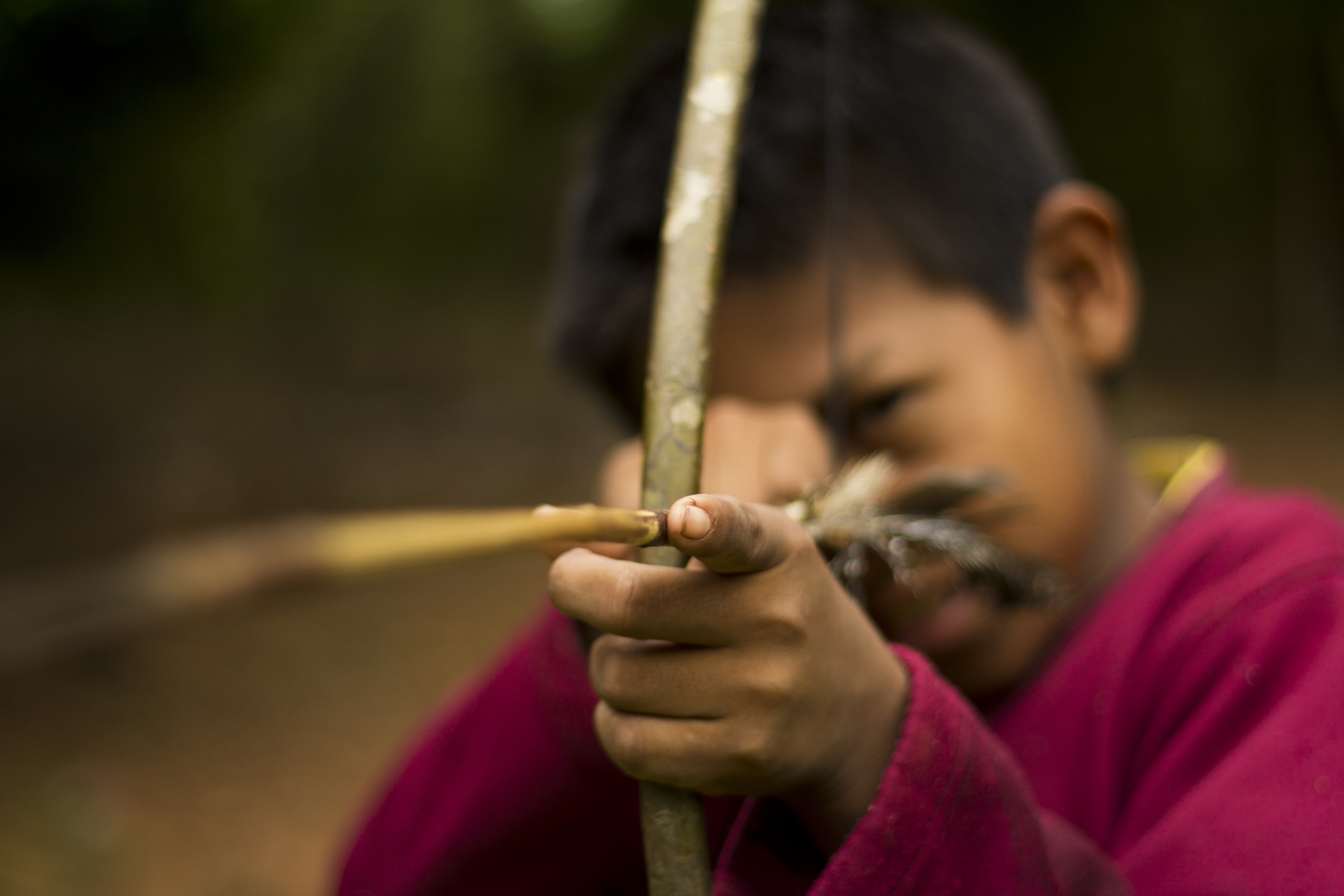
child from the Pai Tavytera Indian tribe of Paraguay
☆
グアラニ族(Guarani)は南米の文化的に関連する先住民の集団である。彼らはグアラニ語を使用する点で、関連するトゥピ族と区別される。グアラニ族の伝統的な分布域
は、現在のパラグアイ(パラナ川とパラグアイ川下流域の間)、アルゼンチンのミシオネス州、ブラジル南部(かつてはリオデジャネイロまで東に広がってい
た)、ウルグアイとボリビアの一部である。[2]
ヨーロッパ人による植民地化とそれに伴うメスティーソの台頭により、この地域における人口的優位性は低下したものの、現代においてもパラグアイやアルゼン
チン、ボリビアの一部地域にグアラニー族は居住している。特に注目すべきは、グアラニ語が今も伝統的なグアラニの故郷で広く話されており、パラグアイの二
つの公用語の一つであることだ。もう一つはスペイン語である。[3]
パラグアイの人々は、社会的な交流を通じて非公式に、また公立学校で公式にグアラニ語を学ぶ。現代スペイン語では、グアラニは「パラグアイ国民」を指すこ
ともある。これはフランス人が時に「ガリア人」と呼ばれるのと同じ意味合いである。
| The Guarani are a
group of culturally-related Indigenous peoples of South America. They
are distinguished from the related Tupi by their use of the Guarani
language. The traditional range of the Guarani people is in what is now
Paraguay between the Paraná River and lower Paraguay River, the
Misiones Province of Argentina, southern Brazil once as far east as Rio
de Janeiro, and parts of Uruguay and Bolivia.[2] Although their demographic dominance of the region has been reduced by European colonisation and the commensurate rise of mestizos, there are contemporary Guarani populations in Paraguay and parts of Argentina and Bolivia. Most notably, the Guarani language, still widely spoken across traditional Guarani homelands, is one of the two official languages in Paraguay, the other one being Spanish.[3] The Paraguayan population learns Guarani both informally from social interaction and formally in public schools. In modern Spanish, Guaraní also refers to any Paraguayan national in the same way that the French are sometimes called Gauls. |
グアラニ族は南米の文化的に関連する先住民の集団である。彼らはグアラ
ニ語を使用する点で、関連するトゥピ族と区別される。グアラニ族の伝統的な分布域は、現在のパラグアイ(パラナ川とパラグアイ川下流域の間)、アルゼンチ
ンのミシオネス州、ブラジル南部(かつてはリオデジャネイロまで東に広がっていた)、ウルグアイとボリビアの一部である。[2] ヨーロッパ人による植民地化とそれに伴うメスティーソの台頭により、この地域における人口的優位性は低下したものの、現代においてもパラグアイやアルゼン チン、ボリビアの一部地域にグアラニー族は居住している。特に注目すべきは、グアラニ語が今も伝統的なグアラニの故郷で広く話されており、パラグアイの二 つの公用語の一つであることだ。もう一つはスペイン語である。[3] パラグアイの人々は、社会的な交流を通じて非公式に、また公立学校で公式にグアラニ語を学ぶ。現代スペイン語では、グアラニは「パラグアイ国民」を指すこ ともある。これはフランス人が時に「ガリア人」と呼ばれるのと同じ意味合いである。 |
| Name The history and meaning of the name Guaraní are subject to dispute. Before they encountered Europeans, the Guarani referred to themselves simply as Abá, meaning "men" or "people".[4] The term Guarani was originally applied by early Jesuit missionaries to refer to natives who had accepted conversion to the Christian religion; Cayua or Caingua (ka'aguygua) was used to refer to those who had refused it. Cayua is roughly translated as "the ones from the jungle". While the term Cayua is sometimes still used to refer to settlements of Indigenous peoples who have not well integrated into the dominant society, the modern usage of the name Guarani is generally extended to include all people of native origin regardless of societal status. Barbara Ganson writes that the name Guaraní was given by the Spanish since it means "warrior" in the Tupi-Guaraní dialect[clarification needed] spoken there.[5] Guarinĩ is attested in 16th-century Old Tupi, by Jesuit sources, as "war, warrior, to wage war, warlord".[6] |
名称 グアラニーという名称の由来と意味については議論がある。ヨーロッパ人と接触する以前、グアラニー族は自らを単にアバと呼んでいた。これは「人間」あるい は「人々」を意味する。[4] グアラニーという呼称は、初期のイエズス会宣教師がキリスト教への改宗を受け入れた先住民を指すために用いたものである。カユア(カイングア、 ka'aguygua)は改宗を拒んだ者たちを指す言葉として用いられた。カユアは「ジャングル出身者」と大まかに訳される。カユアという用語は、支配的 な社会にうまく統合されていない先住民の集落を指すために今でも時々使われることがあるが、現代におけるグアラニという名称の使用は、一般的に社会的地位 に関係なく、先住民の血を引く全ての人々を含むように拡大されている。バーバラ・ガンソンによれば、グアラニという名称はスペイン人によって与えられた。 現地で話されていたトゥピ・グアラニ語方言[注釈が必要]において「戦士」を意味するためである[5]。グアリンィ(Guarinĩ)は16世紀の古トゥ ピ語において、イエズス会の資料により「戦争、戦士、戦争を遂行する、軍閥」として確認されている[6]。 |
| History, myth and legend Guarani ceramics. Guarani incised ceramics bowls, Museum Farroupilha, in Triunfo. Early Guarani villages often consisted of communal houses (malocas, or ocas), with each house housing several families under the leadership of a chief.[7] Communities were united by common interest and language, and tended to form tribal groups by dialect. It is estimated that the Guarani numbered some 400,000 people when they were first encountered by Europeans. At that time, they were sedentary and agricultural, subsisting largely on manioc, maize, wild game, and honey. Polygamy was practiced.[7] Cannibalism was practiced on captives.[7] Equally little is known about early Guarani society and beliefs. They practiced a form of animistic pantheism, much of which has survived in the form of folklore and numerous myths. According to the Jesuit missionary Martin Dobrizhoffer, they practiced cannibalism at one point, perhaps as a funerary ritual, but later disposed of the dead in large jars placed inverted on the ground. Guarani mythology is still widespread in rural Paraguay. Much Guarani myth and legend were compiled by the Universidad Nacional de Misiones in northern Argentina and published as Myths and Legends: A Journey around the Guarani Lands, Anthology in 1870 (translated into the English language in 1906). Guarani myth and legend can roughly be divided into the following broad categories: Cosmogonic and eschatological myths; the creation and destruction of all things as dictated by Ñamandu [es] "the true father, the first one". After him comes a pantheon of gods, chief among them Yporú who is more frequently known as Tupã. Jasy [pt] (or Jaci) is another "good" deity who rules the night while Aña [es] is a malign deity who dwells at the bottom of the Iguazu River.[8] Animistic mythology, that is animals, plants and minerals being animated and capable of becoming anthropomorphic beings or in reverse the transmuted souls of people, either born or unborn, who have become animals, plants and minerals. The course of such anthropomorphism appears dictated by the pantheon of god-like deities because of their virtues or vices. Such animistic legends include that of the Lobizón, a werewolf-type being, and the Mainumby or hummingbird who transports good spirits that are resident in flowers back to Tupá "so he can cherish them". Isondú or glowworms are the reincarnated spirits of certain people, as are the Panambi (butterflies). Ka'a Jarýi was a woman who became the sacred herb Yerba; Irupé was a woman who was turned into the giant lily because she fell in love with the moon.[9] Pombero are goblin or elf-like spirits who dwell in the forest and must be appeased. They have never been human. Principal among these is Jasy Jatere who has never been human and like all Pombero is from a different realm. His characteristics are vague and uncertain, and his powers are badly defined as is the place where he resides. He is described in one legend as a "handsome, thickly bearded, blond dwarf" who is naked and lives in tree trunks. Other versions say he loves honey, his feet are backward, and he is an "ugly, lame, old man". Most legends agree that he snatches children and "licks them", wrapping them in climbing plants or drowning them in rivers. To appease him gifts, such as honey, are left in places in the forest associated with him. Another Pombero is Kuarahy Jára who whistles like birds and is their protector. He can be your friend but is known for abducting young boys who are alone and trying to catch birds. If necessary he can take the form of a person, a tree or a hyacinth. Finally, Kurupi is a phallic mythological figure who will copulate with young women. He has scaly skin like a lizard, hypnotic eyes, and an enormous penis.[9] The Iguazu Falls, considered sacred by the Guarani, hold special significance and are the inspiration for numerous myths and legends. They reveal the sound of ancient battles at certain times, they are also the place where I-Yara—a malign Pomboro spirit—abducted Angá—a fair maiden—and hid her. The swallows that inhabit the falls to this day vainly search for her.[10] |
歴史、神話、伝説 グアラニの陶器。 グアラニの刻み陶器の鉢、トリウンフォのファルピリャ博物館所蔵。 初期のグアラニの集落は、共同住宅(マロカ、あるいはオカ)で構成されることが多かった。各住宅には数家族が住み、首長の指導下にあった。[7] 共同体は共通の利益と言語によって結束し、方言によって部族集団を形成する傾向があった。ヨーロッパ人が初めてグアラニー族と接触した当時、その人口は約 40 万人と推定されている。当時、彼らは定住し、農業を営み、主にキャッサバ、トウモロコシ、野生動物、蜂蜜を食糧としていた。 一夫多妻制が実践されていた。[7] 捕虜に対して人食いが実践されていた。[7] 初期のグアラニー社会や信仰についても、同様にほとんど知られていない。彼らは一種のアニミズム的汎神論を実践しており、その多くは民間伝承や数多くの神 話として残っている。イエズス会の宣教師マーティン・ドブリゾッファーによれば、彼らはかつて、おそらく葬式の儀礼として人食いを実践していたが、後に死 者は大きな壺に入れ、それを逆さまに地面に置いて処分するようになったという。グアラニー神話は、今でもパラグアイの農村部に広く残っている。 グアラニー族の神話や伝説の多くは、アルゼンチン北部のミシオネス国立大学によって編集され、1870年に『神話と伝説:グアラニー族の土地を巡る旅、ア ンソロジー』として出版された(1906年に英語に翻訳)。グアラニー族の神話と伝説は、大きく以下のカテゴリーに分類できる。 宇宙生成神話と終末論的神話:ニャマンドゥ[es]「真の父、最初の者」が定めた万物の創造と破壊。彼に続く神々のパンテオンでは、イポル(より広くトゥ パンとして知られる)が主神である。ジャシ[ポルトガル語](またはジャシ)は夜の支配者である「善なる」神の一柱であり、一方アニャ[スペイン語]はイ グアス川の底に住む悪意ある神である[8]。 アニミズム的神話、すなわち動物、植物、鉱物が生命を宿し、擬人化された存在となり得る、あるいは逆に、生まれた者も生まれざる者も、動物や植物、鉱物へ と転化した人間の魂であるという神話。こうした擬人化の過程は、神々のような存在たちの美徳や悪徳によって決定されるようだ。アニミズム伝説には、狼男タ イプの存在であるロビゾンや、花に宿る善霊をトゥパンへ運ぶハチドリ(マイヌンビ)の伝説が含まれる。イソンドゥ(蛍)やパナンビ(蝶)は特定の人間の転 生した霊魂である。カー・ハリーは聖なる薬草イェルバとなった女性であり、イルペは月に恋をしたために巨大なユリに変えられた女性である。[9] ポンベロは森に住む小鬼や精霊のような存在で、鎮めなければならない。彼らはかつて人間だったことはない。中でもジャシ・ハテレは人間だったことがなく、 他のポンベロ同様、異なる異界の者だ。その特徴は曖昧で不確かであり、力も居住地も不明瞭である。ある伝説では「髭の濃い金髪の小柄な男」とされ、裸で木 の幹に住むとされている。別の伝承では蜂蜜を愛し、足が後ろ向きで「醜く足の不自由な老人」ともされる。大半の伝説で共通するのは、子供をさらって「舐め 回し」、つる植物で包んだり川で溺れさせたりする点だ。彼を鎮めるため、蜂蜜などの供物が森の関連場所に置かれる。別のポンベロであるクアラヒ・ジャラは 鳥のように口笛を吹き、鳥類の守護者である。彼は友となることもあるが、一人で鳥を捕まえようとする少年を誘拐することで知られる。必要なら人格、木、ヒ ヤシンスに変身できる。最後にクルピは、若い女性と交わる男根的な神話的存在だ。トカゲのような鱗状の皮膚、催眠的な目、巨大なペニスを持つ。[9] グアラニ族にとって神聖とされるイグアスの滝は特別な意義を持ち、数多くの神話や伝説の源泉となっている。この滝は特定の時期に古代の戦いの音を響かせ、 また邪悪なポンベロの精霊イ・ヤラが美しい乙女アンガを誘拐し隠した場所でもある。今なお滝に住むツバメたちは彼女を無駄に探し続けている。[10] |
European contact A Guarani family captured by slave hunters. By Jean Baptiste Debret A Spanish expedition led by Juan Diaz de Solis was the first Spaniard to reach Rio de la Plata.[7] After his forces were defeated by natives in 1516, a surviving force led by Alejo Garcia continued inland with a Guarani band.[7] In 1537, Gonzalo de Mendoza traversed through Paraguay to about the present Brazilian frontier. On his return, he made acquaintance with the Guarani and founded the city of Asunción, later the capital of Paraguay. The first governor of the Spanish territory of Guayrá initiated a policy of intermarriage between European men and Indigenous women; the descendants of these matches characterize the Paraguayan nation today. The Laws of the Indies forbade slavery in Hispanic America. In 1542, a Guarani group rebelled against the Spanish. Aracare, chief of a Guarani group from the Jejuy River, refused to serve a Spanish expedition, which prompted the Spanish governor Alvar Nunez Cabeza de Vaca to issue an order to apprehend Aracare. Aracare was subsequently hanged by the Spanish. This prompted an unsuccessful rebellion by Tabare and Guacani against the Spanish.[7] The first two Jesuits, Father Barcena and Father Angulo, came to what is now the State of Paraná, Southern Brazil, in 1585, by land from the west. Others soon followed, and a Jesuit college was established at Asunción. In 1608, as a result of the Jesuit protest against the enslavement of the Indigenous population, King Philip III of Spain gave authority to the Jesuits to convert and colonize the tribes of Guayrá. In the early period, the name Paraguay was loosely used to designate the entire river basin, including parts of what are now Uruguay, Argentina, Bolivia, and Brazil. Exploring expeditions were accompanied by Franciscan friars. Early in the history of Asunción, Father Luis de Bolaños translated the catechism into the Guarani language and preached to Guarani people who resided in the area around the settlement. In 1588–89 St. Francis Solanus crossed the Chaco wilderness from Peru and stopped at Asunción, but gave no attention to the Guarani. His departure left the Jesuits alone with their missionary work, and to defend the natives against slave dealers.[11] The Jesuit provincial Torres arrived in 1607, and "immediately placed himself at the head of those who had opposed the cruelties at all times exercised over the natives".[11] Cultural preservation Today, the Guarani language is an official language of Paraguay and Bolivia.[citation needed] As of 2012, an estimated 90% of the people in Paraguay spoke Guarani. Slavery The center depot of the slave trade was the town of São Paulo. Originally a rendezvous place for Portuguese and Dutch pirates, it later became a refuge for criminals, who mixed with Native American and African women and actively participated in the capturing and selling of Guaranis as slaves. To oppose these armed and organized robbers, the tribes had only their bows and arrows. Many Guaranis were slain or enslaved by the slave hunters active in Brazil during those years. |
ヨーロッパ人との接触 奴隷狩りに捕らえられたグアラニ族の一族。ジャン=バティスト・ドブレ(Jean Baptiste Debret)作 フアン・ディアス・デ・ソリス率いるスペイン遠征隊が、リオ・デ・ラ・プラタに到達した最初のスペイン人であった[7]。1516年に先住民に敗北した後、アレホ・ガルシア率いる生き残った部隊はグアラニ族の一団と共に内陸へ進んだ[7]。 1537年、ゴンサロ・デ・メンドーサはパラグアイを横断し、現在のブラジル国境付近まで到達した。帰路で彼はグアラニー族と接触し、後にパラグアイの首 都となるアスンシオン市を建設した。スペイン領グアイラの初代総督は、ヨーロッパ人男性と先住民女性の婚姻政策を開始した。この混血の子孫が今日のパラグ アイ国民を特徴づけている。インディアス法はスペイン領アメリカにおける奴隷制を禁じていた。 1542年、グアラニ族の一部がスペインに対して反乱を起こした。ヘフイ川流域のグアラニ族首長アラカレはスペイン遠征隊への従属を拒否したため、スペイ ン総督アルバル・ヌニェス・カベサ・デ・バカはアラカレの逮捕命令を発した。アラカレはその後スペイン人によって絞首刑に処された。この事件を契機に、タ バレとグアカニがスペインに対して反乱を起こしたが失敗に終わった。[7] 最初の二人のイエズス会士、バルセナ神父とアングロ神父は、1585年に西から陸路で現在のブラジル南部パラナ州に到達した。その後すぐに他の宣教師が続 いて到着し、アスンシオンにイエズス会大学が設立された。1608年、先住民の奴隷化に対するイエズス会の抗議を受けて、スペインのフェリペ3世はグアイ ラ族の改宗と植民地化をイエズス会に許可した。初期の段階では、パラグアイという名称は現在のウルグアイ、アルゼンチン、ボリビア、ブラジルの一部を含む 河川流域全体を指すために大まかに用いられていた。 探検隊にはフランシスコ会の修道士が同行した。アスンシオンの初期の歴史において、ルイス・デ・ボラニョス神父はカテキズムをグアラニー語に翻訳し、入植 地周辺に住むグアラニー族に布教した。1588年から89年にかけて、聖フランシスコ・ソラヌスはペルーからチャコ荒野を横断してアスンシオンに立ち寄っ たが、グアラニー族には関心を示さなかった。彼の去り後は、イエズス会が宣教活動と奴隷商人からの先住民保護を単独で担うこととなった[11]。1607 年にイエズス会管区長トーレスが到着すると、「直ちに、常に先住民に対して行われてきた残虐行為に反対してきた人々の先頭に立った」[11]。 文化の保存 今日、グアラニー語はパラグアイとボリビアの公用語である。[出典必要] 2012年時点で、パラグアイ国民の約90%がグアラニー語を話すと推定されている。 奴隷制 奴隷貿易の中継拠点はサンパウロの町であった。元々はポルトガルとオランダの海賊の待ち合わせ場所だったが、後に犯罪者の避難所となり、彼らは先住民やアフリカの女性と混血の関係を結ぶなど、グアラニー人を捕らえて奴隷として売りさばくことに積極的に加担した。 武装した組織的な略奪者に対抗する手段として、部族が持っていたのは弓矢だけだった。当時ブラジルで活動していた奴隷狩りによって、多くのグアラニ族が殺害されたり奴隷にされたりした。 |
| The Paraguayan Reductions Main article: Jesuit Reductions  Contemporary Guarani shaman In 1607, Spanish King Philip III sent a letter to the governor of Rio de Plata Hernandarias de Saavedra to instruct him to send the newly arrived Jesuits to begin their missionary work.[12] With Spanish royal protection, the first Guayrá mission, Loreto, was established on the Paranapanema by Father Joseph Cataldino and Father Simon Macerata in 1610. The Jesuit priest Father Ruiz de Montoya discussed the difficulties of spreading the missions and his interactions with the Guarani in his book The Spiritual Conquest. Ruiz de Montoya wrote that one of the Guarani caciques Miguel Artiguaye initially refused to join the missions until threatened by another Indigenous group. Artiguaye then returned to the mission and begged for protection.[13] As the mission provided the only real possible protection against enslavement, the Guarani flocked there in such numbers that twelve more missions were created in rapid succession, containing all 40,000 Guaranis. The Jesuits were seen as intermediaries between the Spanish authorities and the Guarani caciques.[14] The Jesuit missions needed new converts and required workers to assist in the maintenance of the missions. The Guarani helped grow the crops to sustain the missions' populations and also produce goods to sell and trade to fund the missions.[15] Stimulated by this success, Father González and two companions journeyed to the east bank of the Uruguay River (now the country of Uruguay) and established two or three small missions in 1627. The local tribes killed the priests and the neophytes and burned the missions. Slave raiders saw the Guarani missions as "merely an opportunity of capturing more Indians than usual at a haul".[4] In 1629, an army of Paulistas surrounded the San Antonio mission, set fire to the church and other buildings, killed those who resisted or were too young or too old to travel, and carried the rest into slavery. San Miguel and Jesus Maria quickly met the same fate. Eventually, reinforcements gathered by Father Cataldino drove off the slavers. Within two years, all but two of the establishments were destroyed, and 60,000 Christian converts were carried off for sale to São Paulo and Rio de Janeiro. The attacks usually took place on Sunday, when the whole mission population was gathered for Mass. The priests were usually spared, but several were killed. Only a few thousand natives were left of nearly 100,000 just before the Paulista invasion. Father Antonio Ruiz de Montoya purchased 10,000 cattle, and was able to convert the natives from farmers to stock raisers. Soon under Fathers Rançoncier and Romero the Uruguay missions were re-established. In 1632 the Mamelucos discovered a new line of attack from the south. In 1638, despite some successful resistance, all twelve of the missions beyond the Uruguay River were abandoned and their people consolidated with the community of the Missions Territory. In the last raid Father Alfaro was killed. In the same year Father Montoya, after having successfully opposed the attempts of the governor and the bishop of Asunción to reduce the natives' liberties and the mission administration, sailed for Europe. On this trip he was successful in obtaining letters from Pope Urban VIII forbidding the enslavement of the missionaries under the severest church penalties, and from King Philip IV of Spain, permitting Guaranis to carry firearms for defense and to be trained in their use by veteran soldiers who had become Jesuits. When the next Paulista army, 800 strong, attacked the missions in 1641 they were met by a body of Christian Guarani armed with guns on the Acaray River. In two battles, the Paulista army suffered a defeat that warded off invasions for ten years. In 1651, the war between Spain and Portugal encouraged another Paulista attack to gain territory for Portugal. Before Spanish troops could arrive to help defend the missions, the fathers themselves led a Guarani army against the enemy. In 1732, at the time of their greatest prosperity, the Guarani missions were guarded by a well-drilled and well-equipped army of 7,000 Guaranis. On more than one occasion this mission army, accompanied by their priests, defended the Spanish colony. In 1732, there were 30 Guarani missions with 141,252 converted Guaranis.[citation needed] Two years later a smallpox epidemic killed approximately 30,000 of them. In 1765, a second outbreak killed approximately 12,000 more, and then spread westward through the tribes of the Chaco. Uruguay missions saved In 1750 the Treaty of Madrid between Spain and Portugal transferred to Portugal the territory of the seven missions on the Uruguay River, and the Guaranis were ordered to leave; they refused, being familiar with the Portuguese as slave hunters. Seven years of guerrilla warfare killed thousands of them (see Guarani War). The Jesuits secured a royal decree restoring the disputed mission territory to Spanish jurisdiction. Two missions in 1747 and a third in 1760 were established in the sub-tribe of the Itatínes, or Tobatines, in central Paraguay, far north of the older mission group. In one of these, San Joaquín de los Tobatines [es] (founded 1747), Martin Dobrizhoffer ministered for eight years. Jesuits expelled Further information: Suppression of the Society of Jesus In 1767, the Jesuits were expelled from Spanish dominions by royal edict. Fearing the outcome of this decision, viceroy Antonio María Bucareli y Ursúa entrusted the execution of the mandate in 1768 to two officers with a force of 500 troops. Despite their mission army of 14,000, the Jesuits submitted without resistance. Guarani caciques from Mission San Luis wrote a letter to the Governor of Buenos Aires on February 28, 1768, to ask for the Jesuits to stay. They wrote, "The fathers of the Company of Jesus know how to get along with us, and we with them, we are happy serving God and the King."[16] The Guarani request was denied, but the letter highlights the value of the relationship the Jesuits and Guarani had established in the region. |
パラグアイのレデュクシオン 詳細記事: イエズス会のレデュクシオン 現代のグアラニー族シャーマン 1607年、スペイン国王フェリペ3世はリオ・デ・ラ・プラタ総督エルナンダリアス・デ・サアベドラに書簡を送り、新たに到着したイエズス会士を派遣して 宣教活動を開始するよう指示した[12]。スペイン王室の保護のもと、最初のグアイラ宣教所ロレートが1610年にホセ・カタルディーノ神父とシモン・マ チェラータ神父によってパラナパネマ川に設立された。イエズス会のルイス・デ・モントヤ神父は著書『霊的征服』で、宣教活動の困難さとグアラニ族との交流 について論じた。モントヤによれば、グアラニ族の首長ミゲル・アルティグアイェは当初宣教地への参加を拒んだが、別の先住民集団から脅威を受けると態度を 変えた。アルティグアイェは宣教地に戻り、保護を懇願したのである。[13] 奴隷化から身を守る唯一の現実的な手段として、グアラニ族はミッションに殺到した。その結果、4万人のグアラニ族全員を収容するため、さらに12のミッ ションが短期間で次々と設立された。イエズス会はスペイン当局とグアラニ族首長たちの間の仲介役と見なされていた。[14] イエズス会ミッションは新たな改宗者を必要とし、ミッション維持のための労働力も求めていた。グアラニ族は宣教地住民を養う作物の栽培に加え、宣教地の資 金源となる販売・交易用製品の生産にも従事した。[15] この成功に刺激され、ゴンサレス神父と二人の同行者は1627年、ウルグアイ川東岸(現在のウルグアイ共和国)へ進出し、二、三の小規模な宣教地を設立し た。しかし現地部族は神父と改宗者を殺害し、宣教地を焼き払った。 奴隷狩りたちはグアラニ・ミッションを「一挙に通常より多くのインディオを捕らえる好機」と見なした[4]。1629年、パウリスタの軍勢がサン・アント ニオ・ミッションを包囲し、教会やその他の建物を焼き払い、抵抗した者や移動できないほど幼い者・老いた者を殺害し、残りを奴隷として連れ去った。サン・ ミゲルとヘスス・マリアもすぐに同じ運命をたどった。最終的にカタルディーノ神父が集めた増援部隊が奴隷狩り集団を撃退した。2年以内に2箇所を除く全て の施設が破壊され、6万人のキリスト教改宗者がサンパウロやリオデジャネイロへ売り飛ばされた。襲撃は通常、日曜日に全住民がミサに集まる時間帯に行われ た。司祭は概ね生かされたが、数名は殺害された。 パウリスタの侵攻直前に約10万人いた先住民は、わずか数千人にまで減少した。アントニオ・ルイス・デ・モントヤ神父は1万頭の牛を購入し、先住民を農耕 民から牧畜民へと転換させた。間もなくランソンシエ神父とロメロ神父の下でウルグアイの宣教地が再建された。1632年、マメルコスは南からの新たな攻撃 ルートを発見した。1638年、幾つかの抵抗は成功したものの、ウルグアイ川以遠の12の宣教地は全て放棄され、その住民は宣教地地域の共同体に統合され た。最後の襲撃でアルファロ神父は殺害された。 同年、モントヤ神父は、アスンシオン総督と司教による先住民の自由と宣教地運営の制限を企てた動きに抵抗して成功した後、ヨーロッパに向けて出航した。こ の渡航で彼は、宣教師の奴隷化を最も厳しい教会の罰則で禁じるウルバヌス8世の書簡と、グアラニー族が自衛のため銃器を携帯し、イエズス会士となった退役 軍人からその使用法を訓練されることを許可するスペインのフェリペ4世の書簡を獲得することに成功した。 1641年、800名のパウリスタ軍が再び宣教地を攻撃した際、アカライ川で銃を装備したキリスト教徒グアラニー軍と遭遇した。二度の戦闘でパウリスタ軍 は苦悩し、その後10年間は侵攻が阻止された。1651年、スペインとポルトガルの戦争を背景に、ポルトガル領拡大を目的としたパウリスタ軍の攻撃が再び 起こった。スペイン軍が宣教地防衛に駆けつける前に、宣教師自らがグアラニ軍を率いて敵と戦った。1732年、最盛期を迎えたグアラニ宣教地は、訓練され 装備の整った7,000人のグアラニ軍によって守られていた。この宣教地軍は、司祭たちと共にスペイン植民地を防衛した事例が複数回存在する。 1732年時点で、30のグアラニ・ミッションが存在し、141,252人の改宗グアラニがいた。2年後、天然痘の流行で約3万人が死亡した。1765年には二度目の流行で約1万2千人がさらに死亡し、その後チャコ地方の部族へと西へ広がっていった。 ウルグアイの宣教地は救われた 1750年、スペインとポルトガル間のマドリード条約により、ウルグアイ川流域の7つの宣教地がポルトガルに割譲され、グアラニー族は退去を命じられた。 彼らはポルトガル人を奴隷狩りとして知っていたため拒否した。7年にわたるゲリラ戦争で数千人が死亡した(グアラニー戦争参照)。イエズス会は王令を獲得 し、係争中の宣教地をスペインの管轄下に復帰させた。1747年に2つの宣教所、1760年に3つ目の宣教所が、パラグアイ中部のイタティネス族、あるい はトバティネス族の部族に設立された。これらの宣教所の1つ、サン・ホアキン・デ・ロス・トバティネス(1747年設立)では、マーティン・ドブリゾッ ファーが8年間、司祭を務めた。 イエズス会の追放 詳細情報:イエズス会の解散 1767年、イエズス会は勅令によりスペイン領から追放された。この決定の結果を恐れたアントニオ・マリア・ブカレリ・イ・ウルスア副王は、1768年に 500人の軍隊を率いる2人の将校に勅令の執行を委託した。14,000 人の宣教軍を擁していたにもかかわらず、イエズス会は抵抗することなく服従した。1768年2月28日、サン・ルイス・ミッションのグアラニー族の首長た ちは、ブエノスアイレス総督に、イエズス会の残留を求める手紙を送った。彼らは、「イエズス会の神父たちは、私たちと仲良く暮らす方法を知っています。私 たちも彼らと仲良く暮らしています。私たちは、神と国王に仕えることを幸せに思っています」と書いた。[16] グアラニ族の要請は却下されたが、この書簡はイエズス会とグアラニ族がこの地域で築いた関係の価値を浮き彫りにしている。 |
| Decline of the reductions Ruins of the church at São Miguel das Missões, Rio Grande do Sul, Brazil. The missions were turned over to priests of other orders, chiefly Franciscans, but under a code of regulations drawn up by the viceroy and modeled largely on the Jesuit system. Under chaotic political regulation, the missions rapidly declined. Most Guaranis returned to the countryside. According to the official census of 1801, fewer than 45,000 Guaranis remained; cattle, sheep, and horses had disappeared; the fields and orchards were overgrown or cut down, and the churches were in ruins. The long period of revolutionary struggle that followed completed the destruction. In 1814, the mission Indians numbered 8,000, and in 1848 the few who remained were declared citizens. Aftermath A 2018 study in The Quarterly Journal of Economics found that "in areas of former Jesuit presence—within the Guarani area—educational attainment was higher and remains so (by 10–15%) 250 years later. These educational differences have also translated into incomes that are 10% higher today. The identification of the positive effect of the Guarani Jesuit missions emerges after comparing them with abandoned Jesuit missions and neighboring Franciscan Guarani missions. The enduring effects observed are consistent with transmission mechanisms of structural transformation, occupational specialization, and technology adoption in agriculture."[17] Eastern Bolivian Guaraní Further information: Eastern Bolivian Guaraní language The Guaraní people in Bolivia, called Chiriguanos, lived in the foothills of the Andes and had a different history than most other Guaraní people. Noted for their warlike character, the Chiriguanos were hostile in turn to the Inca Empire, the Spanish, and the independent state of Bolivia from the late 15th to the late 19th century. The Jesuit missions had little success among the Chiriguanos, although Franciscans in the 19th century attracted numerous converts. The Chririguanos were not finally pacified until the defeat in 1892 of forces led by their messianic leader Apiaguaiki Tumpa in the Battle of Kuruyuki.[18] |
宣教地の衰退 ブラジル、リオグランデ・ド・スル州、サン・ミゲル・ダス・ミソウソンの教会の廃墟。 宣教地は他の修道会、主にフランシスコ会の司祭たちに引き継がれたが、副王が制定した、イエズス会の制度を大きく模した規則集の下での運営となった。混乱 した政治的統制のもと、宣教地は急速に衰退した。ほとんどのグアラニー族は田舎に戻った。1801年の公式国勢調査によれば、残存するグアラニー族は4万 5千人未満。牛、羊、馬は姿を消し、畑や果樹園は荒れ果てたり伐採されたりし、教会は廃墟と化していた。その後続いた長期の革命闘争が破壊を完了させた。 1814年、宣教地インディオは8千人となり、1848年には残存したわずかな者が市民権を認められた。 余波 2018年の『クォータリー・ジャーナル・オブ・エコノミクス』掲載研究によれば、「イエズス会が活動した地域(グアラニー地域内)では、教育水準がより 高く、250年経った今もその差(10~15%)は維持されている。この教育格差は現在の所得差にも反映され、10%高い収入を得ている」と結論づけられ た。グアラニー・イエズス会宣教所の好影響は、放棄されたイエズス会宣教所や隣接するフランシスコ会グアラニー宣教所との比較によって明らかになった。観 察された持続的効果は、農業における構造的変革、職業分業、技術導入の伝播メカニズムと一致している。」[17] 東ボリビア・グアラニー語 詳細情報:東ボリビア・グアラニー語 ボリビアのグアラニー族はチリグアノと呼ばれ、アンデス山脈の麓に居住し、他のグアラニー族とは異なる歴史を歩んだ。好戦的な性格で知られるチリグアノ は、15世紀後半から19世紀後半にかけて、インカ帝国、スペイン人、そして独立国家ボリビアに対して次々と敵対した。イエズス会の宣教活動はチリグアノ 族の間ではほとんど成功しなかったが、19世紀のフランシスコ会修道士は多くの改宗者を獲得した。チリグアノ族が最終的に鎮圧されたのは、1892年にメ シア的指導者アピアグアイキ・トゥンパ率いる軍勢がクルユキの戦いで敗北してからである。 |
| Today Argentina A Guarani community called Taperigua, in Rodeíto, San Pedro, Jujuy, at the Calilegua National Park, Argentina A Guarani community called Taperigua, in Rodeíto, San Pedro, Jujuy, at the Calilegua National Park, Argentina The Ruins of San Ignacio Miní, part of the Jesuit Missions of the Guarani people, near the Ruins of Jesús de Tavarangue. Today, a tourist spot. The Ruins of San Ignacio Miní, part of the Jesuit Missions of the Guarani people, near the Ruins of Jesús de Tavarangue. Today, a tourist spot. A sign in Guarani language at the kitchen of a bakery, in Posadas. As it is described in Spanish, the literal translation is: place where bread is made A sign in Guarani language at the kitchen of a bakery, in Posadas. As it is described in Spanish, the literal translation is: place where bread is made Indigenous Guarani in Argentina fight to protect their ancestral lands from illegal logging and government neglect.[19] A group formed by members of the Guarani community called "Los Rumberos," or “The Patrollers,” safeguard the forest to deter further encroachment.[20] Paraguay The Guarani people and culture persist. Many are descendants of mission exiles. In Paraguay, Guarani lineage predominates in the population and the Guarani language is spoken in most departments to this day. Pai Tavytera people in Amambay Department, Paraguay, 2012 Pai Tavytera people in Amambay Department, Paraguay, 2012 Through the Paraguayan diaspora, the Guarani culture can be appreciated in almost every corner of the world. In the picture, the Paraguayan folk dance group Alma Guaraní “Guarani Soul” is attending the International Folklore Festival Vitosha in Sofia, Bulgaria. Through the Paraguayan diaspora, the Guarani culture can be appreciated in almost every corner of the world. In the picture, the Paraguayan folk dance group Alma Guaraní “Guarani Soul” is attending the International Folklore Festival Vitosha in Sofia, Bulgaria. Bolivia Tereré, a typical Guarani infusion of yerba mate, being taken in San Rafael de Velasco, a historical territory of the Guarani in Bolivia. Tereré, a typical Guarani infusion of yerba mate, being taken in San Rafael de Velasco, a historical territory of the Guarani in Bolivia. (Guarani: guavira "fruit bush") Club Deportivo Guabirá fans. The name of the club is one example of the impact the Guarani left in the Bolivian culture. (Guarani: guavira "fruit bush") Club Deportivo Guabirá fans. The name of the club is one example of the impact the Guarani left in the Bolivian culture. The flag of the Autonomous Guarani Territory of Charagua, Bolivia The flag of the Autonomous Guarani Territory of Charagua, Bolivia Guarani medicine man holding cross and maraca The Eastern Bolivian Guarani, being one of many Indigenous peoples in Bolivia, live in the Gran Chaco, near the Pilcomayo River, in southeastern Bolivia close to the Paraguayan and Argentine borders, including portions of Santa Cruz, Chuquisaca, Tarija Departments. This region reaches nearly as far north as Santa Cruz de la Sierra and includes portions of the Guapay, Parapetí, and Ɨtɨka Guasu (or Pilcomayo) River valleys.[21] The Bolivian Guarani are represented by the Assembly of the Guarani People.[22] Some Guarani placenames in Bolivia: Yacuiba, Paraimiri, Itaimbeguasu [gn], Tatarenda, Saipurú, Capirenda, Itay, Ibamiragera, Carandaytí, Ipaguasú, Abapó, Timboy, Caraparí, Urubichá, Kuruguakua [gn], Guanay, Yaguarú and Rogagua. There are three principal subgroups of Guarani in Bolivia,[23][24] marked by dialectical and historical differences: Around fifty thousand Ava Guarani principally in the Andean foothills. Ava means man in Guarani, and thus Ava Guarani has become the name for numerous Guarani ethnic groups in Paraguay and Brazil.[25] Simba (Quechua: braid) Guarani who live near the Pilcomayo River and have been identified by men maintaining a tradition of braided hair, although most young men no longer uphold this practice.[26] They are sometimes called Guarani katui (Guarani: Guarani par excellence) The Izoceño Guarani or Tapɨi of Izozog who live in the region of Ɨsoso or Izozo on the Parapetí River The Bolivian Guarani make use of their own justice system in addition to ordinary law. This indigenous parallel justice aimes at reconciliation and communal peace. However, it includes drastic measures as corporal punishment and the death penalty (which has not been imposed since decades).[27] |
今日 アルゼンチン アルゼンチンのカリレグア国立公園内、フフイ州サン・ペドロ県ロデイートにあるグアラニ族の集落、タペリグア アルゼンチンのカリレグア国立公園内、フフイ州サン・ペドロ県ロデイートにあるグアラニ族の集落、タペリグア サン・イグナシオ・ミニ遺跡。グアラニ族のイエズス会宣教地の一部で、ヘスス・デ・タバランゲ遺跡の近くにある。現在は観光地となっている。 サン・イグナシオ・ミニ遺跡。グアラニ族のイエズス会宣教地の一部で、ヘスス・デ・タバランゲ遺跡の近くにある。現在は観光地となっている。 ポサダスのパン屋の厨房にあるグアラニ語の看板。スペイン語の説明文から直訳すると「パンを作る場所」となる。 ポサダスのパン屋の厨房にあるグアラニー語の看板。スペイン語の説明によれば、直訳は「パンを作る場所」である。 アルゼンチンの先住民族グアラニーは、違法伐採と政府の怠慢から祖先の土地を守るために闘っている[19]。「ロス・ルンベロス」(「パトロール隊」の意)と呼ばれるグアラニー共同体メンバーで構成されるグループが、さらなる侵入を防ぐため森林を守っている。[20] パラグアイ グアラニ族とその文化は存続している。多くは宣教活動による追放者の子孫だ。パラグアイでは、人口の大半がグアラニ系の血筋を持ち、今日でもほとんどの県でグアラニ語が話されている。 2012年、パラグアイ・アマンバイ県におけるパイ・タビテラ族 パラグアイ・アマンバイ県におけるパイ・タビテラ族、2012年 パラグアイのディアスポラを通じて、グアラニ文化は世界のほぼあらゆる場所で鑑賞できる。写真は、ブルガリア・ソフィアで開催された国際民俗祭「ヴィトシャ」に参加するパラグアイの民族舞踊グループ「アルマ・グアラニ(グアラニの魂)」である。 パラグアイのディアスポラを通じて、グアラニ文化は世界のほぼあらゆる場所で鑑賞できる。写真では、パラグアイのフォークダンスグループ「アルマ・グアラニ(グアラニの魂)」がブルガリア・ソフィアで開催された国際民俗祭「ヴィトシャ」に参加している。 ボリビア ボリビアのグアラニ歴史的領土サン・ラファエル・デ・ベラスコで飲まれている、グアラニの代表的なマテ茶飲料「テレレ」。 ボリビアのグアラニ族歴史的領域サン・ラファエル・デ・ベラスコで飲まれている、グアラニ族の代表的なマテ茶飲料テレレ。 (グアラニ語: guavira「果実の茂み」)クラブ・デポルティーボ・グアビラのサポーターたち。クラブ名はグアラニ族がボリビア文化に残した影響の一例だ。 (グアラニー語:グアビラ「果実の茂み」)クラブ・デポルティーボ・グアビラのサポーターたち。クラブ名はグアラニー族がボリビア文化に残した影響の一例だ。 ボリビア、チャラグア自治グアラニー地域の旗 ボリビア、チャラグア自治グアラニー地域の旗 十字架とマラカスを持つグアラニー族の薬師 ボリビア東部のグアラニ族は、ボリビアに多数存在する先住民の一つであり、パラグアイ国境とアルゼンチン国境に近いボリビア南東部、サンタクルス県、チュ キサカ県、タリハ県の一部を含む、ピルコマヨ川近くのグラン・チャコ地域に居住している。この地域は北はサンタ・クルス・デ・ラ・シエラ付近まで及び、グ アパイ川、パラペティ川、ピルコマヨ川(Ɨtɨka Guasu)流域の一部を含む[21]。ボリビア・グアラニ族はグアラニ人民議会によって代表されている[22]。ボリビアにおけるグアラニー語地名例: ヤクイバ、パライミリ、イタインベグアス、タタレンダ、サイプル、カピレンダ、イタイ、イバミラゲラ、カランダイティ、イパグアス、アバポ、ティンボイ、 カラパリ、ウルビチャ、クルグアクア、グアナイ、ヤグアル、ロガグア。 ボリビアのグアラニー族は主に三つの下位集団に分かれる[23][24]。これらは方言的・歴史的差異によって特徴づけられる: アンデス山麓地帯を中心に約五万人のアバ・グアラニー族が居住する。アバはグアラニー語で「男」を意味し、このためアバ・グアラニーはパラグアイやブラジルにおける多数のグアラニー民族集団の呼称となっている。[25] ピルコマヨ川流域に居住するシンバ(ケチュア語で「編み込み」の意)グアラニー族は、伝統的に髪を編み込む習慣を持つ男性によって識別されてきた。ただ し、現在では若年層の大半がこの慣習を守っていない。[26] 彼らは時にグアラニー・カトゥイ(グアラニー語で「真のグアラニー」の意)とも呼ばれる。 パラペティ川流域のイソソ(イソゾグ)地域に住むイソセニョ・グアラニ族、あるいはタピ族。 ボリビアのグアラニ族は、通常の法律に加えて独自の司法制度を利用している。この先住民による並行司法は、和解と共同体の平和を目的としている。しかし、体罰や死刑(数十年間執行されていない)といった過酷な措置も含まれている。[27] |
| Language A Guarani speaker. Main article: Guarani language Today, the Standard Paraguayan Guarani is flourishing in Paraguay and is taught in 12 countries;[28][29][30] The growing Paraguayan immigration to Argentina has led to a cultural enhancement of the Guarani peoples in Argentina. It can also be seen in Spain, due to the intense Paraguayan immigration to Spain[31][32] The language was also used by other tribes in regions like the Paraguayan Chaco and Northern Argentina.[33] |
言語 グアラニー語話者。 主な記事: グアラニー語 今日、標準パラグアイ・グアラニー語はパラグアイで繁栄しており、12カ国で教えられている。[28][29] [30] アルゼンチンへのパラグアイ移民の増加は、アルゼンチンにおけるグアラニー民族の文化的発展をもたらした。スペインでも同様の傾向が見られる。これはスペインへのパラグアイ移民が活発であるためだ[31][32] この言語はパラグアイ・チャコやアルゼンチン北部などの地域でも、他の部族によって使用されていた[33]。 |
| Notable Guaraní people Juliana, a 16th-century woman known for killing her Spanish master and urging other Indigenous women to do the same.[34] Sepé Tiarayú, a Guaraní War leader popularly venerated as a saint in Brazil and Argentina. Andrés Guazurary, popularly known as Andresito, a caudillo and governor of the province of Misiones in Argentina. Some Guaraní-language authors Néstor Amarilla Julio Correa Susy Delgado Rigoberto Fontao Meza David Galeano Olivera Herme Medina Agüero Silvano Mosqueira Clementino Ocampos Manuel Ortiz Guerrero |
著名なグアラニー人 ジュリアナ。16世紀の女性で、スペイン人の主人を殺害し、他の先住民女性にも同様の行動を促したことで知られる。[34] セペ・ティアラユ。グアラニー戦争の指導者で、ブラジルとアルゼンチンでは聖人として広く崇敬されている。 アンドレス・グアズラリ。通称アンドレシート。アルゼンチン・ミシオネス州の指導者であり知事であった。 グアラニー語作家の一部 ネストール・アマリージャ フリオ・コレア スシー・デルガド リゴベルト・フォンタオ・メサ ダビド・ガレアノ・オリベラ エルメ・メディナ・アグエロ シルバノ・モスケイラ クレメンティーノ・オカンポス マヌエル・オルティス・ゲレーロ |
| Guarana (plant) Guaraní (currency) Guarani-Kaiowa Guarani mythology Guarani alphabet Guarani language Guarani War Indigenous peoples in Brazil Jesuit Reductions Tupi people Encomienda Mapuche Paraguayan guaraní Academy of the Guarani Language Indigenous peoples in Argentina Jesuit missions among the Guaraní Indigenous peoples in Paraguay |
グアラナ(植物) グアラニ(通貨) グアラニ・カイオワ グアラニ神話 グアラニ文字 グアラニ語 グアラニ戦争 ブラジルの先住民 イエズス会のレデュクシオン トゥピ族 エンコミエンダ マプチェ パラグアイ・グアラニ グアラニ語アカデミー アルゼンチンの先住民 グアラニ族のイエズス会宣教1 パラグアイの先住民 |
| References 1. "Guarani". Encyclopædia Britannica. Retrieved 8 March 2019. 2. "Society-Guarani". Archived from the original on 2006-09-25. 3. "Paraguay". Embassy of Paraguay in the United States of America. Archived from the original on 2009-01-19. 4. Mooney 1910. 5. Ganson 2003. 6. Eduardo de Almeida Navarro. Dicionário de tupi antigo. ISBN 978-85-260-1933-1. Global Editora, 2013. 7. Garavaglia, Juan Carlos (1999), Salomon, Frank; Schwartz, Stuart B. (eds.), "The Crises and Transformations of Invaded Societies: The La Plata Basin (1535–1650)", The Cambridge History of the Native Peoples of the Americas: Volume 3: South America, Cambridge University Press, pp. 3–8, ISBN 978-0-521-63076-4 8. Salvo & Zamboni 2004, pp. 9–29. 9. Salvo & Zamboni 2004, pp. 29–63. 10. Salvo & Zamboni 2004, pp. 63–67. 11. Mooney 1910: "The larger portion of the population regarded it as a right, a privilege by virtue of conquest, that they should enslave the Indians." 12. Sarreal, Julia J.S. (2014). The Guarani and Their Missions: A Socioeconomic History. Stanford, CA: Stanford University Press. 13. Montoya, Antonio Ruiz de (1993). The Spiritual Conquest: Accomplished by the Religious of the Society of Jesus in the Provinces of Paraguay, Uruguay, and Tape. St. Louis, MO: Institute of Jesuit Sources. p. 52. 14. Ganson 2003, p. 35. 15. Cushner, Nicholas P. (1983). Jesuit Ranches and the Agrarian Development of Colonial Argentina 1650-1767. Albany, NY: State University of New York Press. p. 156. 16. Ganson 2003, p. 198. 17. Caicedo, Felipe Valencia (2019). "The Mission: Human Capital Transmission, Economic Persistence, and Culture in South America". The Quarterly Journal of Economics. 134: 507–556. doi:10.1093/qje/qjy024. hdl:10.1093/qje/qjy024. 18. Langer, Erick D. (2009), Expecting Pears from an Elm Tree, Durham: Duke University Press, pp. 11-18, 186-195 19. Levers, Christian; Romero-Muñoz, Alfredo; Baumann, Matthias; De Marzo, Teresa; Fernández, Pedro David; Gasparri, Nestor Ignacio; Gavier-Pizarro, Gregorio Ignacio; Waroux, Yann le Polain de; Piquer-Rodríguez, María; Semper-Pascual, Asunción; Kuemmerle, Tobias (2021-11-02). "Agricultural expansion and the ecological marginalization of forest-dependent people". Proceedings of the National Academy of Sciences. 118 (44). Bibcode:2021PNAS..11800436L. doi:10.1073/pnas.2100436118. ISSN 0027-8424. PMC 8612363. PMID 34697233. 20. "The Jungle Patrollers". 52 Documentary Series (in Guarani and Spanish). Voice of America. Oct 12, 2023. Retrieved Oct 26, 2023. 21. Gustafson, Bret Darin (2009). New languages of the state : indigenous resurgence and the politics of knowledge in Bolivia. Durham: Duke University Press. p. 2. ISBN 978-0-8223-4529-9. 22. "YASAREKOMO - Una experiencia de comunicación indígena en Bolivia". 23. Gustafson, Bret Darin (2009). New languages of the state: Indigenous resurgence and the politics of knowledge in Bolivia. Durham: Duke University Press. p. xix. ISBN 978-0-8223-4529-9. 24. Combès & Lowrey 2006, p. 691. 25. Combès & Lowrey 2006, p. 708. 26. Gustafson, Bret Darin (2009). New languages of the state : indigenous resurgence and the politics of knowledge in Bolivia. Durham: Duke University Press. p. 102. ISBN 978-0-8223-4529-9. 27. Banse, M., Stanka, H. The complex relationship between legal pluralisms and the Rechtsstaat in Peru and Bolivia. Z Vgl Polit Wiss 19, 291–311 (2025). https://doi.org/10.1007/s12286-025-00640-3 28. "El guarani o avañe'ẽ, una lengua vigente en 12 países". cienciasdelsur.com (in Spanish). Ciencias del Sur. 2021-08-25. Retrieved 2021-12-20. 29. "PARAGUAY'S GUARANÍ LANGUAGE IS FLOURISHING". glocal.soas.ac.uk/. SOAS University of London. 2021-08-25. Archived from the original on 2022-03-31. Retrieved 2021-12-20. 30. "Taiwán Embajador ou PÑS-pe". spl.gov.py (in Guarani). Secretaria de Politicas Linguisticas de Paraguay. 2021-08-25. Archived from the original on 2019-04-23. Retrieved 2021-12-20. 31. "Defenderán cultura guaraní en España - Nacionales - ABC Color". 32. Carneri, Santi (24 January 2020). "Paraguay seduce a Europa con su cultura guaraní, misiones jesuitas e impresionantes escenarios naturales". El País. 33. Silva, André Luis Freitas da (30 April 2018). Quando Todos São Guarani: A guaranização indígena em escritos do século XVI nas Províncias do Rio da Prata [When Everyone is Guarani: The indigenous Guaranization in writings from the 16th century in the Provinces of the Río de la Plata] (PDF) (Tese Doutor em História [Thesis]) (in Brazilian Portuguese). Universidade Federal da Grande Dourados (UFGD). Archived (PDF) from the original on 2023-04-19. 34. Colmán Gutiérrez, Andrés (December 5, 2020). "En busca de la India Juliana". Última Hora (in Spanish). Asunción. Retrieved December 12, 2021. |
参考文献 1. 「グアラニー族」『ブリタニカ国際大百科事典』2019年3月8日取得。 2. 「社会・グアラニー族」2006年9月25日取得。 3. 「パラグアイ」パラグアイ大使館2009年1月19日取得。 4. ムーニー 1910。 5. ガンソン 2003。 6. エドゥアルド・デ・アルメイダ・ナヴァロ。Dicionário de tupi antigo。ISBN 978-85-260-1933-1。グローバル・エディトーラ、2013年。 7. ガラバリア、フアン・カルロス (1999)、サロモン、フランク、シュワルツ、スチュワート B. (編)、『侵略された社会の危機と変容:ラプラタ川流域 (1535–1650)』、『ケンブリッジ・アメリカ大陸先住民史:第 3 巻:南アメリカ』、ケンブリッジ大学出版局、3–8 ページ、 ISBN 978-0-521-63076-4 8. Salvo & Zamboni 2004, pp. 9–29. 9. Salvo & Zamboni 2004, pp. 29–63. 10. Salvo & Zamboni 2004, pp. 63–67. 11. ムーニー 1910: 「人口の大部分は、インディオを奴隷化することを権利であり、征服による特権であると見なしていた。」 12. サリアル, ジュリア・J・S. (2014). 『グアラニ族とその宣教地:社会経済史』. カリフォルニア州スタンフォード: スタンフォード大学出版局. 13. アントニオ・ルイス・デ・モントヤ(1993)。『霊的征服:パラグアイ、ウルグアイ、タペ諸州におけるイエズス会修道者たちの達成』。ミズーリ州セントルイス:イエズス会資料研究所。52頁。 14. ガンソン 2003, p. 35. 15. クシュナー、ニコラス・P.(1983)。『イエズス会牧場と植民地アルゼンチンの農業発展 1650-1767』。ニューヨーク州オールバニ:ニューヨーク州立大学出版局。p. 156。 16. ガンソン 2003, p. 198。 17. カイセド、フェリペ・バレンシア(2019)。「ミッション:南米における人的資本の伝達、経済的持続性、そして文化」。『クォーターリー・ジャーナル・ オブ・エコノミクス』。134: 507–556。doi:10.1093/qje/qjy024。 hdl:10.1093/qje/qjy024。 18. ランガー、エリック・D.(2009)『ニレの木から梨を期待する』ダーラム:デューク大学出版局、pp. 11-18, 186-195 19. レバース、クリスチャン;ロメロ=ムニョス、アルフレド;バウマン、マティアス;デ・マルソ、テレサ;フェルナンデス、ペドロ・ダビド;ガスパリ、ネス トール・イグナシオ; ガビエル=ピサロ、グレゴリオ・イグナシオ;ワルー、ヤン・ル・ポラン・ド;ピケル=ロドリゲス、マリア;センペル=パスカル、アスンシオン;クエンメル レ、トビアス(2021年11月2日)。「農業拡大と森林依存民の生態学的周縁化」。米国科学アカデミー紀要。118巻44号。Bibcode: 2021PNAS..11800436L. doi:10.1073/pnas.2100436118. ISSN 0027-8424. PMC 8612363. PMID 34697233. 20. 「ジャングルパトローラーズ」. 52 ドキュメンタリーシリーズ(グアラニー語とスペイン語). ボイス・オブ・アメリカ. 2023年10月12日. 2023年10月26日閲覧. 21. グスタフソン, ブレット・ダリン (2009). 国家の新たな言語:ボリビアにおける先住民の復興と知識の政治. デュラム: デューク大学出版局. p. 2. ISBN 978-0-8223-4529-9. 22. 「YASAREKOMO - ボリビアにおける先住民コミュニケーションの実践」 23. グスタフソン、ブレット・ダリン (2009). 『国家の新たな言語:ボリビアにおける先住民の復興と知識の政治学』. デュラム: デューク大学出版局. p. xix. ISBN 978-0-8223-4529-9。 24. コムベ&ローリー 2006, p. 691。 25. コムベ&ローリー 2006, p. 708。 26. グスタフソン, ブレット・ダリン (2009). 国家の新たな言語:ボリビアにおける先住民の復興と知識の政治学. ダラム:デューク大学出版局。p. 102。ISBN 978-0-8223-4529-9。 27. Banse, M., Stanka, H. ペルーとボリビアにおける法的多元主義と法治国家の複雑な関係。Z Vgl Polit Wiss 19, 291–311 (2025)。https://doi.org/10.1007/s12286-025-00640-3 28. 「グアラニー語(アバニェン語)は12カ国で通用する言語」。cienciasdelsur.com(スペイン語)。Ciencias del Sur。2021年8月25日。2021年12月20日閲覧。 29. 「パラグアイのグアラニー語は繁栄している」. glocal.soas.ac.uk/. ロンドン大学東洋アフリカ研究学院. 2021年8月25日. 2022年3月31日にオリジナルからアーカイブ. 2021年12月20日閲覧. 30. 「台湾大使はPÑS-peである」. spl.gov.py (グアラニー語). パラグアイ言語政策局. 2021年8月25日. 2019年4月23日にオリジナルからアーカイブ. 2021年12月20日に閲覧. 31. 「スペインでグアラニー文化を守る - 国内 - ABC Color」. 32. Carneri, Santi (2020年1月24日). 「パラグアイはグアラニー文化、イエズス会の宣教地、そして息をのむような自然景観でヨーロッパを魅了する」. El País. 33. Silva, André Luis Freitas da (2018年4月30日). 『誰もがグアラニーであるとき:16世紀リオ・デ・ラ・プラタ地方文献に見る先住民のグアラニー化』 (PDF) (歴史学博士論文) (ブラジルポルトガル語)。グランデ・ドウラドス連邦大学(UFGD)。2023年4月19日時点のオリジナルからアーカイブ(PDF)。 34. コルマン・グティエレス、アンドレス(2020年12月5日)。「インディア・フリアナを探して」。『ウルティマ・オラ』(スペイン語)。アスンシオン。2021年12月12日閲覧。 |
| Works cited Combès, Isabelle; Lowrey, Kathleen (1 October 2006). "Slaves without Masters? Arawakan Dynasties among the Chiriguano (Bolivian Chaco, Sixteenth to Twentieth Centuries)". Ethnohistory. 53 (4): 689–714. doi:10.1215/00141801-2006-019. Ganson, Barbara Anne (2003). The Guaraní under Spanish rule in the Río de la Plata. Stanford, California, US: Stanford University Press. ISBN 978-0804754958. This article incorporates text from a publication now in the public domain: Mooney, James (1910). "Guaraní Indians". In Herbermann, Charles (ed.). Catholic Encyclopedia. Vol. 7. New York: Robert Appleton Company. Salvo, Rosita Escalada; Zamboni, Olga (2004) [First published 1870]. Myths and Legends: A Journey around the Guarani Lands – Anthology. Translated by Students of the Instituto Superior Lenguas Vivas, 1906. Revised and corrected by Gloria Acosta. Posadas, Argentina: Editorial Universitaria, Universidad Nacional de Misiones. ISBN 978-987-9121-99-3. |
引用文献 Combès, Isabelle; Lowrey, Kathleen (2006年10月1日). 「主人のいない奴隷たち? チリグアノ族におけるアラワク族王朝(ボリビア・チャコ地方、16~20世紀)」。 Ethnohistory. 53 (4): 689–714. doi:10.1215/00141801-2006-019. ガンソン、バーバラ・アン(2003年)。『リオ・デ・ラ・プラタにおけるスペイン支配下のグアラニー族』。米国カリフォルニア州スタンフォード:スタンフォード大学出版局。ISBN 978-0804754958。 本記事はパブリックドメインとなった出版物からのテキストを含んでいる:ムーニー、ジェームズ(1910)。「グアラニー族」。ハーバーマン、チャールズ(編)。『カトリック百科事典』。第7巻。ニューヨーク:ロバート・アップルトン社。 サルボ、ロシータ・エスカラーダ;ザンボニ、オルガ(2004年)[初版1870年]。神話と伝説:グアラニーの土地を巡る旅 – アンソロジー。1906年、インスティトゥート・スペリオール・レンガス・ビバス校の学生たちによる翻訳。グロリア・アコスタによる改訂・校正。アルゼン チン、ポサダス:エディトリアル・ウニベルシタリア、ミシオネス国立大学。ISBN 978-987-9121-99-3。 |
| Further reading Austin, Shawn Michae. (2015) "Guarani kinship and the encomienda community in colonial Paraguay, sixteenth and early seventeenth centurie |
追加文献(さらに読む) オースティン、ショーン・マイケル(2015)『植民地時代のパラグアイにおけるグアラニー族の親族関係とエンコミエンダ共同体:16世紀から17世紀初頭』 |
| https://en.wikipedia.org/wiki/Guaran%C3%AD_people |
リ ンク
文 献
そ の他の情報
CC
Copyleft,
CC, Mitzub'ixi Quq Chi'j, 1996-2099