キューバの歴史(II):植民地期から1959年まで
History of Cuba II, from Colonial period to 1959
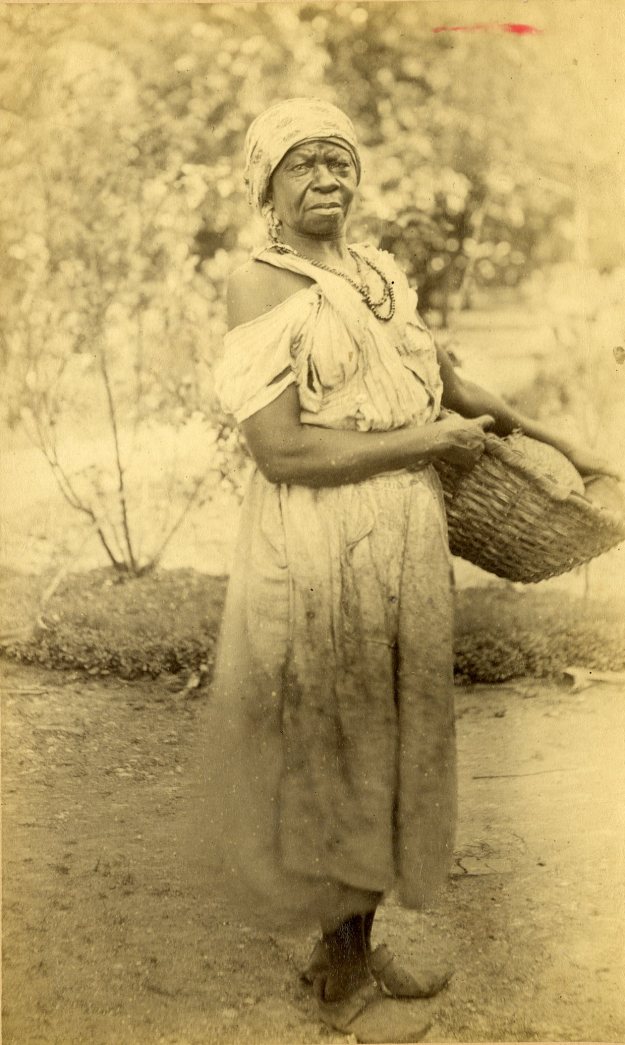
An enslaved Afro-Cuban in the 19th century.
☆
| Colonial period Further information: Slavery in Cuba 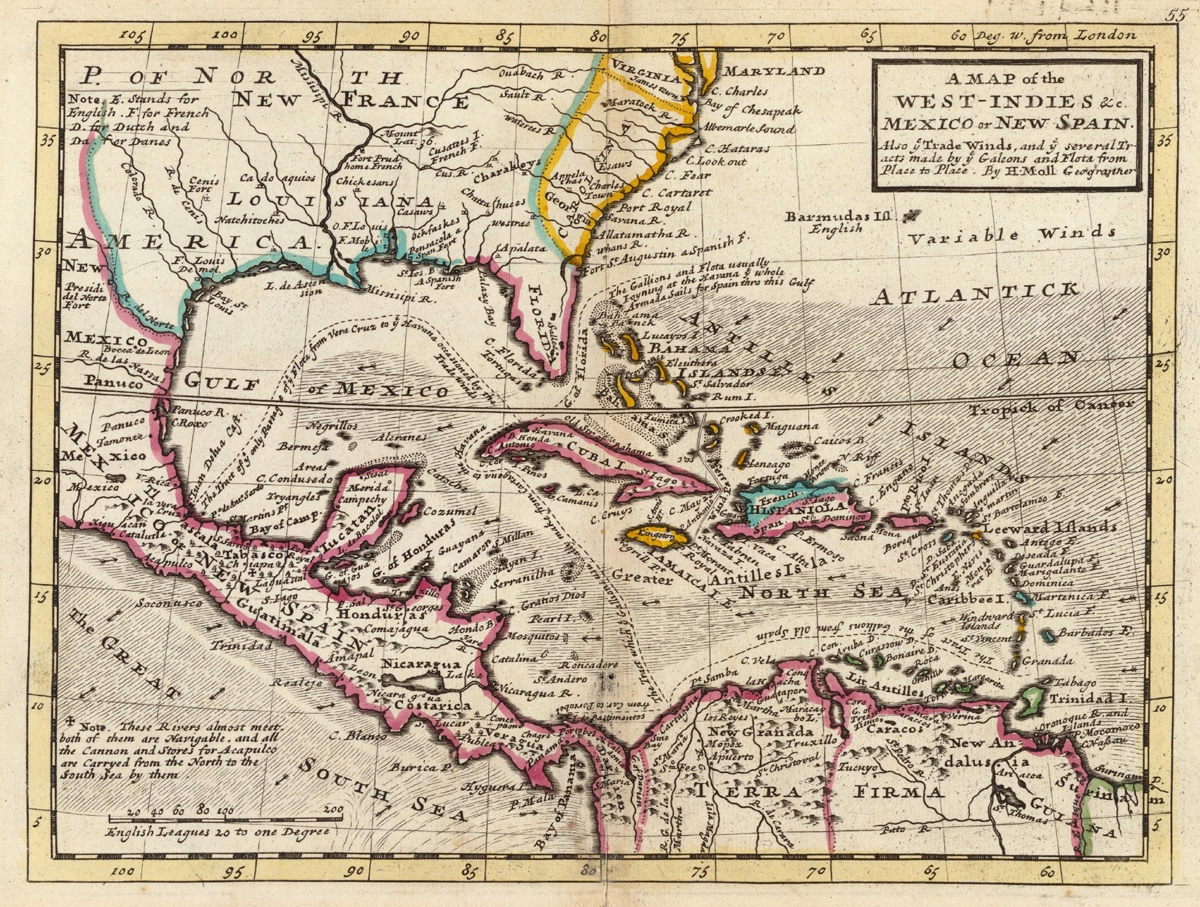 A 1736 colonial map by Herman Moll of the West Indies and Mexico, together comprising "New Spain", with Cuba visible in the center. 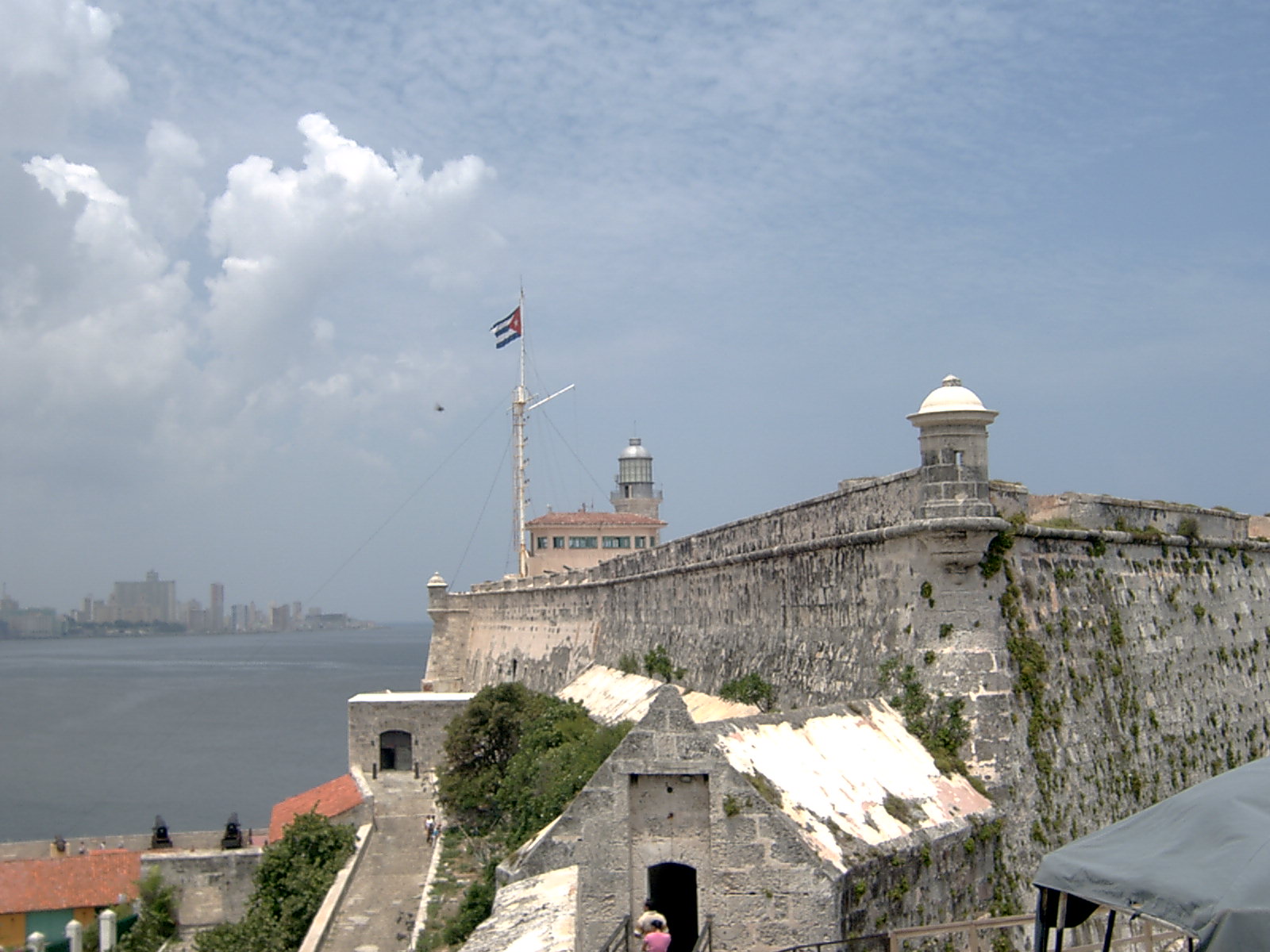 The fortress of El Morro in Havana, built in 1589 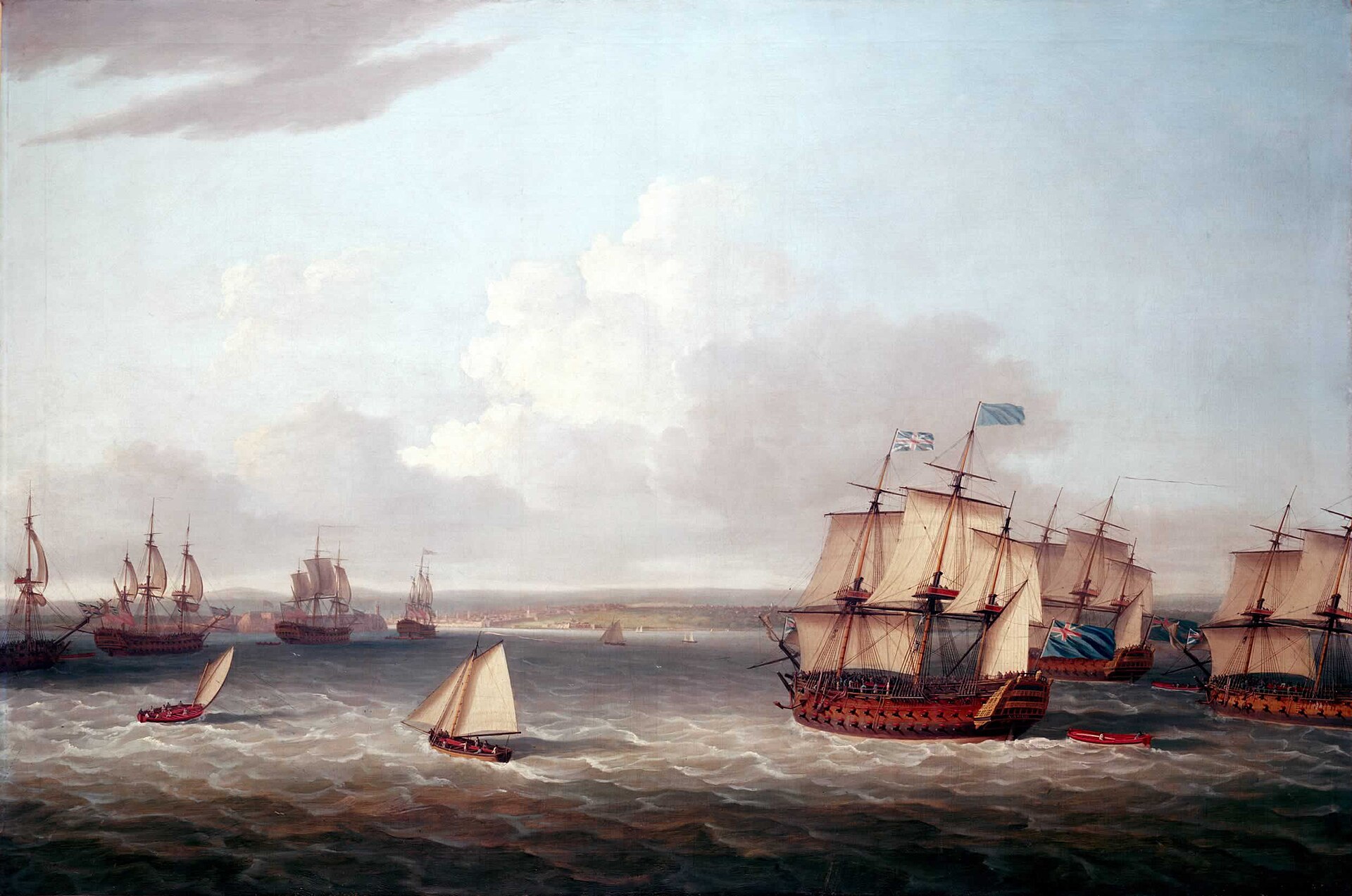 The British Fleet Entering Havana, 21 August 1762, a 1775 painting by Dominic Serres The Spanish established sugar and tobacco as Cuba's primary products, and the island soon supplanted Hispaniola as the prime Spanish base in the Caribbean.[30] African slaves were imported to work the plantations as field labor. However, restrictive Spanish trade laws made it difficult for Cubans to keep up with the 17th and 18th century advances in processing sugar cane until the Haitian Revolution saw French planters flee to Cuba.[31] Spain also restricted Cuba's access to the slave trade, instead issuing foreign merchants asientos to conduct it on Spain's behalf, and ordered regulations on trade with Cuba. The resultant stagnation of economic growth was particularly pronounced in Cuba because of its great strategic importance in the Caribbean, and the stranglehold that Spain kept on it as a result. Colonial Cuba was a frequent target of buccaneers, pirates and French corsairs. In response to repeated raids, defenses were bolstered throughout the island during the 16th century. In Havana, the fortress of Castillo de los Tres Reyes Magos del Morro was built to deter potential invaders.[32] Havana's inability to resist invaders was dramatically exposed in 1628, when a Dutch fleet led by Piet Heyn plundered the Spanish ships in the city's harbor.[33] In 1662, Christopher Myngs with a small fleet from Jamaica captured and briefly occupied Santiago de Cuba on the eastern part of the island.[33] Nearly a century later, the British Royal Navy launched another invasion, capturing Guantánamo Bay in 1741 during the War of Jenkins' Ear. Admiral Edward Vernon saw his 4,000 occupying troops capitulate to raids by Spanish troops, and more critically, an epidemic, forcing him to withdraw his fleet to British Jamaica.[34] In the War of the Austrian Succession, the British carried out unsuccessful attacks against Santiago de Cuba in 1741 and again in 1748. Additionally, a skirmish between British and Spanish naval squadrons occurred near Havana in 1748.[34] The Seven Years' War, which erupted in 1754 across three continents, eventually arrived in the Spanish Caribbean. In 1762 a British expedition of five warships and 4,000 troops set out from Portsmouth to capture Cuba. The British arrived on 6 June, and by August had Havana under siege.[35] When Havana surrendered, the admiral of the British fleet, George Keppel, entered the city as a new colonial governor and took control of the whole western part of the island. The arrival of the British immediately opened up trade with their North American and Caribbean colonies, causing a rapid transformation of Cuban society.[35] Though Havana, which had become the third-largest city in the Americas, was to enter an era of sustained development and closening ties with North America during this period, the British occupation proved short-lived. Pressure from London sugar merchants fearing a decline in sugar prices forced negotiations with the Spanish over colonial territories. Less than a year after Havana was seized, the Peace of Paris was signed by the three warring powers, ending the Seven Years' War. The treaty gave Britain Florida in exchange for Cuba.[35] In 1781, General Bernardo de Gálvez, the Spanish governor of Louisiana, reconquered Florida for Spain with Mexican, Puerto Rican, Dominican, and Cuban troops.[36] In the 19th century, Cuba became the most important world producer of sugar, thanks to the expansion of slavery and a relentless focus on improving sugar technology. Use of modern refining techniques was especially important because the British Slave Trade Act 1807 abolished the slave trade in the British Empire. The British government set about trying to eliminate the transatlantic slave trade. Under British diplomatic pressure, in 1817 Spain agreed to abolish the slave trade from 1820 in exchange for a payment from London. Cubans rushed to import further slaves in the time legally left to them. Over 100,000 new slaves were imported from Africa between 1816 and 1820.[31] In spite of the new restrictions a large-scale illegal slave trade continued to flourish in the following years.[37] Many Cubans were torn between desire for the profits generated by sugar and a repugnance for slavery. By the end of the 19th century, slavery was abolished. 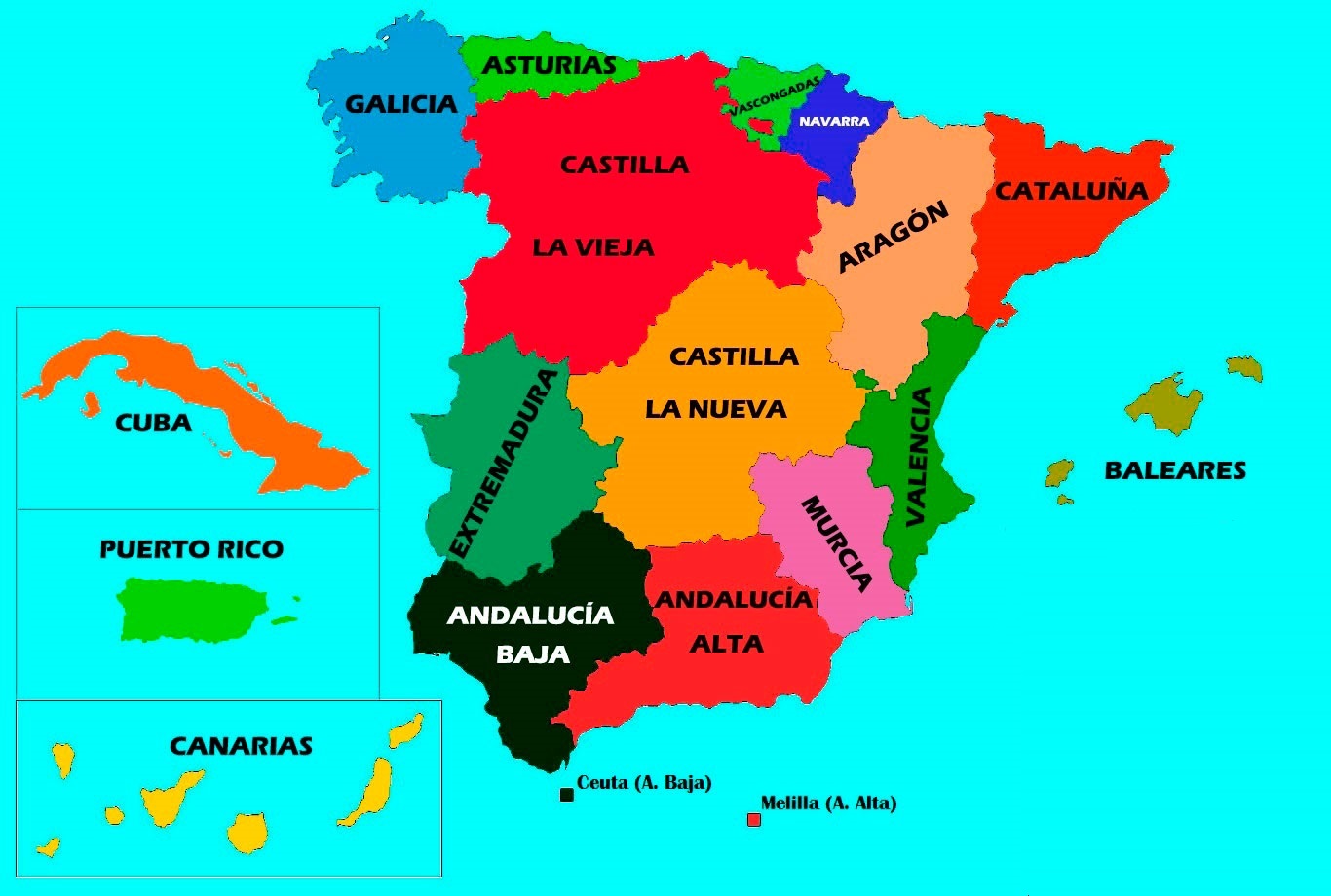 States proposed in the Spanish Draft Federal Constitution of 1873, among which Cuba was included. When Spain opened the Cuban trade ports, it quickly became a popular place. Cubans began to use water mills, enclosed furnaces, and steam engines to produce higher-quality sugar at a much more efficient pace. The boom in Cuba's sugar industry in the 19th century made it necessary for the country to improve its transportation infrastructure. Many new roads were built, and old roads were quickly repaired. Railroads were built relatively early, easing the collection and transportation of perishable sugar cane. By 1860, Cuba was devoted to growing sugar, having to import all other necessary goods. Cuba was particularly dependent on the United States, which bought 82 percent of its sugar. In 1820, Spain abolished the slave trade, hurting the Cuban economy even more and forcing planters to buy more expensive, illegal, and "troublesome" slaves (as demonstrated by the slave rebellion on the Spanish ship Amistad in 1839).[38] |
植民地時代 詳細情報:キューバにおける奴隷制 1736年、ヘルマン・モールによる西インド諸島とメキシコの植民地地図。「ニュースペイン」を構成する地域を示し、中央にキューバが確認できる。 ハバナのエル・モロ要塞。1589年に建設された。 1762年8月21日、ハバナに入港する英国艦隊。ドミニク・セレスによる1775年の絵画。 スペインは砂糖とタバコをキューバの主要産品として確立し、島はすぐにイスパニョーラ島に代わってカリブ海におけるスペインの主要拠点となった[30]。 プランテーションの農作業に従事させるため、アフリカ人奴隷が輸入された。しかし、スペインの制限的な貿易法により、キューバ人は17世紀から18世紀に かけてのサトウキビ加工技術の進歩についていくのが困難だった。ハイチ革命でフランスのプランテーション経営者がキューバに逃れるまで、この状況は続い た。スペインはまた、キューバの奴隷貿易へのアクセスを制限し、代わりに外国商人にスペイン代理の貿易権(アシエント)を付与した。さらにキューバとの貿 易規制を命じた。その結果生じた経済成長の停滞は、カリブ海におけるキューバの戦略的重要性と、スペインがそれに課した締め付けのため、特に顕著だった。 植民地時代のキューバは、海賊やフランス人私掠船の頻繁な標的となった。繰り返される襲撃に対応し、16世紀には島全体の防衛が強化された。ハバナでは、 潜在的な侵略者を抑止するため、モロの三賢王城塞が建設された。[32] ハバナの防衛力の脆弱さは1628年、ピート・ヘイン率いるオランダ艦隊が港内のスペイン船を略奪した事件で露呈した。[33] 1662年には、クリストファー・ミングスがジャマイカから小さな艦隊を率いて、島の東部にあるサンティアゴ・デ・クーバを占領し、短期間占領した。 [33] ほぼ1世紀後、イギリス海軍は再び侵攻を開始し、1741年のジェンキンスの耳の戦争中にグアンタナモ湾を占領した。エドワード・ヴァーノン提督は、 4,000 人の占領軍がスペイン軍による襲撃、さらに深刻な疫病に屈服するのを見て、艦隊を英領ジャマイカに撤退させることを余儀なくされた。[34] オーストリア継承戦争では、イギリス軍は 1741 年と 1748 年にサンティアゴ・デ・クーバに対して攻撃を行ったが、いずれも失敗に終わった。さらに、1748年にはハバナ近郊でイギリス海軍とスペイン海軍の艦隊が 小競り合いを起こした。 1754年に3大陸で勃発した七年戦争は、やがてスペイン領カリブ海にも波及した。1762年、5隻の軍艦と4,000人の兵士からなるイギリス遠征軍が キューバ占領のためにポーツマスを出発した。イギリス軍は6月6日に到着し、8月までにハバナを包囲下に置いた[35]。ハバナが降伏すると、イギリス艦 隊司令官ジョージ・ケッペルは新たな植民地総督として入城し、島の西部全域を掌握した。イギリス軍の到来は直ちに北米・カリブ植民地との貿易を開放し、 キューバ社会を急速に変容させた[35]。この期間、ハバナはアメリカ大陸で3番目に大きな都市となり、持続的な発展と北米との緊密な関係構築の時代を迎 えたが、英国の占領は短命に終わった。砂糖価格の下落を恐れたロンドンの砂糖商人からの圧力により、植民地領土を巡るスペインとの交渉が迫られたのであ る。ハバナ占領から1年も経たぬうちに、交戦三国間でパリ条約が調印され、七年戦争は終結した。この条約により、英国はキューバと引き換えにフロリダを獲 得した[35]。1781年、ルイジアナ総督ベルナルド・デ・ガルベス将軍は、メキシコ、プエルトリコ、ドミニカ、キューバの軍隊を率いてフロリダをスペ インに奪還した[36]。19世紀に入ると、奴隷制の拡大と砂糖技術向上への執拗な注力により、キューバは世界最大の砂糖生産国となった。近代的な精製技 術の導入は特に重要であった。1807年の英国奴隷貿易禁止法により大英帝国における奴隷貿易が廃止されたためである。英国政府は大西洋奴隷貿易の根絶に 乗り出した。英国の外交的圧力のもと、1817年にスペインはロンドンからの支払いを条件に、1820年からの奴隷貿易廃止に合意した。キューバ人は法的 に認められた期間内に急いでさらなる奴隷を輸入した。1816年から1820年の間に、10万人以上の新たな奴隷がアフリカから輸入された[31]。新た な制限にもかかわらず、その後数年間は違法な大規模奴隷貿易が繁栄し続けた[37]。多くのキューバ人は、砂糖がもたらす利益への欲望と奴隷制への嫌悪感 の間で葛藤した。19世紀末までに、奴隷制は廃止された。 1873年のスペイン連邦憲法草案で提案された州のうち、キューバも含まれていた。 スペインがキューバの貿易港を開港すると、すぐに人気の場所となった。キューバ人は水車、密閉式炉、蒸気機関を使い始め、より高品質の砂糖をはるかに効率 的なペースで生産するようになった。19世紀のキューバ砂糖産業の急成長により、同国は交通インフラの改善が必要となった。多くの新道路が建設され、旧道 も迅速に修復された。鉄道は比較的早期に敷設され、傷みやすいサトウキビの収穫と輸送を容易にした。1860年までにキューバは砂糖栽培に専念するに至 り、その他必要な物資は全て輸入に頼らざるを得なかった。特に米国への依存度が高く、同国がキューバ産砂糖の82%を購入していた。1820年、スペイン が奴隷貿易を廃止したことでキューバ経済はさらに打撃を受け、プランテーション経営者はより高価で違法かつ「厄介な」奴隷を購入せざるを得なくなった (1839年のスペイン船アミスタッド号での奴隷反乱がその実例である)。 |
| Reformism, annexation, and independence (1800–1898) See also: History of Cuban nationality In the early 19th century, three major political currents took shape in Cuba: reformism, annexation and independence. Spontaneous and isolated actions added a current of abolitionism. The 1776 Declaration of Independence by the Thirteen Colonies and the successes of the French Revolution of 1789 influenced early Cuban liberation movements, as did the successful revolt of black slaves in Haiti in 1791. One of the first of such movements in Cuba, headed by the free black Nicolás Morales, aimed at gaining equality between "mulatto and whites" and at the abolition of sales taxes and other fiscal burdens. Morales' plot was discovered in 1795 in Bayamo, and the conspirators were jailed. Reform, autonomy and separatist movements As a result of the political upheavals caused by the Iberian Peninsular War of 1807–1814 and of Napoleon's invasion of Spain and the removal of Ferdinand VII from the Spanish throne in 1808, a western separatist rebellion emerged among the Cuban Creole aristocracy in 1809 and 1810. One of its leaders, Joaquín Infante, drafted Cuba's first constitution, declaring the island a sovereign state, presuming the rule of the country's wealthy, maintaining slavery as long as it was necessary for agriculture, establishing a social classification based on skin color and declaring Catholicism the official religion. This conspiracy also failed, and the main leaders were deported.[39] In 1812 a mixed-race abolitionist conspiracy arose, organized by José Antonio Aponte, a free-black carpenter. He and others were executed. The Spanish Constitution of 1812, and the legislation passed by the Cortes of Cádiz after it was set up in 1808, instituted a number of liberal political and commercial policies, which were welcomed in Cuba but also curtailed a number of older liberties. Between 1810 and 1814 the island elected six representatives to the Cortes, in addition to forming a locally elected Provincial Deputation.[40] Nevertheless, the liberal regime and the Constitution proved ephemeral: Ferdinand VII suppressed them when he returned to the throne in 1814 after Napoleon's total defeat. By the end of the 1810s, some Cubans were inspired by the successes of Simón Bolívar in South America and Mexico's criollo independence movement. Numerous secret-societies emerged, most notably the Bolívarian Suns and Rays Conspiracy [ES], founded in 1821 and led by José Francisco Lemus, associated with Freemasonry in Cuba. It aimed to establish the free Republic of Cubanacán, and it had branches in five districts of the island. 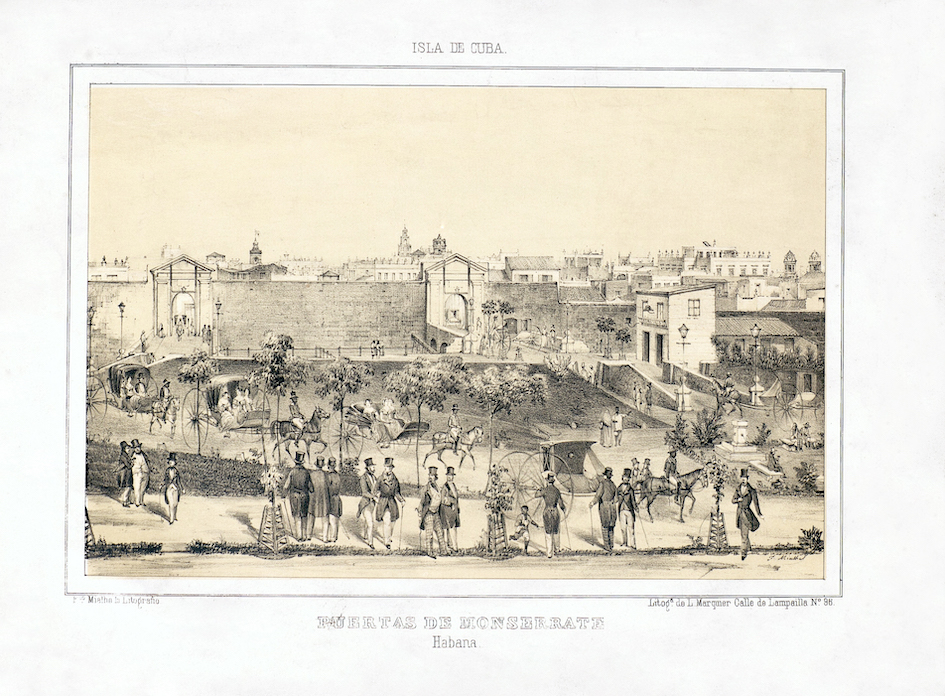 The city walls of Havana, 1848 In 1823 the society's leaders were arrested and condemned to exile. In the same year, King Ferdinand VII abolished constitutional rule in Spain yet again. As a result, the national militia of Cuba, established by the Constitution and a potential instrument for liberal agitation, was dissolved, a permanent executive military commission under the orders of the governor was created, newspapers were closed, elected provincial representatives were removed and other liberties suppressed. 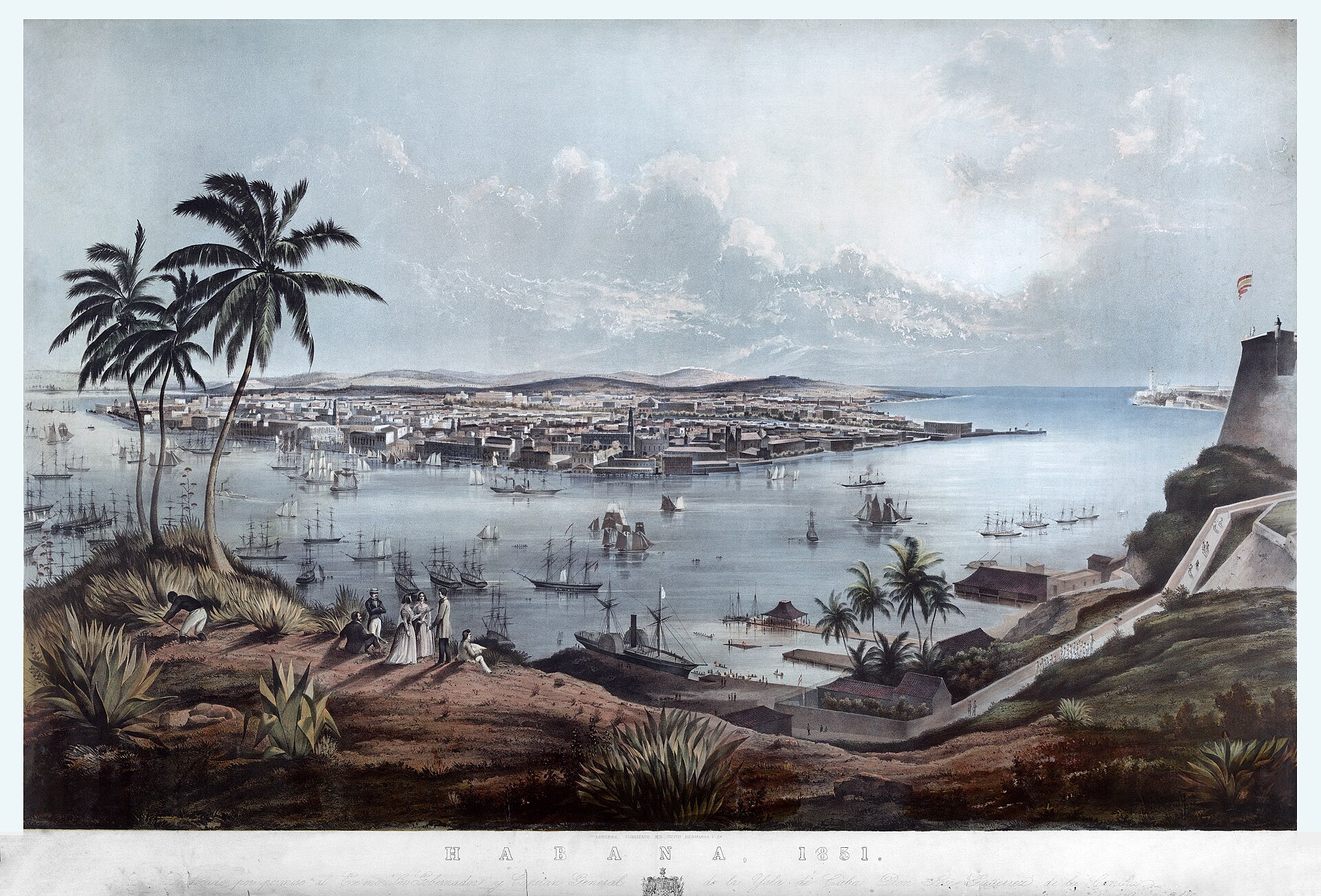 19th century view of Havana This suppression, and the success of independence movements in the former Spanish colonies on the North American mainland, led to a notable rise of Cuban nationalism. A number of independence conspiracies developed during the 1820s and 1830s, but all failed. Among these were the "Expedición de los Trece" (Expedition of the 13) in 1826, the "Gran Legión del Aguila Negra" (Great Legion of the Black Eagle) in 1829, the "Cadena Triangular" (Triangular Chain) and the "Soles de la Libertad" (Suns of Liberty) in 1837. Leading national figures in these years included Félix Varela and Cuba's first revolutionary poet, José María Heredia.[41] Between 1810 and 1826, 20,000 royalist refugees from the Latin American Revolutions arrived in Cuba. They were joined by others who left Florida when Spain ceded it to the United States in 1819. These influxes strengthened loyalist pro-Spanish sentiments.[42] |
改革主義、併合、独立(1800年–1898年) 関連項目:キューバ国民性の歴史 19世紀初頭、キューバでは三つの主要な政治潮流が形成された。改革主義、併合、そして独立である。自発的で孤立した行動が奴隷制度廃止運動の流れを加え た。1776年のアメリカ13州独立宣言と1789年のフランス革命の成功は、1791年のハイチにおける黒人奴隷の反乱の成功と同様に、初期のキューバ 解放運動に影響を与えた。キューバにおける最初の運動の一つは、自由黒人ニコラス・モラレスが率い、「ムラートと白人」の平等獲得と、販売税その他の財政 的負担の廃止を目的としていた。モラレスの陰謀は1795年にバヤモで発覚し、共謀者たちは投獄された。 改革、自治、分離独立運動 1807年から1814年にかけてのイベリア半島戦争、ナポレオンのスペイン侵攻、1808年のフェルナンド7世のスペイン王位追放といった政治的混乱の 結果、1809年から1810年にかけて、キューバのクレオール貴族層の間で西部の分離独立運動が勃発した。その指導者の一人ホアキン・インファンテは キューバ初の憲法を起草し、島を主権国家と宣言した。富裕層による統治を前提とし、農業に必要な限り奴隷制を維持し、肌の色に基づく社会階級を確立し、カ トリックを国教と定めた。この陰謀も失敗に終わり、主要指導者は国外追放された[39]。1812年には、自由黒人の大工ホセ・アントニオ・アポンテが組 織した混血の奴隷解放派の陰謀が起きた。彼らは処刑された。 1812年のスペイン憲法と、1808年に設置されたカディス議会が可決した法律は、多くの自由主義的な政治・商業政策を導入した。これらはキューバで歓 迎されたが、同時に古い自由の多くを制限した。1810年から1814年の間に、島はカディス議会に6人の代表を選出し、さらに地元選出の地方代議士会を 形成した。[40] しかしながら、この自由主義体制と憲法は短命に終わった。ナポレオンの完全敗北後、1814年に王位に戻ったフェルナンド7世がこれを廃止したのである。 1810年代末までに、一部のキューバ人は南米におけるシモン・ボリバルの成功やメキシコのクリオージョ独立運動に触発された。数多くの秘密結社が現れ、 特に1821年に創設されたホセ・フランシスコ・レムス率いる「ボリバルの太陽と光線」陰謀団[ES]が注目された。この団体はキューバのフリーメイソン と関連があり、自由な「クバナカン共和国」の樹立を目的として、島の5地区に支部を置いていた。 ハバナの城壁、1848年 1823年、同組織の指導者たちは逮捕され、国外追放の判決を受けた。同年、フェルナンド7世はスペインで再び立憲政治を廃止した。その結果、憲法によっ て設立され、自由主義的な扇動の手段となり得たキューバの国民民兵は解散され、総督の指揮下にある常設の軍事執行委員会が創設された。新聞は閉鎖され、選 出された地方代表は解任され、その他の自由も抑圧された。 19世紀のハバナの眺め この弾圧と、北米大陸の旧スペイン植民地における独立運動の成功が相まって、キューバのナショナリズムは著しく高まった。1820年代から1830年代に かけて数々の独立陰謀が企てられたが、いずれも失敗に終わった。その中には、1826年の「13人の遠征隊」、1829年の「黒鷲の大軍団」、1837年 の「三角の鎖」と「自由の太陽」が含まれていた。この時代の代表的な人物には、フェリックス・バレラやキューバ初の革命詩人ホセ・マリア・エレディアがい た。[41] 1810年から1826年の間に、ラテンアメリカ革命から逃れた王党派の難民2万人がキューバに流入した。1819年にスペインがフロリダをアメリカ合衆国に割譲した際、同地から脱出した者たちも加わった。こうした流入により、親スペイン派の忠誠心が強まった。[42] |
Antislavery and independence movements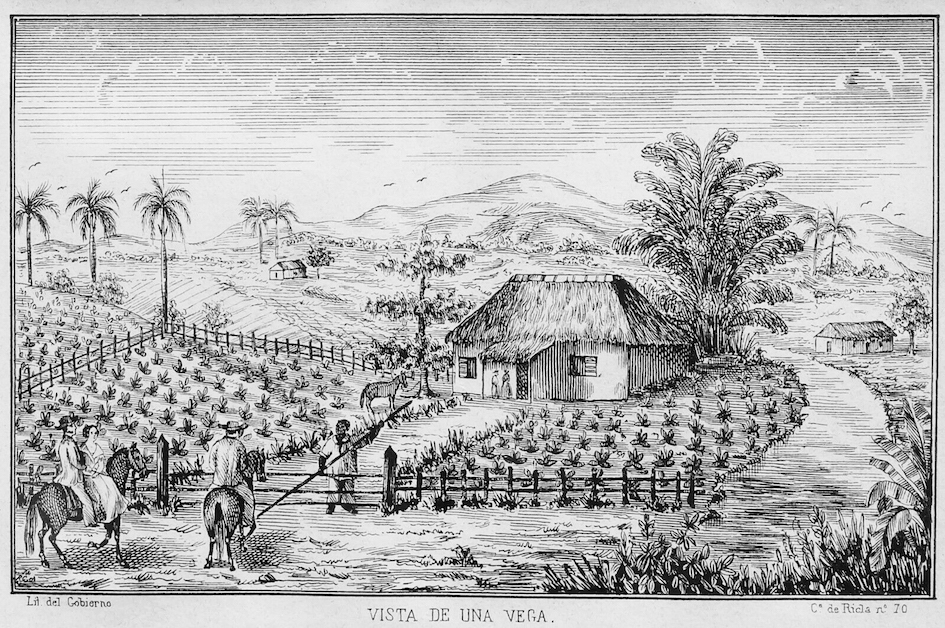 Tobacco fields in Cuba, 1859 In 1826 the first armed uprising for independence took place in Puerto Príncipe, led by Francisco Agüero Velasco and Andrés Manuel Sánchez. Both were executed, becoming the first popular martyrs of the Cuban independence movement.[43] The 1830s saw a surge of activity from the reformist movement, whose main leader, José Antonio Saco, stood out for his criticism of Spanish despotism and of the slave trade. Nevertheless, Cubans remained deprived of the right to send representatives to the Spanish parliament, and Madrid stepped up repression. Under British diplomatic pressure, the Spanish government had pledged to abolish slavery.[44] In this context, Black revolts in Cuba increased, and were put down with mass executions. One of the most significant was the Conspiración de la Escalera (Ladder Conspiracy) in 1843–1844. The Ladder Conspiracy involved free Black persons and enslaved, as well as white intellectuals and professionals. It is estimated that 300 Black and mixed-race persons died from torture, 78 were executed, over 600 were imprisoned and over 400 expelled from the island.[45][46] José Antonio Saco, one of Cuba's most prominent thinkers, was expelled.[47] 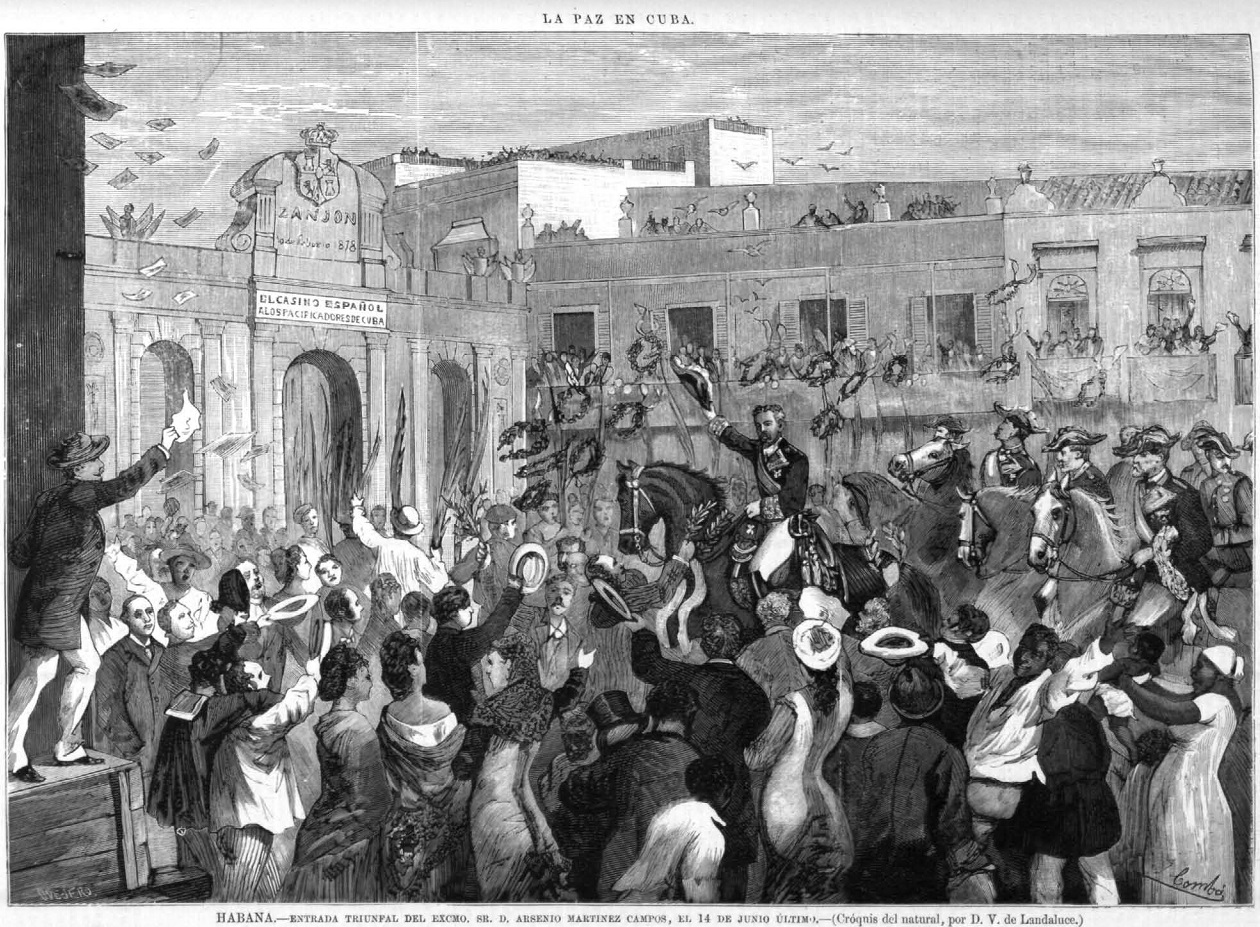 Spanish General Arsenio Martínez Campos in Havana, Colonial Cuba, 1878 Following the 1868–1878 rebellion of the Ten Years' War, all slavery was abolished by 1886. Slave traders looked for others sources of cheap labour, such as Chinese colonists and Indians from Yucatán. Another feature of the population was the number of Spanish-born colonists, known as peninsulares, who were mostly adult males; they constituted between ten and twenty per cent of the population between the middle of the 19th century and the great depression of the 1930s. |
奴隷制度廃止運動と独立運動 1859年のキューバのタバコ畑 1826年、フランシスコ・アグエロ・ベラスコとアンドレス・マヌエル・サンチェスが率いる、独立のための最初の武装蜂起がプエルト・プリンシペで起こった。両者は処刑され、キューバ独立運動の最初の民衆の殉教者となった。 1830年代には、改革運動が活発化したが、その主な指導者であるホセ・アントニオ・サコは、スペインの専制政治と奴隷貿易を批判したことで知られてい た。それにもかかわらず、キューバ人はスペイン議会に代表を送る権利を依然として奪われたままであり、マドリードは弾圧を強化した。 英国の外交的圧力により、スペイン政府は奴隷制度を廃止することを約束していた[44]。こうした状況の中で、キューバでは黒人による反乱が増加し、大量 処刑によって鎮圧された。最も重要な反乱のひとつは、1843年から1844年にかけての「はしごの陰謀」である。この陰謀には自由黒人と奴隷、白人知識 人・専門職が関与した。推定では300人の黒人・混血の人が拷問で死亡し、78人が処刑、600人以上が投獄、400人以上が島から追放された[45] [46]。キューバを代表する思想家ホセ・アントニオ・サコも追放された。[47] 1878年、植民地時代のハバナにおけるスペイン軍将軍アルセニオ・マルティネス・カンポス 1868年から1878年にかけての十年戦争の反乱後、1886年までに全ての奴隷制度は廃止された。奴隷商人たちは、中国からの移民やユカタン半島出身 のインディオなど、新たな安価な労働力の供給源を探した。人口構成のもう一つの特徴は、スペイン本土出身の移民(ペニンスラレス)の多さであった。彼らは 主に成人男性で、19世紀半ばから1930年代の大恐慌までの間、人口の10~20%を占めていた。 |
| Possibility of annexation by the United States See also: Ostend manifesto Black unrest and attempts by the Spanish metropolis to abolish slavery motivated many Creoles to advocate Cuba's annexation by the United States, where slavery was still legal. Other Cubans supported the idea due to their desire for American-style economic development and democratic freedom. In 1805, President Thomas Jefferson considered annexing Cuba for strategic reasons, sending agents to the island to negotiate with Captain General Someruelos. In 1810, James Madison sent diplomat William Shaler to Cuba to "feel the pulse of Cuba as to an estimate of the inducements to a like incorporation of that island with the United States in comparison with those of an adherence to the Spanish Main, which cannot for a long time be equally capable of protecting the island against maritime dangers."[48] In April 1823, U.S. Secretary of State John Quincy Adams discussed the rules of political gravitation: "if an apple severed by its native tree cannot choose but fall to the ground, Cuba, forcibly disjoined from its own unnatural connection with Spain, and incapable of self-support, can gravitate only towards the North American Union which by the same law of nature, cannot cast her off its bosom".[49] He furthermore warned that "the transfer of Cuba to Great Britain would be an event unpropitious to the interest of this Union".[50] Adams voiced concern that a country outside of North America would attempt to occupy Cuba.[51] On 2 December 1823, U.S. President James Monroe specifically addressed Cuba and other European colonies in his proclamation of the Monroe Doctrine. Cuba, located just 94 miles (151 km) from Key West, Florida, was of interest to the doctrine's founders, as they warned European forces to leave "America for the Americans".[52] The most outstanding attempts in support of annexation were made by the Venezuelan filibuster General Narciso López, who prepared four expeditions to Cuba in the US.[53] The first two, in 1848 and 1849, failed before departure due to U.S. opposition. The third, made up of some 600 men, managed to land in Cuba and take the central city of Cárdenas, but failed eventually due to a lack of popular support. López's fourth expedition landed in Pinar del Río province with around 400 men in August 1851; the invaders were defeated by Spanish troops and López was executed. |
アメリカ合衆国による併合の可能性 関連項目:オステン宣言 黒人による騒乱と、スペイン本土による奴隷制廃止の動きは、多くのクレオール人(混血)に、奴隷制が依然として合法であったアメリカ合衆国によるキューバ 併合を支持させる動機となった。他のキューバ人も、アメリカ式の経済発展と民主的自由への憧れからこの考えを支持した。1805年、トーマス・ジェファー ソン大統領は戦略的理由からキューバ併合を検討し、島に代理人を派遣して総督ソメルエロスと交渉させた。1810年、ジェームズ・マディソンは外交官ウィ リアム・シェイラーをキューバに派遣し、「スペイン本土への帰属と比較した、同島を米国に編入する誘因の評価について、キューバの動向を探る」よう命じ た。スペイン本土は「長期間にわたり、海上からの脅威から島を同等に保護する能力を有しない」とされたのである[48]。 1823年4月、ジョン・クインシー・アダムズ国務長官は政治的引力の法則について論じた。「母樹から切り離されたリンゴが地面に落ちる以外に選択肢がな いように、スペインとの不自然な結びつきから強制的に切り離され、自立不能なキューバは、同じ自然の法則により、北米連合の懐から放り出されることのない 北米連合へとのみ引力を受ける」 [49] さらに彼は「キューバが英国に移管されることは、この連合の利益にとって好ましくない出来事となる」と警告した。[50] アダムズは北米以外の国がキューバを占領しようとする可能性を懸念した。[51] 1823年12月2日、ジェームズ・モンロー米大統領はモンロー主義宣言において、特にキューバとその他の欧州植民地について言及した。フロリダ州キー ウェストからわずか94マイル(151キロ)に位置するキューバは、この主義の提唱者たちの関心事であった。彼らは欧州諸国に対し「アメリカはアメリカ人 のために」と警告したのである。[52] 併合支持の最も顕著な試みは、ベネズエラの私賊行為船長ナルシソ・ロペス将軍によるもので、米国で4度のキューバ遠征を準備した。[53] 1848年と1849年の最初の2回は、米国の反対により出航前に失敗した。第三次遠征は約600名の兵力でキューバ上陸に成功し、中央部のカルデナス市 を占領したが、民衆の支持を得られなかったため最終的に失敗した。ロペスの第四次遠征は1851年8月、約400名の兵力でピナール・デル・リオ州に上陸 したが、スペイン軍に撃破され、ロペスは処刑された。 |
Struggle for independence Depiction of an engagement between Cuban rebels and Spanish Royalists during the Ten Years' War (1868–78) In the 1860s, Cuba had two more liberal-minded governors, Serrano and Dulce, who encouraged the creation of a Reformist Party, despite the fact that political parties were forbidden. But they were followed by a reactionary governor, Francisco Lersundi, who suppressed all liberties granted by the previous governors and maintained a pro-slavery regime.[54] On 10 October 1868, the landowner Carlos Manuel de Céspedes declared Cuban independence and freedom for his slaves. This began the Ten Years' War from 1868 to 1878. The Dominican Restoration War (1863–65) brought to Cuba an unemployed mass of former Dominicans who had served with the Spanish Army in the Dominican Republic before being evacuated to Cuba.[55] Some of these former soldiers joined the new Revolutionary Army and provided its initial training and leadership.[55][56] 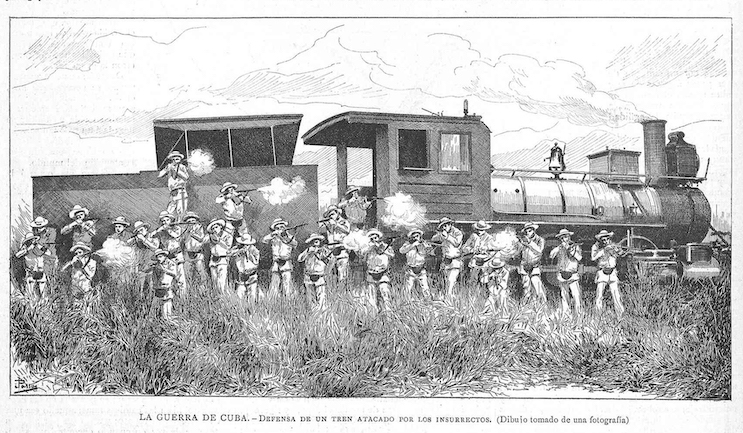 Defense of a train attacked by Cuban insurgents With reinforcements and guidance from the Dominicans, the Cuban rebels defeated Spanish detachments, cut railway lines, and gained dominance over vast sections of the eastern portion of the island.[57] The Spanish government used the Voluntary Corps to commit harsh acts against the Cuban rebels, and the Spanish atrocities fuelled the growth of insurgent forces; however, they failed to export the revolution to the west. On 11 May 1873, Ignacio Agramonte was killed by a stray bullet; Céspedes was killed on 27 February 1874. In 1875, Máximo Gómez began an invasion of Las Villas west of a fortified military line, or trocha, bisecting the island.[citation needed] The trocha was built between 1869 and 1872; the Spanish erected it to prevent Gómez to move westward from Oriente province.[58] It was the largest fortification built by the Spanish in the Americas.[59] Gómez was controversial in his calls to burn sugar plantations to harass the Spanish occupiers. After the American admiral Henry Reeve was killed in 1876, Gómez ended his campaign. By that year, the Spanish government had deployed more than 250,000 troops to Cuba, as the end of the Third Carlist War had freed up Spanish soldiers. On 10 February 1878, General Arsenio Martínez Campos negotiated the Pact of Zanjón with the Cuban rebels, and the rebel general Antonio Maceo's surrender on 28 May ended the war. Spain sustained 200,000 casualties, mostly from disease; the rebels sustained 100,000–150,000 dead and the island sustained over $300 million in property damage.[55] The Pact of Zanjón promised the manumission of all slaves who had fought for Spain during the war, and slavery was legally abolished in 1880. However, dissatisfaction with the peace treaty led to the Little War of 1879–80. |
独立への闘争 十年戦争(1868–78)におけるキューバ反乱軍とスペイン王党派の戦闘の描写 1860年代、キューバにはさらに二人の自由主義的な知事、セラーノとダルセがいた。彼らは政党が禁止されていたにもかかわらず、改革派政党の結成を奨励 した。しかしその後、反動的な総督フランシスコ・レルスンディが就任し、前任者たちが認めた自由を全て抑圧し、奴隷制支持の体制を維持した[54]。 1868年10月10日、地主カルロス・マヌエル・デ・セスペデスがキューバの独立と奴隷解放を宣言した。これが1868年から1878年にかけての十年 戦争の始まりである。ドミニカ復興戦争(1863-65年)により、ドミニカ共和国でスペイン軍に従軍した後、キューバへ避難した元ドミニカ人兵士の大勢 がキューバに流入した[55]。これらの元兵士の一部は新たな革命軍に加わり、初期の訓練と指導を提供した[55][56]。 キューバ反乱軍による列車襲撃の防衛 ドミニカ人からの増援と指導を得て、キューバ反乱軍はスペイン軍分遣隊を撃破し、鉄道線路を切断し、島東部の大部分の支配権を掌握した。[57] スペイン政府は志願兵部隊を用いてキューバ反乱軍に対して苛烈な行為を行い、スペインの残虐行為は反乱軍の拡大を助長した。しかし、彼らは革命を西部へ拡 大させることはできなかった。1873年5月11日、イグナシオ・アグラモンテは流弾により死亡した。セスペデスは1874年2月27日に殺害された。 1875年、マキシモ・ゴメスが島を二分する要塞化された軍事線(トロチャ)の西側、ラス・ビジャス地方への侵攻を開始した。[出典必要] このトロチャは1869年から1872年にかけて建設され、スペインがゴメスのオリエンテ州からの西進を阻止するために築いたものである。[58] これはスペインがアメリカ大陸に築いた最大の要塞であった。[59] ゴメスは、スペイン占領軍を撹乱するため砂糖農園を焼き払うよう呼びかけたことで物議を醸した。1876年にアメリカ海軍のヘンリー・リーヴ提督が殺害さ れると、ゴメスは作戦を終了した。この年までに、第三カルリスタ戦争の終結で兵力が解放されたスペイン政府は、25万人以上の兵士をキューバに派遣してい た。1878年2月10日、アルセニオ・マルティネス・カンポス将軍がキューバ反乱軍とサンホン協定を締結。同年5月28日に反乱軍の将軍アントニオ・マ セオが降伏し、戦争は終結した。スペイン側の死傷者は20万人(大半が疾病による)、反乱軍側の死者は10万~15万人、島全体の物的損害は3億ドル以上 に上った。[55] サンホン協定は、戦争中にスペイン側で戦った全ての奴隷の解放を約束し、奴隷制は1880年に法的に廃止された。しかし、この和平条約への不満が1879 年から1880年にかけての小戦争を引き起こした。 |
| Conflicts in the late 19th century (1886–1900) |
Conflicts in the late 19th century (1886–1900) |
| Main article: Cuban War of Independence Background During the time of the so-called "Rewarding Truce", which encompassed the 17 years from the end of the Ten Years' War in 1878, fundamental changes took place in Cuban society. With the abolition of slavery in October 1886, former slaves joined the ranks of farmers and urban working class. Most wealthy Cubans lost their rural properties, and many of them joined the urban middle class. The number of sugar mills dropped and efficiency increased, with only companies and the most powerful plantation owners owning them. The numbers of campesinos and tenant farmers rose considerably. Furthermore, American capital began flowing into Cuba, mostly into the sugar and tobacco businesses and mining. By 1895, these investments totalled $50 million. Although Cuba remained Spanish politically, economically it became increasingly dependent on the United States.[60] These changes also entailed the rise of labour movements. The first Cuban labour organization, the Cigar Makers Guild, was created in 1878, followed by the Central Board of Artisans in 1879, and many more across the island.[61] Abroad, a new trend of aggressive American influence emerged. Secretary of State James G. Blaine placed particular importance on the control of Cuba: "If ever ceasing to be Spanish, Cuba must necessarily become American and not fall under any other European domination".[62] Martí's Insurrection and the start of the war After his second deportation to Spain in 1878, the pro-independence Cuban activist José Martí moved to the United States in 1881, where he began mobilizing the support of the Cuban exile community in Florida.[63] He sought a revolution and Cuban independence from Spain, but also lobbied to oppose U.S. annexation of Cuba. Propaganda efforts by the Cuban Junta continued for years and intensified starting in 1895.[64][65] After deliberations with patriotic clubs across the United States, the Antilles and Latin America, the Partido Revolucionario Cubano (Cuban Revolutionary Party) was officially proclaimed on 10 April 1892, with the purpose of gaining independence for both Cuba and Puerto Rico. Martí was elected delegate, the highest party position. In Foner's words, "Martí's impatience to start the revolution for independence was affected by his growing fear that the United States would succeed in annexing Cuba before the revolution could liberate the island from Spain".[66] On 25 December 1894, three ships set sail for Cuba from Fernandina Beach, Florida, loaded with armed men and supplies. Two of the ships were seized by U.S. authorities in early January, but the proceedings went ahead. The insurrection began on 24 February 1895, with uprisings across the island. The uprisings in the central part of the island, such as Ibarra, Jagüey Grande and Aguada, suffered from poor co-ordination and failed; the leaders were captured, some of them deported and some executed. In the province of Havana the insurrection was discovered before it got off and the leaders detained. Thus, the insurgents further west in Pinar del Río were ordered to wait. Martí, on his way to Cuba, gave the Proclamation of Montecristi in Santo Domingo, outlining the policy for Cuba's war of independence: the war was to be waged by blacks and whites alike; participation of all blacks was crucial for victory; Spaniards who did not object to the war effort should be spared, private rural properties should not be damaged; and the revolution should bring new economic life to Cuba.[62][67] On 1 and 11 April 1895, the main rebel leaders landed on two expeditions in Oriente: Major Antonio Maceo and 22 members near Baracoa and Martí, Máximo Gómez and four other members in Playitas. Around that time, Spanish forces in Cuba numbered about 80,000, including 60,000 Spanish and Cuban volunteers. The latter were a locally enlisted force that took care of most of the guard and police duties on the island. By December, 98,412 regular troops had been sent to the island and the number of volunteers had increased to 63,000 men. By the end of 1897, there were 240,000 regulars and 60,000 irregulars on the island. The revolutionaries were far outnumbered.[62] The rebels came to be nicknamed "Mambis" after a black Spanish officer, Juan Ethninius Mamby, who joined the Dominicans in the fight for independence in 1846.[68][69] When the Ten Years' War broke out in 1868, some of the same soldiers were assigned to Cuba, importing what had by then become a derogatory Spanish slur. The Cubans adopted the name with pride.[70] After the Ten Years' War, possession of weapons by private individuals was prohibited in Cuba. Thus, one of the most serious and persistent problems for the rebels was a shortage of suitable weapons. This lack of arms forced them to utilise guerrilla tactics, using the environment, the element of surprise, fast horses and simple weapons such as machetes. Most of their firearms were acquired in raids on the Spaniards. Between 11 June 1895 and 30 November 1897, 60 attempts were made to bring weapons and supplies to the rebels from outside Cuba, but only one succeeded, largely due to British naval protection.[62] |
主記事: キューバ独立戦争(Cuban War of Independence) 背景 いわゆる「報奨休戦」の時代、すなわち1878年の十年戦争終結から17年間にわたり、キューバ社会では根本的な変化が起こった。1886年10月の奴隷 制廃止により、元奴隷たちは農民や都市労働者階級に加わった。富裕層の多くは農村部の資産を失い、都市部の中産階級に加わった。砂糖工場の数は減少し、効 率は向上した。工場を所有するのは企業と最も有力なプランテーション所有者だけとなった。農民や小作農の数は大幅に増加した。さらに、アメリカ資本が キューバに流入し始めた。その大半は砂糖・タバコ産業と鉱業に向けられた。1895年までに、これらの投資総額は5000万ドルに達した。政治的にはスペ インの支配下にあったが、経済的にはキューバはますますアメリカへの依存を深めていった。[60] こうした変化は労働運動の台頭も伴った。最初のキューバ労働組織である葉巻製造者組合は1878年に創設され、1879年には職人中央委員会が続き、島内 各地でさらに多くの組織が生まれた。[61] 海外では、米国による積極的な影響力拡大という新たな潮流が現れた。ジェームズ・G・ブレイン国務長官は特にキューバ支配を重視し、「スペイン領でなくな るならば、キューバは必然的に米国のものとなり、他の欧州諸国の支配下に入るべきではない」と述べた。[62] マルティの反乱と戦争の始まり 1878年に二度目のスペイン追放を経験した独立派活動家ホセ・マルティは、1881年にアメリカへ移住した。そこで彼はフロリダ州のキューバ亡命者コ ミュニティの支持を動員し始めた。[63] 彼は革命とスペインからのキューバ独立を追求すると同時に、アメリカのキューバ併合に反対するロビー活動も行った。キューバ評議会による宣伝活動は数年に わたり継続され、1895年以降に激化した。[64][65] アメリカ合衆国、アンティル諸島、ラテンアメリカ各地の愛国団体との熟議を経て、キューバ革命党(Partido Revolucionario Cubano)は1892年4月10日に正式に結成された。その目的はキューバとプエルトリコの双方の独立獲得にあった。マルティは党の最高位である代表 に選出された。フォナーの言葉を借りれば、「独立革命を開始したいというマルティの焦りは、革命がスペインから島を解放する前に、アメリカがキューバ併合 に成功するのではないかという彼の増大する懸念に影響されていた」のである。[66] 1894年12月25日、武装した兵士と物資を積んだ3隻の船がフロリダ州ファーナンディーナビーチからキューバに向けて出航した。1月初旬に2隻が米国 当局に押収されたが、計画は続行された。1895年2月24日、島全域で蜂起が始まった。イバラ、ハグエイ・グランデ、アグアダなど島中央部の蜂起は連携 不足で失敗し、指導者たちは捕らえられ、国外追放または処刑された。ハバナ県では反乱が開始前に発覚し指導者が拘束された。そのため西部のピナール・デ ル・リオ県の反乱軍は待機命令を受けた。 キューバへ向かう途中、マルティはサントドミンゴで「モンテクリスティ宣言」を発表し、キューバ独立戦争の方針を明らかにした。戦争は黒人と白人が共に戦 うべきであり、全ての黒人の参加が勝利に不可欠である。戦争に反対しないスペイン人は容赦し、私有の農村財産は損壊せず、革命はキューバに新たな経済的活 力をもたらすべきだ。[62][67] 1895年4月1日と11日、主要な反乱指導者たちがオリエンテ地方に二つの遠征隊で上陸した。アントニオ・マセオ少佐と22名の部隊はバラコア近郊に、 マルティ、マキシモ・ゴメスら5名の部隊はプラヤティスに上陸した。当時、キューバ駐留のスペイン軍は約8万人で、うち6万人はスペイン人およびキューバ 人志願兵だった。後者は現地で募集された部隊で、島内の警備や警察業務の大半を担っていた。12月までに正規兵98,412名が島に派遣され、志願兵も 63,000名に増加した。1897年末までに、島には正規兵24万人と非正規兵6万人が駐留した。革命軍は圧倒的に数で劣っていた。[62] 反乱軍は「マンビス」というあだ名で呼ばれるようになった。これは1846年にドミニカ人の独立戦争に参加した黒人スペイン人将校、フアン・エトニニウ ス・マンビーに由来する。[68][69] 1868年に十年戦争が勃発した際、同じ兵士の一部がキューバに配属され、当時すでに蔑称となっていたスペイン語の侮蔑語を持ち込んだのである。キューバ 人はこの呼称を誇りを持って受け入れた。[70] 十年戦争後、キューバでは民間人の武器所持が禁止された。そのため反乱軍にとって最も深刻かつ持続的な問題の一つは、適切な武器の不足であった。この武器 不足により、彼らは環境、奇襲、速い馬、マチェテのような簡易武器を利用したゲリラ戦術を余儀なくされた。彼らの火器の大半はスペイン軍への襲撃で入手し たものだった。1895年6月11日から1897年11月30日までの間に、キューバ国外から反乱軍へ武器や物資を運ぶ試みが60回行われたが、成功した のはわずか1回のみであった。これは主にイギリス海軍の保護によるものである。[62] |
Escalation of the war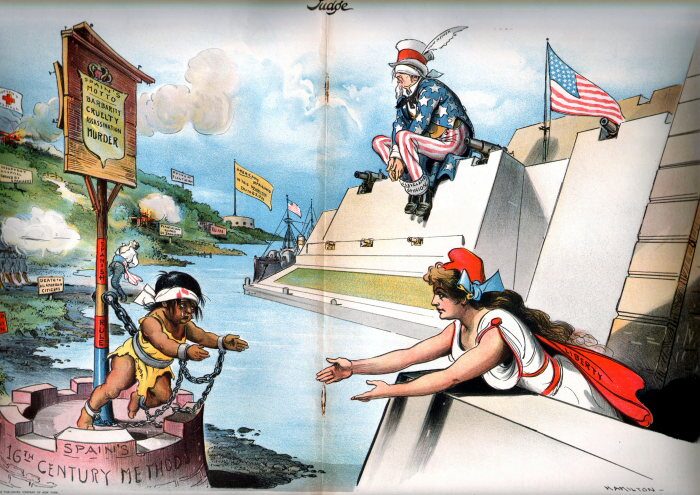 Rebel leaders engaged in extensive propaganda to get the U.S. to intervene, as shown in this cartoon in an American magazine. Columbia (the American people) reaches out to help oppressed Cuba in 1897 while Uncle Sam (the U.S. government) is blind to the crisis and will not use its powerful guns to help. Judge magazine, 6 February 1897. Martí was killed on 19 May 1895, but Máximo Gómez (a Dominican) and Antonio Maceo (a mulatto)[71] fought on. Gómez used scorched-earth tactics, which entailed dynamiting passenger trains and burning the Spanish loyalists' property and sugar plantations—including many owned by Americans.[72] By the end of June all of Camagüey was at war. Continuing west, Gómez and Maceo joined up with veterans of the 1868 war, Polish internationalists, General Carlos Roloff and Serafín Sánchez in Las Villas. In mid-September, representatives of the five Liberation Army Corps assembled in Jimaguayú to approve the Jimaguayú Constitution. This constitution established a central government, which grouped the executive and legislative powers into one entity, the Government Council, which was headed by Salvador Cisneros and Bartolomé Masó. After a period of consolidation in the three eastern provinces, the liberation armies headed for Camagüey and then for Matanzas, outmanoeuvring and deceiving the Spanish Army. The revolutionaries defeated the Spanish general Arsenio Martínez Campos and killed his most trusted general at Peralejo. Campos tried the same strategy he had employed in the Ten Years' War, constructing a broad defensive belt across the island, about 80 kilometres (50 mi) long and 200 metres (660 ft) wide. This line, called the trocha, was intended to limit rebel activities to the eastern provinces, and consisted of a railroad, from Jucaro in the south to Moron in the north, on which armored railcars could travel. At various points along this railroad there were fortifications, posts and barbed wire; booby traps were placed at the locations most likely to be attacked. For the rebels, it was essential to bring the war to the western provinces of Matanzas, Havana and Pinar del Río, where the island's government and wealth was located.[62] In a successful cavalry campaign, overcoming the trochas, the rebels invaded every province. Surrounding all the larger cities and well-fortified towns, they arrived at the westernmost tip of the island on 22 January 1896.[73][74] 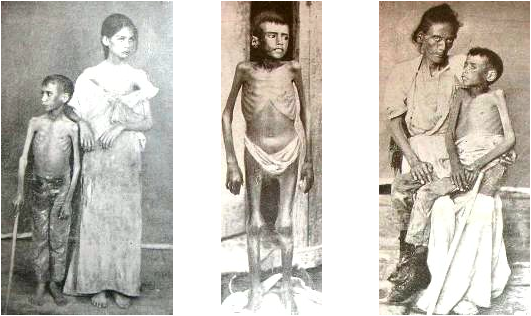 Cuban victims of Spanish reconcentration policies 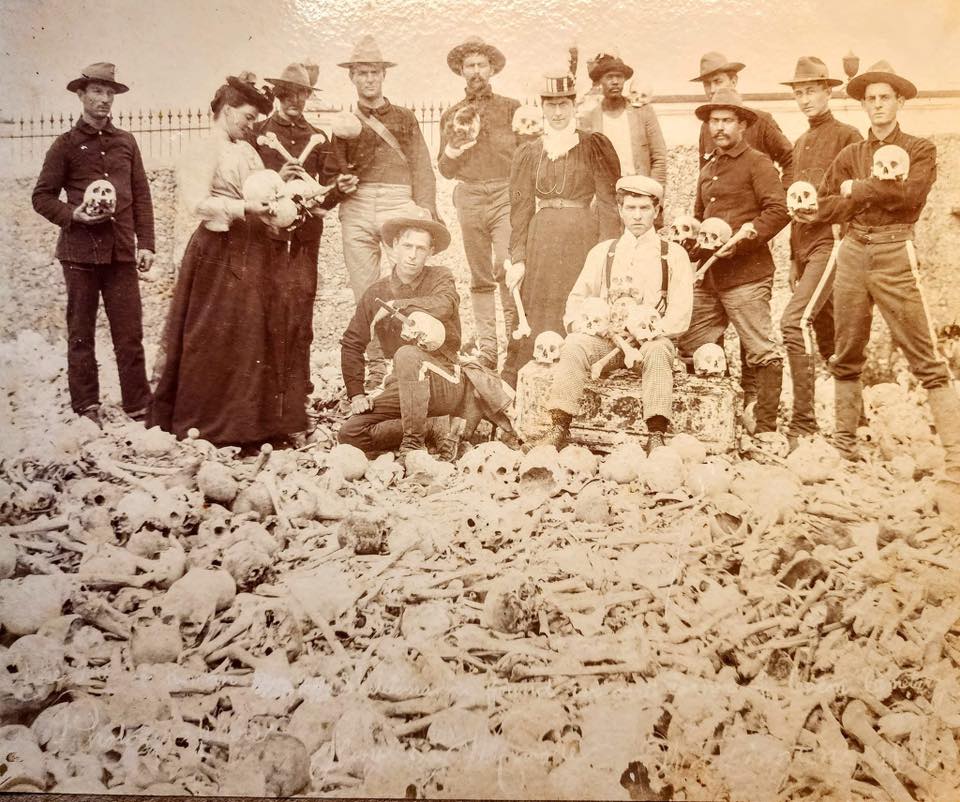 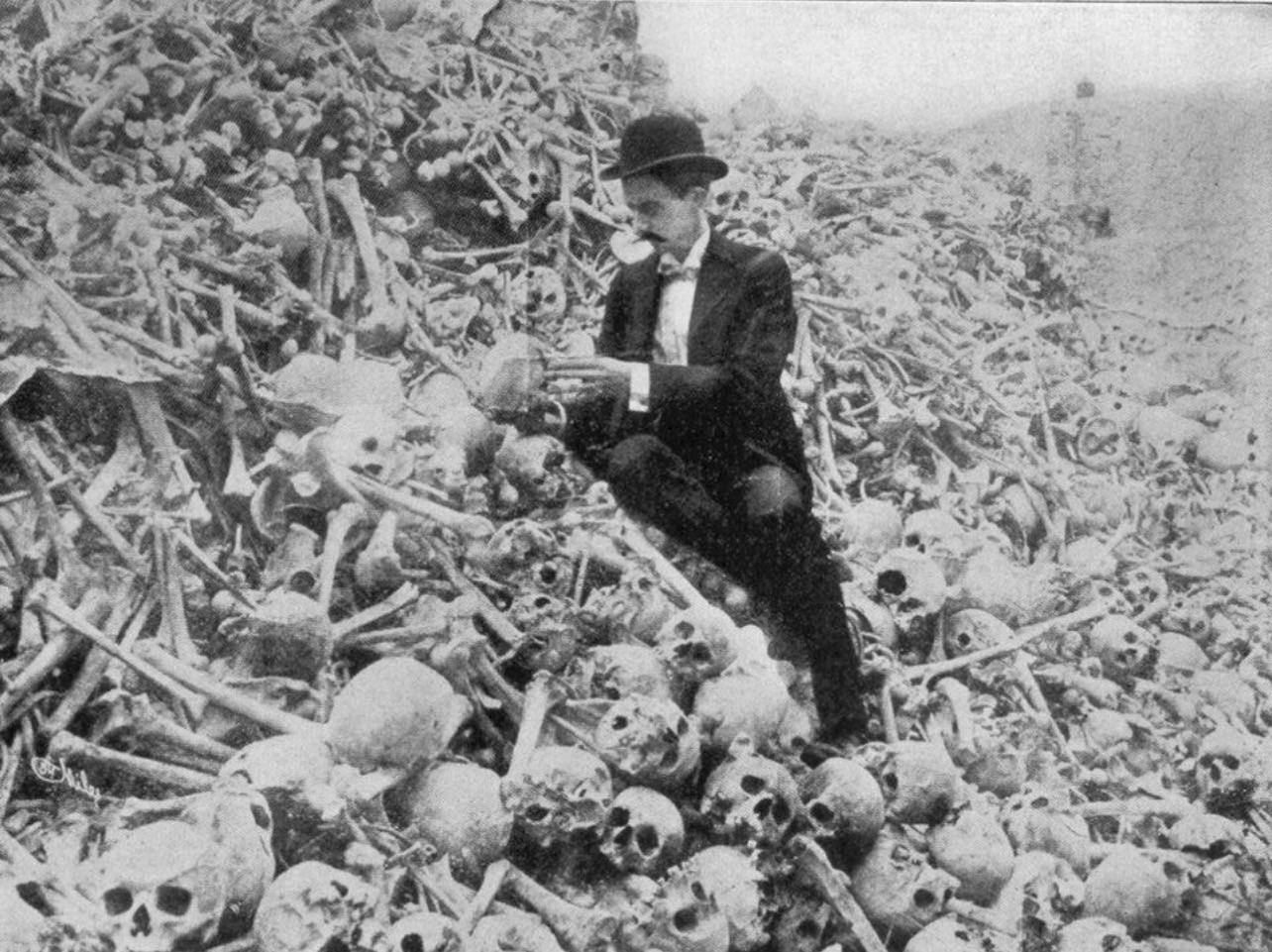 Unable to defeat the rebels with conventional military tactics,[75] the Spanish government sent Gen. Valeriano Weyler y Nicolau (nicknamed The Butcher), who reacted to these rebel successes by introducing terror methods: periodic executions, mass exiles, and the destruction of farms and crops. These methods reached their height on 21 October 1896, when he ordered all countryside residents and their livestock to gather in various fortified areas and towns occupied by his troops. Hundreds of thousands of people had to leave their homes, creating appalling conditions of overcrowding. This was the first recorded and recognized use of concentration camps where non-combatants were removed from their land to deprive the enemy of succor and then the internees were subjected to appalling conditions.[69] It is estimated that this measure caused the death of at least one-third of Cuba's rural population.[76] The forced relocation policy was maintained until March 1898.[62] Since the early 1880s, Spain had also been suppressing an independence movement in the Philippines, which was intensifying; Spain was thus now fighting two wars, which placed a heavy burden on its economy. In secret negotiations in 1896, Spain turned down the United States' offers to buy Cuba. Maceo was killed on 7 December 1896.[77] As the war continued, the major obstacle to Cuban success was weapons supply. Although weapons and funding came from within the United States, the supply operation violated American laws, which were enforced by the U.S. Coast Guard; of 71 resupply missions, only 27 got through.[78] In 1897, the liberation army maintained a privileged position in Camagüey and Oriente, where the Spanish only controlled a few cities. Spanish liberal leader Praxedes Sagasta admitted in May 1897: "After having sent 200,000 men and shed so much blood, we don't own more land on the island than what our soldiers are stepping on".[79] The rebel force of 3,000 defeated the Spanish in various encounters, such as the battle of La Reforma and the surrender of Las Tunas on 30 August, and the Spaniards were kept on the defensive. As stipulated at the Jimaguayú Assembly two years earlier, a second Constituent Assembly met in La Yaya, Camagüey, on 10 October 1897. The newly adopted constitution decreed that a military command be subordinated to civilian rule. The government was confirmed, naming Bartolomé Masó as president and Domingo Méndez Capote as vice president. Thereafter, Madrid decided to change its policy toward Cuba, replacing Weyler, drawing up a colonial constitution for Cuba and Puerto Rico, and installing a new government in Havana. But with half the country out of its control, and the other half in arms, the new government was powerless and rejected by the rebels. |
戦争の激化 反乱軍の指導者たちは、アメリカに介入させるべく大規模な宣伝活動を行った。このアメリカ雑誌の風刺画がそれを示している。1897年、コロンビア(アメ リカ国民)は抑圧されたキューバを助けようと手を差し伸べるが、アンクル・サム(アメリカ政府)は危機に目もくれず、強力な武器を使って助けるつもりはな い。ジャッジ誌、1897年2月6日号。 マルティは1895年5月19日に殺害されたが、マキシモ・ゴメス(ドミニカ人)とアントニオ・マセオ(混血)[71] は戦い続けた。ゴメスは焦土作戦を採用し、旅客列車を爆破し、スペイン王党派の財産や砂糖農園(その多くはアメリカ人が所有していた)を焼き払った [72]。6月末までに、カマグエイ全域が戦争状態となった。西へと進軍を続けるゴメスとマセオは、1868年の戦争の退役軍人、ポーランド人国際主義 者、カルロス・ロロフ将軍、そしてラス・ビジャスのセラフィン・サンチェスと合流した。9月中旬、5つの解放軍軍団の代表者がヒマグアユに集まり、ヒマグ アユ憲法を承認した。この憲法は中央政府を設立し、行政権と立法権をサルバドール・シスネロスとバルトロメ・マソが率いる政府評議会という一つの機関に統 合した。 東部 3 州で統合期間を経て、解放軍はカマグエイ、そしてマタンサスへと進軍し、スペイン軍を出し抜き、欺いた。革命軍はスペイン軍のアルセニオ・マルティネス・ カンポス将軍を打ち負かし、ペラレホで彼の最も信頼する将軍を殺害した。カンポスは、10年戦争で採用したのと同じ戦略、つまり島全体に長さ約80キロ メートル(50マイル)、幅200メートル(660フィート)の広大な防衛帯を構築しようとした。この「トロチャ」と呼ばれる防衛線は、反乱軍の活動を東 部諸州に限定する目的で設置された。南のフカロから北のモロンまで延びる鉄道沿いに構築され、装甲鉄道車両が移動できるように設計されていた。線路沿いに は要所ごとに要塞、監視所、有刺鉄線が配置され、攻撃を受けやすい地点には仕掛け爆弾が仕掛けられていた。 反乱軍にとって、島の政府と富が集中する西部のマタンサス、ハバナ、ピナール・デル・リオの各州に戦火を拡大することが不可欠だった[62]。騎兵作戦で トロチャを突破した反乱軍は全州に侵攻。主要都市や要塞化された町を包囲し、1896年1月22日には島の最西端に到達した[73]。[74] スペインの強制移住政策によるキューバの犠牲者たち 従来の軍事戦術では反乱軍を打ち破れなかったスペイン政府は、ヴァレリアーノ・ウェイラー・イ・ニコラウ将軍(通称「屠殺者」)を派遣した。彼は反乱軍の 成功に対し、定期的な処刑、集団追放、農場や作物の破壊といった恐怖政治で応じた。この手法は1896年10月21日に頂点に達した。彼は全農村住民とそ の家畜を、自軍が占拠する要塞地域や町々に集結させるよう命じた。数十万人が住居を離れざるを得ず、過密状態による悲惨な状況が生じた。これは非戦闘員を 土地から強制移送し敵の支援を断つため、収容者を劣悪な環境に置いた、史上初の記録・認定された強制収容所の運用であった[69]。この措置によりキュー バ農村人口の少なくとも3分の1が死亡したと推定される[76]。強制移住政策は1898年3月まで継続された。[62] 1880年代初頭からスペインはフィリピンにおける独立運動も弾圧しており、その動きは激化していた。スペインはこうして二つの戦争を同時に戦い、経済に 重い負担を強いられていた。1896年の秘密交渉で、スペインはキューバ購入を提案したアメリカ合衆国の申し出を拒否した。 マセオは1896年12月7日に戦死した。[77] 戦争が続く中、キューバ軍の勝利を阻む最大の障害は武器の供給だった。武器と資金は米国内から供給されたが、この補給作戦は米国法に違反しており、米国沿 岸警備隊によって取り締まられていた。71回の補給作戦のうち、成功したのはわずか27回だった。[78] 1897年、解放軍はカマグエイとオリエンテで優位な立場を維持し、スペイン軍が支配していたのは数都市に過ぎなかった。スペインの自由主義指導者プラク セデス・サガスタは1897年5月に認めた。「20万の兵を送り、これほど多くの血を流したにもかかわらず、我々が島で所有する土地は、兵士たちが踏みし めている土地だけだ」。[79] 3000人の反乱軍は、ラ・レフォルマの戦い(8月30日)やラス・トゥナスの降伏など、数々の戦闘でスペイン軍を撃破し、スペイン軍は守勢に立たされ た。 2年前のヒマグアユ議会で定められた通り、第二回憲法制定議会が1897年10月10日、カマグエイ州ラ・ヤヤで開催された。新たに採択された憲法は、軍 事指揮権を文民統制下に置くことを定めた。バルトロメ・マソを大統領、ドミンゴ・メンデス・カポテを副大統領とする政府が承認された。その後、マドリード はキューバに対する政策を変更することを決定した。ウェイラーを更迭し、キューバとプエルトリコのための植民地憲法を起草し、ハバナに新政府を設置した。 しかし、国土の半分が支配下にない上に、残りの半分も武装蜂起していたため、新政府は無力であり、反乱軍から拒否された。 |
USS Maine incident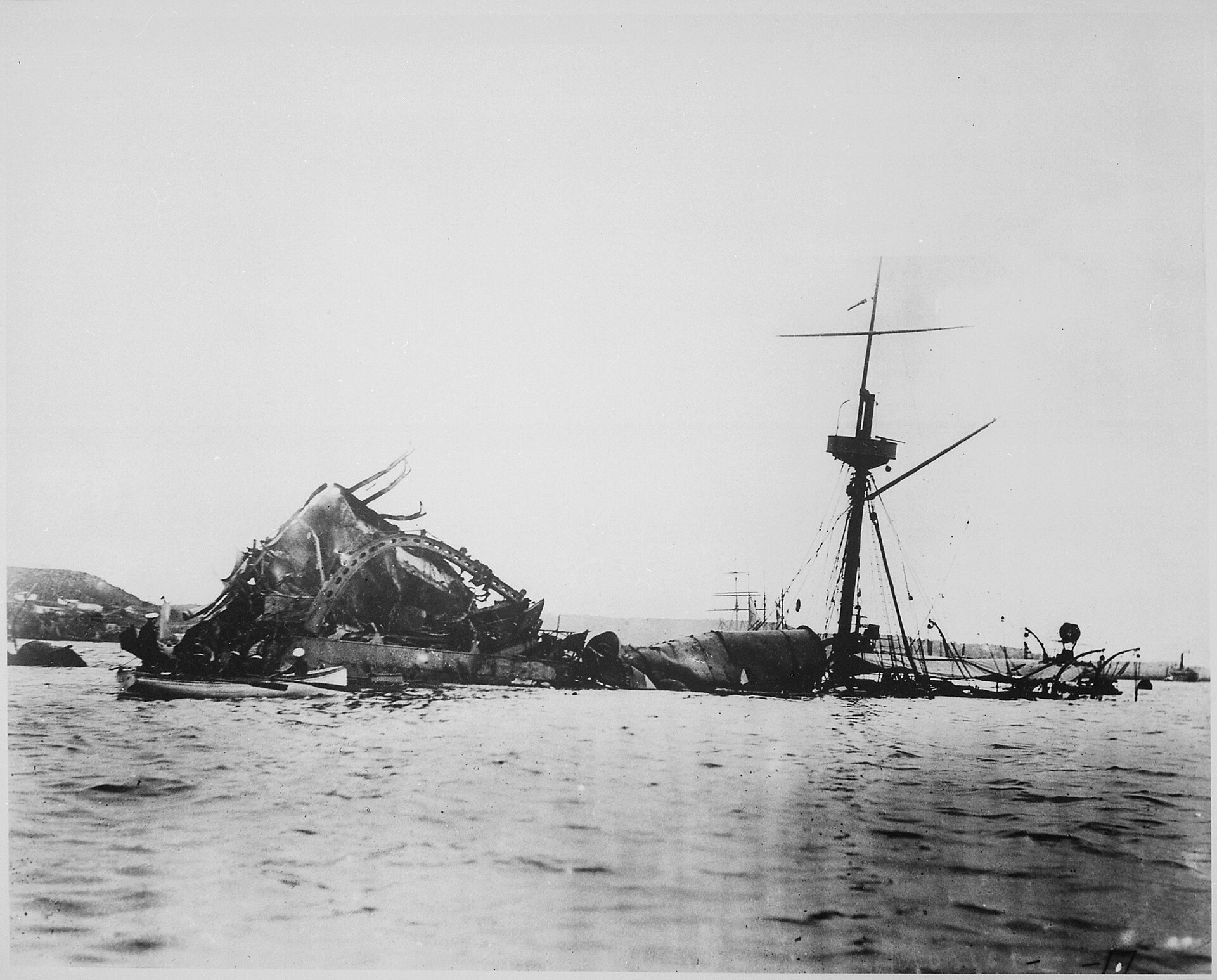 The wreckage of the USS Maine, photographed in 1898 The Cuban struggle for independence had captured the North American imagination for years and newspapers had been agitating for intervention with sensational stories of Spanish atrocities. Americans came to believe that Cuba's battle with Spain resembled the United States's Revolutionary War. North American public opinion was very much in favor of intervening for the Cubans.[80] In January 1898, a riot by Cuban-Spanish loyalists against the new autonomous government broke out in Havana, leading to the destruction of the printing presses of four local newspapers which published articles critical of the Spanish Army. The U.S. Consul-General cabled Washington, fearing for the lives of Americans living in Havana. In response, the battleship USS Maine was sent to Havana. On 15 February 1898, the Maine was destroyed by an explosion, killing 268 crewmembers. The cause of the explosion has not been clearly established, but the incident focused American attention on Cuba, and President William McKinley and his supporters could not stop Congress from declaring war to "liberate" Cuba. In an attempt to appease the United States, the colonial government ended the forced relocation policy and offered negotiations with the independence fighters. However, the truce was rejected by the rebels and the concessions proved too late. Madrid asked other European powers for help; they refused. On 11 April 1898, McKinley asked Congress for authority to send U.S. Armed Forces troops to Cuba for the purpose of ending the civil war. On 19 April, Congress passed joint resolutions supporting Cuban independence and disclaiming any intention to annex Cuba, demanding Spanish withdrawal, and authorizing military force to help Cuban patriots gain independence. This included from Senator Henry Teller the Teller Amendment, which passed unanimously, stipulating that "the island of Cuba is, and by right should be, free and independent".[81] The amendment disclaimed any intention on the part of the United States to exercise jurisdiction or control over Cuba for other than pacification reasons. War was declared on 20/21 April 1898. |
メイン号事件 1898年に撮影されたメイン号の残骸 キューバの独立運動は長年、北米の人々の想像力を捉えていた。新聞はスペインの残虐行為をセンセーショナルに報じ、介入を煽っていた。アメリカ人はキュー バとスペインの戦いが、自国の独立戦争に似ていると信じるようになった。北米の世論はキューバ支援の介入を強く支持していた。[80] 1898年1月、ハバナでスペインに忠実なキューバ人による暴動が発生した。これは新たな自治政府に対する反乱であり、スペイン軍を批判する記事を掲載し た地元4紙の印刷機が破壊される事態に至った。在ハバナ米国総領事は、現地在住アメリカ人の安全を懸念しワシントンに電報を送った。これを受け、戦艦メイ ン号がハバナへ派遣された。1898年2月15日、メイン号は爆発により沈没し、乗組員268名が死亡した。爆発の原因は明確に特定されていないが、この 事件で米国の関心がキューバに集中し、ウィリアム・マッキンリー大統領とその支持者たちは、議会がキューバを「解放」するための宣戦布告を阻止できなかっ た。米国をなだめようと、植民地政府は強制移住政策を終了させ、独立運動家との交渉を提案した。しかし、停戦は反乱軍に拒否され、譲歩は遅すぎた。マド リードは他の欧州列強に支援を求めたが、彼らは拒否した。 1898年4月11日、マッキンリーは内戦終結を目的に米軍部隊をキューバに派遣する権限を議会に要請した。4月19日、議会はキューバ独立支持と併合意 図の否定、スペイン軍撤退要求、キューバ愛国者の独立支援のための軍事力行使を認める共同決議を可決した。これにはヘンリー・テラー上院議員による「テ ラー修正条項」が含まれ、全会一致で可決された。同条項は「キューバ島は自由かつ独立した国家であり、その権利としてそうあるべきである」と規定した [81]。この修正条項は、平定以外の目的で米国がキューバに対する管轄権や支配権を行使する意図を一切否定した。1898年4月20日/21日、宣戦布 告がなされた。 |
| Cuban Theatre of the Spanish–American War Main article: Spanish–American War Destruction of Admiral Cervera's Spanish Fleet off Santiago de Cuba. 1898. Hostilities started hours after the declaration of war when a U.S. contingent under Admiral William T. Sampson blockaded several Cuban ports. The Americans decided to invade Cuba in Oriente where the Cubans were able to co-operate. The first U.S. objective was to capture the city of Santiago de Cuba to destroy Linares' army and Cervera's fleet. To reach Santiago they had to pass through concentrated Spanish defences in the San Juan Hills. Between 22 and 24 June 1898 the Americans landed under General William R. Shafter at Daiquirí and Siboney and established a base. The port of Santiago became the main target of U.S. naval operations, and the American fleet attacking Santiago needed shelter from the summer hurricane season. Nearby Guantánamo Bay was chosen for this purpose and attacked on 6 June. The Battle of Santiago de Cuba, on 3 July 1898, was the largest naval engagement during the Spanish–American War, and resulted in the destruction of the Spanish Caribbean Squadron. Resistance in Santiago consolidated around Fort Canosa,[82] while major battles between Spaniards and Americans took place at Las Guasimas on 24 June, and at El Caney and San Juan Hill on 1 July,[83] after which the American advance ground to a halt. Spanish troops successfully defended Fort Canosa, allowing them to stabilize their line and bar the entry to Santiago. The Americans and Cubans began a siege of the city,[84] which surrendered on 16 July after the defeat of the Spanish Caribbean Squadron. Thus, Oriente fell under the control of Americans and the Cubans, but U.S. General Nelson A. Miles would not allow Cuban troops to enter Santiago, claiming that he wanted to prevent clashes between Cubans and Spaniards. Cuban General Calixto García, head of the mambi forces in the Eastern department, ordered his troops to hold their areas and resigned, writing a letter of protest to General Shafter.[81] After losing the Philippines and Puerto Rico, which had also been invaded by the United States, Spain sued for peace on 17 July 1898.[85] On 12 August, the U.S. and Spain signed a protocol of peace, in which Spain agreed to relinquish Cuba.[86] On 10 December 1898, the U.S. and Spain signed the formal Treaty of Paris, recognizing continuing U. S. military occupation.[87] Although the Cubans had participated in the liberation efforts, the United States prevented Cuba from sending representatives to the Paris peace talks or signing the treaty, which set no time limit for U.S. occupation and excluded the Isle of Pines from Cuba.[88] Although the U.S. president had no objection to Cuba's eventual independence, U.S. General William R. Shafter refused to allow Cuban General Calixto García and his rebel forces to participate in the surrender ceremonies in Santiago de Cuba. |
米西戦争におけるキューバ戦線 詳細記事: 米西戦争 サンティアゴ・デ・クーバ沖におけるセルベラ提督率いるスペイン艦隊の壊滅。1898年。 開戦宣言から数時間後、ウィリアム・T・サンプソン提督指揮下の米軍部隊が複数のキューバ港を封鎖したことで戦闘が始まった。米軍はキューバ人との協力が 可能なオリエンテ地方への侵攻を決断した。米軍の最初の目標は、リナレスの軍隊とセルベラ艦隊を壊滅させるため、サンティアゴ・デ・クーバ市を占領するこ とだった。サンティアゴに到達するには、サン・フアン丘陵地帯に集中したスペイン軍の防衛線を突破する必要があった。1898年6月22日から24日にか けて、ウィリアム・R・シャフター将軍率いる米軍はダイキリとシボネイに上陸し、拠点を確立した。サンティアゴ港は米海軍作戦の主目標となり、同港を攻撃 する米艦隊は夏のハリケーンシーズンに備えた避難場所を必要とした。近隣のグアンタナモ湾がこの目的で選ばれ、6月6日に攻撃が開始された。1898年7 月3日のサンティアゴ・デ・クーバ海戦は米西戦争最大の海戦となり、スペインカリブ艦隊の壊滅をもたらした。 サンティアゴの抵抗勢力はカノーサ要塞を中心に結束した[82]。一方、スペイン軍とアメリカ軍の間では、6月24日にラス・グアシマスで、7月1日には エル・カネイとサン・フアンの丘で大規模な戦闘が起きた[83]。その後、アメリカ軍の進撃は停滞した。スペイン軍はカノーサ要塞の防衛に成功し、戦線を 安定させ、サンティアゴへの進入を阻止したのである。アメリカ軍とキューバ軍は同市の包囲を開始した[84]。スペインカリブ海艦隊の敗北を受け、7月 16日にサンティアゴは降伏した。こうしてオリエンテ州はアメリカとキューバの支配下に入ったが、米軍将軍ネルソン・A・マイルズはキューバ軍部隊のサン ティアゴ入城を許可しなかった。キューバ人とスペイン人の衝突を防ぐためだと主張したのである。東部州のマンビ軍を率いるキューバのカリクスト・ガルシア 将軍は、部隊に管轄区域の保持を命じた後、辞任し、シャフター将軍に抗議文を送った。[81] フィリピンとプエルトリコ(これも米国に侵攻されていた)を失ったスペインは、1898年7月17日に和平を申し入れた。[85] 8月12日、米国とスペインは和平議定書に調印し、スペインはキューバの割譲に同意した。[86] 1898年12月10日、米国とスペインは正式なパリ条約に調印し、米国の軍事占領継続を認めた。[87] キューバ人は解放運動に参加していたにもかかわらず、米国はキューバがパリ和平会議に代表を派遣したり、条約に署名したりすることを阻止した。この条約は 米国の占領に期限を設けず、ピネス島をキューバ領から除外していた。[88] 米大統領はキューバの将来的な独立に異論はなかったが、ウィリアム・R・シャフター将軍は、カリクスト・ガルシア将軍率いる反乱軍がサンティアゴ・デ・ クーバでの降伏式典に参加することを許可しなかった。 |
| U.S. occupation (1898–1902) |
アメリカによる占領(1898年–1902年) |
| Main article: United States Military Government in Cuba After the last Spanish troops left the island in December 1898, the government of Cuba was temporarily handed over to the United States on 1 January 1899. The first governor was General John R. Brooke. Unlike Puerto Rico, Guam, and the Philippines, the United States did not annex Cuba because of the restrictions imposed in the Teller Amendment.[89] Political changes The U.S. administration was undecided on Cuba's future status. Once it had been pried away from the Spaniards it was to be assured that it moved and remained in the U.S. sphere. How this was to be achieved was a matter of intense discussion and annexation was an option. Brooke set up a civilian government, placed U.S. governors in seven newly created departments, and named civilian governors for the provinces as well as mayors and representatives for the municipalities. Many Spanish colonial government officials were kept in their posts. The population were ordered to disarm and, ignoring the Mambi Army, Brooke created the Rural Guard and municipal police corps at the service of the occupation forces. Cuba's judicial powers and courts remained legally based on the codes of the Spanish government. Tomás Estrada Palma, Martí's successor as delegate of the Cuban Revolutionary Party, dissolved the party a few days after the signing of the Paris Treaty. The revolutionary Assembly of Representatives was also dissolved.[90] |
メイン記事: キューバにおけるアメリカ合衆国軍事政府 1898年12月に最後のスペイン軍が島を去った後、1899年1月1日にキューバの統治権は一時的にアメリカ合衆国に引き渡された。初代総督はジョン・ R・ブルック将軍であった。プエルトリコ、グアム、フィリピンとは異なり、アメリカはテラー修正条項による制約のためキューバを併合しなかった。[89] 政治的変化 アメリカ政府はキューバの将来の地位について決定していなかった。スペインから奪い取った以上、同国がアメリカの勢力圏内に入り、そこに留まることを保証 する必要があった。これをどう実現するかは激しい議論の的となり、併合も選択肢の一つであった。ブルックは文民政府を設置し、新たに創設された7つの県に 米国籍の知事を配置した。さらに各州には文民知事を、市町村には市長と代議士を任命した。多くのスペイン植民地政府官僚は現職に留まった。住民には武装解 除が命じられ、マンビ軍を無視してブルックは占領軍に従属する農村警備隊と市警察部隊を創設した。キューバの司法権と裁判所は法的にはスペイン政府の法規 に基づく体制を維持した。マルティの後継としてキューバ革命党代表を務めたトマス・エストラーダ・パルマは、パリ条約調印の数日後に同党を解散させた。革 命的な代議院も解散した。 |
| Economic changes Before the United States officially took over the government, it had already begun cutting tariffs on American goods entering Cuba, without granting the same rights to Cuban goods going to the United States.[91] Government payments had to be made in U.S. dollars.[88] The Foraker Amendment prohibited the U.S. occupation government from granting privileges and concessions to American investors, to appease anti-imperialists during the occupational period. Despite this, the Cuban economy was soon dominated by American capital.[91] By 1905, nearly 10% of Cuba's land area belonged to Americans. By 1902, American companies controlled 80% of Cuba's ore exports and owned most of the sugar and cigarette factories.[92] Immediately after the war, there were several serious barriers for foreign businesses attempting to operate in Cuba. The Joint Resolution of 1898, the Teller Amendment, and the Foraker Amendment threatened foreign investment. Eventually, Cornelius Van Horne of the Cuba Company, an early railroad company in Cuba, found a loophole in "revocable permits" justified by preexisting Spanish legislation that effectively allowed railroads to be built in Cuba. General Leonard Wood, the governor of Cuba and a noted annexationist, used this loophole to grant hundreds of franchises, permits, and other concessions to American businesses.[93] Once the legal barriers were overcome, American investments transformed the Cuban economy. Within two years of entering Cuba, the Cuba Company built a 350-mile railroad connecting the eastern port of Santiago to the existing railways in central Cuba. The company was the largest single foreign investment in Cuba for the first two decades of the twentieth century. By the 1910s it was the largest company in the country.[94] The improved infrastructure allowed the sugar cane industry to spread to the previously underdeveloped eastern part of the country. As many small Cuban sugar cane producers were crippled with debt and damages from the war, American companies were able to quickly and cheaply take over the industry. At the same time, new productive units called centrales could grind up to 2,000 tons of cane a day making large-scale operations most profitable.[95] The large fixed cost of these centrales made them almost exclusively accessible to American companies with large capital stocks. Furthermore, the centrales required a large, steady flow of cane to remain profitable, which led to further consolidation. Cuban cane farmers who had formerly been landowners became tenants on company land. By 1902, 40% of the country's sugar production was controlled by Americans.[96] With American corporate interests firmly rooted in Cuba, the U.S. tariff system was adjusted accordingly to strengthen trade between the nations. The Reciprocity Treaty of 1903 lowered the U.S. tariff on Cuban sugar by 20%. This gave Cuban sugar a competitive edge in the American marketplace. At the same time, it granted equal or greater concessions on most items imported from the United States. Cuban imports of American goods went from $17 million in the five years before the war, to $38 million in 1905, and eventually to over $200 million in 1918. Likewise, Cuban exports to the United States reached $86 million in 1905 and rose to nearly $300 million in 1918.[97] |
経済的変化 アメリカが正式に政府を掌握する前から、アメリカ製品がキューバに入る際の関税引き下げは既に始まっていた。一方でキューバ製品がアメリカに入る際の同様 の権利は認められていなかった。[91] 政府の支払いは米ドルで行わねばならなかった。[88] フォーカー修正条項は、占領期間中の反帝国主義派をなだめるため、アメリカ占領政府がアメリカ人投資家に特権や譲歩を与えることを禁じていた。それにもか かわらず、キューバ経済はすぐにアメリカ資本に支配されるようになった。[91] 1905年までに、キューバの国土面積のほぼ10%がアメリカ人の所有となった。1902年までに、アメリカ企業はキューバの鉱石輸出の80%を支配し、 砂糖工場とタバコ工場の大半を所有していた。[92] 戦争直後、キューバで事業を展開しようとする外国企業にはいくつかの重大な障壁があった。1898年の共同決議、テラー修正条項、フォーカー修正条項が外 国投資を脅かしていた。やがて、キューバ初期の鉄道会社「キューバ・カンパニー」のコーネリアス・ヴァン・ホーンは、既存のスペイン法に基づく「取り消し 可能な許可」という抜け穴を発見した。これは実質的にキューバでの鉄道建設を認めるものであった。キューバ総督で著名な併合論者であるレナード・ウッド将 軍はこの抜け穴を利用し、アメリカ企業に数百もの特許権、許可、その他の特権を付与した。[93] 法的障壁が克服されると、アメリカ資本はキューバ経済を変貌させた。キューバ会社は進出から2年以内に、東部の港湾都市サンティアゴと中部キューバの既存 鉄道網を結ぶ350マイル(約563キロ)の鉄道を建設した。同社は20世紀初頭の20年間、キューバにおける最大の単一外国投資企業であった。1910 年代には国内最大の企業へと成長した。[94] 整備されたインフラにより、サトウキビ産業はこれまで未開発だった東部地域へ拡大した。多くの小規模キューバ人サトウキビ生産者が戦争による負債と損害で 経営難に陥っていたため、アメリカ企業は迅速かつ低コストで産業を掌握できた。同時に、セントラルと呼ばれる新たな生産施設は1日あたり最大2,000ト ンのサトウキビを粉砕でき、大規模経営が最も収益性の高い形態となった。[95] こうしたセントラルズの巨額な固定費は、多額の資本を保有するアメリカ企業にほぼ独占的に参入を許した。さらにセントラルズは収益維持のため大量のサトウ キビを安定供給する必要があり、これがさらなる統合を促した。かつて地主だったキューバのサトウキビ農家は、企業の土地で小作人となった。1902年まで に、国内砂糖生産の40%がアメリカ資本の支配下に入った。[96] アメリカ企業の利害がキューバに深く根ざす中、両国間の貿易強化に向け関税制度が調整された。1903年の互恵条約により、キューバ産砂糖に対する米国関 税は20%引き下げられた。これによりキューバ産砂糖は米国市場で競争優位を得た。同時に、米国からの輸入品の大半に対し、同等かそれ以上の譲歩が認めら れた。キューバの米国製品輸入額は、戦争前の5年間で1700万ドルだったが、1905年には3800万ドルに増加し、1918年には2億ドルを超えた。 同様に、キューバの米国向け輸出額は1905年に8600万ドルに達し、1918年には約3億ドルにまで上昇した。[97] |
| Elections and independence Popular demands for a Constituent Assembly soon emerged.[88] In December 1899, the U.S. War Secretary assured the Cuban populace that the occupation was temporary, that municipal and general elections would be held, that a Constituent Assembly would be set up, and that sovereignty would be handed to Cubans. Brooke was replaced by General Leonard Wood to oversee the transition. Parties were created, including the Cuban National Party, the Federal Republican Party of Las Villas, the Republican Party of Havana and the Democratic Union Party. The first elections for mayors, treasurers and attorneys of the country's 110 municipalities took place on 16 June 1900, but balloting was limited to literate Cubans older than 21 and with properties worth more than $250. Only members of the dissolved Liberation Army were exempt from these conditions. Thus, the number of about 418,000 male citizens over 21 was reduced to about 151,000. The same elections were held one year later, again for a one-year-term. Elections for 31 delegates to a Constituent Assembly were held on 15 September 1900 with the same balloting restrictions. In all three elections, pro-independence candidates won overwhelming majorities.[98] The Constitution was drawn up from November 1900 to February 1901 and then passed by the Assembly. It established a republican form of government, proclaimed internationally recognized individual rights and liberties, freedom of religion, separation between church and state, and described the composition, structure and functions of state powers. On 2 March 1901, the U.S. Congress passed the Army Appropriations Act, stipulating the conditions for the withdrawal of United States troops remaining in Cuba. As a rider, this act included the Platt Amendment, which defined the terms of Cuban–U.S. relations until 1934. The amendment provided for a number of rules heavily infringing on Cuba's sovereignty: That the government of Cuba shall never enter into any treaty with any foreign power which will impair the independence of Cuba, nor in any manner permit any foreign power to obtain control over any portion of the island. That Cuba would contract no foreign debt without guarantees that the interest could be served from ordinary revenues. That Cuba consent that the United States may intervene for the preservation of Cuban independence, to protect life, property, and individual liberty, and to discharging the obligations imposed by the treaty of Paris. That the Cuban claim to the Isle of Pines (now called Isla de la Juventud) was not acknowledged and to be determined by treaty. That Cuba commit to providing the United States "lands necessary for coaling or naval stations at certain specified points to be agreed upon". On 6 April 1901, the Constituent Assembly rejected the Platt Amendment by a vote of 24 to 2. The United States demanded that this amendment be approved fully and without changes by the Constituent Assembly as an appendix to the new constitution. US Secretary of War Elihu Root told Governor Wood to convey to the Cuban delegates that “they never can have any further government in Cuba, except the intervening Government of the United States, until they have [approved the Platt Amendment].” On 12 June 1901, after heated debate, the Constituent Assembly approved the appendix by a margin of four votes. Wood later admitted privately to US President Roosevelt: "Little or no independence had been left to Cuba with the Platt Amendment and the only thing appropriate was to seek annexation".[98][99] In the presidential elections of 31 December 1901, Tomás Estrada Palma, an American still living in the United States, was the only candidate. His adversary, General Bartolomé Masó, withdrew his candidacy in protest against U.S. favoritism and the manipulation of the political machine by Palma's followers. Palma was elected to be the Republic's first President. |
選挙と独立 間もなく、憲法制定議会を求める民衆の要求が浮上した[88]。1899年12月、米国陸軍長官はキューバ国民に対し、占領は一時的なものであり、地方選 挙と総選挙が実施され、憲法制定議会が設置され、主権がキューバ人に移譲されると保証した。ブルック将軍は、移行を監督するためレナード・ウッド将軍に交 代した。キューバ国民党、ラス・ビジャス連邦共和党、ハバナ共和党、民主連合党など、様々な政党が結成された。 1900年6月16日、国内110自治体の市長、会計係、検事の初選挙が実施されたが、投票権は21歳以上で読み書きができ、250ドル以上の財産を所有 するキューバ人に限定された。解散した解放軍の構成員のみがこれらの条件から免除された。これにより、21歳以上の男性市民約41万8千人は約15万1千 人に減少した。同じ選挙が1年後に再び実施され、任期は再び1年であった。 1900年9月15日、憲法制定議会代表31名の選挙が同じ投票制限のもとで行われた。三回の選挙全てで、独立派候補が圧倒的多数を獲得した[98]。憲 法は1900年11月から1901年2月にかけて起草され、議会で可決された。共和制政府を確立し、国際的に認められた個人の権利と自由、信教の自由、政 教分離を宣言し、国家権力の構成、構造、機能を定めた。 1901年3月2日、米国議会は駐留米軍の撤退条件を定めた「陸軍歳出法」を可決した。この法律の付帯条項として「プラット修正条項」が盛り込まれ、1934年まで米キューバ関係の条件を規定した。修正条項はキューバの主権を著しく侵害する数々の規則を定めていた: キューバ政府は、いかなる外国勢力とも、キューバの独立を損なう条約を締結してはならず、またいかなる方法によっても外国勢力が島の一部を支配することを許してはならない。 キューバは、通常の歳入から利子を支払える保証がない限り、外国債務を契約してはならない。 キューバは、米国の介入を認める。その目的は、キューバの独立維持、生命・財産・個人の自由の保護、ならびにパリ条約が課した義務の履行である。 キューバが主張するパイン島(現在のイスラ・デ・ラ・フベントゥード)の領有権は認められず、条約によって決定される。 キューバは、米国に対し「石炭補給基地または海軍基地として必要な土地を、合意された特定の地点に提供する」ことを約束する。 1901年4月6日、憲法制定議会は24対2の投票でプラット修正条項を否決した。米国は、この修正条項を新憲法の付録として憲法制定議会が完全かつ変更 なしで承認するよう要求した。米国陸軍長官エリヒュー・ルートはウッド総督に対し、キューバ代表団に「(プラット修正案を)承認するまでは、米国による介 入政府以外のいかなる政府もキューバに存在し得ない」と伝えるよう指示した。1901年6月12日、激しい議論の末、憲法制定議会は4票差でこの付録を承 認した。ウッドは後にルーズベルト大統領に私的に認めた。「プラット修正条項によりキューバに残された独立はほとんど、あるいは全くなく、適切なのは併合 を求めることだけだった」[98] [99] 1901年12月31日の大統領選挙では、当時まだ米国に居住していたアメリカ人、トマス・エストラーダ・パルマが唯一の候補者となった。対立候補のバル トロメ・マソ将軍は、米国の優遇政策とパルマ支持者による政治機構の操作に抗議して立候補を取り下げた。パルマは共和国初代大統領に選出された。 |
| Early 20th century (1902–1959) | 20世紀前半(1902年~1959年) |
| Main article: Republican period (Cuba) See also: Cuba during World War I The U.S. occupation officially ended when Palma took office on 20 May 1902.[100] Havana and Varadero soon became popular tourist resorts. Though some efforts were made to ease Cuba's ethnic tensions through government policies, racism and informal discrimination towards blacks and mestizos remained widespread.[101] Guantanamo Bay was leased to the United States as part of the Platt Amendment. The status of the Isle of Pines as Cuban territory was left undefined until 1925, when the United States finally recognized Cuban sovereignty over the island. Palma governed successfully for his four-year term; yet when he tried to extend his time in office, a revolt ensued. The Second Occupation of Cuba, also known as the Cuban Pacification, was a major US military operation that began in September 1906. After the collapse of Palma's regime, US President Roosevelt invaded and established an occupation that would continue for nearly two and a half years. The stated goal of the operation was to prevent fighting between the Cubans, to protect North American economic interests, and to hold free elections. In 1906, the United States representative William Howard Taft negotiated an end of the successful revolt led by the young general Enrique Loynaz del Castillo.[102] Palma resigned and the United States Governor Charles Magoon assumed temporary control until 1909.[103] Following the election of José Miguel Gómez in November 1908, Cuba was deemed stable enough to allow a withdrawal of American troops, which was completed in February 1909. For three decades, the country was led by former War of Independence leaders, who after being elected did not serve more than two constitutional terms. The Cuban presidential succession was as follows: José Miguel Gómez (1908–1912); Mario García Menocal (1913–1920); Alfredo Zayas (1921–25) and Gerardo Machado (1925–1933).[104] Under the Liberal Gómez the participation of Afro-Cubans in the political process was curtailed when the Partido Independiente de Color was outlawed and bloodily suppressed in 1912, as American troops reentered the country to protect the sugar plantations.[105] Under Gómez's successor, Mario Menocal of the Conservative Party, income from sugar rose steeply.[106] Menocal's reelection in 1916 was met with armed revolt by Gómez and other Liberals (the so-called "Chambelona War"), prompting the United States to send in Marines. Gómez was defeated and captured and the rebellion was snuffed out.[107] In World War I, Cuba declared war on Imperial Germany on 7 April 1917, one day after the United States entered the war. Despite being unable to send troops to fight in Europe, Cuba played a significant role as a base to protect the West Indies from German U-boat attacks. A draft law was instituted, and 25,000 Cuban troops raised, but the war ended before they could be sent into action. Alfredo Zayas was elected president in 1920 and took office in 1921. When the Cuban financial system collapsed after a drop in sugar prices, Zayas secured a loan from the United States in 1922. One historian has concluded that the continued U.S. military intervention and economic dominance had once again made Cuba "a colony in all but name."[108] |
主記事: 共和制時代 (キューバ) 関連項目: 第一次世界大戦期のキューバ パルマが1902年5月20日に就任したことで、米国の占領は公式に終結した。[100] ハバナとバラデロはすぐに人気の観光地となった。政府政策を通じてキューバの民族間の緊張を緩和する努力がなされたものの、黒人やメスティソに対する人種 主義や非公式な差別は依然として広く存在した。[101] グアンタナモ湾はプラット修正条項の一環としてアメリカに貸与された。パイン島のキューバ領としての地位は1925年まで未確定だったが、この年アメリカ はついに同島に対するキューバの主権を認めた。パルマは4年間の任期を成功裏に統治したが、任期延長を試みた際に反乱が発生した。 キューバ第二占領(キューバ平定とも呼ばれる)は、1906年9月に始まった大規模な米軍作戦である。パルマ政権崩壊後、ルーズベルト米大統領は侵攻し、 約2年半に及ぶ占領を開始した。作戦の公的な目的は、キューバ人同士の戦闘を防止し、北米の経済的利益を守り、自由選挙を実施することだった。1906 年、米国代表ウィリアム・ハワード・タフトは、若き将軍エンリケ・ロイナズ・デル・カスティーヨが率いた反乱の終結を交渉した。[102] パルマは辞任し、アメリカ合衆国総督チャールズ・マグーンが1909年まで暫定統治を引き継いだ。[103] 1908年11月のホセ・ミゲル・ゴメス当選後、キューバは安定していると判断され、アメリカ軍は撤退した。撤退は1909年2月に完了した。 その後30年間、独立戦争の指導者たちが政権を担った。彼らは選出後、憲法で定められた2期を超えて在任することはなかった。キューバ大統領の継承は以下 の通りである:ホセ・ミゲル・ゴメス(1908-1912年)、マリオ・ガルシア・メノカル(1913-1920年)、アルフレド・サヤス(1921- 1925年)、ヘラルド・マチャド(1925-1933年)。[104] 自由党のゴメス政権下では、1912年に独立有色人種党が非合法化され血みどろの弾圧を受けたことで、アフリカ系キューバ人の政治参加が制限された。この 時、砂糖農園保護のため米軍が再進駐している。[105] ゴメスの後継者である保守党のマリオ・メノカル政権下では、砂糖収入が急増した。[106] 1916年のメノカル再選に対し、ゴメスら自由党派が武装蜂起(いわゆる「チャンベローナ戦争」)を起こしたため、アメリカは海兵隊を派遣した。ゴメスは 敗北・捕縛され、反乱は鎮圧された。[107] 第一次世界大戦中、キューバは1917年4月7日、アメリカ合衆国が参戦した翌日にドイツ帝国に対して宣戦布告した。欧州戦線に兵士を派遣することはでき なかったものの、キューバは西インド諸島をドイツのUボート攻撃から守る拠点として重要な役割を果たした。徴兵法が制定され、2万5千人のキューバ兵が召 集されたが、彼らが実戦に投入される前に戦争は終結した。 アルフレド・サヤスは1920年に大統領に選出され、1921年に就任した。砂糖価格の下落でキューバの金融システムが崩壊すると、サヤスは1922年に 米国から融資を確保した。ある歴史家は、米国の継続的な軍事介入と経済的支配が、キューバを再び「名目上は植民地ではないものの、実質的には植民地」にし たと結論づけている。[108] |
| Post-World War I President Gerardo Machado was elected by popular vote in 1925, but he was constitutionally barred from reelection. Machado, determined to modernize Cuba, set in motion several massive civil works projects such as the Central Highway, but at the end of his constitutional term he held on to power. The United States decided not to interfere militarily. In the late 1920s and early 1930s a number of Cuban action groups staged a series of uprisings that either failed or did not affect the capital. The Sergeants' Revolt undermined the institutions and coercive structures of the oligarchic state. The young and relatively inexperienced revolutionaries found themselves pushed into the halls of state power by worker and peasant mobilisations. Between September 1933 and January 1934 a loose coalition of radical activists, students, middle-class intellectuals, and disgruntled lower-rank soldiers formed a Provisional Revolutionary Government. This coalition was directed by a popular university professor, Dr Ramón Grau San Martín. The Grau government promised a 'new Cuba' which would belong to all classes, and the abrogation of the Platt Amendment. They believed their legitimacy stemmed from the popular support which brought them to power, and not from the approval of the United States Department of State. To this end, throughout the autumn of 1933, the government decreed a dramatic series of reforms. The Platt Amendment was unilaterally abrogated, and all the political parties of the Machadato were dissolved. The Provisional Government granted autonomy to the University of Havana, women obtained the right to vote, the eight-hour day was decreed, a minimum wage was established for cane-cutters, and compulsory arbitration was promoted. The government created a Ministry of Labour, and a law was passed establishing that 50 per cent of all workers in agriculture, commerce and industry had to be Cuban citizens. The Grau regime set agrarian reform as a priority, promising peasants legal title to their lands. The Provisional Government survived until January 1934, when it was overthrown by an anti-government coalition of right-wing civilian and military elements. Led by a young mestizo sergeant, Fulgencio Batista, this movement was supported by the United States.[109] |
第一次世界大戦後 ヘラルド・マチャド大統領は1925年に国民投票で選出されたが、憲法上再選は禁じられていた。マチャドはキューバの近代化を強く望み、中央幹線道路など 大規模な公共事業を進めたが、任期満了後も権力を握り続けた。アメリカ合衆国は軍事介入を行わないことを決めた。1920年代後半から1930年代初頭に かけて、キューバの複数の行動グループが一連の蜂起を起こしたが、いずれも失敗に終わったり首都に影響を与えなかったりした。 軍曹の反乱は寡頭政治国家の制度と強制的構造を弱体化させた。若く比較的経験の浅い革命家たちは、労働者と農民の動員によって国家権力の座へと押し上げら れた。1933年9月から1934年1月にかけ、急進的活動家、学生、中産階級の知識人、不満を抱く下級兵士らによる緩やかな連合が暫定革命政府を形成し た。この連合は人気のある大学教授、ラモン・グラウ・サン・マルティン博士が主導した。グラウ政権は「新たなキューバ」を約束した。それは全ての階級に属 するものであり、プラット修正条項の廃止を掲げた。彼らは自らの正当性が、米国国務省の承認ではなく、権力の座に就かせた民衆の支持に由来すると信じてい た。 この目的のため、1933年の秋を通じて、政府は劇的な一連の改革を布告した。プラット修正条項は一方的に廃止され、マチャダ政権下の全ての政党は解散し た。暫定政府はハバナ大学に自治権を認め、女性に選挙権を付与し、8時間労働制を制定した。サトウキビ刈り取り労働者への最低賃金が設定され、強制仲裁が 推進された。政府は労働省を設置し、農業・商業・工業の全労働者の50%をキューバ市民とする法律を可決した。グラウ政権は農地改革を最優先課題とし、農 民に土地の法的所有権を約束した。暫定政府は1934年1月まで存続したが、右派の民間人・軍人による反政府連合によって打倒された。この運動は若い混血 の軍曹フルヘンシオ・バティスタが率い、アメリカ合衆国の支援を受けていた。[109] |
1940 Constitution and the Batista era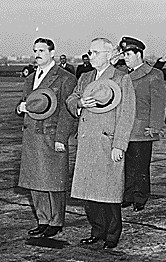 President Carlos Prío Socarrás (left), with US president Harry S. Truman in Washington, D.C. in 1948 Rise of Batista See also: Cuba during World War II and 1952 Cuban coup d'état In 1940, Cuba conducted free and fair national elections.[110][111] Fulgencio Batista, was originally endorsed by Communist leaders in exchange for the legalization of the Popular Socialist Party and Communist domination of the labor movement. The reorganization of the labor movement during this time was capped with the establishment of the Confederacion de Trajabadores de Cuba (Confederation of Cuban Workers, or CTC), in 1938. However, in 1947, the Communists lost control of the CTC, and their influence in the trade union movement gradually declined into the 1950s. The assumption of the Presidency by Batista in 1952 and the intervening years to 1958 placed tremendous strain on the labor movement, with some independent union leaders resigning from the CTC in opposition to Batista's rule.[112] The relatively progressivist 1940 Constitution was adopted by the Batista administration.[110][111] The constitution denied Batista the possibility of running consecutively in the 1944 election. Rather than endorsing Batista's hand-picked successor Carlos Zayas, the Cuban people elected Ramón Grau San Martín in 1944. Grau made a deal with labor unions to continue Batista's pro-labor policies.[113] Grau's administration coincided with the end of World War II, and he presided over an economic boom as sugar production expanded and prices rose. He instituted programs of public works and school construction, increasing social security benefits and encouraging economic development and agricultural production. However, increased prosperity brought increased corruption and urban violence.[113][114] The country was also steadily gaining a reputation as a base for organized crime, with the Havana Conference of 1946 seeing leading Mafia mobsters descend upon the city.[115] Grau's presidency was followed by that of Carlos Prío Socarrás, whose government was tainted by increasing corruption and violent incidents among political factions. Eduardo Chibás – the leader of the Partido Ortodoxo (Orthodox Party), a nationalist group – was widely expected to win in 1952 on an anticorruption platform. However, Chibás committed suicide before he could run, and the opposition was left without a unifying leader.[116] Batista seized power in an almost bloodless coup. President Prío was forced to leave Cuba. Due to the corruption of the previous two administrations, the general public reaction to the coup was somewhat accepting at first. However, Batista soon encountered stiff opposition when he temporarily suspended balloting and the 1940 constitution, and attempted to rule by decree. Nonetheless, elections were held in 1954 and Batista was re-elected under disputed circumstances.[117] Economic expansion and stagnation Although corruption was rife under Batista, Cuba did flourish economically. Wages rose significantly;[118] according to the International Labour Organization, the average industrial salary in Cuba was the world's eighth-highest in 1958, and the average agricultural wage was higher than in developed nations such as Denmark and France.[118][119] Although a third of the population still lived in poverty (according to Batista's government), Cuba was one of the five most developed countries in Latin America by the end of the Batista era,[120] with 56% of the population living in cities.[121] In the 1950s, Cuba's gross domestic product (GDP) per capita was roughly equal to that of contemporary Italy, although still only a sixth as large as that of the United States.[118] Labour rights were also favourable – Cuban workers were entitled to a month's paid holiday, nine days' sick leave with pay, and six weeks' leave before and after childbirth.[122] Cuba had Latin America's highest per capita consumption rates of meat, vegetables, cereals, automobiles, telephones and radios during this period.[119][122][123]: 186 Havana was the world's fourth-most-expensive city at the time.[110] Moreover, Cuba's health service was remarkably developed. By the late 1950s, it had one of the highest numbers of doctors per capita – more than in the United Kingdom at that time – and the third-lowest adult mortality rate. According to the World Health Organization, the island had the lowest infant mortality rate in Latin America, and the 13th-lowest in the world.[119][124][125] Cuba's education spending in the 1950s was the highest in Latin America, relative to GDP.[119] Cuba had the fourth-highest literacy rate in the region, at almost 80% according to the United Nations – higher than that of Spain at the time.[126][124][125] This article's factual accuracy is disputed. Relevant discussion may be found on the talk page. Please help to ensure that disputed statements are reliably sourced. (August 2019) (Learn how and when to remove this message) However, the United States, rather than Latin America, was the frame of reference for educated Cubans.[110][121] Middle-class Cubans grew frustrated at the economic gap between Cuba and the US,[110] and increasingly dissatisfied with the administration.[110][113] Large income disparities arose due to the extensive privileges enjoyed by Cuba's unionized workers.[127] Cuban labour unions had established limitations on mechanization and even banned dismissals in some factories.[122] The labour unions' privileges were obtained in large measure "at the cost of the unemployed and the peasants".[127] Cuba's labour regulations ultimately caused economic stagnation. Hugh Thomas asserts that "militant unions succeeded in maintaining the position of unionized workers and, consequently, made it difficult for capital to improve efficiency."[128] Between 1933 and 1958, Cuba increased economic regulation enormously.[113] The regulation led to declining investment.[113] The World Bank also complained that the Batista administration raised the tax burden without assessing its impact. Unemployment was high; many university graduates could not find jobs.[113] After its earlier meteoric rise, the Cuban gross domestic product grew at only 1% annually on average between 1950 and 1958.[121] |
1940年憲法とバティスタ時代 カルロス・プリオ・ソカラス大統領(左)とハリー・S・トルーマン米大統領、1948年ワシントンD.C.にて バティスタの台頭 関連項目: 第二次世界大戦下のキューバ、1952年キューバクーデター 1940年、キューバは自由で公正な全国選挙を実施した。[110][111] フルヘンシオ・バティスタは当初、人民社会党の合法化と労働運動における共産党の支配権と引き換えに、共産党指導者たちから支持を得ていた。この時期の労 働運動の再編は、1938年のキューバ労働者連合(CTC)の設立で頂点を迎えた。しかし1947年、共産党はCTCの支配権を失い、1950年代にかけ て労働組合運動における影響力は次第に衰退した。1952年のバティスタ大統領就任から1958年までの期間は労働運動に多大な圧力をかけ、一部の独立系 組合指導者はバティスタ政権に反対してCTCを離脱した。[112] バティスタ政権は比較的進歩的な1940年憲法を採択した。[110][111] この憲法により、バティスタは1944年の選挙で連続出馬する可能性を否定された。 キューバ国民は1944年、バティスタが指名した後継者カルロス・サヤスではなく、ラモン・グラウ・サン・マルティンを選出した。グラウは労働組合と協定 を結び、バティスタの労働者支援政策を継続した。[113] グラウ政権は第二次世界大戦の終結と時期を同じくし、砂糖生産の拡大と価格上昇に伴う経済ブームを主導した。公共事業や学校建設プログラムを実施し、社会 保障給付を増額するとともに、経済発展と農業生産を促進した。しかし、繁栄の拡大は汚職と都市部の暴力の増加をもたらした。[113][114] 同国は組織犯罪の拠点としての評判も着実に高まり、1946年のハバナ会議では主要なマフィアのボスたちがこの街に集結した。[115] グラウ大統領の後任はカルロス・プリオ・ソカラスであり、その政権は政治派閥間の汚職と暴力事件の増加によって汚された。1952年、反汚職を掲げたナ ショナリスト団体「正統党」の指導者エドゥアルド・チバスが勝利すると広く予想されていた。しかしチバスは立候補前に自殺し、野党は結束した指導者を失っ た。[116] バティスタはほぼ流血のないクーデターで権力を掌握した。プリオ大統領はキューバを追放された。過去2政権の腐敗のため、クーデターに対する国民の反応は 当初、ある程度容認的だった。しかしバティスタは間もなく、選挙と1940年憲法を一時停止し、勅令による統治を試みたことで強い反対に直面した。それで も1954年に選挙が実施され、バティスタは物議を醸す状況下で再選された。[117] 経済拡大と停滞 バティスタ政権下では汚職が蔓延していたが、キューバ経済は確かに繁栄した。賃金は大幅に上昇した[118]。国際労働機関(ILO)によれば、1958 年のキューバの平均工業賃金は世界第8位であり、平均農業賃金はデンマークやフランスなどの先進国を上回っていた。[118][119] 人口の3分の1が依然として貧困状態にあった(バティスタ政権発表)とはいえ、バティスタ政権末期にはキューバはラテンアメリカで5番目に発展した国の一 つとなり[120]、人口の56%が都市部に居住していた[121]。 1950年代、キューバの一人当たり国内総生産(GDP)は当時のイタリアとほぼ同水準だったが、米国と比べると依然として6分の1の規模だった [118]。労働者の権利も優遇されており、キューバの労働者は1ヶ月の有給休暇、9日間の有給病気休暇、出産前後の6週間の休暇を取得する権利を有して いた。[122] この時期、キューバはラテンアメリカで最も高い一人当たり消費量を誇った。対象は肉、野菜、穀物、自動車、電話、ラジオであった。[119][122] [123]: 186 当時ハバナは世界で4番目に物価の高い都市だった。[110] さらにキューバの健康サービスは著しく発達していた。1950年代後半までに、キューバは一人当たりの医師数が世界最高水準(当時の英国を上回る)とな り、成人死亡率は世界で3番目に低かった。世界保健機関(WHO)によれば、同国の乳児死亡率はラテンアメリカで最も低く、世界でも13番目に低かった。 [119][124][125] 1950年代のキューバの教育支出は、GDP比でラテンアメリカ最高だった。[119] 国連によれば、同国の識字率は約80%で地域第4位——当時のスペインを上回る水準だった。[126][124] [125] この記事の事実関係には異論がある。関連する議論はトークページで行われている。議論のある記述には信頼できる出典を明記するよう協力してほしい。(2019年8月) (このメッセージの削除方法と時期についてはこちらを参照) しかし、教育を受けたキューバ人にとっての基準はラテンアメリカではなくアメリカ合衆国であった。[110][121] 中産階級のキューバ人は、自国と米国の経済格差に苛立ちを募らせ[110]、政権への不満を強めていった。[110][113] キューバの組合労働者が享受する広範な特権により、大きな所得格差が生じた。[127] キューバの労働組合は機械化に制限を設け、一部の工場では解雇さえ禁止していた。[122] 労働組合の特権は、主に「失業者と農民の犠牲のもとに」獲得されたものである。[127] キューバの労働規制は結局、経済停滞を招いた。ヒュー・トーマスは「過激な労働組合が組合員の地位維持に成功した結果、資本側が効率改善を図ることが困難 になった」と主張している[128]。1933年から1958年にかけて、キューバは経済規制を大幅に強化した。[113] この規制は投資の減少を招いた。[113] 世界銀行も、バティスタ政権が税負担を増加させたものの、その影響を評価しなかったと批判した。失業率は高く、多くの大学卒業生が職を見つけられなかっ た。[113] 初期の急成長の後、キューバの国内総生産(GDP)は1950年から1958年の間に年平均わずか1%しか成長しなかった。[121] |
| Political repression and human rights abuses In 1952, while receiving military, financial, and logistical support from the United States,[129][130] Batista suspended the 1940 Constitution and revoked most political liberties, including the right to strike. He then aligned with the wealthiest landowners and presided over a stagnating economy that widened the gap between rich and poor Cubans.[131] Eventually it reached the point where most of the sugar industry was in U.S. hands, and foreigners owned 70% of the arable land.[132] Batista's repressive government then began to systematically profit from the exploitation of Cuba's commercial interests, by negotiating lucrative relationships with both the American Mafia, who controlled the drug, gambling, and prostitution businesses in Havana, and with large U.S.-based multinational companies who were awarded lucrative contracts.[131][133] To quell the growing discontent amongst the populace—displayed through frequent student riots and demonstrations—Batista established tighter censorship of the media, while also utilizing his Bureau for the Repression of Communist Activities secret police to carry out wide-scale violence, torture and public executions. Estimates range from hundreds to about 20,000 people killed.[134][135][136][137] |
政治的弾圧と人権侵害 1952年、米国から軍事・財政・後方支援を受けていたバティスタは、1940年憲法を停止し、ストライキ権を含むほとんどの政治的自由を剥奪した。その 後、彼は富裕な大地主層と結託し、経済停滞を招いてキューバの貧富の格差を拡大させた[131]。最終的には砂糖産業の大部分が米国資本の手に渡り、耕作 地の70%が外国人所有となるに至った。[132] バティスタの抑圧的な政権は、ハバナの麻薬・賭博・売春事業を支配するアメリカ・マフィアや、有利な契約を獲得した米国系多国籍企業と利益供与関係を築く ことで、キューバの商業的利益の搾取から体系的に利益を得始めた。[131][133] 学生暴動やデモが頻発するなど民衆の不満が高まる中、バティスタはメディアへの検閲を強化すると同時に、秘密警察である共産主義活動取締局を利用して大規 模な暴力、拷問、公開処刑を実行した。犠牲者は数百人から約2万人に上ると推定されている。[134][135][136][137] |
| Cuban Revolution (1952–1959) Main article: Cuban Revolution 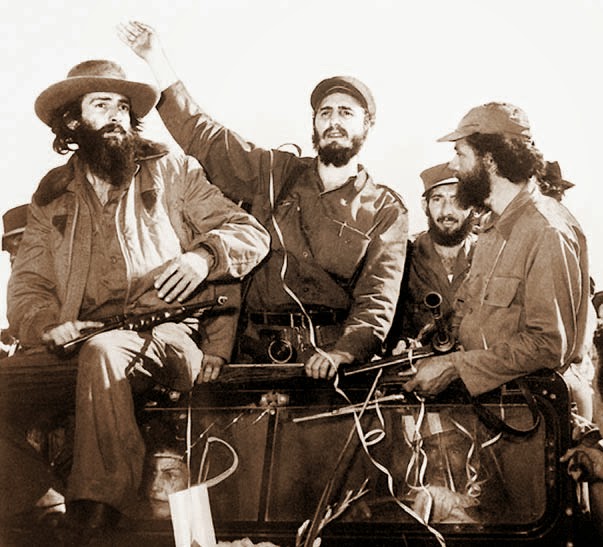 Camilo Cienfuegos, Fidel Castro, Huber Matos, entering Havana on 8 January 1959 In 1952, Fidel Castro, a young lawyer running for a seat in the Chamber of Representatives for the Partido Ortodoxo, circulated a petition to depose Batista's government on the grounds that it had illegitimately suspended the electoral process. The courts ignored the petition. Castro thus resolved to use armed force to overthrow Batista; he and his brother Raúl gathered supporters, and on 26 July 1953 led an attack on the Moncada Barracks near Santiago de Cuba. The attack ended in failure – the authorities killed several of the insurgents, captured Castro himself and sentenced him to 15 years in prison. However, the Batista government released him in 1955, when amnesty was given to many political prisoners. Castro and his brother subsequently went into exile in Mexico, where they met the Argentine revolutionary Ernesto "Che" Guevara. While in Mexico, Guevara and the Castros organized the 26 July Movement with the goal of overthrowing Batista. In December 1956, Fidel Castro led a group of 82 fighters to Cuba aboard the yacht Granma. Despite a pre-landing rising in Santiago by Frank País Pesqueira and his followers among the urban pro-Castro movement, Batista's forces promptly killed, dispersed or captured most of Castro's men. Castro escaped into the Sierra Maestra mountains with as few as 12 fighters, aided by the urban and rural opposition. Castro and Guevara then began a guerrilla campaign against the Batista régime, with their main forces supported by numerous poorly armed escopeteros and the well-armed fighters of Frank País' urban organization. Growing anti-Batista resistance, including a bloodily crushed rising by Cuban Navy personnel in Cienfuegos, soon led to chaos. At the same time, rival guerrilla groups in the Escambray Mountains also grew more effective. Castro attempted to arrange a general strike in 1958, but could not win support among Communists or labor unions.[123] Multiple attempts by Batista's forces to crush the rebels ended in failure.[138][139] Castro's forces acquired captured weaponry,[6] the biggest being a government M4 Sherman tank, which would be used in the Battle of Santa Clara. The United States imposed trade restrictions on the Batista administration and sent an envoy who attempted to persuade Batista to leave the country voluntarily.[110] With the military situation becoming untenable, Batista fled on 1 January 1959, and Castro took over. Within months Castro moved to consolidate his power by marginalizing other resistance groups and imprisoning and executing opponents and dissidents.[140] As the revolution became more radical and continued its marginalization of the wealthy and political opponents, thousands of Cubans fled the island, eventually forming a large exile community in the United States.[141] |
キューバ革命(1952年–1959年) 主な記事:キューバ革命 カミーロ・シエンフエゴス、フィデル・カストロ、ウベル・マトスが1959年1月8日にハバナに入城する 1952年、正統党の議員候補として下院選挙に出馬した若手弁護士フィデル・カストロは、バティスタ政権が選挙プロセスを違法に停止したとして、その政権 を退陣させる請願書を回覧した。裁判所はこの請願を無視した。カストロはこうして武力によるバティスタ政権打倒を決意した。彼と弟のラウルは支持者を集 め、1953年7月26日にサンティアゴ・デ・クーバ近郊のモンカダ兵営への襲撃を指揮した。この襲撃は失敗に終わり、当局は数名の反乱者を殺害し、カス トロ自身を捕らえて15年の刑を宣告した。しかし1955年、バティスタ政権は多くの政治犯に恩赦を与え、カストロを釈放した。その後カストロ兄弟はメキ シコに亡命し、アルゼンチン革命家エルネスト・ゲバラ(通称「チェ」)と出会う。メキシコ滞在中、ゲバラとカストロ兄弟はバティスタ打倒を目的とした「7 月26日運動」を結成した。1956年12月、フィデル・カストロは82名の戦闘員を率い、ヨット「グランマ号」でキューバへ上陸した。サンティアゴでは フランク・パイス・ペスケイラら都市部の親カストロ派が事前に蜂起したが、バティスタ軍はカストロの部隊の大半を即座に殺害、散逸、または捕縛した。 カストロはわずか12名の戦闘員と共にシエラ・マエストラ山脈へ逃れ、都市部と農村部の反体制派の支援を得た。カストロとゲバラはその後、バティスタ政権 に対するゲリラ戦を開始した。彼らの主力部隊は、多数の貧弱な武装のエスコペテロス(散弾銃兵)と、フランク・パイス率いる都市組織の精鋭戦闘員によって 支援されていた。シエンフエゴスでのキューバ海軍兵士による蜂起が血みどろに鎮圧されるなど、反バティスタ抵抗勢力の拡大はすぐに混乱を招いた。同時に、 エスカンブレイ山脈のライバルゲリラ組織もより効果的になっていった。カストロは1958年にゼネストを企図したが、共産党や労働組合の支持を得られな かった[123]。バティスタ軍による反乱鎮圧の試みは幾度も失敗に終わった[138][139]。カストロ軍は鹵獲武器を入手し[6]、最大の戦利品は 政府軍のM4シャーマン戦車であった。これはサンタクララの戦いで使用されることになる。 アメリカ合衆国はバティスタ政権に貿易制限を課し、バティスタに自発的な国外退去を促す使節を派遣した[110]。軍事状況が維持不可能な状態となったた め、バティスタは1959年1月1日に国外逃亡し、カストロが政権を掌握した。数か月後、カストロは他の抵抗組織を排除し、反対派や異論者を投獄・処刑す ることで権力基盤の強化を図った。[140] 革命が過激化するにつれ、富裕層や政治的反対派の排除が続いた結果、数千人のキューバ人が島を離れ、やがて米国に大規模な亡命者コミュニティを形成した。 [141] |
| 30. Peter Bakewell. A History of Latin America. Bakewell Books. p. 74. Thomas, Hugh. Cuba: A History. Penguin, 2013 p. 89 Gott, Richard (2004). Cuba: A new history. Yale University Press. p. 32. Gott, Richard (2004). Cuba: A new history. Yale University Press. pp. 34–35. Gott, Richard (2004). Cuba: A new history. Yale University Press. pp. 39–41. Thomas, Hugh. Cuba: The Pursuit of Freedom (2nd edition). Chapter One. Larrie D. Ferreiro (2016). Brothers at Arms: American Independence and the Men of France and Spain Who Saved It. Knopf Doubleday Publishing Group. p. 133. ISBN 978-1-101-87524-7. Thomas, Hugh. Cuba: A History. Penguin, 2013 p. 91 "The Cuban Slave Market". MysticSeaport.org. Archived from the original on 8 April 2009. Retrieved 24 April 2013. Cantón Navarro, José and Juan Jacobin (1998). History of Cuba: The Challenge of the Yoke and the Star: Biography of a People. Havana: Editoral SI-MAR. ISBN 959-7054-19-1. p. 35. Rieu-Millan, Marie Laure (1990). Los diputados americanos en las Cortes de Cádiz: Igualdad o independencia. Madrid: Consejo Superior de Investigaciones Científicas. p. 41. ISBN 978-84-00-07091-5. Navarro, José Cantón (1998). History of Cuba. La Habana. pp. 36–38. ISBN 959-7054-19-1. Thomas pp. 84–85 Simons, Geoff: Cuba. From Conquistador to Castro, London 1996, p. 138. Corwin, Arthur F. (23 October 2014). Spain and the Abolition of Slavery in Cuba, 1817–1886. University of Texas Press. ISBN 978-1-4773-0133-3. Cantón Navarro, José (1998). History of Cuba. La Habana. p. 40. ISBN 959-7054-19-1. "Gabriel de la Concepción Valdés – Plácido". AfroCubaWeb.com. Archived from the original on 13 November 2007. Retrieved 2 November 2007. Algo más que un sabio maestro (in Spanish). Cubanet Independente. 18 June 2003. Archived from the original on 13 November 2007. Retrieved 30 October 2007. Department of State, Dispatch to William Shaler, June 16th, 1810, Correspondences 1799–1810, William Shaler Papers (#1172), Box 1, Historical Society of Pennsylvania. Worthington, Chauncey Ford (2001). Writings of John Quincy Adams (vol. VII). Boston, Massachusetts. p. 372. Worthington, Chauncey Ford (2001). Writings of John Quincy Adams (vol. VII). Boston, Massachusetts. p. 373. Worthington, Chauncey Ford (2001). Writings of John Quincy Adams (vol. VII). Boston, Massachusetts. p. 379. Díez de Medina, Raúl (1934). Autopsy of the Monroe doctrine: The strange story of inter-American relations. New York. p. 21. Willis Fletcher Jonhson. The History of Cuba. 1921. Gutemberg Project Cantón Navarro, José. History of Cuba, p. 42. Scheina, Robert L. (2003). Latin America's Wars: Volume 1. Potomac Books. Villafana, Frank (2017). Expansionism: Its Effects on Cuba's Independence. Routledge. Foner, Philip S. (1989). Antonio Maceo: The "Bronze Titan" of Cuba's Struggle for Independence. NYU Press. Editions, Dupont Circle; Chao, Raúl Eduardo (2009). Baraguá: Insurgents and Exiles in Cuba and New York During the Ten Year War on Independence (1868–1878). p. 293. Cecil, Leslie (2012). New Frontiers in Latin American Borderlands. Cambridge Scholars Publishing. p. 37. Cantón Navarro, José. History of Cuba. pp. 53–55. Cantón Navarro, José. History of Cuba. pp. 55–57. "Spanish-Cuban-American War – History of Cuba". Archived from the original on 16 April 2008. Retrieved 19 April 2008. Gerald E. Poyo, With All, and for the Good of All: The Emergence of Popular Nationalism in the Cuban Communities of the United States, 1848–1898 (Duke University Press, 1989). George W. Auxier, "The propaganda activities of the Cuban Junta in precipitating the Spanish–American War, 1895–1898." Hispanic American Historical Review 19.3 (1939): 286–305. JSTOR 2507259 Auxier, George W. (1939). "The Propaganda Activities of the Cuban Junta in Precipitating the Spanish-American War, 1895-1898". The Hispanic American Historical Review. 19 (3): 286–305. doi:10.2307/2507259. JSTOR 2507259. Archived from the original on 20 July 2018. Retrieved 2 December 2017. Schellings, William J. "Florida and the Cuban Revolution, 1895–1898." Florida Historical Quarterly (1960): 175–186. JSTOR 30150258 Schellings, William J. (1960). "Florida and the Cuban Revolution, 1895-1898". The Florida Historical Quarterly. 39 (2): 175–186. JSTOR 30150258. Archived from the original on 25 October 2016. Retrieved 9 March 2019. Foner, Philip: The Spanish-Cuban-American War and the Birth of American Imperialism. Quoted in: "The War for Cuban Independence" Archived 16 April 2008 at the Wayback Machine. HistoryofCuba.com. Retrieved 27 January 2013. Cantón Navarro, José. History of Cuba. p. 61. "Weekend Economists Split for Havana February 6–8, 2015 – Democratic Underground". www.democraticunderground.com. Retrieved 29 May 2020. Smith, Iain R.; Stucki, Andreas (1 September 2011). "The Colonial Development of Concentration Camps (1868–1902)" (PDF). The Journal of Imperial and Commonwealth History. 39 (3): 417–437. doi:10.1080/03086534.2011.598746. ISSN 0308-6534. S2CID 159576119. "Spanish-Cuban-American War – History of Cuba". www.historyofcuba.com. Retrieved 29 May 2020. Clodfelter 2017, p. 308. Jones, Howard (2009). Crucible of Power: A History of American Foreign Relations to 1913. Rowman & Littlefield Publishers. p. 270. "Spanish American War Chronology". SpanAmWar.com. Archived from the original on 23 October 2007. Retrieved 30 October 2007. Cantón Navarro, José. History of Cuba. pp. 64–65. Tucker, Spencer (2009). The encyclopedia offers two complete volumes of alphabetically organized entries ... Philippine- American Wars: A Political, Social, and Military History, Volume 1. ABC-CLIO. p. 246. Canalejas, José in Cantón Navarro, José. History of Cuba. p. 66. "The Death of Cuban General Antonio Maceo". SpanAmWar.com. Archived from the original on 8 November 2007. Retrieved 2 November 2007. French Ensor Chadwick. "The Role of US Coast Guard 1895–1898 before entry of US in the war". SpanAmWar.com. Archived from the original on 8 November 2007. Retrieved 2 November 2007. Cantón Navarro, José. History of Cuba. p. 69. "Crucible of Empire: The Spanish–American War". PBS. Archived from the original on 7 December 2013. Retrieved 15 December 2007. Cantón Navarro, José. History of Cuba, p. 71. Daley, Laryy (2000). "El Fortin Canosa en la Cuba del 1898". In Aguirre, Benigno E.; Espina, Eduardo (eds.). Los últimos días del comienzo: ensayos sobre la Guerra Hispano-Cubana-Estadounidense (in Spanish). RiL Editores. pp. 161–171. ISBN 978-956-284-115-3. The Battles at El Caney and San Juan Hill Archived 14 July 2013 at the Wayback Machine. HomeOfHeroes.com. Retrieved 28 June 2013. Daley 2000, pp. 161–71 "The Spanish American War Centennial Website!". spanamwar.com. Archived from the original on 8 November 2007. Retrieved 2 November 2007. "Protocol of Peace Embodying the Terms of a Basis for the Establishment of Peace Between the Two Countries". Washington, D.C., U.S. 12 August 1898. Archived from the original on 12 October 2007. Retrieved 30 October 2007. "Treaty of Peace Between the United States and Spain". The Avalon project at Yale law School. 10 December 1898. Archived from the original on 23 May 2015. Retrieved 20 April 2016. Cantón Navarro, José. History of Cuba. p. 77. The Teller Amendment. East Tennessee State University. 1898. Archived from the original on 13 November 2007. Retrieved 30 October 2007. Cantón Navarro, José. History of Cuba. p. 74. Cantón Navarro, José. History of Cuba. p. 75 Cantón Navarro, José. History of Cuba. p. 76 Juan C. Santamarina. "The Cuba Company and the Expansion of American Business in Cuba, 1898–1915". Business History Review 74.01 (Spring 2000): 41–83. pp. 52–53. Santamarina 2000, p. 42. Smith 1995, p. 33. Smith 1995, p. 34. Smith 1995, p. 35. Cantón Navarro, José. History of Cuba, p. 79. Ferrer, Ada (2021). "14: Island Occupied". Cuba: An American History (1st ed.). New York; London: Scribner. ISBN 978-1-5011-5457-7. Cantón Navarro, José. History of Cuba, p. 81. "Nation and Multiculturalism in Cuba: A Comparison with the United States and Brazil". GeorgeZarur.com.br. 2005. Archived from the original on 10 February 2015. Retrieved 10 February 2015. "A Biography of General Enrique Loynaz del Castillo". Spanamwar.com. Archived from the original on 8 November 2007. Retrieved 2 November 2007. "Charles Magoon (1861–1920)". Library.thinkquest.org. Archived from the original on 16 October 2007. Retrieved 2 November 2007. "Alfredo Zayas". Latin American Studies. Archived from the original on 9 October 2007. Retrieved 2 November 2007. Richard Gott, Cuba: A New History, pp. 123–24. Louis A. Pérez, Jr., Intervention, Revolution, and Politics in Cuba, 1913–1921, p. 4. Richard Gott, Cuba: A New History, pp. 127–128. Richard Gott, Cuba: A New History, p. 129. Whitney 2000:436-437. Leslie Bethell (1993). Cuba. Cambridge: Cambridge University Press. ISBN 978-0-521-43682-3. Julia E. Sweig (2004). Inside the Cuban Revolution. Cambridge, Massachusetts: Harvard University Press. ISBN 978-0-674-01612-5. "Cuban Labor Practices". U.S. Department of State Archive. Retrieved 17 July 2020. Jorge I. Domínguez. Cuba. "Ramon Grau San Martin" Archived 15 January 2009 at the Wayback Machine. Answers.com. Retrieved 27 November 2011. "Havana Conference – 1946" Archived 12 December 2018 at the Wayback Machine. Crime Magazine. Retrieved 2 December 2012. Gipson, Therlee (11 September 2018). Fidel Castro Negro Blood. Lulu.com. ISBN 978-0-359-08074-8. "Foreign Relations of the United States, 1958–1960, Cuba, Volume VI – Office of the Historian". history.state.gov. Retrieved 29 May 2020. Servando Gonzalez. The Secret Fidel Castro. "Cuba Before Fidel Castro". Contacto. Archived from the original on 8 June 2013. Retrieved 27 July 2013. "The Cuban revolution at 50: Heroic myth and prosaic failure". The Economist. 30 December 2008. Archived from the original on 20 September 2012. Retrieved 27 July 2013. Thomas G. Paterson. Contesting Castro. "Cuba: The Unnecessary Revolution". Neoliberalismo.com. Archived from the original on 22 April 2015. Retrieved 17 February 2015. Paul H. Lewis. Authoritarian regimes in Latin America. Kirby Smith; Hugo Llorens. "Renaissance and decay: A comparison of socioeconomic indicators in pre-Castro and current-day Cuba" (PDF). Archived from the original (PDF) on 13 July 2009. Retrieved 21 June 2009. "Still Stuck on Castro – How the press handled a tyrant's farewell". Reason. 22 February 2008. Archived from the original on 20 September 2012. Retrieved 27 July 2013. "Cuba Facts: Issue 43". Cuba Transition Project. December 2008. Archived from the original on 9 July 2012. Retrieved 6 February 2015. Eric N. Baklanoff. "Cuba on the eve of the socialist transition: A reassessment of the backwardness-stagnation thesis" (PDF). Cuba in Transition. Archived from the original (PDF) on 13 July 2009. Retrieved 21 June 2009. Hugh Thomas. Cuba, The Pursuit of Freedom. p. 1173. Guerra, Lillian (2010). Grandin, Greg; Joseph, Gilbert M. (eds.). Beyond Paradox: A Century of Revolution. American Encounters/Global Interactions. Durham, NC: Duke University Press. pp. 199–238. ISBN 978-0-8223-4737-8. Fidel: The Untold Story. (2001). Directed by Estela Bravo. First Run Features. (91 min). Viewable clip. "Batista's forces were trained by the United States, which also armed them with tanks, artillery, and aircraft." Historical Dictionary of the 1950s, by James Stuart Olson, Greenwood Publishing Group, 2000, ISBN 0-313-30619-2, pp. 67–68. Fidel: The Untold Story. (2001). Directed by Estela Bravo. First Run Features. (91 min). Viewable clip. Havana Nocturne: How the Mob Owned Cuba and Then Lost It to the Revolution, by T. J. English, William Morrow, 2008, ISBN 0-06-114771-0. CIA (1963). Political Murders in Cuba – Batista Era Compared with Castro Regime Wickham-Crowley, Timothy P. (1990). Exploring Revolution: Essays on Latin American Insurgency and Revolutionary Theory. Armonk and London: M.E. Sharpe. P. 63 "Estimates of hundreds or perhaps about a thousand deaths due to Batista's terror are also supported by comments made by Fidel Castro and other Batista critics during the war itself." Guerra, Lillian (2012). Visions of Power in Cuba: Revolution, Redemption, and Resistance, 1959–1971. Chapel Hill: University of North Carolina Press. p. 42 "The likely total was probably closer to three to four thousand." Conflict, Order, and Peace in the Americas, by the Lyndon B. Johnson School of Public Affairs, 1978, p. 121. "The US-supported Batista regime killed 20,000 Cubans" "Air war over Cuba 1956–1959". ACIG.org. 30 November 2011. Archived from the original on 18 March 2013. Retrieved 14 June 2013. "1958: Battle of La Plata (El Jigüe)". Cuba 1952–1959. 15 December 2009. Archived from the original on 29 October 2013. Retrieved 26 June 2013. Juan Clark Cuba (1992). Mito y Realidad: Testimonio de un Pueblo. Saeta Ediciones (Miami). pp. 53–70. 141. "Cuban Exile Community". LatinAmericanStudies.org. Archived from the original on 18 January 2013. Retrieved 9 July 2013. |
30. ピーター・ベイクウェル『ラテンアメリカ史』ベイクウェル・ブックス、74頁。 トーマス、ヒュー『キューバ:その歴史』ペンギン、2013年、89頁 ゴット、リチャード(2004)『キューバ:新たな歴史』イェール大学出版局、32頁。 ゴット、リチャード(2004)。『キューバ:新たな歴史』。イェール大学出版局。34-35頁。 ゴット、リチャード(2004)。『キューバ:新たな歴史』。イェール大学出版局。39-41頁。 トーマス、ヒュー。『キューバ:自由の追求』(第2版)。第1章。 ラリー・D・フェレイロ(2016)。『戦友たち:アメリカの独立とそれを救ったフランスとスペインの男たち』。ノフ・ダブルデイ出版グループ。133 ページ。ISBN 978-1-101-87524-7。 トーマス、ヒュー。『キューバ:その歴史』。ペンギン、2013 年 91 ページ 「キューバの奴隷市場」。MysticSeaport.org。2009年4月8日にオリジナルからアーカイブ。2013年4月24日取得。 カントン・ナヴァロ、ホセ、フアン・ジャコバン(1998)。『キューバの歴史:くびきと星への挑戦:ある民族の伝記』。ハバナ:Editoral SI-MAR。ISBN 959-7054-19-1. p. 35. リウ=ミラン、マリー・ローレ (1990). 『カディス議会におけるアメリカ人議員たち:平等か独立か』. マドリード:高等科学研究評議会. p. 41. ISBN 978-84-00-07091-5. ナヴァロ、ホセ・カントン(1998)。『キューバの歴史』。ハバナ。36-38 ページ。ISBN 959-7054-19-1。 トーマス 84-85 ページ サイモンズ、ジェフ:『キューバ。征服者からカストロまで』、ロンドン 1996 年、138 ページ。 コーウィン、アーサー F. (2014年10月23日)。スペインとキューバにおける奴隷制の廃止、1817年~1886年。テキサス大学出版。ISBN 978-1-4773-0133-3。 カントン・ナヴァロ、ホセ (1998)。キューバの歴史。ラ・ハバナ。40 ページ。ISBN 959-7054-19-1。 「ガブリエル・デ・ラ・コンセプシオン・バルデス - プラシド」。AfroCubaWeb.com。2007年11月13日にオリジナルからアーカイブ。2007年11月2日取得。 Algo más que un sabio maestro (スペイン語)。Cubanet Independente。2003年6月18日。2007年11月13日にオリジナルからアーカイブされた。2007年10月30日に取得。 国務省、ウィリアム・シェイラー宛ての電報、1810年6月16日、書簡集 1799–1810、ウィリアム・シェイラー文書 (#1172)、箱1、ペンシルベニア歴史協会。 ワージントン、チャウンシー・フォード(2001)。『ジョン・クインシー・アダムズの著作集』(第VII巻)。マサチューセッツ州ボストン。372ページ。 ワージントン、チャウンシー・フォード(2001)。『ジョン・クインシー・アダムズの著作集』(第VII巻)。マサチューセッツ州ボストン。373ページ。 ワージントン、チャウンシー・フォード(2001)。『ジョン・クインシー・アダムズの著作(第 VII 巻)』。マサチューセッツ州ボストン。379 ページ。 ディエス・デ・メディナ、ラウル(1934)。『モンロー主義の検死:米州間の奇妙な関係史』。ニューヨーク。21 ページ。 ウィリス・フレッチャー・ジョンソン。キューバの歴史。1921年。グーテンベルク・プロジェクト カントン・ナヴァロ、ホセ。キューバの歴史、42ページ。 シェイナ、ロバート・L(2003)。ラテンアメリカの戦争:第1巻。ポトマック・ブックス。 ビジャファナ、フランク(2017)。拡張主義:キューバの独立への影響。ラウトレッジ。 フォナー、フィリップ・S(1989)。アントニオ・マセオ:キューバ独立闘争の「青銅の巨人」。NYU プレス。 エディションズ、デュポンサークル;チャオ、ラウル・エドゥアルド(2009)。バラグア:独立のための 10 年戦争(1868 年~1878 年)におけるキューバとニューヨークの反乱軍と亡命者たち。p. 293. セシル、レスリー (2012)。ラテンアメリカの辺境における新たなフロンティア。ケンブリッジ・スカラーズ出版。p. 37。 カントン・ナヴァロ、ホセ。キューバの歴史。pp. 53–55。 カントン・ナヴァロ、ホセ。キューバの歴史。pp. 55–57。 「スペイン・キューバ・アメリカ戦争 – キューバの歴史」。2008年4月16日にオリジナルからアーカイブ。2008年4月19日に取得。 ジェラルド・E・ポヨ、『すべての人々と、すべての人々の幸福のために:1848年から1898年にかけての米国キューバ人コミュニティにおける大衆ナショナリズムの台頭』(デューク大学出版、1989年)。 ジョージ・W・オクシエ、「米西戦争を誘発したキューバ評議会のプロパガンダ活動、1895–1898年」。『ヒスパニック・アメリカン歴史評論』19巻 3号(1939年):286–305頁。JSTOR 2507259 オクシエ、ジョージ・W. (1939). 「米西戦争勃発を促したキューバ暫定政府の宣伝活動、1895-1898年」『ヒスパニック・アメリカン歴史評論』19巻3号、286-305頁。 doi:10.2307/2507259。JSTOR 2507259。2018年7月20日時点のオリジナルからアーカイブ。2017年12月2日取得。 シェリングス、ウィリアム・J. 「フロリダとキューバ革命、1895-1898年」『フロリダ歴史季刊』 (1960): 175–186. JSTOR 30150258 シェリングス、ウィリアム・J. (1960). 「フロリダとキューバ革命、1895-1898年」『フロリダ歴史季刊』39巻2号:175-186頁。JSTOR 30150258。2016年10月25日時点のオリジナルからアーカイブ。2019年3月9日取得。 フォナー、フィリップ:スペイン・キューバ・アメリカ戦争とアメリカ帝国主義の誕生。引用元:「キューバ独立戦争」 2008年4月16日、ウェイバックマシンにアーカイブ。HistoryofCuba.com。2013年1月27日取得。 カントン・ナヴァロ、ホセ。キューバの歴史。61ページ。 「週末の経済学者たちがハバナに集結 2015年2月6日~8日 – 民主的アンダーグラウンド」。www.democraticunderground.com。2020年5月29日取得。 スミス、イアン R.、スタッキ、アンドレアス (2011年9月1日)。「強制収容所の植民地開発 (1868年~1902年)」 (PDF)。帝国および英連邦の歴史誌。39 (3): 417–437. doi:10.1080/03086534.2011.598746. ISSN 0308-6534. S2CID 159576119. 「スペイン・キューバ・アメリカ戦争 - キューバの歴史」。www.historyofcuba.com。2020年5月29日取得。 Clodfelter 2017、308ページ。 Jones, Howard (2009)。『権力のるつぼ:1913年までのアメリカ外交史』。Rowman & Littlefield Publishers。270ページ。 「米西戦争年表」。SpanAmWar.com。2007年10月23日にオリジナルからアーカイブ。2007年10月30日取得。 カントン・ナヴァロ、ホセ。『キューバの歴史』。64-65ページ。 タッカー、スペンサー (2009)。この百科事典は、アルファベット順に整理された2巻の完全な項目を提供している... フィリピン・アメリカ戦争:政治、社会、軍事の歴史、第1巻。ABC-CLIO。246ページ。 カナーレハス、ホセ、カントン・ナヴァロ、ホセ著。キューバの歴史。66ページ。 「キューバの将軍アントニオ・マセオの死」。SpanAmWar.com。2007年11月8日にオリジナルからアーカイブ。2007年11月2日に取得。 フレンチ・エンソール・チャドウィック。「米国が戦争に参戦する前の1895年から1898年における米国沿岸警備隊の役割」。SpanAmWar.com。2007年11月8日にオリジナルからアーカイブ。2007年11月2日に取得。 カントン・ナヴァロ、ホセ。『キューバの歴史』 69 ページ。 「帝国の試練:米西戦争」 PBS。2013年12月7日にオリジナルからアーカイブ。2007年12月15日に取得。 カントン・ナヴァロ、ホセ。『キューバの歴史』 71 ページ。 デイリー、ラリー (2000). 「1898年のキューバにおけるエル・フォルティン・カノサ」. アギーレ、ベニグノ E.、エスピナ、エドゥアルド (編). 『始まりにおける最後の日々:スペイン・キューバ・アメリカ戦争に関するエッセイ』 (スペイン語). RiL Editores. pp. 161–171. ISBN 978-956-284-115-3。 エル・カネイとサン・ファン・ヒルの戦い 2013年7月14日、ウェイバックマシンにアーカイブ。HomeOfHeroes.com。2013年6月28日取得。 Daley 2000、161-71ページ 「米西戦争100周年記念ウェブサイト!」。spanamwar.com. 2007年11月8日時点のオリジナルからアーカイブ。2007年11月2日閲覧。 「両国間の平和確立の基礎となる条件を体現した平和議定書」。ワシントンD.C.、アメリカ合衆国、1898年8月12日。2007年10月12日時点のオリジナルからアーカイブ。2007年10月30日取得。 「米国とスペイン間の平和条約」。イェール大学ロースクールのアバロン・プロジェクト。1898年12月10日。2015年5月23日にオリジナルからアーカイブ。2016年4月20日取得。 カントン・ナヴァロ、ホセ。『キューバの歴史』。77ページ。 テラー修正条項。東テネシー州立大学。1898年。2007年11月13日にオリジナルからアーカイブ。2007年10月30日に取得。 カントン・ナヴァロ、ホセ。キューバの歴史。74ページ。 カントン・ナヴァロ、ホセ。キューバの歴史。75ページ カントン・ナヴァロ、ホセ。キューバの歴史。76ページ フアン・C・サンタマリーナ。「キューバ会社とキューバにおけるアメリカ企業の拡大、1898年~1915年」。ビジネス・ヒストリー・レビュー 74.01 (2000年春): 41–83. pp. 52–53. サンタマリーナ 2000, p. 42. スミス 1995, p. 33. スミス 1995、34 ページ。 スミス 1995、35 ページ。 カントン・ナヴァロ、ホセ。『キューバの歴史』、79 ページ。 フェレール、エイダ (2021)。「14: 占領された島」。『キューバ:アメリカの歴史』(第 1 版)。ニューヨーク、ロンドン:スクリブナー。ISBN 978-1-5011-5457-7。 カントン・ナヴァロ、ホセ。『キューバの歴史』、81 ページ。 「キューバにおける国家と多文化主義:米国およびブラジルとの比較」。GeorgeZarur.com.br。2005 年。2015 年 2 月 10 日にオリジナルからアーカイブ。2015 年 2 月 10 日取得。 「エンリケ・ロイナス・デル・カスティーヨ将軍の伝記」。Spanamwar.com。2007年11月8日にオリジナルからアーカイブ。2007年11月2日に取得。 「チャールズ・マグーン(1861年~1920年)」。Library.thinkquest.org。2007年10月16日にオリジナルからアーカイブ。2007年11月2日に取得。 「アルフレド・サヤス」。ラテンアメリカ研究。2007年10月9日にオリジナルからアーカイブ。2007年11月2日に取得。 リチャード・ゴット、『キューバ:新たな歴史』、123-24頁。 ルイス・A・ペレス・ジュニア、『キューバにおける介入、革命、そして政治、1913-1921』、4頁。 リチャード・ゴット『キューバ:新たな歴史』127-128頁。 リチャード・ゴット『キューバ:新たな歴史』129頁。 ホイットニー 2000:436-437。 レスリー・ベセル (1993). 『キューバ』. ケンブリッジ: ケンブリッジ大学出版局. ISBN 978-0-521-43682-3. ジュリア・E・スウェイグ(2004)。『キューバ革命の内幕』。マサチューセッツ州ケンブリッジ:ハーバード大学出版局。ISBN 978-0-674-01612-5。 「キューバの労働慣行」。米国国務省アーカイブ。2020年7月17日取得。 ホルヘ・I・ドミンゲス。キューバ。 「ラモン・グラウ・サン・マーティン」 2009年1月15日、ウェイバックマシンにアーカイブ。Answers.com。2011年11月27日取得。 「ハバナ会議 – 1946年」 2018年12月12日、ウェイバックマシンにアーカイブ。Crime Magazine。2012年12月2日取得。 ギプソン、サーリー(2018年9月11日)。フィデル・カストロ・ニグロ・ブラッド。Lulu.com。ISBN 978-0-359-08074-8。 「1958年から1960年の米国の外交関係、キューバ、第6巻 – 歴史家事務所」。history.state.gov。2020年5月29日取得。 セルバンド・ゴンザレス。『秘密のフィデル・カストロ』。 「フィデル・カストロ以前のキューバ」。コンタクト。2013年6月8日時点のオリジナルからアーカイブ。2013年7月27日閲覧。 「キューバ革命50周年:英雄的神話と平凡な失敗」。エコノミスト。2008年12月30日。2012年9月20日にオリジナルからアーカイブ。2013年7月27日閲覧。 トーマス・G・パターソン。『カストロへの挑戦』。 「キューバ:不必要な革命」。Neoliberalismo.com。2015年4月22日にオリジナルからアーカイブ。2015年2月17日閲覧。 ポール・H・ルイス。『ラテンアメリカの権威主義体制』。 カービー・スミス; ウーゴ・ロレンス。「ルネサンスと衰退:カストロ政権以前と現代キューバの社会経済指標の比較」(PDF)。2009年7月13日にオリジナル(PDF)からアーカイブ。2009年6月21日に取得。 「カストロに固執するメディア ― 独裁者の別れをどう扱ったか」。Reason. 2008年2月22日. 2012年9月20日にオリジナルからアーカイブ. 2013年7月27日に閲覧. 「キューバ・ファクト:第43号」. キューバ移行プロジェクト. 2008年12月. 2012年7月9日にオリジナルからアーカイブ. 2015年2月6日に閲覧. エリック・N・バクラノフ。「社会主義移行前夜のキューバ:後進性・停滞論の再評価」(PDF)。キューバ・イン・トランジション。2009年7月13日にオリジナル(PDF)からアーカイブ。2009年6月21日に閲覧。 ヒュー・トーマス。『キューバ、自由の追求』。1173頁。 ゲラ、リリアン(2010)。グレッグ・グランディン、ギルバート・M・ジョセフ(編)。『パラドックスを超えて:革命の世紀』。アメリカン・エンカウン ターズ/グローバル・インタラクションズ。ノースカロライナ州ダーラム:デューク大学出版局。199–238頁。ISBN 978-0-8223-4737-8。 フィデル:語られなかった物語。(2001)。監督:エステラ・ブラボー。ファースト・ラン・フィーチャーズ。(91 分)。視聴可能クリップ。「バティスタの軍隊は米国によって訓練され、米国はまた、戦車、大砲、航空機も彼らに提供した。」 『1950年代の歴史辞典』ジェームズ・スチュワート・オルソン著、グリーンウッド出版グループ、2000年、ISBN 0-313-30619-2、67-68ページ。 『フィデル:知られざる物語』 (2001)。監督:エステラ・ブラボー。ファースト・ラン・フィーチャーズ。(91 分)。視聴可能クリップ。 『ハバナの夜想曲:マフィアがキューバを支配し、革命によってそれを失った経緯』 T. J. イングリッシュ著、ウィリアム・モロー社、2008年、ISBN 0-06-114771-0。 CIA (1963)。キューバにおける政治的な殺人 - バティスタ時代とカストロ政権の比較 ウィッカム・クロウリー、ティモシー・P. (1990)。『革命を探る:ラテンアメリカ反乱と革命理論に関する論考』アーモンク・ロンドン:M.E.シャープ社。63頁「バティスタの恐怖政治によ る死者数百人、あるいは約千人という推定は、戦争中にフィデル・カストロや他のバティスタ批判者たちが述べたコメントによっても裏付けられている」 ゲラ、リリアン (2012). 『キューバにおける権力のビジョン:革命、贖罪、抵抗、1959–1971年』. チャペルヒル:ノースカロライナ大学出版局. p. 42 「実際の総数は恐らく3千から4千人に近いだろう。」 『アメリカ大陸における紛争、秩序、平和』リンドン・B・ジョンソン公共政策大学院、1978年、p. 121. 「米国が支援したバティスタ政権は2万人のキューバ人を殺害した」 「1956-1959年 キューバ上空の空戦」ACIG.org. 2011年11月30日. 2013年3月18日にオリジナルからアーカイブ. 2013年6月14日に閲覧. 「1958年:ラ・プラタ(エル・ヒグエ)の戦い」。『キューバ 1952–1959』。2009年12月15日。2013年10月29日にオリジナルからアーカイブ。2013年6月26日に閲覧。 フアン・クラーク・キューバ (1992). 『神話と現実:ある民衆の証言』. サエタ・エディシオネス (マイアミ). pp. 53–70. 141. 「キューバ亡命者コミュニティ」. LatinAmericanStudies.org. 2013年1月18日時点のオリジナルからアーカイブ. 2013年7月9日取得. |
| References Allaire, Louis (2000). "Archaeology of the Caribbean Region". In Frank Salomon (ed.). South America. The Cambridge History of the Native Peoples of the Americas. Vol. III. Stuart B. Schwartz (third ed.). Cambridge: Cambridge University Press. ISBN 0-521-63075-4. Ros, Enrique (2004). La UMAP: El Gulag Castrista. Miami, FL: Ediciones Universal. ISBN 9781593880262. Bibliography and further reading Castillo Ramos, Ruben (1956). "Muerto Edesio, El rey de la Sierra Maestra". Bohemia XLVIII No. 9 (12 August 1956). pp. 52–54, 87. Chomsky, Aviva; Carr, Barry; Smorkaloff, Pamela Maria, eds. (2004). The Cuba Reader: History, Culture, Politics. Durham, NC & London: Duke University Press. Clodfelter, M. (2017). Warfare and Armed Conflicts: A Statistical Encyclopedia of Casualty and Other Figures, 1492–2015 (4th ed.). Jefferson, North Carolina: McFarland. ISBN 978-0786474707. De Paz Sánchez, Manuel Antonio; Fernández, José; López, Nelson (1993–1994). El bandolerismo en Cuba (1800–1933). Presencia canaria y protesta rural. Santa Cruz de Tenerife. Two volumes. Foner, Philip S. (1962). A History of Cuba and its Relations with the United States. Franklin, James (1997). Cuba and the United States: A Chronological History. Ocean Press. Gleijeses, Piero (2002). Conflicting Missions: Havana, Washington, and Africa, 1959–1976. University of North Carolina Press. 552 pp. Gott, Richard. (2004). Cuba: A New History. Hernández, Rafael and Coatsworth, John H., eds. (2001). Culturas Encontradas: Cuba y los Estados Unidos. Harvard University Press. 278 pp. Hernández, José M. (1993). Cuba and the United States: Intervention and Militarism, 1868–1933. University of Texas Press. 288 pp. Johnson, Willis Fletcher (1920). The History of Cuba. New York: B.F. Buck & Company, Inc. Kapcia, Antoni. (2021) A Short History of Revolutionary Cuba: Revolution, Power, Authority and the State from 1959 to the Present Day Kirk, John M. and McKenna, Peter (1997). Canada–Cuba Relations: The Other Good Neighbor Policy. University Press of Florida. 207 pp. McPherson, Alan (2003). Yankee No! Anti-Americanism in U.S.–Latin American Relations. Harvard University Press. 257 pp. Morley, Morris H. and McGillian, Chris. Unfinished Business: America and Cuba after the Cold War, 1989–2001. Cambridge University Press. 253 pp. Offner, John L. (2002). An Unwanted War: The Diplomacy of the United States and Spain over Cuba, 1895–1898. University of North Carolina Press, 1992. 306 pp. Paterson, Thomas G. (1994). Contesting Castro: The United States and the Triumph of the Cuban Revolution. Oxford University Press. 352 pp. Pérez, Louis A., Jr. (1998). The War of 1898: The United States and Cuba in History and Historiography. University of North Carolina Press. 192 pp. Pérez, Louis A. (1990). Cuba and the United States: Ties of Singular Intimacy. University of Georgia Press. 314 pp. Perez, Louis A. (1989). Lords of the Mountain: Social Banditry and Peasant Protest in Cuba, 1878–1918. Pitt Latin American Series: University of Pittsburgh Press. ISBN 0-8229-3601-1. Schwab, Peter (1999). Cuba: Confronting the U.S. Embargo. New York: St. Martin's. 226 pp. Staten, Clifford L. (2005). The History of Cuba. Palgrave Essential Histories. Thomas, Hugh (1998). Cuba or the Pursuit of Freedom. ISBN 978-0-306-80827-2. Tone, John Lawrence (2006). War and Genocide in Cuba, 1895–1898. Walker, Daniel E. (2004). No More, No More: Slavery and Cultural Resistance in Havana and New Orleans. University of Minnesota Press. 188 pp. Whitney, Robert W. (2001). State and Revolution in Cuba: Mass Mobilization and Political Change, 1920–1940. Chapel Hill and London: University of North Carolina Press. ISBN 0-8078-2611-1. Zeuske, Michael (2004). Insel der Extreme: Kuba im 20. Jahrhundert. Zürich: Rotpunktverlag. ISBN 3-85869-208-5. Zeuske, Michael (2004). Schwarze Karibik: Sklaven, Sklavereikulturen und Emanzipation. Zürich: Rotpunktverlag. ISBN 3-85869-272-7. Danielle Bleitrach, Viktor Dedaj, Jacques-François Bonaldi. Cuba est une île, Cuba es una isla, Le Temps des cerises, 2004. ISBN 978-2-8410-9499-8. |
参考文献 Allaire, Louis (2000). 「カリブ地域の考古学」. Frank Salomon (編). 南アメリカ. ケンブリッジ・アメリカ先住民史. 第 III 巻. スチュワート・B・シュワルツ (第 3 版). ケンブリッジ: ケンブリッジ大学出版局. ISBN 0-521-63075-4. ロス、エンリケ (2004). 『UMAP:カストロの強制収容所』. フロリダ州マイアミ:エディシオネス・ユニバーサル. ISBN 9781593880262. 参考文献および追加文献(さらに読む) カスティーヨ・ラモス、ルーベン (1956). 「ムエルト・エデシオ、エル・レイ・デ・ラ・シエラ・マエストラ」. ボヘミア XLVIII 第9号(1956年8月12日)。pp. 52–54, 87. チョムスキー、アビバ;カー、バリー;スモルカロフ、パメラ・マリア、編(2004)。『キューバ・リーダー:歴史、文化、政治』。ノースカロライナ州ダーラム及びロンドン:デューク大学出版局。 クロドフェルター、M. (2017). 『戦争と武力紛争:死傷者およびその他の統計に関する統計百科事典、1492-2015年』 (第4版). ノースカロライナ州ジェファーソン: マクファーランド. ISBN 978-0786474707. デ・パス・サンチェス、マヌエル・アントニオ、フェルナンデス、ホセ、ロペス、ネルソン(1993-1994)。『キューバの盗賊(1800-1933)』。カナリア諸島の存在と農村部の抗議。サンタ・クルス・デ・テネリフェ。全 2 巻。 フォナー、フィリップ S.(1962)。『キューバの歴史と米国との関係』。 フランクリン、ジェームズ (1997)。キューバとアメリカ合衆国:年代順の歴史。オーシャンプレス。 グレイジェセス、ピエロ (2002)。相反する使命:ハバナ、ワシントン、そしてアフリカ、1959年~1976年。ノースカロライナ大学出版。552 ページ。 ゴット、リチャード。(2004)。キューバ:新しい歴史。 エルナンデス、ラファエル、およびコーツワース、ジョン H. 編(2001)。『カルチュラス・エンコントラダス:キューバとアメリカ合衆国』。ハーバード大学出版局。278 ページ。 エルナンデス、ホセ M.(1993)。『キューバとアメリカ合衆国:介入とミリタリズム、1868-1933』。テキサス大学出版局。288 ページ。 ジョンソン、ウィリス・フレッチャー(1920年)。『キューバの歴史』。ニューヨーク:B.F.バック社。 カプチャ、アントニ(2021年)。『革命的キューバの短史:1959年から現代までの革命、権力、権威、国家』 カーク、ジョン・M.、マッケナ、ピーター(1997年)。カナダとキューバの関係:もうひとつの善隣政策。フロリダ大学出版局。207頁。 マクファーソン、アラン(2003)。ヤンキーは要らない!米州関係における反米主義。ハーバード大学出版局。257頁。 モーリー、モリス・H. と マクギリアン、クリス。未解決の問題:冷戦後のアメリカとキューバ、1989-2001年。ケンブリッジ大学出版局。253頁。 オフナー、ジョン・L.(2002)。望まざる戦争:キューバをめぐるアメリカとスペインの外交、1895-1898年。ノースカロライナ大学出版局、1992年。306頁。 パターソン、トーマス・G.(1994)。『カストロへの挑戦:アメリカとキューバ革命の勝利』。オックスフォード大学出版局。352頁。 ペレス、ルイス・A.・ジュニア(1998)。『1898年の戦争:歴史と歴史学におけるアメリカとキューバ』。ノースカロライナ大学出版局。192頁。 ペレス、ルイス A. (1990)。キューバとアメリカ合衆国:特異な親密さの絆。ジョージア大学出版。314 ページ。 ペレス、ルイス A. (1989)。山の支配者たち:キューバにおける社会的な盗賊と農民の抗議、1878 年から 1918 年。ピット・ラテンアメリカ・シリーズ:ピッツバーグ大学出版。ISBN 0-8229-3601-1。 シュワブ、ピーター(1999)。『キューバ:米国の経済封鎖に立ち向かう』。ニューヨーク:セント・マーティンズ。226 ページ。 ステイトン、クリフォード L.(2005)。『キューバの歴史』。パルグレイブ・エッセンシャル・ヒストリーズ。 トーマス、ヒュー(1998)。キューバ、あるいは自由の追求。ISBN 978-0-306-80827-2。 トーン、ジョン・ローレンス(2006)。キューバにおける戦争と虐殺、1895年から1898年。 ウォーカー、ダニエル・E(2004)。『もうこれ以上は耐えられない:ハバナとニューオーリンズにおける奴隷制と文化的抵抗』. ミネソタ大学出版局. 188頁. ホイットニー, ロバート・W. (2001). 『キューバにおける国家と革命:大衆動員と政治的変革、1920–1940』. チャペルヒル及びロンドン: ノースカロライナ大学出版局. ISBN 0-8078-2611-1. ツァイスケ、ミヒャエル(2004)。『極限の島:20世紀のキューバ』。チューリッヒ:ロットプンクト出版社。ISBN 3-85869-208-5。 ツァイスケ、ミヒャエル(2004)。『黒いカリブ:奴隷、奴隷制文化、そして解放』。チューリッヒ:ロットプンクト出版社。ISBN 3-85869-272-7。 ダニエル・ブライトラッハ、ヴィクトル・デダイ、ジャック=フランソワ・ボナルディ共著。『キューバは島である、Cuba est une île, Cuba es una isla』ル・タン・デ・セリズ社、2004年。ISBN 978-2-8410-9499-8。 |
| https://en.wikipedia.org/wiki/History_of_Cuba |
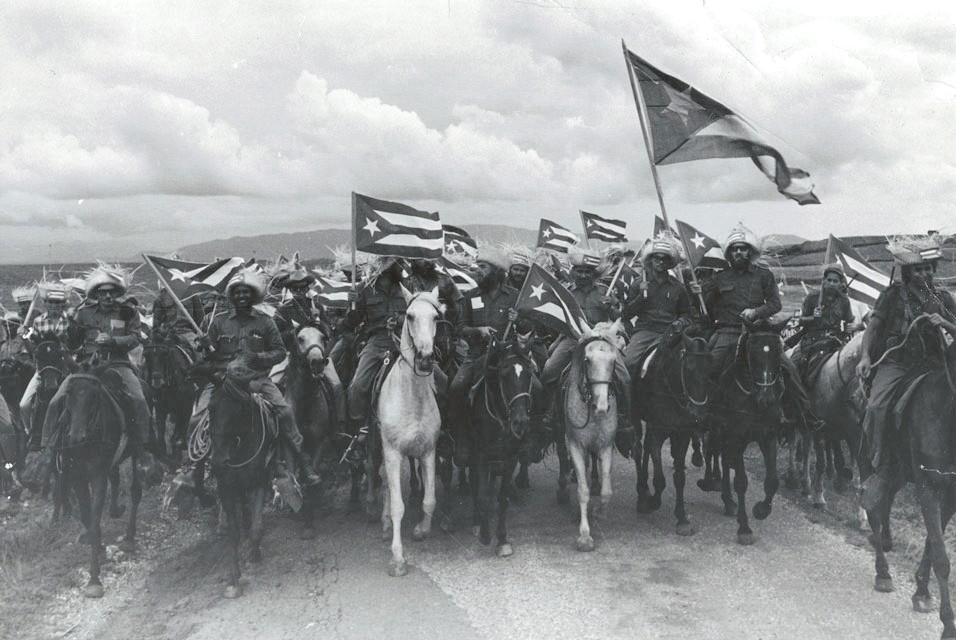
Fidel Castro's July 26 Movement rebels mounted on horses in 1959
リ ンク
文 献
そ の他の情報
CC
Copyleft,
CC, Mitzub'ixi Quq Chi'j, 1996-2099