アイドル・ノー・モア
Idle No More;
アイドルはもうたくさん
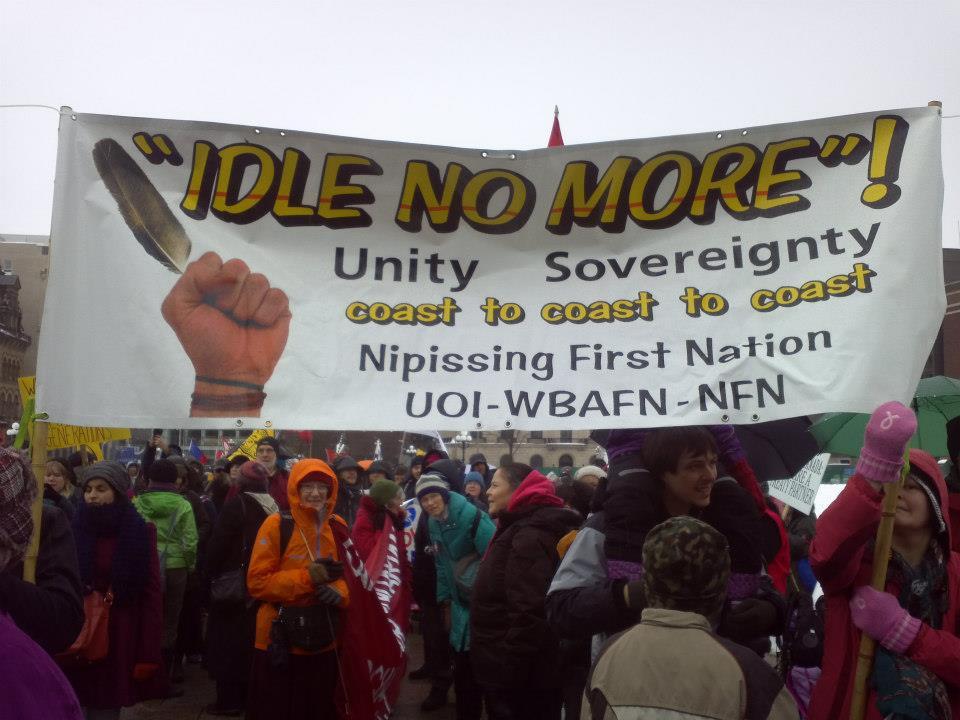
30 June 2013 / Members of the Nipissing First Nation from southern Ontario and local non-Aboriginal supporters in Ottawa
★アイドル・ノー・モア[Idle No More] は、2012年12月に4人の女性——先住民女性3人と非先住民の支援者1人——によって創設された継続的な抗議運動である。これはカナダの先住民 (ファースト・ネーションズ、メティス、イヌイット)と、カナダ国内の非先住民支援者、そして国際的にも(より小規模ながら)参加する草の根運動だ。アタ ワピスカットのテレーザ・スペンス首長による液体食ハンガーストライキ[1]に触発され、ソーシャルメディアを通じて調整された、世界的な政治行動の数々 で構成されている。当時のスティーブン・ハーパー首相と保守党連邦政府による先住民条約権の立法上の侵害への反発として生まれたこの運動は、特に包括法案 である法案C-45[2][3]に強く反対している。この大衆運動には、公共の場での円舞や鉄道線路の封鎖などが含まれている。
☆2011年5月2日のカナダ連邦選挙後、スティーブン・ハーパー率いる保守党連邦政府は、包括的な変更を導入する複数の包括法案を提案した。過去の政権で も議会に包括法案が提出されたことはあったが、法案C-45で提案された森林と水路の保護措置の撤廃は、先住民族コミュニティと環境保護活動家の間で懸念 を引き起こした。特に懸念されたのは、第208条における「絶対的放棄」という用語の削除である。これらの措置の多くは、環境保護団体や先住民族団体から批判を浴びた。特に法案C-45は、1882年制定の「航行可能水域保護法(NWPA)」を全面改 正し、「航行保護法(NPA)」と改称した。NWPAは、原則としてあらゆる浮遊船による航行が可能な水域内または周辺での建設工事に際し、広範な承認・ 協議プロセスを義務付けていた。新NPAでは、運輸大臣が定める大幅に限定された水路リストのいずれか周辺での開発にのみ承認プロセスが要求される [4]。新たに規制緩和された水路の多くは、先住民の伝統的土地を通過していた。[5]先住民に影響を与える多くの法案は成立しなかった。過去の連邦政府にとって優先度が低かったため、数多くの法案提出試みは失敗に終わり、結局審議も可決も されずに議事日程から消えた。1996年には「インディアン法任意改正法」である法案C-79が議事日程から消えた。2002年には、保留地管理の改革を 図る「先住民統治法」法案(Bill C-7)が提出されたが、2003年に廃案となった。2008年には、女性に対する不平等な扱いを是正するための「保留地内の家族住宅および婚姻上の権利 に関する法律」法案(Bill C-47)が提出された。この法案は3回も議事日程で廃案となったが、2013年にようやく可決された。[8] ケロウナ合意はマーティン政権によって合意されたが、その後のハーパー政権によって承認も実施もされなかった。こうした失敗は、先住民と政府の関係に悪影 響を与えた。この背景には、連邦政府が先住民の利益に対して繰り返し不誠実な行動を取り、都合の良いときに条約に違反してきたという感情がある。連邦政府 との交渉という従来の戦術は意味をなさなくなったという感覚が、新しい戦術への支持を生み出している。
| Idle No More
is an ongoing protest movement, founded in December 2012 by four women:
three First Nations women and one non-Native ally. It is a grassroots
movement among the Indigenous peoples in Canada comprising the First
Nations, Métis and Inuit peoples and their non-Indigenous supporters in
Canada, and to a lesser extent, internationally. It has consisted of a
number of political actions worldwide, inspired in part by the liquid
diet hunger strike of Attawapiskat Chief Theresa Spence[1] and further
coordinated via social media. A reaction to alleged legislative abuses
of Indigenous treaty rights by then Prime Minister Stephen Harper and
the Conservative federal government, the movement takes particular
issue with the omnibus bill Bill C-45.[2][3] The popular movement has
included round dances in public places and blockades of rail lines. |
アイドル・ノー・モア[Idle No More]
は、2012年12月に4人の女性——先住民女性3人と非先住民の支援者1人——によって創設された継続的な抗議運動である。これはカナダの先住民
(ファースト・ネーションズ、メティス、イヌイット)と、カナダ国内の非先住民支援者、そして国際的にも(より小規模ながら)参加する草の根運動だ。アタ
ワピスカットのテレーザ・スペンス首長による液体食ハンガーストライキ[1]に触発され、ソーシャルメディアを通じて調整された、世界的な政治行動の数々
で構成されている。当時のスティーブン・ハーパー首相と保守党連邦政府による先住民条約権の立法上の侵害への反発として生まれたこの運動は、特に包括法案
である法案C-45[2][3]に強く反対している。この大衆運動には、公共の場での円舞や鉄道線路の封鎖などが含まれている。 |
| Background After the May 2, 2011 Canadian Federal election, the Conservative federal government, led by Stephen Harper, proposed a number of omnibus bills introducing sweeping changes. While omnibus bills had been presented to parliament by previous governments, the removal of protections for forests and waterways proposed in Bill C-45 led to concern among Indigenous communities and environmentalists. Of particular concern is the removal of the term "absolute surrender" in Section 208. A number of these measures drew fire from environmental and First Nations groups. In particular, Bill C-45 overhauled the Navigable Waters Protection Act (NWPA) of 1882, renaming it the Navigation Protection Act (NPA). The NWPA had mandated an extensive approval and consultation process before construction of any kind could take place in or around any water which could in principle be navigated by any kind of floating craft. Under the new NPA, the approval process would only be required for development around one of a vastly circumscribed list of waterways set by the Minister of Transportation.[4] Many of the newly deregulated waterways passed through traditional First Nations land.[5] While the NWPA had originally been intended to facilitate actual navigation, the ubiquity of waterways in the Canadian wilderness has given it the effect of strong environmental legislation by presenting a significant barrier to industrial development, especially to projects such as pipelines which crossed many rivers.[6] The government had by this time been engaged for some years in a campaign for approval of the Enbridge Northern Gateway Pipelines project, a proposal to build a pipeline for bitumen condensate connecting the Athabasca tar sands with the Pacific Ocean, facilitating unprocessed bitumen exports to China.[7] Many bills affecting First Nations people have failed to be passed. Numerous attempts to introduce bills have failed due to their low priority for past federal governments, eventually dying on the order paper without being debated or passed. In 1996 Bill C-79, the Indian Act Optional Modification Act died on the order paper. In 2002, Bill C-7, the First Nations Governance Act, attempted to reform reserve administration. It died in 2003. In 2008, there was Bill C-47, the Family Homes on Reserves and Matrimonial Interests or Rights Act, to redress inequity in the treatment of women. That one died on the order paper three times but eventually passed in 2013.[8] The Kelowna Accord was agreed by the Martin government, but was neither endorsed nor implemented by the subsequent Harper government. These failures harmed relations between Natives and the government. Further background to this is the feeling that the federal government has repeatedly acted in bad faith with Aboriginal peoples' interests, and have violated treaties when it suited them. The feeling that the traditional tactics of negotiating with the federal government have become meaningless has caused support for new tactics. |
背景 2011年5月2日のカナダ連邦選挙後、スティーブン・ハーパー率いる保守党連邦政府は、包括的な変更を導入する複数の包括法案を提案した。過去の政権で も議会に包括法案が提出されたことはあったが、法案C-45で提案された森林と水路の保護措置の撤廃は、先住民族コミュニティと環境保護活動家の間で懸念 を引き起こした。特に懸念されたのは、第208条における「絶対的放棄」という用語の削除である。 これらの措置の多くは、環境保護団体や先住民族団体から批判を浴びた。特に法案C-45は、1882年制定の「航行可能水域保護法(NWPA)」を全面改 正し、「航行保護法(NPA)」と改称した。NWPAは、原則としてあらゆる浮遊船による航行が可能な水域内または周辺での建設工事に際し、広範な承認・ 協議プロセスを義務付けていた。新NPAでは、運輸大臣が定める大幅に限定された水路リストのいずれか周辺での開発にのみ承認プロセスが要求される [4]。新たに規制緩和された水路の多くは、先住民の伝統的土地を通過していた。[5] NWPAは本来、実際の航行を促進する目的で制定されたが、カナダの大自然には水路が至る所に存在するため、産業開発、特に多くの河川を横断するパイプラ インのようなプロジェクトに対して重大な障壁となることで、強力な環境保護法としての効果を発揮してきた。[6] この時点で政府は、エンブリッジ・ノーザンゲートウェイ・パイプライン計画の承認に向けた運動を数年にわたり展開していた。これはアサバスカ油砂地帯と太 平洋を結ぶビチューメン凝縮液用パイプライン建設案であり、未加工ビチューメンの中国向け輸出を促進するものである。[7] 先住民に影響を与える多くの法案は成立しなかった。過去の連邦政府にとって優先度が低かったため、数多くの法案提出試みは失敗に終わり、結局審議も可決も されずに議事日程から消えた。1996年には「インディアン法任意改正法」である法案C-79が議事日程から消えた。2002年には、保留地管理の改革を 図る「先住民統治法」法案(Bill C-7)が提出されたが、2003年に廃案となった。2008年には、女性に対する不平等な扱いを是正するための「保留地内の家族住宅および婚姻上の権利 に関する法律」法案(Bill C-47)が提出された。この法案は3回も議事日程で廃案となったが、2013年にようやく可決された。[8] ケロウナ合意はマーティン政権によって合意されたが、その後のハーパー政権によって承認も実施もされなかった。こうした失敗は、先住民と政府の関係に悪影 響を与えた。この背景には、連邦政府が先住民の利益に対して繰り返し不誠実な行動を取り、都合の良いときに条約に違反してきたという感情がある。連邦政府 との交渉という従来の戦術は意味をなさなくなったという感覚が、新しい戦術への支持を生み出している。 |
| Vision and goals The founders of Idle No More outlined the vision and goals of the movement in a January 10, 2013 press release as follows: The Vision [...] revolves around Indigenous Ways of Knowing rooted in Indigenous Sovereignty to protect water, air, land and all creation for future generations. The Conservative government bills beginning with Bill C-45 threaten Treaties and this Indigenous Vision of Sovereignty. The movement promotes environmental protection and indigenous sovereignty. It plans to accomplish these goals by: (A) Implementing leadership structure and councils (Such as the Council of Women) (B) Taking training in coordinating rallies, media, messaging and safety issues as well as in identifying provocateurs, misinformation shills, and propaganda. (C) Placing key spokespeople and connecting with experienced experts in different areas; i.e. treaty research, indigenous rights and governance, environmental activism, writers, international spokesperson, national etc. (D) Creating chapters across Turtle Island under the umbrella of the main INM. (E) Requesting regular meetings with First Nations leadership to have ongoing discussions regarding third party agreements between the Government of Canada and industry corporations To date the movement has been particularly focused on: (A) The education and the revitalization of indigenous peoples through awareness and empowerment. (B) Encouraging knowledge sharing about indigenous sovereignty and environmental protections.[9] The press release also notes that "As a grassroots movement, clearly no political organization speaks for Idle No More". Furthermore, this is not just an Aboriginal Canadian movement. These pipeline projects will be stretching beyond borders carving through critical ecosystems and landscapes in the States. Canada's large oil reserves have attracted industry to exploit, and profit, "The tar sands industry aims to create an extensive web of pipelines to deliver increasing amounts of this Canadian tar sands sludge to refineries in the United States" (Glick, page 2). Reports say that some 900,000 barrels of oil per day will be traveling from Canada tar sands through these pipelines. According to the National Wildlife Federation report, these pipelines will stretch thousands and thousands of miles through Canada and into the States and will leave devastation along its paths. "This pipeline system would virtually assure the destruction of swaths of one of the world's most important forest ecosystems, produce lake-sized reservoirs of toxic waste, import a thick, tarlike fuel that will release vast quantities of toxic chemicals into our air when it is refined in the U.S., and emit significantly more global warming pollutants into the atmosphere than fuels made from conventional oil" (Glick, page 3). These impacts are already being seen in Canada's peoples and wildlife. "Communities that live near the tar sands are already experiencing health problems linked to the pollution, and dozens of wildlife species are at risk, including millions of migrating cranes, swans, and songbirds" (Glick, page 3). With the magnitude and power of this project, these negative impacts will not end soon, and will not end in Canada. These pipelines will stretch across borders and come into our own backyards here in the states.[9][10] Idle No More's vision has been linked by some commentators in the press with longstanding leftist political theories of indigenism.[11] During the protests of late 2012 and early 2013, the theoretical framework of Idle No More has been frequently articulated in the Canadian press by Pamela Palmater. Palmater has denounced what she perceives as the federal government's "assimilationist agenda".[12] It has been suggested by others that the definition of "nation" is itself problematic.[13] Sylvia McAdam, a co-founder of the movement, has said that she does not condone the rail or road blockade tactics that some demonstrators have used, and has spoken in support of peaceful protest "within the legal boundaries".[14] |
ビジョンと目標 アイドル・ノー・モアの創設者らは、2013年1月10日のプレスリリースで運動のビジョンと目標を次のように示した: このビジョンは[...]先住民族の知恵を核とし、先住民族の主権に基づいて水、空気、土地、そして全ての創造物を未来の世代のために守ることを目指す。 保守党政府が提出した法案(C-45法案以降)は、条約とこの先住民主権のビジョンを脅かしている。 この運動は環境保護と先住民主権を推進する。これらの目標達成のため、以下の計画を立てる: (A) 指導体制と評議会(女性評議会など)の設置 (B) 集会・メディア・メッセージ発信・安全対策の調整、ならびに扇動者・偽情報工作員・プロパガンダの識別に関する訓練の実施 (C) 主要スポークスパーソンを配置し、各異なる分野の経験豊富な専門家(条約研究、先住民の権利と統治、環境活動家、作家、国際スポークスパーソン、国立担当者など)と連携する。 (D) 主要なINMの傘下でタートル島全域に支部を設立する。 (E) カナダ政府と産業企業間の第三者協定に関する継続的な議論を行うため、先住民族指導部との定期的な会合を要請する。 これまでの運動は特に以下に焦点を当ててきた: (A) 意識啓発とエンパワーメントを通じた先住民の教育と復興。 (B) 先住民の主権と環境保護に関する知識共有の促進。[9] プレスリリースはまた「草の根運動として、明らかにいかなる政治組織もアイドル・ノー・モアを代表しない」と記している。さらに、これは単なるカナダ先住 民の運動ではない。これらのパイプライン計画は国境を越え、米国の重要生態系や景観を分断する。カナダの豊富な石油埋蔵量は産業の搾取と利益追求を招いて いる。「タールサンド産業は、増加するカナダのタールサンドスラッジを米国の精製施設へ輸送するため、広範なパイプライン網の構築を目指している」(グ リック、2ページ)。報告によれば、カナダ産タールサンドから1日あたり約90万バレルの石油がこれらのパイプラインを通って輸送される見込みだ。全米野 生生物連盟の報告書によると、これらのパイプラインはカナダ国内からアメリカへと数千マイルにわたり延伸され、その経路に沿って壊滅的な被害をもたらすと いう。「このパイプライン網は、世界有数の重要な森林生態系の一角を確実に破壊し、湖ほどの大きさの有毒廃棄物貯水池を生み出し、米国で精製される際に大 気中に大量の有害化学物質を放出するタール状の燃料を輸入し、従来の石油から作られた燃料よりもはるかに多くの地球温暖化物質を大気中に排出するだろう」 (グリック、3ページ)。こうした影響は既にカナダの人々と野生生物に現れている。「タールサンド近郊のコミュニティでは汚染に起因する健康問題が発生し ており、数百万羽の渡り鳥(ツル、ハクチョウ、鳴き鳥など)を含む数十種の野生生物が危機に瀕している」(グリック、3ページ)。このプロジェクトの規模 と影響力から、こうした悪影響はすぐには終わらず、カナダ国内に留まらない。パイプラインは国境を越え、我々アメリカ国内の生活圏にまで入り込んでくるの だ[9][10]。 「アイドル・ノー・モア」運動の理念は、一部メディア評論家によって長年の左翼的政治理論である先住民主義と結びつけられてきた[11]。2012年末か ら2013年初頭にかけての抗議活動中、パメラ・パルメーターがカナダメディアで頻繁に「アイドル・ノー・モア」の理論的枠組みを説明した。パルメーター は連邦政府の「同化主義的政策」と彼女が認識するものを非難している。[12] 他方、「国民」の定義そのものに問題があると指摘する声もある。[13] 運動の共同創設者であるシルビア・マカダムは、一部のデモ参加者が用いた鉄道や道路の封鎖戦術を容認せず、「法的範囲内」での平和的抗議を支持する発言をしている。[14] |
| History Members of the Nipissing First Nation from southern Ontario and local non-Aboriginal supporters in Ottawa The movement was initiated by activists Nina Wilson, Sheelah Mclean, Sylvia McAdam Saysewahum, and Jessica Gordon in November 2012, during a teach-in at Station 20 West in Saskatoon called "Idle No More", held in response to the Harper government's introduction of Bill C-45.[15] Sylvia McAdam, an author and educator from the Nehiyaw (Cree) Nation, stated that "one of our strongest motivations is our children. We want them to witness that we weren’t silent about Bill C-45".[15] C-45 is a large omnibus bill implementing numerous measures, many of which activists claim weaken environmental protection laws. In particular, laws protecting all of the country's navigable waterways were limited in scope to protect only a few waterways of practical importance for navigation. Many of the affected waterways pass through land reserved to First Nations. Law blog writer/observer Lorraine Land,[16] and Idle No More itself,[17] identified the following bills as affecting natives or native sovereignty currently in 2013: Bill C-38 (Budget Omnibus Bill #1) Bill C-45 (Budget Omnibus Bill #2) Bill C-27 First Nations Financial Transparency Act[18] Bill S-2 Family Homes on Reserve and Matrimonial Interests or Right Act Bill S-6 First Nations Elections Act Bill S-8 Safe Drinking Water for First Nations Bill C-428 Indian Act Amendment and Replacement Act Bill S-207 An Act to amend the Interpretation Act Bill S-212 First Nations Self-Government Recognition Bill "First Nations" Private Ownership Act This led to a series of teach-ins, rallies and protests that were planned by the founders in a National Day Of Action on Dec 10 which coincided with Amnesty International's Human Rights Day.[19] These coincided with similar protests already underway in British Columbia over the Northern Gateway and Pacific Trails pipelines as well as a march and protest organized by students at the Native Education College.[20] The protests were timed to coincide with the announcement that Chief Theresa Spence of Attawapiskat was launching a liquid diet to demand a meeting with Prime Minister Harper and the Governor General of Canada to discuss Aboriginal rights. The Assembly of First Nations then issued an open letter December 16 to Governor General David Johnston, calling for a meeting to discuss Spence's demands.[21] Also on December 17 the Confederacy of Treaty No. 6 First Nations issued a press release saying that they did not recognize the legality of any laws passed by the federal parliament, "including but not limited to Bill C-45, which do not fulfill their constitutionally recognized and affirmed treaty and Aboriginal rights; as well as the Crown's legal obligations to meaningfully consult and accommodate First Nations."[22] As of January 4, 2013, the main goals have been narrowed down to (1) the establishment of a nation-to-nation relationship between First Nations and the Government of Canada, rather than a relationship as defined in the Indian Act to address issues and (2) social and environmental sustainability.[23] |
歴史 オンタリオ州南部のニピッシング先住民と、オタワの非先住民支援者たち この運動は、2012年11月、サスカトゥーンのステーション20ウェストで開催された「アイドル・ノー・モア」というティーチインで、活動家のニーナ・ ウィルソン、シーラ・マクリーン、シルビア・マカダム・サイセワハム、ジェシカ・ゴードンによって開始された。これは、ハーパー政権が法案C-45を導入 したことに対する反応として開催されたものである。[15] ネヒヤウ(クリー)国民の作家であり教育者でもあるシルビア・マカダムは、「私たちの最大の動機の一つは子供たちだ。子供たちに、私たちが法案 C-45 について沈黙していなかったことを目撃してもらいたい」と述べた。[15] C-45法案は多数の措置を包括的に実施する大型法案であり、活動家らはその多くが環境保護法を弱体化させると主張している。特に、国内の全航行可能水路 を保護する法律は、実質的な航行上重要な一部の水路のみに保護範囲が限定された。影響を受ける水路の多くは先住民保留地を通過している。 法律ブログ執筆者/オブザーバーのロレイン・ランド[16]及びアイドル・ノー・モア運動自体[17]は、2013年現在で先住民または先住民の主権に影響を与える法案として以下を特定している: 法案C-38(予算包括法案第1号) 法案C-45(予算包括法案第2号) 法案C-27 先住民財務透明化法[18] 法案S-2 保護区内の家族住宅及び婚姻上の権利法 法案S-6 先住民選挙法 法案S-8 先住民のための安全な飲料水法 法案C-428 先住民法改正・代替法 法案S-207 解釈法改正法 法案S-212 先住民自治政府承認法案 「先住民」私有財産法 これにより、創設者らが計画した一連の教示集会、集会、抗議活動が12月10日の全国行動デーに実施された。この日はアムネスティ・インターナショナルの 人権デーと重なっていた[19]。これらはブリティッシュコロンビア州で既に進行中だったノーザンゲートウェイ・パイプラインとパシフィックトレイルズ・ パイプラインに対する抗議活動、およびネイティブ教育大学の学生が組織した行進・抗議活動と時期を同じくした。[20] 抗議行動は、アタワピスカットのテレサ・スペンス首長が、先住民の権利についてハーパー首相とカナダ総督との会談を要求し、液体食のみの断食を開始すると 発表した時期と意図的に重なるように計画された。先住民国民会議はその後、12月16日にデイビッド・ジョンストン総督宛てに公開書簡を発行し、スペンス 首長の要求について協議する会合の開催を求めた。[21] また12月17日、第6号条約先住民連合はプレスリリースを発表し、連邦議会が可決したあらゆる法律の合法性を認めないと表明した。「これには、憲法上認 められ確認された条約および先住民の権利を満たさない法案C-45を含むがこれに限定されない。また、先住民と実質的な協議を行い配慮する王室の法的義務 も含まれる」と述べた。[22] 2013年1月4日現在、主な目標は以下の2点に絞られている。(1) 諸問題に対処するため、先住民族とカナダ政府の間に「インディアン法」で定義される関係ではなく、国家間の関係を確立すること。(2) 社会・環境の持続可能性の確保である。[23] |
| Resource exploitation The Idle No More movement generally opposes certain types of resource exploitation, particularly on First Nations territory.[24] The movement takes this stance against resource exploitation, as attributed to First Nations sovereignty and environmental sustainability.[25] The position is supported by many groups including non-governmental and grassroots organizations. In a human rights report on Canada, Amnesty International suggested that the government should have "respect for indigenous rights when issuing licences for mining, logging and petroleum and other resource extraction."[26] The Idle No More movement outlines ways by which it opposes resource exploitation, although these views are contested within the First Nations population itself. It communicates the need for treaty modernization as well as increased land claims. It also advocates against resource exploitation on First Nations land without any benefit to the First Nations.[27][28] Furthermore, the movement argues that First Nations communities do not get an equitable share of the profits from natural resource exploitation and encourages the government to address this issue.[26] One demonstration reflecting opposition to resource exploitation was held at Barriere Lake in Quebec by the Algonquin people. It closed Highway 117 and was reported "to draw attention to forestry operations that they oppose on their lands."[29][30] In British Columbia (B.C.), the specific focus within resource exploitation is opposition to oil pipeline construction. Frank Brown, organizer of a B.C. Idle No More protest and a member of the Heiltsuk First Nation, said the B.C. group opposed proposed pipelines such as the Enbridge Northern Gateway pipeline. Moreover, several First Nations communities, the BC Métis Federation, the Union of British Columbian Municipalities, and several local governments have passed resolutions banning pipelines in B.C. and opposing Enbridge specifically.[31][32] |
資源開発 アイドル・ノー・モア運動は、特に先住民の領土における特定の資源開発に反対している。[24] この運動が資源開発に反対する立場を取る背景には、先住民の主権と環境の持続可能性が関係している。[25] この立場は、非政府組織や草の根団体を含む多くのグループによって支持されている。カナダに関する人権報告書で、アムネスティ・インターナショナルは、政 府が「鉱業、林業、石油その他の資源採掘の許可を発行する際には、先住民の権利を尊重すべきである」と提言した。[26] アイドル・ノー・モア運動は、資源開発に反対する方法を概説しているが、これらの見解は先住民コミュニティ内部でも議論の的となっている。同運動は条約の 現代化と土地権利請求の拡大の必要性を訴え、先住民に何の利益ももたらさない先住民土地での資源開発に反対している[27][28]。さらに、先住民コ ミュニティが天然資源開発の利益を公平に分配されていないと主張し、政府にこの問題への対応を求めている。[26] 資源開発への反対を示すデモの一つが、ケベック州バリエール湖でアルゴンキン族によって行われた。このデモは国道117号線を封鎖し、「自分たちの土地で行われる林業活動への反対を訴えるため」と報じられた。[29][30] ブリティッシュコロンビア州(B.C.)では、資源開発の中でも特に石油パイプライン建設への反対が焦点となっている。BC州のアイドル・ノー・モア抗議 運動の主催者であり、ハイルツーク・ファースト・ネーションのメンバーであるフランク・ブラウンは、BC州のグループがエンブリッジ・ノーザン・ゲート ウェイ・パイプラインなどの計画中のパイプラインに反対していると述べた。さらに、複数のファースト・ネーション・コミュニティ、BCメティス連盟、ブリ ティッシュコロンビア自治体連合、およびいくつかの地方政府が、BC州でのパイプライン建設を禁止し、特にエンブリッジに反対する決議を可決している。 [31][32] |
Protests in Canada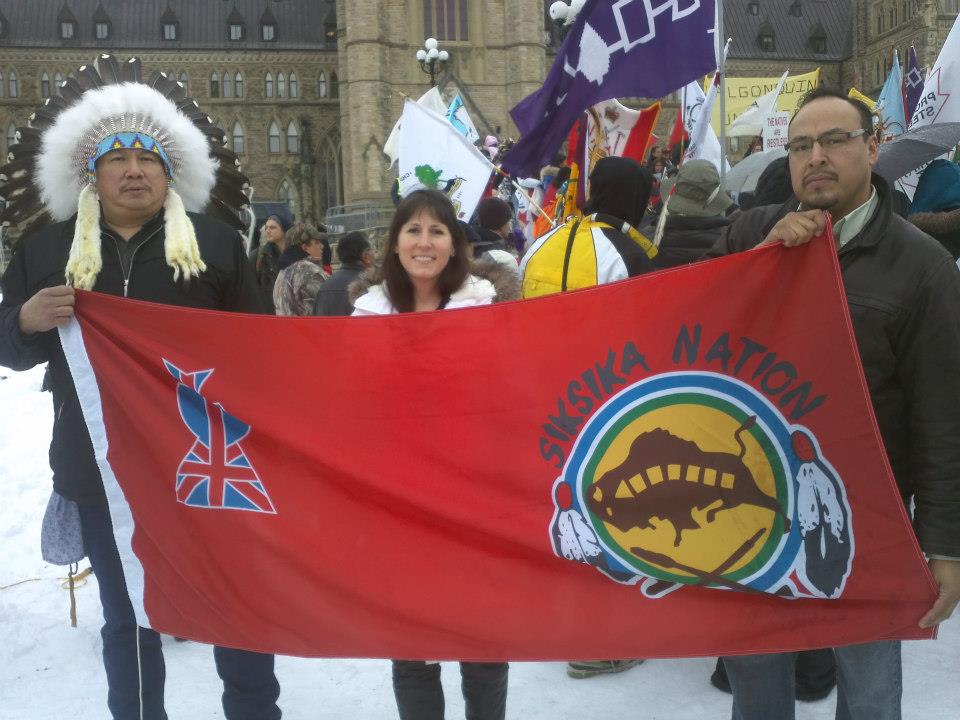 Two members of the Siksika Nation from southern Alberta and a local non-Aboriginal supporter in Ottawa The use of flash mobs performing round dances in shopping malls became a recurring theme of the protest during the pre- and post-Christmas shopping season in 2012. On December 17 a flash mob performed a round dance at the Cornwall Centre shopping mall in Regina.[33] The following day a similar flash mob round dance occurred at West Edmonton Mall.[34] This tactic was also used at the Rideau Centre in Ottawa[when?] and St. Vital Centre in Winnipeg. It spread internationally with a similar protest at the Mall of America in Minnesota. Members of the Sandy Bay First Nation in Manitoba blocked the Trans-Canada Highway on December 15, 2012.[35] Members of the Driftpile First Nation also blocked a road on December 18.[36] The group executed their second round dance flash mob in Saskatchewan on December 20, this time at Midtown Plaza in Saskatoon. Two thousand people filled the upper and lower levels of the mall for the 10-minute dance of the flash mob. Also on this day, organizers started gathering people around the Vimy war memorial on the Saskatoon riverbank.[37] On December 27 an online source reported that there had been 100 protests in Canada to date[38] On December 30, as part of a day of nationwide actions, a group believed to be involved[who?] with Idle No More blocked the Canadian National main railway line between the country's two largest cities of Toronto and Montreal at a point near Belleville, Ontario for approximately three hours.[39] On January 2, Waterfront Station in Vancouver was packed for a demonstration drawing hundreds of participants. Protestors danced and chanted.[40] Protestors filled Toronto's Eaton Centre, while a simultaneous protest occurred in the West Edmonton Mall, 50 Protestors at Clifton Hill in Niagara Falls, and other locations in Canada.[41] On January 5, 2013, protests shut down multiple border crossings throughout Canada, including Blue Water Bridge in Sarnia, Ontario, International Bridge in Cornwall, Ontario, the Peace Arch crossing in Surrey, B.C., The Peace Bridge between Fort Erie and Buffalo in the Niagara region, and NWT's Deh Cho Bridge.[42] The International Bridge in Cornwall had not been closed since a month-long dispute between Akwesasne Nation and CBSA.[43] On January 11, 2013, thousands of people participated in Idle No More demonstrations in all regions of Canada. In Vancouver, British Columbia, a mass march and rally was held at Vancouver City Hall. It was estimated over 1000 people attended the march which started at the Native Education College.[44] |
カナダでの抗議活動 アルバータ州南部のシクシカ・ネイションの部族員2人と、オタワ在住の非先住民支援者 2012年のクリスマス前後の買い物シーズン中、ショッピングモールでフラッシュモブによる円舞が繰り返されることが抗議活動の定番となった。12月17 日、レジャイナのコーンウォール・センター・ショッピングモールでフラッシュモブによる円舞が行われた[33]。翌日にはウェスト・エドモントン・モール でも同様のフラッシュモブ円舞が発生した[34]。この戦術はオタワのリドー・センター[時期不明]やウィニペグのセント・バイタル・センターでも用いら れた。ミネソタ州のモール・オブ・アメリカでも同様の抗議活動が行われ、国際的に広がった。マニトバ州サンディ・ベイ・ファースト・ネーションの部族員は 2012年12月15日、トランスカナダ・ハイウェイを封鎖した[35]。ドリフトパイル・ファースト・ネーションの部族員も12月18日に道路を封鎖し た[36]。 グループは12月20日、サスカチュワン州で2度目のフラッシュモブ円舞を実行した。今回はサスカトゥーンのミッドタウン・プラザでのことだ。フラッシュ モブの10分間のダンスには、モールの上下階に2000人が集まった。同日、主催者らはサスカトゥーン川岸のヴィミー戦争記念碑周辺でも人集めを始めた [37]。12月27日、オンライン情報源はカナダ国内でこれまでに100件の抗議活動があったと報じた[38] 12月30日、全国同時行動の一環として、アイドル・ノー・モアに関与していると思われるグループ[誰?]が、オンタリオ州ベルビル近郊でカナダ最大の二 大都市トロントとモントリオールを結ぶカナダ国鉄幹線を約3時間にわたり封鎖した[39]。1月2日にはバンクーバーのウォーターフロント駅で数百人が参 加するデモが行われ、駅は人で埋め尽くされた。抗議者たちは踊り、スローガンを叫んだ[40]。トロントのイートンセンターは抗議者で埋め尽くされ、同時 刻にはウェスト・エドモントン・モール、ナイアガラフォールズのクリフトンヒル、その他カナダ各地でも抗議活動が行われた。[41] 2013年1月5日、抗議活動によりカナダ全土の複数の国境検問所が閉鎖された。オンタリオ州サーニアのブルーウォーター橋、オンタリオ州コーンウォール の国際橋、ブリティッシュコロンビア州サリーのピースアーチ検問所、ナイアガラ地域のフォートエリーとバッファローを結ぶピース橋、ノースウェスト準州の デチョ橋などが含まれる。[42] コーンウォールの国際橋は、アクウェサネ・国民とカナダ国境サービス庁(CBSA)の1ヶ月に及ぶ紛争以来、閉鎖されていなかった。[43] 2013年1月11日、カナダ全土で数千人が「アイドル・ノー・モア」デモに参加した。ブリティッシュコロンビア州バンクーバーでは市庁舎前で大規模な行進と集会が行われ、先住民教育大学を起点とした行進には1000人以上が参加したと推定された。[44] |
Solidarity protests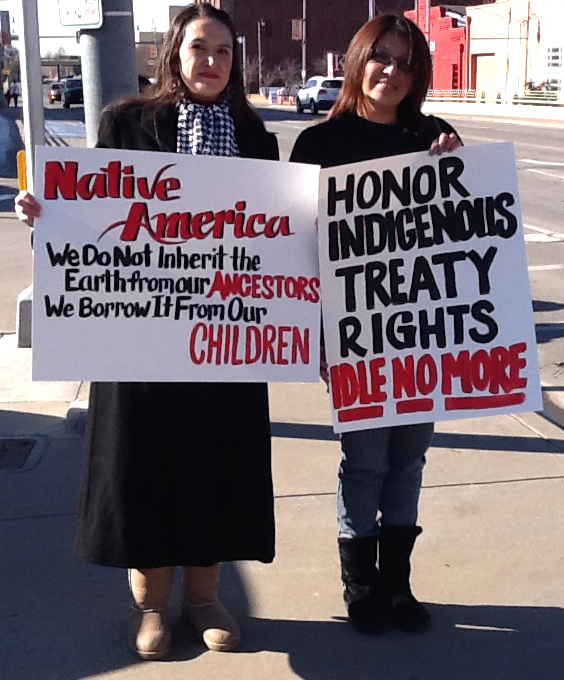 Indigenous protesters at an Idle No More event in Oklahoma City, Oklahoma 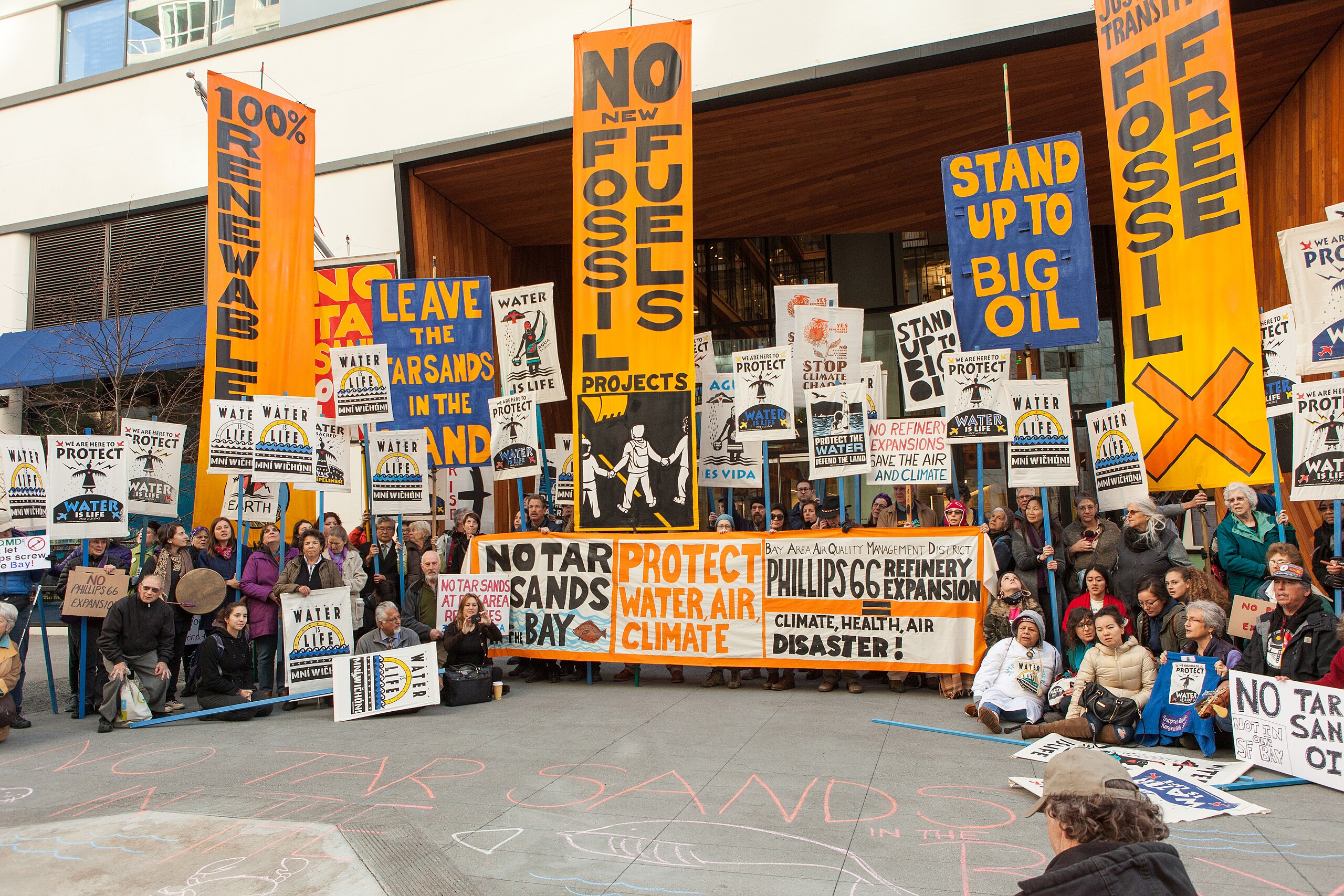 Idle No More SF Bay and other protesters against bringing tar sands to the San Francisco Bay gather outside the Bay Area Air Quality Management District, March 2018. The protests have also spread outside of Canada. On December 27 an online source reported that there had been 30 Idle No More protests in the United States, and solidarity protests in Stockholm, Sweden, London, UK, Berlin, Germany, Auckland, New Zealand, and Cairo, Egypt.[38] On December 30, approximately 100 people from Walpole Island marched to Algonac, Michigan.[41][45] CBS reported that "hundreds" attended a flash mob at the Mall of America in Minneapolis, Minnesota.[46] The Twin Cities Daily Planet called it a crowd of "over a thousand" and stated that it followed a similar protest a week earlier where Clyde Bellecourt had been arrested, as well as another flash mob at the Paul Bunyan Mall in Bemidji.[47] On January 5, the International Bridge was closed again due to Mohawk protests from New York.[48] Within the United States, protests have been reported in many states: Michigan,[41] Minnesota, Ohio,[49] New York,[48] Arizona,[50] Colorado,[50] Maine,[51] New Mexico,[52] Vermont,[53] South Carolina,[54] Washington State,[55] Washington, D.C., Indiana and Texas.[40] |
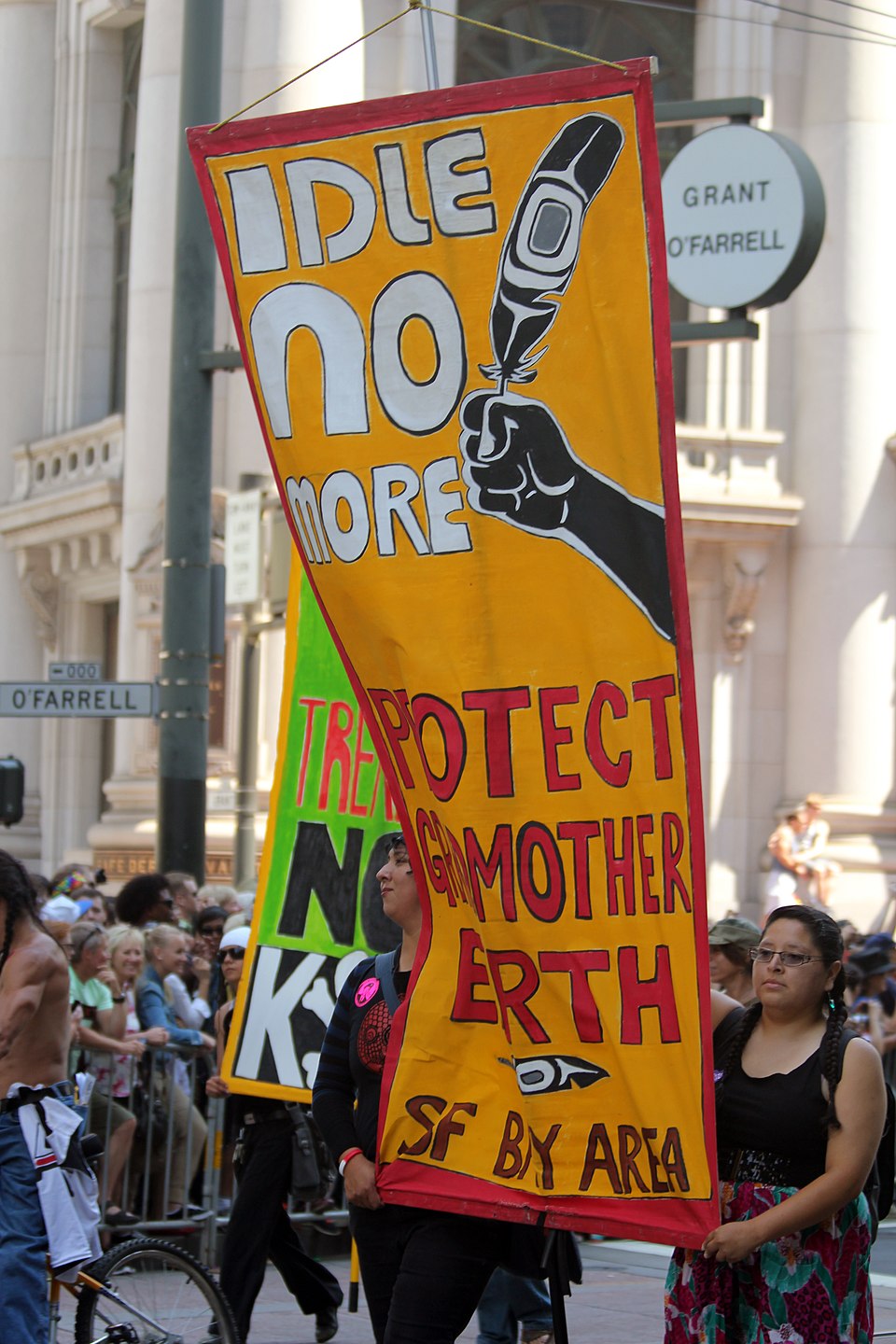
連帯抗議活動 オクラホマ州オクラホマシティで開催された「アイドル・ノー・モア」イベントに参加した先住民抗議者たち 2018年3月、サンフランシスコ湾へのタールサンド搬入に反対する「アイドル・ノー・モアSFベイ」ら抗議者たちが、ベイエリア大気質管理地区の外で集結した。 抗議活動はカナダ国外にも広がった。12月27日、オンライン情報源によれば、アメリカ国内で30件のアイドル・ノー・モア抗議活動が発生し、スウェーデ ン・ストックホルム、イギリス・ロンドン、ドイツ・ベルリン、ニュージーランド・オークランド、エジプト・カイロでも連帯抗議が行われた[38]。12月 30日には、ウォルポール島から約100人がミシガン州アルゴナックまで行進した。[41][45] CBSはミネソタ州ミネアポリスのモール・オブ・アメリカで「数百人」がフラッシュモブに参加したと報じた。[46] ツインシティーズ・デイリー・プラネット紙は「千人以上」の群衆と表現し、これは1週間前にクライド・ベルコートが逮捕された同様の抗議活動や、ベミジの ポール・バニヤン・モールでの別のフラッシュモブに続くものだと述べた。[47] 1月5日、ニューヨーク州モホーク族の抗議活動により国際橋が再び閉鎖された。[48] 米国内では、多くの州で抗議活動が報告されている:ミシガン州[41]、ミネソタ州、オハイオ州[49]、ニューヨーク州[48]、アリゾナ州[50]、 コロラド州[50]、メイン州[51]、ニューメキシコ州[52]、バーモント州[53]、サウスカロライナ州[54]、ワシントン州[55]、ワシント ンD.C.、インディアナ州、テキサス州[40]。 |
| Support Former Liberal Prime Minister Paul Martin, who had supported the Kelowna Accords, said that Theresa Spence's efforts made her "an inspiration to all Canadians". Former Progressive Conservative Prime Minister Joe Clark also met Spence and made a speech afterward saying that Canada and First Nations were on a dangerous path.[56] In solidarity with the movement, Council of Canadians National Chairperson Maude Barlow, author Naomi Klein, and singer Sarah Slean have returned their Queen Elizabeth II Diamond Jubilee Medals.[57] |
支持 ケロウナ合意を支持していた元自由党首相のポール・マーティンは、テレサ・スペンスの努力は「すべてのカナダ人にとってインスピレーションとなる」と述べ た。元進歩保守党首相のジョー・クラークもスペンスと面会し、その後、カナダと先住民は危険な道を進んでいると演説した。[56] この運動に連帯して、カナダ人評議会の国立議長であるモード・バーロウ、作家ナオミ・クライン、歌手サラ・スリーンは、エリザベス女王のダイヤモンドジュビリーメダルを返還した。[57] |
| Criticism Criticism of the Idle No More movement has appeared in Canada's mainstream media, which has covered related high-profile protests such as road blockades and Spence's fast. 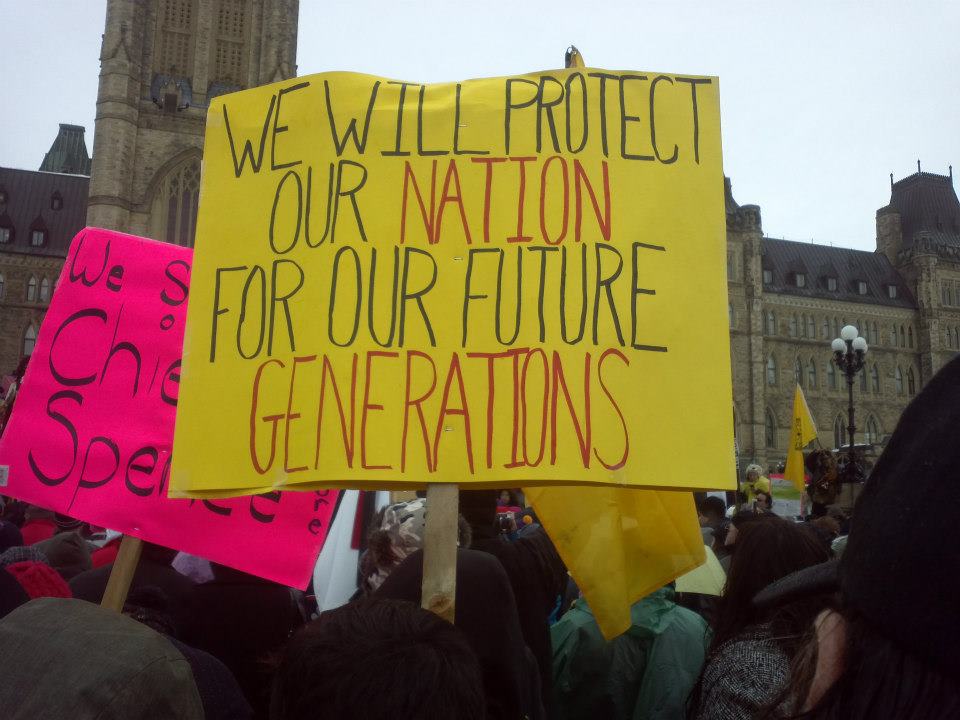 Protesters in Ottawa The parliamentary secretary to the Minister of Aboriginal Affairs stated to media that "With respect to Bill C-45, the changes to property leasing provisions, these changes respond directly to the request of a number of First Nations Chiefs to provide them with more flexibility".[58] Conservative Senator Patrick Brazeau, who is Aboriginal and a former chief, has told media that the demonstrations lacked focus in protesting "a whole gamut of issues".[59] He also said that democratic processes were available for participating in decision-making affecting First Nations.[60] He criticized Theresa Spence's tactics, saying she should have used the "proper parliamentary process."[56] |
批判 カナダの主流メディアでは、道路封鎖やスペンスの断食抗議といった注目を集めた抗議活動を取り上げつつ、アイドル・ノー・モア運動に対する批判も報じられている。 オタワの抗議者たち 先住民問題大臣政務官はメディアに対し、「法案C-45における財産賃貸借規定の変更は、複数のファースト・ネーションズ首長から要請された柔軟性向上の直接的な対応である」と述べた。[58] 先住民出身で元首長である保守党上院議員パトリック・ブラゾーは、メディアに対し「あらゆる問題」を抗議対象とするデモは焦点が定まっていないと述べた。 [59] また先住民に影響する意思決定への参加には民主的プロセスが利用可能だと主張した。[60] 彼はテレサ・スペンスの戦術を批判し、「適切な議会手続き」を用いるべきだったと述べた。[56] |
| Effects The founders of the Idle No More movement have emphasized their intention for the movement to remain at its core a "grassroots" movement, led by Indigenous women; they have released a statement to say that they have a different vision than that of the "leadership" of First Nation Chiefs, saying "we have been given a clear mandate … to work outside of the systems of government."[61] By early January 2013, Shawn Atleo, leader of the Assembly of First Nations, and other Chiefs, were beginning to "use the protests' momentum to press Ottawa on treaty rights and improved living standards."[62] The protests have been noted for creating a stream of polarized debate online, bringing out both supporters and detractors.[63] January 11, 2013 meeting 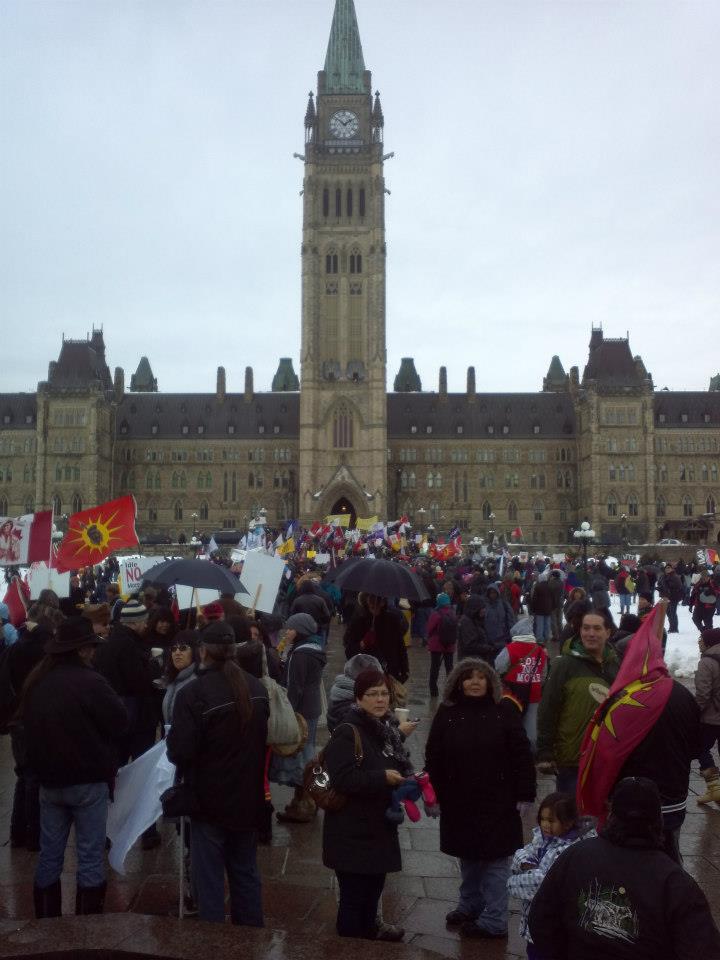 Idle No More supporters occupying the grounds of Parliament Hill on January 11 On January 4, 2013, Prime Minister Harper announced a meeting with a delegation of First Nation leaders coordinated by the Assembly of First Nations (AFN), to follow up on the issues discussed during the Crown-First Nations Gathering on January 24, 2012. His statement announcing the meeting made no mention of Idle No More.[64] The meeting was held on January 11, 2013. The preparations were the subject of intense negotiation and debate within the AFN membership, until late in the evening of the eve of the meeting. Some chiefs voted not to participate, choosing to boycott the meeting for various reasons, including demands that more chiefs be included in the AFN delegation, questions over what to include on the meeting's agenda, and the fact that the Governor General would not be present throughout the meeting, and would be limited to a shorter ceremonial meeting after the meeting with Prime Minister Harper.[65] The day of the meeting, members of the Idle No More movement organized protests on Parliament Hill (drawing an estimated 3000 demonstrators),[66] and in cities across Canada. Idle No More spokesperson Pam Palmater, who ran against Atleo for the position of National Chief with the AFN, said in a CBC discussion that the diverse positions expressed among the AFN chiefs "doesn't mean good things for the AFN".[67] The January 11 meeting was attended by National Chief Shawn Atleo and a delegation of chiefs from several provinces and the Yukon, AFN representatives from its Youth Council, Women's Council and Elders Council (Ontario and Manitoba chiefs boycotted the meeting). While it had previously been announced that Harper would only attend portions of the meeting, he attended the entire meeting. The meeting was also attended by Aboriginal Affairs Minister John Duncan, his Parliamentary Secretary Greg Rickford, Cabinet Ministers Tony Clement and Leona Aglukkaq, and senior officials from the Privy Council Office, Aboriginal Affairs and Northern Development Canada, and several other federal departments. The ceremonial meeting with Governor General Johnston was attended by around 100 chiefs, including Chief Theresa Spence.[67] After the meeting, Aboriginal Affairs Minister John Duncan stated that it would be followed by "high-level dialogue" between Harper and Atleo,[66] including follow-up meetings and more frequent reporting on Aboriginal matters by the federal government. Matthew Coon Come, a former AFN National Chief who has been confronted by protestors, attended the meeting, stated after the meeting that the "prime minister had moved a couple of posts forward", furthering discussions on treaty process and specific land claims, and that the prime minister indicated a willingness to consult with First Nations on environmental issues and legislative matters that impact Aboriginal territories.[67] |
影響 アイドル・ノー・モア運動の創設者たちは、この運動が本質的に先住民族の女性たちが主導する「草の根」運動であり続けることを意図していると強調してい る。彼らは声明を発表し、ファースト・ネーションの首長たちの「指導層」とは異なるビジョンを持っていると述べ、「我々は政府のシステムの外で活動すると いう明確な使命を与えられている」と語った。[61] 2013年1月上旬までに、ファースト・ネーションズ議会の指導者ショーン・アトレオや他の首長たちは、「抗議活動の勢いを利用して、条約上の権利と生活 水準の向上についてオタワに圧力をかけ始めた」[62]。この抗議活動は、オンライン上で支持者と批判者の双方を引き出し、二極化した議論の流れを生み出 したことで注目されている[63]。 2013年1月11日の会合 1月11日、議事堂の敷地を占拠するアイドル・ノー・モア支持者たち 2013年1月4日、ハーパー首相はファースト・ネーションズ議会(AFN)が調整した先住民指導者代表団との会合を発表した。これは2012年1月24 日の王室・先住民集会(Crown-First Nations Gathering)で議論された問題のフォローアップを目的とするものだった。この会合発表声明では「アイドル・ノー・モア」運動には一切言及されな かった。[64] 会合は2013年1月11日に開催された。 会合前夜遅くまで、AFN加盟部族間では準備作業をめぐる激しい交渉と議論が続いた。一部の首長は参加を拒否し、会議をボイコットすることを選択した。そ の理由は、AFN代表団により多くの首長を含める要求、会議の議題に何を盛り込むべきかについての疑問、そして総督が会議全体に出席せず、ハーパー首相と の会談後の短い儀礼的な会合に限定されるという事実などであった[65]。 会議当日、アイドル・ノー・モア運動のメンバーは議事堂前(推定3000人のデモ参加者を集めた)[66]やカナダ各地の都市で抗議行動を組織した。 AFN全国首長選でアトレオと対立したアイドル・ノー・モアのスポークスパーソン、パム・パルメーターはCBCの討論番組で、AFN首長たちの間で表明さ れた多様な立場は「AFNにとって良い兆候ではない」と述べた。[67] 1月11日の会合には、ショーン・アトレオ全国首長と、複数の州およびユーコン準州からの首長代表団、AFN青年評議会・女性評議会・長老評議会の代表者 が出席した(オンタリオ州とマニトバ州の首長は会合をボイコットした)。ハーパー首相は当初、会合の一部のみ出席すると発表されていたが、実際には全日程 に出席した。先住民問題担当大臣ジョン・ダンカン、その政務次官グレッグ・リックフォード、閣僚トニー・クレメントとレオナ・アグルカック、枢密院事務 局、先住民問題・北部開発省、その他複数の連邦省庁の高官も同席した。ジョンストン総督との儀礼的会談には、テレサ・スペンス首長を含む約100名の首長 が出席した。[67] 会談後、ジョン・ダンカン先住民問題大臣は、ハーパー首相とアトレオ氏の間で「ハイレベルな対話」が続くことを表明した[66]。これにはフォローアップ 会合や、連邦政府による先住民問題に関するより頻繁な報告が含まれる。抗議者らと対峙してきた元AFN全国首長マシュー・クーン・カムも会談に出席し、会 談後「首相は数歩前進した」と述べた。具体的には条約プロセスや特定の土地請求に関する議論の進展、環境問題や先住民地域に影響を与える立法事項について 先住民と協議する意思を示したことを指摘した。[67] |
| Attawapiskat housing and infrastructure crisis Great Peace of Montreal Jay Treaty List of protests in the 21st century The Journey of Nishiyuu, a 2013 walk by a group of Cree youth in support of the movement Numbered Treaties Status of First Nations treaties in B.C. Two Row Wampum Treaty Indigenous concerns over the Keystone pipeline The People of the Kattawapiskak River and Trick or Treaty?, related documentary films by Alanis Obomsawin |
アタワピスカトの住宅・インフラ危機 モントリオールの偉大なる平和 ジェイ条約 21世紀の抗議活動一覧 ニシユの旅(2013年、クリー族の若者グループによる運動支援の徒歩行進) 番号付き条約 ブリティッシュコロンビア州における先住民条約の現状 二つの列のワンプム条約 キーストーン・パイプラインに対する先住民の懸念 カタワピスカック川の人々、そして『トリック・オア・トリート?』― アラニス・オボムサウィンによる関連ドキュメンタリー映画 |
| References |
https://en.wikipedia.org/wiki/Idle_No_More |
| https://en.wikipedia.org/wiki/Idle_No_More |
|
リ ンク
文 献
そ の他の情報
CC
Copyleft,
CC, Mitzub'ixi Quq Chi'j, 1996-2099