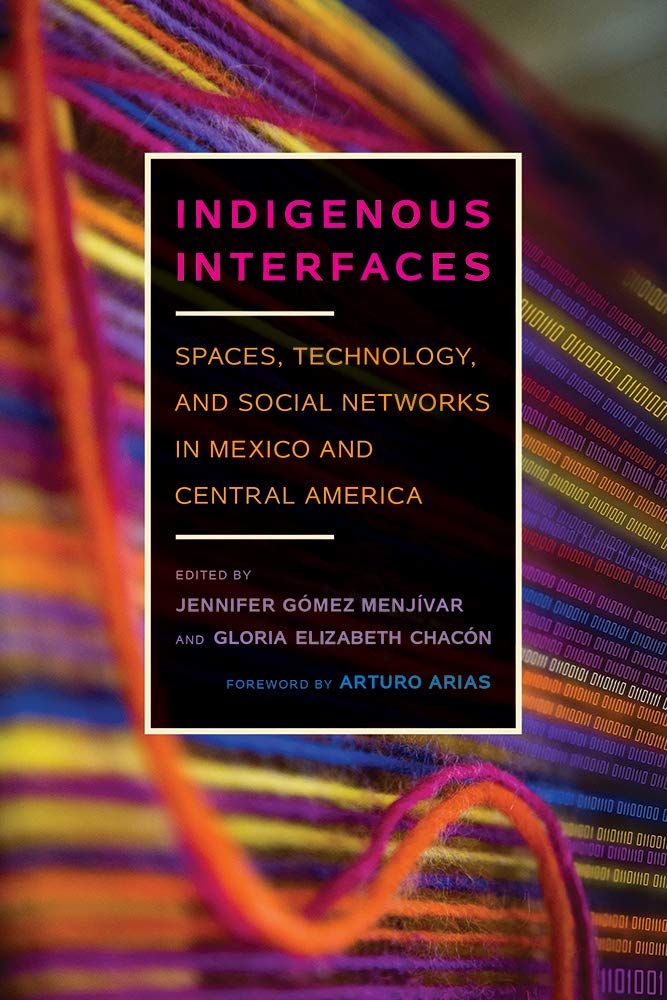

Indigenous Interfaces: Spaces, Technology, and Social Networks in Mexico and Central America
edited by Jennifer
Gómez Menjívar and Gloria Elizabeth Chacón, University of Arizona
Press, 2019
☆Indigenous Interfaces: Spaces, Technology, and Social Networks in Mexico and Central America, edited by Jennifer Gómez Menjívar and Gloria Elizabeth Chacón. University of Arizona Press, 2019/ 「先住民のインターフェイス:メキシコのと中央アメリカにおける空間、技術、社会的ネットワーク」
| Cultural
preservation, linguistic revitalization, intellectual heritage, and
environmental sustainability became central to Indigenous movements in
Mexico and Central America after 1992. While the emergence of these
issues triggered important conversations, none to date have examined
the role that new media has played in accomplishing their objectives. Indigenous Interfaces provides the first thorough examination of indigeneity at the interface of cyberspace. Correspondingly, it examines the impact of new media on the struggles for self-determination that Indigenous peoples undergo in Mexico and Central America. The volume’s contributors highlight the fresh approaches that Mesoamerica’s Indigenous peoples have given to new media—from YouTubing Maya rock music to hashtagging in Zapotec. Together, they argue that these cyberspatial activities both maintain tradition and ensure its continuity. Without considering the implications of new technologies, Indigenous Interfaces argues, twenty-first-century indigeneity in Mexico and Central America cannot be successfully documented, evaluated, and comprehended. Indigenous Interfaces rejects the myth that indigeneity and information technology are incompatible through its compelling analysis of the relationships between Indigenous peoples and new media. The volume illustrates how Indigenous peoples are selectively and strategically choosing to interface with cybertechnology, highlights Indigenous interpretations of new media, and brings to center Indigenous communities who are resetting modes of communication and redirecting the flow of information. It convincingly argues that interfacing with traditional technologies simultaneously with new media gives Indigenous peoples an edge on the claim to autonomous and sovereign ways of being Indigenous in the twenty-first century. |
1992年以降、メキシコと中央アメリカでは、文化保護、言語復興、知
的遺産、環境の持続可能性が先住民運動の中心となった。これらの問題の出現は重要な対話の引き金となったが、その目的を達成するためにニューメディアが果
たした役割を検証したものはこれまでなかった。 Indigenous Interfaces』は、サイバースペースとの接点における先住民性を初めて徹底的に検証している。それに呼応するように、本書はメキシコと中央アメリ カで先住民が受けている自決のための闘いに対するニューメディアの影響を検証している。本書の寄稿者たちは、マヤのロック音楽のYouTubからサポテカ 語のハッシュタグまで、メソアメリカの先住民がニューメディアに与えた新鮮なアプローチに焦点を当てている。彼らは共に、こうしたサイバースペース的な活 動が伝統を維持し、その継続性を確かなものにしていると論じている。Indigenous Interfaces』は、新しいテクノロジーの意味を考慮することなしに、メキシコと中央アメリカにおける21世紀の先住民性をうまく記録し、評価し、 理解することはできないと主張している。 Indigenous Interfaces』は、先住民族とニューメディアの関係を説得力を持って分析することで、先住民族性と情報テクノロジーは相容れないという神話を否定 する。本書は、先住民がいかに選択的かつ戦略的にサイバーテクノロジーとの接点を選んでいるかを説明し、ニューメディアに対する先住民の解釈を浮き彫りに し、コミュニケーション様式をリセットし、情報の流れを方向転換している先住民コミュニティを中心に据えている。本書は、ニューメディアと同時に伝統的な テクノロジーと接することで、21世紀における先住民の自律的かつ主権的なあり方を主張する上で、先住民が優位に立てることを説得力を持って論じている。 |
| CONTENTS Foreword: Indigenous Subjects and the Mastering of Science ix Arturo Arias Acknowledgments xxvii Introduction: No Static: Re-Indigenizing Technology 3 Jennifer Gómez Menjívar and Gloria Elizabeth Chacón PART I. PROBLEMATIZING TECHNOLOGY 1. (Re)Technologizing the Word: Recording, Knowledge, and the Decolonial Aesthetics of Maya Ts’íib 33 Paul M. Worley and Rita M. Palacios 2. Dule Molas: The Counterpoint-Counterplot Practice of the Traversable Cloth in (Non)Digital Realms 56 Sue P. Haglund 3. Using Technology to Revitalize Endangered Languages: Mixe and Chatino Case Studies 79 Emiliana Cruz and Tajëëw Robles PART II. CYBERSPATIAL NATION BUILDING 4. YouTubing Maya Rock: B’itzma Sobrevivencia’s Aural Memory of Survival 99 Alicia Ivonne Estrada 5. Trafficked Babies, Exploded Futures: Jayro Bustamante’s Ixcanul 119 Debra A. Castillo 6. Joysticks and Jaguars: Bribri-Inspired Games in Neoliberal Costa Rica 141 Mauricio Espinoza PART III. INDIGENIZING SOCIAL MEDIA 7. Digitizing Ancestral Memory: Garifuna Settlement Day in the Americas and in Cyberspace 165 Paul Joseph López Oro 8. In a Time of War and Hashtags: Rehumanizing Indigeneity in the Digital Landscape 180 Gabriela Spears-Rico 9. Tweeting in Zapotec: Social Media as a Tool for Language Activism 201 Brook Danielle Lillehaugen 10. From Facebook to Ixamoxtli: Nahua Activism through Social Networking 227 Adam Coon Contributors 253 Index 259 |
目次 まえがき:先住民の主体性と科学の習得 ix アルトゥーロ・アリアス 謝辞 xxvii はじめに 静的ではない: 技術の再土着化 3 ジェニファー・ゴメス・メンヒバルとグロリア・エリザベス・チャコン 第1部 技術の問題化 1.言葉を(再)技術化する: 記録、知識、そしてマヤ・ツィイブの脱植民地的美学 33 ポール・M・ウォーリーとリタ・M・パラシオス 2. デュール・モラス:(非)デジタル領域における横断可能な布の対位法的実践 56 スー・P・ハグランド 3. 絶滅の危機に瀕した言語を再生するためにテクノロジーを使う: ミヘとチャティーノの事例研究 79 エミリアナ・クルスとタジェウ・ロブレス パート II. サイバー空間における国民形成 4. マヤ・ロックをYouTubする: ビツマ・ソブレヴィヴェンシアの生存の聴覚的記憶 99 アリシア・イヴォンヌ・エストラーダ 5. 人身売買された赤ん坊、爆発した未来: ジェイロ・ブスタマンテの『イクスカヌル』 119 デブラ・A・カスティーヨ 6. ジョイスティックとジャガー:新自由主義コスタリカにおけるブリブリに触発されたゲーム 141 マウリシオ・エスピノサ パート III. ソーシャルメディアの土着化 7. 祖先の記憶のデジタル化: アメリカ大陸とサイバースペースにおけるガリフナ入植の日 165 ポール・ジョセフ・ロペス・オロ 8. 戦争とハッシュタグの時代に: デジタルにおける先住民の再人間化 180 ガブリエラ・スピアーズ=リコ 9. サポテカ語でつぶやく: 言語アクティビズムのツールとしてのソーシャルメディア 201 Brook Danielle Lillehaugen 10. FacebookからIxamoxtliへ:ソーシャル・ネットワーキングを通じたナフアのアクティヴィズム 227 Adam Coon 寄稿者 253 索引 259 |
リ ンク
文 献
そ の他の情報
CC
Copyleft,
CC, Mitzub'ixi Quq Chi'j, 1996-2099