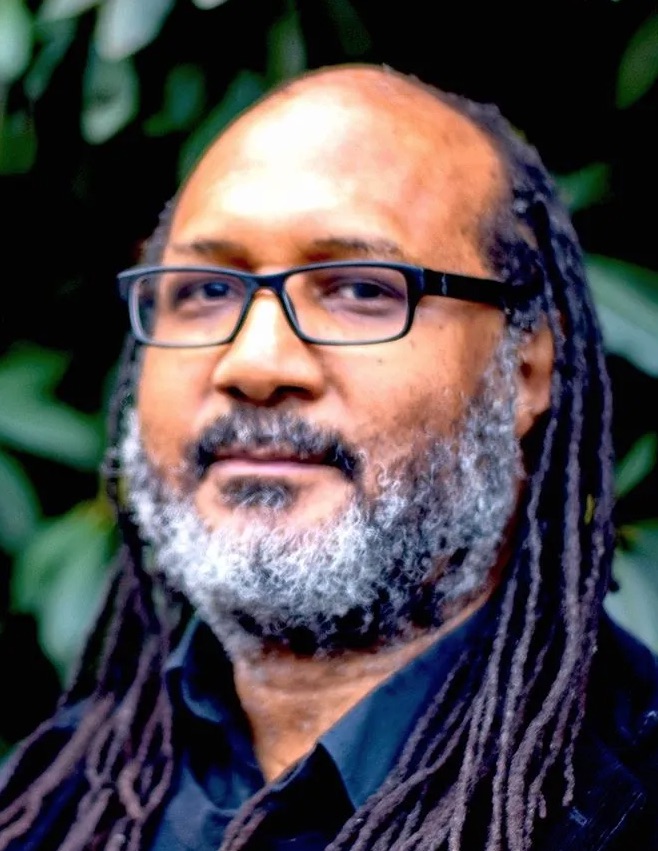
ルイス・ゴードン
Lewis Gordon, b.1962
☆ル
イス・リカルド・ゴードン[Lewis Ricardo Gordon](1962年5月12日生まれ)は、コネチカット大学のアメリカ人哲学者である。アフリカナ哲学、実存主義、現象学、社会・政治
理論、ポストコロニアル思想、人種と人種主義に関する理論、解放の哲学、美学、教育哲学、宗教哲学の分野で活動している。特にアフリカ系アメリカ人哲学と
黒人実存主義、ポストコロニアル現象学、人種と人種主義、そしてW・E・B・デュボイスとフランツ・ファノンの著作と思想について、非常に多くの著作があ
る。
| Lewis Ricardo Gordon
(born May 12, 1962) is an American philosopher at the University of
Connecticut who works in the areas of Africana philosophy,
existentialism, phenomenology, social and political theory,
postcolonial thought, theories of race and racism, philosophies of
liberation, aesthetics, philosophy of education, and philosophy of
religion. He has written particularly extensively on Africana and black
existentialism, postcolonial phenomenology, race and racism, and on the
works and thought of W. E. B. Du Bois and Frantz Fanon. |
ル
イス・リカルド・ゴードン[Lewis Ricardo Gordon](1962年5月12日生まれ)は、コネチカット大学のアメリカ人哲学者である。アフリカナ哲学、実存主義、現象学、社会・政治
理論、ポストコロニアル思想、人種と人種主義に関する理論、解放の哲学、美学、教育哲学、宗教哲学の分野で活動している。特にアフリカ系アメリカ人哲学と
黒人実存主義、ポストコロニアル現象学、人種と人種主義、そしてW・E・B・デュボイスとフランツ・ファノンの著作と思想について、非常に多くの著作があ
る。 |
| Career Gordon graduated in 1984 from Lehman College, CUNY, through the Lehman Scholars Program, with a Bachelor of Arts degree, magna cum laude and as a member of Phi Beta Kappa. He completed his Master of Arts and Master of Philosophy degrees in philosophy in 1991 at Yale University, and received his Doctor of Philosophy degree with distinction from the same university in 1993. Following the completion of his doctoral studies, Gordon taught at Brown University, Yale, Purdue University, and Temple University, where he was the Laura H. Carnell Professor of Philosophy in the department of philosophy with affiliations in religious and Judaic studies. He is currently[when?] professor of Philosophy and Africana Studies, with affiliations in Judaic Studies and the Caribbean, Latino/a, and Latin American Studies, at the University of Connecticut at Storrs. He also is Visiting Euro philosophy Professor at Toulouse University, France, and Nelson Mandela Visiting professor in Political and International Studies at Rhodes University in South Africa (2014–2016).[citation needed] At Temple, Gordon was director of the Institute for the Study of Race and Social Thought (ISRST), which is devoted to research on the complexity and social dimensions of race and racism. The ISRST's many projects include developing a consortium on Afro-Latin American Studies, a Philadelphia Blues People Project, semiological studies of indigeneity, a Black Civil Society project, symposia on race, sexuality, and sexual health, and ongoing work in Africana philosophy. Gordon was Executive Editor of volumes I-V of Radical Philosophy Review: Journal of the Radical Philosophy Association and co-editor of the Routledge book series on Africana philosophy. Additionally, he is President of the Caribbean Philosophical Association.[citation needed] Gordon is the founder of the center for Afro-Jewish Studies, the only such research center, which focuses on developing and providing reliable sources of information on African and African Diasporic Jewish or Hebrew-descended populations. Gordon states: "In actuality, there is no such thing as pure Jewish blood. Jews are a creolized [mixed-race] people. It's been that way since at least the time we left Egypt as a [culturally] mixed Egyptian and African [i.e., from other parts of Africa] people."[full citation needed] Gordon founded the Second Chance Program at Lehman High School in the Bronx, New York. He is married to Jane Anna Gordon.[1] |
経歴 ゴードンは1984年、ニューヨーク市立大学(CUNY)のリーマン・カレッジをリーマン・スカラーズ・プログラムを通じて卒業した。文学士号を優等 (magna cum laude)で取得し、ファイ・ベータ・カッパ会員となった。1991年にはイェール大学で哲学の修士号(MA)および哲学修士号(MPhil)を取得 し、1993年には同大学から優等(with distinction)で哲学博士号(PhD)を授与された。博士課程修了後、ゴードンはブラウン大学、イェール大学、パデュー大学、テンプル大学で教 鞭を執った。テンプル大学では哲学学科のローラ・H・カーネル記念教授を務め、宗教研究およびユダヤ研究にも関与した。現在はコネチカット大学ストーズ校 にて、哲学およびアフリカ研究の教授を務め、ユダヤ研究、カリブ・ラティーノ/ラティーナ・ラテンアメリカ研究にも関与している。またフランス・トゥー ルーズ大学の客員ヨーロッパ哲学教授、南アフリカ・ローズ大学のネルソン・マンデラ客員政治国際学教授(2014-2016年)も兼任している。 テンプル大学では、人種と社会思想研究所(ISRST)の所長を務めた。同研究所は人種と人種主義の複雑性および社会的側面の研究に特化している。 ISRSTの多数のプロジェクトには、アフロ・ラテンアメリカ研究コンソーシアムの開発、フィラデルフィア・ブルース・ピープル・プロジェクト、先住民の 記号論的研究、黒人市民社会プロジェクト、人種・セクシュアリティ・性的健康に関するシンポジウム、アフリカ系哲学の継続的研究が含まれる。ゴードンは 『ラディカル・フィロソフィー・レビュー:ラディカル・フィロソフィー協会誌』第I~V巻の編集長を務め、ラウトレッジ社のアフリカ系哲学書シリーズを共 同編集した。さらに、彼はカリブ哲学協会の会長でもある。[出典が必要] ゴードンは、アフリカ系ユダヤ人研究センターの創設者である。同センターは唯一の研究機関として、アフリカおよびアフリカ系ディアスポラのユダヤ人、ある いはヘブライ系祖先を持つ集団に関する信頼できる情報源の開発と提供に焦点を当てている。ゴードンは次のように述べている:「実際のところ、純粋なユダヤ 人の血など存在しない。ユダヤ人はクレオール化した(混血の)民族だ。少なくともエジプトを離れる時からそうだった。当時我々は(文化的に)エジプト人と アフリカ人(つまりアフリカ他の地域出身者)が混ざった民族だったのだ。」[出典必要] ゴードンはニューヨーク州ブロンクス区のリーマン高校でセカンドチャンスプログラムを創設した。妻はジェーン・アンナ・ゴードンである。[1] |
| Philosophy and work in theory Black existentialism Gordon is considered among the leading scholars in black existentialism.[2] He first came to prominence in this subject because of his first book, Bad Faith and Antiblack Racism (1995), which was an existential phenomenological study of anti-black racism, and his anthology Existence in Black: An Anthology of Black Existential Philosophy (1997). The book is written in four parts, with a series of short chapters that at times take the form of phenomenological vignettes. Bad faith, as Gordon reads it, is a coextensive phenomenon reflective of the metastability of the human condition. It is a denial of human reality, an effort to evade freedom, a flight from responsibility, a choice against choice, an assertion of being the only point of view on the world, an assertion of being the world, an effort to deny having a point of view, a flight from displeasing truths to pleasing falsehoods, a form of misanthropy, an act of believing what one does not believe, a form of spirit of seriousness, sincerity, an effort to disarm evidence (a Gordon innovation), a form of sedimented or institutional version of all of these, and (another Gordon innovation) a flight from and war against social reality. Gordon rejects notions of disembodied consciousness (which he argues are forms of bad faith) and articulates a theory of the body-in-bad-faith. Gordon also rejects authenticity discourses. He sees them as trapped in expectations of sincerity, which also is a form of bad faith. He proposes, instead, critical good faith, which he argues requires respect for evidence and accountability in the social world, a world of intersubjective relations. |
哲学と理論における仕事 黒人実存主義 ゴードンは黒人実存主義の主要な研究者の一人と見なされている。[2] 彼がこの分野で最初に注目されたのは、最初の著書『虚偽と反黒人人種主義』(1995年)と、アンソロジー『黒人における実存:黒人実存哲学アンソロ ジー』(1997年)による。前者は反黒人人種主義に関する実存的現象学的研究であった。本書は四部構成で、時として現象学的スケッチの形をとる一連の短 い章で書かれている。ゴードンが解釈する不誠実とは、人間の条件の準安定性を反映する普遍的現象である。それは人間の現実の否定であり、自由からの逃避で あり、責任からの逃走であり、選択に対する選択の拒否であり、世界に対する唯一の見解としての存在の主張であり、世界そのものとしての存在の主張であり、 見解を持つことの否定の試みであり、 不快な真実から快い虚偽への逃避、厭世観の一形態、信じないことを信じる行為、真剣さや誠実さという精神の一形態、証拠を無力化しようとする努力(ゴード ン独自の概念)、これら全てが沈殿・制度化された形態、そして(これもゴードン独自の概念)社会的現実からの逃避とそれに対する戦いである。ゴードンは、 無身体的な意識の概念(彼が主張するところの悪意の形態)を拒否し、悪意の身体の理論を明確に述べる。ゴードンはまた、真正性の言説も拒否する。彼はそれ らを誠実さへの期待に囚われたものと見なし、これもまた悪意の形態であるとする。代わりに彼が提案するのは批判的善意であり、それは社会的世界、つまり相 互主観的関係の世界における証拠への尊重と説明責任を必要とするものだと彼は主張する。 |
| The question of racism Racism, Gordon argues,[citation needed] requires the rejection of another human being's humanity. Since the other human being is a human being, such a rejection is a contradiction of reality. A racist must, then, deny reality, and since communication is possible between a racist and the people who are the object of racial hatred, then social reality is also what is denied in racist assertions. A racist, then, attempts to avoid social reality. Gordon argues that since people could only "appear" if embodied, then racism is an attack on embodied realities. It is an effort to make embodied realities bodies without points of view or make points of views without bodies. Racism is also a form of the spirit of seriousness, by which Gordon means the treatment of values as material features of the world instead of expressions of human freedom and responsibility. Racism ascribes to so-called racially inferior people intrinsic values that emanate from their flesh. A result of the spirit of seriousness is racist rationality. Here, Gordon, in agreement with Frantz Fanon, argues that racists are not irrational people but instead hyper-rational expressions of racist rationality. He rejects, in other words, theories that regard racism as a function of bad emotions or passions. Such phenomena, he suggests, emerge as a consequence of racist thinking, not its cause. Effect emerges, in other words, to affect how one negotiates reality. If one is not willing to deal with time, a highly emotional response squeezes all time into a single moment, which leads to the overflow of what one prefers to believe over what one is afraid of facing. |
人種主義問題 人種主義とは、ゴードンが主張するように[出典必要]、他の人間の人間性を否定することを必要とする。他の人間もまた人間である以上、そのような否定は現 実との矛盾である。したがって人種主義者は現実を否定せざるを得ず、人種主義者と人種的憎悪の対象となる人々との間にはコミュニケーションが可能である以 上、人種主義的主張において否定されるのは社会的現実でもある。したがって人種主義者は社会的現実から逃れようとする。ゴードンは、人間が肉体を持つこと で初めて「現れる」存在である以上、人種主義は肉体化された現実への攻撃だと論じる。それは肉体化された現実を視点を持たない肉体へと変えようとする試 み、あるいは視点を肉体を持たないものへと変えようとする試みである。人種主義はまた「真剣さの精神」の一形態であり、ゴードンがここで指すのは、価値を 人間の自由と責任の表現ではなく、世界の物質的特徴として扱う姿勢である。人種主義は、いわゆる人種的に劣った人々に対し、その肉体に由来する本質的価値 を帰属させる。真剣さの精神の結果として生じるのが人種主義的合理性である。ここでゴードンはフランツ・ファノンに同意し、人種主義者は非合理的な人間で はなく、人種主義的合理性の超合理的な表現であると論じる。言い換えれば、人種主義を悪しき感情や情熱の機能と見なす理論を彼は拒否する。彼は、こうした 現象は人種差別的思考の結果として現れるのであって、その原因ではないと示唆する。言い換えれば、効果は現実とどう向き合うかに影響を与えるために現れる のだ。もし人が時間と向き合う意思を持たないなら、感情的な反応が全ての時間を一瞬に圧縮し、その結果、直面することを恐れるものよりも、信じたいものを 優先させるという過剰が生じる。 |
| Theology and history-ethics Gordon argues[citation needed] that in theological form, studies of anti-black racism reveal that a particular assumption of Western ethical thought must be rejected – the notion of similarity as a condition of ethical obligation. That black woman could worship a god with whom they are neither similar nor could ever be identical demonstrates that love does not require similarity. Gordon argues that the ethical issue against anti-black racism is not one of seeing the similarity between blacks and whites but of being able, simply, to respect and see the ethical importance of blacks as blacks. The fight against racism, in other words, does not require the elimination of race or noticing the racial difference but instead demands to respect the humanity of the people who exemplify racial difference. In Existence in Black, Gordon outlines themes of black existentialism in the text's introduction. He argues that black existentialism addresses many of the same themes of European existentialism but with some key differences. For instance, although both sets argue that the notion of a human being makes no sense outside of human communities and that individuals make no sense without society and societies make no sense without individuals, European existentialists had to defend individuality more because they were normative in their societies, whereas black existentialists had to focus on community more in order to demonstrate their membership in the human community. The question of individuality for black existentialists becomes one of showing that not all black people are the same. Themes of anguish, dread, freedom, absurdity, and death are examined, as well, through the historical reality of anti-black racism and colonialism and, along with it, the meaning of black suffering and the legitimacy of black existence. The logic of anti-black racism demands blacks offering justifications for their existence that are not posed for whites. Gordon argues[citation needed] that black existential philosophy is an area of thought, which means that contributions to its development can come from anyone who understands its problematics. Existence in Black reflects his point since it has articles by other authors from a variety of racial and ethnic backgrounds discussing themes ranging from African and Afro-Caribbean existential struggles with beliefs in predestination to black feminist struggles with postmodern anti-essentialist thought. Gordon's chapter in the book focuses on the problem of black invisibility, which he points out is paradoxical since it is a function of black people being hyper-visible. Gordon's place in this area of thought was solidified in 2000 with the publication of his book Existentia Africana: Understanding Africana Existential Thought. That book explores themes of existence—which he points out, from its Latin etymology, means to stand out or to appear—over the course of examining a set of new philosophical themes that emerge from their convergence with realities faced by African diasporic peoples. |
神学と歴史倫理学 ゴードンは[出典が必要]、神学的観点から見た反黒人種差別研究は、西洋倫理思想の特定の前提――倫理的義務の条件としての類似性という概念――を拒否せ ねばならないことを明らかにすると論じる。黒人女性が、自分たちと類似しておらず、決して同一になり得ない神を崇拝できる事実は、愛が類似性を必要としな いことを示している。ゴードンは、反黒人差別に対する倫理的問題は、黒人と白人の類似性を見出すことではなく、単に黒人を黒人として尊重し、その倫理的重 要性を認識できるかどうかにあると論じる。つまり人種主義との闘いは、人種の排除や人種的差異の認識を必要とせず、むしろ人種的差異を体現する人々の人間 性を尊重することを要求するのだ。『黒人としての存在』において、ゴードンは序論で黒人実存主義のテーマを概説している。彼は、黒人実存主義がヨーロッパ の実存主義と多くの共通テーマを扱うが、いくつかの重要な異なる点があると論じる。例えば、人間という概念は人間共同体なしには意味をなさないこと、個人 は社会なしには意味をなさないこと、社会は個人なしには意味をなさないことについては両者とも主張するが、ヨーロッパの実存主義者は自らの社会において規 範的立場にあったため、より強く個性を擁護する必要があった。一方、黒人実存主義者は人間共同体への帰属を示すために、より強く共同体に焦点を当てざるを 得なかった。黒人実存主義者にとっての個性という問題は、全ての黒人が同じではないことを示す課題となる。苦悩、恐怖、自由、不条理、死といったテーマも また、反黒人主義と植民地主義という歴史的現実を通じて考察される。それに伴い、黒人の苦悩と黒人存在の正当性の意味も問われる。反黒人主義の論理は、白 人には求められない存在の正当化を黒人に強いるのだ。 ゴードンは[出典が必要]、黒人実存哲学は思考の領域であり、その発展への貢献はその問題点を理解する者なら誰からも可能だと主張する。『黒人における存 在』はこの主張を反映している。同書には様々な人種・民族的背景を持つ執筆者による論考が収録され、宿命論への信仰と向き合うアフリカ・アフリカ系カリブ 人の実存的葛藤から、ポストモダン的反本質主義思想と対峙する黒人フェミニストの闘いまで、多様なテーマが論じられている。ゴードン自身の章では「黒人の 不可視性」問題に焦点を当て、これは黒人が過剰に可視化されていることの結果であるという逆説性を指摘している。 ゴードンのこの思想領域における地位は、2000年に刊行された著書『アフリカの存在論:アフリカーナ実存思想の理解』によって確固たるものとなった。同 書は、ラテン語の語源から「際立つ」「現れる」を意味すると彼が指摘する「存在」のテーマを探求しつつ、アフリカのディアスポラが直面する現実との交わり から生じる一連の新たな哲学的テーマを検証する過程で展開される。 |
| Phenomenology and colonialism Gordon is also known[by whom?] as the founder of postcolonial phenomenology and the leading proponent of Africana phenomenology which has enabled him to make a mark in Fanon Studies. Gordon was able to develop postcolonial phenomenology, which he sometimes refers to as Africana phenomenology or de-colonial phenomenology, through making a series of important innovations to Husserlian and Sartrian phenomenologies. The first, and perhaps most important, is his transformation of parenthesizing and bracketing of the natural attitude into what he calls "ontological suspension". Although Husserl called for a suspension of the natural attitude, his goal was primarily epistemological. Gordon's interest is, however, primarily concerned with errors that occur from inappropriate ontological assertions. He is also concerned with metaphysics, which he, unlike many contemporary thinkers, does not reject. Instead, he sees the continuation of Aristotelian metaphysics, which advances a notion of substance that is governed by the essence that leads to the definition in the form of essential being, as a problem. Gordon wants to talk about the social world and the meanings constructed by it without reducing it to a physicalist ontology. The notion of ontological suspension, which he claims is compatible with Husserlian phenomenology, advances this effort. He also advances phenomenology as a form of radically self-reflective thought, which means that it must question even its methodological assumptions. Because of this, it must resist epistemological colonization, and it is in this sense that phenomenology is itself postcolonial or decolonizing. Because of this, Gordon refused for some time in his career to refer to his work as "philosophy," for that would mean colonizing it with a disciplinary set of assumptions. He preferred to call his work "radical thought," which for him meant being willing to go to the roots of reality in a critical way. From these moves, Gordon was able to generate a set of theoretical concepts that have become useful to those who have adopted his theoretical lexicon: his unique formulation of crisis; his theory of epistemic closure; his theory of disciplinary decadence and teleological suspension of disciplinarity; and his analysis of maturation and tragedy. Most of these ideas first emerged in Fanon and the Crisis of European Man: An Essay on Philosophy and the Human Sciences (1995). Gordon introduced a new stage in Fanon studies by announcing that he was not interested in writing on Fanon but instead working with Fanon on the advancement of his (Gordon's) own intellectual project. Gordon has also made an important contribution to the understanding around the work of Steve Biko by way of a new introduction to Biko's classic text I Write What I Like.[3] |
現象学と植民地主義 ゴードンはまた、ポストコロニアル現象学の創始者であり、アフリカナ現象学の主要な提唱者として知られている。これにより彼はファノン研究において顕著な 功績を残した。ゴードンは、フッサールやサルトルの現象学に対して一連の重要な革新を加えることで、ポストコロニアル現象学(彼が時にアフリカナ現象学ま たは脱植民地化現象学と呼ぶもの)を発展させることができた。第一に、おそらく最も重要な革新は、自然態度における括弧付け(ブラケット化)を、彼が「存 在論的懸垂」と呼ぶ概念へと転換したことである。フッサールは自然態度の懸垂を求めたが、その目的は主に認識論的であった。しかしゴードンの関心は、不適 切な存在論的主張から生じる誤謬に主にある。彼はまた形而上学にも関心を寄せている。多くの現代思想家とは異なり、彼は形而上学を否定しない。むしろ、本 質によって支配され、本質的存在という形で定義に至る実体概念を提唱するアリストテレス的形而上学の継続を問題視している。ゴードンは、物理主義的存在論 に還元することなく、社会世界とそれが構築する意味について論じたいと考えている。彼が提唱する「存在論的懸置」の概念は、フッサール的現象学と両立し得 るものであり、この試みを推進する。彼はまた、現象学を「徹底的に自己反省的な思考」の一形態として位置づける。これは、現象学が自らの方法論的前提さえ も問い直さねばならないことを意味する。ゆえに現象学は認識論的植民地化に抵抗せねばならず、この意味で現象学自体がポストコロニアル的あるいは脱植民地 化的な性質を持つのだ。このためゴードンは、自身の研究を「哲学」と呼ぶことを長らく拒んだ。それは学問分野の仮定で研究を植民地化することを意味したか らだ。彼は自身の研究を「急進的思考」と呼ぶことを好んだ。それは現実の根源へ批判的に迫る意思を意味した。こうした動きから、ゴードンは一連の理論的概 念を生み出した。彼の理論的語彙を採用した者にとって有用なものとなった概念群である:独自の危機の定式化、認識的閉鎖の理論、学問的衰退と目的論的学問 性停止の理論、そして成熟と悲劇の分析。 これらの思想の多くは『ファノンとヨーロッパ人の危機:哲学と人間科学に関するエッセイ』(1995年)で初めて提示された。(1995年)で初めて提示 された。ゴードンはファノン研究に新たな段階をもたらした。彼はファノンについて論じることに興味はないと宣言し、代わりにファノンを自らの知的プロジェ クト推進の道具として活用したのである。またゴードンは、スティーブ・ビコの古典的著作『私は好きなことを書く』への新たな序文を通じて、ビコ作品の理解 に重要な貢献を果たしている[3]。 |
| Essentialism and race For some scholars,[who?] essentialism means that one cannot study race and racism and colonialism properly because they, in effect, lack essences. Gordon argues that although human beings are incomplete, are without laws of nature, it does not follow that they cannot be studied and understood with reasonable accuracy. Drawing upon the thought of Max Weber, Edmund Husserl, Alfred Schutz, and Frantz Fanon, Gordon argued that the task is to develop accurate portrayals or to thematize everyday life. He argues that racism and colonialism are everyday phenomena and, as such, are lived as "normal" aspects of modern life. Even under severe conditions, human beings find ways to live as though under ordinary conditions. This ordinariness can get to a point of distorting reality. In the case of racism, one group of people are allowed to live an ordinary life under ordinary conditions while another group or other groups are expected to do so under extraordinary conditions. Institutional bad faith renders those extraordinary conditions invisible and advances as a norm the false notion a shared ordinary set of conditions. This is the meaning behind the colloquial notion of "double standards". Gordon here also advances a theory that provides an answer to social constructivists in the study of race. What they fail to understand, Gordon argues, is that sociality is also constructed, which makes social constructivism redundant. Gordon's writings have continued expansion of his and related philosophical approaches and lexicon. In his book of social criticism, Her Majesty's Other Children: Sketches of Racism from a Neocolonial Age (1997), he explored problems in critical race theory and philosophy and introduced one of his most famous thought experiments. In the chapter "Sex, Race, and Matrices of Desire", Gordon purports to have created a racial-gender-sex-sexuality matrix and used it to challenge our assumptions of the mixture. A white woman in that matrix, for instance, is mixed because her whiteness makes her masculine but her womanness makes her black. Or certain relationships are transformed, where same-sex interracial relationships are not necessarily homosexual or lesbian ones. What is striking about the book is a theme that some of his critics noticed in his earlier books, and that is the role of music in his prose and analysis. Gordon here builds on his argument about the everyday in his earlier work to argue that danger of most theories of social transformation is that they fail to take seriously the aesthetic dimensions of everyday life. Moral and political thought and economy are good at constructing contexts in which people could sustain biological and social life, but they are terrible at articulating what it means to live in a livable world. Gordon argues that a genuinely emancipatory society creates spaces for the ordinary celebration of everyday pleasure. In his more recent work, Gordon has been arguing about the geography of reason and the importance of contingency in social life. However, it needs to be noted that the legitimacy of his "mixture-matrix" is largely dependent upon his controversial applications of semiotics to race and gender.[citation needed] |
本質主義と人種 一部の学者にとって、本質主義とは、人種や人種主義、植民地主義は本質的に存在しないため、それらを適切に研究することは不可能であることを意味する。 ゴードンは、人間は不完全であり、自然法則に縛られていないが、だからといって、人間を合理的な精度で研究し理解することは不可能ではないと主張してい る。マックス・ヴェーバー、エドムント・フッサール、アルフレート・シュッツ、フランツ・ファノンの思想を引用し、ゴードンは、その課題は正確な描写を展 開すること、あるいは日常生活を主題化することであると主張した。彼は、人種主義や植民地主義は日常的な現象であり、そのように、現代生活の「正常な」側 面として生きられていると主張する。厳しい状況下でも、人間は通常の状況下のように生きる方法を見つける。この日常性は、現実を歪めるほどになることもあ る。人種主義の場合、ある集団は通常の状況下で普通の生活を送ることが許される一方で、別の集団は異常な状況下で普通の生活を送ることが期待される。制度 的な不誠実さは、その異常な状況を不可視化し、共通の通常の状況という誤った概念を規範として推進する。これが「二重基準」という俗語的な概念の背後にあ る意味である。ゴードンはここで、人種研究における社会構成主義者たちに対する答えとなる理論も提唱している。彼らが理解できていないのは、社会性そのも のが構築されているという点だとゴードンは主張する。それゆえ社会構築主義は冗長になるのだ。 ゴードンの著作は、彼自身の哲学的アプローチと関連概念体系を継続的に拡大してきた。社会批判書『女王陛下のもうひとつの子供たち:新植民地時代の人種主 義スケッチ』(1997年)では、批判的人種理論と哲学の問題点を検証し、彼の最も有名な思考実験の一つを紹介している。「性、人種、欲望のマトリック ス」の章で、ゴードンは人種・ジェンダー・性・セクシュアリティのマトリックスを構築し、その混合に関する我々の前提に挑戦した。例えばこのマトリックス における白人女性は、白人であることが彼女を男性的にするが、女性であることが彼女を黒人にするため混血の状態にある。あるいは特定の関係性が変容し、異 人種間の同性愛関係が必ずしも同性愛者同士の関係とは限らなくなる。本書で特筆すべきは、彼の初期著作でも批評家たちが指摘したテーマ、すなわち彼の文章 と分析における音楽の役割だ。ゴードンは初期著作で展開した「日常性」に関する議論を基に、社会変革理論の大半が危険に陥るのは、日常生活の美的側面を真 剣に捉えられない点にあると論じる。道徳・政治思想や経済学は、生物学的・社会的生活を維持する文脈を構築するのは得意だが、住みよい世界での生き方の意 味を明確に表現するのは極めて苦手だ。ゴードンは、真に解放的な社会とは、日常の喜びを普通に祝うための空間を創出すると主張する。近年の著作では、ゴー ドンは理性の地理学と社会生活における偶然性の重要性について論じている。ただし、彼の「混合マトリクス」の正当性は、人種やジェンダーへの記号論の適用 という議論の余地のある手法に大きく依存している点に留意が必要だ。 |
| Reason and rationality A problem of Western thought, Gordon argues,[citation needed] is that it has yoked reason to instrumental rationality and created an antiblack notion of reason's geographical landscape. Shifting the geography of reason, he argues, would entail a war on the kinds of decadence that treat any human community as incapable of manifesting reason. But more, Gordon argues that reason is broader than rationality since it must be used to assess rationality. Rationality could only attempt to impose consistency on reason, but the reason could point out that maximum consistency, although rational, may be unreasonable. Gordon's recent work has been a development of these issues. His co-edited books with Jane Anna Gordon, Not Only the Master's Tools: African-American Studies in Theory and Practice (2005) and A Companion to African-American Studies (2006), offer some important new concepts in the ongoing development of his thought. In the first, he offers a comprehensive treatment of African-American philosophy and the importance of Africana existential phenomenological thought through a critique of Audre Lorde's admonition of using the master's tools. The two Gordons' response is that (1) tools should not only be used to tear down houses but also to build them up; (2) the master's tools are not the only tools available; and (3) the construction of alternative houses (theoretical models, philosophies) could decenter the value of the master's house, denuding it of mastery. In his essay "African-American Philosophy, Race, and Racism", which is his main contribution in that volume, he provides a comprehensive and concise statement of his work to date. In the introduction to the Companion, he and Jane Gordon formulate a theory of African-American Studies as a form of double consciousness. But the key here is the introduction of their concept "the pedagogical imperative". This imperative refers to a teacher's duty to learn and keep learning the broadest and most accurate picture of reality available to humankind. The editors also advance a theory of internationalism, localism, and market nihilism in the face of the rise of an independent managerial class to describe the dynamics of the contemporary academy. |
理性と合理性 ゴードンは、西洋思想の問題点として、理性を手段的合理性に結びつけ、理性の地理的景観に反黒人的概念を生み出したと主張する[出典必要]。理性の地理を 転換することは、あらゆる人間共同体を理性を顕現できない存在として扱う退廃的な傾向との戦いをもたらすと彼は論じる。さらにゴードンは、理性は合理性を 評価するために用いられねばならないため、合理性よりも広い概念だと主張する。合理性は理性に一貫性を強要しようとするだけだが、理性は最大の一貫性が合 理的であっても不合理になり得ると指摘しうる。ゴードンの近年の研究はこれらの問題を発展させたものである。ジェーン・アンナ・ゴードンとの共編著『主人 の道具だけではない:理論と実践におけるアフリカ系アメリカ人研究』(2005年)および『アフリカ系アメリカ人研究コンパニオン』(2006年)は、彼 の思想の継続的発展における重要な新概念を提示している。前者の著作では、オードリー・ロードの「主人の道具を使うな」という戒めを批判的に検討すること で、アフリカ系アメリカ人哲学とアフリカ系実存現象学的思考の重要性を包括的に論じている。二人のゴードンが提示する反論は次の三点である:(1) 道具は家を壊すためだけでなく、家を建てるためにも用いられるべきだ;(2) 支配者の道具だけが利用可能な道具ではない;(3) 代替的な家(理論モデルや哲学)を構築することで、支配者の家の価値を中心から外し、支配性を剥ぎ取ることができる。同巻における彼の主要な寄稿である 「アフリカ系アメリカ人哲学、人種、そして人種主義」という論文では、これまでの研究を包括的かつ簡潔に述べている。『コンパニオン』の序文で、彼と ジェーン・ゴードンはアフリカ系アメリカ人研究を二重意識の一形態として理論化した。しかしここで重要なのは、彼らの概念「教育的義務」の導入である。こ の義務とは、教師が人類が知り得る最も広範かつ正確な現実像を学び続け、維持する責務を指す。編集者らはまた、独立した管理職階級の台頭という現代学界の 動態を説明するため、国際主義・地域主義・市場虚無主義の理論を展開している。 |
| Classification of Gordon's contributions to sociology and philosophy Gordon considers all of his works to be part of a humanist tradition.[citation needed] The role of intellectuals, in his view, is to challenge the limits of human knowledge and, in so doing, achieve some advancement in what he calls "the Geist war". For him, the importance of intellectual work could be summarized by his claim that one "achieves" as a human being for humanity but one always fails alone. Gordon's work has also been characterized as a form of existential sociology. The sociological dimensions of his writings have received much attention, and the readers of his book, Disciplinary Decadence: Living Thought in Trying Times (2006), have described it as a work that is not only in philosophy (of disciplinarity) but also in education and the sociology of the formations of disciplines themselves. Gordon, however, describes what he is attempting to do as a teleological suspension of disciplinarity. |
ゴードンの社会学と哲学への貢献の分類 ゴードンは自身の全著作をヒューマニズムの伝統の一部と見なしている。[出典が必要] 彼の見解では、知識人の役割は人間の知識の限界に挑戦し、そうすることで彼が「ガイスト(精神)の戦い」と呼ぶものにおいて何らかの進歩を達成することに ある。彼にとって、知的活動の重要性は「人間として人類のために『達成』するが、失敗は常に孤独に訪れる」という主張に集約される。ゴードンの著作は実存 主義社会学の一形態とも評されている。彼の著作における社会学的側面は多くの注目を集めており、著書『規律の衰退:試練の時代における生きた思想』 (2006年)の読者は、この本を(学問分野の)哲学だけでなく、教育学や学問分野そのものの形成に関する社会学の著作でもあると評している。しかしゴー ドン自身は、自らの試みを「学問分野の目的論的停止」と表現している。 |
| Published works Gordon has produced approximately 400 articles, book chapters, and reviews. Books by Gordon currently in print are: Fear of Black Consciousness (Farrar, Straus, Giroux and Penguin Random House, 2022) Freedom, Justice, and Decolonization (Routledge 2021) Geopolitics and Decolonization: Perspectives from the Global South (ed. with Fernanda Frizzo Bragato) (Rowman & Littlefield International, 2018) La sud prin nord-vest: Reflecţii existenţiale afrodiasporice, trans. Ovidiu Tichindeleanu (Cluj, Romania: IDEA Design & Print, 2016) Journeys in Caribbean Thought: The Paget Henry Reader (ed. with Jane Anna Gordon, Lewis R. Gordon, Aaron Kamugisha, and Neil Roberts) (Rowman & Littlefield International, 2016) What Fanon Said: A Philosophical Introduction to his Life and Thought (Fordham University Press, 2015). Selected as Book of the Week in the Financial Mail (South Africa, December 17, 2015). La teoría política en la encrucijada descolonial, with Walter Mignolo, Alejandro de Oto, and Sylvia Wynter (Del Signo ediciones, 2009) Of Divine Warning: Reading Disaster in the Modern Age, with Jane Gordon (Paradigm Publishers, 2009) An Introduction to Africana Philosophy (Cambridge University Press, 2008) Disciplinary Decadence: Living Thought in Trying Times (Paradigm Publishers, 2006) A Companion to African American Studies (ed. with Jane Anna Gordon) (Blackwell, 2006). NetLibrary's e-book of the month for February 2007. Not Only the Master's Tools: African-American Studies in Theory and Practice (ed. with Jane Anna Gordon) (Paradigm Publishers, 2005) Existentia Africana: Understanding Africana Existential Thought (Routledge, 2000) Her Majesty's Other Children: Sketches of Racism from a Neocolonial Age (Rowman & Littlefield, 1997). Winner of Gustavus Myers Outstanding Book Award for the Study of Human Rights in North America. Existence in Black: An Anthology of Black Existential Philosophy, (ed.) (Routledge, 1997) Fanon: A Critical Reader (ed. with T. Denean Sharpley-Whiting and Renée T. White) (Blackwell, 1996) Fanon and the Crisis of European Man: An Essay on Philosophy and the Human Sciences (Routledge, 1995) Bad Faith and Antiblack Racism (Humanity Books, 1995/1999) |
出版物 ゴードンは約400編の論文、書籍の章、書評を執筆している。現在刊行中の著書は以下の通りだ: 『黒人意識への恐怖』(ファラー・ストラウス・ギル社およびペンギン・ランダムハウス、2022年) 『自由、正義、そして脱植民地化』(ラウトリッジ、2021年) 『地政学と脱植民地化:グローバル・サウスからの視点』(フェルナンダ・フリッツォ・ブラガトとの共編)(ローマン&リトルフィールド・インターナショナル、2018年) 『北西の南:アフリカ系ディアスポラの実存的考察』オヴィディウ・ティチンデレアヌ訳(ルーマニア、クルージュ:IDEA Design & Print、2016年 『カリブ思想の旅:パジェット・ヘンリー・リーダー』(ジェーン・アンナ・ゴードン、ルイス・R・ゴードン、アーロン・カムギシャ、ニール・ロバーツと共編)(Rowman & Littlefield International、2016年 ファノンが語ったこと:その生涯と思想への哲学的入門(Fordham University Press、2015年)。Financial Mail(南アフリカ、2015年12月17日)の今週の書籍に選ばれた。 『脱植民地化の岐路にある政治理論』 ウォルター・ミニョーロ、アレハンドロ・デ・オト、シルビア・ウィンターと共著(デル・シグノ社、2009年) 『神からの警告:現代における災害の読み解き』 ジェーン・ゴードンと共著(パラダイム出版社、2009年) 『アフリカ哲学入門』(ケンブリッジ大学出版局、2008年) 『規律の衰退:試練の時代における生きた思想』(パラダイム出版社、2006年) 『アフリカ系アメリカ研究コンパニオン』(ジェーン・アンナ・ゴードンと共編)(ブラックウェル、2006年)。ネットライブラリー2007年2月の電子書籍月間選書。 『主人の道具だけではない:理論と実践におけるアフリカ系アメリカ人研究』(ジェーン・アンナ・ゴードンと共編)(パラダイム出版社、2005年) 『アフリカーナ実存論:アフリカーナ実存思想の理解』(ラウトリッジ、2000年) 女王陛下のもう一つの子供たち:新植民地時代の人種主義スケッチ(ローマン&リトルフィールド、1997年)。北米人権研究におけるグスタバス・マイヤーズ優秀図書賞受賞。 黒き存在:黒人実存哲学アンソロジー(編)(ラウトリッジ、1997年) ファノン:批判的読本(T. デニアン・シャープリー=ワイティング、レネー・T・ホワイトと共編)(ブラックウェル、1996年) ファノンとヨーロッパ人の危機:哲学と人間科学に関するエッセイ(ラウトリッジ、1995年) 悪意と反黒人種主義(ヒューマニティ・ブックス、1995年/1999年) |
| Online articles by Lewis Gordon Du Bois's Humanistic Philosophy of the Human Sciences, 2000 A Philosophical Account of Africana Studies: An Interview with Lewis Gordon by Linda Martin Alcoff, 2003 New Introduction to Steve Biko's I Write What I Like, 2005 Africa-America Philosophy, Race and the Geography of Reason, 2006 Through the Hellish Zone of Non-Being: Thinking Through Fanon, Disaster, and the Damned of the Earth, 2007 The Market Colonization of Intellectuals[permanent dead link],Truthout, 2010 Of Illicit Appearance: The L.A. Riots/Rebellion as a Portent of Things to Come, Truthout, 12 May 2012 Manifesto of transdisciplinarity. Lewis Gordon, "To not become slaves of knowledge of others", 2011 (original title: "Manifiesto de Transdiciplinariedad. Para no volvernos esclavos del conocimiento de otros"), in the student journal Trans-pasando Fronteras (URL visited 29 August 2012) |
ルイス・ゴードンによるオンライン記事 デュボイスの人間科学における人間主義哲学、2000年 アフリカ研究に関する哲学的考察:リンダ・マーティン・アルコフによるルイス・ゴードンへのインタビュー、2003年 スティーブ・ビコの『私は好きなことを書く』への新たな序文、2005年 アフリカ系アメリカ人の哲学、人種、そして理性の地理学、2006年 非存在の地獄地帯を通り抜けて:ファノン、災害、そして地球の呪われた者たちについて考える、2007年 知識人の市場植民地化[永久リンク切れ]、Truthout、2010年 違法な出現について:来るべきものの前兆としてのロサンゼルス暴動/反乱、Truthout、2012年5月12日 学際性のマニフェスト。ルイス・ゴードン「他者の知識の奴隷とならぬために」、2011年(原題:Manifiesto de Transdiciplinariedad. Para no volvernos esclavos del conocimiento de otros)、学生誌『Trans-pasando Fronteras』掲載(URL 2012年8月29日アクセス) |
| References "Academic Couple to Join UConn Faculty from Temple". UConn Today. 2012-12-06. Archived from the original on 2024-09-08. Retrieved 2024-12-27. Linwood G. Vereen; Tamiko Lemberger-Truelove; Michael D. Hannon; Lisa A. Wines; Natasha Howard; Isaac Burt (April 2017). "Black Existentialism: Extending the Discourse on Meaning and Existence". Journal of Humanistic Counseling. 56: 72–84. doi:10.1002/johc.12045. New Introduction by Lewis Gordon to Steve Biko's I Write What I Like. |
参考文献 「テンプル大学からコネチカット大学教員に就任する学術カップル」. UConn Today. 2012年12月6日. 2024年9月8日にオリジナルからアーカイブ. 2024年12月27日に閲覧. リンウッド・G・ヴィーレン; タミコ・レンバーガー=トゥルーラブ; マイケル・D・ハノン; リサ・A・ワインズ; ナターシャ・ハワード; アイザック・バート (2017年4月). 「黒人実存主義:意味と存在に関する言説の拡張」. Journal of Humanistic Counseling. 56: 72–84. doi:10.1002/johc.12045. ルイス・ゴードンによるスティーブ・ビコの『私は好きなことを書く』への新たな序文. |
| https://en.wikipedia.org/wiki/Lewis_Gordon |
リ ンク
文 献
そ の他の情報
CC
Copyleft,
CC, Mitzub'ixi Quq Chi'j, 1996-2099