交渉
Negociation, KO-SHO
☆交渉(Negotiation)
とは、二者以上の当事者による対話であり、異なる点を解決し、個人または集団の利益を得たり、様々な利害関係を満たす結果を創り出すことを目的とする。当
事者は相互の関心事項について合意を目指す[1]。合意は、関係する全ての当事者または一部の当事者にとって有益となり得る。交渉担当者は、自らのニーズ
と要望を明確にするとともに、関係者の要望やニーズを理解しようと努めるべきだ。これにより、合意成立の可能性を高め、対立を回避し、他者との関係構築を
図り、相互利益を最大化できる。[1]
分配型交渉、すなわち妥協は、立場を提示し譲歩を重ねて合意に至る。交渉当事者が合意内容を履行する上で互いにどれほど信頼し合えるかが、交渉の成否を左
右する主要因となる。
人々は日常的に交渉を行っているが、それを交渉と認識しないことが多い。[2][3]
交渉は企業、非営利団体、政府などの組織内、販売や法的手続き、結婚・離婚・子育て・友情などの個人的な状況でも発生する。プロの交渉人は専門分野を持つ
ことが多い。専門交渉人の例としては、労働組合交渉担当者、レバレッジド・バイアウト交渉担当者、和平交渉担当者、人質交渉担当者などが挙げられる。外交
官、立法者、仲裁人など他の肩書きで活動する場合もある。自動化交渉と呼ばれる手法では、アルゴリズムや機械による交渉も行われる。[4][1][5]
自動化交渉では、参加者とプロセスを正確にモデル化する必要がある。[6] 近年の交渉は複雑性を包含する。[7]
| Negotiation is a
dialogue between two or more parties to resolve points of difference,
gain an advantage for an individual or collective, or craft outcomes to
satisfy various interests. The parties aspire to agree on matters of
mutual interest.[1] The agreement can be beneficial for all or some of
the parties involved. The negotiators should establish their own needs
and wants while also seeking to understand the wants and needs of
others involved to increase their chances of closing deals, avoiding
conflicts, forming relationships with other parties, or maximizing
mutual gains.[1] Distributive negotiations, or compromises, are
conducted by putting forward a position and making concessions to
achieve an agreement. The degree to which the negotiating parties trust
each other to implement the negotiated solution is a major factor in
determining the success of a negotiation. People negotiate daily, often without considering it a negotiation.[2][3] Negotiations may occur in organizations, including businesses, non-profits, and governments, as well as in sales and legal proceedings, and personal situations such as marriage, divorce, parenting, friendship, etc. Professional negotiators are often specialized. Examples of professional negotiators include union negotiators, leverage buyout negotiators, peace negotiators, and hostage negotiators. They may also work under other titles, such as diplomats, legislators, or arbitrators. Negotiations may also be conducted by algorithms or machines in what is known as automated negotiation.[4][1][5] In automated negotiation, the participants and process have to be modeled correctly.[6] Recent negotiation embraces complexity.[7] |
交渉とは、二者以上の当事者による対話であり、異なる点を解決し、個人
または集団の利益を得たり、様々な利害関係を満たす結果を創り出すことを目的とする。当事者は相互の関心事項について合意を目指す[1]。合意は、関係す
る全ての当事者または一部の当事者にとって有益となり得る。交渉担当者は、自らのニーズと要望を明確にするとともに、関係者の要望やニーズを理解しようと
努めるべきだ。これにより、合意成立の可能性を高め、対立を回避し、他者との関係構築を図り、相互利益を最大化できる。[1]
分配型交渉、すなわち妥協は、立場を提示し譲歩を重ねて合意に至る。交渉当事者が合意内容を履行する上で互いにどれほど信頼し合えるかが、交渉の成否を左
右する主要因となる。 人々は日常的に交渉を行っているが、それを交渉と認識しないことが多い。[2][3] 交渉は企業、非営利団体、政府などの組織内、販売や法的手続き、結婚・離婚・子育て・友情などの個人的な状況でも発生する。プロの交渉人は専門分野を持つ ことが多い。専門交渉人の例としては、労働組合交渉担当者、レバレッジド・バイアウト交渉担当者、和平交渉担当者、人質交渉担当者などが挙げられる。外交 官、立法者、仲裁人など他の肩書きで活動する場合もある。自動化交渉と呼ばれる手法では、アルゴリズムや機械による交渉も行われる。[4][1][5] 自動化交渉では、参加者とプロセスを正確にモデル化する必要がある。[6] 近年の交渉は複雑性を包含する。[7] |
Types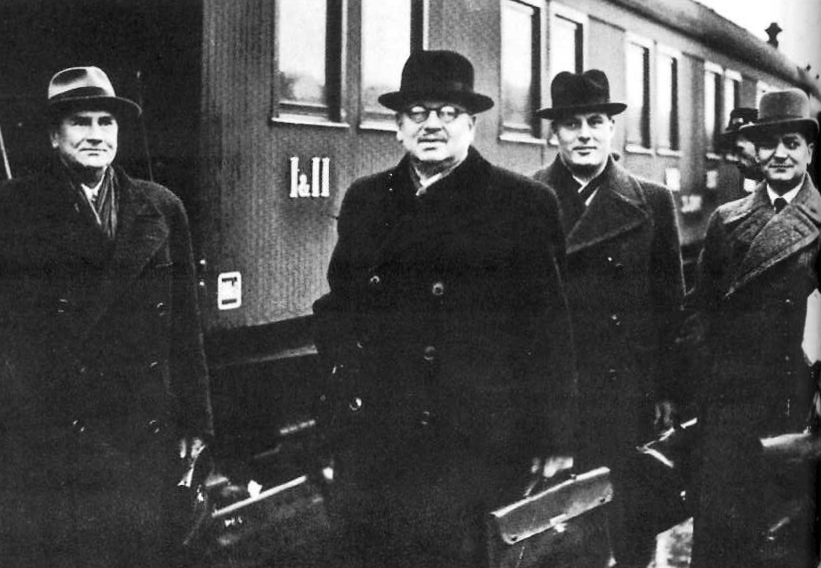 J. K. Paasikivi, Finnish Counselor of State and the future President of Finland, arrived from negotiations in Moscow on October 16, 1939. From left to right: Aarno Yrjö-Koskinen, Paasikivi, Johan Nykopp and Aladár Paasonen. Negotiation can take a variety of forms in different contexts. These may include conferences between members of the United Nations to establish international norms, meetings between combatants to end a military conflict, meetings between representatives of businesses to bring about a transaction, and conversations between parents about how to manage childcare.[8] Mediation is a form of negotiation where a third party helps the conflicting parties negotiate, usually when they are unable to do so by themselves. Mediated negotiation can be contrasted with arbitration, where conflicting parties commit to accepting the decision of a third party. Negotiations in the workplace can impact the entire organization's performance.[9] Negotiation theorists generally distinguish between two primary types of negotiation: distributive negotiation and integrative negotiation.[10] The type of negotiation that takes place is dependent on the mindset of the negotiators and the situation of the negotiation. For example, one-off encounters where lasting relationships do not occur are more likely to produce distributive negotiations whereas lasting relationships are more likely to require integrative negotiating.[11] Theorists vary in their labeling and definition of these two fundamental types. |
種類 フィンランドの国家顧問であり、後の大統領となるJ・K・パーシキヴィは、1939年10月16日にモスクワでの交渉から帰国した。左から順に:アーノ・ユルヨ=コスキネン、パーシキヴィ、ヨハン・ニョッップ、アラダル・パーソネン。 交渉は異なる文脈で多様な形態をとる。これには国際規範を確立するための国連加盟国民間の会議、軍事紛争を終結させるための交戦国間の会合、取引成立のた めの企業代表者間の会合、育児の管理方法について親同士が交わす会話などが含まれる[8]。調停は、対立する当事者が自力では交渉できない場合に、第三者 が交渉を支援する形態の交渉である。調停付き交渉は、対立当事者が第三者の決定を受け入れることを約束する仲裁とは対照的である。職場における交渉は組織 全体の業績に影響を与え得る。[9] 交渉理論家は一般的に、分配型交渉と統合型交渉という二つの主要な交渉形態を区別する。[10] 実際にどのタイプの交渉が行われるかは、交渉者の心構えと交渉の状況に依存する。例えば、永続的な関係が生まれない単発的な接触では分配型交渉が生じやす く、永続的な関係では統合型交渉が必要となる傾向がある。[11] 理論家によって、これら二つの基本類型に対する呼称や定義は異なる。 |
| Distributive negotiation See also: Zero-sum game The total of advantages and disadvantages to be distributed in a negotiation can illustrated with the term "negotiation pie".[12] The course of the negotiation can either lead to an increase, shrinking, or stagnation of these values. If the negotiating parties can expand the total pie, a win-win situation is possible, assuming that both parties profit from the expansion of the pie. In practice, however, this maximization approach is oftentimes impeded by the so-called small pie bias, i.e. the psychological underestimation of the negotiation pie's size. Likewise, the possibility to increase the pie may be underestimated due to the so-called incompatibility bias.[13] Contrary to enlarging the pie, the pie may also shrink during negotiations e.g. due to (excessive) negotiation costs.[13] Distributive negotiation (also known as Win-lose game), compromise, positional negotiation, or hard-bargaining negotiation attempts to distribute a "fixed pie" of benefits. Distributive negotiation operates under zero-sum conditions, where it is assumed that any gain made by one party will be at the expense of the other. Haggling over prices on an open market, as in the purchase of a car or home, is an example of distributive negotiation. In a distributive negotiation, each side often adopts an extreme or fixed position that they know will not be accepted, and then seeks to cede as little as possible before reaching a deal. Distributive bargainers conceive of negotiation as a process of distributing a fixed amount of value. A distributive negotiation often involves people who have never had a previous interactive relationship with each other and are unlikely to do so again shortly, although all negotiations usually have some distributive element.[14] Since prospect theory indicates that people tend to prioritize the minimization of losses over the maximization of gains, this form of negotiation is likely to be more acrimonious and less productive in agreement.[15] |
分配型交渉 関連項目: ゼロサムゲーム 交渉で分配される利点と欠点の総和は「交渉パイ」という用語で説明できる。[12] 交渉の過程では、これらの価値が増加、縮小、または停滞する可能性がある。交渉当事者がパイの総量を拡大できれば、双方が拡大の恩恵を受けると仮定すれ ば、ウィンウィンの状況が実現し得る。しかし実際には、この格律アプローチは「パイが小さいというバイアス」、つまり交渉パイの大きさを心理的に過小評価 する傾向によって妨げられることが多い。同様に、いわゆる「非互換性バイアス」によってパイを拡大する可能性が過小評価されることもある。[13] パイを拡大するのと反対に、例えば(過剰な)交渉コストによって交渉中にパイが縮小することもある。[13] 分配型交渉(勝者敗者ゲームとも呼ばれる)、妥協、立場型交渉、あるいは強硬交渉は、「固定された利益のパイ」を分配しようとするものである。分配型交渉 はゼロサム条件下で機能し、一方の当事者が得た利益は他方の犠牲によって得られると想定される。自動車や住宅の購入時のような公開市場での価格交渉は、分 配型交渉の一例である。 分配型交渉では、双方が受け入れられないと知りつつ極端な固定姿勢を取り、合意に至るまで可能な限り譲歩を最小限に抑えようとする。分配型交渉者は、交渉 を固定価値を分配するプロセスと捉える。分配型交渉には、互いにこれまで交流関係がなく、近い将来に再び関わる可能性も低い人々が関わる場合が多い。ただ し、全ての交渉には通常、何らかの分配的要素が含まれている[14]。プロスペクト理論によれば、人は利益の最大化よりも損失の最小化を優先する傾向があ るため、この形式の交渉はより険悪になりやすく、合意形成の生産性も低くなる傾向がある[15]。 |
| Integrative negotiation See also: Non-zero-sum game and Win-win game Integrative negotiation is also called interest-based, merit-based, win-win, or principled negotiation. It is a set of techniques that attempts to improve the quality and likelihood of negotiated agreement by taking advantage of the fact that different parties often value various outcomes differently.[16] While distributive negotiation assumes there is a fixed amount of value (a "fixed pie") to be divided between the parties, integrative negotiation attempts to create value in the course of the negotiation ("expand the pie") by either "compensating" the loss of one item with gains from another ("trade-offs" or logrolling), or by constructing or reframing the issues of the conflict in such a way that both parties benefit ("win-win" negotiation).[17] However, even integrative negotiation is likely to have some distributive elements, especially when the different parties value some items to the same degree or when details are left to be allocated at the end of the negotiation. While concession by at least one party is always necessary for negotiations,[18] research shows that people who concede more quickly are less likely to explore all integrative and mutually beneficial solutions. Therefore, early concession reduces the chance of an integrative negotiation.[19] Integrative negotiation often involves a higher degree of trust and the formation of a relationship, although INSEAD professor Horacio Falcao has stated that, counter-intuitively, trust is a helpful aid to successful win-win negotiation but not a necessary requirement: he argues that promotion of interdependence is a more effective strategy that development of trust.[20] Integrative negotiation can also involve creative problem-solving in the pursuit of mutual gains. It sees a good agreement as one that provides optimal gain for both parties, rather than maximum individual gain. Each party seeks to allow the other party sufficient benefit that both will hold to the agreement. Productive negotiation focuses on the underlying interests of both parties rather than their starting positions and approaches negotiation as a shared problem-solving exercise rather than an individualized battle. Adherence to objective and principled criteria is the basis for productive negotiation and agreement.[21] |
統合的交渉 関連項目:非ゼロサムゲーム、ウィンウィンゲーム 統合的交渉は、利害に基づく交渉、メリットに基づく交渉、ウィンウィン交渉、あるいは原則に基づく交渉とも呼ばれる。これは、異なる当事者が様々な結果を 異なる価値で評価する傾向にあるという事実を利用し、交渉合意の質と達成可能性を高めようとする一連の手法である。[16] 分配型交渉が当事者間で分割される価値の総量(固定されたパイ)を前提とするのに対し、統合型交渉は交渉過程において価値を創造する(「パイを拡大す る」)ことを目指す。具体的には、ある項目の損失を別の項目の利益で相殺する(「トレードオフ」またはロビー活動)か、あるいは紛争の争点を再構築・再定 義することで双方が利益を得る(「ウィンウィン」交渉)手法を用いる。[17] ただし、統合的交渉にも分配的要素は含まれる。特に、異なる当事者が特定の項目を同等に評価する場合や、詳細を交渉終了時まで保留する場合に顕著である。 [17] しかし統合型交渉でさえ、特に異なる当事者が特定項目を同等に評価する場合や、交渉終盤まで詳細を保留する場合、分配的要素を含む可能性がある。交渉には 少なくとも一方の譲歩が常に必要だが[18]、研究によれば、早期に譲歩する者は統合的・相互利益的な解決策を全て探求しない傾向がある。したがって早期 の譲歩は統合型交渉の可能性を低下させる。[19] 統合的交渉は高い信頼関係と関係構築を伴うことが多い。ただしINSEADのホラシオ・ファルカオ教授は、直感に反して信頼はウィンウィン交渉の成功に役 立つが必須条件ではないと指摘している。彼は信頼構築よりも相互依存関係の促進がより効果的な戦略だと主張する[20]。統合的交渉では相互利益追求のた めの創造的問題解決も含まれる。良い合意とは、個々の最大利益ではなく、双方が最適な利益を得られるものであると考える。各当事者は、相手側に十分な利益 を提供し、双方が合意を遵守するよう努める。 生産的な交渉は、双方の出発点や立場ではなく、根底にある利益に焦点を当てる。交渉を個人間の戦いではなく、共有された問題解決の取り組みとして捉える。客観的で原則に基づいた基準への固守が、生産的な交渉と合意の基盤となる。[21] |
| Text-based negotiation Text-based negotiation refers to the process of working up the text of an agreement that all parties are willing to accept and sign. Negotiating parties may begin with a draft text, consider new textual suggestions, and work to find the middle ground among various differing positions.[22] Common examples of text-based negotiation include the redaction of a constitution, law or sentence by a constitutional assembly, legislature or court respectively. Other more specific examples are United Nations' negotiation regarding the reform of the UN Security Council[23] and the formation of the international agreement underpinning the Regional Comprehensive Economic Partnership (RCEP) in the Asia-Pacific Region,[24] where the parties involved failed in 2019 to agree on a text which would suit India.[25] Such negotiations are often founded on the principle that "nothing is agreed until everything is agreed". For example, this principle, also known as the single undertaking approach, is often used in World Trade Organization negotiations,[26] although some negotiations relax this requirement.[27] The principle formed part of the British negotiating approach for the Brexit deal following the UK's withdrawal from the European Union.[28] |
文書に基づく交渉 文書に基づく交渉とは、全ての当事者が受け入れ署名する意思を持つ合意文書の作成過程を指す。交渉当事者は草案から始め、新たな文言提案を検討し、様々な異なる立場の間で妥協点を見出す作業を行う。[22] 文書に基づく交渉の一般的な例としては、憲法制定議会による憲法の起草、立法府による法律の制定、裁判所による判決文の作成が挙げられる。より具体的な例 としては、国連安全保障理事会改革に関する国連の交渉[23]や、アジア太平洋地域における地域包括的経済連携(RCEP)を支える国際協定の形成 [24]が挙げられる。後者の場合、関係国は2019年にインドが受け入れ可能な文言で合意に至らなかった。[25] こうした交渉は「すべてが合意されるまで何も合意されない」という原則に基づくことが多い。例えばこの原則(単一約束方式とも呼ばれる)は世界貿易機関 (WTO)の交渉で頻繁に用いられるが[26]、一部の交渉ではこの要件が緩和されることもある[27]。この原則は、英国の欧州連合離脱後のブレグジッ ト合意に向けた英国の交渉手法の一部を形成した[28]。 |
| Integrated negotiation Integrated negotiation is a strategic attempt to maximize value in any single negotiation through the astute linking and sequencing of other negotiations and decisions related to one's operating activities. This approach in complex settings is executed by mapping out all potentially relevant negotiations, conflicts, and operating decisions to integrate helpful connections among them while minimizing any potentially harmful connections (see examples below). Integrated negotiation is not to be confused with integrative negotiation, a different concept (as outlined above) related to a non-zero-sum approach to creating value in negotiations. Integrated negotiation was first identified and labeled by the international negotiator and author Peter Johnston in his book Negotiating with Giants.[29] One of the examples cited in Johnston's book is that of J. D. Rockefeller deciding where to build his first major oil refinery. Instead of taking the easier, cheaper route from the oil fields to refine his petroleum in Pittsburgh, Rockefeller chose to build his refinery in Cleveland, because he recognized that he would have to negotiate with the rail companies transporting his refined oil to market. Pittsburgh had just one major railroad, which would therefore be able to dictate prices in negotiations, while Cleveland had three railroads that Rockefeller knew would compete for his business, potentially reducing his costs significantly. The leverage gained in these rail negotiations more than offset the additional operating costs of sending his oil to Cleveland for refining, helping establish Rockefeller's empire, while undermining his competitors who failed to integrate their core operating decisions with their negotiation strategies.[30] Other examples of integrated negotiation include the following: In sports, athletes in the final year of their contracts will ideally hit peak performance so they can negotiate robust, long-term contracts in their favor.[31] A union needs to negotiate and resolve any significant internal conflicts to maximize its collective clout before going to the table to negotiate a new contract with management. If purchases for similar goods or services are occurring independently of one another across different government departments, recognizing this and consolidating orders into one large volume purchase can help create buying leverage and cost savings in negotiations with suppliers. A tech start-up looking to negotiate being bought out by a larger industry player in the future can improve its odds of that happening by ensuring, wherever possible, that its systems, technology, competencies, and culture are as compatible as possible with those of its most likely buyer.[32] A politician negotiating support for a presidential run may want to avoid bringing on board any high-profile supporters who risk alienating other important potential supporters while avoiding any unexpected new policies that could also limit the size of their growing coalition.[33] |
統合的交渉 統合的交渉とは、自社の事業活動に関連する他の交渉や意思決定を巧妙に結びつけ、順序づけることで、個々の交渉における価値を最大化しようとする戦略的試みである。 複雑な状況下では、関連しうる全ての交渉、対立、事業上の意思決定を網羅的に整理し、有益な繋がりを統合しつつ有害な繋がりを最小化する手法で実行される(下記例参照)。 統合的交渉は、交渉における価値創造のための非ゼロサム的アプローチに関連する異なる概念である統合的交渉(上述の通り)と混同してはならない。 統合的交渉は、国際交渉者であり著述家でもあるピーター・ジョンストンが著書『巨人と交渉する』で初めて特定し命名したものである。[29] ジョンストンの著書で引用されている事例の一つは、J・D・ロックフェラーが最初の主要製油所をどこに建設するか決定した話である。石油田からピッツバー グで石油を精製する、より容易で安価なルートを選ぶ代わりに、ロックフェラーはクリーブランドに製油所を建設することを選んだ。精製された石油を市場へ輸 送する鉄道会社と交渉しなければならないと認識していたからだ。ピッツバーグには主要鉄道会社が1社しかなく、交渉で価格を一方的に決められる立場にあっ た。一方クリーブランドには3社が存在し、ロックフェラーは彼らが自社事業をめぐって競争し、コストを大幅に削減できる可能性があると見抜いたのである。 鉄道会社との交渉で得た優位性は、石油をクリーブランドに輸送して精製する追加コストを十分に相殺し、ロックフェラーの帝国確立に貢献した。同時に、中核 的な事業判断と交渉戦略を統合できなかった競合他社を弱体化させたのである。[30] 統合型交渉の他の例は以下の通りである: スポーツ界では、契約最終年の選手は理想的にピークパフォーマンスを発揮し、自身に有利な長期契約を交渉すべきである。[31] 労働組合は、経営陣との新契約交渉に臨む前に、集団的影響力を最大化するため、重大な内部対立を交渉・解決する必要がある。 政府の異なる部門で類似の物品・サービスが個別に購入されている場合、これを認識し一括大量購入に統合すれば、サプライヤーとの交渉で購買力とコスト削減効果を生み出せる。 将来的に大手企業による買収交渉を目指すテック系スタートアップは、可能な限り自社のシステム・技術・能力・文化を、最も有力な買収候補企業と互換性のある状態に保つことで、その実現確率を高められる。[32] 大統領選出馬の支持交渉を行う政治家は、他の重要な潜在的支持者を離反させるリスクのある著名な支持者を引き入れることを避けつつ、拡大する連合の規模を制限しかねない予期せぬ新政策の導入も回避すべきだ。[33] |
| Sole source negotiation Sole source negotiation arises when a buyer has no apparent alternatives but to purchase from a specific supplier or attempt to secure a better deal without any alternative.[34] |
単独調達交渉 単独調達交渉とは、買い手が特定の供給者から購入する以外に明らかな選択肢がない場合、あるいは代替案なしにより良い条件を確保しようとする場合に生じる。[34] |
| Bad faith When a party pretends to negotiate but secretly has no intention of compromising, the party is negotiating in bad faith; for example, when a political party sees political benefit in appearing to negotiate without having any intention of making the compromises necessary to settle.[35][36] Bad faith negotiations are often used in political science and political psychology to refer to negotiating strategies in which there is no real intention to reach compromise or a model of information processing.[37] The "inherent bad faith model" of information processing is a theory in political psychology that was first put forth by Ole Holsti to explain the relationship between John Foster Dulles' beliefs and his model of information processing.[38] It is the most widely studied model of one's opponent:[39] A state is presumed implacably hostile, and contra-indicators of this are ignored. They are dismissed as propaganda ploys or signs of weakness. Examples are John Foster Dulles' position regarding the Soviet Union.[39][neutrality is disputed] |
悪意 当事者が交渉を装いながら、実際には妥協する意思を秘めている場合、その交渉は悪意に基づくものである。例えば、ある政党が、解決に必要な妥協を行う意思を持たずに、交渉しているように見せかけることで政治的利益を得ようとする場合がこれに当たる。[35] [36] 悪意ある交渉は、政治学や政治心理学において、妥協に達する真の意図がない交渉戦略、あるいは情報処理モデルを指すためにしばしば用いられる。[37] 情報処理における「固有の悪意モデル」は、ジョン・フォスター・ダレスの信念と彼の情報処理モデルとの関係を説明するために、オレ・ホルスティによって最 初に提唱された政治心理学の理論である。[38] これは相手に関する最も広く研究されたモデルである。[39] 国家は不変の敵対的立場にあると推定され、これに反する兆候は無視される。それらはプロパガンダの策略や弱さの表れとして退けられる。例として、ジョン・ フォスター・ダレスのソビエト連邦に対する立場が挙げられる。[39][中立性が議論されている] |
| International negotiation Due to different cultural lenses negotiation style differ worldwide.[40][41] These differences comprise among others how the parties exchange information, the use of different strategies, conceptions of the nature of negotiation, the use of power, the use of options. Negotiations as they are often taught and used by practitioners in "Western" countries may not be effective or may even be counterproductive in "non-Western" countries – such as Asian countries.[42][43] These cultural differences can lead to misunderstandings, misinterpretations, and conflicts that hinder effective deal-making. Overcoming these barriers requires cultural awareness, adaptability, and strategic communication.[44] |
国際交渉 文化的背景の違いにより、交渉スタイルは世界中で異なる。[40][41] こうした差異には、当事者間の情報交換方法、戦略の活用、交渉の本質に関する認識、権力の行使、選択肢の活用などが含まれる。「西洋」諸国で実務家が教え られ、用いられる交渉手法は、「非西洋」諸国(例えばアジア諸国)では効果的でないばかりか、逆効果となる場合がある。[42][43] こうした文化的差異は、誤解や誤解釈、対立を引き起こし、効果的な合意形成を妨げる。これらの障壁を克服するには、文化的理解、適応力、戦略的コミュニ ケーションが求められる。[44] |
| Strategies There are many different ways to categorize the essential elements of negotiation. One view of negotiation involves three basic elements: process, behavior, and substance. The process refers to how the parties negotiate: the context of the negotiations, the parties to the negotiations, the tactics used by the parties, and the sequence and stages in which all of these play out. Behavior refers to the relationships among these parties, the communication between them, and the styles they adopt. The substance refers to what the parties negotiate over: the agenda, the issues (positions and – more helpfully – interests), the options, and the agreement(s) reached at the end.[45] Another view of negotiation comprises four elements: strategy, process, tools, and tactics. The Strategy comprises top-level goals. Which typically include the relationship and the outcome. Processes and tools include the steps to follow and roles to take in preparing for and negotiating with the other parties. Tactics include more detailed statements and actions and responses to others' statements and actions. Some add to this persuasion and influence, asserting that these have become integral to modern-day negotiation success, and so should not be omitted.[45] Strategic approaches to concession-making include consideration of the optimum time to make a concession, making concessions in installments, not all at once, and ensuring that the opponent is aware that a concession has been made, rather than a re-expression of a position already outlined, and aware of the cost incurred in making the concession, especially where the other party is generally less aware of the nature of the business or the product being negotiated.[46] |
戦略 交渉の本質的な要素を分類する方法は数多く存在する。 ある見方では、交渉は三つの基本要素から成る。プロセス、行動、そして内容である。プロセスとは、当事者がどのように交渉するか、すなわち交渉の文脈、交 渉の当事者、当事者が用いる戦術、そしてこれら全てが展開される順序や段階を指す。行動とは、当事者間の関係性、相互のコミュニケーション、そして彼らが 採用するスタイルを指す。実質とは、当事者が交渉する対象、すなわち議題、問題点(立場と、より有用な観点としての利害関係)、選択肢、そして最終的に到 達する合意事項を指す。[45] 別の交渉観では、戦略、プロセス、ツール、戦術という四つの要素で構成される。戦略は最上位の目標を構成する。これには通常、関係性と結果が含まれる。プ ロセスとツールには、相手側との交渉準備および交渉において従うべき手順と果たすべき役割が含まれる。戦術には、より詳細な発言や行動、他者の発言や行動 への対応が含まれる。これに加え、説得と影響力を追加する見解もある。これらは現代の交渉成功に不可欠となり、省略すべきではないと主張するものである。 [45] 譲歩を行う戦略的アプローチには、以下の考慮事項が含まれる:最適な譲歩のタイミング、一括ではなく段階的な譲歩の実施、相手方に「既に提示した立場の再 表明」ではなく「新たな譲歩」が行われたことを認識させること、特に相手方が交渉対象の事業や製品の性質を十分に理解していない場合に、譲歩に伴うコスト を認識させること。[46] |
| Stages in the negotiation process Negotiators do not need to sacrifice effective negotiation in favor of a positive relationship between parties. Rather than conceding, each side can appreciate that the other has emotions and motivations of their own and use this to their advantage in discussing the issue. Understanding perspectives can help move parties toward a more integrative solution. Fisher et al. illustrate a few techniques that effectively improve perspective-taking in the book Getting to Yes, and through the following, negotiators can separate people from the problem itself: Put yourself in their shoes – People tend to search for information that confirms their own beliefs and often ignore information that contradicts prior beliefs. To negotiate effectively, it is important to empathize with the other party's point of view. One should be open to other views and attempt to approach an issue from the perspective of the other. Discuss each other's perceptions – A more direct approach to understanding the other party is to explicitly discuss each other's perceptions. Each individual should openly and honestly share their perceptions without assigning blame or judgment to the other. Find opportunities to act inconsistently with their views – The other party may have prior perceptions and expectations about the other side. The other side can act in a way that directly contradicts those preconceptions, effectively conveying that the party is interested in an integrative negotiation. Face-saving – This approach justifies a stance based on one's previously expressed principles and values in a negotiation. This approach to an issue is less arbitrary, and thus, it is more understandable from the opposing party's perspective.[47] Additionally, negotiators can use specific communication techniques to build stronger relationships and develop more meaningful negotiation solutions. Active listening – Listening is more than just hearing what the other side says. Active listening involves paying close attention to what is being said verbally and nonverbally. It involves periodically seeking further clarification from the person. By asking the person exactly what they mean, they may realize the negotiator takes them seriously and is not simply walking through a routine. The Australian Mosaic Project Services business commends "proactive" rather than just "active" listening, in which more emphasis is placed on the asking of questions as well as listening actively to the answers given.[48] Speak for a purpose – Too much information can be as harmful as too little. Before discussing an important point, determine exactly what to communicate to the other party. Determine the exact purpose that this shared information will serve.[47] |
交渉プロセスの段階 交渉担当者は、当事者間の良好な関係のために効果的な交渉を犠牲にする必要はない。譲歩する代わりに、双方が相手にも独自の感情や動機があることを理解 し、これを問題の議論に活用できるのだ。視点を理解することは、当事者をより統合的な解決策へと導く助けとなる。フィッシャーらは著書『合意への道』で、 効果的に視点理解を向上させるいくつかの技法を示している。以下の方法を通じて、交渉担当者は人と問題そのものを分離できる: 相手の立場に立つ – 人は自身の信念を裏付ける情報を探しがちで、既存の信念と矛盾する情報を無視しがちだ。効果的に交渉するには、相手側の視点に共感することが重要である。他の見解に心を開き、相手の視点から問題にアプローチしようとする姿勢が求められる。 相互の認識を議論する – 相手を理解するより直接的な方法は、双方の認識を明示的に話し合うことだ。各人は非難や判断を伴わずに、率直かつ誠実に自身の認識を共有すべきである。 相手の認識と矛盾する行動の機会を見つける – 相手は事前に相手側に対する認識や期待を持っている場合がある。相手側はそうした先入観に直接反する行動を取ることで、統合的交渉に関心があることを効果的に伝えられる。 面子を保つこと――この手法は、交渉において事前に表明した原則や価値観に基づいて立場を正当化する。この問題へのアプローチは恣意的ではなく、したがって相手側の視点からも理解されやすい。[47] さらに、交渉担当者は特定のコミュニケーション技術を用いて、より強固な関係を構築し、より有意義な交渉解決策を導き出すことができる。 能動的傾聴 – 傾聴とは単に相手の言葉を聞くだけではない。能動的傾聴とは、言葉と非言語の両方に注意深く耳を傾けることだ。定期的に相手にさらなる説明を求めることも 含まれる。相手の意図を正確に尋ねることで、交渉担当者が真剣に受け止めており、単なる形式的な対応ではないと相手に気づかせることができる。オーストラ リアのモザイク・プロジェクト・サービス事業は、「能動的」な傾聴よりも「積極的」な傾聴を推奨している。これは、質問をすることと、得られた回答を積極 的に聞くことの双方に重点を置くものだ。[48] 目的を持って話す – 情報過多は情報不足と同様に有害である。重要な点を議論する前に、相手に何を伝えるべきかを正確に決定せよ。共有する情報が果たすべき正確な目的を明確にせよ。[47] |
| Employing an advocate A skilled negotiator may serve as an advocate for one party to the negotiation. The advocate attempts to obtain the most favorable outcomes possible for that party. In this process, the negotiator attempts to determine the minimum outcome(s) the other party is (or parties are) willing to accept, then adjusts their demands accordingly. A "successful" negotiation in the advocacy approach is when the negotiator can obtain all or most of the outcomes their party desires, but without driving the other party to permanently break off negotiations. Skilled negotiators may use a variety of tactics ranging from negotiation hypnosis to a straightforward presentation of demands or setting of preconditions, to more deceptive approaches such as cherry picking. Intimidation and salami tactics may also play a part in swaying the outcome of negotiations.[49] Another negotiation tactic is the bad guy/good guy. Bad guy/good guy is when one negotiator acts as a bad guy by using anger and threats. The other negotiator acts as a good guy by being considerate and understanding. The good guy blames the bad guy for all the difficulties while soliciting concessions and agreement from the opponent.[50] |
代理人の活用 熟練した交渉人は、交渉の一方の当事者の代理人として活動することがある。代理人は、その当事者にとって可能な限り有利な結果を得ようと試みる。この過程 で、交渉人は相手方(または相手方複数)が受け入れ可能な最低限の結果を判断し、それに応じて自らの要求を調整する。擁護者アプローチにおける「成功し た」交渉とは、自陣営が望む結果の全てまたは大部分を獲得しつつ、相手を交渉の永久的な決裂に追い込まない場合を指す。 熟練した交渉者は、交渉催眠術から要求の直接提示や前提条件の設定といった単純な手法、チェリーピッキングのような欺瞞的な手法まで、様々な戦術を用いることがある。威圧やサラミ戦術も交渉結果に影響を与える要素となり得る。[49] 別の交渉戦術として「悪役/善役」がある。これは一方の交渉者が怒りや脅しを用いて悪役を演じ、もう一方が思いやりと理解を示す善役を演じる手法だ。善役は困難の全てを悪役のせいにしつつ、相手から譲歩や合意を引き出す。[50] |
| BATNA The best alternative to a negotiated agreement, or BATNA, is the most advantageous alternative course of action a negotiator can take should the current negotiation end without reaching an agreement. The quality of a BATNA has the potential to improve a party's negotiation outcome. Understanding one's BATNA can empower an individual and allow him or her to set higher goals when moving forward.[51] Alternatives need to be actual and actionable to be of value.[52] Negotiators may also consider the other party's BATNA and how it compares to what they are offering during the negotiation.[53] |
BATNA 交渉合意に代わる最良の選択肢、すなわちBATNAとは、現在の交渉が合意に至らずに終了した場合に、交渉担当者が取れる最も有利な代替行動方針である。 BATNAの質は、当事者の交渉結果を改善する可能性がある。自身のBATNAを理解することは個人に力を与え、前進する際に高い目標を設定することを可 能にする。[51] 代替案は、価値を持つためには現実的で実行可能でなければならない。[52] 交渉担当者は、相手方のBATNAと、それが交渉中に提示している内容とどう比較されるかも考慮すべきである。[53] |
| Conflict styles Kenneth W. Thomas identified five styles or responses to negotiation.[54][55] These five strategies have been frequently described in the literature and are based on the dual-concern model.[56] The dual-concern model of conflict resolution is a perspective that assumes individuals' preferred method of dealing with conflict is based on two themes or dimensions:[57] 1. A concern for self (i.e., assertiveness), and 2. A concern for others (i.e., empathy). Based on this model, individuals balance their concern for personal needs and interests with the needs and interests of others. The following five styles can be used based on individuals' preferences, depending on their pro-self or pro-social goals. These styles can change over time, and individuals can have strong dispositions toward numerous styles. Accommodating Individuals who enjoy solving the other party's problems and preserving personal relationships. Accommodators are sensitive to the emotional states, body language, and verbal signals of the other parties. They can, however, feel taken advantage of in situations when the other party places little emphasis on the relationship. Accommodation is a passive but prosocial approach to conflict. People solve both large and small conflicts by giving in to the demands of others. Sometimes, they yield because they realize that their position is in error, so they agree with the viewpoint adopted by others. In other cases, however, they may withdraw their demands without really being convinced that the other side is correct, but for the sake of group unity or in the interest of time—they withdraw all complaints. Thus, yielding can reflect either genuine conversion or superficial compliance. Avoiding Individuals who do not like to negotiate and do not do it unless warranted. When negotiating, avoiders tend to defer and dodge the confrontational aspects of negotiating; however, they may be perceived as tactful and diplomatic. Inaction is a passive means of dealing with disputes. Those who avoid conflicts adopt a "wait and see" attitude, hoping that problems will solve themselves. Avoiders often tolerate conflicts, allowing them to simmer without doing anything to minimize them. Rather than openly discussing disagreements, people who rely on avoidance change the subject, skip meetings, or even leave the group altogether (Bayazit & Mannix, 2003). Sometimes they simply agree to disagree (a modus vivendi). Collaborating Individuals who enjoy negotiations that involve solving tough problems in creative ways. Collaborators are good at using negotiations to understand the concerns and interests of the other parties. Collaborating is an active, pro-social, and pro-self approach to conflict resolution.It is a cooperative approach. Collaborating people identify the issues underlying the dispute and then work together to identify a solution that is satisfying to both sides.Here,goals are important, but so is maintaining positive relationships.[58] This orientation, which is also described as collaboration, problem solving, or a win-win orientation entreats both sides in the dispute to consider their opponent's outcomes as well as their own[59] Competing Individuals who enjoy negotiations because they present an opportunity to win something. Competitive negotiators have strong instincts for all aspects of negotiating and are often strategic. Because their style can dominate the bargaining process, competitive negotiators often neglect the importance of relationships. Competing is an active, pro-self means of dealing with conflict that involves forcing others to accept one's view. Those who use this strategy tend to see conflict as a win-lose situation and so use competitive, powerful tactics to intimidate others. Fighting (forcing, dominating, or contending) can take many forms, including authoritative mandate, challenges, arguing, insults, accusations, complaining, vengeance, and even physical violence (Morrill, 1995). These conflict resolution methods are all contentious ones because they involve imposing one's solution on the other party. Compromising Individuals who are eager to close the deal by doing what is fair and equal for all parties involved in the negotiation. Compromisers can be useful when there is limited time to complete the deal; however, compromisers often unnecessarily rush the negotiation process and make concessions too quickly. |
対立スタイル ケネス・W・トーマスは、交渉に対する5つのスタイルまたは対応を特定した。[54][55] これらの5つの戦略は文献で頻繁に記述されており、二重関心モデルに基づいている。[56] 対立解決の二重関心モデルとは、個人が対立に対処する際に好む方法は、以下の2つのテーマまたは次元に基づくと仮定する視点である: [57] 1. 自己への関心(すなわち、自己主張性)、および 2. 他者への関心(すなわち、共感性)。 このモデルに基づき、個人は自身の個人的なニーズや利益への関心と、他者の個人的なニーズや利益とのバランスを取る。個人の選好に応じて、自己志向的目標 か社会志向的目標かに基づき、以下の5つのスタイルが用いられる。これらのスタイルは時間とともに変化し、個人は複数のスタイルに対して強い傾向を持つこ とがある。 迎合型 相手の問題解決や個人的な関係の維持を好む人格。迎合型は相手の感情状態、ボディランゲージ、言語的シグナルに敏感である。しかし、相手が関係性を重視し ない状況では、利用されていると感じることがある。迎合は受動的だが社会的な対立解決法である。人々は大小の対立を、他者の要求に屈することで解決する。 自らの立場が誤りと気づき、他者の見解に同意する場合もある。一方で、相手側の正しさを確信せずとも、集団の結束や時間的都合のために要求を撤回し、全て の不満を放棄することもある。従って、譲歩は真の転換も表面的な従順も反映し得る。 回避 交渉を好まず、必要に迫られない限り行わない個人。交渉時には、対立的な側面を先延ばしにしたり回避したりする傾向がある。しかし、彼らは機転が利き外交 的だと見られることもある。不作為は紛争に対処する受動的な手段だ。対立を避ける者は「様子見」の態度を取り、問題が自然に解決することを望む。回避者は しばしば対立を容認し、最小化するための行動を取らずに問題をくすぶらせる。意見の相違を率直に議論する代わりに、回避に頼る人々は話題をそらし、会議を 欠席し、あるいはグループから完全に離脱することさえある(Bayazit & Mannix, 2003)。時には単に意見の相違を認める(暫定的な妥協策)こともある。 協力型 困難な問題を創造的に解決する交渉を好む個人。協力者は交渉を通じて相手側の懸念や利害を理解するのが得意だ。協力型は積極的で、社会貢献的かつ自己利益 にも資する紛争解決アプローチである。協調的な手法だ。協力者は紛争の根底にある問題を特定し、双方が満足する解決策を共同で模索する。ここでは目標達成 が重要だが、良好な関係維持も同様に重視される。[58] この姿勢は協働的、問題解決志向、ウィンウィン志向とも呼ばれ、紛争当事者に自らの結果だけでなく相手の結果も考慮するよう促す[59] 競争的 交渉を好む個人は、何かを勝ち取る機会として交渉を捉える。競争的交渉者は交渉のあらゆる側面に対して強い本能を持ち、しばしば戦略的である。そのスタイ ルが交渉過程を支配しがちなため、関係性の重要性を軽視しがちだ。競争とは、他者に自らの見解を受け入れさせることを伴う、積極的で自己中心的な紛争対処 法である。この戦略を用いる者は、紛争を勝ち負けの状況と見なし、競争的で強硬な戦術で他者を威圧する傾向がある。対抗(強制、支配、争い)は様々な形態 を取る。権威的な命令、挑戦、議論、侮辱、非難、苦情、復讐、さらには身体的暴力さえ含まれる(Morrill, 1995)。これらの紛争解決方法は全て対立的である。なぜなら相手側に自らの解決策を押し付ける行為だからだ。 妥協 交渉に関わる全ての当事者にとって公平かつ平等な方法で合意を急ぐ個人を指す。妥協者は合意成立までの時間が限られている場合に有用である。しかし、妥協者は交渉プロセスを不必要に急ぎ、あまりにも早急に譲歩してしまうことが多い。 |
| Types of negotiators Three basic kinds of negotiators have been identified by researchers involved in The Harvard Negotiation Project. These types of negotiators are soft bargainers, hard bargainers, and principled bargainers. Soft These people see negotiation as too close to competition, so they choose a gentle style of bargaining. The offers they make are not in their best interests, they yield to others' demands, avoid confrontation, and they maintain good relations with fellow negotiators. Their perception of others is one of friendship, and their goal is agreement. They do not separate the people from the problem but are soft on both. They avoid contests of wills and insist on the agreement, offering solutions and easily trusting others and changing their opinions. Hard These people use contentious strategies to influence, utilizing phrases such as "this is my final offer" and "take it or leave it". They make threats, are distrustful of others, insist on their position, and apply pressure to negotiate. They see others as adversaries and their ultimate goal is victory. Additionally, they search for one single answer and insist you agree with it. They do not separate the people from the problem (as with soft bargainers), but they are hard on both the people involved and the problem. Principled Individuals who bargain this way seek integrative solutions and do so by sidestepping commitment to specific positions. They focus on the problem rather than the intentions, motives, and needs of the people involved. They separate the people from the problem, explore interests, avoid bottom lines, and reach results based on standards independent of personal will. They base their choices on objective criteria rather than power, pressure, self-interest, or an arbitrary decisional procedure. These criteria may be drawn from moral standards, principles of fairness, professional standards, and tradition. Researchers from The Harvard Negotiation Project recommend that negotiators explore several tactics to reach the best solution for their problems, but this is often not the case (as when you may be dealing with an individual using soft or hard-bargaining tactics) (Forsyth, 2010). |
交渉者のタイプ ハーバード交渉プロジェクトの研究者らは、三つの基本的な交渉者タイプを特定した。それはソフト型交渉者、ハード型交渉者、そして原則型交渉者である。 ソフト型 このタイプは交渉を競争と近すぎると見なすため、穏やかな交渉スタイルを選ぶ。提示する条件は自らの最善の利益にかなわず、相手の要求に譲歩し、対立を避 け、交渉相手との良好な関係を維持する。彼らは相手を友人と捉え、合意を目標とする。人と問題を切り離さず、双方に対して柔軟だ。意志の対立を避け、合意 を主張し、解決策を提示する。他者を容易に信頼し、意見も変えやすい。 強硬型 彼らは「これが最終提案だ」「受け入れるか拒否するかだ」といった表現を用い、対立的な戦略で影響力を発揮する。脅しをかけ、他者を疑い、自らの立場を主 張し、交渉に圧力をかける。相手を敵対者と見なし、最終目標は勝利である。さらに、唯一の答えを求め、それに同意するよう強要する。ソフトな交渉者とは異 なり、人と問題を分離しないが、関係者と問題の両方に厳しい態度を取る。 原則重視型 この手法を用いる者は統合的解決策を求め、特定の立場への固執を回避する。関係者の意図・動機・ニーズではなく問題そのものに焦点を当てる。人と問題を分 離し、利害関係を探り、最終ラインを避け、個人的な意思に依存しない基準に基づく結果を導く。選択の根拠は権力・圧力・自己利益・恣意的な決定手順ではな く、客観的基準にある。これらの基準は、道徳的規範、公平性の原則、専門的基準、伝統などから導かれる。 ハーバード交渉プロジェクトの研究者らは、交渉者が問題の最善解決策に到達するため複数の戦術を探求することを推奨しているが、実際にはそうならないことが多い(相手がソフトまたはハードな交渉戦術を用いる場合など)(Forsyth, 2010)。 |
| Tactics Tactics are always an important part of the negotiating process. More often than not they are subtle, difficult to identify, and used for multiple purposes. Tactics are more frequently used in distributive negotiations and when the focus is on taking as much value off the table as possible.[60] Many negotiation tactics exist. Below are a few commonly used tactics. Auction: The bidding process is designed to create competition.[61] When multiple parties want the same thing, pit them against one another. When people know that they may lose out on something, they want it even more. Not only do they want the thing that is being bid on, but they also want to win, just to win. Taking advantage of someone's competitive nature can drive up the price. Brinkmanship: One party aggressively pursues a set of terms to the point where the other negotiating party must either agree or walk away. Brinkmanship is a type of "hard nut" approach to bargaining in which one party pushes the other party to the "brink" or edge of what that party is willing to accommodate. Successful brinkmanship convinces the other party they have no choice but to accept the offer and there is no acceptable alternative to the proposed agreement.[62] Bogey: Negotiators use the bogey tactic to pretend that an issue of little or no importance is very important.[63] Then, later in the negotiation, the issue can be traded for a major concession of actual importance. Calling a higher authority: To mitigate too far-reaching concessions, deescalate, or overcome a deadlock situation, one party makes the further negotiation process dependent on the decision of a decision maker, not present at the negotiation table.[64] Chicken: Negotiators propose extreme measures often in the form of bluffs to force the other party to chicken out and give them what they want. This tactic can be dangerous when parties are unwilling to back down and go through with the extreme measure. Concession: One party offers up something with hope reaching or coming closer to an agreement.[65] Defense in Depth: Several layers of decision-making authority is used to allow further concessions each time the agreement goes through a different level of authority.[66] In other words, each time the offer goes to a decision-maker, that decision maker asks to add another concession to close the deal. Deadlines: Give the other party a deadline, forcing them to make a decision. This method uses time to apply pressure on the other party. Deadlines given can be actual or artificial. Flinch: Flinching is showing a strong negative physical reaction to a proposal. Common examples of flinching are gasping for air or a visible expression of surprise or shock. The flinch can be done consciously or unconsciously.[67] The flinch signals to the opposite party that you think the offer or proposal is absurd in hopes the other party will lower their aspirations.[68] Seeing a physical reaction is more believable than hearing someone saying, "I'm shocked". Good Guy/Bad Guy: Within the tactic of good guy/bad guy (synonyms are good cop/bad cop or black hat/white hat) oftentimes positive and unpleasant tasks are divided between two negotiators on the same negotiation side or unpleasant tasks or decisions are allocated to a (real or fictitious) outsider. The good guy supports the conclusion of the contract and emphasizes positive aspects of the negotiation (mutual interests). The bad guy criticizes negative aspects (opposing interests). The division of the two roles allows for more consistent behavior and credibility of the individual negotiators. As the good guy promotes the contract, he/she can build trust with the other side.[69] Holding out for concession: Negotiators can choose avoiding giving concessions and hold out in the hope that the other side will concede before they do. This tough bargaining position can maximize the negotiators ex-post (actual) outcome.[18] Highball/Low-ball or Ambit claim: Depending on whether selling or buying, sellers or buyers use a ridiculously high, or ridiculously low opening offer that is not achievable. The theory is that the extreme offer makes the other party reevaluate their opening offer and move close to the resistance point (as far as you are willing to go to reach an agreement).[70] Another advantage is that the party giving the extreme demand appears more flexible when they make concessions toward a more reasonable outcome. A danger of this tactic is that the opposite party may think negotiating is a waste of time. The Nibble, also known under the salami tactic or quivering quill: nibbling is the demand for proportionally small concessions that have not been discussed previously just before closing the deal.[63] This method takes advantage of the other party's desire to close by adding "just one more thing". Chester Karrass holds that the Nibble tactic and the Krunch tactic have similar features: the Krunch works by preventing a deal from being finalised by asking the opposing party to improve on their offer: "You've got to do better than that!".[71] Snow Job: Negotiators overwhelm the other party with so much information that they have difficulty determining what information is important, and what is a diversion.[72] Negotiators may also use technical language or jargon to mask a simple answer to a question asked by a non-expert. Mirroring: When people get on well, the outcome of a negotiation is likely to be more positive. To create trust and rapport, a negotiator may mimic or mirror the opponent's behavior and repeat what they say. Mirroring refers to a person repeating the core content of what another person just said, or repeating a certain expression. It indicates attention to the subject of negotiation and acknowledges the other party's point or statement.[73] Mirroring can help create trust and establish a relationship. Anchoring: Anchoring is the process of establishing a reference point first to guide the other person closer to your suggested price. It is often presented at the beginning of a negotiation to influence the rest of the negotiation. As an example, say you want to sell a car for 50,000 dollars. Now a customer walks in saying they want to buy a car. You say that you can sell the car for 65,000 dollars. Their counteroffer would probably be 50,000–55,000 dollars. This also works and vice versa for buying something. The idea here is that we are narrowing the other parties' expectations down or up.[74] To counter-anchoring, you should point out the fact that they are anchoring and say that they need to drive it down to an acceptable price. |
戦術 戦術は交渉プロセスにおいて常に重要な要素だ。多くの場合、戦術は微妙で識別が難しく、複数の目的で使用される。分配型交渉や、テーブルから可能な限り多 くの価値を奪うことに焦点が当てられる場面で、戦術はより頻繁に用いられる[60]。数多くの交渉戦術が存在する。以下に、よく使われる戦術をいくつか挙 げる。 オークション:入札プロセスは競争を生み出すように設計されている[61]。複数の当事者が同じものを欲しがる場合、彼らを互いに競わせることだ。何かを 失う可能性があることを知ると、人々はそれをさらに欲しがるようになる。入札対象の物自体だけでなく、勝つこと自体を目的として勝ちたいと思うようにな る。人の競争心を利用することで価格を吊り上げられる。 瀬戸際戦術:一方の当事者が、相手側が合意するか撤退するかの選択を迫られるほど、強硬に条件を押し通す手法だ。瀬戸際戦術とは、交渉において「強硬路 線」を取る手法の一種であり、一方が他方を「瀬戸際」、つまり相手が受け入れ可能な限界点まで追い込む。成功した瀬戸際戦術は、相手に「提案を受け入れる 以外に選択肢がなく、提示された合意に代わる妥当な代替案は存在しない」と確信させる。[62] ボギー戦術: 交渉担当者はボギー戦術を用い、重要性の低い問題を非常に重要であるかのように装う[63]。その後、交渉の後半で、この問題を実際の重要性を持つ主要な譲歩と交換できるようにする。 上位機関への諮問:過度に広範な譲歩を緩和し、緊張を緩和し、または膠着状態を打破するために、一方の当事者は、さらなる交渉プロセスを、交渉の席にいない意思決定者の決定に依存させる。[64] チキン戦術:交渉担当者は、しばしばブラフの形で極端な措置を提案し、相手をチキンアウトさせて要求を通そうとする。この戦術は、双方が一歩も引かず極端な措置を実行する意思がある場合には危険である。 譲歩:一方の当事者が、合意に達するかそれに近づくことを期待して何かを差し出すこと。[65] 多重防衛:合意が異なる権限レベルを通過する度にさらなる譲歩を可能にするため、複数の意思決定権限層を利用する。[66] つまり、提案が意思決定者に渡る度に、その意思決定者は取引成立のため追加の譲歩を要求する。 期限設定:相手に期限を与え、決断を迫る。この手法は時間を利用して相手に圧力をかける。設定する期限は実際の期限でも、作り上げた期限でもよい。 ひるみ:提案に対して強い否定的な身体的反応を示すこと。代表的なひるみの例は、息をのむ動作や、驚きや衝撃を表す明らかな表情である。ひるみは意識的に も無意識的にも行える。[67] ひるみは、相手側に「この提案は荒唐無稽だ」と認識させ、相手の要求水準を下げることを期待するシグナルとなる。[68] 身体的反応を見る方が、「驚いた」と言うのを聞くより説得力がある。 善玉・悪玉:善玉・悪玉戦術(同義語:善警・悪警/黒帽子・白帽子)では、同じ交渉側の二人の交渉者が好意的な任務と不快な任務を分担したり、不快な任務 や決定を(実在または架空の)外部者に割り当てたりすることが多い。善玉は契約締結を支持し、交渉のプラス面(共通利益)を強調する。悪玉はマイナス面 (対立利益)を批判する。役割分担により、個々の交渉者の行動の一貫性と信頼性が保たれる。善玉が契約を推進することで、相手側との信頼構築が可能とな る。[69] 譲歩を待つ:交渉担当者は譲歩を避け、相手が先に折れることを期待して粘り強く待つ選択ができる。この強硬な交渉姿勢は、事後的な(実際の)成果を最大化できる。[18] ハイボール/ローボールまたはアンビットクレーム:売り手か買い手かによって、達成不可能な途方もなく高い、あるいは途方もなく低い最初の提示価格を用い る。理論上、極端な提示は相手側に最初の提示を見直し、抵抗点(合意に至るために許容できる限界)に近づくよう促す。[70] もう一つの利点は、極端な要求を出した側が、より妥当な結果に向けて譲歩する際、柔軟性があるように見えることだ。この戦術の危険性は、相手側が交渉を時 間の無駄だと考える可能性があることである。 ニブル(別名サラミ戦術または震える羽ペン):ニブルとは、取引成立直前に、これまで議論されていなかった比例的に小さな譲歩を要求する手法である [63]。この方法は、相手方の取引成立への欲求を利用し、「あと一つだけ」を追加することで成立させる。チェスター・カラスは、ニブル戦術とクランチ戦 術には類似点があると指摘する。クランチは「それじゃ足りない!」と相手に条件改善を迫り、合意成立を阻止する手法だ。[71] スノージョブ:交渉担当者は相手を大量の情報で圧倒し、何が重要情報で何が撹乱か判断困難に陥らせる。[72] 専門外の人間からの質問に対し、技術用語や専門用語で単純な回答を覆い隠す場合もある。 ミラーリング:人間関係が良好であれば、交渉結果はより好転する傾向がある。信頼と親密さを築くため、交渉者は相手の行動を模倣したり、発言を繰り返した りする。ミラーリングとは、相手が直前に述べた核心内容を繰り返す、あるいは特定の表現を真似る行為を指す。これは交渉内容への注意を示し、相手の主張や 発言を認める意思表示となる。[73] ミラーリングは信頼構築と関係形成に寄与する。 アンカリング:アンカリングとは、まず基準点を設定し、相手を自分の提示価格に近づけるプロセスだ。交渉の初期段階で提示され、その後の交渉に影響を与え ることが多い。例として、車を50,000ドルで売りたい場合を考える。顧客が車を買いたいと来店した際、65,000ドルで売れると伝える。すると顧客 の提示額は5万~5万5千ドルになるだろう。これは購入側でも同様に機能する。要するに相手の期待値を上下に狭める手法だ[74]。アンカリングに対抗す るには、相手がアンカリングしている事実を指摘し、受け入れ可能な価格まで値下げする必要があると伝えるべきだ。 |
| Nonverbal communication Main article: Nonverbal communication Communication is a key element of negotiation. Effective negotiation requires that participants effectively convey and interpret information. Participants in a negotiation communicate information not only verbally but non-verbally through body language and gestures. By understanding how nonverbal communication works, a negotiator is better equipped to interpret the information other participants are leaking non-verbally while keeping secret those things that would inhibit his/her ability to negotiate.[75] Examples Non-verbal "anchoring" In a negotiation, a person can gain the advantage by verbally expressing a position first. By anchoring one's position, one establishes the position from which the negotiation proceeds. Similarly, one can "anchor" and gain an advantage with nonverbal (body language) cues. Personal space: The person at the head of the table is the apparent symbol of power. Negotiators can negate this strategic advantage by positioning allies in the room to surround that individual. First impression: Begin the negotiation with positive gestures and enthusiasm. Look the person in the eye with sincerity. If you cannot maintain eye contact, the other person might think you are hiding something or that you are insincere. Give a solid handshake.[76][page needed] Reading non-verbal communication Being able to read the non-verbal communication of another person can significantly aid in the communication process. By being aware of inconsistencies between a person's verbal and non-verbal communication and reconciling them, negotiators can come to better resolutions. Examples of incongruity in body language include: Nervous Laugh: A laugh not matching the situation. This could be a sign of nervousness or discomfort. When this happens, it may be good to probe with questions to discover the person's true feelings. Positive words but negative body language: If someone asks their negotiation partner if they are annoyed and the person pounds their fist and responds sharply, "what makes you think anything is bothering me?"[77] Hands raised in a clenched position: The person raising his/her hands in this position reveals frustration even when he/she is smiling. This is a signal that the person doing it may be holding back a negative attitude.[78] If possible, it may be helpful for negotiation partners to spend time together in a comfortable setting outside of the negotiation room. Knowing how each partner non-verbally communicates outside of the negotiation setting helps negotiation partners sense the incongruity between verbal and non-verbal communication. Conveying receptivity The way negotiation partners position their bodies relative to each other may influence how receptive each is to the other person's message and ideas. Face and eyes: Receptive negotiators smile, and make plenty of eye contact. This conveys the idea that there is more interest in the person than in what is being said. On the other hand, non-receptive negotiators make little to no eye contact. Their eyes may be squinted, jaw muscles clenched and head turned slightly away from the speaker Arms and hands: To show receptivity, negotiators should spread their arms and open a hands-on table or relax on their lap. Negotiators show poor receptivity when their hands are clenched, crossed, positioned in front of their mouth, or rubbing the back of their neck. Legs and Feet: Receptive negotiators sit with legs together or one leg slightly in front of the other. When standing, they distribute weight evenly and place their hands on their hips with their body tilted toward the speaker. Non-receptive negotiators stand with their legs crossed, pointing away from the speaker. Torso: Receptive negotiators sit on the edge of their chairs, unbuttoning their suit coats with their bodies tilted toward the speaker. Non-receptive negotiators may lean back in their chairs and keep their suit coats buttoned. Receptive negotiators tend to appear relaxed with their hands open and palms visibly displayed.[79][page needed] |
非言語コミュニケーション 主な記事: 非言語コミュニケーション コミュニケーションは交渉の重要な要素である。効果的な交渉には、参加者が情報を効果的に伝達し解釈することが求められる。交渉の参加者は、言葉だけでな く、ボディランゲージやジェスチャーといった非言語的手段でも情報を伝達する。非言語コミュニケーションの仕組みを理解することで、交渉者は他の参加者が 非言語的に漏らしている情報をより適切に解釈できるようになる。同時に、自身の交渉能力を阻害する情報を秘密に保つことも可能となる。[75] 例 非言語的「アンカリング」 交渉において、最初に立場を口頭で表明することで優位に立てる。自らの立場をアンカリング(固定)することで、交渉が進む基盤を確立するのだ。同様に、非言語的(ボディランゲージ)な合図で「アンカリング」し優位を得られる。 個人的なスペース:テーブルの頭座にいる人格は権力の象徴と見なされる。交渉担当者は、その人格を包囲するように味方を配置することで、この戦略的優位性を打ち消せる。 第一印象:前向きな身振りや熱意をもって交渉を始める。誠意を持って相手の目を見る。アイコンタクトを維持できない場合、相手は何かを隠しているか、誠実でないと思うかもしれない。しっかりとした握手を交わす。[76][ページ番号が必要] 非言語コミュニケーションの読み取り 相手の非言語コミュニケーションを読み取る能力は、意思疎通を大きく助ける。言葉と非言語表現の矛盾に気づき、それらを整合させることで、交渉者はより良い解決策に到達できる。ボディランゲージの不一致の例には以下がある: 緊張した笑い:状況に合わない笑い。これは緊張や不快の兆候である可能性がある。この場合、質問で探りを入れて本音を聞き出すのが有効だ。 肯定的な言葉と否定的なボディランゲージ:交渉相手に「イライラしてるのか?」と尋ねた際、相手が拳を叩きつけ「何が気に障るって思うんだ?」と鋭く返答する場合[77] 拳を握った状態で手を上げる:この姿勢で手を上げる人格は、笑顔であっても苛立ちを露呈している。これは、その人格が否定的な態度を抑えている可能性を示す信号だ[78]。 可能であれば、交渉相手同士が交渉室の外で気楽な環境で時間を過ごすことが役立つかもしれない。交渉の場以外で各パートナーが非言語的にどうコミュニケー ションを取るかを知ることは、交渉相手同士が言語的コミュニケーションと言語的でないコミュニケーションの矛盾を察知するのに役立つ。 受容性の伝達 交渉パートナー同士が互いに対して取る体の位置は、相手のメッセージやアイデアに対する受容性に影響を与える可能性がある。 顔と目:受容的な交渉者は微笑み、十分なアイコンタクトを取る。これは、話されている内容よりも相手自身への関心が高いことを伝える。 一方、非受容的な交渉者はほとんど、あるいは全くアイコンタクトを取らない。目を細め、顎の筋肉を緊張させ、話者からわずかに顔を背けることもある。 腕と手:受容性を示すには、交渉者は腕を広げてテーブルに手を置くか、膝の上でリラックスさせるべきだ。手を握りしめたり、組んだり、口の前に置いたり、首の後ろをこすったりする姿勢は受容性の低さを示す。 脚と足:受容的な交渉者は脚を揃えて座るか、片足を少し前に出す。立っている時は体重を均等に分散させ、手を腰に当てて体を話し手の方へ傾ける。非受容的な交渉者は脚を組んで話し手から背を向けるように立つ。 胴体:受容的な交渉者は椅子の端に座り、スーツのボタンを外し、体を話者の方へ傾ける。非受容的な交渉者は椅子に深く腰掛け、スーツのボタンを留めたままにする傾向がある。 受容的な交渉者は、手を開いて手のひらを明らかに見せ、リラックスした様子を見せることが多い。[79][ページ番号が必要] |
| Barriers Die-hard bargainers Lack of trust Informational vacuums and negotiator's dilemma Structural impediments Spoilers Cultural and gender differences Communication problems The power of dialogue[80][page needed] |
障壁 頑固な値切り屋 信頼の欠如 情報の空白と交渉者のジレンマ 構造的な障害 妨害者 文化的・ジェンダー コミュニケーションの問題 対話の力[80][ページ番号が必要] |
| Emotion Emotions play an important part in the negotiation process, although it is only in recent years that their effect is being studied. Emotions have the potential to play either a positive or negative role in negotiation. During negotiations, the decision as to whether or not to settle rests in part on emotional factors. Negative emotions can cause intense and even irrational behavior and can cause conflicts to escalate and negotiations to break down, but may be instrumental in attaining concessions. On the other hand, positive emotions often facilitate reaching an agreement and help to maximize joint gains, but can also be instrumental in attaining concessions. Positive and negative discrete emotions can be strategically displayed to influence task and relational outcomes[81] and may play out differently across cultural boundaries.[82] Affect effect Dispositions for effects affect various stages of negotiation: which strategies to use, which strategies are chosen,[83] the way the other party and their intentions are perceived,[84] their willingness to reach an agreement, and the final negotiated outcomes.[85] Positive affectivity (PA) and negative affectivity (NA) of one or more of the negotiating sides can lead to very different outcomes. Positive affect Even before the negotiation process starts, people in a positive mood have more confidence,[86] and higher tendencies to plan to use a cooperative strategy.[83] During the negotiation, negotiators who are in a positive mood tend to enjoy the interaction more, show less contentious behavior, use less aggressive tactics,[87] and more cooperative strategies.[83] This, in turn, increases the likelihood that parties will reach their instrumental goals, and enhance the ability to find integrative gains.[88] Indeed, compared with negotiators with negative or natural affectivity, negotiators with positive affectivity reached more agreements and tended to honor those agreements more.[83] Those favorable outcomes are due to better decision-making processes, such as flexible thinking, creative problem-solving, respect for others' perspectives, willingness to take risks, and higher confidence.[89] The post-negotiation positive effect has beneficial consequences as well. It increases satisfaction with the achieved outcome and influences one's desire for future interactions.[89] The PA aroused by reaching an agreement facilitates the dyadic relationship, which brings commitment that sets the stage for subsequent interactions.[89] PA also has its drawbacks: it distorts the perception of self-performance, such that performance is judged to be relatively better than it is.[86] Thus, studies involving self-reports on achieved outcomes might be biased. Negative affect Negative affect has detrimental effects on various stages in the negotiation process. Although various negative emotions affect negotiation outcomes, by far the most researched is anger. Angry negotiators plan to use more competitive strategies and cooperate less, even before the negotiation starts.[83] These competitive strategies are related to reduced joint outcomes. During negotiations, anger disrupts the process by reducing the level of trust, clouding parties' judgment, narrowing parties' focus of attention, and changing their central goal from reaching an agreement to retaliating against the other side.[87] Angry negotiators pay less attention to the opponent's interests and are less accurate in judging their interests, thus achieving lower joint gains.[90] Moreover, because anger makes negotiators more self-centered in their preferences, it increases the likelihood that they will reject profitable offers.[87] Opponents who get angry (or cry, or otherwise lose control) are more likely to make errors.[50] Anger does not help achieve negotiation goals either: it reduces joint gains[83] and does not boost personal gains, as angry negotiators do not succeed.[90] Moreover, negative emotions lead to acceptance of settlements that are not in a positive utility function but rather have a negative utility.[91] However, the expression of negative emotions during negotiation can sometimes be beneficial: legitimately expressed anger can be an effective way to show one's commitment, sincerity, and needs.[87] Moreover, although NA reduces gains in integrative tasks, it is a better strategy than PA in distributive tasks (such as zero-sum).[89] In his work on negative affect arousal and white noise, Seidner found support for the existence of a negative affect arousal mechanism through observations regarding the devaluation of speakers from other ethnic origins. Negotiation may be negatively affected, in turn, by submerged hostility toward an ethnic or gender group.[92] Conditions for emotion affect Research indicates that a negotiator's emotions do not necessarily affect the negotiation process. Albarracın et al. (2003) suggested that there are two conditions for emotional affect, both related to the ability (presence of environmental or cognitive disturbances) and the motivation: Identification of the effect: requires high motivation, high ability, or both. The determination that the effect is relevant and important for the judgment: requires that either the motivation, the ability, or both are low. According to this model, emotions affect negotiations only when one is high and the other is low. When both ability and motivation are low, the effect is identified, and when both are high the effect is identified but discounted as irrelevant to judgment.[93] A possible implication of this model is, for example, that the positive effects of PA have on negotiations (as described above) are seen only when either motivation or ability is low. Effect of partner's emotions Most studies on emotion in negotiations focus on the effect of the negotiator's own emotions on the process. However, what the other party feels might be just as important, as group emotions are known to affect processes both at the group and the personal levels. When it comes to negotiations, trust in the other party is a necessary condition for its emotion to effect,[84] and visibility enhances the effect.[88] Emotions contribute to negotiation processes by signaling what one feels and thinks and can thus prevent the other party from engaging in destructive behaviors and indicate what steps should be taken next: PA signals to keep in the same way, while NA points out that mental or behavioral adjustments are needed.[89] Partner's emotions can have two basic effects on the negotiator's emotions and behavior: mimetic/ reciprocal or complementary.[85] For example, disappointment or sadness might lead to compassion and more cooperation.[89] In a study by Butt et al. (2005) that simulated real multi-phase negotiation, most people reacted to the partner's emotions in a reciprocal, rather than complementary, manner. Specific emotions were found to have different effects on the opponent's feelings and are strategies chosen: Anger caused the opponents to place lower demands and to concede more in a zero-sum negotiation, but also to evaluate the negotiation less favorably.[94] It provoked both dominating and yielding behaviors of the opponent.[85] Pride led to more integrative and compromise strategies by the partner.[85] Guilt or regret expressed by the negotiator led to a better impression of him by the opponent, however, it also led the opponent to place higher demands.[84] On the other hand, personal guilt was related to more satisfaction with what one achieved.[89] Worry or disappointment left a bad impression on the opponent but led to relatively lower demands by the opponent.[84] Dealing with emotions Make emotions explicit and validate – Taking a more proactive approach in discussing one's emotions can allow for a negotiation to focus on the problem itself, rather than any unexpressed feelings. It is important to allow both parties to share their emotions. Allow time to let off steam – It is possible that one party may feel angry or frustrated at some point during the negotiation. Rather than try to avoid discussing those feelings, allow the individual to talk it out. Sitting and listening, without providing too much feedback on the substance itself, can offer enough support for the person to feel better. Once the grievances are released, it may become easier to negotiate. Symbolic gestures – Consider that an apology, or any other simple act, may be one of the most effective and low-cost means to reduce any negative emotions between parties.[47] Empathy – In every negotiation, emotions will play a major role in determining what is said. It is possible to overreact and misinterpret what the other party says by projecting assumptions. To avoid miscommunication and build a collaborative environment, it is important to shift the focus to the other party and be fully present with them, listening without judgment instead of acting in self-interest and focusing on one's own needs and fears. To increase one's chances of reaching a deal that works for both parties, one needs to be focused on the other party, their emotions, their interests, and their worries in order to give them what they want. When the other party feels heard and acknowledged, barriers to communication fall, and reaching a consensus is much more likely to happen. Problems with laboratory studies Negotiation is a complex interaction. Capturing all its complexity is a very difficult task, let alone isolating and controlling only certain aspects of it. For this reason, most negotiation studies are done under laboratory conditions and focus only on some aspects. Although such studies have their advantages, they do have major drawbacks when studying emotions: Emotions in laboratory studies are usually manipulated and are therefore relatively 'cold' (not intense). Although those 'cold' emotions might be enough to show effects, they are qualitatively different from the 'hot' emotions often experienced during negotiations.[95] In real life, people select which negotiations to enter, which affects emotional commitment, motivation, and interests, but this is not the case in lab studies.[89] Laboratory studies tend to focus on relatively few well-defined emotions. Real-life scenarios provoke a much wider scale of emotions.[89] Coding the emotions has a double catch: if done by a third side, some emotions might not be detected as the negotiator sublimates them for strategic reasons. Self-report measures might overcome this, but they are usually filled only before or after the process, and if filled during the process might interfere with it.[89] |
感情 感情は交渉過程において重要な役割を果たすが、その影響が研究されるようになったのはごく近年である。感情は交渉においてプラスにもマイナスにも作用する 可能性がある。交渉中、合意するか否かの判断は部分的に感情的要因に左右される。ネガティブな感情は激しい、時には非合理的な行動を引き起こし、対立を激 化させ交渉を破綻させる可能性があるが、譲歩を引き出す手段となり得る。一方、ポジティブな感情は合意形成を促進し共同利益の最大化に寄与することが多い が、これもまた譲歩獲得の手段となり得る。ポジティブ・ネガティブの個別の感情は、タスク成果や関係性成果に影響を与えるために戦略的に示され[81]、 文化的境界を越えて異なる形で現れる可能性がある。[82] 感情効果 感情効果への傾向は、交渉の様々な段階に影響する:どの戦略を用いるか、どの戦略が選択されるか[83]、相手とその意図がどのように認識されるか [84]、合意に達する意思、そして最終的な交渉結果である[85]。交渉当事者の一方または双方のポジティブ感情性(PA)とネガティブ感情性(NA) は、全く異なる結果をもたらしうる。 ポジティブ感情 交渉プロセスが始まる前から、ポジティブな気分にある人々は自信が強く[86]、協調的戦略を採用する計画を立てる傾向が高い[83]。交渉中、ポジティ ブな気分にある交渉者は対話をより楽しむ傾向があり、対立的行動が少なく、攻撃的戦術の使用が少なく[87]、協調的戦略をより多く用いる。[83] これにより、当事者が手段的目標を達成する可能性が高まり、統合的利益を見出す能力が向上する。[88] 実際、否定的または自然な感情性を持つ交渉者と比較して、肯定的感情性を持つ交渉者はより多くの合意に達し、それらの合意をより忠実に履行する傾向があっ た。[83] こうした好ましい結果は、柔軟な思考、創造的問題解決、他者の視点への尊重、リスクを取る意欲、高い自信といった優れた意思決定プロセスによるものであ る。[89] 交渉後のポジティブ効果も有益な結果をもたらす。達成された結果への満足度を高め、将来の交流への意欲に影響を与える。[89] 合意達成によって喚起されるポジティブ感情は二者関係を促進し、その後の交流の基盤となるコミットメントをもたらす。[89] ポジティブ感情には欠点もある。自己のパフォーマンス認識を歪め、実際の成果より相対的に良く評価させる傾向がある。[86] したがって、達成結果に関する自己報告を伴う研究は偏りを持つ可能性がある。 ネガティブ感情 ネガティブ感情は交渉プロセスの各段階で有害な影響を及ぼす。様々な否定的感情が交渉結果に影響を与えるが、最も研究が進んでいるのは怒りである。怒って いる交渉担当者は、交渉開始前からより競争的な戦略を用い、協力を控える傾向がある。[83] こうした競争的戦略は共同成果の低下と関連している。交渉中、怒りは信頼レベルの低下、当事者の判断の曇り、注意焦点の狭窄、合意達成から相手側への報復 への中核目標の転換を通じてプロセスを混乱させる。[87] 怒った交渉者は相手の利益への注意が薄れ、その利益判断の精度も低下するため、共同利益は減少する。[90] さらに、怒りは交渉者の選好を自己中心的にするため、有利な提案を拒否する可能性を高める。[87] 怒り(または泣き、あるいはその他の制御不能状態)を示す相手は、誤りを犯す可能性が高くなる。[50] 怒りは交渉目標の達成にも寄与しない:共同利益を減少させ[83]、個人的な利益も増大させない。怒った交渉者は成功しないからである。[90] さらに、ネガティブな感情は、正の効用関数ではなく負の効用を持つ和解案の受諾につながる[91]。ただし、交渉中のネガティブ感情の表現は時に有益であ る:正当に表現された怒りは、自身のコミットメント、誠実さ、ニーズを示す効果的な手段となり得る[87]。また、NAは統合的課題では利益を減少させる が、分配的課題(ゼロサムなど)ではPAより優れた戦略である。[89] ネガティブ感情喚起とホワイトノイズに関する研究で、サイドナーは他民族出身者の発言者に対する評価低下に関する観察を通じ、ネガティブ感情喚起メカニズ ムの存在を裏付けた。交渉は逆に、特定の民族やジェンダーグループに対する潜在的な敵意によって悪影響を受ける可能性がある。[92] 感情が影響を与える条件 研究によれば、交渉者の感情が必ずしも交渉プロセスに影響を与えるわけではない。Albarracínら(2003)は、感情的影響が生じるには二つの条件が必要だと示唆した。いずれも能力(環境的・認知的障害の有無)と動機付けに関連している: 影響の認識:高い動機付け、高い能力、またはその両方が必要。 影響が判断にとって関連性・重要性を持つという判断:動機付け、能力、またはその両方が低いことが必要。 このモデルによれば、感情が交渉に影響を与えるのは、一方が高く他方が低い場合のみである。能力と動機付けの両方が低い場合、影響は認識されるが、判断に 無関係として軽視される。[93] このモデルから導かれる可能性のある示唆として、例えば、前述したように感情的状態が交渉に及ぼす好影響は、動機付けまたは能力のいずれかが低い場合にの み現れることが挙げられる。 交渉相手の感情の影響 交渉における感情に関する研究の多くは、交渉者自身の感情がプロセスに与える影響に焦点を当てている。しかし、相手方が何を感じているかも同様に重要であ る可能性がある。集団の感情は、集団レベルと個人的なレベルの両方のプロセスに影響を与えることが知られているからだ。交渉において、相手の感情が効果を 発揮するには相手への信頼が前提条件となる[84]。また感情の可視化はその効果を増幅させる[88]。感情は自身の感情や思考を伝えるシグナルとして交 渉プロセスに寄与し、相手を破壊的行動から抑止し、次に取るべき行動を示唆する。ポジティブ感情は現状維持を、ネガティブ感情は精神的・行動的調整の必要 性を示す。[89] 相手の感情は、交渉者の感情や行動に二つの基本的な影響を与える:模倣的/相互的、あるいは補完的である。[85]例えば、失望や悲しみは共感やより多く の協力につながる可能性がある。[89]Buttら(2005)による実際の多段階交渉を模擬した研究では、ほとんどの人は相手の感情に対して補完的では なく相互的な方法で反応した。特定の感情は相手の感情や選択する戦略に異なる影響を与えることが判明している: 怒りはゼロサム交渉において相手の要求水準を下げ、譲歩を増やす一方で、交渉の評価を悪化させた。[94] 相手には支配的行動と譲歩的行動の両方を引き起こした。[85] 誇りは相手により統合的・妥協的な戦略を取らせた。[85] 交渉者が罪悪感や後悔を表明すると、相手は交渉者への印象を良くしたが、同時に要求水準を高く設定した。[84] 一方、個人的な罪悪感は達成感の高さと関連していた。[89] 心配や失望は相手に悪い印象を与えたが、相手の要求水準は相対的に低くなった。[84] 感情への対処法 感情を明確化し認める – 感情について積極的に話し合うことで、交渉は未表明の感情ではなく問題そのものに集中できる。双方が感情を共有できる環境が重要だ。 感情を発散させる時間を与える – 交渉中に怒りや苛立ちを感じる可能性がある。そうした感情を避けようとせず、本人が話す機会を与えるべきだ。内容自体に過度なフィードバックを与えずに、 ただ座って聞くだけでも、その人格が気分を落ち着かせるのに十分な支援となる。不満が吐き出されれば、交渉が容易になる場合がある。 象徴的なジェスチャー – 謝罪やその他の単純な行為が、当事者間のネガティブな感情を軽減する最も効果的で低コストな手段の一つとなり得ることを考慮せよ。[47] 共感――あらゆる交渉において、感情は発言内容を決定づける主要な要素となる。過剰反応したり、仮定を投影して相手の発言を誤解したりする可能性がある。 誤解を避け協働的な環境を築くには、焦点を相手に移し、完全に相手と向き合うことが重要だ。自己の利益や欲求・不安に集中するのではなく、判断を挟まずに 傾聴することである。双方が納得する合意に至る可能性を高めるには、相手側の感情、関心、懸念に集中し、相手が求めるものを提供する必要がある。相手が理 解され認められたと感じれば、コミュニケーションの障壁は崩れ、合意形成の可能性は格段に高まる。 実験室研究の問題点 交渉は複雑な相互作用である。その複雑性を全て捉えることは非常に困難であり、特定の側面のみを分離・制御することはなおさら難しい。このため、交渉研究 の多くは実験室条件下で行われ、一部の側面のみに焦点を当てる。こうした研究には利点もあるが、感情を研究する上では重大な欠点がある: 実験室研究における感情は通常操作されるため、比較的「冷たい」(強くない)ものである。こうした「冷たい」感情は効果を示すには十分かもしれないが、交渉中にしばしば経験される「熱い」感情とは質的に異なる。[95] 現実では、人はどの交渉に参加するかを選択し、それが感情的な関与、動機付け、利害関係に影響を与えるが、実験室研究ではそうではない。[89] 実験室研究は比較的少数の明確に定義された感情に焦点を当てる傾向がある。現実のシナリオははるかに幅広い感情を引き起こす。[89] 感情のコード化には二重の落とし穴がある:第三者が行う場合、交渉者が戦略的理由で感情を昇華させるため、一部の感情が検出されない可能性がある。自己報 告式測定はこの問題を克服できるが、通常はプロセス前または後にのみ記入され、プロセス中に記入するとプロセスに干渉する恐れがある。[89] |
| Group composition Multi-party While negotiations involving more than two parties are less often researched, some results from two-party negotiations still apply to more than two parties. One such result is that in negotiations it is common to see language similarity arise between the two negotiating parties. In three-party negotiations, language similarity still arose, and results were particularly efficient when the party with the most to gain from the negotiation adopted language similarities from the other parties.[96] Teams 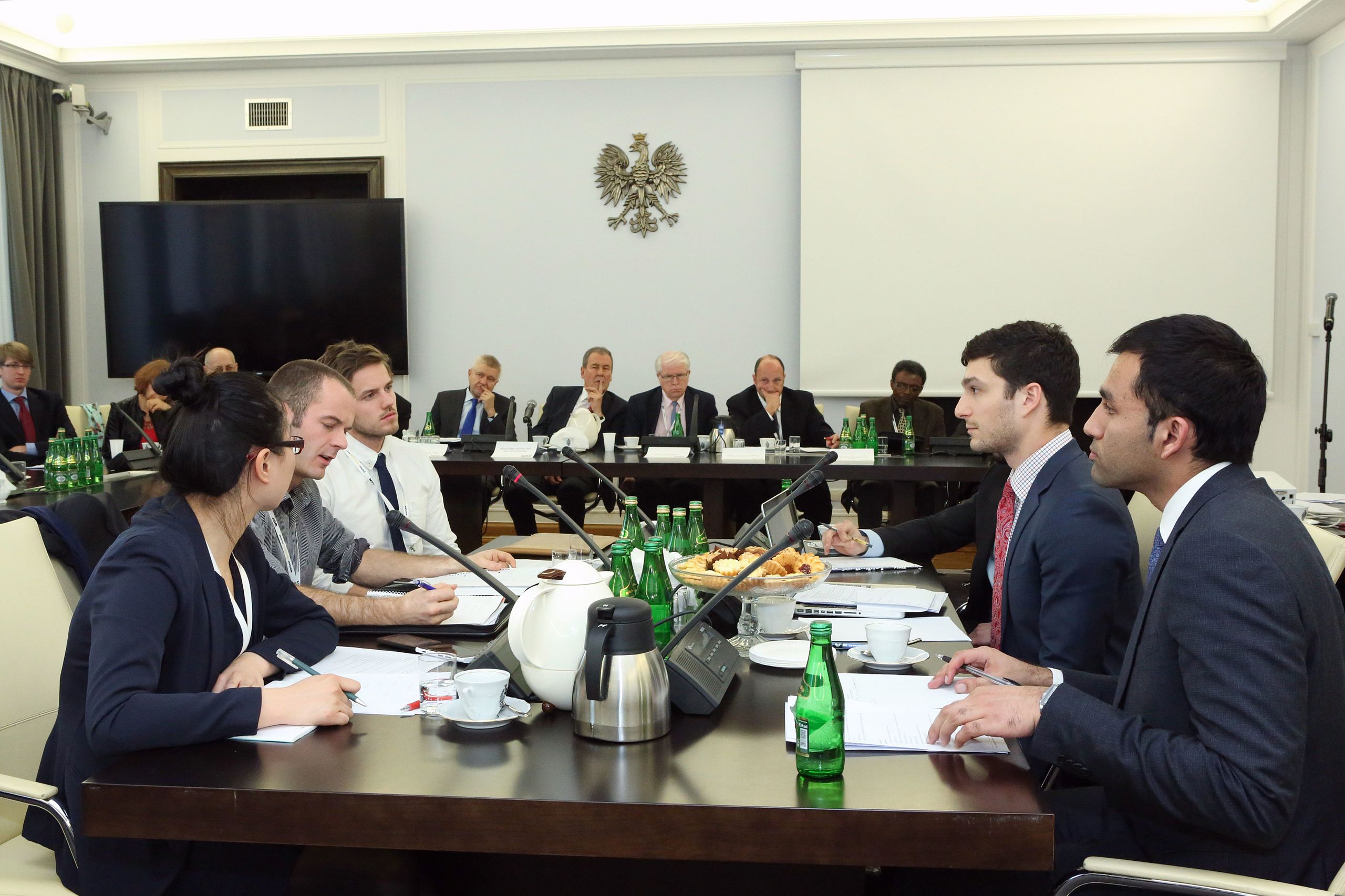 Students from the University of Tromsø and the University of Toronto during the 5th International Negotiation Tournament – Warsaw Negotiation Round in the Polish Senate (2014) Due to globalization and growing business trends, negotiation in the form of teams has become widely adopted. Elizabeth A. Mannix refers to "strength in numbers" when forming a negotating team, but warns about the danger of failing to prepare which reliance on others can also generate.[97] Teams can effectively collaborate to break down a complex negotiation. There is more knowledge and wisdom dispersed in a team than in a single mind. Writing, listening, and talking, are specific roles team members must satisfy. The capacity base of a team reduces the number of blunders and increases familiarity in a negotiation.[98] However, unless a team can appropriately utilize the full capacity of its potential, effectiveness can suffer. One factor in the effectiveness of team negotiation is a problem that occurs through solidarity behavior. Solidarity behavior occurs when one team member reduces his or her utility (benefit) to increase the benefits of other team members. This behavior is likely to occur when interest conflicts rise. When the utility/needs of the negotiation opponent do not align with every team member's interests, team members begin to make concessions and balance the benefits gained among the team.[99] Intuitively, this may feel like a cooperative approach. However, though a team may aim to negotiate in a cooperative or collaborative nature, the outcome may be less successful than is possible, especially when integration is possible. The integrative potential is possible when different negotiation issues are of different importance to each team member. The integrative potential is often missed due to the lack of awareness of each member's interests and preferences. Ultimately, this leads to a poorer negotiation result. Thus, a team can perform more effectively if each member discloses his or her preferences before the negotiation. This step will allow the team to recognize and organize the team's joint priorities, which they can take into consideration when engaging with the opposing negotiation party. Because a team is more likely to discuss shared information and common interests, teams must make an active effort to foster and incorporate unique viewpoints from experts from different fields. Research by Daniel Thiemann, which largely focused on computer-supported collaborative tasks, found that the Preference Awareness method is an effective tool for fostering knowledge about joint priorities and further helps the team judge which negotiation issues were of the highest importance.[100] Women Women often excel in collaborative and integrative negotiations, where they can leverage their strong communication skills and empathy to find mutually beneficial solutions. However, they may face challenges in competitive or distributive negotiations, where a more assertive and confrontational approach is typically required. Many of the implications of these findings have strong financial impacts in addition to the social backlash faced by self-advocating women in negotiations, as compared to other advocating women, self-advocating men, and other advocating men. Research in this area has been studied across platforms, in addition to more specific areas like women as physician assistants.[101] The backlash associated with this type of behavior is attributed to the fact that to be self-advocated is considered masculine, whereas the alternative, being accommodating, is considered more feminine.[102] Males, however, do not appear to face any type of backlash for not being self-advocating.[103] This research has been supported by multiple studies, including one which evaluated candidates participating in a negotiation regarding compensation. This study showed that women who initiated negotiations were evaluated more poorly than men who initiated negotiations. In another variation of this particular setup, men and women evaluated videos of men and women either accepting a compensation package or initiating negotiations. Men evaluated women more poorly for initiating negotiations, while women evaluated both men and women more poorly for initiating negotiations. In this particular experiment, women were less likely to initiate a negotiation with a male, citing nervousness, but there was no variation with the negotiation initiated with another female.[104] Research also supports the notion that the way individuals respond in a negotiation varies depending on the gender of the opposite party. In all-male groups, the use of deception showed no variation in the level of trust between negotiating parties, however in mixed-sex groups, there was an increase in deceptive tactics when it was perceived that the opposite party was using an accommodating strategy. In all-female groups, there were many shifts in when individuals did and did not employ deception in their negotiation tactics.[102] Academic negotiation The academic world contains a unique management system, wherein faculty members, some of whom have tenure, reside in academic units (e.g. departments), and are overseen by chairs, or heads. These chairs/heads are in turn supervised by deans of the college where their academic unit resides. Negotiation is an area where faculties, chairs/heads, and their deans have little preparation; their doctoral degrees are typically in a highly specialized area according to their academic expertise. However, the academic environment frequently presents situations where negotiation takes place. For example, many faculties are hired with the expectation that they will conduct research and publish scholarly works. For these faculties, where their research requires equipment, space, and/or funding, negotiation of a "start-up" package is critical for their success and future promotion.[105][106] Also, department chairs often find themselves in situations, typically involving resource redistribution where they must negotiate with their dean, on behalf of their unit. And deans oversee colleges where they must optimize limited resources, such as research space or operating funds while at the same time creating an environment that fosters student success, research accomplishments, and more.[105][106][107] Integrative negotiation is the type predominately found in academic negotiation – where trust and long-term relationships between personnel are valued. Techniques found to be particularly useful in academic settings include:[105][106] 1. doing your homework – grounding your request in facts 2. knowing your value 3. listening actively and acknowledging what is being said 4. putting yourself in their shoes 5. asking – negotiation begins with an ask 6. not committing immediately 7. managing emotion keeping in mind the principle of a "wise agreement",[108] with its associated emphasis on meeting the interests of both parties to the extent possible as a key working point. |
グループ構成 複数当事者 複数当事者による交渉は研究対象となる機会が少ないが、二者間交渉の結果の一部は複数当事者にも適用される。その一例として、交渉では両当事者の言語類似 性が生じることが一般的である。三者間交渉においても言語類似性は生じ、特に交渉で最大の利益を得る当事者が他当事者の言語類似性を採用した場合、結果が 特に効率的であった。[96] チーム 第5回国際交渉トーナメント・ワルシャワ交渉ラウンド(ポーランド上院)に参加したトロムソ大学とトロント大学の学生たち (2014) グローバル化とビジネス動向の拡大に伴い、チーム形式の交渉が広く採用されるようになった。エリザベス・A・マニックスは交渉チーム編成において「数の力」に言及するが、準備不足による他者依存が生む危険性についても警告している。[97] チームは複雑な交渉を分解し効果的に協力できる。個人の頭脳よりもチームには分散された知識と知恵が存在する。文書作成、傾聴、発言はチームメンバーが果たすべき特定の役割だ。チームの能力基盤は交渉における失策を減らし、習熟度を高める。[98] しかし、チームが潜在能力を適切に活用できなければ、効果は苦悩を伴う。チーム交渉の有効性を左右する一因は、連帯行動によって生じる問題である。連帯行 動とは、あるチームメンバーが自身の効用(利益)を減少させて他のメンバーの利益を増大させる行為だ。この行動は利害対立が高まった時に発生しやすい。交 渉相手の効用/ニーズが全チームメンバーの利益と一致しない場合、メンバーは譲歩を始め、チーム内で得られる利益の均衡を図ろうとする。[99] 直感的には協力的なアプローチに思えるかもしれない。しかし、チームが協力的な交渉を目指しても、特に統合が可能な場合、結果は潜在的な可能性を下回る可 能性がある。統合の可能性は、異なる交渉課題が各メンバーにとって異なる重要性を持つ場合に生じる。各メンバーの利害や選好に対する認識不足から、この統 合の可能性はしばしば見逃される。結果として、交渉成果は低下する。 したがって、交渉前に各メンバーが自身の選好を開示すれば、チームのパフォーマンスは向上する。この手順により、チームは共通の優先事項を認識・整理で き、相手側との交渉時にこれを考慮に入れることができる。チームは共有情報と共通利益について議論する傾向が強いため、異なる分野の専門家による独自の視 点を積極的に取り入れ、育成する努力が不可欠である。ダニエル・ティーマンの研究(主にコンピュータ支援共同作業に焦点を当てた)によれば、選好認識法は 共同優先事項に関する知識を促進する効果的な手法であり、さらにチームがどの交渉課題が最重要かを判断する助けとなる。[100] 女性 女性は、優れたコミュニケーション能力と共感力を活かして相互利益となる解決策を見出せる、協調的・統合的交渉においてしばしば卓越した能力を発揮する。 しかし、より断固とした対立的アプローチが求められる競争的・分配的交渉では困難に直面する可能性がある。これらの知見の多くは、交渉において自己主張す る女性が直面する社会的反発に加え、他の女性支援者、自己主張する男性、他の男性支援者と比較して、強い経済的影響をもたらす。この分野の研究は、医師助 手としての女性といった特定領域に加え、様々なプラットフォームで実施されている[101]。この種の行動に伴う反発は、自己主張が男性的とみなされる一 方、それに代わる協調的態度がより女性的とみなされる事実に起因する[102]。しかし男性は、自己主張しないことに対して何らかの反発を受けるようには 見えない。[103] この研究は複数の調査によって裏付けられており、その一つは報酬に関する交渉に参加する候補者を評価したものである。この研究では、交渉を開始した女性 は、交渉を開始した男性よりも低く評価された。この特定の設定の別のバリエーションでは、男性と女性が、報酬パッケージを受け入れるか交渉を開始する男性 と女性の動画を評価した。男性は交渉を開始した女性をより低く評価したが、女性は交渉を開始した男女双方をより低く評価した。この特定の実験では、女性は 男性との交渉開始をためらう傾向があり(緊張を理由に挙げた)、しかし女性同士の交渉開始には差異が認められなかった。[104] 研究はまた、交渉における個人の対応が相手方のジェンダーによって異なるという概念を支持している。男性のみのグループでは、欺瞞の使用が交渉当事者間の 信頼度に変動をもたらさなかった。しかし混血のグループでは、相手方が譲歩的戦略を用いていると認識された場合、欺瞞的戦術が増加した。女性のみのグルー プでは、個人が交渉戦術において欺瞞を用いるか否かの判断に多くの変動が見られた。[102] 学術的交渉 学術界には独特の管理システムが存在する。終身在職権を持つ者も含む教員は、学部などの学術組織に所属し、学科長や学部長の監督下にある。これらの学科 長・学部長は、所属する学部全体の学部長によって管理される。教員、学科長・学部長、そして学部長は、交渉に関する準備がほとんど整っていない領域だ。彼 らの博士号は通常、専門分野に特化した学術的知見に基づいている。しかし学術環境では、交渉が頻繁に発生する状況が生じる。例えば多くの教員は、研究活動 と学術出版を行うことが期待されて採用される。こうした教員にとって、研究に必要な設備・スペース・資金を得るための「スタートアップ」パッケージの交渉 は、成功と将来の昇進に極めて重要だ。[105][106] また、学科長は資源の再配分に関わる場面で、所属部門を代表して学部長と交渉せざるを得ない状況に頻繁に直面する。一方、学部長は学部全体を統括し、研究 スペースや運営資金といった限られた資源を最適化すると同時に、学生の成功や研究成果を促進する環境づくりを同時に進めなければならない。[105] [106] [107] 統合的交渉は、学術交渉で主に用いられる手法である。ここでは、関係者間の信頼と長期的な関係が重視される。学術環境で特に有用とされる技術には以下が含まれる:[105][106] 1. 事前準備を徹底する – 要求を事実に基づいて裏付ける 2. 自身の価値を認識する 3. 積極的に傾聴し、発言内容を認める 4. 相手の立場に立つ 5. 要求すること – 交渉は要求から始まる 6. 即答しない 7. 感情を管理する 「賢明な合意」の原則[108]を念頭に置き、可能な限り双方の利益を満たすことを重要な作業ポイントとして重視する。 |
| Etymology The word "negotiation" originated in the early 15th century from the Old French negociacion from Latin negotiatio from neg- "no" and otium "leisure".[109] These terms mean "business, trade, traffic". By the late 1570s negotiation had the definition, "to communicate in search of mutual agreement". With this new introduction and this meaning, it showed a shift from "doing business" to "bargaining about" business.[109] |
語源 「交渉」という言葉は、15世紀初頭に古フランス語のnegociacionに由来する。これはラテン語のnegotiatioから派生したもので、 neg-(否定)とotium(余暇)が語源である[109]。これらの語は「商売、取引、流通」を意味する。1570年代後半までに、交渉という言葉は 「相互合意を求めて意思疎通を行うこと」という意味を持つようになった。この新たな導入と意味によって、それは「商売を行うこと」から「商売について取り 引きすること」への移行を示したのである。[109] |
| Alternating offers protocol Appeasement Collaborative software Collective action Conciliation Consistency (negotiation) Contract Cross-cultural Cross-cultural differences in decision-making Delaying tactic Deterrence Diplomacy Dispute resolution Expert determination Flipism Game theory Impasse International relations Leadership Multilateralism Nash equilibrium Principled negotiation Prisoner's dilemma Program on Negotiation Trust metric |
交互提案プロトコル 懐柔 共同作業ソフトウェア 集団行動 調停 一貫性(交渉) 契約 異文化間 意思決定における異文化間の異なる点 遅延戦術 抑止 外交 紛争解決 専門家決定 フリップ主義 ゲーム理論 行き詰まり 国際関係 リーダーシップ 多国間主義 ナッシュ均衡 原則に基づく交渉 囚人のジレンマ 交渉プログラム 信頼指標 |
| References | |
| Further reading See also: List of books about negotiation This "further reading" section may need cleanup. Please read the editing guide and help improve the section. (September 2022) (Learn how and when to remove this message) Camp, Jim. (2007). No, The Only Negotiating System You Need For Work Or Home. Crown Business. New York. Movius, H. and Susskind, L. E. (2009) Built to Win: Creating a World Class Negotiating Organization. Cambridge, MA: Harvard Business Press. Roger Dawson, Secrets of Power Negotiating – Inside Secrets from a Master Negotiator. Career Press, 1999. Davérède, Alberto L. "Negotiations, Secret", Max Planck Encyclopedia of Public International Law Ronald M. Shapiro and Mark A. Jankowski, The Power of Nice: How to Negotiate So Everyone Wins – Especially You!, John Wiley & Sons, Inc., 1998, ISBN 0-471-08072-1 Marshall Rosenberg (2015). Nonviolent Communication: A Language of Life, 3rd Edition: Life-Changing Tools for Healthy Relationships. PD Press. ISBN 978-1-892005-54-0. Roger Fisher and Daniel Shapiro, Beyond Reason: Using Emotions as You Negotiate, Viking/Penguin, 2005. Douglas Stone, Bruce Patton, and Sheila Heen, foreword by Roger Fisher, Difficult Conversations: How to Discuss What Matters Most, Penguin, 1999, ISBN 0-14-028852-X Catherine Morris, ed. Negotiation in Conflict Transformation and Peacebuilding: A Selected Bibliography. Victoria, Canada: Peacemakers Trust. Howard Raiffa, The Art and Science of Negotiation, Belknap Press 1982, ISBN 0-674-04812-1 David Churchman, "Negotiation Tactics" University Press of America, Inc. 1993 ISBN 0-8191-9164-7 William Ury, Getting Past No: Negotiating Your Way from Confrontation to Cooperation, revised second edition, Bantam, 1993, trade paperback, ISBN 0-553-37131-2; 1st edition under the title, Getting Past No: Negotiating with Difficult People, Bantam, 1991, hardcover, 161 pages, ISBN 0-553-07274-9 William Ury, Roger Fisher and Bruce Patton, Getting to Yes: Negotiating Agreement Without Giving in, Revised 2nd edition, Penguin USA, 1991, trade paperback, ISBN 0-14-015735-2; Houghton Mifflin, 1992, hardcover, 200 pages, ISBN 0-395-63124-6. The first edition, unrevised, Houghton Mifflin, 1981, hardcover, ISBN 0-395-31757-6 The political philosopher Charles Blattberg distinguished between negotiation and conversation, and criticized conflict-resolution methods that give too much weight to the former. See his From Pluralist to Patriotic Politics: Putting Practice First, Oxford and New York: Oxford University Press, 2000, ISBN 0-19-829688-6, a work of political philosophy; and his Shall We Dance? A Patriotic Politics for Canada, Montreal and Kingston: McGill Queen's University Press, 2003, ISBN 0-7735-2596-3, which applies that philosophy to the Canadian case. Leigh L. Thompson, The Mind and Heart of the Negotiator 3rd Ed., Prentice Hall Oct. 2005. Nicolas Iynedjian, Négociation – Guide pratique, CEDIDAC 62, Lausanne 2005, ISBN 2-88197-061-3 Michele J. Gelfand and Jeanne M. Brett, ed. Handbook of negotiation and culture, 2004. ISBN 0-8047-4586-2 "Emotion and conflict" from the Beyond Intractability Database Echavarria, Martin (2015). Enabling Collaboration – Achieving Success Through Strategic Alliances and Partnerships. LID Publishing Inc. ISBN 9780986079337. Nierenberg, Gerard I. (1995). The Art of Negotiating: Psychological Strategies for Gaining Advantageous Bargains. Barnes and Noble. ISBN 978-1-56619-816-5. Andrea Schneider & Christopher Honeyman, eds., The Negotiator's Fieldbook, American Bar Association (2006). ISBN 1-59031-545-6 Richard H. Solomon and Nigel Quinney. American Negotiating Behavior: Wheeler-Dealers, Legal Eagles, Bullies, and Preachers (United States Institute of Peace Press, 2010); 357 pages; identifies four mindsets in the negotiation behavior of policy makers and diplomats; draws on interviews with more than 50 practitioners Charles Arthur Willard. Liberalism and the Problem of Knowledge: A New Rhetoric for Modern Democracy. University of Chicago Press. 1996. John McMillan "Games, Strategies, and Managers" Oxford University Press. 1992. ISBN 0-19-507403-3. Charles Arthur Willard. A Theory of Argumentation. University of Alabama Press. 1989. Charles Arthur Willard. Argumentation and the Social Grounds of Knowledge. University of Alabama Press. 1982. Hames, David S. (2011). Negotiation: Closing deals, settling disputes, and making team decisions. SAGE Publications. ISBN 9781483332727. |
追加文献(さらに読む) 関連項目: 交渉に関する書籍一覧 この「追加文献(さらに読む)」セクションは整理が必要かもしれない。編集ガイドラインを読み、セクションの改善に協力してほしい。(2022年9月) (このメッセージの削除方法と時期について) キャンプ、ジム。(2007). 『ノー』―仕事でも家庭でも必要な唯一の交渉術。クラウン・ビジネス。ニューヨーク。 ムービウス、H. と サスキン、L. E. (2009) 『勝つために構築された組織:世界クラスの交渉組織の作り方』 ケンブリッジ、マサチューセッツ州:ハーバード・ビジネス・プレス。 ロジャー・ドーソン、『パワー交渉の秘訣 ― マスター交渉人の内部秘話』 キャリア・プレス、1999年。 ダヴェレデ、アルベルト・L. 「交渉、秘密」, マックス・プランク国際公法百科事典 ロナルド・M・シャピロとマーク・A・ヤンコウスキー, 『優しさの力:誰もが勝つ交渉術―特に君が!』, ジョン・ワイリー・アンド・サンズ社, 1998年, ISBN 0-471-08072-1 マーシャル・ローゼンバーグ(2015)。『非暴力コミュニケーション:人生を変える健康的な人間関係のためのツール』第3版。PDプレス。ISBN 978-1-892005-54-0。 ロジャー・フィッシャーとダニエル・シャピロ、『理性を超えて:交渉における感情の活用』。バイキング/ペンギン、2005年。 ダグラス・ストーン、ブルース・パットン、シーラ・ヒーン著、ロジャー・フィッシャー序文『困難な対話:最も重要なことを話し合う方法』ペンギン社、1999年、ISBN 0-14-028852-X キャサリン・モリス編『紛争変容と平和構築における交渉:選書目録』カナダ・ビクトリア:ピースメイカーズ・トラスト ハワード・ライファ著『交渉の芸術と科学』ベルナップ・プレス、1982年、ISBN 0-674-04812-1 デイヴィッド・チャーチマン著『交渉戦術』ユニバーシティ・プレス・オブ・アメリカ、1993年、ISBN 0-8191-9164-7 ウィリアム・ユーリー著『ノーを乗り越える:対立から協力への交渉術』改訂第2版、バンタム社、1993年、ペーパーバック、ISBN 0-553-37131-2。初版は『ノーを乗り越える:難しい人々と交渉する』のタイトルで、バンタム社、1991年、ハードカバー、161ページ、 ISBN 0-553-07274-9 ウィリアム・ユーリー、ロジャー・フィッシャー、ブルース・パットン著、『イエスにたどり着く:譲歩せずに合意を得る交渉術』、改訂第2版、ペンギン USA、1991年、トレードペーパーバック、ISBN 0-14-015735-2。ホートン・ミフリン、1992年、ハードカバー、200ページ、 ISBN 0-395-63124-6。初版(改訂なし)、ホートン・ミフリン社、1981年、ハードカバー、ISBN 0-395-31757-6 政治哲学者チャールズ・ブラットバーグは、交渉と対話を区別し、前者に過度に重点を置く紛争解決手法を批判した。彼の政治哲学書『多元主義から愛国政治 へ:実践を第一に』(オックスフォード大学出版局、2000年、ISBN 0-19-829688-6)およびカナダ事例にその哲学を適用した『愛国政治のためのカナダ:モントリオールとキングストン』(マギル・クイーンズ大学 出版局、2003年、ISBN 0-7735-2596-3)を参照のこと。カナダのための愛国的政治』モントリオール・キングストン:マギル・クイーンズ大学出版局、2003年、 ISBN 0-7735-2596-3。同書はカナダ事例にこの哲学を適用している。 リー・L・トンプソン『交渉者の心と魂』第3版、プレンティス・ホール、2005年10月。 ニコラス・イネジアン著『ネゴシエーション - 実践ガイド』CEDIDAC 62、ローザンヌ、2005年、ISBN 2-88197-061-3 ミシェル・J・ゲルファンド、ジャンヌ・M・ブレット編『交渉と文化のハンドブック』2004年。ISBN 0-8047-4586-2 Beyond Intractability データベースの「感情と葛藤」 Echavarria, Martin (2015). コラボレーションの実現 – 戦略的提携とパートナーシップによる成功の達成。LID Publishing Inc. ISBN 9780986079337. ニーレンバーグ、ジェラルド I. (1995)。交渉の芸術:有利な取引を得るための心理的戦略。バーンズ・アンド・ノーブル。ISBN 978-1-56619-816-5。 アンドレア・シュナイダー&クリストファー・ハニーマン編、『交渉者のフィールドブック』、アメリカ法曹協会 (2006)。ISBN 1-59031-545-6 リチャード・H・ソロモンとナイジェル・クィニー『アメリカの交渉行動:駆け引き屋、法律の達人、威圧者、説教師』(米国平和研究所出版、2010年); 357ページ;政策立案者や外交官の交渉行動における四つの思考様式を特定;50人以上の実務家へのインタビューに基づく チャールズ・アーサー・ウィラード『自由主義と知識の問題:現代民主主義のための新たな修辞学』シカゴ大学出版局、1996年。 ジョン・マクミラン『ゲーム、戦略、そしてマネージャー』オックスフォード大学出版局、1992年。ISBN 0-19-507403-3。 チャールズ・アーサー・ウィラード『議論の理論』アラバマ大学出版局、1989年。 チャールズ・アーサー・ウィラード『議論と知識の社会的基盤』アラバマ大学出版局、1982年。 ヘイムズ、デイヴィッド・S.(2011)『交渉:取引の成立、紛争の解決、チーム意思決定』SAGE出版。ISBN 9781483332727。 |
| https://en.wikipedia.org/wiki/Negotiation |
交渉とは、複数の個人(主体)が自己の主 張を通して相互交渉するプロセスのことである。
交渉は、治療におけるインタビューや問診 とは異なり、個々人が状況の定義*をめぐって自分の期待する戦略的結果を引き出すことを目的として行う 言語ならびに非言語的な政治的実践である。
●審問1
もし、我々が交渉(=主体が目的をもって中長期的な実践をおこなうことを前提にしておこなう相互行為)という観点からゴフマンの『日常 生活における自己提示』を読めば、どのような視座が得られるだろうか?
●審問2
もし、フーコーの権力論の中にこの交渉という視座を取り込めば、抑圧的権力や生 権力はどのように説明されうるのだろうか?(→統治性)
リ ンク
文 献
そ の他の情報
CC
Copyleft,
CC, Mitzub'ixi Quq Chi'j, 1996-2099