タワンティンスーユ
Tawantinsuyu,
Tahuantinsuyu
☆インカ国家[Inca Empire, ][a]
は、正式名称を「四つの地域からなる王国」(ケチュア語: タワンティンスーユ、発音 [taˈwantiŋ
ˈsuju]、直訳「四つの地域からなる土地」[5])といい、コロンブス以前のアメリカ大陸で最大の帝国であった[6]。帝国の行政・政治・軍事の中心
はクスコ市にあった。インカ文明は13世紀初頭、ペルー高原で興った。1524年、ポルトガル人探検家アレイショ・ガルシアがヨーロッパ人として初めてイ
ンカ国家(タワンティンスーユ)に到達した[7]。その後1532年、スペインによるインカ国家(タワンティンスーユ)征服が始まり、1572年までに最
後のインカ国家は完全に征服された。
1438年から1533年にかけて、インカは征服や平和的同化などの手段を用い、アンデス山脈を中心とする南米西部の広大な地域を支配下に収めた。最盛期
には、現代のペルーと現在のエクアドル西部、ボリビア西部・中南部、アルゼンチン北西部、コロンビア最南西端、そして現代チリの大部分を結びつけ、ユーラ
シアの歴史的帝国に匹敵する国家を形成した。公用語はケチュア語であった。[8]
インカ国家(タワンティンスーユ)は、旧世界の文明に通常見られる多くの特徴を欠いていた点で特異であった。人類学者ゴードン・マックイワンは、インカが
車輪、役畜、鉄鋼の知識、さらには文字体系さえも用いずに「人類史上最も偉大な帝国国家の一つ」を築き上げたことを指摘している。[9]
インカ国家(タワンティンスーユ)の顕著な特徴には、記念碑的な建築(特に石造建築)、国家全域に張り巡らされた広範な道路網(カパック・ニャン)、精巧
な織物、記録保持と通信のための結び紐(キプ)の使用、困難な環境下での農業革新と生産、そして国民とその労働力に促された、あるいは課された組織化と管
理が含まれた。
インカ国家(タワンティンスーユ)は、金銭や市場をほとんど用いずに機能していた。代わりに、物品やサービスの交換は、個人間、個人と集団間、そしてイン
カ支配者との相互扶助に基づいて行われた。「税」とは、個人が国家に対して負う労働義務であった。インカ支配者(理論上は全ての生産手段を所有していた)
は、土地や物品へのアクセスを許可し、臣民のための祝宴で飲食を提供することで、これに応えたのである。[10]
帝国内では多くの地域的な信仰形態が存続し、その大半は地域の聖なる場所であるワカ(huacas)やワカ(wak'a)に関するものだった。しかしイン
カ指導層は、彼らの太陽神であるインティ(Inti)への太陽崇拝を奨励し、パチャママ(Pachamama)信仰などの他の宗教集団の上にその支配権を
押し付けた。[11] インカ人は彼らの王であるサパ・インカ(Sapa Inca)を「太陽の子」と見なしていた。[12]
インカの経済は学者の間で議論の的となっている。ダレル・E・ラローンは著書『非市場経済としてのインカ』で、これまで学者たちがこれを「封建的、奴隷
的、[あるいは]社会主義的」と表現してきたこと、また「相互扶助と再分配に基づくシステム」「市場と商業を有するシステム」「アジア的生産様式」とも呼
ばれてきたことを指摘している。[13]
| The Inca Empire,[a]
officially known as the Realm of the Four Parts (Quechua: Tawantinsuyu
pronounced [taˈwantiŋ ˈsuju], lit. 'land of four parts'[5]), was the
largest empire in pre-Columbian America.[6] The administrative,
political, and military center of the empire was in the city of Cusco.
The Inca civilisation rose from the Peruvian highlands sometime in the
early 13th century. The Portuguese explorer Aleixo Garcia was the first
European to reach the Inca Empire in 1524.[7] Later, in 1532, the
Spanish began the conquest of the Inca Empire, and by 1572 the last
Inca state was fully conquered. From 1438 to 1533, the Incas incorporated a large portion of western South America, centered on the Andean Mountains, using conquest and peaceful assimilation, among other methods. At its largest, the empire joined modern-day Peru with what are now western Ecuador, western and south-central Bolivia, northwest Argentina, the southwesternmost tip of Colombia and a large portion of modern-day Chile, forming a state comparable to the historical empires of Eurasia. Its official language was Quechua.[8] The Inca Empire was unique in that it lacked many of the features associated with civilization in the Old World. The anthropologist Gordon McEwan wrote that the Incas were able to construct "one of the greatest imperial states in human history" without the use of the wheel, draft animals, knowledge of iron or steel, or even a system of writing.[9] Notable features of the Inca Empire included its monumental architecture, especially stonework, extensive road network (Qhapaq Ñan) reaching all corners of the empire, finely-woven textiles, use of knotted strings (quipu or khipu) for record keeping and communication, agricultural innovations and production in a difficult environment, and the organization and management fostered or imposed on its people and their labor. The Inca Empire functioned largely without money and without markets. Instead, exchange of goods and services was based on reciprocity between individuals and among individuals, groups, and Inca rulers. "Taxes" consisted of a labour obligation of a person to the Empire. The Inca rulers (who theoretically owned all the means of production) reciprocated by granting access to land and goods and providing food and drink in celebratory feasts for their subjects.[10] Many local forms of worship persisted in the empire, most of them concerning local sacred huacas or wak'a, but the Inca leadership encouraged the sun worship of Inti – their sun god – and imposed its sovereignty above other religious groups, such as that of Pachamama.[11] The Incas considered their king, the Sapa Inca, to be the "son of the Sun".[12] The Inca economy has been the subject of scholarly debate. Darrell E. La Lone, in his work The Inca as a Nonmarket Economy, noted that scholars have previously described it as "feudal, slave, [or] socialist", as well as "a system based on reciprocity and redistribution; a system with markets and commerce; or an Asiatic mode of production."[13] |
インカ国家[a]は、正式名称を「四つの地域からなる王国」(ケチュア
語: タワンティンスーユ、発音 [taˈwantiŋ
ˈsuju]、直訳「四つの地域からなる土地」[5])といい、コロンブス以前のアメリカ大陸で最大の帝国であった[6]。帝国の行政・政治・軍事の中心
はクスコ市にあった。インカ文明は13世紀初頭、ペルー高原で興った。1524年、ポルトガル人探検家アレイショ・ガルシアがヨーロッパ人として初めてイ
ンカ国家(タワンティンスーユ)に到達した[7]。その後1532年、スペインによるインカ国家(タワンティンスーユ)征服が始まり、1572年までに最
後のインカ国家は完全に征服された。 1438年から1533年にかけて、インカは征服や平和的同化などの手段を用い、アンデス山脈を中心とする南米西部の広大な地域を支配下に収めた。最盛期 には、現代のペルーと現在のエクアドル西部、ボリビア西部・中南部、アルゼンチン北西部、コロンビア最南西端、そして現代チリの大部分を結びつけ、ユーラ シアの歴史的帝国に匹敵する国家を形成した。公用語はケチュア語であった。[8] インカ国家(タワンティンスーユ)は、旧世界の文明に通常見られる多くの特徴を欠いていた点で特異であった。人類学者ゴードン・マックイワンは、インカが 車輪、役畜、鉄鋼の知識、さらには文字体系さえも用いずに「人類史上最も偉大な帝国国家の一つ」を築き上げたことを指摘している。[9] インカ国家(タワンティンスーユ)の顕著な特徴には、記念碑的な建築(特に石造建築)、国家全域に張り巡らされた広範な道路網(カパック・ニャン)、精巧 な織物、記録保持と通信のための結び紐(キプ)の使用、困難な環境下での農業革新と生産、そして国民とその労働力に促された、あるいは課された組織化と管 理が含まれた。 インカ国家(タワンティンスーユ)は、金銭や市場をほとんど用いずに機能していた。代わりに、物品やサービスの交換は、個人間、個人と集団間、そしてイン カ支配者との相互扶助に基づいて行われた。「税」とは、個人が国家に対して負う労働義務であった。インカ支配者(理論上は全ての生産手段を所有していた) は、土地や物品へのアクセスを許可し、臣民のための祝宴で飲食を提供することで、これに応えたのである。[10] 帝国内では多くの地域的な信仰形態が存続し、その大半は地域の聖なる場所であるワカ(huacas)やワカ(wak'a)に関するものだった。しかしイン カ指導層は、彼らの太陽神であるインティ(Inti)への太陽崇拝を奨励し、パチャママ(Pachamama)信仰などの他の宗教集団の上にその支配権を 押し付けた。[11] インカ人は彼らの王であるサパ・インカ(Sapa Inca)を「太陽の子」と見なしていた。[12] インカの経済は学者の間で議論の的となっている。ダレル・E・ラローンは著書『非市場経済としてのインカ』で、これまで学者たちがこれを「封建的、奴隷 的、[あるいは]社会主義的」と表現してきたこと、また「相互扶助と再分配に基づくシステム」「市場と商業を有するシステム」「アジア的生産様式」とも呼 ばれてきたことを指摘している。[13] |
| Etymology The Inca referred to their empire as Tawantinsuyu,[14] "the suyu of four [parts]". In Quechua, tawa is four and -ntin is a suffix naming a group, so that a tawantin is a quartet, a group of four things taken together, in this case the four suyu ("regions" or "provinces") whose corners met at the capital. The four suyu were: Chinchaysuyu (north), Antisuyu (east; the Amazon jungle), Qullasuyu (south) and Kuntisuyu (west). The name Tawantinsuyu was, therefore, a descriptive term indicating a union of provinces. The Spanish normally transliterated the name as Tahuatinsuyo. While the term Inka nowadays is translated as "ruler" or "lord" in Quechua, this term does not simply refer to the "king" of the Tawantinsuyu or Sapa Inca but also to the Inca nobles, and some theorize its meaning could be broader.[15][16] In that sense, the Inca nobles were a small percentage of the total population of the empire, probably numbering only 15,000 to 40,000, but ruling a population of around 10 million people.[17] When the Spanish arrived in the Empire of the Incas, they gave the name Peru to what the natives knew as Tawantinsuyu.[18] The name "Inca Empire" originated from the Chronicles of the 16th century.[19] |
語源 インカ国家(タワンティンスーユ)[14]は自らの国家を「四つのスユ」と呼んだ。ケチュア語でタワは四を意味し、-ンティンは集団を表す接尾辞である。 したがってタワンティンとは四重奏、四つのものをまとめて指す集団を意味する。この場合、四つのスユ(「地域」または「州」)が首都で四隅を結ぶことを指 す。四つのスユは次の通りである:チンチャイ・スユ(北)、アンティ・スユ(東;アマゾン密林)、クッラ・スユ(南)、クンティ・スユ(西)。したがって タワンティン・スユという名称は、諸州の連合を示す記述的用語であった。スペイン人は通常この名称をタワティン・スヨと音訳した。 現代では「インカ」という語はケチュア語で「支配者」や「領主」と訳されるが、この用語は単にタワンティンスユの「王」やサパ・インカを指すだけでなく、 インカの貴族階級全体を指す場合もあり、その意味はさらに広範である可能性を指摘する学者もいる[15]。[16] この意味で、インカの貴族はインカ国家(タワンティンスーユ)の総人口のごく一部であり、おそらく1万5千から4万人程度であったが、約1000万人の民 衆を支配していた。[17] スペイン人がインカ国家に到着した際、彼らは先住民がタワンティンスーユと呼んでいた地域にペルーという名称を与えた。[18] 「インカ帝国」という名称は16世紀の年代記に由来する。[19] |
| History Main article: History of the Incas Antecedents 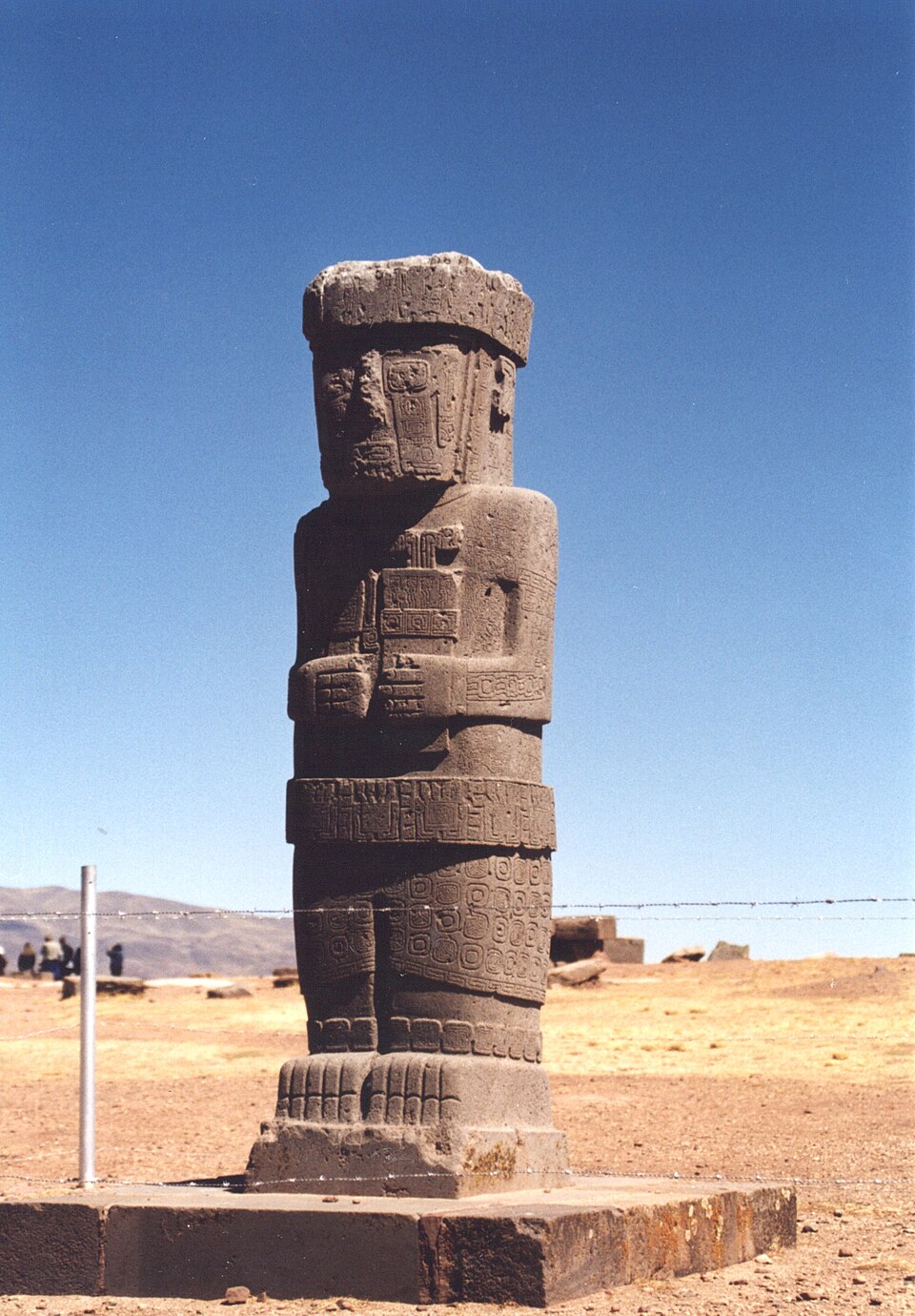 Stela in Tiwanaku's Kalasasaya temple The Inca Empire was the last chapter of thousands of years of Andean civilizations. The Andean civilisation is one of at least five civilisations in the world deemed by scholars to be "pristine". The concept of a pristine civilisation refers to a civilisation that has developed independently of external influences and is not a derivative of other civilisations.[20] The Inca Empire was preceded by two large-scale empires in the Andes: the Tiwanaku (c. 300–1100 AD), based around Lake Titicaca, and the Wari or Huari (c. 600–1100 AD), centered near the city of Ayacucho. The Wari occupied the Cuzco area for about 400 years. Thus, many of the characteristics of the Inca Empire derived from earlier multi-ethnic and expansive Andean cultures.[21] To those earlier civilizations may be owed some of the accomplishments cited for the Inca Empire: "thousands of kilometres/miles of roads and dozens of large administrative centers with elaborate stone construction... terraced mountainsides and filled in valleys", and the production of "vast quantities of goods".[22] Carl Troll has argued that the development of the Inca state in the central Andes was aided by conditions that allow for the elaboration of the staple food chuño. Chuño, which can be stored for long periods, is made of potato dried at the freezing temperatures that are common at nighttime in the southern Andean highlands. Such a link between the Inca state and chuño has been questioned, as other crops such as maize can also be dried with only sunlight.[23] Troll also argued that llamas, the Incas' pack animal, can be found in their largest numbers in this very same region.[23] The maximum extent of the Inca Empire roughly coincided with the distribution of llamas and alpacas, the only large domesticated animals in Pre-Hispanic America.[24] As a third point Troll pointed out irrigation technology as advantageous to Inca state-building.[25] While Troll theorized concerning environmental influences on the Inca Empire, he opposed environmental determinism, arguing that culture lay at the core of the Inca civilization.[25] |
歴史 主な記事:インカの歴史 前史 ティワナクのカラササヤ神殿の石碑 インカ国家(タワンティンスーユ)は、数千年にわたるアンデス文明の最終章であった。アンデス文明は、学者によって「原初的」とみなされる世界でも少なく とも5つの文明の一つである。原初的文明という概念は、外部からの影響を受けずに独自に発展し、他の文明の派生ではない文明を指す。[20] インカ国家(タワンティンスーユ)以前にアンデスでは二つの大規模帝国が存在した。ティティカカ湖周辺を基盤としたティワナク帝国(紀元300年 ~1100年頃)と、アヤクチョ市近郊を中心としたワリ(またはウアリ)帝国(紀元600年~1100年頃)である。ワリ帝国はクスコ地域を約400年間 支配した。したがって、インカ国家(タワンティンスーユ)の特徴の多くは、それ以前の多民族的で広大なアンデス文化に由来している。[21] インカ国家に帰せられる成果のいくつかは、これらの以前の文明に負っている可能性がある。「数千キロメートルに及ぶ道路と、精巧な石造建築を備えた数十の 大型行政センター... 段々畑化された山腹と埋め立てられた谷間」、そして「膨大な量の物資」の生産である。[22] カール・トロルは、アンデス中央部におけるインカ国家の発展は、主食であるチュニョの精緻化を可能にする条件に助けられたと主張している。チュニョは長期 保存が可能で、アンデス南部高地の夜間に一般的な氷点下の気温で乾燥させたジャガイモから作られる。しかしインカ国家とチュニョのこのような関連性は疑問 視されている。トウモロコシなどの他の作物も日光だけで乾燥させられるからだ。[23] トロールはまた、インカの荷役動物であるラマが、まさにこの地域で最も多く生息していると主張した。[23] インカ国家(タワンティンスーユ)の最大支配範囲は、ラマとアルパカの分布域とほぼ一致していた。これらは先コロンブス期アメリカ大陸で唯一家畜化された 大型動物である。[24] 第三の点として、トロールは灌漑技術がインカ国家形成に有利であったと指摘した。[25] トロールはインカ国家(タワンティンスーユ)への環境的影響について理論化した一方で、環境決定論には反対し、文化こそがインカ文明の中核をなすと主張した。[25] |
| Origin The Inca people were a pastoral tribe in the Cusco area around the 12th century. Indigenous Andean oral history tells two main origin stories: the legends of Manco Capac and Mama Ocllo, and that of the Ayar brothers. The Legend of the Ayar Brothers 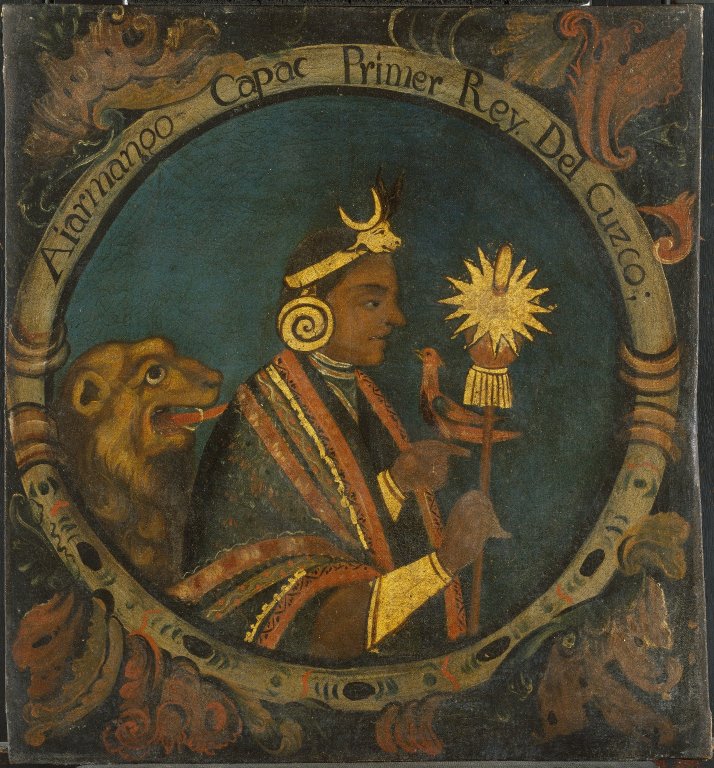 Manco Capac, First Inca, 1 of 14 Portraits of Inca Kings, Probably mid-18th century. Oil on canvas. Brooklyn Museum 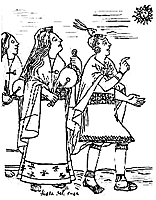 Manco Cápac and Mama Ocllo, children of the Inti, Felipe Guaman Poma de Ayala, El primer nueva corónica y buen gobierno, circa 1615 The center cave at Tambo Tocco (Tampu T'uqu) was named Capac Tocco (Qhapaq T'uqu, "principal niche"). The other caves were Maras Tocco (Maras T'uqu) and Sutic Tocco (Sutiq T'uqu).[26] Four brothers and four sisters stepped out of the middle cave. They were: Ayar Manco (Ayar Manqu), Ayar Cachi (Ayar Kachi), Ayar Auca (Ayar Awka) and Ayar Uchu (Ayar Uchi); and Mama Ocllo (Mama Uqllu), Mama Raua (Mama Rawa), Mama Huaco (Mama Waqu) and Mama Coea (Mama Qura). Out of the side caves came the people who were to be the ancestors of all the Inca clans. Ayar Manco carried a magic staff made of the finest gold. Where this staff landed, the people would live. They traveled for a long time. On the way, Ayar Cachi boasted about his strength and power. His siblings tricked him into returning to the cave to get a sacred llama. When he went into the cave, they trapped him inside to get rid of him. Ayar Uchu decided to stay on the top of the cave to look over the Inca people. The minute he proclaimed that, he turned to stone. They built a shrine around the stone and it became a sacred object. Ayar Auca grew tired of all this and decided to travel alone. Only Ayar Manco and his four sisters remained. Finally, they reached Cusco. The staff sank into the ground. Before they arrived, Mama Ocllo had already borne Ayar Manco a child, Sinchi Roca. The people who were already living in Cusco fought hard to keep their land, but Mama Huaca was a good fighter. When the enemy attacked, she threw her bolas (several stones tied together that spun through the air when thrown) at a soldier (gualla) and killed him instantly. The other people became afraid and ran away. After that, Ayar Manco became known as Manco Capac, the founder of the Inca. It is said that he and his sisters built the first Inca homes in the valley with their own hands. When the time came, Manco Capac turned to stone like his brothers before him. His son, Sinchi Roca, became the second emperor of the Inca.[27] The Legend of Manco Cápac and Mama Ocllo Legend collected by the mestizo chronicler Inca Garcilaso de la Vega in his work Los Comentarios Reales de los Incas (transl. The Royal Commentaries of the Inca). It narrates the adventure of a couple, Manco Capac and Mama Ocllo, who were sent by the Sun God and emerged from the depths of Lake Titicaca (pacarina ~ paqarina "sacred place of origin") and marched north. They carried a golden staff, given by the Sun God; the message was clear: in the place where the golden staff sank, they would establish a city and settle there. The staff sank at Mount Guanacaure in the Acamama Valley; therefore, the couple decided to remain there and informed the inhabitants of the area that they were sent by the Sun God. They then proceeded to teach them agriculture and weaving. Thus, the Inca civilization began.[28][29] |
起源 インカ族は12世紀頃、クスコ地方に居住した牧畜を営む部族であった。アンデス先住民の口承歴史には主に二つの起源伝説が伝わる。マンコ・カパックとママ・オクジョの伝説、そしてアヤール兄弟の伝説である。 アヤール兄弟の伝説 初代インカ王マンコ・カパック、インカ王14人の肖像画のうちの1点、おそらく18世紀中頃。油彩、キャンバス。ブルックリン美術館所蔵 太陽神インティの子であるマンコ・カパックとママ・オクジョ、フェリペ・グアマン・ポマ・デ・アヤラ著『新年代記と善政』より、1615年頃 タンボ・トッコ(タンポ・トゥク)の中央の洞窟はカパック・トッコ(カパック・トゥク、「主なる聖域」)と呼ばれた。他の洞窟はマラス・トッコ(マラス・ トゥク)とスティク・トッコ(スティク・トゥク)であった。[26] 四人の兄弟と四人の姉妹が中央の洞窟から現れた。彼らは次の通りである:アヤール・マンコ(アヤール・マンク)、アヤール・カチ(アヤール・カチ)、ア ヤール・アウカ(アヤール・アウカ)、アヤール・ウチュ(アヤール・ウチ)。そしてママ・オクジョ(ママ・ウクル)、ママ・ラウア(ママ・ラワ)、ママ・ ワコ(ママ・ワク)、ママ・コエア(ママ・クラ)。脇の洞窟からは、インカの全氏族の祖先となる人々が現れた。 アヤール・マンコは最高級の金で作られた呪術的な杖を持っていた。この杖が落ちた場所に人々は住むことになった。彼らは長い間旅をした。途中でアヤール・ カチは自分の力と権力を自慢した。兄弟たちは彼を騙して聖なるラマを取りに洞窟へ戻らせた。彼が洞窟に入ると、彼らは彼を中に閉じ込めて始末しようとし た。 アヤール・ウチュはインカの人々を見守るため洞窟の頂上に留まることを決めた。その言葉を口にした瞬間、彼は石像へと変わった。人々は石の周りに聖堂を築 き、それは聖なる物となった。アヤール・アウカはこうした状況に嫌気が差し、一人で旅立つことを決めた。残ったのはアヤール・マンコと四人の姉妹だけだっ た。 ついに彼らはクスコに到達した。杖は地面に沈んだ。到着する前に、ママ・オクジョはすでにアヤール・マンコの子供、シンチ・ロカを産んでいた。クスコに既 に住んでいた人々は土地を守るために激しく戦ったが、ママ・ワカは優れた戦士だった。敵が襲撃すると、彼女はボラ(投げると空中で回転する複数の石を束ね た武器)を兵士(グアラ)に投げつけ、即座に殺した。他の者たちは恐れおののき、逃げ出した。 その後、アヤル・マンコはインカの創始者マンコ・カパックとして知られるようになった。彼と姉妹たちが自らの手で谷間に最初のインカの家を建てたと言われ ている。時が来ると、マンコ・カパックは先立つ兄弟たちのように石像となった。その息子シンチ・ロカがインカ第二代皇帝となった。[27] マンコ・カパックとママ・オクジョの伝説 この伝説は、メスティソの年代記作者インカ・ガルシラソ・デ・ラ・ベガが著書『インカの王家の解説』(原題:Los Comentarios Reales de los Incas)で収集したものである。この伝説は、太陽神に遣わされたマンコ・カパックとママ・オクジョの二人の冒険を語る。彼らはティティカカ湖(パカリ ナ~パカリナ「聖なる起源の地」)の深淵から現れ、北へと進んだ。太陽神から授かった金の杖を携えていた。その意味は明らかだった。金の杖が沈む地に都を 築き、そこに定住せよというのだ。杖はアカママ渓谷のグアナカウレ山で沈んだ。そこで二人はその地に残ることを決め、太陽神に遣わされた者だと住民に告げ た。そして農業と織物の技術を教え始めた。こうしてインカ文明は始まったのである。[28][29] |
| Kingdom of Cuzco Main article: Kingdom of Cusco 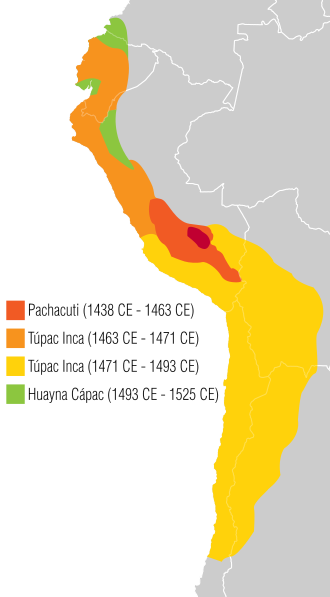 The Inca Empire's expansion according to John Howland Rowe in his "absolute chronology", developed in 1944–1945. In the early 1200s, under the leadership of Manco Capac, the Inca formed the small city-state Kingdom of Cuzco (Quechua Qusqu). There Manco Capac built a temple to the Sun God, called Inticancha, in the current location of Coricancha. Over the successive Inca rulers, they expanded their influence beyond Cusco and into the Sacred Valley through a series of battles, marriages, and alliances. In 1438, they began a far-reaching expansion under the command of the 9th Sapa Inca ("paramount leader"), Pachacuti Cusi Yupanqui (Pachakutiy Kusi Yupanki), whose epithet Pachacuti means "the turn of the world".[30] The name of Pachacuti was given to him after he conquered the tribe of the Chancas during the Chanka–Inca War (in modern-day Apurímac). During his reign, he and his son Topa Yupanqui (Tupa Yupanki) brought much of the modern-day territory of Peru under Inca control.[31] |
クスコ王国 詳細記事: クスコ王国 ジョン・ハウランド・ロウが1944年から1945年に提唱した「絶対年代学」に基づくインカ国家(タワンティンスーユ)の拡大。 1200年代初頭、マンコ・カパックの指導のもと、インカ族は小規模な都市国家クスコ王国(ケチュア語: クスク)を築いた。そこでマンコ・カパックは、現在のコリカンチャの場所に、太陽神インティの神殿「インティカンチャ」を建立した。歴代のインカ支配者た ちは、一連の戦い、婚姻、同盟を通じて、クスコを越えて聖なる谷へと影響力を拡大していった。 1438年、第9代サパ・インカ(最高指導者)パチャクティ・クシ・ユパンキ(パチャクティ・クシ・ユパンキ)の指揮下で、広範な拡大が始まった。彼の称 号パチャクティは「世界の転換」を意味する。[30] パチャクティの名は、チャンカ族との戦争(現代のアプリマック地方)でチャンカ族を征服した後に与えられた。彼の治世中、彼と息子のトパ・ユパンキ(トゥ パ・ユパンキ)は、現代のペルー領土の大部分をインカの支配下に置いた。[31] |
| Reorganisation and formation Pachacuti reorganised the kingdom of Cusco into the Tahuantinsuyu, which consisted of a central government with the Inca at its head and four provincial governments with strong leaders: Chinchaysuyu (NW), Antisuyu (NE), Kuntisuyu (SW) and Qullasuyu (SE).[b] Pachacuti is thought to have built Machu Picchu, either as a family home or summer retreat, although it may have been an agricultural station.[32] Pachacuti sent spies to regions he wanted in his empire and they brought to him reports on political organization, military strength and wealth. He then sent messages to their leaders extolling the benefits of joining his empire, offering them presents of luxury goods such as high quality textiles and promising that they would be materially richer as his subjects. Most accepted the rule of the Inca as a fait accompli and acquiesced peacefully. Refusal to accept Inca rule resulted in military conquest. Following conquest the local rulers were executed. The ruler's children were brought to Cuzco to learn about Inca administration systems, then return to rule their native lands. This allowed the Inca to indoctrinate them into the Inca nobility and, with luck, marry their daughters into families at various corners of the empire. |
再編と形成 パチャクティはクスコ王国をタワンティンスユウに再編した。これは中央政府とインカを頂点とし、強力な指導者を持つ四つの地方政府で構成されていた:チン チャイ・スユウ(北西)、アンティ・スユウ(北東)、クンティ・スユウ(南西)、クッラ・スユウ(南東)。[b] パチャクティはマチュピチュを建設したと考えられている。家族の家か夏の離宮として、あるいは農業基地としてだったかもしれない。[32] パチャクティは帝国に組み入れたい地域へスパイを送り、政治組織・軍事力・富に関する報告を得た。その後、現地の指導者へ使者を送り、帝国加入の利点を称賛し、高級織物などの豪華な贈り物を提示した。臣下となれば物質的に豊かになると約束したのである。 大半はインカ国家(タワンティンスーユ)の支配を既成事実として受け入れ、平和的に服従した。インカの支配を受け入れなかった場合、軍事的な征服が行われ た。征服後、現地の支配者は処刑された。支配者の子供たちはクスコに連れて行かれ、インカの行政システムを学ばされた後、故郷に戻って統治を続けた。これ によりインカは彼らをインカ貴族として教育し、運が良ければ娘を帝国の各地の家族に嫁がせることもできた。 |
| Expansion and consolidation Main articles: Colla–Inca War, Chimor–Inca War, and List of wars involving the Inca Empire Pachacuti had named his favorite son, Amaru Yupanqui, as his co-ruler and successor.[33] However, as co-ruler Amaru showed little interest in military affairs. Due to this lack of military talent, he faced much opposition from the Inca nobility, who began to plot against him.[34] Despite this, Pachacuti decided to take a blind eye to his son's lack of capability. Following a revolt during which Amaru almost led the Inca forces to defeat, the Sapa Inca decided to replace the co-ruler with another one of his sons, Topa Inca Yupanqui.[35] Túpac Inca Yupanqui began conquests to the north in 1463 and continued them as Inca ruler after Pachacuti's death in 1471. Túpac Inca's most important conquest was the Kingdom of Chimor, the Inca's only serious rival for the coast. Túpac Inca's empire then stretched north into what are today Ecuador and Colombia. Topa Inca's son Huayna Capac added a small portion of land to the north in what is today Ecuador. At its height, the Inca Empire included modern-day Peru, what are today western and south central Bolivia, southwest Ecuador and Colombia and a large portion of modern-day Chile, at the north of the Maule River. Traditional historiography claims the advance south halted after the Battle of the Maule where they met determined resistance from the Mapuche.[36] This view is challenged by historian Osvaldo Silva who argues instead that it was the social and political framework of the Mapuche that posed the main difficulty in imposing imperial rule.[36] Silva does accept that the battle of the Maule was a stalemate, but argues the Incas lacked the incentives for conquest they had when fighting more complex societies such as the Chimú Empire.[36] Silva also disputes the date given by traditional historiography for the battle: the late 15th century during the reign of Topa Inca Yupanqui (1471–1493).[36] Instead, he places it in 1532 during the Inca Civil War.[36] Nevertheless, Silva agrees on the claim that the bulk of the Inca conquests were made during the late 15th century.[36] At the time of the Inca Civil War an Inca army was, according to Diego de Rosales, subduing a revolt among the Diaguitas of Copiapó and Coquimbo.[36] The empire's push into the Amazon Basin near the Chinchipe River was stopped by the Shuar in 1527.[37] The empire extended into corners of what are today the north of Argentina and part of the southern Colombia. However, most of the southern portion of the Inca empire, the portion denominated as Qullasuyu, was located in the Altiplano. The Inca Empire was an amalgamation of languages, cultures and peoples. The components of the empire were not all uniformly loyal, nor were the local cultures all fully integrated. The Inca empire as a whole had an economy based on exchange and taxation of luxury goods and labour. The following quote describes a method of taxation: For as is well known to all, not a single village of the highlands or the plains failed to pay the tribute levied on it by those who were in charge of these matters. There were even provinces where, when the natives alleged that they were unable to pay their tribute, the Inca ordered that each inhabitant should be obliged to turn in every four months a large quill full of live lice, which was the Inca's way of teaching and accustoming them to pay tribute.[38] |
拡大と統合 主な記事:コッラ・インカ戦争、チモール・インカ戦争、インカ国家(タワンティンスーユ)が関与した戦争の一覧 パチャクティは、寵愛する息子であるアマル・ユパンキを共同統治者かつ後継者に指名した[33]。しかし共同統治者として、アマルは軍事問題にほとんど関 心を示さなかった。この軍事的才能の欠如ゆえに、彼はインカ貴族からの強い反発に直面し、貴族たちは彼に対する陰謀を企て始めた[34]。それにもかかわ らず、パチャクティは息子の無能さを見逃すことに決めた。アマールが反乱を起こし、インカ軍を敗北寸前まで追い込んだ後、サパ・インカは共同統治者を別の 息子、トパ・インカ・ユパンキと交代させることを決めた。[35] トゥパク・インカ・ユパンキは1463年に北方の征服を開始し、1471年のパチャクティ死後もインカ統治者としてこれを継続した。トゥパク・インカの最 重要征服地はチモル王国であり、これは海岸部におけるインカ唯一の有力なライバルであった。トゥパク・インカの帝国はその後、現在のエクアドルとコロンビ アにあたる地域まで北方に拡大した。トパ・インカの息子ワイナ・カパックは、現在のエクアドルに当たる北部の小地域を追加した。最盛期のインカ国家(タワ ンティンスーユ)は、現代のペルー、現在のボリビア西部・中南部、エクアドル南西部、コロンビア、そしてマウレ川以北の現代チリの大部分を包含していた。 伝統的な歴史学は、マウレの戦いでマプチェ族の断固たる抵抗に遭い、南進が止まったと主張する。[36] この見解に対し、歴史家オスバルド・シルバは異論を唱えている。彼は、帝国支配を強いる上で主たる困難をもたらしたのはマプチェの社会・政治的枠組みで あったと主張する。[36] シルバはマウレの戦いが膠着状態に終わったことは認めるが、インカ国家(タワンティンスーユ)がチムー帝国のようなより複雑な社会と戦う際に持っていた征 服への動機が、マプチェに対しては欠けていたと論じる。[36] シルバはまた、伝統的な歴史学が提示する戦いの年代——トパ・インカ・ユパンキ統治期(1471–1493)の15世紀末——にも異議を唱えている。 [36] 代わりに彼は、インカ内戦中の1532年と位置づけている。[36] とはいえ、インカによる征服の大半が15世紀末に行われたという主張については、シルバも同意している。[36] インカ内戦当時、ディエゴ・デ・ロサレスによれば、インカ軍はコピアポとコキンボのディアグイタ族の反乱を鎮圧していたという。[36] インカ国家(タワンティンスーユ)がチンチペ川付近のアマゾン盆地へ進出した動きは、1527年にシュアル族によって阻止された。[37] 帝国は現在のアルゼンチン北部とコロンビア南部の一部にまで広がっていた。しかし、インカ国家(タワンティンスーユ)の南部地域の大部分、すなわちクッラ スユと呼ばれる地域はアルティプラノに位置していた。 インカ国家(タワンティンスーユ)は言語、文化、民族の集合体であった。帝国の構成要素は全て均一に忠誠を誓っていたわけではなく、現地文化も完全に統合 されていたわけではない。インカ国家全体の経済は、交換と、贅沢品や労働力への課税に基づいていた。以下の引用は課税方法について述べている: 周知の通り、高地や平野の村々は、課税を担当する者たちから課せられた貢ぎ物を納めなかったものは一つもなかった。ある地方では、住民が貢ぎ物を納められ ないと訴えた際、インカは住民一人ひとりに四か月ごとに生きたシラミを大きな羽ペン一杯分納めるよう命じた。これがインカが貢ぎ物の支払いを教え、習慣づ ける方法だったのだ。[38] |
| First contact Aleixo Garcia (died 1525) was a Portuguese explorer and conquistador. He was a castaway who lived in Brazil and explored Paraguay and Bolivia. On a raiding expedition with a Guaraní army, Garcia and a few colleagues were the first Europeans known to have come into contact with the Inca Empire. Inca Civil War and Spanish conquest Main articles: Inca Civil War and Spanish conquest of the Inca Empire 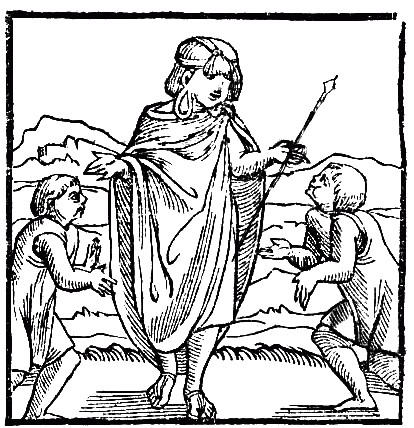 The first image of the Inca in Europe, Pedro Cieza de León, Crónica del Perú, 1553 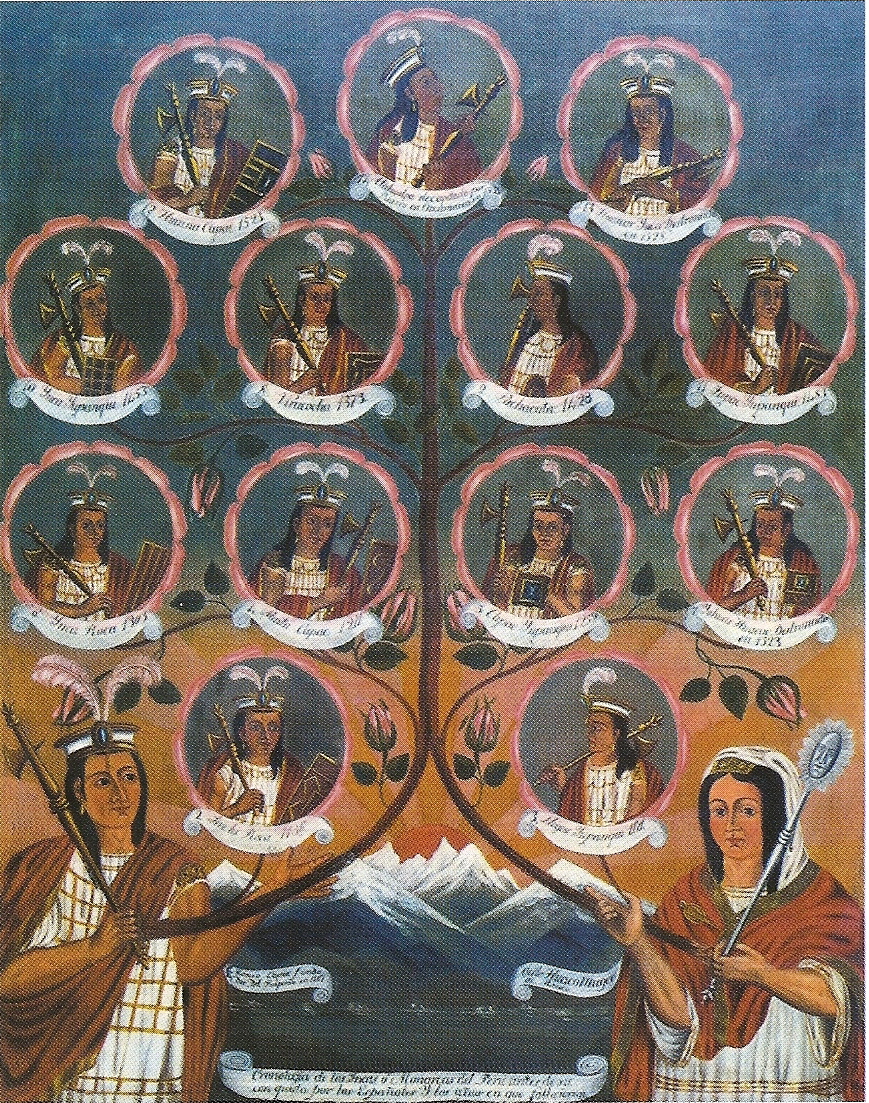 Capaccona or Qhapaqkuna "the kings", a 17th-century Cusco painting with the Inca lineages mentioned by colonial chronicles and their relationship with the royal queens of Cuzco, which hide behind a complex representation of the Inca social organization. Spanish conquistadors led by Francisco Pizarro and his brothers explored south from what is today Panama, reaching Inca territory by 1526.[39] It was clear that they had reached a wealthy land with prospects of great treasure, and after another expedition in 1529 Pizarro traveled to Spain and received royal approval to conquer the region and be its viceroy. This approval was received as detailed in the following quote: "In July 1529 the Queen of Spain signed a charter allowing Pizarro to conquer the Incas. Pizarro was named governor and captain of all conquests in Peru, or New Castile, as the Spanish now called the land".[40] When the conquistadors returned to Peru in 1532, a war of succession between the sons of Sapa Inca Huayna Capac, Huáscar and Atahualpa, and unrest among newly conquered territories weakened the empire. Perhaps more importantly smallpox, influenza, typhus and measles had potentially spread from Central America. The first epidemic of European disease in the Inca Empire possibly happened in the 1520s, killing Huayna Capac, his designated heir Ninan Cuyochi, and an unknown, probably large, number of other Inca subjects.[41] This claim has been disputed, with the earliest written accounts of Huayan Capac's death not fully agreeing on the cause, early chroniclers like Francisco de Xerez having simply describing it as "that disease".[42] The forces led by Pizarro consisted of 168 men, along with one cannon and 27 horses. The conquistadors were armed with lances, arquebuses, steel armor and long swords. In contrast, the Inca used weapons made out of wood, stone, copper and bronze, while using an Alpaca fiber based armor, putting them at significant technological disadvantage – none of their weapons could pierce the Spanish steel armor. In addition, due to the absence of horses in Peru, the Inca did not develop tactics to fight cavalry. However, the Inca were still effective warriors, being able to successfully fight the Mapuche, who later would strategically defeat and reverse Spanish colonisation in southern Chile. The first engagement between the Inca and the Spanish was the Battle of Puná, near present-day Guayaquil, Ecuador, on the Pacific Coast; Pizarro then founded the city of Piura in July 1532. Hernando de Soto was sent inland to explore the interior and returned with an invitation to meet the Inca, Atahualpa, who had defeated his brother in the civil war and was resting at Cajamarca with his army of 80,000 troops, that were at the moment armed only with hunting tools (knives and lassos for hunting llamas). Pizarro and some of his men, most notably a friar named Vincente de Valverde, met with the Inca, who had brought only a small retinue. The Inca offered them ceremonial chicha in a golden cup, which the Spanish rejected. The Spanish interpreter, Friar Vincente, read the "Requerimiento" that demanded that he and his empire accept the rule of King Charles I of Spain and convert to Christianity. Atahualpa dismissed the message and asked them to leave. After this, the Spanish began their attack against the mostly unarmed Inca, captured Atahualpa as hostage, and forced the Inca to collaborate. Atahualpa offered the Spaniards enough gold to fill the room he was imprisoned in and twice that amount of silver. The Inca fulfilled this ransom, but Pizarro deceived them, refusing to release the Inca afterwards. During Atahualpa's imprisonment, Huascar was assassinated elsewhere. The Spaniards maintained that this was at Atahualpa's orders; this was used as one of the charges against Atahualpa when the Spaniards finally executed him in August 1533.[43] Although "defeat" often implies an unwanted loss in battle, many of the diverse ethnic groups ruled by the Inca "welcomed the Spanish invaders as liberators and willingly settled down with them to share rule of Andean farmers and miners".[44] Many regional leaders, known as kurakas, continued to serve the Spanish overlords, called encomenderos, as they had served the Inca overlords. Other than efforts to spread the religion of Christianity, the Spanish benefited from and made little effort to change the society and culture of the former Inca Empire until the rule of Francisco de Toledo as viceroy from 1569 to 1581.[45] |
最初の接触 アレイショ・ガルシア(1525年没)はポルトガル人探検家兼征服者である。彼はブラジルに漂着し、パラグアイとボリビアを探検した。グアラニー軍との略奪遠征中、ガルシアと数名の仲間はインカ国家(タワンティンスーユ)と接触した最初のヨーロッパ人として知られる。 インカ内戦とスペインによる征服 主な記事:インカ内戦、スペインによるインカ国家(タワンティンスーユ)征服 ヨーロッパにおけるインカの最初の描写、ペドロ・シエサ・デ・レオン『ペルー年代記』(1553年) カパクナ(Qhapaqkuna)「王たち」:17世紀クスコの絵画。植民地時代の年代記に記されたインカの系譜と、クスコの王妃たちとの関係が描かれている。これはインカの社会組織を複雑に表現したもので、その背後には隠された意味が存在する。 フランシスコ・ピサロとその兄弟たちが率いるスペインの征服者たちは、現在のパナマから南へ進み、1526年までにインカ領土に到達した。[39] 彼らが豊かな土地に到達し、莫大な財宝の見込みがあることは明らかだった。1529年の別の遠征後、ピサロはスペインに渡り、この地域を征服し副王となる 王室の承認を得た。この承認は次の引用文に詳述されている通りである:「1529年7月、スペイン女王はピサロにインカ征服を許可する勅許状に署名した。 ピサロはペルー、すなわちスペイン人が新たに命名した「新カスティーリャ」における全征服地の総督兼総司令官に任命された。」[40] 1532年に征服者たちがペルーに戻った時、サパ・インカ・ワイナ・カパックの息子たちであるウアスカールとアタワルパの間で後継者争いが勃発し、新たに 征服された地域での動乱が帝国を弱体化させていた。おそらくより重要なのは、天然痘、インフルエンザ、チフス、はしかが中央アメリカから拡散した可能性 だ。インカ国家(タワンティンスーユ)におけるヨーロッパ由来の疾病の最初の流行は1520年代に発生し、ワイナ・カパック、後継者に指名されていたニナ ン・クヨチ、そしておそらく多数に上る他のインカ臣民を死に至らしめた。[41] この説には異論もある。ワイナ・カパックの死因について、最古の記録は一致しておらず、フランシスコ・デ・ヘレスのような初期の年代記作者は単に「あの病 気」と記述しているだけだ。[42] ピサロ率いる軍勢は168名の兵士、大砲1門、馬27頭で構成されていた。征服者たちは槍、火縄銃、鋼鉄の鎧、長剣で武装していた。これに対し、インカ側 は木・石・銅・青銅製の武器とアルパカ繊維の鎧を使用しており、技術面で大きな劣勢にあった。彼らの武器はスペインの鋼鉄鎧を貫通できなかった。さらにペ ルーには馬が存在しなかったため、インカは騎兵戦術を発展させていなかった。しかしインカは依然として有能な戦士であり、後にチリ南部でスペイン植民地化 を戦略的に撃破・逆転させるマプチェ族との戦いで勝利を収めている。 インカとスペインの最初の交戦は、現在のエクアドル・グアヤキル近郊の太平洋沿岸におけるプナ戦であった。その後ピサロは1532年7月にピウラ市を建設 した。エルナンド・デ・ソトは内陸部を探索するため派遣され、内戦において弟を打ち破ったインカ皇帝アタワルパとの面会を要請する返答を得て帰還した。ア タワルパは当時8万の軍勢を率いてカハマルカに駐屯していたが、その装備は狩猟用具(ラマ狩りのためのナイフや投げ縄)に過ぎなかった。 ピサロと部下数名(特にビンセンテ・デ・バルベルデという修道士)は、少数の従者だけを伴ったインカ王と面会した。インカ王は金杯で儀式用のチチャを捧げ たが、スペイン人はこれを拒絶した。通訳のビンセンテ修道士は「要求書」を読み上げ、彼と帝国がスペイン国王カルロス1世の支配を受け入れ、キリスト教に 改宗するよう求めた。アタワルパはこの要求を退け、去るよう命じた。その後スペイン軍は、ほとんど武装していないインカ軍への攻撃を開始し、アタワルパを 人質として捕らえ、インカ帝国に協力するよう強要した。 アタワルパは、監禁されていた部屋を満たすほどの金と、その倍の銀をスペイン軍に提示した。インカはこの身代金を支払ったが、ピサロは彼らを欺き、その後 もアタワルパを解放しなかった。アタワルパが監禁されている間、別の場所でフアスカールが暗殺された。スペイン人はこれがアタワルパの命令によるものだと 主張し、1533年8月に彼を処刑する際の罪状の一つとして利用した。[43] 「敗北」という言葉は往々にして望まぬ戦いの敗北を意味するが、インカに支配されていた多様な民族集団の多くは「スペインの侵略者を解放者として歓迎し、 進んで彼らと共に定住し、アンデスの農民や鉱夫たちの統治を分かち合った」のである。[44] 多くの地方指導者(クラカと呼ばれる)は、インカの支配者に仕えていたのと同じように、スペインの支配者(エンコンメンデロと呼ばれる)に仕え続けた。キ リスト教の布教活動を除けば、スペイン人は1569年から1581年まで副王を務めたフランシスコ・デ・トレドの統治期まで、旧インカ国家(タワンティン スーユ)の社会や文化をほとんど変えようとせず、むしろその恩恵を受けていた。[45] |
| End of the Inca Empire Main articles: Neo-Inca State and Society in the Spanish Colonial Americas 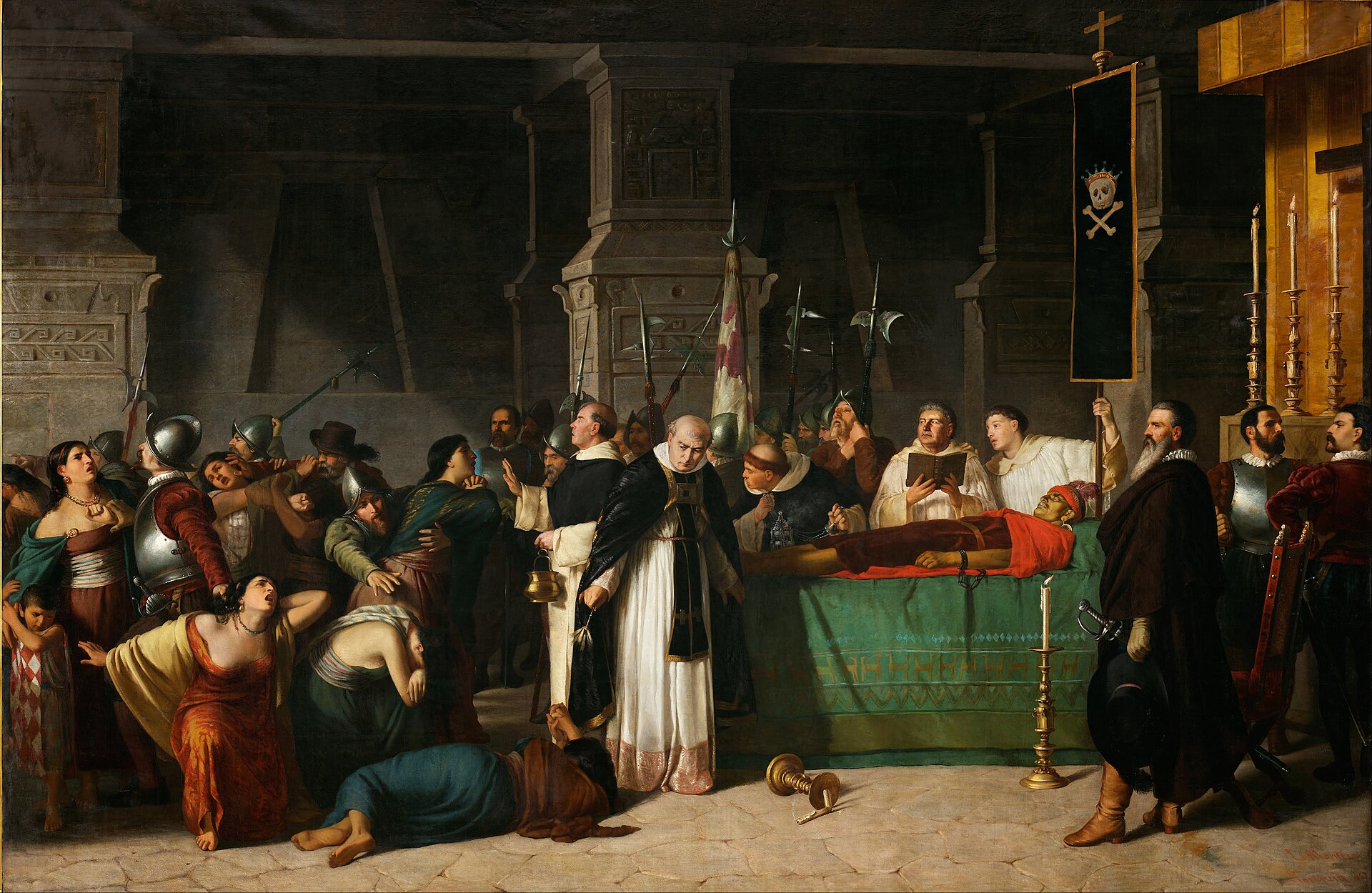 Atahualpa, the last Sapa Inca of the empire, was executed by the Spanish on 29 August 1533. Painting by Luis Montero. 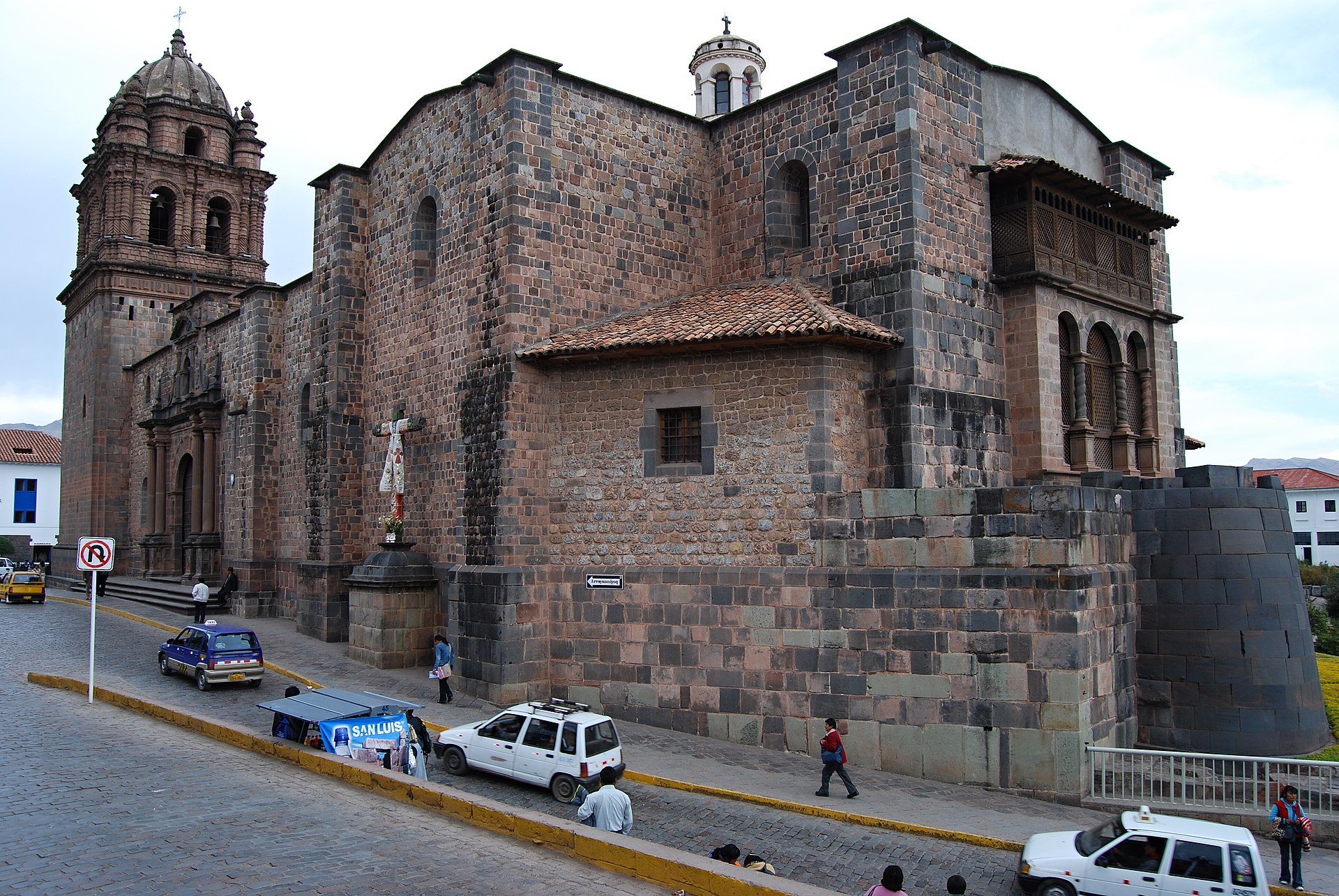 Facade of the Church and Convent of Santo Domingo in Cusco, built on the base of the Coricancha The Spanish installed Atahualpa's brother Manco Inca Yupanqui in power; for some time Manco cooperated with the Spanish while they fought to put down resistance in the north. Meanwhile, an associate of Pizarro, Diego de Almagro, attempted to claim Cusco. Manco tried to use this intra-Spanish feud to his advantage, recapturing Cusco in 1536, but the Spanish retook the city afterwards. Manco Inca then retreated to the mountains of Vilcabamba and established the small Neo-Inca State, where he and his successors ruled for another 36 years, sometimes raiding the Spanish or inciting revolts against them. In 1572 the last Inca stronghold was conquered and the last ruler, Topa Amaru, Manco's son, was captured and executed.[46] This ended resistance to the Spanish conquest under the political authority of the Inca state. After the fall of the Inca Empire many aspects of Inca culture were systematically destroyed, including their sophisticated farming system, known as the vertical archipelago model of agriculture.[47] Spanish colonial officials used the Inca mita corvée labor system for colonial aims, sometimes brutally. One member of each family was forced to work in the gold and silver mines, the foremost of which was the titanic silver mine at Potosí. When a family member died, which would usually happen within a year or two, the family was required to send a replacement.[48] Although smallpox is usually presumed to have spread through the Empire before the arrival of the Spaniards, the devastation is also consistent with other theories.[49] Beginning in Colombia, smallpox spread rapidly before the Spanish invaders first arrived in the empire. The spread was probably aided by the efficient Inca road system. Smallpox was only the first epidemic.[50] Other diseases, including a probable typhus outbreak in 1546, influenza and smallpox together in 1558, smallpox again in 1589, diphtheria in 1614, and measles in 1618, all ravaged the Inca people. There would be periodic attempts by indigenous leaders to expel the Spanish colonists and re-create the Inca Empire until the late 18th century. See Juan Santos Atahualpa and Túpac Amaru II. |
インカ国家(タワンティンスーユ)の終焉 主な記事:新インカ国家とスペイン植民地時代のアメリカ社会 インカ国家の最後のサパ・インカ、アタワルパは1533年8月29日にスペイン人によって処刑された。ルイス・モンテロの絵画。 クスコのサント・ドミンゴ教会と修道院の正面。コリカンチャの跡地に建てられた。 スペイン人はアタワルパの弟マンコ・インカ・ユパンキを権力の座に据えた。マンコはしばらくスペイン人と協力し、彼らが北部の抵抗勢力を鎮圧する戦いを支 援した。その間、ピサロの仲間ディエゴ・デ・アルマグロがクスコの支配権を主張しようとした。マンコはこのスペイン人同士の争いを利用しようと企て、 1536年にクスコを奪還したが、その後スペイン軍が再び都市を奪い返した。マンコ・インカはその後ビルカバンバの山岳地帯に退却し、小規模な新インカ国 家を樹立した。彼とその後継者たちはさらに36年間統治を続け、時にスペイン軍を襲撃したり、彼らに対する反乱を扇動したりした。1572年、最後のイン カ要塞が陥落し、最後の支配者であるマンコの息子トパ・アマルが捕らえられ処刑された[46]。これにより、インカ国家の政治的権威下におけるスペイン征 服への抵抗は終結した。 インカ国家(タワンティンスーユ)滅亡後、高度な農業システム(垂直列島型農業モデルとして知られる)を含むインカ文化の多くの側面が体系的に破壊され た。[47] スペイン植民地当局は、インカのミタ(強制労働制度)を植民地支配の目的で利用し、時に残酷な手段を用いた。各家族から一人を金銀鉱山での労働に強制的に 従事させ、その筆頭がポトシの巨大な銀山であった。家族の一員が死亡した場合(通常1~2年以内に死亡した)、家族は代わりの労働者を送り込むことを義務 づけられた。[48] 天然痘は通常、スペイン人到来以前に帝国全体に広がったと考えられているが、その壊滅的な被害は他の説とも一致する。[49] コロンビアを起点に、天然痘はスペインの侵略者が帝国に初めて到達する前に急速に広がった。その拡散は、おそらく効率的なインカの道路網によって促進され た。天然痘は最初の疫病に過ぎなかった。[50] 1546年の発疹チフス流行、1558年のインフルエンザと天然痘の同時発生、1589年の再発天然痘、1614年のジフテリア、1618年の麻疹など、 他の疾病もインカ人を襲った。 18世紀後半まで、先住民の指導者たちはスペイン人入植者を追放し、インカ国家(タワンティンスーユ)を再建しようとする試みを繰り返し行った。フアン・サントス・アタワルパやトゥパク・アマル2世を参照のこと。 |
| Society Main articles: Inca society and Inca education Population The number of people inhabiting Tawantinsuyu at its peak is uncertain, with estimates ranging from 4–37 million. Most population estimates are in the range of 6 to 14 million. In spite of the fact that the Inca kept excellent census records using their quipus, knowledge of how to read them was lost as almost all fell into disuse and disintegrated over time or were destroyed by the Spaniards.[51] Languages Main article: Quechua languages The empire was linguistically diverse. Some of the most important languages were Quechua, Aymara, Puquina and Mochica, respectively mainly spoken in the Central Andes, the Altiplano (Qullasuyu), the south coast (Kuntisuyu), and the area of the north coast (Chinchaysuyu) around Chan Chan, today Trujillo. Other languages included Quignam, Jaqaru, Leco, Uru-Chipaya languages, Kunza, Humahuaca, Cacán, Mapudungun, Culle, Chachapoya, Catacao languages, Manta, Barbacoan languages, and Cañari–Puruhá as well as numerous Amazonian languages on the frontier regions. The exact linguistic topography of the pre-Columbian and early colonial Andes remains incompletely understood, owing to the extinction of several languages and the loss of historical records. In order to manage this diversity, the Inca lords promoted the usage of Quechua, especially the variety of what is now Lima,[52] as the official language or lingua franca. Defined by mutual intelligibility, Quechua is actually a family of languages rather than one single language, parallel to the Romance or Slavic languages in Europe. Most communities within the empire, even those resistant to Inca rule, learned to speak a variety of Quechua (forming new regional varieties with distinct phonetics) in order to communicate with the Inca lords and mitma colonists, as well as the wider integrating society, but largely retained their native languages as well. The Incas also had their own ethnic language, which is thought to have been closely related to or a dialect of Puquina. There are several common misconceptions about the history of Quechua, as it is frequently identified as the "Inca language". Quechua did not originate with the Incas, had been a lingua franca in multiple areas before the Inca expansions, was diverse before the rise of the Incas, and it was not the native or original language of the Incas. However, the Incas left a linguistic legacy in that they introduced Quechua to many areas where it is still widely spoken today, including Ecuador, southern Bolivia, southern Colombia, and parts of the Amazon basin. The Spanish conquerors continued the official usage of Quechua during the early colonial period and transformed it into a literary language.[53] The Incas were not known to develop a written form of language; however, they visually recorded narratives through paintings on vases and cups (qirus).[54] These paintings are usually accompanied by geometric patterns known as toqapu, which are also found in textiles. Researchers have speculated that toqapu patterns could have served as a form of written communication (e.g. heraldry or glyphs), however, this remains unclear.[55] The Incas also kept records by using quipus. |
社会 主な記事:インカ社会とインカの教育 人口 タワンティンスユウの最盛期における人口は不確かであり、推定値は400万から3700万人の範囲にある。大半の推定値は600万から1400万人の間で ある。インカはキプを用いて優れた人口調査記録を残していたにもかかわらず、その解読法は失われた。ほとんどが時間の経過とともに廃れ崩壊したか、スペイ ン人によって破壊されたためである。[51] 言語 主な記事:ケチュア語族 帝国は言語的に多様であった。最も重要な言語の一部は、ケチュア語、アイマラ語、プキーナ語、モチカ語であり、それぞれ主に中央アンデス、アルティプラノ (クッラスユ)、南海岸(クンティスユ)、そしてチャンチャン(現在のトルヒーリョ)周辺の北海岸地域(チンチャイユ)で話されていた。その他の言語に は、キグナム語、ジャカル語、レコ語、ウル・チパヤ語群、クンザ語、ウマワカ語、カカン語、マプドゥングン語、クル語、チャチャポヤ語、カタカオ語群、マ ンタ語、バルバコアン語群、カニアリ・プルハ語、そして辺境地域に存在する数多くのアマゾン系言語が含まれていた。コロンブス以前および植民地初期のアン デス地域の正確な言語分布図は、いくつかの言語の消滅と歴史的記録の喪失により、未だ完全には解明されていない。 この多様性を管理するため、インカの支配者たちは公用語または共通語としてケチュア語、特に現在のリマ地方の方言[52]の使用を推進した。相互理解可能 性によって定義されるケチュア語は、実際には単一言語ではなく、ヨーロッパのロマンス語やスラヴ語と同様の言語群である。インカ国家(タワンティンスー ユ)内のほとんどの共同体(インカ支配に抵抗した地域も含む)は、インカの領主やミトマ入植者、そしてより広範な統合社会と意思疎通を図るために、様々な ケチュア語方言(独自の音声体系を持つ新たな地域方言を形成)を習得したが、同時に自民族の言語も大きく保持していた。インカ族にも独自の民族言語があ り、これはプキーナ語と密接な関係にあるか、あるいはその方言であったと考えられている。 ケチュア語の歴史については、しばしば「インカの言語」と認識されることから、いくつかの一般的な誤解がある。ケチュア語はインカによって創始されたもの ではなく、インカ拡大以前から複数地域で共通語として機能し、インカ興隆前から多様性を帯びていた。またインカ族の母語や原初言語でもなかった。しかしイ ンカは言語的遺産を残した。すなわちエクアドル、ボリビア南部、コロンビア南部、アマゾン流域の一部など、今日でも広く話される地域にケチュア語を導入し たのである。スペインの征服者たちは植民地初期においてもケチュア語の公用語としての使用を継続し、これを文学言語へと発展させた。[53] インカ帝国が言語の文字体系を発展させたことは知られていない。しかし彼らは壺や杯(キリウス)への絵画を通じて物語を視覚的に記録していた。[54] これらの絵画には通常、トカプと呼ばれる幾何学模様が伴っており、これは織物にも見られる。研究者らはトカプ模様が(紋章や象形文字のような)文字通信の 一形態として機能した可能性を推測しているが、これは依然として不明である[55]。インカはまたキプを用いて記録を保持していた。 |
| Age and defining gender "The Maiden", one of the Llullaillaco mummies. Inca human sacrifice, Salta province (Argentina). The high infant mortality rates that plagued the Inca Empire caused all newborn infants to be given the term wawa when they were born.[citation needed] Most families did not invest very much into their child until they reached the age of two or three years old. Once the child reached the age of three, a "coming of age" ceremony occurred, called the rutuchikuy. For the Incas, this ceremony indicated that the child had entered the stage of "ignorance". During this ceremony, the family would invite all relatives to their house for food and dance, and then each member of the family would receive a lock of hair from the child. After each family member had received a lock, the father would shave the child's head. This stage of life was categorized by a stage of "ignorance, inexperience, and lack of reason, a condition that the child would overcome with time".[56] For Inca society, in order to advance from the stage of ignorance to development the child must learn the roles associated with their gender. The next important ritual was to celebrate the maturity of a child. Unlike the coming of age ceremony, the celebration of maturity signified the child's sexual potency. This celebration of puberty was called warachikuy for boys and qikuchikuy for girls. The warachikuy ceremony included dancing, fasting, tasks to display strength, and family ceremonies. The boy would also be given new clothes and taught how to act as an unmarried man. The qikuchikuy signified the onset of menstruation, upon which the girl would go into the forest alone and return only once the bleeding had ended. In the forest she would fast, and, once returned, the girl would be given a new name, adult clothing, and advice. This "folly" stage of life was the time young adults were allowed to have sex without being a parent.[56] Between the ages of 20 and 30, people were considered young adults, "ripe for serious thought and labor".[56] Young adults were able to retain their youthful status by living at home and assisting in their home community. Young adults only reached full maturity and independence once they had married. At the end of life, the terms for men and women denote loss of sexual vitality and humanity. Specifically, the "decrepitude" stage signifies the loss of mental well-being and further physical decline. |
年齢とジェンダー定義 「乙女」と呼ばれるルライヤコミイラの一体。インカの人身供犠、サルタ州(アルゼンチン)。 インカ国家(タワンティンスーユ)を悩ませた高い乳児死亡率のため、生まれたばかりの赤ん坊は全て「ワワ」と呼ばれた。[出典必要] ほとんどの家族は子供が2、3歳になるまであまり投資しなかった。子供が3歳になると、「成人式」と呼ばれるルトゥチクイが行われた。インカにとってこの 儀式は、子供が「無知」の段階に入ったことを示していた。この儀式では、家族は親戚全員を家に招き、食事と踊りを楽しんだ後、家族一人ひとりが子供から髪 の毛の束を受け取った。全員が受け取ると、父親が子供の頭を剃った。この人生の段階は「無知、未熟、理性の欠如」と分類され、子供が時間と共に克服すべき 状態とされた。[56] インカ社会では、無知の段階から成長へ進むには、子供が自身のジェンダーに伴う役割を学ぶ必要があった。 次に重要な儀礼は、子供の成熟を祝うものであった。成人式とは異なり、成熟の祝いは子供の性的能力の獲得を意味した。この思春期を祝う儀礼は、男子はワラ チクイ、女子はキクチクイと呼ばれた。ワラチクイの儀礼には、踊り、断食、力を示す課題、家族の儀礼が含まれた。少年には新しい衣服が与えられ、未婚の男 性としての振る舞いも教えられた。キクチクイは月経の始まりを意味し、少女は一人で森に入り、出血が終わるまで戻らなかった。森では断食を行い、戻った 後、少女は新しい名前と大人の衣服を与えられ、助言を受けた。この「愚行期」と呼ばれる人生の段階は、若者が親になることなく性行為を許される時期であっ た。[56] 20歳から30歳までは若者として扱われ、「真剣な思考と労働に適した時期」とされた。[56] 若者は実家に住み、地域社会を助けることで若者の地位を維持できた。若者が完全な成熟と自立に達するのは、結婚して初めてであった。 人生の終盤において、男女を表す用語は性的活力と人間性の喪失を意味する。具体的には「衰弱期」は精神的健康の喪失とさらなる身体的衰退を示す。 |
| Table 7.1 from R. Alan Covey's Article[56] Age Social Value of Life Stage Female Term Male Term < 3 Conception Wawa Wawa 3–7 Ignorance (not speaking) Warma Warma 7–14 Development Thaski (or P'asña) Maqt'a 14–20 Folly (sexually active) Sipas (unmarried) Wayna (unmarried) 20+ Maturity (body and mind) Warmi Qhari 70 Infirmity Paya Machu 90 Decrepitude Ruku Ruku Louis Baudin present in his book Daily Life in Peru Under the Last Incas another classification based on the ability to work for each age: The division by age in the Inca empire from the book Daily Life in Peru Under the Last Incas page 103-104[57] Age Definition 0–1 years The baby in its cradle 1–5 years The child who plays 5–9 years The child who walks 9–12 years The child who chases birds from the maize fields 12–18 years The llama shepherd and the manual apprentice 18–25 years The man who aids his parents in all kinds of work 25–50 The adult tributary 50–60 The old man still able to do some work 60+ The sleepy old man only able to give advice The category of "The sleepy old man only able to give advice" included also men non capable to work.[57] |
表7.1 R. アラン・コーヴィーの論文[56]より 年齢 ライフステージの社会的価値 女性の期間 男性の期間 3歳未満 受胎期 ワワ ワワ 3~7歳 無知期(言語未発達) ワルマ ワルマ 7~14歳 発達期 タスキ(またはパシュニャ) マクタ 14~20歳 愚行期(性的に活発) シパス(未婚) ワイナ(未婚) 20歳以上 成熟期 (身体と精神) ワルミ カリ 70 衰弱期 パヤ マチュ 90 老衰期 ルク ルク ルイ・ボーダンは著書『最後のインカ国家(タワンティンスーユ)のペルーにおける日常生活』で、各年齢層の労働能力に基づく別の分類を提示している: 『最後のインカ国家(タワンティンスーユ)のペルーにおける日常生活』103-104ページより、インカ国家(タワンティンスーユ)における年齢区分 [57] 年齢 定義 0~1歳 揺りかごの中の赤子 1~5歳 遊ぶ子供 5~9歳 歩く子供 9~12歳 トウモロコシ畑から鳥を追い払う子供 12~18歳 ラマの牧童と徒弟 18~25歳 あらゆる仕事で親を助ける男 25~50歳 貢ぎ物を納める成人 50~60歳 まだ多少の仕事ができる老人 60歳以上 助言しかできない眠たげな老人 「助言しかできない眠たげな老人」の区分には、働けない男性も含まれていた。[57] |
| Marriage In the Inca Empire, the age of marriage differed for men and women: men typically married at the age of 20, while women usually got married about four years earlier at the age of 16.[58] Men who were highly ranked in society could have multiple wives, but those lower in the ranks could only take a single wife.[59] Marriages were typically within classes and resembled a more business-like agreement. Once married, the women were expected to cook, collect food and watch over the children and livestock.[58] Girls and mothers would also work around the house to keep it orderly to please the public inspectors.[60] These duties remained the same even after wives became pregnant and with the added responsibility of praying and making offerings to Kanopa, who was the god of pregnancy.[58] It was typical for marriages to begin on a trial basis with both men and women having a say in the longevity of the marriage. If the man felt that it would not work out or if the woman wanted to return to her parents' home the marriage would end. Once the marriage was final, the only way the two could be divorced was if they did not have a child together.[58] Marriage within the Empire was crucial for survival. A family was considered disadvantaged if there was not a married couple at the center because everyday life centered around the balance of male and female tasks.[61] |
結婚 インカ国家(タワンティンスーユ)では、男女で結婚年齢が異なる。男性は通常20歳で結婚し、女性はそれより約4年早い16歳で結婚するのが一般的だった [58]。社会的に高い地位にある男性は複数の妻を持つことができたが、地位の低い者は一人の妻しか娶れなかった[59]。結婚は通常、階級内で結ばれ、 よりビジネス的な契約に似ていた。結婚後、女性は料理や食料調達、子供や家畜の世話をするのが当然とされた。[58] 少女や母親はまた、公的な検査官を喜ばせるために家を整然と保つため、家の中で働いた。[60] これらの義務は、妻が妊娠した後も変わらず、妊娠の神カノパへの祈りと供物を捧げる責任が追加された。[58] 結婚は通常、試用期間から始まり、男女双方に婚姻継続の決定権があった。男性が継続不可能と判断した場合、あるいは女性が実家に戻りたいと望んだ場合、婚 姻は解消された。正式な婚姻が成立した後、離婚が認められる唯一の条件は、二人の間に子供が生まれない場合であった。[58] 帝国内での婚姻は生存に不可欠であった。日常生活は男女の役割分担を中心に回っていたため、夫婦を中核としない家族は不利と見なされた。[61] |
Gender roles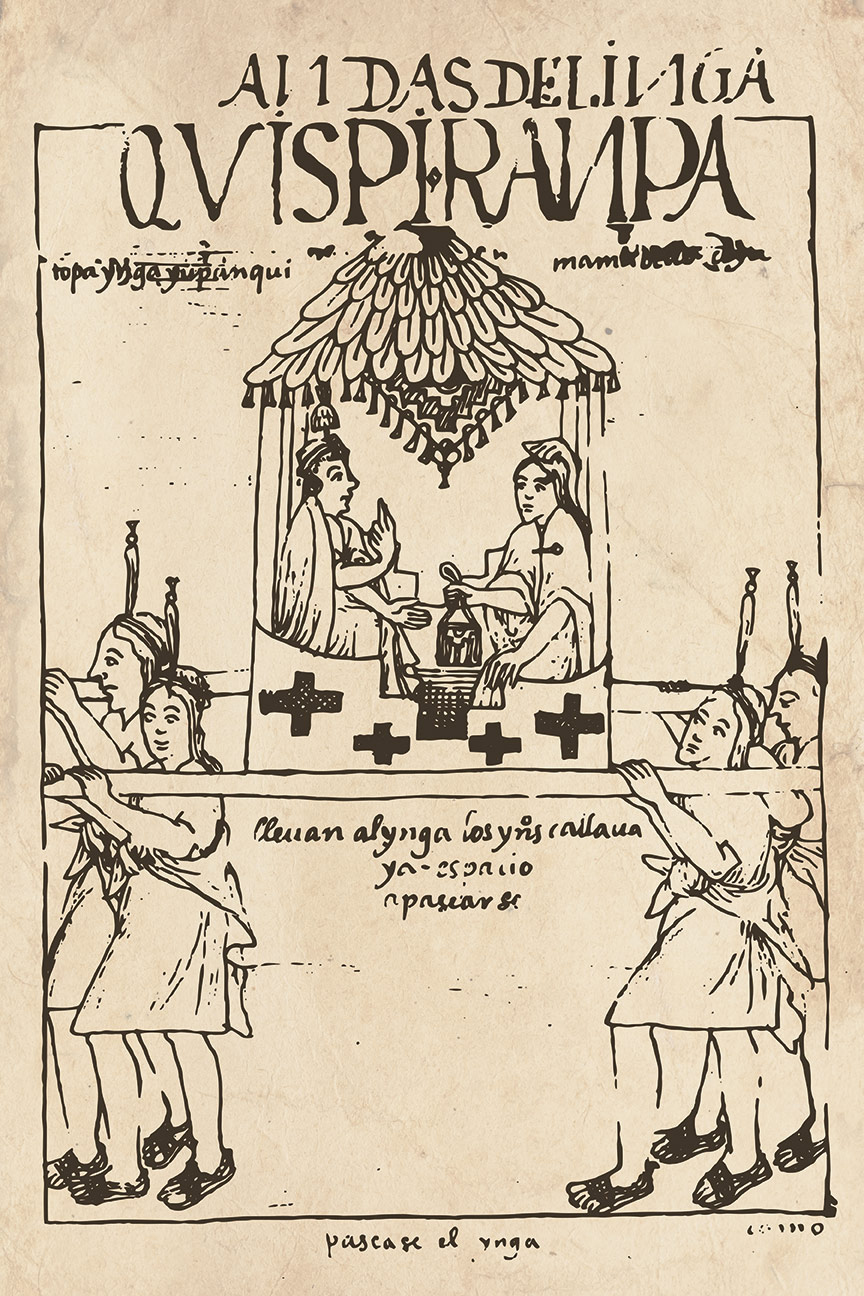 The Inka and his wife, the Quya, traveling the Qhapaq Ñan. According to some historians, such as Terence N. D'Altroy, male and female roles were considered equal in Inca society. The "indigenous cultures saw the two genders as complementary parts of a whole".[61] In other words, there was not a hierarchical structure in the domestic sphere for the Incas. Within the domestic sphere, women came to be known as weavers, although there is significant evidence to suggest that this gender role did not appear until colonizing Spaniards realized women's productive talents in this sphere and used it to their economic advantage. There is evidence to suggest that both men and women contributed equally to the weaving tasks in pre-Hispanic Andean culture.[62] Women's everyday tasks included: spinning, watching the children, weaving cloth, cooking, brewing chichi, preparing fields for cultivation, planting seeds, bearing children, harvesting, weeding, hoeing, herding, and carrying water.[63] Men on the other hand, "weeded, plowed, participated in combat, helped in the harvest, carried firewood, built houses, herded llama and alpaca, and spun and wove when necessary".[63] This relationship between the genders may have been complementary. Onlooking Spaniards believed women were treated like slaves, because women did not work in Spanish society to the same extent, and certainly did not work in fields.[64] Women were sometimes allowed to own land and herds because inheritance was passed down from both the mother's and father's side of the family.[65] Kinship within the Inca society followed a parallel line of descent. In other words, women descended from women and men descended from men. Due to the parallel descent, a woman had access to land and other assets through her mother.[63] |
ジェンダー役割 インカと妻のクヤが、カパック・ニャンを旅している。 テレンス・N・ダルトロイら一部の歴史家によれば、インカ社会では男女の役割は対等と見なされていた。「先住民文化は両性を全体を構成する補完的な部分と 見なしていた」[61]。つまり、インカ社会には家庭内における階層構造は存在しなかった。家庭内では女性は織工として知られるようになったが、このジェ ンダー役割が確立したのは、植民地化したスペイン人が女性の生産的才能に気づき、経済的利益のために利用し始めてからのことだと示す有力な証拠がある。先 スペイン支配期のアンデス文化では、男女が織物作業に等しく貢献していた証拠がある[62]。女性の日常業務には、紡績、子守、織物、調理、チチ醸造、耕 作地の準備、種まき、出産、収穫、除草、鍬入れ、群畜の世話、水運びが含まれた。[63] 一方、男性は「草むしり、耕作、戦闘への参加、収穫の補助、薪運び、家屋建設、ラマやアルパカの群畜、必要に応じた紡績と織物」を行った[63]。この ジェンダー間の関係は補完的なものだった可能性がある。傍観したスペイン人は、スペイン社会では女性が同程度に労働せず、特に畑仕事に従事しなかったこと から、女性が奴隷のように扱われていると信じた。[64] 相続が母系と父系の両方から受け継がれたため、女性は土地や群畜の所有を許されることもあった。[65] インカ社会における親族関係は平行的な血統を辿った。つまり、女性は女性から、男性は男性から継承されたのである。この平行的な継承により、女性は母を通 じて土地やその他の資産にアクセスできた。[63] |
| Education Main article: Inca education 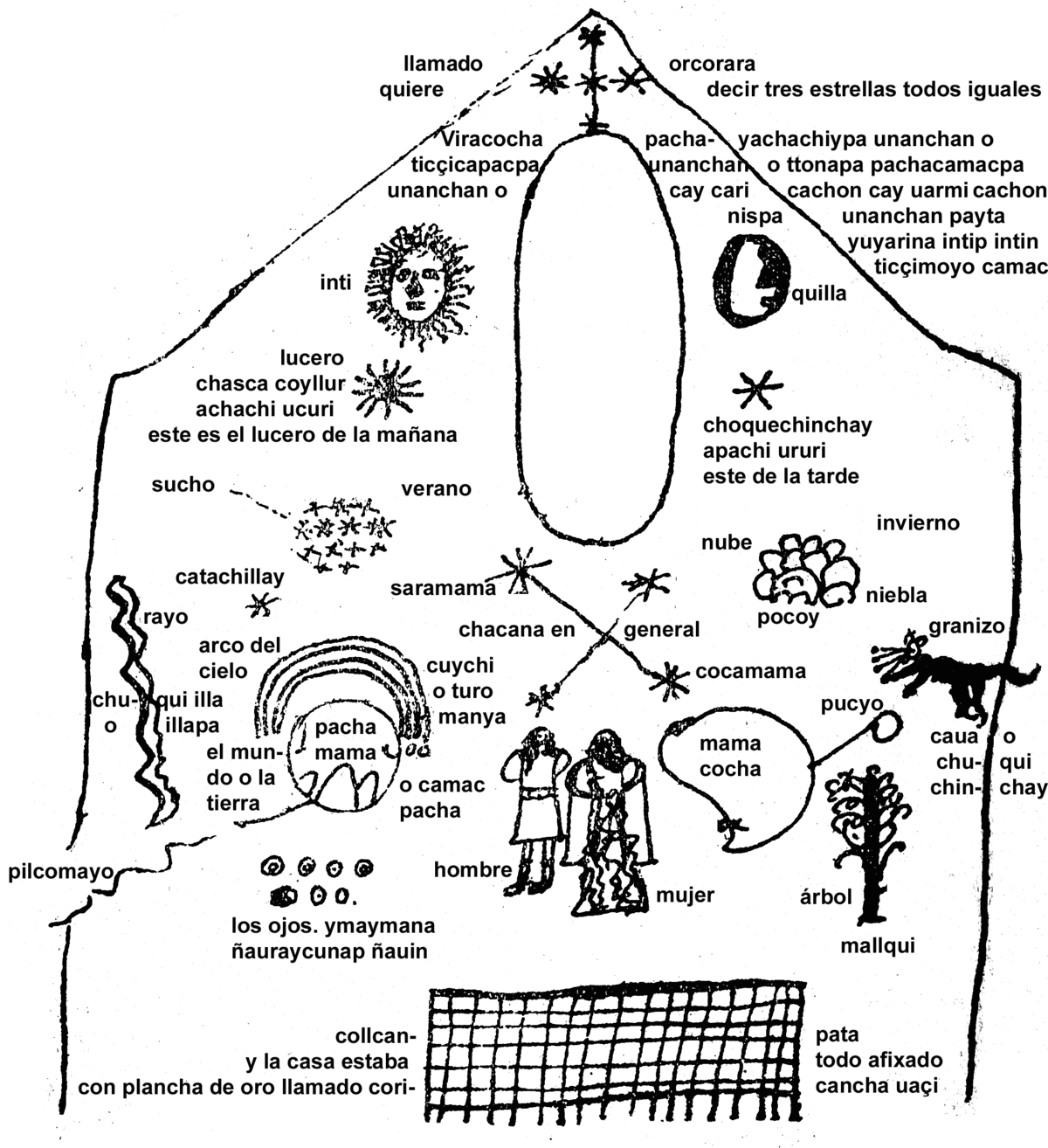 Representation of the Inca worldview Access to formal education in Incan society was limited to children of the central nobility and certain levels of the curacal (hatun curaca). They attended the yachaywasi (house of knowledge) in Cusco to learn from the amautas (wises) and the haravicus (poets). They learned languages, accounting, astronomy, about wars and political application strategies. The non-formalized education for the hatun runas was given in daily life, in practice; it was also given in the assemblies of the ayllu or camachico, where they were taught the three moral and legal principles: ama quella (don't be lazy), ama sua (don't steal) and ama llulla (don't lie).[66] |
教育 主な記事: インカの教育 インカの世界観の表現 インカ社会における正式な教育へのアクセスは、中央貴族の子女と特定のレベルのクラーカ(ハトゥン・クラーカ)に限定されていた。彼らはクスコのヤチャイ ワシ(知識の家)に通い、アマウタス(賢者)とハラヴィクス(詩人)から学んだ。彼らは言語、会計、天文学、戦争や政治的応用戦略について学んだ。ハトゥ ン・ルナ(女性貴族)に対する非公式な教育は日常生活の中で実践的に行われ、またアイユ(村落共同体)やカマチコ(集落)の集会で、三つの道徳的・法的原 則「アマ・ケラ(怠けるな)」「アマ・スア(盗むな)」「アマ・ルジャ(嘘をつくな)」が教えられた。[66] |
| Burial customs Due to the dry climate that extends from modern-day Peru to what is now Chile's Norte Grande, mummification occurred naturally by desiccation. It is believed that the ancient Incas learned to mummify their dead to show reverence to their leaders and representatives.[67] Mummification was chosen to preserve the body and to give others the opportunity to worship them in their death. The ancient Inca believed in reincarnation, so preservation of the body was vital for passage into the afterlife.[68] Since mummification was reserved for royalty, this entailed preserving power by placing the deceased's valuables with the body in places of honor. The bodies remained accessible for ceremonies where they would be removed and celebrated with.[69] The ancient Inca mummified their dead with various tools. Chicha corn beer was used to delay decomposition and the effects of bacterial activity on the body. The bodies were then stuffed with natural materials such as vegetable matter and animal hair. Sticks were used to maintain their shape and poses.[70] In addition to the mummification process, the Inca would bury their dead in the fetal position inside a vessel intended to mimic the womb for preparation of their new birth. A ceremony would be held that included music, food, and drink for the relatives and loved ones of the deceased.[71] Duality The basic organizational principle of Inca society was duality or yanantin, which was based on kinship relationships. The ayllus were divided into two parts that could be Hanan or Hurin, Alaasa or Massaa, Uma or Urco, Allauca or Ichoc; according to Franklin Pease, these terms were understood as "high or low," "right or left," "male or female," "inside or outside," "near or far," and "front or back."[15] Though the specific functions of each part are unclear, it is documented that one leader was subordinate to the other, with María Rostworowski noting that in Cuzco, the upper half was more important, while in Ica, the lower half held more significance.[72] Pease also points out that both halves were integrated through reciprocity. In Cuzco, "Hanan" and "Hurin" were opposites yet complementary, like human hands in the yanantin.[15] |
埋葬の習慣 現代のペルーから現在のチリ北部(ノルテ・グランデ)にかけて広がる乾燥気候のため、自然乾燥によるミイラ化が起きた。古代インカ人は指導者や代表者への 敬意を示すため、死者をミイラ化する術を学んだと考えられている[67]。ミイラ化は遺体を保存し、死後も人々が崇拝する機会を与えるために選ばれた。古 代インカは輪廻転生を信じていたため、死後の世界へ渡るには遺体の保存が不可欠であった[68]。ミイラ化は王族にのみ許された行為であったため、死者の 貴重品を遺体と共に名誉ある場所に安置することで権力の維持を図った。遺体は儀式の際に取り出され、称えられるために常にアクセス可能な状態に保たれた [69]。古代インカは様々な道具を用いて死者をミイラ化した。チチャ(トウモロコシのビール)は、遺体の腐敗や細菌活動の影響を遅らせるために使われ た。その後、遺体は植物性物質や動物の毛などの天然素材で詰められた。棒を使って遺体の形状や姿勢を維持した[70]。ミイラ化プロセスに加え、インカ人 は新たな誕生に備え、子宮を模した容器の中に胎児の姿勢で死者を埋葬した。そして、故人の親族や愛する者たちのために、音楽や食べ物、飲み物を含む儀式が 行われたのだ。[71] 二元性 インカ社会の基本的な組織原理は、二元性、すなわちヤナンティンであった。これは親族関係に基づいていた。アイユは、ハナンまたはフルイン、アラサまたは マッサ、ウマまたはウルコ、アラウカまたはイチョックという 2 つの部分に分かれていた。フランクリン・ピースによれば、これらの用語は「高いまたは低い」、「右または左」、「男性または女性」、「内側または外側」、 「近いまたは遠い」、「前または後ろ」と理解されていた。[15] それぞれの部分の具体的な機能は不明だが、一方の指導者が他方の指導者に従属していたことが記録されている。マリア・ロストウォロウスキーは、クスコでは 上半分がより重要であり、イカでは下半分がより重要であったと指摘している。[72] ピースはまた、両半分は相互関係によって統合されていたと指摘している。クスコでは「ハナン」と「ウリン」は対立しつつも補完し合う関係にあり、ヤナン ティンの人間の手のように互いに依存していた。[15] |
| Religion Main articles: Religion in the Inca Empire and Inca mythology 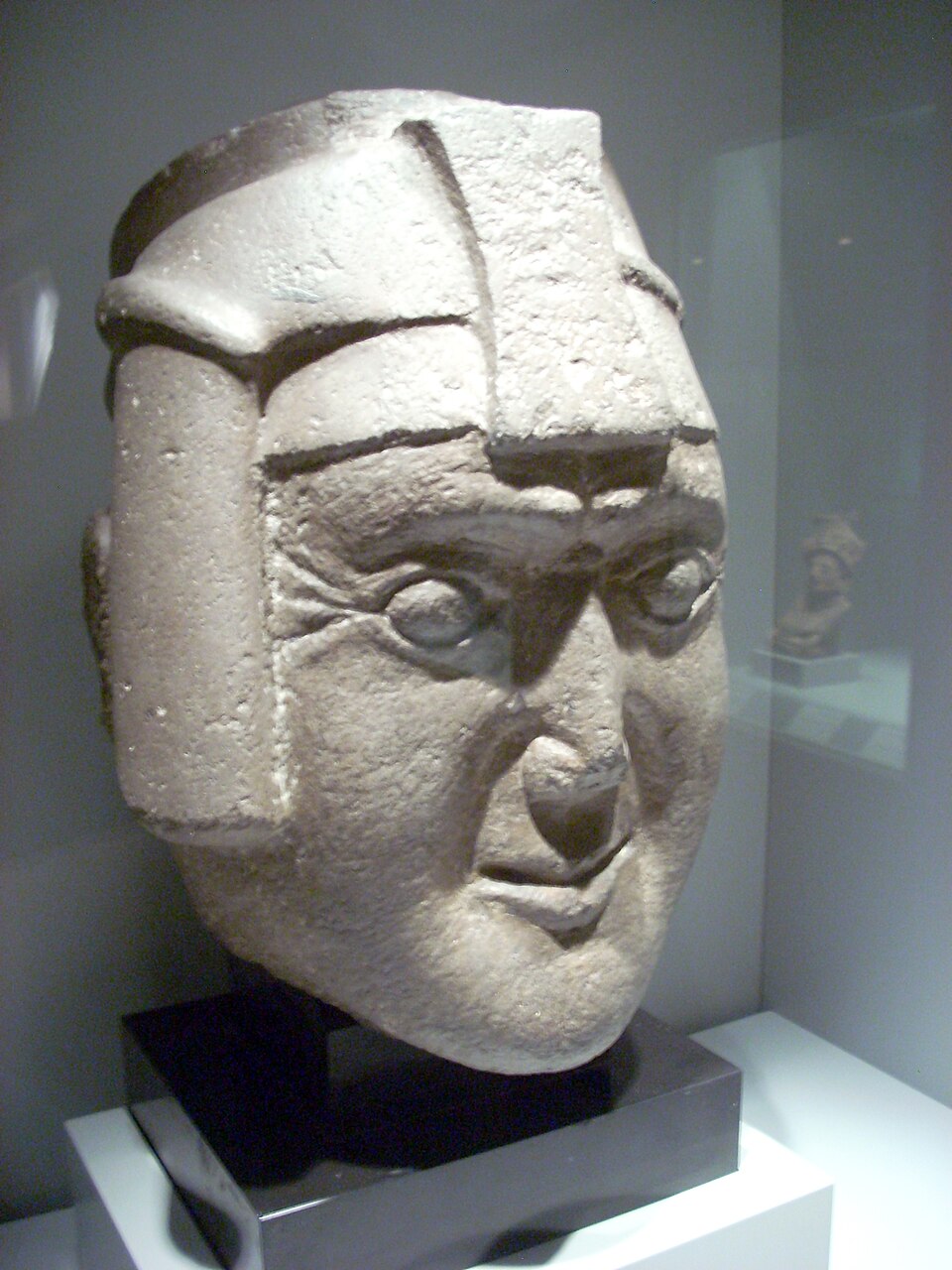 Diorite Viracocha Inca sculpture from Amarucancha archeological site, Cusco Inca myths were transmitted orally until early Spanish colonists recorded them; however, some scholars claim that they were recorded on quipus, Andean knotted string records.[73] The Inca believed in reincarnation.[74][better source needed] After death, the passage to the next world was fraught with difficulties. The spirit of the dead, camaquen, would need to follow a long road and during the trip the assistance of a black dog that could see in the dark was required. Most Incas imagined the after world to be like an earthly paradise with flower-covered fields and snow-capped mountains. It was important to the Inca that they not die as a result of burning or that the body of the deceased not be incinerated. Burning would cause their vital force to disappear and threaten their passage to the after world. The Inca nobility practiced cranial deformation.[75] They wrapped tight cloth straps around the heads of newborns to shape their soft skulls into a more conical form, thus distinguishing the nobility from other social classes. The Incas made human sacrifices. As many as 4,000 servants, court officials, favorites and concubines were killed upon the death of the Inca Huayna Capac in 1527.[76] The Incas performed child sacrifices around important events, such as the death of the Sapa Inca or during a famine[77]. These sacrifices were known as capacocha or qhapaq hucha.[78] The Incas were polytheists who worshipped many gods. These included: Viracocha (Wiraqucha) (also Pachacamac or Pacha Kamaq) – Created all living things Apu Illapu – Rain god, prayed to when they need rain Ayar Cachi – Hot-tempered god, causes earthquakes Illapa – Goddess of lightning and thunder (also Yakumama, goddess of water) Inti – Sun god and patron deity of the holy city of Cusco (home of the sun) Kuychi – Rainbow god, connected with fertility Mama Killa – Means "Mother Moon", wife of Inti Mama Ocllo (Mama Uqllu) – Created wisdom to civilize the people, taught women to weave cloth and build houses Manco Capac (Manqu Qhapaq) – Known for his courage and sent to Earth to become first king of the Incas. Taught people how to grow plants, make weapons, work together, share resources and worship the other gods Pachamama – Goddess of earth and wife of Viracocha. People give her offerings of coca leaves and beer and pray to her for major agricultural occasions Quchamama – meaning "lake mother", represents the goddess of the sea Sachamama – meaning "tree mother", represented as a snake with two heads Yakumama – meaning "water mother", represented as a snake, transformed into a great river (also Illapa) when she came to Earth. According to Inca mythology, there were three different worlds created by Viracocha:[79] Hanan Pacha (upper world, celestial or supraterrestrial): Reserved for the righteous, it was inhabited by gods and accessible only through a bridge of hair. It was symbolized by the condor Kay Pacha (world of the present and here): The earthly world where humans live, represented by the puma. Uku Pacha (world below or world of the dead): Involving the dead and everything below the earth's surface, it was ruled by Supay and symbolized by the serpent. |
宗教 主な記事:インカ国家(タワンティンスーユ)の宗教とインカ神話 クスコのアマルカンチャ遺跡出土の閃緑岩製ビラコチャ・インカ像 インカの神話はスペイン人入植者が記録するまで口承で伝えられた。ただし一部の学者は、アンデスの結び紐記録であるキプに記録されていたと主張している[73]。 インカは輪廻転生を信じていた[74][より良い出典が必要]。死後、次の世界への道程は困難に満ちていた。死者の霊であるカマケンは長い道を辿る必要が あり、その旅路では暗闇でも見える黒い犬の助けが不可欠だった。多くのインカ人は来世を、花に覆われた野原や雪を冠した山々がある地上の楽園のような場所 と想像していた。 インカにとって、焼死したり遺体を火葬したりしないことが重要だった。焼かれると生命力が失われ、来世への移行が妨げられるとされた。インカの貴族階級は 頭蓋変形を実践した[75]。新生児の柔らかい頭蓋骨を円錐形に整えるため、布の帯を強く巻き付け、貴族階級を他の階層と区別したのである。 インカは人身供犠を行った。1527年にインカ王ワイナ・カパックが死去した際には、4,000人もの家臣、宮廷官吏、寵臣、側室が殺害された[76]。 インカはサパ・インカの死や飢饉といった重大な出来事の際に子供を供犠した[77]。これらの供犠はカパコチャまたはカパック・ウチャと呼ばれた。 [78] インカは多神教徒であり、多くの神々を崇拝した。その中には以下が含まれる: ビラコチャ(ウィラクチャ)(別名パチャカマクまたはパチャ・カマク) – あらゆる生き物を創造した アプ・イラプ – 雨の神。雨が必要な時に祈られた アヤル・カチ – 短気な神。地震を引き起こす イラパ – 稲妻と雷の女神(ヤクママ、水の女神とも呼ばれる) インティ – 太陽神、聖都クスコ(太陽の住処)の守護神 クイチ – 虹の神、豊穣と結びつく ママ・キッラ – 「月の母」を意味し、インティの妻 ママ・オクジョ (ママ・ウクル)- 人間を文明化するための知恵を創り出し、女性に布を織り家を作る術を教えた。 マンコ・カパック(マンク・カパック)- 勇気で知られ、インカの初代王となるため地上に遣わされた。人々に作物の栽培法、武器の作り方、協力の仕方、資源の共有、他の神々の崇拝を教えた。 パチャママ- 大地の女神で、ビラコチャの妻。人々はコカの葉やビールを捧げ、主要な農業行事の際に彼女に祈りを捧げる クチャママ – 「湖の母」を意味し、海の女神を表す サチャママ – 「木の母」を意味し、二つの頭を持つ蛇として表される ヤクママ – 「水の母」を意味し、蛇として表される。地上に来た際には大河(イッラパとも呼ばれる)へと変身した。 インカの神話によれば、ビラコチャによって三つの異なる世界が創造された:[79] ハナン・パチャ(上界、天界または超地界):正義の人々のために用意された世界。神々が住み、髪の毛の橋を通ってのみ到達可能。コンドルが象徴。 カイ・パチャ(現世、この世):人間が住む地上世界。ピューマが象徴。 ウク・パチャ(下界/死者の世界):死者や地表下の全てを包含し、スパイが支配し、蛇によって象徴された。 |
| Economy Main articles: Economy of the Inca Empire, Inca agriculture, Vertical archipelago, Mit'a, and Qullqa 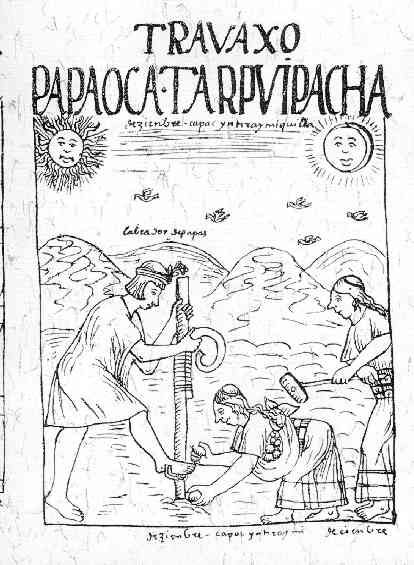 Illustration of Inca farmers using a chaki taklla (Andean foot plough) in El primer nueva corónica y buen gobierno (ca. 1615) by Felipe Guaman Poma de Ayala. The Inca Empire employed central planning. Coastal chiefdoms within the Inca Empire punctually traded with outside regions, although they did not operate a substantial internal market economy. While axe-monies were used along the northern coast, where the custom of reciprocity was not in place,[80] presumably by the provincial mindaláe trading class,[81] most households in the empire lived in a traditional economy in which households were required to pay tributes, usually in the form of the mit’a corvée labor, and military obligations,[82] though barter (or trueque) was present in some areas.[83] In return, the state provided security, food in times of hardship through the supply of emergency resources, agricultural projects (e.g. aqueducts and terraces) to increase productivity and occasional feasts hosted by Inca officials for their subjects. While mit’a was used by the state to obtain labor, individual villages had a pre-Inca system of communal work known as mink'a. This system survives to the modern day, known as mink'a or faena. The economy rested on the material foundations of the vertical archipelago, a system of ecological complementarity in accessing resources[84] and the cultural foundation of ayni, or reciprocal exchange.[85][86] Agriculture 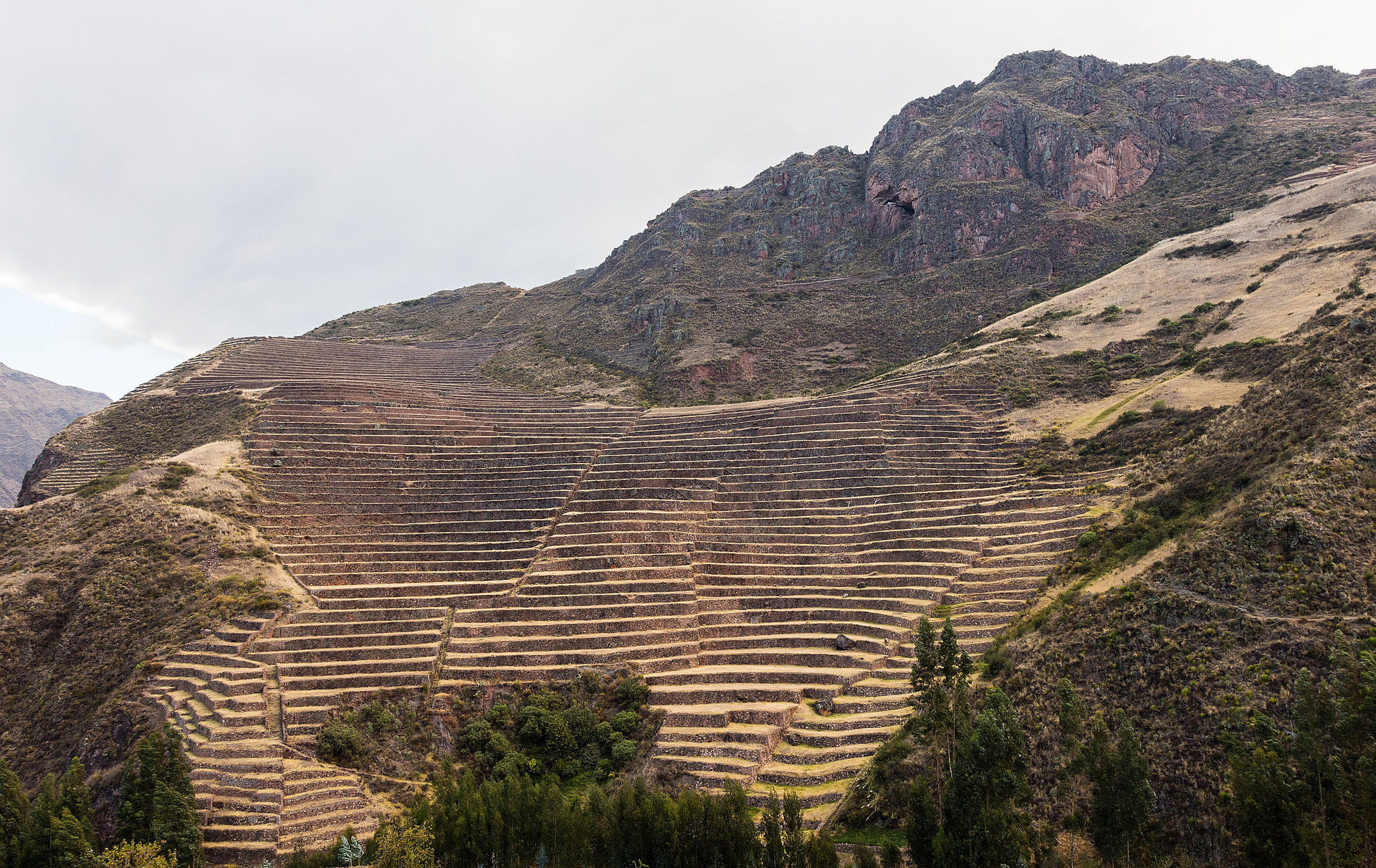 Andenes in the Sacred Valley of the Incas, near Pisac, Cuzco. It was the main economic activity in the Tawantinsuyu, followed by livestock raising. It was a mixed economy with agrarian technology based on ancestral knowledge such as the andenes (terraces), wachaque (sunken fields), waru waru (raised fields), qucha (artificial lakes); and the improvement of cultivation tools, like the chaquitaclla and the raucana.[87] The potato was the staple food with over 200 species and 5000 different varieties while corn and coca were considered sacred plants.[88] They also built agrobiological experimentation centers such as Moray (Cuzco), Castrovirreyna (Huancavelica) and Carania (Yauyos), through circular terraces where the products of the entire empire were reproduced.[87] Animal husbandry Main article: Inca animal husbandry 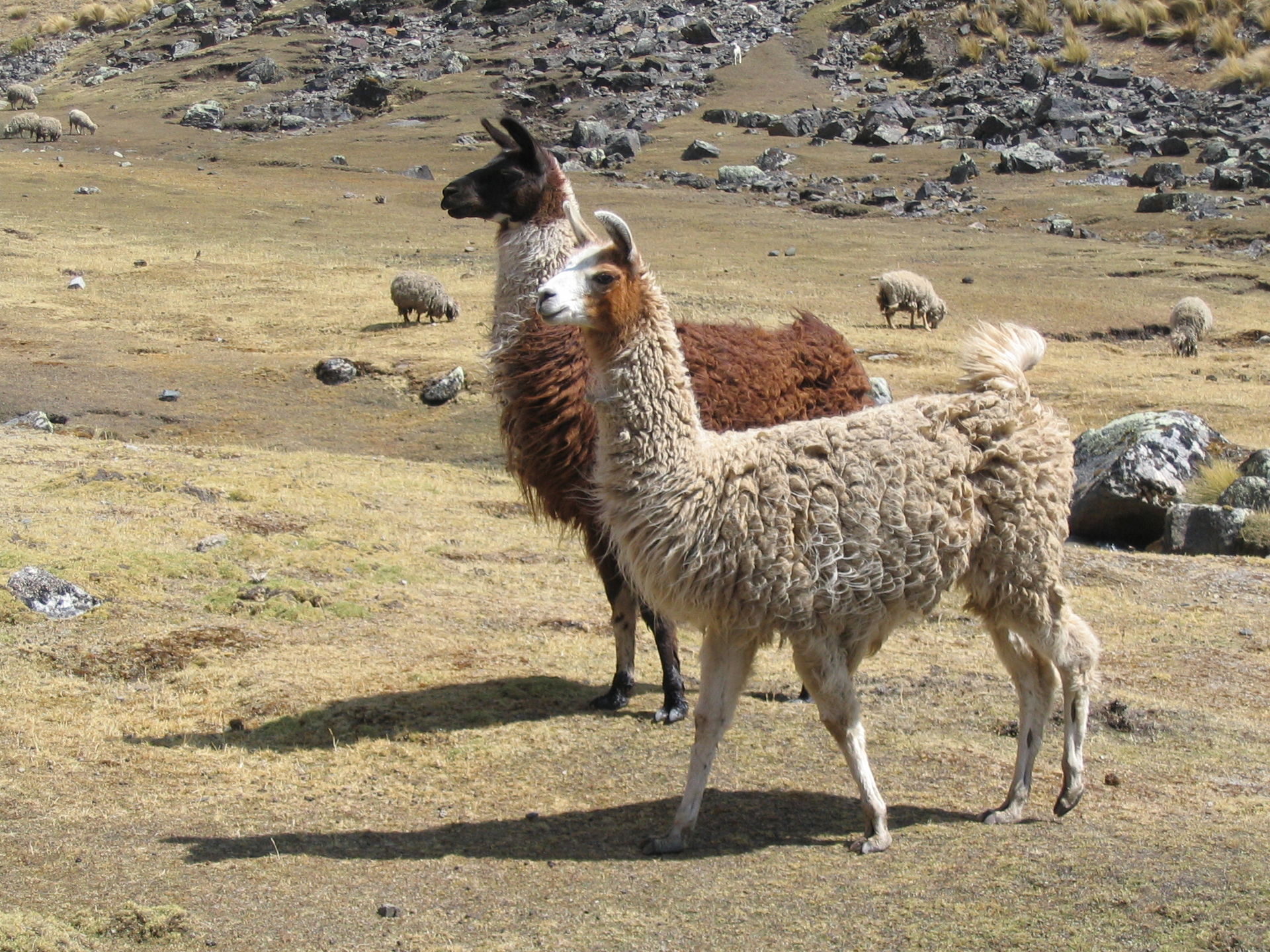 Camelids were a vital resource in Tahuantinsuyo. The Inca state ensured a supply of both meat and fiber from these animals. In pre-Hispanic Andes, camelids played a crucial role in the economy. The domesticated species, llama and alpaca, were raised in large herds and used for various purposes within the Inca production system.[89] Additionally, two wild camelid species, vicuña and guanaco, were also utilized. Vicuñas were hunted through collective drives (chacos), sheared with tools like stones, knives, and metal axes, and then released to maintain their population. Guanacos were hunted for their highly valued meat. Chronicles indicate that all camelid meat was consumed, but due to restrictions on slaughter, its consumption was likely considered a luxury. Fresh meat was probably accessible mainly to the military or during ceremonial occasions involving widespread distribution of sacrificed animals. During the colonial period, pastures diminished or degraded due to the massive presence of introduced Spanish animals and their feeding habits, significantly altering the Andean environment.[90] |
経済 主な記事: インカ国家(タワンティンスーユ)の経済、インカの農業、垂直的な群島、ミタ、クルカ フェリペ・グアマン・ポマ・デ・アヤラ著『エル・プリメル・ヌエバ・コロニカ・イ・ブエン・ゴベルノ』(1615年頃)に描かれた、チャキ・タクラ(アンデス式足耕具)を使うインカの農民の図。 インカ国家(タワンティンスーユ)は中央計画経済を採用していた。帝国内の沿岸部首長国は外部地域と定期的に交易を行っていたが、実質的な内部市場経済は 機能していなかった。北岸地域では、相互扶助の慣習が確立されていなかったため、斧貨幣が使用されていた[80]。おそらく地方のミンダラエ商人階級によ るものだろう[81]。しかし帝国の大半の家計は伝統的経済下で生活しており、家計は貢納(通常はミタの労役という形)と軍事義務を課されていた [82]。ただし一部地域では物々交換(トゥルケ)も存在した。[83] これに対し国家は、治安の維持、困難時の緊急資源供給による食糧保障、生産性向上のための農業プロジェクト(水道橋や段々畑など)、インカ官吏による臣民 への時折の饗宴を提供した。ミタは国家が労働力を得るために用いたが、個々の村落にはミンカと呼ばれるインカ以前の共同労働制度が存在した。この制度は現 代にもミンカまたはファエナとして存続している。経済は、資源へのアクセスにおける生態学的補完性システムである「垂直的な群島」という物質的基盤 [84]と、相互交換(アイニ)という文化的基盤[85][86]に支えられていた。 農業 クスコ、ピサック近郊のインカの聖なる谷にあるアンデネス。 タワンティンスユウにおける主要な経済活動は農業であり、畜産が続いた。これは混合経済であり、アンデネス(段々畑)、ワチャケ(窪地耕作)、ワル・ワル (盛り土耕作)、クチャ(人工湖)といった先祖伝来の知識に基づく農耕技術と、チャキタクラやラウカナといった耕作道具の改良が基盤となっていた。 [87] ジャガイモは主食であり、200種以上、5000異なる品種が存在した。トウモロコシとコカは神聖な植物とされた。[88] 彼らはまた、モライ(クスコ)、カストロビレイナ(ワンカベリカ)、カラニア(ヤウヨス)といった農業生物学実験センターを建設した。円形段々畑を通じて、帝国全体の産物が再現されていたのである。[87] 畜産 詳細記事: インカの畜産 ラクダ科動物はタワンティンスウヨにおいて重要な資源であった。インカ国家はこれらの動物から肉と繊維の両方の供給を確保した。 先コロンブス期のアンデスでは、ラクダ科動物が経済において重要な役割を果たしていた。家畜化されたラマとアルパカは、大規模な群畜で飼育され、インカの 生産システム内で様々な目的に利用された。[89] さらに、ビクーニャとグアナコという二種の野生ラクダ科動物も利用された。ビクーニャは集団追い込み(チャコス)で狩猟され、石やナイフ、金属斧などの道 具で毛を刈り取られた後、個体数を維持するために解放された。グアナコは高価な肉のために狩られた。年代記によれば、ラクダ科の肉は全て消費されたが、屠 殺の制限から、その消費はおそらく贅沢品と見なされていた。生肉は主に軍隊や、犠牲動物を広く分配する儀式の際に入手可能だったと思われる。植民地時代に は、スペインから導入された家畜の大量存在とその食性により牧草地が減少し劣化したため、アンデス環境は大きく変化した。[90] |
| overnment Main article: Government of the Inca Empire Beliefs  Inti, as represented by José Bernardo de Tagle of Peru The Sapa Inca, the head of upper Cusco,[91] was conceptualized as divine and was effectively head of the state religion. The Willaq Umu (or Chief Priest), the head of lower Cusco,[91] was second to the emperor. Local religious traditions continued and in some cases such as the Oracle at Pachacamac on the coast, were officially venerated. Following Pachacuti, the Sapa Inca claimed descent from Inti, who placed a high value on imperial blood; by the end of the empire, it was common to incestuously wed brother and sister. He was "son of the sun", and his people the Intip churin, or "children of the sun", and both his right to rule and mission to conquer derived from his holy ancestor.[citation needed] The Sapa Inca also presided over ideologically important festivals, notably during the Inti Raymi or "Sun festival" attended by soldiers, mummified rulers, nobles, clerics and the general population of Cusco beginning on the June solstice and culminating nine days later with the ritual breaking of the earth using a foot plow by the Inca. Moreover, Cusco was considered cosmologically central, loaded as it was with huacas and radiating ceque lines as the geographic center of the Four-Quarters; Inca Garcilaso de la Vega called it "the navel of the universe".[92][93][94][95] Sapa Inca's primary wife was called Coya/Quya and she was considered female equivalent of her husband in the ceromonial-religious matters, being "very important female component of power apparatus", with cults of female deities, particularly goddess of Moon, being subjected to her, just as cults of male deities were subjected to the King.[96] Most historians assume that Sapa Incas of two dynasties (Hurin and Hanan) ruled linearly, though there are also suggestion the aforementioned two royal lines might have ruled jointly as diarchy, in accordance with Andean customs where two rulers with complementary prerogatives often hold the same office.[97] Nevertheless, at the time of Spanish conquest it was rulers from Hanan dynasty who appeared to hold key authority.[98] Organization of the empire The Inca Empire was a decentralized government consisting of a central government with the Inca at its head and four regional quarters, or suyu: Chinchay suyu (NW) Anti suyu (NE) Kunti suyu (SW) Qulla suyu (SE) The four corners of these quarters met at the center, Cuzco. These suyu were likely created around 1460 during the reign of Pachacuti before the empire reached its largest territorial extent. At the time the suyu were established they were roughly of equal size and only later changed their proportions as the empire expanded north and south along the Andes.[99] Cuzco was likely not organized as a wamani or province. Rather, it was probably somewhat akin to a modern federal district, like Washington, DC or Mexico City. The city sat at the center of the four suyu and served as the preeminent center of politics and religion. While Cusco was essentially governed by the Sapa Inca, his relatives and the royal panaqa lineages, each suyu was governed by an Apu a term of esteem used for men of high status and for venerated mountains. Both Cuzco as a district and the four suyu as administrative regions were grouped into upper hanan and lower hurin divisions. As the Inca did not have written records, it is impossible to exhaustively list the constituent wamani. However, colonial records allow us to reconstruct a partial list. There were likely more than 86 wamani, with more than 48 in the highlands and more than 38 on the coast.[100][101][102] Suyu 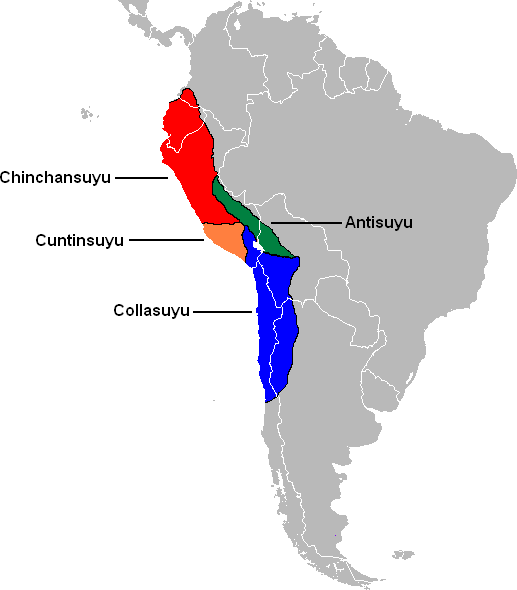 The four suyus or quarters of the empire The most populous suyu was Chinchaysuyu, which encompassed the former Chimú Empire and much of the northern Andes. At its largest extent, it extended through much of what are now Ecuador and Colombia. The largest suyu by area was Qullasuyu, named after the Aymara-speaking Qulla people. It encompassed what is now the Bolivian Altiplano and much of the southern Andes, reaching what is now Argentina and as far south as the Maipo or Maule river in modern Central Chile.[103] Historian José Bengoa singled out Quillota as likely being the foremost Inca settlement in Chile.[104] The second smallest suyu, Antisuyu, was northwest of Cusco in the high Andes. Its name is the root of the word "Andes".[105] Kuntisuyu was the smallest suyu located along the southern coast of modern Peru, extending into the highlands towards Cusco.[106] Laws The Inca state had no separate judiciary or codified laws. Customs, expectations and traditional local power holders governed behavior. The state had legal force, such as through tukuy rikuq (lit. 'he who sees all') or inspectors. The highest such inspector, typically a blood relative to the Sapa Inca, acted independently of the conventional hierarchy, providing a point of view for the Sapa Inca free of bureaucratic influence.[107] The Inca had three moral precepts that governed their behavior:[citation needed] Ama sua: Do not steal Ama llulla: Do not lie Ama quella: Do not be lazy Administration Colonial sources are not entirely clear or in agreement about Inca government structure, such as exact duties and functions of government positions. But the basic structure can be broadly described. The top was the Sapa Inca, who wore the maskaypacha as a symbol of power.[108] Below that may have been the Willaq Umu, literally the "priest who recounts", the High Priest of the Sun.[109] However, beneath the Sapa Inca also sat the Inkap rantin, who was a confidant and assistant to the Sapa Inca, perhaps similar to a Prime Minister.[110] Starting with Topa Inca Yupanqui, a "Council of the Realm" was composed of 16 nobles: 2 from hanan Cusco; 2 from hurin Cusco; 4 from Chinchaysuyu; 2 from Cuntisuyu; 4 from Collasuyu; and 2 from Antisuyu. This weighting of representation balanced the hanan and hurin divisions of the empire, both within Cuzco and within the Quarters (hanan suyu and hurin suyu).[111] While provincial bureaucracy and government varied greatly, the basic organization was decimal. Taxpayers – male heads of household of a certain age range – were organized into corvée labor units (often doubling as military units) that formed the state's muscle as part of mit'a service. Each unit of more than 100 tax-payers were headed by a kuraka, while smaller units were headed by a kamayuq, a lower, non-hereditary status. However, while kuraka status was hereditary and typically served for life, the position of a kuraka in the hierarchy was subject to change based on the privileges of superiors in the hierarchy; a pachaka kuraka could be appointed to the position by a waranqa kuraka. Furthermore, one kuraka in each decimal level could serve as the head of one of the nine groups at a lower level, so that a pachaka kuraka might also be a waranqa kuraka, in effect directly responsible for one unit of 100 tax-payers and less directly responsible for nine other such units.[112][113][114] Kuraka in Charge[115][116] Number of Taxpayers Hunu kuraka 10,000 Pichkawaranqa kuraka 5,000 Waranqa kuraka 1,000 Pichkapachaka kuraka 500 Pachaka kuraka 100 Pichkachunka kamayuq 50 Chunka kamayuq 10 |
政府 主な記事: インカ国家(タワンティンスーユ)の政府 信仰 ペルーのホセ・ベルナルド・デ・タグレが描いたインティ サパ・インカ(上クスコの首長[91])は神格化され、実質的に国教の長であった。ウィラック・ウム(最高司祭、下クスコの首長[91])は皇帝に次ぐ地 位にあった。地方の宗教的伝統は継続し、沿岸部のパチャカマク神託所などでは公式に崇敬された。パチャクティ以降、サパ・インカは太陽神インティの血筋を 主張し、インカ国家の血統を重視した。インカ国家の終焉期には、兄弟姉妹間の近親婚が一般的となった。皇帝は「太陽の子」であり、民は「太陽の子ら」と呼 ばれた。皇帝の統治権と征服の使命は、いずれも聖なる祖先から由来するものだった。[出典必要] サパ・インカはまた、イデオロギー的に重要な祭典を主宰した。特にインティ・ライミ(太陽祭)では、兵士、ミイラ化した支配者、貴族、聖職者、クスコの一 般市民が参加し、6月の夏至に始まり、9日後にインカが足耕具で大地を耕す儀礼で頂点を迎えた。さらにクスコは宇宙論的に中心とされ、四方位の地理的中心 として数多くのワカ(聖地)と放射状に伸びるケケ(聖なる水路)が集中していた。インカ・ガルシラソ・デ・ラ・ベガはこれを「宇宙のへそ」と呼んだ。 [92][93][94] [95] サパ・インカの正妻はコヤ/クヤと呼ばれ、儀礼・宗教的事項において夫と同等の地位を持つとされた。彼女は「権力機構における極めて重要な女性的要素」であり、月女神をはじめとする女性神々の崇拝は彼女に帰属した。同様に男性神々の崇拝は王に帰属したのである。[96] ほとんどの歴史家は、二つの王朝(ウリンとハナン)のサパ・インカが直系で統治したと推測している。ただし、アンデスの慣習では補完的な特権を持つ二人の 統治者が同じ職位を兼任することが多いため、前述の二つの王家が二頭政治として共同統治していた可能性も示唆されている。[97] とはいえ、スペイン征服の時点では、ハナン王朝の統治者が主要な権限を握っていたようだ。[98] 帝国の組織 インカ国家(タワンティンスーユ)は、インカを頂点とする中央政府と四つの地域区分(スユ)からなる分散型政府であった: チンチャイ・スユ(北西) アンティ・スユ(北東) クンティ・スユ(南西) クッラ・スユ (南東) これら四方の隅は中心地クスコで交わる。これらのスユは、帝国が最大領土に達する前の1460年頃、パチャクティ統治下で創設された可能性が高い。創設当 時、スユはほぼ均等な規模だったが、後にアンデス山脈に沿って南北に帝国が拡大するにつれ、その規模比率は変化した。[99] クスコはワマニ(州)として組織化されていなかった可能性が高い。むしろ現代の連邦直轄区、例えばワシントンD.C.やメキシコシティに類似していたと考 えられる。都市は四つのスウィの中心に位置し、政治と宗教の最高中心地として機能した。クスコは本質的にサパ・インカ、その親族、王家のパナカ氏族によっ て統治されていたが、各スウィはアプーによって統治されていた。アプーとは高位の男性や崇敬される山々に対して用いられる尊称である。クスコという行政区 画と四つのスユという行政区域は、それぞれ上ハナンと下ウリンの区分に分類されていた。インカ帝国には文字記録が存在しないため、構成するワマニを網羅的 に列挙することは不可能だ。しかし植民地時代の記録から、部分的なリストを再構築することはできる。ワマニは86以上存在した可能性が高く、高地には48 以上、海岸部には38以上が配置されていた。[100][101][102] スユ 帝国の四つのスユ(四地区) 最も人口の多かったスユはチンチャスユで、旧チムー帝国とアンデス北部の大部分を包含していた。最盛期には現在のエクアドルとコロンビアの大部分に及んでいた。 面積で最大のスユはクッラスユであり、アイマラ語を話すクッラ族に因んで名付けられた。現在のボリビア・アルティプラノとアンデス山脈南部の大部分を包含 し、現在のアルゼンチンに至るほか、現代チリ中部のマイポ川あるいはマウレ川まで南下していた。[103] 歴史家ホセ・ベンゴアは、キジョタがチリにおけるインカ最大の集落であった可能性を指摘している。[104] 二番目に小さなスユであるアンティスユは、クスコの北西、アンデス高地に位置していた。その名称は「アンデス」という言葉の語源である。[105] クンティスユは最小のスユで、現在のペルー南部沿岸に位置し、クスコ方面の高地へと広がっていた。[106] 法律 インカ国家には独立した司法機関や成文法は存在しなかった。行動規範は慣習、社会的期待、そして伝統的な地域の権力者によって規定されていた。国家には トゥクィ・リクク(文字通り「全てを見る者」)や監察官といった法的執行機関があった。最高位の監察官は通常サパ・インカの血縁者であり、従来の階層構造 から独立して行動し、官僚的影響を受けない視点を提供した。[107] インカには行動規範となる三つの道徳的戒律があった:[出典必要] アマ・スア:盗むな アマ・ルジャ:嘘をつくなか アマ・ケジャ:怠けるなか 行政 植民地時代の資料は、政府職の正確な職務や機能など、インカ政府の構造について完全に明確でも一致しているわけでもない。しかし基本的な構造は概ね説明で きる。頂点には権力の象徴であるマスクアイパチャを戴くサパ・インカがいた。[108] その下にはウィラック・ウム、文字通り「語り継ぐ司祭」である太陽の大祭司が位置していた可能性がある。[109] しかしサパ・インカの下にはインカ・ランティンも存在し、これはサパ・インカの側近兼補佐役で、おそらく首相に相当する存在であった。[110] トパ・インカ・ユパンキの時代から、「王国の評議会」が16人の貴族で構成されるようになった。内訳は、ハナン・クスコから2人、ウリン・クスコから2 人、チンチャイ・スユから4人、クンティ・スユから2人、コジャ・スユから4人、アンティ・スユから2人である。この代表者の配分は、帝国におけるハナン とフルインの区分、すなわちクスコ内部および四地区(ハナン・スユとフルイン・スユ)内部の均衡を図ったものである。[111] 地方の官僚機構と統治形態は大きく異なっていたが、基本組織は十進法に基づいていた。納税者(特定の年齢層の男性世帯主)は、ミタ奉仕の一環として国家の 軍事力を構成する労役単位(軍事単位を兼ねることも多かった)に組織化された。100人以上の納税者からなる各単位はクラカが統率し、それより小規模な単 位はカマユク(非世襲の低位身分)が統率した。 ただし、クラカの地位は世襲制で通常は終身制であったが、階層内の上位者の特権に基づいてクラカの地位は変動し得た。すなわち、パチャカ・クラカはワラン カ・クラカによって任命される可能性があった。さらに、各十進レベルのクラカのうち1名は、下位レベルにある9つのグループの1つの長を務めることができ た。つまり、パチャカ・クラカがワランカ・クラカを兼任することも可能であり、実質的に100人単位の納税者集団1つに対して直接責任を負い、他の9つの 同様の集団に対しては間接的に責任を負う形となった。[112][113][114] 担当クラカ[115] [116] 納税者数 フヌ・クラカ 10,000 ピチカワランカ・クラカ 5,000 ワランカ・クラカ 1,000 ピチカパチャカ・クラカ 500 パチャカ・クラカ 100 ピチカチュンカ・カマユク 50 チュンカ・カマユク 10 |
| Culture Monumental architecture Main article: Inca architecture We can assure your majesty that it is so beautiful and has such fine buildings that it would even be remarkable in Spain. Francisco Pizarro This article needs to be updated. Please help update this article to reflect recent events or newly available information. (September 2024) Architecture was the most important of the Inca arts, with textiles reflecting architectural motifs. The most notable example is Machu Picchu, which was constructed by Inca engineers. The prime Inca structures were made of stone blocks that fit together so well that a knife could not be fitted through the stonework. These constructs have survived for centuries, with no use of mortar to sustain them. This process was first used on a large scale by the Pucara (c. 300 BC–AD 300) peoples to the south in Lake Titicaca and later in the city of Tiwanaku (c. AD 400–1100) in what is now Bolivia. The rocks were sculpted to fit together exactly by repeatedly lowering a rock onto another and carving away any sections on the lower rock where the dust was compressed. The tight fit and the concavity on the lower rocks made them extraordinarily stable, despite the ongoing challenge of earthquakes and volcanic activity. Tunics 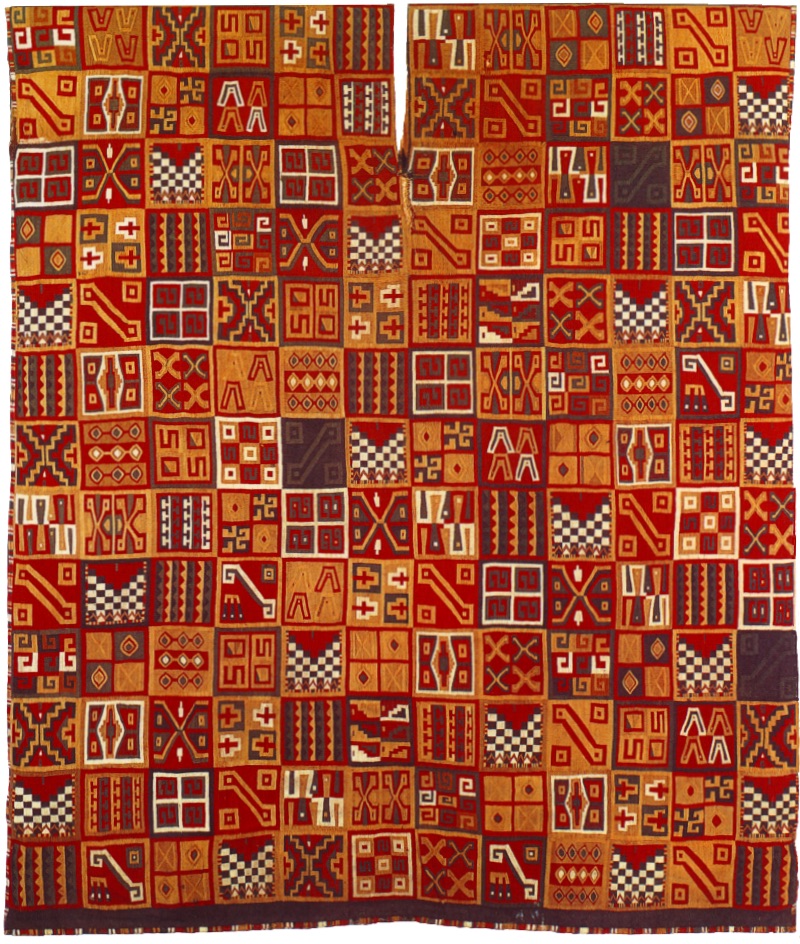 Tunic worn by an Inca of high rank, in vicuña wool and cotton (1450–1540), kept at the Washington Dumbarton Oaks Research Library and Collection[117] Tunics were created by skilled Inca textile-makers as a piece of warm clothing, but they also symbolized cultural and political status and power. Cumbi was the fine, tapestry-woven woolen cloth that was produced and necessary for the creation of tunics. Cumbi was produced by specially-appointed women and men. Generally, textile-making was practiced by both men and women. As emphasized by certain historians, only with European conquest was it deemed that women would become the primary weavers in society, as opposed to Inca society where specialty textiles were produced by men and women equally.[62] Complex patterns and designs were meant to convey information about order in Andean society as well as the Universe. Tunics could also symbolize one's relationship to ancient rulers or important ancestors. These textiles were frequently designed to represent the physical order of a society, for example, the flow of tribute within an empire. Many tunics have a "checkerboard effect" which is known as the collcapata. According to historians Kenneth Mills, William B. Taylor, and Sandra Lauderdale Graham, the collcapata patterns "seem to have expressed concepts of commonality, and, ultimately, unity of all ranks of people, representing a careful kind of foundation upon which the structure of Inkaic universalism was built." Rulers wore various tunics throughout the year, switching them out for different occasions and feasts. The symbols present within the tunics suggest the importance of "pictographic expression" within Inca and other Andean societies far before the iconographies of the Spanish Christians.[118] Uncu Uncu was a men's garment similar to a tunic. It was an upper-body garment of knee-length; Royals wore it with a mantle cloth called yacolla.[119][120] Ceramics, precious metals and textiles 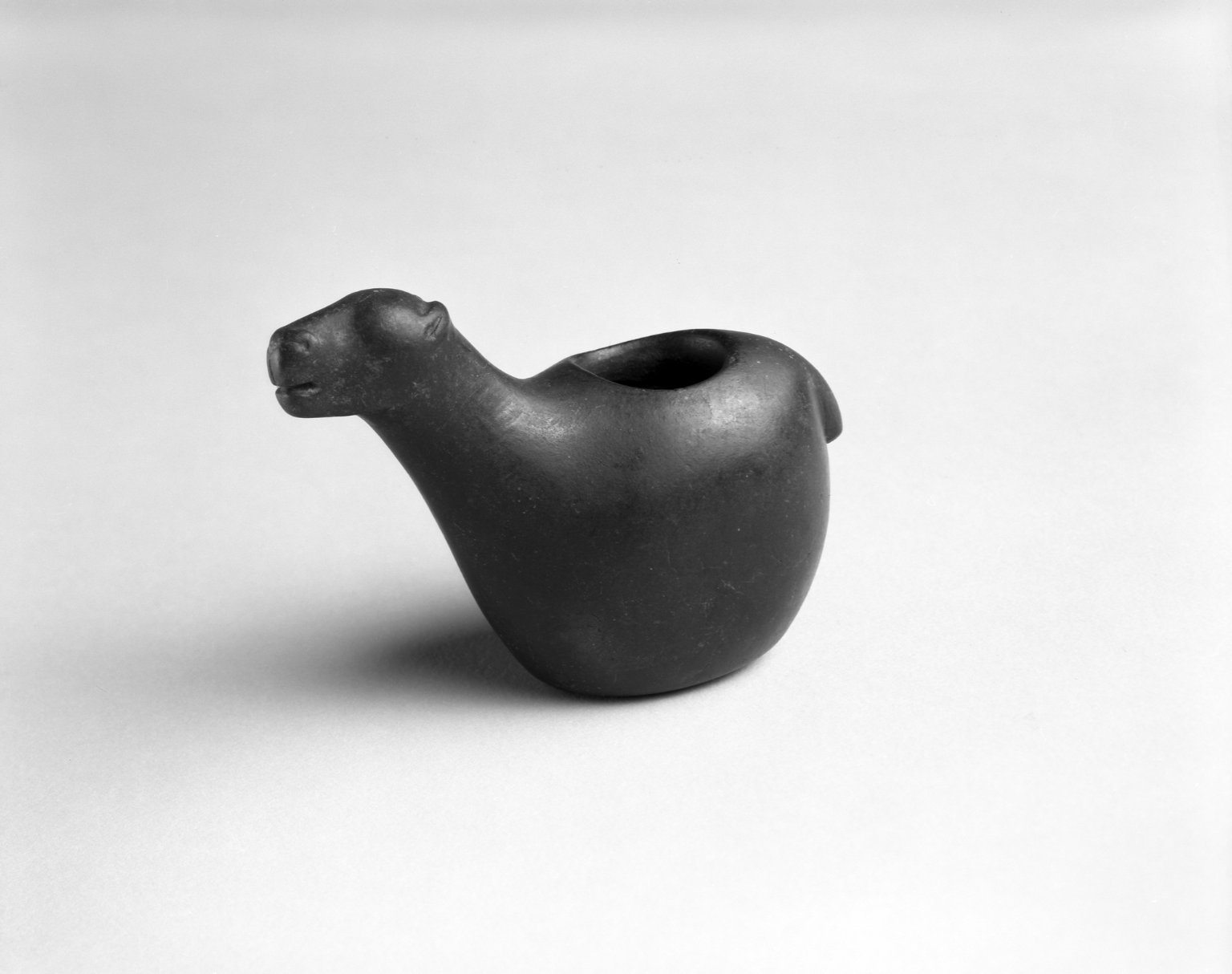 Camelid Conopa, 1470–1532, Brooklyn Museum. Small stone figurines, or conopas, of llamas and alpacas were the most common ritual effigies used in the highlands of modern-day Peru and Bolivia. These devotional objects were often buried in the animals' corrals to bring protection and prosperity to their owners and fertility to the herds. The cylindrical cavities in their backs were filled with offerings to the gods in the form of a mixture including animal fat, coca leaves, maize kernels and seashells. Ceramics were painted using the polychrome technique portraying numerous motifs including animals, birds, waves, felines (popular in the Chavin culture) and geometric patterns found in the Nazca style of ceramics. In a culture without a written language, ceramics portrayed the basic scenes of everyday life, including the smelting of metals, relationships and scenes of tribal warfare. The most distinctive Inca ceramic objects are the urpu (Cuzco bottles or "aryballos"), mainly used for the production of chicha.[121] Many of these pieces are on display in Lima in the Larco Archaeological Museum and the National Museum of Archaeology, Anthropology and History. Almost all of the gold and silver work of the Inca empire was melted down by the conquistadors and shipped back to Spain.[122] Coca 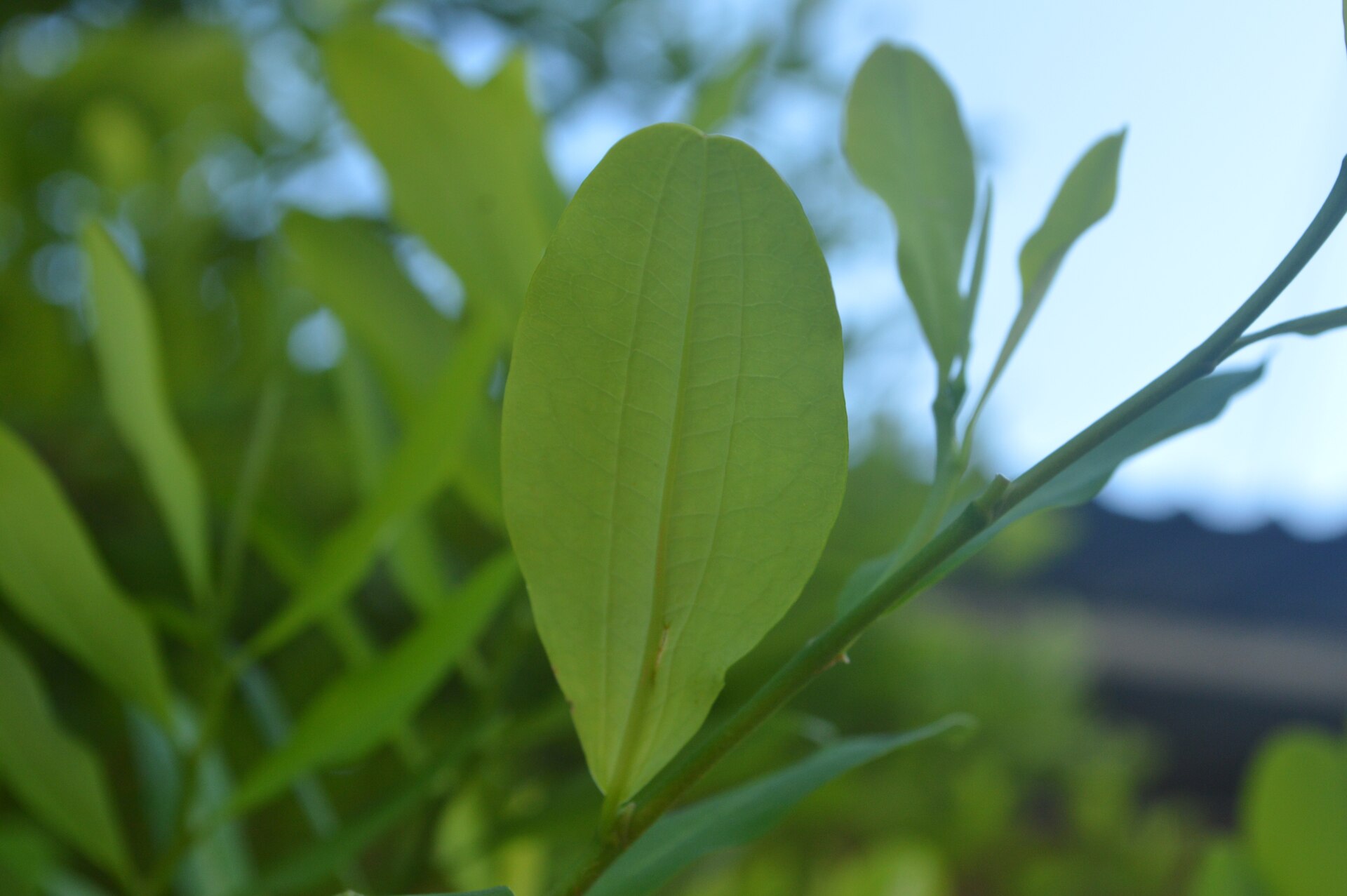 Coca leaves in Meta Department, Colombia, approached by the Inca for many uses The Incas revered the coca plant as sacred/magical. Its leaves were used in moderate amounts to lessen hunger and pain during work but were mostly used for religious and health purposes.[123] The Spaniards took advantage of the effects of chewing coca leaves.[123] The chasquis, messengers who ran throughout the empire to deliver messages, chewed coca leaves for extra energy. Coca leaves were also used as an anaesthetic during surgeries. Banner of the Inca Main articles: Wiphala and Rainbow flag § Andean indigenism Two crowning snakes united by a rainbow without certain royal badge was used as the Inca sign according to Spanish chronicler Bernabé Cobo Chronicles and references from the 16th and 17th centuries support the idea of a banner. However, it represented the Inca (emperor), not the empire. Francisco López de Jerez[124] wrote in 1534: ... todos venían repartidos en sus escuadras con sus banderas y capitanes que los mandan, con tanto concierto como turcos. (... all of them came distributed into squads, with their flags and captains commanding them, as well-ordered as Turks.) Chronicler Bernabé Cobo wrote: The royal standard or banner was a small square flag, ten or twelve spans around, made of cotton or wool cloth, placed on the end of a long staff, stretched and stiff such that it did not wave in the air and on it each king painted his arms and emblems, for each one chose different ones, though the sign of the Incas was the rainbow and two parallel snakes along the width with the tassel as a crown, which each king used to add for a badge or blazon those preferred, like a lion, an eagle and other figures. (... el guión o estandarte real era una banderilla cuadrada y pequeña, de diez o doce palmos de ruedo, hecha de lienzo de algodón o de lana, iba puesta en el remate de una asta larga, tendida y tiesa, sin que ondease al aire, y en ella pintaba cada rey sus armas y divisas, porque cada uno las escogía diferentes, aunque las generales de los Incas eran el arco celeste y dos culebras tendidas a lo largo paralelas con la borda que le servía de corona, a las cuales solía añadir por divisa y blasón cada rey las que le parecía, como un león, un águila y otras figuras.) -Bernabé Cobo, Historia del Nuevo Mundo (1653) Guaman Poma's 1615 book, El primer nueva corónica y buen gobierno, shows numerous line drawings of Inca flags.[125] In his 1847 book A History of the Conquest of Peru, William H. Prescott says that in the Inca army each company had its particular banner and that the imperial standard, high above all, displayed the glittering device of the rainbow, the armorial ensign of the Incas."[126] A 1917 world flags book says the Inca "heir-apparent ... was entitled to display the royal standard of the rainbow in his military campaigns."[127] In modern times, the rainbow flag has been wrongly associated with the Tawantinsuyu and displayed as a symbol of Inca heritage by some groups in Peru and Bolivia. The city of Cusco also flies the Rainbow Flag, but as an official flag of the city. The Peruvian president Alejandro Toledo (2001–2006) flew the Rainbow Flag in Lima's presidential palace. However, according to the Peruvian historiography, the Inca Empire never had a flag. Peruvian historian María Rostworowski said, "I bet my life, the Inca never had that flag, it never existed, no chronicler mentioned it".[128] Also, to the Peruvian newspaper El Comercio, the flag dates to the first decades of the 20th century,[129] and even the Congress of the Republic of Peru has determined that the flag is a fake by citing the conclusion of the National Academy of Peruvian History: "The official use of the wrongly called 'Tawantinsuyu flag' is a mistake. In the Pre-Hispanic Andean World there did not exist the concept of a flag, it did not belong to their historic context".[129] National Academy of Peruvian History Music and Dance 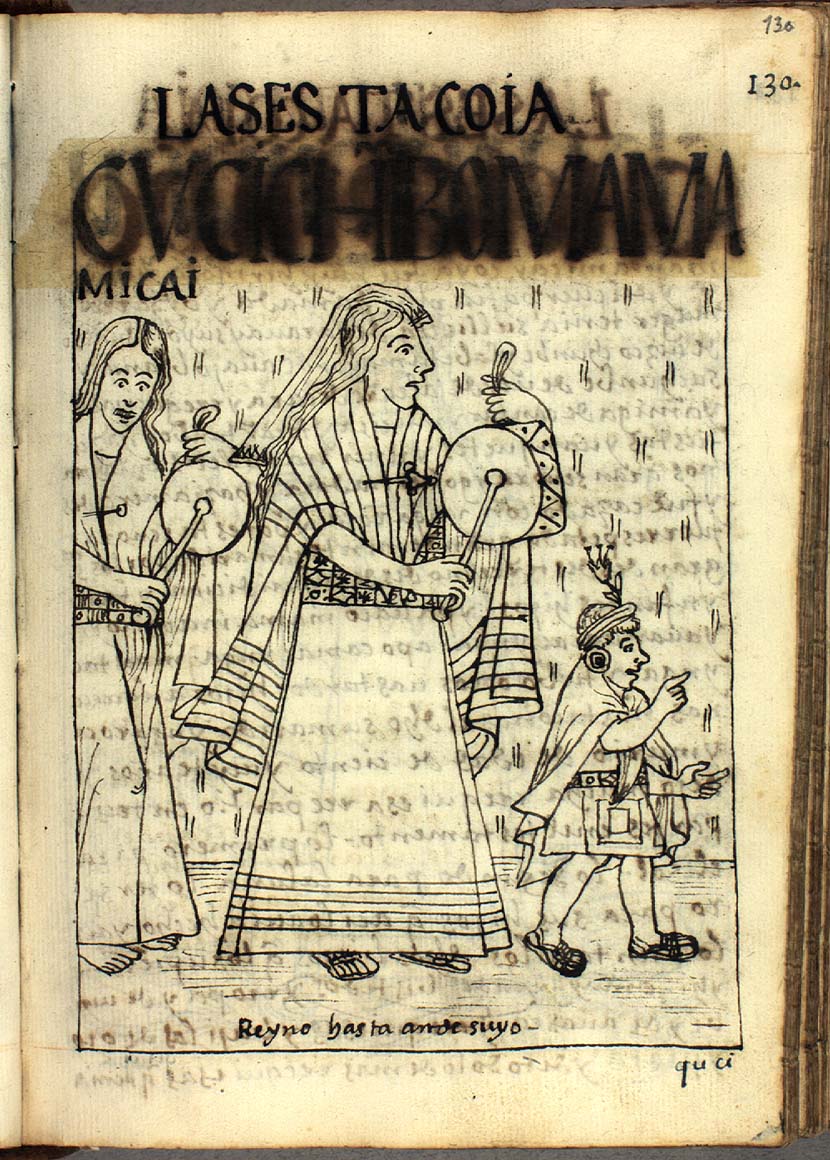 Coya Cusi Chimbo playing the tinya. Ancient Andean inhabitants shared their experiences through singing and dancing with aqa (chicha de jora), though these practices reflected social inequalities, as some dances and songs were reserved for nobles.[130] Incaic Andean music was pentatonic (using notes re, fa, sol, la, and do).[131] They composed taki ("songs") with wind and percussion instruments, lacking string instruments. Key wind instruments included the quena (made of cane and bone), zampoña, pututo or huayla quippa, cuyhui (a five-voice whistle), and pincullo (a long flute). Percussion instruments included tinya (a simple small drum), huankar (a large drum with a stick), silver rattles, and chilchile (bells).[132] Dances were categorized as nobiliary dances for the sapa inca and the panacas, such as uaricsa arawi and guayara, as well as guari for young nobles; masked men's war dances, such as wacon; and collective dances for laborers (haylli), shepherds (guayayturilla), and the ayllu in their tasks (kashua).[132] |
文化 記念碑的建築 主な記事: インカ建築 陛下、この地は実に美しく、見事な建造物が立ち並び、スペインにおいても特筆に値するものであると保証できる。 フランシスコ・ピサロ この記事は更新が必要です。最近の出来事や新たに得られた情報を反映させるため、更新にご協力ください。(2024年9月) 建築はインカ芸術の中で最も重要であり、織物には建築的モチーフが反映されていた。最も顕著な例はマチュピチュであり、これはインカの技術者たちによって 建造された。主要なインカの建造物は石のブロックで構成されており、その組み合わされ方は極めて精巧で、石の隙間に刃物すら差し込むことができないほどで あった。これらの建造物はモルタルを用いずに何世紀も存続してきた。 この技法は大規模に初めて用いられたのは、南方のティティカカ湖周辺に住んだプカラ(紀元前300年頃~紀元300年頃)の人々であり、後に現在のボリビ アにあたる地域でティワナク(紀元400年頃~1100年頃)の都市で発展した。石材は、上部の石を下部の石に繰り返し落としては、塵が圧縮された下部の 石の部分を削り取ることで、ぴったりと合うように彫刻された。この密着性と下部の石の凹面形状により、地震や火山活動という継続的な脅威にもかかわらず、 驚くほど安定した構造が実現された。 チュニック 高位のインカが着用したビクーニャウールと綿のチュニック(1450–1540年)、ワシントン・ダンバートンオークス研究所図書館・コレクション所蔵[117] チュニックは熟練したインカの織物職人が防寒着として製作したが、文化的・政治的地位と権力の象徴でもあった。クンビとは、チュニック製作に不可欠な、タ ペストリー織りの上質ウール織物である。クンビは特別に任命された男女によって生産された。一般的に織物製作は男女双方によって行われていた。一部の歴史 家が強調するように、専門的な織物が男女平等に生産されていたインカ社会とは対照的に、女性が社会における主要な織工となるのは、ヨーロッパ人による征服 以降のことである。[62] 複雑な模様やデザインは、アンデス社会と宇宙の秩序に関する情報を伝える意図があった。チュニックは古代の支配者や重要な祖先との関係を象徴することもあ る。これらの織物は、帝国内の貢ぎ物の流れなど、社会の物理的秩序を表すためにデザインされることが多かった。多くのチュニックには「チェッカーボード効 果」と呼ばれるコルカパタ模様が見られる。歴史家ケネス・ミルズ、ウィリアム・B・テイラー、サンドラ・ローダーデール・グラハムによれば、コルカパタの 模様は「共通性の概念、そして究極的にはあらゆる階層の人々の統一性を表現していたようであり、インカ的普遍主義の構造が築かれた慎重な基盤を表してい た」とされる。支配者たちは年間を通じて様々なチュニックを着用し、異なる行事や祝宴に応じて着替えを行った。 チュニックに施された記号は、スペイン人キリスト教徒の図像学が普及するはるか以前から、インカや他のアンデス社会において「絵文字的表現」が重要視されていたことを示唆している。[118] ウンク ウンクはチュニックに似た男性用衣服である。膝丈の上半身用衣服で、王族はヤコヤと呼ばれるマント布と共に着用した。[119][120] 陶器、貴金属、織物 ラクダ科動物のコノパ、1470–1532年、ブルックリン美術館所蔵。ラマやアルパカを模した小さな石像(コノパ)は、現代のペルーとボリビアの高地で 最も一般的な儀礼的偶像であった。これらの信仰対象は、所有者に保護と繁栄をもたらし、群畜に繁殖力を与えるため、しばしば動物の囲いの中に埋められた。 背中の円筒形の空洞には、動物の脂肪、コカの葉、トウモロコシの粒、貝殻などを混ぜた供物が神々への捧げ物として詰められた。 陶器は多色技法で彩色され、動物、鳥、波、ネコ科動物(チャビン文化で人気があった)、ナスカ様式の陶器に見られる幾何学模様など、数多くのモチーフが描 かれた。文字を持たない文化において、陶器は金属の精錬、人間関係、部族間の戦いの場面など、日常生活の基本的な情景を描いた。インカ陶器で最も特徴的な のはウルプ(クスコ瓶または「アリバロス」)で、主にチチャの醸造に用いられた。[121] これらの陶器の多くは、リマのラルコ考古学博物館と国立考古学・人類学・歴史博物館で展示されている。 インカ国家(タワンティンスーユ)の金銀細工のほとんどは、征服者たちによって溶かされ、スペインへ送還された。[122] コカ コロンビア、メタ県産のコカの葉。インカは様々な用途に利用した インカはコカの植物を神聖/呪術的なものとして崇めた。その葉は適量で労働中の空腹や痛みを和らげるのに使われたが、主に宗教的・健康的な目的に用いられ た。[123] スペイン人はコカの葉を噛む効果を利用した。[123] 帝国全域を駆け巡って伝令を届けるチャスキ(伝令)は、追加のエネルギーを得るためにコカの葉を噛んだ。コカの葉は手術中の麻酔薬としても使われた。 インカの旗 主な記事:ウィファラと虹の旗 § アンデス先住民族主義  スペインの年代記作者ベルナベ・コボによれば、王室の紋章とは特定されない虹で結ばれた二匹の蛇がインカの象徴として用いられていた。 16世紀から17世紀の年代記や文献は旗の存在を裏付けている。ただしそれはインカ国家(タワンティンスーユ)ではなく、インカ(皇帝)を表していた。 フランシスコ・ロペス・デ・ヘレス[124]は1534年にこう記している:... 彼らは皆、部隊ごとに分かれて旗と指揮官を伴い、トルコ人同様に整然と進軍した。 (... all of them came distributed into squads, with their flags and captains commanding them, as well-ordered as Turks.) 年代記作者ベルナベ・コボは記している: 王の旗印は小さな正方形の旗で、縦横10~12スパン(約50~60cm)の綿または羊毛の布で作られていた。長い竿の先端に固定され、風に揺れないよう 張り詰められていた。各王はその旗に自らの紋章や象徴を描かせた。各王は異なる紋章を選んだが、インカの印は虹と横方向に並んだ二匹の蛇、そして房飾りを 冠としたものであった。各王はこれに、獅子や鷲などの好みの紋章や紋章章を追加した。 (…王の旗印は、綿または羊毛の布で作られた小さな正方形の旗で、周囲が10~12パーム(約50~60cm)であった。長い棒の先端に取り付けられ、空 中で揺れないよう張り詰めて固くされていた。各王はこの旗に自らの紋章や標章を描いた。インカ帝国の一般的な紋章は天の弓と、冠を形作る縁に沿って平行に 横たわる二匹の蛇であった。各王はこれに、獅子や鷲などの図柄を紋章や標章として追加するのが通例であった。 -ベルナベ・コボ『新世界史』(1653年) グアマン・ポマの1615年の著書『最初の新しい年代記と良き統治』には、インカの旗の線画が多数掲載されている。[125] ウィリアム・H・プレスコットは1847年の著書『ペルー征服史』で、インカ軍では各部隊が独自の旗を持ち、帝国の軍旗はそれらより高く掲げられ、インカ の紋章である虹の輝く意匠を掲げていたと述べている。[126] 1917年の世界国旗図鑑は、インカの「皇太子は…軍事遠征において虹の王旗を掲げる権利を有していた」と記している。[127] 現代において、虹の旗は誤ってタワンティンスユ(インカ帝国)と結びつけられ、ペルーやボリビアの一部団体によってインカ遺産を象徴するものとして掲げら れている。クスコ市も虹の旗を掲揚しているが、市の公式旗としてである。ペルー大統領アレハンドロ・トレド(2001-2006年)はリマの大統領宮殿に 虹の旗を掲げた。しかしペルーの歴史学によれば、インカ国家(タワンティンスーユ)に旗は存在しなかった。ペルーの歴史家マリア・ロストヴォロフスキはこ う述べている。「命をかけて言えるが、インカにそんな旗は存在しなかった。記録者も誰も言及していない」[128]。またペルー紙エル・コメルシオによれ ば、この旗は20世紀初頭の数十年に起源を持つ[129]。ペルー共和国議会でさえ、ペルー歴史学会の結論を引用し、この旗が偽物であると断定している: 「誤って『タワンティンスユウ旗』と呼ばれるものの公式使用は誤りである。先コロンブス期のアンデス世界には旗という概念が存在せず、彼らの歴史的文脈に属するものではなかった」[129] ペルー国立歴史アカデミー 音楽と舞踊 ティニャを演奏するコヤ・クシ・チンボ。 古代アンデスの住民は、アカ(チチャ・デ・ホラ)を伴い歌と踊りで経験を共有したが、一部の舞踊や歌は貴族専用であったため、こうした慣習は社会的不平等を反映していた。[130] インカ時代のアンデス音楽は五音音階(レ、ファ、ソ、ラ、ドの音を使用)であった。[131] 彼らは弦楽器を持たず、管楽器と打楽器を用いてタキ(「歌」)を作曲した。主要な管楽器には、ケナ(葦と骨で作られる)、サンポニャ、プトゥトまたはウア イラ・キッパ、クイウイ(五声の笛)、ピンキュロ(長い笛)があった。打楽器には、ティニャ(簡素な小太鼓)、ワンカル(棒で打つ大太鼓)、銀製ガラガ ラ、チルチレ(鈴)があった。[132] 舞踊は、サパ・インカとパナカのための貴族舞踊(ワリカ・アラウィやグアヤラなど)、若き貴族のためのグアリ、仮面をつけた男たちの戦いの舞踊(ワコンな ど)、そして労働者(ハイリ)、羊飼い(グアヤトゥリャ)、アユの作業(カシュア)のための集団舞踊に分類された。[132] |
| Science and technology Measures, calendrics and mathematics Main article: Mathematics of the Incas 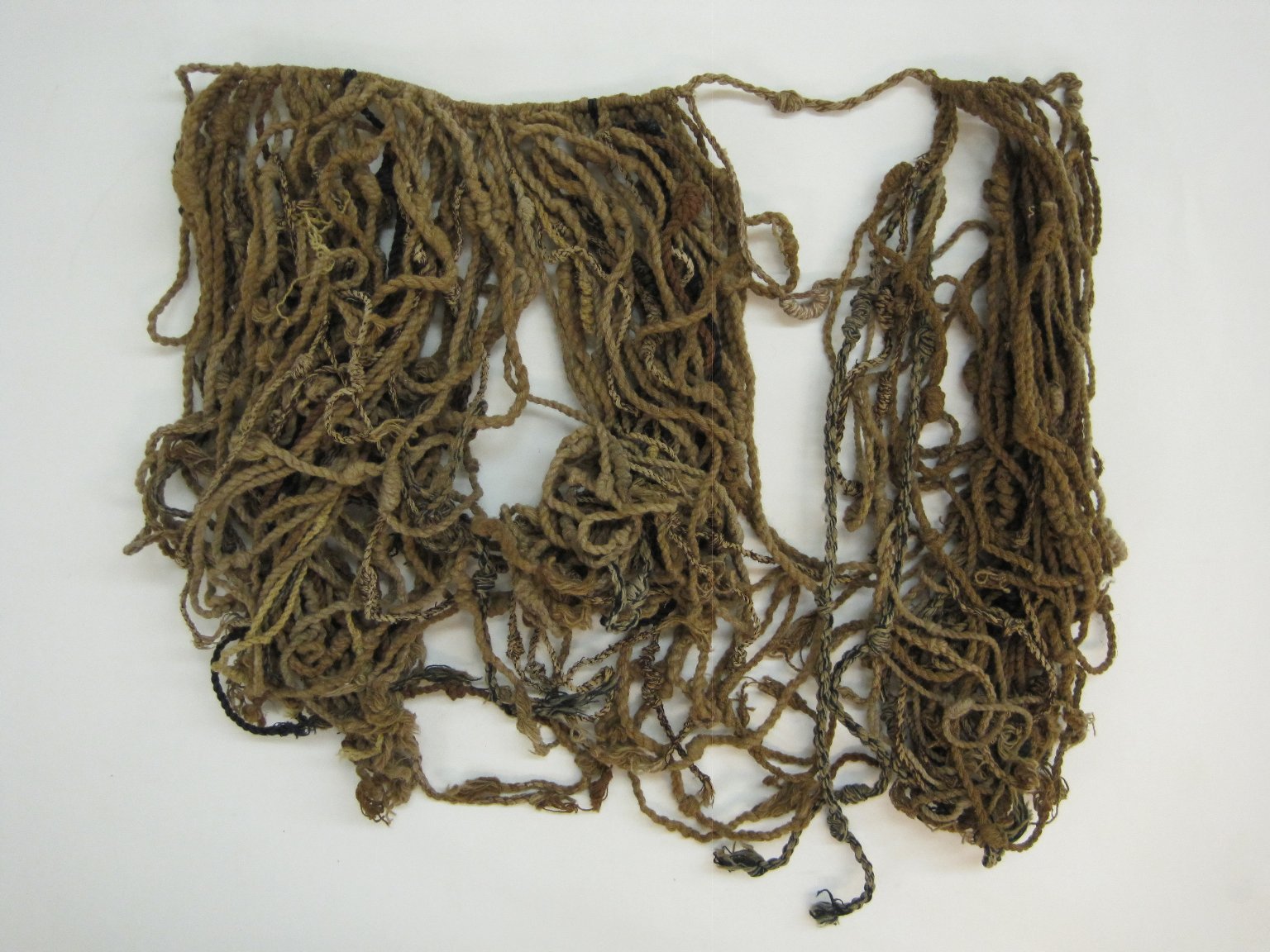 Quipu, 15th century. Brooklyn Museum Physical measures used by the Inca were based on human body parts. Units included fingers, the distance from thumb to forefinger, palms, cubits and wingspans. The most basic distance unit was thatkiy or thatki or one pace. The next largest unit was reported by Cobo to be the topo or tupu, measuring 6,000 thatkiys, or about 7.7 km (4.8 mi); careful study has shown that a range of 4.0 to 6.3 km (2.5 to 3.9 mi) is likely. Next was the wamani, composed of 30 topos (roughly 232 km or 144 mi). To measure area, 25 by 50 wingspans were used, reckoned in topos (roughly 3,280 km2 or 1,270 sq mi). It seems likely that distance was often interpreted as one day's walk; the distance between tambo way-stations varies widely in terms of distance, but far less in terms of time to walk that distance.[133][134] Inca calendars were strongly tied to astronomy. Inca astronomers understood equinoxes, solstices and zenith passages, along with the Venus cycle. They could not, however, predict eclipses. The Inca calendar was essentially lunisolar, as two calendars were maintained in parallel, one solar and one lunar. As 12 lunar months fall 11 days short of a full 365-day solar year, those in charge of the calendar had to adjust every winter solstice. Each lunar month was marked with festivals and rituals.[135] Apparently, the days of the week were not named and days were not grouped into weeks. Similarly, months were not grouped into seasons. Time during a day was not measured in hours or minutes, but in terms of how far the sun had travelled or in how long it had taken to perform a task.[136] The sophistication of Inca administration, calendrics and engineering required facility with numbers. Numerical information was stored in the knots of quipu strings, allowing for compact storage of large numbers.[137][138] These numbers were stored in base-10 digits, the same base used by the Quechua language[139] and in administrative and military units.[113] These numbers, stored in quipu, could be calculated on yupanas, grids with squares of positionally varying mathematical values, perhaps functioning as an abacus.[140] Calculation was facilitated by moving piles of tokens, seeds or pebbles between compartments of the yupana. It is likely that Inca mathematics at least allowed division of integers into integers or fractions and multiplication of integers and fractions.[141] According to mid-17th-century Jesuit chronicler Bernabé Cobo,[142] the Inca designated officials to perform accounting-related tasks. These officials were called quipo camayos. Study of khipu sample VA 42527 (Museum für Völkerkunde, Berlin)[143] revealed that the numbers arranged in calendrically significant patterns were used for agricultural purposes in the "farm account books" kept by the khipukamayuq (accountant or warehouse keeper) to facilitate the closing of accounting books.[144] Communication and medicine The Inca recorded information on assemblages of knotted strings, known as quipu, although they can no longer be decoded. Originally, it was thought that Quipu were used only as mnemonic devices or to record numerical data. Quipus are also believed to record history and literature.[145] The Inca made many discoveries in medicine.[146] They performed successful skull surgery, by cutting holes in the skull to alleviate fluid buildup and inflammation caused by head wounds. Many skull surgeries performed by Inca surgeons were successful. Survival rates were 80–90%, compared to about 30% before Inca times.[147] According to chronicler Bernabé Cobo, they also had a deep knowledge of herbalism, and the Spanish soldiers trusted the hands of an indigenous surgeon more than one of the barbers who accompanied them. |
科学と技術 計測法、暦法、数学 主な記事:インカの数学 キプ、15世紀。ブルックリン美術館 インカが用いた物理的計測単位は人体の一部に基づいていた。単位には指、親指から人差し指までの距離、手のひら、キュビット、翼幅が含まれた。最も基本的 な距離単位はタッキー、あるいはタッキー、つまり一歩であった。次に大きい単位は、コボによればトポまたはトゥプと呼ばれ、6,000タッキー(約 7.7km)に相当するとされる。しかし詳細な研究により、4.0~6.3kmの範囲が妥当であることが示されている。さらに大きい単位はワマニで、30 トポ(約232kmまたは144マイル)で構成される。面積の測定には、25×50の翼幅が用いられ、トポ単位で計算された(約3,280km²または 1,270平方マイル)。距離はしばしば「一日歩ける距離」と解釈されていたようだ。タンボ(宿場)間の距離は距離的には大きく異なるが、その距離を歩く 時間としてははるかに差が小さい。[133][134] インカの暦は天文学と強く結びついていた。インカの天文学者は、春分・秋分・夏至・冬至・天頂通過、そして金星の周期を理解していた。しかし日食や月食の 予測はできなかった。インカの暦は基本的に太陰太陽暦であり、太陽暦と太陰暦の二つの暦が並行して用いられていた。12の太陰月では365日の太陽年より 11日短いため、暦の管理者は毎年冬至の時期を調整する必要があった。各太陰月には祭事や儀礼が設定されていた[135]。週の曜日に名称はなく、日を週 単位でまとめる習慣もなかった。同様に、月を季節単位でまとめることもなかった。一日の時間は時間や分単位で測らず、太陽の移動距離や作業に要した時間で 計測した。[136] インカの行政、暦法、工学の高度さは、数字の扱いに熟達していることを必要とした。数値情報はキプの紐の結び目に記録され、大量の数字をコンパクトに保存 できた。[137][138] これらの数字は10進法で記録され、これはケチュア語[139]や行政・軍事単位でも用いられた基数である。[113] クピウに記録されたこれらの数値は、ユパナ(位置によって数学的価値が変化する格子状の盤)上で計算できた。おそらくこれはそろばんとして機能した [140]。計算は、ユパナの区画間でトークンや種子、小石の山を移動させることで容易に行われた。インカの数学は少なくとも、整数を整数または分数に割 り算すること、整数と分数の乗算を可能にしていたと考えられる。[141] 17世紀中頃のイエズス会史家ベルナベ・コボによれば[142]、インカは会計関連業務を行う役人を任命していた。これらの役人はキプ・カマヨスと呼ばれ た。キプ標本VA 42527(ベルリン民族学博物館所蔵)[143]の研究により、暦的に重要なパターンで配置された数字が、キプカマヨク(会計係または倉庫係)が管理す る「農場帳簿」において、会計帳簿の決算を容易にする農業目的で使用されていたことが明らかになった。[144] 通信と医学 インカはクピと呼ばれる結び紐の集合体で情報を記録したが、現在では解読できない。当初クピは記憶補助装置や数値記録専用と考えられていたが、歴史や文学の記録にも用いられたと推測される。[145] インカは医学において多くの発見をした。[146] 頭蓋骨に穴を開けて頭部外傷による体液貯留や炎症を緩和する頭蓋骨手術を成功させた。インカの外科医による多くの頭蓋骨手術は成功した。生存率は 80~90%に達し、インカ以前の約30%を大きく上回った。[147] 歴史家ベルナベ・コボによれば、彼らは薬草学にも深い知識を持ち、スペイン兵士たちは同行する理髪師よりも先住民外科医の手術を信頼していた。 |
| Weapons, armor and warfare Main article: Inca army 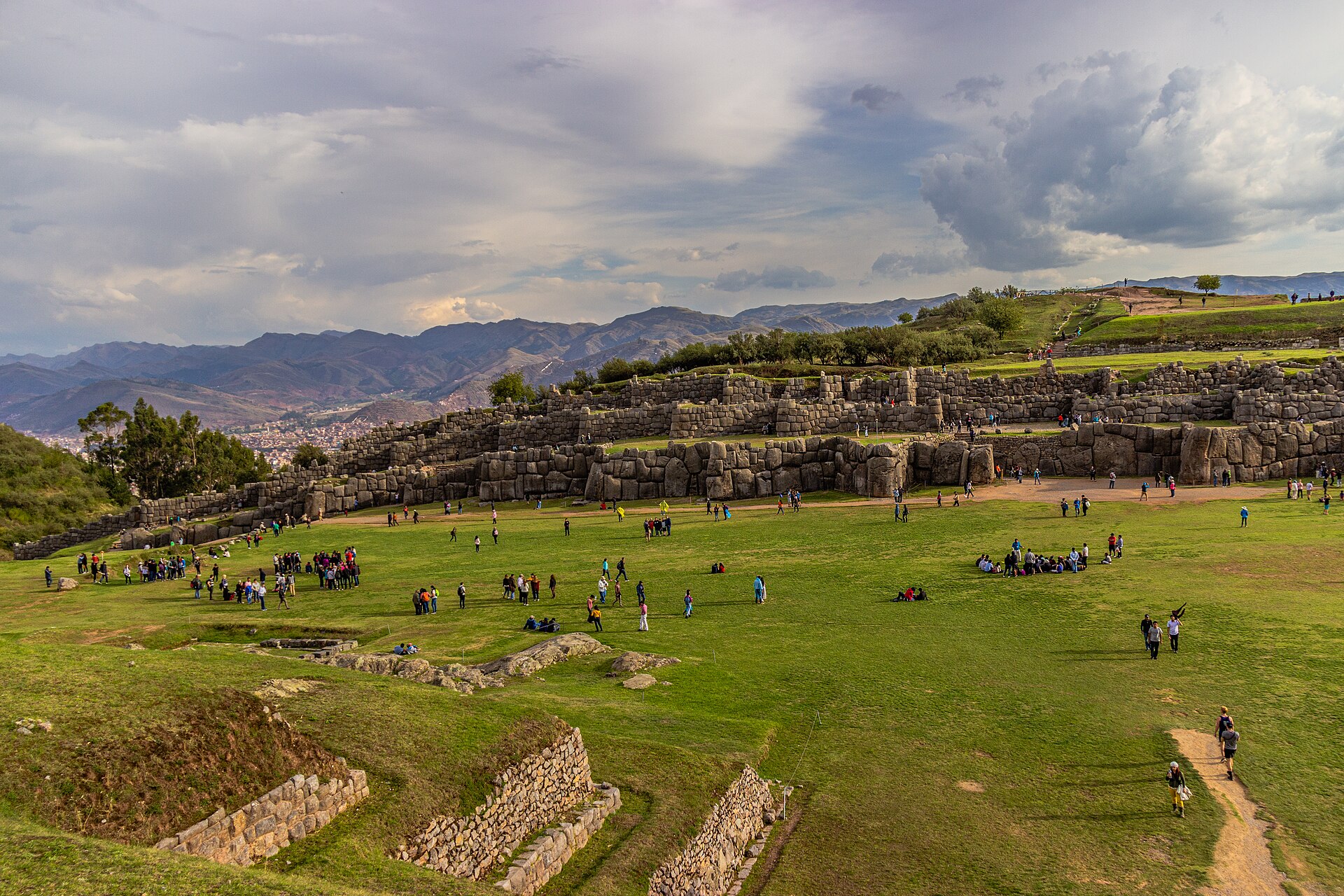 Sacsayhuamán, the largest Inca pukara (fortresses) 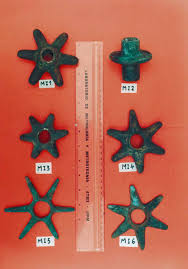 Copper heads for maces The Inca army was the most powerful native force in South America. Any ordinary villager or farmer could be recruited as a soldier as part of the mit'a system of mandatory public service. Every able bodied male Inca of fighting age had to take part in war in some capacity at least once and to prepare for warfare again when needed. By the time the empire reached its largest size, every section of the empire contributed in setting up an army for war. The Incas had no iron or steel and their weapons were not much more effective than those of their opponents so they often defeated opponents by sheer force of numbers, or else by persuading them to surrender beforehand by offering generous terms.[148] Inca weaponry included "hardwood spears launched using throwers, arrows, javelins, slings, the bolas, clubs, and maces with star-shaped heads made of copper or bronze".[148][149] Rolling rocks downhill onto the enemy was a common strategy, taking advantage of the hilly terrain.[150] Fighting was sometimes accompanied by drums and trumpets made of wood, shell or bone.[151][152] Armor included:[148][153] Helmets made of wood, cane, or animal skin, often lined with copper or bronze; some were adorned with feathers Round or square shields made from wood or hide Cloth tunics padded with cotton and small wooden planks to protect the spine Ceremonial metal breastplates of copper, silver, and gold have been found in burial sites, some of which may have also been used in battle.[154][155] Roads allowed quick movement (on foot) for the Inca army. Shelters called tambo and storage silos called qullqas were built one day's travelling distance from each other, so an army on campaign could be fed and rested. This can be seen in names of ruins such as Ollantaytambo or "the storehouse of Ollantay". These were set up so the Inca and his entourage would always have supplies (and possibly shelter) ready as they traveled. |
武器、防具、そして戦争 主な記事:インカ軍 サクサイワマン、最大のインカ要塞(プカラ) 棍棒の銅製頭部 インカ軍は南米で最も強力な先住民軍隊であった。ミタ制度による義務的な公共奉仕の一環として、普通の村人や農民も兵士として徴用された。戦闘年齢の健常 なインカ男性は全員、少なくとも一度は戦争に何らかの形で参加し、必要に応じて再び戦いに備えなければならなかった。インカ国家(タワンティンスーユ)が 最大規模に達した頃には、帝国全土の各地域が戦争のための軍隊編成に貢献していた。 インカには鉄や鋼がなく、武器の性能は敵とさほど変わらなかった。そのため、圧倒的な兵力で敵を打ち破るか、あるいは寛大な条件を提示して事前に降伏させ ることで勝利を得ることが多かった[148]。インカの武器には「投擲器で発射する硬木の槍、矢、ジャベリン、投石器、ボラ、棍棒、そして銅や青銅製の星 形頭部を持つメイス」が含まれていた。[148][149] 丘陵地帯を利用し、敵に向かって岩を転がす戦術も一般的だった。[150] 戦闘時には木・貝殻・骨製の太鼓やトランペットが鳴らされることもあった。[151][152] 甲冑には以下が含まれた。[148] [153] 木、籐、または動物の皮で作られた兜。内側に銅や青銅が張られていることが多く、羽根で飾られたものもあった 木や皮で作られた円形または四角形の盾 綿と小さな木板で裏打ちされた布製のチュニック(背骨を保護するため) 銅、銀、金の儀式用金属胸当てが埋葬地で発見されている。その一部は戦闘でも使用された可能性がある。[154] [155] 道路はインカ軍が(徒歩で)迅速に移動することを可能にした。タンボと呼ばれる宿舎とクッカと呼ばれる貯蔵庫は、互いに一日分の移動距離を置いて建設され た。これにより遠征中の軍隊は食糧補給と休息が可能だった。これはオランタイタンボ(「オランタイの倉庫」の意)などの遺跡名からも窺える。こうした施設 は、インカ王とその随行者が移動中に常に物資(そしておそらく宿舎)を確保できるように設置されていた。 |
| Adaptations to altitude The people of the Andes, including the Incas, were able to adapt to high-altitude living through successful acclimatization, which is characterized by increasing oxygen supply to the blood tissues. For the native living in the Andean highlands, this was achieved through the development of a larger lung capacity and an increase in red blood cell counts, hemoglobin concentration, and capillary beds.[156] Compared to other humans, the Andeans had slower heart rates, almost one-third larger lung capacity, about 2 L (4 pints) more blood volume and double the amount of hemoglobin, which transfers oxygen from the lungs to the rest of the body. While the Conquistadors may have been taller, the Inca had the advantage of coping with the extraordinary altitude.[157] The Tibetans in Asia living in the Himalayas are also adapted to living in high-altitudes, although the adaptation is different from that of the Andeans.[158] |
高度への適応 インカを含むアンデス地方の人々は、血液組織への酸素供給量を増やすという特徴を持つ順応に成功し、高地での生活に適応できた。アンデス高地に住む先住民 にとって、これは肺活量の拡大、赤血球数の増加、ヘモグロビン濃度の向上、毛細血管網の増加によって達成された。[156] 他の人類と比較すると、アンデス人は心拍数が遅く、肺活量は約3分の1大きく、血液量は約2リットル(4パイント)多く、肺から体全体へ酸素を運ぶヘモグ ロビン量は2倍であった。征服者たちは背が高かったかもしれないが、インカ人は異常な高度に対処する利点を持っていた。[157] アジアのヒマラヤに暮らすチベット人も高地生活に適応しているが、その適応様式はアンデス人とは異なる。[158] |
| Inca archeological sites Choquequirao Cojitambo El Fuerte de Samaipata Huánuco Pampa Huchuy Qosqo Inca-Caranqui Llaqtapata Moray (Inca ruin) Oroncota Pambamarca Fortress Complex Písac Pukara of La Compañia Quispiguanca Rumicucho Tambo Viejo Tumebamba Vitcos The Chilean Inca Trail Inca-related Aclla, the "chosen women" Amauta, Inca teachers Amazonas before the Inca Empire Anden, agricultural terrace Inca cuisine Inca aqueducts List of wars involving the Inca Empire Paria, Bolivia Tampukancha, Inca religious site General History of Peru History of smallpox § Epidemics in the Americas Muisca Confederation Periodization of pre-Columbian Peru Population history of indigenous peoples of the Americas History of South America Notes Also known as the Incan Empire, or Inka Empire. The three laws of Tawantinsuyu are still referred to in Bolivia these days as the three laws of the Qullasuyu. |
インカの遺跡群 チョケキラオ コヒタンボ エル・フエルテ・デ・サマイパタ ワヌコ・パンパ ウチュイ・コスコ インカ・カランキ リャクタパタ モライ(インカ遺跡) オロンコタ パンバマルカ要塞群 ピサック ラ・コンパニアのプカラ キスピグアンカ ルミクチョ タンボ・ビエホ トゥメバンバ ヴィトコス チリのインカ・トレイル インカ関連 アクラ、「選ばれた女性たち」 アマウタ、インカの教師 インカ国家(タワンティンスーユ)以前のアマゾナス アンデン、農業用段々畑 インカ料理 インカの水道橋 インカ国家(タワンティンスーユ)が関与した戦争の一覧 ボリビア、パリア タンプカンチャ、インカの宗教的場所 概要 ペルーの歴史 天然痘の歴史 § アメリカ大陸における流行 ムイスカ連合 コロンブス以前のペルーの時代区分 アメリカ先住民の人口史 南アメリカの歴史 注 インカ帝国、あるいはインカ帝国とも呼ばれる。 タワンティンスユの三つの法は、今日でもボリビアではクッラスユの三つの法として言及されている。 |
| References 01. Cerrón-Palomino, Rodolfo Las lenguas de los incas: el puquina, el aimara y el quechua Germany: PL Academic Research, 2013. Turchin, Peter; Adams, Jonathan M.; Hall, Thomas D. (December 2006). "East-West Orientation of Historical Empires". Journal of World-Systems Research. 12 (2): 222. ISSN 1076-156X. Retrieved 16 September 2016. Taagepera, Rein (September 1997). "Expansion and Contraction Patterns of Large Polities: Context for Russia". International Studies Quarterly. 41 (3): 497. doi:10.1111/0020-8833.00053. ISSN 0020-8833. JSTOR 2600793. Retrieved 7 September 2018. ""La catastrophe démographique" (The Demographical Catastrophe"), L'Histoire n° 322, July–August 2007, p. 17". Shimada, Izumi, ed. (2015). The Inka Empire: A Multidisciplinary Approach. University of Texas Press. doi:10.7560/760790. ISBN 978-1-4773-0392-4. Schwartz, Glenn M.; Nichols, John J. (2010). After Collapse - The Regeneration of Complex Societies. University of Arizona Press. ISBN 978-0-8165-2936-0. Nowell, Charles E. (1946). "Aleixo Garcia and the White King". The Hispanic American Historical Review. 26 (4): 450–466. doi:10.2307/2507650. ISSN 0018-2168. JSTOR 2507650. "Quechua, the Language of the Incas". 11 November 2013. Archived from the original on 27 June 2019. Retrieved 5 January 2019. McEwan, Gordon F. (2006). The Incas - New Perspectives. W. W. Norton & Company. p. 5. 10. Morris, Craig and von Hagen, Adrianna (2011), The Incas, London, Thames & Hudson, pp. 48–58 "The Inca - All Empires". allempires.com. Archived from the original on 29 February 2024. Retrieved 27 December 2023. "The Inca", National Foreign Language Center at the University of Maryland, 29 May 2007, retrieved 10 September 2013. La Lone, Darrell E. (1982). "The Inca as a Nonmarket Economy - Supply on Command versus Supply and Demand". Contexts for Prehistoric Exchange: 292. Retrieved 10 August 2017. McEwan 2008, p. 221. Pease, Franklin (2011). The Incas (1st ed.). Fondo Editorial de la Pontificia Universidad Católica del Perú. pp. 95–121. ISBN 978-9972-42-949-1. "Inca". American Heritage Dictionary. Houghton Mifflin Harcourt. 2009. McEwan 2008, p. 93. Prescott, William Hickling (1847). History of the Conquest of Peru. Retrieved 12 July 2022. Pease, Franklin (2011). The Incas (1st ed.). Fondo Editorial de la Pontificia Universidad Católica del Perú. p. 31. ISBN 978-9972-42-949-1. 20. Upton, Gary and von Hagen, Adriana (2015), Encyclopedia of the Incas, New York, Rowman & Littlefield, p. 2. Some scholars cite 6 or 7 pristine civilisations ISBN 0804715165. McEwan, Gordon F.; (2006), The Incas: New Perspectives Archived 11 December 2022 at the Wayback Machine, New York, W. W. Norton & Company, p. 65 Spalding, Karen (1984), Huarocochí, Stanford University Press, page 77 Gade, Daniel (2016). "Urubamba Verticality: Reflections on Crops and Diseases". Spell of the Urubamba: Anthropogeographical Essays on an Andean Valley in Space and Time. Springer. p. 86. ISBN 978-3-319-20849-7. Hardoy, Jorge Henríque (1973). Pre-Columbian Cities. Routledge. p. 24. ISBN 978-0-8027-0380-4. Gade, Daniel W. (1996). "Carl Troll on Nature and Culture in the Andes (Carl Troll über die Natur und Kultur in den Anden)". Erdkunde. 50 (4): 301–316. doi:10.3112/erdkunde.1996.04.02. McEwan 2008, p. 57. McEwan 2008, p. 69. Vega, Garcilaso de la (1966). Royal Commentaries of the Incas, and General History of Peru. University of Texas Press. ISBN 978-0-608-08701-6. "The Great Inka Road: Engineering an Empire - Creation Stories". americanindian.si.edu. Retrieved 21 July 2024. 30. Cerrón-Palomino, Rodolfo (2008). Voces del Ande: ensayos sobre onomástica andina [Words of the Andes: essays on Andean onomastics] (in Spanish). Fondo Editorial de la Pontificia Universidad Católica del Perú. p. 298. doi:10.18800/9789972428562. ISBN 978-9972-42-856-2. Demarest, Arthur Andrew; Conrad, Geoffrey W. (1984). Religion and Empire: The Dynamics of Aztec and Inca Expansionism. Cambridge University Press. pp. 57–59. ISBN 0-521-31896-3. Weatherford, J. McIver (1988). Indian Givers: How the Indians of the Americas Transformed the World. Fawcett Columbine. pp. 60–62. ISBN 0-449-90496-2. de Gamboa, Pedro Sarmiento. Historia de los Incas. José Antonio, del Busto Duthurburu. Une cronología aproximada del Tahuantinsuyu. p. 18. Rostworowski, María (2008). Le Grand Inca Pachacútec Inca Yupanqui. Tallandier. ISBN 978-2-84734-462-2. Silva Galdames, Osvaldo (1983). "¿Detuvo la batalla del Maule la expansión inca hacia el sur de Chile?". Cuadernos de Historia (in Spanish). 3: 7–25. Retrieved 10 January 2019. Ernesto Salazar (1977). An Indian federation in lowland Ecuador (PDF). International Work Group for Indigenous Affairs. p. 13. Retrieved 16 February 2013. Starn, Orin; Kirk, Carlos Iván; Degregori, Carlos Iván (2009). The Peru Reader: History, Culture, Politics. Duke University Press. ISBN 978-0-8223-8750-3. *Juan de Samano (9 October 2009). "Relacion de los primeros descubrimientos de Francisco Pizarro y Diego de Almagro, 1526". bloknot.info. Archived from the original on 18 December 2012. Retrieved 10 October 2009. 40. Somervill, Barbara (2005). Francisco Pizarro: Conqueror of the Incas. Compass Point Books. p. 52. ISBN 978-0-7565-1061-9. D'Altroy, Terence N. (2003). The Incas. Blackwell Publishing. p. 76. ISBN 9780631176770. "Why Blame Smallpox? The Death of the Inca Huayna Capac and the Demographic Destruction of Ancient Peru (Tawantinsuyu)". users.pop.umn.edu. Retrieved 28 September 2025. McEwan 2008, p. 79. Raudzens, George, ed. (2003). Technology, Disease, and Colonial Conquest. Brill Publishers. p. xiv. Mumford, Jeremy Ravi (2012), Vertical Empire, Duke University Press, Durham, pages 19–30, 56–57, ISBN 9780822353102. McEwan 2008, p. 31. Sanderson 1992, p. 76. Wiedner, Donald L. (April 1960). "Forced Labor in Colonial Peru". The Americas. 16 (4): 357–383. doi:10.2307/978993. ISSN 0003-1615. JSTOR 978993. S2CID 147198034. Sandweiss, Daniel H.; Quilter, Jeffrey (31 January 2009). El Niño, Catastrophism, and Culture Change in Ancient America. Dumbarton Oaks Other Titles in Pre-Columbian Studies. Harvard University Press. ISBN 9780884023531. Retrieved 7 August 2022. 50. Millersville University Silent Killers of the New World Archived 3 November 2006 at the Wayback Machine McEwan 2008, pp. 93–96, The 10 million population estimate in the info box is a mid-range estimate of the population.. Torero Fernández de Córdoba, Alfredo, (1970), "Lingüística e historia de la Sociedad Andina", Anales Científicos de la Universidad Agraria, VIII, 3-4, pp. 249–251, Lima: UNALM. "Origins And Diversity of Quechua". quechua.org.uk. "Comparing chronicles and Andean visual texts" (PDF). Chungara, Revista de Antropología Chilena. 46, Nº 1, 2014: 91–113. Eeckhout, Peter (11 April 2004). "Royal Tocapu in Guacan Poma: An Inca Heraldic?". Boletin de Arqueologia PUCP. Nº 8 (8): 305–323. doi:10.18800/boletindearqueologiapucp.200401.016. S2CID 190129569. Covey, R. Alan (1947). "Inca Gender Relations: from household to empire". In Brettell, Caroline; Sargent, Carolyn F. (eds.), Gender in cross-cultural perspective, (7th ed.) ISBN 978-0-415-78386-6 OCLC 962171839. Baudin, Luis (1962). Daily Life in Peru Under the Last Incas. New York: The Macmillan company. pp. 103–104. Retrieved 28 May 2025. Incas: lords of gold and glory. Time-Life Books. 1992. ISBN 0-8094-9870-7. OCLC 25371192. Gouda, F. (2008), Colonial Encounters, Body Politics, and Flows of Desire, Journal of Women's History, 20(3), 166–180. 60. Gerard, K. (1997), Ancient Lives, New Moon, 4(4), 44. D'Altroy, Terence N. (2002). The Incas. Blackwell. ISBN 0-631-17677-2. OCLC 46449340. Karen B. Graubart (2000), "Weaving and the Construction of a Gender Division of Labor in Early Colonial Peru", The American Indian Quarterly, 24, no. 4, pp. 537–561. Silverblatt, Irene (1987). Moon, sun, and witches: gender ideologies and class in Inca and colonial Peru. Princeton University Press. ISBN 0-691-07726-6. OCLC 14165734. Cobo, Bernabé (1979). History of the Inca Empire: an account of the Indians' customs and their origin, together with a treatise on Inca legends, history, and social institutions. University of Texas Press. ISBN 0-292-73008-X. OCLC 4933087. Malpass, Michael Andrew (1996). Daily life in the Inca empire. Greenwood Press. ISBN 0-313-29390-2. OCLC 33405288. Davies, Nigel (1995). The Incas. University Press of Colorado. pp. 103–104. ISBN 978-0-87081-360-3. Heaney, Christopher. "The Fascinating Afterlife of Peru's Mummies". Smithsonian Magazine. Retrieved 31 July 2022. Tom Garlinghouse (15 July 2020). "Mummification: The lost art of embalming the dead". livescience.com. Retrieved 31 July 2022. Heaney, Christopher. "The Fascinating Afterlife of Peru's Mummies". smithsonianmag.com. Retrieved 2 August 2022. 70. Williams, Emma J. (22 May 2018). "Comparing Mummification Processes: Egyptian & Inca". EXARC Journal (EXARC Journal Issue 2018/2). ISSN 2212-8956. Morveli, Fidelus Coraza (14 August 2018). "Funeral Rites in Inca Times". cuzcoeats.com. Retrieved 4 August 2022. Vergara, Teresa (2000). "Tahuantinsuyo: El mundo de los Incas". In Teodoro Hampe Martínez (ed.). Historia del Perú. Incanato y conquista. Lexus. ISBN 9972-625-35-4. Urton, Gary (2009). Signs of the Inka Khipu: Binary Coding in the Andean Knotted-String Records. University of Texas Press. ISBN 978-0-292-77375-2. "The Incas of Peru". Archived from the original on 4 November 2016. Retrieved 15 October 2007. Burger, Richard L.; Salazar, Lucy C. (2004). Machu Picchu: Unveiling the Mystery of the Incas. Yale University Press. ISBN 978-0-300-09763-4. Davies, Nigel (1981). Human sacrifice: in history and today. Morrow. pp. 261–262. ISBN 978-0-688-03755-0. Heaney, Christopher (28 September 2023), "Curing Incas: Andean Lifeways and the Pre-Hispanic Imperial Dead", Empires of the Dead (1 ed.), Oxford University PressNew York, pp. 13–30, doi:10.1093/oso/9780197542552.003.0002, ISBN 978-0-19-754255-2, retrieved 2 December 2025 Reinhard, Johan (November 1999). "A 6,700 metros niños incas sacrificados quedaron congelados en el tiempo". National Geographic, Spanish version: 36–55. Heydt-Coca, Magda von der (1999). "When Worlds Collide: The Incorporation Of The Andean World Into The Emerging World-Economy In The Colonial Period". Dialectical Anthropology. 24 (1): 1–43. doi:10.1023/A:1006918114083. 80. Rostworowski, María (1999). History of the Inca Realm. Translated by B. Iceland, Harry. Cambridge University Press. Salomon, Frank (1 January 1987). "A North Andean Status Trader Complex under Inka Rule". Ethnohistory. 34 (1): 63–77. doi:10.2307/482266. JSTOR 482266. Earls, J. The Character of Inca and Andean Agriculture. pp. 1–29 Moseley 2001, p. 44. Murra, John V.; Rowe, John Howland (1 January 1984). "An Interview with John V. Murra". The Hispanic American Historical Review. 64 (4): 633–653. doi:10.2307/2514748. JSTOR 2514748. S2CID 222285111. Maffie, James (4 December 2009). "Pre-Columbian Philosophies". In Nuccetelli, Susana; Schutte, Ofelia; Bueno, Otávio (eds.). A Companion to Latin American Philosophy (1 ed.). Wiley. doi:10.1002/9781444314847. ISBN 978-1-4051-7979-9. Newitz, Annalee (3 January 2012), The greatest mystery of the Inca Empire was its strange economy, io9, archived from the original on 10 December 2015, retrieved 4 January 2012 Hernández, Francisco (2012). Los Incas y el poder de sus ancestros. Fondo Editorial de la PUCP. Graves, C., ed. (2000). La papa: tesoro de los andes: de la agricultura a la cultura (PDF). International Potato Center. Marín, Juan (2007). "Sistemática, taxonomía y domesticación de alpacas y llamas: nueva evidencia cromosómica y molecular". Revista Chilena de Historia Natural (in Spanish). 80 (2): 121–140. doi:10.4067/S0716-078X2007000200001. hdl:10533/178784. 90. Rostworowski, María (1995). Historia del Tahuantinsuyo (in Spanish). Instituto de Estudios Peruanos. Archived from the original on 2 February 2009. Espinoza, Waldemar (1997). Los Incas [The Incas] (in Spanish) (3 ed.). Amaru Editores. p. 297. Willey, Gordon R. (1966). An Introduction to American Archaeology: South America. Prentice Hall. pp. 173–175. D'Altroy 2014, pp. 86–89, 111, 154–55. Moseley 2001, pp. 81–85. McEwan 2008, pp. 138–139. Szemiński, Jan & Ziółkowski, Mariusz (2014). Mity, rytuały i polityka Inków (in Polish) (2nd ed.). pp. 173, 179. ISBN 978-83-64822-01-8. Szemiński, Jan & Ziółkowski, Mariusz (2014). Mity, rytuały i polityka Inków (in Polish) (2nd ed.). pp. 27–30. ISBN 978-83-64822-01-8. Szemiński, Jan & Ziółkowski, Mariusz (2014). Mity, rytuały i polityka Inków (in Polish) (2nd ed.). p. 30. ISBN 978-83-64822-01-8. Steward 1946, p. 262. 100. Steward 1946, pp. 185–192. D'Altroy 2014, pp. 42–43, 86–89. McEwan 2008, pp. 113–114. Dillehay, T.; Gordon, A. (1998). "La actividad prehispánica y su influencia en la Araucanía". In Dillehay, Tom; Netherly, Patricia (eds.). La frontera del estado Inca. Editorial Abya Yala. ISBN 978-9978-04-977-8. Bengoa 2003, pp. 37–38. D'Altroy 2014, p. 87. D'Altroy 2014, pp. 87–88. D'Altroy 2014, pp. 235–236. Baudin, Louis (1961). Daily Life in Peru under the Last of the Incas. Macmillan. D'Altroy 2014, p. 99. Zuidema, R. T. (Spring 1983). "Hierarchy and Space in Incaic Social Organization". Ethnohistory. 30 (2): 49–75. doi:10.2307/481241. JSTOR 481241. 110. Zuidema 1983, p. 48. Julien 1982, pp. 121–127. D'Altroy 2014, pp. 233–234. McEwan 2008, pp. 114–115. Julien 1982, p. 123. D'Altroy 2014, p. 233. "All T'oqapu Tunic". Dumbarton Oaks Research Library and Collection. Mills, Kenneth; Taylor, William B.; and Graham, Sandra Lauderdale, eds. Colonial Latin America - A Documentary History, Denver, Rowman & Littlefield Publishers, 2002, pp. 14–18. Cummins, Thomas B. F.; Anderson, Barbara (23 September 2008). The Getty Murua: Essays on the Making of Martin de Murua's "Historia General del Piru", J. Paul Getty Museum Ms. Ludwig XIII 16. Getty Publications. p. 127. ISBN 978-0-89236-894-5. 120. Feltham, Jane (1989). Peruvian textiles. Aylesbury. p. 57. ISBN 978-0-7478-0014-9. Berrin, Kathleen (1997). The Spirit of Ancient Peru - Treasures from the Museo Arqueológico Rafael Larco Herrera. Thames & Hudson. ISBN 978-0-500-01802-6. Minster, Christopher. "What Happened to the Treasure Hoard of the Inca Emperor?". thoughtco.com. Retrieved 13 February 2019. "Cocaine's use: From the Incas to the U.S." Boca Raton News. 4 April 1985. Retrieved 2 February 2014. Francisco López de Jerez,Verdadera relación de la conquista del Peru y provincia de Cusco, llamada la Nueva Castilla, 1534. Guaman Poma, El primer nueva corónica y buen gobierno, (1615/1616), pp. 256, 286, 344, 346, 400, 434, 1077, this pagination corresponds to the Det Kongelige Bibliotek search engine pagination of the book. Additionally Poma shows both well drafted European flags and coats of arms on pp. 373, 515, 558, 1077. On pp. 83, 167–171 Poma uses a European heraldic graphic convention, a shield, to place certain totems related to Inca leaders. Preble, George Henry; Charles Edward Asnis (1917). Origin and History of the American Flag and of the Naval and Yacht-Club Signals... Vol. 1. N. L. Brown. p. 85. McCandless, Byron (1917). Flags of the world. National Geographic Society. p. 356. "¿Bandera gay o del Tahuantinsuyo?". vidayestilo.terra.com.pe. 19 April 2010. Archived from the original on 27 November 2012. Retrieved 16 December 2013. "La Bandera del Tahuantisuyo" (PDF) (in Spanish). Archived from the original (PDF) on 13 August 2011. Retrieved 12 June 2009. Bolaños, C.; García, F.; Pineda, J. R.; Salazar, A. (1978). Mapa de los instrumentos musicales de uso popular en el Perú. Instituto Nacional de Cultura del Perú. 130. D'Harcourt, R.; D'Harcourt, M. (1935). La musique des Incas et ses survivances. Salas, Samuel J.A.; Pauletto, Pedro I.; Salas, Pedro J.S. (1938). Historia de la Música. Segundo volumen: América Latina. Editorial José Joaquín de Araujo. p. 13. D'Altroy 2014, pp. 246–247. McEwan 2008, pp. 179–180. D'Altroy 2014, pp. 150–154. McEwan 2008, pp. 185–187. Neuman, William (2 January 2016). "Untangling an Accounting Tool and an Ancient Incan Mystery". The New York Times. Archived from the original on 3 January 2022. Retrieved 2 January 2016. McEwan 2008, pp. 183–185. "Supplementary Information for: Heggarty 2008". arch.cam.ac.uk. Archived from the original on 12 March 2013. Retrieved 24 September 2012. 140. "Inca mathematics". history.mcs.st-and.ac.uk. Retrieved 24 September 2012. McEwan 2008, p. 185. Cobo, B., (1983 [1653]), Obras del P. Bernabé Cobo, Vol. 1, Edited and preliminary study By Francisco Mateos, Biblioteca de Autores Españoles, vol. 91, Madrid, Ediciones Atlas. Sáez-Rodríguez, A. (2012). "An Ethnomathematics Exercise for Analyzing a Khipu Sample from Pachacamac (Perú)". Revista Latinoamericana de Etnomatemática. 5 (1): 62–88. Sáez-Rodríguez, A. (2013). "Knot numbers used as labels for identifying subject matter of a khipu". Revista Latinoamericana de Etnomatemática. 6 (1): 4–19. McEwan 2008, p. 183. Somervill, Barbara A. (2005). Empire of the Inca. Facts on File. pp. 101–103. ISBN 0-8160-5560-2. "Incan skull surgery". Science News. Archived from the original on 13 May 2012. Retrieved 25 September 2009. Cartwright, Mark (19 May 2016). "Inca Warfare". World History Encyclopedia. Kim MacQuarrie (17 June 2008). The Last Days of the Incas. Simon and Schuster. p. 144. ISBN 978-0-7432-6050-3. 150. Geoffrey Parker (29 September 2008). The Cambridge Illustrated History of Warfare: The Triumph of the West. Cambridge University Press. p. 136. ISBN 978-0-521-73806-4. Robert Stevenson (1 January 1968). Music in Aztec & Inca Territory. University of California Press. p. 77. ISBN 978-0-520-03169-2. Father Bernabe Cobo; Roland Hamilton (1 May 1990). Inca Religion and Customs. University of Texas Press. p. 218. ISBN 978-0-292-73861-4. Cottie Arthur Burland (1968). Peru Under the Incas. Putnam. p. 101. The sling was the most deadly projectile weapon. Spear, long-handled axe and bronze-headed mace were the effective weapons. Protection was afforded by a wooden helmet covered with bronze, long quilted tunic and flexible quilted shield. Peter Von Sivers; Charles Desnoyers; George B. Stow (2012). Patterns of World History. Oxford University Press. p. 505. ISBN 978-0-19-533334-3. Maestro, Carmen Pérez (1999). "Armas de metal en el Perú prehispánico". Espacio, Tiempo y Forma, Señe I, Prehistoria y Arqueología (in Spanish): 319–346. Archived from the original on 1 July 2019. Retrieved 1 July 2019. Frisancho, A. Roberto (2013), "Developmental Functional Adaptation to High Altitude: Review" (PDF), American Journal of Human Biology, 25 (2): 151–168, doi:10.1002/ajhb.22367, hdl:2027.42/96751, PMID 24065360, S2CID 33055072 Kellog, RH (1968). "Altitude acclimatization, A historical introduction emphasizing the regulation of breathing". Physiologist. 11 (1): 37–57. PMID 4865521. 158. Gibbons, Ann. "Tibertans inherited high-altitude gene from ancient humans". science.org. Retrieved 18 June 2021. |
参考文献 01. Cerrón-Palomino, Rodolfo 『インカの言語:プキナ語、アイマラ語、ケチュア語』ドイツ:PL Academic Research、2013年。 Turchin, Peter; Adams, Jonathan M.; Hall, Thomas D. (2006年12月). 「歴史的帝国の東西方向性」. Journal of World-Systems Research. 12 (2): 222. ISSN 1076-156X. 2016年9月16日閲覧. ターゲペラ、ライン(1997年9月)。「大国家の拡張と収縮パターン:ロシアの文脈」。『国際研究季刊』。41巻3号:497頁。doi: 10.1111/0020-8833.00053。ISSN 0020-8833。JSTOR 2600793. 2018年9月7日閲覧。 「「La catastrophe démographique」(人口学的災厄)」、『L'Histoire』第322号、2007年7月-8月、17頁。 島田泉編(2015)。『インカ帝国:学際的アプローチ』。テキサス大学出版局。doi:10.7560/760790。ISBN 978-1-4773-0392-4。 シュワルツ、グレン・M.;ニコルズ、ジョン・J. (2010). 『崩壊の後に―複合社会の再生』. アリゾナ大学出版局. ISBN 978-0-8165-2936-0. ノウェル, チャールズ・E. (1946). 「アレイショ・ガルシアと白き王」. 『ヒスパニック・アメリカン歴史評論』. 26 (4): 450–466. doi:10.2307/2507650. ISSN 0018-2168. JSTOR 2507650. 「ケチュア語、インカの言語」. 2013年11月11日. 2019年6月27日にオリジナルからアーカイブ. 2019年1月5日に閲覧. McEwan, Gordon F. (2006). 『インカ帝国 - 新たな視点』. W. W. Norton & Company. p. 5. 10. Morris, Craig and von Hagen, Adrianna (2011), 『インカ帝国』, ロンドン, Thames & Hudson, pp. 48–58 「インカ - すべての帝国」allempires.com. 2024年2月29日にオリジナルからアーカイブされた。2023年12月27日に取得。 「インカ」メリーランド大学国立外国語センター、2007年5月29日、2013年9月10日に取得。 La Lone, Darrell E. (1982). 「非市場経済としてのインカ - 命令による供給と需要」. Contexts for Prehistoric Exchange: 292. 2017年8月10日取得。 McEwan 2008, p. 221. Pease, Franklin (2011). The Incas (第 1 版). Fondo Editorial de la Pontificia Universidad Católica del Perú. pp. 95–121. ISBN 978-9972-42-949-1. 「インカ」。American Heritage Dictionary. Houghton Mifflin Harcourt. 2009. McEwan 2008、93 ページ。 Prescott, William Hickling (1847). ペルー征服の歴史。2022年7月12日取得。 Pease, Franklin (2011). インカ (第 1 版). Fondo Editorial de la Pontificia Universidad Católica del Perú. 31 ページ。ISBN 978-9972-42-949-1。 20. アップトン、ゲイリー、フォン・ハーゲン、アドリアナ(2015)、『インカの百科事典』、ニューヨーク、ローマン&リトルフィールド、2 ページ。一部の学者は、6 つまたは 7 つの手つかずの文明を引用している。ISBN 0804715165。 マキューアン、ゴードン・F.(2006年)『インカ:新たな視点』ニューヨーク、W. W. ノートン・アンド・カンパニー、65ページ スポルディング、カレン(1984年)『ワロコチ』スタンフォード大学出版局、77ページ ゲイド、ダニエル(2016年)。「ウルバンバの垂直性:作物と疾病に関する考察」。『ウルバンバの呪い:時空におけるアンデス渓谷の人文地理学的エッセイ』。シュプリンガー。86頁。ISBN 978-3-319-20849-7。 ハードイ、ホルヘ・エンリケ(1973)。『コロンブス以前の都市』ラウトリッジ。24ページ。ISBN 978-0-8027-0380-4。 ガデ、ダニエル・W.(1996)。「カール・トロルによるアンデスにおける自然と文化(Carl Troll über die Natur und Kultur in den Anden)」 Erdkunde. 50 (4): 301–316. doi:10.3112/erdkunde.1996.04.02. McEwan 2008, p. 57. McEwan 2008, p. 69. ベガ、ガルシラソ・デ・ラ(1966)。『インカの王家の注釈、およびペルーの通史』。テキサス大学出版局。ISBN 978-0-608-08701-6。 「偉大なるインカの道:帝国を築く技術 - 創造神話」。americanindian.si.edu。2024年7月21日閲覧。 30. セロン・パロミノ、ロドルフォ (2008)。『アンデスの言葉:アンデスの命名法に関するエッセイ』 (スペイン語)。ペルー・カトリック大学出版局。298 ページ。doi:10.18800/9789972428562。ISBN 978-9972-42-856-2。 デマレスト、アーサー・アンドルー、コンラッド、ジェフリー・W(1984)。『宗教と帝国:アステカとインカの拡張主義の力学』。ケンブリッジ大学出版局。57-59 ページ。ISBN 0-521-31896-3。 ウェザーフォード、J. マクイバー (1988)。『インディアン・ギバーズ:アメリカ大陸のインディアンが世界を変えた方法』。フォーセット・コロンバイン。60-62 ページ。ISBN 0-449-90496-2。 デ・ガンボア、ペドロ・サルミエント。『インカの歴史』。 ホセ・アントニオ・デル・ブスト・ドゥトゥルブル. 『タワンティンスユの概略年表』. p. 18. ロストヴォロフスキ, マリア (2008). 『偉大なるインカ・パチャクテク インカ・ユパンキ』. タランディエ. ISBN 978-2-84734-462-2. シルバ・ガルダメス、オスバルド(1983)。「マウレの戦いはチリ南部へのインカ帝国拡大を阻止したか?」。『歴史ノート』(スペイン語)。3: 7–25。2019年1月10日閲覧。 エルネスト・サラザール(1977)。『低地エクアドルにおけるインディアン連邦』(PDF)。国際先住民問題作業部会。p. 13. 2013年2月16日閲覧。 スターン、オーリン; カーク、カルロス・イヴァン; デグレゴリ、カルロス・イヴァン (2009). 『ペルー・リーダー:歴史、文化、政治』. デューク大学出版局. ISBN 978-0-8223-8750-3. *フアン・デ・サマノ (2009年10月9日). 「フランシスコ・ピサロとディエゴ・デ・アルマグロによる最初の発見の記録、1526年」. bloknot.info. 2012年12月18日にオリジナルからアーカイブ. 2009年10月10日に取得. 40. ソマービル、バーバラ(2005)。『フランシスコ・ピサロ:インカの征服者』。コンパス・ポイント・ブックス。52ページ。ISBN 978-0-7565-1061-9。 ダルトロイ、テレンス・N.(2003)。『インカ帝国』。ブラックウェル出版。p. 76. ISBN 9780631176770. 「なぜ天然痘を責めるのか? インカ皇帝ワイナ・カパックの死と古代ペルー(タワンティンスユ)の人口破壊」. users.pop.umn.edu. 2025年9月28日閲覧. McEwan 2008, p. 79. ラウデンズ、ジョージ編(2003)。『技術、疾病、植民地征服』。ブリル出版社。xiv頁。 マムフォード、ジェレミー・ラヴィ(2012)、『垂直帝国』、デューク大学出版局、ダーラム、19-30頁、56-57頁、ISBN 9780822353102。 McEwan 2008, p. 31. Sanderson 1992, p. 76. Wiedner, Donald L. (1960年4月). 「植民地ペルーにおける強制労働」. The Americas. 16 (4): 357–383. doi:10.2307/978993. ISSN 0003-1615。JSTOR 978993。S2CID 147198034。 サンドワイス、ダニエル・H。; クイルター、ジェフリー(2009年1月31日)。『古代アメリカにおけるエルニーニョ、カタストロフィズム、文化変化』。ダンバートン・オークス・プレ コロンビア研究叢書。ハーバード大学出版局。ISBN 9780884023531。2022年8月7日取得。 50. ミラーズビル大学『新世界の沈黙の殺し屋』2006年11月3日ウェイバックマシンにアーカイブ McEwan 2008, pp. 93–96, 情報ボックスの1000万人という人口推定値は中程度の推定値である。 トーレロ・フェルナンデス・デ・コルドバ、アルフレド(1970年)、「アンデス社会における言語学と歴史」、『アグラーリア大学科学紀要』第VIII巻第3-4号、249-251頁、リマ:UNALM。 「ケチュア語の起源と多様性」。quchua.org.uk。 「年代記とアンデス視覚テキストの比較」 (PDF). チュンガラ、チリ人類学雑誌. 46巻1号、2014年: 91–113頁。 エックハウト、ピーター (2004年4月11日). 「グアカン・ポマにおける王家のトカプ:インカの紋章か?」 『ボレティン・デ・アルケオロヒア PUCP』第8号(8): 305–323頁。doi:10.18800/boletindearqueologiapucp.200401.016。S2CID 190129569。 コーヴィー、R. アラン (1947年)。「インカのジェンダー関係:家内からインカ国家(タワンティンスーユ)へ」。ブレッテル、キャロライン; サージェント、キャロリン F. (編), 『異文化間視点におけるジェンダー』, (第7版) ISBN 978-0-415-78386-6 OCLC 962171839. ボーダン、ルイス (1962). 『最後のインカ支配下のペルーの日常生活』. ニューヨーク: マクミラン社. pp. 103–104. 2025年5月28日閲覧。 インカ:黄金と栄光の支配者たち。タイム・ライフ・ブックス。1992年。ISBN 0-8094-9870-7。OCLC 25371192。 ゴーダ、F. (2008), 植民地時代の出会い、身体政治、欲望の流れ, ジャーナル・オブ・ウィメンズ・ヒストリー, 20(3), 166–180. 60. ジェラード, K. (1997), 古代の生活, ニュームーン, 4(4), 44. ダルトロイ, テレンス・N. (2002). 『インカ』. ブラックウェル. ISBN 0-631-17677-2. OCLC 46449340. カレン・B・グラウバート (2000), 「織物と植民地初期ペルーにおけるジェンダー分業の構築」, 『アメリカン・インディアン・クォータリー』, 24, no. 4, pp. 537–561. シルバーブラット、アイリーン(1987)。『月、太陽、そして妖術師たち:インカと植民地時代のペルーにおけるジェンダー・イデオロギーと階級』。プリンストン大学出版局。ISBN 0-691-07726-6。OCLC 14165734。 コボ、 ベルナベ(1979)。『インカ国家(タワンティンスーユ)の歴史:インディアンの習慣とその起源に関する記述、およびインカの伝説、歴史、社会制度に関する論文』。テキサス大学出版。ISBN 0-292-73008-X。OCLC 4933087。 マルパス、マイケル・アンドルー(1996)。『インカ国家(タワンティンスーユ)の日常生活』。グリーンウッド出版。ISBN 0-313-29390-2。OCLC 33405288。 デービス、ナイジェル (1995)。インカ。コロラド大学出版。103-104 ページ。ISBN 978-0-87081-360-3。 ヒーニー、クリストファー。「ペルーのミイラの魅力的な死後の世界」。スミソニアン誌。2022年7月31日取得。 トム・ガーリングハウス (2020年7月15日)。「ミイラ化:失われた死者の防腐処理技術」。livescience.com。2022年7月31日取得。 ヒーニー、クリストファー。「ペルーのミイラの魅惑的な死後の世界」。smithsonianmag.com。2022年8月2日取得。 70. ウィリアムズ、エマ・J.(2018年5月22日)。「ミイラ化の過程を比較する:エジプトとインカ」。EXARCジャーナル(EXARCジャーナル第2018/2号)。ISSN 2212-8956。 モルベリ、フィデラス・コラザ(2018年8月14日)。「インカ時代の葬儀の儀式」。cuzcoeats.com。2022年8月4日取得。 ベルガラ、テレサ(2000年)。「タワンティンスウヨ:インカの世界」。テオドロ・ハンペ・マルティネス編『ペルーの歴史。インカ帝国と征服』所収。レクサス。ISBN 9972-625-35-4。 ガリー・アートン (2009). 『インカ・キプの記号:アンデス結紐記録の二進法符号化』. テキサス大学出版局. ISBN 978-0-292-77375-2. 「ペルーのインカ」. 2016年11月4日時点のオリジナルからアーカイブ. 2007年10月15日取得. バーガー、リチャード L.、サラザール、ルーシー C. (2004)。『マチュピチュ:インカの謎を解き明かす』。イェール大学出版局。ISBN 978-0-300-09763-4。 デービス、ナイジェル (1981)。『人身御供:歴史と現代』。モロー。261-262 ページ。ISBN 978-0-688-03755-0。 ヒーニー、クリストファー(2023年9月28日)、『インカを癒す:アンデスの生活様式とスペイン征服以前の帝国の死者たち』、Empires of the Dead(第1版)、 オックスフォード大学出版局、ニューヨーク、13-30 ページ、doi:10.1093/oso/9780197542552.003.0002、ISBN 978-0-19-754255-2、2025年12月2日取得 ラインハルト、ヨハン(1999年11月)。「6,700メートルで犠牲にされたインカの子供たちは時が止まったまま凍りついた」。ナショナルジオグラフィック、スペイン語版:36–55頁。 ヘイト=コカ、マグダ・フォン・デア(1999)。「世界が衝突するとき:植民地時代におけるアンデス世界の新たな世界経済への組み込み」。弁証法人類学。24 (1): 1–43. doi:10.1023/A:1006918114083. 80. ロストヴォロフスキー、マリア(1999)。『インカ帝国史』。B. アイスランド、ハリー訳。ケンブリッジ大学出版局。 サロモン、フランク(1987年1月1日)。「インカ支配下の北アンデスにおける地位取引複合体」。『エスノヒストリー』。34巻1号:63–77頁。doi:10.2307/482266。JSTOR 482266。 アールズ、J. 『インカとアンデス農業の特性』pp. 1–29 モーズリー 2001, p. 44. ムラ、ジョン・V.;ロウ、ジョン・ハウランド (1984年1月1日). 「ジョン・V・ムラへのインタビュー」. 『ヒスパニック・アメリカン歴史評論』. 64 (4): 633–653. doi:10.2307/2514748。JSTOR 2514748。S2CID 222285111。 マフィー、ジェームズ(2009年12月4日)。「コロンブス以前の哲学」。ヌッチェテッリ、スサナ;シュッテ、オフェリア;ブエノ、オタヴィオ(編)。 ラテンアメリカ哲学のコンパニオン(第1版)。ワイリー。doi:10.1002/9781444314847。ISBN 978-1-4051-7979-9。 ニューイツ、アナリー(2012年1月3日)。『インカ国家(タワンティンスーユ)の最大の謎は、その奇妙な経済システムだった』io9、2015年12月10日にオリジナルからアーカイブ、2012年1月4日に閲覧。 エルナンデス、フランシスコ(2012)。『インカと祖先の力』。PUCP出版局。 グレイブス、C.、 編(2000)。『ジャガイモ:アンデスの宝:農業から文化へ』(PDF)。国際ジャガイモセンター。 マリン、フアン(2007)。「アルパカとラマの系統学、分類学、家畜化:新たな染色体および分子証拠」。『チリ自然史雑誌』(スペイン語)。80巻2 号: 121–140頁。doi:10.4067/S0716-078X2007000200001。 hdl:10533/178784。 90. ロストウォロウスキー、マリア(1995)。『タワンティンスユの歴史』(スペイン語)。ペルー研究協会。2009年2月2日にオリジナルからアーカイブ。 エスピノサ、ヴァルデマール(1997)。『インカ族』(スペイン語)(第3版)。アマル出版社。p. 297。 ウィリー、ゴードン・R.(1966)。『アメリカ考古学入門:南アメリカ』(An Introduction to American Archaeology: South America)。プレンティス・ホール。173–175頁。 ダルトロイ 2014, pp. 86–89, 111, 154–55. モーズリー 2001, pp. 81–85. マキューアン 2008, pp. 138–139. シェミンスキ, ヤン & ジオウコフスキ, マリウシュ (2014). インカの神話、儀式、政治 (ポーランド語) (第2版). pp. 173, 179. ISBN 978-83-64822-01-8. Szemiński, Jan & Ziółkowski, Mariusz (2014). Mity, rytuały i polityka Inków (ポーランド語) (第2版). pp. 27–30. ISBN 978-83-64822-01-8。 シェミンスキ、ヤン & ジョウルコフスキ、マリウシュ (2014). 『インカの神話、儀式、政治』(ポーランド語) (第2版). p. 30. ISBN 978-83-64822-01-8。 スチュワード 1946, p. 262。 100. スチュワード 1946, pp. 185–192。 ダルトロイ 2014, pp. 42–43, 86–89。 McEwan 2008, pp. 113–114. Dillehay, T.; Gordon, A. (1998). 「La actividad prehispánica y su influencia en la Araucanía」. In Dillehay, Tom; Netherly, Patricia (eds.). インカ国家の境界線。アビア・ヤラ出版社。ISBN 978-9978-04-977-8。 ベンゴア 2003, pp. 37–38. ダルトロイ 2014, p. 87. ダルトロイ 2014, pp. 87–88. ダルトロイ 2014, pp. 235–236. ボーダン, ルイ (1961). 『最後のインカ帝国のペルーにおける日常生活』. マクミラン. ダルトロイ 2014, p. 99. ズイデマ、R. T. (1983年春). 「インカ社会組織における階層と空間」. 『エスノヒストリー』. 30 (2): 49–75. doi:10.2307/481241. JSTOR 481241. 110. ズイデマ 1983, p. 48. ジュリアン 1982, pp. 121–127. ダルトロイ 2014, pp. 233–234. マキューアン 2008, pp. 114–115. ジュリアン 1982, p. 123. D'Altroy 2014, p. 233. 「オール・トカプ・チュニック」。ダンバートン・オークス研究図書館・コレクション。 ミルズ、ケネス、テイラー、ウィリアム B.、グラハム、サンドラ・ローダーデール編。植民地時代のラテンアメリカ - 記録史、デンバー、ローマン&リトルフィールド出版社、2002年、14-18 ページ。 カミンズ、トーマス・B・F、アンダーソン、バーバラ(2008年9月23日)。『ゲティ・ムルア:マーティン・デ・ムルアの「ピルーの総合史」の制作に 関するエッセイ』、J・ポール・ゲティ美術館 Ms. Ludwig XIII 16。ゲティ出版。127 ページ。ISBN 978-0-89236-894-5。 120. フェルサム、ジェーン (1989)。ペルーの織物。アイルズベリー。57 ページ。ISBN 978-0-7478-0014-9。 ベリン、キャスリーン (1997)。古代ペルーの精神 - ラファエル・ラルコ・エレーラ考古学博物館の至宝。テムズ&ハドソン社。ISBN 978-0-500-01802-6。 ミンスター、クリストファー。「インカ皇帝の財宝はその後どうなったのか?」thoughtco.com。2019年2月13日閲覧。 「コカインの使用:インカからアメリカへ」ボカラトン・ニュース。1985年4月4日。2014年2月2日取得。 フランシスコ・ロペス・デ・ヘレス、『ペルー及びクスコ州(新カスティーリャと呼ばれる)征服の実録』、1534年。 グアマン・ポマ、『最初の新しい年代記と良き統治』(1615/1616年)、 pp. 256, 286, 344, 346, 400, 434, 1077、このページ番号はデン・コングエリゲ・ビブリオテーク検索エンジンの書籍ページ番号に対応する。さらにポマはpp. 373, 515, 558, 1077に精巧に描かれたヨーロッパの旗と紋章を両方示している。pp. 83、 167–171頁において、ポマはヨーロッパの紋章学的図像慣習である盾を用い、インカ指導者に関連する特定のトーテムを配置している。 プレブル、ジョージ・ヘンリー;チャールズ・エドワード・アスニス(1917年)。『アメリカ国旗および海軍・ヨットクラブ信号旗の起源と歴史...』第1巻。N. L. ブラウン社。85頁。 マッキャンドレス、バイロン(1917年)。世界の国旗。ナショナルジオグラフィック協会。p. 356。 「¿Bandera gay o del Tahuantinsuyo?」。vidayestilo.terra.com.pe。2010年4月19日。2012年11月27日にオリジナルからアーカイブ。2013年12月16日に閲覧。 「La Bandera del Tahuantisuyo」(PDF) (スペイン語). 2011年8月13日にオリジナル (PDF) からアーカイブされた。2009年6月12日に取得。 ボラニョス, C.; ガルシア, F.; ピネダ, J. R.; サラザール, A. (1978). 『ペルーで広く使われている楽器の地図』. ペルー国立文化研究所. 130. ダルクール, R.; ダルクール, M. (1935). 『インカの音楽とその存続』. サラス, サミュエル J.A.; パウレット, ペドロ I.; サラス, ペドロ J.S. (1938). 『音楽史』. 第二巻: ラテンアメリカ. ホセ・ホアキン・デ・アラウホ出版社. p. 13. D『Altroy 2014, pp. 246–247. McEwan 2008, pp. 179–180. D』Altroy 2014, pp. 150–154. McEwan 2008, pp. 185–187. Neuman, William (2016年1月2日). 「会計ツールと古代インカの謎を解き明かす」. ニューヨーク・タイムズ. 2022年1月3日にオリジナルからアーカイブ. 2016年1月2日に閲覧. McEwan 2008, pp. 183–185. 「補足情報:Heggarty 2008」. arch.cam.ac.uk. 2013年3月12日時点のオリジナルからアーカイブ. 2012年9月24日閲覧. 140. 「インカの数学」. history.mcs.st-and.ac.uk. 2012年9月24日閲覧。 McEwan 2008, p. 185. Cobo, B., (1983 [1653]), Obras del P. Bernabé Cobo, Vol. 1, Edited and preliminary study By Francisco Mateos, Biblioteca de Autores Españoles, vol. 91, Madrid, Ediciones Atlas. サエス=ロドリゲス、A.(2012)。「パチャカマク(ペルー)のキプサンプルを分析するための民族数学演習」。『ラテンアメリカ民族数学雑誌』。5巻1号:62–88頁。 サエス=ロドリゲス、A.(2013)。「キプの主題を識別するためのラベルとして用いられた結び目の数」。『ラテンアメリカ民族数学雑誌』6巻1号:4–19頁。 マクイーワン 2008, p. 183. サマービル、バーバラ・A.(2005)。『インカ国家(タワンティンスーユ)』。ファクツ・オン・ファイル社。101–103頁。ISBN 0-8160-5560-2。 「インカの頭蓋骨手術」。サイエンス・ニュース。2012年5月13日時点のオリジナルからアーカイブ。2009年9月25日閲覧。 カートライト、マーク(2016年5月19日)。「インカの戦争」。世界歴史百科事典。 キム・マッコーリー(2008年6月17日)。『インカ最後の日々』。サイモン・アンド・シュスター。144頁。ISBN 978-0-7432-6050-3。 150. ジェフリー・パーカー(2008年9月29日)。『ケンブリッジ図説戦争史:西洋の勝利』。ケンブリッジ大学出版局。136ページ。ISBN 978-0-521-73806-4。 ロバート・スティーブンソン(1968年1月1日)。『アステカとインカの領土における音楽』。カリフォルニア大学出版局。77ページ。ISBN 978-0-520-03169-2。 ベルナベ・コボ神父、ローランド・ハミルトン(1990年5月1日)。『インカの宗教と習慣』。テキサス大学出版。218ページ。ISBN 978-0-292-73861-4。 コティ・アーサー・バーランド (1968)。『インカ支配下のペルー』。パトナム社。101 ページ。スリングは最も致命的な投射武器だった。槍、長柄斧、青銅製の頭を持つメイスは効果的な武器だった。保護具としては、青銅で覆われた木製の兜、長 いキルティングのチュニック、柔軟なキルティングの盾が用いられた。 ピーター・フォン・シヴァース; シャルル・デスノワ; ジョージ・B・ストウ (2012). 『世界史のパターン』. オックスフォード大学出版局. p. 505. ISBN 978-0-19-533334-3. マエストロ, カルメン・ペレス (1999). 「先コロンブス期ペルーの金属武器」『空間、時間、形態』第I巻、先史時代と考古学(スペイン語): 319–346頁。2019年7月1日時点のオリジナルからアーカイブ。2019年7月1日閲覧。 フリサンチョ、A. ロベルト(2013年)、「高地への発達的機能適応:レビュー」 (PDF), American Journal of Human Biology, 25 (2): 151–168, doi:10.1002/ajhb.22367, hdl:2027.42/96751, PMID 24065360, S2CID 33055072 ケロッグ、RH(1968)。「高度順化、呼吸調節を強調した歴史的概説」。生理学者。11 (1): 37–57。PMID 4865521。 158. ギボンズ、アン。「チベット人は古代人類から高地適応遺伝子を継承した」。science.org。2021年6月18日取得。 |
| Bibliography Bengoa, José (2003). Historia de los antiguos mapuches del sur: desde antes de la llegada de los españoles hasta las paces de Quilín; siglos XVI y XVII (in Spanish). Catalonia. ISBN 978-956-8303-02-0. McEwan, Gordon F. (2008). The Incas: New Perspectives. W.W. Norton. pp. 221–. ISBN 978-0-393-33301-5. Sanderson, Steven E. (1992). The politics of trade in Latin American development. Stanford University Press. ISBN 978-0-8047-1983-4. D'Altroy, Terence N. (2014). The Incas (2nd ed.). Wiley-Blackwell. ISBN 978-1-118-61059-6. Steward, Julian H., ed. (1946). The Handbook of South American Indians - The Andean Civilisations. no. 143 v. 2 Bulletin / Smithsonian Institution, Bureau of American Ethnology. Vol. 2. Biodiversity Heritage Library Smithsonian Institution. p. 1935. OCLC 1013243. Julien, Catherine J. (1982). Collier, George Allan; Rosaldo, Renato; Wirth, John D. (eds.). The Inca and Aztec states: 1400–1800; anthropology and history. Studies in anthropology. Academic Press. ISBN 978-0-12-181180-8. Moseley, Michael Edward (2001). The Incas and their ancestors: the archaeology of Peru. Thames & Hudson. ISBN 978-0-500-28277-9. |
参考文献 ベンゴア、ホセ(2003)。『南部の古代マプチェ族の歴史:スペイン人到来前からキリンの和平まで;16~17世紀』(スペイン語)。カタルーニャ。ISBN 978-956-8303-02-0。 マキューン、ゴードン・F.(2008)。『インカ帝国:新たな視点』W.W.ノートン社。221ページ以降。ISBN 978-0-393-33301-5。 サンダーソン、スティーブン・E.(1992)。『ラテンアメリカ開発における貿易の政治学』スタンフォード大学出版局。ISBN 978-0-8047-1983-4。 ダルトロイ、テレンス・N.(2014)。『インカ』(第2版)。ワイリー・ブラックウェル。ISBN 978-1-118-61059-6。 スチュワード、ジュリアン・H. 編(1946)。『南米インディアンハンドブック - アンデス文明』第143巻第2号 スミソニアン協会アメリカ民族学局紀要。第2巻。生物多様性遺産図書館 スミソニアン協会。1935年。OCLC 1013243。 ジュリアン、キャサリン・J. (1982). コリアー、ジョージ・アラン; ロサルド、レナート; ワース、ジョン・D. (編). 『インカとアステカの国家:1400–1800年;人類学と歴史』. 人類学研究. アカデミック・プレス. ISBN 978-0-12-181180-8. モーズリー、マイケル・エドワード(2001)。『インカとその祖先:ペルーの考古学』。テムズ&ハドソン。ISBN 978-0-500-28277-9。 |
| https://en.wikipedia.org/wiki/Inca_Empire |
リ ンク
文 献
そ の他の情報
CC
Copyleft,
CC, Mitzub'ixi Quq Chi'j, 1996-2099