
テレパシー
Telepathy
☆テレパシー[Telepathy]
(古代ギリシャ語のτῆλε(テレー)「遠隔」とπάθος/-πάθεια(パトス/-パテイア)「感情、知覚、情熱、苦痛、経験」に由来する)[3]
[4]とは、既知の人間の感覚経路や物理的接触を用いずに、ある人の精神から別の人の精神へ情報が伝達されるという主張である。この用語は1882年に古
典学者フレデリック・W・H・マイヤーズ[5]によって初めて造語された。彼は心霊研究協会(SPR)[6]の創設者の一人であり、この用語は以前の表現
である思考伝達[6]よりも広く普及している。[7]
テレパシー実験は、歴史的に適切な対照群の欠如や再現性の低さから批判されてきた。テレパシーの存在を示す確かな証拠はなく、科学界では一般的に疑似科学
と見なされている。[8][9][10][11] テレパシーはSF作品でよく取り上げられるテーマだ。
| Telepathy (from
Ancient Greek τῆλε (têle) 'distant' and πάθος/-πάθεια (páthos/-pátheia)
'feeling, perception, passion, affliction, experience')[3][4] is the
purported vicarious transmission of information from one person's mind
to another's without using any known human sensory channels or physical
interaction. The term was first coined in 1882 by the classical scholar
Frederic W. H. Myers,[5] a founder of the Society for Psychical
Research (SPR),[6] and has remained more popular than the earlier
expression thought-transference.[6][7] Telepathy experiments have historically been criticized for a lack of proper controls and repeatability. There is no good evidence that telepathy exists, and the topic is generally considered by the scientific community to be pseudoscience.[8][9][10][11] Telepathy is a common theme in science fiction. |
テレパシー[Telepathy](古代ギリシャ語のτῆλε(テレー)「遠隔」と
πάθος/-πάθεια(パトス/-パテイア)「感情、知覚、情熱、苦痛、経験」に由来する)[3][4]とは、既知の人間の感覚経路や物理的接触を
用いずに、ある人の精神から別の人の精神へ情報が伝達されるという主張である。この用語は1882年に古典学者フレデリック・W・H・マイヤーズ[5]に
よって初めて造語された。彼は心霊研究協会(SPR)[6]の創設者の一人であり、この用語は以前の表現である思考伝達[6]よりも広く普及している。
[7] テレパシー実験は、歴史的に適切な対照群の欠如や再現性の低さから批判されてきた。テレパシーの存在を示す確かな証拠はなく、科学界では一般的に疑似科学 と見なされている。[8][9][10][11] テレパシーはSF作品でよく取り上げられるテーマだ。 |
| Origins of the concept According to historians such as Roger Luckhurst and Janet Oppenheim the origin of the concept of telepathy in Western civilization can be traced to the late 19th century and the formation of the Society for Psychical Research.[12][13] As the physical sciences made significant advances, scientific concepts were applied to mental phenomena (e.g., animal magnetism), with the hope that this would help to understand paranormal phenomena. The modern concept of telepathy emerged in this context.[13] Psychical researcher Eric Dingwall criticized SPR founding members Frederic W. H. Myers and William F. Barrett for trying to "prove" telepathy rather than objectively analyze whether or not it existed.[14] |
概念の起源 ロジャー・ラックハーストやジャネット・オッペンハイムなどの歴史家によると、西洋文明におけるテレパシーの概念の起源は、19世紀後半、心霊研究協会 (SPR)の設立にまでさかのぼることができる[12][13]。物理科学が大きな進歩を遂げるにつれて、科学的概念が精神現象(例えば、動物磁気)に適 用され、それが超常現象の理解に役立つことが期待された。この文脈の中で、テレパシーの現代的な概念が生まれたのである。[13] 心霊研究者のエリック・ディングウォールは、SPRの創設メンバーであるフレデリック・W・H・マイヤーズとウィリアム・F・バレットが、テレパシーの存在を客観的に分析するのではなく、「証明」しようとしたことを批判した。[14] |
| Thought reading In the late 19th century, the magician and mentalist Washington Irving Bishop would perform "thought reading" demonstrations. Bishop claimed no supernatural powers and ascribed his powers to muscular sensitivity (reading thoughts from unconscious bodily cues).[15] Bishop was investigated by a group of scientists including the editor of the British Medical Journal and the psychologist Francis Galton. Bishop performed several feats successfully, such as correctly identifying a selected spot on a table and locating a hidden object. During the experiment, Bishop required physical contact with a subject who knew the correct answer. He would hold the hand or wrist of the helper. The scientists concluded that Bishop was not a genuine telepath but was instead using a highly trained skill to detect ideomotor movements.[16] Another famous thought reader was the magician Stuart Cumberland. He was famous for performing blindfolded feats such as identifying a hidden object in a room that a person had picked out or asking someone to imagine a murder scene and then attempt to read the subject's thoughts and identify the victim and reenact the crime. Cumberland claimed to possess no genuine psychic ability and his thought-reading performances could only be demonstrated by holding the hand of his subject to read their muscular movements. He came into dispute with psychical researchers associated with the Society for Psychical Research who were searching for genuine cases of telepathy. Cumberland argued that both telepathy and communication with the dead were impossible and that the minds of people cannot be read through telepathy, but only by muscle reading.[17] |
思考読解 19世紀後半、魔術師兼メンタリストのワシントン・アーヴィング・ビショップは「思考読解」の実演を行った。ビショップは超自然的な能力を主張せず、その 能力を筋肉の感受性(無意識の身体的兆候から思考を読み取る)に帰した。[15] ビショップは英国医学雑誌の編集者や心理学者フランシス・ゴルトンを含む科学者グループによって調査された。ビショップは、テーブル上の指定された場所を 正確に特定したり、隠された物を見つけたりするなど、いくつかの偉業を成功裏に達成した。実験中、ビショップは正解を知っている被験者と身体的に接触する 必要があった。彼は助手の手や手首を握った。科学者たちは、ビショップは本物のテレパシー能力者ではなく、高度に訓練された技能を用いてイデオモーター運 動を検出していると結論づけた。[16] もう一人の有名な心読者は、魔術師スチュワート・カンバーランドである。彼は、目隠しをして、誰かが選んだ部屋の中の隠された物体を特定したり、誰かに殺 人現場を想像してもらい、その人物の考えを読み取って被害者を特定し、犯罪を再現したりするといった、目隠しを使った手品で有名だった。カンバーランド は、真の超能力は持っていないと主張し、彼の思考読解のパフォーマンスは、対象者の手を持って筋肉の動きを読むことによってのみ実証できると述べた。彼 は、真のテレパシーの事例を探していた心霊研究協会に関連する心霊研究者たちと論争になった。カンバーランドは、テレパシーも死者と交信することも不可能 であり、人の心はテレパシーでは読めず、筋肉の読み取りによってのみ可能だと主張した。[17] |
Case studies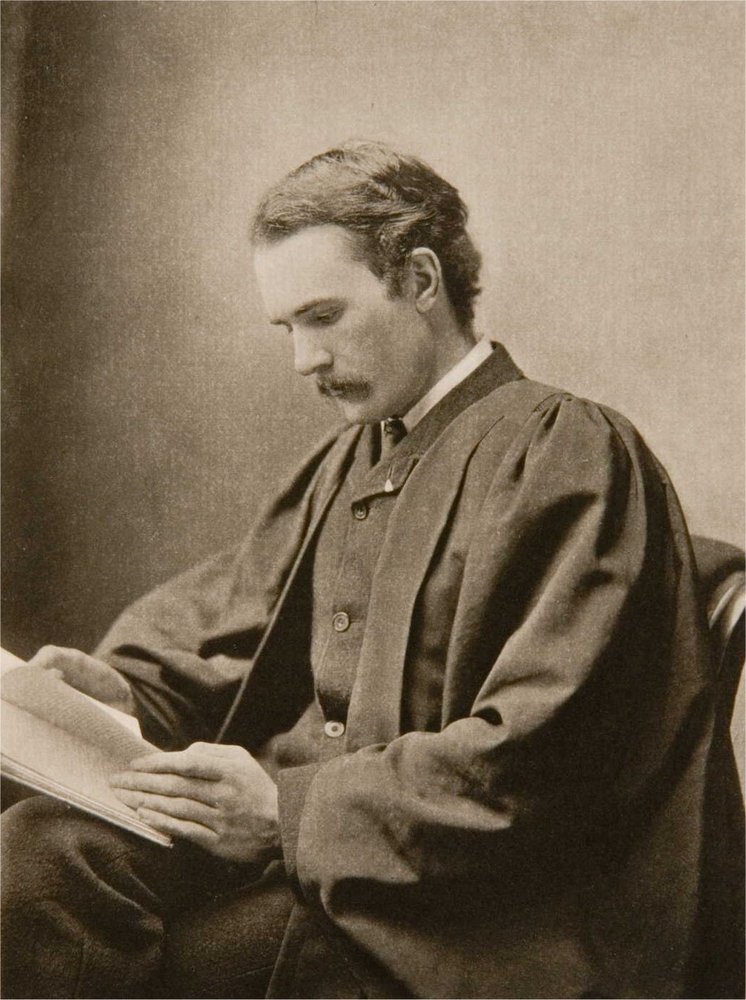 Gilbert Murray conducted early telepathy experiments. In the late 19th century the Creery Sisters (Mary, Alice, Maud, Kathleen, and Emily) were tested by the Society for Psychical Research and believed to have genuine psychic ability. However, during a later experiment they were caught utilizing signal codes and they confessed to fraud.[18][19] George Albert Smith and Douglas Blackburn were claimed to be genuine psychics by the Society for Psychical Research but Blackburn confessed to fraud: For nearly thirty years the telepathic experiments conducted by Mr. G. A. Smith and myself have been accepted and cited as the basic evidence of the truth of thought transference... ...the whole of those alleged experiments were bogus, and originated in the honest desire of two youths to show how easily men of scientific mind and training could be deceived when seeking for evidence in support of a theory they were wishful to establish.[20] Between 1916 and 1924, Gilbert Murray conducted 236 experiments into telepathy and reported 36% as successful. However, it was suggested that the results could be explained by hyperaesthesia as he could hear what was being said by the sender.[21][22][23][24][25] Psychologist Leonard T. Troland had carried out experiments in telepathy at Harvard University which were reported in 1917.[26][27][28][29] The subjects produced below chance expectations.[30] Arthur Conan Doyle and W. T. Stead were duped into believing Julius and Agnes Zancig had genuine psychic powers. Both Doyle and Stead wrote that the Zancigs performed telepathy. In 1924, Julius and Agnes Zancig confessed that their mind reading act was a trick and published the secret code and all the details of the trick method they had used under the title of Our Secrets!! in a London newspaper.[31] In 1924, Robert H. Gault of Northwestern University with Gardner Murphy conducted the first American radio test for telepathy. The results were entirely negative. One of their experiments involved the attempted thought transmission of a chosen number between one and one-thousand. Out of 2,010 replies, none was correct. This is below the theoretical chance figure of two correct replies in such a situation.[32] In February 1927, with the co-operation of the British Broadcasting Corporation (BBC), V. J. Woolley, who was at the time the Research Officer for the SPR, arranged a telepathy experiment in which radio listeners were asked to take part. The experiment involved 'agents' thinking about five selected objects in an office at Tavistock Square, whilst listeners on the radio were asked to identify the objects from the BBC studio at Savoy Hill. 24,659 answers were received. The results revealed no evidence of telepathy.[33][34] A famous experiment in telepathy was recorded by the American author Upton Sinclair in his book Mental Radio which documents Sinclair's test of psychic abilities of Mary Craig Sinclair, his second wife. She attempted to duplicate 290 pictures which were drawn by her husband. Sinclair claimed Mary successfully duplicated 65 of them, with 155 "partial successes" and 70 failures. However, these experiments were not conducted in a controlled scientific laboratory environment.[35] Science writer Martin Gardner suggested that the possibility of sensory leakage during the experiment had not been ruled out: In the first place, an intuitive wife, who knows her husband intimately, may be able to guess with a fair degree of accuracy what he is likely to draw—particularly if the picture is related to some freshly recalled event the two experienced in common. At first, simple pictures like chairs and tables would likely predominate, but as these are exhausted, the field of choice narrows and pictures are more likely to be suggested by recent experiences. It is also possible that Sinclair may have given conversational hints during some of the tests—hints which in his strong will to believe, he would promptly forget about. Also, one must not rule out the possibility that in many tests, made across the width of a room, Mrs. Sinclair may have seen the wiggling of the top of a pencil, or arm movements, which would convey to her unconscious a rough notion of the drawing.[35] |
事例研究 ギルバート・マレーは初期のテレパシー実験を行った。 19世紀末、クリーリー姉妹(メアリー、アリス、モード、キャスリーン、エミリー)は心霊研究協会による検証を受け、本物の超能力を持つと認められた。し かし後の実験で合図コードの使用が発覚し、彼女たちは詐欺を認めた。[18][19] ジョージ・アルバート・スミスとダグラス・ブラックバーンは心霊研究協会によって本物の超能力者と認められていたが、ブラックバーンは詐欺を自白した: G・A・スミス氏と私が行ったテレパシー実験は、ほぼ30年間にわたり、思考伝達の真実性を示す基本的証拠として受け入れられ引用されてきた... …それらのいわゆる実験の全ては偽物であり、科学的な思考と訓練を持つ人間が、自ら確立したい理論を支持する証拠を探す際に、いかに容易に騙されるかを示 すという、二人の若者の誠実な願望から始まったものである。[20] 1916年から1924年にかけて、ギルバート・マレーはテレパシーに関する236の実験を行い、36%を成功と報告した。しかし、送信者が発した言葉を 彼が聞き取れたことから、この結果は過敏症で説明できると指摘された。[21][22][23][24][25] 心理学者レナード・T・トロランドはハーバード大学でテレパシー実験を行い、1917年に報告した。[26][27][28][29] 被験者の結果は偶然の期待値を下回った。[30] アーサー・コナン・ドイルと W. T. ステッドは、ジュリアスとアグネス・ザンシグが本物の超能力を持っていると騙された。ドイルもステッドも、ザンシグ夫妻がテレパシーを行ったと書いた。 1924年、ジュリアスとアグネス・ザンシグは、彼らの心を読む行為はトリックだったことを告白し、その秘密のコードと、彼らが使用したトリックの方法の 詳細を、ロンドンの新聞に「Our Secrets!!」というタイトルで発表した。[31] 1924年、ノースウェスタン大学のロバート・H・ゴルトとガードナー・マーフィーは、アメリカで初めてテレパシーのラジオ実験を行った。結果は完全に否 定的だった。実験の一つは、1から1000までの数字の中から選ばれた数字を思考で伝達しようとするものだった。2,010件の回答のうち、正解は1件も なかった。これは、このような状況では理論的に2件の正解が出るという確率を下回っている。[32] 1927年2月、英国放送協会(BBC)の協力のもと、当時SPRの研究責任者だったV. J. ウーリーが、ラジオのリスナーに参加を求めるテレパシー実験を企画した。この実験では、「エージェント」がタヴィストック・スクエアのオフィスにある5つ の選ばれた物について考え、ラジオのリスナーはサヴォイ・ヒルのBBCスタジオからその物体を特定するよう求められた。24,659 件の回答が寄せられた。結果、テレパシーの証拠はまったく見られなかった。[33][34] テレパシーに関する有名な実験が、アメリカの作家アップトン・シンクレアによって著書『メンタル・ラジオ』に記録されている。この本には、シンクレアが2 番目の妻であるメアリー・クレイグ・シンクレアの超能力をテストした様子が記されている。彼女は、夫が描いた 290 枚の写真の複製を試みた。シンクレアは、メアリーが 65 枚の複製に成功し、155 枚は「部分的な成功」、70 枚は失敗だったと主張した。しかし、これらの実験は、管理された科学的な実験室環境では行われていなかった。[35] 科学作家のマーティン・ガードナーは、実験中に感覚的な情報が漏れた可能性を排除できないと指摘した。 そもそも、夫のことをよく知っている直感的な妻は、夫が描くであろう絵をかなりの精度で推測できるかもしれない。特に、その絵が、2人が最近一緒に経験し た出来事にまつわるものである場合はなおさらだ。最初は、椅子やテーブルのような単純な絵が主流になるだろうが、それらが尽きてくると、選択肢の幅は狭ま り、最近の経験から絵が思い浮かぶようになる可能性が高い。また、シンクレアがテスト中に会話でヒントを与えた可能性もある。彼は強く信じたいという意志 から、そうしたヒントをすぐに忘れてしまうだろう。さらに、部屋の端から端で行われた多くのテストにおいて、シンクレア夫人が鉛筆の先端の揺れや腕の動き を見て、無意識に絵の大まかなイメージを掴んでいた可能性も排除できない。[35] |
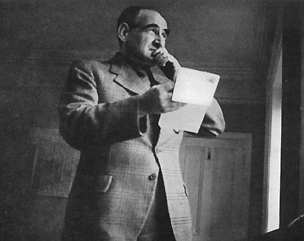 Frederick Marion who was investigated by the Society for Psychical Research in the late 1930–1940s. The Turner-Ownbey long distance telepathy experiment was discovered to contain flaws. May Frances Turner positioned herself in the Duke Parapsychology Laboratory whilst Sara Ownbey claimed to receive transmissions 250 miles away. For the experiment Turner would think of a symbol and write it down whilst Ownbey would write her guesses.[36] The scores were highly successful and both records were supposed to be sent to J. B. Rhine; however, Ownbey sent them to Turner. Critics pointed out this invalidated the results as she could have simply written her own record to agree with the other. When the experiment was repeated and the records were sent to Rhine the scores dropped to average.[36][37][38] Another example is the experiment carried out by the author Harold Sherman with the explorer Hubert Wilkins who carried out their own experiment in telepathy for five and a half months starting in October 1937. This took place when Sherman was in New York and Wilkins was in the Arctic. The experiment consisted of Sherman and Wilkins at the end of each day to relax and visualise a mental image or "thought impression" of the events or thoughts they had experienced in the day and then to record those images and thoughts on paper in a diary. The results at the end when comparing Sherman's and Wilkins' diaries were claimed to be more than 60 percent.[39] The full results of the experiments were published in 1942 in a book by Sherman and Wilkins titled Thoughts Through Space. In the book, both Sherman and Wilkins had written they believed they had demonstrated that it was possible to send and receive thought impressions from the mind of one person to another.[40] The magician John Booth wrote that the experiment was not an example of telepathy as a high percentage of misses had occurred. Booth wrote it was more likely that the "hits" were the result of "coincidence, law of averages, subconscious expectancy, logical inference or a plain lucky guess".[41] A review of their book in the American Journal of Orthopsychiatry cast doubt on their experiment, noting "the study was published five years after it was conducted, arouses suspicion on the validity of the conclusions.[42] In 1948, on the BBC radio Maurice Fogel made the claim that he could demonstrate telepathy. This intrigued the journalist Arthur Helliwell who wanted to discover his methods. He found that Fogel's mind reading acts were all based on trickery as he relied on information about members of his audience before the show started. Helliwell exposed Fogel's methods in a newspaper article. Although Fogel managed to fool some people into believing he could perform genuine telepathy, the majority of his audience knew he was a showman.[43] In a series of experiments Samuel Soal and his assistant K. M. Goldney examined 160 subjects over 128,000 trials and obtained no evidence for the existence of telepathy.[44] Soal tested Basil Shackleton and Gloria Stewart between 1941 and 1943 in over five hundred sittings and over twenty thousand guesses. Shackleton scored 2890 compared with a chance expectation of 2308 and Gloria scored 9410 compared with a chance level of 7420. It was later discovered the results had been tampered with. Gretl Albert who was present during many of the experiments said she had witnessed Soal altering the records during the sessions.[44] Betty Marwick discovered Soal had not used the method of random selection of numbers as he had claimed. Marwick showed that there had been manipulation of the score sheets and all experiments reported by Soal had thereby become discredited.[45][46] In 1979 the physicists John G. Taylor and Eduardo Balanovski wrote the only scientifically feasible explanation for telepathy could be electromagnetism (EM) involving EM fields. In a series of experiments the EM levels were many orders of magnitude lower than calculated and no paranormal effects were observed. Both Taylor and Balanovski wrote their results were a strong argument against the validity of telepathy.[47] Research in anomalistic psychology has discovered that in some cases telepathy can be explained by a covariation bias. In an experiment (Schienle et al. 1996) 22 believers and 20 skeptics were asked to judge the covariation between transmitted symbols and the corresponding feedback given by a receiver. According to the results the believers overestimated the number of successful transmissions whilst the skeptics made accurate hit judgments.[48] The results from another telepathy experiment involving 48 undergraduate college students (Rudski, 2002) were explained by hindsight and confirmation biases.[49] In 1995, Rupert Sheldrake published his book on alleged telepathic phenomena Seven Experiments That Could Change the World, claiming among other things that dogs have the telepathic ability to know when their owners are coming home.[50] In 1998, Richard Wiseman, Matthew Smith and Julie Milton published a paper putting forward other explanations for the behavior Sheldrake observed in animals while saying the results from their own experiments did not support Sheldrake's thesis.[51] |
1930年代後半から1940年代にかけて、心霊研究協会によって調査を受けたフレデリック・マリオン。 ターナーとオウンベイによる長距離テレパシー実験には欠陥があることが判明した。メイ・フランシス・ターナーはデューク大学超心理学研究所に身を置き、サ ラ・オウンベイは250マイル離れた場所で伝達を受け取ると主張した。実験では、ターナーがシンボルを思いついてそれを書き留め、オウンベイはそれを推測 して書き留めた。[36] 結果は非常に成功し、両方の記録は J. B. ラインに送られるはずだった。しかし、オウンベイはそれらをターナーに送った。批評家たちは、彼女が単に自分の記録を他の人と一致するように書くことがで きたため、この結果は無効であると指摘した。実験が繰り返され、記録がラインに送られたところ、結果は平均値に低下した。[36][37] [38] もう一つの例は、作家ハロルド・シャーマンと探検家ヒューバート・ウィルキンスが1937年10月から5ヶ月半にわたって行ったテレパシー実験だ。この実 験は、シャーマンがニューヨークに、ウィルキンスが北極圏にいたときに実施された。実験内容は、シャーマンとウィルキンスが毎日終了時にリラックスし、そ の日に経験した出来事や思考の「思考印象」を心象として視覚化。その後、それらのイメージや思考を日記に記録するというものだった。最終的にシャーマンと ウィルキンスの日記を比較した結果は、60%以上の正答率を主張している。[39] 実験の完全な結果は1942年、シャーマンとウィルキンスによる『Thoughts Through Space』という書籍で発表された。同書で両者は、ある人物の精神から別の人物へ思考印象を送受信することが可能であることを実証したと記している。 [40] しかし魔術師ジョン・ブースは、実験には高い割合の失敗が発生したため、これはテレパシーの例ではないと指摘した。ブースは「成功例」は「偶然、平均法 則、潜在的な期待、論理的推論、あるいは単なる幸運な推測」の結果である可能性が高いと記した。[41] 『アメリカ正精神医学雑誌』における同書評は「研究実施から5年後に発表されている点が結論の妥当性に疑念を抱かせる」と指摘し、実験の信頼性に疑問を呈 した。[42] 1948年、BBCラジオでモーリス・フォゲルがテレパシーの実演を主張した。これに興味を持ったジャーナリストのアーサー・ヘリウェルは、その手法を暴 こうとした。彼はフォゲルの心読行為が全て詐欺に依拠していることを発見した。フォゲルはショー開始前に観客に関する情報を入手していたのである。ヘリ ウェルは新聞記事でフォゲルの手法を暴露した。フォゲルは一部の人々に本物のテレパシー能力があると信じ込ませることに成功したが、観客の大半は彼が単な る興行師だと見抜いていた。[43] 一連の実験において、サミュエル・ソールと助手のK・M・ゴールドニーは160名の被験者を対象に128,000回以上の試行を実施したが、テレパシーの 存在を示す証拠は得られなかった。ソールは1941年から1943年にかけ、バジル・シャックルトンとグロリア・スチュワートに対し、500回以上のセッ ションと2万回以上の推測テストを実施した。シャックルトンの得点は2890(偶然の期待値2308)、グロリアの得点は9410(偶然の期待値 7420)であった。後に結果が改ざんされていたことが判明した。実験の多くに立ち会ったグレトル・アルバートは、ソアルがセッション中に記録を改竄する のを目撃したと証言している。[44] ベティ・マーウィックは、ソアルが主張していたような数字の無作為抽出法が用いられていなかったことを発見した。マーウィックはスコアシートの操作があっ たことを示し、ソアルが報告した全ての実験は信用を失った。[45] [46] 1979年、物理学者ジョン・G・テイラーとエドゥアルド・バラノフスキーは、テレパシーの唯一科学的に可能な説明は電磁気学(EM)と電磁場(EM フィールド)に関わる現象だと記した。一連の実験では、電磁気レベルは計算値より何桁も低く、超常現象は観測されなかった。両者はこの結果がテレパシーの 有効性に対する強力な反証だと記している。[47] 異常心理学の研究では、テレパシーが共変バイアスで説明できる事例が発見されている。ある実験(Schienle et al. 1996)では、22名の信者と20名の懐疑者に、送信された記号と受信者が与えたフィードバックの共変関係を判断させた。結果、信者は成功した送信回数 を過大評価したのに対し、懐疑者は正確なヒット判定を行った。[48] 別のテレパシー実験(48名の大学生対象、Rudski, 2002)の結果は、後知恵バイアスと確証バイアスによって説明された。[49] 1995年、ルパート・シェルドレイクはテレパシー現象に関する著書『世界を変えるかもしれない7つの実験』を出版し、犬が飼い主の帰宅時刻をテレパシー で感知する能力を持つなど、様々な主張を展開した。[50] 1998年、リチャード・ワイズマン、マシュー・スミス、ジュリー・ミルトンは論文を発表し、シェルドラックが動物に観察した行動に対する別の説明を提示 した。同時に、彼ら自身の実験結果はシェルドラックの主張を支持しないと述べた。[51] |
| In parapsychology Within parapsychology, telepathy, often along with precognition and clairvoyance, is described as an aspect of extrasensory perception (ESP) or "anomalous cognition" that parapsychologists believe is transferred through a hypothetical psychic mechanism they call "psi".[52] Parapsychologists have reported experiments they use to test for telepathic abilities. Among the most well known are the use of Zener cards and the Ganzfeld experiment. Types Several forms of telepathy have been suggested:[7] Latent telepathy, formerly known as "deferred telepathy",[53] describes a transfer of information with an observable time-lag between transmission and reception.[7] Retrocognitive, precognitive, and intuitive telepathy describes the transfer of information about the past, future or present state of an individual's mind to another individual.[7] Emotive telepathy, also known as remote influence[54] or emotional transfer, describes the transfer of kinesthetic sensations through altered states. Superconscious telepathy describes use of the supposed superconscious[55] to access the collective wisdom of the human species for knowledge. Zener cards Main article: Zener cards 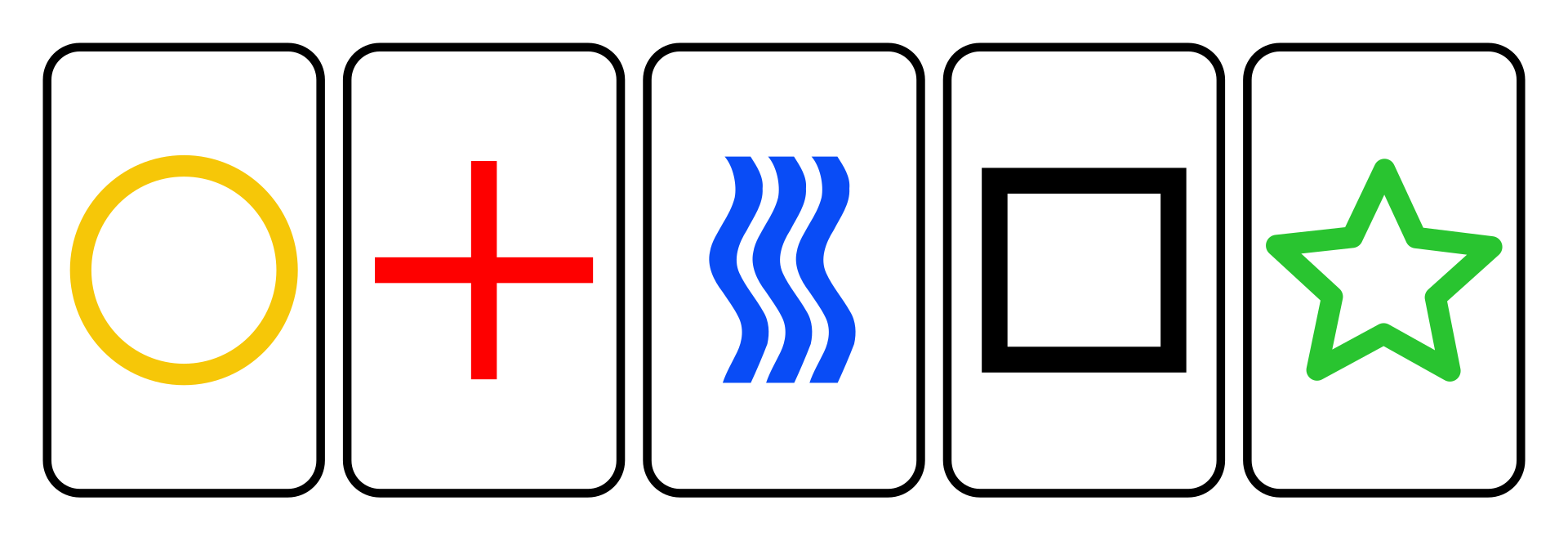 Zener cards Zener cards are marked with five distinctive symbols. When using them, one individual is designated the "sender" and another the "receiver". The sender selects a random card and visualizes the symbol on it, while the receiver attempts to determine that symbol telepathically. Statistically, the receiver has a 20% chance of randomly guessing the correct symbol, so to demonstrate telepathy, they must repeatedly score a success rate that is significantly higher than 20%.[56] If not conducted properly, this method is vulnerable to sensory leakage and card counting.[56] J. B. Rhine's experiments with Zener cards were discredited due to the discovery that sensory leakage or cheating could account for all his results such as the subject being able to read the symbols from the back of the cards and being able to see and hear the experimenter to note subtle clues.[57] Once Rhine took precautions in response to criticisms of his methods, he was unable to find any high-scoring subjects.[58] Due to the methodological problems, parapsychologists no longer utilize card-guessing studies.[59] Dream telepathy Parapsychological studies into dream telepathy were carried out at the Maimonides Medical Center in Brooklyn, New York led by Stanley Krippner and Montague Ullman. They concluded the results from some of their experiments supported dream telepathy.[60] However, the results have not been independently replicated.[61][62][63][64] The psychologist James Alcock has written the dream telepathy experiments at Maimonides have failed to provide evidence for telepathy and "lack of replication is rampant."[65] The picture target experiments that were conducted by Krippner and Ullman were criticized by C. E. M. Hansel. According to Hansel there were weaknesses in the design of the experiments in the way in which the agent became aware of their target picture. Only the agent should have known the target and no other person until the judging of targets had been completed, however, an experimenter was with the agent when the target envelope was opened. Hansel also wrote there had been poor controls in the experiment as the main experimenter could communicate with the subject.[66] An attempt to replicate the experiments that used picture targets was carried out by Edward Belvedere and David Foulkes. The finding was that neither the subject nor the judges matched the targets with dreams above chance level.[67] Results from other experiments by Belvedere and Foulkes were also negative.[68] Ganzfeld experiment When using the Ganzfeld experiment to test for telepathy, one individual is designated as the receiver and is placed inside a controlled environment where they are deprived of sensory input, and another person is designated as the sender and is placed in a separate location. The receiver is then required to receive information from the sender. The nature of the information may vary between experiments.[69] The Ganzfeld experiment studies that were examined by Ray Hyman and Charles Honorton had methodological problems that were well documented. Honorton reported only 36% of the studies used duplicate target sets of pictures to avoid handling cues.[70] Hyman discovered flaws in all of the 42 Ganzfeld experiments and to access each experiment, he devised a set of 12 categories of flaws. Six of these concerned statistical defects, the other six covered procedural flaws such as inadequate documentation, randomization and security as well as possibilities of sensory leakage.[71] Over half of the studies failed to safeguard against sensory leakage and all of the studies contained at least one of the 12 flaws. Because of the flaws, Honorton agreed with Hyman the 42 Ganzfeld studies could not support the claim for the existence of psi.[71] Possibilities of sensory leakage in the Ganzfeld experiments included the receivers hearing what was going on in the sender's room next door as the rooms were not soundproof and the sender's fingerprints to be visible on the target object for the receiver to see.[72][73] Hyman also reviewed the autoganzfeld experiments and discovered a pattern in the data that implied a visual cue may have taken place: The most suspicious pattern was that the hit rate for a given target increased with the frequency of occurrence of that target in the experiment. The hit rate for the targets that occurred only once was right at the chance expectation of 25%. For targets that appeared twice the hit rate crept up to 28%. For those that occurred three times it was 38%, and for those targets that occurred six or more times, the hit rate was 52%. Each time a videotape is played its quality can degrade. It is plausible then, that when a frequently used clip is the target for a given session, it may be physically distinguishable from the other three decoy clips that are presented to the subject for judging. Surprisingly, the parapsychological community has not taken this finding seriously. They still include the autoganzfeld series in their meta-analyses and treat it as convincing evidence for the reality of psi.[71] Hyman wrote the autoganzfeld experiments were flawed because they did not preclude the possibility of sensory leakage.[71] In 2010, Lance Storm, Patrizio Tressoldi, and Lorenzo Di Risio analyzed 29 ganzfeld studies from 1997 to 2008. Of the 1,498 trials, 483 produced hits, corresponding to a hit rate of 32.2%. This hit rate is statistically significant with p < .001. Participants selected for personality traits and personal characteristics thought to be psi-conducive were found to perform significantly better than unselected participants in the ganzfeld condition.[74] Hyman (2010) published a rebuttal to Storm et al. According to Hyman "reliance on meta-analysis as the sole basis for justifying the claim that an anomaly exists and that the evidence for it is consistent and replicable is fallacious. It distorts what scientists mean by confirmatory evidence." Hyman wrote the ganzfeld studies have not been independently replicated and have failed to produce evidence for telepathy.[75] Storm et al. published a response to Hyman claiming the ganzfeld experimental design has proved to be consistent and reliable but parapsychology is a struggling discipline that has not received much attention so further research on the subject is necessary.[76] Rouder et al. 2013 wrote that critical evaluation of Storm et al.'s meta-analysis reveals no evidence for telepathy, no plausible mechanism and omitted replication failures.[77] A 2016 paper examined questionable research practices in the ganzfeld experiments.[78] Twin telepathy Twin telepathy is a belief that has been described as a myth in psychological literature. Psychologists Stephen Hupp and Jeremy Jewell have noted that all experiments on the subject have failed to provide any scientific evidence for telepathy between twins.[79] According to Hupp and Jewell there are various behavioral and genetic factors that contribute to the twin telepathy myth "identical twins typically spend a lot of time together and are usually exposed to very similar environments. Thus, it's not at all surprising that they act in similar ways and are adept at anticipating and forecasting each other's reactions to events."[79] A 1993 study by Susan Blackmore investigated the claims of twin telepathy. In an experiment with six sets of twins one subject would act as the sender and the other the receiver. The sender was given selected objects, photographs or numbers and would attempt to psychically send the information to the receiver. The results from the experiment were negative, no evidence of telepathy was observed.[80] The skeptical investigator Benjamin Radford has noted that "Despite decades of research trying to prove telepathy, there is no credible scientific evidence that psychic powers exist, either in the general population or among twins specifically. The idea that two people who shared their mother's womb—or even who share the same DNA—have a mysterious mental connection is an intriguing one not borne out in science."[81] Autism Telepathy There are multiple anecdotes[82] in "The Telepathy Tapes" podcast of people on the autistic spectrum transferring information telepathically. |
超心理学において 超心理学では、テレパシーは予知能力や透視能力と共に、超感覚的知覚(ESP)あるいは「異常認知」の一形態として説明される。超心理学者はこれを「サ イ」と呼ぶ仮説的な精神メカニズムを通じて伝達されると考えている。[52] 超心理学者はテレパシー能力を検証するための実験を報告している。最もよく知られているのは、ゼナーカードの使用とガンツフェルト実験である。 種類 いくつかのテレパシーの形態が提案されている:[7] 潜在テレパシー(旧称「遅延テレパシー」)[53]は、送信と受信の間に観察可能な時間差を伴う情報の伝達を説明する。[7] 回顧的テレパシー、予知的テレパシー、直感的テレパシーは、個人の心の過去・未来・現在の状態に関する情報を他者に伝達する現象を指す。[7] 感情テレパシー(遠隔影響[54]または感情伝達とも呼ばれる)は、変性意識状態を介した運動感覚の伝達を説明する。 超意識テレパシーは、仮定される超意識[55]を用いて人類の集合的知恵にアクセスし知識を得ることを指す。 ゼナーカード 詳細記事: ゼナーカード ゼナーカード ゼナーカードには5種類の特徴的な記号が記されている。使用時には、一人が「送信者」、もう一人が「受信者」となる。送信者はランダムにカードを選び、そ の記号を視覚化する。一方受信者はテレパシーでその記号を特定しようとする。統計的には受信者が正しい記号を偶然当てる確率は20%である。したがってテ レパシーを実証するには、20%を大幅に上回る成功率を繰り返し達成しなければならない[56]。適切に実施されない場合、この方法は感覚的リークやカー ドカウントの影響を受けやすい[56]。 J・B・ラインによるゼナーカード実験は、被験者がカードの裏から記号を読み取れたり、実験者の動作や声から微妙な手がかりを察知できたことなど、感覚的 リークや不正行為で全結果が説明可能だと判明したため信用を失った。[57] ラインが手法への批判を受けて対策を講じた後、高成績の被験者は一人も見つからなかった。[58] 方法論上の問題から、超心理学者はもはやカード推測研究を利用しない。[59] 夢テレパシー 夢テレパシーに関する超心理学的研究は、スタンリー・クリップナーとモンタギュー・ウルマンの主導でニューヨーク州ブルックリンのマイモニデス医療セン ターで行われた。彼らは、実験結果の一部が夢テレパシーを支持すると結論づけた。[60] しかし、この結果は独立して再現されていない。[61][62][63][64] 心理学者ジェームズ・アルコックは、マイモニデスの夢テレパシー実験はテレパシーの証拠を提供できず、「再現性の欠如が蔓延している」と記している。 [65] クリップナーとウルマンが実施した写真標的実験は、C. E. M. ハンゼルによって批判された。ハンセルによれば、実験設計には被験者がターゲット画像を認識する過程に欠陥があった。ターゲットは被験者だけが知るべきで あり、判定完了まで他者が知るべきではなかったが、実際にはターゲット封筒開封時に実験者が同席していた。またハンセルは、主実験者が被験者と意思疎通で きた点で実験の管理が不十分だったと記している。[66] エドワード・ベルヴェデーレとデイヴィッド・フォークスにより、画像標的を用いた実験の再現試みが実施された。その結果、被験者も判定者も、偶然のレベル を超えて標的と夢を一致させられなかったことが判明した[67]。ベルヴェデーレとフォークスによる他の実験結果も否定的なものだった。[68] ガンツフェルト実験 テレパシーを検証するガンツフェルト実験では、1人が受信者として感覚入力を遮断された制御環境内に配置され、別の人物が送信者として別の場所に置かれる。受信者は送信者からの情報を受け取ることを求められる。情報の性質は実験によって異なる。[69] レイ・ハイマンとチャールズ・ホノートンが検証したガンツフェルト実験研究には、方法論上の問題が明確に記録されていた。ホノートンによれば、手がかりの 取り扱いを避けるため、対象画像の複製セットを使用した研究はわずか36%だった。[70] ハイマンは42件のガンツフェルト実験全てに欠陥を発見し、各実験を評価するために12種類の欠陥カテゴリーを設定した。このうち6つは統計的欠陥、残り 6つは不十分な記録・無作為化・セキュリティといった手順上の欠陥、および感覚的漏洩の可能性を網羅していた。[71]半数以上の研究が感覚的漏洩の防止 策を講じておらず、全研究が12の欠陥のうち少なくとも1つを含んでいた。これらの欠陥のため、ホノートンはハイマンの見解に同意し、42件のガンツフェ ルト研究は超能力の存在を支持できないと結論付けた。[71] ガンツフェルト実験における感覚漏洩の可能性には、防音されていない隣室で送信者が行う動作を受信者が聴取するケースや、対象物に付着した送信者の指紋を受信者が視認するケースが含まれた[72][73]。 ハイマンは自動ガンツフェルト実験も検証し、視覚的手がかりの存在を示唆するデータパターンを発見した: 最も疑わしいパターンは、特定のターゲットに対する的中率が、そのターゲットが実験で出現した頻度と共に上昇したことだ。一度しか出現しなかったターゲッ トの的中率は、偶然の期待値である25%にぴったりだった。二度出現したターゲットでは的中率が28%に上昇し、三度出現したものは38%、六度以上出現 したターゲットでは52%に達した。ビデオテープは再生するたびに画質が劣化することがある。したがって、頻繁に使用されるクリップが特定のセッションの ターゲットとなる場合、被験者に提示される他の3つの偽クリップと物理的に区別できる可能性がある。驚くべきことに、超心理学界はこの発見を真剣に受け止 めていない。彼らは依然としてオートガンツフェルト実験シリーズをメタ分析に含め、超能力の実在性を示す説得力のある証拠として扱っている。[71] ハイマンは、オートガンツフェルト実験が感覚的リークの可能性を排除していない点で欠陥があると記した[71]。2010年、ランス・ストーム、パトリ ツィオ・トレッソルディ、ロレンツォ・ディ・リジオは1997年から2008年までの29件のガンツフェルト研究を分析した。1,498回の試行のうち 483回が的中し、的中率は32.2%であった。この的中率はp < .001で統計的に有意である。超能力発現に有利とされる性格特性や個人特性を基準に選抜された被験者は、ガンツフェルト条件下で無作為抽出の被験者より 有意に優れた成績を示した。[74] ハイマン(2010)はストームらへの反論を発表した。ハイマンによれば「異常現象の存在と、その証拠が一貫性・再現性を有すると主張する根拠としてメタ 分析のみに依拠するのは誤謬である。これは科学者が確認的証拠と定義するものを歪める」と指摘。ガンツフェルト研究は独立した再現研究が行われておらず、 テレパシーの証拠を提示できていないと記した。[75] StormらはHymanへの反論を発表し、ガンツフェルト実験設計は一貫性と信頼性が証明されていると主張した。しかし超心理学は苦戦する学問分野であ り、十分な注目を得ていないため、この主題に関するさらなる研究が必要だと述べた。[76] Rouderらは2013年、Stormらのメタ分析を批判的に評価した結果、テレパシーの証拠はなく、妥当なメカニズムも存在せず、再現性の失敗が省略 されていたと記した。[77] 2016年の論文はガンツフェルト実験における疑わしい研究手法を検証した。 双子のテレパシー 双子のテレパシーは心理学文献で神話と評される信念である。心理学者スティーブン・ハップとジェレミー・ジュエルは、この主題に関する全ての実験が双子間 のテレパシーを科学的に証明できなかったと指摘している。[79] ハップとジュエルによれば、双子テレパシー神話には様々な行動的・遺伝的要因が関与している。「一卵性双生児は通常、多くの時間を共に過ごし、非常に類似 した環境に曝される。したがって、彼らが類似した行動を取り、互いの反応を予測・予見することに長けているのは全く驚くべきことではない」[79] スーザン・ブラックモアによる1993年の研究は双子テレパシーの主張を検証した。6組の双子を用いた実験では、一方の被験者が送信者、他方が受信者と なった。送信者には選択された物体・写真・数字が与えられ、テレパシーで受信者に情報を送るよう試みた。実験結果は否定的で、テレパシーの証拠は観察され なかった。[80] 懐疑的な調査者ベンジャミン・ラドフォードは次のように指摘している。「テレパシーを証明しようとする数十年にわたる研究にもかかわらず、一般の人々にお いても、特に双子においても、超能力が存在するとの信頼できる科学的証拠は存在しない。同じ母親の胎内を共有した二人、あるいは同じDNAを共有する二人 でさえ、神秘的な精神的つながりを持つという考えは興味深いものだが、科学的には裏付けられていない。」[81] 自閉症とテレパシー ポッドキャスト『The Telepathy Tapes』には、自閉症スペクトラムの人々がテレパシーで情報を伝達したという複数の事例[82]が紹介されている。 |
| Scientific reception A variety of tests have been performed to demonstrate telepathy, but there is no scientific evidence that the power exists.[9][83][84][85] A panel commissioned by the United States National Research Council to study paranormal claims concluded that "despite a 130-year record of scientific research on such matters, our committee could find no scientific justification for the existence of phenomena such as extrasensory perception, mental telepathy or 'mind over matter' exercises... Evaluation of a large body of the best available evidence simply does not support the contention that these phenomena exist."[86] The scientific community considers parapsychology a pseudoscience.[87][88][89][90] There is no known mechanism for telepathy.[91] Philosopher and physicist Mario Bunge has written that telepathy would contradict laws of science and the claim that "signals can be transmitted across space without fading with distance is inconsistent with physics".[92] Physicist John Taylor has written that the experiments that have been claimed by parapsychologists to support evidence for the existence of telepathy are based on the use of shaky statistical analysis and poor design, and attempts to duplicate such experiments by the scientific community have failed. Taylor also wrote the arguments used by parapsychologists for the feasibility of such phenomena are based on distortions of theoretical physics as well as "complete ignorance" of relevant areas of physics.[93] Psychologist Stuart Sutherland wrote that cases of telepathy can be explained by people underestimating the probability of coincidences. According to Sutherland, "most stories about this phenomenon concern people who are close to one another—husband and wife or brother and sister. Since such people have much in common, it is highly probable that they will sometimes think the same thought at the same time."[94] Graham Reed, a specialist in anomalistic psychology, noted that experiments into telepathy often involve the subject relaxing and reporting the 'messages' to consist of colored geometric shapes. Reed wrote that these are a common type of hypnagogic image and not evidence for telepathic communication.[95] Outside of parapsychology, telepathy is generally explained as the result of fraud, self-delusion and/or self-deception and not as a paranormal power.[8][96] Psychological research has also revealed other explanations such as confirmation bias, expectancy bias, sensory leakage, subjective validation, and wishful thinking.[97] Virtually all of the instances of more popular psychic phenomena, such as mediumship, can be attributed to non-paranormal techniques such as cold reading.[98][99] Magicians such as Ian Rowland and Derren Brown have demonstrated techniques and results similar to those of popular psychics, albeit without claiming paranormal skills. They have identified, described, and developed psychological techniques of cold reading and hot reading. |
科学的評価 テレパシーを実証するための様々な実験が行われてきたが、その能力が存在する科学的証拠は存在しない。[9][83][84] [85] 米国国立研究評議会が超常現象の主張を調査するために設置した委員会は、「この分野における130年にわたる科学的研究の記録にもかかわらず、我々の委員 会は超感覚的知覚、テレパシー、あるいは『精神が物質に作用する』ような現象の存在を科学的に正当化する根拠を見出せなかった…入手可能な最良の証拠の大 半を評価した結果、これらの現象が存在するとの主張を支持するものは何もない」と結論づけた。[86] 科学界は超心理学を疑似科学と見なしている。[87][88][89][90] テレパシーの作用メカニズムは未だ知られていない。[91] 哲学者兼物理学者マリオ・ブンゲは「テレパシーは科学法則に反する」と記し、「距離に比例して減衰しない信号が空間を伝達できるという主張は物理学と矛盾 する」と論じている。[92] 物理学者ジョン・テイラーは、超心理学者がテレパシーの存在を裏付ける証拠として主張している実験は、不安定な統計分析と不十分な設計に基づいており、科 学界によるそのような実験の再現の試みは失敗に終わっていると書いている。テイラーはまた、超心理学者がそのような現象の実現可能性について用いている議 論は、理論物理学の歪曲と、物理学の関連分野に対する「完全な無知」に基づいていると書いている。[93] 心理学者スチュワート・サザーランドは、テレパシーの事例は、人々が偶然の一致の確率を過小評価していることで説明できると書いている。サザーランドによ れば、「この現象に関するほとんどの事例は、夫と妻、兄弟姉妹など、互いに親しい人々に関するものである。そのような人々は多くの共通点を持っているた め、時には同時に同じ考えを持つ可能性が非常に高い」という。[94] 異常心理学の専門家であるグラハム・リードは、テレパシーに関する実験では、被験者がリラックスし、色付きの幾何学的形状で構成される「メッセージ」を報 告することが多いと指摘している。リードは、これらは一般的な入眠時イメージであり、テレパシーによるコミュニケーションの証拠ではないと書いている。 [95] 超心理学の領域外では、テレパシーは超常能力ではなく、詐欺、自己欺瞞、あるいは自己欺瞞の結果として説明されるのが一般的だ。[8][96] 心理学的研究もまた、確認バイアス、期待バイアス、感覚的リーク、主観的検証、願望的思考といった他の説明を明らかにしている。[97] 霊媒術などより一般的な超常現象の事例は、ほぼ全てコールドリーディングのような超常現象ではない技術に帰せられる。[98][99] イアン・ローランドやデレン・ブラウンといった魔術師は、超常能力を主張せずとも、人気霊能者と類似した技術と結果を実演してきた。彼らはコールドリー ディングやホットリーディングといった心理的技法を特定し、説明し、発展させてきた。 |
| Psychiatry The notion of telepathy is not dissimilar to three clinical concepts: delusions of thought insertion/removal and thought broadcasting. This similarity might explain how an individual might come to the conclusion that he or she were experiencing telepathy. Thought insertion/removal is a symptom of psychosis, particularly of schizophrenia, schizoaffective disorder or substance-induced psychosis.[100] Psychiatric patients who experience this symptom falsely believe that some of their thoughts are not their own and that others (e.g., other people, aliens, demons or fallen angels, or conspiring intelligence agencies, or artificial intelligences) are putting thoughts into their minds (thought insertion). Some patients feel as if thoughts are being taken out of their minds or deleted (thought removal). Schizophrenic patients suffering from the form of alleged telepathy known as thought broadcasting believe that their private thoughts are being broadcast to other people against their informed consent. Along with other symptoms of psychosis, delusions of thought insertion may be reduced by antipsychotic medication. Psychiatrists and clinical psychologists believe and empirical findings support the idea that people with schizotypy and schizotypal personality disorder are particularly likely to believe in telepathy.[101][102][103] Use in fiction See also the categories Fiction about telepathy and Fictional telepaths Telepathy is a common theme in science fiction.[104] |
精神医学 テレパシーの概念は、三つの臨床概念と似通っている。思考挿入・除去妄想と思考放送である。この類似性が、個人がテレパシーを経験していると結論づける過 程を説明しうる。思考挿入/除去は精神病、特に統合失調症、統合失調感情障害、または薬物誘発性精神病の症状である[100]。この症状を経験する精神科 患者は、自身の思考の一部が自己のものではなく、他者(例:他の人間、宇宙人、悪魔や堕天使、陰謀を企てる情報機関、人工知能)が思考を自分の心に植え付 けている(思考挿入)と誤って信じる。一部の患者は、思考が頭から取り出されたり削除されたりする感覚を覚える(思考除去)。思考放送と呼ばれる超能力の 形態に苦悩する統合失調症患者は、自分の内面の思考が、本人の同意なしに他人に放送されていると信じている。他の精神病症状と同様に、思考挿入の妄想は抗 精神病薬によって軽減される可能性がある。精神科医や臨床心理士は、統合失調質や統合失調質性人格障害を持つ人々が特にテレパシーを信じやすいという考え を支持しており、実証的研究結果もこれを裏付けている。[101][102][103] フィクションにおける使用 関連項目:テレパシーを題材としたフィクション、架空のテレパシー能力者 テレパシーはSF作品で頻繁に取り上げられるテーマである。[104] |
| Brain–brain interface Extended Mind, the concept that things frequently used by the mind become part of it. Ishin-denshin, traditional Japanese concept of unspoken mutual understanding, sometimes translated as "telepathy". Lady Wonder, a horse that appeared to answer questions. Microwave auditory effect for hearing and subvocal recognition for speaking. Synthetic telepathy |
脳間インターフェース 拡張された心。これは、心によって頻繁に使用されるものが心の一部となるという概念だ。 心電感応。これは、言葉にしない相互理解を表す日本の伝統的な概念で、時に「テレパシー」と訳される。 レディ・ワンダー。これは、質問に答えるように見えた馬だ。 マイクロ波聴覚効果による聴覚と、発話のための内言認識。 合成テレパシー |
| Notes 01. Marks, David; Kammann, Richard. (2000). The Psychology of the Psychic. Prometheus Books. pp. 97–106. ISBN 1573927988 Hyman, Ray. Evaluating Parapsychological Claims. In Robert J. Sternberg, Henry L. Roediger, Diane F. Halpern. (2007). Critical Thinking in Psychology. Cambridge University Press. pp. 216–231. ISBN 978-0521608343 "telepathy". Collins English Dictionary. HarperCollins. OCLC 1120411289. Following the model of sympathy and empathy. Hamilton, Trevor (2009). Immortal Longings: F.W.H. Myers and the Victorian search for life after death. Imprint Academic. p. 121. ISBN 978-1845402488. Carroll, Robert Todd (2005). "The Skeptic's Dictionary; Telepathy". Skepdic.com. Retrieved 2006-09-13. Glossary of Parapsychological terms – Telepathy Archived 2006-09-27 at the Wayback Machine – Parapsychological Association. Retrieved December 19, 2006. Felix Planer. (1980). Superstition. Cassell. p. 218. ISBN 0304306916 "Many experiments have attempted to bring scientific methods to bear on the investigation of the subject. Their results based on literally millions of tests, have made it abundantly clear that there exists no such phenomenon as telepathy, and that the seemingly successful scores have relied either on illusion, or on deception." Jan Dalkvist (1994). Telepathic Group Communication of Emotions as a Function of Belief in Telepathy. Dept. of Psychology, Stockholm University. Retrieved 5 October 2011. Within the scientific community however, the claim that psi anomalies exist or may exist is in general regarded with skepticism. One reason for this difference between the scientist and the non scientist is that the former relies on his own experiences and anecdotal reports of psi phenomena, whereas the scientist at least officially requires replicable results from well controlled experiments to believe in such phenomena—results which according to the prevailing view among scientists, do not exist. 10. Willem B. Drees (28 November 1998). Religion, Science and Naturalism. Cambridge University Press. pp. 242–. ISBN 978-0521645621. Retrieved 5 October 2011. Let me take the example of claims in parapsychology regarding telepathy across spatial or temporal distances, apparently without a mediating physical process. Such claims are at odds with the scientific consensus. Spencer Rathus. (2011). Psychology: Concepts and Connections. Cengage Learning. p. 143. ISBN 978-1111344856 "There is no adequate scientific evidence that people can read other people's minds. Research has not identified one single indisputable telepath or clairvoyant." Oppenheim, Janet. (1985). The Other World: Spiritualism and Psychical Research in England, 1850–1914. Cambridge University Press. pp. 135–249. ISBN 978-0521265058 Luckhurst, Roger. (2002). The Invention of Telepathy, 1870–1901. Oxford University Press. pp. 9–51. ISBN 978-0199249626 Dingwall, Eric. (1985). The Need for Responsibility in Parapsychology: My Sixty Years in Psychical Research. In A Skeptic's Handbook of Parapsychology. Prometheus Books. pp. 161–174. ISBN 0879753005 "Let me give an example, such as thought-transference, which is as good as any. When the British SPR was founded, the public was led to believe that at least a scientific survey was to be made, and I have no doubt that even some of those closely associated with the early days thought so too. But Myers, among others, had no such intention and cherished no such illusion. He knew that the primary aim of the Society was not objective experimentation but the establishment of telepathy. (...) What was wanted was proof that mind could communicate with mind apart from the normal avenues, for if mental sharing was a fact when the persons concerned were incarnate it could plausibly be suggested that the same mechanism might operate when death had occurred. Thus the supernatural might be proved by science, and psychical research might become, in the words of Sir William Barrett, a handmaid to religion." Roger Luckhurst. (2002). The Invention of Telepathy: 18701901. Oxford University Press. p. 63. ISBN 978-0199249626 Richard Wiseman. (2011). Paranormality: Why We See What Isn't There. Macmillan. pp. 140–142. ISBN 978-0230752986 Thurschwell, Pamela (2004). "Chapter 4: George Eliot's Prophecies: Coercive Second Sight and Everyday Though Reading". In Nicola Bown; Carolyn Burdett; Pamela Thurschwell; Gillian Beer (eds.). The Victorian Supernatural. Cambridge University Press. pp. 87–108. ISBN 978-0521810159. Ray Hyman. (1989). The Elusive Quarry: A Scientific Appraisal of Psychical Research. Prometheus Books. pp. 99–106 Gordon Stein. (1996). The Encyclopedia of the Paranormal. Prometheus Books. p. 688 20. Neher, Andrew. (2011). Paranormal and Transcendental Experience: A Psychological Examination. Dover Publications. p. 220. ISBN 0486261670 Payne, Kenneth Wilcox. (1928). Is Telepathy all Bunk? Popular Science Monthly. p. 119 Couttie, Bob. (1988). Forbidden Knowledge: The Paranormal Paradox. Lutterworth Press. p. 129. ISBN 978-0718826864 "In the early 1900s Gilbert Murray, who died in 1957, carried out some experiments in ESP in which he was in one room and the sender in a hallway, often with an open door between them. These experiments were successful. Most of the time the target was spoken aloud. When it was not, there were negative results. This is suggestive of a hyperacuity of hearing, especially since on at least one occasion Murray complained about noise coming from a milk-cart in the street next to the one in which the experiments were being carried out." Mauskopf, Seymour H; McVaugh, Michael Rogers. (1980). The Elusive Science: Origins of Experimental Psychical Research. Johns Hopkins University Press. p. 331. ISBN 978-0801823312 Zusne, Leonard; Jones, Warren H. (1989). Anomalistic Psychology: A Study of Magical Thinking. Lawrence Erlbaum Associates, Inc. p. 155. ISBN 978-0805805079 Anderson, Rodger. (2006). Psychics, Sensitives and Somnambules: A Biographical Dictionary with Bibliographies. McFarland. p. 126. ISBN 0786427701 Christopher, Milbourne. (1971). ESP, Seers & Psychics. Crowell. p. 19. ISBN 978-0690268157 Berger, Arthur S. (1988). Lives and Letters in American Parapsychology: A Biographical History, 1850–1897. McFarland. p. 66. ISBN 0899503454 Luckhurst, Roger. (2002). The Invention of Telepathy: 1870–1901. Oxford University Press. p. 269. ISBN 978-0199249626 Hannan, Caryn. (2008 edition). Connecticut Biographical Dictionary. State History Publications. p. 526. ISBN 1878592726 "On his return to Harvard in 1916, one of his first enterprises was an investigation of telepathy in the psychology laboratory, which gave negative results." 30. Asprem, Egil. (2014). The Problem of Disenchantment: Scientific Naturalism and Esoteric Discourse, 1900–1939. Brill Academic Publishers. pp. 362–364. ISBN 978-9004251922 John Booth. (1986). Psychic Paradoxes. Prometheus Books. p. 8 Gault, Robert H. (August, 1924). Telepathy Put to the Test. Popular Science. pp. 114–115 Mauskopf, Seymour H; McVaugh, Michael Rogers. (1980). The Elusive Science: Origins of Experimental Psychical Research. Johns Hopkins University Press. pp. 36–38. ISBN 978-0801823312 Edmunds, Simeon. (1965). Miracles of the Mind: An Introduction to Parapsychology. C. C. Thomas. pp. 26–28 Martin Gardner, Fads & Fallacies in the Name of Science (Courier Dover Publications, 1957) Chapter 25: ESP and PK, available online; accessed July 25, 2010. John Sladek. (1974). The New Apocrypha: A Guide to Strange Sciences and Occult Beliefs. Panther. pp. 172–174 Bergen Evans. (1954). The Spoor of Spooks: And Other Nonsense. Knopf. p. 24 C. E. M. Hansel. (1989). The Search for Psychic Power: ESP and Parapsychology Revisited. Prometheus Books. pp. 56–58. ISBN 0879755164 Simon Nasht. (2006). The Last Explorer: Hubert Wilkins, Hero of the Great Age of Polar Exploration. Arcade Publishing. pp. 267–268 40. Hubert Wilkins, Harold Sherman. (2004). Thoughts through Space: A Remarkable Adventure in the Realm of Mind. Hampton Roads Publishing. ISBN 1571743146 John Booth. (1986). Psychic Paradoxes. Prometheus Books. p. 69 Steiner, Lee R. (1942). Review of Thoughts Through Space. American Journal of Orthopsychiatry 12 (4): 745. Lamont, Peter. (2013). Extraordinary Beliefs: A Historical Approach to a Psychological Problem. Cambridge University Press. p. 220. ISBN 978-1107019331 Lawrie Reznek. (2010). Delusions and the Madness of the Masses. Rowman & Littlefield Publishers . pp. 54–55 C. E. M. Hansel. (1980). ESP and Parapsychology: A Critical Reevaluation. Prometheus Books. p. 165 Betty Markwick. (1985). The establishment of data manipulation in the Soal-Shackleton experiments. In Paul Kurtz. A Skeptic's Handbook of Parapsychology. Prometheus Books. pp. 287–312 Taylor, J. G; Balanovski, E. (1979). "Is There Any Scientific Explanation of the Paranormal?". Nature. 279 (5714): 631–633. Bibcode:1979Natur.279..631T. doi:10.1038/279631a0. PMID 450111. S2CID 2885230. Schienle, A.; Vaitl, D.; Stark, R. (1996). "Covariation bias and paranormal belief". Psychological Reports. 78 (1): 291–305. doi:10.2466/pr0.1996.78.1.291. PMID 8839320. S2CID 34062201. Rudski, J. M. (2002). "Hindsight and confirmation biases in an exercise in telepathy". Psychological Reports. 91 (3): 899–906. doi:10.2466/pr0.2002.91.3.899. PMID 12530740. S2CID 24242574. 50. Sheldrake, Rupert (1995). Seven experiments that could change the world: a do-it-yourself guide to revolutionary science (1st American ed.). New York: Riverhead Books. ISBN 1-57322-014-0. Wiseman, Richard; Smith, Matthew; Milton, Julie (August 1998). "Can animals detect when their owners are returning home? An experimental test of the 'psychic pet' phenomenon". British Journal of Psychology. 89 (3): 453–462. doi:10.1111/j.2044-8295.1998.tb02696.x. hdl:2299/2285. PMID 9734300. Glossary of Parapsychological terms – ESP Archived 2011-01-11 at the Wayback Machine, Parapsychological Association. Retrieved December 19, 2006. Rennie, John (1845), "Test for Telepathy", Scientific American, V3#1 (1847-09-25) Plazo, Joseph R., (2002) "Psychic Seduction." pp. 112–114 ISBN 0978592239 St. Claire, David., (1989) "Instant ESP." pp. 40–50 Carroll, Robert (2006-02-17). "Zener ESP Cards". The Skeptic's Dictionary. Retrieved 2006-07-18. Jonathan C. Smith. (2009). Pseudoscience and Extraordinary Claims of the Paranormal: A Critical Thinker's Toolkit. Wiley-Blackwell. ISBN 978-1405181228. "Today, researchers discount the first decade of Rhine's work with Zener cards. Stimulus leakage or cheating could account for all his findings. Slight indentations on the backs of cards revealed the symbols embossed on card faces. Subjects could see and hear the experimenter, and note subtle but revealing facial expressions or changes in breathing." Milbourne Christopher. (1970). ESP, Seers & Psychics. Thomas Y. Crowell Company. p. 28 James Alcock. (2011). Back from the Future: Parapsychology and the Bem Affair. Skeptical Inquirer. "Despite Rhine's confidence that he had established the reality of extrasensory perception, he had not done so. Methodological problems with his experiments eventually came to light, and as a result parapsychologists no longer run card-guessing studies and rarely even refer to Rhine's work." 60. Ullman, Montague (2003). "Dream telepathy: experimental and clinical findings". In Totton, Nick (ed.). Psychoanalysis and the paranormal: lands of darkness. Reference, Information and Interdisciplinary Subjects Series. Karnac Books. pp. 14–46. ISBN 978-1855759855. Parker, Adrian. (1975). States of Mind: ESP and Altered States of Consciousness. Taplinger. p. 90. ISBN 0800873742 Clemmer, E. J. (1986). "Not so anomalous observations question ESP in dreams". American Psychologist. 41 (10): 1173–1174. doi:10.1037/0003-066x.41.10.1173.b. Hyman, Ray. (1986). "Maimonides dream-telepathy experiments". Skeptical Inquirer 11: 91–92. Neher, Andrew. (2011). Paranormal and Transcendental Experience: A Psychological Examination. Dover Publications. p. 145. ISBN 0486261670 James, Alcock (2003). "Give the Null Hypothesis a Chance: Reasons to Remain Doubtful about the Existence of Psi". Journal of Consciousness Studies. 10: 29–50. Hansel, C. E. M. The Search for a Demonstration of ESP. In Kurtz, Paul. (1985). A Skeptic's Handbook of Parapsychology. Prometheus Books. pp. 97–127. ISBN 0879753005 Belvedere, E.; Foulkes, D. (1971). "Telepathy and Dreams: A Failure to Replicate". Perceptual and Motor Skills. 33 (3): 783–789. doi:10.2466/pms.1971.33.3.783. PMID 4331356. S2CID 974894. Hansel, C. E. M. (1989). The Search for Psychic Power: ESP and Parapsychology Revisited. Prometheus Books. pp. 141–152. ISBN 0879755164 The Conscious Universe: The Scientific Truth of Psychic Phenomena by Dean I. Radin Harper Edge, ISBN 0062515020 70. Julie Milton, Richard Wiseman. (2002). A Response to Storm and Ertel (2002). The Journal of Parapsychology. Volume 66: 183–186. Ray Hyman. Evaluating Parapsychological Claims in Robert J. Sternberg, Henry L. Roediger, Diane F. Halpern. (2007). Critical Thinking in Psychology. Cambridge University Press. pp. 216–231. ISBN 978-0521608343 Richard Wiseman, Matthew Smith, Diana Kornbrot. (1996). Assessing possible sender-to-experimenter acoustic leakage in the PRL autoganzfeld. Journal of Parapsychology. Volume 60: 97–128. Robert Todd Carroll. (2014). "Ganzfeld" in The Skeptic's Dictionary. Storm, Lance; Tressoldi, Patrizio E.; Di Risio, Lorenzo (July 2010). "Meta-Analysis of Free-Response Studies, 1992–2008: Assessing the Noise Reduction Model in Parapsychology" (PDF). Psychological Bulletin. 136 (4): 471–85. doi:10.1037/a0019457. PMID 20565164. Archived from the original (PDF) on 2011-01-24. Retrieved 2010-08-18. Hyman, R. (2010). Meta-analysis that conceals more than it reveals: Comment on Storm et al Archived 2013-11-03 at the Wayback Machine. (2010). Psychological Bulletin, 136. pp. 486–490. Storm, L.; Tressoldi, P. E.; Di Risio, L. (2010). "A meta-analysis with nothing to hide: Reply to Hyman (2010)". Psychological Bulletin. 136 (4): 491–494. doi:10.1037/a0019840. PMID 20565166. S2CID 21103309. Rouder, J. N.; Morey, R. D.; Province, J. M. (2013). "A Bayes factor meta-analysis of recent extrasensory perception experiments: Comment on Storm, Tressoldi, and Di Risio (2010)". Psychological Bulletin. 139 (1): 241–247. doi:10.1037/a0029008. PMID 23294092. Bierman, DJ; Spottiswoode, JP; Bijl, A (2016), "Testing for Questionable Research Practices in a Meta-Analysis: An Example from Experimental Parapsychology", PLOS ONE, 11 (5): 1, Bibcode:2016PLoSO..1153049B, doi:10.1371/journal.pone.0153049, PMC 4856278, PMID 27144889, We consider [questionable research practices] in the context of a meta-analysis database of Ganzfeld–telepathy experiments from the field of experimental parapsychology. The Ganzfeld database is particularly suitable for this study, because the parapsychological phenomenon it investigates is widely believed to be nonexistent. Hupp, Stephen; Jewell, Jeremy. (2015). Great Myths of Child Development. Wiley. pp. 10–16. ISBN 978-1118521229 80. Wiseman, Richard. (2011). Paranormality: Why We See What Isn't There. Macmillan. p. 54. ISBN 978-0230752986 "The Riddle of Twin Telepathy". Retrieved 2014-06-06. Dickens, Ky. "The Telepathy Tapes". Simon Hoggart, Mike Hutchinson. (1995). Bizarre Beliefs. Richard Cohen Books. p. 145. ISBN 978-1573921565 "The trouble is that the history of research into psi is littered with failed experiments, ambiguous experiments, and experiments which are claimed as great successes but are quickly rejected by conventional scientists. There has also been some spectacular cheating." Robert Cogan. (1998). Critical Thinking: Step by Step. University Press of America. p. 227. ISBN 978-0761810674 "When an experiment can't be repeated and get the same result, this tends to show that the result was due to some error in experimental procedure, rather than some real causal process. ESP experiments simply have not turned up any repeatable paranormal phenomena." Terence Hines. (2003). Pseudoscience and the Paranormal. Prometheus Books. p. 144. ISBN 978-1573929790 "It is important to realize that, in one hundred years of parapsychological investigations, there has never been a single adequate demonstration of the reality of any psi phenomenon." Thomas Gilovich. (1993). How We Know What Isn't So: The Fallibility of Human Reason in Everyday Life. Free Press. p. 160 Daisie Radner, Michael Radner. (1982). Science and Unreason. Wadsworth. pp. 38–66. ISBN 0534011535 Bunge, Mario (1987). "Why Parapsychology Cannot Become a Science". Behavioral and Brain Sciences. 10 (4): 576–577. doi:10.1017/s0140525x00054595. Michael W. Friedlander. (1998). At the Fringes of Science. Westview Press. p. 119. ISBN 0813322006 "Parapsychology has failed to gain general scientific acceptance even for its improved methods and claimed successes, and it is still treated with a lopsided ambivalence among the scientific community. Most scientists write it off as pseudoscience unworthy of their time." 90. Massimo Pigliucci, Maarten Boudry. (2013). Philosophy of Pseudoscience: Reconsidering the Demarcation Problem. University Of Chicago Press p. 158. ISBN 978-0226051963 "Many observers refer to the field as a "pseudoscience". When mainstream scientists say that the field of parapsychology is not scientific, they mean that no satisfying naturalistic cause-and-effect explanation for these supposed effects has yet been proposed and that the field's experiments cannot be consistently replicated." Charles M. Wynn, Arthur W. Wiggins. (2001). Quantum Leaps in the Wrong Direction: Where Real Science Ends...and Pseudoscience Begins. Joseph Henry Press. p. 165. ISBN 978-0309073097 "One of the reasons scientists have difficulty believing that psi effects are real is that there is no known mechanism by which they could occur. PK action-at-a-distance would presumably employ an action-at-a-distance force that is as yet unknown to science... Similarly, there is no known sense (stimulation and receptor) by which thoughts could travel from one person to another by which the mind could project itself elsewhere in the present, future, or past." Mario Bunge. (1983). Treatise on Basic Philosophy: Volume 6: Epistemology & Methodology II: Understanding the World. Springer. pp. 225–226. ISBN 978-9027716347 "Precognition violates the principle of antecedence ("causality"), according to which the effect does not happen before the cause. Psychokinesis violates the principle of conservation of energy as well as the postulate that mind cannot act directly on matter. (If it did no experimenter could trust his own readings of his instruments.) Telepathy and precognition are incompatible with the epistemological principle according to which the gaining of factual knowledge requires sense perception at some point." "Parapsychology makes no use of any knowledge gained in other fields, such as physics and physiological psychology. Moreover, its hypotheses are inconsistent with some basic assumptions of factual science. In particular, the very idea of a disembodied mental entity is incompatible with physiological psychology; and the claim that signals can be transmitted across space without fading with distance is inconsistent with physics." John Taylor. (1980). Science and the Supernatural: An Investigation of Paranormal Phenomena Including Psychic Healing, Clairvoyance, Telepathy, and Precognition by a Distinguished Physicist and Mathematician. Temple Smith. p. 84. ISBN 0851171915. Sutherland, Stuart. (1994). Irrationality: The Enemy Within. p. 314. Penguin Books. ISBN 0140167269 Graham Reed. (1988). The Psychology of Anomalous Experience. Prometheus Books. pp. 38–42. ISBN 0879754354 Skepdic.com on ESP. Retrieved February 22, 2007. Leonard Zusne, Warren H. Jones. (1989). Anomalistic Psychology: A Study of Magical Thinking. Psychology Press. ISBN 978-0805805086 Ian Rowland. (1998). The Full Facts Book of Cold Reading. Ian Rowland Limited: 4th Revised edition. ISBN 978-0955847608 Derren Brown. (2007). Tricks of the Mind. Channel 4: New edition. ISBN 978-1905026357 100. Richard Noll. (2007). The Encyclopedia of Schizophrenia and Other Psychotic Disorders. Facts on File. p. 359. ISBN 978-0816064052 Graham Pickup. (2006). Cognitive Neuropsychiatry. Volume 11, Number 2, Number 2/March 2006. pp. 117–192 Andrew Gumley, Matthias Schwannauer. (2006). Staying Well After Psychosis: A Cognitive Interpersonal Approach to Recovery and Relapse Prevention. Wiley. p. 187. ISBN 978-0470021859 "Schizotypy refers to a normal personality construct characterised by an enduring tendency to experience attenuated forms of hallucinatory (e.g. hearing one's own thoughts) and delusional experiences (e.g. beliefs in telepathy)." Mary Townsend. (2013). Essentials of Psychiatric Mental Health Nursing: Concepts of Care in Evidence-Based Practice. F. A. Davis Company. p. 613. ISBN 978-0803638761 "Individuals with schizotypal personality disorder are aloof and isolated and behave in a bland and apathetic manner. Magical thinking, ideas of reference, illusions, and depersonalization are part of their everybody world. Examples include superstitiousness, belief in clairvoyance, telepathy, or "six sense;" and beliefs that "others can feel my feelings." 104. Langford, David; Nicholls, Peter; Stableford, Brian (2021). "Telepathy". In Clute, John; Langford, David; Sleight, Graham (eds.). The Encyclopedia of Science Fiction (4th ed.). Retrieved 2024-03-30. |
注 01. マークス、デビッド、カマン、リチャード(2000)。『超能力者の心理学』プロメテウス・ブックス、97-106 ページ。ISBN 1573927988 ハイマン、レイ。超心理学の主張の評価。ロバート・J・スターンバーグ、ヘンリー・L・ローディガー、ダイアン・F・ハルパーン(2007)。 Critical Thinking in Psychology. Cambridge University Press. pp. 216–231. ISBN 978-0521608343 「telepathy」. Collins English Dictionary. HarperCollins. OCLC 1120411289. 共感と共感をモデルにしたものだ。 ハミルトン、トレバー (2009). 不滅の憧れ:F.W.H. マイヤーズと死後の生命を求めるビクトリア朝時代。インプリント・アカデミック。121 ページ。ISBN 978-1845402488。 キャロル、ロバート・トッド (2005)。「懐疑論者の辞書:テレパシー」。Skepdic.com。2006-09-13 取得。 超心理学用語集 – テレパシー 2006年9月27日、ウェイバックマシンにアーカイブ – 超心理学協会。2006年12月19日取得。 フェリックス・プラナー。(1980). 迷信。カッセル。218ページ。ISBN 0304306916 「多くの実験がこの主題の調査に科学的手法を適用しようとしてきた。文字通り数百万のテストに基づくそれらの結果は、テレパシーのような現象は存在せず、 一見成功したように見える結果も錯覚か欺瞞に依拠していたことを明らかにした。」 ヤン・ダルクヴィスト(1994)。『テレパシーへの信念の関数としての感情のテレパシー的集団伝達』。ストックホルム大学心理学部。2011年10月5 日取得。しかし科学界では、超常現象(サイ現象)が存在する、あるいは存在する可能性があるという主張は、概して懐疑的に見られている。科学者と非科学者 の間にこのような異なる点が生じる一因は、非科学者が自身の経験や超常現象に関する逸話的報告に依拠するのに対し、科学者は少なくとも公式には、厳密に管 理された実験による再現可能な結果を要求して初めてそのような現象を信じる点にある。科学者の間で主流の見解によれば、そのような結果は存在しないのであ る。 10. ウィレム・B・ドリース(1998年11月28日)。『宗教、科学、自然主義』。ケンブリッジ大学出版局。pp. 242–。ISBN 978-0521645621。2011年10月5日取得。例として、物理的媒介過程なしに空間的・時間的距離を超えたテレパシーを主張する超心理学の事 例を挙げよう。こうした主張は科学界のコンセンサスと矛盾する。 スペンサー・ラサス(2011)。『心理学:概念と関連性』。Cengage Learning。p. 143。ISBN 978-1111344856 「人が他人の心を読むことができるという十分な科学的証拠は存在しない。研究によって、疑いの余地のないテレパシー能力者や透視能力者が一人も特定されて いない。」 オッペンハイム、ジャネット。(1985). 『あの世:1850年から1914年までのイギリスにおけるスピリチュアリズムと心霊研究』. ケンブリッジ大学出版局。pp. 135–249。ISBN 978-0521265058 ラックハースト、ロジャー。(2002)。『テレパシーの発明、1870–1901』。オックスフォード大学出版局。pp. 9–51。ISBN 978-0199249626 ディングウォール、エリック。(1985). 『超心理学における責任の必要性:私の60年にわたる心霊研究』。『懐疑論者のための超心理学ハンドブック』所収。プロメテウス・ブックス。pp. 161–174. ISBN 0879753005例を挙げよう。念力伝達など、どれでも良い。英国心霊研究協会が設立された時、少なくとも科学的な調査が行われると公衆は信じ込まさ れた。初期に関わった者の中にもそう考えた者がいたことは疑いない。しかし、マイヤーズをはじめとする者たちは、そのような意図も幻想も抱いていなかっ た。彼は、協会の主目的は客観的な実験ではなく、テレパシーの確立にあることを知っていた。(...) 求められていたのは、通常の手段とは別に、精神が精神とコミュニケーションできることの証明だった。なぜなら、関係者が生前に精神の共有が可能であるなら ば、死後も同じメカニズムが作用している可能性が高いと推測できるからだ。こうして、超自然的な現象は科学によって証明され、心霊研究は、ウィリアム・バ レット卿の言葉によれば、宗教の助手となるかもしれない。 ロジャー・ラックハースト。(2002). 『テレパシーの発明:1870-1901』. オックスフォード大学出版局. p. 63. ISBN 978-0199249626 リチャード・ワイズマン。(2011). 『超常現象:なぜ私たちは存在しないものを見るのか』. マクミラン. pp. 140-142. ISBN 978-0230752986 (2011). Paranormality: Why We See What Isn't There. Macmillan. pp. 140–142. ISBN 978-0230752986 Thurschwell, Pamela (2004). 「第 4 章:ジョージ・エリオットの予言:強制的な予知能力と日常的な思考の読み取り」。ニコラ・ボウン、キャロリン・バーデット、パメラ・サーシュウェル、ジリ アン・ビール(編)。『ビクトリア朝の超自然現象』。ケンブリッジ大学出版局。87-108 ページ。ISBN 978-0521810159。 レイ・ハイマン(1989)。『とらえどころのない獲物:心霊研究に関する科学的評価』。プロメテウス・ブックス。99-106 ページ ゴードン・スタイン(1996)。『超常現象の百科事典』。プロメテウス・ブックス。688 ページ 20. ネハー、アンドルー(2011)。超常現象と超越的体験:心理学的考察。ドーバー出版。220 ページ。ISBN 0486261670 ペイン、ケネス・ウィルコックス。(1928)。テレパシーはまったくのデタラメか?ポピュラー・サイエンス・マンスリー。119 ページ カウティ、ボブ。(1988)。禁断の知識:超常現象のパラドックス。ラッターワース出版。129 ページ。ISBN 978-0718826864 「1900 年代初頭、1957 年に亡くなったギルバート・マレーは、ESP に関するいくつかの実験を行った。この実験では、彼は 1 つの部屋に、送信者は廊下に、多くの場合、2 人の間に開けたドアを挟んでいた。これらの実験は成功した。ほとんどの場合、ターゲットは声に出して話された。声に出さなかった場合は、否定的な結果と なった。これは、聴覚の過敏さを示唆している。特に、少なくとも 1 回は、実験が行われていた通りの隣の通りで、マレーが牛乳の配達車の騒音について不満を述べていたことから、その可能性は高い。 Mauskopf, Seymour H; McVaugh, Michael Rogers. (1980). The Elusive Science: Origins of Experimental Psychical Research. Johns Hopkins University Press. p. 331. ISBN 978-0801823312 ズスネ、レナード;ジョーンズ、ウォーレン H. (1989). 『異常心理学:呪術的思考の研究』 ローレンス・エルバウム・アソシエイツ社。p. 155. ISBN 978-0805805079 アンダーソン、ロジャー。(2006). 霊能者、敏感者、夢遊病者:書誌付き伝記事典。マクファーランド。126 ページ。ISBN 0786427701 クリストファー、ミルボーン。(1971). ESP、予見者、霊能者。クロウェル。19 ページ。ISBN 978-0690268157 Berger, Arthur S. (1988). Lives and Letters in American Parapsychology: A Biographical History, 1850–1897. McFarland. p. 66. ISBN 0899503454 Luckhurst, Roger. (2002). The Invention of Telepathy: 1870–1901. Oxford University Press. p. 269. ISBN 978-0199249626 ハンナン、キャリン(2008年版)。『コネチカット人物事典』。ステート・ヒストリー出版。p. 526。ISBN 1878592726 「1916年にハーバード大学に戻った後、彼が最初に着手した事業の一つは心理学実験室でのテレパシー調査だったが、結果は否定的なものだった。」 30. アスプレム、エイギル。(2014). 『幻滅の問題:科学的自然主義と秘教的言説、1900–1939年』. ブリル学術出版社. pp. 362–364. ISBN 978-9004251922 John Booth. (1986). Psychic Paradoxes. Prometheus Books. p. 8 Gault, Robert H. (August, 1924). Telepathy Put to the Test. Popular Science. pp. 114–115 マウスコフ、シーモア H; マクヴォー、マイケル・ロジャース。(1980). とらえどころのない科学:実験的心霊研究の原点。ジョンズ・ホプキンズ大学出版。36–38 ページ。ISBN 978-0801823312 エドマンズ、シメオン。(1965)。心の奇跡:超心理学入門。C. C. トーマス。26~28 ページ マーティン・ガードナー、『科学の名の下の流行と誤謬』(Courier Dover Publications、1957)第 25 章:ESP と PK、オンラインで閲覧可能、2010 年 7 月 25 日アクセス。 ジョン・スラデック。(1974). 『新外典:奇妙な科学とオカルト的信念のガイド』 パンサー社。172-174 ページ バーゲン・エヴァンス。(1954). 『幽霊の痕跡:その他のナンセンス』 ノフ社。24 ページ C. E. M. ハンセル。(1989). 『超能力の探求:ESP と超心理学の再検討』 プロメテウス社。56-58 ページ。ISBN 0879755164 (1989). The Search for Psychic Power: ESP and Parapsychology Revisited. Prometheus Books. pp. 56–58. ISBN 0879755164 Simon Nasht. (2006). The Last Explorer: Hubert Wilkins, Hero of the Great Age of Polar Exploration. Arcade Publishing. pp. 267–268 40. ヒューバート・ウィルキンス、ハロルド・シャーマン。(2004). 『宇宙を貫く思考:心の領域における驚くべき冒険』 ハムプトン・ローズ出版。ISBN 1571743146 ジョン・ブース。(1986). 『超能力のパラドックス』 プロメテウス・ブックス。p. 69 スタイン、リー・R(1942)。『宇宙を通した思考』の書評。American Journal of Orthopsychiatry 12 (4): 745。 ラモント、ピーター(2013)。『異常な信念:心理的問題への歴史的アプローチ』。ケンブリッジ大学出版。220 ページ。ISBN 978-1107019331 ローリー・レズネック(2010)。『妄想と大衆の狂気』。ローマン&リトルフィールド出版社。54-55 ページ C. E. M. ハンセル(1980)。『ESP と超心理学:批判的再評価』。プロメテウス・ブックス。165 ページ ベティ・マークウィック(1985)。『ソアル・シャックルトン実験におけるデータ操作の確立』。ポール・カーツ著『懐疑論者の超心理学ハンドブック』。 プロメテウス・ブックス。287-290 ページ (1985). ソール=シャックルトン実験におけるデータ操作の立証. ポール・カーツ編『懐疑主義者の超心理学ハンドブック』プロメテウス・ブックス. pp. 287–312 テイラー, J. G; バラノフスキー, E. (1979). 「超常現象に科学的説明はあるか?」. ネイチャー誌。279 (5714): 631–633. Bibcode:1979Natur.279..631T. doi:10.1038/279631a0. PMID 450111. S2CID 2885230. シャインレ、A.; ヴァイトル、D.; Stark, R. (1996). 「共変バイアスと超常現象への信念」. Psychological Reports. 78 (1): 291–305. doi:10.2466/pr0.1996.78.1.291. PMID 8839320. S2CID 34062201. Rudski, J. M. (2002). 「テレパシーの実験における後知恵と確認バイアス」. Psychological Reports. 91 (3): 899–906. doi:10.2466/pr0.2002.91.3.899. PMID 12530740。S2CID 24242574。 50. シェルドラック、ルパート (1995)。世界を変える可能性のある 7 つの実験:革命的な科学の DIY ガイド (第 1 版アメリカ版)。ニューヨーク:リバーヘッドブックス。ISBN 1-57322-014-0。 ワイズマン、リチャード; スミス、マシュー; ミルトン、ジュリー (1998年8月). 「動物は飼い主が帰宅するのを感知できるか?『ペットの超能力』現象の実験的検証」. British Journal of Psychology. 89 (3): 453–462. doi:10.1111/j.2044-8295.1998.tb02696.x. hdl:2299/2285. PMID 9734300. 超心理学用語集 – ESP Archived 2011-01-11 at the Wayback Machine, 超心理学協会. 2006年12月19日取得. レニー, ジョン (1845), 「テレパシーの検証」, サイエンティフィック・アメリカン, V3#1 (1847-09-25) プラゾ、ジョセフ・R.(2002)『サイキック・セダクション』pp. 112–114 ISBN 0978592239 セント・クレア、デイヴィッド(1989)『インスタントESP』pp.40-50 キャロル、ロバート(2006-02-17)「ゼナーESPカード」『懐疑主義者の辞典』2006-07-18取得 ジョナサン・C・スミス(2009年)『疑似科学と超常現象の非凡な主張:批判的思考者のツールキット』ワイリー・ブラックウェル刊 ISBN 978-1405181228「今日、研究者たちはラインのゼナーカードを用いた最初の10年間の研究を軽視している。刺激の漏洩や不正行為が彼の発見の 全てを説明しうる。カード裏面のわずかな凹みが、表面に刻印された記号を露呈していた。被験者は実験者を視認・聴取でき、微細だが決定的な表情の変化や呼 吸の変化を察知できたのである。」 ミルボーン・クリストファー. (1970). 『ESP、予知能力者、霊能者』. トーマス・Y・クロウェル社. p. 28 ジェームズ・アルコック. (2011). 『未来からの帰還:超心理学とベム事件』. 『懐疑的探求者』誌. 「ラインは超感覚的知覚の実在性を立証したと確信していたが、実際にはそうではなかった。彼の実験における方法論的問題は最終的に明るみに出た。その結 果、超心理学者はもはやカード推測実験を行わず、ラインの研究に言及することすら稀である。」 60. ウルマン、モンタギュー(2003)。「夢のテレパシー:実験的・臨床的知見」。トットン、ニック(編)。『精神分析と超常現象:闇の地』。参考・情報・学際的テーマシリーズ。カーナック・ブックス。pp. 14–46。ISBN 978-1855759855。 パーカー、エイドリアン(1975)。『心の状態:ESPと変性意識状態』。タプリンガー。90頁。ISBN 0800873742 クレマー、E. J. (1986). 「それほど異常ではない観察は、夢における超能力を疑問視する」. American Psychologist. 41 (10): 1173–1174. doi:10.1037/0003-066x.41.10.1173.b. ハイマン、レイ。(1986). 「マイモニデスの夢テレパシー実験」. 懐疑的な探求者 11: 91–92. ニーハー、アンドルー。(2011). 超常現象と超越的体験:心理学的考察. ドーバー出版. p. 145. ISBN 0486261670 James, Alcock (2003). 「帰無仮説にチャンスを与えよ:サイの存在について疑念を持ち続ける理由」. Journal of Consciousness Studies. 10: 29–50. Hansel, C. E. M. The Search for a Demonstration of ESP. In Kurtz, Paul. (1985). 『懐疑論者のための超心理学ハンドブック』. プロメテウス・ブックス. pp. 97–127. ISBN 0879753005 ベルヴェデーレ, E.; フォークス, D. (1971). 「テレパシーと夢:再現の失敗」. 知覚と運動技能. 33 (3): 783–789. doi:10.2466/pms.1971.33.3.783. PMID 4331356. S2CID 974894. ハンゼル, C. E. M. (1989). 『超能力の探求:ESPと超心理学の再考』プロメテウス・ブックス刊. pp. 141–152. ISBN 0879755164 『意識的な宇宙:超常現象の科学的真実』ディーン・I・ラディン著 ハーパー・エッジ刊, ISBN 0062515020 70. ジュリー・ミルトン、リチャード・ワイズマン(2002)。『ストームとエルテル(2002)への応答』.『超心理学ジャーナル』.第66巻:183–186頁. レイ・ハイマン.『超心理学的主張の評価』.ロバート・J・スターンバーグ、ヘンリー・L・ローディガー、ダイアン・F・ハルパーン編(2007).『心理学における批判的思考』.ケンブリッジ大学出版局。pp. 216–231。ISBN 978-0521608343 リチャード・ワイズマン、マシュー・スミス、ダイアナ・コーンブロット。(1996). PRLオートガンツフェルトにおける送信者から実験者への音響漏洩の可能性の評価。超心理学ジャーナル。第60巻: 97–128。 ロバート・トッド・キャロル。(2014). 「ガンツフェルト」『懐疑主義者の辞典』収録。 ストーム、ランス; トレッソルディ、パトリツィオ・E.; ディ・リジオ、ロレンツォ (2010年7月). 「自由回答研究のメタ分析、1992–2008年:超心理学におけるノイズ低減モデルの検証」 (PDF). Psychological Bulletin. 136 (4): 471–85. doi:10.1037/a0019457. PMID 20565164. Archived from the original (PDF) on 2011-01-24. Retrieved 2010-08-18. ハイマン, R. (2010). 明らかにするよりも隠すメタ分析:ストームらへのコメント Archived 2013-11-03 at the Wayback Machine. (2010). 心理学的レビュー, 136. pp. 486–490. ストーム, L.; トレッソルディ, P. E.; ディ・リジオ, L. (2010). 「隠すものがないメタ分析:ハイマン(2010)への返答」. 心理学的レビュー. 136 (4): 491–494. doi:10.1037/a0019840. PMID 20565166. S2CID 21103309. ラウダー, J. N.; モレイ、R. D.;プロヴィンス、J. M. (2013). 「最近の超感覚的知覚実験に関するベイズ因子メタ分析:ストーム、トレッソルディ、ディ・リジオ(2010)へのコメント」. 心理学的レビュー. 139 (1): 241–247. doi:10.1037/a0029008. PMID 23294092. ビアマン, DJ; スポッティスウッド, JP; ビール, A (2016), 「メタ分析における疑わしい研究慣行の検証:実験的超心理学からの一例」, PLOS ONE, 11 (5): 1, Bibcode:2016PLoSO..1153049B, doi:10.1371/journal.pone.0153049, PMC 4856278, PMID 27144889, 我々は実験的超心理学分野におけるガンツフェルト・テレパシー実験のメタ分析データベースを背景に、[疑わしい研究慣行]を検討する。ガンツフェルトデー タベースはこの研究に特に適している。なぜなら、それが調査する超心理学現象は広く存在しないと信じられているからである。 Hupp, Stephen; Jewell, Jeremy. (2015). 『児童発達の大きな神話』. Wiley. pp. 10–16. ISBN 978-1118521229 80. ワイズマン、リチャード。(2011). 『超常現象:なぜ我々は存在しないものを見るのか』. マクミラン. p. 54. ISBN 978-0230752986 「双子テレパシーの謎」. 2014年6月6日取得. ディケンズ、K. 「テレパシー・テープ」. サイモン・ホガート、マイク・ハッチンソン(1995)。『奇妙な信仰』。リチャード・コーエン・ブックス。p. 145。ISBN 978-1573921565 「問題は、超能力研究の歴史が失敗した実験、曖昧な実験、そして大成功と主張されながらも従来の科学者たちによってすぐに否定される実験で散らかっている ことだ。また、いくつかの目立つ不正もあった。」 ロバート・コーガン(1998)『批判的思考:ステップ・バイ・ステップ』ユニバーシティ・プレス・オブ・アメリカ刊、227頁、ISBN 978-0761810674「実験が再現できず同じ結果が得られない場合、その結果は実験手順の誤りに起因する可能性が高く、真の因果過程によるもので はない。ESP実験では、再現可能な超常現象はまったく確認されていない」 テレンス・ハインズ(2003)『疑似科学と超常現象』プロメテウス・ブックス、144頁。ISBN 978-1573929790「百年にわたる超心理学的研究において、いかなる超常現象の現実性も十分に実証された例が一度もないことを認識することが重要だ」 トーマス・ギロビッチ(1993)『誤った知識の形成:日常生活における人間の推論の誤謬性』フリープレス刊、160頁 デイジー・ラドナー、マイケル・ラドナー(1982)『科学と非合理性』ワズワース刊、38-66頁 ISBN 0534011535 バンジ、マリオ(1987)。「超心理学が科学になれない理由」。『行動と脳科学』10巻4号:576–577頁。doi:10.1017/s0140525x00054595。 マイケル・W・フリードランダー。(1998). 『科学の周辺領域』. ウェストビュー・プレス. p. 119. ISBN 0813322006 「超心理学は、改良された方法論や主張される成功例にもかかわらず、一般的な科学的承認を得られず、科学コミュニティ内では依然として偏った両義性をもっ て扱われている。ほとんどの科学者は、時間を割く価値のない疑似科学としてこれを切り捨てている。」 90. マッシモ・ピグリッチ、マーテン・ボードリー(2013)。『疑似科学の哲学:境界問題の再考』。シカゴ大学出版局。p. 158。ISBN 978-0226051963多くの観察者はこの分野を「疑似科学」と呼ぶ。主流の科学者が超心理学は科学的ではないと言う時、彼らはこれらの仮説的効果 に対する満足のいく自然主義的因果説明が未だ提案されておらず、この分野の実験が一貫して再現できないことを意味している。 チャールズ・M・ウィン、アーサー・W・ウィギンズ。(2001). 『間違った方向への量子飛躍:真の科学が終わるところ…そして疑似科学が始まるところ』 ジョセフ・ヘンリー・プレス刊。165頁。ISBN 978-0309073097「科学者がサイ効果の実在を信じ難い理由の一つは、その発生メカニズムが未だ知られていない点にある。遠隔PK作用は、おそ らく科学が未だ認識していない遠隔作用力を利用しているはずだ... 同様に、思考が人から人へ伝わる知覚器官(刺激と受容体)も、心が現在・未来・過去へ自らを投影する仕組みも、現時点で知られていない。」 マリオ・ブンゲ(1983)。『基礎哲学論集 第6巻:認識論と方法論II:世界を理解する』。スプリンガー。225-226頁。ISBN 978-9027716347 「予知能力は因果律(結果が原因に先行しないという原理)に反する。念動力(サイコキネシス)はエネルギー保存の法則に反し、精神が物質に直接作用できな いという前提にも反する(もし作用すれば、実験者は自身の計測器の読み取り値を信頼できなくなる)。テレパシーと予知能力は、事実的知識の獲得にはどこか の段階で感覚的知覚が必要だという認識論的原理と相容れない。」 超心理学は物理学や生理心理学など他分野の知見を一切活用しない。さらにその仮説は実証科学の基本的前提と矛盾する。特に、肉体を持たない精神的実体という概念自体が生理心理学と相容れず、距離に比例して減衰しない信号の空間伝達という主張は物理学と矛盾する。 ジョン・テイラー著(1980年) 科学と超自然:著名な物理学者および数学者による、サイキックヒーリング、透視、テレパシー、予知などの超常現象の調査。テンプル・スミス。84 ページ。ISBN 0851171915。 サザーランド、スチュワート。(1994)。非合理性:内なる敵。314 ページ。ペンギンブックス。ISBN 0140167269 Graham Reed. (1988). The Psychology of Anomalous Experience. Prometheus Books. pp. 38–42. ISBN 0879754354 Skepdic.com on ESP. 2007年2月22日取得。 Leonard Zusne, Warren H. Jones. (1989). 異常心理学:呪術的思考の研究。サイコロジー・プレス。ISBN 978-0805805086 イアン・ローランド。(1998)。コールドリーディングの完全解説書。イアン・ローランド・リミテッド:第4改訂版。ISBN 978-0955847608 デレン・ブラウン。(2007). Tricks of the Mind. Channel 4: 新版. ISBN 978-1905026357 100. Richard Noll. (2007). The Encyclopedia of Schizophrenia and Other Psychotic Disorders. Facts on File. p. 359. ISBN 978-0816064052 Graham Pickup. (2006). Cognitive Neuropsychiatry. Volume 11, Number 2, Number 2/March 2006. pp. 117–192 Andrew Gumley, Matthias Schwannauer. (2006). Staying Well After Psychosis: A Cognitive Interpersonal Approach to Recovery and Relapse Prevention. Wiley. 187 ページ ISBN 978-0470021859「統合失調症様性格とは、幻覚(例えば、自分の考えを聞く)や妄想(例えば、テレパシーを信じる)の軽度の形態を経験する傾 向が持続する、正常な人格構造を指すものである。 メアリー・タウンゼント(2013)。『精神保健看護の要点:エビデンスに基づく実践におけるケアの概念』。F. A. デイヴィス社。613 ページ。ISBN 978-0803638761 「統合失調型人格障害を持つ個人は、よそよそしく孤立しており、無味乾燥で無関心な態度で振る舞う。呪術的な思考、関連付けの考え、幻想、および非人格化 は、彼らの日常の一部である。例としては、迷信、透視能力、テレパシー、あるいは「第六感」への信念、「他者は私の感情を感じ取ることができる」という信 念などが挙げられる。 104. Langford, David; Nicholls, Peter; Stableford, Brian (2021). 「テレパシー」. Clute, John; Langford, David; Sleight, Graham (編). 『サイエンスフィクション百科事典』(第4版). 2024年3月30日閲覧。 |
| Further reading James Alcock. (1981). Parapsychology: Science or Magic? A Psychological Perspective. Pergamon Press. ISBN 0080257720 Whately Carington. (1945). Telepathy: An Outline of its Facts, Theory, and Implications. Methuen & Co. Bergen Evans. (1954). The Spoor of Spooks: And Other Nonsense. Knopf. C. E. M. Hansel. (1989). The Search for Psychic Power: ESP and Parapsychology Revisited. Prometheus Books. ISBN 0879755164 Walter Mann. (1919). The Follies and Frauds of Spiritualism. Rationalist Association. London: Watts & Co. Chapter XII. pp. 131–191. David Marks. (2000). The Psychology of the Psychic (2nd Edition). Prometheus Books. ISBN 1573927988 Kenneth Wilcox Payne. (1928). Is Telepathy All Bunk? Popular Science. Felix Planer. (1980). Superstition. Cassell. ISBN 0304306916 Graham Reed. (1988). The Psychology of Anomalous Experience. Prometheus Books. ISBN 0879754354 Stuart Sutherland. (1994). Irrationality: The Enemy Within. Penguin Books. ISBN 0140167269 |
追加文献(さらに読む) ジェームズ・アルコック(1981)。『超心理学:科学か呪術か?心理学的視点』 パーガモン・プレス。ISBN 0080257720 ワッテリー・キャリントン(1945)。『テレパシー:その事実、理論、および意味の概要』。メシューエン社。 バーゲン・エヴァンス(1954)。『幽霊の痕跡:その他のナンセンス』。ノップフ社。 C. E. M. ハンゼル (1989). 『超能力の探求:ESP と超心理学の再検討』 プロメテウス・ブックス ISBN 0879755164 ウォルター・マン (1919). 『スピリチュアリズムの愚行と詐欺』 合理主義者協会 ロンドン:ワッツ社 第 XII 章 pp. 131–191 デイヴィッド・マークス(2000)。『超能力者の心理学(第 2 版)』。プロメテウス・ブックス。ISBN 1573927988 ケネス・ウィルコックス・ペイン(1928)。『テレパシーはまったくのデタラメか?』。ポピュラー・サイエンス。 フェリックス・プラナー(1980)。『迷信』。カッセル。ISBN 0304306916 Graham Reed. (1988). 異常体験の心理学. プロメテウス・ブックス. ISBN 0879754354 スチュワート・サザーランド (1994). 非合理性:内なる敵. ペンギンブックス. ISBN 0140167269 |
| https://en.wikipedia.org/wiki/Telepathy |
リ ンク
文 献
そ の他の情報
CC
Copyleft,
CC, Mitzub'ixi Quq Chi'j, 1996-2099