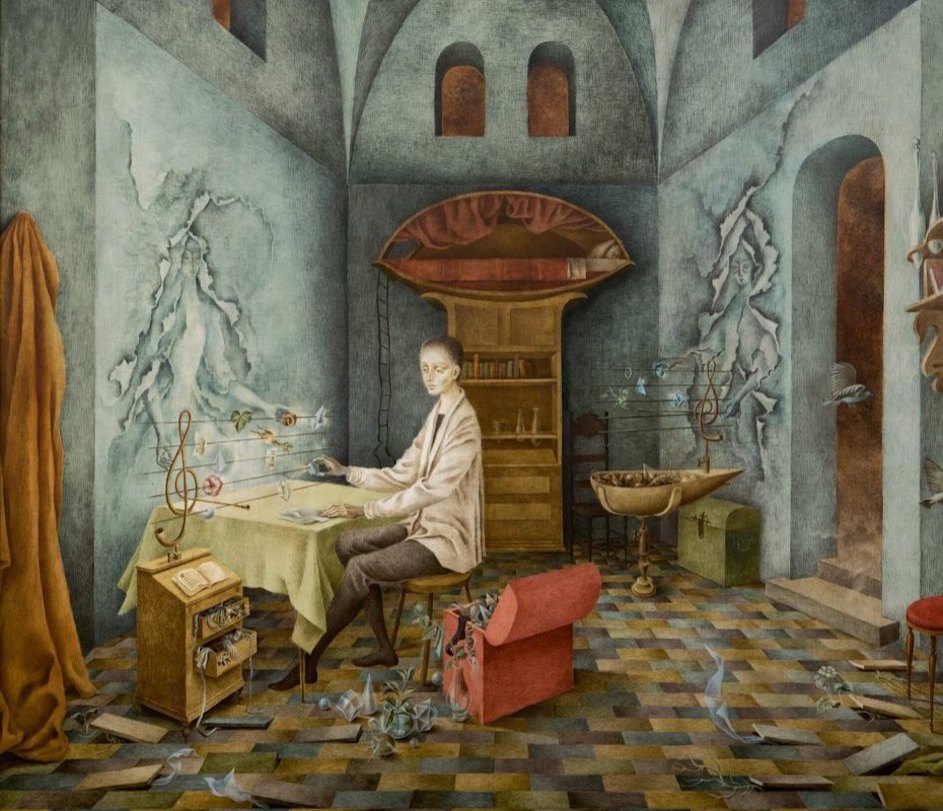
意味の論理学
The Logic of Sense,
1969 by Gilles Deleuze
☆『意味の論理』(原題:Logique du sens)は、フランスの哲学者ジル・ドゥルーズによる1969年の著作である。英語版はマーク・レスターとチャールズ・スティヴェールが翻訳し、コンスタンティン・V・バウンダスが編集した。
| The
Logic of Sense (French: Logique du sens) is a 1969 book by the French
philosopher Gilles Deleuze. The English edition was translated by Mark
Lester and Charles Stivale, and edited by Constantin V. Boundas.[1] |
『意味の論理』(原題:Logique du sens)は、フランスの哲学者ジル・ドゥルーズによる1969年の著作である。英語版はマーク・レスターとチャールズ・スティヴェールが翻訳し、コンスタンティン・V・バウンダスが編集した。 |
| Summary An exploration of meaning and meaninglessness or "commonsense" and "nonsense" through metaphysics, epistemology, grammar, and eventually psychoanalysis, The Logic of Sense consists of a series of thirty-four paradoxes followed by an appendix that contains five previously published essays, including a brief overview of Deleuze's ontology entitled "Plato and the Simulacrum". The Deleuzian understanding of nonsense considers that there is a "surface level" of nonsense which creates innocent, childlike preoccupations with contradictions (represented by Lewis Carroll), and the inner space of nonsense which deals with strong and violent contradictions (represented by Antonin Artaud). Leading on from Deleuze's ontology in his 1968 book Difference and Repetition, sense can only itself be understood as a constant set of correlations and associations. Nonsense, especially through the literature he analyzes, intrinsically avoids being defined, and can only be seen as "that which has no sense," but "is opposed to the absence of sense". The book introduces Deleuze's philosophy of the event and of becoming as well as the emergence of the plane of immanence and the body without organs, mythic conceptions of time (Chronos and Aion), the structure of games, and textual analyses of works by Lewis Carroll, Seneca, Pierre Klossowski, Michel Tournier, Antonin Artaud, F. Scott Fitzgerald, Melanie Klein, Friedrich Nietzsche, Stéphane Mallarmé, Malcolm Lowry, Émile Zola and Sigmund Freud. |
要約 『意味の論理』は、形而上学、認識論、文法、そして最終的には精神分析を通じて、意味と無意味、あるいは「常識」と「ナンセンス」を探求する著作である。 本書は34のパラドックスからなる本論と、付録で構成されている。付録には5つの既発表論文が収められており、その中にはドゥルーズの存在論を概説した 「プラトンとシミュラクル」も含まれている。ドゥルーズのナンセンス理解によれば、ナンセンスには「表層」と「深層」が存在する。表層はルイス・キャロル に代表されるような、無邪気で子供じみた矛盾への執着を生み出す。深層はアントナン・アルトーに代表されるような、強烈で暴力的な矛盾を扱う領域である。 1968年の著書『差異と反復』におけるドゥルーズの存在論から導かれるように、意味そのものは恒常的な相関と連関の集合としてしか理解され得ない。ナン センスは、特に彼が分析する文学作品を通じて、本質的に定義されることを避け、「意味を持たないもの」としてしか見られず、同時に「意味の不在に対抗する もの」として位置づけられる。 本書はドゥルーズの「出来事」と「生成」の哲学、内在性の平面と器官なき身体の出現、時間に関する神話的概念(クロノスとアイオン)、ゲームの構造、そし てルイス・キャロル、セネカ、ピエール・クロソウスキー、ミシェル・トゥルニエ、アントナン・アルトー、 F・スコット・フィッツジェラルド、メラニー・クライン、フリードリヒ・ニーチェ、ステファヌ・マラルメ、マルコム・ローリー、エミール・ゾラ、ジークム ント・フロイトのテクスト分析を扱う。 |
| Reception The philosopher Michel Foucault wrote that The Logic of Sense "should be read as the boldest and most insolent of metaphysical treatises – on the simple condition that instead of denouncing metaphysics as the neglect of being, we force it to speak of extrabeing".[2] The philosopher Christopher Norris believes that, like Difference and Repetition (1968), The Logic of Sense comes as near as possible to offering a full-scale programmatic statement of Deleuze's post-philosophical, anti-systematic, ultra-nominalist or resolutely "non-totalizing" mode of thought.[3] The physicists Alan Sokal and Jean Bricmont write in Fashionable Nonsense (1997) that The Logic of Sense prefigures the style of works that Deleuze later wrote in collaboration with Félix Guattari, and that, like them, it contains passages in which Deleuze misuses technical scientific terms.[4] Josuha Ramey describes The Logic of Sense as Deleuze's "most sustained ethical reflection".[5] Timothy Laurie argues that Deleuze presents "sense" as wrapped up in a problematic, and that a problematic cannot be evaluated according to truth and error, nor is it ever exhausted through one single solution.[6] |
レセプション 哲学者ミシェル・フーコーは『意味の論理学』についてこう記している。「この著作は、最も大胆かつ傲慢な形而上学論考として読まれるべきだ――ただし、形 而上学を存在の無視として非難する代わりに、我々がそれを超存在について語らせるという単純な条件のもとで」 [2] 哲学者クリストファー・ノリスは、『差異と反復』(1968)と同様に、『意味の論理』がドゥルーズのポスト哲学的、反体系的、超名目論的あるいは断固と して「非総括的」な思考様式を、可能な限り包括的なプログラム的声明として提示していると考える。[3] 物理学者アラン・ソカルとジャン・ブリクモンは『流行のナンセンス』(1997年)において、『感覚の論理』が後にドゥルーズがフェリックス・ガタリと共 著した著作の文体を予見しており、それらと同様にドゥルーズが科学専門用語を誤用する箇所を含んでいると記している。[4] ジョシュア・レイミーは『感覚の論理』をドゥルーズの「最も持続的な倫理的考察」と評している。[5] ティモシー・ローリーは、ドゥルーズが「感覚」を問題設定に包み込んだ形で提示し、問題設定は真偽で評価できず、単一の解決策で完結することもないと論じ ている。[6] |
| References 1. Columbia University Press, The Logic of Sense. Gilles Deleuze. Edited by Constantin V. Boundas. Translated by Mark Lester with Charles Stivale, accessed on 15 December 2024 2. Foucault, Michel. "Theatrum Philosophicum". Originally published in Critique 282 (1970), pp. 885-908, slightly amended. Retrieved 15 December 2024. 3. Christopher Norris (1995). Ted Honderich (ed.). The Oxford Companion to Philosophy. Oxford: Oxford University Press. p. 183. ISBN 0-19-866132-0. 4. Sokal, Alan; Bricmont, Jean (1999). Fashionable Nonsense: Postmodern Intellectuals' Abuse of Science. New York: Picador. p. 166. ISBN 0-312-20407-8. 5. Ramey, Joshua (2012). The Hermetic Deleuze: Philosophy and Spiritual Ordeal. Durham: Duke University Press. p. 172. ISBN 978-0-8223-5229-7. 6. Laurie, Timothy (2015). "Masculinity Studies and the Jargon of Strategy: Hegemony, Tautology, Sense". Angelaki. 20 (1): 13–30. doi:10.1080/0969725X.2015.1017373. hdl:10453/44220. S2CID 142704874. |
参考文献 1. コロンビア大学出版局、『感覚の論理』。ジル・ドゥルーズ。コンスタンティン・V・バウンダス編。マーク・レスターとチャールズ・スティヴァール訳、2024年12月15日アクセス 2. フーコー、ミシェル。「哲学劇場」。原著は『クリティーク』282号(1970年)、885-908頁に掲載、若干修正。2024年12月15日取得。 3. クリストファー・ノリス(1995)。テッド・ホンデリッチ(編)。『オックスフォード哲学事典』。オックスフォード:オックスフォード大学出版局。183頁。ISBN 0-19-866132-0。 4. ソカル、アラン; ブリクモン、ジャン (1999). 『流行のナンセンス:ポストモダン知識人の科学の乱用』. ニューヨーク: ピカドール. p. 166. ISBN 0-312-20407-8. 5. レイミー、ジョシュア(2012)。『ヘルメティックなドゥルーズ:哲学と精神的試練』。ダーラム:デューク大学出版局。172頁。ISBN 978-0-8223-5229-7。 6. ローリー、ティモシー(2015)。「男性性研究と戦略の専門用語:ヘゲモニー、同語反復、意味」 Angelaki. 20 (1): 13–30. doi:10.1080/0969725X.2015.1017373. hdl:10453/44220. S2CID 142704874. |
| Further reading Foucault, Michel. "Theatrum Philosophicum". Trans. Donald F. Bouchard and Sherry Simon. In The Essential Works of Michel Foucault: Aesthetics, Method, and Epistemology. Ed. James D. Faubion. New York: New Press, 1998. 343-368. Lecercle, Jean-Jacques. Philosophy through the Looking Glass: Language, Nonsense, Desire. La Salle, IL: Open Court, 1985. Williams, James. Gilles Deleuze's Logic of Sense: A Critical Introduction and Guide. Edinburgh: Edinburgh University Press, 2008. |
追加文献(さらに読む) フーコー、ミシェル。「哲学劇場」。ドナルド・F・ブシャール、シェリー・サイモン訳。『ミシェル・フーコーの主要著作:美学、方法、認識論』所収。ジェームズ・D・フォービオン編。ニューヨーク:ニュープレス、1998年。343-368頁。 ルセルクル、ジャン=ジャック。『鏡の向こうの哲学:言語、ナンセンス、欲望』。イリノイ州ラサール:オープンコート、1985年。 ウィリアムズ、ジェームズ。『ジル・ドゥルーズの感覚の論理:批判的序説とガイド』。エディンバラ:エディンバラ大学出版局、2008年。 |
| https://en.wikipedia.org/wiki/The_Logic_of_Sense |
|
リ ンク
文 献
そ の他の情報
CC
Copyleft,
CC, Mitzub'ixi Quq Chi'j, 1996-2099