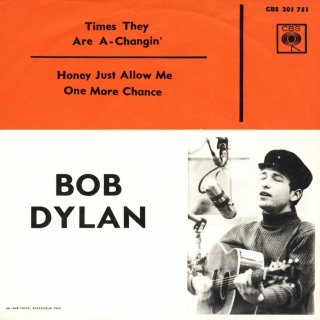
時代は変わる
The Times They Are
a-Changin' 1964
☆
「ザ・タイムズ・ゼイ・アー・ア・チェンジン[The
Times They Are
a-Changin']」はボブ・ディランが作詞作曲し、1964年に同名アルバムのタイトル曲として発表した楽曲である。ディランはアイルラン
ドやスコットランドのバラードに影響を受け、当時の変革を謳うアンセムとしてこの曲を書いた。1965年に英国で45回転シングルとしてリリースされ、
UKシングルチャートで9位を記録した。[1] この曲はアメリカではシングルとしてリリースされなかった。[2]
2025年、英国レコード産業協会(BPI)からゴールド認定を受けた。[3]
この曲は人々の社会観に影響を与えた。批評家たちは、歌詞の普遍性がこの曲に不変の変化のメッセージを与えていると評している。ディランの公式ウェブサイ
トによると、彼は1963年から2009年の間にこの曲を633回演奏しており、2023年6月時点で彼の演奏回数トップ23位となっている。[4]
この曲は、ニーナ・シモン、ジョセフィン・ベイカー、バーズ、シーカーズ、ピーター、ポール&マリー、トレイシー・チャップマン、サイモン&ガーファンク
ル、
ブラックモアズ・ナイト、ランリグ、ビーチ・ボーイズ、ジョーン・バエズ、フィル・コリンズ、ビリー・ジョエル、ブルース・スプリングスティーン、ミー・
ファースト・アンド・ザ・ギミー・ギミーズ、ブランディ・カーライル、バール・アイヴスなどがカバーしている。この曲は、ローリング・ストーン誌の
2004年「史上最高の500曲」で59位にランクインした。
| "The
Times They Are
a-Changin'" is a song written by Bob Dylan and released as the
title
track of his 1964 album of the same name. Dylan wrote it as an anthem
of change for the time, influenced by Irish and Scottish ballads.
Released as a 45-rpm single in Britain in 1965, it reached number 9 on
the UK Singles Chart.[1] The song was not released as a single in the
US.[2] In 2025, it was certified Gold by BPI.[3] The song has influenced people's views about society. Critics have said the lyrics' universality give the song a lasting message of change. According to Dylan's official website, he performed the song 633 times between 1963 and 2009, making it his 23rd most-performed song as of June 2023.[4] The song has been covered by many artists, including Nina Simone; Josephine Baker; the Byrds; the Seekers; Peter, Paul and Mary; Tracy Chapman; Simon & Garfunkel; Blackmore's Night; Runrig; the Beach Boys; Joan Baez; Phil Collins; Billy Joel; Bruce Springsteen; Me First and the Gimme Gimmes; Brandi Carlile; and Burl Ives. The song was ranked number 59 on Rolling Stone's 2004 list of the "500 Greatest Songs of All Time".[5] |
「ザ・タイムズ・ゼイ・アー・ア・チェンジン[The
Times They Are
a-Changin']」はボブ・ディランが作詞
作曲し、1964年に同名アルバムのタイトル曲として発表した楽曲である。ディランはアイルランドやスコットランドのバラードに影響を受け、当時の変革を
謳うアンセムとしてこの曲を書いた。1965年に英国で45回転シングルとしてリリースされ、UKシングルチャートで9位を記録した。[1]
この曲はアメリカではシングルとしてリリースされなかった。[2] 2025年、英国レコード産業協会(BPI)からゴールド認定を受けた。[3] この曲は人々の社会観に影響を与えた。批評家たちは、歌詞の普遍性がこの曲に不変の変化のメッセージを与えていると評している。ディランの公式ウェブサイ トによると、彼は1963年から2009年の間にこの曲を633回演奏しており、2023年6月時点で彼の演奏回数トップ23位となっている。[4] この曲は、ニーナ・シモン、ジョセフィン・ベイカー、バーズ、シーカーズ、ピーター、ポール&マリー、トレイシー・チャップマン、サイモン&ガーファンク ル、 ブラックモアズ・ナイト、ランリグ、ビーチ・ボーイズ、ジョーン・バエズ、フィル・コリンズ、ビリー・ジョエル、ブルース・スプリングスティーン、ミー・ ファースト・アンド・ザ・ギミー・ギミーズ、ブランディ・カーライル、バール・アイヴスなどがカバーしている。この曲は、ローリング・ストーン誌の 2004年「史上最高の500曲」で59位にランクインした。 |
| Inspiration and composition Bob Dylan, 1963 promo photo by Don Hunstein for The Times They Are a-Changin′ in a recording studio. Dylan appears to have written the song in September and October 1963. He recorded it as a Witmark publishing demo at that time, a version that was later released on The Bootleg Series Volumes 1–3 (Rare & Unreleased) 1961–1991. The song was then recorded at Columbia Studios in New York on October 23 and 24;[6] the latter session yielding the version that became the title song of Dylan's third album.[7] The a- in the song title is an archaic intensifying prefix, as in the British songs "A-Hunting We Will Go" and "Here We Come a-Wassailing", from the 18th and 19th century. Dylan recalled writing the song as a deliberate attempt to create an anthem of change for the moment. In 1985, he told Cameron Crowe, "This was definitely a song with a purpose. It was influenced of course by the Irish and Scottish ballads ...'Come All Ye Bold Highway Men', 'Come All Ye Tender Hearted Maidens'. I wanted to write a big song, with short concise verses that piled up on each other in a hypnotic way. The civil rights movement and the folk music movement were pretty close for a while and allied together at that time."[8] Dylan biographer Clinton Heylin wrote that musician Tony Glover stopped by Dylan's apartment in September 1963, picked up a page of the song Dylan was working on, and read a line from it: "Come senators, congressmen, please heed the call." Glover asked, "What is this shit, man?" Dylan shrugged and replied, "Well, you know, it seems to be what the people want to hear."[9] Critic Michael Gray called it "the archetypal protest song." Gray commented, "Dylan's aim was to ride upon the unvoiced sentiment of a mass public—to give that inchoate sentiment an anthem and give its clamour an outlet. He succeeded, but the language of the song is nevertheless imprecisely and very generally directed."[7] Gray suggested that the song has been made obsolete by the very changes that it predicted and hence was politically out of date almost as soon as it was written. Literary critic Christopher Ricks suggested that "the song transcends the political preoccupations of the time in which it was written". Ricks argued in 2003 that Dylan was still performing the song, and when he sang "Your sons and your daughters / Are beyond your command", he "sang inescapably with the accents not of a son, no longer perhaps primarily a parent, but with the attitude of a grandfather." Ricks concluded, "Once upon a time it may have been a matter of urging square people to accept the fact that their children were, you know, hippies. But the capacious urging could then come to mean that ex-hippie parents had better accept that their children look like becoming yuppies. And then Republicans..."[10] Critic Andy Gill points out that the song's lyrics echo lines from the Book of Ecclesiastes, which Pete Seeger adapted to create his anthem "Turn, Turn, Turn!". The climactic line about the first later being last, likewise, is a direct scriptural reference to Mark 10:31: "But many that are first shall be last, and the last first."[11] Less than a month after Dylan recorded the song, President Kennedy was assassinated on November 22, 1963. Dylan told his biographer Anthony Scaduto that he had performed a concert the night after the assassination. and he recalled opening the concert with "The Times They Are a-Changin'": "I thought, 'Wow, how can I open with that song? I'll get rocks thrown at me.' But I had to sing it, my whole concert takes off from there. I know I had no understanding of anything. Something had just gone haywire in the country and they were applauding the song. And I couldn't understand why they were clapping, or why I wrote the song. I couldn't understand anything. For me, it was just insane."[12] Later researchers have suggested Dylan may have mistaken the date of his first concert after Kennedy’s assassination.[a 1] |
インスピレーションと作曲 ボブ・ディラン、1963年プロモーション写真(ドン・ハンスタイン撮影)。『ザ・タイムズ・ゼイ・アー・ア・チェンジン』のレコーディングスタジオに て。 ディランはこの曲を1963年9月から10月にかけて書いたようだ。当時、彼はこの曲をウィットマーク出版のデモとして録音した。このバージョンは後に 『ブートレグ・シリーズ Vol.1-3 (レア&アンリリースト) 1961-1991』に収録された。その後、10月23日と24日にニューヨークのコロンビア・スタジオで正式録音が行われた[6]。後者のセッションで 生まれたバージョンが、ディランの3枚目のアルバムのタイトル曲となった。[7] 曲名の「a-」は、18~19世紀の英国の歌「A-Hunting We Will Go」や「Here We Come a-Wassailing」に見られるように、強調を表す古風な接頭辞である。 ディランは、この曲を当時の変革のアンセムとして意図的に創作したと回想している。1985年、キャメロン・クロウにこう語っている。「これは間違いなく 目的を持った曲だった。もちろんアイルランドやスコットランドのバラードの影響を受けている…『Come All Ye Bold Highway Men』や『Come All Ye Tender Hearted Maidens』だ。短い簡潔な詩節が催眠的な方法で積み重なる、壮大な曲を書きたかったんだ。公民権運動とフォークミュージック運動は当時かなり近く て、連携していたんだ」[8] ディランの伝記作家クリントン・ヘイリンによれば、1963年9月にミュージシャンのトニー・グローバーがディランのアパートに立ち寄り、ディランが作業 中の曲の1ページを手に取り、その一節「上院議員よ、下院議員よ、この呼びかけに耳を傾けてくれ」を読んだという。グローバーは「これ何だ、クソみたい な」と尋ねた。ディランは肩をすくめて答えた。「まあ、人々が聞きたいと思っていることらしいんだ」[9] 批評家マイケル・グレイはこれを「典型的な抗議歌」と呼んだ。グレイはこう評した。「ディランの狙いは大衆の無言の感情に乗ることだった——その未分化の 感情に賛歌を与え、その叫びに発散の場を与えることだ。彼は成功したが、この歌の言語はそれでも不正確で非常に一般的な方向性を示している」[7]。グレ イは、この歌が予言した変化そのものによって時代遅れにされ、したがって書かれた直後から政治的に古びていたと示唆した。 文学評論家クリストファー・リックスは「この歌は書かれた時代の政治的関心を超越している」と指摘した。リックスは2003年、ディランが今もこの曲を演 奏していることを論じ、「お前の息子や娘は/お前の命令を超えている」と歌う際、彼は「もはや息子でも、おそらく親でもなく、祖父の態度で歌っている」と 述べた。リックスはこう結論づけた。「かつては、堅物な親たちに『子供たちがヒッピーになった』という事実を受け入れさせるための歌だったかもしれない。 だがその包容力ある訴えは、やがて『元ヒッピーの親たちは、子供たちがヤッピーになることを受け入れるべきだ』という意味に変わっていった。そして共和党 員たちへ…」[10] 批評家アンディ・ギルは、この歌詞が『コヘレトの言葉』の一節を想起させると指摘する。ピート・シーガーがこれをアレンジしてアンセム「ターン・ターン・ ターン!」を作ったのだ。特に「最初の者が最後になり、最後の者が最初になる」というクライマックスの一節は、マルコによる福音書10章31節「しかし、 最初の者たちが最後になり、最後の者たちが最初になる」への直接的な聖書引用である[11]。 ディランがこの曲を録音してから一ヶ月も経たぬ1963年11月22日、ケネディ大統領が暗殺された。ディランは伝記作家アンソニー・スカドゥートに、暗 殺の翌夜にコンサートを行ったと語った。彼は「ザ・タイムズ・ゼイ・アー・ア・チェンジン」でコンサートを始めたことをこう回想している。「『うわっ、こ んな曲でどうやって始めよう?石を投げられるぞ』と思った。でも歌わなきゃならなかった。コンサート全体がそこから始まるんだ」 俺は何も理解してなかったんだ。国全体が狂い始めてたのに、観客はあの曲を拍手で迎えた。なぜ拍手するのか、なぜ自分がその曲を書いたのか、何も理解でき なかった。俺にとっては狂気の沙汰だった」[12]。後の研究者らは、ディランがケネディ暗殺後の初公演の日付を誤認した可能性を示唆している[a 1]。 |
The Byrds' version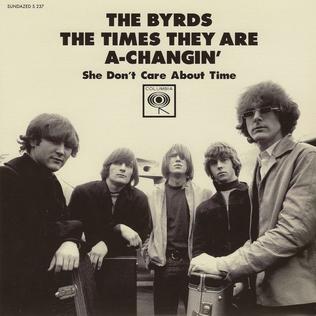 "The Times They Are a-Changin'" was one of two Dylan covers that the Byrds included on their second album, Turn! Turn! Turn!, "Lay Down Your Weary Tune" being the other.[15] Like other Dylan compositions that the band had covered, such as "Mr. Tambourine Man" and "All I Really Want to Do", the song was intended to be the A-side of a single. It was sung by bandleader Jim McGuinn and prominently features his signature twelve-string Rickenbacker guitar. The song was often played at concerts surrounding its release.[16] I remember the Beatles were in the studio for one of them (version of 'The Times They Are a-Changin'). That kinda put a lot of pressure on us. — Roger McGuinn[17] George Harrison and Paul McCartney of the Beatles attended the Byrds' recording of the song on September 1, 1965, at Columbia's studios on Sunset Boulevard.[18] Members of the Byrds later reflected that the presence of the two Beatles prevented them from completing the track effectively.[17][19] Columbia Records originally pressed thousands of cover sleeves for the intended single, but the Byrds' manager, Jim Dickson, asked for the release to be dropped because of the group's dissatisfaction, most vocally expressed by David Crosby; Dickson originally thought the song would have made a strong single. In a 2004 interview, Chris Hillman stated his dislike for the song, suggesting that "we shouldn't have bothered with that song".[17][20] Another version of the song, recorded in June, is a bonus track on the 1996 reissue. "Turn! Turn! Turn!" ended up becoming the band's third single, reaching number 1 on the U.S. Billboard Hot 100 chart and number 26 on the UK Singles Chart.[21][22] The Byrds performed the song on the U.S. television program Hullabaloo, but it failed to make a long-term impact.[23] CBS England issued "The Times They Are a-Changin'" as the lead track of an EP, along with "Set You Free This Time", written by Gene Clark, which was moderately successful.[24] In addition to its appearance on the Byrds' second album, "The Times They Are a-Changin'" is included on several Byrds compilations, including The Byrds' Greatest Hits Volume II, The Very Best of The Byrds, The Byrds, The Essential Byrds, There Is a Season, and The Byrds Play Dylan.[25] |
バーズ版 ザ・タイムズ・ゼイ・アー・ア・チェンジンは、バーズが2枚目のアルバム『ターン!ターン!ターン!』に収録したディランのカバー曲のうちの1曲だった。 もう1曲はレイ・ダウン・ユア・ウィアリー・チューンである。[15] タンブリンマンやオール・アイ・リアリー・ウォント・トゥ・ドゥなど、バンドがカバーした他のディラン作品と同様、この曲はシングルのA面として意図され ていた。バンドリーダーのジム・マクギンが歌い、彼の代名詞である12弦リッケンバッカー・ギターが際立ってフィーチャーされている。この曲はリリース前 後のコンサートで頻繁に演奏された。[16] ビートルズがスタジオにいたのを覚えている(『ザ・タイムズ・ゼイ・アー・ア・チェンジン』のバージョンを録音していた)。あれは我々にとってかなりのプ レッシャーだった。 — ロジャー・マクギン[17] ビートルズのジョージ・ハリスンとポール・マッカートニーは、1965年9月1日にサンセット・ブールバードのコロンビア・スタジオで行われたバーズのレ コーディングに参加した[18]。バーズのメンバーは後年、二人のビートルズの存在が効果的なトラック完成を妨げたと振り返っている[17][19]。コ ロンビア・レコードは当初、シングル化を想定して何千枚ものジャケットをプレスしたが、バーズのマネージャー、ジム・ディクソンは、デイヴィッド・クロス ビーが最も強く表明したグループの不満を理由にリリース中止を要請した。ディクソンは当初、この曲が強力なシングルになると考えていた。2004年のイン タビューで、クリス・ヒルマンはこの曲を嫌っていたと述べ、「あの曲に手を出すべきじゃなかった」と示唆した。[17][20] 6月に録音された別バージョンは、1996年の再発盤にボーナストラックとして収録されている。「ターン!ターン!ターン!」は結局バンドの3枚目のシン グルとなり、米国ビルボード・ホット100で1位、英国シングルチャートで26位を記録した。[21][22] バーズはこの曲を米テレビ番組『Hullabaloo』で披露したが、長期的な影響はなかった。[23] CBSイングランドは「The Times They Are a-Changin'」をEPのリード曲としてリリースし、ジーン・クラーク作の「Set You Free This Time」を併せて収録。このEPはそこそこの成功を収めた。[24] この曲はバーズの第2作アルバムに収録されたほか、『ザ・バーズ・グレイテスト・ヒッツ・ボリュームII』『ザ・ベリー・ベスト・オブ・ザ・バーズ』 『ザ・バーズ』『ザ・エッセンシャル・バーズ』『ゼア・イズ・ア・シーズン』『ザ・バーズ・プレイ・ディラン』など、複数のバーズのコンピレーション・ア ルバムにも収録されている。[25] |
| Later history In January 1984, a young Steve Jobs recited the second verse of "The Times They Are a-Changin'" in his opening of the 1984 Apple shareholders meeting, where he famously unveiled the Macintosh computer for the first time.[26] The "Dylan Covers Database"[27] listed 436 recordings, including bootlegs, of this song as of October 19, 2009. According to the same database, the song has been recorded in at least 14 other languages, such as Catalan, Czech, Dutch, Finnish, French, German, Hungarian, Italian, Japanese, Norwegian, Polish, Serbian, Spanish, and Swedish. Hip hop group Public Enemy allude to it in their 2007 Dylan tribute song "Long and Whining Road": "It's been a long and whining road, even though time keeps a-changin' / I'm a bring it all back home".[28] In 2009, the filmmaker Michael Moore sang the third verse of the song live on The Jay Leno Show after being told that he had to "earn" a clip from his film Capitalism: A Love Story to be shown.[29] On December 10, 2010, Dylan's hand-written lyrics of the song were sold at auction at Sotheby's, in New York, for $422,500. They were purchased by a hedge fund manager.[30] The song is included in "The 500 Songs That Shaped Rock and Roll", a permanent exhibit at the Rock and Roll Hall of Fame.[31][32] Billy Bragg covered the song but updated the lyrics, singing "Accept it that soon you'll be drenched to the bone/For the climate is obviously changing," and "But the man in the White House says no one's to blame/For the times, they are a-changing back."[33] A cover of the song by singer Susan Calloway was used in a commercial for the 2022 Stanley Cup Finals. The commercial featured an edited sequence of handoffs of the Stanley Cup between notable former Cup winning players with Calloway's version accompanying.[34] Nitty Gritty Dirt Band covered the song in 2021 with guest vocals from Jason Isbell, Steve Earle, Rosanne Cash, and the War and Treaty, for their album Dirt Does Dylan. Proceeds from sales of their version were donated to Feeding America.[35] |
後の経緯 1984年1月、若きスティーブ・ジョブズはアップル株主総会開幕の挨拶で「ザ・タイムズ・ゼイ・アー・ア・チェンジン」の2番を朗読した。この場で彼は マッキントッシュコンピュータを初披露し、後に伝説となる場面を生み出した[26]。 「ディラン・カバーズ・データベース」[27]によれば、2009年10月19日時点でこの曲の録音はブートレグを含め436件記録されている。同データ ベースによると、この曲は少なくとも14の言語で録音されており、カタルーニャ語、チェコ語、オランダ語、フィンランド語、フランス語、ドイツ語、ハンガ リー語、イタリア語、日本語、ノルウェー語、ポーランド語、セルビア語、スペイン語、スウェーデン語などが含まれる。 ヒップホップグループ、パブリック・エネミーは2007年のディランへのトリビュート曲「ロング・アンド・ウィニング・ロード」でこの曲に言及している。 「長い、泣き言ばかりの道だった、たとえ時代が変わり続けても/俺は全部を故郷に持ち帰る」と。[28] 2009年、映画監督マイケル・ムーアは『ザ・ジェイ・レノ・ショー』で、自身の映画『キャピタリズム:ラブ・ストーリー』の映像を放映するには「その権 利を勝ち取る」必要があると言われた後、この曲の3番をライブで歌った。[29] 2010年12月10日、ディランの手書き歌詞がニューヨークのサザビーズで42万2500ドルで落札された。購入者はヘッジファンドマネージャーだっ た。[30] この曲はロックの殿堂の常設展示「ロックンロールを形作った500曲」に選ばれている。[31] [32] ビリー・ブラッグはこの曲をカバーしたが、歌詞を改変し「やがて骨の髄まで濡れることを受け入れろ/気候は明らかに変わりつつある」と歌い、「だがホワイ トハウスの男は言う、誰も責めるなと/時代は逆戻りしているのだ」と歌った。[33] 歌手スーザン・キャロウェイによるカバーバージョンは、2022年スタンレー・カップ決勝戦のコマーシャルで使用された。このコマーシャルでは、著名な元 優勝選手たちによるスタンレー・カップの受け渡しシーンを編集した映像に、キャロウェイのバージョンが流れた。[34] ニッティ・グリッティ・ダート・バンドは2021年、アルバム『Dirt Does Dylan』でこの曲をカバーした。ゲストボーカルとしてジェイソン・イズベル、スティーブ・アール、ロザンヌ・キャッシュ、ザ・ウォー・アンド・トリー トが参加した。彼らのバージョン販売の収益はフィーディング・アメリカに寄付された。[35] |
| Notes Dylan historian Ian Woodward looked extensively for a Dylan concert immediately after Kennedy’s assassination. The first concert that he could verify took place on November 26, 1963, at St. Lawrence University, Canton, upper New York State. Woodward suggests that Dylan mistook the date but this was his first concert after Kennedy’s assassination. Woodward, Ian, “Was There A Bob Dylan Concert on 23 November 1963?” Isis magazine, issue 207, pp. 12–16. (2020) |
注記 ディラン研究家のイアン・ウッドワードは、ケネディ暗殺直後のディランのコンサートを徹底的に調査した。彼が確認できた最初のコンサートは、1963年 11月26日にニューヨーク州北部のカントンにあるセントローレンス大学で行われたものだ。ウッドワードはディランが日付を間違えたと示唆しているが、こ れはケネディ暗殺後の彼の最初のコンサートであった。ウッドワード、イアン「1963年11月23日にボブ・ディランのコンサートはあったのか?」『アイ シス』誌第207号、12-16頁(2020年) |
| References 01. "Bob Dylan | Artist". The Official Charts Company. Archived from the original on October 29, 2012. Retrieved July 30, 2012. John Nogowski (2008). Bob Dylan: A Descriptive, Critical Discography and Filmography, 1961-2007. McFarland. p. 21. ISBN 9780786435180. "British single certifications – Bob Dylan – The Times They Are A-Changin'". British Phonographic Industry. Retrieved February 17, 2025. "Songs - The Official Bob Dylan Site". bobdylan.com. Archived from the original on June 2, 2023. Retrieved June 11, 2023. "The Rolling Stone 500 Greatest Songs of All Time". Rock List Music. Archived from the original on July 18, 2011. Retrieved December 16, 2010. Bjorner, Olof (2004-10-08). "The Times They Are a-Changin' Sessions". Bjorner.com. Archived from the original on 2008-12-06. Retrieved 2009-01-10. Gray (2006). The Bob Dylan Encyclopedia. p. 662. Crowe, Cameron (1985). Liner notes. Biograph. Heylin. Bob Dylan: Behind the Shades Revisited. p. 126. 10. Ricks (2003). Dylan’s Visions of Sin. pp. 260–271. Gill (1999). My Back Pages, pp. 42–43. Scaduto 2001, p. 160 "The Weekly Israeli Chart – Week 3, 2026". Media Forest. Note: Click on "שירים מובילים - רדיו - בינלאומי" (Top Songs – Radio – International) to see the international chart. Retrieved January 20, 2026. "New Zealand single certifications – Bob Dylan – The Times They Are A-Changin'". Radioscope. Retrieved September 26, 2025. Type The Times They Are A-Changin' in the "Search:" field and press Enter. Fricke, David (1996). Turn! Turn! Turn! (1996 CD liner notes). Rogan, Johnny (1998). The Byrds: Timeless Flight Revisited (2nd ed.). Rogan House. p. 155. ISBN 0-9529540-1-X. "The Byrds speak on Turn! Turn! Turn!". Byrds Lyrics Page. Archived from the original on 2012-06-30. Retrieved 2012-10-14. Unterberger 2002, p. 180. Rogan, Johnny (1998). The Byrds: Timeless Flight Revisited (2nd ed.). Rogan House. pp. 178–179. ISBN 0-9529540-1-X. 20. "Turn! Turn! Turn!". ByrdWatcher: A Field Guide to the Byrds of Los Angeles. Archived from the original on 2009-04-29. Retrieved 2009-12-07. Whitburn, Joel (2008). Top Pop Singles 1955–2006. Record Research. p. 130. ISBN 978-0-89820-172-7. Brown, Tony (2000). The Complete Book of the British Charts. Omnibus Press. p. 130. ISBN 0-7119-7670-8. Rogan, Johnny (1998). The Byrds: Timeless Flight Revisited (2nd ed.). Rogan House. p. 201. ISBN 0-9529540-1-X. Rogan, Johnny (1998). The Byrds: Timeless Flight Revisited (2nd ed.). Rogan House. p. 230/246. ISBN 0-9529540-1-X. "The Times They Are a-Changin' Album Appearances". Allmusic. Archived from the original on 2017-04-24. Retrieved 2017-04-23. "Folklore.org: The Times They Are A-Changin'". www.folklore.org. Archived from the original on 2014-04-07. Retrieved 2014-04-03. "Dylan Covers Database". baseportal.com. Archived from the original on 2011-09-28. Public Enemy – The Long and Whining Road, archived from the original on 2021-04-10, retrieved 2021-04-12 "Jay Leno Show Got Worse". videogum.com. 2009-09-16. Archived from the original on 2011-07-17. Retrieved 2010-12-15. 30. Kazakina, Kata (2010-12-10). "Dylan's 'Times They Are a-Changin" Fetches $422,500". Bloomberg.com. Archived from the original on 2010-12-14. Retrieved 2010-12-15. Henke, James. "500 Songs That Shaped Rock" (pdf). Infoplease. Archived from the original on January 6, 2017. Retrieved October 12, 2016. "Songs That Shaped Rock and Roll: The Times They Are A-Changin'". Rock & Roll Hall of Fame. May 24, 2016. Archived from the original on October 13, 2016. Retrieved October 12, 2016. Reed, Ryan (January 25, 2017). "Hear Billy Bragg Reimagine Bob Dylan Anthem as Trump Protest". Rolling Stone. Archived from the original on January 25, 2017. Retrieved January 26, 2017. Gianatasio, David (June 25, 2022). "NHL Hands Stanley Cup Across Eras, With Assist From Bob Dylan". Muse by Clio. Archived from the original on June 29, 2022. Retrieved July 2, 2022. 35. Leimkuehler, Matthew (February 5, 2021). "Nitty Gritty Dirt Band covers Bob Dylan with Jason Isbell, Rosanne Cash and more". The Tennessean. Retrieved November 5, 2024. |
参考文献 01. 「ボブ・ディラン|アーティスト」. ザ・オフィシャル・チャーツ・カンパニー. 2012年10月29日時点のオリジナルからアーカイブ. 2012年7月30日閲覧. ジョン・ノゴウスキー (2008). 『ボブ・ディラン:記述的・批評的ディスコグラフィーとフィルムグラフィー 1961-2007』. マクファーランド. p. 21. ISBN 9780786435180。 「英国シングル認定 – ボブ・ディラン – The Times They Are A-Changin'」。英国レコード産業協会。2025年2月17日閲覧。 「楽曲 - ボブ・ディラン公式サイト」。bobdylan.com。2023年6月2日時点のオリジナルからアーカイブ。2023年6月11日閲覧。 「ローリング・ストーン誌が選ぶ史上最高の500曲」。ロックリスト・ミュージック。2011年7月18日時点のオリジナルからアーカイブ。2010年 12月16日閲覧。 ビョルナー、オロフ (2004-10-08). 「ザ・タイムズ・ゼイ・アー・ア・チェンジン・セッションズ」。Bjorner.com. 2008年12月6日にオリジナルからアーカイブされた。2009年1月10日に取得。 グレイ (2006). 『ボブ・ディラン百科事典』. p. 662. クロウ, キャメロン (1985). ライナーノーツ. 『バイオグラフ』. ヘイリン. 『ボブ・ディラン:陰影の向こう側 再訪』. p. 126. 10. Ricks (2003). Dylan’s Visions of Sin. pp. 260–271. Gill (1999). My Back Pages, pp. 42–43. Scaduto 2001, p. 160 「The Weekly Israeli Chart – Week 3, 2026」. メディア・フォレスト。注:国際チャートを見るには「שירים מובילים - רדיו - בינלאומי」(トップソング – ラジオ – インターナショナル)をクリックせよ。2026年1月20日取得。 「ニュージーランド・シングル認定 – ボブ・ディラン – ザ・タイムズ・ゼイ・アー・ア・チェンジン'」。ラジオスコープ。2025年9月26日取得。「検索:」欄に「The Times They Are A-Changin'」と入力し、Enterキーを押す。 フリック、デイヴィッド (1996). 『ターン!ターン!ターン!』(1996年CDライナーノーツ)。 ローガン、ジョニー (1998). 『ザ・バーズ:タイムレス・フライト再訪』(第2版)。ローガン・ハウス。155頁。ISBN 0-9529540-1-X。 「ザ・バーズが語る『ターン!ターン!ターン!』」. Byrds Lyrics Page. 2012年6月30日時点のオリジナルからアーカイブ. 2012年10月14日閲覧。 ウンターバーガー 2002, p. 180. ローガン, ジョニー (1998). 『ザ・バーズ:タイムレス・フライト再訪』(第2版)。ローガン・ハウス。178–179頁。ISBN 0-9529540-1-X。 20. 「ターン!ターン!ターン!」。ByrdWatcher: A Field Guide to the Byrds of Los Angeles。2009年4月29日時点のオリジナルからアーカイブ。2009年12月7日に閲覧。 ホイットバーン、ジョエル (2008). 『トップ・ポップ・シングルズ 1955–2006』. レコード・リサーチ. p. 130. ISBN 978-0-89820-172-7. ブラウン、トニー (2000). 『ザ・コンプリート・ブック・オブ・ザ・ブリティッシュ・チャーツ』. オムニバス・プレス. p. 130. ISBN 0-7119-7670-8. ローガン、ジョニー (1998). 『ザ・バーズ:タイムレス・フライト・リヴィジテッド (第2版)』. ローガン・ハウス. p. 201. ISBN 0-9529540-1-X. ローガン、ジョニー (1998). 『ザ・バーズ:永遠の飛行 再訪』(第2版)。ローガン・ハウス。p. 230/246。ISBN 0-9529540-1-X。 「ザ・タイムズ・ゼイ・アー・ア・チェンジン' 収録アルバム一覧」。オールミュージック。2017年4月24日時点のオリジナルからアーカイブ。2017年4月23日閲覧。 「Folklore.org: The Times They Are A-Changin'」。www.folklore.org。2014年4月7日時点のオリジナルからアーカイブ。2014年4月3日に閲覧。 「Dylan Covers Database」。baseportal.com。2011年9月28日時点のオリジナルからアーカイブ。 パブリック・エネミー – The Long and Whining Road、2021年4月10日にオリジナルからアーカイブ、2021年4月12日に取得 「ジェイ・レノ・ショーは悪化した」。videogum.com。2009年9月16日。2011年7月17日にオリジナルからアーカイブ。2010年 12月15日に取得。 30. カザキナ、カタ (2010年12月10日). 「ディランの『時代は変わる』が42万2500ドルで落札」. Bloomberg.com. 2010年12月14日にオリジナルからアーカイブ. 2010年12月15日に取得. ヘンケ、ジェームズ。「ロックを形作った500曲」(PDF)。インフォプリーズ。2017年1月6日にオリジナルからアーカイブ。2016年10月12 日に取得。 「ロックンロールを形作った曲:『The Times They Are A-Changin'』」。ロックンロールの殿堂。2016年5月24日。2016年10月13日にオリジナルからアーカイブされた。2016年10月 12日に取得。 リード、ライアン(2017年1月25日)。「ビリー・ブラッグがトランプ抗議としてボブ・ディランのアンセムを再解釈するのを聴け」。ローリング・ス トーン。2017年1月25日にオリジナルからアーカイブされた。2017年1月26日に取得。 ジャナタシオ、デイヴィッド(2022年6月25日)。「NHLが時代を超えてスタンレー・カップを手渡す、ボブ・ディランの協力も」。ミューズ・バイ・ クリオ。2022年6月29日にオリジナルからアーカイブ。2022年7月2日に取得。 35. マシュー・ライムクーラー(2021年2月5日)。「ニッティ・グリッティ・ダート・バンド、ジェイソン・イズベル、ロザンヌ・キャッシュらと共にボブ・ ディランをカバー」。『ザ・テネシアン』。2024年11月5日に閲覧。 |
| Sources Bjorner, Olof (2002). Olof's Files: A Bob Dylan Performance Guide (Bob Dylan all alone on a shelf). Hardinge Simpole. ISBN 1-84382-024-2. Gill, Andy (1999). Classic Bob Dylan: My Back Pages. Carlton. ISBN 1-85868-599-0. Gray, Michael (2006). The Bob Dylan Encyclopedia. Continuum International. ISBN 0-8264-6933-7. Heylin, Clinton (2003). Bob Dylan: Behind the Shades Revisited. Perennial Currents. ISBN 0-06-052569-X. Ricks, Christopher (2003). Dylan's Visions of Sin. Penguin/Viking. ISBN 0-670-80133-X. Scaduto, Anthony (2001). Bob Dylan. Helter Skelter, reprint of 1972 edition. ISBN 1-900924-23-4. Unterberger, Richie (2002). Turn! Turn! Turn!: The '60s Folk-Rock Revolution. San Francisco: Backbeat Books. ISBN 0-87930-703-X. |
出典 ビョルナー、オロフ(2002)。『オロフのファイル:ボブ・ディラン・パフォーマンス・ガイド』(棚に独りぼっちのボブ・ディラン)。ハーディンジ・シ ンポール。ISBN 1-84382-024-2。 ギル、アンディ(1999)。『クラシック・ボブ・ディラン:マイ・バック・ペイジズ』。カールトン。ISBN 1-85868-599-0。 グレイ、マイケル(2006)。『ボブ・ディラン百科事典』。コンティニュアム・インターナショナル。ISBN 0-8264-6933-7。 ヘイリン、クリントン(2003)。『ボブ・ディラン:サングラスの向こう側 再訪』。ペレニアル・カレント。ISBN 0-06-052569-X。 リックス、クリストファー(2003)。『ディランの罪の幻影』。ペンギン/バイキング。ISBN 0-670-80133-X。 スカドゥート、アンソニー(2001)。『ボブ・ディラン』。ヘルター・スケルター、1972年版復刻。ISBN 1-900924-23-4。 アンターバーガー、リッチー(2002)。『ターン!ターン!ターン!:60年代フォークロック革命』。サンフランシスコ:バックビート・ブックス。 ISBN 0-87930-703-X。 |
| https://en.wikipedia.org/wiki/The_Times_They_Are_a-Changin%27_(song) | |
リ ンク
文 献
そ の他の情報
CC
Copyleft,
CC, Mitzub'ixi Quq Chi'j, 1996-2099