ウナニ医学
Unani medicine, Yunani medicine
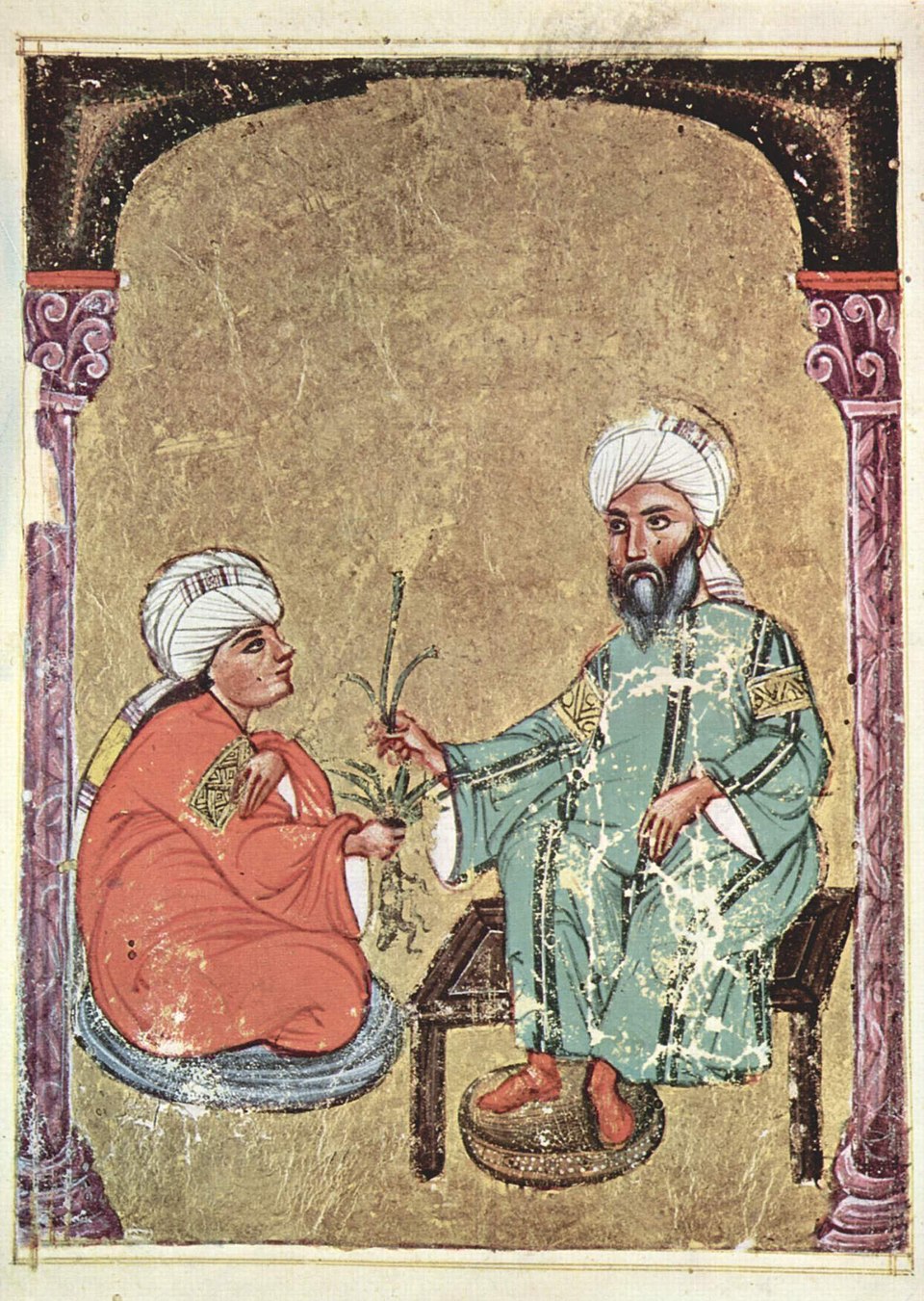
ディオスコリデスの『薬物誌』のアラビア語写本の一葉、1229年
☆ウナニ医学(ウルドゥー語: طب یونانی tibb yūnānī[1])は、南アジア及び現代の中央アジアにおけるイスラム文化圏で実践されるペルシア・アラビア伝統医学である。ウナニ医学は疑似科学である[2][3]。
ユナニという語は「ギリシャの」を意味する[4][5]。これはペルシア・アラビア医学体系が、ギリシャの医師ヒポクラテスとガレノスの教えに基づいている事実を指している[6]。
ウナニ医学のヘレニズム起源は、古典的な四体液説(痰(バルガム)、血(ダム)、黄胆汁(サフラ)、黒胆汁(サウダ))に基づいている点で今も見て取れるが、インドや中国の伝統医学体系の影響も受けている。[7]
| Unani or Yunani
medicine (Urdu: طب یونانی tibb yūnānī[1]) is Perso-Arabic traditional
medicine as practiced in Muslim culture in South Asia and modern day
Central Asia. Unani medicine is pseudoscientific.[2][3] The term Yūnānī means 'Greek',[4][5] referring to the fact that the Perso-Arabic system of medicine was based on the teachings of the Greek physicians Hippocrates and Galen.[6] The Hellenistic origin of Unani medicine is still visible in its being based on the classical four humours: phlegm (balgham), blood (dam), yellow bile (ṣafrā) and black bile (saudā'), but it has also been influenced by Indian and Chinese traditional systems.[7] |
ウナニ医学(ウルドゥー語: طب یونانی tibb
yūnānī[1])は、南アジア及び現代の中央アジアにおけるイスラム文化圏で実践されるペルシア・アラビア伝統医学である。ウナニ医学は疑似科学であ
る[2][3]。 ユナニという語は「ギリシャの」を意味する[4][5]。これはペルシア・アラビア医学体系が、ギリシャの医師ヒポクラテスとガレノスの教えに基づいてい る事実を指している[6]。 ウナニ医学のヘレニズム起源は、古典的な四体液説(痰(バルガム)、血(ダム)、黄胆汁(サフラ)、黒胆汁(サウダ))に基づいている点で今も見て取れる が、インドや中国の伝統医学体系の影響も受けている。[7] |
| History Further information: Medicine in the medieval Islamic world Arab and Persian elaborations upon the Greek system of medicine by figures like Ibn Sina and al-Razi influenced the early development of Unani.[8][9] Unani medicine interacted with Indian Buddhist medicine at the time of Alexander's invasion of India. There was a great exchange of knowledge at that time which is visible from the similarity of the basic conceptual frames of the two systems. The medical tradition of medieval Islam was introduced to India by the 12th century with the establishment of the Delhi Sultanate and it took its own course of development during the Mughal Empire,[10][11] influenced by Indian medical teachings of Sushruta and Charaka.[12][13] Alauddin Khalji (d. 1316) had several eminent physicians (Hakims) at his royal courts.[14] This royal patronage led to the development of Unani in India, and also the creation of Unani literature.[15][16] |
歴史 詳細情報:中世イスラム世界の医学 イブン・スィーナやアル・ラーズィーといった人物による、ギリシャの医学体系に基づくアラブおよびペルシャの精緻な研究は、ウナニー医学の初期の発展に影響を与えた。 ウナニー医学は、アレクサンダーがインドに侵攻した時期に、インドの仏教医学と交流した。当時、両システムの基礎的な概念の枠組みが類似していることから わかるように、知識の大きな交流があった。中世イスラムの医学の伝統は、12世紀にデリー・スルタン朝が設立されたことでインドに導入され、ムガール帝国 時代には独自の発展を遂げた。[10][11] スシュルタやチャラカといったインドの医学の教えの影響を受けた。[12][13] アラウディン・ハルジー(1316年没)は、宮廷に数人の著名な医師(ハキム)を擁していた。[14] この王室の後援により、インドにおけるウナニー医学の発展と、ウナニー医学に関する文献の編纂が進んだ。[15][16] |
| Education and recognition India There are several Indian universities devoted to Unani medicine, in addition to universities that teach traditional Indian medical practices in general.[citation needed] Undergraduate degrees awarded for completing an Unani program include the Bachelor of Unani Medicine and Surgery, Bachelor of Unani Tib and Surgery, and Bachelor of Unani Medicine with Modern Medicine and Surgery degrees. A small number of universities offer post-graduate degrees in Unani medicine.[17] The Central Council of Indian Medicine (CCIM), a statutory body established in 1971 under the Department of Ayurveda, Yoga and Naturopathy, Unani, Siddha and Homoeopathy (AYUSH), monitors higher education in areas of Indian medicine including Ayurveda, Unani, and other traditional medical systems.[18] Another subdivision of AYUSH, the Central Council for Research in Unani Medicine (CCRUM),[19] aids and co-ordinates scientific research in the Unani system of medicine through a network of 22 nationwide research institutes and units.[20] To fight biopiracy and unethical patents, the Government of India set up the Traditional Knowledge Digital Library in 2001 as repository of formulations used in Indian traditional medicine, including 98,700 Unani formulations.[21][22] Pakistan In 1990, the total number of hakims or tabibs (practitioners of Unani medicine) in Pakistan was 51,883.[23] The government of Pakistan's National Council for Tibb (NCT) is responsible for developing the curriculum of Unani courses and registering practitioners of the medicine.[24] Various private foundations devote themselves to the research and production of Unani medicines, including the Hamdard Foundation, which also runs an Unani research institution.[25] The Qarshi Foundation runs a similar institution, Qarshi University.[26] The programs are accredited by Higher Education Commission,[27] Pakistan Medical and Dental Council,[28] and the Pakistan Pharmacy Council.[29] |
教育と認定 インド インドには、一般的な伝統的インド医療を教える大学に加え、ウナニ医学に特化した大学がいくつか存在する。[出典が必要] ウナニ医学課程修了時に授与される学士号には、ウナニ医学・外科学士、ウナニ医学・外科学士(現代医学・外科学位併記)、ウナニ医学・現代医学・外科学士 がある。少数の大学ではウナニ医学の大学院学位も提供している。[17] インド伝統医学中央評議会(CCIM)は、1971年にアーユルヴェーダ・ヨガ・自然療法・ウナニ・シッダ・ホメオパシー省(AYUSH)の下に設立され た法定機関であり、アーユルヴェーダ、ウナニ、その他の伝統医療体系を含むインド医学分野における高等教育を監督している。[18] AYUSHの別の下部組織であるウナニ医学研究中央評議会(CCRUM)[19]は、全国22の研究機関・ユニットからなるネットワークを通じて、ウナニ 医学体系における科学的研究を支援・調整している。[20] バイオパイラシーや非倫理的な特許に対抗するため、インド政府は2001年に伝統的知識デジタル図書館を設立した。これはインド伝統医学で使用される処方の保管庫であり、98,700のウナニ処方を含む。[21] [22] パキスタン 1990年時点で、パキスタンにおけるハキム(ウナニ医学の施術者)の総数は51,883名であった。[23] パキスタン政府の国立ティッブ評議会(NCT)は、ウナニ医学課程のカリキュラム開発と施術者の登録を担当している。[24] 様々な民間財団がウナニ医薬品の研究・生産に専念している。ハムダード財団もその一つで、ウナニ研究機関も運営している。[25] カルシ財団も同様の機関であるカルシ大学を運営している。[26] これらのプログラムは高等教育委員会[27]、パキスタン医歯医評議会[28]、パキスタン薬事評議会[29]によって認定されている。 |
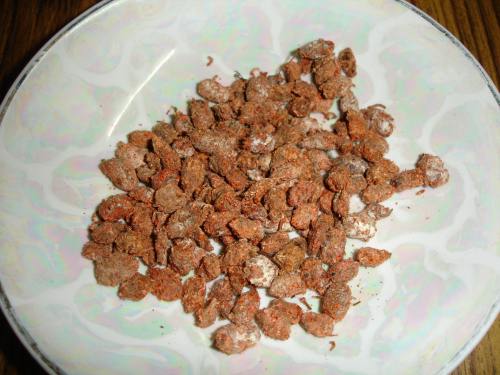 Birbahuti (Trombidium red velvet mite) is used in Unani medicine. |
ビルバフティ(赤ベルベットダニ)はウナニ医学で使用される。 |
| Criticism and safety issues Some medicines traditionally used by Unani practitioners are known to be poisonous.[30] The Indian Journal of Pharmacology notes: According to WHO, "Pharmacovigilance activities are done to monitor detection, assessment, understanding and prevention of any obnoxious adverse reactions to drugs at therapeutic concentration that is used or is intended to be used to modify or explore physiological system or pathological states for the benefit of recipient." These drugs may be any substance or product including herbs, minerals, etc. for animals and human beings and can even be that prescribed by practitioners of Unani or Ayurvedic system of medicine. In recent days, awareness has been created related to safety and adverse drug reaction monitoring of herbal drugs including Unani drugs.[31] The Indian Medical Association describes Unani, Ayurvedic, Siddha practitioners who practice medicine without having right qualifications and prescribing allopathic medicines as quacks.[18] |
批判と安全上の問題 ウナニ医療従事者が伝統的に使用する一部の医薬品は有毒であることが知られている。[30] 『インド薬理学雑誌』は次のように記している: WHOによれば、「薬物監視活動は、治療目的で使用される、あるいは使用が意図される薬物に対し、受容者の利益のために生理的システムや病態を修正・探索するために用いられる治療濃度において、有害な副作用の検出、評価、理解、予防を監視するために行われるものである。 これらの薬剤は、動物や人間向けのハーブ、鉱物などを含むあらゆる物質や製品であり、ウナニ医学やアーユルヴェーダ医学の施術者が処方するものさえ含まれる。近年、ウナニ薬を含むハーブ薬の安全性や有害薬物反応の監視に関する認識が高まっている。[31] インド医師会は、適切な資格を持たずに医療行為を行い、アロパシー薬を処方するウナニ、アーユルヴェーダ、シッダ医療従事者を偽医者と呼んでいる。[18] |
| Ancient Greek medicine Ayurveda Herbal medicine Iranian traditional medicine |
古代ギリシャ医学 アーユルヴェーダ 漢方薬 イラン伝統医学 |
| References 1. The transcription as Unani is found in 19th-century English language sources: "the Ayurvedic and Unani systems of medicine" "Madhya Pradesh District Gazetteers: Hoshangabad", Gazetteer of India 17 (1827), p. 587. 2. Quack, Johannes (2012). Disenchanting India: Organized Rationalism and Criticism of Religion in India. Oxford University Press. pp. 3, 213. ISBN 978-0199812608. 3. Kaufman, Allison B.; Kaufman, James C., eds. (2018). Pseudoscience: The Conspiracy Against Science. MIT Press. p. 293. ISBN 978-0-262-03742-6. 4. William Dalrymple (1994). City of Djinns: A Year in Delhi. Flamingo. p. 269. ISBN 978-0-00-637595-1. 5. "Unani Tibb". Science Museum, London. Archived from the original on 11 February 2018. Retrieved 7 October 2017. 6. "Unani Medicine in India: Its Origin and Fundamental Concepts" by Hakim Syed Zillur Rahman, History of Science, Philosophy and Culture in Indian Civilization, Vol. IV Part 2 (Medicine and Life Sciences in India), Ed. B. V. Subbarayappa, Centre for Studies in Civilizations, Project of History of Indian Science, Philosophy and Culture, New Delhi, 2001, pp. 298-325 7. Heyadri, Mojtaba; Hashempur, Mohammad Hashem; Ayati, Mohammad Hosein; Quintern, Detlev; Nimrouzi, Majid; Mosavat, Seyed Hamdollah (2015). "The use of Chinese herbal drugs in Islamic medicine". Journal of Integrative Medicine. 13 (6): 363–7. doi:10.1016/S2095-4964(15)60205-9. PMID 26559361. Archived from the original on 2015-09-25. Retrieved 2015-09-29. 8. "Unani Medicine in India during 1901–1947" by Hakim Syed Zillur Rahman, Studies in History of Medicine and Science, IHMMR, New Delhi, Vol. XIII, No. 1, 1994, p. 97-112. 9. Alam, Zulfeequar (2008). Herbal Medicines. APH. pp. 13–15. ISBN 9788131303580. 10. Chishti, p. 2. 11. Kapoor, p. 7264 12. "Exchanges between India and Central Asia in the field of Medicine by Hakeem Abdul Hameed". Archived from the original on 2008-10-06. Retrieved 2008-02-12. 13. "Interaction with China and Central Asia in the Field of Unani Medicine" by Hakim Syed Zillur Rahman, History of Science, Philosophy and Culture in Indian Civilization, Vol. III Part 2 (India's Interaction with China, Central and West Asia), Ed. A. Rahman, Centre for Studies in Civilizations, Project of History of Indian Science, Philosophy and Culture, New Delhi, 2002, pp. 297-314 14. "Indian Hakims: Their Role in the medical care of India" by Hakim Syed Zillur Rahman, History of Science, Philosophy and Culture in Indian Civilization, Vol. IV Part 2 (Medicine and Life Sciences in India), Ed. B. V. Subbarayappa, Centre for Studies in Civilizations, Project of History of Indian Science, Philosophy and Culture, New Delhi, 2001, pp. 371-426 15. "Unani". Department of Ayurveda, Yoga and Naturopathy, Unani, Siddha and Homoeopathy, Govt. of India. Archived from the original on 2007-12-23. 16. Bala, p. 45 17. Kumar, Ashish (2006). Handbook of Universities, Volume 1. Atlantic Publishers & Dist. p. xiii,13. 18. Aggarwal, K. K.; Sharma, V. N. "IMA Anti Quackery Wing". Indian Medical Association. Retrieved January 7, 2024. Quacks can be divided amongst three basic categories ... Practitioners of Indian Medicine (Ayurvedic, Sidha, Tibb, Unani), Homeopathy, Naturopathy, commonly called Ayush, who are not qualified to practice Modern Medicine (Allopathy) but are practicing Modern Medicine. 19. "Central Council for Research in Unani Medicine (CCRUM)". Traditional Knowledge Digital Library. 20. "Research and Development: Central Council for Research in Unani Medicine (CCRUM)". Centre for Research in Indian Systems of Medicine, (CRISM). 21. Traditional Knowledge Digital Library website. 22. "Know Instances of Patenting on the UES of Medicinal Plants in India". PIB, Ministry of Environment and Forests. May 6, 2010. 23. Gadit, Amin; Khalid, Najeeb (2002). State of Mental Health in Pakistan: Service, Education & Research. Hamdard Foundation. p. 27. 24. Bodeker, Gerard (2005). WHO Global Atlas of Traditional, Complementary and Alternative Medicine. WHO. p. 167. 25. "Hamdard Research Institute of Unani Medicine, Hamdard University". Archived from the original on 15 January 2015. Retrieved 11 January 2015. 26. "Department of Eastern Medicine and Surgery, Qarshi University". Retrieved 11 January 2015. 27. "H.E.C. Accreditation List". Archived from the original on 2013-10-29. 28. "PM&DC Accreditation List". Archived from the original on 2012-01-16. Retrieved 2012-08-03. 29. "PCP Accreditation List". Pharmacy Council of Pakistan. Archived from the original on 2018-12-26. Retrieved 2013-02-19. 30. Arnold, David (2012). David Hardiman, Projit Bihari Mukharji (ed.). Medical Marginality in South Asia: Situating Subaltern Therapeutics. Routledge. p. 171. ISBN 9780415502412. 31. Rahman, SZ; Latif, A; Khan, RA (Dec 2008). "Importance of pharmacovigilance in Unani system of medicine". Indian J. Pharmacol. 40 (7): 17–20. doi:10.4103/0253-7613.40238. PMC 3038517. PMID 21369407. |
参考文献 1. 「ウナニ」という表記は19世紀の英語資料に見られる:「アーユルヴェーダとウナニの医療体系」「マディヤ・プラデーシュ州地区地誌:ホシャンガバード」、インド地誌17(1827年)、587頁。 2. クワック、ヨハネス(2012)。『脱魔術化されるインド:組織化された合理主義とインドにおける宗教批判』。オックスフォード大学出版局。3頁、213頁。ISBN 978-0199812608。 3. カウフマン、アリソン・B.;カウフマン、ジェームズ・C. 編(2018)。『疑似科学:科学に対する陰謀』。MITプレス。293頁。ISBN 978-0-262-03742-6。 4. ウィリアム・ダルリムプル (1994). 『ジンたちの街:デリーでの一年』. フラミンゴ社. p. 269. ISBN 978-0-00-637595-1. 5. 「ウナニ・ティブ」. ロンドン科学博物館. 2018年2月11日時点のオリジナルからアーカイブ. 2017年10月7日閲覧. 6. 「インドにおけるウナニ医学:その起源と基本概念」ハキム・サイード・ジルル・ラーマン著、『インド文明における科学・哲学・文化の歴史』第4巻第2部 (インドの医学と生命科学)、B. V. スブラヤッパ編、文明研究センター、インド科学・哲学・文化史プロジェクト、ニューデリー、2001年、 pp. 298-325 7. Heyadri, Mojtaba; Hashempur, Mohammad Hashem; Ayati, Mohammad Hosein; Quintern, Detlev; Nimrouzi, Majid; Mosavat, Seyed Hamdollah (2015). 「イスラム医学における漢方薬の使用」. 統合医療ジャーナル。13巻6号:363–7頁。doi:10.1016/S2095-4964(15)60205-9。PMID 26559361。2015年9月25日にオリジナルからアーカイブ。2015年9月29日に取得。 8. ハキム・サイード・ジルル・ラーマン著「1901年から1947年までのインドにおけるウナニー医学」『医学と科学の歴史研究』IHMMR、ニューデリー、第XIII巻第1号、1994年、97-112頁。 9. アラム、ズルフィクアール(2008年)。『ハーブ薬』APH刊。13-15頁。ISBN 9788131303580。 10. チシュティ、p. 2。 11. カプール、p. 7264 12. 「医学分野におけるインドと中央アジアの交流」ハキム・アブドゥル・ハミード著。2008年10月6日時点のオリジナルからアーカイブ。2008年2月12日に閲覧。 13. ハキム・サイード・ジルル・ラーマン著「ウナニー医学分野における中国・中央アジアとの交流」。『インド文明における科学・哲学・文化の歴史』第III巻 第2部(インドと中国・中央アジア・西アジアの交流)、A.ラーマン編、文明研究センター、インド科学・哲学・文化史プロジェクト、ニューデリー、 2002年、 pp. 297-314 14. 「インドのハキムたち:インド医療における彼らの役割」ハキム・サイード・ジルル・ラーマン著、『インド文明における科学・哲学・文化の歴史』第4巻第2 部(インドの医学と生命科学)、B. V. スッバラヤッパ編、文明研究センター、インド科学・哲学・文化史プロジェクト、ニューデリー、2001年、 pp. 371-426 15. 「ウナニー」。インド政府 アーユルヴェーダ・ヨガ・自然療法・ウナニー・シッダ・ホメオパシー省。2007年12月23日時点のオリジナルからアーカイブ。 16. Bala, p. 45 17. Kumar, Ashish (2006). Handbook of Universities, Volume 1. Atlantic Publishers & Dist. p. xiii,13. 18. Aggarwal, K. K.; Sharma, V. N. 「IMA Anti Quackery Wing」. Indian Medical Association. Retrieved January 7, 2024. 偽医者は基本的に三つのカテゴリーに分けられる…インド医学(アーユルヴェーダ、シッダ、ティブ、ウナニ)の施術者、ホメオパシー、自然療法、一般にアユ シュと呼ばれる者たちだ。彼らは現代医学(アロパシー)を実践する資格を持たないが、現代医学を実践している。 19. 「ウナニ医学中央研究評議会(CCRUM)」。伝統的知識デジタル図書館。 20. 「研究開発:ウナニ医学中央研究評議会(CCRUM)」。インド伝統医療研究センター(CRISM)。 21. 伝統的知識デジタルライブラリウェブサイト。 22. 「インドにおける薬用植物の伝統的利用体系(UES)の特許事例を知る」。PIB、環境森林省。2010年5月6日。 23. ガディット、アミン;ハリド、ナジブ(2002)。『パキスタンの精神健康の現状:サービス、教育、研究』。ハムダード財団。p. 27。 24. ボデカー、ジェラール(2005)。『WHO 伝統・補完・代替医療世界アトラス』。WHO。p. 167。 25. 「ハムダード大学 ウナニ医学研究所」. 2015年1月15日にオリジナルからアーカイブされた。2015年1月11日に取得。 26. 「東洋医学・外科部門、カルシ大学」。2015年1月11日に取得。 27. 「高等教育評議会認定リスト」。2013年10月29日にオリジナルからアーカイブされた。 28. 「PM&DC認定リスト」。2012年1月16日にオリジナルからアーカイブ。2012年8月3日に取得。 29. 「PCP認定リスト」。パキスタン薬剤師会。2018年12月26日にオリジナルからアーカイブ。2013年2月19日に取得。 30. Arnold, David (2012). David Hardiman, Projit Bihari Mukharji (編). 『南アジアにおける医療の周辺性:サバルタンの治療法を位置づける』. Routledge. p. 171. ISBN 9780415502412. 31. Rahman, SZ; Latif, A; Khan, RA (2008年12月). 「ウナニ医学体系における薬物監視の重要性」. Indian J. Pharmacol. 40 (7): 17–20. doi:10.4103/0253-7613.40238. PMC 3038517. PMID 21369407. |
| https://en.wikipedia.org/wiki/Unani_medicine |
|
Folio from an Arabic manuscript of Dioscorides, De materia medica, 1229
リ ンク
文 献
そ の他の情報
CC
Copyleft,
CC, Mitzub'ixi Quq Chi'j, 1996-2099