
普遍主義
Universalism
☆普遍主義(Universalism)とは、ある思想が普遍的に適用可能であるという哲学的・神学的概念である。
一つの根本的真理を信じることも普遍主義の重要な教義だ。生きた真理は、国民や文化、宗教の境界や解釈よりもはるかに広範に及ぶと見なされる。自らを普遍主義者と称する共同体は、ほとんどの宗教の普遍的原理を強調し、他者を包括的に受け入れるかもしれない。
普遍主義はまた、地理的その他の境界を越えて全ての人類を西洋的価値観の下で統一しようとする追求、あるいは人権や国際法といった西洋的普遍的・普遍主義的構築物の適用を意味することもある。[1][2]
普遍主義は現代のヒンドゥー教に影響を与え、それがまた現代の西洋的スピリチュアリティに影響を与えている。[3]
キリスト教普遍主義とは、すべての人間が最終的に宗教的・精神的意味での救いを受けるという思想を指す。この概念は普遍的和解とも呼ばれる。[4]
| Universalism is the
philosophical and theological concept that some ideas have universal
application or applicability. A belief in one fundamental truth is another important tenet in universalism. The living truth is seen as more far-reaching than the national, cultural, or religious boundaries or interpretations of that one truth. A community that calls itself universalist may emphasize the universal principles of most religions, and accept others in an inclusive manner. Universalism can also mean the pursuit of unification of all human beings across geographic and other boundaries under Western values, or the application of Western universal or universalist constructs, such as human rights or international law.[1][2] Universalism has had an influence on modern-day Hinduism, in turn influencing modern Western spirituality.[3] Christian universalism refers to the idea that every human will eventually receive salvation in a religious or spiritual sense, a concept also referred to as universal reconciliation.[4] |
普遍主義とは、ある思想が普遍的に適用可能であるという哲学的・神学的
概念である。 一つの根本的真理を信じることも普遍主義の重要な教義だ。生きた真理は、国民や文化、宗教の境界や解釈よりもはるかに広範に及ぶと見なされる。自らを普遍 主義者と称する共同体は、ほとんどの宗教の普遍的原理を強調し、他者を包括的に受け入れるかもしれない。 普遍主義はまた、地理的その他の境界を越えて全ての人類を西洋的価値観の下で統一しようとする追求、あるいは人権や国際法といった西洋的普遍的・普遍主義 的構築物の適用を意味することもある。[1][2] 普遍主義は現代のヒンドゥー教に影響を与え、それがまた現代の西洋的スピリチュアリティに影響を与えている。[3] キリスト教普遍主義とは、すべての人間が最終的に宗教的・精神的意味での救いを受けるという思想を指す。この概念は普遍的和解とも呼ばれる。[4] |
| Philosophy Philosophical universalism In philosophy, universality is the idea that universal facts exist and can be discovered, as opposed to relativism, which asserts that all facts are relative to one's perspective.[5] Moral universalism Main articles: Moral universalism and Moral particularism Moral universalism (also called moral objectivism or universal morality) is the meta-ethical position that some system of ethics applies universally.[6] That system is inclusive of all individuals,[7] regardless of culture, race, sex, religion, nationality, sexual orientation, or any other distinguishing feature.[8] Moral universalism is opposed to moral nihilism and moral relativism. However, not all forms of moral universalism are absolutist, nor do they necessarily value monism. Many forms of universalism, such as utilitarianism, are non-absolutist. Other forms such as those theorized by Isaiah Berlin, may value pluralist ideals. |
哲学 哲学的普遍主義 哲学において、普遍性とは普遍的事実が存在し発見可能であるという考えを指す。これは、全ての事実は個人の視点に相対的であると主張する相対主義とは対照的である。[5] 道徳的普遍主義 主な記事:道徳的普遍主義と道徳的個別主義 道徳的普遍主義(道徳的客観主義または普遍的道徳とも呼ばれる)とは、ある倫理体系が普遍的に適用されるというメタ倫理的立場である。[6] その体系は、文化、人種、性別、宗教、国籍、性的指向、その他の区別する特徴にかかわらず、全ての個人を含むものである。[7] [8] 道徳的普遍主義は道徳的ニヒリズムや道徳的相対主義と対立する。ただし、全ての道徳的普遍主義が絶対主義的であるわけではなく、一元論を必ずしも重視する わけでもない。功利主義など多くの普遍主義は非絶対主義的である。アイザイア・バーリンが理論化したような他の形態は、多元主義的理想を重視する場合があ る。 |
| Religion Baháʼí Faith  A white column with ornate designs carved into it, including a Star of David Symbols of many religions on a pillar of the Baháʼí House of Worship in Wilmette, Illinois Main articles: Baháʼí Faith and the unity of humanity, Baháʼí Faith and the unity of religion, and Progressive revelation (Baháʼí) In the teachings of the Baháʼí Faith, a single God has sent all the historic founders of the world religions in a process of progressive revelation. As a result, the major world religions are seen as divine in origin and are continuous in their purpose. In this view, there is unity among the founders of world religions, but each revelation brings a more advanced set of teachings in human history and none are syncretic.[9] In addition, the Baháʼí teachings acknowledge that in every country and every people God has always revealed the divine purpose via messengers and prophets, masters and sages since time immemorial.[10][11] Within this universal view, the unity of humanity is one of the central teachings of the Baháʼí Faith.[12] The Baháʼí teachings state that since all humans have been created in the image of God, God does not make any distinction between people with regard to race, colour or religion.[13]: 138 Thus, because all humans have been created equal, they all require equal opportunities and treatment.[12] Hence the Baháʼí view promotes the unity of humanity, and that people's vision should be world-embracing and that people should love the whole world rather than just their nation.[13]: 138 The teaching, however, does not equate unity with uniformity; instead the Baháʼí writings advocate the principle of unity in diversity where the variety in the human race is valued.[13]: 139 Operating on a worldwide basis this cooperative view of the peoples and nations of the planet culminates in a vision of the practicality of the progression in world affairs towards, and the inevitability of, world peace.[14] Buddhism The term Universalism has been applied to different aspects of Buddhist thought by different modern authors. The idea of universal salvation is key to the Mahayana school of Buddhism.[15][16] A common feature of Mahayana Buddhism is the idea that all living beings have Buddha nature and thus all beings can aspire to become bodhisattvas, beings who are on the path to Buddhahood.[16] This capacity is seen as something that all beings in the universe have.[17][18] This idea has been termed "bodhisattva universalism" by the Buddhist studies scholar Jan Nattier.[19] The idea of universal Buddha nature has been interpreted in various ways in Buddhism, from the idea that all living beings have Buddha nature and thus can become Buddhas to the idea that because all beings have Buddha nature, all beings will definitely become Buddhas.[18] Some forms of East Asian Mahayana Buddhism even extended the Buddha nature theory to plants and insentient phenomena. Some thinkers (such as Kukai) even promote the idea that the entire universe is the Buddha's body.[18][20] The Lotus Sutra, an influential Mahayana scripture, is often seen as promoting the universality of Buddhahood, the Buddha's teaching as well as the equality of all living beings.[21][22] Mahayana Buddhism also promotes a universal compassion towards all sentient beings and sees all beings as equally deserving of compassion.[23][24] The doctrine of the One Vehicle (which states that all Buddhist paths lead to Buddhahood) is also often seen as a universalist doctrine.[17] Adherents to Pure Land Buddhism point to Amitabha Buddha as a Universal Savior. According to the Pure Land Sutras (scriptures), before becoming a Buddha Amitabha vowed that he would save all beings and according to some Pure Land authors, all beings will be eventually saved through the work of Amida Buddha. As such, Pure Land Buddhism is often seen as an expression of a Buddhist universalism that compares to Christian universalism.[16] This comparison has also been commented on by Christian theologians like Karl Barth.[16] Chinese Buddhism developed a form of Buddhist universalism which saw Confucianism, Daoism and Buddhism as different aspects of a single universal truth.[25] In Western Buddhism, the term Universalism may also refer to an nonsectarian and eclectic form of Buddhism which emphasizes ecumenism among the different Buddhism schools.[26] American clergyman Julius A. Goldwater was one Buddhist figure who promoted a modern kind of Buddhist Universalism. For Goldwater, Buddhism transcends local contexts and culture, and his practice grew increasingly eclectic over time. Goldwater established the nonsectarian Buddhist Brotherhood of America which focused on ecumenical and nonsectarian Buddhism while also drawing on Protestant vocabulary and ideas.[27] The desire to develop a more universalist and nonsectarian form of Buddhism was also shared by some modernist Japanese Buddhist authors, including the influential D.T. Suzuki.[28] |
宗教 バハーイー教 白色の柱には、ダビデの星を含む精巧な彫刻が施されている イリノイ州ウィルメットにあるバハーイー礼拝堂の柱には、多くの宗教の象徴が刻まれている 主な記事:バハーイー教と人類の統一、バハーイー教と宗教の統一、漸進的啓示(バハーイー) バハーイー教の教えによれば、唯一の神が漸進的啓示の過程において、世界の宗教の創始者たちをすべて遣わした。その結果、主要な世界宗教は神聖な起源を持 ち、その目的において連続性があると見なされる。この見解によれば、世界宗教の創始者たちには統一性があるが、各啓示は人類史においてより進歩した教えの 体系をもたらし、いずれも折衷的ではない[9]。さらにバハーイーの教えは、あらゆる国と民族において、太古の昔から神が常に使徒や預言者、師や賢者を通 じて神聖な目的を啓示してきたことを認めている[10][11]。 この普遍的な見解の中で、人類の統一性はバハーイー教の中心的な教えの一つである[12]。バハーイーの教えは、全ての人類が神の似姿として創造された以 上、神は人種、肌の色、宗教に関して人々を区別しないと述べている[13]: 138。したがって、全ての人類が平等に創造された以上、彼らは皆平等な機 会と待遇を必要とする。[12] したがってバハーイーの見解は人類の統一を推進し、人々の視野は世界全体を包含すべきであり、国民だけではなく全世界を愛すべきだと説く。[13]: 138 ただしこの教えは統一を画一性と同一視しない。むしろバハーイーの書物は、人類の多様性を尊重する「多様性の中の統一」の原則を提唱している。[13]: 139 この地球規模の協力的な視点は、世界情勢が世界平和へと向かう進展の実践可能性と、その必然性というビジョンに集約される。[14] 仏教 普遍主義という用語は、現代の様々な著者によって仏教思想の異なる側面に適用されてきた。 普遍的救済の思想は大乗仏教の核心である。[15][16] 大乗仏教の共通点は、全ての生き物が仏性を備えており、したがって全ての存在が菩薩(仏道を目指す存在)となることを志せるという考え方だ。[16] この能力は宇宙の全ての存在が持つものと見なされる。[17][18] この思想は仏教学者ジャン・ナティエによって「菩薩普遍主義」と称されている。[19] 普遍的な仏性という概念は仏教において様々な解釈がなされてきた。全ての生き物が仏性を有し仏となる可能性を持つという考え方から、全ての生き物が仏性を 有するゆえに必ず仏となるという考え方まで様々である。[18] 東アジアの大乗仏教の一部では、この仏性説を植物や無情の現象にまで拡大した。空海のような思想家は、宇宙全体が仏の身体であるという考えさえ提唱してい る。[18][20] 大乗仏教の重要な経典である『法華経』は、仏性の普遍性、仏の教え、そして全ての生き物の平等性を説くものと見なされることが多い。[21][22] 大乗仏教はまた、全ての衆生に対する普遍的な慈悲を説き、全ての存在が等しく慈悲を受けるに値すると見なす。[23][24] 一乗の教義(全ての仏教の道が仏陀に至ることを示す)も、しばしば普遍主義的教義と見なされる。[17] 浄土仏教の信者は、阿弥陀仏を普遍的な救い主として指し示す。浄土経典によれば、阿弥陀仏は仏となる前に一切の衆生を救うと誓願した。一部の浄土思想家に よれば、阿弥陀仏の働きによって最終的に全ての衆生が救われるとされる。このため浄土仏教は、キリスト教の普遍主義に匹敵する仏教的普遍主義の表現と見な されることが多い。[16] この比較についてはカール・バルトのようなキリスト教神学者も論評している。[16] 中国仏教は、儒教・道教・仏教を単一の普遍的真理の異なる側面と見る仏教的普遍主義を発展させた[25]。 西洋仏教において「普遍主義」とは、異なる仏教宗派間のエキュメニズムを重視する非宗派的で折衷的な仏教形態を指す場合もある[26]。アメリカの聖職者 ジュリアス・A・ゴールドウォーターは、現代的な仏教的普遍主義を提唱した仏教関係者の一人である。ゴールドウォーターにとって仏教は地域的文脈や文化を 超越するものであり、彼の実践は時を経てますます折衷的になっていった。ゴールドウォーターは非宗派的な仏教団体「アメリカ仏教兄弟団」を設立し、エキュ メニカルで非宗派的な仏教に焦点を当てつつ、プロテスタントの用語や思想も取り入れた。[27] より普遍主義的で非宗派的な仏教形態を発展させたいという願望は、影響力のある鈴木大拙を含む、一部の近代的日本仏教著者たちにも共有されていた。[28] |
|
Christianity Main article: Christian universalism The fundamental idea of Christian universalism is universal reconciliation – that all humans will ultimately receive salvation and be reconciled to God. They will eventually enter God's kingdom in Heaven, through the grace and works of the Lord Jesus Christ.[29] Christian universalists hold that an everlasting hell does not exist (though most believe there is a temporary hell of some kind), and that unending torment was not what Jesus taught. They point to historical evidence showing that many early fathers of the church were universalists[30] and attribute the origin of the idea of hell as eternal punishment to mistranslation. They also appeal to many texts of Scripture to argue that the concept of eternal hell is not biblically or historically supported either in Judaism or early Christianity.[31] Universalists cite numerous biblical passages which reference the salvation of all beings (such as Jesus' words in John 12:31-32, and Paul's words in Romans 5:18-19).[32] In addition, they argue that an eternal hell is both unjust and contrary to the nature and attributes of a loving God.[33][34][35] The beliefs of Christian universalism are generally compatible with the essentials of Christianity, as they do not contradict any of the central affirmations summarized in the Nicene Creed.[36] More specifically, universalists often emphasize the following teachings: God is the loving Parent of all people (see Love of God). Jesus Christ reveals the nature and character of God, and is the spiritual leader of humankind. Humankind is created with an immortal soul, which death can not end—or a mortal soul that shall be resurrected and preserved by God. A soul which God will not wholly destroy.[37] Sin has negative consequences for the sinner either in this life or the afterlife. All of God's punishments for sin are corrective and remedial. None of such punishments will last forever, or result in the permanent destruction of a soul. Some Christian universalists believe in the idea of a Purgatorial Hell, or a temporary place of purification that some must undergo before their entrance into Heaven.[38] In 1899 the Universalist General Convention, later called the Universalist Church of America, adopted the Five Principles: the belief in God, Jesus Christ, the immortality of the human soul, the reality of sin and universal reconciliation.[39] History Main article: History of Christian universalism Universalist writers such as George T. Knight have claimed that Universalism was a widely held view among theologians in Early Christianity.[40] These included such important figures such as Alexandrian scholar Origen as well as Clement of Alexandria, a Christian theologian.[40] Origen and Clement both included the existence of a non-eternal Hell in their teachings. Hell was remedial, in that it was a place one went to purge one's sins before entering into Heaven.[41] Between 1648-1697 English activist Gerrard Winstanley, writer Richard Coppin, and dissenter Jane Leade, each taught that God would grant all human beings salvation. The same teachings were later spread throughout 18th-century France and America by George de Benneville. People who taught this doctrine in America would later become known as the Universalist Church of America.[42] The first Universalist Church in America was founded by John Murray (minister).[43] The Greek term apocatastasis came to be related by some to the beliefs of Christian universalism, but central to the doctrine was the restitution, or restoration of all sinful beings to God, and to His state of blessedness. In early Patristics, usage of the term is distinct. |
キリスト教 主な記事: キリスト教的普遍主義 キリスト教的普遍主義の基本思想は普遍的和解である。すなわち、すべての人類は最終的に救いを受け、神と和解するという考えだ。彼らは主イエス・キリスト の恵みと働きを通じて、やがて天にある神の王国に入る。[29] キリスト教普遍主義者は、永遠の地獄は存在しない(ただし一時的な地獄は存在すると信じる者が大半である)と主張し、終わりのない苦痛はイエスの教えでは ないと考える。彼らは、初期教会の多くの教父たちが普遍主義者であったことを示す歴史的証拠を指摘し[30]、地獄が永遠の罰であるという考えの起源を誤 訳に帰する。また彼らは聖書の多くの箇所を引用し、永遠の地獄という概念がユダヤ教においても初期キリスト教においても、聖書的・歴史的に支持されていな いと主張する[31]。 普遍救済論者は、全ての存在の救済に言及する数多くの聖書箇所(例えばヨハネによる福音書12:31-32のイエスの言葉、ローマ人への手紙5:18- 19のパウロの言葉など)を引用する。[32] さらに彼らは、永遠の地獄は不公正であり、愛の神の本質と属性に反すると主張する。[33][34][35] キリスト教普遍主義の信念は、ニカイア信条にまとめられた中心的な主張のいずれとも矛盾しないため、一般的にキリスト教の本質と両立する。[36] より具体的には、普遍主義者はしばしば以下の教えを強調する: 神はすべての人々の慈愛に満ちた親である(神の愛を参照)。 イエス・キリストは神の性質と人格を明らかにし、人類の精神的指導者である。 人類は不死の魂を持って創造されており、死によって終わることのない魂である。あるいは、神によって復活し保存される死すべき魂である。神が完全に滅ぼすことのない魂である。[37] 罪は現世か来世において、罪人にとって否定的な結果をもたらす。神の罪に対する罰は全て矯正的かつ治療的である。そのような罰は永遠に続くことも、魂の永 久的な破壊をもたらすこともない。一部のキリスト教普遍主義者は煉獄の地獄、すなわち天国に入る前に通過しなければならない一時的な浄化の場所という概念 を信じる。[38] 1899年、ユニヴァーサリスト総会議(後にアメリカユニヴァーサリスト教会と改称)は五原則を採択した。それは神への信仰、イエス・キリストへの信仰、人間の魂の不滅、罪の実在、そして普遍的和解である。[39] 歴史 主な記事:キリスト教ユニヴァーサリズムの歴史 ジョージ・T・ナイトのようなユニヴァーサリストの著述家は、ユニヴァーサリズムが初期キリスト教の神学者たちの間で広く支持されていた見解であると主張 している。[40] これにはアレクサンドリアの学者オリゲネスやキリスト教神学者クレメンス・アレクサンドリヌスといった重要人物も含まれていた。[40] オリゲネスとクレメンスは共に、非永遠の地獄の存在を教えに含めていた。地獄は矯正的な場所であり、天国に入る前に罪を清めるために赴く場所とされた。 [41] 1648年から1697年にかけて、英国の活動家ジェラード・ウィンスタンリー、作家リチャード・コッピン、異端者ジェーン・リードはそれぞれ、神が全て の人間に救いを与えると教えた。同じ教えは後にジョージ・ド・ベンヌヴィルによって18世紀のフランスとアメリカに広められた。アメリカでこの教義を説い た人々は後に「アメリカ普救教会」として知られるようになる。[42] アメリカ初のユニヴァーサリスト教会はジョン・マレー(牧師)によって設立された。[43] ギリシャ語の「アポカタスタシス」はキリスト教ユニヴァーサリズムの信念に関連付けられるようになったが、この教義の中心は、すべての罪深い存在を神のも とへ、そして神の祝福された状態へ回復させること(復元)であった。初期教父学におけるこの用語の使用法は明確に異なる。 |
| Universalist theology Universalist theology is grounded in history, scripture, and assumptions about the nature of God. That All Shall Be Saved (2019) by Orthodox Christian theologian David Bentley Hart contains arguments from all three areas but with a focus on arguments from the nature of God. Thomas Whittemore wrote the book 100 Scriptural Proofs that Jesus Christ Will Save All Mankind[44] quoting both Old and New Testament verses which support the Universalist viewpoint. Some Bible verses he cites and are cited by other Christian universalists are: Luke 3:6: "And all people will see God's salvation." (NIV) John 17:2: "since thou hast given him power over all flesh, to give eternal life to all whom thou hast given him." (RSV) 1 Corinthians 15:22:[45] "For as in Adam all die, so also in Christ shall all be made alive." (ESV) 2 Peter 3:9: "The Lord is not slow to fulfill his promise as some count slowness, but is patient toward you, not wishing that any should perish, but that all should reach repentance." (ESV) 1 Timothy 2:3–6:[45] "This is good, and pleases God our Savior, who wants all men to be saved and to come to a knowledge of the truth. For there is one God and one mediator between God and men, the man Christ Jesus, who gave himself as a ransom for ALL men—the testimony given in its proper time." (NIV) 1 John 2:2: "He is the atoning sacrifice for our sins, and not only for ours but also for the sins of the whole world." (NIV) 1 Timothy 4:10:[45] "For to this end we toil and strive, because we have our hope set on the living God, who is the Savior of all people, especially of those who believe." (ESV) Romans 5:18: "Then as one man's trespass led to condemnation for all men, so one man's act of righteousness leads to acquittal and life for all men." (RSV) Romans 11:32:[45] "For God has bound all men over to disobedience so that he may have mercy on them all." (NIV) Questions of Biblical Translation Christian universalists point towards the mistranslations of the Greek word αιών (literally "age," but often assumed to mean "eternity") and its adjectival form αἰώνιος (usually assumed to mean "eternal" or "everlasting"), as giving rise to the idea of an endless hell and the idea that some people will never be saved.[31][46][47] For example, Revelation 14:11 says "the smoke of their torment goes up εἰς αἰῶνας αἰώνων" which most literally means "until ages of ages" but is often paraphrased in translations as "forever and ever."[48] This Greek word is the origin of the modern English word eon, which refers to a period of time or an epoch/age. The 19th century theologian Marvin Vincent wrote about the word aion, and the supposed connotations of "eternal" or "temporal": Aion, transliterated aeon, is a period of longer or shorter duration, having a beginning and an end, and complete in itself. [...] Neither the noun nor the adjective, in themselves, carry the sense of endless or everlasting."[49] A number of scholars have argued that, in some cases, the adjective may not indicate duration at all, but may instead have a qualitative meaning.[50] For instance, Dr. David Bentley Hart translates Matthew 25:46 as "And these will go to the chastening of that Age, but the just to the life of that Age."[51] In this reading, Jesus is not necessarily indicating how long the life and punishment last, but instead what kind the life and punishment are—they are "of the age [to come]" rather than being earthly life or punishment. Dr. Thomas Talbott writes: [The writers of the New Testament] therefore came to employ the term aiōnios as an eschatological term, one that functioned as a handy reference to the realities of the age to come. In that way they managed to combine the more literal sense of "that which pertains to an age" with the more religious sense of "that which manifests the presence of God in a special way."[52] Dr. Ken Vincent writes that "When it (aion) was translated into Latin Vulgate, 'aion' became 'aeternam' which means 'eternal'.[31] Likewise, Dr. Ilaria Ramelli explains: The mistranslation and misinterpretation of αἰώνιος as "eternal" (already in Latin, where both αἰώνιος and ἀΐδιος are rendered aeternus and their fundamental semantic difference is blurred) certainly contributed a great deal to the rise of the doctrine of "eternal damnation" and of the "eternity of hell."[53] Among the English translations that do not render αἰώνιος as "eternal" or "everlasting" are Young's Literal Translation ("age-during"), the Weymouth New Testament ("of the ages"), the Concordant Literal Version ("eonian"), Rotherham's Emphasized Bible ("age-abiding"), Hart's New Testament ("of that Age"), and more.[54] Catholicism 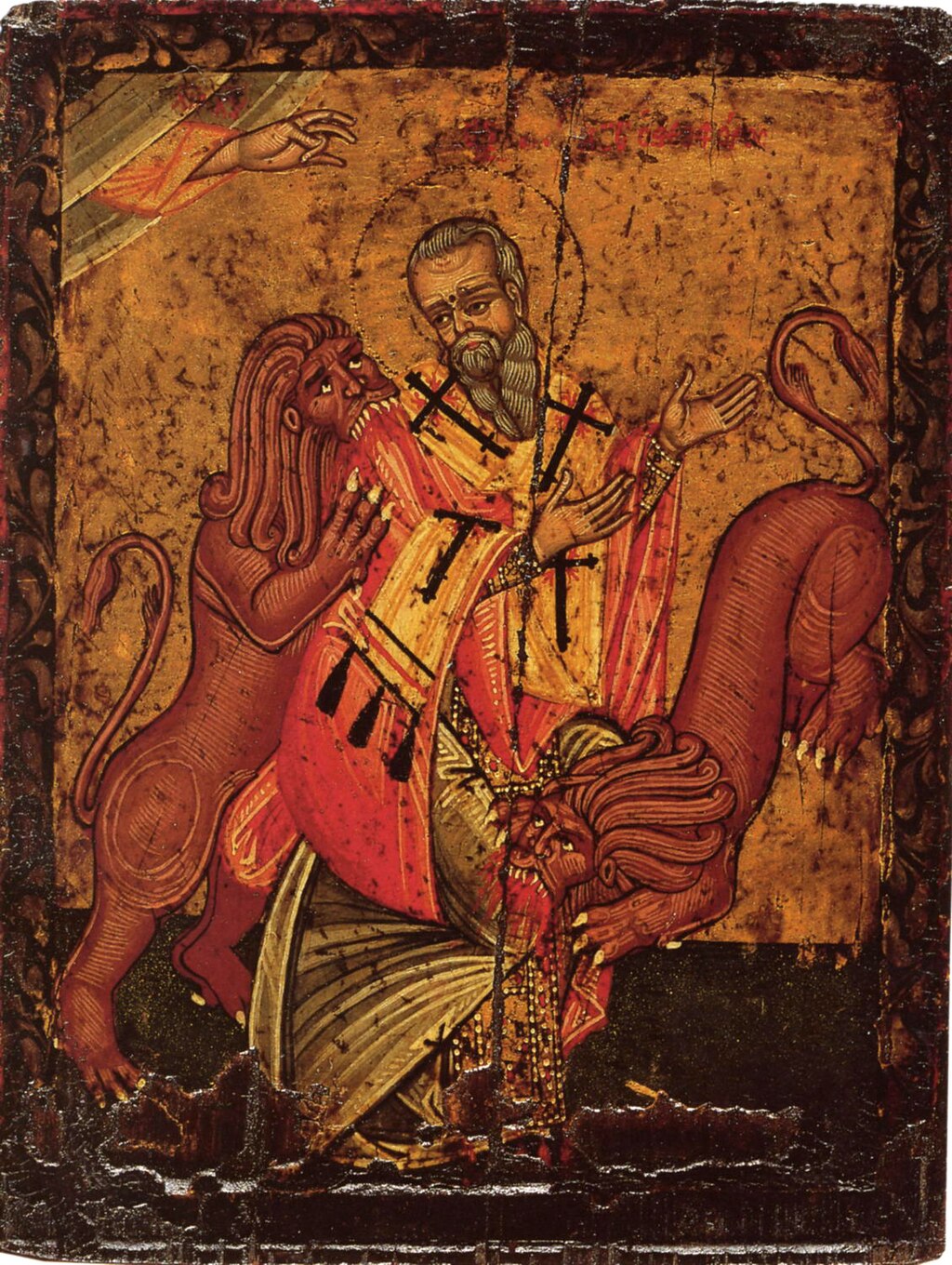 The first use of the term "Catholic Church" (literally meaning "universal church") was by the church father Saint Ignatius of Antioch in his Letter to the Smyrnaeans (circa 100 AD).[55] The Catholic church believes that God judges everyone based only on their moral acts,[56] that no one should be subject to human misery,[57] that everyone is equal in dignity yet distinct in individuality before God,[58] that no one should be discriminated against because of their sin or concupiscence,[59] and that apart from coercion[60] God exhausts every means to save mankind from evil: original holiness being intended for everyone,[61] the irrevocable Old Testament covenants,[62][63] each religion being a share in the truth,[64] elements of sanctification in non-Catholic Christian communities,[64] the good people of every religion and nation,[65] everyone being called to baptism and confession,[66][67] and Purgatory, suffrages, and indulgences for the dead.[68][67] The church believes that everyone is predestined to Heaven,[69] that no one is predestined to Hell,[68] that everyone is redeemed by Christ's Passion,[70] that no one is excluded from the church except by sin,[67] and that everyone can either love God by loving others unto going to Heaven or reject God by sin unto going to Hell.[71][72] The church believes that God's predestination takes everything into account,[70] and that his providence brings out of evil a greater good,[60] as evidenced, the church believes, by the Passion of Christ being all at once predestined by God,[70] foretold in Scripture,[70] necessitated by original sin,[73] authored by everyone who sins,[70] caused by Christ's executioners,[70] and freely planned and undergone by Christ.[70] The church believes that everyone who goes to Heaven joins the church,[68][74] and that from the beginning God intended Israel to be the beginning of the church,[65] wherein God would unite all persons to each other and to God.[75] The church believes that Heaven and Hell are eternal.[68] |
普遍主義神学 普遍主義神学は歴史、聖書、そして神の本質に関する前提に基づいて構築されている。正教会の神学者デイヴィッド・ベントレー・ハートによる『すべての人間 は救われる』(2019年)は、これら三つの領域すべてからの論拠を含んでいるが、特に神の本質に関する論証に焦点を当てている。トーマス・ウィットモア は『イエス・キリストが全人類を救う100の聖書的証拠』[44]を著し、普遍主義的見解を支持する旧約聖書と新約聖書の両方の聖句を引用している。 彼が引用し、他のキリスト教普遍主義者も引用する聖句の一部は以下の通りである: ルカによる福音書3:6:「すべての民は神の救いを見るであろう」 (新国際訳) ヨハネによる福音書17:2:「あなたは、すべての肉なる者に対する権能を彼に与え、あなたが彼に与えた者すべてに永遠の命を与えるためである。」 (RSV) コリント人への第一の手紙15:22:[45]「アダムにおいてすべての人が死ぬように、キリストにおいてすべての人が生かされるのである。」(ESV) ペテロの第二の手紙3:9:「主は約束を果たすのに遅いと思われるかもしれないが、実は忍耐強く待っておられる。それは、だれも滅びることなく、すべての人々が悔い改めに至ることを望んでおられるからである。」 (ESV) テモテへの手紙第一 2:3–6:[45] 「これは良いことであり、私たちの救い主である神に喜ばれる。神はすべての人が救われ、真理を知るようになることを望んでおられる。神は唯一であり、神と 人との間の仲介者も唯一である。それは人であるキリスト・イエスである。彼はすべての人のための身代金として、自らをささげた。これは定められた時に証し されたことである。」 (NIV) ヨハネの手紙一 2:2: 「彼は私たちの罪のための贖いのいけにえである。私たちの罪だけでなく、全世界の罪のための贖いのいけにえである。」(NIV) テモテへの手紙一 4:10:[45] 「私たちはこのために労苦し、戦っている。なぜなら、私たちの望みは、すべての人の救い主である生ける神に置かれているからである。特に、信じる者たちの救い主である。」 (ESV) ローマ人への手紙 5:18: 「一人の人の罪によってすべての人が罪人となったように、一人の人の義の行いによってすべての人が義と認められ、命を得るのである。」 (RSV) ローマ人への手紙 11:32:[45] 「神はすべての者を不従順に縛っておられる。それは、すべての者に憐れみをお示しになるためである。」 (NIV) 聖書翻訳に関する疑問 キリスト教普遍主義者は、ギリシャ語のαιών(文字通り「時代」だが、しばしば「永遠」と解釈される)とその形容詞形αἰώνιος(通常「永遠の」ま たは「永遠に続く」と解釈される)の誤訳が、終わりのない地獄の概念や、一部の人々が決して救われないという考えを生み出したと指摘する。[31] [46][47] 例えば、黙示録14:11には「彼らの苦しみの煙はεἰς αἰῶνας αἰώνωνまで上る」とある。これは最も直訳すると「永遠の永遠まで」を意味するが、翻訳ではしばしば「永遠に」と意訳される。[48] このギリシャ語は現代英語の「eon(エオン)」の語源であり、これは時間の一区切りや時代を指す。 19世紀の神学者マービン・ヴィンセントは「aion」という言葉と、「永遠」あるいは「一時的」という想定される含意について次のように記している: アイオン(音訳:エイオン)とは、長短ある期間を指し、始まりと終わりを持ち、それ自体で完結している。[...] 名詞も形容詞も、それ自体では無限や永遠の意味を帯びていない。[49] 多くの学者は、場合によってはこの形容詞が期間を示さず、質的な意味を持つ可能性を主張している。[50] 例えばデイヴィッド・ベントレー・ハート博士はマタイ25:46を「そしてこれらの者はあの世の懲らしめへ行き、正しい者はあの世の命へ行く」と訳してい る[51]。この解釈では、イエスは必ずしも命や罰の持続期間を示しているのではなく、その性質を示している——それらは地上の命や罰ではなく「(来るべ き)世の」ものである。トーマス・タルボット博士は次のように記している: [新約聖書の著者たちは]したがってaiōniosという語を終末論的用語として用いるようになった。それは来るべき時代の現実を指し示す便利な参照点と して機能した。そのようにして彼らは「ある時代に属するもの」というより文字通りの意味と、「特別な方法で神の臨在を現すもの」というより宗教的な意味と を組み合わせることに成功した。[52] ケン・ヴィンセント博士はこう記している。「(アイオーンが)ラテン語ウルガタ訳に翻訳された際、『アイオーン』は『永遠の』を意味する『アエテルナム』となった。」[31]同様に、イラリア・ラメリ博士は説明する: αἰώνιοςを「永遠の」と誤訳・誤解釈したことは(ラテン語において既に、αἰώνιοςとἀΐδιοςの双方がaeternusと訳され、両者の根本的な意味の差異が曖昧化された)、確かに「永遠の罰」や「地獄の永遠性」という教義の台頭に大きく寄与した。[53] αἰώνιοςを「永遠の」や「永遠に続く」と訳さない英語訳には、ヤング直訳訳(「時代を超えた」)、ウェイマス新約聖書(「時代を超えた」)、コン コーダント直訳訳(「永遠の」)、ロザラム強調訳(「時代を超越した」)、 ハート訳新約聖書(「その時代の」)、その他である。[54] カトリック教 「カトリック教会」(文字通り「普遍的教会」を意味する)という用語の初出は、教父アンティオキアの聖イグナティオスによる『スミルナ人への手紙』(紀元100年頃)である。[55] カトリック教会は、神がすべての人を道徳的行為のみに基づいて裁くと信じている[56]。誰も人間の苦しみを受けるべきではない[57]。すべての人は神 の前で尊厳において平等でありながら個性において異なる[58]。誰もその罪や情欲のために差別されるべきではない[59]。強制を除けば [60] 神はあらゆる手段を尽くして人類を悪から救おうとする。すなわち、原初の聖性はすべての人に意図されたものであり[61]、取り消せない旧約の契約、 [62][63] 各宗教が真理の一端を担うこと[64]、非カトリック系キリスト教共同体における聖化の要素[64]、あらゆる宗教と国民の善良な人々[65]、全ての人 が洗礼と告白へ招かれていること[66][67]、そして煉獄、死者のための祈りと免罪[68]。[67] 教会は、全ての者が天国へ予定されている[69]こと、誰も地獄へ予定されていない[68]こと、全ての者がキリストの受難によって贖われている[70] こと、罪によってのみ教会から排除される[67]こと、そして全ての者が他者を愛することで神を愛し天国へ至るか、罪によって神を拒み地獄へ至るかのいず れかを選択できる[71]と信じる。[72] 教会は、神の予定は万物を考慮に入れる[70]こと、神の摂理は悪からより大きな善を引き出す[60]ことを信じる。その証拠として、キリストの受難は神 によって予め定められ[70]、聖書に予言され[70]、原罪によって必然化され [73] 罪を犯す者すべてによって引き起こされ、[70] キリストの処刑者たちによって実行され、[70] キリストが自ら進んで計画し受け入れたものであると信じる。[70] 教会は、天国に行く者は皆教会に加わると信じ、[68][74] また初めから神はイスラエルを教会の始まりと意図し、[65] そこで神がすべての人格を互いに、また神と結びつけると信じる. [75] 教会は、天国と地獄が永遠であると信じる。[68] |
| Hinduism Author David Frawley says that Hinduism has a "background universalism" and its teachings contain a "universal relevance."[76] Hinduism is also naturally religiously pluralistic.[77] A well-known Rig Vedic hymn says: "Ekam Sat Vipra Bahudha Vadanti" meaning, "Truth is One, though the sages know it variously."[78] Similarly, in the Bhagavad Gītā (4:11), God, manifesting as an incarnation, states: "As people approach me, so I receive them. All paths lead to me."[79] The Hindu religion has no theological difficulties in accepting degrees of truth in other religions. Hinduism emphasizes that everyone actually worships the same God, whether one knows it or not.[80] While Hinduism has an openness and tolerance towards other religions, it also has a wide range of diversity within it.[81] There are considered to be six orthodox Hindu schools of philosophy/theology,[82] as well as multiple unorthodox or "heterodox" traditions called darshanas.[83] Hindu universalism Main articles: Neo-Vedanta and Hindu reform movements Hindu universalism, also called Neo-Vedanta[84] and neo-Hinduism,[85] is a modern interpretation of Hinduism which developed in response to western colonialism and orientalism. It denotes the ideology that all religions are true and therefore worthy of toleration and respect.[86] It is a modern interpretation that aims to present Hinduism as a "homogenized ideal of Hinduism"[87] with Advaita Vedanta as its central doctrine.[88] For example, it presents that: ... an imagined "integral unity" that was probably little more than an "imagined" view of the religious life that pertained only to a cultural elite and that empirically speaking had very little reality "on the ground," as it were, throughout the centuries of cultural development in the South Asian region.[89] Hinduism embraces universalism by conceiving the whole world as a single family that deifies the one truth, and therefore it accepts all forms of beliefs and dismisses labels of distinct religions which would imply a division of identity.[90][91][92][self-published source] This modernised re-interpretation has become a broad current in Indian culture,[88][93] extending far beyond the Dashanami Sampradaya, the Advaita Vedanta Sampradaya founded by Adi Shankara. An early exponent of Hindu Universalism was Ram Mohan Roy, who established the Brahmo Samaj.[94] Hindu Universalism was popularised in the 20th century in both India and the west by Vivekananda[95][88] and Sarvepalli Radhakrishnan.[88] Veneration for all other religions was articulated by Gandhi: After long study and experience, I have come to the conclusion that [1] all religions are true; [2] all religions have some error in them; [3] all religions are almost as dear to me as my own Hinduism, in as much as all human beings should be as dear to one as one's own close relatives. My own veneration for other faiths is the same as that for my own faith; therefore no thought of conversion is possible.[96] Western orientalists played an important role in this popularisation, regarding Vedanta to be the "central theology of Hinduism".[88] Oriental scholarship portrayed Hinduism as a "single world religion",[88] and denigrated the heterogeneity of Hindu beliefs and practices as 'distortions' of the basic teachings of Vedanta.[97] Islam Further information: Ummah, Divisions of the world in Islam, People of the Book, Dhimmi, and Dawah This article possibly contains original research. Please improve it by verifying the claims made and adding inline citations. Statements consisting only of original research should be removed. (June 2018) (Learn how and when to remove this message) Islam recognizes to a certain extent the validity of the Abrahamic religions, the Quran identifying Jews, Christians, and "Sabi'un" (usually taken as a reference to the Mandaeans) as "people of the Book" (ahl al-kitab). Later Islamic theologians expanded this definition to include Zoroastrians, and later even Hindus, as the early Islamic empire brought many people professing these religions under its dominion, but the Qur'an explicitly identifies only Jews, Christians, and Sabians as People of the Book.[98][need quotation to verify], [99][failed verification], [100][failed verification] The relation between Islam and universalism has assumed crucial importance in the context of political Islam or Islamism, particularly in reference to Sayyid Qutb, a leading member of the Muslim Brotherhood movement, and one of the key contemporary philosophers of Islam.[101] There are several views within Islam with respect to Universalism. According to the most inclusive teachings all peoples of the book have a chance of salvation. For example, Surah 2:62 states: Indeed, the believers, Jews, Christians, and Sabians—whoever ˹truly˺ believes in Allah and the Last Day and does good will have their reward with their Lord. And there will be no fear for them, nor will they grieve. — Surah Al-Baqara 2:62 However, the most exclusive teachings disagree. For example, Surah 9:5 states: But once the Sacred Months have passed, kill the polytheists ˹who violated their treaties˺ wherever you find them, capture them, besiege them, and lie in wait for them on every way. But if they repent, perform prayers, and pay alms-tax, then set them free. Indeed, Allah is All-Forgiving, Most Merciful. — Surah At-Tawbah 9:5 The interpretation of all of these passages are hotly contested amongst various schools of thought and branches of Islam as is the doctrine of abrogation (naskh) which is used to determine which verses take precedence, based on reconstructed chronology, with later verses superseding earlier ones. The ahadith also play a major role in this, and different schools of thought assign different weightings and rulings of authenticity to different hadith, with the four schools of Sunni thought accepting the Six Authentic Collections, generally along with the Muwatta Imam Malik. Depending on the level of acceptance of rejection of certain traditions, the interpretation of the Koran can be changed immensely, from the Qur'anists who reject the ahadith, to the ahl al-hadith, who hold the entirety of the traditional collections in great reverence. Some Islamic scholars[102][103] view the world as bipartite, consisting of the House of Islam, that is, where people live under the Sharia;[103] and the House of War, that is, where the people do not live under Sharia, which must be proselytized[103][104][105] using whatever resources available, including, in some traditionalist and conservative interpretations,[106] the use of violence, as holy struggle in the path of God,[100][106][107] to either convert its inhabitants to Islam, or to rule them under the Shariah (cf. dhimmi).[108] Judaism Main article: Jewish views on religious pluralism See also: Noahidism  Sefer Torah at old Glockengasse Synagogue (reconstruction), Cologne Judaism teaches that God chose the Jewish people to be in a unique covenant with God, and one of their beliefs is that Jewish people were charged by the Torah with a specific mission—to be a light unto the nations, and to exemplify the covenant with God as described in the Torah to other nations. This view does not preclude a belief that God also has a relationship with other peoples—rather, Judaism holds that God had entered into a covenant with all humanity as Noachides, and that Jews and non-Jews alike have a relationship with God, as well as being universal in the sense that it is open to all mankind.[109] Modern Jews such as Emmanuel Levinas advocate a universalist mindset that is performed through particularist behavior.[110] An on-line organization, the Jewish Spiritual Leaders Institute founded and led by Steven Blane, who calls himself an "American Jewish Universalist Rabbi", believes in a more inclusive version of Jewish Universalism, stating that "God equally chose all nations to be lights unto the world, and we have much to learn and share with each other. We can only accomplish Tikkun Olam by our unconditional acceptance of each other's peaceful doctrines."[111] Manichaeism Main article: Manichaeism Manichaeism, like Christian Gnosticism and Zurvanism, was arguably in some ways inherently universalist.[112][page needed] Yet in other respects, it was quite contrary to universalistic principles, holding instead to an eternal dualism.[113] Sikhism This section has multiple issues. Please help improve it or discuss these issues on the talk page. (Learn how and when to remove these messages) This section needs additional citations for verification. (February 2012) This section needs expansion. You can help by adding to it. (February 2012) In Sikhism, all the religions of the world are compared to rivers flowing into a single ocean. Although the Sikh gurus did not agree with the practices of fasting, idolatry and pilgrimage during their times, they stressed that all religions should be tolerated. The Sikh scripture, the Guru Granth Sahib, contains the writings of not just the Sikh guru themselves, but the writings of several Hindu and Muslim saints, known as the Bhagats. The very first word of the Sikh scripture is "Ik", followed by "Omkar". This literally means that there is only one god, and that one is wholesome, inclusive of the whole universe. It further goes on to state that all of creation, and all energy is part of this primordial being. As such, it is described in scripture over and over again, that all that occurs is part of the divine will, and as such, has to be accepted. It occurs for a reason, even if it is beyond the grasp of one person to understand. Although Sikhism does not teach that men are created as an image of God, it states that the essence of the One is to be found throughout all of its creation.[114] As was said by Yogi Bhajan, the man who is credited with having brought Sikhism to the West: If you can't see God in all, you can't see God at all. — Sri Singh Sahib, Yogi Bhajan[115] The First Sikh Guru, Guru Nanak said himself: There is no Hindu, there is no Muslim".[116][117] By this, Guru Nanak meant that there is no real "religion" in God's eyes. Unlike many of the major world religions, Sikhism does not have missionaries, instead it believes men have the freedom to find their own path to salvation. Unitarian Universalism Main article: Unitarian Universalism Sign on a UU church in Rochester, Minnesota, United States Unitarian Universalism (UU) is a theologically liberal religion characterized by a "free and responsible search for truth and meaning".[118] Unitarian Universalists do not share a creed; rather, they are unified by their shared search for spiritual growth and by the understanding that an individual's theology is a result of that search and not a result of obedience to an authoritarian requirement. Unitarian Universalists draw from all major world religions[119] and many different theological sources and have a wide range of beliefs and practices. While having its origins in Christianity, UU is no longer a Christian church. As of 2006, fewer than about 20% of Unitarian Universalists identified themselves as Christian.[120] Contemporary Unitarian Universalism espouses a pluralist approach to religious belief, whereby members may describe themselves as humanist, agnostic, deist, atheist, pagan, Christian, monotheist, pantheist, polytheist, or assume no label at all. The Unitarian Universalist Association (UUA) was formed in 1961, a consolidation of the American Unitarian Association, established in 1825, and the Universalist Church of America,[121] established in 1866. It is headquartered in Boston, and mainly serves churches in the United States. The Canadian Unitarian Council became an independent body in 2002.[122] Zoroastrianism Faravahar (or Ferohar), one of the primary symbols of Zoroastrianism, believed to be the depiction of a Fravashi (guardian spirit) Main article: Zoroastrianism Some varieties of Zoroastrian (such as Zurvanism) are universalistic in application to all races, but not necessarily universalist in the sense of universal salvation.[123][failed verification] |
ヒンドゥー教 著者デイヴィッド・フラウリーは、ヒンドゥー教には「背景にある普遍主義」があり、その教えには「普遍的な関連性」が含まれていると述べている。[76] ヒンドゥー教はまた、本質的に宗教的に多元的である。[77] よく知られたリグ・ヴェーダの賛歌はこう言う:「エカム・サット・ヴィプラ・バフダ・ヴァダンティ」。これは「真理は一つであるが、賢者たちはそれを様々 な形で知る」という意味である。同様に、バガヴァッド・ギーター(4:11)では、化身として現れた神がこう述べている。「人々が私のもとに来るように、 私は彼らを受け入れる。あらゆる道は私へと通じる」[79]。ヒンドゥー教は、他宗教における真理の程度を受け入れることに神学的な困難を抱えていない。 ヒンドゥー教は、自覚しているか否かにかかわらず、実際には誰もが同じ神を崇拝していると強調する。[80] ヒンドゥー教は他宗教に対して開放性と寛容性を持つ一方で、内部にも幅広い多様性がある。[81] 正統派ヒンドゥー哲学/神学の学派は六つ[82]とされ、さらにダルシャナと呼ばれる非正統派あるいは「異端」の伝統も複数存在する。[83] ヒンドゥー普遍主義 関連項目: 新ヴェーダーンタとヒンドゥー改革運動 ヒンドゥー普遍主義(新ヴェーダーンタ[84]、新ヒンドゥー教[85]とも呼ばれる)は、西洋の植民地主義とオリエンタリズムへの反応として発展したヒ ンドゥー教の現代的解釈である。全ての宗教は真実であり、したがって寛容と尊重に値するというイデオロギーを指す。[86] これは、アドヴァイタ・ヴェーダーンタを中心教義とする「均質化されたヒンドゥー教の理想像」[87]としてヒンドゥー教を提示しようとする現代的解釈である。[88] 例えば、次のように提示する: ... 想像上の「統合的統一」は、おそらく文化的エリート層にのみ関わる宗教生活の「想像上の」見解に過ぎず、南アジア地域における数世紀にわたる文化的発展の中で、経験的に言えば「現場」においてほとんど現実味を持たなかった。[89] ヒンドゥー教は、全世界を一つの家族として捉え、唯一の真理を神格化することで普遍主義を包含する。ゆえにあらゆる信仰形態を受け入れ、アイデンティティの分裂を暗示する異なる宗教のラベルを退ける。[90][91][92][自費出版資料] この近代化された再解釈は、インド文化における広範な潮流となり[88][93]、アディ・シャンカラが創設したアドヴァイタ・ヴェーダーンタ・サンプラ ダーヤ(十名師派)をはるかに超えて広がっている。ヒンドゥー教の普遍主義の初期の支持者は、ブラフモ・サマージを設立したラム・モハン・ロイであった。 [94] ヒンドゥー教の普遍主義は、20 世紀に、ヴィヴェーカーナンダ[95][88] とサルヴェパリ・ラダクリシュナン[88] によって、インドと西洋の両方で普及した。他のすべての宗教に対する敬意は、ガンディーによって次のように表現されている。 長い研究と経験を経て、私は次の結論に達した。[1] すべての宗教は真実である。[2] すべての宗教には何らかの誤りがある。[3] すべての人間は、自分の親しい親族と同じくらい大切であるべきであるのと同様に、すべての宗教は、私にとって自分のヒンドゥー教とほぼ同じくらい大切であ る。私が他の信仰に対して抱く敬意は、自分の信仰に対して抱く敬意と同じである。したがって、改宗など考えられない。[96] 西洋の東洋学者たちは、ヴェーダーンタを「ヒンドゥー教の中心的な神学」とみなして、この普及に重要な役割を果たした。[88] 東洋学は、ヒンドゥー教を「単一の世界宗教」として描き、[88] ヒンドゥー教の信仰や慣習の多様性を、ヴェーダーンタの基本的な教えの「歪曲」として貶めた。[97] イスラム教 詳細情報: ウマー、イスラム教における世界の区分、啓典の民、ディムミ、ダアワ この記事には独自研究が含まれている可能性がある。主張を検証し、インライン引用を追加して改善してください。独自研究のみで構成された記述は削除されるべきである。(2018年6月) (このメッセージの削除方法と時期について) イスラム教はある程度、アブラハムの宗教の正当性を認めている。クルアーンはユダヤ教徒、キリスト教徒、そして「サビーウン」(通常はマンダ教徒を指すと 解釈される)を「啓典の民」(アール・アル=キターブ)と特定している。後世のイスラム神学者たちは、ゾロアスター教徒、さらにはヒンドゥー教徒までもこ の定義に含めるよう拡大した。これは初期イスラム帝国がこれらの宗教を信仰する多くの人々を支配下に置いたためである。しかしクルアーンが明示的に「啓典 の民」と特定しているのは、ユダヤ教徒、キリスト教徒、サビアン(サビアン教徒)のみである。[98][要出典]、[99][検証失敗]、[100] [検証失敗] イスラムと普遍主義の関係は、政治的イスラム(イスラミズム)の文脈において極めて重要な意味を持つ。特にムスリム同胞団運動の指導的メンバーであり、現 代イスラム哲学の主要な思想家の一人であるサイード・クトゥブを参照する場合がそうだ。[101] イスラム内部には普遍主義に関して複数の見解が存在する。最も包括的な教えによれば、聖典の民たる全ての民族に救いの機会が与えられる。例えば、スーラ2:62にはこう記されている: 確かに、信者たち、ユダヤ教徒、キリスト教徒、サビアン教徒——アッラーと最後の審判の日を真に信じ、善い意志を示す者は、主のもとで報いを受ける。彼らには恐れも悲しみもない。 — スーラ・アル=バカラ 2:62 しかし、最も排他的な教えはこれに反する。例えば、第9章5節はこう述べている: 聖なる月が過ぎ去ったならば、契約を破った多神教徒を、どこであれ見つけ出せ。捕らえよ、包囲せよ、あらゆる道で待ち伏せせよ。しかし彼らが悔い改め、礼拝を行い、天課を納めるならば、彼らを解放せよ。アッラーは寛容にして慈悲深き方である。 —スール・アッ=タウバ 9:5 これらの節の解釈は、様々な学派やイスラム教の分派の間で激しく争われている。同様に、どの節が優先されるかを決定するために用いられる廃止(ナスフ)の 教義も争点だ。これは再構築された年代順に基づいており、後の節が前の節を無効にする。ハディースもこの解釈において重要な役割を果たす。異なる学派は、 異なるハディースに対して異なる重み付けと真正性の判定を下す。スンニ派の四学派は、一般的に『ムワッタ』イマーム・マリークと共に、六大ハディース集を 受け入れている。特定の伝承に対する受容・拒絶の度合いによって、クルアーンの解釈は大きく変わる。ハディースを拒絶するクルアーン主義者から、伝承集全 体を深く尊ぶハディース主義者まで様々だ。 一部のイスラム学者[102][103]は世界を二分すると見なす。すなわち、シャリーアの下で人々が生活する「イスラームの家」[103]と、シャリー アの下で生活せず改宗を迫られるべき「戦争の家」[103][104]である。[105] あらゆる手段を用いるべきであり、伝統主義的・保守的な解釈では[106]、神の道における聖なる闘い[100][106][107]として暴力行使も含 まれる。その目的は住民をイスラム教に改宗させるか、シャリーア法下で支配することである(ディムミ参照)。[108] ユダヤ教 詳細記事: 宗教的多元主義に関するユダヤ教の見解 関連項目: ノアヒズム ケルン旧グロッケンガッセ・シナゴーグ(復元)のトーラー巻物 ユダヤ教は、神がユダヤ民族を特別な契約関係に選んだと教える。ユダヤ教徒の信念の一つは、トーラーがユダヤ人に特定の使命を課したというものだ——諸国 民への光となり、トーラーに記された神との契約を他国に示すことである。この見解は、神が他の民族とも関係を持つという信念を排除するものではない。むし ろユダヤ教は、神がノアの子孫として全人類と契約を結んだと主張し、ユダヤ人と非ユダヤ人の双方が神との関係を持つと同時に、その関係は全人類に開かれて いるという意味で普遍的であると考える。[109] エマニュエル・レヴィナスら現代ユダヤ教徒は、個別主義的行動を通じて実践される普遍主義的思考を提唱している[110]。「アメリカ系ユダヤ教普遍主義 ラビ」を自称するスティーブン・ブレインが設立・主導するオンライン組織「ユダヤ教精神的指導者協会」は、より包括的なユダヤ教普遍主義を信奉し、「神は 全ての国民を等しく世界の光となるよう選び、我々は互いに学び分かち合うべきことが多くある」と述べている。互いの平和的教義を無条件に受け入れることに よってのみ、ティクーン・オラム(世界の修復)を達成できるのだ。」[111] マニ教 詳細記事: マニ教 マニ教は、キリスト教グノーシス主義やズルヴァーニズムと同様、ある意味で本質的に普遍主義的であったと言える。[112][出典ページが必要] しかし他の点では、普遍主義の原則とは全く相反し、代わりに永遠の二元論を堅持していた。[113] シク教 この節には複数の問題点がある。改善に協力するか、トークページで議論してほしい。(これらのメッセージの削除方法とタイミングについて学ぶ) この節は検証のための追加出典が必要だ。(2012年2月) この節は拡充が必要だ。追加して協力してほしい。(2012年2月) シク教では、世界のあらゆる宗教は一つの海に流れ込む川に例えられる。シク教のグルたちは、自らの時代における断食、偶像崇拝、巡礼といった慣習には賛同 しなかったが、全ての宗教は寛容されるべきだと強調した。シク教の聖典『グル・グラント・サヒブ』には、シク教のグル自身の著作だけでなく、バガットとし て知られる複数のヒンドゥー教やイスラム教の聖者たちの著作も収められている。 シク教の聖典の最初の言葉は「イク」であり、それに続くのは「オムカル」である。これは文字通り、神はただひとりであり、そのひとりは完全であり、宇宙全 体を含むことを意味する。さらに、すべての創造物とすべてのエネルギーがこの根源的な存在の一部であると述べている。したがって、聖典では繰り返し、起こ るすべてのことは神の意志の一部であり、それゆえ受け入れなければならないと説明されている。たとえ個人の理解を超えたものであっても、全ての被造物には 理由があるのだ。 シク教は人間が神の姿として創造されたとは教えないが、唯一神の本質は全ての被造物の中に存在すると説く[114]。シク教を西洋に広めたとされるヨギ・バジャンはこう語った: 万物に神を見出せぬ者は、神そのものを見出せぬのだ。 — スリ・シン・サーヒブ、ヨギ・バジャン[115] 最初のシーク教の教祖、グル・ナナクはこう言った。 ヒンズー教徒も、イスラム教徒も存在しない」[116][117] グル・ナナクは、神の目には真の「宗教」は存在しない、という意味でこう言ったのだ。世界の多くの主要宗教とは異なり、シーク教には宣教師は存在しない。その代わりに、人間は救いへの道を見出す自由を持っていると信じている。 ユニテリアン・ユニバーサル主義 主な記事:ユニテリアン・ユニバーサル主義 アメリカ合衆国ミネソタ州ロチェスターにある UU 教会の看板 ユニテリアン・ユニバーサル主義(UU)は、「自由で責任ある真実と意味の探求」を特徴とする、神学的にリベラルな宗教である。[118] ユニテリアン・ユニバーサル主義者は、信条を共有しているわけではない。むしろ、彼らは、霊的な成長を求める共通の探求と、個人の神学はその探求の結果で あり、権威主義的な要求に従った結果ではないという理解によって結束している。ユニテリアン・ユニバーサル主義者は、世界の主要な宗教[119] や異なる神学的情報源から学び、幅広い信念と実践を持っている。 キリスト教に起源を持つものの、UU はもはやキリスト教の教会ではない。2006年時点で、ユニテリアン・ユニヴァーサリストのうち自らをキリスト教徒と認識する者は約20%未満であった [120]。現代のユニテリアン・ユニヴァーサリズムは宗教的信念に対する多元主義的アプローチを支持しており、信徒は自らをヒューマニスト、不可知論 者、デイスム信奉者、無神論者、異教徒、キリスト教徒、一神教信者、汎神論者、多神教信者と称することも、一切のラベルを付けないことも可能である。 ユニテリアン・ユニバーサリスト協会(UUA)は1961年に設立された。これは1825年に設立されたアメリカユニテリアン協会と、1866年に設立さ れたアメリカユニバーサリスト教会[121]が統合した組織である。本部はボストンにあり、主にアメリカ国内の教会を支援している。カナダユニテリアン評 議会は2002年に独立した組織となった。[122] ゾロアスター教 ファラヴァハル(またはフェロハル)。ゾロアスター教の主要な象徴の一つで、フラヴァシ(守護霊)の描写とされる 詳細な記事: ゾロアスター教 ゾロアスター教の一派(ズルヴァニズムなど)は、あらゆる人種に適用される普遍主義的だが、普遍的救済の意味での普遍主義者とは限らない。[123][検証失敗] |
| Ananda Marga Christianity: Liberal Catholic Church Primitive Baptist Universalist Religious Society of Friends Schwarzenau Brethren Swedenborgianism (The New Church) Trinitarian Universalism Church Universal and Triumphant Comparative religion Ecumenism Hypothetical universalism George MacDonald Mahatma Gandhi Foundation Omnism Perennial philosophy Post-theism Religious liberalism Religious pluralism Spannian universalism Subud Universal Sufism |
アナンダ・マルガ キリスト教 リベラル・カトリック教会 原始バプテスト教会ユニヴァーサリスト 宗教友愛会 シュヴァルツェナウ・ブレザレン スヴェーデンボリ教(新教会 三位一体の普遍主義 普遍的勝利教会 比較宗教学 エキュメニズム 仮説的普遍主義 ジョージ・マクドナルド マハトマ・ガンディー財団 オムニズム 永続的哲学 ポスト・テイズム 宗教的自由主義 宗教的多元主義 スパニアン普遍主義 スブッド 普遍的スーフィズム |
| References | |
| Sources Mura, Andrea (2014). "The Inclusive Dynamics of Islamic Universalism: From the Vantage Point of Sayyid Qutb's Critical Philosophy". Comparative Philosophy. 5 (1): 29–54. doi:10.31979/2151-6014(2014).050106. ISSN 2151-6014. Casara, E. (1984). Universalism in America. Ghazi, Abidullah Al-Ansari (2010). Raja Rammohun Roy: Encounter with Islam and Christianity and the Articulation of Hindu Self-Consciousness. Xlibris Corporation.[self-published source] King, Richard (1999). Orientalism and Religion: Post-Colonial Theory, India and "The Mystic East". Routledge. King, Richard (2002). Orientalism and Religion: Post-Colonial Theory, India and 'The Mystic East'. Routledge. Larson, Gerald James (2012). "The Issue of Not Being Different Enough: Some Reflections on Rajiv Malhotra's Being Different" (PDF). International Journal of Hindu Studies. 16 (3) (published December 2012): 311–322. doi:10.1007/s11407-012-9129-8. S2CID 144728948. Michaelson, Jay (2009). Everything Is God: The Radical Path of Nondual Judaism. Shambhala. Sinari, Ramakant (2000). "Advaita and Contemporary Indian Philosophy". In Chattopadhyana (ed.). History of Science, Philosophy and Culture in Indian Civilization. Volume II, Part 2: Advaita Vedanta. Delhi: Centre for Studies in Civilizations. Woo, B. Hoon (2014). "Karl Barth's Doctrine of the Atonement and Universalism". Korea Reformed Journal. 32: 243–291. Yelle, Robert A. (2012). "Comparative Religion as Cultural Combat: Occidentalism and Relativism in Rajiv Malhotra's Being Different". International Journal of Hindu Studies. 16 (3) (published December 2012): 335–348. doi:10.1007/s11407-012-9133-z. S2CID 144950049. |
出典 ムラ、アンドレア(2014)。「イスラム普遍主義の包括的ダイナミクス:サイイド・クトゥブの批判哲学の視点から」。比較哲学。5(1): 29–54。doi:10.31979/2151-6014(2014).050106。ISSN 2151-6014. カサラ、E.(1984)。『アメリカにおける普遍主義』。 ガジ、アビドゥッラー・アル=アンサリ(2010)。『ラージャ・ラムモハン・ロイ:イスラム教とキリスト教との出会い、そしてヒンドゥー教的自己意識の形成』。Xlibris Corporation。[自費出版] キング、リチャード(1999)。オリエンタリズムと宗教:ポストコロニアル理論、インド、そして「神秘的な東洋」. Routledge. キング、リチャード (2002). オリエンタリズムと宗教:ポストコロニアル理論、インド、そして「神秘的な東洋」. Routledge. ラーソン、ジェラルド・ジェームズ (2012). 「十分に異なっていなかったという問題:ラジーヴ・マルホートラの『異なる存在であること』に関する考察」 (PDF). 国際ヒンドゥー研究ジャーナル. 16 (3) (2012年12月発行): 311–322. doi:10.1007/s11407-012-9129-8. S2CID 144728948. マイケルソン、ジェイ (2009). 『万物は神なり:非二元ユダヤ教の急進的道』シャンバラ社。 シナリ、ラマカント(2000年)。「アドヴァイタと現代インド哲学」。チャトパディヤーナ編『インド文明における科学・哲学・文化の歴史』第II巻第2部:アドヴァイタ・ヴェーダーンタ。デリー:文明研究センター。 ウー、B・フーン(2014)。「カール・バルトの贖罪論と普遍主義」。『韓国改革派ジャーナル』。32: 243–291。 イェル、ロバート・A(2012)。「文化闘争としての比較宗教:ラジブ・マルホトラ『異なる存在』における西洋中心主義と相対主義」。国際ヒンドゥー研 究ジャーナル。16 (3) (2012年12月発行): 335–348. doi:10.1007/s11407-012-9133-z. S2CID 144950049. |
| Further reading Ankerl, Guy (2000). Global communication without universal civilization. Vol. 1: Coexisting contemporary civilizations: Arabo-Muslim, Bharati, Chinese, and Western. Geneva, Switzerland: INU Press. ISBN 9782881550041. Palmquist, Stephen (2000), "Chapter eight: Christianity as the Universal religion", in Palmquist, Stephen (ed.), Kant's critical religion, Aldershot, Hants, England Burlington, Vermont: Ashgate, ISBN 9780754613336. Online. Scott, Joan W. (2005), "French Universalism in the nineties", in Friedman, Marilyn (ed.), Women and citizenship, Studies in Feminist Philosophy, Oxford New York: Oxford University Press, pp. 35–51, ISBN 9780195175356. |
追加文献(さらに読む) アンケル、ガイ(2000)。『普遍的な文明なきグローバル・コミュニケーション』第1巻:共存する現代文明――アラブ・イスラム、バーラティ、中国、西洋。スイス・ジュネーブ:INUプレス。ISBN 9782881550041。 Palmquist, Stephen (2000), 「第八章:普遍宗教としてのキリスト教」, Palmquist, Stephen (編), 『カントの批判的宗教』, イングランド・ハンプシャー州オルダーショット/バーモント州バーリントン: アッシュゲート, ISBN 9780754613336. オンライン. スコット、ジョーン・W.(2005)、「1990年代のフランスにおける普遍主義」、マリリン・フリードマン編『女性と市民権:フェミニスト哲学研 究』、オックスフォード・ニューヨーク:オックスフォード大学出版局、pp. 35–51、ISBN 9780195175356。 |
| https://en.wikipedia.org/wiki/Universalism |
リ ンク
文 献
そ の他の情報
CC
Copyleft,
CC, Mitzub'ixi Quq Chi'j, 1996-2099