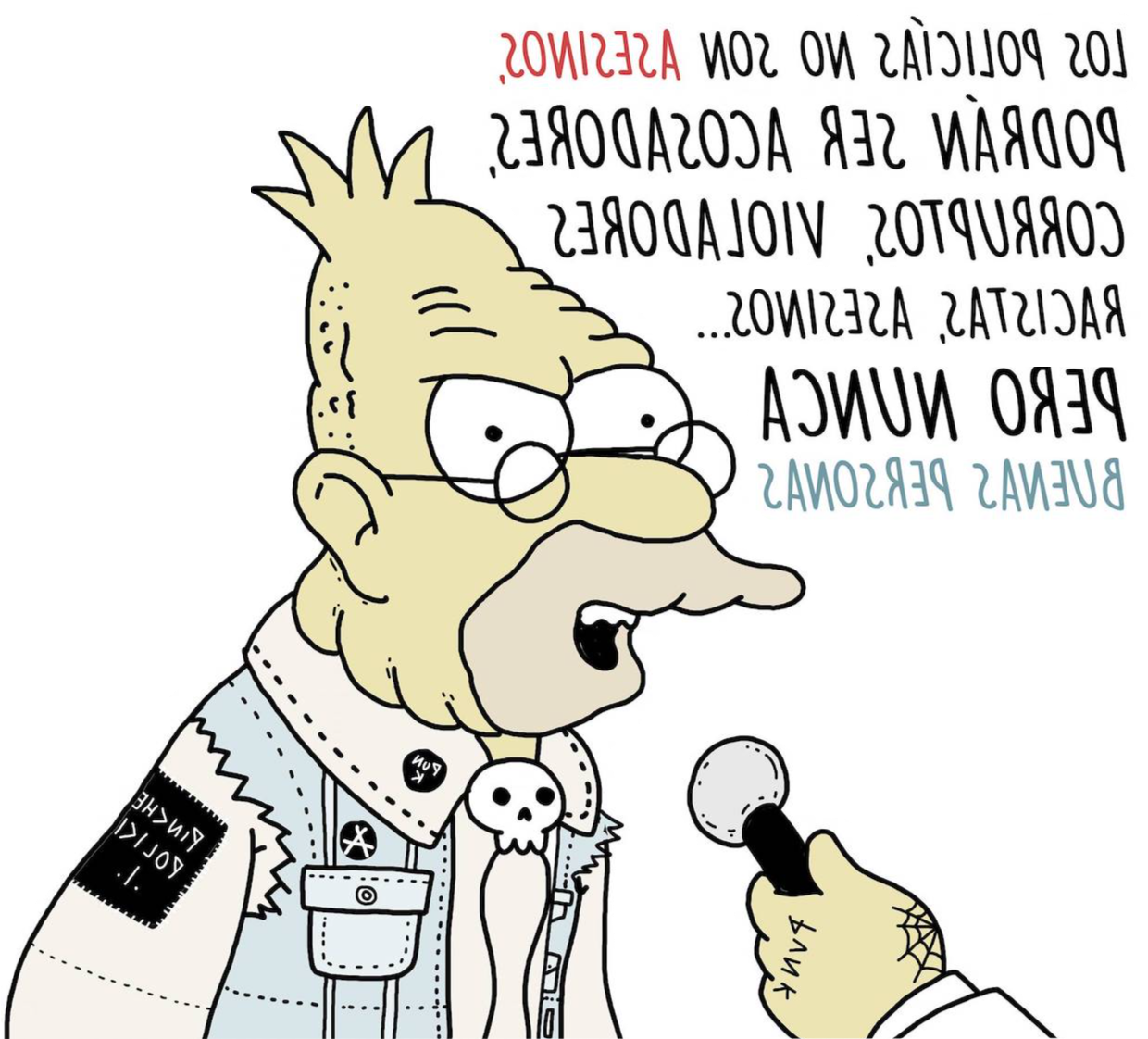
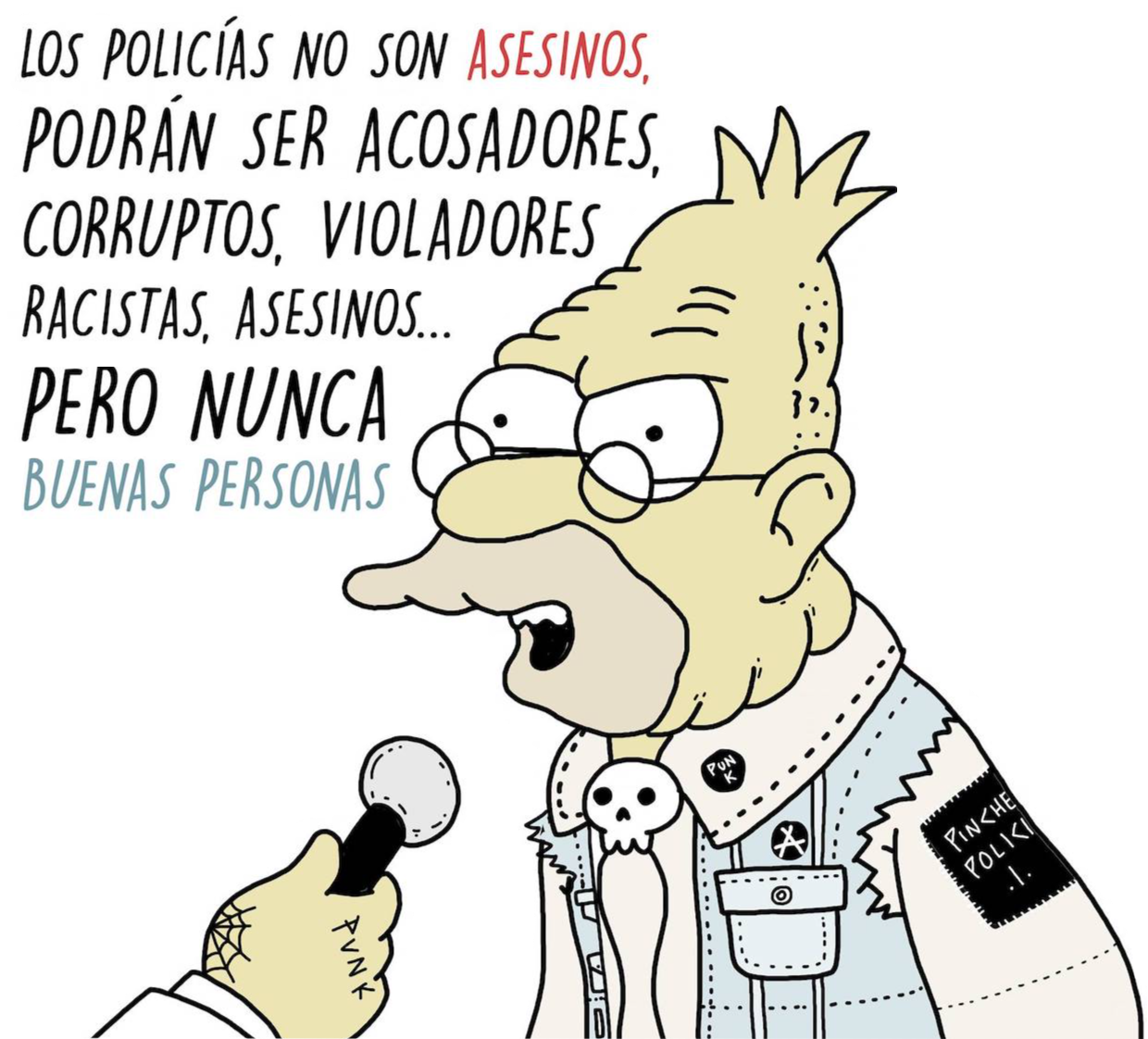

過去または過去の権威に訴える
Appeal to the past or
to past authority
☆ イプセ・デキシット(ipse dixit)の変奏であるが、この場合は、過去の権威としての、聖書、ワシントン、リンカーン、キング牧師などの引用、プラトンやアリストテレスからの引用などをつかうと、過去の権威にひれ伏す論法が作動する。
| ipse dixit (Latin for "he said it himself") is an assertion without proof, or a dogmatic expression of opinion.[1][2] The fallacy of defending a proposition by baldly asserting that it is "just how it is" distorts the argument by opting out of it entirely: the claimant declares an issue to be intrinsic and immutable.[3] |
「ipse dixit」(ラテン語で「彼自身がそう言った」)とは、証拠のない主張、あるいは独断的な意見表明を指す。[1][2] 「そういうものだ」とただ断言するだけで命題を擁護するこの誤謬は、議論から完全に逃避することで論理を歪める。主張者は問題を本質的で不変のものと宣言するのだ。[3] |
History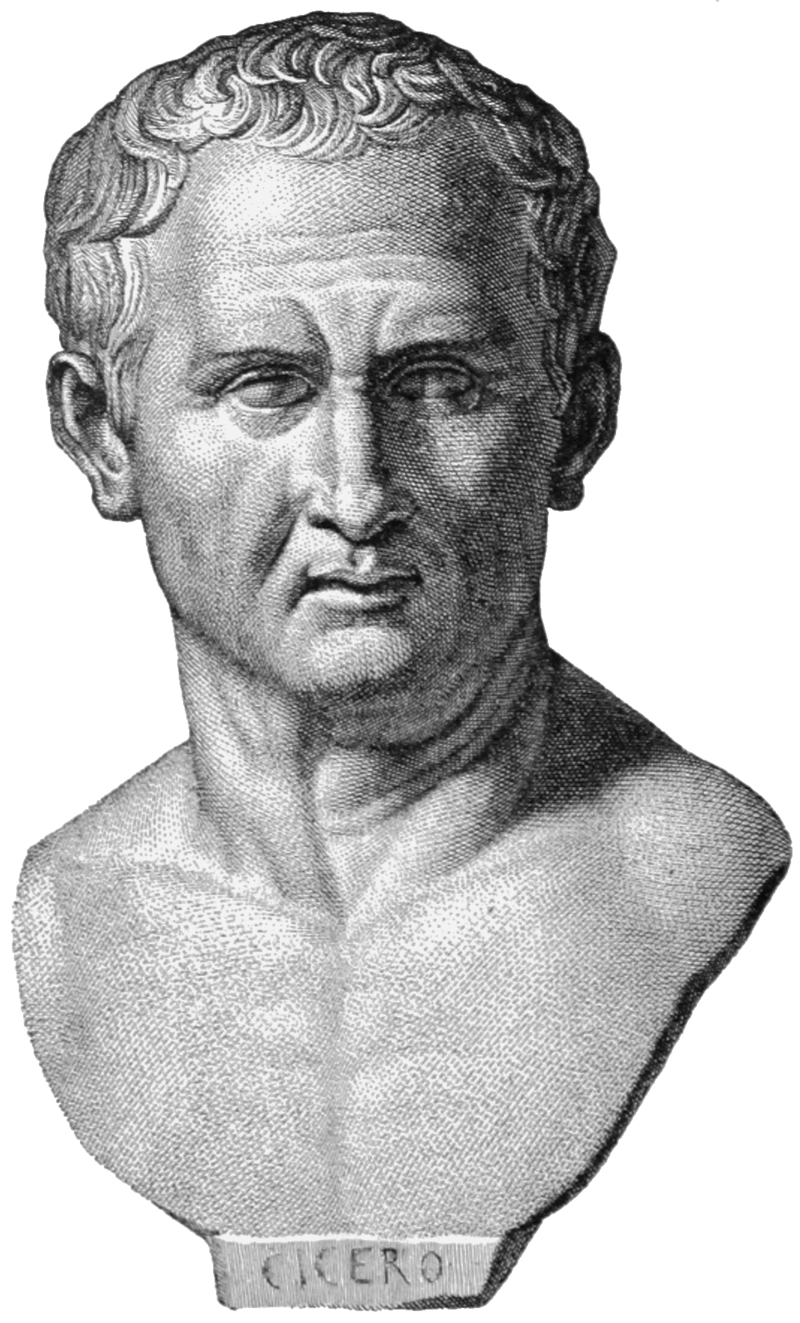 The Latin form of the expression comes from the Roman orator and philosopher Marcus Tullius Cicero (106–43 BC) in his theological studies De Natura Deorum (On the Nature of the Gods) and is his translation of the Greek expression (with the identical meaning) autòs épha (αὐτὸς ἔφα), an argument from authority made by the disciples of Pythagoras when appealing to the pronouncements of the master rather than to reason or evidence.[4] Before the early 17th century, scholastics applied the ipse dixit term to justify their subject-matter arguments if the arguments previously had been used by the ancient Greek philosopher Aristotle (384–322 BC).[5] |
歴史 この表現のラテン語形は、ローマの弁論家であり哲学者であるマルクス・トゥッリウス・キケロ(紀元前106年–43年)の神学研究『神々の本性について』 に由来する。(神々の本性について)における記述に由来する。これはギリシャ語表現(同義の)autòs épha(αὐτὸς ἔφα)の翻訳であり、ピタゴラスの弟子たちが理性や証拠ではなく師の宣言に訴える際に用いた権威に依拠した論証である。[4] 17世紀初頭以前、スコラ学派は、古代ギリシャの哲学者アリストテレス(紀元前384-322年)が以前に用いた論証であれば、自らの主題論証を正当化するために「イプセ・ディクシト」という用語を適用した。[5] |
| ipse-dixitism In the late 18th century, Jeremy Bentham adapted the term ipse dixit into the word ipse-dixitism.[6] Bentham coined the term to apply to all non-utilitarian political arguments.[7] Legal usage In modern legal and administrative decisions, the term ipse dixit has generally been used as a criticism of arguments based solely upon the authority of an individual or organization. For example, in National Tire Dealers & Retreaders Association, Inc. v. Brinegar, 491 F.2d 31, 40 (D.C. Cir. 1974), Circuit Judge Wilkey considered that the Secretary of Transportation's "statement of the reasons for his conclusion that the requirements are practicable is not so inherently plausible that the court can accept it on the agency's mere ipse dixit."[8] In 1997, the Supreme Court of the United States recognized the problem of "opinion evidence which is connected to existing data only by the ipse dixit of an expert."[9] Likewise, the Supreme Court of Texas has held "a claim will not stand or fall on the mere ipse dixit of a credentialed witness."[10] "[W]hen you come across an argument that you recall the majority took issue with," U.S. Supreme Court Justice Elena Kagan advised readers of her dissent in 2023's Andy Warhol Foundation for the Visual Arts, Inc. v. Goldsmith, "go back to its response and ask yourself about the ratio of reasoning to ipse dixit."[11] In 1858, Abraham Lincoln said in his speech at Freeport, Illinois, at the second joint debate with Stephen A. Douglas:[12] I pass one or two points I have because my time will very soon expire, but I must be allowed to say that Judge Douglas recurs again, as he did upon one or two other occasions, to the enormity of Lincoln,—an insignificant individual like Lincoln,— upon his ipse dixit charging a conspiracy upon a large number of members of Congress, the Supreme Court, and two Presidents, to nationalize slavery. I want to say that, in the first place, I have made no charge of any sort upon my ipse dixit. I have only arrayed the evidence tending to prove it, and presented it to the understanding of others, saying what I think it proves, but giving you the means of judging whether it proves it or not. This is precisely what I have done. I have not placed it upon my ipse dixit at all. In his June 12, 2025 ruling in Newsom v. Trump, Judge Charles R. Breyer said of one of the defendants' arguments "This is classic ipse dixit."[13] |
イプセ・ディクシズム 18世紀後半、ジェレミー・ベンサムは「イプセ・ディクシット」という語を「イプセ・ディクシズム」という言葉に改変した[6]。ベンサムはこの用語を、功利主義的でないあらゆる政治的議論に適用するために造語した。[7] 法的用法 現代の法的・行政的決定において、「ipse dixit」という用語は、個人や組織の権威のみに基づく議論に対する批判として一般的に用いられている。例えば、National Tire Dealers & Retreaders Association, Inc. v. Brinegar, 491 F.2d 31, 40 (D.C. Cir. 1974) では、 巡回裁判官ウィルキーは、運輸長官の「要件が実行可能であるという結論に至った理由の説明は、その本質的に説得力があるとは言い難く、当局の単なる 『ipse dixit』だけで裁判所が受け入れることはできない」と考えた。[8] 1997年、米国最高裁判所は「専門家の単なる自己主張によってのみ既存データと結びつけられた意見証拠」の問題を認めた[9]。同様に、テキサス州最高 裁判所も「主張は資格を有する証人の単なる自己主張によって成立も破綻もしない」と判示している。[10] 「多数意見が異議を唱えたと記憶する議論に出くわした時は」と、米国最高裁判事エレナ・ケイガンは2023年のアンディ・ウォーホル視覚芸術財団対ゴール ドスミス事件における自身の反対意見で読者に助言した。「その反論に戻り、推論と単なる断言の比率について自問せよ」[11] 1858年、エイブラハム・リンカーンはイリノイ州フリーポートでのスティーブン・A・ダグラスとの第二回合同討論演説でこう述べた: [12] 時間切れが迫っているため、いくつか論点を省略するが、ダグラス判事がまたしても、リンカーンの「とんでもない主張」——リンカーンのような取るに足らな い個人が——を繰り返し取り上げている点は指摘せざるを得ない。彼は単なる独断で、議会多数の議員、最高裁判所、そして二つの大統領が結託して奴隷制を国 民化しようとしていると非難しているのだ。まず言っておくが、私はいかなる主張も独断でなしたわけではない。証拠を提示し、それが何を証明するかを示した だけであり、それが真実か否かは諸君自身で判断する材料を提供した。これこそが私の行ったことだ。決して独断で主張したわけではない。 2025年6月12日、ニューサム対トランプ訴訟における判決で、チャールズ・R・ブライヤー判事は被告側の主張の一つについて「これは典型的な自己主張だ」と述べた[13]。 |
| Circular reasoning Just-so story Truthiness |
循環論法 都合の良い話 真実らしさ |
| References 1. Whitney, William Dwight (1906). "Ipse dixit". The Century Dictionary and Cyclopedia. Vol. 4. Century. pp. 379–380. 2. Westbrook, Robert B. (1991). John Dewey and American Democracy. Cornell University Press. p. 359. 3. VanderMey, Randall; Meyer, Verne; Van Rys, John; Sebranek, Patrick (2012). COMP. Cengage. p. 183. "Bare assertion. The most basic way to distort an issue is to deny that it exists. This fallacy claims, 'That's just how it is.'" 4. Poliziano, Angelo. (2010). Angelo Poliziano's Lamia: Text, Translation, and Introductory Studies, p. 26; excerpt, "In Cicero's De natura deorum, as well as in other sources, the phrase “Ipse dixit” pointed to the notion that Pythagoras's disciples would use that short phrase as justification for adopting a position: if the master had said it, it was enough for them and there was no need to argue further." 5. Burton, George Ward. (1909). Burton's Book on California and its Sunlit Skies of Glory, p. 27; excerpt, "But by the time of Bacon, students had fallen into the habit of accepting Aristotle as an infallible guide, and when a dispute arose the appeal was not to fact, but to Aristotle's theory, and the phrase, Ipse dixit, ended all dispute." 6. Bentham, Jeremy. (1834). Deontology; or, The Science of Morality, Vol. 1, p. 323; excerpt, "ipsedixitism ... comes down to us from an antique and high authority, — it is the principle recognised (so Cicero informs us) by the disciples of Pythagoras. Ipse {he, the master, Pythagoras), ipse dixit, — he has said it; the master has said that it is so; therefore, say the disciples of the illustrious sage, therefore so it is." 7. Bentham, Jeremy. (1838). Works of Jeremy Bentham, p. 192; excerpt, "... it is not a mere ipse dixit that will warrant us to give credit for utility to institutions, in which not the least trace of utility is discernible." 8. "National Tire Dealers & Retread. Ass'n Inc. vs. Brinegar". Retrieved July 10, 2015. 9. Filan, citing General Electric Co. v. Joiner, 522 U.S. 136, 137; 118 S.Ct. 512; 139 L.Ed.2d 508 (1997). 10. Burrow v. Arce, 997 S.W.2d 229, 235 (Tex. 1999). 11. Andy Warhol Foundation for the Visual Arts, Inc. v. Goldsmith, 598 U.S. ___ (2023), slip op. 4n2; Kagan, J., dissenting. 12. From The complete works of Abraham Lincoln, Vol. III, pp. 290–291. 13. Newsom, Gavin (June 6, 2025). "In The United States District Court for The Northern District Of California" (PDF). gov.uscourts. |
参考文献 1. ホイットニー、ウィリアム・ドワイト (1906). 「イプセ・ディクシト」. 『センチュリー辞典・百科事典』. 第4巻. センチュリー社. pp. 379–380. 2. ウェストブルック、ロバート・B. (1991). 『ジョン・デューイとアメリカ民主主義』. コーネル大学出版局. p. 359. 3. ヴァンダーメイ、ランドール; マイヤー、ヴァーン; ヴァン・ライス、ジョン; セブラネック、パトリック (2012). 『COMP』. センゲージ. p. 183. 「単なる断言。問題を歪める最も基本的な方法は、その問題の存在自体を否定することだ。この誤謬は『そういうものなんだ』と主張する。」 4. ポリツィアーノ、アンジェロ(2010)。『アンジェロ・ポリツィアーノのラミア:テキスト、翻訳、および序論的研究』、p. 26; 抜粋、「キケロの『神々の性質について』や他の資料において、『イプセ・ディクティス』という表現は、ピタゴラスの弟子たちが立場を採用する正当化として この短いフレーズを用いるという概念を指していた。師がそう言ったのなら、彼らにとってはそれで十分であり、これ以上議論する必要はなかったのだ。」 5. バートン、ジョージ・ウォード。(1909). 『バートンのカリフォルニアとその栄光の陽光に満ちた空』p. 27; 抜粋「しかしベーコンの時代までに、学生たちはアリストテレスを誤りなき指針として受け入れる習慣に陥っていた。論争が生じても、事実ではなくアリストテ レスの理論に訴え、その言葉『イプセ・ディクティム』が全ての議論を終わらせた。」 6. ベンサム、ジェレミー。(1834). 『義務論、あるいは道徳の科学』第1巻、p. 323; 抜粋、「イプセ・ディクティズム(Ipsedixitism)...は古代の高貴な権威から我々に伝わったものである。それは(キケロが伝えるところによ れば)ピタゴラスの弟子たちが認めた原理である。イプセ(彼、師であるピタゴラス)、イプセ・ディクティ、すなわち『彼が言った』——師がそう言ったのだ から、と偉大な賢者の弟子たちは言う。ゆえに、そうであるのだ。」 7. ベンサム、ジェレミー(1838)。『ジェレミー・ベンサム著作集』p. 192;抜粋「...有用性の痕跡が全く見られない制度に対して有用性を認める根拠は、単なるイプセ・ディクシト(師の言)だけでは不十分だ。」 8. 「全米タイヤ販売店・再生タイヤ協会対ブライネガー事件」。2015年7月10日取得。 9. フィラン、ゼネラル・エレクトリック社対ジョイナー事件、522 U.S. 136, 137; 118 S.Ct. 512; 139 L.Ed.2d 508 (1997) を引用。 10. Burrow v. Arce, 997 S.W.2d 229, 235 (Tex. 1999)。 11. Andy Warhol Foundation for the Visual Arts, Inc. v. Goldsmith, 598 U.S. ___ (2023), slip op. 4n2; Kagan, J., dissenting。 12. 『エイブラハム・リンカーン全集』第III巻、290–291頁より。 13. ニューサム、ギャビン(2025年6月6日)。「カリフォルニア州北部地区連邦地方裁判所」 (PDF)。gov.uscourts。 |
| Bulfinch, Thomas (1913). "XXXIV.
a. Pythagoras". Bartleby.com. Age of Fable: Vols. I & II: Stories
of Gods and Heroes. Ipse dixit Brewer, E. Cobham (1898). "Ipse dixit". Bartleby. Dictionary of Phrase and Fable. "Ipse dixit". Bartleby. American Heritage Dictionary of the English Language: Fourth Edition. 2000. Archived from the original on Mar 22, 2006. |
ブルフィンチ、トーマス(1913年)。「XXXIV. a. ピタゴラス」。バートルビー・ドットコム。『神話の時代:第I巻及び第II巻:神々と英雄の物語』。Ipse dixit ブリュワー、E. コブハム(1898年)。「Ipse dixit」。バートルビー。『慣用句と寓話の辞典』。 「イプセ・ディクシト」. バートルビー. 『アメリカン・ヘリテッジ英語辞典 第4版』. 2000年. 2006年3月22日時点のオリジナルからアーカイブ. |
| https://en.wikipedia.org/wiki/Ipse_dixit |
★Authority(権威)
| Authority
is commonly understood as the legitimate power of a person or group of
other people.[1][2] In a civil state, authority may be practiced by
legislative, executive, and judicial branches of government,[3] each of
which has authority and is an authority.[4] The term "authority" has
multiple nuances and distinctions within various academic fields
ranging from sociology to political science. The term authority identifies the political legitimacy, which grants and justifies rulers' right to exercise the power of government; and the term power identifies the ability to accomplish an authorized goal, either by compliance or by obedience; hence, authority is the power to make decisions and the legitimacy to make such legal decisions and order their execution.[5] |
権威とは、一般的に人格または集団が持つ正当な権力と理解されている
[1][2]。市民国家においては、立法府、行政府、司法府の各政府機関が権威を行使し[3]、それぞれが権威を有し権威機関である[4]。「権威」とい
う用語は、社会学から政治学に至る様々な学術分野において、複数のニュアンスと区別を持つ。 権威という用語は、統治者が政府の権力を行使する権利を付与し正当化する政治的正当性を指す。一方、権力という用語は、服従または従順によって認可された 目標を達成する能力を指す。したがって、権威とは意思決定を行う力であり、そのような法的決定を行いその執行を命じる正当性である。[5] |
| History Ancient understandings of authority trace back to Rome and draw later from Catholic (Thomistic) thought and other traditional understandings. In more modern terms, forms of authority include transitional authority (exhibited in, for example, Cambodia),[6] public authority in the form of popular power, and, in more administrative terms, bureaucratic or managerial techniques. In terms of bureaucratic governance, one limitation of the governmental agents of the executive branch, as outlined by George A. Krause, is that they are not as close to the popular will as elected representatives are.[7] The claims of authority can extend to national or individual sovereignty, which is broadly or provisionally understood as a claim to political authority that is legitimated.[8] Historical applications of authority in political terms include the formation of the city-state of Geneva, and experimental treatises involving the topic of authority in relation to education include Emile, or On Education by Jean-Jacques Rousseau. As David Laitin defines, authority is a key concept to be defined in determining the range and role of political theory, science and inquiry.[9] |
歴史 権威に関する古代の理解はローマに遡り、後にカトリック(トマス主義)思想やその他の伝統的理解から影響を受けた。より現代的な用語では、権威の形態には 移行期権威(例えばカンボジアで見られるもの)、民衆の力という形の公的権威、そしてより行政的な用語では官僚的または管理的手法が含まれる。官僚的統治 の観点では、ジョージ・A・クラウゼが指摘するように、行政機関の政府担当者は選出された代表者ほど民衆の意思に近接していないという限界がある[7]。 権威の主張は国民主権や個人主権にまで及ぶことがあり、これは広くあるいは暫定的に、正当化された政治的権威への主張として理解される。[8] 政治的観点における権威の歴史的応用例には、ジュネーブ都市国家の形成が含まれる。また、教育に関連する権威の主題を扱った実験的論文には、ジャン= ジャック・ルソーの『エミール、あるいは教育について』がある。デイヴィッド・レイティンが定義するように、権威は政治理論、科学、探究の範囲と役割を決 定する上で定義すべき核心概念である。[9] |
| Political philosophy There have been several contributions to the debate of political authority. Among others, Hannah Arendt, Carl Joachim Friedrich, Thomas Hobbes, Alexandre Kojève and Carl Schmitt have provided some of the most influential texts. In European political philosophy, the jurisdiction of political authority, the location of sovereignty, the balancing of notions of freedom and authority,[10] and the requirements of political obligations have been core questions from the time of Plato and Aristotle to the present. Most democratic societies are engaged in an ongoing discussion regarding the legitimate extent of the exercise of governmental authority. In the United States, for instance, there is a prevailing belief that the political system as instituted by the Founding Fathers should accord the populace as much freedom as reasonable; that government should limit its authority accordingly, known as limited government. Political anarchism is a philosophy which rejects the legitimacy of political authority and adherence to any form of sovereign rule or autonomy of a nation-state.[3] An argument for political anarchy is made by Michael Huemer in his book The Problem of Political Authority. On the other side, one of the main arguments for the legitimacy of the state is some form of the social contract theory developed by Thomas Hobbes in his 1668 book, Leviathan, or by Jean-Jacques Rousseau in his political writings on the social contract. |
政治哲学 政治権威に関する議論には、いくつかの貢献がなされてきた。とりわけハンナ・アーレント、カール・ヨアヒム・フリードリヒ、トマス・ホッブズ、アレクサンドル・コジェーヴ、カール・シュミットらは、最も影響力のある著作を提供している。 ヨーロッパの政治哲学においては、政治権力の管轄範囲、主権の所在、自由と権威の概念の均衡[10]、そして政治的義務の要件が、プラトンやアリストテレ スの時代から現在に至るまで核心的な問題として扱われてきた。ほとんどの民主主義社会では、政府権力行使の正当な範囲について継続的な議論が行われてい る。例えばアメリカでは、建国の父たちが確立した政治システムは、合理的な範囲で国民に最大限の自由を保障すべきであり、政府はその権限をそれに応じて制 限すべきだという考えが主流だ。これは限定政府として知られる。 政治的無政府主義とは、政治的権威の正当性や、いかなる形態の主権的支配、国民の自律性への従属を拒否する哲学である。[3] 政治的無政府主義の主張は、マイケル・ヒューマーの著書『政治的権威の問題』で展開されている。一方、国家の正当性を支持する主要な論拠の一つは、トマ ス・ホッブズが1668年の著書『リヴァイアサン』で、あるいはジャン=ジャック・ルソーが社会契約に関する政治論考で展開した、何らかの形の社会契約論 である。 |
Sociology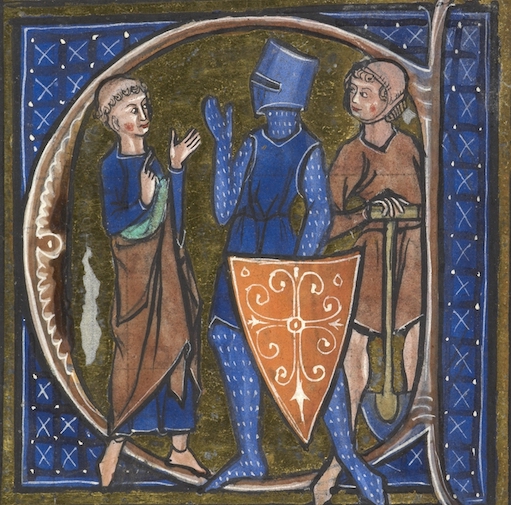 An inhabited initial from a 13th-century French text representing the tripartite social order of the Middle Ages: the ōrātōrēs (those who pray – clerics), bellātōrēs (those who fight – knights, that is, the nobility), and labōrātōrēs (those who work – peasants and members of the lower middle class). In sociology, authority is the legitimate or socially approved power which one person or a group possesses and practices over another. The element of legitimacy is vital to the notion of authority and is the main means by which authority is distinguished from the more general concept of power. Power can be exerted by the use of force or violence. Authority, by contrast, depends on the acceptance by subordinates of the right of those above them to give them orders or directives.[11][12][13] The definition of authority in contemporary social science remains a matter of debate. Max Weber in his essay "Politics as a Vocation" (1919) divided legitimate authority into three types. Others, like Howard Bloom, suggest a parallel between authority and respect/reverence for ancestors.[14] Max Weber on authority Main articles: Tripartite classification of authority, The Three Types of Legitimate Rule, and Monopoly on violence Max Weber defined domination (authority) as the chance of commands being obeyed by a specifiable group of people. Legitimate authority is that which is recognized as legitimate and justified by both the ruler and the ruled. Legitimated rule results in what Weber called the monopoly over the use of coercive violence in a given territory.[15] The concept of authority has also been discussed as a guiding principle in human-machine interaction design.[16] Genetic research indicates that obedience to authority may be a heritable factor.[17] |
社会学 13世紀のフランス語文献に見られる装飾文字の頭文字。中世の三つの社会階層を表す:祈る者(聖職者)、戦う者(騎士、すなわち貴族)、働く者(農民と下層中産階級)である。 社会学において、権威とは、ある人格または集団が、別の人格または集団に対して持つ、また行使する、合法的あるいは社会的に認められた力である。正当性の要素は権威の概念にとって極めて重要であり、権威をより一般的な力の概念と区別する主な手段である。 力は、武力や暴力によって行使することができる。対照的に、権威は、部下たちが、自分たちに命令や指示を与える上長たちの権利を受け入れることに依存している。[11][12][13] 現代社会科学における権威の定義は、依然として議論の的となっている。マックス・ヴェーバーは、その論文「職業としての政治」(1919年)の中で、正当 な権威を3種類に分類した。ハワード・ブルームのような他の研究者は、権威と祖先に対する敬意・畏敬の念との間に類似点があることを示唆している。 [14] 権威に関するマックス・ヴェーバー 主な記事:権威の三分類、三つのタイプの正当な支配、暴力の独占 マックス・ヴェーバーは、支配(権威)を、特定の集団が命令に従う可能性と定義した。正当な権威とは、支配者と被支配者の双方によって正当かつ正当である と認められたものである。正当化された支配は、ヴェーバーが言うところの、特定の領域における強制的な暴力の行使の独占をもたらす。[15] 権威の概念は、人間と機械の相互作用の設計における指針となる原則としても議論されている。[16] 遺伝学的研究によれば、権威への服従は遺伝的要因である可能性がある。[17] |
| Children and authority attributes Authority and its attributes have been identified as of particular relevance to children as they regard their parents and teachers. The three attributes of authority have been described as status, specialist skills or knowledge, and social position. Children consider the type of command, the characteristics of the authority figure, and the social context when making authority conclusions.[18] Although children regard these three types of authority attributes, they first assess the legitimacy of the authority figure in question using the nature of the commands they give. For example, a teacher who does not appear to have legitimate power from the child's perspective (perhaps because she or he cannot control the class well) will not be obeyed. Regarding parenting, authoritative parents who are warm and high in behavioral control but low in psychological control are more likely to be seen as having legitimate authority over the child, and will believe themselves that they have a duty to obey them and internalize their values. While the study of children in modern capitalist societies does look at the psychological aspects of children's understanding of legitimate authority at the level of symbolic interaction it is also true that is an extrapolated assumption based on one interpretation of a broad Comparative Historical Sociological (CHS) analysis of legitimate authority in multiple societies over a long duration, not the micro-social psychological study of children per se. There is nothing in Weber's published work in the Max Weber Gesamtausgabe that directly deals with children's perceptions in "formations" with traditional legitimate authority, prior to the emergence of modern capitalism .[19] In social science Hofstede Insights details "Power Distance" as: "Power distance is defined as the extent to which the less powerful members of institutions and organisations within a country expect and accept that power is distributed unequally", which can be interpreted as respect for authority. Generally, ex-communist countries, poor countries, and non-Protestant countries have the highest power distance (respect for inequality in the distribution of power). According to Hofstede Insights 2021 country comparison, all countries with power distance below 50 are Western Protestant democracies, except for Austria.[20] |
子どもと権威の属性 権威とその属性は、子どもが親や教師を認識する上で特に重要であると指摘されている。権威の三つの属性は、地位、専門的技能や知識、社会的立場と説明されている。子どもは権威に関する結論を下す際、命令の種類、権威者の特性、社会的文脈を考慮する。[18] 子どもはこれら三つの権威属性を認識しつつも、まず命令の内容から権威者の正当性を評価する。例えば、子どもの視点で正当な権力を持たないと見なされる教 師(例えばクラス統制が不十分な場合)には従わない。子育てに関して言えば、温かみを持ち行動的統制は高いが心理的統制は低い権威主義的な親は、子どもに 対して正当な権威を持つと見なされやすく、子ども自身も親に従う義務があると考え、親の価値観を内面化する傾向がある。現代資本主義社会における子供たち の研究は、象徴的相互作用のレベルで、子供たちが正当な権威を理解する心理的側面を確かに考察しているが、それは、長期間にわたって複数の社会における正 当な権威について、広範な比較歴史社会学(CHS)分析の一解釈に基づいて推定された仮定であり、子供たちそのもののミクロ社会心理学的研究ではないこと も事実である。マックス・ヴェーバー全集に掲載されたヴェーバーの著作には、近代資本主義が出現する以前の、伝統的な正当な権威を持つ「形成」における子 供たちの認識を直接扱ったものは何もない。[19] 社会科学 Hofstede Insights は「権力距離」を「権力距離とは、ある国の機関や組織において、権力の弱いメンバーが、権力の不平等な分配をどの程度予想し、受け入れるかを定義する」と 詳述しており、これは権威への敬意と解釈できる。一般的に、旧共産主義国、貧しい国、非プロテスタント国は、権力距離(権力の分配における不平等への敬 意)が最も高い。ホフステード・インサイト2021年の国別比較によれば、権力距離が50未満の国はオーストリアを除き、全て西洋のプロテスタント民主主 義国である。[20] |
| United States The foundation of American legitimate authority rests on the consent of the governed. This understanding of political authority and the exercise of political powers in the American context traces back to the writings of the Founding Fathers, including the arguments put forward in The Federalist Papers by James Madison, Alexander Hamilton and the first chief justice of the United States John Jay, and was referenced in the unanimous United States Declaration of Independence:[21] We hold these truths to be self-evident, that all men are created equal, that they are endowed by their Creator with certain unalienable Rights, that among these are Life, Liberty and the pursuit of Happiness.--That to secure these rights, Governments are instituted among Men, deriving their just powers from the consent of the governed, --That whenever any Form of Government becomes destructive of these ends, it is the Right of the People to alter or to abolish it, and to institute new Government, laying its foundation on such principles and organizing its powers in such form, as to them shall seem most likely to effect their Safety and Happiness. Later, speeches by the 16th president of the United States Abraham Lincoln would reiterate this fundamental source of legitimacy. "Our government rests in public opinion," Lincoln said in 1856.[22]: 21 In his 1854 speech at Peoria, Illinois, Lincoln espoused the proposition “that each man should do precisely as he pleases with all which is exclusively his own," a principle existing "at the foundation of the sense of justice."[22]: 47 This sense of personal ownership and stewardship was integral to the practice of self-government as Lincoln saw it by a Republican nation and its people. This was because, as Lincoln also declared, "No man is good enough to govern another man, without that other's consent."[22]: 48 The U.S. president is called to give account to the legislature for the conduct of the whole government, including that of regulatory agencies. The president influences the appointments, and the budgeting process and has the right and capacity to review regulatory rules on a case-by-case basis. Since the time of the Reagan administration the president was informed with a cost–benefit analysis of the regulation.[23] The creation of a regulatory agency requires an Act of Congress which specifies its jurisdiction, the related authority and delegated powers. Regulatory authorities can be qualified as independent agencies or executive branch agencies, a choice which is the reason of struggle between congress and the president as well as with the American courts. The latter's role is limited by the authorities' power to regulate property rights without the due process rights mandatorily applied by the courts.[23] |
アメリカ合衆国 アメリカの合法的な権威の基盤は、被統治者の同意にある。アメリカの文脈における政治権力とその行使に関するこの理解は、ジェームズ・マディソン、アレク サンダー・ハミルトン、そして初代合衆国最高裁判所長官ジョン・ジェイによる『フェデラリスト論文』で提唱された議論を含む、建国の父たちの著作にさかの ぼることができ、満場一致で採択されたアメリカ独立宣言でも言及されている。[21] 我々は、以下の真理が自明であると確信する。すなわち、すべての人間は平等に創造され、創造主から一定の不可侵の権利を授けられており、その中には生命、 自由、幸福の追求が含まれる。これらの権利を保障するために、政府は人々の間に設立され、その正当な権力は被統治者の同意から生じる。いかなる形態の政府 も、これらの目的を破壊するようになった場合、国民はそれを変更または廃止し、新たな政府を設立する権利を有する。その政府は、国民の安全と幸福を実現す るために最も有効と思われる原則に基づいて設立され、その権力は、国民が最も有効と思われる形態で組織される。 後に、アメリカ合衆国第16代大統領エイブラハム・リンカーンの演説はこの根本的な正当性の源泉を再確認する。「我々の政府は世論に依拠する」とリンカー ンは1856年に述べた[22]: 21。1854年のイリノイ州ピオリア演説では「各人は専属的に自己に属する一切について、まさに己の望むままに行動 すべきである」との命題を提唱し、この原則は「正義感の根幹に存在する」と主張した。[22]: 47 この個人的所有と管理責任の感覚は、リンカーンが共和制国民とその国民による自治の実践と見たものに不可欠であった。なぜなら、リンカーンがまた宣言した ように、「他人の同意なしに、他人を統治するのに十分な善人などいない」からである。[22]: 48 米国大統領は、規制機関を含む政府全体の運営について議会に説明責任を負う。大統領は人事任命や予算編成に影響力を持ち、個別案件ごとに規制規則を審査す る権限と能力を有する。レーガン政権以降、大統領には規制の費用便益分析が報告されるようになった。[23] 規制機関の創設には、その管轄権、関連権限及び委任された権力を明記した連邦議会の法案が必要である。規制当局は独立機関か行政機関かのいずれかに分類さ れ、この選択が議会と大統領、そしてアメリカ裁判所との争いの原因となっている。後者の役割は、裁判所が義務的に適用する適正手続きの権利なしに財産権を 規制する当局の権限によって制限されている。[23] |
| Anti-authoritarianism Appeal to authority Auctoritas Authoritarianism Authority (management) Authority bias Legitimacy List of sociology topics Milgram experiment (sociological experiments measuring obedience to authority figures) Patrimonialism Petty authority Power distance Question authority Soft power |
反権威主義 権威への訴え 権威 権威主義 権威(経営) 権威バイアス 正当性 社会学のトピック一覧 ミルグラム実験(権威者への服従を測定する社会学的実験) 家父長制 小規模な権威 権力距離 権威に疑問を呈する ソフトパワー |
| References 1. Bealey, Frank (1999). The Blackwell Dictionary of Political Science: A User's Guide to Its Terms. Wiley. pp. 22–23. ISBN 0-631-20694-9.[dead link] 2. Miller, David (26 June 2003). "Political authority". Political Philosophy: A Very Short Introduction. Very Short Introductions. Oxford University Press. p. 20. ISBN 9780191577864. Retrieved 28 September 2024. Political authority has two sides to it. On the one side, people generally recognize it as authority, in other words as having the right to command ... On the other side, people who refuse to obey are compelled to do so by the threat of sanctions ... And these two aspects are complementary. 3. The New Fontana Dictionary of Modern Thought Third Edition, Allan Bullock and Stephen Trombley, Eds. p. 115. 4. Covell, Charles (9 July 2009). "Rousseau, Kant and Hegel". The Law of Nations in Political Thought: A Critical Survey from Vitoria to Hegel. Basingstoke: Palgrave Macmillan. ISBN 9780230244450. Retrieved 28 September 2024. [According to Kant, the] juridicial order of civil society found its concrete institutional embodiment in the civil state, as through the legislative, executive and judicial authorities that comprised the basis of the state constitution and the system of state government. Of the three state authorities, the legislative authority was understood by Kant to be foundational in that it stood as the sovereign authority in the state ... 5. The New Fontana Dictionary of Modern Thought, Third edition, Allan Bullock and Stephen Trombley, eds., pp. 677–678. 6. Widyono, Benny (Oct 2014). "United Nations Transitional Authority in Cambodia (UNTAC)". 7. Krause, George A. (2010). Durant, Robert F. (ed.). "Legislative Delegation of Authority to Bureaucratic Agencies". The Oxford Handbook of American Bureaucracy. New York: Oxford University Press. p. 524. 8. Glanville, Luke (2016). Bellamy, Alex J. (ed.). "Sovereignty". The Oxford Handbook of the Responsibility to Protect. New York: Oxford University Press. p. 153. 9. Laitin, David (1998). "Toward a Political Science Discipline: Authority Patterns Revisited". Comparative Political Studies. 31 (4): 423–443. doi:10.1177/0010414098031004002. S2CID 146736449. 10. Cristi, Renato (2005). Hegel on Freedom and Authority. Cardiff, Wales: University of Wales Press. 11. Anthony Giddens, Sociology. London: Polity Press, 1997:581 12. Max Weber in "Weber's Rationalism and Modern Society: New Translations for the 21st Century", translated and edited by Tony Waters and Dagmar Waters. pp. 137-138. 13. C. Naomi Osorio-Kupferblum: "Conceptualising ‘Authority’". In: International Journal of Philosophical Studies. Vol. 23, No. 2, 13 March 2015, pp. 223–236, doi:10.1080/09672559.2015.1020828 14. Bloom, Howard (2010). The Genius of the Beast: a radical re-vision of capitalism. Amherst, New York: Prometheus Books. p. 186. ISBN 978-1-59102-754-6. To validate an argument, we refer back to our ancestors – or to someone who, while still alive, has already garnered the sort of authority only ancestors normally have. 15. Max Weber in Weber's Rationalism and Modern Society, translated and edited by Tony Waters and Dagmar Waters, Palgrave Books 2015, pp. 136 [ISBN missing] 16. Flemisch, F., Heesen, M., Hesse, T., Kelsch, J., Schieben, A., & Beller, J. (2011). Towards a Dynamic Balance between Humans and Automation: Authority, Ability, Responsibility and Control in Cooperative Control Situations. Cognition, Technology and Work. Advance online publication. doi:10.1007/s10111-011-0191-6 17. Ludeke, Steven; Johnson, Wendy; Bouchard, Thomas J. (2013-08-01). ""Obedience to traditional authority:" A heritable factor underlying authoritarianism, conservatism and religiousness". Personality and Individual Differences. 55 (4): 375–380. doi:10.1016/j.paid.2013.03.018. ISSN 0191-8869. 18. Laupa, 1991. 19. Reinhard. Bendix. Max Weber: An Intellectual Portrait. Garden City, NY: Anchor Books, Doubleday & Company, Inc. 1960. 20. "Country Comparison". Hofstede Insights. 21 Jun 2021. Retrieved 3 Nov 2021. 21. "The Declaration of Independence". Archived from the original on 2009-08-02. Retrieved 2009-07-27.[full citation needed] 22. Guelzo, Allen C. (2012). Lincoln Speeches. New York: Penguin Books. 23. Ferejohn, John (2004). "The Authority of Regulation and the Control of Regulators". In Marie-Anne Frison-Roche (ed.). Droit et économie de la régulation. Cairn.info. pp. 35–37. ISBN 9782724686463. OCLC 7292576035. Archived from the original on October 3, 2020 – via archive.today/IA9DF archive.is. |
参考文献 1. Bealey, Frank (1999). 『ブラックウェル政治学辞典:用語解説ガイド』. Wiley. pp. 22–23. ISBN 0-631-20694-9.[リンク切れ] 2. Miller, David (2003年6月26日). 「政治的権威」. 『政治哲学:超入門』. オックスフォード大学出版局。p. 20。ISBN 9780191577864。2024年9月28日閲覧。政治的権威には二つの側面がある。一方では、人々は一般的にそれを権威として、つまり命令する権 利を持つものとして認識する。他方では、従うことを拒む人々は制裁の脅威によって従わされる。そしてこの二つの側面は互いに補完し合う。 3. 『新フォンタナ現代思想辞典 第三版』アラン・ブロック、スティーブン・トロンブリー編、115頁。 4. コベル、チャールズ(2009年7月9日)。「ルソー、カント、ヘーゲル」。『政治思想における国際法:ヴィトリアからヘーゲルまでの批判的概観』。ベー ジングストーク:パルグレイブ・マクミラン。ISBN 9780230244450。2024年9月28日閲覧。[カントによれば、]市民社会の司法秩序は、国家憲法と国家統治システムの基盤を構成する立法 権、行政権、司法権を通じて、市民国家という具体的な制度的体現を見出した。三権のうち、立法権は国家における主権的権威として位置づけられる点で、カン トによって基礎的と理解されていた... 5. 『新フォンタナ現代思想辞典』第3版、アラン・ブロック、スティーブン・トロンブリー編、677–678頁。 6. ウィディヨノ、ベニー(2014年10月)。「カンボジア暫定統治機構(UNTAC)」。 7. クローゼ、ジョージ・A.(2010)。デュラント、ロバート・F.(編)。「官僚機関への立法権限委譲」。『オックスフォード・ハンドブック アメリカ官僚制』。ニューヨーク:オックスフォード大学出版局。p. 524. 8. グランヴィル、ルーク(2016)。ベラミー、アレックス・J.(編)。「主権」。『保護責任のオックスフォード・ハンドブック』。ニューヨーク:オックスフォード大学出版局。p. 153. 9. レイティン、デイヴィッド(1998)。「政治学の学問分野へ向けて:権威パターンの再考」。比較政治学研究。31 (4): 423–443. doi:10.1177/0010414098031004002. S2CID 146736449. 10. クリスティ、レナート (2005)。自由と権威に関するヘーゲル。ウェールズ、カーディフ:ウェールズ大学出版局。 11. Anthony Giddens, Sociology. London: Polity Press, 1997:581 12. Max Weber in 「Weber's Rationalism and Modern Society: New Translations for the 21st Century」, translated and edited by Tony Waters and Dagmar Waters. pp. 137-138. 13. C. Naomi Osorio-Kupferblum: 「権威の概念化」『国際哲学研究ジャーナル』第 23 巻第 2 号、2015 年 3 月 13 日、223-236 ページ、doi:10.1080/09672559.2015.1020828 14. ブルーム、ハワード (2010)。獣の天才:資本主義の急進的な再考。ニューヨーク州アマースト:プロメテウス・ブックス。186 ページ。ISBN 978-1-59102-754-6。議論を立証するために、我々は先祖、あるいは、まだ生きているが、通常は先祖だけが持つような権威をすでに獲得して いる人物に言及する。 15. マックス・ヴェーバー『ヴェーバーの合理主義と現代社会』トニー・ウォーターズ、ダグマー・ウォーターズ訳・編集、パルグレイブ・ブックス 2015年、136ページ [ISBN なし] 16. Flemisch, F., Heesen, M., Hesse, T., Kelsch, J., Schieben, A., & Beller, J. (2011). 人間と自動化のダイナミックなバランスに向けて:協調的制御状況における権威、能力、責任、および制御。認知、技術、仕事。オンライン先行公開。doi: 10.1007/s10111-011-0191-6 17. Ludeke, Steven; Johnson, Wendy; Bouchard, Thomas J. (2013-08-01). 「伝統的権威への服従:権威主義、保守主義、宗教性を支える遺伝的要因」。パーソナリティと個人差。55 (4): 375–380. doi:10.1016/j.paid.2013.03.018. ISSN 0191-8869. 18. Laupa, 1991. 19. Reinhard. Bendix. Max Weber: An Intellectual Portrait. Garden City, NY: Anchor Books, Doubleday & Company, Inc. 1960. 20. 「国別比較」。Hofstede Insights。2021年6月21日。2021年11月3日取得。 21. 「独立宣言」。2009年8月2日にオリジナルからアーカイブ。2009年7月27日に取得。[完全な引用が必要] 22. Guelzo, Allen C. (2012). Lincoln Speeches. New York: Penguin Books. 23. Ferejohn, John (2004). 「The Authority of Regulation and the Control of Regulators」. マリー=アンヌ・フリソン=ロッシュ編『規制の法と経済学』所収。Cairn.info刊。35-37頁。ISBN 9782724686463。OCLC 7292576035。2020年10月3日時点のオリジナルからアーカイブ。archive.today/IA9DF archive.is経由。 |
| Further reading Noh, State of Exception (2005) Hannah Arendt, "Authority in the Twentieth Century." Review of Politics (1956) Hannah Arendt, On Violence (1970) Józef Maria Bocheński, Was ist Autorität? (1974) Renato Cristi, Hegel on Freedom and Authority (2005) Carl Joachim Friedrich, Authority. Cambridge, MA: Harvard University Press (1958) Carl Joachim Friedrich, An Introduction to Political Theory: Twelve Lectures at Harvard. New York: Harper & Row (1967) Carl Joachim Friedrich, Tradition and Authority. London: Macmillan (1972) Robert E. Goodin (ed), The Oxford Handbook of Political Science (2011) Sebastian De Grazia. (1959). "What Authority Is Not". American Political Science Review 53(2): 321–331. Patrick Hayden, Hannah Arendt: Key Concepts (2014), esp. Chapter 8 Alexandre Kojève, "The Notion of Authority" (2014) C. Naomi Osorio-Kupferblum: "Conceptualising ‘Authority’". In: International Journal of Philosophical Studies. Vol. 23, No. 2, 13 March 2015, pp. 223–236, doi:10.1080/09672559.2015.1020828 Gail Radford, The Rise of the Public Authority: Statebuilding and Economic Development in Twentieth-Century America (2013) Rosen, Arie (2023). "Political Reasons and the Limits of Political Authority." Legal Theory 29 (1): 63–88. Carl Schmitt, Der Begriff des Politischen [The Concept of the Political] (1932) Max Weber, Economy and Society (1922) Max Weber, Politics as a Vocation (1919) |
追加文献(さらに読む) 野上 邦夫『例外状態』(2005年) ハンナ・アーレント「二十世紀における権威」『政治評論』(1956年) ハンナ・アーレント『暴力について』(1970年) ヨゼフ・マリア・ボチェンスキー『権威とは何か?』(1974年) レナート・クリスティ『ヘーゲルにおける自由と権威』 (2005) カール・ヨアヒム・フリードリヒ『権威』ケンブリッジ大学出版局(1958年) カール・ヨアヒム・フリードリヒ『政治理論入門:ハーバード大学における十二回の講義』ハーパー&ロウ社(1967年) カール・ヨアヒム・フリードリヒ『伝統と権威』マクミラン社(1972年) ロバート・E・グッディン編『オックスフォード政治学ハンドブック』 (2011) セバスチャン・デ・グラツィア。(1959). 「権威とは何かではない」『アメリカ政治学評論』53(2): 321–331. パトリック・ヘイデン『ハンナ・アーレント:主要概念』(2014)、特に第8章 アレクサンドル・コジェーヴ「権威の概念」(2014) C. ナオミ・オソリオ=クプファーブルム:「『権威』の概念化」。『国際哲学研究ジャーナル』第23巻第2号、2015年3月13日、pp. 223–236、doi:10.1080/09672559.2015.1020828 ゲイル・ラドフォード『公的権威の台頭:20 世紀アメリカの国家建設と経済発展』(2013 年) ローゼン、アリー(2023)。「政治的理由と政治的権威の限界」『法理論』29 (1): 63–88。 カール・シュミット、『政治の概念』(1932年) マックス・ヴェーバー、『経済と社会』(1922年) マックス・ヴェーバー、『職業としての政治』(1919年) |
| Fieser, James; Dowden, Bradley
(eds.). "Political Obligation". Internet Encyclopedia of Philosophy.
ISSN 2161-0002. OCLC 37741658. Christiano, Tom. "Authority". In Zalta, Edward N. (ed.). Stanford Encyclopedia of Philosophy. Four essays published in the International Journal of Philosophical Studies from the Robert Papazian Essay Prize Competition on Authority |
ファイザー、ジェームズ、ダウデン、ブラッドリー(編)。「政治的義務」。インターネット哲学百科事典。ISSN 2161-0002。OCLC 37741658。 クリスティアーノ、トム。「権威」。ザルタ、エドワード N. (編) 『スタンフォード哲学百科事典』所収。 権威に関するロバート・パパジアン・エッセイ賞コンテストから『国際哲学研究ジャーナル』に掲載された 4 つのエッセイ |
| https://en.wikipedia.org/wiki/Authority |
リ ンク
文 献
そ の他の情報
Copyleft, CC, Mitzub'ixi Quq Chi'j, 1996-2099

☆
 ☆
☆