
商品化
Commodification
☆商品化[Commodification]と
は、譲渡不能なもの、無償のもの、贈られたもの(物、サービス、思想、自然、個人的な情報、人間、動物)を商品、つまり売買の対象へと変える過程である。
[1][2][3][4][5] 資本主義市場に組み込まれることで、固有の性質や社会的関係性を失うという含意を持つ。[5][6]
商品化されたと議論されてきた概念には、身体[7]、親密さ[8]、公共財[9]、動物[10]、祝日[11]といった広範な項目が含まれる。
| Commodification
is the process of transforming inalienable, free, or gifted things
(objects, services, ideas, nature, personal information, people, or
animals) into commodities, or objects for sale.[1][2][3][4][5] It has a
connotation of losing an inherent quality or social relationship when
something is integrated by a capitalist marketplace.[5][6] Concepts
that have been argued as being commodified include broad items such as
the body,[7] intimacy,[8] public goods,[9] animals[10] and holidays.[11] |
商品化[Commodification]
とは、譲渡不能なもの、無償のもの、贈られたもの(物、サービス、思想、自然、個人的な情報、人間、動物)を商品、つまり売買の対象へと変える過程であ
る。[1][2][3][4][5] 資本主義市場に組み込まれることで、固有の性質や社会的関係性を失うという含意を持つ。[5][6]
商品化されたと議論されてきた概念には、身体[7]、親密さ[8]、公共財[9]、動物[10]、祝日[11]といった広範な項目が含まれる。 |
| History Terminology The earliest use of the word "commodification" dates from 1975.[4] Use of the concept of commodification became common with the rise of critical discourse analysis in semiotics.[12] The terms commodification and commoditization are sometimes used synonymously,[13] to describe the process of making commodities out of goods, services, and ideas.[14][15] However, other authors distinguish them, with commodification used in social contexts to mean that a non-commercial good has become commercial, typically with connotations of "corrupted by commerce", while commoditization is used in business contexts to mean when the market for an existing product has become a commodity market, where products are interchangeable and there is heavy price competition. In a quip: "Microprocessors are commoditized. Love is commodified."[16] |
歴史 用語 「商品化」という言葉の最初の使用は1975年にさかのぼる。[4] 商品化の概念の使用は、記号論における批判的言説分析の台頭とともに一般的になった。[12] 商品化とコモディティ化という用語は、時として同義語として用いられ、[13] 物品、サービス、そして思想を商品へと変える過程を説明する。[14][15] しかし他の研究者は両者を区別する。社会的な文脈では「商品化」は非商業的なものが商業的になることを意味し、通常「商業によって堕落した」という含意を 持つ。一方「コモディティ化」はビジネス文脈で、既存製品の市場がコモディティ市場(製品が代替可能で価格競争が激しい市場)になることを指す。皮肉な言 い回しとして「マイクロプロセッサはコモディティ化された。愛は商品化された」がある。[16] |
In Marxist theory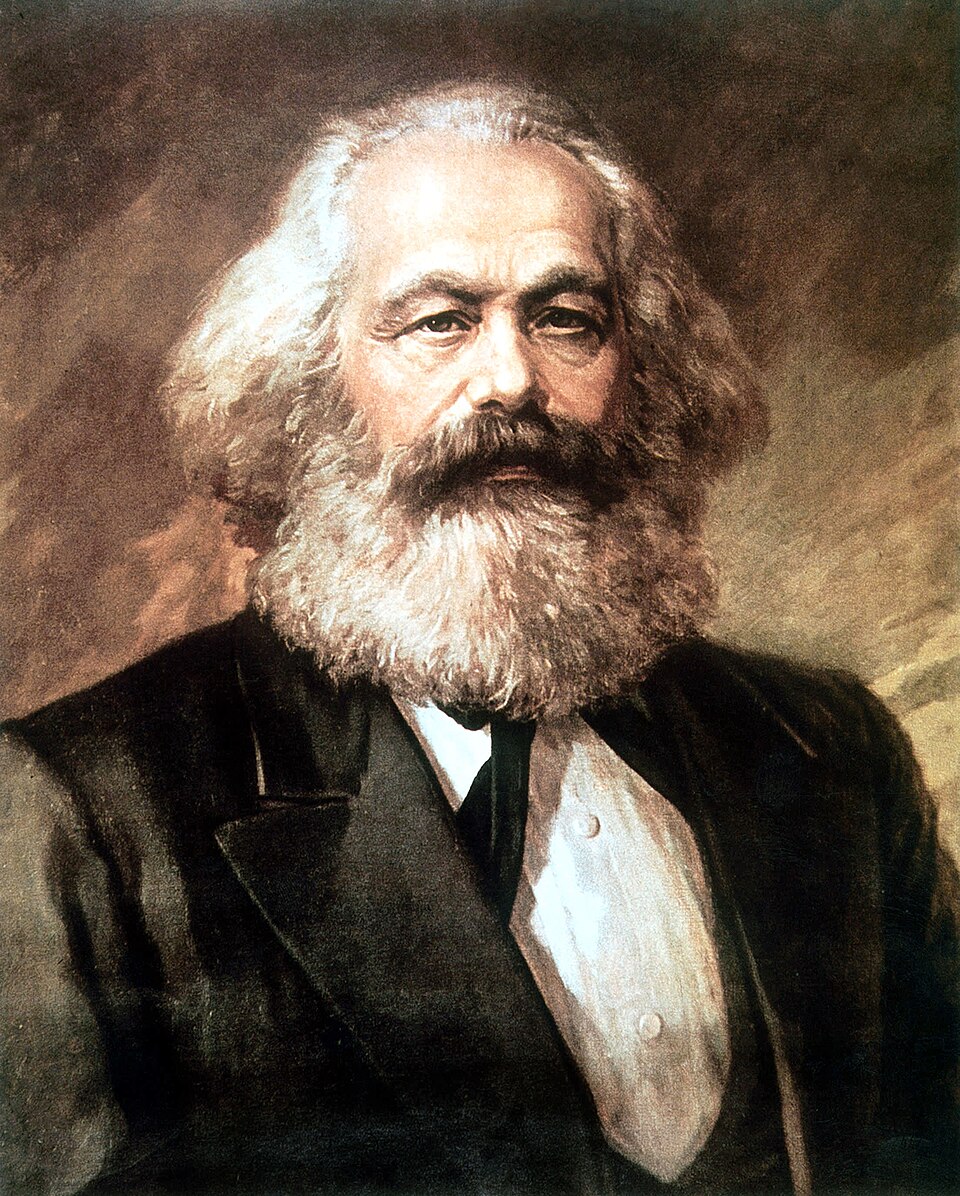 Karl Marx considered commodity a cell-form of capitalism. The Marxist understanding of commodity is distinct from its meaning in business. Commodity played a key role throughout Karl Marx's work; he considered it a cell-form of capitalism and a key starting point for an analysis of this politico-economic system.[17] Marx extensively criticized the social impact of commodification under the name commodity fetishism and alienation.[18] Prior to being turned into a commodity, an object has a "specific individual use value".[19] After becoming a commodity, that same object has a different value: the amount for which it can be exchanged for another commodity.[19] According to Marx, this new value of the commodity is derived from the time taken to produce the good, and other considerations are obsolete, including morality, environmental impact, and aesthetic appeal.[19] Marx claimed that everything would eventually be commodified: "the things which until then had been communicated, but never exchanged, given, but never sold, acquired, but never bought – virtue, love, conscience – all at last enter into commerce."[20] |
マルクス主義理論において カール・マルクスは商品(コモディティ)を資本主義の細胞形態と見なした。 マルクス主義における商品の理解は、ビジネスにおけるその意味とは異なる。商品はカール・マルクスの著作全体を通じて重要な役割を果たした。彼は商品を資 本主義の細胞形態であり、この政治経済システムを分析する上での重要な出発点と見なした。[17] マルクスは商品化がもたらす社会的影響を、商品フェティシズムと疎外という名称で徹底的に批判した。[18] 商品化される前、物には「特定の個別使用価値」がある。[19]商品となった後、同じ物には異なる価値が生まれる。それは他の商品と交換できる量である。 [19]マルクスによれば、この新たな商品価値は生産に要した時間から導かれるものであり、道徳性、環境への影響、美的魅力といった他の要素は不要とな る。[19] マルクスは、あらゆるものが最終的に商品化されると主張した。「それまで交換されることはなく、与えられることはあっても売られることはなく、獲得されることはあっても買われることはなかったもの――徳、愛、良心――これらすべてが遂に取引の対象となるのだ。」[20] |
| Mass communication studies Media, as a culture industry, is apparent from the rise of mass communications to monetize a populace for profit. Research in critical cultural studies of media effects identify commodification of culture as a recent large contributing force for the disruption of a society by mass media. An example is the display of American culture to the population within its borders and abroad. The commodity being sold is the United States, but mediated to show only the most exciting, dramatic, attention-getting, emotion-rousing aspects. Media corporations are expert at analyzing and selecting appealing elements of the culture, then repackaging and enhancing those elements for a wide audience. The quest for large viewership creates an image that does not show boring, unpleasant, or minority aspects of the United States. The distribution of the alternate form of the culture, for profit, causes misconceptions and stereotyping along with disruption of the original folk culture. Within the United States, the commodification of culture is the mediated view of American society accepted as the culture and even advanced by the culture depicted; the example given is hip-hop and rap music artists stars "selling out". The United States, with media corporations less prone to governmental interference, is successful at spreading American culture worldwide.[21] Critical cultural research reveal consequences for the lifting of bits of culture, remolding for a mass audience, then selling the alternate view. A few of repercussions of commodification of culture: Only selected, majority cultural practices are shown leaving out other important minority cultures which are overlooked and/or ignored. As in Hollywood movies, only the most exciting, dramatic, emotional aspects are presented while removing unpleasant, controversial or uninteresting aspects. The success of marketing a culture entails distributing as much content as possible to the largest audience, causing disruption of everyday life. Elite media industries are ignorant or deny effects of mass marketing, by avoidance or by explaining that the media has limited effects. There are many types of disruptions, some subtle, many obvious, including propagation of misconceptions, loss of sense of place, a major focus on entertainment, loss of childhood, cultivation, and a disruption of social conventions.[21] |
マスコミュニケーション研究 メディアは文化産業として、大衆を金儲けの手段として利用するマスコミュニケーションの台頭から明らかだ。メディア効果に関する批判的文化研究の調査は、 文化の商品化が近年、マスメディアによる社会破壊の大きな要因となっていることを示している。例として、アメリカ文化が国内および海外の人々に提示される ことが挙げられる。販売される商品はアメリカ合衆国そのものだが、メディアを介して最も刺激的で劇的、注目を集め感情を揺さぶる側面のみが提示される。メ ディア企業は文化の魅力的な要素を分析・選別し、広範な視聴者向けに再構成・強化する技術に長けている。高視聴率追求のため、退屈で不快、あるいは少数派 の側面は排除されたイメージが形成される。利益目的で流通する代替文化形態は、誤解や固定観念を生み出し、本来の民俗文化を破壊する。米国内では、文化の 商品化がアメリカ社会の媒介された見方として文化そのものと受け入れられ、描かれた文化によって推進さえされる。例として、ヒップホップやラップ音楽のス ターたちが「売れる」ことが挙げられる。政府の干渉を受けにくいメディア企業を擁するアメリカは、世界中にアメリカ文化を広めることに成功している。 [21] 批判的文化研究は、文化の断片を抽出し大衆向けに再構成した代替観を販売する行為の結果を明らかにする。文化の商品化がもたらす影響の一例:選択された多 数派文化のみが提示され、他の重要な少数派文化は見過ごされ/無視される。ハリウッド映画のように、最も刺激的で劇的・感情的な側面のみが強調され、不 快・論争的・興味を引かない側面は排除される。文化のマーケティング成功には、可能な限り多くのコンテンツを最大規模の視聴者に配布し、日常生活を混乱さ せることが伴う。エリートメディア産業は、大衆マーケティングの影響を無知であるか否認し、回避するか、メディアの影響は限定的だと説明する。混乱には様 々な種類があり、微妙なものもあれば明らかなものも多い。誤解の拡散、場所の感覚の喪失、娯楽への過度な焦点、子供時代の喪失、教養の喪失、社会規範の混 乱などが含まれる。[21] |
| Commodification of life Animal commodification Main article: Commodification of animals See also: Animal-industrial complex The commodification of animals is one of the earliest forms of commodification, which can be traced back to the time when domestication of animals began.[10] It includes the use of animals in all forms,[22]: xvi–xvii including use of animals for food, medicine, fashion and cosmetics, medical research, labor and transport, entertainment, wildlife trade, companionship, and so forth.[23][24] some Scholars say that the commodification of nonhuman animals in food systems is directly linked to capitalist systems that prioritize "monopolistically inclined financial interests" over the well-being of humans, nonhumans, and the environment.[25] Over 200 billion land and aquatic animals are killed every year to provide humans with animal products for consumption, which many scholars and activists have described as an "animal holocaust".[26][27]: 29–32, 97 [28] The extensive use of land and other resources for the production of meat instead of grain for human consumption is a leading cause of malnutrition, hunger, and famine around the world.[10]: 204 |
生命の商品化 動物の商品化 主な記事:動物の商品化 関連項目:動物産業複合体 動物の商品化は、最も初期の商品化形態の一つであり、動物の家畜化が始まった時代にまで遡ることができる[10]。これにはあらゆる形態での動物の利用が 含まれる[22]: xvi–xvii 。具体的には、食料・医薬品・ファッション・化粧品としての利用、医学研究、労働力・輸送手段としての利用、娯 楽、野生生物取引、伴侶としての利用などが挙げられる。[23][24] 一部の学者は、食料システムにおける非人間動物の商品化が、人間・非人間・環境の福祉よりも「独占的傾向の金融利益」を優先する資本主義システムと直接結 びついていると指摘する。[25] 人間の消費用動物製品を供給するため、毎年2000億頭以上の陸生・水生動物が殺されている。多くの学者や活動家はこれを「動物ホロコースト」と表現して いる。[26][27]: 29–32, 97 [28] 人間の食糧である穀物ではなく肉生産のために土地やその他の資源を大量に利用することが、世界的な栄養失調、飢餓、飢饉の主要な原因となっている。 [10]: 204 |
Human commodification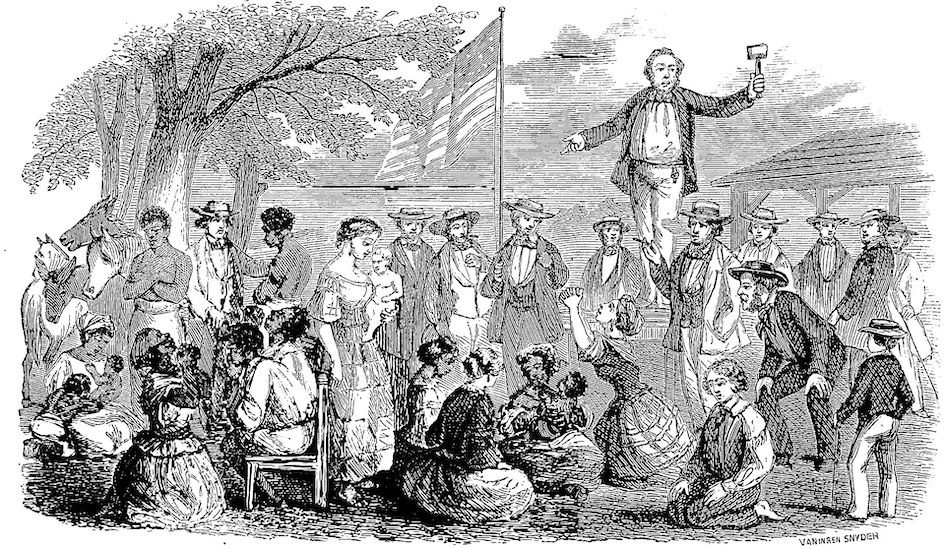 Human flesh at auction by Van Ingen Snyder. Commodification of humans have been discussed in various context, from slavery[29] to surrogacy.[30][31] Auctions of cricket players by Indian Premier League, Big Bash League and others is also discussed to be a case of human commodification.[32][33] Virginity auctions are a further example of self-commodification.[34] Human commodity is a term used in case of human organ trade, paid surrogacy (also known as commodification of the womb)[according to whom?], and human trafficking.[1][2][35] According to Gøsta Esping-Andersen, people are commodified or 'turned into objects' when selling their labour on the market to an employer.[36] |
人間の商品化 ヴァン・インゲン・スナイダーによる「人間の肉体の競売」 人間の商品化は、奴隷制[29]から代理出産[30][31]まで様々な文脈で議論されてきた。インド・プレミアリーグやビッグ・バッシュ・リーグなどに よるクリケット選手の競売も、人間の商品化の事例として議論されている[32][33]。処女競売は自己商品化のさらなる例である。[34] 人間の商品化という用語は、人体臓器取引、有償代理出産(子宮の商品化とも呼ばれる)[出典不明]、人身売買[1][2][35]などの事例で使用され る。ゴスタ・エスポング=アンデルセンによれば、労働者が市場で雇用主に労働力を販売する際に、人間は商品化され「物体化される」のである[36]。 |
| Self-commodification Personal information through social networking services, such as music purchases, how people identify, and user profiles are aggregated and sold to corporations and businesses for microtargeting, advertising and marketing.[37] Social media influencers are also a recent examples of self-commodification. A travel blogger is an instance of a mediated micro-celebrity, the social-media influencer, targeting a niche audience interested in visiting exotic locales. Social media networks expand the reach of this focused audience to make influencing a profitable profession. They commodify themselves by offering online journals, advice, thoughts, experiences along with photographs and videos, then make money by selling books, self-branding, blog subscriptions, and advertorials. Trust and an increased audience are built by expressing a conversational style, a seemingly real experience by a real person, allowing users connect to the blogger as a friendly voice offering advice on travel choices.[38] |
自己商品化 ソーシャルネットワーキングサービスを通じた個人的な個人情報――音楽購入履歴、個人の識別方法、ユーザープロフィールなどが集約され、企業や事業者に販売される。その目的はマイクロターゲティング、広告、マーケティングである。[37] ソーシャルメディアインフルエンサーも自己商品化の近年の例だ。旅行ブロガーは、異国的な場所を訪れることに興味を持つニッチな層をターゲットとする、メ ディアを介したマイクロセレブリティ、すなわちソーシャルメディアインフルエンサーの一例である。ソーシャルメディアネットワークは、この特定層へのリー チを拡大し、インフルエンサーを収益性の高い職業とする。彼らはオンライン日記、助言、思考、体験、写真や動画を提示することで自らを商品化し、書籍販 売、自己ブランディング、ブログ購読、広告記事を通じて収益を得る。会話調の表現や、実在の人格によるリアルな体験の演出により信頼と読者層を構築し、旅 行選択の助言を提供する親しみやすい声としてユーザーがブロガーと繋がることを可能にするのだ。[38] |
| Commodification of culture Commodification of culture refers to the process by which market forces change the very fabric of cultures. Through consumer capitalism, companies are able to influence things such as style, love and language. Critics argue this creates societal friction and leads to people growing disillusioned with reality. Companies often have opposing interests to the general population and yet still hold so much sway.[citation needed] Commodification of holidays Many holidays such as Christmas, Halloween or Valentine's Day have been argued as having become commodified.[39][40][41] The commodification of a holiday refers to making celebrations necessarily commercial and based on material goods, like gift giving, elaborate decorations, trick or treating, and card giving. Modern celebrations of many holidays are now more related to the commercial practices and profitable tactics than they are to the holidays' origins.[42] For some holidays, like Halloween, there are arguments that the commodification of the original holiday turned it into the celebrations that people now love.[42] The commodification of other holidays, like Christmas, sparks arguments about undoing the commercialization and getting back to the intended spirit of the holiday.[11] |
文化の商品化 文化の商品化とは、市場原理が文化の根幹そのものを変容させる過程を指す。消費資本主義を通じて、企業はスタイルや恋愛観、言語といった事象に影響を及ぼ し得る。批判論者は、これが社会的な摩擦を生み、人々が現実への幻滅を深める原因となると主張する。企業はしばしば一般大衆と利害が対立するにもかかわら ず、依然として強大な影響力を保持している。[出典が必要] 祝日の商品化 クリスマス、ハロウィン、バレンタインデーなど多くの祝日が商品化されたと指摘されている。[39][40][41] 祝日の商品化とは、贈り物交換、豪華な装飾、トリック・オア・トリート、カード贈呈といった物質的消費を必然とする商業的祝祭形態を指す。現代における多 くの祝祭の祝いは、その起源よりも商業慣行や利益追求の戦略と深く結びついている。[42] ハロウィンのような一部の祝祭では、本来の祝祭の商品化が、現代の人々が愛する祝いの形へと変容させたとされる。[42] クリスマスなどの他の祝祭の商品化は、商業化を解体し本来の精神を取り戻すべきか否かの議論を呼んでいる。[11] |
Commodification of indigenous cultures bell hooks, Gloria Jean Watkins, October 2014 bell hooks, educator and social critic. American author and feminist bell hooks described the cultural commodification of race and difference as the dominant culture "eating the other". To hooks, cultural expressions of Otherness, even revolutionary ones, are sold to the dominant culture for their enjoyment, with any messages of social change being marketed not for their messages but used as a mechanism for the dominant ones to acquire a piece of the "primitive".[43] Any interests in past historical culture almost always have a modern twist. According to Mariana Torgovnick: What is clear now is that the West's fascination with the primitive has to do with its own crises in identity, with its own need to clearly demarcate subject and object even while flirting with other ways of experiencing the universe.[44] hooks states that marginalized groups are seduced by this concept because of "the promise of recognition and reconciliation". When the dominant culture demands that the Other be offered as sign that progressive political change is taking place, that the American Dream can indeed be inclusive of difference, it invites a resurgence of essentialist cultural nationalism. Commodification of indigenous cultures refers to "areas in the life of a community which prior to its penetration by tourism have not been within the domain of economic relations regulated by criteria of market exchange" (Cohen 1988, 372). An example of this type of cultural commodification can be described through viewing the perspective of Hawaiian cultural change since the 1950s. The Hawaiian lūʻau was once a traditional party reserved for community members and local people, but through the rise of tourism, this tradition has lost part of its cultural meaning and is now mostly a "for profit" performance.[45] |
先住民族文化の商品化 ベル・フックス、グロリア・ジーン・ワトキンス、2014年10月 ベル・フックス、教育者かつ社会批評家。 アメリカの作家でフェミニストのベル・フックスは、人種や異なる差異の文化的商品化を、支配的文化が「他者を食い尽くす」現象と表現した。フックスによれ ば、他者性の文化的表現は、たとえ革命的なものであっても、支配的文化の娯楽のために売り渡される。社会変革のメッセージは、その内容ではなく、支配層が 「原始的」な要素の一部を獲得する手段として利用されるのだ[43]。過去の歴史的文化への関心は、ほぼ常に現代的な解釈が加えられている。マリアナ・ トーゴヴニックによれば: 今や明らかなのは、西洋の原始への執着が、自らのアイデンティティ危機と深く関わるということだ。それは、宇宙を経験する他の方法に戯れつつも、主体と客体を明確に区別する必要性に起因する。[44] フックスは、周縁化された集団がこの概念に魅了されるのは「承認と和解の約束」ゆえだと述べる。 支配的文化が、進歩的な政治的変革が起きている証として、またアメリカン・ドリームが確かに異なるものを包含し得るものとして「他者」を提示するよう要求する時、それは本質主義的な文化的ナショナリズムの復活を招く。 先住民族文化の商品化とは、「観光が浸透する以前には、市場交換の基準によって規制される経済関係の領域内に含まれていなかった共同体生活の領域」を指す (Cohen 1988, 372)。この種の文化的商品化の例は、1950年代以降のハワイ文化の変化という視点から説明できる。ハワイのルアウはかつて地域住民や地元の人々だけ の伝統的な宴だったが、観光業の台頭により、この伝統は文化的意義の一部を失い、今では主に「営利目的」のパフォーマンスとなっている。[45] |
| Commodification of love Examples of profiting from love are the myriad The Bachelor television shows, and the increase in luxury hotels catering to singles during Valentine's Day weekends.[46] Commodification of media, Internet and online communities Digital commodification occurs when, a business or corporation uses information from an online community without their knowledge, for profit. The commodification of information allows a higher authority to make money rather than a collaborative system of free thoughts.[47][48][49] Corporations such as Google, Apple, Facebook, Netflix, and Amazon accelerate and concentrate the commodification of online communities.[19] Digital tracking, like cookies, have further commodified the use of the internet, giving each click, view, or stream monetary value, even if it is an interaction with free content. Commodification of public goods Public goods are goods for which users cannot be barred from accessing or using them for failing to pay for them. However, such goods can also be commodified by value addition in the form of products or services or both.[9] Public goods like air[50][51] and water[52][53] can be subjected to commodification. See also: Commodification of water Commodification of subcultures Various subcultures have been argued to as having become commodified, for example the goth subculture,[54][55] the biker subculture,[56][57] the tattoo subculture,[58] the witchcraft subculture,[59] and others.[60] Commodification of tourism Tourism has been analyzed in the context of commodification as a process of transforming local cultures and heritage into marketable goods.[61][62][63][64] The commodification of tourism removes local culture from the foreground, replacing it with profitability from non-residents. This may be in the form of entertainment, souvenirs, food markets, or others. Tourism leads, in part, to the commodification of indigenous cultures as people return from visits with partial ideas and representations of the culture.[62] |
愛の商品化 愛から利益を得る例としては、無数の『バチェラー』テレビ番組や、バレンタインデーの週末に独身者向けの高級ホテルが増加していることが挙げられる。[46] メディア、インターネット、オンラインコミュニティの商品化 デジタル商品化とは、企業や団体がオンラインコミュニティの情報を、そのコミュニティの知らないうちに利益目的で利用する現象である。情報の商品化は、自 由な思考の共同システムではなく、上位の権威が金儲けをすることを可能にする。[47][48][49] グーグル、アップル、フェイスブック、ネットフリックス、アマゾンといった企業は、オンラインコミュニティの商品化を加速させ集中させている。[19] クッキーのようなデジタル追跡技術は、インターネット利用をさらに商品化し、無料コンテンツとのやり取りであっても、クリックや閲覧、ストリーミングのそ れぞれに金銭的価値を与えている。 公共財の商品化 公共財とは、利用者が代金を支払わなかったからといって、そのアクセスや使用を拒否できない財を指す。しかし、こうした財も、製品やサービス、あるいはそ の両方の形で付加価値を付けることで商品化され得る。[9] 空気[50][51]や水[52][53]といった公共財も商品化の対象となり得る。 関連項目:水の商品化 サブカルチャーの商品化 様々なサブカルチャーが商品化されたと論じられてきた。例えばゴス・サブカルチャー[54][55]、バイカー・サブカルチャー[56][57]、タトゥー・サブカルチャー[58]、妖術サブカルチャー[59]などである。[60] 観光の商品化 観光は商品化の文脈において、地域文化や遺産を市場性のある商品へと変容させるプロセスとして分析されてきた。[61][62][63][64] 観光の商品化は地域文化を前面から排除し、非居住者からの収益性で置き換える。これは娯楽、土産物、食品市場などの形態をとる。観光は、訪問者がその文化 について部分的な認識やイメージを持ち帰ることで、先住民文化の商品化を部分的に招く。[62] |
| Big data Commercialization Commercialization of love Commodification of animals Commodification of nature Decommodification Deregulation Exchange value Human commodity auctions Privatization Value-form Globalization |
ビッグデータ 商業化 愛の商業化 動物の商品化 自然の商品化 脱商品化 規制緩和 交換価値 人間商品オークション 民営化 価値形態 グローバル化 |
| References 01. Maloney, Lauren (19 November 2015). "The Commodification of Human Beings". nulawreview.org. Retrieved 26 February 2020. Wilsterman, James M. (2008). "The Human Commodity". thecrimson. thecrimson.com. Retrieved 26 February 2020. For animals, "United Nations Commodity Trade Statistics Database", UN ComTrade; Josephine Donovan, "Aestheticizing Animal Cruelty," College Literature, 38(4), Fall 2011 (pp. 202–217), p. 203. JSTOR 41302895 For slaves as commodities, Appadurai 1986, pp. 84–85; David Hawkes, Shakespeare and Economic Theory, Bloomsbury Publishing, 2015, p. 130. For body commodification, Lesley A. Sharp, "The Commodification of the Body and Its Parts," Annual Review of Anthropology, 29, 2000 (pp. 287–328) p. 295ff. JSTOR 223423 commodification, n. Second edition, 1989; online version November 2010. ; accessed 6 January 2011. Hearn, Alison (14 March 2017), "13. Commodification", Keywords for Media Studies, New York University Press, pp. 43–46, doi:10.18574/nyu/9781479817474.003.0016, ISBN 978-1-4798-1747-4, retrieved 29 January 2024 Hall, Derek (2024). "Does capitalism drive towards the commodification of everything?". Environment and Planning A: Economy and Space. 56 (7): 1916–1935. Bibcode:2024EnPlA..56.1916H. doi:10.1177/0308518X241254664. Sharp, Lesley A. (21 October 2000). "The Commodification of the Body and its Parts". Annual Review of Anthropology. 29 (1): 287–328. doi:10.1146/annurev.anthro.29.1.287. ISSN 0084-6570. PMID 15977341. Constable, Nicole (October 2009). "The Commodification of Intimacy: Marriage, Sex, and Reproductive Labor". Annual Review of Anthropology. 38 (1): 49–64. doi:10.1146/annurev.anthro.37.081407.085133. ISSN 0084-6570. "Commodification | Neoliberalism". neolib.uga.edu. Retrieved 16 January 2026. 10. Nibert, David (2011). "Origins and Consequences of the Animal Industrial Complex". In Steven Best; Richard Kahn; Anthony J. Nocella II; Peter McLaren (eds.). The Global Industrial Complex: Systems of Domination. Rowman & Littlefield. pp. 197–209. ISBN 978-0-7391-3698-0. "We Can Reclaim Christmas from Capitalism". In These Times. 20 December 2018. Retrieved 16 November 2021. "Critical Discourse Analysis and Stylistics" (PDF). Retrieved 22 September 2011. Robert Hartwell Fiske's Dictionary of Unendurable English: A Compendium of Mistakes in Grammar, Usage, and Spelling with commentary on lexicographers and linguists, Robert Hartwell Fiske, p. 99 Appadurai 1986, also cited in Martha M. Ertman, Joan C. Williams, Rethinking commodification, 2005, in Afterword by Carol Rose, pp. 402–403. This cites various uses of commodification to mean "become a commodity market", and considers the use of commodification (Peggy Radin, 1987) and commoditization (Appadurai 1986) as equivalent. Greenwood, D.J. (1977). V. L. Smith (ed.). "Culture by the Pound: An Anthropological Perspective on Tourism as Cultural Commoditization". Hosts and Guests. Philadelphia: University of Pennsylvania Press. pp. 129–139. Surowiecki, James (30 January 1998). "The Commoditization Conundrum". Slate. Retrieved 16 August 2015. What corporations fear is the phenomenon now known, rather inelegantly, as "commoditization." What the term means is simply the conversion of the market for a given product into a commodity market, which is characterized by declining prices and profit margins, increasing competition, and lowered barriers to entry. ("Commoditization" is therefore different from "commodification," the word cultural critics use to decry the corruption of higher goods by commercial values. Microprocessors are commoditized. Love is commodified.) Prodnik, Jernej (2012). "A Note on the Ongoing Processes of Commodification: From the Audience Commodity to the Social Factory". pp. 274–301. Retrieved 30 March 2013 – via Scribd. Marx, Karl (1867). "Chapter 1, Section 3: The Form of Value or Exchange-Value, Part 4 The Fetishism of Commodities and the Secret thereof". Capital: A Critique of Political Economy. Vol. 1. Progress Press, Moscow – via Marxists Internet Archive. Hearn, A. (2017). Commodification. In L. Ouellette, & J. Gray (Eds.), Keywords for media studies. New York University Press. Credo Reference: 20. Leopold, David (29 April 2015). "Karl Marx". In Duncan Pritchard (ed.). Karl Marx. Philosophy. Oxford University Press. doi:10.1093/obo/9780195396577-0265. ISBN 978-0-19-539657-7. Baran, S. J.; Davis, D. K. (2015). Mass Communication Theory: Foundations, Ferment, and Future (Seventh edition.). Cengage Learning. pp. 328–331. ISBN 978-81-315-2912-6. Best, Steven (2011). "Introduction: Pathologies of Power and the Rise of the Global Industrial Complex". In Steven Best; Richard Kahn; Anthony J. Nocella II; Peter McLaren (eds.). The Global Industrial Complex: Systems of Domination. Rowman & Littlefield. pp. ix–xxv. ISBN 978-0-7391-3698-0. Beirne, Piers (May 2021). "Wildlife Trade and COVID-19: Towards a Criminology of Anthropogenic Pathogen Spillover". The British Journal of Criminology. 61 (3). Oxford University Press: 607–626. doi:10.1093/bjc/azaa084. ISSN 1464-3529. PMC 7953978. Retrieved 19 September 2021. Arcari, Paula (May 2020). "Disconnection & Demonisation: COVID-19 Shows Why We Need to Stop Commodifying All Animals". Social Sciences & Humanities Open. doi:10.2139/ssrn.3599772. S2CID 225822910. Retrieved 19 September 2021. Repka, Meneka (2019). Nocella Ii, Anthony J; Drew, Carolyn; George, Amber E; Ketenci, Sinem; Lupinacci, John; Purdy, Ian; Leeson-Schatz, Joe (eds.). Education for Total Liberation: Critical Animal Pedagogy and Teaching Against Speciesism. Radical Animal Studies and Total Liberation (1 ed.). New York: Peter Lang. doi:10.3726/b14204. ISBN 978-1-4331-5789-9. S2CID 240272942. Benatar, David (2015). "The Misanthropic Argument for Anti-natalism". In S. Hannan; S. Brennan; R. Vernon (eds.). Permissible Progeny?: The Morality of Procreation and Parenting. Oxford University Press. p. 44. ISBN 978-0-19-937812-8. Best, Steven (2014). The Politics of Total Liberation: Revolution for the 21st Century. Palgrave Macmillan. ISBN 978-1-137-47111-6. Hedges, Chris (3 August 2015). "A Haven From the Animal Holocaust". Truthdig. Retrieved 29 August 2021. Rinehart, Nicholas T (1 September 2016). "The Man That Was a Thing: Reconsidering Human Commodification in Slavery". Journal of Social History. 50 (1): 28–50. doi:10.1093/jsh/shv129. ISSN 0022-4529. 30. Patel, Nayana Hitesh; Jadeja, Yuvraj Digvijaysingh; Bhadarka, Harsha Karsan; Patel, Molina Niket; Patel, Niket Hitesh; Sodagar, Nilofar Rahematkhan (2018). "Insight into Different Aspects of Surrogacy Practices". Journal of Human Reproductive Sciences. 11 (3): 212–218. doi:10.4103/jhrs.JHRS_138_17. ISSN 0974-1208. PMC 6262674. PMID 30568349. Neal, M. (1 April 2011). "Protecting Women: Preserving Autonomy in the Commodification of Motherhood". William & Mary Journal of Race, Gender, and Social Justice. 17 (3): 611. ISSN 1081-549X. Rowe, David (July 2009). "Media and Sport: The Cultural Dynamics of Global Games". Sociology Compass. 3 (4): 543–558. doi:10.1111/j.1751-9020.2009.00225.x. Watson, Cate (December 2011). "Test Match Special, Twenty20 and the future of cricket". Sport in Society. 14 (10): 1383–1394. doi:10.1080/17430437.2011.620379. S2CID 145758426. Dunn, Jennifer C.; Vik, Tennley A. (1 September 2014). "Virginity for Sale: A Foucauldian Moment in the History of Sexuality". Sexuality & Culture. 18 (3): 487–504. doi:10.1007/s12119-013-9207-0. ISSN 1936-4822. S2CID 143947497. Retrieved 3 July 2021. Capron, Alexander M. (2017). "Human Commodification: Professions, Governments, and the Need for Further Exploration". New Cannibal Markets: Globalization and Commodification of the Human Body. Éditions de la Maison des sciences de l'homme. pp. 397–416. ISBN 978-2-7351-2285-1. Esping-Andersen, Gosta (1990). The Three Worlds of Welfare Capitalism (PDF). Oxford University Press. ISBN 0-691-09457-8. Ess, Charles (2020). Digital media ethics (Third ed.). Cambridge Medford, MA: Polity. ISBN 978-1-5095-3342-8. Duffy, Andrew; Kang, Hillary Yu Ping (31 July 2019). "Follow me, I'm famous: travel bloggers' self-mediated performances of everyday exoticism". Media, Culture & Society. 42 (2): 172–190. doi:10.1177/0163443719853503. ISSN 0163-4437. S2CID 201407654. Groom, Nick (2 October 2018). "Hallowe'en and Valentine: The Culture of Saints' Days in the English-Speaking World". Folklore. 129 (4): 331–352. doi:10.1080/0015587X.2018.1510651. ISSN 0015-587X. S2CID 165870855. 40. "Valentine's Day and the Commodification of Love or the Economic Impacts of Courtship – City REDI Blog". blog.bham.ac.uk. Retrieved 18 March 2021. Cox, Patrick (2015), "Christmas", The Wiley Blackwell Encyclopedia of Consumption and Consumer Studies, American Cancer Society, pp. 1–2, doi:10.1002/9781118989463.wbeccs260, ISBN 978-1-118-98946-3, retrieved 18 March 2021 Morton, Lisa (30 October 2015). "All hail the commodification of Halloween: Over the years, companies profiting off the holiday are what have made it an American favorite". nydailynews.com. Retrieved 16 November 2021. hooks, bell 1992. Black Looks: Race and Representation (South End Press) Torgovnick, Marianna 1991. Gone Primitive: Savage Intellects, Modern Lives (Chicago) Cohen, Erik (1988). "Authenticity and commodification in tourism". Annals of Tourism Research. 15 (3): 371–386. doi:10.1016/0160-7383(88)90028-X. Lipton, L (2003). "In Selling Valentine's Day, U.S. Marketers Decide To Broaden 'Love' Concept --- Hotels Look Beyond Couples to Woo Singles, Pet Set; You, Me -- and Fido". The Wall Street Journal. Niemeyer, Katharina; Keightley, Emily (1 September 2020). "The commodification of time and memory: Online communities and the dynamics of commercially produced nostalgia". New Media & Society. 22 (9): 1639–1662. doi:10.1177/1461444820914869. ISSN 1461-4448. S2CID 214293153. Lupton, Deborah (2014). "The commodification of patient opinion: the digital patient experience economy in the age of big data". Sociology of Health & Illness. 36 (6): 856–869. doi:10.1111/1467-9566.12109. hdl:2123/9063. ISSN 1467-9566. PMID 24443847. Currah, Andrew (1 August 2007). "Managing creativity: the tensions between commodities and gifts in a digital networked environment". Economy and Society. 36 (3): 467–494. doi:10.1080/03085140701428415. ISSN 0308-5147. S2CID 145631922. 50. Jose, George (3 September 2017). "Hawa khaana in Vasai Virar". City. 21 (5): 632–640. Bibcode:2017City...21..632J. doi:10.1080/13604813.2017.1374779. ISSN 1360-4813. S2CID 149420789. Burawoy, Michael (31 May 2010). "From Polanyi to Pollyanna: The False Optimism of Global Labor Studies". Global Labour Journal. 1 (2). doi:10.15173/glj.v1i2.1079. ISSN 1918-6711. Barlow, Maude (1 February 2001). "Commodification of water – the wrong prescription". Water Science and Technology. 43 (4): 79–84. Bibcode:2001WSTec..43...79B. doi:10.2166/wst.2001.0183. ISSN 0273-1223. PMID 11379230. "Public Reason – The Commodification of the Public Service of Water: A Normative Perspective". publicreason.ro. Retrieved 15 June 2021. Spracklen, Karl; Spracklen, Beverley (1 April 2014). "The strange and spooky battle over bats and black dresses: The commodification of Whitby Goth Weekend and the loss of a subculture" (PDF). Tourist Studies. 14 (1): 86–102. doi:10.1177/1468797613511688. ISSN 1468-7976. S2CID 145623916. Cova, Bernard; Kozinets, Robert; Shankar, Avi (25 June 2012). Consumer Tribes. Routledge. ISBN 978-1-136-41467-1. Krier, Daniel; Swart, William J. (1 January 2016). "The Commodification of Spectacle: Spectators, Sponsors and the Outlaw Biker Diegesis at Sturgis". Critical Sociology. 42 (1): 11–32. doi:10.1177/0896920514524605. ISSN 0896-9205. S2CID 145097590. Austin, D. Mark; Gagne, Patricia; Orend, Angela (2010). "Commodification and Popular Imagery of the Biker in American Culture". The Journal of Popular Culture. 43 (5): 942–963. doi:10.1111/j.1540-5931.2010.00781.x. ISSN 1540-5931. Kosut, Mary (2006). "An Ironic Fad: The Commodification and Consumption of Tattoos". The Journal of Popular Culture. 39 (6): 1035–1048. doi:10.1111/j.1540-5931.2006.00333.x. ISSN 1540-5931. Berger, Helen A. (25 September 2006). Witchcraft and Magic: Contemporary North America. University of Pennsylvania Press. ISBN 978-0-8122-1971-5. 60. Schiele, Kristen; Venkatesh, Alladi (2 September 2016). "Regaining control through reclamation: how consumption subcultures preserve meaning and group identity after commodification". Consumption Markets & Culture. 19 (5): 427–450. doi:10.1080/10253866.2015.1135797. ISSN 1025-3866. S2CID 146815933. Russell, Constance L.; Ankenman, M. J. (1 January 1996). "Orangutans as Photographic Collectibles: Ecotourism and The Commodification of Nature". Tourism Recreation Research. 21 (1): 71–78. doi:10.1080/02508281.1996.11014765. ISSN 0250-8281. Shepherd, Robert (1 August 2002). "Commodification, culture and tourism". Tourist Studies. 2 (2): 183–201. doi:10.1177/146879702761936653. ISSN 1468-7976. S2CID 55744323. Kirtsoglou, Elisabeth; Theodossopoulos, Dimitrios (1 June 2004). "'They are Taking Our Culture Away': Tourism and Culture Commodification in the Garifuna Community of Roatan". Critique of Anthropology. 24 (2): 135–157. doi:10.1177/0308275X04042650. ISSN 0308-275X. S2CID 144331095. 64. Cousins, Jenny A.; Evans, James; Sadler, Jon (2009). "Selling Conservation? Scientific Legitimacy and the Commodification of Conservation Tourism". Ecology and Society. 14 (1) art32. doi:10.5751/ES-02804-140132. hdl:10535/3507. ISSN 1708-3087. JSTOR 26268031. |
参考文献 01. マローニー、ローレン(2015年11月19日)。「人間の商品化」。nulawreview.org。2020年2月26日取得。 ウィルスターマン、ジェームズ・M(2008)。「人間の商品」。thecrimson. thecrimson.com。2020年2月26日取得。 動物については、「国連商品貿易統計データベース」、UN ComTrade; Josephine Donovan、「動物虐待の美化」、College Literature、38(4)、2011年秋(202-217ページ)、203ページ。JSTOR 41302895 奴隷の商品化については、アッパドゥライ 1986, pp. 84–85; David Hawkes, Shakespeare and Economic Theory, Bloomsbury Publishing, 2015, p. 130. 身体の商品化については、Lesley A. Sharp, 「The Commodification of the Body and Its Parts,」 Annual Review of Anthropology, 29, 2000 (pp. 287–328) p. 295ff. JSTOR 223423 商品化(commodification)、名詞。第2版、1989年;オンライン版2010年11月。<>; 2011年1月6日アクセス。 ハーン、アリソン(2017年3月14日)、「13. 商品化」、メディア研究のキーワード、ニューヨーク大学出版局、 pp. 43–46, doi:10.18574/nyu/9781479817474.003.0016, ISBN 978-1-4798-1747-4, 2024年1月29日取得 ホール、デレク(2024)。「資本主義はあらゆるものの商品化へと向かうのか?」。『環境と計画A:経済と空間』。56巻7号:1916–1935頁。 Bibcode:2024EnPlA..56.1916H。doi:10.1177/0308518X241254664。 シャープ、レスリー・A.(2000年10月21日)。「身体とその部位の商品化」。『人類学年次レビュー』。29巻1号:287–328頁。doi: 10.1146/annurev.anthro.29.1.287。ISSN 0084-6570。PMID 15977341。 コンスタブル、ニコール(2009年10月)。「親密さの商品化:結婚、性、生殖労働」。『人類学年次レビュー』。38巻1号:49–64頁。doi:10.1146/annurev.anthro.37.081407.085133。ISSN 0084-6570。 「商品化|新自由主義」. neolib.uga.edu. 2026年1月16日閲覧。 10. ニバート、デイヴィッド(2011年)。「動物産業複合体の起源と帰結」. スティーブン・ベスト、リチャード・カーン、アンソニー・J・ノセラ II、ピーター・マクラーレン(編)。『グローバル産業複合体:支配のシステム』。ローマン&リトルフィールド。197–209頁。ISBN 978-0-7391-3698-0。 「資本主義からクリスマスを取り戻せる」。『イン・ジーズ・タイムズ』。2018年12月20日。2021年11月16日閲覧。 「批判的言説分析と文体論」(PDF)。2011年9月22日閲覧。 ロバート・ハートウェル・フィスク著『耐え難い英語辞典:文法・用法・綴りの誤りの総覧、辞書編纂者および言語学者への論評付き』、ロバート・ハートウェル・フィスク、99頁 アッパドゥライ 1986、マーサ・M・アートマン、ジョーン・C・ウィリアムズ『商品化の再考』(2005年)キャロル・ローズによるあとがき、402-403頁でも引 用されている。これは、「商品市場になる」という意味で商品化という言葉をさまざまな場面で使っていることを引用し、商品化(ペギー・ラディン、1987 年)とコモディティ化(アッパドゥライ、1986年)という用語の使用を同義とみなしている。 グリーンウッド、D.J. (1977)。V. L. スミス (編)。「文化の量り売り:文化の商品化としての観光に関する人類学的視点」。『ホストとゲスト』。フィラデルフィア:ペンシルベニア大学出版局。129-139 ページ。 Surowiecki, James (1998年1月30日). 「商品化の難問」. Slate. 2015年8月16日取得。企業が恐れるのは、今や「コモディティ化」というあまり洗練されていない名称で知られる現象だ。この用語が意味するのは、単に 特定製品の市場がコモディティ市場へと転換することである。その特徴は、価格と利益率の低下、競争の激化、参入障壁の低下だ。(したがって「コモディティ 化」は「商品化」とは異なる。後者は文化批評家が、高尚な価値が商業的価値によって堕落することを非難する際に用いる言葉である。マイクロプロセッサーは コモディティ化された。愛はコモディティ化された。) Prodnik, Jernej (2012). 「A Note on the Ongoing Processes of Commodification: From the Audience Commodity to the Social Factory」. pp. 274–301. Retrieved 30 March 2013 – via Scribd. マルクス、カール(1867)。「第1章 第3節:価値形態または交換価値、第4部 商品のフェティシズムとその秘密」。『資本論:政治経済批判』。第1巻。プログレス出版社、モスクワ – Marxists Internet Archive経由。 ハーン、A. (2017). 商品化。L. ウェレット、J. グレイ (編)、メディア研究のためのキーワード。ニューヨーク大学出版局。クレド・リファレンス: 20. レオポルド、デイヴィッド (2015年4月29日). 「カール・マルクス」. ダンカン・プリッチャード (編). カール・マルクス. 哲学. オックスフォード大学出版局. doi:10.1093/obo/9780195396577-0265. ISBN 978-0-19-539657-7。 Baran, S. J.; Davis, D. K. (2015). 『マスコミュニケーション理論:基礎、発酵、そして未来』(第 7 版)。Cengage Learning。328–331 ページ。ISBN 978-81-315-2912-6。 ベスト、スティーブン (2011). 「序論:権力の病理とグローバル産業複合体の台頭」. スティーブン・ベスト、リチャード・カーン、アンソニー・J・ノセラ II、ピーター・マクラーレン (編). 『グローバル産業複合体:支配のシステム』. ローマン&リトルフィールド. pp. ix–xxv. ISBN 978-0-7391-3698-0. Beirne, Piers (2021年5月). 「野生生物取引とCOVID-19:人為的病原体流出の犯罪学に向けて」. The British Journal of Criminology. 61 (3). Oxford University Press: 607–626. doi:10.1093/bjc/azaa084. ISSN 1464-3529. PMC 7953978. 2021年9月19日閲覧。 アルカリ、ポーラ(2020年5月)。「断絶と悪魔化:COVID-19が示す、あらゆる動物の商品化を止める必要性」。『社会科学・人文科学オープ ン』。doi:10.2139/ssrn.3599772. S2CID 225822910. 2021年9月19日閲覧。 レプカ、メネカ(2019年)。ノチェラII、アンソニーJ; ドリュー、キャロリン; ジョージ、アンバーE; ケテンチ、シネム; ルピナッチ、ジョン; パーディ、イアン; リーソン=シャッツ、ジョー(編)。『完全解放のための教育:批判的動物教育学と種差別主義に抗する教育』。ラディカル動物研究と完全解放(第1版)。 ニューヨーク:ピーター・ラング。doi:10.3726/b14204。ISBN 978-1-4331-5789-9。S2CID 240272942. ベナター、デイヴィッド(2015)。「反出生主義に対する厭世論的論証」。S. ハナン、S. ブレナン、R. ヴァーノン(編)。『許容される子孫か?:生殖と子育ての道徳性』。オックスフォード大学出版局。p. 44. ISBN 978-0-19-937812-8. ベスト、スティーブン (2014). 『完全解放の政治学:21世紀のための革命』. パルグレイブ・マクミラン. ISBN 978-1-137-47111-6. ヘッジズ、クリス(2015年8月3日)。「動物ホロコーストからの避難所」。トゥルースディグ。2021年8月29日閲覧。 ラインハート、ニコラス・T(2016年9月1日)。「物であった人間:奴隷制における人間の商品化の再考」。社会史ジャーナル。50(1): 28–50。doi:10.1093/jsh/shv129. ISSN 0022-4529. 30. Patel, Nayana Hitesh; Jadeja, Yuvraj Digvijaysingh; Bhadarka, Harsha Karsan; Patel, Molina Niket; Patel, Niket Hitesh; Sodagar, Nilofar Rahematkhan (2018). 「代理出産慣行の異なる側面に関する考察」. Journal of Human Reproductive Sciences. 11 (3): 212–218. doi:10.4103/jhrs.JHRS_138_17. ISSN 0974-1208. PMC 6262674. PMID 30568349. ニール, M. (2011年4月1日). 「女性を守る:母性の商品化における自律性の維持」. ウィリアム&メアリー人種・ジェンダー・社会正義ジャーナル. 17 (3): 611. ISSN 1081-549X. ロウ、デイヴィッド(2009年7月)。「メディアとスポーツ:グローバルな競技の文化的ダイナミクス」。『社会学コンパス』。3巻4号:543–558頁。doi:10.1111/j.1751-9020.2009.00225.x。 ワトソン、ケイト(2011年12月)。「テストマッチ・スペシャル、トゥエンティ20、そしてクリケットの未来」。『スポーツ・イン・ソサエティ』。 14巻10号:1383–1394頁。doi:10.1080/17430437.2011.620379。S2CID 145758426。 ダン、ジェニファー C.、ヴィク、テンリー A. (2014年9月1日)。「売られる処女:セクシュアリティの歴史におけるフーコー的瞬間」。セクシュアリティ&カルチャー。18 (3): 487–504. doi:10.1007/s12119-013-9207-0. ISSN 1936-4822. S2CID 143947497. 2021年7月3日取得。 キャプロン、アレクサンダー M. (2017). 「人間の商品化:職業、政府、そしてさらなる探求の必要性」. 『新しい人食い市場:人体のグローバル化と商品化』. Éditions de la Maison des sciences de l'homme. pp. 397–416. ISBN 978-2-7351-2285-1. エスポング・アンデルセン、ゴスタ (1990). 福祉資本主義の三つの世界 (PDF). オックスフォード大学出版局. ISBN 0-691-09457-8. エス、チャールズ (2020). デジタルメディア倫理(第 3 版)。ケンブリッジ、マサチューセッツ州:Polity。ISBN 978-1-5095-3342-8。 ダフィー、アンドルー;カン、ヒラリー・ユー・ピン(2019年7月31日)。「私についてきて、私は有名人だ:旅行ブロガーによる日常的なエキゾチシズ ムの自己媒介的パフォーマティビティ」。メディア、文化、社会。42 (2): 172–190. doi:10.1177/0163443719853503. ISSN 0163-4437. S2CID 201407654. グルーム、ニック(2018年10月2日)。「ハロウィーンとバレンタイン:英語圏における聖人の日の文化」。民俗学。129 (4): 331–352. doi:10.1080/0015587X.2018.1510651. ISSN 0015-587X. S2CID 165870855. 40. 「バレンタインデーと愛の商品化、あるいは求愛の経済的影響 – City REDI Blog」. blog.bham.ac.uk. 2021年3月18日閲覧。 コックス、パトリック (2015), 「クリスマス」, 『ワイリー・ブラックウェル消費と消費者研究百科事典』, アメリカ癌協会, pp. 1–2, doi:10.1002/9781118989463.wbeccs260、ISBN 978-1-118-98946-3、2021年3月18日取得 モートン、リサ(2015年10月30日)。「ハロウィーンの商品化を称えよう:長年にわたり、この祝日を収益源としている企業が、ハロウィーンをアメリカで人気のある行事にしたのだ」。nydailynews.com。2021年11月16日取得。 フックス、ベル 1992年。『ブラック・ルックス:人種と表現』(サウスエンドプレス) トルゴヴニック、マリアナ 1991年。『原始回帰:野蛮な知性、現代生活』(シカゴ) コーエン、エリック (1988). 「観光における真正性と商品化」. 『観光研究年報』. 15 (3): 371–386. doi:10.1016/0160-7383(88)90028-X. リプトン、L (2003). 「バレンタインデー販売で米国マーケターが『愛』の概念拡大を決断――ホテルはカップルを超え、独身者やペット連れ、そして『君と僕、そしてフィド』を誘致」『ウォール・ストリート・ジャーナル』 ニーマイヤー、カタリーナ;キートリー、エミリー(2020年9月1日)。「時間と記憶の商品化:オンラインコミュニティと商業的に生産されたノスタルジ アの力学」 ニューメディア&ソサエティ。22(9): 1639–1662. doi:10.1177/1461444820914869. ISSN 1461-4448. S2CID 214293153. ルプトン、デボラ (2014). 「患者の意見の商品化:ビッグデータ時代のデジタル患者体験経済」。Sociology of Health & Illness. 36 (6): 856–869. doi:10.1111/1467-9566.12109. hdl:2123/9063. ISSN 1467-9566. PMID 24443847。 Currah, Andrew (2007年8月1日). 「創造性の管理:デジタルネットワーク環境における商品と贈与の間の緊張関係」. 『経済と社会』. 36 (3): 467–494. doi:10.1080/03085140701428415. ISSN 0308-5147。S2CID 145631922。 50. Jose, George (2017年9月3日)。「Vasai Virar の Hawa khaana」。City。21 (5): 632–640。Bibcode:2017City... 21..632J. doi:10.1080/13604813.2017.1374779. ISSN 1360-4813. S2CID 149420789. Burawoy, Michael (2010年5月31日). 「ポラニーからポリアンナへ:グローバル労働研究の誤った楽観主義」. 『グローバル・レイバー・ジャーナル』. 1巻2号. doi:10.15173/glj.v1i2.1079. ISSN 1918-6711. バーロウ、モード (2001年2月1日). 「水の商品化 – 誤った処方箋」. 『ウォーター・サイエンス・アンド・テクノロジー』. 43 (4): 79–84. Bibcode:2001WSTec..43...79B. doi:10.2166/wst.2001.0183. ISSN 0273-1223. PMID 11379230. 「公共の理性 – 水道公共サービスの商品化:規範的視点」. publicreason.ro. 2021年6月15日閲覧。 スプラックレン, カール; スプラックレン, ベバリー (2014年4月1日). 「コウモリと黒いドレスをめぐる奇妙で不気味な戦い:ウィットビー・ゴス・ウィークエンドの商品化とサブカルチャーの喪失」 (PDF) . ツーリスト・スタディーズ. 14 (1): 86–102. doi:10.1177/1468797613511688. ISSN 1468-7976. S2CID 145623916. コヴァ、バーナード;コジネッツ、ロバート;シャンカール、アヴィ(2012年6月25日)。『消費者部族』. ラウトレッジ. ISBN 978-1-136-41467-1. クリーア、ダニエル;スワート、ウィリアム・J.(2016年1月1日)。「スペクタクルの商品化:観客、スポンサー、そしてスタージスにおけるアウト ロー・バイカーの物語世界」『クリティカル・ソシオロジー』42巻1号、11-32頁。doi:10.1177/0896920514524605。 ISSN 0896-9205。S2CID 145097590. オースティン、D・マーク; ガニエ、パトリシア; オレンド、アンジェラ (2010). 「アメリカ文化におけるバイカーの商品化と大衆的イメージ」. 『大衆文化ジャーナル』. 43 (5): 942–963頁。doi:10.1111/j.1540-5931.2010.00781.x。ISSN 1540-5931。 Kosut, Mary (2006). 「皮肉な流行:タトゥーの商品化と消費」. 『ポピュラー・カルチャージャーナル』39巻6号: 1035–1048頁. doi:10.1111/j.1540-5931.2006.00333.x. ISSN 1540-5931. Berger, Helen A. (2006年9月25日). 『妖術と呪術:現代北米』. ペンシルベニア大学出版局。ISBN 978-0-8122-1971-5。 60. シーレ、クリステン;ヴェンカテシュ、アラディ(2016年9月2日)。「再獲得による支配権の回復:商品化後の消費サブカルチャーが意味と集団的アイデ ンティティを保存する方法」。消費市場と文化。19(5): 427–450。doi:10.1080/10253866.2015.1135797。ISSN 1025-3866。S2CID 146815933。 ラッセル、コンスタンス・L.;アンケンマン、M. J. (1996年1月1日). 「写真収集品としてのオランウータン:エコツーリズムと自然の商品化」. Tourism Recreation Research. 21 (1): 71–78. doi:10.1080/02508281.1996.11014765. ISSN 0250-8281. シェパード、ロバート(2002年8月1日)。「商品化、文化、そして観光」。『ツーリスト・スタディーズ』。2巻2号:183–201頁。doi:10.1177/146879702761936653。ISSN 1468-7976。S2CID 55744323。 キルツォグル、エリザベス;テオドソプロス、ディミトリオス(2004年6月1日)。「『彼らは我々の文化を奪っている』:ロアタン島ガリフナ共同体にお ける観光と文化の商品化」。『人類学批評』。24巻2号:135–157頁。doi:10.1177/0308275X04042650。ISSN 0308-275X。S2CID 144331095。 64. Cousins, Jenny A.; Evans, James; Sadler, Jon (2009). 「保護を売り込む?科学的正当性と保護観光の商品化」『Ecology and Society』14 (1) art32. doi:10.5751/ES-02804-140132. hdl:10535/3507. ISSN 1708-3087. JSTOR 26268031. |
| Bibliography Farah, Paolo Davide, Tremolada Riccardo, Desirability of Commodification of Intangible Cultural Heritage: The Unsatisfying Role of IPRs, in TRANSNATIONAL DISPUTE MANAGEMENT, Special Issues "The New Frontiers of Cultural Law: Intangible Heritage Disputes", Volume 11, Issue 2, March 2014, ISSN 1875-4120 Available at SSRN.com Farah, Paolo Davide, Tremolada Riccardo, Intellectual Property Rights, Human Rights and Intangible Cultural Heritage, Journal of Intellectual Property Law, Issue 2, Part I, June 2014, ISSN 0035-614X, Giuffre, pp. 21–47. Available at SSRN.com Schimank, Uwe and Volkmann, Ute (ed.): The Marketization of Society: Economizing the Non-Economic. Bremen: Research Cluster "Welfare Societies", 2012. |
参考文献 ファラー、パオロ・ダヴィデ、トレモラーダ・リッカルド、「無形文化遺産の商品化の妥当性:知的財産権の不十分な役割」、『トランスナショナル紛争管理』 特別号「文化法の新たなフロンティア:無形遺産紛争」、第11巻、 第2号、2014年3月、ISSN 1875-4120 SSRN.comで入手可能 ファラー、パオロ・ダヴィデ、トレモラーダ・リッカルド、「知的財産権、人権及び無形文化遺産」、『知的財産法ジャーナル』、第2号、第1部、2014年6月、ISSN 0035-614X、ジュフレ社、pp. 21–47。SSRN.comで入手可能 Schimank, Uwe と Volkmann, Ute (編): 『社会の市場化:非経済的領域の経済化』ブレーメン:研究クラスター「福祉社会」、2012年。 |
| Further reading Polanyi, Karl. "The Self-Regulating Market," Economics as a Social Science, 2nd edn, 2004. |
追加文献(さらに読む) ポラニー、カール。「自律的市場」『社会科学としての経済学』第2版、2004年。 |
| https://en.wikipedia.org/wiki/Commodification |
リ ンク
文 献
そ の他の情報
CC
Copyleft,
CC, Mitzub'ixi Quq Chi'j, 1996-2099