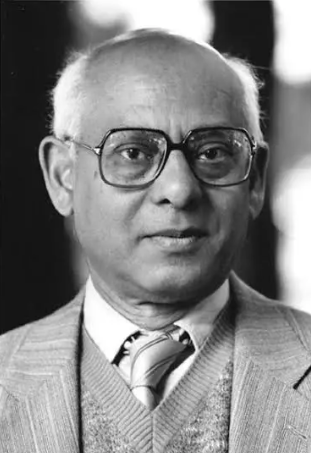
ラナジット・グーハ
Ranajit Guha, 1923-2023
★ ラナジット・グハ FAHA(1923年5月23日 - 2023年4月28日)は、インドの歴史家であり、サバルタン研究集団の創設者であった[1][2]。グハの研究は、伝統的なエリート中心の叙述に異議を 唱え、歴史的過程を形成する上で農民やサバルタン共同体の主体性を強調した。[3] 彼の代表作『植民地インドにおける農民反乱の基礎的側面』を含む影響力ある著作は、南アジア史、ポストコロニアル研究、歴史学の分野に永続的な影響を残し た。[4] グハは1996年にオーストラリア人文科学アカデミーの名誉フェローに選出された。[5]
| Ranajit Guha FAHA
(23 May 1923 – 28 April 2023) was an Indian historian and the founder
of the Subaltern Studies Collective.[1][2] Guha’s scholarship
challenged traditional elite-centered narratives, emphasising the
agency of peasants and subaltern communities in shaping historical
processes.[3] His influential works, including Elementary Aspects of
Peasant Insurgency in Colonial India, have left a lasting impact on the
fields of South Asian history, postcolonial studies, and
historiography.[4] Guha was elected an Honorary Fellow of the
Australian Academy of the Humanities in 1996.[5] |
ラナジット・グハ FAHA(1923年5月23日 -
2023年4月28日)は、インドの歴史家であり、サバルタン研究集団の創設者であった[1][2]。グハの研究は、伝統的なエリート中心の叙述に異議を
唱え、歴史的過程を形成する上で農民やサバルタン共同体の主体性を強調した。[3]
彼の代表作『植民地インドにおける農民反乱の基礎的側面』を含む影響力ある著作は、南アジア史、ポストコロニアル研究、歴史学の分野に永続的な影響を残し
た。[4] グハは1996年にオーストラリア人文科学アカデミーの名誉フェローに選出された。[5] |
| Early life and career Born on 23 May 1923 in Siddhakatti, Backergunge District of British India (present-day Bangladesh), Guha hailed from a lineage of khas taluqdars.[6] His grandfather was a revenue official, and his father, Radhika Ranjan Guha, was an advocate, who later became a judge of the Dacca High Court.[7] Guha's elder brother, Deba Prasad, was a notable scholar of Pali in Rangoon and Banaras.[7] Guha pursued his education at the Mitra Institution and subsequently earned his undergraduate degree from Presidency College, Calcutta. His academic trajectory continued with postgraduate studies in history at the University of Calcutta. During his formative years, Guha found inspiration in the works of Indian historian Susobhan Sarkar.[6] He also acknowledged his affluent family background and upbringing in East Bengal, and some of his early influences including writers D. H. Lawrence, Fyodor Dostoevsky, and the Bengali poet Michael Madhusudan Dutt.[8][9] Engaging in political activism during the 1940s, Guha affiliated with the Communist Party of India, represented the party at the World Federation of Democratic Youth in London.[10] Following his return to India in 1953, he distanced himself from political engagements after the Soviet invasion of Hungary in 1956. Commencing his teaching career at Chandernagore Government College in 1953, Guha faced suspension from the Bengal Educational Services due to scrutiny of his political history. Subsequently, he was employed by Jadavpur University.[4] In 1959, Guha embarked on a migration to the United Kingdom, securing a fellowship at the University of Manchester to complete his doctoral thesis.[11] In 1962, he assumed the position of a Reader in history at the University of Sussex.[12] Noteworthy is his departure from Sussex in 1981, when he accepted a position at the Australian National University, where he concluded his distinguished career, retiring in 1988.[11] |
幼少期と経歴 1923年5月23日、英領インド(現在のバングラデシュ)バケルガンジ地区シッダカッティに生まれたグハは、カース・タルクダールの家系に生まれた。 [6] 祖父は歳入官吏であり、父ラディカ・ランジャン・グハは弁護士で、後にダッカ高等裁判所の判事となった。[7] グハの兄デバ・プラサドは、ラングーンとバラナシで著名なパーリ語学者であった。[7] グハはミトラ・インスティテュートで教育を受け、その後カルカッタのプレジデンシー・カレッジで学士号を取得した。学業の道はカルカッタ大学での歴史学の 大学院研究へと続いた。成長期において、グハはインドの歴史家スソバン・サルカールの著作から影響を受けた[6]。また、東ベンガルでの裕福な家庭環境と 育ち、作家D・H・ローレンス、フョードル・ドストエフスキー、ベンガル人詩人マイケル・マドゥスダン・ダットら初期の思想的基盤を認めている[8]。 [9] 1940年代に政治活動に従事したグハは、インド共産党に所属し、ロンドンで開催された世界民主青年連盟に同党代表として参加した。[10] 1953年にインドへ帰国後、1956年のソ連によるハンガリー侵攻を機に政治活動から距離を置いた。 1953年にチャンデルナゴール政府大学で教職を開始したが、政治的経歴の審査によりベンガル教育省から停職処分を受けた。その後、ジャダープル大学に採 用された。[4] 1959年、グハはイギリスへの移住を開始し、マンチェスター大学で博士論文を完成させるためのフェローシップを獲得した。[11] 1962年にはサセックス大学で歴史学の講師職に就いた。[12] 注目すべきは1981年のサセックス大学離任で、オーストラリア国立大学の職を受け入れた。同大学で輝かしいキャリアを終え、1988年に退職した。 [11] |
| Research Subaltern Studies Group In the 1980s, Ranajit Guha was instrumental in developing an alternative approach to the study of the South Asian past. Criticising the elitist focus of existing historical scholarship, he highlighted the experiences and agency of marginalised groups and people. This approach gave rise to Subaltern Studies, or the Subaltern Study Group, which became an influential strand of postcolonial and post-Marxist historiography.[13] Guha’s Elementary Aspects is considered a seminal work in the field.[14][13] In the first volume of Subaltern Studies, he defined the “subaltern” as those outside the elite sectors of Indian society, a concept borrowed from Italian Marxist theorist Antonio Gramsci to emphasise the importance of marginalised voices of the peasants, independent of the dominant groups.[15] The Subaltern Studies framework encouraged scholars to examine the roles of class, caste, and gender in shaping historical narratives.[16] Guha influenced a generation of scholars, including Partha Chatterjee, Gayatri Chakravorty Spivak, and Dipesh Chakrabarty.[11] |
研究 サバルタン研究グループ(下記参照) 1980年代、ラナジット・グハは南アジアの過去を研究する代替的アプローチの確立に重要な役割を果たした。既存の歴史学がエリート層に焦点を当てている ことを批判し、彼は境界化された集団や人々の経験と主体性を強調した。このアプローチからサバルタン研究、すなわちサバルタン研究グループが生まれ、ポス トコロニアル・ポストマルクス主義史学において影響力のある一派となった。[13] グハの『基礎的側面』はこの分野における画期的な著作と見なされている。[14][13] 『サブアルターン研究』第一巻において、彼は「サバルタン」をインド社会のエリート層の外側に位置する者たちと定義した。これはイタリアのマルクス主義理 論家アントニオ・グラムシから借用した概念であり、支配層とは独立した農民といった周縁化された声の重要性を強調するものである。[15] サバルタン研究の枠組みは、歴史的叙述を形成する上で階級、カースト、ジェンダーが果たす役割を検証するよう学者たちに促した。[16] グハはパルタ・チャタジー、ガヤトリ・チャクラヴォルティ・スピヴァク、ディペシュ・チャクラバルティらを含む一世代の学者たちに影響を与えた。[11] |
| Personal life Residing in Purkersdorf, Austria, situated on the periphery of the Vienna Woods, Ranajit Guha lived with his partner Mechthild Guha (née Jungwirth), a German-born scholar. The couple first met each other at the University of Sussex in the early 1960s, a period during which Guha attained prominence, subsequently relocating to the Australian National University, where their scholarly endeavours persisted.[17] Guha died at home on 28 April 2023 at the age of 99.[18][19] |
個人的な生活 オーストリアのプルカーズドルフ、ウィーンの森の周辺地域に居住していたラナジット・グハは、ドイツ生まれの学者であるパートナーのメヒトィルト・グハ (旧姓ユングヴィルト)と共に暮らしていた。二人は1960年代初頭、サセックス大学で初めて出会った。この時期にグハは名声を獲得し、その後オーストラ リア国立大学に移り、そこで学問的活動を続けた[17]。グハは2023年4月28日、自宅で99歳で死去した[18][19]。 |
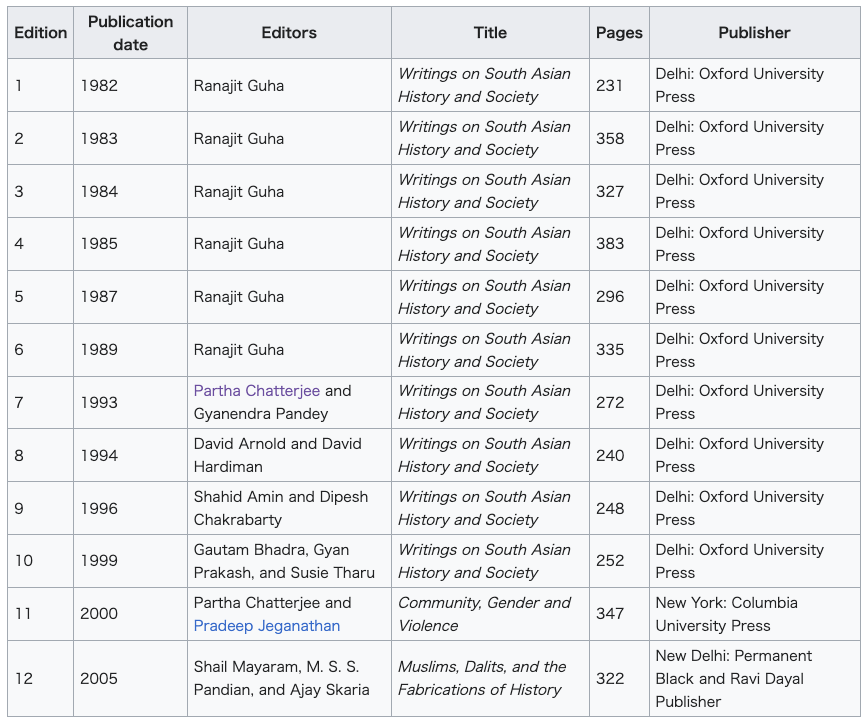
| Select bibliography Author A rule of property for Bengal: an essay on the idea of permanent settlement, Paris [etc.]: Mouton & Co., 1963; new edition, Duke University Press, ISBN 0-8223-1761-3 Elementary Aspects of Peasant Insurgency in Colonial India, Oxford University Press, Delhi, 1983; new edition, Duke University Press, 1999, ISBN 0-8223-2348-6 "History at the Limit of World-History" (Italian Academy Lectures), Columbia University Press, 2002 An Indian Historiography of India: A Nineteenth Century Agenda & Its Implications. Calcutta: K.P. Bagchi & Company. 1988. Dominance without Hegemony: History and Power in Colonial India, Harvard University Press, 1998 The Small Voice of History, Permanent Black, 2009, (Collection of essays, edited by Partha Chatterjee). Editor Subaltern Studies I: Writings on South Asian History and Society. New Delhi, Oxford University Press, 1982. Subaltern Studies II: Writings on South Asian History and Society. New Delhi, Oxford University Press, 1983. Subaltern Studies III: Writings on South Asian History and Society. New Delhi, Oxford University Press, 1984. Subaltern Studies IV: Writings on South Asian History and Society. New Delhi, Oxford University Press, 1985. Subaltern Studies V: Writings on South Asian History and Society. New Delhi, Oxford University Press, 1987. Selected Subaltern Studies. New York: Oxford University Press, 1988, (co-edited with Gayatri Chakravorty Spivak). Subaltern Studies VI: Writings on South Asian History and Society. New Delhi, Oxford University Press, 1989. A Subaltern Studies Reader,1986–1995. University of Minnesota Press, 1997, ISBN 0-8166-2758-4 |
参考文献 著者 ベンガルにおける財産法:恒久的な土地分配制度に関する考察、パリほか:ムートン社、1963年;新版、デューク大学出版局、ISBN 0-8223-1761-3 『植民地インドにおける農民反乱の基礎的側面』オックスフォード大学出版局、デリー、1983年;新版、デューク大学出版局、1999年、ISBN 0-8223-2348-6 『世界史の限界における歴史』(イタリア学士院講演録)、コロンビア大学出版局、2002年 『インドの歴史学:19世紀の課題とその含意』カルカッタ:K.P.バグチ社、1988年 『覇権なき支配:植民地インドにおける歴史と権力』ハーバード大学出版局、1998年 『歴史のささやき』パーマネント・ブラック社、2009年(パルタ・チャタジー編、論文集) 編集者 『サバルタン研究I:南アジアの歴史と社会に関する論考』ニューデリー、オックスフォード大学出版局、1982年 『サバルタン研究II:南アジアの歴史と社会に関する論考』ニューデリー、オックスフォード大学出版局、1983年 『サバルタン研究III:南アジアの歴史と社会に関する論考』ニューデリー、オックスフォード大学出版局、1984年 『サバルタン研究IV:南アジアの歴史と社会に関する論考』ニューデリー、オックスフォード大学出版局、1985年。 『サバルタン研究V:南アジアの歴史と社会に関する論考』ニューデリー、オックスフォード大学出版局、1987年。 『サバルタン研究選集』ニューヨーク:オックスフォード大学出版局、1988年(ガヤトリ・チャクラボルティ・スピヴァクと共編)。 『サバルタン研究VI:南アジアの歴史と社会に関する論考』ニューデリー、オックスフォード大学出版局、1989年。 『サバルタン研究読本、1986–1995』ミネソタ大学出版局、1997年、ISBN 0-8166-2758-4 |
| Select works about Guha Sathyamurthy, T. V. (1990). "Indian peasant historiography: A critical perspective on Ranajit Guha's work". The Journal of Peasant Studies, 18(1), 92–144. doi:10.1080/03066159008438445 Arnold, David; Hardiman, David. (1994). Subaltern Studies VIII: Essays in Honour of Ranajit Guha. Delhi: Oxford University Press. |
グハに関する選集 サティヤムルティ、T. V. (1990). 「インド農民史学:ラナジット・グハの著作に対する批判的視点」. 『農民研究ジャーナル』, 18(1), 92–144. doi:10.1080/03066159008438445 アーノルド、デイヴィッド;ハーディマン、デイヴィッド(1994)。『サバルタン・スタディーズVIII:ラナジット・グハへの賛辞』デリー:オックスフォード大学出版局。 |
| Subaltern Studies Partha Chatterjee Dipesh Chakrabarty Gayatri Spivak |
サバルタンの研究 パルタ・チャタジー ディペシュ・チャクラバルティ ガヤトリ・スピヴァク |
| References 1. Chatterjee, Partha. "Ranajit Guha, the Unconventional Historian". The Wire. Retrieved 5 October 2025. 2. Hardiman, David (8 July 2023). "Ranajit Guha (1923–2023) | Economic and Political Weekly". www.epw.in. Retrieved 5 October 2025. 3. "Subaltern Studies: Ranajit Guha and Its Sociological Study". 23 May 2025. Retrieved 5 October 2025. 4. Mukherjee, Somak (23 May 2022). "Ranajit Guha, India's oldest living historian, starts his 100th year with a dazzling legacy". Scroll.in. Archived from the original on 5 March 2023. Retrieved 1 May 2023. 5. "Fellow Profile: Ranajit Guha". Australian Academy of the Humanities. Retrieved 30 April 2024. 6. Chatterjee, Partha (2009). "Editor's Introduction". In Chatterjee, Partha (ed.). The Small Voice of History: Collected Essays. Permanent Black. ISBN 978-81-7824-255-2. 7. Amin, Shahid; Bhadra, Gautam (1994). "Ranajit Guha: A Biographical Sketch". In Arnold, David; Hardiman, David (eds.). Subaltern Studies VIII: Essays in Honour of Ranajit Guha. Oxford University Press. ISBN 978-0-19-563411-2. 8. Manjapra, Kris (2 October 2018). "Bengali Intellectuals Oral History Project (BIOHP) List of Interviewees". South Asia: Journal of South Asian Studies. 41 (4): 922–923. doi:10.1080/00856401.2018.1514558. ISSN 0085-6401. S2CID 150107419. Archived from the original on 1 May 2023. Retrieved 1 May 2023. 9. "Oral history interview with Ranajit Guha | Archives at Tufts". archives.tufts.edu. Archived from the original on 24 June 2022. Retrieved 1 May 2023. 10. Das, Suchintan. "Beyond Bandung and Belgrade: Damodar Dharmananda Kosambi, A Forgotten Indian Voice for World Peace". Peace & Change. n/a (n/a). doi:10.1111/pech.70035. ISSN 1468-0130. The World Federation of Democratic Youth (WFDY) was yet another broad-based Soviet-aligned organization that Kosambi came in contact with during the course of his transnational peace activism. He was thanked for sending a message in support of the 'International Day of Solidarity with Youth Fighting Colonialism' in 1951 by Ranajit Guha (the future founder of the Subaltern Studies Collective) on behalf of the WFDY Secretariat 11. "Historian Ranajit Guha Passes Away". The Wire. Archived from the original on 1 May 2023. Retrieved 1 May 2023. 12. Damodaran, Vinita (23 June 2023). "Obituary: Professor Ranajit Guha". The University of Sussex. Retrieved 30 July 2023. 13. "Ranajit Guha passes away: The Subaltern School and Guha's contributions to South Asian Studies". The Indian Express. 29 April 2023. Archived from the original on 30 April 2023. Retrieved 1 May 2023. 14. Biswas, Amrita (2009). "Research Note on Subaltern Studies". Journal of Literature, Culture and Media Studies. p. 200. 15. Guha, Ranajit (1982). Subaltern Studies: Writings on South Asian History and Society. Oxford University Press. ISBN 978-0-19-561355-1. 16. "Historian of the subaltern, Ranajit Guha, passes away in Vienna". The Times of India. 1 May 2023. ISSN 0971-8257. Archived from the original on 1 May 2023. Retrieved 1 May 2023. 17. Milinda Banerjee. "In Search of Transcendence: An Interview with Ranajit Guha" (PDF). University of Heidelberg. Archived (PDF) from the original on 24 September 2015. Retrieved 26 February 2011. 18. "নিম্নবর্গের ইতিহাস সাধনার অন্যতম পথিকৃৎ রণজিৎ গুহের জীবনাবসান" (in Bengali). Anandabazar Patrika. Archived from the original on 29 April 2023. Retrieved 29 April 2023. 19. Hardiman, David (3 July 2023). "Ranajit Guha: A Tribute". South Asian Studies. 39 (2): 257–262. doi:10.1080/02666030.2023.2270837. ISSN 0266-6030. |
参考文献 1. チャタジー、パルタ。「型破りな歴史家、ラナジット・グハ」。The Wire。2025年10月5日取得。 2. ハーディマン、デイヴィッド(2023年7月8日)。「ラナジット・グハ(1923–2023)|経済・政治週刊誌」。www.epw.in. 2025年10月5日取得. 3. 「サバルタン研究:ラナジット・グハとその社会学的研究」. 2025年5月23日. 2025年10月5日取得. 4. ムカジー、ソマック(2022年5月23日)。「インド最長寿の歴史家ラナジット・グハ、輝かしい遺産と共に100歳の年を迎える」。Scroll.in。2023年3月5日時点のオリジナルからアーカイブ。2023年5月1日取得。 5. 「フェロープロフィール:ラナジット・グハ」。オーストラリア人文科学アカデミー。2024年4月30日閲覧。 6. チャタジー、パルタ(2009年)。「編集者による序文」。チャタジー、パルタ(編)『歴史のささやき:エッセイ集』パーマネント・ブラック刊。ISBN 978-81-7824-255-2。 7. アミン、シャヒド; バドラ、ゴータム (1994). 「ラナジット・グハ:略歴」. アーノルド、デイヴィッド; ハーディマン、デイヴィッド (編). 『サバルタン研究VIII:ラナジット・グハに捧げる論文集』. オックスフォード大学出版局. ISBN 978-0-19-563411-2. 8. マンジャプラ、クリス(2018年10月2日)。「ベンガル知識人オーラル・ヒストリー・プロジェクト(BIOHP) インタビュー対象者リスト」。『南アジア:南アジア研究ジャーナル』。41巻4号:922–923頁。doi: 10.1080/00856401.2018.1514558。ISSN 0085-6401. S2CID 150107419. 2023年5月1日にオリジナルからアーカイブされた。2023年5月1日に取得。 9. 「ラナジット・グハへのオーラル・ヒストリー・インタビュー|タフツ大学アーカイブズ」. archives.tufts.edu. 2022年6月24日にオリジナルからアーカイブされた。2023年5月1日に閲覧。 10. ダス、スチンタン。「バンドンとベオグラードを超えて:ダモダル・ダルマナンダ・コサンビ、世界平和のための忘れられたインドの声」。『Peace & Change』。n/a (n/a)。doi:10.1111/pech.70035。ISSN 1468-0130。世界民主青年連盟(WFDY)は、コサンビが国際的な平和活動の中で接触した、もうひとつの広範なソ連系組織であった。1951年の 「植民地主義と闘う青年との連帯国際デー」を支持するメッセージを送ったことに対し、WFDY事務局を代表してラナジット・グハ(後のサバルタン研究集団 創設者)から謝意が表明された。 11. 「歴史家ラナジット・グハ死去」『ザ・ワイヤー』2023年5月1日アーカイブ版。2023年5月1日閲覧。 12. ダモダラン、ヴィニタ(2023年6月23日)「訃報:ラナジット・グハ教授」サセックス大学。2023年7月30日閲覧。 13. 「ラナジット・グハ死去:サバルタンの学派と南アジア研究への貢献」. The Indian Express. 2023年4月29日. 2023年4月30日にオリジナルからアーカイブ. 2023年5月1日に閲覧. 14. ビスワス、アムリタ (2009). 「サバルタン研究に関する研究ノート」. 『文学・文化・メディア研究ジャーナル』. p. 200. 15. グハ、ラナジット (1982). 『サバルタン研究:南アジアの歴史と社会に関する論考』. オックスフォード大学出版局. ISBN 978-0-19-561355-1. 16. 「サバルタンの歴史家、ラナジット・グハがウィーンで死去」『タイムズ・オブ・インディア』2023年5月1日。ISSN 0971-8257。2023年5月1日にオリジナルからアーカイブ。2023年5月1日に閲覧。 17. ミリンダ・バネルジー。「超越を求めて:ラナジット・グハへのインタビュー」(PDF)。ハイデルベルク大学。2015年9月24日にオリジナル(PDF)からアーカイブ。2011年2月26日に取得。 18. 「ニンバーガーの歴史的記録の異端の道 িকৃৎ রণজিৎ গুহের জীবনাবসান」 (ベンガル語). Anandabazar Patrika. 2023年4月29日にオリジナルからアーカイブされた。2023年4月29日に取得。 19. Hardiman, David (2023年7月3日). 「ラナジット・グハへの追悼」. South Asian Studies. 39 (2): 257–262. doi:10.1080/02666030.2023.2270837. ISSN 0266-6030. |
| https://en.wikipedia.org/wiki/Ranajit_Guha |
☆ サバルタン研究グループ (SSG)またはサバルタン研究集団は、ポストコロニアルおよびポスト帝国社会に関心を持つ南アジアの学者グループである。サバル タン研究という用語は、彼らの見解の多くを共有する他の人々にもより広く適用されることがあり、彼らはしばしば 「ポストコロニアル研究の典型」であり、その分野で最も影響力のある運動のひとつであると考えられている。 彼らの反本質主義的アプローチは、エリート層よりも社会の基層レベルにおける大衆の間に起こることに焦点を当てた、民衆史の一形態である(→「ラテンアメリカ・サバルタン研究」「サバルタン・スタディーズ」)。
| The
Subaltern Studies Group (SSG) or Subaltern Studies Collective is a
group of South Asian scholars interested in postcolonial and
post-imperial societies.[1] The term Subaltern Studies is sometimes
also applied more broadly to others who share many of their views and
they are often considered to be "exemplary of postcolonial studies" and
as one of the most influential movements in the field.[2] Their
anti-essentialist approach[3] is one of history from below, focused
more on what happens among the masses at the base levels of society
than among the elite. |
サ
バルタン研究グループ(SSG)またはサバルタン研究集団は、ポストコロニアルおよびポスト帝国社会に関心を持つ南アジアの学者グループである。[1]
サバルタン研究という用語は、彼らの見解の多くを共有する他の人々にもより広く適用されることがあり、彼らはしばしば
「ポストコロニアル研究の典型」であり、その分野で最も影響力のある運動のひとつであると考えられている。[2] 彼らの反本質主義的アプローチ[3]
は、エリート層よりも社会の基層レベルにおける大衆の間に起こることに焦点を当てた、民衆史の一形態である。 |
| The
term "subaltern" in this context is an allusion to the work of Italian
Marxist Antonio Gramsci (1891–1937). The term's semantic range has
evolved from its first usage by Ranajit Guha, following Gramsci, to
refer solely to peasants who had not been integrated into the
industrial capitalist system. It now refers to any person or group of
inferior rank or station, whether because of race, class, gender,
sexual orientation, ethnicity, or religion. The SSG arose in the 1980s, influenced by the scholarship of Eric Stokes and Ranajit Guha, to attempt to formulate a new narrative of the history of India and South Asia. The group started at the University of Sussex, then continued and traveled, mainly through Guha's students.[4] This narrative strategy was inspired by the writings of Gramsci was explicated in the writings of their mentor Ranajit Guha, most clearly in his "manifesto" in Subaltern Studies I and also in his classic monograph The Elementary Aspects of Peasant Insurgency. Although they are, in a sense, on the left, they are very critical of the traditional Marxist narrative of Indian history, in which semi-feudal India was colonized by the British, became politicized, and earned its independence. In particular, they are critical of the focus of this narrative on the political consciousness of elites, who in turn inspire the masses to resistance and rebellion against the British. Instead, they focus on non-elites, subalterns, as agents of political and social change. They have had a particular interest in the discourses and rhetoric of emerging political and social movements, as against only highly visible actions like demonstrations and uprisings. |
この文脈における「サ
バルタン」
という用語は、イタリアのマルクス主義者アントニオ・グラムシ(1891年~1937年)の研究を引用したものである。この用語の意味の範囲は、グラムシ
に倣ったラナジット・グーハによる最初の使用から、産業資本主義システムに組み込まれていない農民のみを指すものへと発展した。現在では、人種、階級、性
別、性的指向、民族、宗教など、あらゆる理由で劣った地位や階級に属する個人や集団を指す。 SSGは、エリック・ストークスとラナジット・グハの研究に影響を受け、インドと南アジアの歴史に関する新たな物語を構築しようとして、1980年代に誕 生した。このグループはサセックス大学で始まり、その後、主にグハの学生たちを中心に活動を継続し、各地を転々とした。[4] この語り口の戦略はグラムシの著作に触発されたもので、彼らの指導者ラナジット・グハの著作、特に『サバルタン研究 I』の「マニフェスト」や、代表作の単行本『農民蜂起の初歩的諸側面』で明確に説明されている。彼らはある意味では左派に属するが、インドの歴史を語る伝 統的なマルクス主義の物語を非常に批判的に捉えている。その物語では、半封建的なインドが英国に植民地化され、政治化され、独立を勝ち取ったとされる。特 に、この物語がエリートの政治的意識に焦点を当てていることを批判している。エリートは、英国に対する抵抗と反乱を大衆に促す。 その代わり、彼らは非エリート、サバルタンを政治的・社会的変革の担い手として注目している。彼らは、デモや暴動のような目に見える行動ではなく、台頭し つつある政治的・社会的運動の言説やレトリックに特に興味を持っている。 |
| Criticism One of the group's early contributors, Sumit Sarkar, later began to critique it. He entitled one of his essays "Decline of the Subaltern in Subaltern Studies", criticizing the turn to Foucauldian studies of power-knowledge that left behind many of the empiricist and Marxist efforts of the first two volumes of Subaltern Studies. He writes that the socialist inspiration behind the early volumes led to a greater impact in India itself, while the later volumes' focus on western discourse reified the subaltern-colonizer divide and then rose in prominence mainly in western academia.[5] Even Gayatri Spivak, one of the most prominent names associated with the movement, has called herself a critic of "metropolitan post-colonialism".[6] Indian sociologist Vivek Chibber has criticized the premise of Subaltern Studies for its obfuscation of class struggle and class formation in its analysis and accused it of excising class exploitation from the story of the oppression of the subaltern.[7] His critique, explained in his book Postcolonial Theory and the Specter of Capital, is focused on the works of two Indian scholars: Ranajit Guha and Dipesh Chakrabarty. According to Chibber, subaltern scholars tend to recreate the Orient as a place where cultural differences negate analyses based on Western experience. |
批判 このグループの初期の寄稿者の一人であるスミット・サーカーは、後に批判を始めた。彼は「サバルタン研究におけるサバルタンの衰退」と題した論文で、サバ ルタン研究の最初の2巻における経験論的およびマルクス主義的な取り組みの多くを置き去りにしたフーコー流の権力と知識の研究への転換を批判した。初期の 巻にみられた社会主義的なインスピレーションはインド国内でより大きな影響をもたらしたが、後期の巻で西洋の言説に焦点が当てられたことで、サバルタンと 植民地主義者の間の溝が明確化され、主に西洋の学術界で注目されるようになったと彼は書いている。[5] この運動と関連する最も著名な人物の一人であるガヤトリ・スピヴァクでさえ、自らを「大都市のポストコロニアリズム」の批評家と呼んでいる。[6] インドの社会学者ヴィヴェク・チッバーは、サバルタン研究の前提を批判し、その分析における階級闘争と階級形成の曖昧化を指摘し、サバルタンの抑圧の物語 から階級搾取を排除していると非難している。[7] 彼の批判は著書『ポストコロニアル理論と資本の亡霊』で説明されており、インドの2人の学者、ラナジット・グハとディペシュ・チャクラバーティの研究に焦 点を当てている。チバーによれば、サバルタン学派の学者たちは、西洋の経験に基づく分析を文化的な相違が否定する場所として、東洋を再創造する傾向があ る。 |
 |
|
| Scholars associated with
Subaltern Studies include: David Arnold Gautam Bhadra Dipesh Chakrabarty Partha Chatterjee Ranajit Guha David Hardiman Sudipta Kaviraj Gyanendra Pandey Gyan Prakash Sarojini Sahoo Ajay Skaria Gayatri Chakravorty Spivak Susie Tharu |
サバルタン学派の研究者は以下の通りである。 デイヴィッド・アーノルド ゴータム・バドラ ディペッシュ・チャクラバーティ パルタ・チャタジー ラナジット・グーハ デイヴィッド・ハーディマン スディプタ・カヴィラジ ギャネンドラ・パンデー ギャーン・プラカーシュ サロジニ・サホー アジャイ・スカリア ガヤトリ・チャクラヴォルティ・スピヴァク スージー・タル |
| Latin
American subaltern studies Latino philosophy Orientalism Edward Said Howard Zinn |
ラテンアメリカ・サバルタン研究 ラテンアメリカ哲学 オリエンタリズム エドワード・サイード ハワード・ジン |
| https://en.wikipedia.org/wiki/Subaltern_Studies |
|
| References 1. "Subaltern Studies : The Encyclopedia of Postcolonial Studies : Blackwell Reference Online". Archived from the original on 2018-05-19. Retrieved 2018-05-18. 2. Connell, Raewyn (2005). Southern Theory. 3. Atabaki, Touraj (2003). Beyond Essentialism: Who Writes Whose Past in the Middle East and Central Asia? Inaugural lecture, 13 December 2002 (PDF). Archived (PDF) from the original on 22 August 2016. Retrieved 29 April 2013. 4. "Ranajit Guha and Subaltern Studies" (PDF). Archived (PDF) from the original on 2018-05-19. 5. Sumit Sarkar, "The Decline of the. Subaltern in Subaltern Studies" in his Writing Sggial History. Delhi, Oxford University Press, 1997. 6. Gayatri_Chakravorty_Spivak, A Critique of Postcolonialism, Harvard University Press 7. "How does the subaltern speak?". jacobinmag. Archived from the original on 2016-02-08. Retrieved 2016-01-21. 8. "Subaltern Studies: Bibliography of articles and reviews and listing of table of contents of the series of books". asianstudies.github.io. Archived from the original on 2018-12-01. Retrieved 2019-10-23. |
参考文献 1. 「サバルタン研究 : ポストコロニアル研究事典 : ブラックウェル・リファレンス・オンライン」. 2018年5月19日にオリジナルからアーカイブ. 2018年5月18日に閲覧. 2. コネル, レイウィン (2005). 『サザン・セオリー』. 3. アタバキ、トラージ(2003)。『本質主義を超えて:中東と中央アジアにおいて誰が誰の過去を書くのか?』。2002年12月13日就任講演 (PDF)。2016年8月22日にオリジナルからアーカイブ(PDF)。2013年4月29日に取得。 4. 「ラナジット・グハとサバルタン研究」 (PDF). 2018年5月19日にオリジナルからアーカイブ (PDF)。 5. スミット・サルカール、「サバルタン研究におけるサバルターンの衰退」『サブアルターン史を書く』所収。デリー、オックスフォード大学出版局、1997 年。 6. ガヤトリ・チャクラヴォルティ・スピヴァク『ポストコロニアル主義の批判』ハーバード大学出版局 7. 「サバルタンはどのように語るのか?」. jacobinmag. 2016年2月8日時点のオリジナルからアーカイブ. 2016年1月21日閲覧. 8. 「サバルタン研究:論文・書評の書誌目録及びシリーズ書籍の目次一覧」. asianstudies.github.io. 2018年12月1日時点のオリジナルからアーカイブ. 2019年10月23日に閲覧. |
| Further reading Young, Robert, White Mythologies. Routledge, 1990, reissued 2004. Several associated ISBNs, including ISBN 0-415-31181-0, ISBN 0-415-31180-2. Ludden, David, ed., Reading Subaltern Studies. Critical History, Contested Meaning and the Globalization of South Asia, London 2001. Chaturvedi, Vinayak, ed., Mapping Subaltern Studies and the Postcolonial. London and New York 2000. Cronin, Stephanie, ed., "Subalterns and Social Protest: History from Below in the Middle East and North Africa". Routledge, 2008. US & Canada. |
追加文献(さらに読む) ヤング、ロバート著『白人の神話学』ラウトリッジ社、1990年刊、2004年再版。関連ISBN番号:ISBN 0-415-31181-0、ISBN 0-415-31180-2など。 ラッデン、デイヴィッド編『サブアルタナティブ研究を読む』 批判的歴史、争われる意味、そして南アジアのグローバル化、ロンドン、2001年。 チャトゥルヴェディ、ヴィナヤク編、『サブアルターン研究とポストコロニアルの地図を描く』。ロンドンおよびニューヨーク、2000年。 クロニン、ステファニー編、『サブアルターンと社会抗議:中東および北アフリカにおける下からの歴史』。ラウトレッジ、2008年。米国およびカナダ。 |
リ ンク
文 献
そ の他の情報
Copyleft, CC, Mitzub'ixi Quq Chi'j, 1996-2099

☆
 ☆
☆