
都市文化
Urban culture
Toronto's
Chinatown. The everyday use of, and availability of services in, many
languages is promoted by municipal government.
☆都市文化(Urban culture)
とは、町や都市の文化を指す。その特徴は、限られた空間に多くの人口が密集し、社会的規範に従う点にある[1]。これにより、多くのサブカルチャーが互い
に近接し、私的領域に必ずしも侵入することなく社会的影響を受けられる[2]。結局のところ、都市文化は多様な視点や、身体的・精神的な医療資源を提供す
る一方で、社会的結束を維持する課題にも直面している。
世界的に見て、都市部は政府の首都や企業の本社、そしてそこで働く富裕層や権力者など、権力の集中地となる傾向がある。また、都市は人々を組織化し、規
範、信念、価値観を生み出す。[3] マックス・ヴェーバーが著書『都市』で述べたように、「都市を構成する要素は 5
つある。要塞、市場、法典、都市の共同体意識を生み出す都市住民の団体、そして都市住民が都市の統治者を選ぶための十分な政治的自治権である」[5]。一
部の国では、エリート層が都心部の外に自分たちの飛び地を作っている(例えば、米国における白人の郊外化)。
| Urban culture is the
culture of towns and cities. The defining theme is the presence of a
large population in a limited space that follows social norms.[1] This
makes it possible for many subcultures close to each other, exposed to
social influence without necessarily intruding into the private
sphere.[2] Ultimately, urban culture offers for diverse perspectives,
more resources in the medical field, both physically and mentally, but
it also faces challenges in maintaining social cohesion. Globally, urban areas tend to hold concentrations of power, such as government capitals and corporate headquarters, and the wealthy and powerful people that are employed in them. Cities also organize people, create norms, beliefs, and values.[3][4] As outlined by Max Weber in his book, The City, "There are five things that make a city: fortification, market, a law code, an association of urban citizenry creating a sense of municipal corporateness, and sufficient political autonomy for urban citizens to choose the city’s governors."[5] In some countries, elites have built themselves enclaves outside of the central city (e.g. white flight in the United States). |
都市文化とは、町や都市の文化を指す。その特徴は、限られた空間に多く
の人口が密集し、社会的規範に従う点にある[1]。これにより、多くのサブカルチャーが互いに近接し、私的領域に必ずしも侵入することなく社会的影響を受
けられる[2]。結局のところ、都市文化は多様な視点や、身体的・精神的な医療資源を提供する一方で、社会的結束を維持する課題にも直面している。 世界的に見て、都市部は政府の首都や企業の本社、そしてそこで働く富裕層や権力者など、権力の集中地となる傾向がある。また、都市は人々を組織化し、規 範、信念、価値観を生み出す。[3] マックス・ヴェーバーが著書『都市』で述べたように、「都市を構成する要素は 5 つある。要塞、市場、法典、都市の共同体意識を生み出す都市住民の団体、そして都市住民が都市の統治者を選ぶための十分な政治的自治権である」[5]。一 部の国では、エリート層が都心部の外に自分たちの飛び地を作っている(例えば、米国における白人の郊外化)。 |
| Politics and social trends icon This section needs additional citations for verification. Please help improve this article by adding citations to reliable sources in this section. Unsourced material may be challenged and removed. Find sources: "Urban culture" – news · newspapers · books · scholar · JSTOR (April 2024) (Learn how and when to remove this message) Political In most of the Western world, urban areas tend to be politically to the left of suburban and rural areas. There has always been a large difference in political views between these areas for a variety of reasons. A 2018 survey undertaken by the Pew Research Center[6] shows that people who live in an urban area will most likely have political views that clash with someone who lives in a suburban or rural area. An example of this is how people in this survey felt about U.S. president Donald Trump. Sixty two percent of people had negative feelings on the president in urban areas, this number drops quite a bit when you look at suburban areas as only fifty one percent of people disliked the way the president ran things. This number hits its lowest when you look at rural areas as forty percent of people were negative on Trump with the rest being either neutral or positive. This divide on political subjects continues for the rest of the survey with urban areas preferring more progressive changes while suburban and rural areas want to hang on to traditions. The reason for why there is such a difference in opinion between these areas is a question that still doesn't have a solid answer. Although that has not stopped many people from trying to find one, this includes Cornell University professor Suzanne Mettler, who wrote a full article going over possible reasons for why there is such a difference between urban and rural voters. One reason Mettler came up with was the increase in the amount of jobs as she wrote "For decades the U.S. has experienced deindustrialization and various other changes in jobs and the economy, and rural areas have really suffered. Urban areas have adapted more effectively and created new jobs in technology, the service sector, and the knowledge economy. We think that economic deterioration has perhaps led to more resentment and grievance-style politics, but we’re still trying to understand that." Overall the difference in opinion between areas will always exist for a variety of reasons from education, to economic setting, and even to parental guidance. |
政治と社会動向 アイコン この節は検証可能な情報源を必要としている。信頼できる情報源をこの節に追加し、記事の改善に協力してほしい。出典のない記述は異議を唱えられ、削除される可能性がある。 出典を探す: 「都市文化」 – ニュース · 新聞 · 書籍 · 学術文献 · JSTOR (2024年4月) (このメッセージの削除方法と時期について) 政治 西洋諸国のほとんどでは、都市部は郊外や農村部よりも政治的に左寄りの傾向がある。さまざまな理由から、これらの地域間の政治的見解には常に大きな違いが ある。ピュー・リサーチ・センターが2018年に実施した調査[6]によると、都市部に住む人々は、郊外や農村部に住む人々とは政治的見解が対立する可能 性が高い。その一例が、この調査で回答者がドナルド・トランプ米大統領について抱いた感情だ。都市部では 62% の人が大統領に対して否定的な感情を抱いていたが、郊外ではその数字は大幅に低下し、大統領の政策を嫌う人は 51% に留まった。この数字は地方を見ると最低値となり、40%の人がトランプ氏に否定的な見解を持ち、残りは中立または肯定的であった。政治的な主題に関する この分裂は、調査の残りの部分でも続いており、都市部はより進歩的な変化を好む一方、郊外や地方は伝統を固守したいと考えている。これらの地域間でこのよ うな異なる意見がある理由は、依然として確固たる答えのない疑問である。とはいえ、多くの人がその理由を探ろうとしている。コーネル大学のスザンヌ・メト ラー教授もその一人だ。彼女は都市部と農村部の有権者にこれほどの差が生じる可能性のある理由を詳細に論じた論文を発表している。メトラー教授が挙げた理 由の一つは雇用数の増加だ。彼女はこう記している。「数十年にわたり米国は脱工業化や雇用・経済における様々な変化を経験し、農村部は苦悩した。」 都市部はより効果的に適応し、技術、サービス業、知識経済分野で新たな雇用を創出した。経済的衰退が不満や怨念型の政治を生み出した可能性はあるが、我々 はそのメカニズムを解明中だ」と記している。結局のところ、教育水準や経済環境、親の教育方針など様々な要因から、地域間の意見の相違は常に存在し続ける だろう。 |
| Social Urban cities have grown in popularity recently due to people moving out of more rural [2] areas as time goes on. This is shown in another article written by the "Pew Research Center" which states "Likewise, recent U.S. population growth also has been uneven. Urban counties have grown at roughly the overall national rate of 13% since 2000. Suburban and small metropolitan areas have grown more briskly. Rural counties have lagged, and half of them have fewer residents now than they did in 2000".[3] This trend has been happening for a variety of reasons, such as the increase of migrants, a rise in birth rate and a drop off in death rate, and people preferring the bustling city life of an urban area over more quiet and isolated rural areas. Urban areas are able to provide things that rural and suburban areas either cannot, such as regular public transportation, a varied ethnic pool to make meeting new people an easy process, more jobs available, and the ease of which you are able to reach stores or entertainment areas such as clubs and bars. These points are far more relevant when you consider the ages of people who live in urban areas compared to anywhere else. The median age of rural areas is 43 years old while the average for urban areas is 36. Younger people are more likely to go looking for jobs in the city because it would be far easier to look for a job in a densely populated area rather than on the countryside where everything is spaced out. Transportation is also a more simple process for the younger generation as simply taking a bus to school or work can be easier for a young adult than buying a car and managing all the expenses that can come with that. Finally with entertainment areas being so close together younger people are able to have a night out instead of having to drive a large distance to clubs and bars; an issue that is prevalent in rural areas due to being located in the country. Pope Francis acknowledges, however, the potential for city life to be a chaotic existence.[7] |
社会 都市部は近年、人々がより田舎の地域から移り住むにつれて人気が高まっている。これは「ピュー・リサーチ・センター」の別の記事でも示されており、「同様 に、最近の米国の人口増加も不均一だ。都市郡の人口は2000年以降、全国平均の13%とほぼ同率で増加している。郊外や小規模都市圏はより急速に成長し た。一方、地方郡は遅れを取り、その半数は2000年当時よりも住民数が減少している」と述べている。この傾向は様々な理由で生じている。例えば移住者の 増加、出生率の上昇と死亡率の低下、そして人々が静かで孤立した地方地域よりも、都市部の活気ある生活を好むことなどが挙げられる。 都市部は、定期的な公共交通機関、多様な民族構成による新たな人脈形成の容易さ、豊富な雇用機会、店舗やクラブ・バーなどの娯楽施設へのアクセス利便性な ど、地方や郊外では提供できないものを供給できる。こうした点は、都市部に住む人々の年齢構成を考慮すると、他の地域と比べてはるかに重要だ。地方の年齢 中央値は43歳であるのに対し、都市部の平均は36歳だ。若年層は都市部で職を探す傾向が強い。なぜなら人口密集地では職探しが容易だが、田舎では全てが 離れているためだ。交通手段も若い世代にとってはより簡便だ。車を購入し維持費を管理するよりも、バスで学校や職場に通う方が若い成人にとっては楽だから だ。最後に、娯楽施設が密集しているため、若者は長距離を運転してクラブやバーに行く必要がなく、気軽に夜遊びができる。これは田舎に立地する地方では普 遍的な問題だ。 しかし教皇フランシスコは、都市生活が混沌とした存在になり得る可能性を認めている。[7] |
| By country Canada Toronto's Chinatown. The everyday use of, and availability of services in, many languages is promoted by municipal government. Urban culture is a huge part of Canada as 81.65%[8] of Canada's inhabitants live in cities. The urbanization of Canada has been decades in the making starting back in the 19th century. From 1871 to 1911 the population of Canada would double from 3.6 million to 7.2 million. Most of this growth can be attributed thanks to urban cities expanding in order to allow more people to live there. Author John Douglas Belshaw wrote a book about the history of Canada and went into detail about the rise of urban culture in Canada when he wrote "Most of that growth was in urban areas as the share of the workforce engaged in non-agricultural pursuits rose from 51.9% to over 60% in the same period. [2] Even in Nova Scotia, where the benefits of industrialization were not long lasting nor very deep, the impact on the scale of urban settlements was very dramatic: in the decade after Confederation, Halifax grew by 22%, New Glasgow by 55%, Sydney Mines by 57%, and Truro by 64%." By the 1890s industrialization was taking effect in Canada with the production of machinery and the increasing use of things such as oil and coal which was boosting the population of places such as Toronto and Edmonton rapidly. Urbanization would continue into the 20th century with Canadians and immigrants moving from city to city for work due to the now dense population and job openings that come from that. It wasn't all well and good however as due to the increasing population things would become crowded and harder to accommodate every single city and their needs. This means that lesser cities would be run down with water systems that would not work and houses that were shabbily built in order to quickly prepare for the spike of people living in the city. As we move in the modern era these issues aren't as prevalent in Canada but there are still underdeveloped cities and people flocking to find some sort of work in an extremely competitive urban environment. Urban culture is also sometimes used as a euphemism for the culture of visible minorities (non-Whites). Sometimes this means Black Canadian culture, this connection is much less apparent than somewhere like the U.S. due to blacks only making up 3% of the total population. More generally, the phrase may be used to connote the multicultural, immigrant-friendly mosaic atmosphere cultivated by cities such as Toronto, Vancouver, and British Columbia. |
国別 カナダ トロントのチャイナタウン。市当局は、多くの言語での日常的な使用とサービスの利用可能性を促進している。 都市文化はカナダにおいて非常に大きな部分を占める。カナダの人口の81.65%[8]が都市部に居住しているからだ。カナダの都市化は19世紀に始ま り、数十年にわたって進行してきた。1871年から1911年にかけて、カナダの人口は360万人から720万人へと倍増した。この成長の大部分は、より 多くの人々が居住できるよう都市が拡大したことに起因する。カナダ史を著したジョン・ダグラス・ベルショーは、都市文化の台頭について詳細に記述してい る。「同期間に非農業従事者の割合が51.9%から60%以上に上昇したことで、成長の大部分は都市部で生じた」と記した。[2] 工業化の恩恵が長続きせず、その影響も深くなかったノバスコシア州でさえ、都市集落の規模への影響は劇的だった。連邦結成後の10年間で、ハリファックス は22%、ニューグラスゴーは55%、シドニー・マインズは57%、トゥルーロは64%も成長した。」 1890年代までにカナダでは工業化が進行し、機械生産や石油・石炭などの利用拡大がトロントやエドモントンといった地域の人口を急速に増加させた。都市 化は20世紀に入っても続き、人口密度の高まりとそれに伴う雇用機会を求めて、カナダ人や移民が都市間を移動した。しかし全てが順調だったわけではない。 人口増加により各都市は過密化し、全ての都市とその需要に対応することが困難になった。つまり、小規模な都市では水道システムが機能せず、急増する都市住 民に対応するため粗雑に建てられた住宅が立ち並ぶような荒廃した状態に陥った。現代に至ってはカナダでもこうした問題は目立たなくなったが、未発達な都市 は依然存在し、人々は過酷な競争環境の都市部で何とか仕事を見つけようと押し寄せている。 都市文化という言葉は、時に目に見える少数派(非白人)の文化を指す婉曲表現として使われることもある。これは黒人カナダ文化を意味する場合もあるが、黒 人が総人口のわずか3%を占めるカナダでは、米国のような明確な関連性は見られない。より一般的に、この表現はトロントやバンクーバー、ブリティッシュコ ロンビア州などの都市が育む、多文化で移民に寛容なモザイク状の雰囲気を暗示するために用いられることもある。 |
| United States Main articles: Great Migration (African American) and Second Great Migration (African American) In the United States, Urban culture has been used as a euphemistic reference to contemporary African American culture.[9] 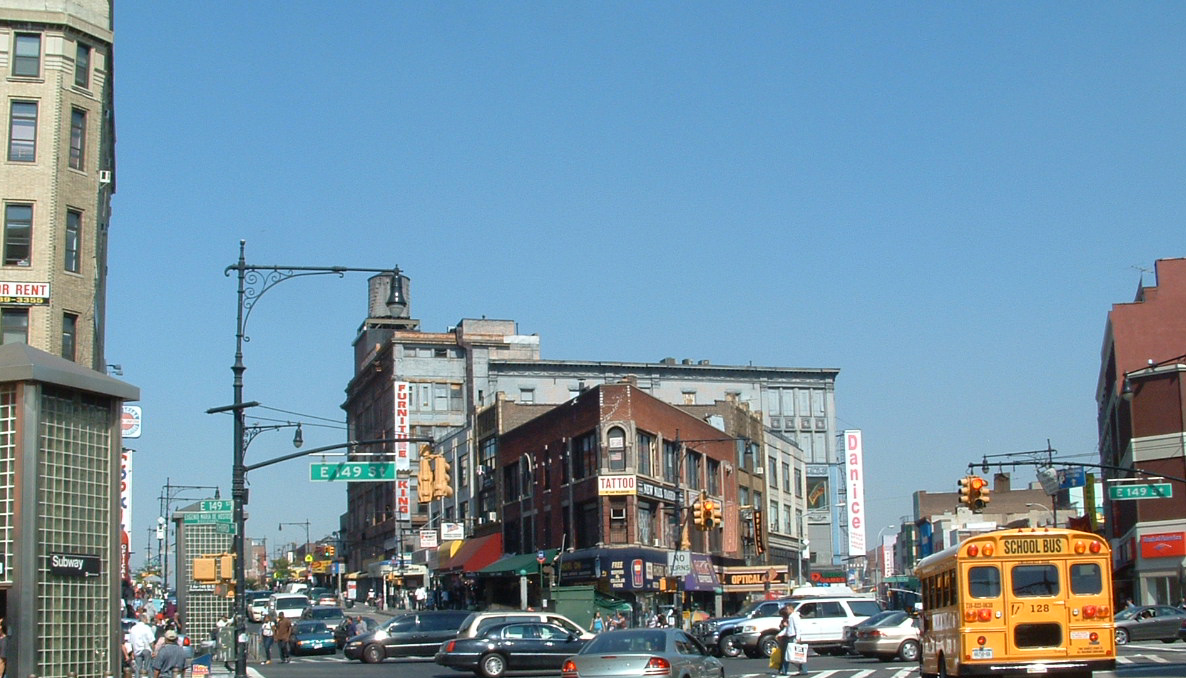 The Hub is the retail heart of the South Bronx, New York City. Between 1900 and 1930, the number of Bronx residents increased from 201,000 to 1,265,000.[10] Prior to the 20th century, the African American population was primarily rural. The Great Migration of African-Americans created the first large, urban black communities in the American North. It is conservatively estimated that 400,000 left the South during the two-year period of 1916–1918 to take advantage of a labor shortage created in the wake of the First World War.[11] The 20th century cultures of many of the United States' modern cities were forged in this period. In 1910, the African American population of Detroit was 6,000. By the start of the Great Depression in 1929, this figure had risen to 120,000. In 1900 Chicago had a total population of 1,698,575.[12] By 1920 the population had increased by more than 1 million residents. During the second wave of the Great Migration (from 1940 to 1960), the African American population in the city grew from 278,000 to 813,000. The South Side of Chicago was considered the black capital of America.[13] The massive number of African Americans to Ohio, in particularly to Cleveland, greatly changed the demographics of the state and Cleveland. Prior to the Great Migration, an estimated 1.1 - 1.6% of Cleveland's population was African American.[14] In 1920, 4.3% of Cleveland's population was African American.[14] The number of African Americans in Cleveland continued to rise over the next twenty years of the Great Migration. Other cities, such as St. Louis, Baltimore, Philadelphia and New York City, also experienced surges in their African-American populations. In the South, the departure of hundreds of thousands of African Americans caused the black percentage of the population in most Southern states to decrease. For example, in Mississippi, blacks decreased from about 56% of the population in 1910 to about 37% by 1970[15] and in South Carolina, blacks decreased from about 55% of the population in 1910 to about 30% by 1970.[15] By the end of the Second Great Migration, African Americans had become an urbanized population. More than 80 percent lived in cities. Fifty-three percent remained in the Southern United States, while 40 percent lived in the Northeast and North Central states and 7 percent in the West.[16] |
アメリカ合衆国 主な記事: 大移動 (アフリカ系アメリカ人) と 第二の大移動 (アフリカ系アメリカ人) アメリカ合衆国では、都市文化は現代のアフリカ系アメリカ人文化を指す婉曲表現として用いられてきた。[9] ハブはニューヨーク市サウスブロンクスの小売の中心地である。1900年から1930年の間に、ブロンクス区の住民数は20万1千人から126万5千人に増加した。[10] 20世紀以前、アフリカ系アメリカ人の人口は主に農村部に集中していた。アフリカ系アメリカ人の大移動は、アメリカ北部における最初の大規模な都市黒人コ ミュニティを生み出した。第一次世界大戦後の労働力不足を背景に、1916年から1918年の2年間で40万人が南部を離れたと控えめに見積もられてい る。[11] 20世紀のアメリカ現代都市の文化の多くは、この時期に形成されたのである。 1910年、デトロイトのアフリカ系アメリカ人人口は6,000人であった。1929年の大恐慌が始まる頃には、この数字は12万人にまで増加していた。 1900年、シカゴの総人口は1,698,575人であった。[12] 1920年までに人口は100万人以上増加した。大移動の第2波(1940年から1960年)において、同市のアフリカ系アメリカ人人口は278,000 人から813,000人に増加した。シカゴのサウスサイドはアメリカの黒人首都と見なされていた。[13] オハイオ州、特にクリーブランドへのアフリカ系アメリカ人の大量流入は、州とクリーブランドの人口構成を大きく変えた。大移動以前、クリーブランドの人口 の1.1~1.6%がアフリカ系アメリカ人と推定されていた。[14] 1920年には、クリーブランドの人口の4.3%がアフリカ系アメリカ人となった。[14] 大移動の続く20年間、クリーブランドのアフリカ系アメリカ人人口は増加し続けた。セントルイス、ボルチモア、フィラデルフィア、ニューヨーク市などの都 市でも、アフリカ系アメリカ人人口が急増した。 南部では、数十万人のアフリカ系アメリカ人が去ったことで、ほとんどの州で黒人比率が低下した。例えばミシシッピ州では、1910年に約56%だった黒人 比率が1970年までに約37%に低下した[15]。サウスカロライナ州でも、1910年の約55%から1970年には約30%に減少した。[15] 第二次大移動が終わる頃には、アフリカ系アメリカ人は都市化した人口となっていた。80%以上が都市部に居住していた。53%はアメリカ南部に残り、40%は北東部および北中部諸州に、7%は西部に居住していた。[16] |
| Inner city Street culture (disambiguation) African-American culture Graffiti Hip hop music Hipster (contemporary subculture) Street Life, the Crusaders song and album of 1979 Other: Futurism Chicago School (sociology) Principles of Intelligent Urbanism Urbanism Urban economics Urban sociology Urban pop culture Hip hop fashion Urban contemporary Urban vitality |
都心部 ストリート文化(曖昧さ回避) アフリカ系アメリカ人文化 グラフィティ ヒップホップ音楽 ヒップスター(現代のサブカルチャー) ストリート・ライフ(1979年のクルセイダーズの楽曲およびアルバム) その他: 未来派 シカゴ学派(社会学) 知的な都市主義の原則 都市主義 都市経済学 都市社会学 都市ポップカルチャー ヒップホップファッション アーバン・コンテンポラリー 都市の活力 |
| References 1. Jacobs, Jane: The death and life of great America cities, 1961. 2. Tönnies, Ferdinand: Community and society, 1957. 3. Rubin, Joan Shelley; Casper, Scott E, eds. (2013). "Urban Culture - Oxford Reference". oxfordreference.com. doi:10.1093/acref/9780199764358.001.0001. ISBN 978-0-19-976435-8. Retrieved 9 April 2018. 4. Wirth, Louis (1938). "Urbanism as a Way of Life". American Journal of Sociology. 44 (1): 1–24. doi:10.1086/217913. 5. "Urban culture - sociology". britannica.com. Retrieved 9 April 2018. 6. "Views on many social and political issues vary across community types". Pew Research Center’s Social & Demographic Trends Project. Archived from the original on 2023-03-25. Retrieved 2022-12-06. 7. Pope Francis, Laudato si', paragraph 154, published 24 May 2015, accessed 1 April 2024 8. "Canada - Urbanization 2021". Statista. Retrieved 2022-12-06. 9 Gray, Steven (August 4, 2010). "Letter from Detroit: Where's the Urban President?". Time. Archived from the original on August 12, 2010. 10. A Brief Look at The Bronx Archived 2007-08-07 at the Wayback Machine, Bronx Historical Society. Accessed September 23, 2007. 11. James Gilbert Cassedy, "African Americans and the American Labor Movement", Prologue, Summer 1997, Vol.29, No.2, accessed 14 Apr 2008 12. Gibson, Campbell (June 1998). Population of the 100 Largest Cities and Other Urban Places in the United States: 1790 to 1990 Archived 2007-03-14 at the Wayback Machine. U.S. Bureau of the Census - Population Division. 13. "African Americans", Encyclopedia of Chicago, accessed 1 Mar 2008 14. Gibson, Campbell, and Kay Jung. "Historical Census Statistics on Population Totals by Race, 1790 to 1990, and by Hispanic Origin, 1970 to 1990, for Large Cities and Other Urban Places in the United States." U.S. Census Bureau. Feb. 2005. 15. Gibson, Campbell and Kay Jung (September 2002). Historical Census Statistics on Population Totals By Race, 1790 to 1990, and By Hispanic Origin, 1970 to 1990, For The United States, Regions, Divisions, and States. Archived 2008-07-25 at the Wayback Machine U.S. Bureau of the Census - Population Division. 16. AAME |
参考文献 1. ジェイコブズ、ジェーン:『アメリカ大都市の死と生』、1961年。 2. トーニース、フェルディナント:『共同体と社会』、1957年。 3. ルービン、ジョーン・シェリー;キャスパー、スコット・E編(2013年)。「都市文化 - オックスフォード・リファレンス」。oxfordreference.com。doi: 10.1093/acref/9780199764358.001.0001. ISBN 978-0-19-976435-8. 2018年4月9日取得。 4. ヴィルト、ルイス (1938). 「生活様式としての都市主義」. アメリカ社会学雑誌. 44 (1): 1–24. doi:10.1086/217913. 5. 「都市文化 - 社会学」. britannica.com. 2018年4月9日取得. 6. 「様々な社会・政治問題に対する見解はコミュニティの種類によって異なる」。ピュー・リサーチ・センター社会・人口動態調査プロジェクト。2023年3月25日時点のオリジナルからアーカイブ。2022年12月6日閲覧。 7. 教皇フランシスコ『ラウダート・シ』第154項、2015年5月24日発表、2024年4月1日アクセス 8. 「カナダ - 都市化 2021年」. スタティスタ. 2022年12月6日取得. 9 グレイ, スティーブン (2010年8月4日). 「デトロイトからの手紙:都市の大統領はどこにいるのか?」. タイム. 2010年8月12日にオリジナルからアーカイブ. 10. ブロンクスを簡単に紹介 2007年8月7日、ウェイバックマシンにアーカイブ、ブロンクス歴史協会。2007年9月23日アクセス。 11. ジェームズ・ギルバート・キャセディ、「アフリカ系アメリカ人とアメリカの労働運動」、プロローグ、1997年夏、第29巻、第2号、2008年4月14日アクセス 12. キャンベル・ギブソン(1998年6月)。『米国における100の大都市およびその他の都市部の人口:1790年から1990年』 ウェイバックマシンに2007年3月14日アーカイブ。米国国勢調査局 - 人口統計部。 13. 「アフリカ系アメリカ人」、『シカゴ百科事典』、2008年3月1日アクセス 14. ギブソン、キャンベル、ケイ・ジョン。「1790年から1990年までの人種別、1970年から1990年までのヒスパニック系出身別、米国大都市およびその他の都市部の人口総数に関する歴史的人口統計」。米国国勢調査局。2005年2月。 15. ギブソン、キャンベル、ケイ・ジョン (2002年9月)。1790年から1990年までの人種別、および1970年から1990年までのヒスパニック系出身別の人口総数に関する歴史的人口統 計。米国、地域、区分、州について。2008年7月25日、ウェイバックマシンにアーカイブ。米国国勢調査局 - 人口統計部。 16. AAME |
| Ocampo, Andrea. (March 2009). Ciertos Ruidos, Nuevas Tribus Urbanas Chilenas. Chile: Editorial Planeta. ISBN 978-956-247-466-5.[pdf] |
オカンポ、アンドレア。(2009年3月)。『ある種の騒音、チリの新しい都市部族』。チリ:エディトリアル・プラネタ。ISBN 978-956-247-466-5。 |
| Category:Urban culture, Wikimedia |
|
| Culture by city (74 C) Culture by province (1 C) * Street culture (24 C, 130 F) D City dialect (5 C) L Urban legends (30 C, 65 F) M Municipal awards (1 C, 2 F) City museums (28 C, 1 F) T Tea culture (2 C, 17 F) |
都市別文化 (74 C) 州別文化 (1 C) * ストリート文化(24 C、130 F) D 都市方言(5 C) L 都市伝説(30 C、65 F) M 自治体表彰(1 C、2 F) 都市博物館(28 C、1 F) T 茶文化(2 C、17 F) |
| https://en.wikipedia.org/wiki/Urban_culture |
リ ンク
文 献
そ の他の情報
CC

Copyleft,
CC, Mitzub'ixi Quq Chi'j, 1996-2099