カヌードス戦争/ カヌードスの反乱
War of Canudos
☆カヌードスの戦争[The War of Canudos
](ポルトガル語: Guerra de Canudos、発音 [ˈɡɛʁɐ dʒi
kɐˈnudus])は、1896年から1897年にかけて、第一ブラジル共和国と北東部バイーア州のカヌードス住民との間で起きた紛争である。[1]
この戦争は、ブラジルにおける奴隷制廃止と君主制打倒の余波の中で起こった。紛争の根源は、アントニオ・コンセレイロが率いる千年王国思想のカルトにあっ
た。コンセレイロは1874年頃、深刻な干ばつに見舞われたセルタン地域の貧しい住民に精神的救済を説くことで注目を集め始めた。コンセレイロとその信奉
者たちは、カヌードスの村を設立した後、地元当局と対立した。事態は急速に悪化し、バイア州政府は連邦政府に支援を要請。連邦政府は軍事遠征隊を派遣し、
この集落への攻撃を開始した。
アントニオ・コンセレイロとその信奉者たちは、メディアによって「王党派」とレッテルを貼られた。当局はこの集落を、成立したばかりのブラジル共和国に対
する脅威と見なした。共和国は依然として基盤を固めつつある段階にあった。カヌードスの住民が「新たな共和制政府を打倒し」「君主制を復活させる」計画を
立てているという噂が広まった。カヌードスの住民は「非常に多く、巧妙な戦略を用い、非常に献身的」であったため、彼らを打ち破るには四度の軍事遠征が必
要だった[2]。政府軍が近代兵器を用いて武装も組織も貧弱なコンセレイリスタと戦ったにもかかわらず、最初の三度の遠征は失敗に終わり、モレイラ・セ
ザール大佐の戦死も含まれていた。これは政府のイメージを傷つけ、世論を不安に陥れた。
この紛争は1897年10月、残忍な形で終結した。ブラジル軍の大部隊を率いたアルトゥール・オスカル将軍による第四次かつ最終遠征隊が、集落を砲撃・制
圧し、焼き払い、住民のほぼ全員を虐殺したのである。
| The War of Canudos
(Portuguese: Guerra de Canudos, pronounced [ˈɡɛʁɐ dʒi kɐˈnudus]) was a
conflict between the First Brazilian Republic and the residents of
Canudos in the northeastern state of Bahia, between 1896 and 1897.[1]
It was waged in the aftermath of the abolition of slavery in Brazil and
the overthrow of the monarchy. The conflict arose from a millenarian
cult led by Antônio Conselheiro, who began attracting attention around
1874 by preaching spiritual salvation to the poor population of the
sertão, a region which suffered from severe droughts. Conselheiro and
his followers came into conflict with the local authorities after
founding the village of Canudos. The situation soon escalated, with
Bahia's government requesting assistance from the federal government,
who sent military expeditions against the settlement. Antônio Conselheiro and his followers were branded as "monarchists" by the press, with the authorities seeing the settlement as a threat to the recently proclaimed Brazilian Republic, which was still in process of consolidating itself. Rumors spread that the inhabitants of Canudos were planning to "depose the new Republican government" and "restore the monarchy." The inhabitants of Canudos were "so numerous, employed such artful strategies and so committed" that it took four military campaigns to defeat them.[2] Despite the government's troops employing modern weapons against the poorly armed and organized Conselheiristas, the first three expeditions resulted in failure, including the death of Colonel Moreira César, which harmed the government's image and alarmed public opinion. The conflict came to a brutal end in October 1897, when the fourth and final expedition, led by General Arthur Oscar, with a large fraction of the Brazilian Army, was deployed to bombard and overrun the settlement, raze it and slaughter nearly all its inhabitants. |
カヌードスの戦争[The War of Canudos
](ポルトガル語: Guerra de
Canudos、発音 [ˈɡɛʁɐ dʒi
kɐˈnudus])は、1896年から1897年にかけて、第一ブラジル共和国と北東部バイーア州のカヌードス住民との間で起きた紛争である。[1]
この戦争は、ブラジルにおける奴隷制廃止と君主制打倒の余波の中で起こった。紛争の根源は、アントニオ・コンセレイロが率いる千年王国思想のカルトにあっ
た。コンセレイロは1874年頃、深刻な干ばつに見舞われたセルタン地域の貧しい住民に精神的救済を説くことで注目を集め始めた。コンセレイロとその信奉
者たちは、カヌードスの村を設立した後、地元当局と対立した。事態は急速に悪化し、バイア州政府は連邦政府に支援を要請。連邦政府は軍事遠征隊を派遣し、
この集落への攻撃を開始した。 アントニオ・コンセレイロとその信奉者たちは、メディアによって「王党派」とレッテルを貼られた。当局はこの集落を、成立したばかりのブラジル共和国に対 する脅威と見なした。共和国は依然として基盤を固めつつある段階にあった。カヌードスの住民が「新たな共和制政府を打倒し」「君主制を復活させる」計画を 立てているという噂が広まった。カヌードスの住民は「非常に多く、巧妙な戦略を用い、非常に献身的」であったため、彼らを打ち破るには四度の軍事遠征が必 要だった[2]。政府軍が近代兵器を用いて武装も組織も貧弱なコンセレイリスタと戦ったにもかかわらず、最初の三度の遠征は失敗に終わり、モレイラ・セ ザール大佐の戦死も含まれていた。これは政府のイメージを傷つけ、世論を不安に陥れた。 この紛争は1897年10月、残忍な形で終結した。ブラジル軍の大部隊を率いたアルトゥール・オスカル将軍による第四次かつ最終遠征隊が、集落を砲撃・制 圧し、焼き払い、住民のほぼ全員を虐殺したのである。 |
Background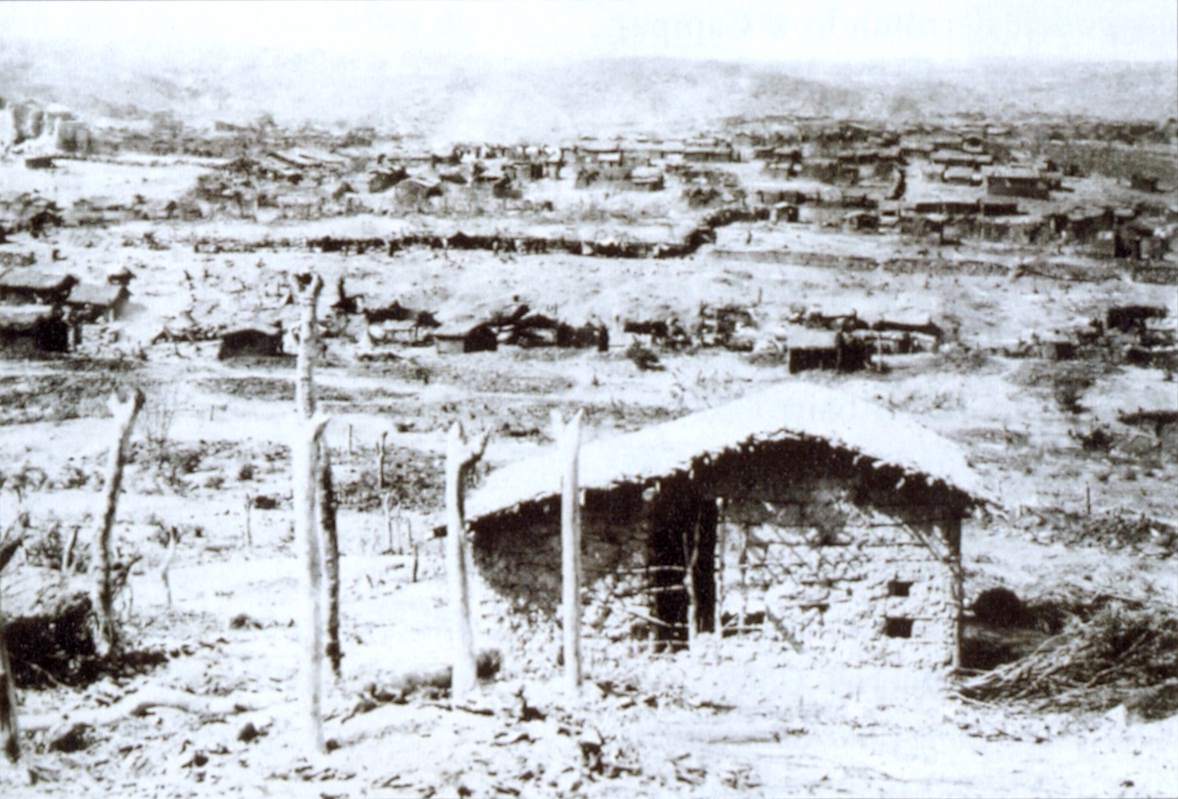 A view of the village of Canudos. Typical constructions such as the one in the foreground were very basic, made of mud and straw The conflict had its origins in the former settlement of Canudos (named Belo Monte by its inhabitants, meaning "Beautiful Hill" in Portuguese) in the semi-arid backcountry (or sertão) of Bahia. In the late 19th Century, the region suffered with poverty, with an economy based on subsistence agriculture and cattle raising, severely lacking infrastructure. The disenfranchised population drew equally from rural and urban portions of the region and represented a "broad spectrum of ethnic and economic origins".[3] It was a fertile ground for the growth of dissatisfaction with the new Republic, proclaimed on 15 November 1889, after a military coup against the ruling emperor, Pedro II. While the republic was strongly supported by much of the urban population,[4] the old emperor was still beloved by the common people. For the sertanejos, "the only change" that came with the establishment of the republic was "an increase in taxes."[5] This period was characterized by considerable political, social and economic instability, as the military fought to put down revolts all over the country.[5] It was, therefore "immensely unpopular" and dangerous to be known as anything other than republican during this time.[5] At the onset of this early republican era, a man by the name of Antônio Vicente Mendes Maciel, known as Antônio Conselheiro (Antônio, the Counselor) began rising to prominence in Bahia's hinterlands. He was one of the many itinerant religious figures in the backcountry of Brazil.[3] Conselheiro traveled from village to village with his followers, assisting the local communities and garnering support from small farmers, "collecting money and organizing labor for the construction of churches, dams and cemeteries".[6] As an increasing number of supporters joined his cause, Conselheiro drew the attention and hostility of the local landowners, who disapproved of his ideals.[5] Conselheiro claimed to be a prophet and predicted the return of the legendary Portuguese king Sebastian (see Sebastianism). He held that "it was the monarch’s God-given right to rule", which caused him to be progressively branded as a monarchist figure by the unstable Republic at the time.[3] The ultra-conservative doctrine he preached, implicitly criticizing the "wayward behavior" of many priests, was "attractive" to many sertanejos, and led the Church hierarchy to view him as a "threat to the Church's authority and popularity".[7] After wandering through the states of Ceará, Pernambuco, Sergipe and Bahia, he eventually decided to settle permanently in 1893 with his followers in the backlands of Bahia, in the farming community of Canudos, near Monte Santo, Bahia on the banks of the Vaza-Barris River. The village was very small but offered the Conselheiristas protection, as the location was hard to access. Within two years, as the religious community prospered, Conselheiro convinced several thousand followers to join him,[8] eventually making it the second-largest urban center in Bahia at the time.[3] The settlement was supported by cultivation of crops and export of leather, with residents allowed to retain private property and businesses. "The poor were maintained through donations to the community".[9] |
背景 カヌードスの村の風景。手前に見えるような典型的な建物は、泥と藁で作られた非常に簡素な造りだった この紛争の起源は、バイーア州の半乾燥地帯(セルタン)にあるカヌードス(住民はポルトガル語で「美しい丘」を意味するベロ・モンテと呼んでいた)の旧集 落にある。19世紀末、この地域は貧困に苦悩していた。経済は自給農業と牧畜に依存し、インフラは著しく不足していた。権利を奪われた住民は、この地域の 農村部と都市部から等しく集まり、「民族的・経済的背景の幅広い層」を代表していた。[3] これは、1889年11月15日に当時の皇帝ペドロ2世に対する軍事クーデターを経て宣言された新共和国への不満が育つ肥沃な土壌であった。共和制は都市 部住民の大半から強く支持された一方で[4]、旧皇帝は庶民から依然として愛されていた。セルタネイジョ(内陸住民)にとって、共和制樹立がもたらした 「唯一の変化」は「税金の増加」だった[5]。 この時期は、軍が全国で反乱を鎮圧するために戦ったため、政治的・社会的・経済的に極めて不安定だった[5]。したがって、この時期に共和主義者以外の立 場を公言することは「非常に不人気」で危険なことだった。[5] この初期共和制時代の幕開けと共に、アントニオ・ヴィセンテ・メンデス・マシエルという名の男、通称アントニオ・コンセレイロ(助言者アントニオ)がバイ ア州の奥地で頭角を現し始めた。彼はブラジル辺境地帯に数多く存在した巡回宗教者の一人であった。[3] コンセルヘイロは信者と共に村から村へと移動し、地域社会を支援しながら小作農の支持を集めた。「教会やダム、墓地の建設のために資金を集め、労働力を組 織した」のである。[6] 支持者が増えるにつれ、彼の思想を快く思わない地元地主たちの注目と敵意を招くようになった。[5] コンセルヘイロは自らを預言者と称し、伝説のポルトガル王セバスティアンの帰還を予言した(セバスティアニズム参照)。彼は「君主が統治するのは神から与 えられた権利である」と主張したため、当時の不安定な共和制下で次第に王党派的人物としてレッテルを貼られることになった。[3] 彼が説いた超保守的な教義は、多くの司祭の「道徳的堕落」を暗に批判するもので、多くのセルタネイジョ(辺境住民)にとって「魅力的」であった。このため 教会上層部は彼を「教会の権威と人気に対する脅威」と見なした。[7] セアラ州、ペルナンブコ州、セルジッペ州、バイーア州を放浪した後、1893年に彼はついにバイーア州の奥地、ヴァザ・バリス川沿いのモンテ・サント近郊 にある農村コミュニティ、カヌードスに信者たちと共に永住することを決めた。村は非常に小さかったが、アクセスが困難な立地ゆえにコンセルヘイロ派に保護 を提供した。2年以内に宗教共同体は繁栄し、コンセルヘイロは数千人の信者を集めた[8]。やがてこの地は当時のバイーア州で2番目に大きな都市となった [3]。集落は農作物の栽培と皮革の輸出で支えられ、住民は私有財産と事業を保持することが許されていた。「貧しい者たちは共同体への寄付によって支えら れていた」[9]。 |
| Basis of history Determining what exactly happened in the war is problematic, as the two main historical source groups consist of military chronicles (written to justify the army's actions) and far-from-impartial journalistic reports.[10] According to Peter Robb, "[t]he foreign correspondents who covered what was soon being called the War of Canudos, as if it were a conflict between nations rather than the extermination of a tiny community within a single country, were nearly all embedded with the army of the Brazilian republic."[11] |
歴史の根拠 戦争で実際に何が起きたかを特定するのは難しい。主な歴史資料は二種類で、軍隊の行動を正当化するために書かれた軍事記録と、公平とは程遠い報道記事だか らだ。[10] ピーター・ロブによれば、「やがてカヌードスの戦いと呼ばれるようになった事件を取材した外国特派員たちは、あたかも国家間の紛争であるかのように、実際 には単一国家内の小さな共同体の殲滅であったにもかかわらず、ほぼ全員がブラジル共和国軍の随伴記者として行動していた」という。[11] |
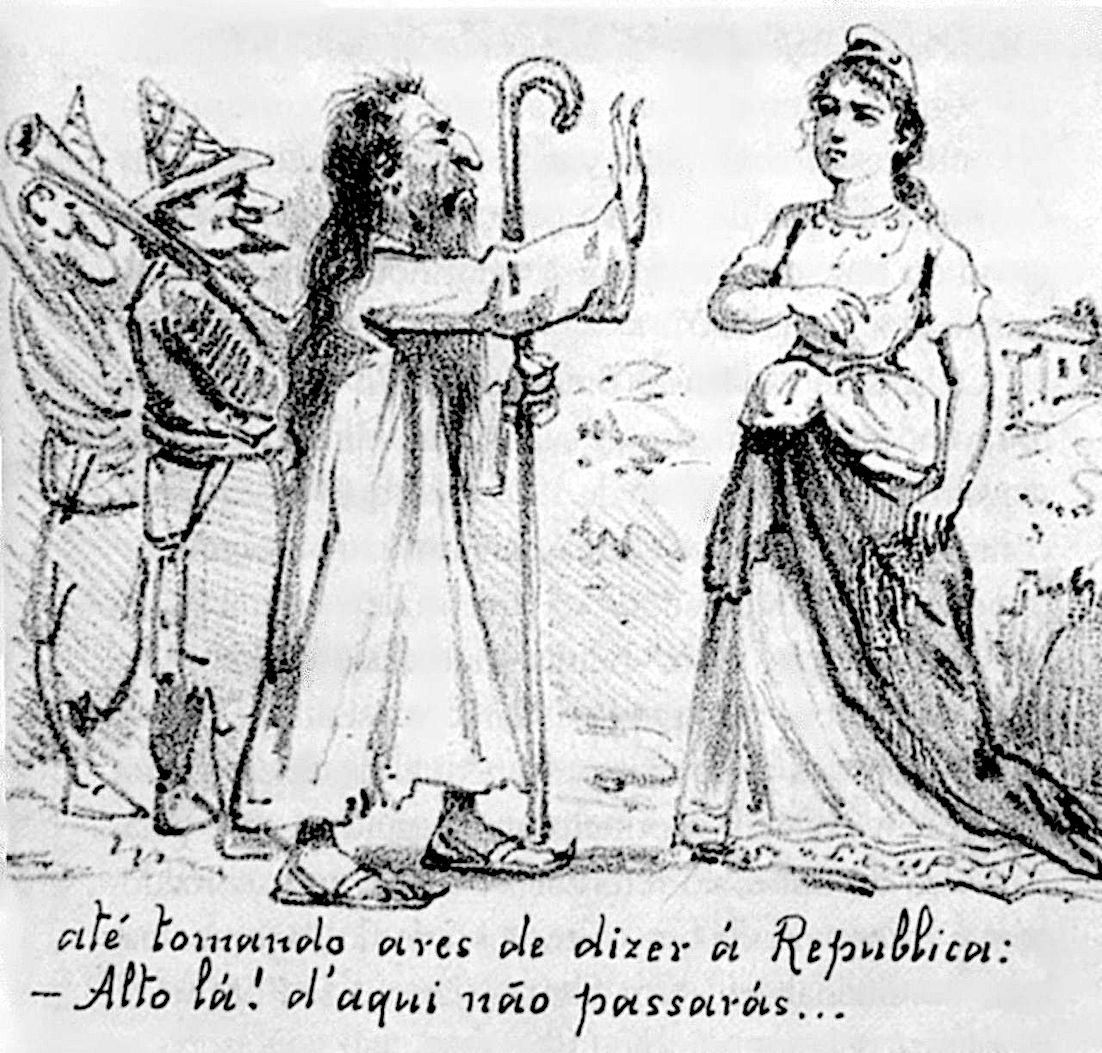
| Second military campaign Initial military campaign 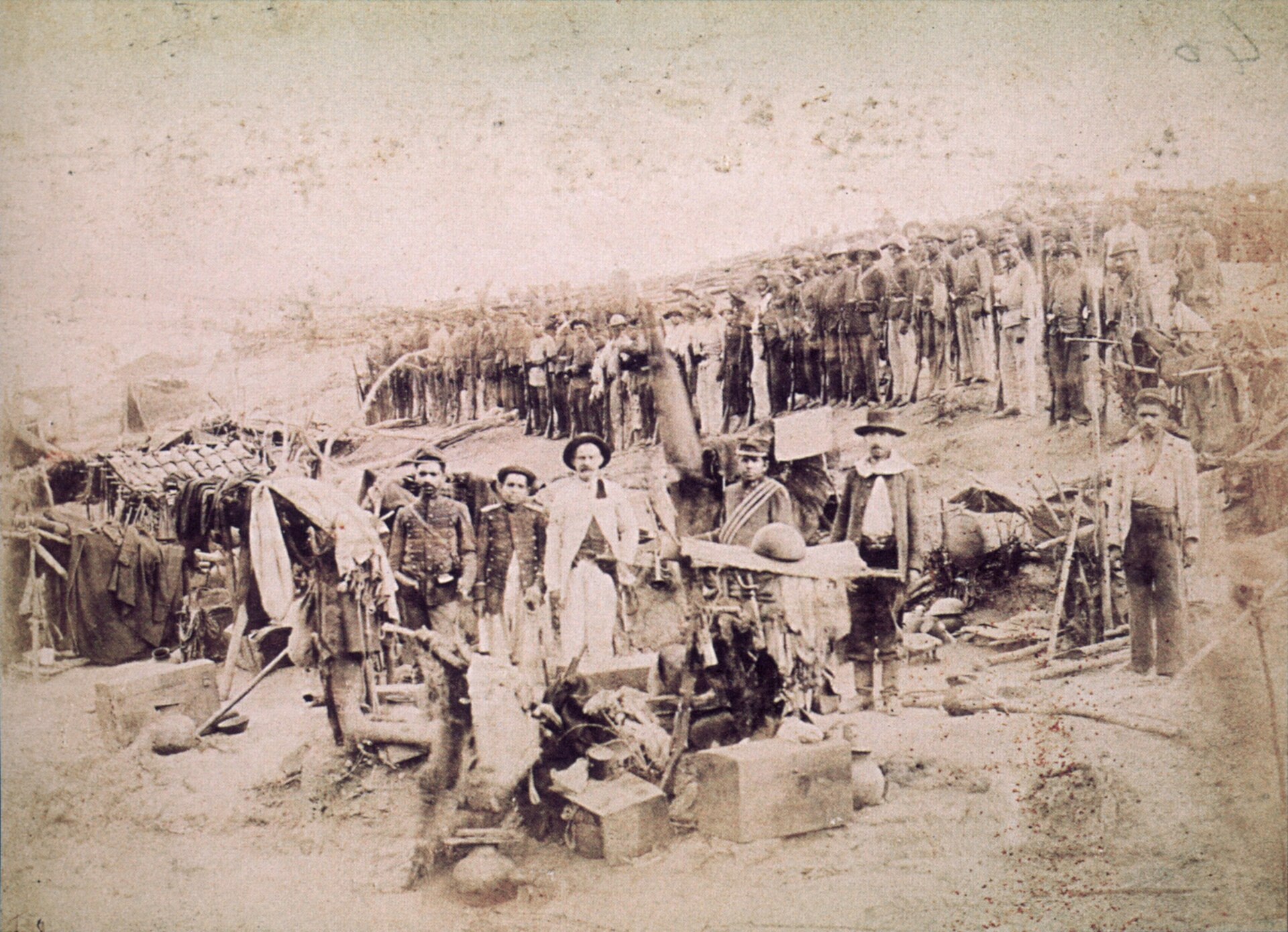 The 40th Infantry Battalion, sent from the Pará state to quell the Canudos rebellion, 1897 The incident that served as the catalyst for Canudos’ eventual destruction was a dispute over delivery of lumber. Conselheiro had placed an order of wood from a business in the neighboring town of Juazeiro he often did business with to construct a new church.[3] However, a new local judge, Arlindo Leoni, opposed Conselheiro and prevented the delivery.[3] Some Canudenses then took it upon themselves to go to Juazeiro to claim the wood.[3] Hearing of this plan, the judge responded by requesting police forces from the state governor, Luis Viana, claiming an imminent "invasion" of his town by Conselheiro and his followers.[3] Viana recounts that he had been informed by Leoni of "rumors which were current, and which were more or less well-founded, to the effect that the flourishing city in question [Juazeiro] was to be assaulted within a few days by Antônio Conselheiro’s followers."[3] Caricature showing Antônio Conselheiro with an entourage of jesters armed with ancient blunderbusses, trying to stop the Republic, Revista Illustrada, c. 1896. The caption reads: "[He is] even daring to tell the Republic: 'hold on! You shall not pass...'" While the troops were initially dispatched for the sole purpose of preventing the assault, Leoni managed to convince their commander Pires Ferreira to march on Canudos.[3] With scant information about terrain and the defensive resources of Canudos' population, a small, 100-man force commanded by Ferreira was sent towards the settlement on 4 November 1896.[12] However, the Canudenses marching from the religious settlement to Juazeiro surprised the troops at Uauá and a fierce battle ensued.[3] Estimates of the number of Conselheiristas that engaged in the battle varied anywhere from 1,000 to 3,000 men, and accounts reported that they were armed with "old muskets, pikes, scythes, long poles, and implements of the land."[3] Despite some considerable losses, estimated at 150 men, the Canudenses drove the state police soldiers off.[3] The troops then retreated to Juazeiro and awaited reinforcements from the state of Bahia.[12] The government and the local media quickly publicized the soldiers’ defeat in the backlands of Bahia. The media (i.e. newspapers) played an essential role in escalating the conflict, spreading rumors that rather than being a local and unsophisticated uprising, the Conselheiristas were allied with other monarchists scheming to launch a "restoration" of the monarchy.[13] The unstable political climate along with the scarcity of military resources in Bahia led the state government to seek aid from the federal government to crush the increasingly threatening settlement.[5] Since the First Brazilian Republic had only recently been founded, it saw the rebel settlers as a monarchist and separatist threat to its authority to be made an example of.[14] The President of Brazil at the time, Prudente de Morais, ordered another punitive military expedition to Canudos. A second 104-man force, again commanded by Ferreira, began its preparations in November 1896, and attacked the settlement on 21 November 1896.[12] The settlement was fiercely defended by a band of 500 armed men, shouting praises to Antônio Conselheiro and the monarchy, and the attacking force faced problems similar to the first expedition. The Brazilian soldiers retreated after incurring severe losses and killing around 150 of the settlers, who were armed only with machetes, primitive lances and axes.[12] |
第二の軍事作戦 最初の軍事作戦 1897年、カナウドスの反乱を鎮圧するためパラ州から派遣された第40歩兵大隊 カナウドスが最終的に滅ぼされるきっかけとなった事件は、木材の配達をめぐる争いだった。コンセルヘイロは、新しい教会を建設するため、よく取引のある隣 町ジュアゼイロの業者に木材を発注していた。[3] しかし新任の地方判事アルリンド・レオニがコンセルヘイロに反対し、納品を阻止した。[3] これに対し一部のカヌード住民が自らジュアゼイロへ木材を取りに行くことを決めた。[3] この計画を知った判事は州知事ルイス・ヴィアナに警察部隊の派遣を要請し、コンセルヘイロとその追随者による町への「侵略」が差し迫っていると主張した。 [3] ビアナはレオーニから「噂が流れており、それなりに根拠もあるという。つまり、繁栄するこの町[ジュアゼイロ]が数日中にアントニオ・コンセルヘイロの信 奉者たちに襲撃されるというのだ」と報告を受けたと記している。[3] アンソニー・コンセルヘイロが、古式ゆかしい散弾銃を携えた道化師の随行団と共に共和国を阻止しようとする風刺画(『リヴァイスタ・イリュストラダ』誌、1896年頃)。キャプションには「[彼は]共和国にこう言い放つ勇気すらある:『待て!通すものか…』」とある。 当初、軍隊は襲撃阻止のみを目的に派遣されたが、レオニは指揮官ピレス・フェレイラを説得し、カヌードスへの進軍を決行させた[3]。地形や住民の防衛手 段に関する情報が乏しい中、フェレイラ率いる100名の小部隊が1896年11月4日、集落へ向けて出撃した[12]。しかし宗教集落からジュアゼイロへ 向かうカヌデス人部隊がウアワで軍隊を奇襲し、激しい戦闘が発生した[3]。戦闘に参加したコンセルヘイリスタ(カヌデス側)の兵力は1,000人から 3,000人と推定され、記録によれば「古びたマスケット銃、槍、鎌、長い棒、農具」で武装していたとされる。[3] カヌデンセスは150名と推定される相当な損害を出しながらも、州警察兵を撃退した。[3] 兵士たちはジュアゼイロへ撤退し、バイア州からの増援を待った。[12] 政府と地元メディアは、バイア州奥地での兵士の敗北を即座に公表した。メディア(すなわち新聞)は、この紛争を激化させる上で重要な役割を果たし、コンセ ルヘイリスタ派が単なる地方の未熟な反乱ではなく、他の王党派と結託して王政「復古」を企てているという噂を広めた。[13] 不安定な政治情勢と軍事資源の不足から、バイア州政府は連邦政府に支援を要請し、脅威を増す入植地を鎮圧しようとした[5]。第一ブラジル共和国が成立し たばかりの時期であったため、反乱を起こした入植者たちを権威に対する王党派かつ分離主義的な脅威と見なし、見せしめとする必要があったのである。 [14] 当時のブラジル大統領プルデンテ・デ・モライスが、カヌードスへの懲罰的軍事遠征を再び命じた。フェレイラが再び指揮する104名の第二部隊は1896年 11月に準備を開始し、同年11月21日に集落を攻撃した。[12] 500名の武装集団がアントニオ・コンセレイロと君主制を称えながら集落を激しく防衛したため、攻撃部隊は最初の遠征と同様の問題に直面した。ブラジル軍 兵士は、マチェテ、原始的な槍、斧しか持たない入植者約150名を殺害したものの、甚大な損害を被って撤退した。[12] |
Second military campaign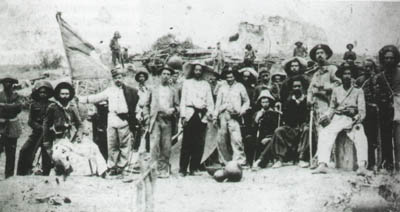 The 24th Infantry Battalion in Canudos, 1897 The defeat of the Pires Ferreira campaign produced sensationalist media reports about the ferocity and fanaticism of Canudos' inhabitants, which provoked an outcry and calls for reprisals against the settlement. Rather than causing its inhabitants to flee, the armed conflict caused the settlement to grow exponentially, and it now numbered over 30,000 residents.[1] On 12 January 1897, Republican troops, which comprised 547 men, 14 officers, and 3 surgeons, left Juazeiro for Canudos.[12] The attack on the Conselheiristas began on 18 January, and led to the death of 115 Canudenses with minimal losses on the army's side,[3] which had some initial success with artillery against the villagers' trenches. However, the soldiers were eventually surrounded by more than 4,000 insurrectionists.[12] Running short of ammunition, food and water, and with the rebels continuing to fight despite heavy losses, the Republican soldiers retreated to nearby Monte Santo to await reinforcements.[12][3] Canudenses celebrated their victory against the expedition in a particularly destructive way;[3] burning ranches and farm buildings, creating a ring of scorched earth within a radius of seven miles of Canudos.[3] With the Canudenses winning crushing victories and journalists responding with cries of alarm, the national military and civilian authorities labeled Canudos a dangerous threat to national order and to the prestige of the armed forces and the new government.[3] |
第二次軍事作戦 1897年、カヌードスにおける第24歩兵大隊 ピレス・フェレイラ作戦の敗北は、カヌードス住民の凶暴性と狂信性に関する扇情的な報道を生んだ。これが世論の非難を招き、集落への報復を求める声が上がった。しかし武力衝突は住民の逃亡を招くどころか、集落を急拡大させ、住民数は3万人を超えた[1]。 1897年1月12日、547名の兵士、14名の将校、3名の軍医からなる共和派軍がジュアゼイロを出発し、カヌードスへ向かった。[12] 1月18日に始まったコンセルヘイリスタへの攻撃では、軍側の被害は最小限に留まったものの、115人のカヌデス人が死亡した[3]。砲兵隊が村人の塹壕 に対して初期の成功を収めたのである。しかし兵士らは最終的に4,000人以上の反乱軍に包囲された[12]。弾薬・食糧・水が不足し、反乱軍が甚大な損 害を受けながらも戦い続ける中、共和派兵士は増援を待つため近くのモンテ・サントへ撤退した[12][3]。 カヌドスの住民たちは遠征軍に対する勝利を、特に破壊的な方法で祝った。牧場や農場の建物を焼き払い、カヌドスから半径7マイル(約11キロ)圏内に焦土 の環を作り出したのだ。カヌドスの住民たちが圧倒的な勝利を重ね、ジャーナリストたちが警鐘を鳴らす中、国家の軍事・文民当局はカヌドスを国家秩序と軍 隊・新政府の威信に対する危険な脅威と断じた。 |
Third military campaign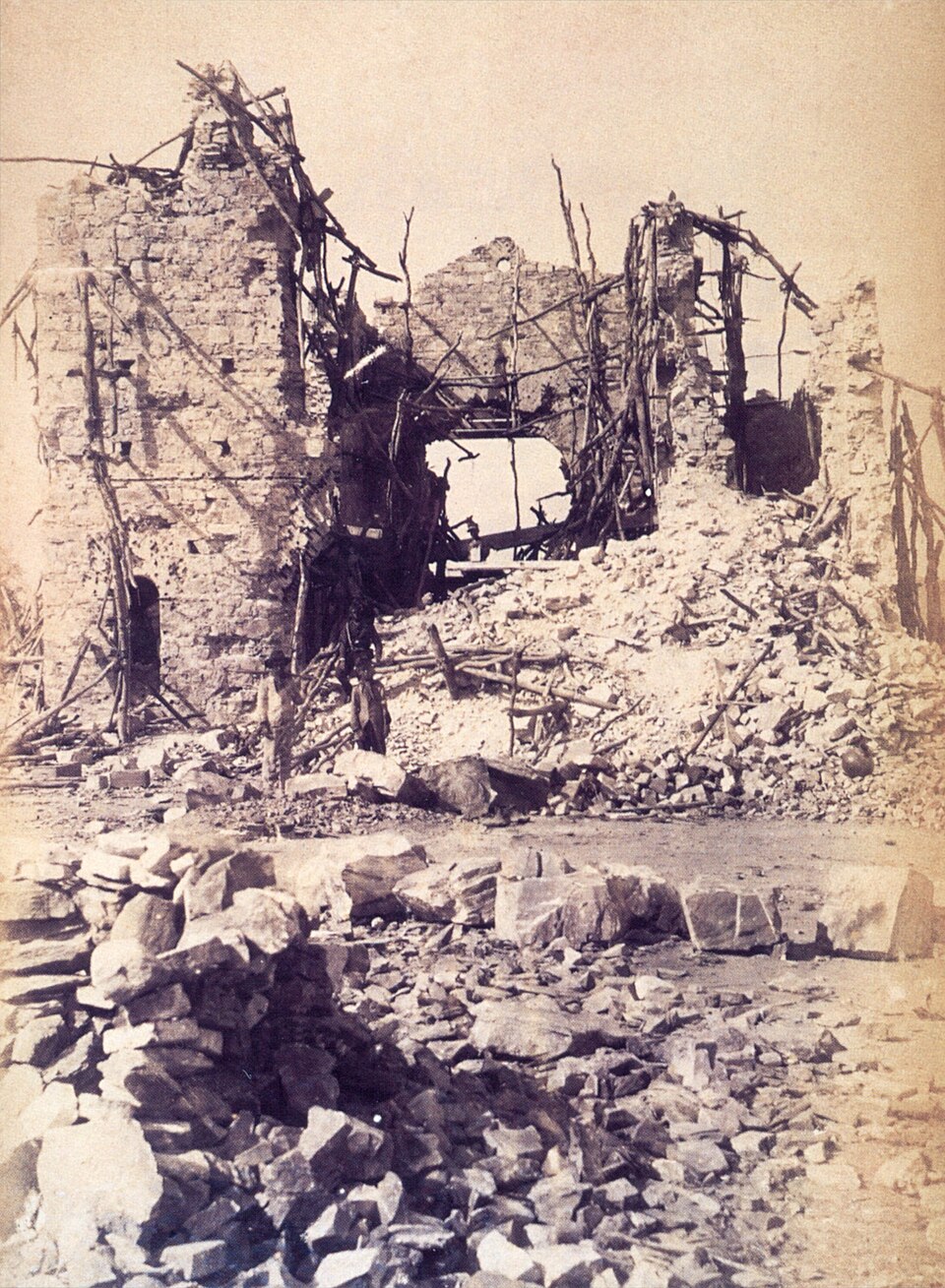 Ruins of the Bom Jesus church after the destruction of Canudos, 1897 An experienced colonel, Antônio Moreira César, set out with 1,300 troops; three infantry, one cavalry and one artillery battalions, all newly armed and trained, and reportedly carrying "seventy rounds of cannon-balls and sixteen million rounds of ammunition."[3] On 20 February, Moreira and his soldiers arrived at Monte Santo.[3] Antônio Moreira César had recently crushed another insurrection in southern Brazil where he earned the nickname "cutthroat".[4] Although forewarned about the numbers and resolve of the rebels, the military thought it impossible that the rebels could resist such a strong regular army force. A day after arriving in Monte Santo, completely disregarding "the intense heat and parched land," the force advanced on Canudos.[3] Their equipment quickly turned out be inadequate for the sertão of Bahia. Wagon trains that carried supplies "sank up to their hubs in sand."[3] This was also disregarded and the troops continued their forced march to Canudos.[3] Attacking the settlement, the troops found that the artillery barrages had turned the settlement of huts into a "maze" that was impossible for the advancing soldiers to navigate.[3] On 6 March 1897, after only two days of fighting, the surviving officers had no choice but to vote to retreat.[3] Moreira César's protests were overlooked,[3] and he died before dawn due to a fatal wound.[12] Moreira César's shocking failure may have been brought on by epileptic seizures.[15] Starting to retreat, the soldiers panicked and a disastrous rout ensued; many were killed by pursuing Canudenses.[16] Many soldiers abandoned their weapons and ammunition, which were recovered by the rebels.[4] The artillery maintained good order but was attacked and slaughtered by the rebels who took possession of its weapons and ammunition.[16] In Rio de Janeiro and São Paulo, the country's largest cities, where monarchism was very unpopular, demonstrations in the streets turned into riots and four monarchist newspaper offices were destroyed, and the owner of one lynched.[4] |
第三次軍事作戦 1897年、カヌードス壊滅後のボン・ジーザス(ヘスス)教会跡 経験豊富なアントニオ・モレイラ・セザール大佐は1,300名の兵を率いて進軍した。歩兵3個大隊、騎兵1個大隊、砲兵1個大隊からなり、全て新装備で訓練済みであり、「砲弾70発と弾薬1,600万発」を携行していたと伝えられる。[3] 2月20日、モレイラと兵士たちはモンテ・サントに到着した[3]。アントニオ・モレイラ・セザールは直前にブラジル南部で別の反乱を鎮圧しており、そこで「首切り」の異名を得ていた[4]。 反乱軍の数と決意について事前に警告を受けていたにもかかわらず、軍はこれほど強力な正規軍に反乱軍が抵抗できるはずがないと考えていた。モンテ・サント 到着の翌日、軍は「酷暑と干上がった大地」を完全に無視してカヌードスへ進軍した[3]。彼らの装備はすぐにバイーア州のセルタン(不毛地帯)には不適切 であることが判明した。物資を運ぶ荷馬車隊は「車軸まで砂に沈んだ」のである。[3] この事実も無視され、部隊はカヌードスへの強行軍を続けた。[3] 集落を攻撃した部隊は、砲撃によって小屋の集落が「迷路」と化し、進軍する兵士が航行不可能になっていることを発見した。[3] 1897年3月6日、わずか2日間の戦闘の後、生き残った将校たちは撤退を決議するほかなかった。[3] モレイラ・セザールの抗議は無視され[3]、彼は致命傷により夜明け前に死亡した[12]。モレイラ・セザールの衝撃的な失敗は、てんかん発作が原因だっ た可能性がある[15]。撤退を開始した兵士たちはパニックに陥り、壊滅的な敗走が続いた。多くの兵士が追撃するカヌードス人によって殺害された [16]。多くの兵士が武器や弾薬を放棄し、それらは反乱軍によって回収された。[4] 砲兵隊は秩序を保っていたが、反乱軍に襲撃され虐殺され、武器と弾薬を奪われた。[16] 国内最大の都市であるリオデジャネイロとサンパウロでは、王政支持が非常に不人気だったため、街頭デモが暴動に発展し、王政支持派の新聞社4社が破壊され、うち1社の所有者はリンチに遭った。[4] |
Fourth expedition and final destruction of Canudos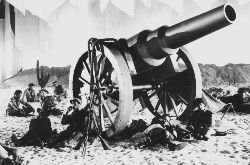 A matadeira (The Killer), a British-manufactured cannon used in the War of Canudos by the Brazilian Army against the rebels. Photograph from a replica, taken from the movie A Matadeira by Jorge Furtado, 1994 Pressured, the federal government sent a new expedition under general Arthur Oscar de Andrade Guimarães, assisted by four other generals, and with the direct involvement of Carlos Machado de Bittencourt, the Minister of War, who went with his entire staff[4] to Monte Santo, the nearby city which had served as the gathering point for the army and where the large military force was being assembled.[12] Machine guns and large artillery pieces, such as mortars and howitzers, including a powerful Whitworth 32, nicknamed Matadeira (Killer), went with the 3,000-man force, and had to be hauled with enormous effort through the unforgiving roadless landscape. The troops set off on 16 June.[12] This time, the attackers were aided by the rampant hunger and malnutrition (and most of all thirst)[4] among the inhabitants of Canudos, and the heavy losses they had suffered in the previous attacks.[3] On the other hand, the attackers were hindered by the fact that the rebels now possessed "some of the most advanced weapons of the time" (repeating rifles "like the Austrian Mannlicher and the Belgian Comblains"), abandoned by fleeing republican troops.[4] Accounts of the expedition differ. Robert Levine wrote that hundreds of men in the first battalion of 2,350 were trapped by the Canudenses and slaughtered.[3] Fearing another failed expedition, the troops retreated to the town of Monte Santo.[3] Walnice Nogueira Galvão and Levine agree there was a siege and starvation. A month later a second campaign began with over 8,000 soldiers[3] who encircled and laid siege to Canudos. This starved the population into submission.[3] 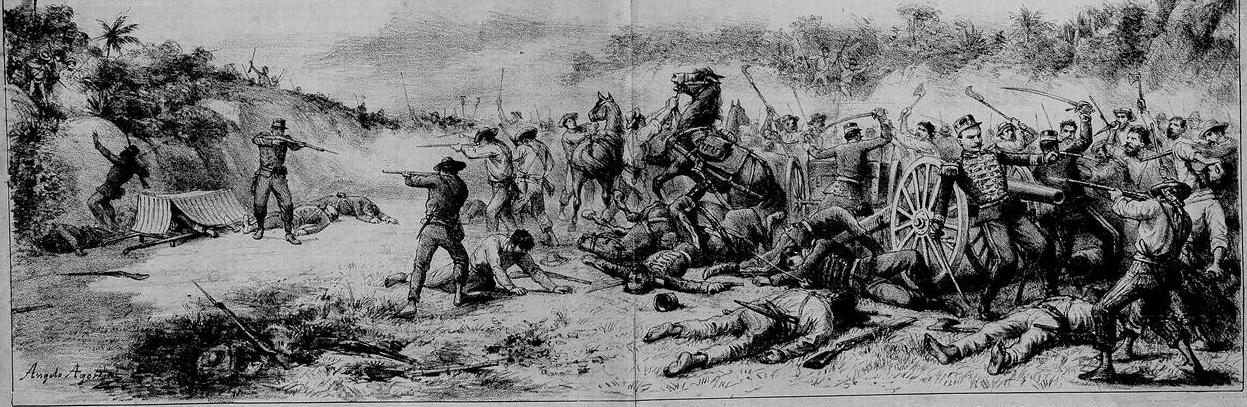 "Battle in Canudos between the government troops and the fanatics of Antônio Conselheiro", Don Quixote, No. 82, 1897 A few days before the end, a surrender was negotiated. However, to the chagrin of the army, the only insurrectionists who actually surrendered were about three hundred women, who had been reduced to walking skeletons by extreme hunger, accompanied by their children and a few old men.[4] The fighting started again. Reports of the fighting stated that hundreds of Canudos defenders and hundreds of federal soldiers died every day.[3] The last assault persisted until the beginning of October, when the military forces set off 90 dynamite bombs in the settlement, thus marking the defeat of the settlement of Canudos.[12] Galvão wrote that the fighting ended on 5 October 1897, when there was no surrender, but no more fire from the rebels.[4] Levine wrote that throughout this expedition, an undetermined number of Canudenses fled the settlement.[3] Others accepted an offer of surrender with the promise of their lives being spared.[3] This offer, however, was not honored. One of the forces' generals had the men "surrounded by soldiers, and hacked to death in front of hundreds of witness, including many of their wives and children."[3] Immediately after the final assault, soldiers "smashed, leveled, and burned all 5,200 in the settlement."[3] |
第四次遠征とカヌードスの最終的な破壊 マタデイラ(殺戮者)。ブラジル軍がカヌードス戦争で反乱軍に対して使用した英国製大砲。1994年ジョルジェ・フルタド監督映画『マタデイラ』より、複製品の写真 連邦政府は圧力を受けて、アーサー・オスカル・デ・アンドラーデ・ギマランイス将軍を指揮官とする新たな遠征軍を派遣した。この遠征には他の4人の将軍が 補佐役として同行し、カルロス・マシャド・デ・ビッテンコート陸軍大臣が参謀全員を率いて直接関与した[4]。大臣らは軍隊の集合地点として機能していた 近隣の都市モンテ・サントに向かい、そこで大規模な軍事部隊が編成されていた。[12] 機関銃や迫撃砲・榴弾砲といった大型火器、特に「マタデイラ(殺し屋)」の異名を持つ強力なホイットワース32口径砲も3000名の部隊と共に運ばれた が、道なき過酷な地形を移動させるには途方もない労力を要した。 部隊は6月16日に出発した[12]。今回は、カヌードス住民の間で蔓延する飢餓と栄養失調(そして何よりも渇き)[4]、さらに過去の攻撃で被った甚大 な苦悩が攻撃側を有利に働いた。[3] 一方、攻撃側にとって不利だったのは、反乱軍が「当時最も先進的な武器」(オーストリア製マンリヒャーやベルギー製コンブレンのような連発銃)を、撤退す る共和国軍から奪取していた事実だ。[4] 遠征の記録は異なる。ロバート・レバインによれば、2,350人からなる第一大隊の数百名がカヌードス人に包囲され虐殺されたという[3]。再び遠征が失 敗することを恐れた部隊はモンテ・サントの町へ撤退した[3]。ワルニセ・ノゲイラ・ガルヴァンとレバインは、包囲と飢餓があった点で一致している。 一ヶ月後、8,000人以上の兵士による第二の遠征が始まった[3]。彼らはカヌードスを包囲し、包囲戦を仕掛けた。これにより住民は飢えに追い込まれ、降伏した[3]。 「カヌードスにおける政府軍とアントニオ・コンセレイロの狂信者たちとの戦い」、ドン・キホーテ誌、第82号、1897年 終結の数日前、降伏交渉が行われた。しかし軍が落胆したのは、実際に降伏したのは極度の飢餓で歩く骸骨と化した約300人の女性と、その子供たち、そして数人の老人だけだったことだ[4]。 戦闘は再開した。戦闘報告によれば、毎日数百人のカヌードス防衛者と数百人の連邦軍兵士が死亡した。[3] 最終攻撃は10月初旬まで続き、軍は集落に90発のダイナマイト爆弾を投下した。これによりカヌードス集落の敗北が確定した[12]。ガルヴァンによれ ば、戦闘は1897年10月5日に終結した。降伏はなかったが、反乱軍からの射撃が完全に止んだのである。[4] レバインによれば、この遠征中、不特定多数のカヌードス住民が居住区から脱出したという。[3] 他には、命を助けるという約束で降伏の申し出を受け入れた者もいた。[3] しかしこの約束は守られなかった。軍将校の一人は、降伏した者たちを「兵士に囲ませ、数百人の目撃者、その多くが妻や子供たちを含む前で、斬り殺させた」 のである。[3] 最終攻撃直後、兵士たちは「集落内の5,200棟全てを破壊し、平らにし、焼き払った」[3]。 |
Aftermath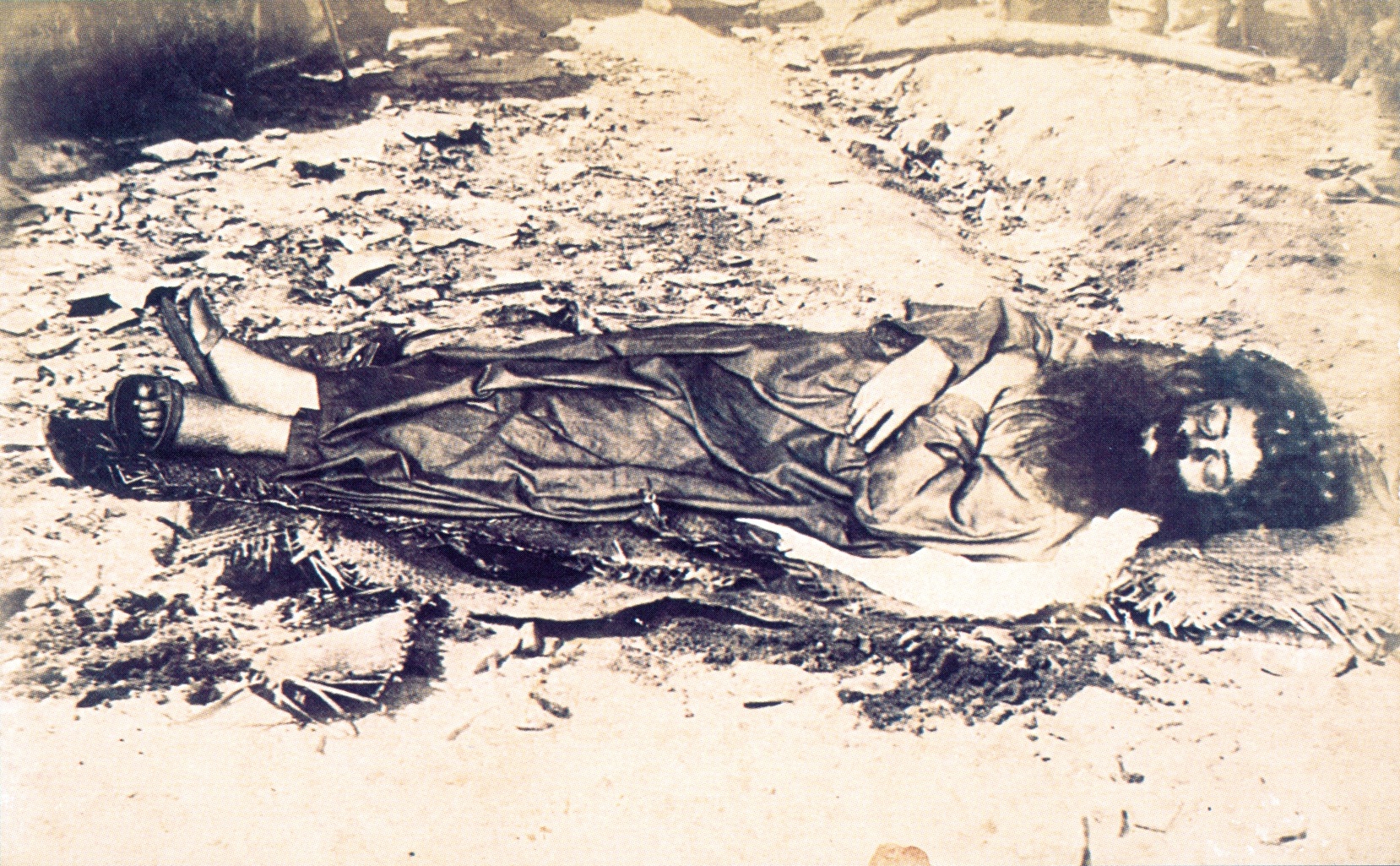 The only photograph of Antônio Conselheiro, taken after his death in September 1897 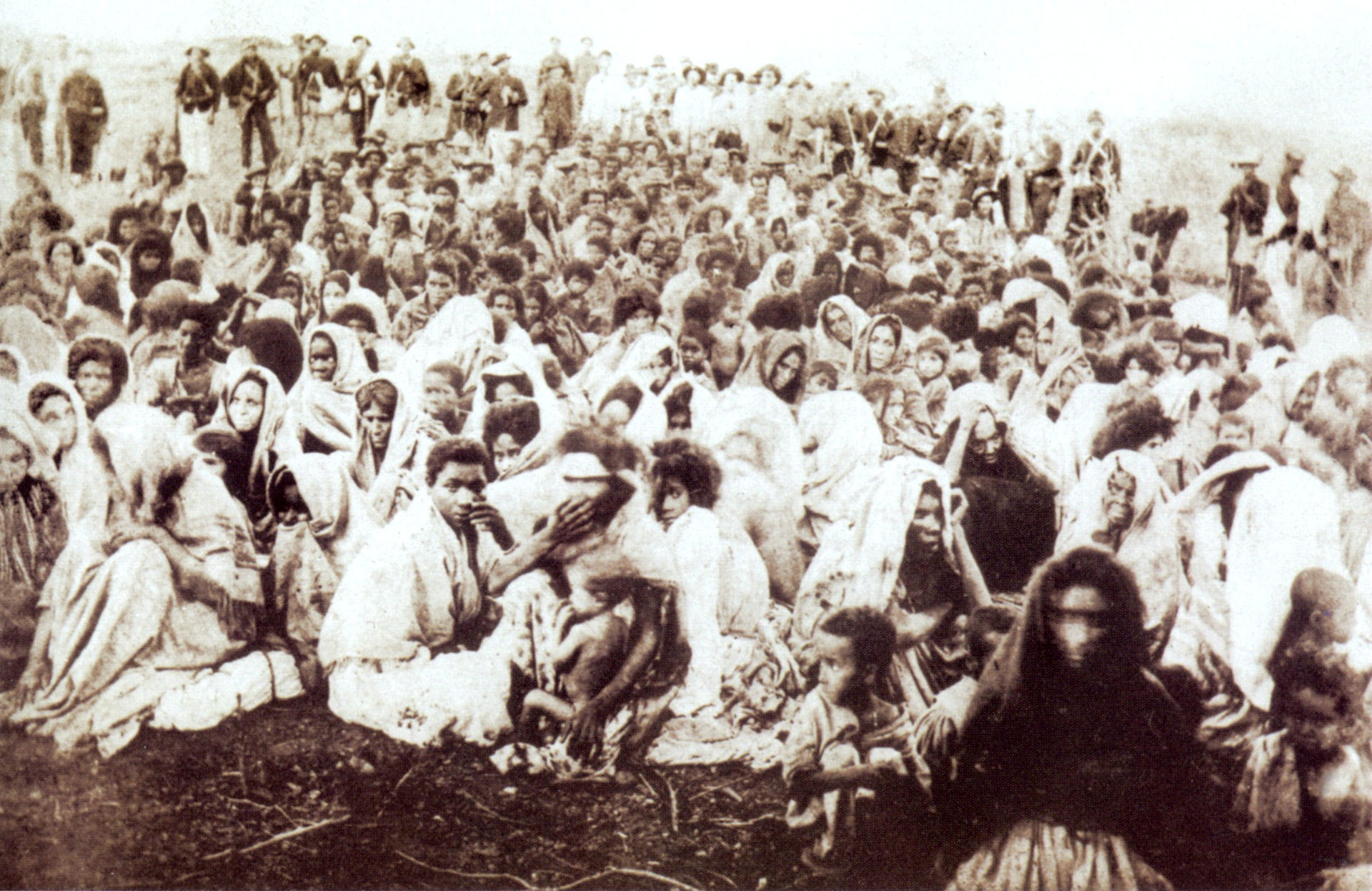 Survivors from Canudos, 1897 It was eventually determined that Antônio Conselheiro himself had likely died of dysentery on 22 September.[3] Before Canudos was burned down and dynamited, Conselheiro's body was exhumed, the head was removed, and it was "displayed on a pike" to be "held high at the front of a military parade for all to see."[3] According to Peter Robb, it "was taken to the Medical Faculty of Bahia to be studied for abnormalities."[11] When all resistance ceased and "peace" was restored, only 150 survivors remained. Estimates for the number of dead in the War of Canudos vary. Euclides da Cunha (1902) estimated approximately 30,000 (25,000 residents and 5,000 attackers) died;[1] Roelofse-Campbell also gives this estimate.[17] Robert M. Levine, gives a lower figure of around 15,000.[3] Joel Singer estimates only 5,000 dead.[18][17] Euclides da Cunha did not see the fighting but did bear witness afterward, Robb says, and his "obsession with progress and modernity, the scientific racism that told him the people of the northeastern interior were doomed to backwardness by their mixed race" led him to tell a story filled with preconceptions — which is, however, the only story we have.[11] Barbara Celarent described Euclides da Cunha's point of view of the war as "a tragic encounter between atavistic barbarism and modern civilization," where "civilization itself reverted to barbarism".[16] According to Walnice Nogueira Galvão, one of the most important results of the war was the complete "solidification of the republican regime" and final exorcism of "the specter of monarchical restoration".[4] But over time, "public opinion underwent a striking about-face" about the danger of a monarchist conspiracy. "The desperately poor peasants" had been fighting by themselves without help, and had "no connection whatsoever with real monarchists – white, upper-class urbanites, who were horrified at the very thought of associating with such a 'riffraff' of 'fanatics'".[4] The war "turned out to have been an inglorious massacre of destitute wretches", in which the military had made a "common practice – approved by the commanders" – of tying up prisoners and beheading them in public.[4] |
余波 アントニオ・コンセレイロの唯一の遺影。1897年9月の死後に撮影された カヌードスからの生存者たち、1897年 結局のところ、アントニオ・コンセレイロ自身は9月22日に赤痢で死亡した可能性が高いと結論づけられた。[3] カヌドスが焼き払われ爆破される前に、コンセレイロの遺体は掘り起こされ、頭部が切り離された。そして「槍に刺されて」軍事パレードの最前列で高く掲げら れ、皆に見せ物にされたという。[3] ピーター・ロブによれば、その頭部は「異常を調べるためバイア医科大学に運ばれた」という。[11] すべての抵抗が終わり、「平和」が回復したとき、生き残ったのはわずか150人だった。 カヌドス戦争の死者数の推定は様々だ。ユークリデス・ダ・クーニャ(1902年)は、およそ30,000人(住民25,000人、攻撃者5,000人)が 死亡したと推定している。[1] ロエロフセ・キャンベルも同様の推定をしている。[17] ロバート・M・レバインは、15,000人程度と、より低い数字を提示している。[3] ジョエル・シンガーは、死者数はわずか5,000人と推定している。[18][17] ロブによれば、エウクリデス・ダ・クーニャは戦闘を直接目撃したわけではないが、その後その現場を目撃しており、彼の「進歩と近代化への執着、そして北東 部の内陸部の人々は混血によって後進性に運命づけられているという科学的人種主義」が、先入観に満ちた物語を語るきっかけとなった。しかし、それが我々が 知っている唯一の物語である。[11] バルバラ・セラレントは、エウクリデス・ダ・クーニャの戦争観を「原始的な野蛮と近代文明の悲劇的遭遇」と表現し、そこでは「文明そのものが野蛮へ逆戻り した」と述べた。[16] ワルニセ・ノゲイラ・ガルヴァォンによれば、この戦争の最も重要な成果の一つは「共和制体制の完全な定着」と「王政復古の亡霊」の最終的な払拭であった [4]。しかし時が経つにつれ、王党派陰謀の危険性に関する「世論は驚くべき転換を遂げた」。「極貧の農民たち」は支援もなく独力で戦い、「白人上流階級 の都市住民である真の王党派とは一切の接点がなかった。彼らは『狂信者』の『ならず者ども』と関わることを想像するだけで戦慄したのである」。[4] この戦争は「結局、無名の貧民たちの不名誉な虐殺」に過ぎず、軍隊は「指揮官が容認した常套手段」として捕虜を縛り上げ、公開処刑で斬首していた。[4] |
Canudos today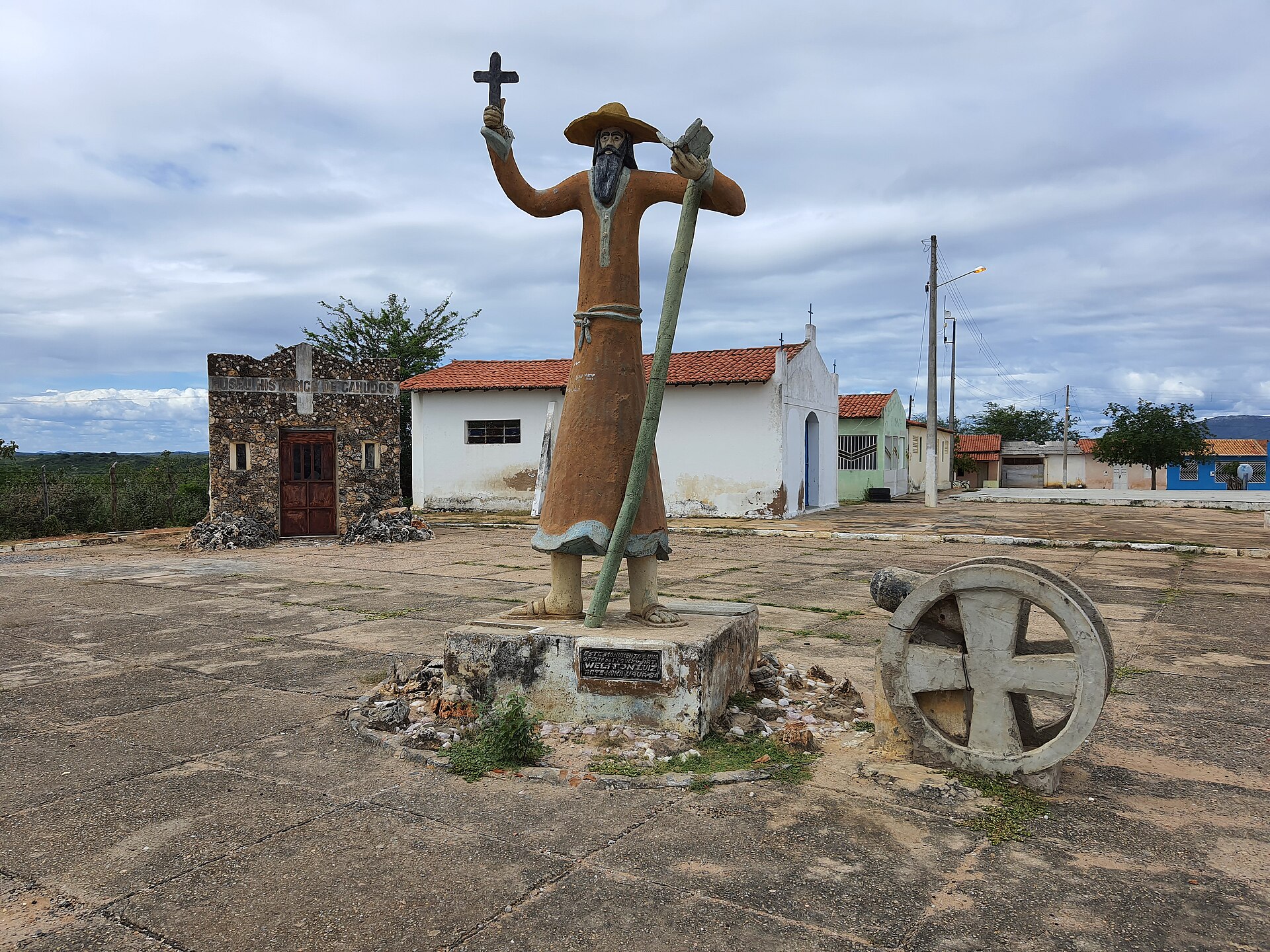 Statue of Antônio Conselheiro Although the original town of Canudos has been covered by the reservoir of the Cocorobó Dam, built by the military regime in the 1960s, the Canudos State Park, established in 1986, preserves many of the important sites and serves as a monument to the war. The stated purpose of the park is "to make it impossible to forget the martyrs led by Antônio Conselheiro".[19] |
現代のカヌードス アントニオ・コンセレイロの像 1960年代に軍事政権が建設したココロボダムの貯水池によって、かつてのカヌードスの町は水没してしまった。しかし1986年に設立されたカヌードス州 立公園は、多くの重要な史跡を保存し、戦争の記念碑としての役割を果たしている。この公園の目的は「アントニオ・コンセレイロ率いる殉教者たちを忘れるこ とを不可能にすること」とされている。[19] |
| Bibliography Euclides da Cunha. Os Sertões, 1902. (Rebellion in the Backlands, University of Chicago Press) Calasans, José. No Tempo de Antônio Conselheiro. Salvador, Livraria Progresso Editora, 1959. Arinos, Afonso. Os Jagunços. Macedo Soares, Henrique Duque-Estrada de. A Guerra de Canudos.Rio de Janeiro: Typ. Altiva, 1902 Benício, Manoel. O Rei dos Jagunços. Rio de Janeiro: Editora Fundação Getúlio Vargas. 2a. edição, 1997 Mario Vargas Llosa. The War of the End of the World. Novel. 1981 |
参考文献 エウクリデス・ダ・クーニャ『奥地の反乱』(1902年、シカゴ大学出版局) ホセ・カラサンズ『アントニオ・コンセレイロの時代』(1959年、サルバドール、プログレソ出版社) アフォンソ・アリノス『ジャグンソス』 マセド・ソアレス、エンリケ・ドゥケ・エストラーダ・デ。『カヌードスの戦争』。リオデジャネイロ:Typ. Altiva、1902年 ベニシオ、マノエル。『ジャグンソスの王』。リオデジャネイロ:Editora Fundação Getúlio Vargas。第2版、1997年 マリオ・バルガス・リョサ。『世界の終わりの戦争』。小説。1981年 |
| Media Guerra de Canudos (The Battle of Canudos). Motion picture directed by Sérgio Rezende, with José Wilker, Cláudia Abreu, Paulo Betti, and Marieta Severo. Brazil, 1997. Sobreviventes – Os Filhos da Guerra de Canudos (Survivors, the Children of the War of Canudos). Documentary film by Paulo Fontenelle, Brazil, 2007. Canudos. Documentary film by Ipojuca Pontes, with Walmor Chagas, Brazil, 1978. War of Canudos in Brazil. Documentary radio broadcast, BBC World Service. Mon 9 June 2014 07:50 GMT. Hell Clock, Video Game (Fiction, set in Canudos). |
メディア カヌードスの戦い(Guerra de Canudos)。セルジオ・レゼンデ監督、ジョゼ・ウィルケル、クラウディア・アブレウ、パウロ・ベッティ、マリエタ・セヴェロ出演。ブラジル、1997年。 生存者たち ― カヌードスの戦いの子供たち(Sobreviventes – Os Filhos da Guerra de Canudos)。パウロ・フォンテネル監督によるドキュメンタリー映画。ブラジル、2007年。 カヌードス。イポジュカ・ポンテス監督によるドキュメンタリー映画。出演:ワルモール・シャガス。ブラジル、1978年。 ブラジルのカヌードス戦争。BBCワールドサービスによるドキュメンタリーラジオ放送。2014年6月9日(月)07:50 GMT。 ヘルクロック、ビデオゲーム(フィクション、舞台はカヌードス)。 |
| Revolutions of Brazil List of wars involving Brazil Juazeiro Sedition Caldeirão de Santa Cruz do Deserto Contestado War |
ブラジルの革命 ブラジルが関与した戦争の一覧 ジュアゼイロ反乱 サンタ・クルス・ド・デセルトのカルデイラン コンテスタド戦争 |
| References 01. Levine, Robert M. (October 1991). "Canudos in the National Context". The Americas. 48 (2): 208. doi:10.2307/1006824. JSTOR 1006824. S2CID 147510781. Madden, Lori (1993). "The Canudos War in History". Luso-Brazilian Review. 30 (2): 8. JSTOR 3513950. Levine, Robert M. (1992). Vale of Tears: Revisiting the Canudos Massacre in Northeastern Brazil, 1893-1897 (First ed.). University of California Press. pp. 171–177, 184–183, 196, 207. Galvão, Walnice Nogueira (2010). "Rebellion in the Backlands: Landscape with Figures". ABEI Journal. 12: 91. doi:10.37389/abei.v12i0.3575 (inactive 12 July 2025). S2CID 186307865. Archived from the original on 16 February 2020. Retrieved 11 April 2022. Madden, Lori (1993). "The Canudos War in History". Luso-Brazilian Review. 30 (2): 6. JSTOR 3513950. Madden, Lori (Winter 1993). "The Canudos War in History". Luso-Brazilian Review. 30 (2): 6. JSTOR 3513950. Retrieved 12 April 2022. Madden, Lori (1993). "The Canudos War in History". Luso-Brazilian Review. 30 (2): 10. JSTOR 3513950. Madden, Lori (1993). "The Canudos War in History". Luso-Brazilian Review. 30 (2): 21. JSTOR 3513950. Madden, Lori (1993). "The Canudos War in History". Luso-Brazilian Review. 30 (2): 7. JSTOR 3513950. 10. Madden, Lori (1993). "The Canudos War in History". Luso-Brazilian Review. 30 (2): 8. JSTOR 3513950. Robb, Peter (2004). A Death in Brazil (Reprint ed.). Picador. p. 208. ISBN 978-0312424879. Cunha, Euclides da (2010). Rebellion in the Backlands. 1957: University of Chicago Press. pp. xxxii–xxxiv. ISBN 978-0143106074. Madden, Lori (1993). "The Canudos War in History". Luso-Brazilian Review. 30 (2): 5–22. JSTOR 3513950. Madden, Lori (1993). "The Canudos War in History". Luso-Brazilian Review. 30 (2): 5–22. JSTOR 3513950. Elza Marcia Targas Yacubian (2003). "WHEN EPILEPSY MAY HAVE CHANGED HISTORY" (PDF). Arq Neuropsiquiatr 2003;61(2-B):503-509. 61: 503–509. Archived from the original (PDF) on 4 October 2012. Retrieved 11 April 2022. Celarent, Barbara (September 2012). "[Book review of ] Rebellion in the Backlands. By Euclides da Cunha" (PDF). American Journal of Sociology. 118 (2): 536–542. doi:10.1086/668402. Archived from the original (PDF) on 19 December 2013. Retrieved 11 April 2022. White, Matthew. "36. Brazil, Canudos War (1896-97)". Necrometrics. Retrieved 12 April 2022. Singer, Joel David, The Wages of War. 1816-1965 (1972) 19. Neto, Ricardo Bonalume (14 June 1997), "Inaugurado parque estadual de Canudos", Folha de S.Paulo (in Portuguese), retrieved 4 November 2016 |
参考文献 01. Levine, Robert M. (1991年10月). 「国家の文脈におけるカヌードス」. The Americas. 48 (2): 208. doi:10.2307/1006824. JSTOR 1006824. S2CID 147510781. マデン、ロリ(1993)。「歴史におけるカヌードス戦争」。『ルソ・ブラジリアン・レビュー』。30巻2号:8頁。JSTOR 3513950。 レヴィーン、ロバート・M.(1992)。『涙の谷:ブラジル北東部カヌードス虐殺の再考、1893-1897』(初版)。カリフォルニア大学出版局。pp. 171–177, 184–183, 196, 207。 ガルヴァン、ワルニセ・ノゲイラ(2010)。「奥地の反乱:人物を伴う風景」。ABEIジャーナル。12: 91。doi:10.37389/abei.v12i0.3575(2025年7月12日現在、アクセス不可)。S2CID 186307865。2020年2月16日にオリジナルからアーカイブされた。2022年4月11日に取得。 マデン、ロリ(1993)。「歴史におけるカヌードス戦争」。『ルソ・ブラジリアン・レビュー』。30巻2号:6頁。JSTOR 3513950。 マッデン、ロリ(1993年冬)。「歴史におけるカヌードス戦争」。『ルソ・ブラジリアン・レビュー』。30(2): 6。JSTOR 3513950。2022年4月12日閲覧。 マッデン、ロリ(1993年)。「歴史におけるカヌードス戦争」. ルーソ・ブラジリアン・レビュー. 30 (2): 10. JSTOR 3513950. マッデン, ローリ (1993). 「歴史におけるカヌードス戦争」. ルーソ・ブラジリアン・レビュー. 30 (2): 21. JSTOR 3513950. マデン、ロリ(1993)。「歴史におけるカヌードス戦争」。『ルソ・ブラジリアン・レビュー』。30(2): 7。JSTOR 3513950。 10. マデン、ロリ(1993)。「歴史におけるカヌードス戦争」『ルソ・ブラジリアン・レビュー』30巻2号: 8頁. JSTOR 3513950. ロブ, ピーター (2004). 『ブラジルでの死』(再版). ピカドール. 208頁. ISBN 978-0312424879. クニャ、エウクリデス・ダ(2010)。『辺境の反乱』。1957年:シカゴ大学出版局。xxxii–xxxiv頁。ISBN 978-0143106074。 マッデン、ロリ(1993)。「歴史におけるカヌードス戦争」。ルソ・ブラジリアン・レビュー. 30 (2): 5–22. JSTOR 3513950. マデン、ロリ (1993). 「歴史におけるカヌードス戦争」. ルソ・ブラジリアン・レビュー. 30 (2): 5–22. JSTOR 3513950. エルザ・マルシア・タルガス・ヤクビアン (2003). 「てんかんが歴史を変えたかもしれない時」 (PDF). Arq Neuropsiquiatr 2003;61(2-B):503-509. 61: 503–509. 2012年10月4日にオリジナル(PDF)からアーカイブされた。2022年4月11日に取得。 セラレント、バーバラ(2012年9月)。「『辺境の反乱』書評。エウクリデス・ダ・クーニャ著」(PDF)。アメリカ社会学会誌。118 (2): 536–542. doi:10.1086/668402. 2013年12月19日にオリジナル (PDF) からアーカイブされた。2022年4月11日に取得。 ホワイト、マシュー。「36. ブラジル、カヌードス戦争 (1896-97)」。ネクロメトリクス。2022年4月12日に取得。 シンガー、ジョエル・デイヴィッド、『戦争の代償。1816-1965年』(1972年) 19. ネト、リカルド・ボナルメ(1997年6月14日)、「カヌードス州立公園開園」、『フォリャ・デ・サンパウロ』(ポルトガル語)、2016年11月4日取得 |
| https://en.wikipedia.org/wiki/War_of_Canudos |
リ ンク
文 献
そ の他の情報
CC
Copyleft,
CC, Mitzub'ixi Quq Chi'j, 1996-2099