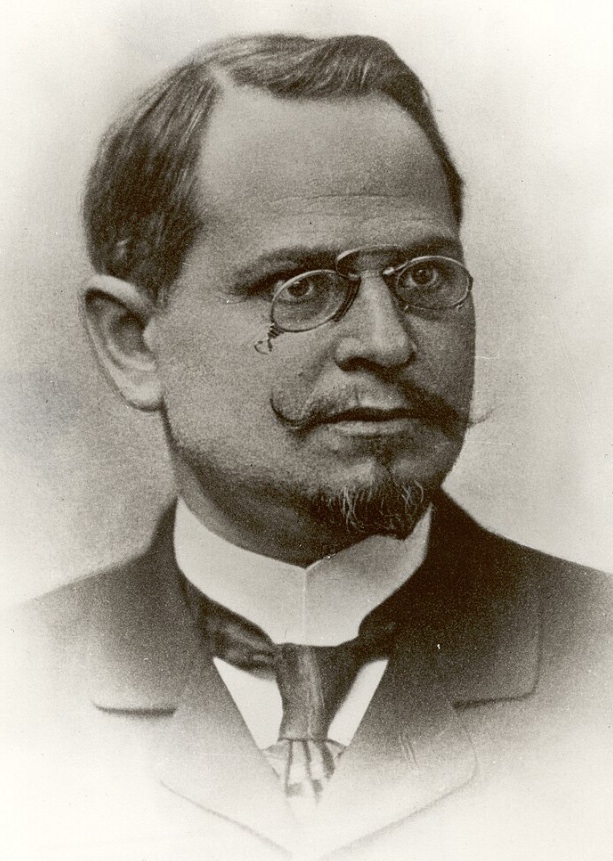
アロイス・リーグル
Alois Riegl, 1858-1905
☆アロイス・リーグル(1858年1月14日 - 1905年6月17日)は、オーストリアの美術史家であり、ウィーン美術史学派の一員と見なされている。美術史を独立した学問分野として確立した主要人物の一人であり、形式主義の最も影響力のある実践者の一人であった。
★リーグルは、芸術のあり方の変容と、鑑賞する人間の知覚様式の変容が密接に結びついていることを指摘した美学者の一人である(→ヴァルター・ベンヤミン「複製技術時代の芸術作品」)
| Alois
Riegl (14 January 1858 – 17 June 1905) was an Austrian art historian,
and is considered a member of the Vienna School of Art History. He was
one of the major figures in the establishment of art history as a
self-sufficient academic discipline, and one of the most influential
practitioners of formalism. |
アロイス・リーグル(1858年1月14日 - 1905年6月17日)は、オーストリアの美術史家であり、ウィーン美術史学派の一員と見なされている。美術史を独立した学問分野として確立した主要人物の一人であり、形式主義の最も影響力のある実践者の一人であった。 |
| Life Riegl studied at the University of Vienna, where he attended classes on philosophy and history taught by Franz Brentano, Alexius Meinong, Max Büdinger, and Robert Zimmerman, and studied connoisseurship on the Morellian model with Moritz Thausing. His dissertation was a study of the Jakobskirche in Regensburg, while his habilitation, completed in 1889, addressed medieval calendar manuscripts. In 1886, Riegl accepted a curatorial position at the k.k. Österreichisches Museum für Kunst und Industrie (today the Museum für angewandte Kunst) in Vienna, where he would work for the next ten years, eventually as director of the textile department. His first book, Altorientalische Teppiche (Antique oriental carpets) (1891), grew out of this experience. Riegl's reputation as an innovative art historian, however, was established by his second book, Stilfragen: Grundlegungen zu einer Geschichte der Ornamentik (Problems of style: foundations for a history of ornament) (1893). In this work Riegl sought to refute the materialist account of the origins of decorative motifs from, for example, the weaving of textiles, a theory that was associated with the followers of Gottfried Semper. Instead, Riegl attempted to describe a continuous and autonomous "history of ornament". To this end he followed certain ornamental motifs, such as the arabesque, from ancient near eastern through classical and up into early medieval and Islamic art, in the process developing the idea of a Kunstwollen (often translated as "will to art"). Riegl seems to have conceived the Kunstwollen as a historically contingent tendency of an age or a nation that drove stylistic development without respect to mimetic or technological concerns. Its proper interpretation, however, has itself been a subject of scholarly debate for over a century. In 1894, on the basis of the Stilfragen, Riegl was awarded an extraordinarius position at the University of Vienna, where he began to lecture on Baroque art, a period that was at the time considered merely as the decadent end of the Renaissance. In the meantime he became increasingly preoccupied with the relationship between stylistic development and cultural history, a concern that may indicate the growing influence of Karl Schnaase's work on his thought. This concern is particularly evident in two manuscripts that he prepared during this time, but were published only after his death as the Historische Grammatik der bildenden Künste (Historical grammar of the visual arts). In these manuscripts Riegl attempted to chart the entire history of western art as the record of a "contest with nature." This contest took different forms depending on the changing historical conceptions of nature by humans. In 1901, Riegl published a work that combined his interest in neglected, "transitional," periods with his endeavor to explain the relationship between style and cultural history. This took the form of a study of late antiquity. The Spätrömische Kunstindustrie (Late Roman art industry) (1901) was an attempt to characterize late antique art through stylistic analyses of its major monuments (for example, the Arch of Constantine) and also of such humble objects as belt buckles. The Kunstindustrie followed the lead of an earlier work by Riegl's colleague Franz Wickhoff, Die Wiener Genesis (1895), a study of late antique manuscript painting. The two books, taken together, were among the first to consider the aesthetic characteristics of late antique art on their own terms, and not as representing the collapse of classical standards. They also led to a controversy between Riegl and Wickhoff, on the one side, and Josef Strzygowski, on the other, concerning the origins of the late antique style. It has been argued, however, that the Kunstindustrie was conceived more as a philosophical justification of the concept of Kunstwollen than as a study of late antique art.[1] Indeed, one of Riegl's clearer definitions of the concept appears in the final chapter of the Kunstindustrie: All human will is directed toward a satisfactory shaping of man's relationship to the world, within and beyond the individual. The plastic Kunstwollen regulates man's relationship to the sensibly perceptible appearance of things. Art expresses the way man wants to see things shaped or colored, just as the poetic Kunstwollen expresses the way man wants to imagine them. Man is not only a passive, sensory recipient, but also a desiring, active being who wishes to interpret the world in such a way (varying from one people, region, or epoch to another) that it most clearly and obligingly meets his desires. The character of this will is contained in what we call the worldview (again in the broadest sense): in religion, philosophy, science, even statecraft and law.[2] Here all the main elements of Riegl's mature conception of the Kunstwollen are clearly expressed: its active nature, through which art becomes, not the imitation of reality, but the expression of a desired reality; its historical contingency; and its relation to other elements of "worldview." By means of this theoretical apparatus, Riegl could claim to penetrate to the essence of a culture or an era through formal analysis of the art that it produced. Riegl's final completed monograph, Das holländische Gruppenporträt (The group portraiture of Holland) (1902), focused on the Dutch baroque, and represented yet another shift in method. Here Riegl began to develop a theory of "attentiveness" to describe the relationship between the viewer of a work of art and the work itself. Riegl died from cancer three years later, at the age of 47. |
生涯 リーグルはウィーン大学で学び、フランツ・ブレンターノ、アレクシウス・マイノン、マックス・ビュディンガー、ロベルト・ツィンマーマンらの哲学と歴史の 講義を受講した。またモーリッツ・タウジングのもとでモレル流の鑑定術を修めた。博士論文はレーゲンスブルクのヤコブ教会に関する研究であり、1889年 に完成したハビリテーション論文は中世のカレンダー写本を扱った。 1886年、リーグルはウィーンのk.k.オーストリア美術工芸博物館(現・応用美術博物館)の学芸員職に就き、その後10年間勤務した。最終的には織物部門の部長となった。彼の最初の著作『古代オリエンタル絨毯』(1891年)はこの経験から生まれた。 しかし、リーグルが革新的な美術史家としての名声を確立したのは、第二作『様式問題:装飾史の基礎』(1893年)によってであった。この著作でリーグル は、装飾的モチーフの起源を織物技法など物質的要因に求める理論(ゴットフリート・ゼンパーの学派が提唱)を反駁しようとした。代わりにリーグルは、連続 的かつ自律的な「装飾の歴史」を描こうとしたのである。この目的のために、彼はアラベスクなどの特定の装飾モチーフを、古代近東から古典時代を経て、中世 初期やイスラム美術に至るまで追跡した。その過程で「芸術意志(Kunstwollen)」という概念を発展させた。リーグルは芸術意志を、模倣や技術的 な問題に関係なく様式の発展を推進する、時代や国民に内在する歴史的に偶発的な傾向として捉えていたようだ。しかしその適切な解釈は、それ自体が1世紀以 上にわたり学問的論争の対象となってきた。 1894年、『様式問題』を基にリーグルはウィーン大学で助教授の地位を得た。そこで彼は当時ルネサンスの退廃的終焉としか見なされていなかったバロック 美術について講義を始めた。その間、彼は様式の発展と文化史の関係にますます関心を深めていった。この関心は、カール・シュナーゼの著作が彼の思想に与え た影響の増大を示唆しているかもしれない。この関心は、この時期に準備された二つの原稿に特に顕著に表れているが、これらは彼の死後になって初めて『造形 芸術の歴史的文法』として出版された。これらの原稿でリーグルは、西洋美術の全歴史を「自然との闘い」の記録として描き出そうとした。この闘いは、人間に よる自然観の変化に応じて異なる形態をとったのである。 1901年、リーグルは軽視されてきた「過渡期」への関心と、様式と文化史の関係を解明しようとする試みを融合させた著作を発表した。それは古代末期研究 という形をとった。『古代末期美術産業』(1901年)は、主要な記念碑(例えばコンスタンティヌスの凱旋門)から、ベルトのバックルのような卑俗な品に 至るまで、様式分析を通じて古代末期美術を特徴づけようとする試みであった。この『芸術産業論』は、リーグルの同僚フランツ・ヴィックホフによる先行研究 『ウィーン起源論』(1895年)——後期古代写本絵画の研究——の流れを汲んでいた。両書は合わせて、後期古代美術を古典的規範の崩壊の表れとしてでは なく、それ自体としての美的特性を考察した最初の試みの一つであった。またこれらは、後期古代様式の起源をめぐる論争へと発展した。一方にリーグルと ヴィックホフ、他方にヨーゼフ・シュトリゴフスキーが対立したのである。 しかし『芸術産業論』は、後期古代美術の研究というより、むしろ「芸術意志」という概念の哲学的正当化として構想されたとの指摘もある[1]。実際、リーグルによるこの概念の明確な定義の一つは『芸術産業論』の最終章に現れている: あらゆる人間の意志は、個人の中およびその外において、人間と世界との関係を満足のいく形で形成することを目指している。造形的な芸術意志 (Kunstwollen)は、人間と感覚的に知覚可能な事物の外観との関係を規定する。芸術は、人間が事物にどのような形や色彩を与えたいと望むかを表 現する。同様に、詩的な芸術意志は、人間が事物にどのような想像を働かせたいと望むかを表現する。人間は受動的な感覚の受け手であるだけでなく、欲望に満 ちた能動的な存在でもある。つまり、世界が自らの欲望に最も明確かつ親切に応える形で解釈されることを望むのだ(その解釈は民族、地域、時代によって異な る)。この意志の性質は、我々が世界観と呼ぶもの(ここでも最も広い意味で)に内包されている。すなわち宗教、哲学、科学、さらには政治や法に至るまでで ある。[2] ここにリーグルの成熟した芸術意志(クンストヴォレン)概念の主要要素が明示されている:現実の模倣ではなく、望まれる現実の表現となる芸術の能動性、そ の歴史的偶然性、そして「世界観」の他要素との関係性である。この理論的枠組みにより、リーグルは各文化や時代が生み出した芸術の形式分析を通じて、その 本質に迫ると主張できたのである。 リーグルが最後に完成させた単行本『オランダの集団肖像画』(1902年)はオランダ・バロックに焦点を当て、方法論のさらなる転換を示した。ここでリーグルは、芸術作品の鑑賞者と作品自体の関係を記述する「注意深さ」の理論を展開し始めたのである。 リーグルは3年後に癌で死去した。享年47歳であった。 |
| Legacy Many of Riegl's unfinished works were published after his death, including Die Entstehung der Barockkunst in Rom (The development of Baroque art in Rome) and the Historische Grammatik der bildenden Künste (Historical grammar of the visual arts). Riegl had a robust following in Vienna, and certain of his students (the so-called Second Vienna School) attempted to develop his theories into a comprehensive art-historical method. In certain cases, such as that of the controversial Hans Sedlmayr, this led to unrestrained formalism. As a result, Riegl's stock declined, particularly in the American academy, and iconography was seen as a more responsible method. Riegl's Stilfragen remained influential throughout the twentieth century. Its terminology was introduced to English-language scholarship in particular by Paul Jacobsthal's work on Celtic art. Ernst Gombrich drew heavily on the Stilfragen, which he called "the one great book ever written about the history of ornament",[3] in his own study of The sense of order. At the turn of the twentieth century, Riegl had a significant impact on Otto Rank's seminal work, Art and Artist. Rank recognized the will-to-art as parallel to an idea he had been developing on creative urge and personality development. Riegl's work allowed Rank to apply the general problem of will to artistic expression across cultures where Rank found consistency for the individual will in a social ideology. Primitive, "ornamental" art, for example, uniquely represents a social belief in the abstract soul, and does not represent a lack of naturalism; it is an accurate presentation of the abstract in concrete form. Rank follows the development of art, which he believes contributes more than religion, in the humanization and concretization of the soul belief as classically displayed in nature and then man himself as the god. It is Riegl's emphasis on the historical context that initially inspires Rank to equally consider all forms of expression as a will-to-art. Wilhelm Worringer likewise mentions his debt to Riegl in terms of art theory, and what Worringer calls, "the urge to abstraction." Art history is not a progress of ability from primitive lack of skill, but is, in Riegl's terms, a history of volition. Clemena Antonova writes, "Worringer sides with Riegl in that relativist approach to art and maintains that, "what appears from our standpoint the greatest distortion, must have been, at the time, for its creator the highest beauty and expression of his artistic volition."[4] Rank cites Worringer as taking Riegl up to the verge of psychological insight where art forms can be interpreted parallel to forms of belief in the soul, and, indeed, Worringer coined the term "expressionism" which is the modern individual psychology of Rank's presentation under primitive abstraction, classical intuition, and modern expression. In the late twentieth century, the entirety of Riegl's work was revisited by scholars of diverse methodological persuasions, including post-structuralism and reception aesthetics. In retrospect a number of tendencies of Riegl's work seem to have foreshadowed the concerns of contemporary art history: his insistence that aesthetics be treated in historical context, and not in relation to an ideal standard; his interest in the "minor" arts; and his attention to the relationship between viewers and objects. |
レガシー リーグルの未完の著作の多くは死後に出版された。『ローマにおけるバロック美術の形成』や『造形美術の歴史的文法』などがそれにあたる。リーグルはウィー ンで強固な支持基盤を持ち、彼の教え子たち(いわゆる第二ウィーン学派)は彼の理論を包括的な美術史的方法へと発展させようとした。論争の的となったハン ス・ゼドルマイヤーのような場合、これは抑制のきかない形式主義へとつながった。結果として、リーグルの評価は低下し、特にアメリカの学界では、図像学が より責任ある方法と見なされるようになった。 リーグルの『様式問題』は20世紀を通じて影響力を保った。その用語体系は特にポール・ヤコブスタールのケルト美術研究を通じて英語圏の学界に導入され た。エルンスト・ゴンブリッチは自身の研究『秩序の感覚』において『様式問題』を「装飾の歴史について書かれた唯一の偉大な書物」と呼び、大きく依拠し た。 20世紀の変わり目、リーグルはオットー・ランクの画期的な著作『芸術と芸術家』に大きな影響を与えた。ランクは「芸術への意志」を、自身が創造的衝動と 個人的形成について展開していた思想と並行するものとして認識した。リーグルの著作により、ランクは「意志」という普遍的問題を芸術表現に適用し、個々の 意志が社会的イデオロギーにおいて一貫性を見出す文化圏を横断して考察することが可能となった。例えば原始的な「装飾的」芸術は、抽象的な魂に対する社会 的信念を独自に表現しており、自然主義の欠如を示すものではない。それは抽象を具体的な形で正確に提示しているのだ。ランクは芸術の発展を追跡し、宗教以 上に、自然の中に古典的に示され、やがて人間自身を神として表現される魂の信念を、人間化し具体化する役割を果たすと考えた。ランクがあらゆる表現形態を 「芸術への意志」として等しく考察するきっかけとなったのは、リーグルの歴史的文脈への強調であった。 ヴィルヘルム・ヴォリンガーもまた、芸術理論と彼が「抽象化への衝動」と呼ぶ概念においてリーグルへの負債を認めている。美術史は原始的な未熟さからの技 術的進歩ではなく、リーグルの言うところの「意志の歴史」である。クレメナ・アントノヴァはこう記す。「ヴォリンガーは美術への相対主義的アプローチにお いてリーグルと同調し、『我々の視点では最大の歪みに見えるものも、当時その創造者にとっては芸術的意志の最高の美と表現であったに違いない』と主張す る」 [4] ランクは、ヴォリンガーがリーグルの思想を心理学的洞察の限界まで発展させたと指摘する。そこでは芸術形態が魂における信仰形態と並行して解釈されうる。 実際、ヴォリンガーは「表現主義」という用語を創出した。これはランクが原始的抽象、古典的直観、現代的表現として提示した現代的個人心理学に相当する。 二十世紀後期には、ポスト構造主義や受容美学など多様な方法論的立場を持つ学者たちによって、リーグルの著作全体が再検討された。振り返ってみると、リー グルの著作には現代美術史の関心事を予見する傾向がいくつか見られる。すなわち、美学を理想的な基準との関係ではなく歴史的文脈で扱うべきだという主張、 「マイナー」な芸術への関心、そして鑑賞者と対象の関係性への注目である。 |
| Notes 1. J. Elsner: "From empirical evidence to the big picture: some reflections on Riegl's concept of Kunstwollen," Critical Inquiry 32 (2006), 741-66. 2. Tr. C.S. Wood: The Vienna School reader: politics and art historical method in the 1930s (New York, 2000), 94-95 3. E.H. Gombrich, The sense of order (London, 1984), 182 4. Worringer, Abstraction and Empathy, p.14 |
注 1. J. エルスナー:「経験的証拠から大局へ:リーグルの『芸術意志』概念に関する考察」『クリティカル・インクワイアリー』32号(2006年)、741-766頁。 2. C.S.ウッド訳:『ウィーン学派読本:1930年代の政治と美術史的方法』(ニューヨーク、2000年)、94-95頁 3. E.H.ゴンブリッチ『秩序の感覚』(ロンドン、1984年)、182頁 4. ヴォリンガー『抽象と共感』、14頁 |
| Works The most complete bibliographies of Riegl's work are found in K.M. Swoboda, ed., Gesammelte Aufsätze (Augsburg, 1929), xxxv-xxxix; Collected Essays (Riverside, 2023), 43-66; and E.M. Kain and D. Britt, tr., The Group Portraiture of Holland (Los Angeles, 1989), 384-92. The following list includes only monographs, book-length works, and collections, arranged by date of publication. Die ägyptischen Textilfunde im Österr. Museum (Vienna, 1889). Altorientalische Teppiche (Leipzig, 1891). Stilfragen (Berlin, 1893). Tr. E. Kain, Problems of style (Princeton, 1992). Volkskunst, Hausfleiß, und Hausindustrie (Berlin, 1894). Ein orientalischer Teppich vom Jahre 1202 (Berlin, 1895). Die spätrömische Kunstindustrie nach den Funden in Österreich-Ungarn (Vienna, 1901). Tr. R. Winkes, Late Roman art industry (Rome, 1985). "Das holländische Gruppenporträt," Jahrbuch des allerhöchsten Kaiserhauses 22 (1902), 71-278. Tr. E.M. Kain and D. Britt, The Group Portraiture of Holland (Los Angeles, 1999, fully available online Der moderne Denkmalkultus, sein Wesen, seine Entstehung (Vienna, 1903). Tr. K. W. Forster and D. Ghirardo, “The modern cult of monuments: its character and origin,” Oppositions 25 (1982), 20-51. Die Entstehung der Barockkunst in Rom: Vorlesungen aus 1901–1902, ed. A. Burda and M. Dvořák (Vienna, 1908). Gesammelte Aufsätze, ed. K.M. Swoboda (Augsburg, 1929). Tr. Karl Johns, Collected Essays (Riverside, California: Ariadne Press, 2023). Historische Grammatik der bildenden Künste, ed. K.M. Swoboda and O. Pächt (Graz, 1966). Tr. J.E. Jung, Historical grammar of the visual arts (New York, 2004). |
著作 リーグルの著作に関する最も完全な書誌は、K.M.スヴォボダ編『論文集』(アウクスブルク、1929年)xxxv-xxxix頁に収録されている。 『Collected Essays』(リバーサイド、2023年)、43-66頁;E.M. カインとD. ブリット訳『The Group Portraiture of Holland』(ロサンゼルス、1989年)、384-92頁。以下のリストには単行本、書籍規模の著作、および著作集のみを掲載し、出版年順に並べて いる。 オーストリア博物館所蔵エジプト織物遺物(ウィーン、1889年)。 古代オリエント絨毯(ライプツィヒ、1891年)。 様式論(ベルリン、1893年)。英訳:E. Kain『様式の問題』(プリンストン、1992年)。 『民芸、家庭手工業、および家庭産業』(ベルリン、1894年)。 『1202年製オリエンタル絨毯』(ベルリン、1895年)。 『オーストリア=ハンガリー出土品に見る後期ローマ美術工芸』(ウィーン、1901年)。R.ウィンケス訳『後期ローマ美術工芸』(ローマ、1985年)。 「オランダの集団肖像画」『最高帝室年鑑』22号(1902年)、71-278頁。英訳:E.M.ケイン、D.ブリット共訳『オランダの集団肖像画』(ロサンゼルス、1999年、全文オンライン公開) 近代記念碑崇拝、その本質と起源(ウィーン、1903年)。K. W. フォースターとD. ギラルド訳、「近代記念碑崇拝:その特徴と起源」、『オポジションズ』25号(1982年)、20-51頁。 『ローマにおけるバロック美術の形成:1901-1902年講義録』A. ブルダ、M. ドヴォルザーク編(ウィーン、1908年)。 『論文集』K.M. スヴォボダ編(アウクスブルク、1929年)。カール・ジョンズ訳『論文集』(カリフォルニア州リバーサイド:アリアドネ出版社、2023年)。 『造形芸術の歴史的文法』、K.M.スヴォボダとO.ペヒト編(グラーツ、1966年)。J.E.ユング訳『造形芸術の歴史的文法』(ニューヨーク、2004年)。 |
| Bibliography Monographs M. Gubser: Time's visible surface: Alois Riegl and the discourse on history and temporality in fin-de-siècle Vienna (Detroit, 2006). M. Iversen: Alois Riegl: art history and theory (Cambridge, 1993). M. Olin: Forms of representation in Alois Riegl's theory of art (University Park, 1992). P. Noever: A. Rosenauer and G. Vasold (eds): Alois Riegl Revisited: Beiträge zu Werk und Rezeption – Contributions to the Opus and its Reception. (Wien, 2010). M. Podro: The critical historians of art (New Haven, 1984). M. Rampley: The Vienna School of Art History. Empire and the Politics of Scholarship, 1847–1918 (University Park, 2013) A. Reichenberger: Riegls “Kunstwollen”: Versuch einer Neubetrachtung (Sankt Augustin, 2003) Diana Reynolds Cordileone: Alois Riegl in Vienna 1875–1905: An Institutional Biography. (Farnham: Ashgate, 2014.) ISBN 978-1-4094-6665-9 S. Scarrocchia: Oltre la storia dell’arte: Alois Riegl, vita e opere di un protagonisto della cultura viennese (Milan, 2006). G. Vasold: Alois Riegl und die Kunstgeschichte als Kulturgeschichte: Überlegungen zum Frühwerk des Wiener Gelehrten (Freiburg, 2004). C.S. Wood (ed.): The Vienna School reader: politics and art historical method in the 1930s (New York, 2000). Richard Woodfield (ed.): Framing formalism: Riegl's work (Amsterdam, 2001). Articles B. Binstock, “Postscript: Alois Riegl in the presence of ‘The Nightwatch’,” October 74 (1995), 3644. R. Casetti, "Vom Nutzen und Nachteil der Historie im modernen Denkmalkultus. Der Einfluss von Friedrich Nietzsche auf Alois Riegl.", Österreichische Zeitschrift für Kunst und Denkmalpflege, Heft 1 LXII 2008. P. Crowther, “More than ornament: the significance of Riegl,” Art History 17 (1994), 482–94. G. Dolff-Bonekämper, "Gegenwartswerte. Für eine Erneuerung von Alois Riegls Denkmalwerttheorie". In: Hans-Rudolf Meier und Ingrid Scheurmann (eds.). DENKmalWERTE. Beiträge zur Theorie und Aktualität der Denkmalpflege. Georg Mörsch zum 70. Geburtstag. Deutscher Kunstverlag, Berlin, München 2010, ISBN 978-3-422-06903-9, 27–40. J. Elsner, “The birth of late antiquity: Riegl and Strzygowski in 1901,” Art History 25 (2002), 358–79. J. Elsner, “From empirical evidence to the big picture: some reflections on Riegl's concept of Kunstwollen,” Critical Inquiry 32 (2006), 741–66. Michael Falser, "Denkmalpflege zwischen europäischem Gedächtnis und nationaler Erinnerung – Riegls Alterswert und Kulturtechniken der Berliner Nachwendezeit." In: Csàky, M., Großegger, E. (Eds) Jenseits von Grenzen. Transnationales , translokales Gedächtnis. Vienna 2007, 75–93. Michael Falser, "Zum 100. Todesjahr von Alois Riegl. Der Alterswert als Beitrag zur Konstruktion staatsnationaler Identität in der Habsburg-Monarchie um 1900 und seine Relevanz heute. In: Österreichische Zeitschrift für Kunst- und Denkmalpflege, Wien. (LIX, 2005) Heft 3/4, 298–311. M. Ghilardi, Alle origini del dibattito sulla nascita dell’arte tardoantica. Riflessi nella critica italiana, in MEDITERRANEO ANTICO V, 1, 2002, pp. 117–146. M. Ghilardi - F. Zevi, Echi di Riegl nella critica italiana, in Alois Riegl (1858–1905) un secolo dopo, Atti del Convegno Internazionale di Studi, Roma 30 Novembre / 1-2 Dicembre 2005, Accademia Nazionale dei Lincei, Atti dei Convegni Lincei 236, Roma 2008, pp. 219–237. W. Kemp, “Alois Riegl,” in H. Dilly, ed., Altmeister der Kunstgeschichte (Berlin, 1990), 37–60. M. Olin, “Alois Riegl: The late Roman Empire in the late Habsburg Empire,” Austrian Studies 5 (1994), 107–20. O. Pächt, “Alois Riegl,” Burlington Magazine 105 (1963), 190–91. E. Panofsky, “Der Begriff des Kunstwollens,” Zeitschrift für Ästhetik und allgemeine Kunstwissenschaft 14 (1920). Reprinted in H. Oberer and E. Verheyen, eds., Aufsätze zu Grundfragen der Kunstwissenschaft (Berlin, 1974). Tr. K.J. Northcott and J. Snyder, “The concept of artistic volition,” Critical Inquiry 8 (1981), 17–33. M. Rampley, “Spectatorship and the historicity of art: re-reading Alois Riegl's Historical grammar of the fine arts,” Word and Image 12 (1996), 209–17. M. Rampley, "Subjectivity and modernism. Riegl and the rediscovery of the Baroque," in Richard Woodfield, ed., Framing Formalism. Riegl's Work (Amsterdam, 2000) 265-90. M. Rampley, "Art history and the politics of empire. Re-thinking the Vienna School," Art Bulletin 91.4 (2009), 447–63. W. Sauerländer, “Alois Riegl und die Enstehung der autonomen Kunstgeschichte am Fin-de-Siècle,” in R. Bauer et al., eds., Fin-de-Siècle: zu Literatur und Kunst der Jahrhundertwende (Frankfurt, 1977), 125–39. Céline Trautmann-Waller: "Alois Riegl (1858–1905)". In: Michel Espagne and Bénédicte Savoy (eds.). Dictionnaire des historiens d'art allemands. CNRS Editions, Paris 2010, ISBN 978-2-271-06714-2, pp. 217–228; 405. H. Zerner, “Alois Riegl: art, value, and historicism,” Daedalus 105 (1976), pp. 177–88. |
参考文献 単行本 M. グブサー:『時間の可視的表面:アロイス・リーグルと世紀末ウィーンにおける歴史と時間性の言説』(デトロイト、2006年)。 M. アイバーセン:『アロイス・リーグル:美術史と理論』(ケンブリッジ、1993年)。 M. オリン:『アロイス・リーグルの美術理論における表象の形態』(ユニバーシティ・パーク、1992年)。 P. ノイヴァー:A. ローゼナウアー、G. ヴァゾルト(編):『アロイス・リーグル再考:作品と受容への寄稿』(ウィーン、2010年)。 M. ポドロ:『美術史の批判的歴史家たち』(ニューヘイブン、1984年)。 M. ランプレイ:『ウィーン美術史学派。帝国と学問の政治、1847–1918』(ユニバーシティ・パーク、2013年) A. ライヒェンベルガー:『リーグルの「芸術意志」:新たな考察の試み』(ザンクト・アウグスティン、2003年) ダイアナ・レイノルズ・コルディレオーネ:『ウィーンにおけるアロイス・リーグル 1875–1905:制度的伝記』(ファーンハム:アッシュゲート、2014年)ISBN 978-1-4094-6665-9 S. スカロッチャ:『美術史を超えて:ウィーン文化の主人公アロイス・リーグルの生涯と業績』(ミラノ、2006年) G. ヴァゾルト:『アロイス・リーグルと文化史としての美術史:ウィーンの学者の初期著作に関する考察』(フライブルク、2004年) C.S. ウッド編:『ウィーン学派読本:1930年代の政治と美術史的方法』(ニューヨーク、2000年)。 リチャード・ウッドフィールド編:『形式主義の枠組み:リーグルの業績』(アムステルダム、2001年)。 論文 B. ビンストック「追記:『夜警』の眼前に立つアロイス・リーグル」『オクトーバー』74号(1995年)、3644頁。 R. カゼッティ「近代記念碑崇拝における歴史の利点と欠点。フリードリヒ・ニーチェがアロイス・リーグルに与えた影響」 オーストリア美術・文化財保護雑誌、第62巻第1号、2008年。 P. クロウザー、「装飾以上のもの:リーグルの意義」、『美術史』17号(1994年)、482–94頁。 G. ドルフ=ボネカンプ、「現代的価値。アロイス・リーグルの文化財価値理論の刷新に向けて」。収録:ハンス=ルドルフ・マイヤー、イングリッド・シェールマ ン編『記念物の価値。記念物保護の理論と現代性に関する論考。ゲオルク・メルシュ70歳記念』ドイツ美術出版社、ベルリン・ミュンヘン、2010年、 ISBN 978-3-422-06903-9、27–40頁。 J. エルスナー、『古代末期の誕生:1901年のリーグルとシュトリゴフスキー』、『美術史』25号(2002年)、358–79頁。 J. エルスナー、「経験的証拠から大局へ:リーグルの『芸術的意志』概念に関する考察」、『クリティカル・インクワイアリー』32号(2006年)、 741–66頁。 Michael Falser, 「Denkmalpflege zwischen europäischem Gedächtnis und nationaler Erinnerung – Riegls Alterswert und Kulturtechniken der Berliner Nachwendezeit.」 In: Csàky, M., Großegger, E. (Eds) Jenseits von Grenzen. Transnationales , translokales Gedächtnis. Vienna 2007, 75–93. Michael Falser, 「Zum 100. Todesjahr von Alois Riegl. Der Alterswert als Beitrag zur Konstruktion staatsnationaler Identität in der Habsburg-Monarchie um 1900 und seine Relevanz heute.」 In: Österreichische Zeitschrift für Kunst- und Denkmalpflege, Wien. (LIX, 2005) Heft 3/4, 298–311. M. ギラルディ、「後期古代芸術の誕生をめぐる論争の起源。イタリア批評への反映」、『古代地中海 V』第1号、2002年、117–146頁。 M. Ghilardi - F. ゼヴィ、「イタリア批評におけるリーグルの反響」、『アロイス・リーグル(1858–1905)没後一世紀』国際研究会議記録、ローマ2005年11月 30日/12月1–2日、リンチェイ国立アカデミー、リンチェイ会議記録236、ローマ2008年、 pp. 219–237. W. ケンプ、「アロイス・リーグル」、H. ディリー編『美術史の巨匠たち』(ベルリン、1990年)、37–60頁。 M. オリン「アロイス・リーグル:ハプスブルク帝国末期におけるローマ帝国末期」『オーストリア研究』5号(1994年)、107–20頁。 O. ペヒト「アロイス・リーグル」『バーリントン・マガジン』105号(1963年)、190–91頁。 E. パノフスキー「芸術的意志の概念」『美学と一般芸術学雑誌』14号(1920年)。H. オーベラー、E. ファーヘイエン編『芸術学基礎問題論集』(ベルリン、1974年)に再録。K.J. ノースコットとJ. スナイダー訳「芸術的意志の概念」『クリティカル・インクワイアリー』8号(1981年)、17–33頁。 M. ランプレイ「鑑賞者と芸術の歴史性:アロイス・リーグル『美術の歴史的文法』の再読」『ワード・アンド・イメージ』12号(1996年)、 209–17頁。 M. ランプレイ、「主体性とモダニズム。リーグルとバロックの再発見」、リチャード・ウッドフィールド編『形式主義の枠組み。リーグルの業績』(アムステルダム、2000年)265-90頁。 M. ランプレイ、「美術史と帝国の政治学。ウィーン学派の再考」、『アート・ブルティン』91巻4号(2009年)、447–63頁。 W. ザウアーレンダー「アロイス・リーグルと世紀末における自律的美術史の誕生」R. バウアー他編『世紀末:世紀転換期の文学と芸術』(フランクフルト、1977年)125–39頁。 セリーヌ・トラウトマン=ワラー:「アロイス・リーグル(1858–1905)」。ミシェル・エスパーニュ、ベネディクト・サヴォワ編『ドイツ美術史家辞 典』所収。CNRSエディションズ、パリ、2010年、ISBN 978-2-271-06714-2、217–228頁、405頁。 H. ツェルナー「アロイス・リーグル:芸術、価値、そして歴史主義」『ダイダロス』105号(1976年)、177–188頁。 |
| https://en.wikipedia.org/wiki/Alois_Riegl |
|
リ ンク
文 献
そ の他の情報
CC
Copyleft,
CC, Mitzub'ixi Quq Chi'j, 1996-2099