フォレンジック・アーキテクチャー
(法医学的/法廷的/法解析的建築術)
Forensic Architecture
☆Forensic Architecture(法医学的/法廷的/法解析的建築)
フォ レンジック・アーキテクチャー[Forensic Architecture] は、ロンドン大学ゴールドスミス校を拠点とする学際的研究グループである。建築技術とテクノロジーを用いて、世界中の国家による暴力や人権侵害の事例を調 査する。このグループは建築家エイアル・ワイズマンが率いている[1]。彼はフォレンジック・アーキテクチャーでの活動により、2021年にピーボディ賞 を受賞した。この機関は新たな証拠収集技術を開発し、国家暴力の影響を受けたコミュニティと共に、あるいはその代理として、高度な建築・メディア研究 [2]を実施して いる。国際検察機関、人権団体、政治・環境正義団体との連携も日常的に行っている[3]。調査チームは建築家、学者、芸術家、映像作家、ソフトウェア開発 者、調査報道記者、考古学者、弁護士、科学者など多分野の専門家で構成される。市民社会団体に代わって国家や企業による人権侵害疑惑を調査する[4]。同 団体は先進的な建築・メディア技術を用いて武力紛争や環境破壊を調査し、新メディア、リモートセンシング、物質分析、証言など多様な証拠源を相互参照する [5]。[6]「フォレンジック・アーキテクチャー」という用語は、ロンドン大学ゴールドスミス校の建築研究センターで発展した学術分野および新興実践分 野を指すこともある。これは建築物や都市環境、それらのメディア表現に関連する建築的証拠の生成と提示に関するものである。[2]
| Forensic
Architecture is a multidisciplinary research group based at
Goldsmiths, University of London that uses architectural techniques and
technologies to investigate cases of state violence and violations of
human rights around the world. The group is led by architect Eyal
Weizman.[1] He received a Peabody Award in 2021 for his work with
Forensic Architecture. The agency develops new evidentiary techniques and undertakes advanced architectural and media research[2] with and on behalf of communities affected by state violence, and routinely works in partnership with international prosecutors, human rights organisations and political and environmental justice groups.[3] It consists of an interdisciplinary team of investigators including architects, scholars, artists, filmmakers, software developers, investigative journalists, archaeologists, lawyers, and scientists. It investigates alleged human rights violations by states or corporations on behalf of civil society groups.[4] The group uses advanced architectural and media techniques to investigate armed conflicts and environmental destruction, as well as to cross-reference a variety of evidence sources, such as new media, remote sensing, material analysis, and witness testimony.[5][6] The term forensic architecture also refers to an academic field and an emergent field of practice developed at the Centre for Research Architecture, at Goldsmiths, University of London, concerning the production and presentation of architectural evidence, relating to buildings and urban environments and their media representations.[2] |
フォレンジック・アーキテクチャー[Forensic
Architecture]は、ロンドン大学ゴールドスミス校を拠点とする学際的研究グループである。建築技術とテクノロジーを用いて、世界中の
国家による暴力や人権侵害の事例を調査する。このグループは建築家エイアル・ワイズマンが率いている[1]。彼はフォレンジック・アーキテクチャーでの活
動により、2021年にピーボディ賞を受賞した。 この機関は新たな証拠収集技術を開発し、国家暴力の影響を受けたコミュニティと共に、あるいはその代理として、高度な建築・メディア研究[2]を実施して いる。国際検察機関、人権団体、政治・環境正義団体との連携も日常的に行っている[3]。調査チームは建築家、学者、芸術家、映像作家、ソフトウェア開発 者、調査報道記者、考古学者、弁護士、科学者など多分野の専門家で構成される。市民社会団体に代わって国家や企業による人権侵害疑惑を調査する[4]。同 団体は先進的な建築・メディア技術を用いて武力紛争や環境破壊を調査し、新メディア、リモートセンシング、物質分析、証言など多様な証拠源を相互参照する [5]。[6] 「フォレンジック・アーキテクチャー」という用語は、ロンドン大学ゴールドスミス校の建築研究センターで発展した学術分野および新興実践分野を指すことも ある。これは建築物や都市環境、それらのメディア表現に関連する建築的証拠の生成と提示に関するものである。[2] |
History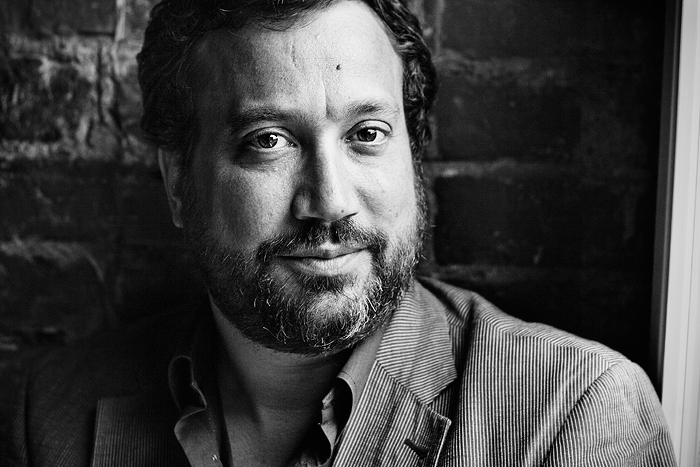 Eyal Weizman, the founder of Forensic Architecture, in 2012 Forensic Architecture was formed in 2010 as a research project within the Centre for Research Architecture at Goldsmiths, University of London.[7] The project developed as a response to several converging phenomena, such as the urbanisation of warfare, the erosion of trust in evidence in relation to state crimes and human rights violations, the emergence and proliferation of open source media (or 'image flotsam'), the increased use of smartphone footage in documenting human rights violations in urban conflict, and the need for civil society to have its own means of evidence production for application in law, politics and advocacy.[8] The first project undertaken by Forensic Architecture was an investigation into the killing of Bassem Abu Rahma in Bil'in, for human rights lawyer and activist Michael Sfard, which was eventually presented to the Supreme Court of Israel.[9][10] In 2011, Forensic Architecture was awarded funding for four years by the European Research Council.[11] Also that year, a team within Forensic Architecture began to conduct investigations into the policies of European national and international authorities in relation to migration across the Mediterranean. That team, called Forensic Oceanography,[12] published its first report in 2012, investigating of the deaths of seventy-three migrants who were left drifting for two weeks within NATO's maritime surveillance area.[13] In 2012, Forensic Architecture presented a report to a meeting of states party to the UN Convention on Certain Conventional Weapons on the use of airburst white phosphorus munitions in urban environments, in regard to the Israeli attacks on Gaza in December 2008 and January 2009, known as 'Operation Cast Lead'. The report eventually led Israel to admit for the first time the use of such munitions, and later to declare that the IDF would stop using white phosphorus munitions in populated areas.[14] Also that year, the agency conducted an investigation with SITU Studio and the Bureau of Investigative Journalism titled 'Where the Drones Strike', on behalf of the UN Special Rapporteur on Counter Terrorism and Human Rights, Ben Emmerson.[15] In 2013, the project was awarded a second European Research Council grant[16] to develop a multimedia data-aggregation and -visualisation platform called Pattrn. Pattrn enables its users to anonymously collate and share first-hand reports of events 'on the ground' and to make sense of information by combining and visualising different forms of media and information.[17] The tool was employed by Forensic Architecture in their Gaza Platform, an interactive map of attacks by Israeli forces on Gaza between 8 July and 26 August 2014, developed in partnership with Amnesty International,[18] as well as by organisations including as ACLED. In 2015, in partnership with Amnesty International, Forensic Architecture collected and analysed mobile phone footage of hundreds of explosions in the city of Rafah, Gaza, during the city's 'Black Friday' of 1 August 2014. By analysing the shape and movement of bomb clouds captured in mobile phone footage, Forensic Architecture's researchers located and mapped hundreds of Israeli strikes on the city.[19] The investigation exposed the Israeli military directive known as the Hannibal Directive, leading to its discontinuation.[20] In 2016, Forensic Architecture was awarded further funding by the European Research Council.[21] That year, again in partnership with Amnesty International, Forensic Architecture conducted an investigation into Syria's Saydnaya Prison, interviewing surviving detainees who had been blindfolded or kept in darkness for most of the years they had spent in the space, and reconstructing the dimensions of the prison through a process of 'ear witnessing' and digital modelling.[22] In 2017, Forensic Architecture produced a video investigation into the presence of a member of the German intelligence services at the scene of the 2006 killing by neo-Nazis of a Turkish internet cafe owner. Forensic Architecture conducted physical experiments which cast doubt on the testimony of the secret service agent.[5] The results of their video and written reports were ultimately referenced in both federal and state parliamentary inquiries in Germany, as well as the trial of the remaining NSU members in Munich.[23] In April 2018, it was announced that Forensic Architecture were one of four nominees for the 2018 Turner Prize for their work relating to the killing of Yacoub Abu Al-Qia'an in Umm al-Hiran, but ultimately they lost out to iPhone artist Charlotte Prodger.[24][25][26][27] In May 2018, in partnership with Bellingcat and Venezuelan journalists, Forensic Architecture collected, timed, and located nearly 70 pieces of evidence related to the El Junquito raid, including videos, photographs, leaked audio of police radio communications and official statements, asking for more material to determine if rebel police officer Óscar Pérez and his companions were victims of extrajudicial killings.[28][29][30][31] Fellows and PhD students who have been part of the Forensic Architecture programme include Susan Schuppli, John Palmesino, Lorenzo Pezzani and Charles Heller (co-founders of the Forensic Oceanography project), Lawrence Abu Hamdan,[32] Anselm Franke,[33] Ayesha Hameed, Thomas Keenan, Paulo Tavares, Francesco Sebregondi, Maayan Amir, Ariel Caine and Stefanos Levidis. In 2019 as part of the Whitney Biennial, the group created a video piece critical of Whitney trustee member Warren Kanders. The video detailed Kanders' involvement in a company that produces tear gas used against nonviolent democratic protestors across the world.[34] Kanders resigned from his position as Whitney board member shortly after the exhibition opened.[35] In October 2024, after monitoring and analysing Israel's war conduct in Gaza for more than a year, the group published a map detailing Israel's campaign in Gaza titled "A Cartography of Genocide",[36] accompanied by an 827-page text report that concludes that "Israel's military campaign in Gaza is organised, systematic, and intended to destroy conditions of life and life-sustaining infrastructure".[37] In 2024 Forensic Architecture received a Right Livelihood Award for its lead in the development of new methodologies that combine technology with human rights advocacy.[38] |
歴史 フォレンジック・アーキテクチャー創設者、エイアル・ワイズマン(2012年) フォレンジック・アーキテクチャーは2010年、ロンドン大学ゴールドスミス校の建築研究センター内における研究プロジェクトとして発足した。[7] このプロジェクトは、戦争の都市化、国家犯罪や人権侵害に関する証拠への信頼の喪失、オープンソースメディア(いわゆる「画像漂流物」)の出現と拡散、都 市紛争における人権侵害の記録にスマートフォン映像がますます使われるようになったこと、そして市民社会が法・政治・アドボカシーに応用できる独自の証拠 作成手段を持つ必要性といった、いくつかの現象が重なったことへの対応として発展した。[8] フォレンジック・アーキテクチャーが最初に着手したプロジェクトは、人権弁護士兼活動家マイケル・スファードのために、ビルインにおけるバセム・アブ・ ラーマ殺害事件を調査するものであった。この調査結果は最終的にイスラエル最高裁判所に提出された。[9][10] 2011年、フォレンジック・アーキテクチャーは欧州研究評議会から4年間の資金援助を受けた。[11] 同年、フォレンジック・アーキテクチャー内のチームが地中海横断移民に関する欧州各国及び国際機関の政策調査を開始した。フォレンジック・オーシャノグラ フィー[12]と名付けられたこのチームは2012年、NATO海上監視区域内で2週間漂流した末に死亡した73名の移民に関する初の報告書を発表した。 [13] 2012年、フォレンジック・アーキテクチャーは国連特定通常兵器使用禁止条約締約国会議に対し、2008年12月~2009年1月のイスラエルによるガ ザ攻撃(通称「鋳造の鉛作戦」)における都市環境での空中爆発型白リン弾使用に関する報告書を提出した。この報告書は最終的に、イスラエルが初めて同弾薬 の使用を認める結果をもたらし、後にイスラエル国防軍(IDF)が人口密集地域での白リン弾使用を停止すると宣言するに至った[14]。また同年、同機関 はSITU Studioおよび調査報道局(BIJ)と共同で、国連テロ対策・人権特別報告官ベン・エマーソンに代わって『ドローン攻撃の現場』と題する調査を実施し た。[15] 2013年、同プロジェクトは欧州研究評議会から2度目の助成金[16]を獲得し、マルチメディアデータ集約・可視化プラットフォーム「パターン」を開発 した。パターンの利用者は匿名で現地の直接報告を収集・共有でき、異なるメディアや情報を統合・可視化することで情報の理解を深められる。[17] このツールは、フォレンジック・アーキテクチャーがアムネスティ・インターナショナル[18]と共同開発した「ガザ・プラットフォーム」で採用された。こ れは2014年7月8日から8月26日にかけてイスラエル軍がガザ地区で実施した攻撃をインタラクティブマップ化したものである。またACLEDなどの組 織でも使用されている。 2015年、フォレンジック・アーキテクチャーはアムネスティ・インターナショナルと共同で、2014年8月1日のガザ・ラファ市における「ブラックフラ イデー」と呼ばれる日に発生した数百件の爆発の携帯電話映像を収集・分析した。携帯電話映像に捉えられた爆風雲の形状と動きを分析することで、フォレン ジック・アーキテクチャーの研究者は同市に対する数百件のイスラエル軍攻撃の位置を特定し地図化した[19]。この調査により「ハンニバル指令」として知 られるイスラエル軍の指令が暴露され、その廃止につながった[20]。 2016年、フォレンジック・アーキテクチャーは欧州研究評議会から追加資金を獲得した[21]。同年、再びアムネスティ・インターナショナルと提携し、 シリアのサイドゥナヤ刑務所に関する調査を実施。同施設で過ごした期間の大半を目隠しされたり暗闇に閉じ込められたりした生存者被拘禁者への聞き取りを行 い、「耳の証言」とデジタルモデリングの手法で刑務所の構造を再構築した。[22] 2017年、フォレンジック・アーキテクチャーは、2006年にネオナチによってトルコ人インターネットカフェ経営者が殺害された現場にドイツ情報機関員 が立ち会っていた事実を検証する映像調査を制作した。同団体は物理実験を実施し、この諜報員の発言に疑念を投げかけた。[5] 彼らのビデオおよび報告書は、最終的にはドイツ連邦議会および州議会の調査、ならびにミュンヘンで行われた残りの NSU メンバーたちの裁判で参考資料として採用された。[23] 2018年4月、フォレンジック・アーキテクチャーは、ウム・アル・ヒランでのヤクブ・アブ・アル・キアアン殺害事件に関する作品で、2018年ターナー 賞の4人の候補者の1人に選ばれたが、最終的にはiPhoneアーティストのシャーロット・プロジャーに敗れた。[24][25][26][27] 2018年5月、ベリングキャットおよびベネズエラのジャーナリストと提携し、フォレンジック・アーキテクチャーは、エル・ジュンキート襲撃に関連する 70点近くの証拠(ビデオ、写真、警察無線通信の漏洩音声、公式声明など)を収集、時系列整理、位置特定し、反乱警察官オスカル・ペレスとその仲間たちが 超法規的殺害の犠牲者であったかどうかを判断するためのさらなる資料を要請した。[28][29][30] [31] フォレンジック・アーキテクチャー・プログラムに参加したフェローおよび博士課程学生には、スーザン・シュプリ、ジョン・パルメシーノ、ロレンツォ・ペッ ツァーニ、チャールズ・ヘラー(フォレンジック・オーシャノグラフィー・プロジェクト共同創設者)、ローレンス・アブ・ハムダン[32]、アンセルムス・ フランケ、 [33] アイシャ・ハミード、トーマス・キーナン、パウロ・タヴァレス、フランチェスコ・セブレゴンディ、マヤン・アミール、アリエル・ケイン、ステファノス・レ ヴィディスらが名を連ねている。 2019年、ホイットニー・ビエンナーレの一環として、同グループはホイットニー理事ウォーレン・カンダースを批判する映像作品を制作した。この映像は、 カンダースが世界中の非暴力民主主義抗議者に対して使用される催涙ガスを製造する企業に関与している実態を詳細に描いたものである[34]。カンダースは 展覧会開幕直後にホイットニー理事の職を辞任した[35]。 2024年10月、イスラエルのガザ戦争行動を1年以上監視・分析した後、同グループは「ジェノサイドの地図」と題したガザ作戦の詳細地図[36]を公表 した。これには827ページに及ぶ報告書が添付され、「イスラエルのガザ軍事作戦は組織的・体系的に行われ、生活基盤と生命維持インフラの破壊を意図して いる」と結論づけている。[37] 2024年、フォレンジック・アーキテクチャーは、技術と人権擁護を融合させる新たな手法の開発における主導的役割が評価され、ライト・リヴィリフッド賞 を受賞した。[38] |
| Methods Forensic Architecture describes forensic work as operating across three spaces: the field, the laboratory, and the forum.[39] Lacking the privileges of the state's forensic process—access to crime scenes, resources, and the power to set the rules of evidence—the agency employs 'counter-forensics', the process of turning the 'forensic gaze' onto the actions of the state.[22] This includes operating in multiple 'forums', or public spaces, engaging not only with parliamentary and juridical processes but also museums, art galleries, citizens' tribunals, and the media.[40] The ways in which the investigations by Forensic Architecture oscillate between judicial proof and art work is subject of an ongoing theoretical debate on evidence, aesthetics, and third-generation institutional critique.[41] FA begins each case by conducting research from a range of sources, including: site visits, lidar scanning, photogrammetry and ground-penetrating radar, as well as the use of digital models to locate and synchronise source materials in space and time. When citizens, journalists or participants in conflict record events using cameras or smartphones, they also inadvertently capture vast amounts of spatial information about the immediate environment. When a site is recorded from more than one angle the intersection provides information about depth and volume. The resultant architectural models will be the basis for locating and animating the movement of each camera/video, as well as the movement of protagonists in space.[42] The Architecture of Memory: FA engages witnesses using models as memory aids. The memory of witnesses/victims to violent events is often obscured by the experience of extreme violence, trauma and the general confusion of war.[43] The entanglement of mediation and embodiment brings the witness back to the space and time of the incident, helping the recollection of previously forgotten details. |
方法論 フォレンジック・アーキテクチャーは、法科学調査を三つの領域——現場、実験室、そしてフォーラム——で展開するものと定義する[39]。国家の法科学プ ロセスが享受する特権——犯罪現場へのアクセス、資源、証拠規則設定権——を欠く同機関は、「対抗的法科学」を採用する。これは「法科学的な視線」を国家 の行動に向け直すプロセスである。[22] これには複数の「フォーラム」、すなわち公共空間での活動が含まれ、議会や司法手続きだけでなく、博物館、美術館、市民法廷、メディアとも関わる。 [40] 法科学建築による調査が司法的証拠と芸術作品の狭間で揺れ動く様相は、証拠、美学、第三世代の制度批判をめぐる継続的な理論的議論の対象となっている。 [41] FAは各案件において、現地調査、ライダー測量、写真測量、地中レーダーに加え、デジタルモデルを用いた資料の空間的・時間的定位と同期化など、多様な情 報源からの調査を開始する。 市民やジャーナリスト、紛争参加者がカメラやスマートフォンで事件を記録する際、彼らは意図せず周囲の空間に関する膨大な情報も捉えている。同一現場を複 数の角度から記録すれば、それらの交差が奥行きや体積に関する情報を提供する。こうして生成された建築モデルは、各カメラ/映像の移動経路や空間内におけ る主役たちの動きを特定し、アニメーション化する基盤となる。[42] 記憶の建築:FAは記憶補助としてモデルを用い証言者を関与させる。暴力事件の証言者/被害者の記憶は、極度の暴力体験、トラウマ、戦争の混乱によってし ばしば曖昧になる。[43] 媒介と身体化の絡み合いが証言者を事件の時間空間へ引き戻し、忘れ去られていた詳細の想起を助ける。 |
| Exhibitions Forensis, Haus der Kulturen der Welt, Berlin, 2014; Fundación Proa, Buenos Aires, 2015.[citation needed] Movie "77sqm_9:26min", documenta 14, Kassel, 2016.[citation needed] Forensic Architecture: Towards an Investigative Aesthetics, Barcelona Museum of Contemporary Art, 2017; University Museum of Contemporary Art, Mexico City, 2017.[44] Its first major international exhibition. Counter Investigations: Forensic Architecture, Institute of Contemporary Arts, London, March–May 2018.[45] A selection of their recent projects.[46] London Design Biennale, September 2018.[47] Whitney Biennial (New York City), July 2019.[48] Video Essay "Cloud studies" for Critical Zones. Observatories for Earthly Politics, ZKM Center for Art and Media Karlsruhe, Karlsruhe, 2020.[49][50] Cloud Studies, Whitworth Art Gallery, Manchester, 2021[51][52][53] |
展覧会 フォレンシス、ハウス・デア・クルトゥーレン・デア・ヴェルト、ベルリン、2014年;フンダシオン・プロア、ブエノスアイレス、2015年。[出典が必 要] 映画「77平方メートル_9分26秒」、ドクメンタ14、カッセル、2016年。[出典が必要] 法医学建築:調査美学へ向けて、バルセロナ現代美術館、2017年;メキシコシティ現代美術館、2017年。[44] 同団体初の主要国際展。 カウンター・インベスティゲーションズ:フォレンジック・アーキテクチャー、ロンドン現代美術研究所、2018年3月~5月。[45] 彼らの近年のプロジェクトの選抜展示。[46] ロンドン・デザイン・ビエンナーレ、2018年9月。[47] ホイットニー・ビエンナーレ(ニューヨーク市)、2019年7月。[48] ビデオエッセイ「雲の研究」『クリティカル・ゾーンズ:地球政治のための観測所』カールスルーエ芸術メディアセンター(ZKM)、カールスルーエ、 2020年。[49][50] 『雲の研究』、ウィットワース美術館、マンチェスター、2021年。[51][52][53] |
| References 01. Mackey, Robert (24 November 2014). "Video Analysis of Fatal West Bank Shooting Said to Implicate Israeli Officer". The New York Times. ISSN 0362-4331. "MA in Research Architecture". Goldsmiths, University of London. Retrieved 9 May 2018. "The Rise of Forensic Architecture". Architect Magazine. Retrieved 9 May 2018. Hodges, Michael (25 January 2016). "Forensic Architecture is unravelling conflict from Gaza to Guatemala". Wired. Retrieved 14 April 2018. Oltermann, Philip (7 April 2017). "Architects seek to debunk spy's testimony in neo-Nazi murder trial". The Guardian. Retrieved 9 May 2018. "Kite-flying Yazidis trained to film genocide sites". The Times. Retrieved 9 May 2018. "Forensic Architecture: using technology to expose injustice". Architects' Journal. 26 April 2018. Retrieved 9 May 2018. Kimmelman, Michael (6 April 2018). "Forensics Helps Widen Architecture's Mission". The New York Times. Retrieved 9 May 2018. "Forensic Architecture is unravelling conflict from Gaza to Guatemala". Wired. Retrieved 9 May 2018. 10 "Escaping justice: Who killed Bassem Abu Rahme?". +972 Magazine. 12 September 2013. Retrieved 9 May 2018. "FORENSIC ARCHITECTURE: The Space of Law in War". European Research Council. Retrieved 21 May 2018. "Digital forensics are being used to demand justice in the Mediterranean". Alphr. Archived from the original on 21 May 2018. Retrieved 9 May 2018. "The Left To Die Boat". BBC. Retrieved 9 May 2018. "Israel 'to stop using white phosphorus shells'". BBC News. 26 April 2013. Retrieved 9 May 2018. "Where the Drones Strike". The Bureau of Investigative Journalism. Retrieved 9 May 2018. "Turning frontier research into innovation: ERC funds 33 new projects" (PDF). European Research Council. Retrieved 9 May 2018. "ARCHITECTS ON THE CRIME SCENE". European Research Council. Retrieved 9 May 2018. "The Gaza Platform: seeking justice for war crimes". The Independent. 9 July 2015. Retrieved 9 May 2018. Moore, Rowan (25 February 2018). "Forensic Architecture: the detail behind the devilry". The Guardian. Retrieved 14 April 2018. 20. Kershner, Isabel (28 June 2016). "Israeli Military Revokes Use of Maximum Force to Foil Captures". The New York Times. Retrieved 22 May 2018. "Forensic Architecture: The Media Environments of Conflict". European Research Council. Retrieved 21 May 2018. Kimmelman, Michael (6 April 2018). "Forensics Helps Widen Architecture's Mission". The New York Times. ISSN 0362-4331. "A German Intelligence Agent Was at the Scene of a Neo-Nazi Murder. He Can't Explain Why". The Intercept. 18 October 2017. Retrieved 17 May 2018. Brown, Mark (26 April 2018). "Turner prize shortlist pits research agency against film-makers". The Guardian. Retrieved 25 May 2018. 'A gunshot, a speech, a whisper': The art detectives exposing Middle East crimes, 31 December 2018, by Joseph Fahim, Middle East Eye Searle, Adrian (24 September 2018). "Turner prize 2018 review – no painting or sculpture, but the best lineup for years". The Guardian. ISSN 0261-3077. Retrieved 5 December 2018. "iPhone artist Prodger wins Turner Prize". BBC News. 4 December 2018. Retrieved 5 December 2018. ""We are going to surrender! Stop shooting!": Reconstructing Óscar Pérez's Last Hours". Bellingcat Investigation Team. 13 May 2018. Retrieved 27 May 2018. "Was Óscar Pérez Murdered? You Could Help Us Find Out". The New York Times. 13 May 2018. Retrieved 27 May 2018. 30. ""¡Nos vamos a entregar! ¡No sigan disparando!" RECONSTRUYENDO LAS ÚLTIMAS HORAS DE ÓSCAR PÉREZ" ["We're going to surrender! Stop shooting!" Reconstructing the last hours of Oscar Perez] (in Spanish). El Pitazo. Retrieved 27 May 2018.[permanent dead link] "Investigación revela lo ocurrido durante las últimas horas de Óscar Pérez" (in Spanish). Efecto Cocuyo. 13 May 2018. Archived from the original on 21 December 2018. Retrieved 27 May 2018. "Lawrence Abu Hamdan: Visualisations of echoic memories from a notorious prison..." ArtReview. Retrieved 17 May 2018. "Anselm Franke". Synapse: The International Curators Network. Archived from the original on 2 May 2018. Retrieved 10 May 2018. "Forensic Architecture Becomes Eighth Exhibitor to Withdraw from Whitney Biennial". www.artforum.com. 20 July 2019. Retrieved 20 May 2020. Harris, Elizabeth A.; Pogrebin, Robin (25 July 2019). "Warren Kanders Quits Whitney Board After Tear Gas Protests". The New York Times. ISSN 0362-4331. Retrieved 20 May 2020. "A Cartography of Genocide - an interactive map". Forensic Architecture. 7 October 2024. Retrieved 27 October 2024. "A Cartography of Genocide: Israel's Conduct in Gaza Since October 2023". Forensic Architecture. 7 October 2024. Archived from the original on 28 October 2024. Retrieved 27 October 2024. "“For pioneering digital forensic methods to ensure justice and accountability for victims and survivors of human and environmental rights violations.”" rightlivelihood.org, retrieved 6 October 2024 Franke, Anselm; Weizman, Eyal (March 2014). Forensis: The Architecture of Public Truth (PDF). Berlin: Sternberg Press. p. 9. ISBN 9783956790119. 40. "The Architects Reconstructing Crime Scenes No One Else Can". Artsy. 9 November 2017. Retrieved 9 May 2018. Stuckey, Lisa (2022). Forensische Verfahren in den zeitgenössischen Künsten: Forensic Architecture und andere Fallanalysen [Forensic Procedures in Contemporary Arts: Forensic Architecture and Other Case Analyses] (in German). Berlin: De Gruyter. doi:10.1515/9783110732887. ISBN 978-3-11-073288-7. S2CID 248680972. Weizman, Eyal (May 2017). Forensic Architecture: Violence at the Threshold of Detectability. New York: Zone Books. ISBN 9781935408864. Felman, Shoshanna; Laub, Dori (1992). Testimony: Crises of Witnessing in Literature, Psychoanalysis, and History. London: Routledge. ISBN 9780415903929. "Forensic Architecture: Towards an Investigative Aesthetics". e-flux. Retrieved 9 May 2018. "Counter Investigations: Forensic Architecture". www.ica.art. Archived from the original on 11 April 2019. Retrieved 22 September 2018. Heathcote, Edwin (6 March 2018). "Forensic Architecture — from rubble and ruins to justice". Financial Times. Retrieved 17 May 2018. Moore, Rowan (25 February 2018). "Forensic Architecture: The Detail Behind The Devilry". Architects' Journal. Retrieved 17 May 2018. "Forensic Architecture's Project at Whitney Biennial Reveals Museum Vice Chair's Company May Be Complicit in War Crimes". Hyperallergic. 13 May 2019. Retrieved 20 May 2020. "Cloud Studies. Critical Zones online exhibition". Critical Zones ZKM. Retrieved 11 March 2021. 50. "Terrestrial University: Cloud Studies". ZKM Karlsruhe. Retrieved 11 March 2021. Bishara, Hakim (18 August 2021). "Pro-Palestinian Artwork by Forensic Architecture Was Censored by University of Manchester". Hyperallergic. Retrieved 13 October 2021. "Two-note solution for furore over Forensic Architecture's Palestinian solidarity statement at the Whitworth". artreview.com. Retrieved 13 October 2021. 53. "Whitworth Gallery in Manchester U-turns on decision to remove pro-Palestine statement after Forensic Architecture threaten to pull work". The Art Newspaper. 18 August 2021. Retrieved 13 October 2021. |
参考文献 01. Mackey, Robert (2014年11月24日). 「致命的な西岸地区射殺事件の映像分析、イスラエル軍将校の関与を示唆」. The New York Times. ISSN 0362-4331. 「研究建築学修士課程」. ロンドン大学ゴールドスミス校. 2018年5月9日閲覧. 「法科学建築の台頭」『アーキテクト・マガジン』2018年5月9日閲覧。 ホッジズ、マイケル(2016年1月25日)「法科学建築が解き明かす紛争——ガザからグアテマラまで」『ワイアード』2018年4月14日閲覧。 オルターマン、フィリップ(2017年4月7日)「 建築家たちがネオナチ殺人裁判でスパイ証言の虚偽を暴こうとしている」。ガーディアン。2018年5月9日閲覧。 「凧揚げで訓練されたヤジディ教徒が虐殺現場を撮影」。タイムズ。2018年5月9日閲覧。 「フォレンジック・アーキテクチャー:技術を用いて不正を暴く」。アーキテクツ・ジャーナル。2018年4月26日。2018年5月9日閲覧。 キンメルマン、マイケル(2018年4月6日)。「法科学が建築の使命を広げる」。ニューヨーク・タイムズ。2018年5月9日閲覧。 「フォレンジック・アーキテクチャーはガザからグアテマラまで紛争の真相を解き明かす」。ワイアード。2018年5月9日閲覧。 10 「正義からの逃亡:バセム・アブ・ラーメを殺したのは誰か?」。+972 マガジン。2013年9月12日。2018年5月9日閲覧。 「フォレンジック・アーキテクチャー:戦争における法の空間」。欧州研究評議会。2018年5月21日閲覧。 「地中海で正義を求めるためにデジタルフォレンジックが活用されている」。Alphr。2018年5月21日時点のオリジナルからアーカイブ。2018年 5月9日閲覧。 「死を待つ船」BBC。2018年5月9日閲覧。 「イスラエル、白リン弾の使用停止へ」BBCニュース。2013年4月26日。2018年5月9日閲覧。 「ドローンが攻撃する場所」調査報道局。2018年5月9日閲覧。 「フロンティア研究をイノベーションへ:ERCが33の新プロジェクトに資金提供」 (PDF). 欧州研究評議会. 2018年5月9日閲覧。 「犯罪現場の建築家たち」. 欧州研究評議会. 2018年5月9日閲覧。 「ガザ・プラットフォーム:戦争犯罪への正義を求める」. インディペンデント. 2015年7月9日. 2018年5月9日閲覧。 ムーア、ローワン(2018年2月25日)。「フォレンジック・アーキテクチャー:悪魔的行為の背後に潜む細部」。ガーディアン。2018年4月14日閲 覧。 20. カーシュナー、イザベル(2016年6月28日)。「イスラエル軍、捕獲阻止のための最大限の武力行使を撤回」。ニューヨーク・タイムズ。2018年5月 22日閲覧。 「フォレンジック・アーキテクチャー:紛争のメディア環境」欧州研究評議会。2018年5月21日閲覧。 キンメルマン、マイケル(2018年4月6日)。「科学捜査が建築の使命を広げる」。ニューヨーク・タイムズ。ISSN 0362-4331。 「ドイツ情報機関員がネオナチ殺人現場に居合わせた。その理由を説明できない」。インターセプト。2017年10月18日。2018年5月17日取得。 ブラウン、マーク(2018年4月26日)。「ターナー賞の最終候補、調査機関と映画製作者が対決」。ガーディアン。2018年5月25日取得。 「銃声、演説、ささやき」:中東の犯罪を暴くアート探偵たち、2018年12月31日、ジョセフ・ファヒム、ミドル・イースト・アイ サール、エイドリアン(2018年9月24日)。「ターナー賞 2018 レビュー - 絵画も彫刻もないが、ここ数年で最高のラインナップ」。ガーディアン。ISSN 0261-3077。2018年12月5日取得。 「iPhoneアーティスト、プロジャーがターナー賞を受賞」。BBCニュース。2018年12月4日。2018年12月5日取得。 「我々は降伏する!撃つのをやめて!」:オスカル・ペレスの最後の数時間を再構築する。ベリングキャット調査チーム。2018年5月13日。2018年5 月27日取得。 「オスカル・ペレスは殺害されたのか?その真相解明に協力してほしい」ニューヨーク・タイムズ紙。2018年5月13日。2018年5月27日取得。 30. 「¡Nos vamos a entregar! ¡No sigan disparando!」 RECONSTRUYENDO LAS ÚLTIMAS HORAS DE ÓSCAR PÉREZ」 [「我々は降伏する!撃つのをやめてくれ!」オスカル・ペレスの最後の数時間を再構築する](スペイン語)。エル・ピタゾ。2018年5月27日取得。 [永久リンク切れ] 「Investigación revela lo ocurrido durante las últimas horas de Óscar Pérez」 [調査により、オスカル・ペレスの最後の数時間に何が起こったかが明らかになる](スペイン語)。エル・ピタゾ。2018年5月27日取得。[永久リンク 切れ] 撃つのやめて!」オスカル・ペレスの最後の数時間を再構築する](スペイン語)。エル・ピタソ。2018年5月27日閲覧。[永久リンク切れ] 「調査が明らかにしたオスカル・ペレスの最後の数時間」(スペイン語)。エフェクト・コクヨ。2018年5月13日。2018年12月21日にオリジナル からアーカイブ。2018年5月27日閲覧。 「ローレンス・アブ・ハムダン:悪名高い刑務所からの反響記憶の可視化...」アートレビュー。2018年5月17日閲覧。 「アンセルムス・フランケ」。シナプス:国際キュレーターネットワーク。2018年5月2日にオリジナルからアーカイブ。2018年5月10日閲覧。 「フォレンジック・アーキテクチャー、ホイットニー・ビエンナーレから撤退する8番目の出展者に」www.artforum.com. 2019年7月20日. 2020年5月20日閲覧。 ハリス、エリザベス・A.;ポグレビン、ロビン (2019年7月25日). 「催涙ガス抗議の後、ウォーレン・カンダースがホイットニー理事会を辞任」. ニューヨーク・タイムズ. ISSN 0362-4331. 2020年5月20日閲覧. 「ジェノサイドの地図 - インタラクティブマップ」. フォレンジック・アーキテクチャー. 2024年10月7日. 2024年10月27日閲覧. 「ジェノサイドの地図:2023年10月以降のガザにおけるイスラエルの行動」. フォレンジック・アーキテクチャー。2024年10月7日。2024年10月28日にオリジナルからアーカイブ。2024年10月27日閲覧。 「人権・環境権侵害の被害者と生存者に対する正義と説明責任を確保するための先駆的なデジタル鑑識手法を開発した功績」 rightlivelihood.org、2024年10月6日閲覧 フランケ、アンセルムス; ワイズマン、エイアル(2014年3月)。『フォレンシス:公共の真実の建築』(PDF)。ベルリン:シュテルンベルク・プレス。9頁。ISBN 9783956790119。 40. 「誰も再現できない犯罪現場を再構築する建築家たち」。Artsy。2017年11月9日。2018年5月9日閲覧。 スタッキー、リサ(2022年)。『現代芸術における法医学的手法:フォレンジック・アーキテクチャーとその他の事例分析』(ドイツ語)。ベルリン:デ・ グリュイター。doi:10.1515/9783110732887。ISBN 978-3-11-073288-7. S2CID 248680972. ワイズマン、エイアル(2017年5月)。『フォレンジック・アーキテクチャー:検知限界における暴力』ニューヨーク:ゾーンブックス。ISBN 9781935408864。 フェルマン、ショシャナ; ラウブ、ドーリ (1992). 『証言:文学、精神分析、歴史における証言の危機』. ロンドン: ラウトレッジ. ISBN 9780415903929. 「フォレンジック・アーキテクチャー:調査美学へ向けて」. e-flux. 2018年5月9日取得. 「対抗調査:フォレンジック・アーキテクチャー」. www.ica.art. 2019年4月11日時点のオリジナルからアーカイブ. 2018年9月22日閲覧. ヒースコート, エドウィン (2018年3月6日). 「フォレンジック・アーキテクチャー ― 瓦礫と廃墟から正義へ」. フィナンシャル・タイムズ. 2018年5月17日閲覧. ムーア、ローワン(2018年2月25日)。「フォレンジック・アーキテクチャー:悪魔の細部」。アーキテクツ・ジャーナル。2018年5月17日閲覧。 「ホイットニー・ビエンナーレにおけるフォレンジック・アーキテクチャーのプロジェクト、美術館副会長の会社が戦争犯罪に加担している可能性を明らか に」。ハイパーアラーギック。2019年5月13日。2020年5月20日閲覧。 「クラウド研究。クリティカル・ゾーンズ オンライン展覧会」。クリティカル・ゾーンズ ZKM。2021年3月11日閲覧。 50. 「テレストリアル大学:クラウド研究」。ZKMカールスルーエ。2021年3月11日閲覧。 ビシャラ、ハキム(2021年8月18日)。「フォレンジック・アーキテクチャーによる親パレスチナ芸術作品がマンチェスター大学により検閲された」。 Hyperallergic。2021年10月13日閲覧。 「ホイットワース美術館におけるフォレンジック・アーキテクチャーのパレスチナ連帯声明をめぐる騒動への二つの解決策」。artreview.com。 2021年10月13日閲覧。 53. 「マンチェスターのウィットワース・ギャラリー、フォレンジック・アーキテクチャーが作品撤去を警告したため、パレスチナ支持声明撤去決定を撤回」。アー ト・ニューズペーパー。2021年8月18日。2021年10月13日閲覧。 |
| https://en.wikipedia.org/wiki/Forensic_Architecture |
☆ エイアル・ワイズマン[Eyal Weizman] MBE FBA(ヘブライ語: אייל ויצמן、1970年生まれ)は、英国籍のイスラエル人建築家である。ロンドン大学ゴールドスミス校にて空間・視覚文化教授を務め、同校視覚文化学科内 に設立された建築研究センター[1]の創設ディレクターを兼任する。同校では調査機関「フォレンジック・アーキテクチャー」のディレクターも務めている。 2019年には英国学士院フェローに選出された。
| Eyal Weizman
MBE FBA (Hebrew: אייל ויצמן; born 1970) is a British Israeli architect.
He is the director of the research agency Forensic Architecture at
Goldsmiths, University of London where he is Professor of Spatial and
Visual Cultures and a founding director there of the Centre for
Research Architecture[1] at the department of Visual Cultures. In 2019
he was elected Fellow of the British Academy. |
エイアル・ワイズマン[Eyal Weizman]
MBE FBA(ヘブライ語: אייל
ויצמן、1970年生まれ)は、英国籍のイスラエル人建築家である。ロンドン大学ゴールドスミス校にて空間・視覚文化教授を務め、同校視覚文化学科内
に設立された建築研究センター[1]の創設ディレクターを兼任する。同校では調査機関「フォレンジック・アーキテクチャー」のディレクターも務めている。
2019年には英国学士院フェローに選出された。 |
| Biography Eyal Weizman was born in Haifa, Israel. He studied architecture at the Architectural Association in London, and completed his PhD at the London Consortium.[2] |
経歴 エイアル・ワイズマンはイスラエルのハイファで生まれた。ロンドンのアーキテクチュラル・アソシエーションで建築を学び、ロンドン・コンソーシアムで博士 号を取得した。[2] |
| Architecture career In 2007 he was a founding member of the architectural collective Decolonizing Architecture (DAAR)[3] in Beit Sahour in the West Bank, Palestinian territories. Weizman has been a professor of architecture at the Academy of Fine Arts in Vienna and has also taught at The Bartlett (UCL) in London at the Städelschule in Frankfurt. He lectured, curated and organised conferences in many institutions worldwide. Weizman's most known theoretical work describes the acts of the Israeli army as founded upon the post-structuralist French philosophers and a reading of them. He also conducted research on behalf of B'tselem on the "planning aspects of the Israeli occupation of the West Bank".[4] He has also published many articles on Israeli geography and architecture.[5][6][7] In 2013 he designed a permanent folly in Gwangju, South Korea which was documented in the book The Roundabout Revolution (Sternberg, 2015). In 2010 he established the agency Forensic Architecture, which provide advanced architectural and media evidence to civil society groups, with the help of several European Research Council grants, as well as other human rights grants. In 2017, he was a guest speaker at the 17th edition of the Sonic Acts Festival: The Noise of Being (Amsterdam). Since 2019 he is a guest professor at ETH Zurich. Between 2014 and 2017 he was a Global Scholar at Princeton University. In February 2020, Weizman was informed by email that his right to travel to the United States under a visa waiver program had been revoked. He was later informed by an official of the US Embassy in London that an algorithm had identified a security threat that was related to him.[8] |
建築家としての経歴 2007年、彼はパレスチナ自治区の西岸地区ベイト・サフルで建築家集団「脱植民地化建築(DAAR)」[3]の創設メンバーとなった。ワイズマンは ウィーン美術アカデミーの建築学教授を務め、ロンドンのバートレット(UCL)やフランクフルトのシュテーデルシューレでも教鞭をとった。世界中の多くの 機関で講演、キュレーション、会議の主催を行った。ワイズマンの最も著名な理論的著作は、イスラエル軍の行為がポスト構造主義のフランス人哲学者たちとそ の解釈に基づいて構築されていると論じている。また、人権団体ベツェレムのために「イスラエルによるヨルダン川西岸占領の計画的側面」に関する調査を実施 した[4]。イスラエルの地理学と建築学に関する論文も多数発表している。[5][6][7] 2013年には韓国・光州に恒久的なフォリー(装飾的建造物)を設計し、その過程は書籍『The Roundabout Revolution』(Sternberg, 2015)に記録された。2010年には「フォレンジック・アーキテクチャー」事務所を設立。欧州研究評議会(ERC)の複数回にわたる助成金やその他の 人権関連助成金を活用し、市民団体向けに高度な建築・メディア証拠を提供している。 2017年には第17回ソニック・アクトス・フェスティバル「存在の騒音」(アムステルダム)にゲストスピーカーとして招かれた。2019年よりチュー リッヒ工科大学(ETH)の客員教授を務める。2014年から2017年まではプリンストン大学のグローバル・スカラーであった。 2020年2月、ワイズマンはメールで、ビザ免除プログラムに基づく米国渡航権が取り消されたことを通知された。その後、ロンドン米国大使館の職員から、 アルゴリズムが彼に関連する安全保障上の脅威を特定したと伝えられた。[8] |
| Political activism Weizman is on the editorial board of Third Text, Humanity, Cabinet and Political Concepts[clarification needed] and is a board member of the Centre for Investigative Journalism (CIJ) and of the Technology Advisory Board of the International Criminal Court in the Hague, and sat on the board of the Israeli human rights organization B'Tselem in Jerusalem. He is currently on the advisory boards of the Human Rights Project at Bard College in New York,[9] as a jury member for architecture in the Akademie Schloss Solitude and of other academic and cultural institutions. In 2014 Weizman was featured in "The Architecture of Violence", a film produced for the series Rebel Architecture broadcast by Al Jazeera English.[10] Weizman has spoken against Israel's treatment of Palestinians. Speaking about the Israeli military targeting of civilians, Weizman said he "can't see it anything other than a part of the genocidal campaign".[11] Work done by Weizman, as part of Forensic Architecture, has countered Israel's defense in South Africa's genocide case against Israel. Summarizing the report's findings, Weizman has said: Israel's defence at the ICJ relied greatly on it instituting these humanitarian zones, warnings and evacuation orders. And with this, they were trying to argue that actually they are trying to save lives, rather than, as accused, engaging in genocidal acts. In fact, when we looked at the correlation between evacuation orders and where people were actually sent, we saw very often people were sent to areas that had no adequate infrastructure. Furthermore, people were being attacked by the military in these zones.[12] Weizman has criticized Germany's legal and political framework which criminalizes certain forms of solidarity with Palestine by equating it with antisemitism. Weizman argues that this state-sponsored repression undermines democratic values and restricts the ability to challenge oppressive political systems. He also criticized the German state by arguing that the state imposes a narrow, politicized definition of Jewish identity to serve its own political interests. He said: Both Emily and I, as Jewish intellectuals in Germany, find ourselves occasionally being deplatformed, being publicly disciplined – being lectured by the children and grandchildren of the perpetrators who murdered our families and who now dare to tell us that we are antisemitic.[13] |
政治活動 ワイズマンは『サード・テキスト』『ヒューマニティ』『キャビネット』『ポリティカル・コンセプツ』[注釈が必要]の編集委員を務め、調査報道センター (CIJ)の理事、ハーグの国際刑事裁判所技術諮問委員会の委員を兼任している。またエルサレムのイスラエル人権団体ベツェレムの理事も歴任した。 現在はニューヨークのバード大学人権プロジェクト諮問委員会[9]、アカデミー・シュロス・ゾリチュード建築部門審査員、その他学術・文化機関の諮問委員 を務める。2014年にはアルジャジーラ英語放送のシリーズ『反逆の建築』で制作された映画『暴力の建築』に特集された[10]。 ワイズマンはイスラエルのパレスチナ人への扱いを批判してきた。イスラエル軍による民間人標的化について、彼は「ジェノサイド作戦の一環としか見られな い」と述べた[11]。ワイズマンが法医学建築学(フォレンジック・アーキテクチャー)の一環として行った研究は、南アフリカがイスラエルをジェノサイド で訴えた裁判において、イスラエル側の弁護論に反論した。報告書の内容を要約し、ワイズマンはこう述べている: 国際司法裁判所におけるイスラエルの弁護は、人道区域の設定、警告、避難命令に大きく依存していた。これにより、彼らは実際に人命救助を試みており、告発 されたようなジェノサイド行為には関与していないと主張しようとした。しかし我々が避難命令と実際の避難先との相関関係を調べたところ、人々が十分なイン フラのない地域へ送られるケースが非常に多いことが判明した。さらに、これらの区域内で軍による攻撃が継続していた。[12] ワイズマンは、パレスチナへの連帯行為を反ユダヤ主義と同列に扱い犯罪化するドイツの法的・政治的枠組みを批判している。彼は、この国家主導の抑圧が民主 主義的価値を損ない、抑圧的な政治体制への挑戦を阻害すると主張する。彼はまた、ドイツ国家が自らの政治的利益のために、狭く政治化されたユダヤ人アイデ ンティティの定義を押し付けていると批判した。彼はこう述べている: エミリーも私も、ドイツに住むユダヤ人知識人として、時折発言の場を奪われ、公の場で懲戒される立場に置かれている。私たちの家族を殺害した加害者の子孫 や孫たちが、今や私たちに「反ユダヤ主義だ」と説教するのだ。[13] |
| Awards and recognition Weizman was appointed Member of the Order of the British Empire (MBE) in the 2020 New Year Honours for services to architecture.[14] 2006 James Stirling Memorial Lecture Prize from the LSE/London and CCA/Montreal [15] 2011 Prince Claus Architecture Prize (co-recipient with DAAR)[16] 2016 Schelling Award for Architectural Theory (refused due to Schelling Nazi history)[17] 2016 The Digital Dozen 2016 Award for Breakthroughs in Storytelling from Columbia University[18] 2017 Finalist, Beazley Design of the Year Award (for Forensic Architecture)[19] 2017 Vera List Center Prize for Art and Politics (for Forensic Architecture, finalist)[20] 2017 Prix Ars Electronica (for Forensic Architecture)[21] 2017 The PeaBody-Facebook, Future of Media Award (For Forensic Architecture)[22] 2017 European Cultural Foundation Princess Margriet Award for Culture (for Forensic Architecture)[23] 2018 nominated for the Turner Prize with Forensic Architecture 2019 elected Fellow of the British Academy 2020 MBE for services to architecture 2021 received the London Design Innovation Medal |
受賞歴と栄誉 ワイズマンは建築への貢献により、2020年新年叙勲で大英帝国勲章メンバー(MBE)に任命された[14]。 2006年 LSE/ロンドン及びCCA/モントリオールよりジェームズ・スターリング記念講演賞[15] 2011年 クラウス王子建築賞(DAARと共同受賞)[16] 2016年 シェリング建築理論賞(受賞辞退。シェリングのナチス関与歴のため)[17] 2016年 コロンビア大学「デジタル・ダズン2016」ストーリーテリング革新賞[18] 2017年 ビーズリー・デザイン・オブ・ザ・イヤー賞 ファイナリスト(フォレンジック・アーキテクチャー部門)[19] 2017年 ベラ・リスト・センター芸術政治賞(フォレンジック・アーキテクチャー、ファイナリストとして)[20] 2017年 アルス・エレクトロニカ賞(フォレンジック・アーキテクチャー)[21] 2017年 ピーボディ・フェイスブック、メディアの未来賞(フォレンジック・アーキテクチャー)[22] 2017年 ヨーロッパ文化財団プリンセス・マルグリート文化賞(フォレンジック・アーキテクチャーに対して)[23] 2018年 フォレンジック・アーキテクチャーでターナー賞にノミネート 2019年 英国学士院フェローに選出 2020年 建築への貢献により大英帝国勲章(MBE)を受章 2021年 ロンドン・デザイン・イノベーション・メダルを受賞 |
| Books 1998 (with Christian Nicolas) Random Walk, London: Architectural Association 2000 Yellow Rhythms, Rotterdam: 010 Publishers 2003 (with Rafi Segal) Civilian Occupation: The Politics of Israeli Architecture, Verso 2003 (with Anselm Franke) Territories, Builders and Warrior, Rotterdam: Witte de With Press 2003 (with Anselm Franke) Territories, Camps, Islands and other States of Utopia, Berlin and Cologne: Kunst Werke and Walter Koenig Press 2004 (with Anselm Franke) Territories, The Frontiers of Utopia and other Facts on the Ground, Cologne: Walther Koenig Press 2007 Hollow Land: Israel's Architecture of Occupation, Verso 2011 The Least of All Possible Evils: Humanitarian Violence from Arendt to Gaza, Verso 2012 (with Thomas Keenan) Mengele's Skull: The Advent of Forensic Aesthetics, Sternberg Press/Portikus 2012 Forensic Architecture: Notes from Fields and Forums (dOCUMENTA 13 notebook n.062), Hatje Cantz 2013 (with Ines Weizman) Before and After, Moscow: Strelka Press 2014 (with Alessandro Petti and Sandi Hilal) Architecture After Revolution, Berlin: Sternberg Press 2014 (with Forensic Architecture) FORENSIS, Berlin: Sternberg Press 2015 The Roundabout Revolution, Berlin: Sternberg Press 2015 (with photography by Fazal Sheikh) The Conflict Shoreline: Colonization as Climate Change in the Negev Desert, Göttingen: Steidl and Cabinet Books. ISBN 978-3-95829-035-8 2017 Hollow Land: The Architecture of Israel's Occupation, Third and updated edition (with an additional chapter) London and NYC: Verso Books 2017 Forensic Architecture: Towards an Investigative Aesthetics (in Spanish), Barcelona and Mexico City: MACBA/MUAC (NYT/Spanish top ten non-fiction books of 2017)[24] 2017 Forensic Architecture: Violence at the Threshold of Detectability, NYC: MIT/Zone Books 2021 (with Matthew Fuller) Investigative Aesthetics: Conflicts and Commons in the Politics of Truth, London: Verso 2021 The Police Shooting of Mark Duggan: Forensic Architecture Reports, New York: Cabinet books and London: ICA books Translations Hollow Land 2017 in Arabic, Cairo and Ramallah: Madarat for Research and Publishing 2017 in Turkish, Istanbul: Kitap 2017 in Hebrew, Tel Aviv: Babel Books 2012 in Spanish (chr. 7): A través de los muros, Madrid: Errate naturae editors 2011 in Greek (chr. 7), Athens: ΤΟΠOBOPOΣ 2009 in German (chr. 7): Durch Wände gehen, Leipzig: Konserve-Verlag 2009 in German: Sperrzonen: Israels architektur der besatzung, Hamburg: Edition Nautilus 2009 in Italian: Architettura dell'occupazione: spazio politico e controllo territoriale in Palestina e Israele, Milan: Bruno Mondadori 2007 in French (chr. 7): A travers les murs, Paris: La Fabrique The Conflict's Shoreline 2016 in Hebrew, Kav Hamidbar, Sav Hasihsuh, Tel Aviv: Babel Books The Least of all Possible Evils 2013 in Italian, Il minore dei mali possibili, Rome: Nottetempo[25] 2013 in Croatian, Najmanje od svih mogućih zala, Zagreb: Multimedijalni institute[26] 2009 in Italian, Il Male Minore, Rome: Nottetempo (a short version, Italian)[27] Mengele's Skull 2020 in German, Megeles Schädel, Leipzig: Merve 2015 in Spanish el cráneo de Mengele, Madrid and Buenos Aires: Sans Soleil Ediciones[28] 2014 in Turkish, Mengele'nin Kafatası Adli Estetiğin Ortaya Çıkışı, Istanbul, Açılım Kitap[29] 2013 in Hebrew, Hagulgolet Shel Mengele: Lidata shel Haestetika Haforensit, Tel Aviv: Resling Books 2013 in Croatian, Mengeleova lubanja: Zaceci forenzicke estetike, Zagreb: Monoskop[30] |
書籍 1998年(クリスチャン・ニコラスとの共著)『ランダム・ウォーク』、ロンドン:アーキテクチュラル・アソシエーション 2000年『イエロー・リズムズ』、ロッテルダム:010パブリッシャーズ 2003年(ラフィ・シーガルとの共著)『民間占領:イスラエル建築の政治学』、ヴァーソ 2003年(アンセルムス・フランケとの共著)『領土、建設者、戦士』、ロッテルダム:ウィッテ・デ・ウィット・プレス 2003年(アンセルムス・フランケとの共著)『領土、キャンプ、島々、その他のユートピア状態』ベルリン・ケルン:クンスト・ヴェルケ/ヴァルター・ ケーニッヒ・プレス 2004年(アンセルムス・フランケとの共著)『領土、ユートピアの境界線、その他の現実』ケルン:ヴァルター・ケーニッヒ・プレス 2007年 『空虚な土地:イスラエルの占領建築』ヴェルソ 2011年 『可能な悪の中で最も小さなもの:アレントからガザへ至る人道的暴力』ヴェルソ 2012年(トーマス・キーナンとの共著)『メンゲレの頭蓋骨:法医学美学の到来』シュテルンベルク・プレス/ポルティクス 2012年 『法医学的建築:現場とフォーラムからの記録(ドクメンタ13ノートブック n.062)』ハッチェ・カントツ 2013年(イネス・ワイズマンとの共著)『前後』モスクワ:ストレルカ・プレス 2014年(アレッサンドロ・ペッティ、サンディ・ヒラルとの共著)『革命後の建築』ベルリン:シュテルンベルク・プレス 2014年(フォレンジック・アーキテクチャーと共著)『フォレンシス』ベルリン:シュテルンベルク・プレス 2015年『ラウンドアバウト革命』ベルリン:シュテルンベルク・プレス 2015年(ファザル・シェイク撮影)『紛争の海岸線:ネゲブ砂漠における気候変動としての植民地化』ゲッティンゲン:シュタイデル&キャビネット・ブッ クス ISBN 978-3-95829-035-8 2017年 『空洞の地:イスラエル占領の建築』第三版・改訂版(追加章付き)ロンドン・ニューヨーク:ヴェルソ・ブックス 2017年 『フォレンジック・アーキテクチャー:調査美学への道』(スペイン語)、バルセロナ・メキシコシティ:MACBA/MUAC(ニューヨーク・タイムズ紙選 定2017年スペイン語ノンフィクションベスト10)[24] 2017年 『法医学的建築学:検知限界における暴力』 ニューヨーク:MIT/ゾーンブックス 2021年(マシュー・フラーとの共著)『調査美学:真実の政治における紛争と共有地』 ロンドン:ヴェルソ 2021年 『マーク・ダガン警察射殺事件:法医学的建築学報告書』 ニューヨーク:キャビネットブックス/ロンドン:ICAブックス 翻訳 ホロウ・ランド 2017年 アラビア語版、カイロ・ラマッラー:マダラト研究出版 2017年 トルコ語版、イスタンブール:キタプ 2017年 ヘブライ語版、テルアビブ:バベルブックス 2012年 スペイン語版(第7章):壁を越えて、マドリード:エラテ・ナチュラエ出版社 2011年 ギリシャ語(第7章):アテネ:トポボポス 2009年 ドイツ語(第7章):ライプツィヒ:コンセルベ・ヴェルラフ 2009年 ドイツ語:ハンブルク:エディション・ノーチラス 2009年 イタリア語版: 占領の建築: パレスチナとイスラエルにおける政治空間と領土統制, ミラノ: ブルーノ・モンダドーリ 2007年 フランス語版 (第7章): 壁を越えて, パリ: ラ・ファブリク 紛争の海岸線 2016年 ヘブライ語版, Kav Hamidbar, Sav Hasihsuh, テルアビブ: バベルブックス 可能な悪の中で最も小さいもの 2013年 イタリア語版『可能な悪の中で最も小さいもの』、ローマ:ノッテテンポ[25] 2013年 クロアチア語版『可能な悪の中で最も小さいもの』、ザグレブ:マルチメディア研究所[26] 2009年 イタリア語版『より小さな悪』、ローマ:ノッテテンポ(短縮版、イタリア語)[27] メンゲレの頭蓋骨 2020年 ドイツ語版 Megeles Schädel, ライプツィヒ: メルヴェ 2015年 スペイン語版 el cráneo de Mengele, マドリード・ブエノスアイレス: サン・ソレイユ・エディシオンズ[28] 2014年 トルコ語版 Mengele'nin Kafatası Adli Estetiğin Ortaya Çıkışı, イスタンブール: アチリム・キタプ[29] 2013年 ヘブライ語版『メンゲレの頭蓋骨:法医学美学の誕生』テルアビブ:レスリングブックス 2013年 クロアチア語版『メンゲレの頭蓋骨:法医学美学の誕生』ザグレブ:モノスコープ[30] |
| Exhibitions Forensic Architecture exhibited internationally[31] including at the documenta 14 in Kassel.[32] In 2017 Forensic Architecture had two major museum exhibitions at the Barcelona Museum of Contemporary Art (MACBA)[33] and at the Museo Universitario Arte Contemporáneo (MUAC).[34] In 2018 Forensic Architecture held a solo show at the Institute of Contemporary Arts (ICA) in London.[35] Forensic Architecture's work is included in the permanent collection of the Victoria and Albert Museum. |
展覧会 フォレンジック・アーキテクチャーは国際的に展示を行った[31]。カッセルのドクメンタ14を含む[32]。2017年にはバルセロナ現代美術館 (MACBA)[33]とメキシコシティの現代美術館(MUAC)で主要な美術館展を2つ開催した。2018年にはロンドンの現代芸術研究所(ICA)で 個展を開催した。フォレンジック・アーキテクチャーの作品はヴィクトリア・アンド・アルバート博物館の常設コレクションに収蔵されている。 |
| References 01. "Welcome to roundtable - roundtable". roundtable.kein.org. Archived from the original on 7 October 2011. Retrieved 19 April 2012. "Weizman, Eyal, Goldsmiths, University of London". Goldsmiths, University of London. "DAAR". www.decolonizing.ps. Weizman, Eyal; Kastner, Jeffrey; Najafi, Sina. "The Wall and the Eye: An Interview with Eyal Weizman | Jeffrey Kastner, Sina Najafi, and Eyal". cabinetmagazine.org. Segal, Rafi; Weizman, Eyal; Tartakover, David (20 February 2003). A civilian occupation: the politics of Israeli architecture. Babel; VERSO. OCLC 52334881. Karpf, Anne (20 February 2008). A time to speak out: independent Jewish voices on Israel, Zionism and Jewish identity. Verso. ISBN 978-1-84467-229-5. OCLC 181140135. Ophir, Adi; Givoni, Michal; Ḥanafī, Sārī (20 February 2009). The power of inclusive exclusion: anatomy of Israeli rule in the occupied Palestinian territories. Zone Books; Distributed by the MIT Press. OCLC 317288328. Moynihan, Colin (20 February 2020). "Forensic Architecture Founder Says United States Prevented His Visit". The New York Times. ISSN 0362-4331. Retrieved 21 October 2023. Riou, Danielle (22 February 2005). "Eyal Weizman". hrp.bard.edu. Bramley, Ellie Violet (1 September 2014). "What can 'forensic architecture' reveal about the conflict in Gaza?". theguardian.com. Retrieved 1 September 2014. "Architect Eyal Weizman on Mapping Israel's "Genocidal Campaign"". Democracy Now!. Retrieved 24 August 2024. Shaw, Anny (14 March 2024). "Israel in contravention of UN court ruling as it carries out 'genocidal military campaign' in Gaza, new Forensic Architecture report says". The Art Newspaper - International art news and events. Retrieved 24 August 2024. Prochnik, George (23 November 2023). "Once Again, Germany Defines Who Is a Jew: Part I". Granta. Retrieved 26 May 2025. "No. 62866". The London Gazette (Supplement). 28 December 2019. p. N23. "James Stirling Memorial Lecture - Announcements - e-flux". www.e-flux.com. ""Prince Claus Fund - Network"". www.princeclausfund.org. Retrieved 29 November 2015. ""Wir arbeiten im Namen der Opfer" - derStandard.at". DER STANDARD. "Saydnaya Wins Digital Dozen 2016 Award for Breakthroughs in Storytelling - Forensic Architecture". www.forensic-architecture.org. 12 April 2017. "Saydnaya: Inside a Syrian Torture Prison". Design Museum. "The Vera List Center for Arts and Politics - 2016-2018 Prize Winner Maria Thereza Alves and iSeeds of Changei". www.veralistcenter.org. Archived from the original on 25 May 2019. Retrieved 29 March 2018. "PRIX ARS". prix2017.aec.at. "Forensic Architecture accepts Peabody-Facebook Award at ceremony in New York City - Forensic Architecture". www.forensic-architecture.org. 30 May 2017. Wilton, Pete (9 March 2018). "European culture award for Forensic Architecture". www.gold.ac.uk. Carrión, Jorge (10 December 2017). "Diez libros de no ficción que han marcado 2017" [Ten nonfiction books that shaped 2017]. The New York Times. "Il minore dei mali possibili - Eyal Weizman - nottetempo" [The Lesser of Two Possible Evils - Eyal Weizman - Nottetempo]. www.edizioninottetempo.it. "Eyal Weizman: Najmanje od svih mogućih zala: Humanitarno nasilje od Arendtove do Gaze" [Eyal Weizman: The Least of All Possible Evils: Humanitarian Violence from Arendt to Gaza]. mvinfo.hr. "Il male minore - Eyal Weizman - nottetempo" [The Lesser Evil - Eyal Weizman]. www.edizioninottetempo.it. "La Calavera de Menguele" [Menguele's Skull]. www.sanssoleil.es. 5 September 2015. "Mengele'nin Kafatası Adli estetiğin ortaya çıkışı - Thomas Keenan - Eyal Weizman - Açılım Kitap - 1:1 Atlas Dizisi" [Mengele's Skull The emergence of forensic aesthetics - Thomas Keenan - Eyal Weizman - Açılım Kitap - 1:1 Atlas Series]. www.acilimkitap.com. "Mengeleova lubanja začeci forenzičke estetike" [Mengele's skull was the beginning of forensic aesthetics] (PDF) (in Bosnian). "Exhibitions - Forensic Architecture". www.forensic-architecture.org. "The Most Important Piece at documenta 14 in Kassel Is Not Art. It's Evidence". artnet News. 8 June 2017. "Forensic Architecture: Towards an Investigative Aesthetics - Forensic Architecture". www.forensic-architecture.org. "Forensic Architecture: Hacia Una Estética Investigativa - Forensic Architecture". www.forensic-architecture.org. 35. "Home". www.ica.art. |
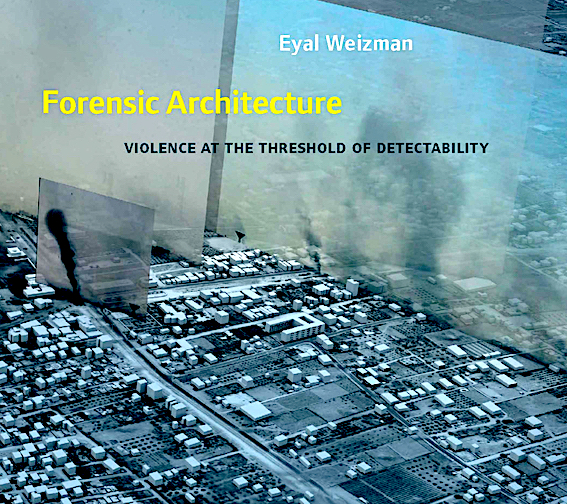
参考文献 01. 「ラウンドテーブルへようこそ - ラウンドテーブル」. roundtable.kein.org. 2011年10月7日時点のオリジナルからアーカイブ. 2012年4月19日に閲覧. 「ワイズマン, アイアル, ロンドン大学ゴールドスミス校」. ロンドン大学ゴールドスミス校. 「DAAR」. www.decolonizing.ps. ワイズマン、エイアル; カストナー、ジェフリー; ナジャフィ、シーナ。「壁と眼:エイアル・ワイズマンへのインタビュー | ジェフリー・カストナー、シーナ・ナジャフィ、エイアル」. cabinetmagazine.org. シーガル、ラフィ; ワイズマン、エイアル; タルタコバー、デイヴィッド (2003年2月20日). 『民間占領:イスラエル建築の政治学』. バベル; ヴェルソ社。OCLC 52334881。 カーフ、アン(2008年2月20日)。『声を上げる時:イスラエル、シオニズム、ユダヤ人アイデンティティに関する独立したユダヤ人の声』。ヴェルソ 社。ISBN 978-1-84467-229-5。OCLC 181140135。 オフィール、アディ;ギヴォニ、ミハル;ハナフィー、サーリー(2009年2月20日)。『包摂的排除の力:占領下パレスチナ地域におけるイスラエル支配 の解剖』。ゾーンブックス;MITプレス配給。OCLC 317288328。 モイニハン、コリン(2020年2月20日)。「法医学建築創設者、米国が自身の訪問を阻止と主張」。ニューヨーク・タイムズ。ISSN 0362-4331。2023年10月21日閲覧。 リウ、ダニエル(2005年2月22日)。「エイアル・ワイズマン」。hrp.bard.edu。 ブラムリー、エリー・バイオレット(2014年9月1日)。「『法医学的建築学』はガザ紛争について何を明らかにできるか?」。 theguardian.com。2014年9月1日閲覧。 「建築家エイアル・ワイズマン、イスラエルの『ジェノサイド作戦』をマッピングする」。デモクラシー・ナウ!。2024年8月24日閲覧。 ショー、アニー(2024年3月14日)。「イスラエルは国連裁判所の判決に違反し、ガザで『ジェノサイド的軍事作戦』を実施している、と新たな法医学建 築学の報告書が指摘」。アート・ニューズペーパー - 国際美術ニュースとイベント。2024年8月24日閲覧。 プロチニック、ジョージ(2023年11月23日)。「ドイツが再びユダヤ人を定義する:その一」。グランタ。2025年5月26日閲覧。 「第62866号」。ロンドン官報(別冊)。2019年12月28日。N23頁。 「ジェームズ・スターリング記念講演 - お知らせ - e-flux」。www.e-flux.com。 「クラウス王子基金 - ネットワーク」www.princeclausfund.org. 2015年11月29日閲覧。 「『私たちは犠牲者の名において働く』 - derStandard.at」DER STANDARD. 「サイダナヤ、ストーリーテリングの革新でデジタル・ダズン2016賞を受賞 - フォレンジック・アーキテクチャー」www.forensic-architecture.org. 2017年4月12日。 「サイダナヤ:シリアの拷問刑務所内部」。デザイン博物館。 「ヴェラ・リスト芸術政治センター - 2016-2018年度受賞者マリア・テレザ・アルヴェスとiSeeds of Changei」。www.veralistcenter.org。2019年5月25日にオリジナルからアーカイブ。2018年3月29日取得。 「PRIX ARS」。prix2017.aec.at。 「フォレンジック・アーキテクチャー(法医学的建築)、ニューヨーク市での式典でピーボディ・フェイスブック賞を受賞 - フォレンジック・アーキテクチャー」。www.forensic-architecture.org。2017年5月30日。 ウィルトン、ピート(2018年3月9日)。「フォレンジック・アーキテクチャー、欧州文化賞を受賞」。www.gold.ac.uk。 カリオン、ホルヘ(2017年12月10日)。「2017年を形作った10冊のノンフィクション書籍」。ニューヨーク・タイムズ。 「可能な悪のうちより小さなもの - エヤル・ワイズマン - ノッテテンポ」。www.edizioninottetempo.it. 「エイアル・ワイズマン:可能な悪の中の最小悪:アーレントからガザまでの人道的暴力」mvinfo.hr. 「より小さな悪 - エヤル・ワイズマン - nottetempo」[The Lesser Evil - Eyal Weizman]. www.edizioninottetempo.it. 「メンゲレの頭蓋骨」[Menguele's Skull]. www.sanssoleil.es. 2015年9月5日. 「メンゲレの頭蓋骨 法医学的美学の出現 - トーマス・キーナン - アイアル・ワイズマン - アチリム・キパット - 1:1アトラスシリーズ」[Mengele'nin Kafatası Adli estetiğin ortaya çıkışı - Thomas Keenan - Eyal Weizman - Açılım Kitap - 1:1 Atlas Dizisi]。www.acilimkitap.com。 「メンゲレの頭蓋骨は法医学美学の始まりであった」 (PDF) (ボスニア語). 「展示会 - 法医学建築」. www.forensic-architecture.org. 「カッセルのドクメンタ14で最も重要な作品は芸術ではない。証拠だ」. artnet News. 2017年6月8日. 「法医学建築:調査美学へ向けて - 法医学建築」。www.forensic-architecture.org。 「法医学建築:調査美学へ向けて - 法医学建築」。www.forensic-architecture.org。 35. 「ホーム」。www.ica.art。 |
| Forensic Architecture Centre for Research Architecture: Roundtable Archived 7 October 2011 at the Wayback Machine Interview with Eyal Weizman in Full Stop magazine, June 2012 Interview with Eyal Weizman in the Believer, May 2011 Interview/podcast with Eyal Weizman at Radio Web MACBA (2015) |
フォレンジック・アーキテクチャー 建築研究センター:円卓会議(2011年10月7日ウェイバックマシンにアーカイブ) フルストップ誌におけるエイアル・ワイズマンへのインタビュー(2012年6月) ビリーバー誌におけるエイアル・ワイズマンへのインタビュー(2011年5月) ラジオ・ウェブ・マックバにおけるエイアル・ワイズマンへのインタビュー/ポッドキャスト(2015年) |
| https://en.wikipedia.org/wiki/Eyal_Weizman |
| Who are we? |
私たちは誰か? |
| Forensic Architecture (FA) is a
research agency based at Goldsmiths, University of London. Our mandate
is to develop, employ, and disseminate new techniques, methods, and
concepts for investigating state and corporate violence. Our team
includes architects, software developers, filmmakers, investigative
journalists, scientists, and lawyers. We are an interdisciplinary agency operating across human rights, journalism, architecture, art and aesthetics, academia and the law. In 2022, the Peabody Awards programme wrote that we had co-created ‘an entire new academic field and emergent media practice’; in 2024, the European Research Council assessed Forensic Architecture as ‘a scientific breakthrough (defined as a revolutionary work that led to deep change in existing paradigms or new methods opening a new stream of research)’. Since 2020, FA has supported the growth of agencies worldwide that practice and apply our methods. The Investigative Commons is both a global network of practitioners, and a physical space in Berlin, within the offices of our sister agency Forensis. |
フォレンジック・アーキテクチャー(FA)はロンドン大学ゴールドスミ
ス校に拠点を置く研究機関である。我々の使命は、国家や企業による暴力行為を調査するための新たな技術、手法、概念を開発し、活用し、普及させることだ。
チームには建築家、ソフトウェア開発者、映像作家、調査報道記者、科学者、弁護士が参加している。 我々は人権、ジャーナリズム、建築、芸術・美学、学術、法学の領域を横断する学際的機関である。2022年、ピーボディ賞選考委員会は我々が「全く新しい 学術分野と新興メディア実践を共同で創出した」と評した。2024年には欧州研究会議がフォレンジック・アーキテクチャーを「科学的ブレークスルー(既存 パラダイムに深い変革をもたらす革命的業績、あるいは新たな研究の流れを開く新手法と定義される)」と評価した。 2020年以降、FAは世界中で我々の手法を実践・応用する機関の成長を支援してきた。調査コモンズは実践者たちのグローバルネットワークであると同時 に、姉妹機関フォーレンシスの事務所内にあるベルリンの物理的空間でもある。 |
| What is ‘forensic architecture’? | 「フォレンジック・アーキテクチャー」とはなにか? |
| ‘Forensic architecture’ is the
name of an interdisciplinary academic field developed and developing
from within Goldsmiths’ Centre for Research Architecture (CRA) since
2010. The term refers to the production and presentation of spatial
evidence within legal, political, and cultural contexts, and takes
architecture to include not only buildings, but shaped environments at
the scale of cities and territories. In addition to the CRA’s MA in
Forensic Architecture, we have set up and supported academic courses to
further develop the field of forensic architecture at universities
worldwide. |
「フォレンジック・アーキテクチャー」とは、2010年以降ゴールドス
ミス大学建築研究センター(CRA)内で発展し続けている学際的学術分野の名称である。この用語は、法的・政治的・文化的文脈における空間的証拠の生成と
提示を指し、建築を建物だけでなく都市や地域規模の形成された環境も含むものと捉える。CRAの法廷建築学修士課程に加え、我々は世界中の大学で法廷建築
学分野をさらに発展させるため、学術コースの設立と支援を行っている。 |
| What do we do? |
私たちはなにをしているのか? |
| Our investigations employ
cutting-edge techniques in spatial analysis and digital modelling to
reconstruct incidents of state violence and human rights violations. FA was born in the ‘open source revolution’; our core practice involves geolocating videos and images within navigable 3D digital models, alongside open source research and a range of established and experimental methodologies, drawing from software development, interactive cartographies, ‘remote sensing’ and satellite image analysis, fluid dynamics simulation, and ‘situated testimony’. We investigate states and corporate entities—including militaries, police forces, government agencies, and companies—for their violent acts, including repressive policing, civilian deaths in conflict, structurally racist policy-making, violence against migrants and refugees, and historical and contemporary colonial violence, including the destruction of traditional environments and life worlds. |
我々の調査は、空間分析とデジタルモデリングにおける最先端技術を用い
て、国家による暴力や人権侵害の事例を再構築する。 FAは「オープンソース革命」の中で誕生した。我々の核心的な実践は、動画や画像を操作可能な3Dデジタルモデル内に地理位置情報化することだ。これには オープンソース調査や、ソフトウェア開発、インタラクティブ地図学、「リモートセンシング」と衛星画像分析、流体力学シミュレーション、「状況に即した証 言」など、確立された手法と実験的手法を幅広く組み合わせている。 我々は国家及び企業体(軍隊、警察、政府機関、企業を含む)の暴力行為を調査する。対象は抑圧的な警察活動、紛争下での民間人死亡、構造的人種差別的政策 立案、移民・難民に対する暴力、歴史的・現代的な植民地主義的暴力(伝統的環境や生活世界の破壊を含む)である。 |
| How do we choose our projects? |
我々はどのようにプロジェクトを選ぶのか? |
| We take on research projects at
the invitation of individuals and communities directly affected by
human rights violations. We look for projects in which our unique
methodologies could be decisive in support of the pursuit of
accountability or political transformation, and which at the same time
will help us to evolve or advance those methodologies. |
我々は人権侵害に直接影響を受けた個人やコミュニティからの要請を受
け、調査プロジェクトを引き受ける。我々の独自の手法が責任追及や政治的変革の推進において決定的な役割を果たし得るプロジェクトを求めると同時に、それ
らの手法を進化させ発展させるのに役立つプロジェクトを模索する。 |
| How are we funded? |
我々はどのように資金調達しているのか? |
| Our core funding comes from
academic, human rights, and technology grants. Our core funders are
here, though we also often receive support for specific projects. All
income we receive from the display of our work in the media and in
exhibition contexts is reinvested into our research. |
我々の主な資金源は学術、人権、技術関連の助成金だ。主要な資金提供者
はここに記載されているが、特定のプロジェクトに対する支援も頻繁に受けている。メディアや展示会での作品展示から得られる収入は全て、研究活動に再投資
されている。 |
| Where is our work presented? |
私たちの仕事はどこで発表されるのか? |
| In the pursuit of
accountability, we seek to work across forums, from courts and
parliamentary inquiries, citizen’s tribunals, international media and
exhibitions. Each of these forums has its own potential benefits, and
limitations. That’s why we endeavour not only to present our
investigations across multiple forums, but to transform these forums in
the process. In courts, we struggle for the admissibility of
citizen-produced digital evidence; in cultural institutions, we employ
art as an investigative and political medium. |
説明責任を追求するにあたり、我々は様々な場を横断して活動する。裁判
所や議会調査、市民法廷、国際メディア、展示会などだ。それぞれの場には固有の利点と限界がある。だからこそ我々は調査結果を複数の場で提示するだけでな
く、その過程でこれらの場自体を変革しようと努める。法廷では市民が作成したデジタル証拠の採用可能性を争い、文化機関では芸術を調査と政治の媒体として
活用する。 |
| Is our work admissible in court? |
我々の仕事は法廷で認められるのか? |
| Our work has been admitted in
legal processes in jurisdictions around the world, including in the US,
the UK, Germany, Greece, Israel, Guatemala, and Colombia. Other
investigations have been submitted to the International Criminal Court
and presented in European Court of Human Rights (ECHR) and the UN’s
General Assembly. As a member of the Technology Advisory Board of the
International Criminal Court, our director has helped to shape the
early use of new media evidence in legal contexts. |
我々の調査結果は、米国、英国、ドイツ、ギリシャ、イスラエル、グアテ
マラ、コロンビアなど、世界中の司法管轄区域における法的手続きで採用されてきた。その他の調査は国際刑事裁判所へ提出され、欧州人権裁判所(ECHR)
や国連総会でも提示されている。国際刑事裁判所の技術諮問委員会メンバーとして、我々のディレクターは法的な文脈における新メディア証拠の初期活用の形成
に貢献してきた。 |
| About the website |
https://forensic-architecture.org/about/agency |
| Design and development by Alan Woo. |
リ ンク
文 献
そ の他の情報
CC
Copyleft,
CC, Mitzub'ixi Quq Chi'j, 1996-2099