

ラテンアメリカの解放の神学
Latin American liberation theology
☆ラテンアメリカ解放の神学[Latin American
liberation theology]
(スペイン語: Teología de la liberación、ポルトガル語: Teologia da
libertação)とは、キリスト教神学とマルクス主義的社会経済分析を統合したものであり、「貧しい者への社会的配慮と抑圧された民衆の政治的解
放」を強調する。[1]
1960年代、第二バチカン公会議[2]の後、その前身と見なされるカミリズム[3][4][5]の影響を受けて始まった解放の神学は、グスタボ・グティエレス、
レオナルド・ボフ、イエズス会のフアン・ルイス・セグンドやジョン・ソブリノといったラテンアメリカの神学者たちの政治的実践となった。彼らは「貧しい者
への優先的選択」という言葉を広めた。この思想は主に、同地域における貧困と社会的不公正に対する道徳的反応として生まれた。この地域はセパル(ラテンア
メリカ経済委員会)によって世界で最も不平等な地域と評価されていた[6]。
この表現は1968年にイエズス会のペドロ・アルペ総長によって初めて用いられ、その後間もなく1971年のカトリック司教世界会議が「世界の正義」を
テーマに選んだ[7][8]。1971年にはペルーの司祭グスタボ・グティエレスによって広められ、彼はこの運動を定義づける著作の一つ『解放の神学』を
著した。その他の著名な提唱者には、ブラジルのレオナルド・ボフ、エルサルバドルのイエズス会士ジョン・ソブリノ、ウルグアイのフアン・ルイス・セグンド
らがいる。[9][10]
ラテンアメリカの文脈からは、ルベン・アルヴェス[11][12]、ホセ・ミゲス・ボニーノ、C・ルネ・パディージャといった解放の神学のプロテスタント
支持者も現れた。彼らは1970年代に「総合的宣教」を提唱し、福音宣教と社会的責任を強調した(→「解放の神学」)。
| Latin American
liberation theology (Spanish: Teología de la liberación, Portuguese:
Teologia da libertação) is a synthesis of Christian theology and
Marxian socio-economic analyses, that emphasizes "social concern for
the poor and political liberation for oppressed peoples".[1] Beginning
in the 1960s after the Second Vatican Council[2] and influenced by
Camilism, which can be considered the predecessor of it,[3][4][5]
liberation theology became the political praxis of Latin American
theologians such as Gustavo Gutiérrez, Leonardo Boff, and Jesuits Juan
Luis Segundo and Jon Sobrino, who popularized the phrase "preferential
option for the poor". It arose principally as a moral reaction to the
poverty and social injustice in the region, which Cepal deemed the most
unequal in the world.[6] This expression was used first by Jesuit Fr. General Pedro Arrupe in 1968 and soon after this the World Synod of Catholic Bishops in 1971 chose as its theme "Justice in the World".[7][8] It was popularized in 1971 by the Peruvian priest Gustavo Gutiérrez, who wrote one of the movement's defining books, A Theology of Liberation. Other noted exponents include Leonardo Boff of Brazil, and Jesuits Jon Sobrino of El Salvador and Juan Luis Segundo of Uruguay.[9][10] The Latin American context also produced Protestant advocates of liberation theology, such as Rubem Alves,[11][12] José Míguez Bonino, and C. René Padilla, who in the 1970s called for integral mission, emphasizing evangelism and social responsibility. |
ラテンアメリカ解放の神学[Latin American
liberation theology](スペイン語: Teología de
la liberación、ポルトガル語: Teologia da
libertação)とは、キリスト教神学とマルクス主義的社会経済分析を統合したものであり、「貧しい者への社会的配慮と抑圧された民衆の政治的解
放」を強調する。[1]
1960年代、第二バチカン公会議[2]の後、その前身と見なされるカミリズム[3][4][5]の影響を受けて始まった解放の神学は、グスタボ・グティ
エレス、レオナルド・ボフ、イエズス会のフアン・ルイス・セグンドやジョン・ソブリノといったラテンアメリカの神学者たちの政治的実践となった。彼らは
「貧しい者への優先的選択」という言葉を広めた。この思想は主に、同地域における貧困と社会的不公正に対する道徳的反応として生まれた。この地域はセパル
(ラテンアメリカ経済委員会)によって世界で最も不平等な地域と評価されていた[6]。 この表現は1968年にイエズス会のペドロ・アルペ総長によって初めて用いられ、その後間もなく1971年のカトリック司教世界会議が「世界の正義」を テーマに選んだ[7][8]。1971年にはペルーの司祭グスタボ・グティエレスによって広められ、彼はこの運動を定義づける著作の一つ『解放の神学』を 著した。その他の著名な提唱者には、ブラジルのレオナルド・ボフ、エルサルバドルのイエズス会士ジョン・ソブリノ、ウルグアイのフアン・ルイス・セグンド らがいる。[9][10] ラテンアメリカの文脈からは、ルベン・アルヴェス[11][12]、ホセ・ミゲス・ボニーノ、C・ルネ・パディージャといった解放の神学のプロテスタント 支持者も現れた。彼らは1970年代に「総合的宣教」を提唱し、福音宣教と社会的責任を強調した。 |
| History A major player in the formation of liberation theology was the Latin American Episcopal Conference (CELAM). Created in 1955 in Rio de Janeiro, Brazil, CELAM pushed the Second Vatican Council (1962–1965) toward a more socially oriented stance.[13] After the Second Vatican Council, CELAM held two conferences which were important in determining the future of liberation theology: the first was held in Medellín, Colombia, in 1968, and the second in Puebla, Mexico, in January 1979.[13] The Medellín conference debated how to apply the teachings of Vatican II to Latin America, and its conclusions were strongly influenced by liberation theology,[14] which grew out of these officially recognized ideas. While the Medellín document is not a liberation theology document, it laid the groundwork for much of it, and after it was published, liberation theology developed rapidly in the Latin American Catholic Church.[15] Peruvian priest Gustavo Gutiérrez has been widely regarded as the "father of liberation theology", with his 1971 book A Theology of Liberation considered to have been instrumental in the movement's formation.[16][17][18][19] Cardinal Alfonso López Trujillo was a central figure after the Medellín Conference. As a priest in Bogotá in 1968, he did not attend the conference. But he was elected in 1972 as general secretary of CELAM, and then its president in 1979 (at the Puebla conference). He represented a more conservative position, becoming a favourite of Pope John Paul II and the "principal scourge of liberation theology".[20] López's faction became predominant in CELAM after the 1972 Sucre conference, and in the Roman Curia after the 1979 CELAM conference in Puebla. Despite the conservative bishops' predominance in CELAM, liberation theology remained popular in South America. Thus at the 1979 Puebla Conference the conservative bishops were met by strong opposition from those in the clergy who supported the concept of a "preferential option for the poor" and basic ecclesial communities, approved at the Medellín conference. Pope John Paul II gave the opening speech at the Puebla Conference in 1979. The general tone of his remarks was conciliatory. He criticized radical liberation theology, saying, "this idea of Christ as a political figure, a revolutionary, as the subversive of Nazareth, does not tally with the Church's catechesis";[21] however, he did acknowledge that "the growing wealth of a few parallels the growing poverty of the masses",[21] and he affirmed both the principle of private property and that the Church "must preach, educate individuals and collectivities, form public opinion, and offer orientations to the leaders of the peoples" towards the goal of a "more just and equitable distribution of goods".[21] Some liberation theologians, however, including Gustavo Gutiérrez, had been barred from attending the Puebla Conference. Working from a seminary and with aid from sympathetic, liberal bishops, they partially obstructed other clergy's efforts to ensure that the Puebla Conference documents satisfied conservative concerns. Within four hours of the Pope's speech, Gutiérrez and the other priests wrote a 20-page response, which was circulated at the conference, and has been claimed to have influenced its outcome. According to a socio-political study of liberation theology in Latin America, a quarter of the final Puebla documents were written by theologians who were not invited to the conference.[22] |
歴史 解放の神学の形成において主要な役割を果たしたのは、ラテンアメリカ司教協議会(CELAM)である。1955年にブラジルのリオデジャネイロで設立されたCELAMは、第二バチカン公会議(1962-1965年)をより社会志向的な立場へと導いた[13]。 第二バチカン公会議後、CELAMは解放の神学の将来を決定づける上で重要な二つの会議を開催した。一つは1968年にコロンビアのメデジンで、もう一つ は1979年1月にメキシコのプエブラで行われた[13]。メデジン会議では第二バチカン公会議の教えをラテンアメリカにどう適用するかが議論され、その 結論は解放の神学の強い影響を受けた[14]。この解放の神学は公式に認められた思想から発展したものである。メデジン文書自体は解放の神学の文書ではな いが、その多くの基礎を築いた。この文書発表後、ラテンアメリカのカトリック教会において解放の神学は急速に発展した。[15] ペルーの司祭グスタボ・グティエレスは「解放の神学の父」と広く認められており、1971年の著書『解放の神学』は運動形成に決定的な役割を果たしたとされる。[16][17][18][19] アルフォンソ・ロペス・トルヒーヨ枢機卿はメデジン会議後の中心人物であった。1968年当時ボゴタの司祭であった彼は会議には出席しなかった。しかし 1972年にラテンアメリカ司教会議(CELAM)の事務局長に選出され、1979年にはプエブラ会議で議長に就任した。彼はより保守的な立場を代表し、 教皇ヨハネ・パウロ2世のお気に入りとなり、「解放の神学の主要な敵」となった。[20] ロペスの派閥は、1972年のスクレ会議後にCELAMで、また1979年のプエブラCELAM会議後にローマ教皇庁で支配的となった。 CELAM内で保守派司教が優勢であったにもかかわらず、解放の神学は南米で依然として支持を集めていた。そのため1979年のプエブラ会議では、保守派 司教団に対し、メデジン会議で承認された「貧しい者への優先的選択」や基礎教会共同体の概念を支持する聖職者層から強い反対意見が示された。 教皇ヨハネ・パウロ2世は1979年のプエブラ会議で開会演説を行った。その発言の基調は融和的であった。彼は急進的な解放の神学を批判し、「キリストを 政治的人物、革命家、ナザレの破壊者と見なすこの考えは、教会のカテケージス(教理教育)と一致しない」と述べた。[21] しかし同時に「少数の富の増大は大衆の貧困の増大と並行している」[21] と認め、私有財産の原則を肯定しつつも、教会が「より公正で公平な財の分配」という目標に向け「説教し、個人と集団を教育し、世論を形成し、民衆の指導者 たちに指針を提供しなければならない」と述べた。[21] しかしグスタボ・グティエレスら解放神学者の一部はプエブラ会議への出席を禁じられていた。彼らは神学校を拠点とし、同調的なリベラル派司教らの支援を得 て、保守派の懸念を反映させるべくプエブラ会議文書を調整しようとする他の聖職者らの動きを部分的に妨害した。教皇の演説からわずか4時間後、グティエレ スら司祭たちは20ページに及ぶ反論文書を作成し、会議で配布した。この文書が会議の結果に影響を与えたと主張されている。ラテンアメリカにおける解放の 神学の社会政治的研究によれば、最終的なプエブラ文書のうち4分の1は、会議に招かれなかった神学者たちによって執筆されたものである。[22] |
| Theology Liberation theology could be interpreted as an attempt to return to the gospel of the early church where Christianity is politically and culturally decentralized.[23] Liberation theology proposes to fight poverty by addressing its alleged source, the sin of greed. In so doing, it explores the relationship between Christian theology (especially Roman Catholic) and political activism, especially in relation to economic justice, poverty, and human rights. The principal methodological innovation is seeing theology from the perspective of the poor and the oppressed. For example, Jon Sobrino argues that the poor are a privileged channel of God's grace. Some liberation theologians base their social action upon the Biblical description of the mission of Jesus Christ as bringing a sword (social unrest), e.g., Isaiah 61:1, Matthew 10:34, Luke 22:35–38 – and not as bringing peace (social order).[24] This Biblical interpretation is a call to action against poverty, and the sin engendering it, to effect Jesus Christ's mission of justice in this world. Gustavo Gutiérrez gave the movement its name with his 1971 book, A Theology of Liberation.[25] In this book, Gutiérrez combined populist ideas with the social teachings of the Catholic Church. He was influenced by an existing socialist current in the Church which included organizations such as the Catholic Worker Movement and the Jeunesse Ouvrière Chrétienne, a Belgian Christian youth worker organization. He was also influenced by Paul Gauthier's Christ, the church and the poor (1965). Gutiérrez's book is based on an understanding of history in which the human being is seen as assuming conscious responsibility for human destiny, and yet Christ the Saviour liberates the human race from sin, which is the root of all disruption of friendship and of all injustice and oppression.[26] Gutiérrez also popularized the phrase "preferential option for the poor", which became a slogan of liberation theology and later appeared in addresses of the Pope.[27] Drawing from the biblical motif on the poor, Gutiérrez asserts that God is revealed as having a preference for those people who are "insignificant", "marginalized", "unimportant", "needy", "despised", and "defenseless". Moreover, he makes clear that terminology of "the poor" in the Christian Bible has social and economic connotations that etymologically go back to the Greek word ptōchos.[28] To be sure, as to not misinterpret Gutiérrez's definition of the term "preferential option", he stresses, "Preference implies the universality of God's love, which excludes no one. It is only within the framework of this universality that we can understand the preference, that is, 'what comes first'."[29] Gutiérrez emphasized practice (or, more technically, "praxis") over doctrine. He clarified his position by advocating a circular relationship between orthodoxy and orthopraxis, in a symbiotic relationship.[30] His reading of prophets condemning oppression and injustice against the poor (i.e., Jeremiah 22:13–17) informs his assertion that to know God (orthodoxy) is to do justice (orthopraxis).[31] Cardinal Joseph Ratzinger (later Pope Benedict XVI), however, criticized liberation theology for elevating orthopraxis to the level of orthodoxy.[32] Richard McBrien summarizes this concept as follows: God is disclosed in the historical "praxis" of liberation. It is the situation, and our passionate and reflective involvement in it, which mediates the Word of God. Today that Word is mediated through the cries of the poor and the oppressed.[33] Another important hallmark for Gutiérrez's brand of liberation theology is an interpretation of revelation as "history". For example, Gutiérrez wrote: History is the scene of the revelation God makes of the mystery of his person. God's word reaches us in the measure of our involvement in the evolution of history.[34] Gutiérrez also considered the Church to be the "sacrament of history", an outward and visible sign of an inward and spiritual grace, thus pointing to the doctrine of universal salvation as the true means to eternal life, and assigning the Church itself to a somewhat temporal role, namely, liberation. Practice One of the most radical and influential aspects of liberation theology was the social organization, or reorganization, of church practice through the model of Christian base communities, also called basic ecclesial communities. Liberation theology strove to be a bottom-up movement in practice, with Biblical interpretation and liturgical practice designed by lay practitioners themselves, rather than by the Church hierarchy. In this context, sacred text interpretation is understood as "praxis". The priest Camilo Torres (a leader of the Colombian guerrilla group ELN)[35] celebrated the Eucharist only among those engaged in armed struggle against the army of the Colombian state. He also fought for the ELN.[36] Liberation theology seeks to interpret the actions of the Catholic Church and the teachings of Jesus Christ from the perspective of the poor and disadvantaged. In Latin America, liberation theologians specifically target the severe disparities between rich and poor in the existing social and economic orders within the state's political and corporate structures. It is a strong critique of the economic and social structures, such as an oppressive government supported by a conservative Church hierarchy and by First World economic interests, that allow some to be extremely rich while others are unable even to have safe drinking water.[15] Contemporaneously, Fanmi Lavalas in Haiti, the Landless Workers' Movement in Brazil, and Abahlali baseMjondolo in South Africa are three organizations that make use of liberation theology.[37] |
神学 解放の神学は、キリスト教が政治的・文化的に分散化されていた初期教会の福音に立ち返ろうとする試みと解釈できる。[23] 解放の神学は、貧困の根源とされる貪欲の罪に対処することで貧困と戦うことを提唱する。その過程で、キリスト教神学(特にローマ・カトリック)と政治活 動、特に経済的正義、貧困、人権に関する活動との関連性を探求する。主な方法論的革新は、貧しい者や抑圧された者の視点から神学を見る点にある。例えば ジョン・ソブリノは、貧しい者こそが神の恵みの特権的な通路であると主張する。 一部の解放神学者は、イエス・キリストの使命を「平和(社会的秩序)をもたらす」のではなく「剣(社会的混乱)をもたらす」ものとして聖書が描写している 点(イザヤ書61:1、マタイによる福音書10:34、ルカによる福音書22:35-38など)を、自らの社会行動の根拠としている。[24] この聖書解釈は、貧困とそれを生み出す罪に対する行動を促すものであり、この世においてイエス・キリストの正義の使命を実現するための呼びかけである。 グスタボ・グティエレスは1971年の著書『解放の神学』でこの運動に名称を与えた[25]。同書でグティエレスはポピュリズム思想とカトリック教会の社 会教説を統合した。彼はカトリック労働者運動やベルギーのキリスト教青年労働者組織「キリスト教青年労働者会」など、教会内に既に存在した社会主義的潮流 の影響を受けていた。またポール・ゴーティエの『キリスト、教会、そして貧者』(1965年)の影響も受けている。グティエレスの著作は、人間が自らの運 命に対して意識的な責任を負う存在であると同時に、救い主キリストが人類を罪から解放するという歴史観に基づいている。この罪こそが、あらゆる友情の断 絶、あらゆる不正と抑圧の根源なのである。[26] グティエレスは「貧しい者への優先的選択」という表現を普及させ、これは解放の神学のスローガンとなり、後に教皇の演説にも登場した。[27] 貧しい者に関する聖書のモチーフから、グティエレスは神が「取るに足らない」「周縁化された」「取るに足らない」「困窮した」「軽蔑された」「無防備な」 人々を優先的に愛すると啓示されていると主張する。さらに彼は、キリスト教聖書における「貧しい者」という用語が、語源的にギリシャ語のptōchosに 遡る社会的・経済的含意を持つことを明確にしている[28]。確かに、グティエレスの「優先的選択」という用語の定義を誤解しないように、彼は次のように 強調している。「優先とは、誰も排除しない神の愛の普遍性を意味する。この普遍性の枠組みの中で初めて、優先、すなわち『最優先されるもの』を理解できる のだ」と述べている[29]。 グティエレスは教義よりも実践(より正確には「プラクシス」)を重視した。正統な信仰(orthodoxy)と正しい実践(orthopraxis)が共 生関係にある循環的な関係を提唱することで、自らの立場を明確にした。[30] 貧しい者に対する抑圧と不正を糾弾する預言者たちの解釈(例:エレミヤ書22:13-17)に基づき、彼は「神を知る(正統性)とは正義を行うこと(正実 践)である」と主張した。[31] しかし、ヨゼフ・ラッツィンガー枢機卿(後の教皇ベネディクト16世)は、解放の神学が正実践を正統性のレベルにまで高めた点を批判した。[32] リチャード・マクブライエンはこの概念を次のように要約する: 神は解放という歴史的「実践」において明らかにされる。状況そのものと、それに情熱的かつ思索的に関わる我々の姿勢が、神の言葉を媒介する。今日、その言葉は貧しい者や抑圧された者の叫びを通して媒介される。[33] グティエレス流解放の神学のもう一つの重要な特徴は、啓示を「歴史」として解釈することだ。例えばグティエレスはこう記している: 歴史は、神がご自身の神秘を啓示する舞台である。神の言葉は、我々が歴史の展開に関与する度合いに応じて我々に届く。[34] グティエレスはまた、教会を「歴史の秘跡」、すなわち内面的で霊的な恵みの外面的かつ可視的なしるしと見なした。これにより、永遠の命への真の手段として普遍的救済の教義を指し示し、教会自体にある種の時間的な役割、すなわち解放を割り当てたのである。 実践 解放の神学の最も急進的で影響力のある側面の一つは、キリスト教基層共同体(基本教会共同体とも呼ばれる)のモデルを通じた教会実践の社会的組織化、ある いは再組織化であった。解放の神学は実践においてボトムアップ運動となることを目指し、聖書解釈や典礼実践は教会階層ではなく、信徒実践者自身によって設 計されるべきだとした。この文脈において、聖典解釈は「実践(プラクシス)」として理解される。 司祭カミロ・トーレス(コロンビアのゲリラ組織ELNの指導者)[35]は、コロンビア国家軍に対する武装闘争に従事する者たちの中でのみ聖体拝領を行った。彼はまたELNのために戦った[36]。 解放の神学は、カトリック教会の行動とイエス・キリストの教えを、貧しい者や不利な立場にある者の視点から解釈しようとする。ラテンアメリカにおいて、解 放神学者は特に、国家の政治・企業構造内に存在する社会経済秩序における富裕層と貧困層の深刻な格差を標的とする。これは、保守的な教会上層部や第一世界 の経済的利益によって支えられた抑圧的な政府など、一部の人々が極度に富む一方で他の人々が安全な飲料水すら得られないことを許容する経済的・社会的構造 に対する強い批判である。[15] 同時に、ハイチのファンミ・ラヴァラス、ブラジルの土地なし労働者運動、南アフリカのアバハリ・ベースムジョンドロは、解放の神学を活用する三つの組織である。[37] |
| Base ecclesial communities Main article: Basic ecclesial community The journalist and writer Penny Lernoux described this aspect of liberation theology in her numerous and committed writings intended to explain the movement's ideas in North America. Base communities were small gatherings, usually outside of churches, in which the Bible could be discussed, and Mass could be said.[38] They were especially active in rural parts of Latin America where parish priests were not always available, as they placed a high value on lay participation. After decades of repression from the government authorities, the liberationist Catholic Church in Brazil is absent of traditional centralization and encourages an increased lay participation. Faced with a severe priest shortage, much of the Brazilian Catholic Church is organized into basic ecclesial communities (CEB) in which the Mass, community spirituality programs, and community needs are led or addressed by a single clergy member or a trained lay member in either a small chapel or an individual's home. The CEBs introduced new social ideas and democratic methods which led to many participants' active involvement in popular movements of Brazil that worked for progressive social change. An example of progressive social change initiated by the CEBs is in Nova Iguaçu. A health program began there to try to organize the population in order to remedy widespread malnutrition, open sewers, and other health hazards.[15] Eventually the neighbourhood initiative reached a national interest level where it then became a mass movement in nearly every neighbourhood. Initiatives like the health program in Nova Iguaçu illustrate how CEBs have helped the transition from military to democratic rule. While liberation theology has brought about significant progressive reforms in Brazil, anthropologist Robin Nagle questions the effectiveness of Catholic Church theology in Brazil. Nagle concentrates on the conflict between conservatives and liberationists in Recife, Brazil, in 1990. The poor neighbourhood of Morro da Conceição had a liberationist priest named Reginaldo who was expelled by the traditionalist archbishop because the archbishop found Reginaldo's politics and social theology annoying and adverse to his own agenda. When Reginaldo and his followers refused to accept the expulsion and the new priest, the archbishop called in the Military Police. Conversely, the event did not cause a mass response because the liberationist agenda aroused distrust and even hatred among many of its intended audience. The main reason was that it was too much to ask poor parishioners to embrace a Church focused more on the troubles of this life than solace in the next.[39] But this was not the viewpoint of Archbishop Dom Helder Camara, archbishop of Recife from 1964 to 1985 (d. 1999), who supported liberation theology and worked for the poor,[40] and whose cause is advancing for canonization.[41] While Robin Nagle claims that liberation theology is ineffective for genuine social change, anthropologist Manuel Vásquez argues that liberation theology embraced by CEBs creates a twofold effect, because it not only provides moral justification for resistance but it also serves as a means to organize the resistance. Many people come to the CEB through conversion experiences, but also because they are keenly concerned with the spiritual and infrastructural needs of their community.[42] Through his fieldwork in working-class neighbourhoods of Rio de Janeiro, Vásquez reveals that CEBs combat disenfranchisement but also serve to overcome the obstacles associated with materialism and globalization. The social and political impact can be viewed in terms of initial consciousness-raising, the motivation for involvement, the sense of community they develop, the experience of grassroots democracy, the direct actions they engage in, and finally, directly political actions.[15] In May 2007, it was estimated that 80,000 base communities existed in Brazil, with others existing around the world.[43] |
基礎教会共同体 詳細な記事: 基礎教会共同体 ジャーナリストであり作家でもあるペニー・ルルヌーは、解放の神学のこの側面を、北米でこの運動の思想を説明しようとする数多くの熱心な著作の中で述べ た。基礎共同体とは、通常教会外で行われる小規模な集まりであり、聖書の議論やミサの執行が可能であった[38]。特にラテンアメリカの農村部で活発に活 動し、司祭が常駐しない地域では、信徒の参加を重視した。 政府当局による数十年にわたる弾圧を経て、ブラジルの解放主義カトリック教会は従来の中央集権体制を廃し、信徒参加の拡大を促進している。深刻な司祭不足 に直面したブラジルカトリック教会の大部分は、基礎教会共同体(CEB)として組織されている。そこでは、小さな礼拝堂や個人の家屋において、一人の聖職 者または訓練を受けた信徒が主導し、ミサ、共同体の霊性プログラム、共同体の必要事項が扱われる。CEBは新たな社会的思想と民主的手法を導入し、多くの 参加者がブラジルの進歩的な社会変革を目指す大衆運動に積極的に関わるきっかけとなった。CEBが主導した進歩的変革の一例がノヴァ・イグアスである。同 地では広範な栄養失調、開放式下水道、その他の健康被害を改善するため住民組織化を目指す保健プログラムが始動した[15]。やがてこの地域主導の取り組 みは全国的な関心を集め、ほぼ全ての地域で大規模運動へと発展した。ノヴァ・イグアスの保健プログラムのような取り組みは、CEBが軍事政権から民主主義 への移行をいかに支援したかを示している。 解放の神学がブラジルに重要な進歩的改革をもたらした一方で、人類学者ロビン・ネーグルはブラジルにおけるカトリック教会神学の有効性に疑問を呈してい る。ネーグルは1990年、ブラジル・レシフェにおける保守派と解放派の対立に焦点を当てている。貧困地域モロ・ダ・コンセイサォンにはレジーナルドとい う解放派司祭がいたが、伝統主義的な大司教によって追放された。大司教はレジーナルドの政治思想と社会神学が自身の思惑に反し、厄介だと感じたからだ。レ ジーナルドとその信徒たちが追放と新司祭の任命を受け入れなかったため、大司教は軍警察を呼んだ。しかしこの事件は大規模な反発を招かなかった。解放神学 の主張は、本来の対象となる多くの人々から不信感や憎悪さえ引き起こしていたからだ。主な理由は、貧しい信徒たちに「来世の慰めよりも現世の苦難に焦点を 当てる教会」を受け入れるよう求めるのは、あまりにも無理な要求だったからである。[39] しかし、1964年から1985年までレシフェ大司教を務めたヘルデル・カマラ大司教(1999年没)は異なる見解を持っていた。彼は解放の神学を支持 し、貧しい人々のために働き[40]、現在も列聖に向けた手続きが進められている。[41] ロビン・ネーグルが解放の神学は真の社会変革に効果がないと主張する一方、人類学者マヌエル・バスケスは、CEBが取り入れた解放の神学は二重の効果を生 むと論じる。それは抵抗への道徳的正当性を提供するだけでなく、抵抗を組織化する手段としても機能するからだ。多くの人々が回心体験を通じてCEBに集う が、同時に自らのコミュニティの精神的・インフラ的ニーズに強い関心を抱いているからでもある。[42] ヴァスケスはリオデジャネイロの労働者階級地域でのフィールドワークを通じ、CEBが権利剥奪と闘うだけでなく、物質主義やグローバル化に伴う障壁を克服 する役割も果たすことを明らかにした。社会的・政治的影響は、初期の意識啓発、参加動機、育まれる共同体意識、草の根民主主義の経験、直接行動への関与、 そして最終的には直接的な政治行動という観点から捉えられる。[15] 2007年5月時点で、ブラジル国内に8万の草の根コミュニティが存在すると推定され、世界中にさらに多くのコミュニティが存在する。[43] |
| Latin American integral mission Main article: Integral mission Integral mission or holistic mission is a term coined in Spanish as misión integral in the 1970s by members of the evangelical group Latin American Theological Fellowship (or FTL, its Spanish acronym) to describe an understanding of Christian mission which embraces both the evangelism and social responsibility. Since Lausanne 1974, integral mission has influenced a significant number of evangelicals around the world.[44][45] The word integral is used in Spanish to describe wholeness (as in wholemeal bread or whole wheat).[45] Theologians use it to describe an understanding of Christian mission that affirms the importance of expressing the love of God and neighbourly love through every means possible. Proponents such as C. René Padilla of Ecuador,[46] Samuel Escobar of Peru,[47] and Orlando E. Costas of Puerto Rico[48] have wanted to emphasize the breadth of the Good News and of the Christian mission, and used the word integral to signal their discomfort with conceptions of Christian mission based on a dichotomy between evangelism and social involvement. The proponents of integral mission argue that the concept of integral mission is nothing new – rather, it is rooted in Scripture and wonderfully exemplified in Jesus' own ministry. "Integral mission" is only a distinct vocabulary for a holistic understanding of mission that has been emphasized in the past forty years in order to distinguish it from widely held but dualistic approaches that emphasize either evangelism or social responsibility.[45] |
ラテンアメリカにおける総合的宣教 主な記事: 総合的宣教 総合的宣教(holistic mission)とは、1970年代に福音派団体「ラテンアメリカ神学連盟」(スペイン語略称FTL)のメンバーが、伝道と社会的責任の両方を包含するキ リスト教宣教の理解を表すためにスペイン語で「misión integral」として造語した用語である。1974年のローザンヌ会議以降、総合的宣教は世界中の多くの福音派に影響を与えてきた。[44][45] 「integral」という言葉は、スペイン語で「全体性」を表す(全粒粉パンや全粒小麦のように)。[45] 神学者は、あらゆる手段を通じて神への愛と隣人愛を表現することの重要性を確認するキリスト教の宣教の理解を表すためにこの言葉を使う。エクアドルの C. ルネ・パディージャ[46]、ペルーのサミュエル・エスコバル[47]、プエルトリコのオルランド・E・コスタス[48] などの支持者は、良き知らせとキリスト教の使命の広さを強調したいと考え、福音伝道と社会参加の二分法に基づくキリスト教の使命の概念に対する不快感を示 すために「統合的」という言葉を使用している。 統合的宣教の支持者たちは、統合的宣教の概念は決して新しいものではなく、むしろ聖書に根ざしており、イエス自身の働きに見事に例証されていると主張して いる。「統合的宣教」とは、過去 40 年間に強調されてきた、宣教の全体的な理解を表す別の用語に過ぎず、伝道または社会的責任のいずれかを強調する、広く普及している二元論的アプローチと区 別するために用いられている[45]。 |
| Sandinista Nicaragua Liberation theology and its practitioners played an essential role in the formation and leadership of the Sandinista National Liberation Front (Spanish: Frente Sandinista de Liberación Nacional, FSLN). This relationship, which reached its apex in the earliest years of FSLN rule (1978–1990) following the Nicaraguan Revolution, is observed in the ideological convergence between liberation theology and Sandinismo, the influence of liberation theologians within the FSLN government, and the interrelated support for liberation theology and the FSLN among the Nicaraguan populace, ranging from urban citizens to ecclesial base communities. The formation of Sandinismo Liberation theology played an important role in the development of Sandinismo the philosophical foundation of the FSLN. In the 1970s, practitioners of liberation theology increasingly viewed the FSLN as the optimal revolutionary alternative to the regime of Anastasio Somoza, whose regime was marked by human rights abuses. This alliance brought about the advent of Sandinismo, which combined the radical agrarian nationalism of Augusto Sandino with revolutionary Christianity and Latin American Marxism.[49] The FSLN appealed to liberation theologians for several reasons. As discussed by Nicaraguan liberation theologians like Ernesto Cardenal and Miguel D'Escoto, liberation theology and its efforts to bring about social justice and an end to the oppression of poor inherently connected with the anti-capitalist and Marxist ideological platform of the FSLN.[50] Like the Marxist foundations of the FSLN, liberation theologians viewed history through an eschatological lens, meaning that historical evolution was oriented towards a final destiny.[51] Although the FSLN did not embrace the Christian eschatological vision of liberation theologians, both liberation theology and Sandinismo emphasized the need for revolutionary action that empowered the poor as historical agents in bringing about a new society. This emphasis, evident in accounts from Nicaraguan citizens who claimed that the Sandinista revolution made them feel like "architects of their liberation", attracted masses of Nicaraguan Catholics to join the FSLN.[52] Liberation theology and Sandinista government Following the successful ousting of Somoza and the establishment of the FSLN government in 1979, liberation theology and its practitioners shaped initiatives pursued by the FSLN. In following Christian theological principles of forgiveness and peace, as articulated by Tomas Borge, the FSLN became the first modern revolutionary movement to ban the death penalty and not perform executions of political enemies after rising to power.[49] Liberation theology also played a key role in the 1980 Nicaraguan Literacy Campaign (Spanish: Cruzada nacional de alfabetización) with thousands of Catholic youth and priests leading efforts to end illiteracy among the Nicaraguan poor.[53] As discussed by scholar Sandra Langley, this campaign embraced overly religious metaphors and imagery, notably its characterization as a "crusade".[54] Beyond this campaign, priests and nuns of religious orders like the Maryknoll sisters facilitated FSLN public health campaigns.[53] In addition to the hundreds of priests, nuns, and laypeople who participated in FSLN programs, several liberation theologians held executive positions within the FSLN government. In 1979, Ernesto Cardenal and Miguel D'Escoto became the FSLN Minister of Culture and Foreign Minister, respectively. Other priests including Fernando Cardenal, Edgar Parrales, and Alvaro Arguello also served in governmental positions with the FSLN.[53] Despite criticism and threats from the conservative Nicaraguan Catholic hierarchy and the Vatican, these liberation theologians held office throughout the rule of the FSLN, maintaining their conception that their governmental service expressed a theological commitment to social justice and the liberation of the poor.[55] Liberation theology within the Nicaraguan populace Beyond the relationship between the FSLN and notable liberation theologians, liberation theology mobilized Nicaraguan Christians in support of the FSLN before, during, and after the Nicaraguan Revolution. Liberation theology initially spread across Nicaragua in the late 1960s and early 1970s from secular priests and lay Christians who adopted this theology after reading the works of liberation theologians like Gustavo Gutiérrez and encountering the living conditions of the poor.[56] Throughout the 1970s, the FSLN attracted increasing numbers of radical Christians to its cause through its emphases on revolutionary social action, armed struggle, and the extension of historical agency to the poor. These messages distinctly appealed to the Nicaraguan Christian masses who, after suffering under periods of martial law and economic exploitation under the Somoza regime, sought to bring about their own liberation through political and religious revolution.[57] Support for the FSLN among Nicaraguans largely spread through ecclesial base communities, who were introduced to liberation theology and the FSLN through articles written in La Prensa, radio programs, and lessons taught by educated Catholic laypeople.[56] Ecclesial base communities first emerged in Nicaragua in the early 1960s as small, local gatherings of Christians who discussed religious, political, and social matters together. As these communities embraced liberation theology, they rejected the institutional Catholic Church and established connective networks with other base communities.[56] Following two years of FSLN rule, outright opposition to the FSLN from the Catholic hierarchy under Archbishop Miguel Obando y Bravo cemented the divisions between the institutional Catholic church and ecclesial base communities, which embraced the FSLN and liberation theology throughout the 1980s.[55] 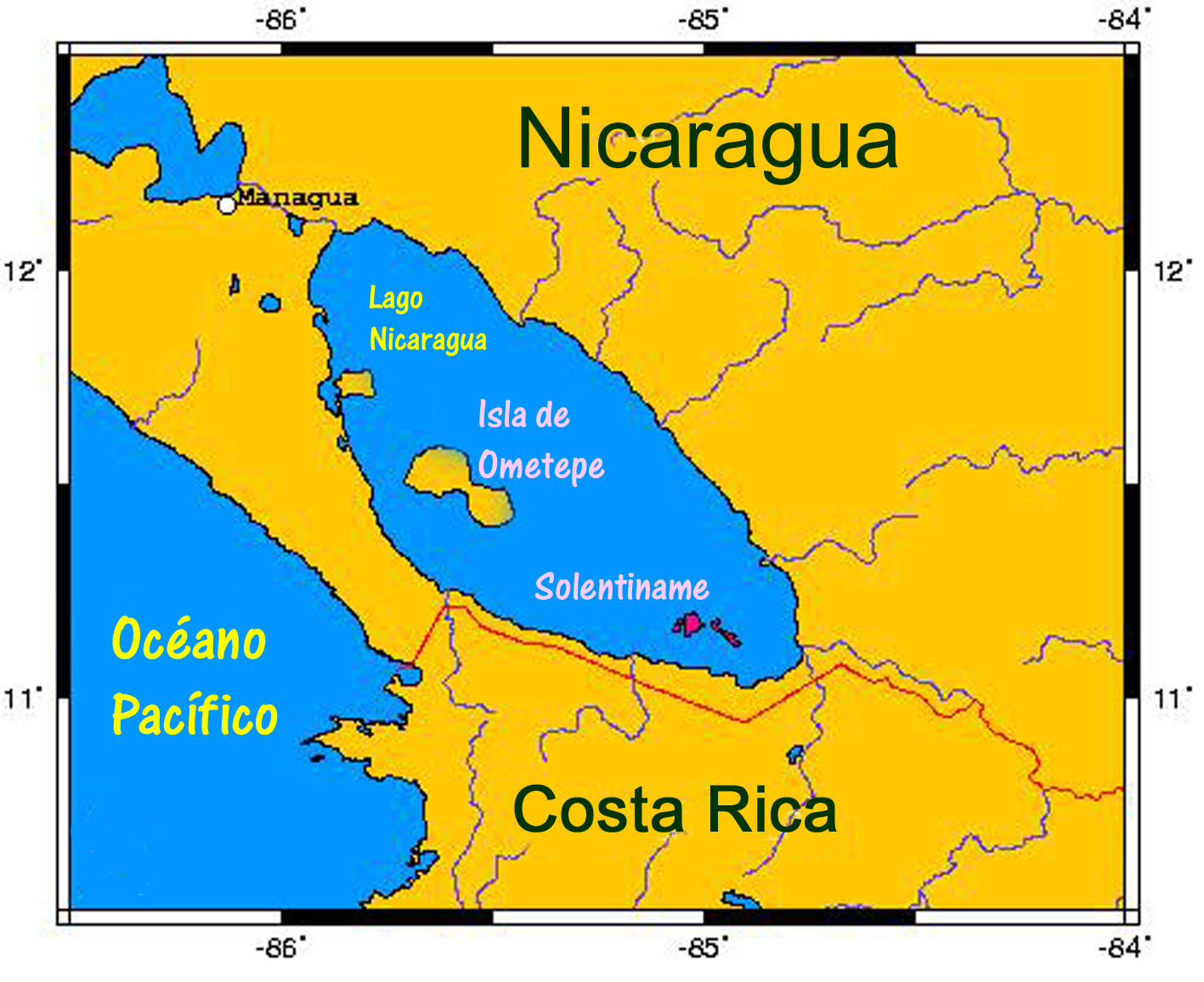 The Solentiname Islands, site of the Solentiname ecclesial base community One ecclesial base community important in the spread of liberation theology and support for the FSLN was the Solentiname community, established in 1966 by Fr. Ernesto Cardenal. At Solentiname, theologians, priests, and other revolutionaries gathered to pray, write, and reflect on contemporary political and religious matters.[58] This community bridged liberation theology and support for the FSLN in The Gospel of Solentiname, a four-volume exegetical text that re-interpreted the canonical gospels to address the realities of life among the Nicaraguan poor.[56] This document blended themes of liberation and revolutionary Christianity to propose a mutual relationship between Christianity and the FSLN and to justify the pursuit of Marxist revolution as an expression of faith.[58] The Solentiname community served as a model for countless rural ecclesial base communities across Nicaragua. One such ecclesial base community was located in Gualiqueme, a rural agricultural collective established in 1984 near the Honduras-Nicaragua border. In Gualiqueme, rural villagers engaged in the praxis of liberation theology through weekly gatherings that incorporated scriptural reflection, re-examination of cultural values, and communal work to improve the material outcomes of their community.[59] This community, which additionally served as a defense outpost for the FSLN against the Contras, embodied the interconnected nature of liberation theology with FSLN ideology and policy. |
サンディニスタ・ニカラグア 解放の神学とその実践者たちは、サンディニスタ民族解放戦線(スペイン語: Frente Sandinista de Liberación Nacional, FSLN)の結成と指導において重要な役割を果たした。この関係は、ニカラグア革命後のFSLN政権初期(1978年~1990年)に頂点に達した。解放 の神学とサンディニズムのイデオロギー的な収斂、FSLN政府内における解放の神学者の影響力、そして都市住民から教会ベースコミュニティに至るニカラグ ア民衆の間で相互に支え合われた解放の神学とFSLNへの支持に、その関係性は見られる。 サンディニズムの形成 解放の神学は、FSLNの思想的基盤であるサンディニズムの発展において重要な役割を果たした。1970年代、解放の神学の実践者たちは、人権侵害を特徴 とするアナスタシオ・ソモサ政権に対する最適な革命的選択肢として、FSLNをますます重視するようになった。この連携がサンディニズムの誕生をもたらし た。サンディニズムはアウグスト・サンディーノの急進的な農業ナショナリズムと、革命的キリスト教、ラテンアメリカ的マルクス主義を融合させたものであ る。[49] FSLNが解放神学者たちに訴求した理由はいくつかある。エルネスト・カルデナルやミゲル・デスコトといったニカラグアの解放の神学者たちが論じたよう に、解放の神学が目指す社会正義の実現と貧困層の抑圧終結は、FSLNの反資本主義・マルクス主義的イデオロギー基盤と本質的に結びついていた[50]。 FSLNのマルクス主義的基盤と同様に、解放の神学者たちは終末論的レンズを通して歴史を捉えた。つまり歴史的進化は最終的な運命へ向かうものだと考えた のである。[51] FSLNは解放の神学者のキリスト教的終末論的ビジョンをそのまま受け入れることはなかったが、解放の神学もサンディニズムも、新たな社会を実現する歴史 的主体として貧困層に力を与える革命的行動の必要性を強調した。この強調は、サンディニスタ革命によって「自らの解放の設計者」となったと感じたと主張す るニカラグア市民の証言にも明らかで、多くのニカラグア人カトリック教徒をFSLNへの参加へと引きつけた。[52] 解放の神学とサンディニスタ政権 1979年にソモサ政権打倒とFSLN政権樹立が成功した後、解放の神学とその実践者たちはFSLNが推進する政策を形作った。トマス・ボルヘが表明した キリスト教神学の赦しと平和の原則に従い、FSLNは権力掌握後、死刑を禁止し政治的敵対者への処刑を行わなかった最初の近代的革命運動となった。 [49] 解放の神学は1980年のニカラグア識字運動(スペイン語: Cruzada nacional de alfabetización)においても重要な役割を果たし、数千人のカトリック青年と司祭が貧困層の非識字撲滅を主導した。[53] 学者サンドラ・ラングレーが論じたように、この運動は「十字軍」という表現に象徴されるように、過度に宗教的な隠喩やイメージを多用した。[54] この運動以外にも、メアリーノール修道女会などの修道会の司祭や修道女がFSLNの公衆衛生キャンペーンを支援した。[53] FSLNプログラムに参加した数百人の司祭、修道女、信徒に加え、複数の解放神学者がFSLN政府内で執行職を務めた。1979年にはエルネスト・カルデ ナルとミゲル・デスコトがそれぞれFSLN文化大臣と外務大臣に就任した。フェルナンド・カルデナル、エドガー・パラレス、アルバロ・アルグエロら他の司 祭たちもFSLN政権下で政府職に就いた。[53] 保守的なニカラグアのカトリック教会上層部やバチカンからの批判や脅威にもかかわらず、これらの解放の神学者たちはFSLN政権下を通じて職務を継続し た。彼らは、自らの政府勤務が社会正義と貧困層の解放への神学的コミットメントを体現するとの考えを維持していたのである。[55] ニカラグア国民における解放の神学 FSLNと著名な解放の神学者たちの関係を超えて、解放の神学はニカラグア革命の前後を通じて、同国のキリスト教徒をFSLN支持へと動員した。解放の神 学は1960年代末から1970年代初頭にかけ、グスタボ・グティエレスら解放の神学者の著作に触れ、貧困層の生活実態を目の当たりにした世俗司祭や信徒 キリスト教徒によってニカラグア全土に広がった。[56] 1970年代を通じて、FSLNは革命的社会行動、武装闘争、貧しい人々への歴史的主体の拡大を強調することで、急進的なキリスト教徒をますます多く自ら の大義に引き寄せた。これらのメッセージは、ソモサ政権下の戒厳令と経済的搾取に苦悩した後、政治的・宗教的革命を通じて自らの解放をもたらそうとしたニ カラグアのキリスト教徒大衆に明確に訴えかけた。[57] ニカラグア人におけるFSLNへの支持は、主に教会ベースコミュニティを通じて広がった。彼らは『ラ・プレンサ』紙の記事、ラジオ番組、そして教育を受け たカトリック信徒による教えを通じて解放の神学とFSLNを知ったのである。[56] 教会ベースコミュニティは1960年代初頭、宗教・政治・社会問題を共に議論する小規模な地域キリスト教徒の集まりとしてニカラグアに初めて現れた。これ らの共同体が解放の神学を受け入れるにつれ、制度的なカトリック教会を拒否し、他の草の根共同体との連携ネットワークを構築した。[56] FSLN政権発足から2年後、ミゲル・オバンド・イ・ブラボ大司教率いるカトリック教会の指導層によるFSLNへの全面的な反対は、制度的なカトリック教 会と草の根共同体との分裂を固定化した。後者は1980年代を通じてFSLNと解放の神学を支持し続けた。[55] ソレンティナメ諸島、ソレンティナメ教会ベースコミュニティの拠点 解放の神学の普及とFSLN支持において重要な教会ベースコミュニティの一つが、エルネスト・カルデナル神父によって1966年に設立されたソレンティナ メ共同体である。ソレンティナメでは、神学者、司祭、その他の革命家たちが集い、祈り、執筆し、現代の政治的・宗教的問題について考察した。[58] この共同体は『ソレンティナメの福音書』という四巻からなる聖書解釈書を通じて、解放の神学とFSLN支持を結びつけた。この文書は正典福音書を再解釈 し、ニカラグアの貧困層の生活実態に向き合うことで、解放と革命的キリスト教のテーマを融合させた。キリスト教とFSLNの相互関係を示唆し、信仰の表現 としてのマルクス主義革命追求を正当化したのである。[58] ソレンティナメ共同体は、ニカラグア全土に広がる無数の農村教会基盤共同体のモデルとなった。その一つがグアリケメにある。グアリケメは1984年にホン ジュラス・ニカラグア国境近くで設立された農村農業共同体だ。グアリケメでは、農村住民が毎週の集会を通じて解放の神学の実践に取り組んだ。集会では聖書 考察、文化的価値観の再検討、共同作業が行われ、共同体の物質的成果の向上を図った[59]。この共同体はさらに、コントラ勢力に対するFSLNの前哨防 衛拠点としての役割も担い、解放の神学とFSLNのイデオロギー・政策が相互に結びついた性質を体現していた。 |
| Indigenous Brazil The Brazilian Catholic Church, in the world's largest Catholic country, is arguably one of the most theologically progressive Catholic congregations, due in large part to a history of violent military and political conflicts as well as a divisive socioeconomic climate. During Brazil's military rule from 1964 to 1985, the Catholic Church and its members assumed responsibility for providing services to the poor and disenfranchised, often under threat of persecution. The Vatican II and Medellín conference innovations in liberation theology entered the Brazilian Church as the Brazilian lower classes experienced sharply deteriorating economic and political conditions. Among these were an increase in landownership concentration, a decline in wages and standards of living, and a rise in the military state's political repression and violence, including mass detainment, torture, and the assassination of political opponents.[60] The Tapeba Anthropologist and author Max Maranhão Piorsky Aires analyzes the influence of liberation theology on the transformation of the indigenous Tapeba people of Brazil from poor, uneducated inhabitants neglected by the state to rights-bearing and involved citizens. Specifically he largely attributes the work of the Brazilian Catholic Church to the progression of the Tapeba. The Catholic Church enlisted state authorities, anthropologists, and journalists to help uncover the identity of neglected indigenous peoples of Brazil. Early recognition by missionaries and followers of liberation theology stimulated indigenous identification of the Tapeba population as a possibility for attaining rights, especially land, health, and education.[61] The Church gathered and contributed historical knowledge of indigenous territory and identity of the Tapeba in Caucaia that ultimately succeeded in the tribes obtaining a legally codified identity as well as a rightful place as Brazilian subjects. Gurupá In Gurupá, the Catholic Church employed liberation theology to defend indigenous tribes, farmers, and extractors from land expropriation by federal or corporate forces. New religious ideas, in the form of liberation theology, have fortified and legitimized an evolving political culture of resistance.[60] Meanwhile, the Church-supported Base Ecclesial Communities (CEBs) have promoted stronger social connections among community members that has led to more effective activism in Gurupá. Anthropologist Richard Pace's study of Gurupá revealed that CEBs assured safety in united activism, and, combined with liberation theology, encouraged members to challenge landowners' commercial monopolies and fight for better standards of living. Pace references a specific incident in the CEB of Nossa Senhora de Fátima, in which a community of 24 families of farmers, timber extractors, and traders resisted an extra-regional timber extraction firm. The community negotiated an agreement with the firm that gained them a higher standard of living that included imported goods, increased food availability, and access to health care. While severe social dislocations such as government-initiated capitalist penetration, land expropriation, and poor wages persist, small-farmer activism is fortified by liberation theology and receives structural support from unions, political parties, and church organizations.[60] |
先住民のブラジル 世界最大のカトリック国であるブラジルのカトリック教会は、おそらく最も神学的に進歩的なカトリック教団の一つだ。その背景には、暴力的な軍事・政治的紛 争の歴史や、分断的な社会経済的状況が大きく影響している。1964年から1985年までのブラジルの軍事政権下では、カトリック教会とその信徒たちは、 迫害の脅威にさらされながらも、貧しい者や権利を奪われた者への奉仕を担った。第二バチカン公会議とメデジン会議における解放の神学の革新は、ブラジルの 下層階級が経済的・政治的状況の急激な悪化を経験する中で、ブラジル教会に導入された。その悪化には、土地所有の集中化、賃金と生活水準の低下、そして軍 事政権による政治的弾圧と暴力の増加(大量拘束、拷問、政治的反対派の暗殺を含む)が含まれていた。 タペバ族 人類学者であり著述家でもあるマックス・マラニャン・ピオルスキー・アイレスは、解放の神学がブラジルの先住民タペバ族の変容に与えた影響を分析してい る。彼らは国家に見捨てられた貧しく教育を受けていない住民から、権利を保持し社会参加する市民へと変貌を遂げた。特に彼は、タペバ族の進歩を主にブラジ ルカトリック教会の働きに帰している。カトリック教会は国家当局、人類学者、ジャーナリストを動員し、見捨てられたブラジル先住民のアイデンティティを明 らかにする手助けをしたのである。宣教師や解放の神学の信奉者による早期の認識は、タペバ族が権利、特に土地・健康・教育を得る可能性として自らの先住民 性を自覚する契機となった[61]。教会はカウカイアにおけるタペバ族の先住民領土とアイデンティティに関する歴史的知識を収集・提供し、最終的に部族が 法的に規定されたアイデンティティとブラジル国民としての正当な地位を獲得する成功をもたらした。 グルパ グルパでは、カトリック教会が解放の神学を用いて、連邦政府や企業勢力による土地収用から先住民部族、農民、採掘労働者を守った。解放の神学という新たな 宗教思想は、進化する抵抗の政治文化を強化し正当化した。一方、教会が支援する教会基盤共同体(CEB)は、地域住民間の社会的絆を強化し、グルパにおけ る活動の効果向上につながった。人類学者リチャード・ペイスによるグルパ研究は、CEBが団結した活動における安全を保証し、解放の神学と相まって、メン バーが土地所有者の商業的独占に挑戦し、より良い生活水準を求めて闘うよう促したことを明らかにした。ペイスはノッサ・セニョーラ・デ・ファティマCEB における具体的な事例を引用している。そこでは24世帯の農民、木材採取者、商人からなるコミュニティが、域外の木材採取企業に抵抗した。共同体は企業と 合意を交渉し、輸入品の確保、食料供給の増加、健康へのアクセスを含む生活水準の向上を実現した。政府主導の資本主義浸透、土地収用、低賃金といった深刻 な社会的な混乱は依然として存在するが、小規模農家の活動は解放の神学によって強化され、労働組合、政党、教会組織からの構造的な支援を受けている。 [60] |
| Colombia Colombia is generally not known for the presence for liberation theology. However, liberation theology in Colombia focused on the broader radical movements of human rights and issues of racial inequality. While it is less significant today, it has not disappeared.[62] Camilo Torres Restrepo Camilo Torres Restrepo (1929–1966) was a priest, a guerrilla, and a sociologist. Torres was convinced that Marxism and Christianity were the only two movements that could bring political change; he concluded that violence was crucial for the change of the Colombian poor.[63] Even though he is often associated with the liberation theology approach, he cannot be properly considered a theologian of liberation since this Christian theological approach fully developed at the end of the 1960s, shortly after his death.[63] He resigned from his university position and joined the guerillas. He was killed fighting for the National Liberation Army (ELN). Gerardo Valencia Cano Bishop Gerardo Valencia Cano was born on August 26, 1917, in Santo Domingo, Antioquia. He was an Apostolic Prefect of Vaupés (1949–1953), Apostolic Vicar of Buenaventura (1953–1972), participated in the Second Vatican Ecumenical Council (1962–1965), was the first President of the Department of Missions of CELAM (1966), and the director of the Colombian Anthropology Center of the Missions and Ethnia magazine. He organized the First Continental Meeting of the Latin American Missions in Melgar (Tolima) in 1966.[64] Bishop Valencia Cano devoted his career to missionary work with the Afro-Colombians and the Indigenous in Vaupés and Buenaventura. Over time, Bishop Cano became increasingly involved with social issues and the justice for Afro-Colombians. He argued for the use of the term "moreno" instead of "negro" as a more sincere way of associating people with darker skin color.[65] Addressing the social and radical changes he used a weekly radio broadcast. As he became more involved with social justice, he hosted the second meeting of the Golconda Priest movement. Critics labeled him the "Red Bishop" and called him communist. After his death in a mysterious plane crash on January 21, 1972, he is remembered as the bishop of the blacks for his work with Afro-Colombians. Before his death, he was considered the highest institutional support for liberation theology in the Colombian Catholic Church.[65] The Golconda Statement by Colombian priests In 1968, a group of Colombian priests saw the revolution as the only way to overcome "underdevelopment" and become more modernized. The document was prepared by the second meeting of an association which is known as "The Golconda Priest Group". The priests came up with the name "Golconda" during their first meeting in July 1968 held in Voit, Cundinamarca. The second meeting was held in Buenaventura, hosted by Bishop Valencia Cano. The coordination of the priests was designed for study of Pope Paul VI's encyclical Populorum progressio and for discussion on the conditions of the Second Episcopal Conference. Golconda intended to: "employ a scientific method for analysis and action; condemn the dominant nature of imperialism; confront the power of the traditional parties; end the relationships with the conservative structures of the state; and start a revolution for modernizing Colombia."[65] Reaction to the Golconda statement was strongly negative from both the Church and the Colombian government.[65] The Church and Colombia's civil war During the low-intensity civil war between the guerillas and the Colombian government, progressive Catholics were some of the most powerful advocates for human rights. However, church members were targeted by the Colombian military for their human rights works. One Colombian newspaper calculated, "between 1984 and September of 2011, two bishops, 79 priests, eight men and women religious, and three seminarians have been killed in Colombia alone. And, for the most part, these victims have been advocates for the poor and have been killed by right-wing paramilitaries aligned with the Colombian state and military."[66] |
コロンビア コロンビアは一般的に解放の神学の存在で知られていない。しかし、コロンビアの解放の神学は人権や人種的不平等の問題といった広範な急進的運動に焦点を当てていた。今日では重要性は低下しているが、消滅したわけではない。[62] カミロ・トーレス・レストレポ カミロ・トーレス・レストレポ(1929–1966)は司祭であり、ゲリラであり、社会学者であった。トーレスは、マルクス主義とキリスト教こそが政治的 変革をもたらし得る唯一の二つの運動であると確信していた。彼は、コロンビアの貧困層の変革には暴力が必要不可欠であると結論づけた[63]。解放の神学 の手法と結びつけられることが多いが、このキリスト教神学的手法が完全に発展したのは1960年代末、彼の死後間もない時期であったため、彼を解放の神学 の神学者と正しく見なすことはできない。[63] 彼は大学職を辞し、ゲリラに合流した。国民解放軍(ELN)の戦いで戦死した。 ヘラルド・バレンシア・カノ ヘラルド・バレンシア・カノ司教は1917年8月26日、アンティオキア州サント・ドミンゴで生まれた。彼はバウペス教区使徒座代牧(1949- 1953)、ブエナベントゥラ教区使徒座代牧(1953-1972)を務め、第二バチカン公会議(1962-1965)に参加した。CELAM宣教部初代 部長(1966)を務め、コロンビア宣教人類学センターおよび『エスニア』誌の編集長も務めた。1966年にはトリーマ州メルガルで第1回ラテンアメリカ 宣教大陸会議を主催した。(1966年)初代会長を務め、コロンビア宣教人類学センターおよび『エスニア』誌の編集長も務めた。1966年にはトリーマ州 メルガルで第1回ラテンアメリカ大陸宣教会議を主催した[64]。 バレンシア・カノ司教は、バウペスとブエナベントゥラにおけるアフリカ系コロンビア人および先住民への宣教活動に生涯を捧げた。時が経つにつれ、カノ司教 は社会問題やアフリカ系コロンビア人の正義に深く関わるようになった。彼は肌の色が濃い人々を指す言葉として「ニグロ」ではなく「モレノ」を使うよう主張 し、より誠実な表現だと訴えた[65]。社会的な急進的変化について語るため、彼は毎週のラジオ放送を利用した。社会正義への関与を深める中で、ゴルコン ダ司祭運動の第2回集会を主催した。批判派は彼を「赤い司教」と呼び、共産主義者だと非難した。1972年1月21日、不可解な飛行機事故で死去した後、 彼はアフリカ系コロンビア人への貢献から「黒人の司教」として記憶されている。死の前には、コロンビアカトリック教会における解放の神学の最高位の制度的 支援者と見なされていた。 コロンビア司祭団によるゴルコンダ宣言 1968年、コロンビアの司祭団は「未開発」を克服し近代化を図る唯一の道として革命を提唱した。この文書は「ゴルコンダ司祭団」として知られる団体の第 2回会合で作成された。司祭たちは1968年7月、クンディナマルカ州ボイトで開催された第1回会合で「ゴルコンダ」という名称を考案した。第2回会合は バレンシア・カノ司教の主催でブエナベントゥラで行われた。司祭たちの連携は、教皇パウロ6世の回勅『ポプロラム・プログレッシオ』の研究と、第2回司教 会議の状況を議論するために設計された。ゴルコンダは次の目的を掲げた:「科学的分析と行動手法の採用、帝国主義の支配的性質の非難、伝統的政党勢力への 対抗、国家保守構造との関係断絶、コロンビア近代化革命の開始」[65]。この声明に対し、教会とコロンビア政府双方から強い反発が起きた[65]。 教会とコロンビア内戦 ゲリラとコロンビア政府の間で低強度の内戦が続く中、進歩的なカトリック教徒は人権擁護の最も強力な支持者の一部であった。しかし、教会関係者は人権活動 のためにコロンビア軍から標的にされた。あるコロンビア紙は「1984年から2011年9月までに、コロンビア国内だけで司教2名、司祭79名、修道者8 名、神学生3名が殺害された。そしてこれらの犠牲者の大半は貧困層の擁護者であり、コロンビア政府や軍と結託した右翼民兵組織によって殺害された」と試算 している。[66] |
| Reactions Ratzinger era In March 1983, Cardinal Joseph Ratzinger (later Pope Benedict XVI), head of the Vatican's Congregation for the Doctrine of the Faith (CDF), made ten observations of Gustavo Gutiérrez's theology, accusing Gutiérrez of politically interpreting the Bible in supporting temporal messianism, and stating that the predominance of orthopraxis over orthodoxy in his thought proved a Marxist influence. Ratzinger objected that the spiritual concept of the Church as "People of God" is transformed into a "Marxist myth". In liberation theology, he declared, the "'people' is the antithesis of the hierarchy, the antithesis of all institutions, which are seen as oppressive powers. Ultimately anyone who participates in the class struggle is a member of the 'people'; the 'Church of the people' becomes the antagonist of the hierarchical Church."[32] Ratzinger did praise liberation theology in some respects, including its ideal of justice, its rejection of violence, and its stress on "the responsibility which Christians necessarily bear for the poor and oppressed".[32] He subsequently stated that no one could be neutral in the face of injustice, and referred to the "crimes" of colonialism and the "scandal" of the arms race. Nonetheless, Latin American conservative media could claim that condemnation of "liberation theology" meant a rejection of such attitudes and an endorsement of conservative politics. In 1984, it was reported that a meeting occurred between the CDF and the CELAM bishops, during which a rift developed between Ratzinger and some of the bishops,[20] with Ratzinger issuing official condemnations of certain elements of liberation theology.[67][68] These "Instructions" rejected as Marxist the idea that class struggle is fundamental to history, and rejected the interpretation of religious phenomena such as the Exodus and the Eucharist in political terms. Ratzinger further stated that liberation theology had a major flaw in that it attempted to apply Christ's sermon on the mount teachings about the poor to present social situations.[citation needed] He asserted that Christ's teaching on the poor meant that we will be judged when we die, with particular attention to how we personally have treated the poor. Ratzinger also argued that liberation theology is not originally a "grass-roots" movement among the poor, but rather, a creation of Western intellectuals: "an attempt to test, in a concrete scenario, ideologies that have been invented in the laboratory by European theologians" and in a certain sense itself a form of "cultural imperialism". Ratzinger saw this as a reaction to the demise or near-demise of the "Marxist myth" in the West.[32] Throughout the 1990s, Ratzinger, as prefect of the CDF, continued to condemn these elements in liberation theology, and prohibited dissident priests from teaching such doctrines in the Catholic Church's name. Leonardo Boff was suspended and others were censured. Tissa Balasuriya, in Sri Lanka, was excommunicated. Sebastian Kappen, an Indian theologian, was also censured for his book Jesus and Freedom.[69] Under Ratzinger's influence, theological formation schools were forbidden from using the Catholic Church's organization and grounds to teach unacceptable Marxist ideas from liberation theology. |
反応 ラッツィンガー時代 1983年3月、バチカン教理省長官であったヨゼフ・ラッツィンガー枢機卿(後のベネディクト16世)は、グスタボ・グティエレスの神学について10項目 の所見を提出した。その中でグティエレスを、聖書を政治的に解釈して世俗的メシア主義を支持していると非難し、その思想において正統的実践 (orthopraxis)が正統的教義(orthodoxy)に優先していることがマルクス主義の影響を証明していると述べた。ラッツィンガーは、教会 を「神の民」とする霊的な概念が「マルクス主義の神話」へと変質していると反論した。解放の神学においては、「『民衆』とは階層構造の対極であり、抑圧的 な権力と見なされるあらゆる制度の対極である。究極的には階級闘争に参加する者は皆『民衆』の一員となり、『民衆の教会』は階層的教会と対立する存在とな る」と彼は宣言した[32]。 ラッツィンガーは解放の神学のいくつかの側面、すなわち正義の理想、暴力の拒絶、「キリスト教徒が貧しい者や抑圧された者に対して必然的に負う責任」の強 調については称賛した[32]。彼はその後、不正義に直面して中立でいられる者はいないと述べ、植民地主義の「犯罪」や軍拡競争の「スキャンダル」に言及 した。しかしながら、ラテンアメリカの保守系メディアは、「解放の神学」の非難がこうした姿勢の拒絶と保守的政治の支持を意味すると主張できたのである。 1984年、教理省とラテンアメリカ司教会議(CELAM)の司教たちとの会合が行われたと報じられた。その過程でラッツィンガーと一部の司教たちの間に 亀裂が生じ[20]、ラッツィンガーは解放の神学の特定の要素に対する公式な非難を発した[67]。[68] この「指示」は、階級闘争が歴史の根本であるという考えをマルクス主義として拒否し、出エジプト記や聖体拝領といった宗教的現象を政治的に解釈することを 退けた。ラッツィンガーはさらに、解放の神学には重大な欠陥があると述べた。それは、キリストの山上の垂訓における貧者に関する教えを現代の社会状況に適 用しようとする点にあるという。[出典が必要] 彼は、キリストの貧者に関する教えは、死後に裁きを受けることを意味し、特に個人的なレベルで貧者をどのように扱ったかに注目されるべきだと主張した。 ラッツィンガーはまた、解放の神学は本来、貧しい人々の「草の根」運動ではなく、西洋の知識人による創作であると論じた。「ヨーロッパの神学者たちが実験 室で考案したイデオロギーを、具体的なシナリオで試そうとする試み」であり、ある意味でそれ自体が「文化的帝国主義」の一形態だと述べた。ラッツィンガー はこれを、西洋における「マルクス主義の神話」の終焉、あるいは終焉に近い状態への反応と見なした[32]。 1990年代を通じて、教理省長官としてのラッツィンガーは解放の神学のこうした要素を非難し続け、異端の司祭たちがカトリック教会の名においてそのよう な教義を教えることを禁じた。レオナルド・ボフは職務停止処分となり、他の者たちも非難を受けた。スリランカのティッサ・バラスリヤは破門された。インド の神学者セバスチャン・カッペンも著書『イエスと自由』で非難を受けた[69]。ラッツィンガーの影響下で、神学養成学校は解放の神学の容認できないマル クス主義思想を教えるためにカトリック教会の組織や施設を利用することを禁じられた。 |
| Pope Francis era According to Roberto Bosca, a historian at Austral University in Buenos Aires, Jorge Bergoglio (later Pope Francis) had "a reputation as an opponent of liberation theology during the 1970s"; he "accepted the premise of liberation theology, especially the option for the poor, but in a 'nonideological' fashion".[70] Before becoming Pope, Bergoglio said, "The option for the poor comes from the first centuries of Christianity. It's the Gospel itself. If you were to read one of the sermons of the first fathers of the Church, from the second or third centuries, about how you should treat the poor, you'd say it was Maoist or Trotskyist. The Church has always had the honor of this preferential option for the poor. ... At the Second Vatican Council the Church was redefined as the People of God and this idea really took off at the Second Conference of the Latin-American bishops in Medellín."[71] Bosca said Bergoglio was not opposed to liberation theology itself but to "giving a Catholic blessing to armed insurgency", specifically the Montoneros, who claimed liberation theology as part of their political ideology.[70] In Argentina there was a current of liberation theology called the theology of the people. Its main exponents were the theologians Lucio Gera and Rafael Tello.[72] Bergoglio was much influenced by this trend, especially since he was Archbishop of Buenos Aires. On September 11, 2013, Pope Francis hosted Gutiérrez in his residence, where he concelebrated Mass with Gutiérrez and Gerhard Müller, then Prefect of the Congregation for the Doctrine of the Faith.[73] Some saw this meeting as a sign of warming relations between the hierarchy and liberation theologians.[74][75] The same month, L'Osservatore Romano published an article by Archbishop Müller praising Gutiérrez.[74] On January 18, 2014, Pope Francis met with Arturo Paoli, an Italian priest whom the Pope knew from Paoli's long service in Argentina. Paoli is recognized as an exponent of liberation theology before the term arose and the meeting was seen as a sign of "reconciliation" between the Vatican and the liberationists.[76] Miguel d'Escoto, a Maryknoll priest from Nicaragua, had been sanctioned with an a divinis suspension from his public functions in 1984 by Pope John Paul II, for political activity in the leftist Sandinista government in Nicaragua. Pope Francis lifted the suspension in August 2014, in response to a request by d'Escoto.[77] At a 2015 press conference in the Vatican hosted by Caritas International, the federation of Catholic relief agencies, Gutiérrez noted that while there had been some difficult moments in the past dialogue with the Congregation for the Doctrine of the Faith, liberation theology had never been condemned. Although he saw an increasingly clear emphasis on Church teachings on the poor, he did not consider that liberation theology was undergoing a rehabilitation, since it had never been "dishabilitated".[78] In January 2019, during the World Youth Day in Panama, Pope Francis discussed changing attitudes to liberation theology during an extended discussion with a group of thirty Jesuits from Central America. He noted that he had a devotion to the martyred Salvadoran Jesuit priest, Rutilio Grande, even before he came to know Óscar Romero well. Francis commented that "Today we old people laugh about how worried we were about liberation theology. What was missing then was communication to the outside about how things really were."[79] |
フランシスコ教皇時代 ブエノスアイレスのアウストラール大学の歴史学者ロベルト・ボスカによれば、ホルヘ・ベルゴリオ(後のフランシスコ教皇)は「1970年代に解放の神学の 反対者として知られていた」。彼は「解放の神学の前提、特に貧しい者への選択を受け入れたが、『非イデオロギー的』な形でそうした」という。[70] 教皇就任前、ベルゴリオはこう語った。「貧しい者への選択はキリスト教の最初の数世紀に由来する。それは福音そのものだ。もしあなたが、貧しい者をどう扱 うべきかについて、2世紀や3世紀の教会の初代教父たちの説教の一つを読んだなら、それは毛沢東主義かトロツキズムだと言うだろう。教会は常に、貧しい者 へのこの優先的選択という栄誉を持ってきた。... 第二バチカン公会議で教会は神の民と再定義され、この考えはメデジンで開催された第二回ラテンアメリカ司教会議で本格的に広がった。」[71] ボルカは、ベルゴリオが解放の神学そのものに反対していたのではなく、「武装反乱にカトリックの祝福を与えること」、特に解放の神学を政治イデオロギーの 一部として掲げたモントネロスに反対していたと述べた。[70] アルゼンチンでは、「民衆の神学」と呼ばれる解放の神学の潮流があった。その主な代表者は、神学者のルシオ・ゲラとラファエル・テッロであった。[72] ベルゴリオは、特にブエノスアイレス大司教だった頃から、この潮流に大きな影響を受けていた。 2013年9月11日、教皇フランシスコはグティエレスを自邸に招き、グティエレスと、当時教義省長官だったゲルハルト・ミュラーとともにミサを共祝した [73]。この会合を、教会の指導層と解放神学者たちの関係が改善の兆しを見せていると見る者もいた[74]。[75] 同月、ロッセヴァトーレ・ロマーノ紙は、ミュラー大司教によるグティエレスを称賛する記事を掲載した。[74] 2014年1月18日、教皇フランシスコは、アルトゥーロ・パオリと面会した。パオリは、アルゼンチンで長年にわたり奉仕していたイタリア人司祭であり、 教皇は以前から彼を知っていた。パオリは、この用語が生まれる前から解放の神学の代表者として知られており、この面会はバチカンと解放の神学者の間の「和 解」の兆しと見なされた。[76] ニカラグア出身のメアリーノール司祭、ミゲル・デスコトは、1984年にニカラグアの左翼サンディニスタ政権で政治活動を行ったとして、教皇ヨハネ・パウ ロ2世から公職の停止処分を受けた。教皇フランシスコは2014年8月、デスコトの要請に応じこの停止処分を解除した[77]。 2015年、カトリック救済機関連合体カリタス・インターナショナル主催のバチカン記者会見で、グティエレスは「教義省との過去の対話には困難な局面も あったが、解放の神学が非難されたことは一度もない」と指摘した。貧しい人々に関する教会の教えがますます明確に強調されるようになったと認めつつも、解 放の神学は「無効化」されたことがなかったため、現在「再評価」されているとは考えていないと述べた。[78] 2019年1月、パナマで開催された世界青年の日において、教皇フランシスコは中米出身のイエズス会士30名との長時間にわたる対話の中で、解放の神学に 対する態度の変化について言及した。彼は、オスカル・ロメロ司教と親しくなる以前から、殉教したエルサルバドル人イエズス会司祭ルティリオ・グランデへの 敬愛を抱いていたと述べた。フランシスコは「今となっては我々年寄りは、解放の神学をあれほど心配していたことを笑い話にしている。当時欠けていたのは、 実際の状況を外部に伝えるコミュニケーションだった」と語った。[79] |
| Outside Latin America [icon] This section needs expansion. You can help by adding missing information. (December 2020) Romania Communist era general of Romania's secret police, Ion Mihai Pacepa, claims that the KGB created liberation theology.[80] Commentators, notably John L. Allen of Crux on the left[81] and Damian Thompson of The Spectator on the right,[82] have suspected these claims are exaggerated. United States Latin American liberation theology met with approval in the United States, but its use of "Marxist concepts"[83] led in the mid-1980s to an admonition by the Vatican's Congregation for the Doctrine of the Faith (CDF). While stating that "in itself, the expression 'theology of liberation' is a thoroughly valid term",[84] the prefect Cardinal Ratzinger rejected certain forms of Latin American liberation theology for focusing on institutionalized or systemic sin and for identifying Catholic Church hierarchy in South America as members of the same privileged class that had long been oppressing indigenous populations from the arrival of Pizarro onward.[14] In 1983 US vice president George H. W. Bush said he could not comprehend how Catholic theologians could harmonize Catholicism and Marxism and support revolutionaries in Central America. "I'm puzzled. I just don't understand it."[85] |
ラテンアメリカ以外 [icon] この節は拡充が必要だ。不足している情報を追加することで貢献できる。(2020年12月) ルーマニア ルーマニア秘密警察の共産主義時代の将軍、イオン・ミハイ・パチェパは、KGBが解放の神学を創出したと主張している[80]。左派のCrux誌のジョ ン・L・アレン[81]や右派のThe Spectator誌のダミアン・トンプソン[82]といった論評家たちは、これらの主張は誇張されていると疑っている。 アメリカ合衆国 ラテンアメリカの解放の神学はアメリカ合衆国で支持を得たが、「マルクス主義的概念」[83]の使用が1980年代半ばにバチカンの教理省(CDF)によ る警告を招いた。「解放の神学という表現自体は完全に妥当な用語である」と述べつつも[84]、ラッツィンガー枢機卿(後の教皇ベネディクト16世)は、 制度化された罪や体系的な罪に焦点を当て、南米のカトリック教会指導層を、ピサロの到来以来長く先住民を抑圧してきた特権階級の一員と同一視するラテンア メリカ解放の神学の特定の形態を拒否した。[14] 1983年、米国副大統領ジョージ・H・W・ブッシュは、カトリック神学者たちがカトリックとマルクス主義を調和させ、中米の革命派を支援する姿勢を理解できないと述べた。「私は困惑している。まったく理解できない」[85] |
| References 01. Dictionary of Historical Terms (1998), 2nd ed., Chris Cook, ed., p. 203. Løland, Ole Jakob (July 2021). Usarski, Frank (ed.). "The Solved Conflict: Pope Francis and Liberation Theology" (PDF). International Journal of Latin American Religions. 5 (2). Berlin: Springer Nature: 287–314. doi:10.1007/s41603-021-00137-3. eISSN 2509-9965. ISSN 2509-9957. "Camilo Torres: Prayer Can't Solve Poverty Alone". COHA. April 1, 2009. Retrieved April 9, 2025. Parisi, Piergiuseppe; Ibarra Padilla, Adelaida Maria (July 1, 2025). "The Colombian Catholic Church's Quest for Legitimacy in the Colombian Armed Conflict". Journal of Human Rights Practice. 17 (2) huae041. doi:10.1093/jhuman/huae041. ISSN 1757-9627. Pérez-Bustillo, Camilo (February 12, 2016). "Pope Francis, Mexico, and the Legacies of Liberation Theology and Camilo Torres". Truthout. Retrieved April 9, 2025. Protección social inclusiva en América Latina: una mirada integral, un enfoque de derechos (in Spanish). CEPAL. March 1, 2011. ISBN 978-92-1-054555-6. Dault, Lira (January 22, 2015). "What Is the Preferential Option for the Poor?". U.S. Catholic. 80: 46. Archived from the original on July 10, 2020. Crosby, Michael (October 17, 2016). "In 1971, the Bishops Sounded a Call for Justice". National Catholic Reporter. Archived from the original on August 3, 2020. Retrieved July 10, 2020. Richard P. McBrien, Catholicism (Harper Collins, 1994), chapter IV. 10 Gustavo Gutierrez, A Theology of Liberation, 1st (Spanish) ed. Lima, Peru, 1971; 1st English ed. Orbis Books (Maryknoll, New York), 1973. Alves, Rubem A. (1988). Towards a Theology of Liberation. Princeton Theological Seminary. "Rubem Alves – Liberation Theology Pioneer". Critical Therapy Center. New York. July 21, 2014. Archived from the original on January 13, 2015. Retrieved May 21, 2020. Robert Pelton, "Latin America, Catholicism in" in R. P. McBrien, ed., The HarperCollins Encyclopedia of Catholicism, HarperCollins, 1995. Wojda, Paul J., "Liberation theology", in R. P. McBrien, ed., The Catholic Encyclopedia (HarperCollins, 1995). Elisabeth Erin Williams. "Liberation Theology and Its Role in Latin America". Monitor: Journal of International Studies. The College of William and Mary. "Peruvian theologian the Rev. Gustavo Gutiérrez, father of influential liberation theology, has died". Associated Press News. October 23, 2024. Retrieved October 23, 2024. Jones, Sam (October 23, 2024). "Gustavo Gutiérrez, Peruvian priest and 'father of liberation theology', dies at 96". The Guardian. Retrieved October 23, 2024. "Gustavo Gutiérrez, 'father of liberation theology,' dies at 96". Catholic News Agency. October 23, 2024. Retrieved October 23, 2024. Brown, Dennis (October 23, 2024). "In memoriam: Rev. Gustavo Gutiérrez, O.P., renowned Notre Dame theologian, father of 'liberation theology'". Notre Dame News. Retrieved October 23, 2024. 20. Curti, Elena (May 8, 2010). "Study in Scarlet". The Tablet. p. 4. ISSN 0039-8837. (Available upon request) "To members of the 3rd General Conference of the Latin American Episcopate, Puebla – Republic of Mexico (January 28, 1979) – John Paul II". Holy See. Retrieved October 17, 2017. Smith, Christian. The Emergence of Liberation Theology Populorum progressio [On the Development of Peoples], Encyclical Letter of His Holiness Pope Paul VI promulgated on March 26, 1967 Mehta, Samira; Boyd, Samuel L. (June 4, 2020). "A justification for unrest? Look no further than the Bible and the Founding Fathers". The Conversation. Retrieved July 10, 2020. Gutiérrez, Gustavo (1971). Teología de la liberación: perspectivas. Lima, Peru: Centro de Estudios y Publicaciones (CEP). Gustavo Gutierrez, A Theology of Liberation (London: SCM Press, 1974), 36f Ratzinger, Joseph (February 21, 2008). "Address of His Holiness Benedict XVI to the Fathers of the General Congregation of the Society of Jesus". Speeches February 2008. The Holy See. Gutierrez, Gustavo. The God of Life. Maryknoll, New York: Orbis, 1991. (Original: El Dios de la vida. Lima: CEP, 1989.) p. 112 Nickoloff, James B., ed. Gustavo Gutierrez: Essential Writings. Maryknoll, New York: Orbis, 1996, p. 145 30. Gutierrez, Gustavo. The Truth Shall Make You Free: Confrontations. Maryknoll, New York: Orbis, 1990. (Original: La verdad los hara libres: confrontaciones. Lima: CEP, 1986) Gutierrez, Gustavo. The Power of Poor in History. Maryknoll, New York: Orbis, 1983. (Original: La fuerza historica de los obres: selección de trabajos. Lima: CEP, 1971.) Ratzinger, Joseph (2007) [The Ratzinger Report]. "Liberation Theology: Preliminary Notes". In Thornton, J. F.; Varenne, S. B. (eds.). The Essential Pope Benedict XVI. HarperCollins. McBrien, R. P. Catholicism (Harper Collins, 1995), pp. 249–250. Gutierrez, G. "Faith as Freedom", Horizons 2/1, Spring 1975, p.32 "Ejército de Liberación Nacional". May 26, 2008. Retrieved December 29, 2011. "Camilo Torres Restrepo 1929–1966". Filosofia.org. Retrieved December 29, 2011. "Liberation Theology", Archived March 11, 2012, at the Wayback Machine, Canada & the World, February 10, 2010 "Cardinal Barreto: The Amazon synod is the child of 'Laudato Si'". America Magazine. October 17, 2019. Retrieved July 10, 2020. Robin Nagle. Claiming the Virgin: The Broken Promise of Liberation Theology in Brazil. New York: Routledge, 1997. pp xii, 224. 40. Bellos, Alex (August 31, 1999). "Hélder Câmara". The Guardian. ISSN 0261-3077. Retrieved July 10, 2020. "Brazilian icon of liberation theology moves closer to sainthood". Crux Now. January 7, 2019. Retrieved November 13, 2020. Manuel A. Vasquez. The Brazilian Popular Church and the Crisis of Modernity. Cambridge: Cambridge University Press, 1998. Rohter, Larry (May 7, 2007). "As Pope Heads to Brazil, a Rival Theology Persists". The New York Times. Retrieved December 6, 2022. Stanley, Brian (2013). The Global Diffusion of Evangelicalism: The Age of Billy Graham and John Stott. Grand Rapids, Michigan: InterVarsity Press. pp. 151–80. ISBN 978-0-8308-2585-1. Kirkpatrick, David C. (2016). "The Widening of Christian Mission: C. René Padilla and the Intellectual Origins of Integral Mission". In Sexton, Jason S.; Weston, Paul (eds.). The End of Theology: Shaping Theology for the Sake of Mission. Minneapolis, Minnesota: Fortress Press. pp. 193–210. ISBN 978-1-5064-0592-6. Padilla, C. René (2010). Mission Between the Times: Essays on the Kingdom. Carlisle: Langham Monographs. ISBN 978-1-907713-01-9. Escobar, Samuel (2003). A Time of Mission: The Challenge for Global Christianity. Carlisle: Langham Global Library. ISBN 978-1-907713-02-6. Costas, Orlando E. (1974). The Church and its Mission: A Shattering Critique from the Third World. Wheaton, Illinois: Tyndale House. ISBN 978-0-8423-0275-3. Lowy, Michael; Pompan, Claudia (Autumn 1993). "Marxism and Christianity in Latin America". Latin American Perspectives. 20 (4): 39. doi:10.1177/0094582X9302000403. S2CID 143516572. 50. Pierre-Reed, Jean (2020). "Elective affinities between Sandismo (as socialist idea) and liberation theology in the Nicaraguan Revolution". Critical Research on Religion. 8 (2): 165–66. Spickard, James V. (Fall 1992). "Transcending Marxism: Liberation Theology and Critical Theology". CrossCurrents. 42 (3): 331. Soto, Fernanda (2020). "The revolution was so many things". In Francis, Hilary (ed.). A Nicaraguan Exceptionalism? Debating the Legacy of the Sandinista Revolution. London: University of London Press. p. 56. Williams, Phillip K. (2009). "The Catholic Church in the Nicaraguan Revolution". The Catholic Church and Politics in Nicaragua and Costa Rica. Pittsburgh, Pennsylvania: University of Pittsburgh Press. pp. 68–69. Langley, Sandra (2004). "Revisiting 'resistance', 'the peasantry', and liberation/development: the case of Sandinismo in the 1980s". Social Analysis. 48 (1): 187–190. doi:10.3167/015597704782352654. Sawchuk, Dana (Spring 1997). "The Catholic Church in the Nicaraguan Revolution: A Gramscian Analysis". Sociology of Religion. 58 (1): 47. doi:10.2307/3712105. JSTOR 3712105. Clos, Ryne (2012). "In the Name of the God Who Will Be: The Mobilization of Radical Christians in the Sandinista Revolution". Journal for the Study of Radicalism. 6 (2): 12–13. doi:10.1353/jsr.2012.0010. S2CID 162356992. Montoya, Rosario (January 1995). "Liberation Theology and the Socialist Utopia of a Nicaraguan Shoemaker". Social History. 20 (1): 29. doi:10.1080/03071029508567923. Reed, Jean-Pierre; Pitcher, Sarah (2015). "Religion and Revolutionary We-Ness: Religious Discourse, Speech Acts, and Collective Identity in Prerevolution Nicaragua". Journal for the Scientific Study of Religion. 54 (3): 494. doi:10.1111/jssr.12213. Cooper, David (2020). "Grassroots Verticalism? A Comunidad Eclesial de Base in rural Nicaragua". In Francis, Hilary (ed.). A Nicaraguan Exceptionalism? Debating the Legacy of the Sandinista Revolution. London: University of London Press. pp. 151–152. 60. Pace, R. (1992). "Social conflict and political activism in the Brazilian Amazon: a case study of Gurupá". American Ethnologist. 19 (4): 710–732. doi:10.1525/ae.1992.19.4.02a00050. Maranhao Piorsky Aires, Max (2012). "Legalizing Indigenous Identities: The Tapeba Struggle for Land and Schools in Caucaia, Brazil". The Journal of Latin American and Caribbean Anthropology. 17 (2): 320–340. doi:10.1111/j.1935-4940.2012.01220.x. Celis, Leila (March 28, 2016). "The Legacy of Liberation Theology in Colombia: The Defense of Life and Territory". Latin American Perspectives. 43. doi:10.1177/0094582X16639270. S2CID 147461772. "Camilo Torres, Liberation Theology, and Marxism" (PDF). Czech Republic: Muni. "50 years since the death of the first Apostolic Vicar of Buenaventura, Monsignor Gerardo Valencia Cano". Fides. Colombia. Retrieved June 1, 2022. Büschges, Christian; Müller, Andrea; Oehri, Noah (2021). Liberation theology and the others: contextualizing Catholic activism in 20th century Latin America. Lanham, Maryland. ISBN 978-1-7936-3364-4. OCLC 1261767527. "US and Colombia Escalate Attacks on Liberation Church". CounterPunch. September 14, 2011. Retrieved June 3, 2022. Congregation for the Doctrine of the Faith (September 13, 1984). 'Instruction on certain aspects of the "Theology of Liberation"', Origins 14/13. 'Instruction on Christian Freedom and Liberation', Origins 15/44. Congregation for the Doctrine of the Faith. April 17, 1986. Kappen, Sebastian (1977). Jesus and Freedom. In 1980, the CDF asked the General of the Society of Jesus (of which Kappen was a member) to disavow this book. Kappen responded with a pamphlet entitled 'Censorship and the Future of Asian Theology'. No further action was taken by the Vatican on this matter. 70. Allen, John L. Jr. (April 12, 2013). "Hard questions about Francis in Argentina and a lesson from Chile". National Catholic Reporter. Transcript of 2010 judicial inquiry, "Bergoglio Declara ante el TOF No. 5", Archived June 11, 2013, at the Wayback Machine, translated in Ivereigh, Austen (November 25, 2014), The Great Reformer: Francis and the Making of a Radical Pope (Kindle ed.), New York: Henry Holt and Co. (published 2014), locations 1897–1903, ISBN 978-1-62779-158-8 Bianchi, Enrique Ciro. "La teología de la pastoral popular de Rafael Tello: Para entender las raíces teológicas del Papa Francisco". www.amazon.com. Retrieved February 6, 2023. McElwee, Joshua J. (February 14, 2019), "Francis reveals he concelebrated Mass with Cardinal Muller and Gustavo Gutierrez", National Catholic Reporter, retrieved February 14, 2019 Rocca, Francis X. (September 13, 2013). "Under Pope Francis, liberation theology comes of age". Catholic News Service. Archived from the original on December 21, 2016. Retrieved January 25, 2014. McElwee, Joshua J. (September 25, 2013). "Pope Meets With Liberation Theology Pioneer". National Catholic Reporter. Archived from the original on April 2, 2021. Retrieved January 25, 2014. Allen Jr., John L. (January 24, 2014). "Truisms in Catholic Life and a Rundown of Rome News". National Catholic Reporter. Archived from the original on October 29, 2020. Retrieved January 25, 2014. "Pope Reinstates Suspended Nicaraguan Priest D'Escoto". BBC News. BBC. August 5, 2014. Archived from the original on March 8, 2021. Retrieved April 27, 2021. O'Connell, Gerard (May 12, 2015), "Updated: Gutiérrez: 'The Vatican Never Condemned the Theology of Liberation'", America, archived from the original on May 26, 2015, retrieved May 25, 2015 Pope Francis (February 14, 2019), Spadaro, Antonio (ed.), "'Put your lives at stake': Pope Francis in dialogue with the Jesuits of Central America", La Civilità Catolica, retrieved February 14, 2019 80. "Former Soviet Spy: We Created Liberation Theology". Catholic News Agency. Eternal Word Television Network. May 1, 2015. Archived from the original on January 19, 2021. Retrieved April 10, 2021. Allen, John L. Jr. (May 5, 2015). "Did the KGB 'Create' Latin America's Liberation Theology?". Crux. The Boston Globe. Archived from the original on April 11, 2020. Retrieved March 14, 2017. Thompson, Damian (May 2, 2015). "Former Communist Spy: KGB Created Catholic Liberation Theology". The Spectator. Press Holdings. Archived from the original on March 10, 2021. Retrieved December 30, 2024. Travis Kitchens (June 21, 2010). "Chomsky on Religion". YouTube. Retrieved October 17, 2017. "Instruction on certain aspects of the 'Theology of Liberation'". Vatican. Retrieved July 10, 2020. 85. John M. Goshko, "Catholic Aid to Marxists Puzzles Bush", The Washington Post, March 3, 1983 |
参考文献 01. 『歴史用語辞典』(1998年)、第2版、クリス・クック編、203頁。 ローランド、オーレ・ヤコブ(2021年7月)。ウサルスキ、フランク(編)。「解決された対立:教皇フランシスコと解放の神学」(PDF)。国際ラテン アメリカ宗教ジャーナル。5巻(2号)。ベルリン:スプリンガー・ネイチャー:287–314頁。doi:10.1007/s41603-021- 00137-3。eISSN 2509-9965。ISSN 2509-9957。 「カミロ・トーレス:祈りだけでは貧困は解決できない」. COHA. 2009年4月1日. 2025年4月9日取得. パリシ, ピエルジュゼッペ; イバラ・パディージャ, アデライダ・マリア (2025年7月1日). 「コロンビア武力紛争におけるコロンビアカトリック教会の正当性追求」. 人権実践ジャーナル. 17 (2) huae041. doi:10.1093/jhuman/huae041. ISSN 1757-9627. ペレス=ブスティージョ、カミロ(2016年2月12日)。「教皇フランシスコ、メキシコ、そして解放の神学とカミロ・トーレスの遺産」。トゥルースアウト。2025年4月9日取得。 ラテンアメリカにおける包括的社会保護:総合的視点、権利に基づくアプローチ(スペイン語)。CEPAL。2011年3月1日。ISBN 978-92-1-054555-6。 ダウト、リラ(2015年1月22日)。「貧しい人々への優先的選択とは何か?」 。U.S. Catholic。80: 46。2020年7月10日にオリジナルからアーカイブ。 クロスビー、マイケル(2016年10月17日)。「1971年、司教たちは正義を求める声を上げた」。ナショナル・カトリック・レポーター。2020年8月3日にオリジナルからアーカイブ。2020年7月10日に取得。 リチャード・P・マクブライエン、『カトリック教』(ハーパーコリンズ、1994年)、第4章。 10 グスタボ・グティエレス、『解放の神学』、第1版(スペイン語)、ペルー、リマ、1971年、第1版(英語)、オービスブックス(ニューヨーク、メアリーノール)、1973年。 アルベス、ルーベン A. (1988)。解放の神学に向けて。プリンストン神学校。 「ルーベン・アルベス – 解放の神学の先駆者」。クリティカル・セラピー・センター。ニューヨーク。2014年7月21日。2015年1月13日にオリジナルからアーカイブ。2020年5月21日取得。 ロバート・ペルトン、「ラテンアメリカ、カトリック教」R. P. マクブライエン編、The HarperCollins Encyclopedia of Catholicism、HarperCollins、1995年。 ウォイダ、ポール・J.、「解放の神学」、R. P. マクブライエン編、The Catholic Encyclopedia (HarperCollins、1995年)。 エリザベス・エリン・ウィリアムズ。「解放の神学とラテンアメリカにおけるその役割」。モニター:国際研究ジャーナル。ウィリアム&メアリー大学。 「影響力ある解放の神学の父、ペルーの神学者グスタボ・グティエレス師が死去」。AP通信。2024年10月23日。2024年10月23日取得。 ジョーンズ、サム(2024年10月23日) 。「ペルー人司祭で『解放の神学の父』グスタボ・グティエレス氏、96歳で死去」。ガーディアン。2024年10月23日閲覧。 「『解放の神学の父』グスタボ・グティエレス氏、96歳で死去」。カトリック・ニュース・エージェンシー。2024年10月23日。2024年10月23日閲覧。 ブラウン、デニス(2024年10月23日)。「追悼:グスタボ・グティエレス神父(ドミニコ会)、著名なノートルダム神学者、『解放の神学』の父」。ノートルダム・ニュース。2024年10月23日閲覧。 20. クルティ、エレナ(2010年5月8日)。「緋色の研究」。ザ・タブレット。p. 4. ISSN 0039-8837. (要請求) 「第3回ラテンアメリカ司教協議会総会参加者へ、プエブラ – メキシコ共和国 (1979年1月28日) – ヨハネ・パウロ2世」. ローマ教皇庁. 2017年10月17日閲覧. スミス, クリスチャン. 『解放の神学の出現』 『諸国民の進歩』[Populorum progressio]、教皇パウロ6世の回勅、1967年3月26日公布 メータ、サミラ;ボイド、サミュエル・L.(2020年6月4日)。「騒乱の正当化?聖書と建国の父たちを見よ」。ザ・コンバージェンス。2020年7月10日閲覧。 グティエレス、グスタボ(1971年)。『解放の神学:展望』。ペルー、リマ:研究出版センター(CEP)。 グスタボ・グティエレス、『解放の神学』(ロンドン:SCMプレス、1974年)、36f ラッツィンガー、ヨーゼフ(2008年2月21日) . 「教皇ベネディクト16世によるイエズス会総会父たちへの演説」. 演説集 2008年2月. ローマ教皇庁. グティエレス, グスタボ. 『生命の神』. ニューヨーク州メアリーノール: オービス社, 1991年. (原題: El Dios de la vida. リマ: CEP, 1989年.) p. 112 ニコロフ、ジェームズ・B編。グスタボ・グティエレス:主要著作集。ニューヨーク州メアリーノール:オービス、1996年、145頁 30. グティエレス、グスタボ。『真理はあなたを自由にする:対峙』 ニューヨーク州メアリーノール:オービス、1990年。(原題:La verdad los hara libres: confrontaciones. リマ:CEP、1986年) グティエレス、グスタボ。『歴史における貧者の力』。ニューヨーク州メアリーノール:オービス、1983年。(原題:La fuerza historica de los obres: selección de trabajos. リマ:CEP、1971年。) ラツィンガー、ヨーゼフ(2007)[ラツィンガー・レポート]。「解放の神学:予備的注記」。ソーントン、J. F.、ヴァレンヌ、S. B.(編)。『教皇ベネディクト 16 世の本質』ハーパーコリンズ。 マクブライエン、R. P. 『カトリック教』(ハーパーコリンズ、1995)、249-250 ページ。 グティエレス、G. 「自由としての信仰」、Horizons 2/1、1975年春、32ページ 「Ejército de Liberación Nacional」。2008年5月26日。2011年12月29日取得。 「カミロ・トレス・レストレポ 1929–1966」。Filosofia.org。2011年12月29日取得。 「解放の神学」、2012年3月11日、ウェイバックマシンにアーカイブ、カナダ&ザ・ワールド、2010年2月10日 「バレット枢機卿:アマゾン教会会議は『ラウダート・シ』の産物だ」。アメリカ・マガジン。2019年10月17日。2020年7月10日閲覧。 ロビン・ネーグル。『聖母を主張する:ブラジル解放の神学の破れた約束』。ニューヨーク:ラウトリッジ、1997年。xii、224ページ。 40. ベロス、アレックス(1999年8月31日)。「ヘルデル・カマラ」。ガーディアン紙。ISSN 0261-3077。2020年7月10日閲覧。 「解放の神学のブラジル的象徴、聖人への道を歩む」。クルックス・ナウ。2019年1月7日。2020年11月13日閲覧。 マヌエル・A・バスケス。『ブラジル大衆教会と近代性の危機』。ケンブリッジ:ケンブリッジ大学出版局、1998年。 ローター、ラリー(2007年5月7日)。「教皇がブラジルを訪問する中、対立する神学は存続する」。ニューヨーク・タイムズ。2022年12月6日閲覧。 スタンリー、ブライアン(2013)。『福音主義の世界的拡散:ビリー・グラハムとジョン・ストットの時代』。ミシガン州グランドラピッズ:インターバーシティ・プレス。151–80頁。ISBN 978-0-8308-2585-1。 カークパトリック、デイビッド・C.(2016)。「キリスト教宣教の拡大:C.ルネ・パディージャと統合的宣教の知的起源」。セクストン、ジェイソン・ S.;ウェストン、ポール(編)。『神学の終焉:宣教のために神学を形作る』。ミネアポリス、ミネソタ州:フォートレス・プレス。pp. 193–210。ISBN 978-1-5064-0592-6。 パディージャ、C. ルネ(2010)。『時代を超えた宣教:王国のためのエッセイ』。カーライル:ランガム・モノグラフ。ISBN 978-1-907713-01-9。 エスコバル、サミュエル(2003)。『ミッションの時代:グローバル・キリスト教の挑戦』。カーライル:ラングハム・グローバル・ライブラリー。ISBN 978-1-907713-02-6。 コスタス、オルランド E. (1974). 『教会とその使命:第三世界からの衝撃的な批判』。イリノイ州ウィートン:ティンデール・ハウス。ISBN 978-0-8423-0275-3。 Lowy, Michael; Pompan, Claudia (1993年秋). 「ラテンアメリカにおけるマルクス主義とキリスト教」. Latin American Perspectives. 20 (4): 39. doi:10.1177/0094582X9302000403. S2CID 143516572. 50. ピエール=リード、ジャン(2020年)。「ニカラグア革命におけるサンディズム(社会主義思想として)と解放の神学の選択的親和性」。『宗教批判研究』8巻2号:165–66頁。 スピッカード、ジェームズ・V.(1992年秋)。「マルクス主義の超越:解放の神学と批判神学」『CrossCurrents』42巻3号、331頁。 ソト、フェルナンダ(2020)。「革命は多くのものだった」フランシス、ヒラリー(編)『ニカラグアの例外主義? サンディニスタ革命の遺産をめぐる議論』ロンドン:ロンドン大学出版局、56頁。 ウィリアムズ、フィリップ・K. (2009). 「ニカラグア革命におけるカトリック教会」. 『ニカラグアとコスタリカにおけるカトリック教会と政治』. ペンシルベニア州ピッツバーグ: ピッツバーグ大学出版局. pp. 68–69. ラングレー、サンドラ(2004)。「『抵抗』、『農民層』、解放/開発の再考:1980年代のサンディニスタ運動の事例」。『社会分析』。48巻1号:187–190頁。doi:10.3167/015597704782352654。 ソーチャック、ダナ(1997年春)。「ニカラグア革命におけるカトリック教会:グラムシ的分析」。『宗教社会学』。58巻1号:47頁。doi:10.2307/3712105。JSTOR 3712105。 クロース、ライン(2012年)。「来るべき神の名において:サンディニスタ革命における急進的キリスト教徒の動員」。『急進主義研究ジャーナル』。6巻2号:12–13頁。doi:10.1353/jsr.2012.0010。S2CID 162356992。 モントヤ、ロサリオ(1995年1月)。「解放の神学とニカラグアの靴職人の社会主義ユートピア」。『社会史』。20巻1号:29頁。doi:10.1080/03071029508567923。 リード、ジャン=ピエール、ピッチャー、サラ(2015)。「宗教と革命的な我々性:革命前のニカラグアにおける宗教的言説、発話行為、集団的アイデンティティ」。宗教の科学的研究ジャーナル。54 (3): 494. doi:10.1111/jssr.12213. クーパー、デイヴィッド (2020). 「草の根の垂直主義?ニカラグア農村部のコミュニティ・エクレシア・デ・ベース」. フランシス、ヒラリー (編). 『ニカラグアの例外主義?サンディニスタ革命の遺産をめぐる議論』. ロンドン: ロンドン大学出版局. pp. 151–152. 60. Pace, R. (1992). 「ブラジル・アマゾンの社会的紛争と政治活動:グルパの事例研究」『American Ethnologist』19 (4): 710–732. doi:10.1525/ae.1992.19.4.02a00050. Maranhao Piorsky Aires, Max (2012). 「先住民のアイデンティティの合法化:ブラジル・カウカイアにおけるタペバ族の土地と学校をめぐる闘争」. 『ラテンアメリカ・カリブ人類学ジャーナル』. 17 (2): 320–340. doi:10.1111/j.1935-4940.2012.01220.x. セリス、レイラ(2016年3月28日)。「コロンビアにおける解放の神学の遺産:生命と領土の防衛」。『ラテンアメリカ・パースペクティブス』。43。doi:10.1177/0094582X16639270。S2CID 147461772。 「カミロ・トレス、解放の神学、そしてマルクス主義」 (PDF). チェコ共和国: Muni. 「ブエナベントゥラの初代使徒代牧、ジェラルド・バレンシア・カノ司教の死から 50 年」。Fides. コロンビア。2022年6月1日取得。 ビュッシュゲス、クリスチャン; ミュラー、アンドレア; オエリ、ノア (2021). 解放の神学とその他:20 世紀ラテンアメリカにおけるカトリック活動主義の文脈化。メリーランド州ラナム。ISBN 978-1-7936-3364-4。OCLC 1261767527。 「米国とコロンビア、解放教会への攻撃を激化」。CounterPunch。2011年9月14日。2022年6月3日取得。 教義省(1984年9月13日)。『「解放の神学」の特定の側面に関する指示』、『Origins』14巻13号。 『キリスト教的自由と解放に関する指示』、『Origins』15巻44号。教義省。1986年4月17日。 カッペン、セバスチャン(1977年)。『イエスと自由』。1980年、教義省はイエズス会総長(カッペンは同会会員であった)に対し、この書籍の否認を 求めた。カッペンは『検閲とアジア神学の未来』と題する小冊子で応答した。この件に関してバチカンはこれ以上の措置を取らなかった。 70. アレン、ジョン・L・ジュニア(2013年4月12日)。「アルゼンチンにおけるフランシスコに関する厳しい疑問とチリからの教訓」。ナショナル・カトリック・レポーター。 2010年司法調査記録「ベルゴリオ、第5地方裁判所における証言」2013年6月11日ウェイバックマシン保存版、アイヴリー、オースティン訳 (2014年11月25日)『偉大なる改革者:フランシスコと急進的教皇の誕生』(Kindle版)、ニューヨーク: ヘンリー・ホルト社(2014年刊行)、位置1897–1903、ISBN 978-1-62779-158-8 ビアンキ、エンリケ・シロ。「ラファエル・テッロの民衆牧会神学:教皇フランシスコの神学的ルーツを理解するために」。www.amazon.com。2023年2月6日取得。 マケルウィー、ジョシュア・J.(2019年2月14日)、「フランシスコ、ミュラー枢機卿とグスタボ・グティエレスと共にミサを共祭したことを明かす」、『ナショナル・カトリック・レポーター』、2019年2月14日取得 ロッカ、フランシス・X.(2013年9月13日)。「教皇フランシスコのもとで、解放の神学は成熟期を迎える」。カトリック・ニュース・サービス。2016年12月21日にオリジナルからアーカイブ。2014年1月25日に取得。 マケルウィー、ジョシュア・J. (2013年9月25日). 「教皇、解放の神学の先駆者と会談」. ナショナル・カトリック・レポーター. 2021年4月2日にオリジナルからアーカイブ。2014年1月25日に取得。 アレン・ジュニア、ジョン・L.(2014年1月24日)。「カトリック生活における自明の理とローマニュースのまとめ」。ナショナル・カトリック・レポーター。2020年10月29日にオリジナルからアーカイブ。2014年1月25日に取得。 「教皇、停職処分中のニカラグア人司祭デスコーティを復職させる」. BBCニュース. BBC. 2014年8月5日. 2021年3月8日にオリジナルからアーカイブ. 2021年4月27日に閲覧. オコンネル、ジェラルド(2015年5月12日)、「更新:グティエレス『バチカンは解放の神学を決して非難しなかった』」、『アメリカ』、2015年5月26日にオリジナルからアーカイブ、2015年5月25日に取得。 教皇フランシスコ(2019年2月14日)、スパダロ、アントニオ(編)、『「命を賭けよ」:教皇フランシスコと中米イエズス会士との対話』、『ラ・チヴィリタ・カトリカ』、2019年2月14日閲覧。 80. 「元ソ連スパイ:我々が解放の神学を創った」。カトリック通信社。エターナル・ワード・テレビジョン・ネットワーク。2015年5月1日。2021年1月19日にオリジナルからアーカイブ。2021年4月10日に取得。 アレン、ジョン・L・ジュニア(2015年5月5日)。「KGBはラテンアメリカの解放の神学を『作り出した』のか?」。クルックス。ボストン・グローブ。2020年4月11日にオリジナルからアーカイブされた。2017年3月14日に取得。 トンプソン、ダミアン(2015年5月2日)。「元共産主義スパイ:KGBがカトリック解放の神学を創った」。スペクテイター。プレス・ホールディングス。2021年3月10日にオリジナルからアーカイブされた。2024年12月30日に取得。 トラヴィス・キッチェンズ(2010年6月21日)。「チョムスキーの宗教論」。YouTube。2017年10月17日閲覧。 「『解放の神学』の特定の側面に関する指示」。バチカン。2020年7月10日閲覧。 85. ジョン・M・ゴシュコ、「カトリックによるマルクス主義者への援助にブッシュ困惑」、『ワシントン・ポスト』、1983年3月3日 |
| https://en.wikipedia.org/wiki/Latin_American_liberation_theology |
リ ンク
文 献
そ の他の情報
CC
Copyleft,
CC, Mitzub'ixi Quq Chi'j, 1996-2099