メキシコ民衆芸術美術館
Museo de Arte Popular
The
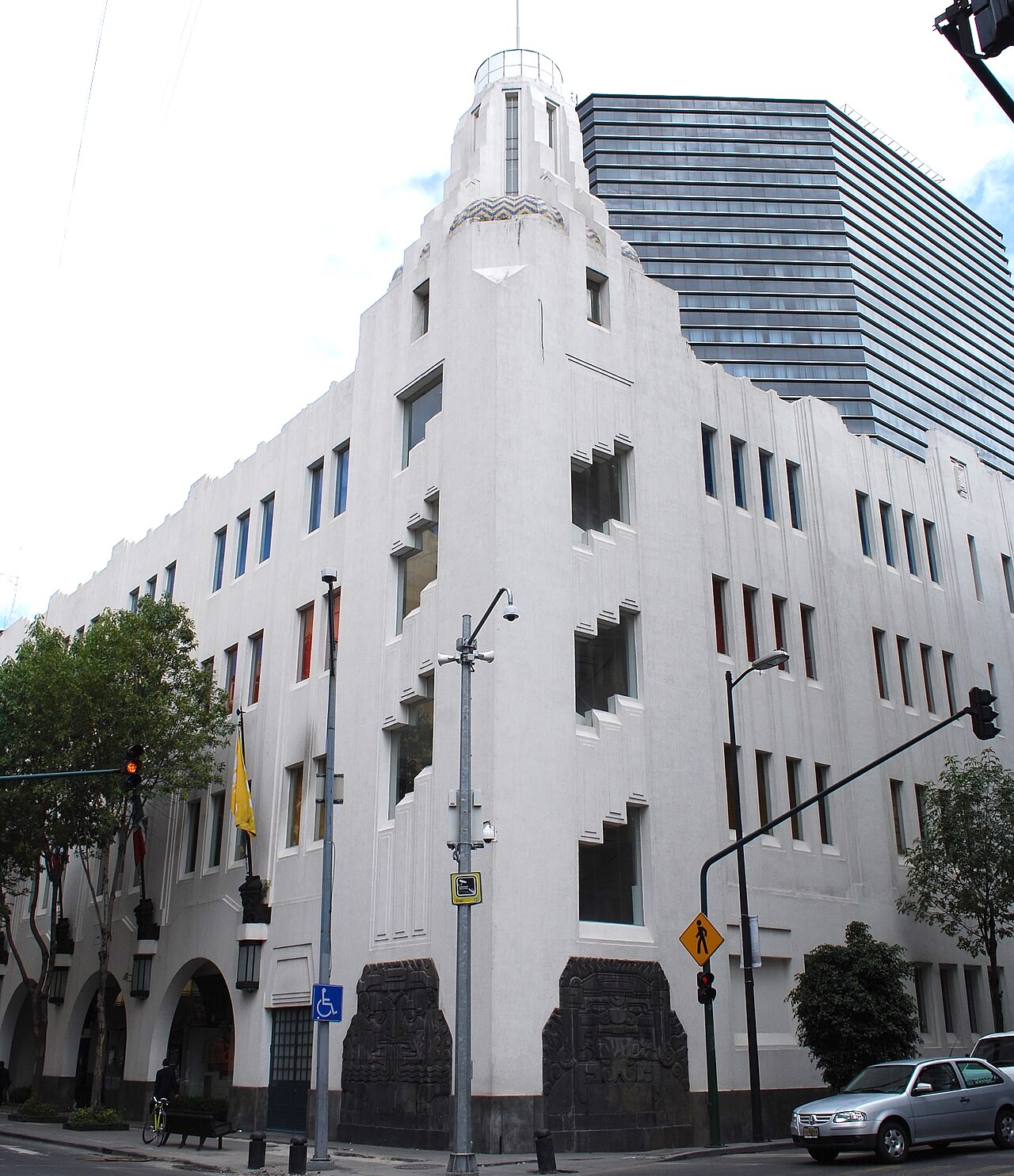
building of the Museo de Arte Popular in Mexico City
☆メ キシコシティにあるメキシコ民衆芸術美術館(Museo de Arte Popular)は、メキシコの工芸品や民芸芸術の一部を保存し、普及させることを目的とした博物館である。メキシコシティの歴 史的中心部に位置し、かつての消防署を改装した建物内に収蔵品が展示されている。そのコレクションには織物、陶器、ガラス製品、ピニャータ、アレブリヘ ス、家具などが含まれる。しかし、この博物館が最もよく知られているのは、毎年開催される「ノチェ・デ・アレブリヘス(アレブリヘスの夜)」パレードの主 催者としての役割である。このパレードでは、幻想的な生き物が巨大なスケールで制作され、メイン広場(ソカロ)から独立記念の天使像まで行進し、賞を競い 合うのである。
《来 歴》
| El Museo
de Arte Popular es una institución dedicada a promover y preservar
el arte popular mexicano.[1] Se localiza en el Centro Histórico de la
Ciudad de México en un predio que pertenecía a una vieja estación de
bomberos, el museo contiene una colección que incluye tapetes,
cerámica, vasos, piñatas, alebrijes, muebles, juguetes, utensilios de
cocina, entre otros objetos.[2] Sin embargo, el museo es conocido
principalmente como patrocinador del desfile anual Noche de Alebrijes
en el cual criaturas fantásticas se construyen a escala monumental y
luego desfilan desde el Zócalo hasta el Monumento de la Independencia,
compitiendo por premios.[3] |
民衆芸術博物館は、メキシコの民衆芸術の振興と保存を目的とした機関で
ある。[1]
メキシコシティの歴史地区にある、かつての消防署の跡地に位置するこの博物館には、タペストリー、陶器、グラス、ピニャータ、アレブリヘ、家具、おも
ちゃ、台所用品など、様々な品々が収蔵されている。しかし、この博物館は主に、毎年開催されるパレード「ノチェ・デ・アレブリヘス」の主催者として知られ
ている。このパレードでは、巨大な幻想的な生き物が作られ、ソカロから独立記念碑まで行進し、賞を競うのである。 |
La historia de Museo, "Las
tequileras"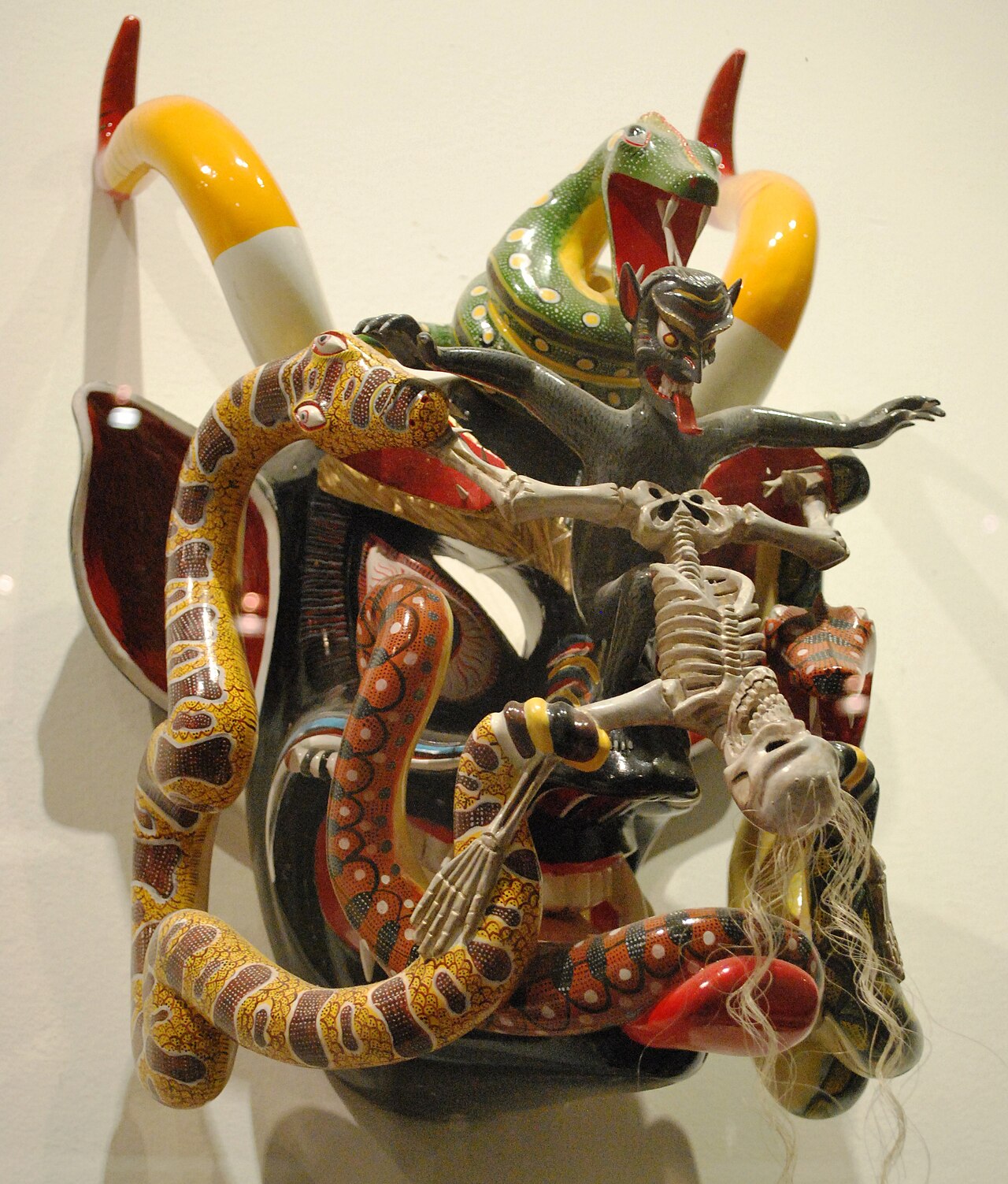 Máscara de diablo con serpientes. Durante la década de los noventa, un grupo de cinco mujeres integrado por Cristina Stoupignan de Payán, María Teresa Pomar, María Esther Echeverría, Sol Rubín de la Borbolla y Laura Osegura, muy interesadas en el arte popular y apoyadas en sus trayectorias dentro de la gestión pública, concibieron la idea de crear el Museo de Arte Popular en la Ciudad de México. Fue Cristina Payán quien comenzó esta iniciativa al invitar a sus redes de conocidas y expertas en cultura más cercanas, para reunirse y charlar sobre la necesidad de gestar un Museo de Arte Popular. De esta forma, lograron llevar a cabo sus primeras juntas dentro de la casa de María Teresa Pomar, un espacio lleno de piezas de arte. Solían congregarse a la hora de la comida y después, con el calor de la discusión, cerraban la conversación con un tequilita.[4] Por esa razón, la cronista mexicana, Ángeles González Gamio, les designó el peculiar seudónimo "Las tequileras".[5] "Se reunían por lo menos una vez al mes ( a la postre lo harían una vez por semana) en la casa - museo María Teresa Pomar, entre platillo y platillo, entre tequila y tequila, entre risitas y risitas, se dieron a la tarea de hacer un proyecto para el nuevo recinto. Como todas ellas siempre fueron muy profesionales, empezarían primero por formar una asociación (a) la cual llamaron POPULART S.C., con número de escritura pública 18,748 de fecha 17 de dieciembre de 1996 "[6] Con el paso de los años, las tequileras desarrollaron un proyecto estratégico al cual se fueron integrando nuevas y nuevos miembros; antropólogos, historiadores del arte, sociólogos, curadores, fotógrafos y académicos, entre los que destacan algunos nombres como el del ex nadador olímpico, Tonatiuh Gutiérrez; el museógrafo, Alfonso Soto Soria; el fotógrafo Juan Coronel Rivera y el empresario, Salvador Castillo. Todas y todos participaron en el trasitar y el desarrollo de este grupo hasta constituirse como una asociación civil formal. Fue así como surgió la fundación Populart S.C., organización que buscaba sentar las bases para la fundación del futuro Museo.[7] Con su institucionalización llegó también una estructura para el registro de las reuniones, comenzaron a tomarse minutas para asentar el avance y se abrió el diálogo con diferentes artesanas y artesanos para integrarlos al proyecto. El esfuerzo de las y los miembros de Populart se materializó a través de la creación del guion museológico, así como de los estatutos y directrices que el Museo debía seguir. La idea de Populart era concebir un museo "vivo" en el que la participación de las —los, les— artistas estuviera siempre involucrada tanto en el proceso creativo como en la toma de decisiones.[5] El antecedente del Museo Nacional de Culturas Populares fue esencial para proyectar los pasos del Museo de Arte Popular. La idea principal entendía a la cultura como un proceso social y político, comprendía las desigualdades estructurales de las que las —los, les— artistas eran víctimas, por ello, en la idea del Museo original se instituyó desde una visión antropólogica y sociológica.[5] |
博物館の歴史、「テキーラ製造者たち」 蛇の悪魔の仮面。 1990年代、クリスティナ・ストゥピニャン・デ・パヤン、マリア・テレサ・ポマール、マリア・エスター・エチェベリア、ソル・ルビン・デ・ラ・ボルボ ラ、ローラ・オセグラの5人の女性たちが、民衆芸術に強い関心を持ち、公共管理分野での経歴を背景に、メキシコシティに民衆芸術博物館を設立するという構 想を思いついた。 この取り組みを始めたのはクリスティーナ・パヤンで、彼女は親しい知人や文化の専門家たちを招待し、民衆芸術博物館の設立の必要性について話し合う会合を 開いた。こうして、マリア・テレサ・ポマールの家、つまり芸術作品でいっぱいの空間で、最初の会合が開催されたのである。彼女たちは昼食時に集まり、熱の こもった議論の後は、テキーラで会話を締めくくった[4]。そのため、メキシコのクロニスタ、アンヘレス・ゴンサレス・ガミオは、彼女たちに「テキーラ女 たち」という風変わりな異名をつけた[5]。 彼女たちは少なくとも月に一度(最終的には週に一度)、マリア・テレサ・ポマールの家兼博物館で集まり、料理と料理の間、テキーラとテキーラの合間、笑い 声と笑い声の合間に、新しい会場のためのプロジェクトに取り組んだ。彼女たちは皆、常に非常にプロフェッショナルであったため、まず協会を設立することに した。その協会はPOPULART S.C.と名付けられ、1996年12月17日付の公証書番号18,748で登録された。[6] 年月が経つにつれ、テキーラ愛好家たちは戦略的なプロジェクトを立ち上げた。そこには、人類学者、美術史家、社会学者、キュレーター、写真家、学者など、 新しいメンバーたちが次々と参加していった。その中には、元オリンピック水泳選手であるトナティウ・グティエレス、博物館学者のアルフォンソ・ソト・ソリ ア、写真家のフアン・コロネル・リベラ、実業家のサルバドール・カスティーヨなどの著名な人物もいた。全員が、このグループが正式な市民団体として設立さ れるまでの過程と発展に関わった。 こうして、将来の博物館設立の基盤を築こうとする組織、ポプラート財団(Populart S.C.)が誕生したんだ。[7] 組織化に伴い、会議の記録体制も整い、進捗状況を記録するための議事録が作成されるようになった。また、さまざまな工芸家たちと対話を始め、彼らをプロ ジェクトに参加させることになったんだ。ポプラートのメンバーたちの努力は、博物館のシナリオ、そして博物館が従うべき規約や指針の作成という形で実を結 んだ。ポプラートの考えは、アーティストたちが創造的なプロセスと意思決定の両方に常に関与する「生きた」博物館を構想することだった。[5] 国立民衆文化博物館の先例が、民衆芸術博物館の構想に欠かせないものとなった。その主な考え方は、文化を社会的・政治的プロセスとして捉え、芸術家たちが 犠牲となっている構造的な不平等を理解するものであり、そのため、当初の博物館構想は人類学的・社会学的観点に基づいて設立されたのである。[5] |
| El recinto arquitectónico del MAP La gente de Populart S.C., fue partícipe de la búsqueda del edificio ideal, en palabras de Juan Coronel Rivera: "La verdad ya le habíamos echado el ojo al edificio de bomberos"[7]. Durante la última etapa de la institucionalización del Museo, el acompañamiento del gobierno local de la Ciudad de México, hizo posible que las tequileras comenzaran las visitas a diferentes edificios ubicados en distintos puntos de la Ciudad. Empero, ellas concideraban fundamental que el recinto tuviera ciertas características como una ubicación céntrica y que el inmueble no tuviera daños estructurales. Fue así que, después de varios meses, llegaron al antiguo edificio de bomberos, ubicado en la calle Revillagigedo número 11, colonia centro, alcaldía Cuauhtémoc.[5] El recinto les resultó encantador ya que conservaba algunos rasgos del movimiento artístico art déco y no necesitaba atravesar por un proceso de remodelación completa. |
MAPの建築施設 Populart S.C.のスタッフは、理想的な建物の探しに参加した。フアン・コロネル・リベラはこう語っている。「実は、消防署の建物にすでに目を付けていたんだ」 [7]。博物館の設立の最終段階では、メキシコシティの地方自治体の支援により、テキーラ製造者たちは市内のさまざまな場所にある建物を見学し始めること ができた。しかし、彼女たちは、その施設が中心部に位置し、建物に構造上の損傷がないなど、特定の特徴を備えていることが不可欠であると考えていた。そう して数ヶ月後、彼女たちはクアウテモック区セントロ地区レヴィヤギゲド通り11番地にある旧消防署の建物にたどり着いた[5]。 この建物は、アールデコ様式の芸術的特徴をいくつか残しており、全面的な改修工事を必要としないため、彼女たちはその魅力を感じた。 |
| El Museo El 17 de noviembre del año 2005 fue celebrado el contrato entre el gobierno del Distrito Federal y el Banco Interacciones, Sociedad Anónima, Institución de Banca Múltiple. Documento a través del cual el gobierno de la actual Ciudad de México otorgó a este último, la cantidad de $5 000 000,00 (cinco millones de pesos 00/100 m.n.) y el inmueble ubicado en la calle Revillagigedo, número 11, Colonia Centro para así dar paso a la creación oficial del Museo de Arte Popular.[8] “Convenio modificatorio al contrato público número 2723, denominado “Fideicomiso Museo de Arte Popular Mexicano”, que celebran por una parte, en calidad de fideicomitente el gobierno del distrito federal, por conducto de la secretaria de finanzas del Distrito Federal, representada en este acto por su titular, Lic. Arturo Herrera Gutiérrez, a quien en lo sucesivo se le denominará como el fideicomitente y, por segunda parte, como fiduciario, Banco Interacciones, representado por su delegado fiduciario, Licenciado Manuel Velasco Velázquez, a quien se le denominara como el fiduciario, con la comparecencia como testigos de honor, el Consejo Nacional para la Cultura y las Artes del gobierno federal, representado en este acto por su titular la señora Sara G. Bermúdez Ochoa; Amigos del Museo de Arte Popular Mexicano, A.C., representado en este acto por su presidenta, señora Marie Therese Hernand de Arango, y POPULART, S.C., representada en este acto por el señor Carlos Payán Velver”[8] El Museo abrió sus puertas en marzo de 2006 para convertirse en un referente de la artesanía mexicana y promoverla, a través de talleres y otros eventos, al país y al turismo extranjero[1] así como dignificar la artesanía mediante la restauración de obras antiguas y fomentar su creación tanto en el interior del museo como de forma externa.[9] La colección permanente contiene piezas antiguas y recientes de varias tradiciones que forman parte de la cultura mexicana, habiéndose constituido gracias a la generosidad de varias instituciones y donantes individuales. La colección está organizada en cuatro salas temáticas permanentes y dos dedicadas a «grandes maestros», cada una de las cuales contiene diferentes tipos de artesanías.[9] Las cuatro salas temáticas son: 1. Esencia del Arte Popular Mexicano. 2. El Arte popular y La Vida Cotidiana 3. El Arte Popular y lo Sagrado 4. El Arte Popular y lo Fantástico (Fantastic and magical things). 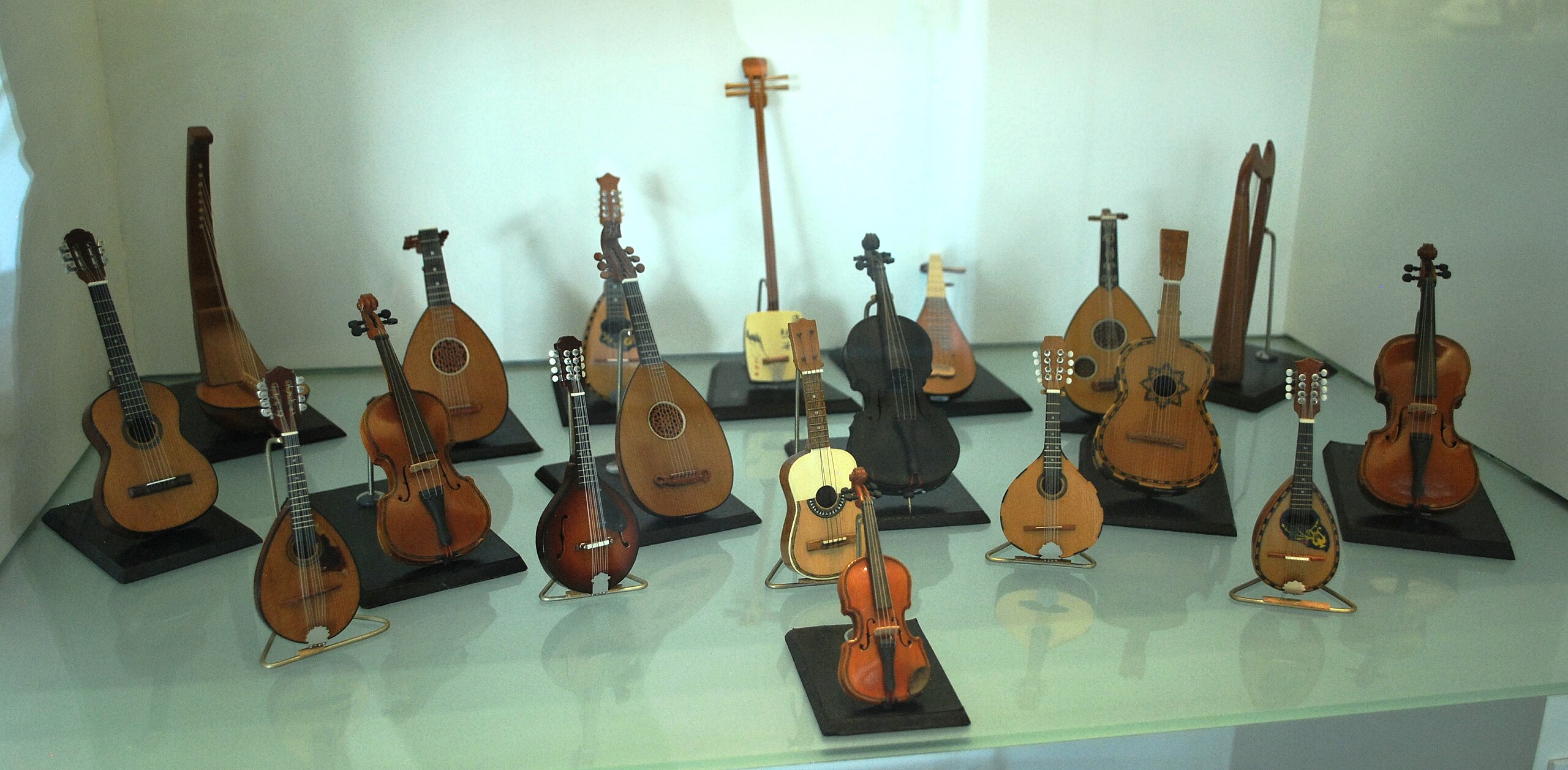 Colección de instrumentos musicales de cuerda. La exposición ocupa tres de los cuatro pisos del edificio, en un área total de 7000 m².[2] También existe una sala para exposiciones temporales y una sala de «interpretación» con piezas de las 32 entidades federativas (los estados y el Distrito Federal) del país. Aquí se presentan artesanías de varios tipos, incluyendo cerámica, cestería, tallado de madera, trabajo en metal, cristalería, textiles, papel maché y otros. También se dispone de un centro bibliográfico con biblioteca y hemeroteca.[9] Durante los fines de semana el museo tiene talleres para niños entre 6 y 12 años sobre diversas técnicas con el objetivo de preservarlas, entre las cuales están el picado de papel, amate y papel maché. En fechas especiales como el día de muertos los talleres incluyen la elaboración de Catrinas, calaveras de alfeñique y dulces tradicionales.[10]El edificio que alberga el museo es considerado el segundo edificio Art decó más importante de la ciudad, siendo el primero las oficinas de la Secretaría de Salud en Chapultepec,[2] y fue construido en 1927 por el arquitecto Vicente Mendiola como parte del esfuerzo en esa época por modernizar la infraestructura de la ciudad. Posee un patio central en el cual se estacionaban los carros de bombero y tres pisos para oficinas y cuarteles. En su exterior tiene una torre en la esquina con una luz en la parte superior que se usaba para dar aviso de una emergencia. Otra característica del edificio es que posee relieves con motivos prehispánicos que decoran la fachada de piedra, obra del escultor Manuel Centurión y el patio interior está cubierto por una cúpula de cristal moderno.[2] El crecimiento de la ciudad durante los años 80 hizo que la localización de la estación ya no fuera adecuada y se abandonó, deteriorándose a causa del terremoto de 1985 y en general por la decadencia del centro histórico de la ciudad. En los años 90 el gobierno de la ciudad decidió rescatar el edificio y usarlo para albergar una gran colección artesanal, proyecto que corrió a cargo de Teodoro González de León quien restauró y actualizó el interior del edificio. |
博物館 2005年11月17日、連邦区政府とバンコ・インタラクションズ株式会社(多角的銀行機関)との間で契約が締結された。この文書により、現在のメキシコ シティ政府は、同銀行に500万ペソ(5,000,000.00ペソ)と、レヴィジャギゲド通り11番地、コロニア・セントロにある不動産を譲渡し、民衆 芸術美術館の正式な創設に道を開いた。[8] 「公契約第2723号『メキシコ民衆芸術美術館信託』の修正契約。一方の当事者は、信託者としての連邦区政府であり、連邦区財務長官を通じて、その職務を 代行する Arturo Herrera Gutiérrez 氏(以下、委託者)と、受託者として、Banco Interacciones(その受託者代表である Manuel Velasco Velázquez 氏(以下、受託者)が署名し、名誉証人として、 連邦政府文化芸術評議会(本契約において、同評議会の議長であるサラ・G・ベルムデス・オチョア氏が代表を務める)、メキシコ民衆芸術美術館友の会(本契 約において、同協会の会長であるマリー・テレーズ・エルナンド・デ・アランゴ氏が代表を務める)、POPULART社(本契約において、カルロス・パヤ ン・ベルベル氏が代表を務める)が名誉証人として出席した。 この博物館は2006年3月に開館し、メキシコ工芸品の基準となり、ワークショップやその他のイベントを通じて、国内および海外からの観光客にメキシコ工 芸品を宣伝すること[1]、また、古い作品の修復を通じて工芸品の価値を高め、博物館内外での創作活動を促進することを目的としている[9]。 常設コレクションは、メキシコ文化の一部である様々な伝統の古美術品や現代美術品で構成されており、複数の機関や個人寄付者の寛大な支援によって構築され たものである。 コレクションは、4つの常設テーマ別展示室と「偉大な巨匠たち」に捧げられた2つの展示室で構成されており、それぞれが異なる種類の工芸品を展示している [9]。4つのテーマ別展示室は次の通りである。 1. メキシコ民衆芸術の真髄 2. 民衆芸術と日常生活 3. 民衆芸術と神聖 4. 民衆芸術と幻想(Fantastic and magical things) 弦楽器のコレクション。 展示は、建物の4階のうち3階を占め、総面積は7000平方メートルである。また、特別展示室と、国内32の連邦州(州および連邦区)の作品を展示する 「解説」室もある。ここでは、陶器、かご細工、木彫り、金属工芸、ガラス細工、織物、張り子など、さまざまな種類の工芸品が展示されている。図書館と新聞 資料室を備えた文献センターもある。[9] 週末には、6歳から12歳までの子供たちを対象に、紙切り、アマテ、張り子など、さまざまな技法を保存することを目的としたワークショップが開催される。 死者の日などの特別な日には、カトリーナ、砂糖細工の頭蓋骨、伝統的なお菓子作りなどのワークショップが行われる。[10]博物館が所在する建物は、 チャプルテペックにある保健省庁舎[2]に次いで、市内で2番目に重要なアールデコ様式の建物とされており、1927年に建築家ビセンテ・メンディオラ によって、当時の都市インフラ近代化の一環として建設された。中央には消防車が駐車できる中庭があり、3階建てのオフィスと兵舎がある。外観は角に塔があ り、その頂上には緊急事態を知らせるために使用されていた灯がある。この建物のもう一つの特徴は、石造りのファサードを飾る、先コロンブス時代のモチーフ のレリーフだ。これは彫刻家マヌエル・セントゥリオンによる作品であり、中庭はモダンなガラスドームで覆われている。1980年代の都市の成長に伴い、こ の消防署の立地は不適切となり、1985年の地震や、歴史的中心部の衰退によって荒廃した。1990年代、市当局は建物を修復し、大規模な工芸品コレク ションの展示場として活用することを決定した。このプロジェクトはテオドロ・ゴンサレス・デ・レオンが担当し、彼は建物の内部を修復・改装した。 |
| Referencias 1. Museo de Arte Popular (ed.). «Semblanza». Ciudad de México. Archivado desde el original el 25 de octubre de 2009. Consultado el 5 de noviembre de 2009. 2. El museo de arte popular exhibe las mejores artesanías de México: su acervo está considerado el más completo en su género y permite a los visitantes conocer en unas cuantas horas los ejemplos más acabados de la creatividad de los artesanos de este país.journal=Contenido. 1 de mayo de 2007. Archivado desde el original el 30 de agosto de 2009. Consultado el 5 de noviembre de 2009. 3. CONACULTA. «El Museo de Arte Popular hace desfilar fantásticos alebrijes gigantes por la Ciudad de México». Archivado desde el original el 28 de octubre de 2009. Consultado el 5 de noviembre de 2009. 4. Sol Rubín de la Borbolla, entevista por Yutzin Gómez, agosto 2022 5. Sol Rubín de la Borbolla, entrevista por Yutzin Gómez, agosto 2022 6. Alvarez Palma, Georgina (2019). «María Teresa Pomar Aguilar: lo real e imaginario en las obras de arte popular de sus amigos los artesanos». TESIUNAM. 7. Juan Coronel Rivera, entrevista por Yutzin Gómez, marzo 2022 8. «Contrato del fideicomiso público número 2723, Fideicomiso Museo de Arte Popular Mexicano». 9. CONACULTA (ed.). «Museo de Arte Popular». Ciudad de México. Consultado el 5 de noviembre de 2009. 10. «Talleres de Octubre para niños, Museo de Arte Popular, Ciudad de México». Archivado desde el original el 26 de septiembre de 2011. Consultado el 5 de noviembre de 2009. |
参考文献 1. 民衆芸術博物館(編)。「概要」。メキシコシティ。2009年10月25日にオリジナルからアーカイブ。2009年11月5日に閲覧。 2. 民衆芸術博物館はメキシコ最高の工芸品を展示している。そのコレクションはこの分野で最も充実していると評価されており、訪問者は数時間でこの国の職人の 創造性の最高傑作を知ることができる。journal=Contenido。2007年5月1日。2009年8月30日にオリジナルからアーカイブ。 2009年11月5日アクセス。 3. CONACULTA。「民衆芸術博物館が、メキシコシティで巨大な幻想的なアレブリヘのパレードを開催」。2009年10月28日にオリジナルからアーカ イブ。2009年11月5日アクセス。 4. ソル・ルビン・デ・ラ・ボルボラ、ユッツィン・ゴメスによるインタビュー、2022年8月 5. ソル・ルビン・デ・ラ・ボルボラ、ユッツィン・ゴメスによるインタビュー、2022年8月 6. アルヴァレス・パルマ、ジョージナ (2019). 「マリア・テレサ・ポマル・アギラール:彼女の友人である職人たちによる民衆芸術作品における現実と想像」. TESIUNAM. 7. フアン・コロネル・リベラ、ユッツィン・ゴメスによるインタビュー、2022年3月 8. 「公的信託契約第2723号、メキシコ民衆芸術美術館信託」。 9. CONACULTA (編)。「民衆芸術美術館」。メキシコシティ。2009年11月5日アクセス。 10. 「子供向け10月のワークショップ、民衆芸術美術館、メキシコシティ」2011年9月26日にオリジナルからアーカイブ。2009年11月5日アクセス。 |
| https://es.wikipedia.org/wiki/Museo_de_Arte_Popular_(Ciudad_de_M%C3%A9xico) |
☆
英語のウィキペディアの説明
| The Museo de
Arte Popular (Museum of Folk Art) is a museum in Mexico City,
Mexico, that promotes and preserves part of the Mexican handcrafts and
folk art.[1] Located in the historic center of Mexico City in an old
fire house, the museum has a collection which includes textiles,
pottery, glass, piñatas, alebrijes, furniture and much more.[2]
However, the museum is best known as the sponsor of the yearly Noche de
Alebrijes (Night of the Alebrijes) parade in which the fantastical
creatures are constructed on a monumental scale and then paraded from
the main plaza or Zocalo to the Angel of Independence monument,
competing for prizes.[3] |
メキシコシティにあるメキシコ民芸美術館は、メキシコの工芸品や民芸芸
術の一部を保存し、普及させることを目的とした博物館である。メキシコシティの歴史的中心部に位置し、かつての消防署を改装した建物内に収蔵品が展示され
ている。そのコレクションには織物、陶器、ガラス製品、ピニャータ、アレブリヘス、家具などが含まれる。しかし、この博物館が最もよく知られているのは、
毎年開催される「ノチェ・デ・アレブリヘス(アレブリヘスの夜)」パレードの主催者としての役割である。このパレードでは、幻想的な生き物が巨大なスケー
ルで制作され、メイン広場(ソカロ)から独立記念の天使像まで行進し、賞を競い合うのである。 |
The museum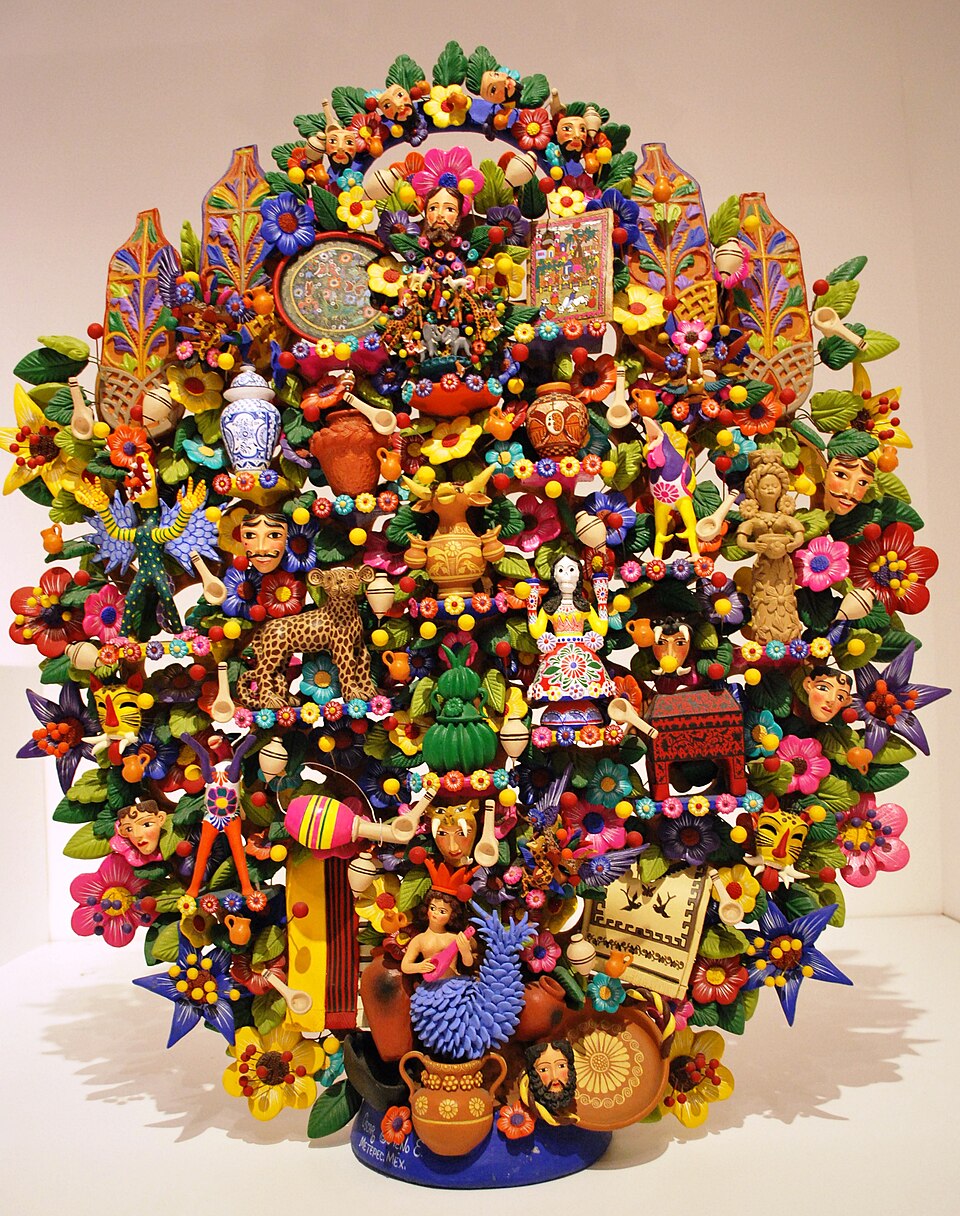 Tree of life whose theme is crafts. Sculpture display at the Museum de Artes Populares in Mexico City by Oscar Soteno. The Museo de Arte Popular opened in March 2006. Its purpose is to serve as a reference for Mexican crafts as well as promoting them through workshops, and other events to both Mexico and foreign tourism.[1] and dignify Mexican crafts though restoration of older works and the promotion of their creation both inside and outside the museum itself.[4] The permanent collection contains both older and newer craft pieces from the various traditions that make up Mexican culture. The collection was gathered through the generosity of individual donors.[1] Some of the principal private donors include Alfonso Romo of Grupo Savia, who had promoted crafts for a number of years. He donated 1,400 pieces towards the opening of the museum. The second donor was Carlota Mapeli, who came to Mexico from Italy in the 1970s and dedicated herself to collecting embroidered garments and other textiles. She donated 400 pieces, many of which were weaved on backstrap looms.[2] The collection is organized into five permanent halls divided by theme, and two dedicated to "grand masters" each of which contains various kinds of crafts.[4] The five themed halls are called "Las raices del arte mexicano" (Roots of Mexican art), "Las raices del arte popular" (Roots of crafts or popular art), "Lo cotidiano" (Everyday things), "Lo religioso" (Religious items) and "Lo fantasmagico" (Fantastic and magical things). The collection fills three of the four levels of the building, for a total of 7,000 square meters.[2] There is also a temporary exhibit hall and an "interpretation" room which has pieces from all 32 federal entities (states and Distrito Federal) of Mexico. Crafts displayed here are of many different types including pottery, basketry, wood carving, precious metal working, glasswork, textiles, papier-mâché and others. The museum also has a research center with a library and a periodical archive.[4] Every weekend the museum has workshops for children between six and twelve in various crafts with the aim of preserving these crafts. Workshops include those on paper cutting, amate (bark) paper and papier-mâché. For special occasions such as Dia de Muertos, workshops have included those on making Catrina figures, sugar skulls and traditional candies.[5] The gift shop contains a wide variety of crafts for sale from the most traditional to the most recent reinterpretations of various crafts,[4] containing items such as furniture, textiles and toys from all parts of the republic of Mexico.[6] The museum’s store is non-profit, designed to help artisans get better prices for their products. Many of the products come from villages in Michoacán, often populated only by women and children as the men go to places like the United States to work. Sales of their products have been good enough to entice a number of men to return home and work at the crafts.[2] 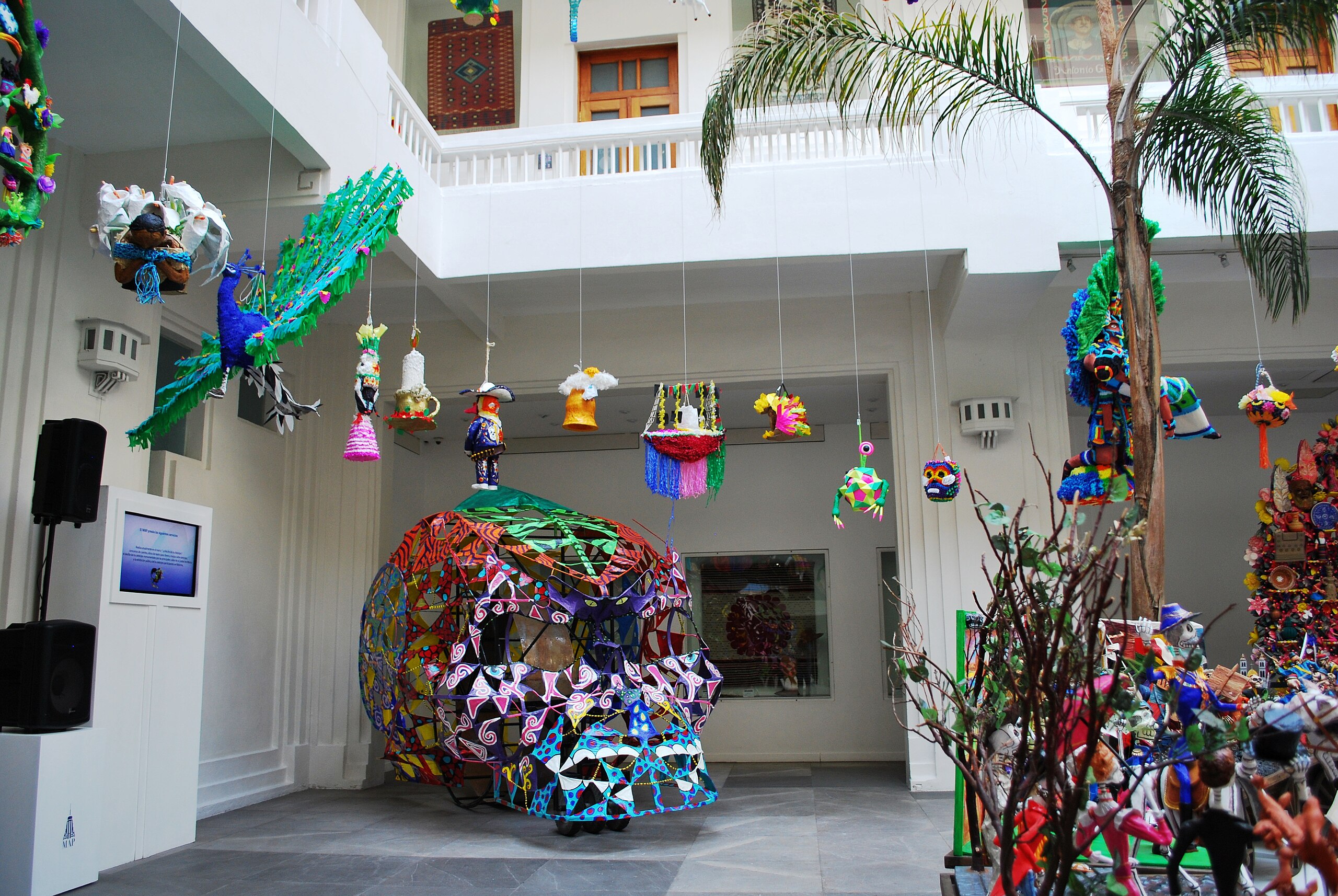 Part of the courtyard of the Museum of Artes Populares in Mexico City The building is considered to be the second most important Art Deco building in Mexico City, with the first being the main offices of the Secretariat of Health in Chapultepec.[2] It was donated to the museum project by the government of Mexico City.[4] The building was constructed in 1927 by architect Vicente Mendiola as part of the government’s efforts to modernize the city’s infrastructure at the time. The building has a central patio in which the fire trucks were parked, and three floors for offices and quarters. In its exterior, it has tower on the corner facing the intersection with a light at the top to be used to signal an emergency. Another feature of the building is the relieves with pre-Hispanic motifs that decorate the facade in stone.[6] The inner courtyard is covered by a modern glass cupola.[2] By the 1980s the growth of the city had rendered the station inadequate and it was abandoned. It deteriorated afterwards because of the 1985 earthquake and the general deterioration of the historic center. In the 1990s, the city government decided to rescue the building and use it to collect and store a major collection of Mexican crafts. This project was given to Teodoro Gonzalez de Leon, who restored the building updating its interior.[6] |
博物館 手工芸をテーマとした生命の木。メキシコシティの民芸美術館に展示されているオスカル・ソテノの彫刻作品である。 メキシコ民芸美術館は2006年3月に開館した。その目的は、メキシコ工芸の参考資料としての役割を果たすこと、ワークショップやその他のイベントを通じ て国内外の観光客に工芸を普及させること[1]、そして古い作品の修復や館内外での創作促進を通じてメキシコ工芸の価値を高めることにある。[4] 常設コレクションには、メキシコ文化を構成する様々な伝統に基づく、古いものと新しいものの両方の工芸品が含まれている。このコレクションは、個人の寄付 者たちの寛大な支援によって集められたものである。[1] 主な個人寄付者の中には、長年にわたり工芸品を推進してきたグルーポ・サビアのアルフォンソ・ロモがいる。彼は博物館の開館に際し、1,400点を寄贈し た。第二の寄贈者は、1970年代にイタリアからメキシコに移住し、刺繍衣類やその他の織物の収集に専念したカルロタ・マペリである。彼女は400点を寄 贈し、その多くは腰機で織られたものだった。[2] コレクションはテーマ別に分けられた5つの常設展示室と、「巨匠」に捧げられた2つの展示室で構成され、各展示室には様々な種類の工芸品が収められてい る。[4] 5つのテーマ別展示室は「メキシコ芸術の根源」「民芸の根源」「日常の品々」「宗教的品々」「幻想と呪術の品々」と名付けられている。収蔵品は建物の4階 のうち3階を占め、総面積は7,000平方メートルである。[2] さらに特別展示室と「解釈」室があり、後者にはメキシコ全32の連邦区(州と連邦区)の工芸品が展示されている。展示される工芸品は異なるものであり、陶 器、籠細工、木彫り、貴金属細工、ガラス工芸、織物、張り子などがある。博物館には図書館と定期刊行物アーカイブを備えた研究センターもある。[4] 週末には6歳から12歳の子ども向けに、様々な工芸技術を保存する目的でワークショップを開催している。切り絵、アマテ(樹皮)紙、張り子細工などのワー クショップがある。死者の日などの特別な行事には、カトリーナ人形、砂糖飴の頭蓋骨、伝統的なキャンディー作りなどのワークショップも実施される。[5] ミュージアムショップでは、最も伝統的な工芸品から様々な工芸の現代的な再解釈まで、幅広い手工芸品を販売している[4]。メキシコ共和国の各地から集め られた家具、織物、玩具などの品々が並ぶ[6]。このショップは非営利で、工芸家が製品をより良い価格で提供できるよう支援することを目的としている。商 品の多くはミチョアカン州の村々から供給されている。これらの村では男性がアメリカなどへ出稼ぎに行くため、女性と子供だけが住んでいることが多い。製品 の販売が好調なため、多くの男性が故郷に戻り工芸品製作に従事するようになっている。[2] メキシコシティ、民俗工芸博物館の中庭の一部 この建物はメキシコシティで2番目に重要なアールデコ建築とされ、1番はチャプルテペックの健康省本庁舎である[2]。メキシコシティ政府が博物館プロ ジェクトに寄贈した[4]。建築家ビセンテ・メンディオラが1927年に設計し、当時の都市インフラ近代化政策の一環として建設された。建物の中央には消 防車が駐車されていた中庭があり、3階建てのオフィスと居住区がある。外観では、交差点に面した角に塔が立ち、頂上には緊急信号用の灯火が設置されてい た。もう一つの特徴は、石造りのファサードを飾る先コロンブス時代のモチーフを刻んだレリーフである[6]。中庭は現代的なガラス製のドームで覆われてい る[2]。1980年代までに都市の成長に伴い消防署としての機能は不十分となり、使用が中止された。その後1985年の地震と歴史的中心部の全般的な劣 化により建物は荒廃した。1990年代、市当局は建物を修復し、メキシコ工芸品の主要コレクションを収集・保管する施設として活用することを決定した。こ のプロジェクトはテオドロ・ゴンサレス・デ・レオンに委託され、彼は建物を修復し内部を近代化した。[6] |
| The Monumental Alebrije Parade Duration: 14 seconds.0:14 Lighted alebrije figures on display at the museum The museum is best known for its yearly parade of "monumental alebrijes" which began as a yearly event in 2007.[3] An alebrije is a fantastical creature, which usually include various parts of real-life or fantastic creatures. These not only include creatures such as flies with dragon tails and multi-headed lions, the works also carry fantastic names such as "La Mula de Seis" (The Six Mule), "Alebrijos" (combination of alebrije and "hijos" (sons)), "AH1N1" and "La Gárgola de la Atlántida" (The Gargoyle of Atlantis).[7] Normal alebrijes are small sculptures made of cardboard or wood, painted in bright colors and mostly made in central Mexico and Oaxaca state. Monumental alebrejes are floats with the tallest one so far being four meters tall by three meters wide.[3] The event is called La Noche de los Alebrijes (Night of the Alebrijes) and is organized by the Museo de Arte Popular in collaboration with the Mexico City government with the support of CONACULTA and various private institutions and individuals. 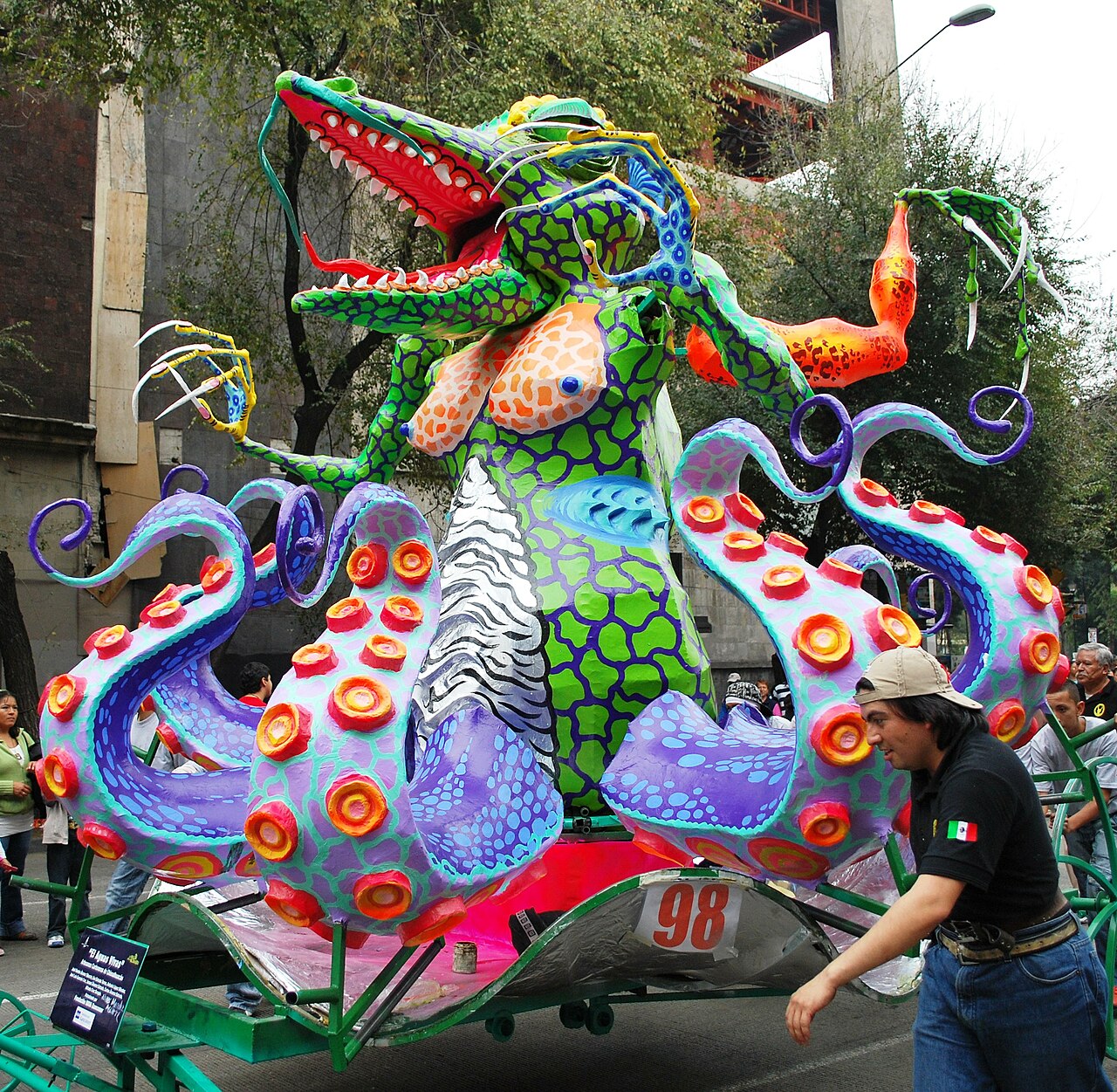 Alebrije named El Aguas Vivas at the Juarez Street portion of the parade. The purpose of the parade is to promote the work of modern Mexican artists and artisans.[3] The process of creating the alebrijes begins in June, with the parade taking place at the end of October. Most of the monumental alebrijes are created with cardboard except for those from Oaxaca which are partially made of wood, and wind their way from the main plaza (Zócalo), through the historic center onto the Paseo de la Reforma ending at the Angel of Independence. The alebrijes compete for first, second and third prizes of 50,000, 30,000 and 20,000 pesos.[3] After the parade, later in the day, the winners are chosen and other events such as the Alebrije Puppet Contest and the Alebrije Short Story Contest take place.[7] The 2007 parade had thirty five alebrijes with 200,000 spectators filling the streets of the city center. In 2008, there were seventy five alebrijes with more than two million spectators. The 2009 parade had 120 floats registered with it, coming from Mexico City, the State of Mexico, Puebla, Oaxaca and Morelos. Marching bands such as the Navy band and the state bands of the states of Mexico and Morelos and[3] Private bands such as El Reflejo Sinaloense, La Usurpadora, Cerro Verde and La Coqueta also participated.[7] All of the alebrijes were newly created for the event and were designed by more than 100 artists. After the parade, the alebrijes are placed on display for about two weeks on Paseo de la Reforma between the Angel of Independence and the Diana Fountain.[3] The director of the museum stated that each year both the number and the quality of the alebrijes have improved.[7] |
記念碑的なアレブリヘのパレード 所要時間:14秒。0:14 博物館に展示されている照明付きアレブリヘ像 この博物館は、2007年から毎年開催されている「記念碑的なアレブリヘ」のパレードで最もよく知られている。[3] アレブリヘとは幻想的な生き物のことで、通常は実在する生物や空想上の生物の様々な部位を組み合わせている。これらは蝿に竜の尾をつけたものや多頭の獅子 といった生物だけでなく、「ラ・ムーラ・デ・セイス」(六頭の騾馬)、「アレブリホス」(アレブリヘと「息子たち」を組み合わせた造語)、 「AH1N1」、「ラ・ガルゴラ・デ・ラ・アトランティダ」(アトランティスのガーゴイル)といった幻想的な名称も持つ。通常のアレブリヘは段ボールや木 で作られた小型の彫刻で、鮮やかな色彩で彩色され、主にメキシコ中部とオアハカ州で制作される。記念碑的なアレブリヘは山車であり、現時点で最も高いもの は高さ4メートル、幅3メートルに達する。[3] このイベントは「アレブリヘスの夜(La Noche de los Alebrijes)」と呼ばれ、メキシコシティ政府と協力し、CONACULTA(メキシコ文化芸術国家委員会)及び様々な民間機関・個人の支援を得 て、民俗芸術博物館(Museo de Arte Popular)が主催している。 パレードのフアレス通り区間で見られた「エル・アグアス・ビバス(El Aguas Vivas)」と名付けられたアレブリヘ。 パレードの目的は、現代メキシコ人芸術家や職人の作品を宣伝することにある。[3] アレブリヘ制作は6月に始まり、パレードは10月末に開催される。巨大なアレブリヘの大半は段ボール製だが、オアハカ産の一部は木製で、メイン広場(ソカ ロ)から歴史地区を経てレフォルマ通りを蛇行し、独立記念碑で終点となる。パレードではアレブリヘが競い合い、1位(5万ペソ)、2位(3万ペソ)、3位 (2万ペソ)の賞が授与される[3]。パレード終了後、同日中に受賞者が選ばれ、アレブリヘ人形コンテストやアレブリヘ短編小説コンテストなどの関連イベ ントが行われる[7]。 2007年のパレードでは35体のアレブリヘが登場し、市内中心部の通りは20万人の観客で埋め尽くされた。2008年には75体のアレブリヘが登場し、 観客数は200万人を超えた。2009年のパレードにはメキシコシティ、メヒコ州、プエブラ州、オアハカ州、モレロス州から120台のフロートが登録され た。海軍バンドやメヒコ州・モレロス州の州立バンドといったマーチングバンド[3]に加え、エル・レフレホ・シナルオエンセ、ラ・ウスルパドーラ、セロ・ ベルデ、ラ・コケタといった民間バンドも参加した。[7] アレブリヘスは全てこのイベントのために新たに制作され、100人以上のアーティストによってデザインされた。パレード終了後、アレブリヘスは独立記念像 とダイアナの噴水の間にあるレフォルマ通りで約2週間展示される。[3] 博物館の館長は、毎年アレブリヘスの数と質が向上していると述べた。[7] |
| Gallery |
|
| References 1. "Semblanza" (in Spanish). Mexico City: Museo de Arte Popular. Archived from the original on 2009-10-25. Retrieved 2009-11-05. 2. "El museo de arte popular exhibe las mejores artesaní¬as de México: su acervo está considerado el más completo en su género y permite a los visitantes conocer en unas cuantas horas los ejemplos más acabados de la creatividad de los artesanos de este paí¬s" [The Museum of Popular Art exhibits the best crafts of Mexico, its collection is considered to be the most complete of its genre and permits visitors to get to know in a few hours the best examples of the creativity of artisans in this country]. Contenido (in Spanish). 2007-05-01. Retrieved 2009-11-05.[dead link] 3. CONACULTA. "El Museo de Arte Popular hace desfilar fantásticos alebrijes gigantes por la Ciudad de México" [The Museum of Popular Art sponsors a parage of giant fantasical alebrijes through the City of Mexico] (in Spanish). Archived from the original on 2009-10-28. Retrieved 2009-11-05. 4. "Museo de Arte Popular" (in Spanish). Mexico City: CONACULTA. Retrieved 2009-11-05. 5. "Talleres de Octubre para nimos, Museo de Arte Popular, Ciudad de Mexico" [Workshops for children in October, Museum of Popular Art, Mexico City] (in Spanish). Archived from the original on 2011-09-26. Retrieved 2009-11-05. 6. "Museo de Arte Popular" (in Spanish). Mexico City: Government of Mexico City. Retrieved 2009-11-05. 7. "Con esplendor y colorido realizan el Tercer Desfile de Alebrijes" [The Third Parade of Alebrijes is realized with splendor and color]. Milenio (in Spanish). Mexico City. Notimex. 2009-10-24. Archived from the original on 2009-10-28. Retrieved 2009-11-05. |
参考文献 1. 「Semblanza」(スペイン語)。メキシコシティ:民俗美術館。2009年10月25日にオリジナルからアーカイブ。2009年11月5日に取得。 2. 「民芸美術館はメキシコ最高の工芸品を展示している。そのコレクションはこのジャンルで最も充実しており、訪問者は数時間でこの国の職人の創造性の最高傑 作を知ることができる」 [The Museum of Popular Art exhibits the best crafts of Mexico, its collection is considered to be the most complete of its genre and permits visitors to get to know in a few hours the best examples of the creativity of artisans in this country]. Contenido (in Spanish). 2007-05-01. Retrieved 2009-11-05.[dead link] 3. CONACULTA。「民俗芸術博物館がメキシコシティで巨大な幻想的なアレブリヘのパレードを開催」 (スペイン語)。2009年10月28日にオリジナルからアーカイブ。2009年11月5日取得。 4. 「民俗芸術博物館」 (スペイン語)。メキシコシティ:CONACULTA。2009年11月5日取得。 5. 「10月の子供向けワークショップ、民俗芸術博物館、メキシコシティ」 (スペイン語)。2011年9月26日にオリジナルからアーカイブ。2009年11月5日取得。 6. 「民俗芸術博物館」(スペイン語)。メキシコシティ:メキシコシティ政府。2009年11月5日取得。 7. 「華やかでカラフルな第3回アレブリヘス・パレードが開催される」 [The Third Parade of Alebrijes is realized with splendor and color]. Milenio (スペイン語). メキシコシティ. Notimex. 2009-10-24. 2009-10-28にオリジナルからアーカイブ。2009-11-05に取得。 |
| Museo de Arte Popular |
|
| https://en.wikipedia.org/wiki/Museo_de_Arte_Popular |
|
リ ンク
文 献
そ の他の情報
CC
Copyleft,
CC, Mitzub'ixi Quq Chi'j, 1996-2099