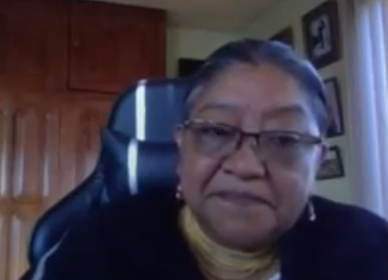
ニーナ・パカリ
Nina Pacari, b.1961
☆ニー ナ・パカリ(Nina Pacari, キチュア語で「火」を意味する「ニーナ」と「現れる、 夜明け」を意味する「パカリイ」から成る)は、本名マリア・エステラ・ベガ・コネホ[1](1961年10月9日、インバブラ県コタカチ生まれ)であり、 エクアドルのキチュア系政治家、弁護士、先住民族指導者である。
| Nina Pacari
(Kichwa nina "fire", paqariy "to appear, dawn"), born as María Estela
Vega Conejo[1] (born 9 October 1961 in Cotacachi, Imbabura) is a Kichwa
politician, lawyer and indigenous leader from Ecuador. |
ニーナ・パカリ(キチュア語で「火」を意味する「ニーナ」と「現れる、
夜明け」を意味する「パカリイ」から成る)は、本名マリア・エステラ・ベガ・コネホ[1](1961年10月9日、インバブラ県コタカチ生まれ)であり、
エクアドルのキチュア系政治家、弁護士、先住民族指導者である。 |
| Biography Nina Pacari studied jurisprudence at the Central University of Ecuador in Quito, where she got to know other indigenous students and began to fight for indigenous rights and the defense of the Kichwa language. At the age of 24, she changed her Spanish name officially to the Kichwa Nina Pacari. Nina Pacari worked as a lawyer for the Federación de los pueblos Kichwa de la Sierra Norte del Ecuador (FICI), an organization in Imbabura which is now a member of ECUARUNARI. After that, she supported Kichwa communities as a lawyer in the Chimborazo Province. In 1989, she became a legal adviser of the indigenous confederation CONAIE, founded in 1986. In the uprising of 1990 she supported indigenous communities in Chimborazo and participated in the negotiations with the government. In 1994, she worked out an alternative draft against the draft law of president Sixto Durán Ballén, which was not realized due to the peasants' resistance. |
経歴 ニーナ・パカリはキトにあるエクアドル中央大学で法学を学んだ。そこで他の先住民学生と知り合い、先住民の権利とキチュワ語の保護のために闘い始めた。 24歳の時、スペイン語の名前を正式にキチュワ語のニーナ・パカリに変更した。 ニナ・パカリは、インバブラ県に拠点を置く組織「エクアドル北部山岳地帯キチュワ民族連盟(FICI)」の弁護士として活動した。同組織は現在、エクアド ル先住民連合(ECUARUNARI)の加盟団体である。その後、チンボラソ県で弁護士としてキチュワ共同体を支援した。 1989年には、1986年に設立された先住民連合体CONAIEの法律顧問となった。1990年の反乱ではチンボラソの先住民コミュニティを支援し、政 府との交渉に参加した。1994年にはシクスト・デュラン・バジェン大統領の法案に対抗する代替案を策定したが、農民の抵抗により実現しなかった。 |
| Political career In 1997, she was the representative of Chimborazo in the National Assembly and collaborated in the elaboration of the new constitution. In August 1998, she was the first indigenous woman to be elected to the Ecuadorian parliament, as a member of the newly established Pachakutik movement. In 2003, she became the foreign minister in the government of Lucio Gutiérrez, but soon after she resigned together with the agriculture minister Luis Macas because of the neoliberal policy of Gutiérrez. In May 2007, she was elected judge of the Constitutional Court of Ecuador.[2] +++++++++++++++++++ Es la primogénita de ocho hermanos, quien a su vez se encargó de la educación de todos.[1] Sus estudios primarios los realizó en la escuela Santísimo Sacramento de Cotacachi, sus estudios secundarios los recibió en el colegio Luis Ulpiano de la Torre el ciclo básico y el diversificado, en el Instituto Alfredo Pérez Guerrero de San Pablo de Lago.[1] Fue inscrita como María Estela, pero a la edad de 24 años cambió oficialmente sus nombres castellanos por los kichwas Nina Pacari (del kichwa nina "fuego", "luz", y paqariy "aparecer", "amanecer": "fuego del amanecer").[1][2] Estudió jurisprudencia en la Universidad Central del Ecuador en Quito, donde obtuvo el título de doctora en jurisprudencia, ahí conoció a otros estudiantes indígenas y ya comenzó a pugnar por los derechos de los indígenas y la defensa de la lengua kichwa. Nina Pacari colaboró como abogada en la Federación de los pueblos Kichwa de la Sierra Norte del Ecuador (FICI), una organización en Imbabura que ahora es miembro de ECUARUNARI. Después fue abogada de comunidades kichwas en la provincia de Chimborazo. En 1989 se hizo consejera jurídica de la confederación indígena CONAIE, fundada en 1986. En el levantamiento de 1990 apoyó a comunidades indígenas en Chimborazo y participó en las negociaciones con el gobierno. En 1994 elaboró un proyecto de ley agraria contra el proyecto del presidente Sixto Durán Ballén, que debido a la resistencia de los campesinos no fue realizado. En 1997 fue representante de la provincia de Chimborazo en la asamblea nacional y colaboró en la elaboración de la nueva constitución. En agosto de 1998 fue elegida al Congreso Nacional del Ecuador como primera mujer indígena, miembro del Movimiento Pachakutik. En el gobierno de Lucio Gutiérrez en 2003 fue la primera mujer indígena de América Latina en ocupar en ocupar un puesto como ministra de relaciones exteriores, pero dejó el gobierno junto con el ministro de agricultura Luis Macas. En mayo de 2007 fue elegida jueza del Tribunal Constitucional, hoy Corte Constitucional.[3] En 2017 hasta el día de hoy, ofrece sus conocimientos en la primera Escuela Itinerante de Derecho Kichwa del Instituto de Ciencias Indígenas Pacari, en donde pretende enseñar sobre su propio derecho.[4] Actualmente, Nina Pacari es docente de la maestría en Derecho Constitucional que se dicta en la Universidad Indoamérica.[5] https://es.wikipedia.org/wiki/Nina_Pacari |
政治経歴 1997年、彼女はチンボラソ州の国民議会議員となり、新憲法の制定に協力した。1998年8月、新設されたパチャクティック運動の一員として、エクアド ル議会に選出された初の先住民女性となった。 2003年、ルシオ・グティエレス政権で外務大臣に就任したが、グティエレスの新自由主義政策に反対し、農業大臣ルイス・マカスと共に間もなく辞任した。 2007年5月、エクアドル憲法裁判所の判事に選出された。[2] +++++++++++++++++ コタカチのサンティシモ・サクラメント校で初等教育を受け、ルイス・ウルピアーノ・デ・ラ・トーレ校の基礎サイクルとサン・パブロ・デ・ラゴのアルフレ ド・ペレス・ゲレーロ学院の多様サイクルで中等教育を受けた[1]。 彼女はマリア・エステラとして登録されていたが、24歳の時に正式にスペイン名をキチュワ・ニナ・パカリ(キチュワ語のnina「火」「光」、 paqariy「現れる」「夜明け」:「夜明けの火」から)に変更した[1][2]。 キトにあるエクアドル中央大学で法学を学び、法学博士号を取得。そこで他の先住民の学生と出会い、先住民の権利とキチュワ語の擁護のために闘い始める。 ニナ・パカリは、現在ECUARUNARIのメンバーであるインバブラの団体、エクアドル北部高地キチュワ族連合(FICI)で弁護士として働いた。その 後、チンボラソ県のキチュワ族コミュニティのための弁護士となる。 1989年、1986年に設立された先住民連合CONAIEの法律顧問となる。1990年の蜂起ではチンボラソの先住民コミュニティを支援し、政府との交 渉に参加した。1994年、シクスト・ドゥラン・バレン大統領の計画に反対する農地法を起草したが、農民の抵抗により実施されなかった。 1997年、チンボラソ州代表として国民議会に出席し、新憲法の起草に貢献した。1998年8月、パチャクティック運動のメンバーとして、初の先住民女性 としてエクアドル国民議会に選出された。 2003年のルシオ・グティエレス政権では、ラテンアメリカ初の先住民女性外相のポストに就いたが、ルイス・マカス農相とともに政権を去った。 2007年5月には憲法裁判所(現憲法裁判所)判事に選出された[3]。2017年から現在に至るまで、ラテンアメリカ初の先住民女性外相を務めている。 2017年から現在に至るまで、彼女は先住民科学パカリ研究所の第1回キチュワ法遍歴学校で知識を提供しており、彼女自身の法について教えるつもりである [4]。ニナ・パカリは現在、キチュワ法の教師である。 ニナ・パカリは現在、インドアメリカ大学の憲法修士課程で教鞭をとっている[5]。 https://es.wikipedia.org/wiki/Nina_Pacari |
| Works Las cultures nacionales en el estado multinacional ecuatoriano. Antropolgía, cuadernos de investigación 3 (noviembre de 1984): 113-22. Los indios y su lucha jurídico-política. Revista ecuatoriana de pensamientomarxista 12 (1989): 41-47. Levantamiento indígena. In Sismo étnico en el Ecuador: Varias perspecti-vas, edited by José Almeida et al., 169-86. Quito, Ecuador: CEDIME—Ediciones Abya-Yala, 1993. Taking on the Neoliberal Agenda. NACLA Report on the Americas 29, no. 5 (March–April 1996): 23-32 "The Political Participation of Indigenous Women in the Ecuadorian Congress: Unfinished Business"lInternational IDEA, 2002, Women in Parliament, Stockholm (http://www.idea.int). |
作品 エクアドルの多国籍国家における国民文化。Antropolgía, cuadernos de investigación 3 (November 1984): 113-22. インディオと法・政治的闘争. Revista ecuatoriana de pensamientomarxista 12 (1989): 41-47. 先住民の領土。In Sismo étnico en el Ecuador: Varias perspectivas, edited by José Almeida et al., 169-86. Quito, Ecuador: CEDIME-Ediciones Abya-Yala, 1993. 新自由主義的アジェンダに挑む。NACLA Report on the Americas 29, no.5 (March-April 1996): 23-32. 「エクアドル議会における先住民女性の政治参加:未完の事業」lInternational IDEA, 2002, Women in Parliament, Stockholm (http://www.idea.int). |
| References 1. NOT "Cornejo", see "Derecho Ecuador" del 25 de agosto de 2000 Archived 2011-07-09 at the Wayback Machine and "El Mercurio" del 21 de enero de 2011 Archived 2011-07-18 at the Wayback Machine 2. El TC elegido en plancha, El Comercio, 1 de junio de 2007. |
参考文献 1. NOT 「Cornejo」, 2000年8月25日付 「Derecho Ecuador」 Archived 2011-07-09 at Wayback Machineおよび2011年1月21日付 「El Mercurio」 Archived 2011-07-18 at Wayback Machineを参照のこと。 2. El TC elegido en plancha, El Comercio, 1 June 2007. |
| https://en.wikipedia.org/wiki/Nina_Pacari |
|
| List of Indigenous people of
Ecuador |
著名な先住民(エクアドル) |
| Diana Aguavil (born 1983),
Tsáchila leader Blanca Chancoso (born 1955), Otavalo leader and educator Camilo Egas (1889–1962), Mestizo, painter and educator Eugenio Espejo (1747–1795), Mestizo journalist, hygienist, lawyer, and satirical writer Amy Gende (born 1998), Tsáchila politician Cristina Gualinga (born 1939 or 1940), Quechua environmentalist and activist Helena Gualinga (born 2002), Quechua environmental and human rights Nina Gualinga (born 1993), Quechua environmental and indigenous rights activist Noemí Gualinga (born 1967 or 1968), Quechua leader in the Amazonian Ecuador Patricia Gualinga, Quechua women rights activist Oswaldo Guayasamín (1919–1999), Quechua painter and sculptor Leonidas Iza (c. 1982), Quechua-Panzaleo activist and indigenous leader Luis Macas (born 1951), Quechua politician and intellectual Eduardo Kingman (1913–1998), Mestizo painter Luis Macas (born 1951), Quechua anthropologist and politician Mincaye (c. 1935–2020), Hauo preacher and church elder Nina Pacari (born 1961), Quechua politician, lawyer and indigenous leader Delfín Quishpe (born 1977), Quechua singer and politician Antonio Vargas (1958–2025), Quechua politician |
ダイアナ・アグアビル(1983年生まれ)、チャチラ族の指導者 ブランカ・チャンコソ(1955年生まれ)、オタバロ族の指導者かつ教育者 カミロ・エガス(1889年–1962年)、メスティソ、画家かつ教育者 エウヘニオ・エスペホ(1747年–1795年)、メスティソのジャーナリスト、衛生学者、弁護士、風刺作家 エイミー・ゲンデ(1998年生まれ)、チャチラ族の政治家 クリスティーナ・グアリンガ(1939年または1940年生まれ)、ケチュア族の環境保護活動家 ヘレナ・グアリンガ(2002年生まれ)、ケチュア族の環境・人権活動家 ニーナ・グアリンガ(1993年生まれ)、ケチュア族の環境・先住民権利活動家 ノエミ・グアリンガ(1967年または1968年生まれ)、アマゾン地域エクアドルのケチュア族指導者 パトリシア・グアリンガ、ケチュア族女性権利活動家 オスワルド・グアヤサミーン(1919–1999)、ケチュア族の画家・彫刻家 レオニダス・イサ(1982年頃生まれ)、ケチュア・パンザレオ活動家、先住民指導者 ルイス・マカス(1951年生まれ)、ケチュア系政治家、知識人 エドゥアルド・キングマン(1913–1998)、メスティソ系画家 ルイス・マカス(1951年生まれ)、ケチュア系人類学者、政治家 ミンカイェ(1935年頃–2020年)、ハウオの説教師、教会長老 ニーナ・パカリ(1961年生まれ)、ケチュア系政治家、弁護士、先住民指導者 デルフィン・キシュペ(1977年生まれ)、ケチュア系歌手、政治家 アントニオ・バルガス(1958–2025)、ケチュア系政治家 |
| https://en.wikipedia.org/wiki/List_of_Indigenous_people_of_the_Americas |
リ ンク
文 献
そ の他の情報
CC
Copyleft,
CC, Mitzub'ixi Quq Chi'j, 1996-2099