宗教的経験の多様性について
The
Varieties of Religious Experience

宗教的経験の多様性について
The
Varieties of Religious Experience
(ウィリアム・ジェイムズ)
『宗教的経験の諸相:人間性に関する研究』
は、ハーバード大学の心理学者かつ哲学者ウィリアム・ジェームズによる著作である。本書は1901年から1902年にかけてスコットランドのエディンバラ
大学で行われた自然神学に関するギフォード講義を編集したものである。講義は個人の私的な宗教的経験と神秘主義の心理学的研究を扱い、様々な事例を用いて
伝統を超えた宗教的経験の共通点を明らかにした。
出版後まもなく、本書は西洋心理学・哲学の古典として位置づけられ、1世紀以上にわたり絶版になることなく刊行され続けている。
ジェームズは後にプラグマティズム哲学を発展させた。『宗教的経験の諸相』と1907年の著書『プラグマティズム』[2]には、多くの共通する思想が見ら
れる。
| The
Varieties of Religious Experience: A Study in Human Nature
is a book by Harvard University psychologist and philosopher William
James. It comprises his edited Gifford Lectures on natural theology,
which were delivered at the University of Edinburgh, Scotland between
1901 and 1902. The lectures concerned the psychological study of
individual private religious experiences and mysticism, and used a
range of examples to identify commonalities in religious experiences
across traditions. Soon after its publication, Varieties entered the Western canon of psychology and philosophy and has remained in print for over a century. James later developed his philosophy of pragmatism. There are many overlapping ideas in Varieties and his 1907 book Pragmatism.[2] 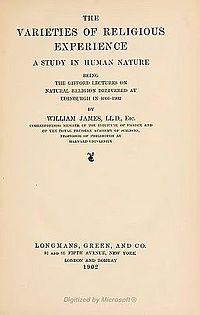 |
『宗教的経験の諸相:人間性に関する研究』は、ハーバード大学の心理学
者かつ哲学者ウィリアム・ジェームズによる著作である。本書は1901年から1902年にかけてスコットランドのエディンバラ大学で行われた自然神学に関
するギフォード講義を編集したものである。講義は個人の私的な宗教的経験と神秘主義の心理学的研究を扱い、様々な事例を用いて伝統を超えた宗教的経験の共
通点を明らかにした。 出版後まもなく、本書は西洋心理学・哲学の古典として位置づけられ、1世紀以上にわたり絶版になることなく刊行され続けている。 ジェームズは後にプラグマティズム哲学を発展させた。『宗教的経験の諸相』と1907年の著書『プラグマティズム』[2]には、多くの共通する思想が見ら れる。 |
| Historical context Psychology of religion In the 1890s, a "new psychology" emerged in European and American universities which coincided with the establishment of many new psychology laboratories and the appointment of faculty in psychology. New psychology's novelty was encapsulated by its distinction from philosophy (philosophy of mind in particular) and theology, and its emphasis on the laboratory-based experimental method. As part of this development, the psychology of religion emerged as a new approach to studying religious experience, with the US being the major centre of research in this field.[3] A few years earlier Edwin Diller Starbuck had written a book entitled Psychology of Religion which James had written a preface to. James thanks Starbuck in the preface to his book for having "made over to me his large collection of manuscript material" before then citing Starbuck's work throughout The Varieties.[4][5] Starbuck recollects that James looked through "several hundred" of his documents.[6] The Varieties was first presented in 1901-2 as a set of twenty Gifford lectures at the University of Edinburgh. This was a lecture series instituted by Adam Gifford and intended to have a popular and public audience on the subject of natural theology, or scientific approaches to the study of religion.[7] James had originally planned for the second half of his lectures to be a philosophical assessment of religion but ill health meant that he could only write one lecture on the topic, resulting in a work more descriptive than James had initially anticipated.[8] |
歴史的背景 宗教心理学 1890年代、欧米の大学で「新しい心理学」が台頭した。これは多くの新しい心理学実験室の設立や心理学教員の任命と時期を同じくしていた。この新心理学 の特異性は、哲学(特に心哲学)や神学との明確な区別、そして実験室に基づく実験手法の重視に集約されていた。こうした発展の一環として、宗教心理学は宗 教的体験を研究する新たなアプローチとして登場し、米国がこの分野の研究の中心地となった。[3] その数年前にエドウィン・ディラー・スターバックが『宗教心理学』という本を著し、ジェームズがその序文を執筆していた。ジェームズは自身の著書『宗教の 諸相』の序文で、スターバックが「膨大な原稿資料を私に譲り渡してくれた」ことに謝意を示し、その後『宗教の諸相』全体でスターバックの著作を引用してい る。[4][5] スターバックは、ジェームズが「数百点」に及ぶ自身の文書を閲覧したことを回想している。[6] 『宗教の諸相』は1901年から1902年にかけ、エディンバラ大学でギフォード講座として20回に分けて発表された。この講義シリーズはアダム・ギ フォードによって創設され、自然神学、すなわち宗教研究への科学的アプローチを主題として、一般大衆を対象とした公開講義を意図していた。[7] ジェームズは当初、講義の後半を宗教の哲学的評価とする計画だったが、体調不良のためこの主題に関する講義は1回分しか執筆できず、結果として当初想定し ていたよりも記述的な著作となった。[8] |
| Themes Religious experiences In the Varieties, James explicitly excludes from his study both theology and religious institutions, choosing to limit his study to direct and immediate religious experiences, which he regarded as the more interesting object of study.[9] Churches, theologies, and institutions are important as vehicles for passing on insights gained by religious experience but, in James's view, they live second-hand off the original experience of the founder.[10] A key distinction in James's treatment of religion is between that of healthy-minded religion and religion of the sick soul; the former is a religion of life's goodness, while the latter cannot overcome the sense of evil in the world.[9] Although James presents this as a value-neutral distinction between different kinds of religious attitudes, he, in fact, regarded the sick-souled religious experience as preferable, and his anonymous source of melancholy experience in lectures VI and VII is, in fact, autobiographical.[11] Following these autobiographical sections, James transitions into two lectures (IX and X) examining religious conversion from a psychological point-of-view, along with its importance in religious history. James considered healthy-mindedness to be America's main contribution to religion, which he saw running from the transcendentalists Ralph Waldo Emerson and Walt Whitman to Mary Baker Eddy's Christian Science. At the extreme, the "healthy-minded" see sickness and evil as an illusion. James considered belief in the "mind cure" to be reasonable when compared to medicine as practiced at the beginning of the twentieth century.[12] James devotes two lectures to mysticism, and in the lectures, he outlines four markers common to mystical experiences. These are: Ineffability: the experience is incapable of being described, and must be directly experienced to be understood. Noesis: the experience is understood to be a state of knowledge through which divine truths can be learned. Transience: the experience is of limited duration. Passivity: the subject of the experience is passive, unable to control the arrival and departure of the experience.[9] He believed that religious experiences can have "morbid origins"[13] in brain pathology and can be irrational, but nevertheless largely positive. Unlike the bad ideas that people have under the influence of, say, fevers or drunkenness, after a religious experience the ideas and insights usually still make sense to the person, and are often valued for the rest of the person's life.[14] James had relatively little interest in the legitimacy or illegitimacy of religious experiences. Further, despite James' examples being almost exclusively drawn from Christianity, he did not mean to limit his ideas to any single religion. Religious experiences are something that people sometimes have, under certain conditions. In James' description, these experiences are inherently very complex, often life-altering and largely indescribable and unquantifiable through traditional means, yet measurable in the profound changes they have on the individuals that report such experiences. |
テーマ 宗教的体験 『宗教的体験の諸相』において、ジェームズは神学と宗教的機関の両方を研究対象から明示的に除外し、直接的かつ即時の宗教的体験に研究を限定することを選 択した。彼はこれをより興味深い研究対象と見なしていたのである。[9] 教会、神学、機関は宗教的体験によって得られた洞察を伝える手段として重要だが、ジェームズの見解では、それらは創設者の原初的体験に二次的に依存してい るに過ぎない。[10] ジェームズの宗教論における重要な区別は、健全な精神の宗教と病める魂の宗教の間にある。前者は人生の善性を基盤とする宗教であるのに対し、後者は世界に おける悪の感覚を克服できない。[9] ジェームズはこれを異なる宗教的態度の価値中立的な区別として提示しているが、実際には病める魂の宗教的体験を好ましいものと見なしており、講義VIと VIIにおける憂鬱な体験の匿名的な源泉は、実のところ自伝的である。[11] これらの自伝的章節に続き、ジェームズは二つの講義(IXとX)で、宗教的回心を心理学的観点から検証するとともに、宗教史におけるその重要性を考察す る。ジェームズは健全な精神状態こそがアメリカが宗教に与えた主要な貢献だと考えた。これは超越主義者ラルフ・ウォルド・エマーソンやウォルト・ホイット マンから、メアリー・ベイカー・エディのキリスト教科学に至る流れだと見なした。極端な場合、「健全な精神状態」を持つ者は病や悪を幻想と見なす。ジェー ムズは「精神療法」への信仰を、20世紀初頭の医療実践と比較すれば合理的なものと見なした。[12] ジェームズは神秘主義に二つの講義を割き、その中で神秘体験に共通する四つの特徴を概説している。それらは以下の通りだ: 不可言性:体験は言葉で説明できず、理解するには直接体験する必要がある。 ノエシス:その体験は神聖な真理を学ぶための知識の状態であると理解される。 一時性:その体験は限られた期間しか続かない。 受動性:体験の主体は受動的であり、体験の到来や去りゆくことを制御できない。[9] 彼は宗教的体験が脳の病理に起因する「病的な起源」[13]を持ち、非合理的である可能性もあるが、それでも概ね肯定的であると信じていた。例えば熱や酩 酊状態の影響下で生じる悪しき観念とは異なり、宗教的体験後の観念や洞察は通常、体験者自身にとって依然として意味を成し、しばしばその人の生涯を通じて 価値あるものとされる。[14] ジェームズは宗教的体験の正当性・非正当性には比較的関心が薄かった。さらに、ジェームズの例示がほぼキリスト教からのみ引用されているにもかかわらず、 彼は自らの考えを特定の宗教に限定する意図はなかった。宗教的体験とは、特定の条件下で人々が時に経験するものである。ジェームズの記述によれば、これら の体験は本質的に非常に複雑で、しばしば人生を変えるものであり、伝統的な手段ではほとんど説明不可能で定量化できない。しかし、そうした体験を報告する 個人に及ぼす深い変化によって測定可能なのである。 |
| Pragmatism Ultimately James made a pragmatic argument for religion, writing that "the uses of religion, its uses to the individual who has it, and the uses of the individual himself to the world, are the best arguments that truth is in it".[15] As an example of this he gives the therapeutic effects of prayer.[16] Although James did not fully articulate his pragmatic philosophy until the publication of Pragmatism in 1907, the approach to religious belief in the Varieties is influenced by pragmatic philosophy. In his Philosophy and Conclusions lectures, James concludes that religion is overall beneficial to humankind, although acknowledges that this does not establish its truth.[9] While James intended to approach the topic of religious experience from this pragmatist angle, Richard Rorty argues that he ultimately deviated from this methodology in the Varieties. In his lectures on saintliness, the intention is to discover whether the saintly virtues are beneficial for human life: if they are, then, according to pragmatism, that supports their claim to truth. However, James ends up concluding that the value of the saintly virtues is dependent on their origin: given that the saintly virtues are only beneficial if there is an afterlife for which they can prepare us, their value depends on whether they are divinely ordained or the result of human psychology. This is no longer a question of value but of empirical fact. Hence, Rorty argues that James ends up abandoning his own pragmatist philosophy due to his ultimate reliance of empirical evidence.[17] James remarked on the aesthetic motivation in an individual choosing a religion and praised religion for its aesthetic value. He said that individuals "involuntarily intellectualize their religious experience" and that metaphysical stipulations about the attributes of a deity "enriches our bare piety to carry these exalted and mysterious verbal additions just as it enriches a church to have an organ and old brasses, marbles and frescoes and stained windows".[18] James considers the possibility of "over-beliefs", beliefs which are not strictly justified by "reason valid universally" but which might understandably be held by educated people nonetheless. They are "buildings-out performed by the intellect into directions of which feeling originally supplied the hint". Philosophy may contribute to shaping these over-beliefs—for example, traditional arguments for the existence of God, including the cosmological, design, and moral arguments, along with the argument from popular consensus.[19][20][21] Although James did not himself endorse any of these arguments: "The fact is that these arguments do but follow the combined suggestions of the facts and of our feeling. They prove nothing rigorously. They only corroborate our pre-existent partialities".[22] He says that individuals in the past had sought such universal proofs, asking "what more ideal refuge could there be than such a system would offer to spirits vexed by the muddiness and accidentality of the world of sensible things?".[23] James says he has his own over-belief, which he does not intend to prove, that there is a greater reality not normally accessible by our normal ways of relating to the world, but which religious experiences can connect us to.[9] |
プラグマティズム 結局、ジェームズは宗教に対して実用主義的な主張を展開した。彼は「宗教の有用性、すなわち宗教を持つ個人にとっての有用性、そして個人自身が世界に対し て持つ有用性こそが、宗教に真実がある最良の証拠である」と記している。[15] その例として、彼は祈りの治療効果を挙げている。[16] ジェームズがプラグマティズム哲学を完全に体系化したのは1907年の『プラグマティズム』刊行後だが、『宗教的経験の諸相』における宗教観へのアプロー チはプラグマティズム哲学の影響を受けている。彼の「哲学と結論」講義では、宗教が人類全体にとって有益であると結論づけているが、それが宗教の真実性を 証明するものではないと認めている。[9] ジェームズは宗教的経験という主題をこの実用主義的観点から論じようとしたが、リチャード・ローティは『諸相』において彼が最終的にこの方法論から逸脱し たと主張する。聖性に関する講義では、聖人の美徳が人間の生活に有益かどうかを見極めることが目的である。有益であれば、実用主義によれば、それはそれら の美徳が真実であるという主張を支持することになる。しかし結局、ジェームズは聖人の美徳の価値はその起源に依存すると結論づける。聖人の美徳が有益なの は、それらが私たちを準備させる来世が存在する場合に限られるため、その価値は神聖な定めによるものか、それとも人間の心理の結果かによって決まるのだ。 これはもはや価値の問題ではなく、経験的事実の問題である。したがって、ローティは、ジェームズが究極的には経験的証拠に依存したために、自らの実用主義 哲学を放棄することになったと論じている。[17] ジェームズは、個人が宗教を選択する際に美学的動機が働くことを指摘し、宗教の美的価値を称賛した。彼は、個人が「無意識のうちに自らの宗教的体験を知性 化する」と述べ、神性の属性に関する形而上学的規定は「教会がオルガンや古びた青銅器、大理石、フレスコ画、ステンドグラスを持つことで豊かになるのと同 様に、私たちの素朴な信仰心を高貴で神秘的な言葉の付加によって豊かにする」と語った。[18] ジェームズは「過剰な信念」の可能性を検討する。これは「普遍的に有効な理性」によって厳密に正当化されないが、教養ある人々が理解できる形で保持し得る 信念である。それらは「感情が最初に示唆した方向へ、知性が構築した拡張物」である。哲学はこうした過剰な信念の形成に寄与しうる――例えば、神の存在を 主張する伝統的な議論(宇宙論的・目的論的・道徳的議論、および大衆的合意に基づく議論)がそれにあたる。[19][20][21] ただしジェームズ自身はこれらの議論を支持しなかった: 「実際のところ、これらの論証は事実と我々の感情が組み合わせて示唆するものを追うに過ぎない。厳密には何も証明していない。既存の偏愛を裏付けるだけ だ」[22]。彼は、過去の人々がこうした普遍的証明を求めてきたと述べ、「感覚的事物の世界の濁りと偶然性に苛まれる精神にとって、これほど理想的な避 難所が他にありえようか?」と問う。[23] ジェイムズは、自分にも証明しようとは思わない過剰な信念があると述べる。それは、通常の世界との関わり方では通常アクセスできないより大きな現実が存在 するが、宗教的体験によって我々はそれに繋がることができるというものである。[9] |
| Reception and legacy The August 1902 New York Times review of the first edition ends with the following: Everywhere there is a frolic welcome to the eccentricities and extravagances of the religious life. Many will question whether its more sober exhibitions would not have been more fruitful of results, but the interest and fascination of the treatment are beyond dispute, and so, too, is the sympathy to which nothing human is indifferent.[1] A July 1963 Time magazine review of an expanded edition published that year ends with quotes about the book from Peirce and Santayana:[24] He was simply impatient with his fellow academicians and their endless hairsplitting over matters that had no relation to life. A vibrant, generous person, he hoped to show that religious emotions, even those of the deranged, were crucial to human life. The great virtue of The Varieties, noted pragmatist philosopher Charles Peirce, is its "penetration into the hearts of people." Its great weakness, retorted George Santayana, is its "tendency to disintegrate the idea of truth, to recommend belief without reason and to encourage superstition." In 1913 Josiah Royce wrote a paper on George Fox which he described as "a fragmentary contribution to that study of the "Varieties of Religious Experience" which William James has so significantly brought to the attention of students of human nature".[25] Royce described James' book as one which "with all its wealth of illustration, and in its courageous enterprise, has a certain classic beauty". He further considered the book to be reflective of "the manifoldness and of the breadth of the general psychological movement itself".[26] In 1986, Nicholas Lash criticised James's Varieties, challenging James's separation of the personal and institutional. Lash argues that religious geniuses such as St. Paul or Jesus, with whom James was particularly interested, did not have their religious experiences in isolation but within and influenced by a social and historical context.[27] Ultimately, Lash argues that this comes from James's failure to overcome Cartesian dualism in his thought: while James believed he had succeeded in surpassing Descartes, he was still tied to a notion of an internal ego, distinct from the body or outside world, which undergoes experiences.[28] The book was cherished by Ludwig Wittgenstein who wrote to Bertrand Russell that "Whenever I have time now I read James’ Varieties of Religious Exp[erience]. This book does me a lot of good".[29] It was one of the few books he recommended to his friend Maurice O'Connor Drury.[30] The influence of James' book is seen from letters sent to him from his sister Hermione as he was serving at the front during World War 1. She was concerned about his well-being and wrote to him that "there will be time for you to be a Jamesian type after the war is over!". Brian McGuinness writes that Wittgenstein aspired to be the 'saintly' type described in the book.[31] In more recent years the book has continued to be positively reviewed. In 1951 William A. Christian called the book "still one of the best books on the psychological variables in the domain of religion"[32] and in 1995 Stephen H. Webb remarked that "James is perhaps most read today for his sensitive descriptions of the bewildering diversity of religious forms".[33] The book has been described as philosophical, as opposed to merely psychological. Michael Hodges writes that James's book is "addressed to a philosophical audience"[34] and in 1979 Gary T. Alexander wrote that the book is "seldom used in any substantive manner by current psychologists of religion, who, although often lauding the work as a creation of genius, tend to view it as primarily philosophical in nature".[35] |
受容と遺産 1902年8月のニューヨーク・タイムズ紙による初版書評は、以下のように締めくくられている: 宗教生活の奇行や過剰さには、どこでも陽気な歓迎が待っている。より抑制された表現の方が成果を生んだのではないか、と疑問を抱く者も多いだろう。しか し、その描写の興味深さと魅力は疑いようがなく、また、人間的なものに対して無関心ではいられない共感もまた同様である。[1] 1963年7月発行の『タイム』誌が同年刊行の増補版を評した際、パースとサンタヤナの書評を引用して締めくくっている:[24] 彼は単に、学界の同僚たちが人生とは無関係な事柄について延々と細部にこだわることに我慢がならなかったのだ。活力に満ち寛容な人格として、彼は宗教的感 情が、たとえ狂気によるものであれ、人間生活に不可欠であることを示そうとした。『宗教的経験の諸相』の最大の長所は、実用主義哲学者チャールズ・パース が指摘したように「人々の心の奥底への浸透」にある。その最大の弱点は、ジョージ・サンタヤナが反論したように「真実の概念を解体し、理性を伴わない信仰 を推奨し、迷信を助長する傾向」にある。 1913年、ジョサイア・ロイスはジョージ・フォックスに関する論文を執筆し、これを「ウィリアム・ジェームズが人間性の研究者たちの注目を集めることに 大きく貢献した『宗教的経験の諸相』研究への断片的な寄与」と評した。[25] ロイスはジェームズの著書を「豊富な実例と勇気ある試みにより、ある種の古典的美を備えている」と評した。さらに同書は「心理学的運動そのものの多様性と 広がり」を反映していると考えた。[26] 1986年、ニコラス・ラッシュはジェームズの『諸相』を批判し、ジェームズが個人的なものと制度を分離した点に異議を唱えた。ラッシュは、ジェームズが 特に注目した聖パウロやイエスといった宗教的天才たちの宗教的体験は、孤立した状態ではなく、社会的・歴史的文脈の中で、またその影響を受けて生じたと主 張する。[27] 結局のところ、ラッシュはこれがジェームズの思考におけるデカルト主義の克服失敗に起因すると論じる。ジェームズはデカルトを超越したと信じていたが、身 体や外界とは区別された内的な自我という概念に依然として縛られており、その自我が経験を受けるという考えに囚われていたのだ。[28] この本はルートヴィヒ・ウィトゲンシュタインに愛読され、彼はバートランド・ラッセルに「今は時間がある度にジェームズの『宗教的経験の諸相』を読んでい る。この本は私に大きな益をもたらす」と書いている。[29] 彼が友人モーリス・オコナー・ドリュリーに推薦した数少ない書籍の一つであった。[30] 第一次世界大戦中、前線で従軍していたジェームズに妹ハーミオネが送った手紙からも、この書物の影響が窺える。彼女は兄の安否を案じ、「戦争が終われば、 君がジェームズ流の人間になる時間は十分にある!」と書き送った。ブライアン・マクギネスによれば、ウィトゲンシュタインはこの書物に描かれた『聖人』的 なタイプを志向していたという。[31] 近年でも、この本は引き続き高い評価を得ている。1951年、ウィリアム・A・クリスチャンは、この本を「宗教の領域における心理的変数に関する、依然と して最高の書籍のひとつ」[32] と評し、1995年には、スティーブン・H・ウェッブが「ジェームズは、おそらく、宗教の形態の驚くべき多様性を繊細に描写した点で、今日最も読まれてい る」[33] と述べている。 この本は、単なる心理学的な本ではなく、哲学的な本であると評されている。マイケル・ホッジスは、ジェームズのこの本は「哲学的な読者層に向けたもの」 [34] と記しており、1979年には、ゲイリー・T・アレクサンダーが、この本は「現在の宗教心理学者の間では、実質的な形で使用されることはほとんどなく、彼 らはこの作品を天才的な創造物として称賛することは多いものの、その本質は主に哲学的であると見なす傾向がある」[35] と記している。 |
| Cosmic Consciousness Fideism Mysticism Religious experience |
宇宙意識 信仰主義 神秘主義 宗教的体験 |
| References 01. "A Study of Man: The Varieties of Religious Experience". The New York Times. 9 August 1902. Retrieved 20 May 2010. Poole, Randall A (2003). "William James in the Moscow Psychological Society". In Grossman, Joan DeLaney; Rischin, Ruth (eds.). William James in Russian Culture. Lanham MD: Lexington Books. p. 143. ISBN 978-0739105269. Taves, Ann (1999). Fits, Trances, and Visions: Experiencing Religion and Explaining Experience from Wesley to James. Princeton: Princeton University Press. pp. 261–262. White, Christopher (2008). "A Measured Faith: Edwin Starbuck, William James, and the Scientific Reform of Religious Experience". The Harvard Theological Review. 101 (3/4): 431–450. doi:10.1017/S0017816008001946. James, William (1917). The Varieties of Religious Experience: A Study in Human Nature. Longman. p. vi. Edwin Diller Starbuck (1937). "Religion's Use of Me". In Ferm, Vergilius (ed.). Religion in Transition. p. 224. Matthew Bradley (2012). Introduction. The Varieties of Religious Experience: A Study in Human Nature. By William, James. Bradley, Matthew (ed.). Oxford: Oxford University Press. p. x. Niebuhr, Richard (1997). "William James on Religious Experience". In Putnam, Ruth Anna (ed.). The Cambridge Companion to William James. Cambridge: Cambridge University Press. p. 216. Goodman, Russell (2017). "William James". Stanford Encyclopedia of Philosophy. Retrieved 1 December 2019. Taylor, Charles (2003). Varieties of Religion Today: William James Revisited. Cambridge, MA.: Harvard University Press. pp. 23. 10. Taylor, Charles (2003). Varieties of Religion Today: William James Revisited. Cambridge, MA.: Harvard University Press. pp. 33–34. Duclow, Donald F. (1 January 2002). "William James, Mind-Cure, and the Religion of Healthy-Mindedness". Journal of Religion and Health. 41 (1): 45–56. doi:10.1023/A:1015106105669. JSTOR 27511579. S2CID 34501644. Fuller, Andrew Reid (1 January 1994). Psychology and Religion: Eight Points of View. Rowman & Littlefield. ISBN 9780822630364. James, William (1 January 1985). The Varieties of Religious Experience. Harvard University Press. ISBN 9780674932258. feverish%20fancies. 15. The American Pragmatists. OUP. 2013. p. 69. Clark, Stephanie (2018). Compelling God Theories of Prayer in Anglo-Saxon England. University of Toronto Press. p. 13. Rorty, Richard (2004). "Some Inconsistencies in James's Varieties". In Proudfoot, Wayne (ed.). William James and a Science of Religions: Reexperiencing The Varieties of Religious Experience. New York: Columbia University Press. pp. 86–97 (95). ISBN 9780231132046. James, William (1917). The Varieties of Religious Experience: A Study in Human Nature. Longman. p. 459. James, William (1917). The Varieties of Religious Experience: A Study in Human Nature. Longman. p. 436. 20. Pragmatism and Religion Classical Sources and Original Essays. University of Illinois. 2003. p. 67. Pomerleau, Wayne P. "William James (1842—1910)". Internet Encyclopedia of Philosophy. Retrieved 2 December 2019. James, William (1917). The Varieties of Religious Experience: A Study in Human Nature. Longman. p. 439. James, William (1917). The Varieties of Religious Experience: A Study in Human Nature. Longman. p. 434. "Books: The Waterspouts of God". Time. 19 July 1963. Archived from the original on 4 February 2013. Retrieved 20 May 2010. Royce, Josiah (January 1913). "George Fox as a Mystic". Harvard Theological Review. 6 (1): 31–59. doi:10.1017/S0017816000029461. JSTOR 1506970. Royce, Josiah (14 July 1911). "James as a Philosopher". Science. 34 (863): 33–45. Bibcode:1911Sci....34...33R. doi:10.1126/science.34.863.33. JSTOR 1638720. PMID 17775299. Lash, Nicholas (1986). Easter in Ordinary: Reflections on Human Experience and the Knowledge of God. Charlottesville: University Press of Virginia. pp. 54–57. Lash, Nicholas (1986). Easter in Ordinary: Reflections on Human Experience and the Knowledge of God. Charlottesville: University Press of Virginia. pp. 60–64. Peters, Michael A. (2022). "Wittgenstein, mysticism and the 'religious point of view': 'Whereof one cannot speak, thereof one must be silent'". Educational Philosophy and Theory. 54 (12): 1952–1959. doi:10.1080/00131857.2022.2053109. 30. Goodman, Russell B. (1994). "What Wittgenstein Learned from William James". History of Philosophy Quarterly. 11 (3): 339–354. JSTOR 27744632. McGuinness, Brian, ed. (2020). Wittgenstein's Family Letters: Corresponding with Ludwig. Bloomsbury Publishing. p. 12. Christian, William A. (June 1951). "Some Varieties of Religious Belief". The Review of Metaphysics. 4 (4): 596–616. JSTOR 20123239. Webb, Stephen H. (Summer 1995). "The Rhetoric of and about Excess in William James's "The Varieties of Religious Experience"". Religion & Literature. 27 (2): 27–45. JSTOR 40059607. Hodges, Michael (2011). "The Claims for Mysticism in The Varieties of Religious Experience". Journal of Speculative Philosophy. 25 (4): 396–411. doi:10.5325/jspecphil.25.4.0396. JSTOR 10.5325/jspecphil.25.4.0396. 34. Alexander, Gary T. (October 1979). "Psychological Foundations of William James's Theory of Religious Experience". The Journal of Religion. 59 (4): 421–34. doi:10.1086/486728. JSTOR 1202886. |
参考文献 01. 「人間研究:宗教的体験の多様性」. ニューヨーク・タイムズ. 1902年8月9日. 2010年5月20日取得. プール, ランドール・A (2003). 「モスクワ心理学会におけるウィリアム・ジェームズ」. ジョーン・デラニー・グロスマン, ルース・リッシン (編). 『ロシア文化におけるウィリアム・ジェームズ』. ランハム(メリーランド州): レキシントン・ブックス. p. 143. ISBN 978-0739105269. テイス, アン (1999). 『発作、トランス、そして幻視: ウェスレーからジェームズまで、宗教体験とその説明』. プリンストン: プリンストン大学出版局. pp. 261–262. ホワイト、クリストファー(2008)。「慎重な信仰:エドウィン・スターバック、ウィリアム・ジェームズ、そして宗教的経験の科学的改革」。『ハーバード神学評論』。101巻3/4号:431–450頁。doi:10.1017/S0017816008001946。 ジェームズ、ウィリアム(1917)。『宗教的経験の諸相:人間性に関する研究』。ロングマン。p. vi。 エドウィン・ディラー・スターバック (1937)。「宗教における私の利用」。ファーマ、ヴァージリウス (編)『変遷する宗教』所収。p. 224。 マシュー・ブラッドリー (2012)。序文。『宗教的経験の諸相:人間性に関する研究』。ウィリアム・ジェームズ著。ブラッドリー、マシュー(編)。オックスフォード:オックスフォード大学出版局。p. x。 ニーバー、リチャード(1997)。「宗教的経験に関するウィリアム・ジェームズ」。パトナム、ルース・アンナ(編)。『ウィリアム・ジェームズに関するケンブリッジ・コンパニオン』。ケンブリッジ:ケンブリッジ大学出版局。p. 216。 グッドマン、ラッセル(2017)。「ウィリアム・ジェームズ」。スタンフォード哲学百科事典。2019年12月1日取得。 テイラー、チャールズ (2003)。今日の宗教の多様性:ウィリアム・ジェームズ再考。マサチューセッツ州ケンブリッジ:ハーバード大学出版局。23ページ。 10. テイラー、チャールズ (2003)。今日の宗教の多様性:ウィリアム・ジェームズ再考。マサチューセッツ州ケンブリッジ:ハーバード大学出版局。33-34ページ。 Duclow, Donald F. (2002年1月1日). 「ウィリアム・ジェームズ、マインドキュア、そして健康な精神の宗教」. Journal of Religion and Health. 41 (1): 45–56. doi:10.1023/A:1015106105669. JSTOR 27511579. S2CID 34501644。 フラー、アンドルー・リード(1994年1月1日)。『心理学と宗教:8つの視点』。ローマン&リトルフィールド。ISBN 9780822630364。 ジェームズ、ウィリアム(1985年1月1日)。『宗教的経験の多様性』。ハーバード大学出版局。ISBN 9780674932258。feverish%20fancies。 15. The American Pragmatists。OUP。2013年。p. 69。 Clark, Stephanie (2018). Compelling God Theories of Prayer in Anglo-Saxon England。トロント大学出版局。p. 13。 ローティ、リチャード(2004)。「ジェームズの『宗教的経験の諸相』に見られる矛盾点」。プラウドフット、ウェイン(編)。『ウィリアム・ジェームズ と宗教科学:宗教的経験の諸相の再体験』。ニューヨーク:コロンビア大学出版局。86–97頁(95頁)。ISBN 9780231132046。 ジェームズ、ウィリアム(1917)。『宗教的経験の諸相:人間性に関する研究』。ロングマン。459頁。 ジェームズ、ウィリアム(1917)。『宗教的経験の諸相:人間性に関する研究』。ロングマン。436頁。 20. 実用主義と宗教 典籍と原論集。イリノイ大学。2003年。p. 67. ポマロー、ウェイン・P. 「ウィリアム・ジェームズ (1842—1910)」. インターネット哲学百科事典. 2019年12月2日取得. ジェームズ、ウィリアム (1917). 『宗教的経験の諸相:人間性に関する研究』. ロングマン. p. 439. ジェームズ、ウィリアム(1917)。『宗教的経験の諸相:人間性に関する研究』。ロングマン。434頁。 「書籍:神のウォータースパウト」。タイム誌。1963年7月19日。2013年2月4日にオリジナルからアーカイブ。2010年5月20日取得。 ロイス、ジョサイア(1913年1月)。「神秘主義者としてのジョージ・フォックス」。ハーバード神学評論。6 (1): 31–59。doi:10.1017/S0017816000029461。JSTOR 1506970。 ロイス、ジョサイア(1911年7月14日) 。「哲学者としてのジェームズ」。『サイエンス』。34巻863号:33–45頁。Bibcode:1911Sci....34...33R。doi: 10.1126/science.34.863.33。JSTOR 1638720。PMID 17775299。 ラッシュ、ニコラス(1986)。『日常における復活祭:人間の経験と神の知識に関する考察』。シャーロッツビル:バージニア大学出版局。54–57頁。 ラッシュ、ニコラス(1986)。『日常における復活祭:人間の経験と神の知識に関する考察』。シャーロッツビル:バージニア大学出版局。60–64頁。 ピーターズ、マイケル A. (2022). 「ウィトゲンシュタイン、神秘主義、そして『宗教的観点』:『語ることのできないものについては、沈黙を守らなければならない』」. 教育哲学と理論. 54 (12): 1952–1959. doi:10.1080/00131857.2022.2053109. 30. グッドマン、ラッセル B. (1994). 「ウィトゲンシュタインがウィリアム・ジェームズから学んだこと」. 哲学史季刊. 11 (3): 339–354. JSTOR 27744632. マクギネス、ブライアン、編(2020)。『ウィトゲンシュタインの家族への手紙:ルートヴィヒとの文通』。ブルームズベリー出版。12 ページ。 クリスチャン、ウィリアム A. (1951年6月)。「宗教的信念のいくつかの種類」。『形而上学のレビュー』。4 (4): 596–616。JSTOR 20123239. ウェブ、スティーブン・H.(1995年夏)。「ウィリアム・ジェームズの『宗教的経験の諸相』における過剰の修辞学とその論評」。『宗教と文学』。27巻2号:27–45頁。JSTOR 40059607。 ホッジズ、マイケル (2011). 「『宗教的経験の諸相』における神秘主義の主張」. Journal of Speculative Philosophy. 25 (4): 396–411. doi:10.5325/jspecphil.25.4.0396. JSTOR 10.5325/jspecphil.25.4.0396. 34. アレクサンダー、ゲイリー・T(1979年10月)。「ウィリアム・ジェームズの宗教的経験理論の心理学的基礎」。宗教ジャーナル。59 (4): 421–34. doi:10.1086/486728. JSTOR 1202886. |
| https://en.wikipedia.org/wiki/The_Varieties_of_Religious_Experience |
☆
「前 回の集まり(第五講)で、健全な心の気質を考察したが、この気質は、苦悩を長びかせることが体質的にできないような気質で、ものごとを楽観的に見ようとす る傾向が、個人の性格を固める結晶水のようなはたらきをする、といった気質である。私たちは、この気質がどうしてある特殊な型の宗教の基礎となりうるかを 見た。それは、善が、たといそれが現世の生活の善であろうとも、善こそが、理性的存在たる者の心すべき根本的事柄である、と考えるような宗教であった。こ の宗教は、宇宙の悪い面をかえりみることのないよう人間に命じて、その悪い面を心にとめたり重んじたりするのを組織的に禁じ、思慮ふかい打算によって悪い 面を無視させ、それどころか、時には、悪い面の存在を頭っから否定させるのである。つまり、悪は病気なのである。だから、病気のことでくよくよ気をもむの は、そのこと自体、また一つの病気であって、もとの病気をただ重くするだけのことである。後悔や自責の念などの感情でさえ、善に奉仕するしもべの役をなす ものであるのに、病的な、心を弛緩させる衝動でしかない。最善の悔いとは、正義のために起って行動することであり、諸君がかつて罪とかかわりをもっていた ということを忘れることである、と考えられるのである」(『宗教的経験の諸相』上:195)(→「善と悪について考える」)。
AT our last meeting, we considered the healthy-minded temperament, the temperament which has a constitutional incapacity for prolonged suffering, and in which the tendency to see things optimistically is like a water of crystallization in which the individual’s character is set. We saw how this temperament may become the basis for a peculiar type of religion, a religion in which good, even the good of this world’s life, is regarded as the essential thing for a rational being to attend to. This religion directs him to settle his scores with the more evil aspects of the universe by systematically declining to lay them to heart or make much of them by ignoring them in his reflective calculations, or even, on occasion, by denying outright that they exist. Evil is a disease; and worry over disease is itself an additional form of disease, which only adds to the original complaint.
Even
repentance and remorse, affections which come in the character of
ministers of good, may be but sickly and relaxing impulses. The best
repentance is to up and act for righteousness, and forget that you ever
had relations with sin.
「ス ピノザの哲学は、この種の健全な心をその核心に織りこんでいるのであって、それが彼の哲学の魅力の一つの秘密ともなっている。スピノザによれば、 理性に よって導かれる者は、その精神をまったく善の影響によって導かれる者である。悪の知識は、奴隷的な人間にのみふさわしい「不完全な」知識である。だからス ピノザは、悔いというものを無条件的に非難する。彼はこう言っている、——あやまちをおかすと、
Spinoza’s
philosophy has this sort of healthy-mindedness woven into the heart of
it, and this has been one secret of its fascination. He whom Reason
leads, according to Spinoza, is led altogether by the influence over
his mind of good. Knowledge of evil is an ‘inadequate’ knowledge, fit
only for slavish minds. So Spinoza categorically condemns repentance.
When men make mistakes, he says:
「良 心の苛責や悔いの念がおこって、人々を正道につれもどしてくれるものだと、あるいは期待されるかもしれない、そして、それだから、これらの感情は善いもの である、と結論したくなるかもしれない(事実、誰もがそう結論しているのである)。けれども、よく見てみると、良心の苛責や悔いは、善いものでないばかり か、かえって有害な悪い情念であることを、われわれは発見するのである。なぜなら、良心の悩みや自責の念に頼るよりも、理性と真理への愛とに頼るほうが、 いつでも、うまく暮らしてゆけることは、明白だからである。自責や悔いは、特殊な種 類の悲しみにすぎないのであるから、有害な悪いものである。そして、悲 しみの不都合なことは」、と彼はつづけて、「私がすでに証明したところで、われわれは悲しみを人生から遠ざけるように努力しなければならぬということも、 私はすでに明らかにしておいた。良心の不安や自責の念も、この種の感情なのであるか ら、同様にまたわれわれはそのような精神状態を避けるように努めねばな らない——Tract on God, Man and Happiness, Book ii, ch.x」」(岩波文庫版『宗教的経験の諸相』上:195-196)。
“One might perhaps expect gnawings of conscience and repentance to help to bring them on the right path, and might thereupon conclude (as every one does conclude) that these affections are good things. Yet when we look at the matter closely, we shall find that not only are they not good, but on the contrary deleterious and evil passions. For it is manifest that we can always get along better by reason and love of truth than by worry of conscience and remorse.
Harmful are these and evil, inasmuch as they form a particular kind of sadness; and the disadvantages of sadness,” he continues, “I have already proved, and shown that we should strive to keep it from our life. Just so we should endeavor, since uneasiness of conscience and remorse are of this kind of complexion, to flee and shun these states of mind.”- Tract on God, Man, and Happiness, Book ii. ch. x.リンク
文 献
その他の情報
Copyleft, CC, Mitzub'ixi Quq Chi'j, 1996-2099


Copyleft,
CC, Mitzub'ixi Quq Chi'j, 1996-2099