International Health Studies
国際保健学
International Health Studies
解説:池田光穂
国際保健学(International Health Studies)とは、1945年の国際連合憲章の後にうまれた国民国家を基本単位とする国際的協調の枠組み――国際レジームと呼びます――にもとづい て、公衆衛生学を基軸にしたローカルレベルでの治療や予防の実践行為から、世界的レベルでの保健医療施策の策定にまで広がる現象の解明と問題解決のために 寄与するための学問群のことです。国際保健協力学と言われることもあります。
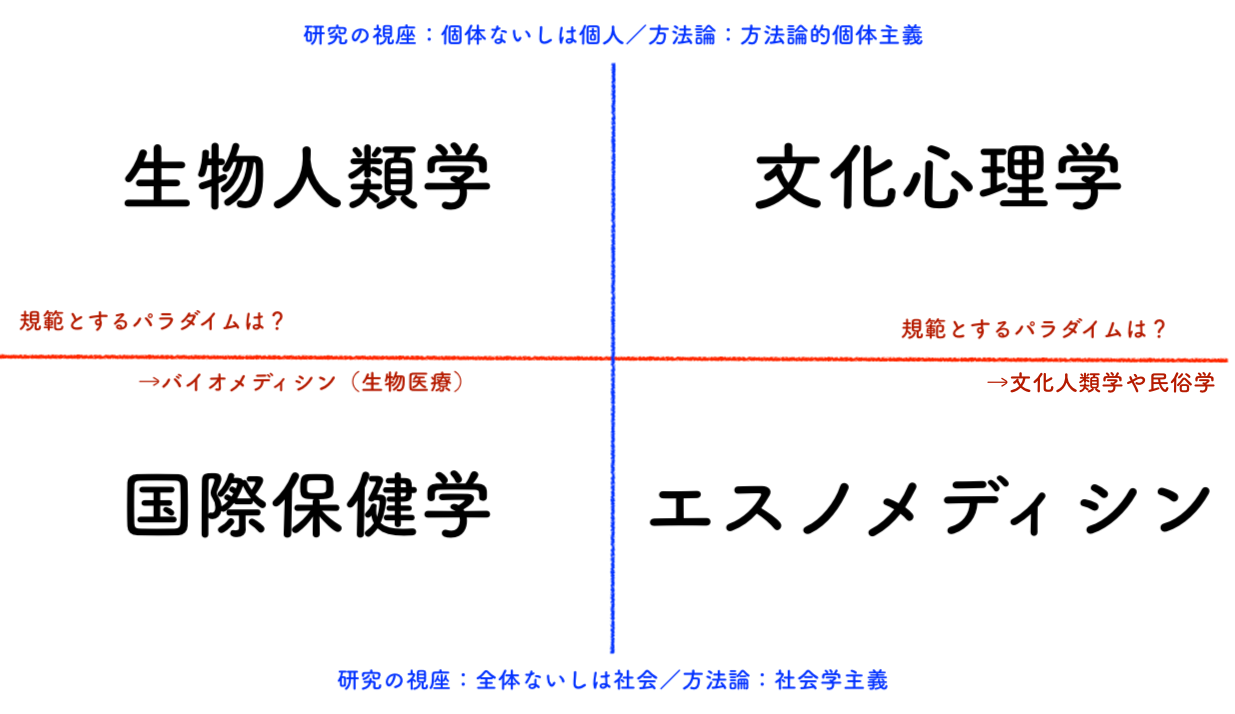
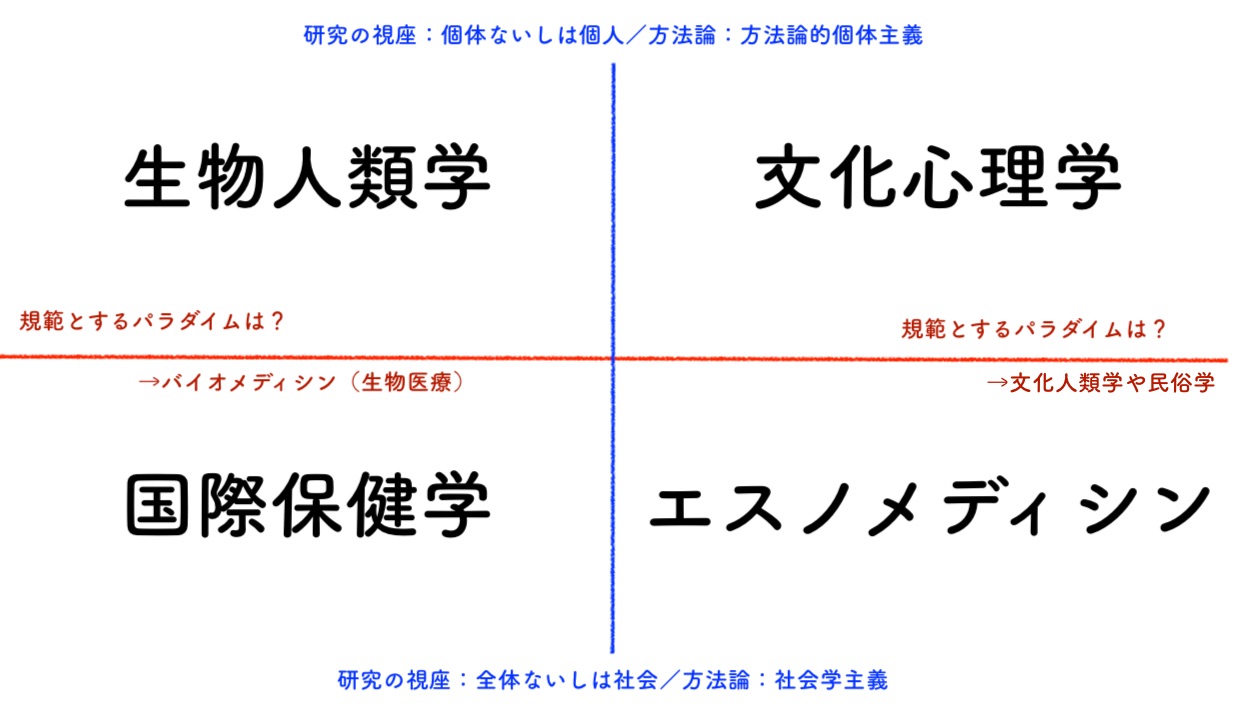
国
際保健学(=国際公衆衛生学)と他の医療人類学の分野の関係の位置付け
2020年頭に中国で発生 したCOVID-19は同年の前半には早々とパンデミック宣言がWHOになされた。同年8月上旬の時点で、中国は制圧に成功、他方、中国の政策を批判する アメリカ合衆国やブラジルは最悪の蔓延国になってしまった。これらの蔓延の原因は、政府と大統領の責任であることは言うまでもない。
ランセットのエディトリアルは、7月25 日号( VOLUME 396, ISSUE 10246, P213)で"COVID-19 and China: lessons and the way forward"と題して、中国での成功を次のように分析している。私個人は facebook でこのようにつぶやいている:「ナチのT4以前の段階における健康政策のように全体主義政策はパンデミック級の疾病対策にはよいというランセットの提灯エ ディトリアル。なんか複雑だ 」
| China has largely
controlled
COVID-19. A country of 1.4 billion people and a size similar to Europe
or the USA now reports only clusters of cases rather than widespread
community transmission. China has been widely criticised for its role
and responsibilities during the pandemic because of censorship,
transparency, and human rights concerns. But the rest of the world can
still learn from China's successes in bringing its outbreak under
control. |
中国は新型コロナウイルス感染症をほぼ制御下に置いている。14億人の
人口を抱え、ヨーロッパやアメリカと同規模の国土を持つこの国では、現在、地域での集団感染が報告されるのみで、広範なコミュニティ感染は起きていない。
中国は検閲や透明性、人権問題をめぐる懸念から、パンデミックにおける役割と責任について広く批判されてきた。しかし、世界は依然として、中国が感染拡大
を制御した成功事例から学ぶことができる。 |
| China's response shows the
importance of domestic research and public health capacity. Huge
investments have left China much better prepared for COVID-19 than for
severe acute respiratory syndrome (SARS). When SARS broke out in 2002,
China was unprepared initially, especially as the pathogen was unknown.
When COVID-19 emerged in December, 2019, Chinese scientists were
quickly able to identify the virus and shared genomic sequencing data
internationally on Jan 11, 2020. By the end of January, doctors from
mainland China and Hong Kong had characterised the clinical features of
patients with COVID-19, person-to-person transmission, genomic
characteristics, and epidemiology, warning the world about the threat
of COVID-19 with research papers published in The Lancet. China has
also been at the forefront of vaccine research, with promising results
of early trials of a recombinant adenovirus type-5-vectored COVID-19
vaccine developed in China published in The Lancet in May and July.
Such research was done incredibly fast and rigorously through close
cooperation within China at a time of national emergency. For other
countries, particularly low-income and middle-income countries, China's
experience shows the importance of investing in national health and
research systems to enhance laboratory capacity as well as workforce.
They are fundamental to a quick and effective national response to
health emergencies and to global health security. |
中国の対応は、国内の研究と公衆衛生能力の重要性を示している。巨額の
投資により、中国は重症急性呼吸器症候群(SARS)時よりもCOVID-19への備えがはるかに整っていた。2002年にSARSが発生した際、中国は
当初、特に病原体が未知であったため、対応が追いつかなかった。2019年12月にCOVID-19が出現した際には、中国の科学者たちは迅速にウイルス
を特定し、2020年1月11日に国際的にゲノム配列データを共有した。1月末までに、中国本土と香港の医師たちはCOVID-19患者の臨床的特徴、人
から人への感染、ゲノム特性、疫学を明らかにし、医学誌『ランセット』に研究論文を発表して世界にCOVID-19の脅威を警告した。中国はワクチン研究
でも最先端を走り、5月と7月に『ランセット』誌で発表された中国開発の組換えアデノウイルス5型ベクターCOVID-19ワクチンの初期臨床試験では有
望な結果が得られた。こうした研究は国家的な緊急事態下において、中国国内の緊密な連携により驚異的な速さと厳密さで進められた。他の国々、特に低所得
国・中所得国にとって、中国の経験は、検査能力と人材を強化するために、国家の保健・研究システムへの投資が重要であることを示している。これらは、健康
上の緊急事態への迅速かつ効果的な国家的対応と、世界の保健安全保障にとって不可欠な要素である。 |
| A second lesson is that a
robust
foundation of research cannot guarantee effective control without
strong top-level political commitment to use science to tackle the
outbreak decisively. Governments and their leaders must respect
science, understand its value, and act on it in a way that is best for
society. China's National Health Commission sent three groups of
national infectious disease experts to Wuhan at the beginning of the
outbreak to investigate the risks and transmission of COVID-19, and
their recommendations informed the decision to lockdown Wuhan on Jan
23. When Chen Wang, president of the Chinese Academy of Medical
Sciences, and colleagues saw the need for Fangcang shelter hospitals,
the government was quick to respond. |
第二の教訓は、研究の堅固な基盤があっても、科学を用いて感染を断固と
して抑えるという強い政治的意志がなければ、効果的な制御は保証されないということだ。政府とその指導者は科学を尊重し、その価値を理解し、社会にとって
最善の方法で行動しなければならない。中国国家衛生健康委員会は、感染拡大初期に3つの国家級感染症専門家チームを武漢に派遣し、COVID-19のリス
クと感染経路を調査させた。彼らの提言が1月23日の武漢封鎖決定の根拠となった。中国医学科学院院長の陳旺らが方舱病院(仮設病院)の必要性を指摘する
と、政府は即座に対応した。 |
| Third, achieving rapid and
effective implementation of control measures for COVID-19 requires
broad community engagement. Community solidarity has been unprecedented
during the COVID-19 outbreak in China. Control measures that could
sacrifice individual freedom, like mandatory mask-wearing in public
areas, were accepted readily by the public. Millions of China's
community workers have “built the first line of defense against
COVID-19”, according to Xinhua News Agency, in their work to provide
essential health checks and support for people with fever, severe
diseases, pregnant women, and those quarantined at home. There are
tensions between freedom and security that each country has to reckon
with, and some of China's approaches to surveillance, for example,
would not be acceptable elsewhere. But China's experiences show the
importance of community solidarity and what it can achieve. |
第三に、COVID-19対策の迅速かつ効果的な実施には、広範な地域
社会の参加が必要だ。中国におけるCOVID-19流行下では、地域社会の結束がかつてないほど強まった。公共の場でのマスク着用義務化など個人の自由を
犠牲にする可能性のある対策も、市民は容易に受け入れた。新華社通信によれば、数百万人の中国の地域活動家が「新型コロナウイルスに対する最初の防衛線を
築いた」という。彼らは発熱者、重症患者、妊婦、自宅隔離者に対して、必要な健康診断と支援を提供した。自由と安全の間の緊張関係はどの国も直面する課題
であり、例えば中国の監視手法の一部は他国では受け入れられないだろう。しかし中国の経験は、地域社会の結束の重要性とそれが達成し得る成果を示してい
る。 |
| So, there are lessons for
health
to learn from China. But how will Chinese and global health communities
work together in the future? China's Foreign Minister Wang Yi has said
that globalisation needs to be more inclusive and beneficial to all,
that multilateralism must be safeguarded and promoted even more firmly,
and that global governance needs to be reformed and improved where it
is most lacking. The health community is waiting to see if China will
become a multilateral leader in global health, what role it wants in
international global health security, and whether it will aspire to
fill the vacuum in global health left by the USA. |
では、中国の事例から健康分野が学ぶべき教訓がある。しかし今後、中国
と世界の保健コミュニティはどのように協力していくのか?中国の王毅外相は、グローバル化はより包括的で全ての国に利益をもたらす必要があり、多国間主義
はより強固に守られ推進されねばならず、グローバルガバナンスは最も不足している部分を改革・改善すべきだと述べた。保健医療コミュニティは、中国がグ
ローバルヘルスにおける多国間リーダーとなるか、国際的なグローバルヘルスセキュリティでどのような役割を望むか、そして米国が去ったグローバルヘルス分
野の空白を埋めることを目指すかどうかを見守っている。 |
| China is facing legitimate
questions in many areas of its domestic and foreign policy, but when it
comes to COVID-19, scapegoating China for the pandemic is not a
constructive response. “Now is the time for global leaders to decide:
will we succumb to chaos, division and inequality? Or will we right the
wrongs of the past and move forward together, for the good of all?”, as
UN Secretary-General António Guterres asked in his 2020 Nelson Mandela
Annual Lecture. Tackling a global health emergency like a pandemic
requires open collaboration. The lack of global solidarity to address
COVID-19 amid geopolitical instability is a threat to us all. |
中国は国内外の政策の多くの分野で正当な疑問に直面しているが、
COVID-19に関しては、パンデミックの責任を中国に押し付けるのは建設的な対応ではない。「今こそ世界の指導者が決断すべき時だ。我々は混乱と分断
と不平等に屈するのか?それとも過去の過ちを正し、全ての人の利益のために共に前進するのか?」と国連のアントニオ・グテーレス事務総長は2020年のネ
ルソン・マンデラ記念講演で問いかけた。パンデミックのような世界的健康危機に対処するには、開かれた協力が必要だ。地政学的な不安定さの中でCOVID
-19に対処する国際的な連帯が欠如していることは、我々全員にとって脅威である。 |
| "COVID-19 and
China: lessons and the way forward" by Lancet |
リンク
文献
その他の情報
Copyleft, CC, Mitzub'ixi Quq Chi'j, 1996-2099
++
Copyleft,
CC, Mitzub'ixi Quq Chi'j, 1996-2099