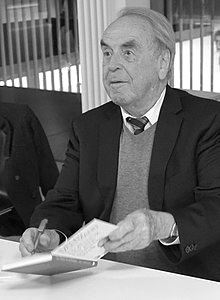
ユルゲン・モルトマン
Jürgen Moltmann, 1926-2024
★ユルゲン・モルトマン(1926年4月8日、ハンブルク生まれ、2024年6月3日、テュービンゲンで死去[1])は、ドイツのプロテスタント改革派神学者、大学教授だった。1967年から1994年まで、テュービンゲンで組織神学の教授を務めた。
| Jürgen Moltmann
(* 8. April 1926 in Hamburg; † 3. Juni 2024 in Tübingen[1]) war ein
deutscher evangelisch-reformierter Theologe und Hochschullehrer. Von
1967 bis 1994 war er Professor für Systematische Theologie in Tübingen. |
ユルゲン・モルトマン(1926年4月8日、ハンブルク生
まれ、2024年6月3日、テュービンゲンで死去[1])は、ドイツのプロテスタント改革派神学者、大学教授だった。1967年から1994年まで、
テュービンゲンで組織神学(Systematische Theologie)の教授を務めた。 |
| Leben Moltmann, der in einer unkirchlichen Familie aufwuchs, absolvierte 1944 in Hamburg das Notabitur, geriet als wehrdienstleistender Luftwaffenhelfer am Ende des Zweiten Weltkriegs in britische Kriegsgefangenschaft. Dort sei er nach eigenen Angaben „zum christlichen Glauben gekommen“[2] und begann noch in Kriegsgefangenschaft ein Studium der Evangelischen Theologie, das er 1948 an der Universität Göttingen bis 1952 fortsetzte. Dort wurde er von Hans Joachim Iwand, Gerhard von Rad und vor allem von Otto Weber beeinflusst, bei dem er eine Dissertation über die Prädestinationslehre des französischen reformierten Theologen Moyse Amyraut schrieb, mit der er auch zum Dr. theol. promoviert wurde. Er hat sich zeit seines Lebens selbst als reformierter Theologe – mit ökumenischer Gesinnung – verstanden.[3] Ab 1952 war er Vikar, Pastor in Bremen-Wasserhorst an der evangelischen Kirche Wasserhorst sowie Studentenpfarrer. Zur Kirchengemeinde Wasserhorst hielt er lebenslang Kontakt.[4] Im Jahr 1957, fast zeitgleich mit der Habilitation über Christoph Pezel, erhielt er während seiner Lehrtätigkeit als Privatdozent an der Universität Göttingen einen Ruf auf eine Professur an der Kirchlichen Hochschule Wuppertal, die er ab 1958 ausübte, zeitweise als Rektor. 1963 wechselte er als Ordinarius an die Universität Bonn. 1967/1968 war er Gastprofessor in den Vereinigten Staaten von Amerika. Von 1967 bis zu seiner Emeritierung 1994 arbeitete er als ordentlicher Professor für Systematische Theologie an der Eberhard-Karls-Universität Tübingen. Moltmann war seit 1952 mit der 2016 verstorbenen feministischen Theologin Elisabeth Moltmann-Wendel verheiratet und hatte vier Töchter. Der Theologe verstand sich als linksprogressiv: „Als in der Nachkriegszeit Adenauer und Dibelius die alten Verhältnisse von Staat und Kirche von 1933, die Hitler doch nicht verhindert hatten, restaurierten, schloß ich mich den politik- und kirchenkritischen Nachfolgegruppen der Bekennenden Kirche an.“[2] Seit 1978 war er Mitglied der Christlichen Friedenskonferenz. Von 1963 bis 1983 war er Mitglied der Kommission für Glauben und Kirchenverfassung und von 1977 bis 1993 Vorsitzender der Gesellschaft für Evangelische Theologie. Moltmann war langjähriger Mitherausgeber der Zeitschriften Verkündigung und Forschung, Evangelische Kommentare und Evangelische Theologie sowie der Buchreihe Beiträge zur Geschichte und Lehre der reformierten Kirche. Sein Nachlass wurde 2024 vom Universitätsarchiv Tübingen übernommen.[5] |
人生 モルトマンは、教会とは無縁の家庭で育ち、1944年にハンブルクで緊急高校卒業資格を取得したが、第二次世界大戦の終戦間際に、国防軍空軍補助兵として 従軍中にイギリス軍に捕虜となった。彼自身の言葉によれば、そこで「キリスト教の信仰に目覚めた」[2] という。そして、捕虜として収容されている間にプロテスタント神学の研究を始め、1948年から1952年までゲッティンゲン大学でその研究を続けた。そ こで彼は、ハンス・ヨアヒム・イヴァント、ゲルハルト・フォン・ラッド、そしてとりわけオットー・ウェーバーの影響を受け、フランスの改革派神学者モワー ズ・アミローの予定説に関する博士論文を執筆し、神学博士号を取得した。彼は生涯、エキュメニカルな精神を持つ改革派神学者であると自認していた[3]。 1952 年からは、ブレーメン・ヴァッサーホルストのヴァッサーホルスト福音教会で副牧師、牧師、学生牧師を務めた。ヴァッサーホルストの教会とは生涯を通じて交流を続けた。[4] 1957年、クリストフ・ペゼルに関するハビリテーション(教授資格)を取得するとほぼ同時に、ゲッティンゲン大学で私講師として教鞭を執っている間に、 ヴッパータール教会大学から教授職の招聘を受け、1958年から同大学で教鞭を執り、一時学長も務めた。1963年にはボン大学に正教授として移った。 1967年から1968年にかけては、アメリカ合衆国で客員教授を務めた。1967年から1994年に名誉教授となるまで、テュービンゲン大学にて、組織 神学の正教授として労働した。 モルトマンは1952年から、2016年に亡くなったフェミニスト神学者エリザベス・モルトマン・ウェンデルと結婚し、4人の娘をもうけた。 この神学者は、自らを左派進歩主義者と認識していた。「戦後、アデナウアーとディベリウスが、ヒトラーを阻止できなかった1933年の国家と教会の旧体制 を復活させたとき、私は、政治と教会に批判的な告白教会(Bekennende Kirche)の後継団体に加わった」[2]。1978年からは、キリスト教平和会議(Christliche Friedenskonferenz)のメンバーであった。1963年から1983年まで、信仰と教会憲法委員会の委員を務め、1977年から1993年 まで、福音主義神学協会の会長を務めた。 モルトマンは、雑誌『Verkündigung und Forschung(宣教と研究)』、『Evangelische Kommentare(福音派解説)』、『Evangelische Theologie(福音派神学)』、および書籍シリーズ『Beiträge zur Geschichte und Lehre der reformierten Kirche(改革派教会の歴史と教義に関する寄稿)』の長年にわたる共同編集者だった。 彼の遺産は、2024年にテュービンゲン大学アーカイブに引き継がれた。[5] |
| Hauptwerke 1964 erschien mit Theologie der Hoffnung das Werk, das ihm internationale Anerkennung verschaffte; 1972 Der gekreuzigte Gott, seine stark trinitarisch geprägte Christologie; 1975 Kirche in der Kraft des Geistes, eine Kirchenlehre, welche die christliche Kirche als Gemeinschaft im Geiste Jesu auffasst. Die drei Bücher, obwohl unabhängig voneinander entstanden, wurden später meist als Trilogie angesehen, die jeweils von einem Thema aus (Ostern – Karfreitag – Pfingsten) das Ganze der christlichen Theologie in den Blick nehmen. Gemeinsam mit Pinchas Lapide veröffentlichte er zwei Dialoge zum Verhältnis von Monotheismus und Trinitätslehre (1979) und von Israel und Kirche (1980). Zwischen 1980 und 1995 erschienen in fünf Bänden seine Systematischen Beiträge zur Theologie, in denen er das gesamte Gebiet der Dogmatik neu bearbeitete: Trinität und Reich Gottes. Zur Gotteslehre, München 1980 Gott in der Schöpfung. Ökologische Schöpfungslehre, München 1985 Der Weg Jesu Christi. Christologie in messianischen Dimensionen, München 1989 Der Geist des Lebens. Eine ganzheitliche Pneumatologie, München 1991 Das Kommen Gottes. Christliche Eschatologie, München 1995 Wie nachgeholte Prolegomena zu diesem dogmatischen Entwurf veröffentlichte Moltmann 1999 seine Erfahrungen theologischen Denkens. Wege und Formen christlicher Theologie, eine stark autobiographisch geprägte Rechenschaft über die Grundlagen und Methoden seines theologischen Denkens. 2006 ließ er ihr seine Autobiographie Weiter Raum. Eine Lebensgeschichte folgen. Die „Ökologische Schöpfungslehre“ geht von dem Bild der „Shechina“, der „Einwohnung“ Gottes in seiner Schöpfung aus. Es ist ein Standardwerk der Schöpfungstheologie und der nachfolgenden Ökotheologie vorwiegend im englischen Raum (Celia Deane-Drummond). „Schöpfung“ interpretiert Moltmann als messianisches Einwohnen Gottes in seinem eigenen Haus (oikos). Es geht für den gläubigen Menschen um Gemeinschaft und Partizipation an den guten Gaben der Schöpfung. Neben diesen und weiteren Monographien schrieb Moltmann zahlreiche Aufsätze, gesammelt in Perspektiven der Theologie (1968), Umkehr zur Zukunft (1970), Neuer Lebensstil. Schritte zur Gemeinde (1986), Gott im Projekt der modernen Welt (1997), Wissenschaft und Weisheit. Zum Gespräch zwischen Naturwissenschaft und Theologie (2002), „Sein Name ist Gerechtigkeit“. Neue Beiträge zur christlichen Gotteslehre (2008) und In der Geschichte des dreieinigen Gottes. Beiträge zur trinitarischen Theologie (2010). Viele seiner Bücher wurden übersetzt, u. a. ins Englische, Französische, Spanische, Portugiesische, Polnische, Niederländische, Italienische, Japanische und Koreanische. Moltmann begriff seine Theologie immer auch als politisch verantwortlich (im Sinne der politischen Theologie von Johann Baptist Metz, dessen Entwurf von Moltmanns Theologie der Hoffnung beeinflusst wurde). Wer hoffe, könne nicht schlafen, der müsse anpacken, war seine Grundeinstellung. Hoffnung mache aktiv und wach. |
主な作品 1964年に『希望の神学』が発表され、国際的な評価を得た。1972年には、三位一体の概念を強く反映したキリスト論『十字架につけられた神』を発表。 1975年には、キリスト教教会をイエス・キリストの精神に基づく共同体として捉える教会教義『御霊の力による教会』を発表した。3冊の著書は、それぞれ 独立して執筆されたものの、後に、それぞれ1つのテーマ(復活祭、聖金曜日、ペンテコステ)からキリスト教神学全体を考察した三部作として認識されるよう になった。 ピンチャス・ラピデと共同で、一神教と三位一体の教義の関係(1979年)、イスラエルと教会 (1980年)について2冊の対談集を出版した。 1980年から1995年の間に、5巻からなる『神学への体系的な貢献』が刊行され、彼は教義学の全分野を新たに再構築した。 三位一体と神の国。神学について、ミュンヘン、1980年 創造における神。生態学的創造論、ミュンヘン、1985年 イエス・キリストの道。メシア的次元におけるキリスト論、ミュンヘン、1989年 生命の霊。総合的なプネウマトロジー、ミュンヘン、1991年 神の到来。キリスト教の終末論、ミュンヘン、1995年 この教義の草案に対する補完的な序説として、モルトマンは1999年に、神学的思考の経験について著書を出版した。キリスト教神学の道と形態、彼の神学的思考の基礎と方法に関する、非常に自伝的な説明である。2006年には、自伝『さらなる空間。人生物語』を出版した。 「生態学的創造論」は、神の創造物における「シェキナ」、つまり神の「内在」という概念に基づいている。これは、創造神学およびそれに続くエコ神学におけ る、主に英語圏(セリア・ディーン・ドラモンド)の標準的な著作である。モルトマンは「創造」を、神が自らの家(オイコス)に宿るメシア的居住と解釈して いる。信者にとって重要なのは、共同体と創造の恵みへの参加である。 これらのモノグラフやその他のモノグラフに加え、モルトマンは数多くの論文を執筆し、それらは『神学の展望』(1968年)、『未来への回帰』(1970 年)、『新しいライフスタイル。教会への歩み』(1986年)、『現代世界における神』(1997年)、『科学と知恵。自然科学と神学の対話』(2002 年)、 『その名は正義である』キリスト教の神学に関する新たな論考(2008年)、『三位一体の神の歴史』三位一体神学に関する論考(2010年)に収録されて いる。彼の著書の多くは、英語、フランス語、スペイン語、ポルトガル語、ポーランド語、オランダ語、イタリア語、日本語、韓国語などに翻訳されている。 モルトマンは、その神学を常に政治的責任のあるものと捉えていた(ヨハン・バプティスト・メッツの政治神学の意味において、その構想はモルトマンの希望の 神学に影響を与えた)。希望を持つ者は眠ることはできず、行動しなければならない、というのが彼の基本的な考え方だった。希望は人を活動的にし、目覚めさ せる。 |
| Ehrungen Im Jahr 1971 erhielt Moltmann für Theologie der Hoffnung den Literaturpreis der Insel Elba. 1987 wurde er mit dem Sexauer Gemeindepreis für Theologie, 1994 mit dem Ernst-Bloch-Preis und 2000 mit dem Grawemeyer Award für Religion[6] geehrt. 1984/85 durfte er die Gifford Lectures in Edinburgh halten. 2001 erhielt er von Ministerpräsident Erwin Teufel die Verdienstmedaille des Landes Baden-Württemberg.[7] Zu seinem 80. Geburtstag wurde er vom damaligen orthodoxen Erzbischof und Metropoliten von Moldau und Bukowina, Daniel Ciobotea, mit dem „Moldawischen Kreuz“ ausgezeichnet. Von insgesamt 16 Universitäten (darunter University of St Andrews, Katholieke Universiteit Leuven, University of Nottingham, Universität Alexandru Ioan Cuza Iași, Duke University, Emory University, Kirchliche Hochschule Wuppertal[8] und Universität Pretoria[9]) erhielt er Ehrendoktorwürden[10] (DD, Dr. theol. h. c.) Schüler Jürgen Moltmann hat zahlreiche Dissertationen und Habilitationen betreut. Zu seinem Schülerkreis gehören: Michael Welker Peter Zimmerling Miroslav Volf Hans-Georg Link Gerhard Marcel Martin Konrad Stock Johannes Rehm Dieter Heidtmann Zu seinen Assistenten in Tübingen gehörten Karl-Adolf Bauer, Gerhard Marcel Martin, Konrad Stock, Reiner Strunk und Rudolf Weth. |
栄誉 1971年、モルトマンは『希望の神学』でエルバ島の文学賞を受賞した。1987年にはセクサウ神学賞、1994年にはエルンスト・ブロッホ賞、2000 年にはグラウメイヤー宗教賞[6]を受賞した。1984年から1985年にかけて、エディンバラでギフォード・レクチャーを行った。2001年には、エル ヴィン・テューフェル首相からバーデン・ヴュルテンベルク州功労勲章を授与された[7]。80歳の誕生日には、当時のモルドバ・ブコヴィナ正教会のダニエ ル・チョボテア大司教から「モルドバ十字勲章」を授与された。 合計16の大学(セント・アンドリュース大学、ルーヴェン・カトリック大学、ノッティンガム大学、アレクサンドル・イオアン・クザ大学、デューク大学、エ モリー大学、ヴッパータール教会大学[8]、プレトリア大学[9]など)から名誉博士号[10](DD、Dr. theol. h. c.)を授与された。 弟子 ユルゲン・モルトマンは、数多くの博士論文やハビリテーション論文の指導を行った。彼の教え子には、以下の人物がいる。 ミヒャエル・ウェルカー ペーター・ツィマーリング ミロスラフ・ヴォルフ ハンス・ゲオルク・リンク ゲルハルト・マルセル・マルティン コンラート・シュトック ヨハネス・レーム ディーター・ハイトマン テュービンゲンでの彼の助手には、カール・アドルフ・バウアー、ゲルハルト・マルセル・マルティン、コンラート・シュトック、ライナー・シュトゥルンク、ルドルフ・ヴェートがいた。 |
| Schriften (Auswahl) Gnadenbund und Gnadenwahl: Die Prädestinationslehre des Moyse Amyraut, dargestellt im Zusammenhang der heilsgeschichtlichen-föderaltheologischen Tradition der Akademie von Saumur. Göttingen 1951, DNB 480287031 (Dissertation Georg-August-Universität Göttingen, Theologische Fakultät, 14. April 1952). Christoph Pezel (1539–1604) und der Calvinismus in Bremen (= Hospitium ecclesiae. Band 2). Einkehr, Bremen 1958, DNB 480673896 (zugleich Habilitationsschrift Georg-August-Universität Göttingen 27. Februar 1957). Die Gemeinde im Horizont der Herrschaft Christi. Neukirchener Verlag, Neukirchen 1959. Prädestination und Perseveranz. Geschichte und Bedeutung der reformierten Lehre „de perseverantia sanctorum“. Neukirchener Verlag, Neukirchen 1961. (als Hrsg.) Anfänge der dialektischen Theologie (= Theologische Bücherei. Band 17), Chr. Kaiser, München 1962/63; 6. Aufl. Gütersloher Verlagshaus, Gütersloh 1995. Theologie der Hoffnung. Untersuchungen zur Begründung und zu den Konsequenzen einer christlichen Eschatologie. 1964; Neuausgabe: Gütersloher Verlagshaus, Gütersloh 2005. Mensch (= Themen der Theologie. Band 11). Kreuz, Stuttgart 1971. Der gekreuzigte Gott. Das Kreuz Christi als Grund und Kritik christlicher Theologie. 1972; Neuausgabe: Gütersloher Verlagshaus, Gütersloh 2002. Die Sprache der Befreiung. Predigten und Besinnungen. Chr. Kaiser, München 1972. Das Experiment Hoffnung. Chr. Kaiser, München 1974. Kirche in der Kraft des Geistes. Ein Beitrag zur messianischen Ekklesiologie. 1975; Neuausgabe: Gütersloher Verlagshaus, Gütersloh 2010. Zukunft der Schöpfung. Gesammelte Aufsätze. Chr. Kaiser, München 1977. Trinität und Reich Gottes. Zur Gotteslehre. 1980; Neuausgabe: Gütersloher Verlagshaus, Gütersloh 1986. Gott in der Schöpfung. Ökologische Schöpfungslehre. 1985; Neuausgabe: Gütersloher Verlagshaus, Gütersloh 2015. Der Weg Jesu Christi. Christologie in messianischen Dimensionen. Gütersloher Verlagshaus, Gütersloh 1989. Der Geist des Lebens. Eine ganzheitliche Pneumatologie. Gütersloher Verlagshaus, Gütersloh 2010 (Erstausgabe 1991). Das Kommen Gottes. Christliche Eschatologie. Gütersloher Verlagshaus, Gütersloh 1995. Wissenschaft und Weisheit. Zum Gespräch zwischen Naturwissenschaft und Theologie. Gütersloher Verlagshaus, Gütersloh 2002. Weiter Raum. Eine Lebensgeschichte. Gütersloher Verlagshaus, Gütersloh 2006. Ethik der Hoffnung. Gütersloher Verlagshaus, Gütersloh 2010. Der lebendige Gott und die Fülle des Lebens. Auch ein Beitrag zur Atheismusdebatte unserer Zeit. Gütersloher Verlagshaus, Gütersloh 2014. Über Geduld, Barmherzigkeit und Solidarität. Gütersloher Verlagshaus, Gütersloh 2018. Christliche Erneuerungen in schwierigen Zeiten. Claudius, München 2019. Auferstanden in das ewige Leben. Gütersloher Verlagshaus, Gütersloh 2020. Hoffnungszeichen. Ein Jürgen-Moltmann-Brevier, ausgewählt von Reiner Strunk. Gütersloher Verlagshaus, Gütersloh 2021. Politische Theologie der modernen Welt. Gütersloher Verlagshaus, Gütersloh 2021. Weisheit in der Klimakrise. Perspektiven einer Theologie des Lebens. Gütersloher Verlagshaus, Gütersloh 2023. Literatur Richard Bauckham: The Theology of Jürgen Moltmann. T&T Clark, Edinburgh 1995. Moltmann, Jürgen. In: Walter Habel (Hrsg.): Wer ist wer? Das deutsche Who’s who. 24. Ausgabe. Schmidt-Römhild, Lübeck 1985, ISBN 3-7950-2005-0, S. 855- Miroslav Volf (Hrsg.): The Future of Theology: Essays in Honour of Jürgen Moltmann. Eerdmans, Grand Rapids (MI) 1996. Geiko Müller-Fahrenholz: Phantasie für das Reich Gottes: die Theologie Jürgen Moltmanns, eine Einführung. Gütersloher Verlagshaus, Gütersloh 2000. Geiko Müller-Fahrenholz: Jürgen Moltmann. In der Befreiungsgeschichte Gottes. In: Carsten Barwasser (Hrsg.): Theologien der Gegenwart. Eine Einführung. Darmstadt 2006, S. 159–178. Michael Welker, Miroslav Volf (Hrsg.): Der lebendige Gott als Trinität: Jürgen Moltmann zum 80. Geburtstag. Gütersloher Verlagshaus, Gütersloh 2006, ISBN 978-3-579-05229-8. Jürgen Moltmann, Eckart Löhr: Hoffnung für eine unfertige Welt. Jürgen Moltmann im Gespräch mit Eckart Löhr. Patmos Verlag, Ostfildern 2016, ISBN 978-3-8436-0755-1. Jürgen Moltmann, Michael J. Rainer (Hrsg.): Leidenschaft für das Leben – Dum spiro spero. LIT-Verlag , Münster (Westf.), ISBN 978-3-643-15314-2. |
著作(抜粋) 恵みの契約と恵みの選択:モーゼ・アミローの予定説、ソミュール学会の救いの歴史・連邦神学の伝統との関連で解説。ゲッティンゲン 1951 年、DNB 480287031(ゲッティンゲン大学神学部博士論文、1952 年 4 月 14 日)。 クリストフ・ペゼル(1539-1604)とブレーメンのカルヴァン主義(= Hospitium ecclesiae. 第 2 巻)。アインケール、ブレーメン、1958 年、DNB 480673896(同時に、ゲオルク・アウグスト大学ゲッティンゲン、1957 年 2 月 27 日、ハビリテーション論文)。 キリストの支配の視野における教会。ノイキルヒェン出版社、ノイキルヒェン、1959年。 予定説と忍耐。改革派教義「de perseverantia sanctorum」の歴史と意義。ノイキルヒェン出版社、ノイキルヒェン、1961年。 (編集)弁証法神学の始まり(= 神学図書館。第 17 巻)、Chr. Kaiser、ミュンヘン、1962/63 年、第 6 版、Gütersloher Verlagshaus、ギュタースロー、1995 年。 希望の神学。キリスト教の終末論の根拠と結果に関する研究。1964 年、 新版:ギュタースロー出版社、ギュタースロー、2005年。 人間(= 神学のテーマ。第11巻)。クロイツ、シュトゥットガルト、1971年。 十字架につけられた神。キリストの十字架はキリスト教神学の基礎であり批判である。1972年、新版:ギュタースロー出版社、ギュタースロー、2002年。 解放の言葉。説教と瞑想。クリストフ・カイザー、ミュンヘン、1972年。 希望の実験。クリストフ・カイザー、ミュンヘン、1974年。 御霊の力における教会。メシア的教会論への貢献。1975年、新版:ギュタースロー出版社、ギュタースロー、2010年。 創造の未来。エッセイ集。Chr. Kaiser、ミュンヘン、1977年。 三位一体と神の国。神学について。1980年、新刊:Gütersloher Verlagshaus、ギュタースロー、1986年。 創造における神。生態学的創造論。1985年、新刊: ギュタースロー出版社、ギュタースロー、2015年。 イエス・キリストの道。メシア的次元におけるキリスト論。ギュタースロー出版社、ギュタースロー、1989年。 生命の霊。総合的なプネウマトロジー。ギュタースロー出版社、ギュタースロー、2010年(初版 1991年)。 神の到来。キリスト教の終末論。ギュタースロー出版社、ギュタースロー、1995年。 科学と知恵。自然科学と神学の対話について。ギュタースロー出版社、ギュタースロー、2002年。 広い空間。人生物語。ギュタースロー出版社、ギュタースロー、2006年。 希望の倫理。ギュタースロー出版社、ギュタースロー、2010年。 生ける神と生命の豊かさ。時代の無神論論争への貢献も。ギュタースロー出版社、ギュタースロー、2014年。 忍耐、慈悲、連帯について。ギュタースロー出版社、ギュタースロー、2018年。 困難な時代におけるキリスト教の刷新。クラウディウス、ミュンヘン、2019年。 永遠の命に復活。ギュタースロー出版社、ギュタースロー、2020年。 希望のしるし。ユルゲン・モルトマンの祈りの書、ライナー・シュトルンク選。ギュタースロー出版社、ギュタースロー、2021年。 現代世界の政治神学。ギュタースロー出版社、ギュタースロー、2021年。 気候危機における知恵。生命の神学の見通し。ギュタースロー出版社、ギュタースロー、2023年。 参考文献 リチャード・バウカム:ユルゲン・モルトマンの神学。T&T Clark、エディンバラ、1995年。 モルトマン、ユルゲン。ウォルター・ハーベル(編):『Wer ist wer? Das deutsche Who’s who(誰が誰?ドイツの著名人名鑑)』。第 24 版。シュミット・レムヒルド、リューベック、1985 年、ISBN 3-7950-2005-0、 855- ミロスラフ・ヴォルフ(編):『神学の未来:ユルゲン・モルトマンに捧げるエッセイ集』。Eerdmans、グランドラピッズ(ミシガン州)1996年。 ガイコ・ミュラー=ファレンホルツ: 『神の国のための想像力:ユルゲン・モルトマンの神学、入門』。Gütersloher Verlagshaus、ギュタースロー 2000年。 ガイコ・ミュラー=ファーレンホルツ:ユルゲン・モルトマン。神の解放の歴史の中で。カルステン・バルヴァッサー(編):現代の神学。入門。ダルムシュタット 2006、159-178 ページ。 ミヒャエル・ウェルカー、ミロスラフ・ヴォルフ(編):三位一体としての生ける神:ユルゲン・モルトマンの 80 歳の誕生日。ギュタースロー出版社、ギュタースロー、2006 年、ISBN 978-3-579-05229-8。 ユルゲン・モルトマン、エカルト・レーア:未完成の世界への希望。ユルゲン・モルトマンとエカルト・レーアの対話。パトモス出版社、オストフィルダーン、2016 年、 ISBN 978-3-8436-0755-1。 ユルゲン・モルトマン、ミヒャエル・J・ライナー(編):人生への情熱 – Dum spiro spero。LIT出版社、ミュンスター(ヴェストファーレン)、ISBN 978-3-643-15314-2。 |
| Einzelnachweise 1. Theologe Jürgen Moltmann gestorben. In: katholisch.de. Allgemeine gemeinnützige Programmgesellschaft mbH (APG), 4. Juni 2024, abgerufen am 5. Juni 2024. 2. Jürgen Moltmann: Was heißt heute „evangelisch“? Von der Rechtfertigungslehre zur Reich-Gottes-Theologie. In: Evangelische Theologie. 57 (1997), S. 41–46, hier: S. 41. 3. Eine Theologe im Gespräch Calvin von Kapitalisten missbraucht auf der Website von n-tv, 10. Juli 2009. 4. TA der Evangelischen Kirchengemeinde Wasserhorst, abgerufen am 15. Juni 2024 5. Projekte | Universität Tübingen. In: uni-tuebingen.de. Abgerufen am 14. September 2025. 6. Meldung in Uni-Protokolle vom 3. Dezember 1999 7. Verdienstorden des Landes Baden-Württemberg – Liste der Ordensträgerinnen und Ordensträger 1975–2025. (PDF; 372 kB).Staatsministerium Baden-Württemberg, 2. Juni 2025, S. 46. 8. Kiho-Admin: KiHo Wuppertal: Kirchliche Hochschule Wuppertal verleiht Ehrendoktorwürde an Prof. Dr. Jürgen Moltmann. In: KiHomepage. 7. November 2022, abgerufen am 4. Juni 2024 (deutsch). 9. Meldung auf der ÖRK-Website (englisch), abgerufen am 6. April 2017 10. Theologe feiert 90. Geburtstag. Ein Fest für Jürgen Moltmann, Weser Kurier 14. April 2016 https://de.wikipedia.org/wiki/J%C3%BCrgen_Moltmann |
参考文献 1. 神学者ユルゲン・モルトマン氏死去。katholisch.de 掲載。Allgemeine gemeinnützige Programmgesellschaft mbH (APG)、2024年6月4日、2024年6月5日アクセス。 2. ユルゲン・モルトマン:今日、「福音主義」とはどういう意味か?義認の教義から神の国の神学へ。出典:Evangelische Theologie(プロテスタント神学)。57 (1997)、41-46 ページ、ここでは 41 ページ。 3. 神学者との対話 資本家たちに悪用されたカルヴァン n-tv のウェブサイト、2009年7月10日。 4. ヴァッサーホルスト・プロテスタント教会 TA、2024年6月15日アクセス 5. プロジェクト | テュービンゲン大学。uni-tuebingen.de 掲載。2025年9月14日アクセス。 6. 1999年12月3日付の大学議事録掲載 7. バーデン・ヴュルテンベルク州功労勲章 – 1975年から2025年の勲章受章者リスト。(PDF; 372 kB)。バーデン・ヴュルテンベルク州政府、2025年6月2日、46ページ。 8. Kiho-Admin: KiHo Wuppertal: ヴッパータール教会大学がユルゲン・モルトマン教授に名誉博士号を授与。KiHomepage。2022年11月7日、2024年6月4日アクセス(ドイツ語)。 9. WCC ウェブサイト(英語)のニュース、2017年4月6日アクセス 10. 神学者が90歳の誕生日を祝う。ユルゲン・モルトマンの祝賀会、ヴェーザー・クーリエ 2016年4月14日 |
| Jürgen
Moltmann (8 April 1926 – 3 June 2024) is a German Reformed
theologian who is
Professor Emeritus of Systematic Theology at the University of
Tübingen[4] and is known for his books such as the Theology of Hope,
The Crucified God, God in Creation and other contributions to
systematic theology.[5] Moltmann is the husband of Elisabeth Moltmann-Wendel, a notable feminist theologian. Moltmann described his own theology as an extension of Karl Barth's theological works, especially the Church Dogmatics, and he has described his own work as Post-Barthian. He has received honorary doctorates from a number of institutions, such as Duke University (1973),[6] the University of Louvain in Belgium (1995),[7] the Alexandru Ioan Cuza University in Romania (1996),[8] the Chung Yuan Christian University in Taiwan (2002),[9] the Nicaraguan Evangelical University (2002),[10] and the University of Pretoria in South Africa (2017).[11] Moltmann was selected to deliver the prestigious Gifford Lectures in 1984–85,[12] and was also the recipient of the 2000 University of Louisville and Louisville Presbyterian Theological Seminary Grawemeyer Award in Religion.[13] |
ユルゲン・モルトマン(8 April 1926 – 3 June
2024)は、ドイツの改革派神学者で、テュービンゲン大学の体系神学名誉教授[4]であり、『希望の神学』、『十字架につけられた神』、『創造の中の
神』などの著書や体系神学への貢献で知られている[5]。 モルトマンは、著名なフェミニスト神学者であるエリザベート・モルトマン・ウェンデルの夫である。モルトマンは、自身の神学をカール・バルトの神学著作、 特に『教会教義学』の延長線上にあるとし、自身の著作をポスト・バルト的であると述べている。デューク大学(1973年)、[6] ベルギーのルーヴァン大学(1995年)、[7] ルーマニアのアレクサンドル・イオアン・クーザ大学(1996年)、[8] 台湾の中原基督教大学(2002年)、[9] ニカラグア福音主義大学(2002年)、[10] 南アフリカのプレトリア大学(2017年)など、多くの機関から名誉博士号を授与されている。 [11] モルトマンは、1984年から85年にかけて権威あるギフォード講義の講師に選ばれ[12]、2000年にはルイビル大学およびルイビル長老神学校の宗教 学におけるグロウメイヤー賞を受賞している[13]。 |
| Moltmann developed a form of
liberation theology predicated on the view that God suffers with
humanity, while also promising humanity a better future through the
hope of the Resurrection, which he has labelled a 'theology of
hope'.[14] Much of Moltmann's work has been to develop the implications
of these ideas for various areas of theology. Moltmann has become known
for developing a form of social trinitarianism.[15] His two most famous
works are Theology of Hope and The Crucified God.[16] Moltmann also
served as a mentor to Miroslav Volf.[17] |
モルトマンは、神が人類と共に苦悩しながらも、復活の希望を通じて人類
により良い未来を約束するという見解に基づく解放の神学の一形態を発展させた。彼はこれを「希望の神学」と呼んだ[14]。モルトマンの著作の多くは、こ
れらの思想が神学の様々な領域に及ぼす含意を展開するものである。モルトマンは社会三位一体論の一形態を確立したことで知られるようになった[15]。彼
の最も著名な著作は『希望の神学』と『十字架の神』である[16]。モルトマンはミロスラフ・ヴォルフの指導的立場も務めた[17]。 |
| Life and career Youth Moltmann was born in Hamburg on 8 April 1926. He described his German upbringing as thoroughly secular. His grandfather was a grand master of the Freemasons. At sixteen, Moltmann idolized Albert Einstein, and anticipated studying mathematics at university.[citation needed] World War II He took his entrance exam to proceed with his education but instead went to war as an Air Force auxiliary in the German army. "The 'iron rations' in the way of reading matter which he took with him into the miseries of war were Goethe's poems and the works of Nietzsche."[18][19] He was drafted into military service in 1943 at the age of 16[20] and became a soldier in the German army. He worked in an anti-aircraft battery during the RAF bombing of his hometown of Hamburg, an attack that killed 40,000 people including a friend standing next to him.[21] Ordered to the Klever Reichswald, a German forest at the front lines, he surrendered in 1945 in the dark to the first British soldier he met. For the next few years (1945–48), he was confined as a prisoner of war and moved from camp to camp. He was first confined in Belgium. In the camp at Belgium, the prisoners were given little to do. Moltmann and his fellow prisoners were tormented by "memories and gnawing thoughts"—Moltmann claimed to have lost all hope and confidence in German culture because of the atrocities at Auschwitz and Buchenwald concentration camps. They also glimpsed photographs nailed up confrontationally in their huts, bare photographs of Buchenwald and Bergen-Belsen concentration camp.[22] Moltmann met a group of Christians in the camp, and was given a small copy of the New Testament and Psalms by an American chaplain. He gradually felt more and more identification with and reliance on the Christian faith. Moltmann later claimed, "I didn't find Christ, he found me." After Belgium, he was transferred to a POW camp in Kilmarnock, Scotland, where he worked with other Germans to rebuild areas damaged in the bombing. The hospitality of the Scottish residents toward the prisoners left a great impression upon him. In July 1946, he was transferred for the last time to Norton Camp, a British prison located in the village of Cuckney near Nottingham, UK. The camp was operated by the YMCA and here Moltmann met many students of theology. At Norton Camp, he discovered Reinhold Niebuhr's The Nature and Destiny of Man—it was the first book of theology he had ever read, and Moltmann claimed it had a huge impact on his life. His experience as a POW gave him a great understanding of how suffering and hope reinforce each other, leaving a lasting impression on his theology. |
生涯と経歴 青年期 モルトマンは1926年4月8日、ハンブルクで生まれた。彼は自身のドイツでの育ちを完全に世俗的だったと述べている。祖父はフリーメイソンのグランドマ スターであった。16歳の時、モルトマンはアルバート・アインシュタインを崇拝し、大学で数学を学ぶことを望んでいた。 第二次世界大戦 彼は進学のための入学試験を受けたが、代わりにドイツ軍の空軍補助兵として従軍した。「戦争の悲惨さの中に持ち込んだ読書材料という『鉄の糧』は、ゲーテ の詩とニーチェの著作であった。」 [18][19] 1943年、16歳で徴兵され[20]、ドイツ軍の兵士となった。故郷ハンブルクが英国空軍(RAF)の爆撃を受けた際、対空砲部隊に配属されていた。こ の攻撃で4万人が死亡し、彼の隣に立っていた友人も犠牲となった。[21] ドイツ前線の森林地帯クレヴェル・ライヒスヴァルトへ配属された彼は、1945年、暗闇の中で最初に出会ったイギリス兵に降伏した。その後数年間 (1945-48年)、彼は捕虜として収容され、収容所から収容所へと移送された。 最初に収容されたのはベルギーだった。ベルギーの収容所では、捕虜に与えられる仕事はほとんどなかった。モルトマンと仲間の捕虜たちは「記憶と苛むような 思い」に苛まれた。モルトマンはアウシュヴィッツやブーヘンヴァルト強制収容所での残虐行為により、ドイツ文化への希望と信頼を完全に失ったと主張してい る。彼らはまた、自分たちの小屋に挑発的に釘付けにされた写真、ブーヘンヴァルトとベルゲン・ベルゼン強制収容所の生々しい写真も目にしたのだ。 モルトマンは収容所でキリスト教徒のグループと出会い、アメリカ人牧師から新約聖書と詩篇の小型版を渡された。次第にキリスト教信仰への共感を深め、それ に頼るようになった。モルトマンは後に「私がキリストを見つけたのではなく、キリストが私を見つけたのだ」と述べている。ベルギーの後、彼はスコットラン ド・キルマーノックの捕虜収容所に移送され、他のドイツ人とともに爆撃で破壊された地域の再建作業に従事した。スコットランド住民の捕虜への親切な対応 は、彼に深い印象を残した。1946年7月、彼は最後の移送先であるノートン収容所へ送られた。これは英国ノッティンガム近郊のカックニー村にある英国の 捕虜収容所であり、YMCAが運営していた。ここでモルトマンは多くの神学学生と出会った。ノートン収容所で彼はラインホルト・ニーバーの『人間の本性と 運命』を発見した。これは彼が初めて読んだ神学書であり、モルトマンはこれが自身の人生に多大な影響を与えたと述べている。捕虜としての経験は、苦悩と希 望が互いに補強し合うという深い理解をもたらし、彼の神学に永続的な影響を残した。 |
| After the war Moltmann returned home at 22 years of age to find his hometown of Hamburg (in fact, much of his country) in ruins from Allied bombing in World War II. Moltmann immediately went to work in an attempt to express a theology that would reach what he called "the survivors of [his] generation". Moltmann had hope that the example of the "Confessing Church" during the war would be repeated in new ecclesiastical structures. He and many others were disappointed to see, instead, a rebuilding on pre-war models in a cultural attempt to forget entirely the recent period of deadly hardship. In 1947, he and four others were invited to attend the first postwar Student Christian Movement in Swanwick, a conference center near Derby, England. What happened there affected him very deeply. Moltmann returned to Germany to study at the University of Göttingen, an institution whose professors were followers of Karl Barth and theologians who were engaged with the confessing [non-state] church in Germany. He received his doctorate from the University of Göttingen, under the direction of Otto Weber in 1952. From 1952 to 1957, Moltmann was the pastor of the Evangelical Church of Bremen-Wasserhorst. In 1958 Moltmann became a theology teacher at an academy in Wuppertal that was operated by the Confessing Church and in 1963 he joined the theological faculty at the University of Bonn. He was appointed Professor of Systematic Theology at the University of Tübingen in 1967 and remained there until his retirement in 1994. From 1963 to 1983, Moltmann was a member of the Faith and Order Committee of the World Council of Churches. From 1983 to 1993, Moltmann was the Robert W. Woodruff Distinguished Visiting Professor of Systematic Theology at Candler School of Theology at Emory University in Atlanta, Georgia. He delivered the Gifford Lectures at the University of Edinburgh in 1984–1985. Moltmann won the 2000 Louisville Grawemeyer Award in Religion for his book The Coming of God: Christian Eschatology.[23] In April 2017, Moltmann was awarded an Honorary Doctor of Theology degree (Doctor Divinitatis Honoris Causa) by the University of Pretoria, South Africa. |
戦後 モルトマンは22歳で故郷ハンブルク(実際はドイツの大半)に戻ったが、そこには第二次世界大戦の連合国による爆撃で廃墟と化した街が広がっていた。モル トマンは直ちに活動を開始し、自らが「この世代の生存者たち」と呼ぶ人々へ届く神学を表現しようと試みた。モルトマンは、戦時中の「告白教会」の例が新た な教会組織の中で再現されることを望んでいた。しかし彼や多くの者たちは、その代わりに戦前のモデルに基づく再建が進み、死の苦難に満ちた近過去を完全に 忘れ去ろうとする文化的試みが行われるのを見て失望した。 1947年、彼と他の4名は、イングランド・ダービー近郊のスワンウィックにある会議センターで開催された戦後初の学生キリスト教運動(SCM)に参加す るよう招かれた。そこで起こったことは、彼に深い影響を与えた。モルトマンはドイツに戻り、ゲッティンゲン大学で学んだ。この大学の教授たちは、カール・ バルトの信奉者であり、ドイツの告白教会(非国家教会)に関わっていた神学者たちであった。 1952年、オットー・ヴェーバーの指導のもと、ゲッティンゲン大学で博士号を取得した。1952年から1957年まで、モルトマンはブレーメン・ヴァッ サーホルストの福音派教会の牧師を務めた。1958年、モルトマンは告白教会が運営するヴッパータールにあるアカデミーの神学教師となり、1963年には ボン大学の神学部に加わった。1967年にテュービンゲン大学の教義神学教授に任命され、1994年に退職するまで同大学に在籍した。1963年から 1983年まで、モルトマンは世界教会協議会(WCC)の信仰と秩序委員会(FOC)のメンバーを務めた。1983年から1993年まで、ジョージア州ア トランタにあるエモリー大学キャンダー神学大学院にて、ロバート・W・ウッドラフ記念客員教授(教義神学)を務めた。1984年から1985年にかけて は、エディンバラ大学にてギフォード記念講演を行った。モルトマンは著書『神の到来:キリスト教終末論』により、2000年にルイビル・グラウマイヤー賞 (宗教部門)を受賞した[23]。2017年4月には、南アフリカ・プレトリア大学より名誉神学博士号(Doctor Divinitatis Honoris Causa)を授与された。 |
| Theological views The early Moltmann can be seen in his trilogy, Theology of Hope (1964), The Crucified God (1972), and The Church in the Power of the Spirit (1975): Theology of Hope was strongly influenced by the eschatological orientation of the Marxist philosopher Ernst Bloch's The Principle of Hope. The Crucified God posited that God died on the Cross, raising the question of the impassibility of God. The Church in the Power of the Spirit explores the implications of these explorations for the church in its own life and in the world. The later Moltmann took a less systematic approach to theology, leading to what he called his "systematic contributions to theology"[24] that sought to provoke and engage more than develop some kind of set Moltmannian theology. Moltmann corroborates his ideas with those of Roman Catholics, Orthodox Christians, and Jews in an attempt to reach a greater understanding of Christian theology, which he believes should be developed ecumenically. Moltmann has a passion for the Kingdom of God as it exists both in the future, and in the God of the present. His theology is often referred to as "Kingdom of God" Theology. His theology is built on eschatology, and the hope found in the resurrected Christ. This theology is most clearly explained in his book Theology of Hope. Moltmann's theology is also seen as a theology of liberation, though not in the sense that the term is most understood. Moltmann not only views salvation as Christ's "preferential option for the poor," but also as offering the hope of reconciliation to the oppressors of the poor. If it were not as such, divine reconciliation would be insufficient. |
神学的見解 初期のモルトマンは、三部作『希望の神学』(1964年)、『十字架の神』(1972年)、『聖霊の力における教会』(1975年)にその思想が表れてい る: 『希望の神学』は、マルクス主義哲学者エルンスト・ブロッホの『希望の原理』の終末論的指向に強い影響を受けた。 『十字架の神』は神が十字架上で死んだと主張し、神の無感情性という問題を提起した。 『聖霊の力における教会』は、これらの探求が教会自身の生活と世界における教会に与える意味を探っている。 後のモルトマンは神学に対して体系的なアプローチを控え、いわゆる「神学への体系的貢献」[24]へと移行した。これは特定のモルトマン神学を確立するよ りも、議論を喚起し関与させることを目指すものであった。 モルトマンはキリスト教神学をより深く理解するため、ローマ・カトリック、正教会、ユダヤ教の思想と自らの考えを照合する。彼はキリスト教神学がエキュメ ニカルに発展すべきだと信じている。 モルトマンは、未来に存在する神の国と、現在に存在する神の両方に対する情熱を持っている。彼の神学はしばしば「神の国神学」と呼ばれる。その神学は終末 論と、復活したキリストに見いだされる希望の上に築かれている。この神学は彼の著書『希望の神学』で最も明確に説明されている。 モルトマンの神学は解放の神学とも見なされるが、その用語が一般的に理解される意味とは異なる。モルトマンは救いをキリストの「貧しい者への優先的選択」 と捉えるだけでなく、貧しい者を抑圧する者たちへの和解の希望をも提供するものと見なす。そうでなければ、神の和解は不十分なものとなるだろう。 |
| Systematic contributions Jürgen Moltmann's most significant works consist of two sets of theological work: the first is his Contributions to Systematic Theology and the second is his Original Trinity.[5] Jürgen Moltmann's original trinity Theology of Hope (1967); Theologie der Hoffnung (1964);[5] The Crucified God (1974); Der gekreuzigte Gott (1972)[5] The Church in the Power of the Spirit (1975); Kirche in der Kraft des Geistes (1975)[5] Jürgen Moltmann's systematic contributions The Trinity and the Kingdom: The Doctrine of God (1981); Trinität und Reich Gottes. Zur Gotteslehre (1980)[5] God in Creation: An Ecological Doctrine of Creation (1985); Gott in der Schöpfung. Ökologische Schöpfungslehre (1985)[5] The Way of Jesus Christ: Christology in Messianic Dimensions (1990); Der Weg Jesu Christi. Christologie in messianischen Dimensionen (1989)[5] The Spirit of Life: A Universal Affirmation (1992); Der Geist des Lebens. Eine ganzheitliche Pneumatologie (1991)[5] The Coming of God: Christian Eschatology (1996) Das Kommen Gottes. Christliche Eschatologie (1995)[5] Experiences in Theology: Ways and Forms of Christian Theology (2000); Erfahrungen theologisen Denkens (2000) [5] Ethics of Hope (2012); Ethik der Hoffnung (2010)[5] Eschatology: theology of hope |
組織神学的な貢献 ユルゲン・モルトマンの最も重要な著作は、二つの神学著作群から成る。第一は『組織神学への貢献』、第二は『原初的な三位一体』である。[5] ユルゲン・モルトマンの原初的な三位一体 希望の神学(1967年);Theologie der Hoffnung(1964年);[5] 十字架の神(1974年); 『十字架の神』(1972年)[5] 『聖霊の力における教会』(1975年);『キールヒェ・イン・デア・クラフト・デス・ガイスト』(1975年)[5] ユルゲン・モルトマンの体系的貢献 『三位一体と神の王国:神論』(1981年);『トリニタート・ウント・ライヒ・ゴッテス。ツア・ゴッデスレーレ』(1980年) [5] 創造における神:生態学的創造論(1985年);Gott in der Schöpfung. Ökologische Schöpfungslehre (1985)[5] イエス・キリストの道:メシア的次元におけるキリスト論(1990年);Der Weg Jesu Christi. Christologie in messianischen Dimensionen (1989)[5] 生命の霊:普遍的肯定(1992年);生命のガイスト。全体論的プネウマ論(1991年)[5] 神の到来:キリスト教終末論(1996年);神の到来。キリスト教終末論(1995年)[5] 神学における経験:キリスト教神学の方法と形態(2000年);神学的思考の経験(2000年)[5] 希望の倫理(2012年);希望の倫理(2010年)[5] 終末論:希望の神学 |
| Moltmann's theology of hope is a
theological perspective with an eschatological foundation and focuses
on the hope that the resurrection brings. Through faith we are bound to
Christ, and as such have the hope of the resurrected Christ ("Praise be
to the God and Father of our Lord Jesus Christ! In his great mercy he
has given us new birth into a living hope through the resurrection of
Jesus Christ from the dead" (1 Peter 1:3, NIV)), and knowledge of his
return. For Moltmann, the hope of the Christian faith is hope in the
resurrection of Christ crucified. Hope and faith depend on each other
to remain true and substantial; and only with both may one find "not
only a consolation in suffering, but also the protest of the divine
promise against suffering".[25] However, because of this hope we hold, we may never exist harmoniously in a society such as ours which is based on sin. When following the theology of hope, a Christian should find hope in the future but also experience much discontentment with the way the world is now, corrupt and full of sin. Sin bases itself in hopelessness, which can take on two forms: presumption and despair. "Presumption is a premature, selfwilled anticipation of the fulfillment of what we hope for from God. Despair is the premature, arbitrary anticipation of the non-fulfillment of what we hope for from God."[26] In Moltmann's opinion, all should be seen from an eschatological perspective, looking toward the days when Christ will make all things new. "A proper theology would therefore have to be constructed in the light of its future goal. Eschatology should not be its end, but its beginning."[27] This does not, as many fear, 'remove happiness from the present' by focusing all ones attention toward the hope for Christ's return. Moltmann addresses this concern as such: "Does this hope cheat man of the happiness of the present? How could it do so! For it is itself the happiness of the present."[28] The importance of the current times is necessary for the theology of hope because it brings the future events to the here and now. This theological perspective of eschatology makes the hope of the future, the hope of today. Hope strengthens faith and aids a believer into living a life of love, and directing them toward a new creation of all things. It creates in a believer a "passion for the possible" [29] "For our knowledge and comprehension of reality, and our reflections on it, that means at least this: that in the medium of hope our theological concepts become not judgments which nail reality down to what it is, but anticipations which show reality its prospects and its future possibilities."[29] This passion is one that is centered around the hope of the resurrected and the returning Christ, creating a change within a believer and drives the change that a believer seeks make on the world. For Moltmann, creation and eschatology depend on one another. There exists an ongoing process of creation, continuing creation, alongside creatio ex nihilo and the consummation of creation. The consummation of creation will consist of the eschatological transformation of this creation into the new creation.[30] The apocalypse will include the purging of sin from our finite world so that a transformed humanity can participate in the new creation. |
モルトマンの希望の神学は終末論的基盤を持つ神学的視点であり、復活が
もたらす希望に焦点を当てる。信仰によって我々はキリストと結びつけられ、それゆえ復活したキリストの希望を持つのである(「我らの主イエス・キリストの
神、父なる神に栄光あれ。その豊かな憐れみによって、イエス・キリストが死者の中から復活されたことにより、私たちに新しい生を授け、生ける希望を与えら
れたのである」(ペトロの手紙一
1:3、新国際訳)。また、キリストの再臨の知識も含まれる。モルトマンにとって、キリスト教信仰の希望とは、十字架につけられたキリストの復活への希望
である。希望と信仰は互いに依存し合い、真実かつ実質的なものである。そしてこの二つが揃って初めて、『苦悩の慰めだけでなく、苦悩に抗する神の約束の抗
議』を見出すことができるのだ。[25] しかし、私たちが抱くこの希望ゆえに、罪に根ざした我々の社会において調和して存在することは決してない。希望の神学に従うとき、キリスト教徒は未来に希 望を見出すべきだが、同時に、腐敗し罪に満ちた現在の世界のあり方に対して多くの不満を経験する。罪は絶望に根ざしており、それは二つの形態をとる:傲慢 と絶望である。「傲慢とは、神から望むものの成就を、時期尚早に、自己の意思で先取りすることである。絶望とは、神に望むものの成就しないことを早まって 恣意的に予期することである。」[26] モルトマンによれば、すべては終末論的視点から見るべきであり、キリストが万物を新しくする日を待ち望むべきだ。「従って、正しい神学はその未来の目標の 光のもとで構築されねばならない。終末論は終着点ではなく、出発点であるべきだ。」 [27] これは、多くの者が恐れるように、キリストの再臨への希望に全注意を集中させることで「現在の幸福を奪う」ものではない。モルトマンはこの懸念にこう応え る。「この希望は人間の現在の幸福を騙し取るのか? どうしてそんなことがありえよう! それ自体が現在の幸福なのだから。」[28] 現在の重要性は、希望の神学にとって不可欠である。なぜならそれは未来の出来事を今ここに引き寄せるからだ。この終末論的神学的視点は、未来の希望を今日 の希望とするのである。 希望は信仰を強め、信者が愛に生きることを助け、万物の新たな創造へと導く。それは信者の中に「可能性への情熱」[29]を生み出す。現実の認識と理解、 そしてそれへの省察において、少なくとも次のことを意味する。すなわち、希望という媒体において、我々の神学的概念は現実を固定化する判断ではなく、現実 の可能性と未来の展望を示す予見となるのだ。」[29] この情熱は復活し再臨するキリストへの希望を中心に据え、信徒の内面に変化を生み出し、信徒が世界に求めようとする変革を推進する。 モルトマンにとって、創造と終末論は互いに依存している。無からの創造(creatio ex nihilo)と創造の完成(consummation of creation)と並行して、継続的な創造のプロセス、すなわち継続的創造が存在する。創造の完成とは、この創造が終末論的に新たな創造へと変容するこ とである。[30] 黙示録には、有限な世界から罪が清められることが含まれ、それによって変容した人類が新たな創造に参加できるようになる。 |
| Liberation theology Moltmann's liberation theology includes an understanding of both the oppressed and the oppressor as needing reconciliation. "Oppression has two sides: on one side there is the master, on the other side the slave... Oppression destroys humanity on both sides."[31] The goal is one of mutual liberation. God's 'preferential option for the poor' should not be exclusive, but rather include the rich; insofar as God holds judgment over them also. The sufferings of the poor should not be seen as equal to or a representation of the sufferings of Jesus. Our suffering is not an offering to God, it is not required of us to suffer. The point of the crucified Christ was to present an alternative to human suffering. Human suffering is not a quality of salvation, and should not be viewed as such. This is not to say that the sufferings of humans is of no importance to God. This "mutual liberation" necessarily involves a "liberation of oppressors from the evil they commit; otherwise there can be no liberation for a new community in justice and freedom."[32] However, the liberation of the oppressed takes priority and must involve their own agency in order for true justice and reconciliation to be enacted: "In order to achieve this goal, the oppressed will have to free themselves from the constraints of oppression and cut themselves off from their oppressors, so as to find themselves and their own humanity. It is only after that that they can try to find a truly humane community with their previous oppressors."[32] This seeks to avoid either the dependency of the oppressed or the co-optation of the struggles of the oppressed by the oppressor. It is with this sensibility that Moltmann explores, in his Experiences in Theology, what various liberation theologies might mean for the oppressor: Black theology for whites, Latin American liberation theology for the First World, feminist theology for men, etc. He also moves beyond oppression as a mere personal sin and instead calls for oppressors to withdraw from the "structures of violence" that destroy the lives of the oppressed.[33] |
解放の神学 モルトマンの解放の神学は、抑圧される側と抑圧する側の双方が和解を必要としているという理解を含む。「抑圧には二つの側面がある。一方には主人、他方に は奴隷がいる…抑圧は双方の側において人間性を破壊する」[31]。目標は相互解放である。神の「貧しい者への優先的選択」は排他的であってはならず、む しろ富める者も含むべきである。神は彼らに対しても裁きを下すからだ。貧しい者の苦悩は、イエスの苦悩に等しい、あるいはそれを代表するものとして見るべ きではない。我々の苦悩は神への捧げ物ではなく、苦しむことが要求されているわけでもない。十字架につけられたキリストの意義は、人間の苦悩に対する代替 案を示すことにある。人間の苦悩は救いの条件ではなく、そう見なされるべきではない。とはいえ、人間の苦悩が神にとって無意味だというわけではない。 この「相互解放」には必然的に「抑圧者が犯す悪からの解放」が含まれる。さもなければ、正義と自由に基づく新たな共同体の解放はありえないのだ[32]。 しかし、真の正義と和解を実現するためには、抑圧された者の解放が優先され、彼ら自身の主体性が不可欠である: 「この目標を達成するためには、抑圧された者たちは抑圧の束縛から自らを解放し、抑圧者たちから切り離され、自らと自らの人間性を見出さねばならない。そ の後に初めて、かつての抑圧者たちと真に人間的な共同体を見出そうと試みることができるのだ」[32]。これは抑圧された者の依存状態や、抑圧者による抑 圧された者の闘争の取り込みを回避しようとするものである。モルトマンは『神学における経験』において、この感覚をもって、様々な解放の神学が抑圧者に とって何を意味しうるかを探求する。白人に対する黒人神学、第一世界に対するラテンアメリカ解放の神学、男性に対するフェミニスト神学などである。彼はま た、抑圧を単なる個人的な罪として捉えることを超え、抑圧者に対し、抑圧された者の生活を破壊する「暴力の構造」から撤退するよう求める。[33] |
| Trinitarian theology Moltmann stresses the perichoresis of the Father, Son, and Holy Spirit. This is to say that he believes the three dwell in one another. The three persons are differentiated in their characteristics, but related in their original exchange.[34] Moltmann seeks to defeat a monotheistic Christianity that is being used as a tool for political and clerical absolute monarchism. He believes the doctrine of the Trinity should be developed as the "true theological doctrine of freedom."[35] He suggests that we "cease to understand God monotheistically as the one, absolute subject, but instead see him in a trinitarian sense as the unity of the Father, the Son, and the Spirit."[36] Moltmann relates his views on the trinity to three modes of human freedom. The first mode is the political meaning of freedom as supremacy. This mode is rejected by Moltmann, who sees it as corresponding to a God who rules over his creation, which exists merely to serve Him. It is a relation of a subject with an object, where the goal is to enhance the supremacy of the subject. The second mode of human freedom is the socio-historical and Hegelian meaning of freedom as communion, which implies the relation between two subjects. This relationship aims at love and solidarity, and corresponds to the perichoresis of the Father and Son, and through the Son the children of God, or humanity. This relationship is both liberating and loving, and is one Moltmann favors. The third mode of human freedom is the implicitly religious concept of freedom as the passion of the creature for his or her potential. This deals with the relationship between subjects and their common future project. This is the mode favored most by Moltmann, who correlates this relationship with the one humans share with God in the realm of the Holy Spirit. Here, an indwelling of the Spirit allows humans to be friends with God. As you can see, the first mode of freedom is political, and focuses on The Father; the second is communal, focusing on the Son; and the third is religious, focusing on the Spirit.[36] |
三位一体神学 モルトマンは父、子、聖霊のペリコレシスを強調する。つまり彼は三者が互いに内在し合うと信じるのである。三つの人格は特性において区別されるが、根源的 な交わりにおいて関連している[34]。モルトマンは政治的・聖職者的な絶対君主制の道具として利用されている一神教的キリスト教を打ち破ろうとする。彼 は三位一体の教義を「真の神学的自由の教義」として発展させるべきだと考える[35]。そして「神を一つの絶対的主体として一神教的に理解することをや め、代わりに三位一体的な意味において父と子と聖霊の統一として見るべきだ」と提案する[36]。 モルトマンは三位一体に関する見解を、人間の自由の三つの様式に関連付ける。第一の様態は、自由を至高性として捉える政治的意味である。モルトマンはこの 様態を拒否する。それは創造物を支配する神、すなわち創造物が単に神に仕えるために存在する神に対応すると見なすからだ。これは主体と客体の関係であり、 主体の至高性を高めることが目的である。第二の人間の自由の様態は、社会歴史的かつヘーゲル的な意味での自由、すなわち交わりである。これは二つの主体の 関係を意味する。この関係は愛と連帯を志向し、父と子、そして子を通して神の子供たち、すなわち人類におけるペリコレシス(相互内住)に対応する。この関 係は解放的であると同時に愛に満ちており、モルトマンが支持するものである。第三の形態は、被造物が自らの可能性に対して抱く情熱としての自由という、暗 黙的に宗教的な概念である。これは主体と彼らの共通の未来計画との関係を扱う。これはモルトマンが最も重視する形態であり、彼はこの関係を聖霊の領域にお ける人間と神の関係と関連づける。ここでは、聖霊の内住によって人間は神と友となることができる。見ての通り、第一の自由の形態は政治的であり父に焦点を 当て、第二は共同体的であり子に焦点を当て、第三は宗教的であり霊に焦点を当てるのである。[36] |
| Influences Upon his return to Germany in 1948, Moltmann began his course of study at Göttingen University, where he was strongly influenced by Karl Barth's dialectical theology. Moltmann grew critical of Barth's neglect of the historical nature of reality, and began to study Bonhoeffer. He developed a greater concern for social ethics, and the relationship between church and society. Moltmann also developed an interest in Luther and Hegel, the former of whose doctrine of justification and theology of the cross interested him greatly. His doctoral supervisor, Otto Weber, helped him to develop his eschatological perspective of the church's universal mission. Moltmann cites the English pacifist and anti-capitalist theologian Geoffrey Anketell Studdert Kennedy as being highly regarded. However the inspiration for his first major work, Theology of Hope, was the Marxist philosopher Ernst Bloch's The Principle of Hope. Bloch is concerned to establish hope as the guiding principle of his Marxism and stresses the implied humanism inherent in mystical tradition. Bloch claims to identify an atheism at the core of Christianity, embodied in the notion of the death of God and the continued imperative of seeking the Kingdom. The whole theme of the Theology of Hope was worked out in counterpoint to the theology of Wolfhart Pannenberg, who had worked alongside Moltmann at Wuppertal, and had also undergone a conversion experience during Germany's defeat in World War II. With its slogan of "History as Revelation", Pannenberg's theology has many parallels, but Moltmann was concerned to reject any notion of history as a closed system and to shift the stress from revelation to action: hope as the principle of revolutionary openness to the future. The background influence in all these thinkers is Hegel, who is referenced more times than any other writer in the Theology of Hope. Like the Left Hegelians who immediately succeeded the master, both Moltmann and Pannenberg are determined to retain the sense of history as meaningful and central to Christian discourse, while avoiding the essentially conformist and conservative aspects of his thought. In so doing, they are wrestling with the history of Germany itself. They are also implicitly offering a critique of the Neo-Orthodox theology of Karl Barth and Emil Brunner, which they see as ahistorical in its core. Moltmann writes that Barth's eschatology was at first "not unfriendly towards dynamic and cosmic perspectives" but that he then came under the influence of Plato and Kant and so "set to work in terms of the dialectic of time and eternity and came under the bane of the transcendental eschatology of Kant".[37] The liberalism of Rudolf Bultmann is not sharply distinguished from the other dialectical theologies, since it is still focussed on an event of revelation – albeit as "an event which transposes me into a new state of my self".[38] |
影響 1948年にドイツに戻ると、モルトマンはゲッティンゲン大学で学び始めた。そこでカール・バルトの弁証法神学に強く影響を受けた。モルトマンは、現実の 歴史的性質を軽視するバルトの姿勢に批判的になり、ボンヘッファーの研究を始めた。社会倫理や教会と社会の関係について、より強い関心を抱くようになっ た。また、ルターとヘーゲルにも関心を持ち、特にルターの義認の教義と十字架の神学に強く惹かれた。博士課程の指導教官であるオットー・ヴェーバーは、教 会の普遍的使命に関する終末論的視点の確立を支援した。 モルトマンは、英国の平和主義者であり反資本主義の神学者であるジェフリー・アンケテル・スタダート・ケネディを高く評価していると述べている。しかし、 彼の最初の主要著作『希望の神学』のインスピレーションは、マルクス主義の哲学者エルンスト・ブロッホの『希望の原理』であった。ブロッホは、希望をマル クス主義の指針となる原則として確立することに関心を持ち、神秘主義の伝統に内在する暗黙の人道主義を強調している。ブロッホはキリスト教の核心に無神論 を見出し、それは「神の死」という概念と「神の国を求める不断の義務」に体現されていると主張する。『希望の神学』の主題全体は、ヴォルフハルト・パンネ ンベルクの神学に対する対位法として展開された。パンネンベルクはヴッパータールでモルトマンと共に研究し、第二次世界大戦におけるドイツ敗戦中に回心体 験を経験していた。「啓示としての歴史」を標語とするパンネンベルクの神学とは多くの共通点があるが、モルトマンは歴史を閉じた体系とするあらゆる概念を 拒絶し、啓示から行動へ重点を移すことに注力した。すなわち、未来への革命的な開放性の原理としての希望である。 これら全ての思想家に背景として影響を与えているのはヘーゲルであり、『希望の神学』において他のいかなる作家よりも多く言及されている。師ヘーゲルに直 系する左派ヘーゲル派と同様に、モルトマンもパンネンベルクも、キリスト教的言説において歴史を意味ある中心的存在として保持しつつ、ヘーゲル思想の本質 的な順応主義的・保守的側面を回避しようと決意している。その過程で彼らはドイツの歴史そのものと格闘している。同時に彼らは、カール・バルトやエミー ル・ブルナーの新正統主義神学を、その核心において非歴史的であると見なす暗黙の批判も提示している。モルトマンは、バルトの終末論は当初「動的かつ宇宙 的な視点に対して敵対的ではなかった」と記す。しかしその後、プラトンとカントの影響を受け、「時間と永遠の弁証法という枠組みで作業を始め、カントの超 越論的終末論の呪縛に陥った」と述べる。[37] ルドルフ・ブルトマンの自由主義は、他の弁証法神学と明確に区別されていない。なぜなら、それは依然として啓示の出来事(たとえそれが「私を新たな自己状 態へと移行させる出来事」としてであっても)に焦点を当てているからだ。[38] |
| For Moltmann's second major
work, The Crucified God, the philosophical inspiration comes from a
different tendency within Marxist philosophy. In "Explanation of the
Theme", his introduction to the book, Moltmann acknowledges that the
direction of his questioning has shifted to that of existentialist
philosophy and the Marxism of the Frankfurt School, particularly
Theodor Adorno and Max Horkheimer – close associates of Paul Tillich.
An unacknowledged influence, and certainly an important parallel, is
probably the Death of God theology that was winning notice in the
mid-1960s, particularly the essay collection under that title, edited
by William Hamilton and Thomas J. J. Altizer in memory of Paul Tillich. The title of Moltmann's crucial work, however, is derived not from Nietzsche but from Martin Luther, and its use marked a renewed engagement with a specifically Lutheran strain in Protestant theology, as opposed to the more Calvinist tenor of his earlier work. Moltmann's widening interest in theological perspectives from a broad cultural arena is evident in his use of the 1946 book by Kazoh Kitamori, Theology of the Pain of God,[39] which he relates to Bonhoeffer's prison reflections.[40] However, he footnotes Kitamori's very conservative, individualist conclusions, which he does not share. Moltmann continued to see Christ as dying in solidarity with movements of liberation, God choosing to die with the oppressed. This work and its footnotes are full of references, direct and implied, to the New Left and the uprisings of 1968, the Prague Spring the French May and, closest to home, the German APO, and their aftermath. In the Spring 2004 Pneuma, Moltmann cites Johann and Christoph Blumhardt as being major contributors to his thought. |
モルトマンの第二の主要著作『十字架につけられた神』では、哲学的なイ
ンスピレーションはマルクス主義哲学内の異なる傾向から得られている。この本の序文「主題の説明」の中で、モルトマンは、彼の疑問の方向性が実存主義哲学
とフランクフルト学派のマルクス主義、特にポール・ティリッヒの親しい仲間であるテオドール・アドルノとマックス・ホルクハイマーの方向へと移行したこと
を認めている。公にされていないが、確かに重要な類似点として、1960年代半ばに注目を集めた「神の死」神学、特にウィリアム・ハミルトンとトーマス・
J・J・アルタイザーがポール・ティリッヒを追悼して編集した同名のエッセイ集が挙げられる。 しかし、モルトマンの重要な著作のタイトルは、ニーチェではなく、マルティン・ルターに由来しており、その使用は、彼の初期の著作のよりカルヴァン主義的 な傾向とは対照的に、プロテスタント神学における特定のルター派の流れとの新たな関わりを示していた。モルトマンが幅広い文化的領域からの神学的視点に関 心を広げていったことは、1946年に出版された北森一雄の著書『神の苦しみ神学』[39] を、ボンヘッファーの獄中での考察と関連付けて引用していることから明らかである[40]。しかし、モルトマンは、北森の非常に保守的で個人主義的な結論 については、自分が同意しないことを脚注で述べている。モルトマンは、キリストが解放運動と連帯して死に、神が抑圧された者と共に死ぬことを選んだと見る 姿勢を貫いた。この著作とその脚注には、ニューレフトや1968年の蜂起、プラハの春、フランス五月革命、そして最も身近なドイツの反体制運動(APO) とその余波への、直接的・間接的な言及が満ちている。 2004年春の『プネウマ』誌において、モルトマンはヨハン・ブルムハルトとクリストフ・ブルムハルトを自身の思想形成における主要な貢献者として引用し ている。 |
| Works cited Jürgen Moltmann, "Why Am I a Christian?" in Experiences of God (Philadelphia: Fortress Press, 1980). Jürgen Moltmann, "An Autobiographical Note" in A. J. Conyers, God, Hope and History: Jürgen Moltmann and the Christian Concept of History (Macon, GA: Mercer University Press, 1988). Jürgen Moltmann, Foreword to M. Douglas Meeks, Origins of the Theology of Hope (Philadelphia: Fortress Press, 1974). Jürgen Moltmann, address given at Nazarene Theological Seminary, 10 December 2001. Jürgen Moltmann, "Stubborn Hope", interviewer Christopher A. Hall, Christianity Today, vol. 37, no. 1 (11 January 1993). Jurgen Moltmann: The Theology of Hope. Public Theology, 1993. Moltmann, Jürgen (2013). A Broad Place An Autobiography. Hymns Ancient & Modern Limited. ISBN 978-0-334-04876-3. Moltmann, Jürgen (1997). The Source of Life: The Holy Spirit and the Theology of Life. Fortress Press. ISBN 1-4514-1203-7. Kim, Nam Van (2004). A church of hope in the light of the eschatological ecclesiology of Jürgen Moltmann. DIAL (Thesis). hdl:2078.1/5397. Retrieved 9 June 2014. Paeth, Scott (2005). "Jürgen Moltmann's Public Theology". Political Theology. 6 (2): 215–234. doi:10.1558/poth.6.2.215.65446. Bauckham, Richard (1997). "Moltmann's Eschatology of the Cross". Scottish Journal of Theology. 30 (4): 301–311. doi:10.1017/S0036930600026144. Moltmann, Jürgen (2015). The Crucified God (reprint ed.). Fortress Press. ISBN 978-1-5064-0296-3. Further reading Moltmann: Messianic Theology in the Making, by Richard Bauckham, Basingstoke, Marshall Pickering, 1987 God, Hope, and History: Jürgen Moltmann and the Christian Concept of History, by A. J. Conyers, Mercer, GA, Mercer University, 1988 The Creative Suffering of God, by Paul S. Fiddes, Oxford, Clarendon Press, 1988 The Theology of Jürgen Moltmann, by Richard Bauckham, Edinburgh, T & T Clark, 1995 The Future of Theology: Essays in Honour of Jürgen Moltmann, ed. M. Volf, Grand Rapids, MI, Eerdmans, 1996 God Will Be All in All: The Eschatology of Jürgen Moltmann, ed. Richard Bauckham, Edinburgh, T & T Clark, 1999 Disavowing Constantine: Mission, Church and the Social Order in the Theologies of John H. Yoder and Jürgen Moltmann, by Nigel Wright, Carlisle, Paternoster, 2000 The Kingdom and the Power: The Theology of Jürgen Moltmann, by Geiko Muller-Fahrenholz, Minneapolis, Fortress, 2001 Spirit of the Last Days: Pentecostal Eschatology in Conversation with Jürgen Moltmann, by Peter Althouse, London, T & T Clark, 2003. (Foreword by Moltmann) Jürgen Moltmann's Ethics of Hope: Eschatological Possibilities For Moral Action, by Timothy Harvie, Burlington, VT, Ashgate 2009. (Foreword by Moltmann) Theology as Hope: On the Ground and Implications of Jürgen Moltmann's Doctrine of Hope, Princeton Theological Monograph Series, No. 99, by Ryan A. Neal, Eugene, OR, Pickwick Publications, 2009. Vilela, D. M. Utopias esquecidas. Origens da Teologia da Libertação. São Paulo: Fonte Editorial, 2013. ISBN 978-85-66480-27-6 Aguzzi, Steven D. Israel, the Church, and Millenarianism: A Way Beyond Replacement Theology, with a Foreword by Jürgen Moltmann. New York: Routledge, 2017. ISBN 978-1-4724-8522-9 |
引用文献 ユルゲン・モルトマン「なぜ私はキリスト教徒なのか?」『神の体験』(フィラデルフィア:フォートレス・プレス、1980年)。 ユルゲン・モルトマン「自伝的注記」A. J. コニヤーズ編『神、希望、歴史:ユルゲン・モルトマンとキリスト教の歴史観』(ジョージア州メイコン:マーサー大学出版局、1988年)。 ユルゲン・モルトマン、M. ダグラス・ミークス著『希望の神学の起源』(フィラデルフィア:フォートレス・プレス、1974年)の序文。 ユルゲン・モルトマン、ナザレン神学校での講演、2001年12月10日。 ユルゲン・モルトマン、「頑固な希望」、インタビュアー:クリストファー・A・ホール、『クリスチャニティ・トゥデイ』第37巻第1号(1993年1月 11日)。 ユルゲン・モルトマン:『希望の神学』。パブリック・セオロジー、1993年。 モルトマン、ユルゲン(2013)。『広い場所 自伝』。Hymns Ancient & Modern Limited。ISBN 978-0-334-04876-3。 モルトマン、ユルゲン(1997)。『生命の源:聖霊と生命の神学』。Fortress Press。ISBN 1-4514-1203-7。 キム、ナム・ヴァン(2004)。『ユルゲン・モルトマンの終末論的教会論に照らした希望の教会』DIAL(学位論文)。hdl: 2078.1/5397。2014年6月9日取得。 ペス、スコット(2005)。「ユルゲン・モルトマンの公共神学」。『政治神学』6巻2号:215–234頁。doi: 10.1558/poth.6.2.215.65446。 バウカム、リチャード(1997)。「モルトマンの十字架の終末論」。『スコットランド神学ジャーナル』。30巻4号:301–311頁。doi: 10.1017/S0036930600026144。 モルトマン、ユルゲン(2015)。『十字架の神』(再版)。フォートレス・プレス。ISBN 978-1-5064-0296-3。 追加文献(さらに読む) モルトマン:形成過程におけるメシアニック神学、リチャード・バウカム著、ベージングストーク、マーシャル・ピッカリング、1987年 『神、希望、そして歴史:ユルゲン・モルトマンとキリスト教の歴史観』A. J. コニヤーズ著、マーサー大学出版、ジョージア州マーサー、1988年 『神の創造的苦悩』ポール・S・フィデス著、クラレンドン・プレス、オックスフォード、1988年 『ユルゲン・モルトマンの神学』リチャード・バウカム著、T & T クラーク、エディンバラ、1995年 『神学の未来:ユルゲン・モルトマンへの賛辞』M.ヴォルフ編、グランドラピッズ、ミシガン州、アードマンス社、1996年 『神はすべてにおいてすべてとなる:ユルゲン・モルトマンの終末論』リチャード・バウカム編、エディンバラ、T&Tクラーク社、1999年 コンスタンティヌスを否定する:ジョン・H・ヨーダーとユルゲン・モルトマンの神学における宣教、教会、社会秩序、ナイジェル・ライト著、カーライル、パ テルノスター社、2000年 王国と権力:ユルゲン・モルトマンの神学、ガイコ・ミュラー=ファーレンホルツ著、ミネアポリス、フォートレス社、2001年 『終わりの日の霊:ユルゲン・モルトマンとの対話におけるペンテコステ派終末論』ピーター・アルトハウス著、ロンドン、T & T Clark、2003年(モルトマンによる序文) 『ユルゲン・モルトマンの希望の倫理学:道徳的行動のための終末論的可能性』ティモシー・ハーヴィー著、バーリントン、VT、アッシュゲート、2009年 (モルトマンによる序文) 『希望としての神学:ユルゲン・モルトマンの希望の教義の根拠と含意』ライアン・A・ニール著、プリンストン神学モノグラフ・シリーズ第99号、オレゴン 州ユージーン、ピックウィック出版、2009年。 ヴィレラ、D. M. 『忘れられたユートピア:解放神学の起源』サンパウロ:フォンテ・エディトリアル、2013年。ISBN 978-85-66480-27-6 アグッツィ、スティーブン・D. 『イスラエル、教会、そして千年王国説:置換神学を超えた道』ユルゲン・モルトマン序文。ニューヨーク:ラウトリッジ、2017年。ISBN 978-1-4724-8522-9 |
| https://en.wikipedia.org/wiki/J%C3%BCrgen_Moltmann |
★組織神学(Systematic theology)
体
系神学[組織神学]システマティクスとは、キリスト教信仰の教義について秩序立った、合理的で首尾一貫した説明を構築するキリスト教神学の一分野である。
聖書が特定の主題について何を教えるか、あるいは神と神の宇宙について何が真実であるかといった問題に取り組む。[1]
また、聖書学、教会史、聖書神学および歴史神学を基盤としている。[2]
体系神学はその体系化という課題を、建設神学、教義学、倫理学、弁証学、宗教哲学といった他の分野と共有している。[3][4]
| Systematic theology,
or systematics, is a discipline of Christian theology that formulates
an orderly, rational, and coherent account of the doctrines of the
Christian faith. It addresses issues such as what the Bible teaches
about certain topics or what is true about God and God's universe.[1]
It also builds on biblical disciplines, church history, as well as
biblical and historical theology.[2] Systematic theology shares its
systematic tasks with other disciplines such as constructive theology,
dogmatics, ethics, apologetics, and philosophy of religion.[3][4] |
体系神学[組織神学]システマティクスとは、キリスト教信仰の教義につ
いて秩序立った、合理的で首尾一貫した説明を構築するキリスト教神学の一分野である。聖書が特定の主題について何を教えるか、あるいは神と神の宇宙につい
て何が真実であるかといった問題に取り組む。[1] また、聖書学、教会史、聖書神学および歴史神学を基盤としている。[2]
体系神学はその体系化という課題を、建設神学、教義学、倫理学、弁証学、宗教哲学といった他の分野と共有している。[3][4] |
| Method icon This section needs additional citations for verification. Please help improve this article by adding citations to reliable sources in this section. Unsourced material may be challenged and removed. Find sources: "Systematic theology" – news · newspapers · books · scholar · JSTOR (July 2024) (Learn how and when to remove this message) With a methodological tradition that differs somewhat from biblical theology, systematic theology draws on the core sacred texts of Christianity, while simultaneously investigating the development of Christian doctrine over the course of history, particularly through philosophy, ethics, social sciences, and natural sciences. Using biblical texts, it attempts to compare and relate all of scripture which led to the creation of a systematized statement on what the whole Bible says about particular issues. In other words, "In reconstructing Christian teaching, systematic theology proceeds by a process of conceptual abstraction and schematization."[4] In a seminal article, "Principles of Systematic Theology," Anglican theologian John Webster describes systematic theology as proceeding along a series of principles, which he draws from various theologians including Thomas Aquinas: The Trinity: The Ontological Principle (principium essendi) Scripture: The External/Objective Cognitive Principle (principium cognoscendi externum) The Redeemed Intelligence of the Saints: The Internal/Subjective Cognitive Principle (principium cognoscendi internum)[5] Webster has also considered the task of all systematic theology as articulating the Creator/creature distinction, known also as the Categorical Distinction or the Infinite Qualitative Distinction, a concept also explored from the perspective of compatiblistic metaphysics by Kathryn Tanner in God and Creation in Christian Theology (1988).[6][7] Within Christianity, different traditions (both intellectual and ecclesial) approach systematic theology in different ways impacting a) the method employed to develop the system, b) the understanding of theology's task, c) the doctrines included in the system, and d) the order those doctrines appear. Even with such diversity, it is generally the case that works that one can describe as systematic theologies begin with revelation and conclude with eschatology. Since it is focused on truth, systematic theology is also framed to interact with and address the contemporary world. Many authors have explored this area, including Charles Gore, John Walvoord, Lindsay Dewar, and Charles Moule. The framework developed by these theologians reviews the postbiblical history of a doctrine, following a treatment of the biblical materials.[clarify][8] This process concludes with applications to contemporary issues. |
方法 アイコン この節は検証可能な情報源を要する。信頼できる情報源をこの節に追加し、記事の改善に協力してほしい。出典のない記述は削除される可能性がある。 出典を探す: 「体系神学」 – ニュース · 新聞 · 書籍 · 学術文献 · JSTOR (2024年7月) (このメッセージの削除方法と時期について) 体系神学は、聖書神学とはやや異なる方法論的伝統を持ち、キリスト教の核心的な聖典を参照しつつ、同時に歴史の流れにおけるキリスト教教義の発展を、特に 哲学、倫理学、社会科学、自然科学を通じて調査する。聖書テキストを用い、聖書全体が特定の問題について何を述べているかについての体系化された声明を作 成するために、聖書全体の比較と関連付けを試みる。言い換えれば、「キリスト教の教えを再構築するにあたり、体系神学は概念の抽象化と図式化という過程を 経て進む」のである[4]。 画期的な論文『体系神学の原理』において、英国国教会の神学者ジョン・ウェブスターは、体系神学が一連の原理に沿って進むと述べている。彼はトマス・アクィナスを含む様々な神学者から以下の原理を導き出している: 三位一体:存在論的原理(principium essendi) 聖書:外的/客観的認知原理(principium cognoscendi externum) 聖徒の贖われた知性:内的/主体の認知原理(principium cognoscendi internum)[5] ウェブスターはまた、全ての体系神学の任務を、創造主/被造物の区別(カテゴリー的区別または無限的質的区別とも呼ばれる)を明示することと見なしてい る。この概念は、キャスリン・タナーが『キリスト教神学における神と創造』(1988年)において、両立主義的形而上学の観点からも考察している。[6] [7] キリスト教内では、異なる伝統(知的・教会的双方の)が体系神学に異なる方法でアプローチする。これはa)体系構築に用いる方法、b)神学の任務の理解、 c)体系に含まれる教義、d)それらの教義の出現順序に影響を与える。こうした多様性があるにもかかわらず、体系神学と呼べる著作は概して啓示から始まり 終末論で終わる傾向にある。 真理に焦点を当てるため、体系神学は現代世界と対話し対応する枠組みも備えている。チャールズ・ゴア、ジョン・ウォルフォード、リンジー・デュワー、 チャールズ・モールら多くの著者がこの領域を探求してきた。これらの神学者たちが構築した枠組みでは、聖書資料の考察に続き、教理の聖書後期の歴史を検証 する。[clarify][8] この過程は現代問題への応用に結実する。 |
| Categories Since it is a systemic approach, systematic theology organizes truth under different headings[1] and there are certain basic areas (or categories), although the exact list may vary slightly. These are:[9] Angelology – The study of angels Bibliology – The study of the Bible Creationism – The study of creation Hamartiology – The study of sin Ecclesiology – The study of the church Eschatology – The study of the end times Soteriology – The study of salvation Theological anthropology – The study of the nature of humanity Theology proper – The study of the character of God, which is composed of Paterology (the study of God the Father), Christology (the study of Jesus Christ) and Pneumatology (the study of the Holy Spirit). |
カテゴリー 体系的なアプローチであるため、体系神学は真理を異なる見出し[1]の下に整理する。基本的な領域(またはカテゴリー)は存在するが、正確なリストは多少異なる場合がある。それらは以下の通りである[9]: 天使学 – 天使の研究 聖書学 – 聖書の研究 創造論 – 創造の研究 罪論 – 罪の研究 教会論 – 教会の研究 終末論 – 終末に関する研究 救済論 – 救いに関する研究 神学的形而上学 – 人間の本質に関する研究 神学本論 – 神の性質に関する研究。これは父論(父なる神の研究)、キリスト論(イエス・キリストの研究)、聖霊論(聖霊の研究)から構成される。 |
| History The establishment and integration of varied Christian ideas and Christianity-related notions, including diverse topics and themes of the Bible, in a single, coherent and well-ordered presentation is a relatively late development.[10] The first known church father who referred to the notion of devising a comprehensive understanding of the principles of Christianity was Clement of Alexandria in the 3rd century, who stated thus: "Faith is then, so to speak, a comprehensive knowledge of the essentials."[11] Clement himself, along with his follower Origen, attempted to create some systematic theology in their numerous surviving writings. The first systematic theology in Latin was Lactantius's Divine Institutes, and the term Intitutio would set a precedence for works of systematic theology in the western tradition.[12] In Eastern Orthodoxy, an early example is provided by John of Damascus's 8th-century Exposition of the Orthodox Faith, in which he attempts to set in order and demonstrate the coherence of the theology of the classic texts of the Eastern theological tradition. In the West, Peter Lombard's 12th-century Sentences, wherein he thematically collected a great series of quotations of the Church Fathers, became the basis of a medieval scholastic tradition of thematic commentary and explanation. Thomas Aquinas's Summa Theologiae best exemplifies this scholastic tradition. The Lutheran scholastic tradition of a thematic, ordered exposition of Christian theology emerged in the 16th century with Philipp Melanchthon's Loci Communes, and was countered by a Calvinist scholasticism, which is exemplified by John Calvin's Institutes of the Christian Religion. The 17th century saw a boom in focused systematic theologies within a renaissance of the scholastic method. Francis Turretin's Institutes of Elenctic Theology (1696) and Petrus van Mastricht's Theoretical-Practical Theology (1680) became touchstone works in the field, profoundly influencing later theologians like William Cunningham, Jonathan Edwards, Charles Hodge, and Herman Bavinck. Similarly, William Ames's systematic treatise, The Marrow of Theology (1629), would become the standard textbook for Harvard and Yale in their nascent years.[13] In the 19th century, primarily in Protestant groups, varieties of systematic theology arose that attempted to demonstrate that Christian doctrine formed a more coherent system premised on one or more fundamental axioms, often reasoned out as a form of dogmatic theology. Such theologies often involved a more drastic pruning and reinterpretation of traditional belief in order to cohere with the axiom or axioms, and continental theology divided between various schools of dogmatic theology, e.g. Erlangen Theology ( e.g. F.C.K. Hoffman, Thomasius, and Gisle Johnson), Mediating Theology (e.g. Isaak Dorner), classical confessionalism (e.g. Hans Lassen Martensen and Herman Bavinck), and liberal theology (e.g. Friedrich Schleiermacher and Albrecht Ritschle). In the United States, Charles Hodge's Systematic Theology became a popular text in conjunction with his work at Princeton Theological Seminary. Significant for this period, Friedrich Daniel Ernst Schleiermacher's Der christliche Glaube nach den Grundsätzen der evangelischen Kirche (The Christian Faith According to the Principles of the Protestant Church [1821-1822]) espoused the fundamental idea of a universal presence among humanity, sometimes more hidden, sometimes more explicit, of a feeling or awareness of 'absolute dependence,' and this became a focal point of either acceptation, integration, or rejection among theologians.[14] As such, systematic theology in the 19th century became a sophisticated endeavor of developing and articulating theology from certain assumed first principles, often on the back of the philosophical conversations inherited from Hegel, Kant, and Schleiermacher.[15] Systematic theology likewise saw a great variety of development into the 20th century, most notably with the advancement of Neo-Orthodoxy and the multivolume Church Dogmatics of Karl Barth. Helmuth Thielicke wrote his three-volume work, The Evangelical Faith, as a confessionally-Lutheran theology with existentialist emphases, and Wolfhart Pannenberg's three-volume Systematic Theology is an eclectic example of modernist systematics that attempts to integrate faith and science. Robert Jenson's two-volume Systematic Theology, stands as a final installment of 20th century systematic theology, looking to questions of postmodernity from a Barthian perspective. Several popular-level textbook-style works emerged during this period within Evangelical theology, from Lewis Sperry Chafer's eight-volume Systematic Theology to Wayne Grudem's stand-alone title Systematic Theology, a particularly sophisticated non-textbook example being the epistemological worldview theology of Carl F.H. Henry, contained in his six-volume God, Revelation and Authority. Reformed theology also saw considerable contributions in the twentieth century, including Louis Berkhof's popular Systematic Theology and G.C. Berkouwer's multivolume Studies in Dogmatics. The latter half of the twentieth century also saw the emergence of systematic theologies dealing with critical themes from social, political, and economic perspective, including the Liberation Theology of James Cone and Gustavo Gutiérrez, the Post-liberal Theology associated with Yale Divinity School, and Feminist Theology (e.g. Sarah Coakley). As such, the variety and perspectives of systematic theology in the 20th century has tracked well with both the broadening of ethical concerns post-World War II, its expansive pluralism, and the advent of postmodernism.[15][16] |
歴史 様々なキリスト教思想やキリスト教関連概念、聖書の多様な主題やテーマを、単一で首尾一貫した体系的な形で確立し統合する試みは、比較的遅い時期に始まっ た。[10] キリスト教の原理を包括的に理解する概念を初めて言及した教父は、3世紀のアレクサンドリアのクレメントである。彼はこう述べている。「信仰とは、いわば 本質を包括的に知ることである」[11]。クレメント自身と彼の追随者オリゲネスは、現存する数多くの著作において体系的な神学の構築を試みた。ラテン語 による最初の体系的神学はラクタンティウスの『神学体系』であり、この『体系』という用語は西洋伝統における体系的神学著作の先例となった。[12] 東方正教会においては、8世紀のダマスコのヨハネによる『正教信仰の解説』が初期の例であり、彼は東方神学伝統の古典的テキストの神学を体系化し、その整 合性を示そうとした。 西洋では、12世紀のピエトロ・ロンバルドによる『教理要綱』が、教父たちの引用を主題別に体系的に収集したことで、中世スコラ学における主題別解説・解 釈の伝統の基盤となった。トマス・アクィナスの『神学大全』はこのスコラ学の伝統を最もよく体現している。キリスト教神学を主題別に体系的に解説するル ター派のスコラ主義的伝統は、16世紀にフィリップ・メランヒトンの『共通主題論』によって現れ、これに対抗するカルヴァン主義スコラ主義がジョン・カル ヴァンの『キリスト教綱要』によって示された。 17世紀にはスコラ的手法の復興の中で、焦点化された体系的神学が隆盛を極めた。フランシス・トゥレティンの『弁証神学概論』(1696年)とペトルス・ ファン・マーストリヒトの『理論実践神学』(1680年)は、この分野の基幹的著作となり、ウィリアム・カニンガム、ジョナサン・エドワーズ、チャール ズ・ホッジ、ヘルマン・バヴィンクといった後世の神学者たちに深い影響を与えた。同様に、ウィリアム・エイムズの体系的論考『神学の真髄』(1629年) は、ハーバード大学とイェール大学が創設された当初の標準教科書となった[13]。 19世紀には、主にプロテスタント諸派において、キリスト教教義が一つの(あるいは複数の)根本公理を前提としてより首尾一貫した体系を形成することを示 そうとする様々な体系神学が生まれた。これらはしばしば教義神学の一形態として論証された。こうした神学は、公理との整合性を図るため、伝統的信仰のより 抜本的な剪定と再解釈を伴うことが多く、大陸神学は様々な教義神学学派に分かれた。例えば、エアランゲン神学(F.C.K.ホフマン、トマシウス、ギス レ・ジョンソンなど)、仲介神学(イザーク・ドルナーなど)、古典的信仰告白主義(ハンス・ラッセン・マルテンセン、ヘルマン・バヴィンクなど)、自由主 義神学(フリードリヒ・シェーレルマッハー、アルブレヒト・リッチレなど)である。アメリカでは、チャールズ・エイムズ、ウィリアム・エイムズ、チャール ズ・エドワーズ、ジョン・ウェインガー、ジョン・ウェインガー、ジョン・ウェインガー、ジョン・ウェインガー、ジョン・ウェインガー、ジョン・ウェイン ガー、ジョン・ウェインガー、ジョン・ウェインガー、ジョン・ウェインガー、ジョン・ウェインガー、ジョン・ウェインガー、ジョン・ウェインガー、ジョ ン・ウェインガー、ジョン・ウェインガー、ジョン・ウェ イザーク・ドルナー)、古典的信仰告白主義(例:ハンス・ラッセン・マルテンセン、ヘルマン・バヴィンク)、自由主義神学(例:フリードリヒ・シュライエ ルマッハー、アルブレヒト・リッチレ)といった様々な学派に分かれた。アメリカでは、チャールズ・ホッジの『組織神学』がプリンストン神学校での彼の活動 と相まって人気を博した。この時期において重要なのは、 フリードリヒ・ダニエル・エルンスト・シュライエルマッハーの『プロテスタント教会の原則に基づくキリスト教信仰』(1821-1822年)は、人類の間 に普遍的に存在する「絶対的依存」という感覚や認識が、時にはより隠され、時にはより明示的に現れるという根本思想を提唱した。これは神学者たちの間で、 受容、統合、あるいは拒絶のいずれかの焦点となった。[14] このように、19世紀の体系神学は、ヘーゲル、カント、シュライエルマッハーから受け継がれた哲学的議論を背景に、特定の仮定された第一原理から神学を発 展させ、明示する洗練された試みとなった。[15] 体系神学は20世紀に入っても多様な発展を遂げた。特に新正統主義の台頭とカール・バルトの多巻からなる『教会教義学』が顕著である。ヘルムート・ティー リケは三巻からなる『福音的信仰』を、実存主義的強調を伴う告白的ルター派神学として著した。またヴォルフハルト・パンネンベルクの三巻からなる『組織神 学』は、信仰と科学の統合を試みる現代主義的組織神学の折衷的な例である。ロバート・ジェンソンの二巻からなる『組織神学』は、20世紀の組織神学の最終 章として位置づけられ、バルトの視点からポストモダニティの問題に取り組んでいる。この期間、福音派神学の分野ではルイス・スペリー・チェイファーの八巻 本『組織神学』からウェイン・グルーデムの単巻本『組織神学』に至るまで、数多くの大衆向け教科書的著作が生まれた。特に洗練された非教科書的例として は、カール・F・H・ヘンリーの認識論的世界観神学が挙げられ、これは彼の六巻本『神、啓示、権威』に収められている。改革派神学も20世紀に顕著な貢献 を果たした。ルイ・バーコフの普及版『組織神学』やG・C・ベルコウワーの多巻本『教義学研究』などが代表例である。20世紀後半には、社会的・政治的・ 経済的視点から重要なテーマを扱う体系神学も登場した。ジェームズ・コーンやグスタボ・グティエレスの解放の神学、イェール神学校に連なるポスト自由主義 神学、フェミニスト神学(サラ・コークリーなど)がそれにあたる。このように、20世紀の体系神学の多様性と視点は、第二次世界大戦後の倫理的関心の拡 大、その拡大的多元主義、そしてポストモダニズムの到来とよく軌を一にしている。[15][16] |
| Biblical exegesis Biblical theology Category:Systematic theologians Christian apologetics Christian theology Constructive theology Dispensationalist theology Dogmatic Theology Feminist theology Hermeneutics Historicism (Christianity) Liberal Christianity Liberation theology Philosophical theology Philosophy of religion Political theology Postliberal theology Process theology Theology of Anabaptism |
聖書解釈学 聖書神学 カテゴリ:体系神学者 キリスト教弁証学 キリスト教神学 建設的神学 ディスペンセーション主義神学 教義神学 フェミニスト神学 解釈学 歴史主義(キリスト教) 自由主義キリスト教 解放の神学 哲学的神学 宗教哲学 政治神学 ポスト自由主義神学 プロセス神学 再洗礼派神学 |
| References 1. Carson, D. A. (2018). NIV, Biblical Theology Study Bible, eBook: Follow God's Redemptive Plan as It Unfolds throughout Scripture. Grand Rapids, Michigan: Zondervan. ISBN 9780310450436. 2. Garrett, James Leo (2014). Systematic Theology, Volume 1, Fourth Edition. Eugene, Oregon: Wipf and Stock Publishers. p. 20. ISBN 9781498206594. 3. Berkhof, Louis (1996-09-24). Systematic Theology. Grand Rapids, Michigan: William B. Eerdmans Publishing. ISBN 978-0-8028-3820-9. 4. Webster, John (2007). "Introduction". Oxford Handbook of Systematic Theology. New York City: Oxford University Press. 5. Webster, John (2009). "Principles of Systematic Theology". International Journal of Systematic Theology. 11 (1): 56–71. doi:10.1111/j.1468-2400.2008.00423.x. 6. Tanner, Kathryn (1988). God and Creation in Christian Theology. Minneapolis, Minnesota: Fortress Press. 7. Webster, John (1982). Distinguishing Between God and Man: Aspects of the Theology of Eberhard Jüngel (doctoral dissertation). Cambridge, England: Cambridge University Press. 8. Garrett, James Leo (2014). Systematic Theology, Volume 2. Eugene, Oregon: Wipf and Stock Publishers. p. 138. ISBN 9781498206600. 9. "Categories of Theology". www.gcfweb.org. Archived from the original on 1 April 2015. Retrieved 18 September 2014. 10. Sheldrake, Philip (2016). Christian Spirituality and Social Transformation. Oxford Research Encyclopedias. 11. Clement of Alexandria, Stromata, book 7, ch. 10 12. Lactantius (2008). The Divine Institutes. Translated by McDonald, Mary Francis. The Catholic University of America Press. ISBN 978-0813215679. 13. Marsden, George (1996). The Soul of the American University: From Protestant Establishment to Established Nonbelief. Oxford University Press. pp. 39–44. 14. Brock, Cory (2020). Orthodox yet Modern: Herman Bavinck's Use of Friedrich Schleiermacher. Bellingham, WA: Lexham Press. 15. Ritschl Dorothea Sattler, Dietrich; Sattler, Dorothea (2005). The Encyclopedia of Christianity. Vol. 5. Grand Rapids: Eerdmans. Systematic Theology. 16. Grenz, Stanley; Olson, Roger (1992). 20th Century Theology: God & the World in a Transitional Age. Downers Grove, Illinois: InterVarsity Press. pp. 11–13, 310–315. |
参考文献 1. カーソン、D. A. (2018). 『NIV 聖書神学スタディバイブル』電子書籍版:聖書全体に展開する神の救いの計画を追う。ミシガン州グランドラピッズ:ゾンダーヴァン社。ISBN 9780310450436。 2. ギャレット、ジェームズ・レオ(2014)。『組織神学 第1巻 第4版』。オレゴン州ユージーン:ウィップ・アンド・ストック出版社。p. 20。ISBN 9781498206594。 3. バークホフ、ルイス(1996-09-24)。『組織神学』。ミシガン州グランドラピッズ:ウィリアム・B・アードマンス出版。ISBN 978-0-8028-3820-9。 4. ウェブスター、ジョン(2007)。「序論」。『オックスフォード体系神学ハンドブック』。ニューヨーク:オックスフォード大学出版局。 5. ウェブスター、ジョン(2009)。「体系神学の原理」。『国際体系神学ジャーナル』。11 (1): 56–71. doi:10.1111/j.1468-2400.2008.00423.x. 6. タナー、キャスリン(1988)。『キリスト教神学における神と創造』。ミネアポリス、ミネソタ州:フォートレス出版。 7. ウェブスター、ジョン(1982)。『神と人の区別:エーバーハルト・ユンゲルの神学の諸相』(博士論文)。イギリス・ケンブリッジ:ケンブリッジ大学出版局。 8. ギャレット、ジェームズ・レオ(2014)。『組織神学 第2巻』。オレゴン州ユージーン:ウィップ・アンド・ストック出版社。p. 138。ISBN 9781498206600。 9. 「神学のカテゴリー」. www.gcfweb.org. 2015年4月1日にオリジナルからアーカイブ. 2014年9月18日に閲覧. 10. シェルドレイク, フィリップ (2016). 『キリスト教の霊性と社会変革』. オックスフォード研究百科事典. 11. アレクサンドリアのクレメント, 『ストロマータ』, 第7巻, 第10章 12. ラクタンティウス (2008). 『神学概論』. マクドナルド, メアリー・フランシス 訳. カトリック大学出版局. ISBN 978-0813215679. 13. マーズデン, ジョージ (1996). 『アメリカ大学の魂:プロテスタント体制から確立された無信仰へ』. オックスフォード大学出版局. pp. 39–44. 14. ブロック、コーリー(2020)。『正統でありながら現代的:ヘルマン・バヴィンクのフリードリヒ・シュライエルマッハー利用』ワシントン州ベリンガム:レクサム出版。 15. リッチュル・ディートリヒ・ザットラー、ザットラー・ドロテア(2005)。『キリスト教百科事典』第5巻。グランドラピッズ:アードマンス。体系神学。 16. グレンツ、スタンリー; オルソン、ロジャー (1992). 『20世紀神学:過渡期における神と世界』. ダウンズグローブ、イリノイ州: インターバーシティ・プレス. pp. 11–13, 310–315. |
| Resources Barth, Karl (1956–1975). Church Dogmatics. (thirteen volumes) Edinburgh: T&T Clark. (ISBN 978-0-567-05809-6) Berkhof, Hendrikus (1979). Christian Faith: An Introduction to the Study of the Faith. Grand Rapids: Eerdmans. (ISBN 978-0-8028-0548-5) Berkhof, Louis (1996). Systematic Theology. Grand Rapids: Wm. B. Eerdmans Publishing Co. Bloesch, Donald G. (2002–2004). Christian Foundations (seven volumes). Inter-varsity Press. (ISBN 978-0-8308-2753-4, ISBN 978-0-8308-2754-1, ISBN 978-0-8308-2755-8, ISBN 978-0-8308-2757-2, ISBN 978-0-8308-2752-7, ISBN 978-0-8308-2756-5, ISBN 978-0-8308-2751-0) Calvin, John (1559). Institutes of the Christian Religion. Chafer, Lewis Sperry (1948). Systematic Theology. Grand Rapids: Kregel Chemnitz, Martin (1591). Loci Theologici. St. Louis: Concordia Publishing House, 1989. Erickson, Millard (1998). Christian Theology (2nd ed.). Grand Rapids: Baker, 1998. Frame, John. Theology of Lordship (ISBN 978-0-87552-263-0) Fruchtenbaum, Arnold (1989). Israelology: The Missing Link in Systematic Theology. Tustin, CA: Ariel Ministries Fruchtenbaum, Arnold (1998). Messianic Christology. Tustin, CA: Ariel Ministries Geisler, Norman L. (2002–2004). Systematic Theology (four volumes). Minneapolis: Bethany House. Grenz, Stanley J. (1994). Theology for the Community of God. Grand Rapids: Eerdmans. (ISBN 978-0-8028-4755-3) Grider, J. Kenneth (1994). A Wesleyan-Holiness Theology (ISBN 0-8341-1512-3) Grudem, Wayne (1995). Systematic Theology. Zondervan. (ISBN 978-0-310-28670-7) Hodge, Charles (1960). Systematic Theology. Grand Rapids: Wm. B. Eerdmans Publishing Co. Jenson, Robert W. (1997–1999). Systematic Theology. Oxford: Oxford University Press. (ISBN 978-0-19-508648-5) Melanchthon, Philipp (1543). Loci Communes. St. Louis: Concordia Publishing House, 1992. (ISBN 978-1-55635-445-8) Miley, John. Systematic Theology. 1892. (ISBN 978-0-943575-09-4) Newlands, George (1994). God in Christian Perspective. Edinburgh: T&T Clark. Oden, Thomas C. (1987–1992). Systematic Theology (3 volumes). Peabody, MA: Prince Press. Pannenberg, Wolfhart (1988–1993). Systematic Theology. Grand Rapids: Wm. B. Eerdmans Publishing Co. Pieper, Francis (1917–1924). Christian Dogmatics. St. Louis: Concordia Publishing House. Reymond, Robert L. (1998). A New Systematic Theology of the Christian Faith (2nd ed.). Word Publishing. Schleiermacher, Friedrich (1928). The Christian Faith. Edinburgh: T&T Clark. St. Augustine of Hippo (354–430). De Civitate Dei Thielicke, Helmut (1974–1982). The Evangelical Faith. Edinburgh: T&T Clark. Thiessen, Henry C. (1949). Systematic Theology. Grand Rapids: William B. Erdsmans Publishing Co. Tillich, Paul. Systematic Theology. (3 volumes). Turretin, Francis (3 parts, 1679–1685). Institutes of Elenctic Theology. Van Til, Cornelius (1974). An Introduction to Systematic Theology. P & R Press. Watson, Richard. Theological Institutes. 1823. Weber, Otto. (1981–1983) Foundations of Dogmatics. Grand Rapids: Eerdmans. |
参考文献 バルト、カール(1956–1975)。『教会教義学』(全13巻)。エディンバラ:T&T Clark。(ISBN 978-0-567-05809-6) バークホフ、ヘンドリクス(1979)。『キリスト教信仰:信仰研究入門』。グランドラピッズ:アードマンス社。(ISBN 978-0-8028-0548-5) バークホフ、ルイス(1996)。『組織神学』。グランドラピッズ:Wm. B. アードマンス出版。(ISBN 978-0-8028-0548-5) ブロッシュ、ドナルド・G.(2002–2004)。『キリスト教の基礎』(全7巻)。インターバーシティ・プレス。(ISBN 978-0-8308-2753-4、ISBN 978-0-8308-2754-1、ISBN 978-0-8308-2755-8、 ISBN 978-0-8308-2757-2、ISBN 978-0-8308-2752-7、ISBN 978-0-8308-2756-5、ISBN 978-0-8308-2751-0) カルヴァン、ジョン(1559)。『キリスト教教理要綱』。 チェイファー、ルイス・スペリー(1948)。『組織神学』。グランドラピッズ:クレゲル ケムニッツ、マーティン(1591)。『神学要綱』。セントルイス:コンコルディア出版社、1989。 エリクソン、ミラード(1998)。『キリスト教神学(第 2 版)』。グランドラピッズ:ベイカー、1998。 フレーム、ジョン。『主権の神学』(ISBN 978-0-87552-263-0) フルクテンバウム、アーノルド(1989)。『イスラエル学:組織神学における失われた環』。カリフォルニア州タスティン:アリエル・ミニストリーズ フルクテンバウム、アーノルド(1998)。『メシア的キリスト論』。カリフォルニア州タスティン:アリエル・ミニストリーズ ガイスラー、ノーマン・L(2002-2004)。『組織神学』(全4巻)。ミネアポリス:ベサニー・ハウス。 グレンツ、スタンリー・J(1994)。『神の共同体のための神学』。グランドラピッズ:アードマンス。(ISBN 978-0-8028-4755-3) グライダー、J・ケネス(1994)。『ウェスレーの聖性神学』(ISBN 0-8341-1512-3) グルデム、ウェイン(1995)。『組織神学』。ゾンダーヴァン。(ISBN 978-0-310-28670-7) ホッジ、チャールズ(1960)。『組織神学』。グランドラピッズ:Wm. B. Eerdmans Publishing Co. ジェンソン、ロバート・W.(1997–1999)。『組織神学』。オックスフォード:オックスフォード大学出版局。(ISBN 978-0-19-508648-5) メランヒトン、フィリップ(1543)。『共通主題集』. セントルイス: コンコルディア出版社, 1992. (ISBN 978-1-55635-445-8) マイリー, ジョン. 『組織神学』. 1892. (ISBN 978-0-943575-09-4) ニューランズ, ジョージ (1994). 『キリスト教的視点における神』エディンバラ:T&Tクラーク社。 オーデン、トーマス・C.(1987–1992)。『組織神学』(全3巻)。ピーボディ、マサチューセッツ州:プリンス・プレス社。 パンネンベルク、ヴォルフハルト(1988–1993)。『組織神学』。グランドラピッズ:Wm. B. アーダムス出版社。 ピーパー、フランシス(1917–1924)。『キリスト教教義学』。セントルイス:コンコルディア出版社。 レイモンド、ロバート・L.(1998)。『キリスト教信仰の新たな体系神学』(第2版)。ワード出版。 シュライエルマッハー、フリードリヒ(1928)。『キリスト教信仰』。エディンバラ:T&Tクラーク。 ヒッポのアウグスティヌス(354–430)。『神の国』 ティーリケ、ヘルムート(1974–1982)。『福音主義信仰』。エディンバラ:T&Tクラーク社。 ティーセン、ヘンリー・C.(1949)。『組織神学』。グランドラピッズ:ウィリアム・B・アードマンス出版。 ティリッヒ、ポール。『組織神学』(全3巻)。 トゥレタン、フランシス(3部、1679-1685)。『弁証神学概論』。 ヴァン・ティル、コーネリアス(1974)。『組織神学入門』。P & R Press。 ワトソン、リチャード。『神学概論』。1823年。 ヴェーバー、オットー。(1981–1983) 『教義学の基礎』。グランドラピッズ:Eerdmans。 |
| https://en.wikipedia.org/wiki/Systematic_theology |
Christian theology |
☆ 北森 嘉蔵(きたもり かぞう、1916年 - 1998年9月)は、日本の神学者、牧師、作家、教授、教会関係者。西洋における彼の最も有名な著作は、1946年に日本で、1965年にアメリカで出版 された『神の痛みの神学』である。東京ユニオン神学校の教授を長年務めた。小山耕筰とともに、20世紀日本のプロテスタント・キリスト教神学を代表する貢 献者である。
★ 神の痛みの神学
『神
の痛みの神学』の聖書箇所はエレミヤ書31:20。「主いひたまふエフライムは我愛するところの子悦ぶところの子ならずや我彼にむかひてかたるごとに彼を
念はざるを得ず是をもて我膓(はらわた)かれの爲に痛む我必ず彼を恤むべし」(文語訳聖書)。
参 考「エフライムは、わたしの大事な子なのだろうか。それとも、喜びの子なのだろうか。わたしは彼のことを語るたびに、いつも必ず彼のことを思い出す。それ ゆえ、わたしのはらわたは彼のためにわななき、わたしは彼をあわれまずにはいられない。(新改訳聖書)
北森は、「膓(はらわた)かれの爲に痛む」に注目し、ここに神の痛みがあるとしている。そして、その後に訳された口語訳聖書では、神の痛みが訳出されてい ないと指摘する。神の痛みの神学はユルゲン・モルトマン(Jürgen Moltmann, b. 1926)にも受け入れられた。 北森はマルティン・ルターの神学、十字架において「神と神とが戦った」を引用する。罪ゆえに人を滅ぼさんとする父なる神と、十字架で人を救わんとする子な るキリストが戦ったという。
★
| 北森 嘉蔵(きたもり かぞう、1916年(大正5年)2月1日 -
1998年(平成10年)9月29日)は、日本の牧師、神学者。東京神学大学の教授。神の痛みの神学の提唱者。 生涯 初期 熊本県熊本市に生まれる。旧制第五高等学校在学中にルーテル教会で盲目の牧師・石松量蔵により洗礼を受ける。卒業後、当時ルター研究の第一人者であった佐 藤繁彦の元で学ぶために1935年(昭和10年)に日本ルーテル神学専門学校に進学したが佐藤は同年4月に死去している。 1938年(昭和13年)3月、同校を卒業後の4月に、前年8月12日支那事変に応召出征した先輩・乾一郎牧師の後任としてルーテル芦屋教会(伝道所)の 牧師となる[1]。乾一郎は板垣退助の孫で、一郎の姉の夫・川瀬徳太郎牧師は、ルーテル神学専門学校の第1期卒業生に当たる[2]。その後、北森嘉蔵は、 1941年(昭和16年)京都帝国大学文学部哲学科卒業、田辺元の元で哲学を学んだ[3]。 教授時代 京大卒業後、日本ルーテル神学専門学校教授を経て、1943年(昭和18年)に日本東部神学校(翌年日本基督教神学専門学校に合流)の教授となり組織神学 を教えた。 終戦直後1946年(昭和21年)に出版した、『神の痛みの神学』は教会内外の人々に広く読まれた。また数か国語に翻訳された。海外でも知られる。 1949年(昭和24年)、日本基督教神学専門学校の後身である東京神学大学の教授になり、名誉教授になる。戦後、日本福音ルーテル教会が日本基督教団を 離脱するが、北森は教団にとどまり、日本基督教団内部における、会派問題の対処、信仰告白制定などに貢献した。 1992年(平成4年)これらの功績が認められ、日本キリスト教文化協会よりキリスト教功労者の表彰を受ける[4]。 神の痛みの神学 神の痛みの神学の聖書箇所はエレミヤ書31:20。「主いひたまふエフライムは我愛するところの子悦ぶところの子ならずや我彼にむかひてかたるごとに彼を 念はざるを得ず是をもて我膓(はらわた)かれの爲に痛む我必ず彼を恤むべし」(文語訳聖書)。 参考「エフライムは、わたしの大事な子なのだろうか。それとも、喜びの子なのだろうか。わたしは彼のことを語るたびに、いつも必ず彼のことを思い出す。そ れゆえ、わたしのはらわたは彼のためにわななき、わたしは彼をあわれまずにはいられない。(新改訳聖書) 北森は、「膓(はらわた)かれの爲に痛む」に注目し、ここに神の痛みがあるとしている。そして、その後に訳された口語訳聖書では、神の痛みが訳出されてい ないと指摘する。神の痛みの神学はユルゲン・モルトマンにも受け入れられた。 北森はマルティン・ルターの神学、十字架において「神と神とが戦った」を引用する。罪ゆえに人を滅ぼさんとする父なる神と、十字架で人を救わんとする子な るキリストが戦ったという。 日本基督教団 日本基督教団信仰告白を起草し、その解説を書いている。 |
|
| https://x.gd/S8Zou |
★
リ ンク
文 献
そ の他の情報
Copyleft, CC, Mitzub'ixi Quq Chi'j, 1996-2099

☆
 ☆
☆