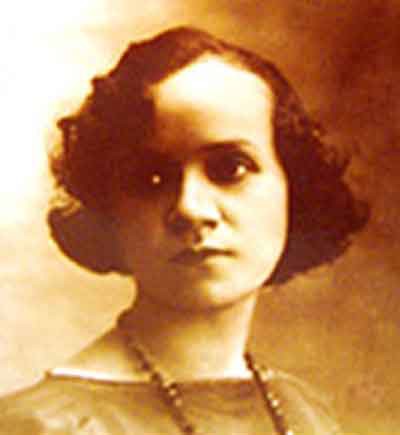
マチルデ・イダルゴ
Matilde Hidalgo,
1889-1974
Matilde Hidalgo, 1889-1974
☆マティルデ・イダルゴ・ナバロ・デ・プロセル[Matilde Hidalgo Navarro de Procel] (1889年9月29日、エクアドル、ロハ生まれ[1]、1974年2月20日、エクアドル、グアヤキルで死去)は、エクアドルの医師、詩人、活動家だっ た。イダルゴは、ラテンアメリカで初めて選挙権を行使した女性であり、また、医学博士号を取得した最初の女性でもあった。イダルゴは女性の権利の承認のた めに戦い、エクアドルの歴史において最も重要な女性の一人だ。1973年に脳卒中により半身不随となり、1974年2月20日にグアヤキルで亡くなった。
| Matilde Hidalgo Navarro de Procel (September
29, 1889, in Loja, Ecuador[1] – February 20, 1974, in Guayaquil,
Ecuador) was an Ecuadorian physician, poet, and activist. Hidalgo was
the first woman to exercise the right to vote in Latin America, and
also the first to receive a Doctorate in Medicine. Hidalgo fought for
the recognition of women's rights and is one of the most important
women in Ecuadorian history. In 1973 she was paralyzed by a stroke, and
she died in Guayaquil on February 20, 1974. |
マティルデ・イダルゴ・ナバロ・デ・プロセル(1889年9月29日、
エクアドル、ロハ生まれ[1]、1974年2月20日、エクアドル、グアヤキルで死去)は、エクアドルの医師、詩人、活動家だった。イダルゴは、ラテンア
メリカで初めて選挙権を行使した女性であり、また、医学博士号を取得した最初の女性でもあった。イダルゴは女性の権利の承認のために戦い、エクアドルの歴
史において最も重要な女性の一人だ。1973年に脳卒中により半身不随となり、1974年2月20日にグアヤキルで亡くなった。 |
| Biography Matilde Hidalgo Navarro de Procel became the first woman to graduate from a high school in Ecuador the first woman to vote in an election in Latin America and the first woman to hold elected office in her country.[2] One of six children, she was born to Juan Manuel Hidalgo and Carmen Navarro in Loja. After her father died, her mother had to work as a seamstress to support them. Matilde studied at the school the Immaculate Conception of the Sisters of Charity. Upon graduating from sixth grade, Matilde told her older brother Antonio that she wished to continue studying. Antonio made the request to the secular high school Colegio Bernardo Valdivieso. After thinking about it for a month, the director of the school, Angel Rubén Ojeda, agreed. However, reaction in the community was not very positive, and she had to face rejection from local people for attending high school. Not only did the local priest force her to listen to the mass two steps outside of the church's entrance, but mothers also prohibited their daughters from befriending her. Nevertheless, Matilde's mother staunchly defended her. Despite all of these obstacles, on October 8, 1913, she was the first woman to graduate high school in Ecuador. When applying to the Central University of Ecuador, she was originally denied due to her being a woman. According to the dean of medicine faculty, she had to focus on building a home and having children. Consequently, in 1919 she traveled to Azuay, and eventually graduated with honors in medicine at the University of Cuenca. In 1921, she returned to Quito to Central University of Ecuador, and due to her bachelor's degree she was accepted for her doctorate program. She became the first woman in Ecuador to be awarded a doctorate.[3][4] Two years later, Matilde married the lawyer Fernando Procel, and they had two children named Fernando and Gonzalo Procel, Fernando became a doctor and Gonzalo became an architect. In 1974 at the age of 85 years in Guayaquil, Ecuador she died after complications with an earlier stroke, after her death a museum was established in Loja about her memories and achievements.[5] |
経歴 マティルデ・イダルゴ・ナバロ・デ・プロセルは、エクアドルで初めて高校を卒業した女性、ラテンアメリカで初めて選挙に投票した女性、そして自国で初めて 公職に就いた女性となった[2]。6人兄弟の1人として、ロハでフアン・マヌエル・イダルゴとカルメン・ナバロの間に生まれた。父親が亡くなった後、母親 は家族を養うために裁縫師として働かなければならなかった。マティルデは、慈善修道会の無原罪の御宿りの学校に通った。 6年生を卒業すると、マティルデは兄のアントニオに、勉強を続けたいと伝えた。アントニオは、世俗的な高校であるコレジオ・ベルナルド・バルディビエソに その願いを伝えた。1か月間考えた後、同校の校長であるアンヘル・ルベン・オヘダはそれを承諾した。しかし、地域社会の反応はあまり好意的ではなく、彼女 は高校に通うことで地元住民からの拒絶に直面することになった。地元の司祭は、教会の入り口から2歩離れたところでミサを聞くよう彼女に強制しただけでな く、母親たちは娘たちに彼女と友達になることを禁じた。それにもかかわらず、マティルデの母親は彼女を断固として擁護した。こうしたあらゆる障害にもかか わらず、1913年10月8日、彼女はエクアドルで初めて高校を卒業した女性となった。 エクアドル中央大学に入学を申請したとき、彼女は女性であるという理由で当初、入学を拒否された。医学部長によれば、彼女は家庭を築き、子供を持つことに 専念すべきだという理由だった。その結果、1919年に彼女はアズアイへ旅立ち、最終的にはクエンカ大学で医学の優等学位を取得して卒業した。1921 年、彼女はキトのエクアドル中央大学に戻り、学士号を取得していたため、博士課程に受け入れられた。彼女はエクアドルで初めて博士号を取得した女性となっ た。[3][4] 2年後、マティルデは弁護士のフェルナンド・プロセルと結婚し、フェルナンドとゴンサロ・プロセルという2人の子供たちをもうけた。フェルナンドは医師に なり、ゴンサロは建築家になった。 1974年、エクアドルのグアヤキルで85歳の生涯を閉じた。死因は、以前に発症した脳卒中の合併症だった。彼女の死後、ロハに彼女の思い出と功績を称える博物館が設立された。[5] |
| Professional life and suffrage During the presidency of José Luis Tamayo, Matilde announced that she was going to vote in the 1924 Ecuadorian presidential election. At the time, women were not allowed to vote. The issue was put under ministerial consultation, eventually ruling in her favor. On June 9, 1924, Matilde Hidalgo voted in Loja, Ecuador, becoming the first woman in Latin America to exercise her constitutional right to vote in a national election, and making Ecuador the first country on the continent to grant women voting rights.[2] Matilde became the first elected councilwoman of Machala and, the first vice-president of the Council of Machala. In 1941, she became the first woman candidate and the first elected woman public administrator in Loja, the city that was once horrified by her ambitions, with the title "Assistant Deputy". Matilde practiced medicine in Guayaquil until 1949, when she received a scholarship to study pediatrics, Neurology, and Dietetics in Argentina. |
職業生活と選挙権 ホセ・ルイス・タマヨ大統領の任期中、マティルデは1924年のエクアドル大統領選挙で投票すると発表した。当時、女性は投票権を持っていなかった。この 問題は大臣会議で審議され、最終的に彼女に有利な判断が下された。1924年6月9日、マティルデ・イダルゴはエクアドルのロハで投票した。これにより彼 女はラテンアメリカで初めて国家選挙において憲法上の投票権を行使した女性となり、エクアドルは大陸で初めて女性に投票権を認めた国となった[2]。 マティルデはマチャラ初の選出市議会議員となり、さらにマチャラ市議会の初代副議長に就任した。1941年、かつて彼女の野心に戦慄したロハ市で初の女性候補者となり、「副補佐官」の称号を得て初の女性公職者となった。 マティルデは1949年までグアヤキルで医師として活動した後、アルゼンチンで小児科・神経学・栄養学を学ぶ奨学金を得た。 |
Awards/recognitions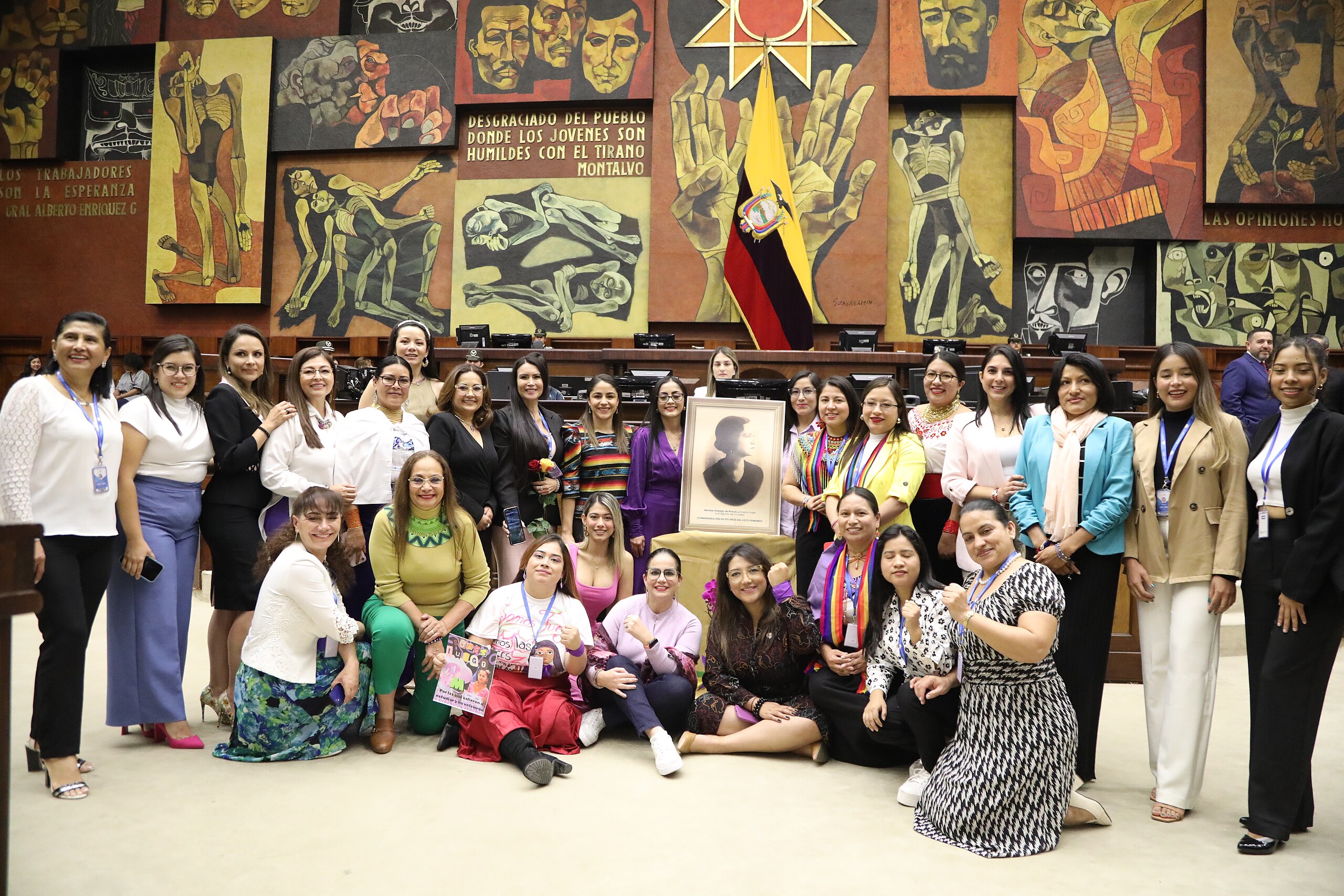 Matilde Hidalgo's portrait at centre of National assembly women in Ecuador on the eve of International Women's Day 2024 First woman to receive a bachelor's degree in Loja and the country. First woman licensed in Medicine Universidad del Azuay (today Universidad de Cuenca) First Doctorate in Medicine Universidad de Quito First Academic Professional woman in the country. First woman to vote in Latin America. First female Vice President of a Municipal Council. First Deputy Elected to Congress. Teacher, politician, poet, professional, public official, wife, mother. National Merit Award, granted by Presidential Decree in 1956. Homage from the city of Loja, declaring her "Illustrious Woman" (1966). National Merit Award, from the Department of Public Health, granted by the Public Health Minister of Ecuador (1971). Vice president of Casa de la Cultura Ecuatoriana[6] Honorary lifetime president of the Ecuadorian Red Cross in El Oro[6] |
受賞歴/栄誉 2024年国際女性デー前夜、エクアドル国民議会女性議員の中央に掲げられたマティルデ・イダルゴの肖像 ロハ県及び国内初の女性学士号取得者 アズアイ大学(現クエンカ大学)初の女性医学免許取得者 キト大学初の医学博士号取得者 国内初の女性学術専門家 ラテンアメリカ初の女性投票者。 初の女性市議会副議長。 初の女性国会議員。 教師、政治家、詩人、専門家、公務員、妻、母。 1956年大統領令による国家功労賞。 ロハ市より「著名な女性」と称える表彰(1966年)。 エクアドル公衆衛生大臣より授与された公衆衛生省国民功労賞(1971年)。 エクアドル文化会館副会長[6] エルオロ県エクアドル赤十字名誉終身会長[6] |
| Poems Literary critic Cecilia Ansaldo Briones offers a compilation of twenty poems by Matilde Hidalgo in the book by Jenny Estrada, Matilde Hidalgo of Prócel, Biography and Poetry Book. From there it is known that Matilde Hidalgo Navarro wrote her first poems when she was in secondary school and in college, writing on topics such as "the cult of Science, the admiration of Nature, praise of people or dates, Marian devotion, little poetry about love, and the topic of women".[7] Other known titles include: The woman and love. The goldfinch. Where is my happiness? In the apotheosis of Don Bernardo Valdivieso. The constant woman's plea. Forget me by God. To María. The Tenth of August. Proscription. My ideal. To Cuenca Jonah. Celicano patriotic hymn. Sacrifice. The poet. The drop of dew. By leaving we do not raise our store. Song of spring. In the agony of the evening. |
詩 文学評論家のセシリア・アンサルド・ブリオネスは、ジェニー・エストラーダ著『プロセルのマティルデ・イダルゴ、伝記と詩集』の中で、マティルデ・イダル ゴの20編の詩をまとめた。そこから、マティルデ・イダルゴ・ナヴァロは、中等学校や大学時代に最初の詩を書き、その題材は「科学の崇拝、自然への賞賛、 人々や日付への賛美、マリアへの献身、愛についての小さな詩、女性に関する題材」などであったことが知られている。[7] その他の既知の題名は以下の通りである。 女性と愛。 金鳥。 私の幸せはどこにあるのか? ドン・ベルナルド・バルディビエソの昇天。 絶え間ない女性の嘆願。 神よ、私を忘れてください。 マリアへ。 8月10日。 追放。 私の理想。 クエンカ・ヨナへ。 セリカノの愛国的な賛歌。 犠牲。 詩人。 露の一滴。 去ることで、私たちは自分の店を持ち上げたりはしない。 春の歌。 夕べの苦しみの中で。 |
| Memberships Medical Federation of Ecuador (founding member) Surgical Association of Quito (founding member) Press circle of Quito Machala Feminine Institute of Culture Committee of Women of the Red Cross in the Gold Province. House of the Ecuadorian Culture, center of the Gold Province. Committee of Women Lions of Machala. Medical Society of Ecuador. Society of Women Physicians of Guayas. National Federation of Journalists. College of Physicians of El Oro. Union of American Women, UMA. National Union of Ecuadorian Women, UNME. Pan-American Medical Association (PAMA), Ecuador Chapter. Benemérita Surgical Society of Guayas |
会員資格 エクアドル医師会(創設メンバー) キト外科医協会(創設メンバー) キト記者クラブ マチャラ女性文化研究所 ゴールド州赤十字女性委員会 ゴールド州中心部エクアドル文化会館 マチャラ女性ライオンズ委員会 エクアドル医学協会 グアヤス州女性医師会 全国ジャーナリスト連盟 エルオロ州医師会 アメリカ女性連合(UMA) 全国エクアドル女性連合(UNME) 汎米医師会(PAMA)エクアドル支部 グアヤス州外科医協会 |
| Contributions She overcame the odds at a time when men occupied all spaces of power, becoming the first woman to obtain a doctorate in medicine in Ecuador and the first female academic professional in the country.[8] |
貢献 彼女は男性が権力のあらゆる分野を占めていた時代に困難を乗り越え、エクアドルで医学博士号を取得した初の女性となり、同国初の女性学術専門家となった。[8] |
| Tribute In 2004 César Carmigniani, movie and TV director, directed the movie "Matilde, la dama del siglo". Almost ten years after, Carmigniani directed a new movie of Matilde called "La dama invencible". This movie shows her life between 1907 and 1924, period of time where she lived in Machala.[9] On November 21, 2019, Google celebrated her with a Google Doodle in honor of what would have been her 130th birthday.[10][11] |
トリビュート 2004年、映画・テレビ監督のセサル・カルミニャーニは映画『マティルデ、世紀の貴婦人』を監督した。それからほぼ10年後、カルミニャーニはマティル デを題材にした新作映画『不敗の貴婦人』を監督した。この映画は1907年から1924年までの彼女の人生を描いており、この時期は彼女がマチャラに住ん でいた時代にあたる。[9] 2019年11月21日、グーグルは彼女の生誕130周年を記念し、グーグル・ドゥードルで彼女を称えた。[10][11] |
| References 1. "Matilde Hidalgo de Procel (1889–1974) | Municipio de Loja". www.loja.gob.ec. Retrieved November 21, 2019. 2. A. Kim Clark (August 9, 2012). Gender, State, and Medicine in Highland Ecuador: Modernizing Women, Modernizing the State, 1895–1950. University of Pittsburgh Press. p. 5. ISBN 978-0822962090. Retrieved January 16, 2014. 3. Montano, Joaquin (January 9, 2019). "Matilde Hidalgo de Procel: biografía, aportes y obras". Lifeder (in Spanish). Retrieved November 26, 2019. 4. "Hidalgo de Procel Matilde – Personajes Históricos". Enciclopedia Del Ecuador (in European Spanish). April 13, 2016. Retrieved November 25, 2019. 5. Wilcox-Lee, Naomi (November 6, 2014). "Mathilde Hidalgo de Procel – First in Everything". Retrieved November 25, 2019. 6. Iglesias Ramírez, Belén (September 30, 2013). "Matilde Hidalgo Navarro de Procel". Infomed. Archived from the original on November 19, 2019. 7. Estrada, Jenny (2005). Matilde Hidalgo de Procel, una mujer total. Quito: Editorial Voluntad. Grupo Santillana. ISBN 9978-07-653-0. 8. "Matilde Hidalgo abrió las puertas de una sociedad equitativa en Ecuador – Ministerio de Salud Pública". www.salud.gob.ec. Retrieved November 26, 2019. 9. "Miniserie en honor de Matilde Hidalgo". El Universo. February 2, 2014. 10. "Celebrating Matilde Hidalgo de Procel". Google. November 21, 2019. 11. Tom, Parfitt (November 21, 2019). "Matilde Hidalgo: Who was the trailblazing doctor and women's rights activist?". The Independent. Archived from the original on May 12, 2022 |
参考文献 1. 「マティルデ・イダルゴ・デ・プロセル(1889–1974)|ロハ市」. www.loja.gob.ec. 2019年11月21日閲覧. 2. A. キム・クラーク (2012年8月9日). 『エクアドル高地のジェンダー、国家、医学:女性と国家の近代化、1895–1950年』. ピッツバーグ大学出版局. p. 5. ISBN 978-0822962090. 2014年1月16日閲覧. 3. モンターノ、ホアキン(2019年1月9日)。「マティルデ・イダルゴ・デ・プロセル:伝記、貢献、作品」。Lifeder(スペイン語)。2019年11月26日閲覧。 4. 「イダルゴ・デ・プロセル・マティルデ – 歴史的人物」。Enciclopedia Del Ecuador(ヨーロッパスペイン語)。2016年4月13日。2019年11月25日取得。 5. ウィルコックス・リー、ナオミ(2014年11月6日)。「マティルデ・イダルゴ・デ・プロセル – あらゆる面で最初の人物」。2019年11月25日取得。 6. イグレシアス・ラミレス、ベレン(2013年9月30日)。「マティルデ・イダルゴ・ナヴァロ・デ・プロセル」。インフォメッド。2019年11月19日にオリジナルからアーカイブ。 7. エストラダ、ジェニー(2005)。『マティルデ・イダルゴ・デ・プロセル、完璧な女性』。キト:エディトリアル・ボルンタッド。グルーポ・サンティジャーナ。ISBN 9978-07-653-0。 8. 「マティルデ・イダルゴはエクアドルに公平な社会の扉を開いた – 保健省」。www.salud.gob.ec。2019年11月26日取得。 9. 「マティルデ・イダルゴを称えるミニシリーズ」。エル・ユニベルソ。2014年2月2日。 10. 「マティルデ・イダルゴ・デ・プロセルを称えて」. Google. 2019年11月21日. 11. トム・パーフィット (2019年11月21日). 「マティルデ・イダルゴ:先駆的な医師であり女性権利活動家とは誰か?」. インディペンデント. 2022年5月12日時点のオリジナルからアーカイブ. |
| Matilde Hidalgo at Wikimedia Commons |
|
| https://en.wikipedia.org/wiki/Matilde_Hidalgo |
☆1921 年、マティルデ・イダルゴはエクアドルのキトにある中央大学を卒業した初の女性医師となった。イダルゴはまた、国民選挙で投票した初の女性であり、公職に 就いた初の女性でもあった。 著者キム・クラークは、1895年の自由主義革命後に導入されたエクアドルの国家計画に成功裏に異議を唱えたマティルデ・イダルゴら女性たちの物語を綴っ ている。新法は女性の権利を具体的に規定していなかったが、教育制度や特定職業への参入、選挙での投票権を女性が争える抜け穴を残していた。クラークが示 すように、こうした機会を掴んだ者の多くは、社会的・経済的に権利を奪われた未婚の女性たちであった。 リベラル期における政治的・社会的変化は新たな層を労働力に組み入れた。女性は男性と直接競合しない職業を追求する新たな機会を見出した。女性の職業訓練 は世俗的教育制度と師範学校の拡大を意味した。乳児死亡率の削減、性病撲滅、売春規制を目的とした医療施策も導入され、女性を雇用対象とし対象とした。 こうした国家プログラムの多くは、道徳や名誉を装って女性の行動を統制しようとした。しかしエクアドル高地の女性たちは、それらを自らの生活向上や職業訓 練、健康、雇用、政治的権利獲得に利用した。国家プログラムに関与し自らの目的に活用する中で、彼女たちは近代化の推進者、変革の担い手となり、自らと次 世代のための自由を勝ち取ったのである
Matilde Hidalgo, 1889-1974
☆Gender, state, and medicine in Highland Ecuador : modernizing women, modernizing the state, 1895-1950 / A. Kim Clark, University of Pittsburgh Press , 2012 . - (Pitt Latin American series)
| In 1921 Matilde Hidalgo
became the first woman physician to graduate from the Universidad
Central in Quito, Ecuador. Hidalgo was also the first woman to vote in
a national election and the first to hold public office. Author Kim Clark relates the stories of Matilde Hidalgo and other women who successfully challenged newly instituted Ecuadorian state programs in the wake of the Liberal Revolution of 1895. New laws, while they did not specifically outline women's rights, left loopholes wherein women could contest entry into education systems and certain professions and vote in elections. As Clark demonstrates, many of those who seized these opportunities were unattached women who were socially and economically disenfranchised. Political and social changes during the liberal period drew new groups into the workforce. Women found novel opportunities to pursue professions where they did not compete directly with men. Training women for work meant expanding secular education systems and normal schools. Healthcare initiatives were also introduced that employed and targeted women to reduce infant mortality, eradicate venereal diseases, and regulate prostitution. Many of these state programs attempted to control women's behavior under the guise of morality and honor. Yet highland Ecuadorian women used them to better their lives and to gain professional training, health care, employment, and political rights. As they engaged state programs and used them for their own purposes, these women became modernizers and agents of change, winning freedoms for themselves and future generations. |
1921年、マティルデ・イダルゴはエクアドルのキトにある中央大学を
卒業した初の女性医師となった。イダルゴはまた、国民選挙で投票した初の女性であり、公職に就いた初の女性でもあった。 著者キム・クラークは、1895年の自由主義革命後に導入されたエクアドルの国家計画に成功裏に異議を唱えたマティルデ・イダルゴら女性たちの物語を綴っ ている。新法は女性の権利を具体的に規定していなかったが、教育制度や特定職業への参入、選挙での投票権を女性が争える抜け穴を残していた。クラークが示 すように、こうした機会を掴んだ者の多くは、社会的・経済的に権利を奪われた未婚の女性たちであった。 リベラル期における政治的・社会的変化は新たな層を労働力に組み入れた。女性は男性と直接競合しない職業を追求する新たな機会を見出した。女性の職業訓練 は世俗的教育制度と師範学校の拡大を意味した。乳児死亡率の削減、性病撲滅、売春規制を目的とした医療施策も導入され、女性を雇用対象とし対象とした。 こうした国家プログラムの多くは、道徳や名誉を装って女性の行動を統制しようとした。しかしエクアドル高地の女性たちは、それらを自らの生活向上や職業訓 練、健康、雇用、政治的権利獲得に利用した。国家プログラムに関与し自らの目的に活用する中で、彼女たちは近代化の推進者、変革の担い手となり、自らと次 世代のための自由を勝ち取ったのである。 |
| https://x.gd/fQf8M |
★付録「エクアドル女性史関連年表」(河内 2015:180)
1929
南米で最も早く女性に参政権が認められる。
1964
農地改革。
1967
スタンダード・オイル社による油田の発見。
1972
エクアドル・キチュア先住民連盟(ECUARUNARI) が設立される(シェラ地域)。
1975
エクアドル女性代表団が第1 回世界女性会議(メキシコ)に参加。
1979
軍政から民政へ移管。憲法において男女平等が明記される。非識字者への選挙権の付与により,非識字率の高かった先住民にも選挙権が認められる。
1980
国連女性差別撤廃条約を批准。エクアドル・アマゾン先住民連盟(CONFENIAE) が設立される。
1983
エクアドル女性育成活動センター(CEPAM) が設立される。
1989
エクアドル先住民族連合(CONAIE) が設立される。
1990
シェラ地域の先住民を中心として新自由主義への抗議運動が各地で展開され始める。
1992
オリエンテ地域の先住民を中心として首都キトまでの大規模なデモ行進が行われる。
1994
エクアドル初のコミサリーア(DV 被害者救済施設)がグアヤキルに設置される。国家先住民・少数民族事務局(SENAIME) が設置される。
1995
「女性と家族に対する暴力禁止法」制定・交付ざれる。
1996
先住民運動を基盤とする左派政党パチャクティックが誕生する。
1997
女性局が国家女性評議会内に再編成される。ブカラム大統領がパナマに亡命。女性副大統領アルティアガが大統領臨時代行を務める(2 日間)。その後アラルコン(男性)がアルティアガを引き継ぎ暫定大統領となる。ジェンダー・クオータ制を導入。
1998
憲法改正( 1998 年憲法)。ラテンアメリカ諸国で初めて女性のリプロダクティブ・ヘルス/ライツが規定される(第36 条)。マワ政権発足。世界銀行主導による「エクアドル先住民・アフロ系開発プロジェクト(PRODEPINE) が始動。
1999
未曾有の経済危機に突入。
2000
自国通貨スクレを廃止, ドル体制へ移行。軍部と先住民組織がマワ大統領を失脚に追い込む。マワは米国へ亡命し,軍政の救国評議会が発足(1 日のみ)。副大統領ノボアが暫定大統領となる。ジェンダー・クオータ制女性枠30%に引き上げ。
2003
グティエレスが大統領に就任。2 名の先住民閣僚が誕生(農牧大臣ルイス・マカス、外務大臣ニナ・パカリ:女性初の閣僚)。
2005
グティエレス大統領がブラジルヘ亡命,パラシオが暫定大統領に就任。
2006
先住民女性ノノが夫レマチェ(パチャクティック所属の国会議員)の家庭内暴力を告発。
2007
コレアが大統領に就任。先住民の諸権利の国連宣言(UNDRIP)採択,エクアドルは即時批准。
2008
新憲法制定。「スマク・カウサイ(Sumak kawsay)」など先住民の世界観に根ざした概念が盛リ込まれたほか第171 条・先住民裁判権にて先住民女性の意思決定過程への参加が規定される。
2014
『世界男女格差報告書』において,ジェンダー・ギャップ指数で世界21 位となる(06 年の同報告書初公表以来,最高位)。
リ ンク
文 献
そ の他の情報
CC
Copyleft,
CC, Mitzub'ixi Quq Chi'j, 1996-2099