Victor Witter Turner, 1920-1983
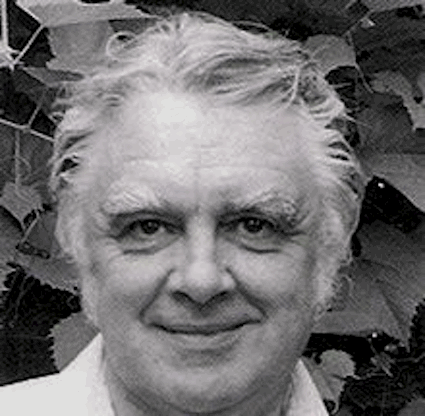
ヴィクター・W・ターナー
Victor Witter Turner, 1920-1983
解説:池田光穂
ヴィクター・ウィッター・ターナー[Victor Witter Turner](1920年5月28日 - 1983年12月18日)は、シンボル、儀式、通過儀礼に関する研究で最もよく知られるイギリスの文化人類学者である。彼の研究は、クリフォード・ギアー ツらの研究とともに、しばしば象徴人類学や解釈人類学と呼ばれる。
| Victor Witter Turner
(28 May 1920 – 18 December 1983) was a British cultural anthropologist
best known for his work on symbols, rituals, and rites of passage. His
work, along with that of Clifford Geertz and others, is often referred
to as symbolic and interpretive anthropology. |
ヴィクター・ウィッター・ターナー[Victor Witter Turner](1920年5月28日 -
1983年12月18日)は、シンボル、儀式、通過儀礼に関する研究で最もよく知られるイギリスの文化人類学者である。彼の研究は、クリフォード・ギアー
ツらの研究とともに、しばしば象徴人類学や解釈人類学と呼ばれる。 |
| Early life Victor Turner was born in Glasgow, Scotland, son of Norman and Violet Turner. His father was an electrical engineer and his mother was a repertory actress, who founded the Scottish National Players. Turner initially studied poetry and classics at University College London. In 1941, Turner was drafted into World War II and served as a noncombatant until 1944. During his three years of service, he met and married Edith Brocklesby Davis, who was serving during the war as a "land girl". Their five children include scientist Robert Turner, poet Frederick Turner, and Rory Turner, an anthropology professor at Goucher College. Turner returned to University College in 1946 with a new focus on anthropology. Turner completed his undergraduate degree with distinction in 1949.[1] He later pursued graduate studies in anthropology at Manchester University.[2][3] He became a member of the Communist Party, aligning himself with Marxist ideas like conflict, social justice, process-oriented analysis, and comprehensive case studies, which were key elements of Gluckman’s "Manchester School" in British social anthropology.[1] |
幼少期 ビクター・ターナーは、スコットランドのグラスゴーで、ノーマンとバイオレット・ターナーの息子として生まれた。父親は電気技師、母親は劇団「スコティッ シュ・ナショナル・プレイヤーズ」を設立した劇団女優だった。ターナーは、ロンドン大学ユニバーシティ・カレッジで詩と古典文学を学んだ。 1941年、ターナーは第二次世界大戦に徴兵され、1944年まで非戦闘員として従軍した。3年間の兵役中に、戦争中に「ランドガール」として働いていた エディス・ブロックルズビー・デイヴィスと出会い、結婚した。5人の子供たちには、科学者のロバート・ターナー、詩人のフレデリック・ターナー、グウ チャー大学の人類学教授であるロリー・ターナーがいる。 ターナーは1946年にユニバーシティ・カレッジに戻り、人類学を新たに専攻した。ターナーは1949 年に優等学位で学士号を取得した。[1] その後、マンチェスター大学で人類学の大学院研究を続けた。[2][3] 彼は共産党員となり、葛勒克曼の英国社会人類学における「マンチェスター学派」の重要な要素である、葛藤、社会正義、プロセス志向の分析、包括的なケース スタディなどのマルクス主義の思想に賛同した。[1] |
| Career Turner worked in Zambia (then Northern Rhodesia) as a research officer for the Rhodes-Livingstone Institute. It was through this position that Turner started his lifelong study of the Ndembu people of Zambia. He completed his PhD at the University of Manchester in 1955. Like many of the Manchester anthropologists of his time, he also became concerned with conflict. He developed a new concept of social drama in order to account for the symbolism of conflict and crisis resolution among Ndembu villagers. Turner spent his career exploring rituals. As a professor at the University of Chicago in the late 1950s, Turner began to apply his study of rituals and rites of passage to world religions and the lives of religious heroes. He and his wife converted to Catholicism in 1958.[4][5] Turner explored Arnold van Gennep's threefold structure of rites of passage and expanding theories on the liminal phase. Van Gennep's structure consisted of a pre-liminal phase (separation), a liminal phase (transition), and a post-liminal phase (reincorporation). Turner noted that in liminality, the transitional state between two phases, individuals were "betwixt and between": they did not belong to the society they had previously been a part of and they were not yet reincorporated into that society. Liminality is a limbo, an ambiguous period characterized by humility, seclusion, tests, sexual ambiguity, and communitas.[3] During liminal phases, established social classifications and cultural norms often break down. Social hierarchies tend to dissolve, and in their place emerges a sense of equality, unity, and solidarity within the group, which Turner described as "communitas." Turner suggested that societies experience a cyclical movement between stable periods of order and chaotic intervals of disorder. He particularly highlighted events like carnivals and rituals as key examples of liminal experiences.[6] Turner was also a committed ethnographer and produced work on ritual. He and his wife Edith L. B. Turner co-authored Image and Pilgrimage in Christian Culture (1978). |
経歴 ター ナーは、ザンビア(当時、北ローデシア)で、ローズ・リビングストン研究所の研究員として働いた。この職を通じて、ターナーはザンビアのンデンブ族に関す る生涯にわたる研究を始めた。1955年にマンチェスター大学で博士号を取得した。当時のマンチェスターの人類学者たちと同様、ターナーも紛争に関心を持 つようになった。彼は、ンデムブ族の村人たちの間の紛争と危機解決の象徴性を説明するために、社会ドラマという新しい概念を開発した。 ターナーは、そのキャリアを儀礼の研究に費やした。1950年代後半、シカゴ大学の教授として、ターナーは儀礼と通過儀礼の研究を世界の宗教や宗教的英雄たちの生活に応用し始めた。彼と妻は1958年にカトリックに改宗した。[5] ターナーは、アーノルド・ヴァン・ジェネップの通過儀礼の三段階構造と、境界段階に関する理論の拡大を探求した。ヴァン・ジェネップの構造は、境界前段階 (分離)、境界段階(移行)、境界後段階(再統合)で構成されていた。ターナーは、2つの段階の間の過渡期である境界領域では、個人は「中間」の状態にあ ると指摘した。つまり、個人は以前属していた社会にも属しておらず、その社会にまだ再統合もされていない状態である。境界領域は、謙虚さ、隔離、試練、性 的曖昧性、共同体精神を特徴とする、曖昧な期間である。[3] 境界段階では、確立された社会的分類や文化的規範がしばしば崩壊する。社会的階層構造は解体する傾向があり、その代わりに、ターナーが「コミューナス」と 表現した、グループ内の平等、団結、連帯感が生まれる。ターナーは、社会は安定した秩序の期間と混沌とした無秩序の期間の間を循環的に移動すると示唆し た。彼は特に、カーニバルや儀礼などの出来事を、境界体験の重要な例として強調した。[6] ターナーは熱心なエスノグラファーでもあり、儀礼に関する著作を残している。彼と妻のエディス・L・B・ターナーは共著で『キリスト教文化におけるイメージと巡礼』(1978年)を出版した。 |
| Death Turner died on 18 December 1983 in Charlottesville, Virginia. After his death, his widow Edith Turner embarked on her own career as an anthropologist. She developed upon Victor's "anthropology of experience" with a publication on communitas.[7] |
死去 1983年12月18日、ヴァージニア州シャーロッツヴィルで死去。彼の死後、未亡人のエディス・ターナーは人類学者としてのキャリアをスタートさせた。 彼女はヴィクターの「経験の人類学」を発展させ、コミュニタスに関する出版物を発表した[5]。 |
Influence Victor Turner's ideas on liminality and communitas continue to shape multiple disciplines. His work on liminality and performance has strongly influenced developments in the field of Performance Studies,[8] particularly due to his friendship and professional collaboration with Richard Schechner with whom he explored the relationship between ritual and theater.[9] Their work helped establish the idea that performance is not confined to the stage, but is integral to social processes, rituals and communal expressions across various cultures.[10] Moreover, Turner's concept of "communitas," the deep sense of equality and solidarity experienced by individuals during liminal periods, has been influential in anthropology, sociology and even political science.[11] It offers insights into collective experiences of unity and liberation. Author Chuck Palahniuk was quoted in The Believer as saying, "So often what I’m doing is dramatizing the writings of Victor Turner, who wrote a lot about liminal and liminoid events."[12] Palahniuk's work often explores social limits and personal change, aligning closely with Turner's ideas about shifting roles and the uncertainty of liminal spaces. |
影響力 ビ クター・ターナーの境界性(リミナリティ)と共同体(コミュニタス)に関する考えは、今もなお複数の学問分野に影響を与え続けている。境界性とパフォーマ ンスに関する彼の研究は、パフォーマンス研究[8] の発展に大きな影響を与えた。特に、儀礼と演劇の関係を探求したリチャード・シェクナーとの友情と専門的な協力関係[9] がその要因である。彼らの研究は、パフォーマンスは舞台に限定されたものではなく、さまざまな文化における社会的プロセス、儀礼、共同体の表現に不可欠で あるという考えの確立に貢献した。[10] さらに、ターナーの「コミュニタス」という概念、つまり境界の期間に個人が経験する深い平等感と連帯感は、人類学、社会学、さらには政治学にも影響を与え ている[11]。これは、団結と解放という集団的経験についての洞察を与えてくれる。作家チャック・パラニュークは、雑誌『The Believer』で「私がやっていることの多くは、境界的・境界的現象について多くの著作を残したヴィクター・ターナーの著作を劇化することだ」と述べ ている[12]。パラニュークの作品は、社会的限界や個人的な変化をしばしば探求しており、役割の変化や境界的空間の不確実性に関するターナーの考えと密 接に一致している。 |
| Victor Turner Prize The Victor Turner Prize in Ethnographic Writing is awarded annually by The Society for Humanistic Anthropology (SHA). Eligible works are "published books in various genres including ethnographic monographs, narratives, essays, biographies, memoirs, poetry, and drama."[13] Kirin Narayan's Storytellers, Saints and Scoundrels: Folk Narrative in Hindu Religious Teaching (1989) was the first Victor Turner Prize winner in 1990.[14][15] |
ヴィクター・ターナー賞 ビ クター・ターナー民族誌文学賞は、人文人類学協会(SHA)によって毎年授与される。対象作品は「民族誌モノグラフ、物語、エッセイ、伝記、回顧録、詩、 戯曲など、様々なジャンルの出版された書籍」である。[13] キリン・ナラヤンの『ストーリーテラー、聖人、悪党たち:ヒンドゥー教の宗教教育における民話』(1989年)が、1990年に最初のビクター・ターナー 賞を受賞した。[14][15] |
| Publishing The Forest of Symbols: Aspects of Ndembu Ritual (1967), Cornell University Press 1970 paperback: ISBN 0-8014-9101-0 Schism and Continuity in an African Society (1968), Manchester University Press The Drums of Affliction: A Study of Religious Processes among the Ndembu of Zambia (1968), Clarendon Press ISBN 0-8014-9205-X The Ritual Process: Structure and Anti-Structure (1969), Aldine Transaction 1995 paperback: ISBN 0-202-01190-9 Dramas, Fields, and Metaphors: Symbolic Action in Human Society (1974), Cornell University Press 1975 paperback: ISBN 0-8014-9151-7 Image and Pilgrimage in Christian Culture (1978), with Edith L. B. Turner (co-author), Columbia University Press 1995 paperback: ISBN 0-231-04287-6 From Ritual to Theatre: The Human Seriousness of Play (1982), PAJ Publications paperback: ISBN 0-933826-17-6 Liminality, Kabbalah, and the Media (1985), Academic Press The Anthropology of Performance (1986), PAJ Publications paperback: ISBN 1-55554-001-5 The Anthropology of Experience (1986), University of Illinois Press 2001 paperback: ISBN 0-252-01249-6 |
出版物 『象徴の森:ンデンブ族の儀礼に関する諸相』(1967年)、コーネル大学出版局 1970年ペーパーバック版 ISBN 0-8014-9101-0 『アフリカ社会における分裂と継続』(1968年)、マンチェスター大学出版局 『苦難の太鼓:ザンビア・ンデンブ族の宗教的過程に関する研究』(1968年)、クラレンドン出版 ISBN 0-8014-9205-X 儀礼過程:構造と反構造(1969年)、アルディン・トランザクション社、1995年ペーパーバック版:ISBN 0-202-01190-9 ドラマ、フィールド、隠喩:人間社会における象徴的行為(1974年)、コーネル大学出版、1975年ペーパーバック版:ISBN 0-8014-9151-7 キリスト教文化におけるイメージと巡礼(1978年)、エディス・L・B・ターナー(共著者)、コロンビア大学出版 1995年ペーパーバック:ISBN 0-231-04287-6 儀礼から演劇へ:遊びの人間の真剣さ(1982年)、PAJ出版 ペーパーバック:ISBN 0-933826-17-6 境界性、カバラ、そしてメディア(1985年)、アカデミック・プレス パフォーマンスの人類学(1986年)、PAJ出版、ペーパーバック:ISBN 1-55554-001-5 経験の人類学(1986年)、イリノイ大学出版、2001年、ペーパーバック:ISBN 0-252-01249-6 |
| https://en.wikipedia.org/wiki/Victor_Turner |
|
| References 01. Giovine, Michael (2018). "Turner, Victor (1920–83)". In Callan, Hilary (ed.). The international encyclopedia of anthropology. Hoboken, NJ: John Wiley & Sons, Ltd. ISBN 978-0-470-65722-5. Turner, Edith (1990). "The Literary Roots of Victor Turner's Anthropology". In Kathleen M. Ashley (ed.). Victor Turner and the Construction of Cultural Criticism. Indianapolis: Indiana University Press. pp. 163–169. Moore, Jerry D. (2012). "Victor Turner: Symbols, Pilgrims, and Drama". Visions of Culture. Lanham, MD: AltaMira Press. pp. 224–234. Timothy Larsen (28 August 2014). The Slain God: Anthropologists and the Christian Faith. OUP Oxford. pp. 182–198. ISBN 978-0-19-163205-1. Bjørn Thomassen (6 May 2016). Liminality and the Modern: Living Through the In-Between. Routledge. pp. 78–80. ISBN 978-1-317-10504-6. Smith, Philip; Riley, Alexander; Smith, Philip Daniel (2009). Cultural theory: an introduction (2 ed.). Malden, Mass.: Blackwell. p. 77. ISBN 978-1-4051-6907-3. Turner, Edith (December 2011). Communitas: The Anthropology of Collective Joy. New York: Palgrave Macmillan. Companion Websites (17 December 2012), Performance Studies: An Introduction - Victor Turner's Social Drama, retrieved 10 October 2018 York, Institute of Historical Research (IHR), University of London and Institute for the Public Understanding of the Past, University of. "Performance and performativity - a method to study the media and how the abolition of slavery has been commemorated". www.history.ac.uk. Archived from the original on 21 June 2017. Retrieved 10 October 2018. 10. Haggar, Sarah (3 November 2024). "Communitas revisited: Victor Turner and the transformation of a concept". Anthropological Theory. doi:10.1177/14634996241282143. ISSN 1463-4996. Turner, Edith (2012), "Contrasts: Communitas and False Communitas", Communitas, New York: Palgrave Macmillan US, pp. 13–22, ISBN 978-0-230-33908-8, retrieved 23 June 2025 "Issues". 16 February 2023. "Welcome! | Society for Humanistic Anthropology". sha.americananthro.org. Retrieved 23 September 2018. Director (Research Services Division). "Professor Kirin Narayan". researchers.anu.edu.au. Retrieved 23 September 2018. 15. "SHA Prize Winners | Society for Humanistic Anthropology". sha.americananthro.org. Retrieved 23 September 2018. |
参考文献 01. ジョバイン、マイケル (2018). 「ターナー、ビクター (1920–83)」. カラン、ヒラリー (編). 『国際人類学事典』. ニュージャージー州ホボーケン: ジョン・ワイリー・アンド・サンズ社. ISBN 978-0-470-65722-5. ターナー、エディス (1990). 「ヴィクター・ターナーの人類学の文学的ルーツ」. キャスリーン・M・アシュリー (編). 『ヴィクター・ターナーと文化批評の構築』. インディアナポリス: インディアナ大学出版局. pp. 163–169. ムーア、ジェリー・D. (2012). 「ヴィクター・ターナー:象徴、巡礼者、そしてドラマ」. 文化のビジョン。メリーランド州ラナム:アルタミラ出版。224-234 ページ。 ティモシー・ラーセン (2014年8月28日)。殺害された神:人類学者とキリスト教の信仰。OUP オックスフォード。182-198 ページ。ISBN 978-0-19-163205-1。 ビョルン・トマセン(2016年5月6日)。『境界性と現代:その間を生き抜く』ラウトレッジ。78-80ページ。ISBN 978-1-317-10504-6。 スミス、フィリップ;ライリー、アレクサンダー;スミス、フィリップ・ダニエル(2009)。文化理論:入門(第 2 版)。マサチューセッツ州マルデン:ブラックウェル。77 ページ。ISBN 978-1-4051-6907-3。 ターナー、エディス(2011年12月)。『コミュニタス:集団的歓喜の人類学』。ニューヨーク:パルグレイブ・マクミラン。 関連ウェブサイト (2012年12月17日)、パフォーマンス研究:入門 - ビクター・ターナーの社会ドラマ、2018年10月10日取得 ヨーク、歴史研究所 (IHR)、ロンドン大学、および過去を一般に理解するための研究所、大学。「パフォーマンスとパフォーマティビティ - メディアと奴隷制度廃止の記念方法を研究する方法」。www.history.ac.uk。2017年6月21日にオリジナルからアーカイブ。2018年 10月10日取得。 10. ハガー、サラ(2024年11月3日)。「コミュニタス再考:ビクター・ターナーと概念の変容」。人類学的理論。doi:10.1177/14634996241282143。ISSN 1463-4996。 ターナー、エディス(2012年)、「対照:コミュニタスと偽のコミュニタス」、コミュニタス、ニューヨーク:パームグレイブ・マクミランUS、13-22ページ、 ISBN 978-0-230-33908-8、2025年6月23日取得 「問題」。2023年2月16日。 「ようこそ!| 人文人類学会」。sha.americananthro.org。2018年9月23日取得。 ディレクター(研究サービス部門)。「キリン・ナラヤン教授」。researchers.anu.edu.au。2018年9月23日閲覧。 15. 「SHA賞受賞者|人文人類学会」。sha.americananthro.org。2018年9月23日閲覧。 |
| External links Babcock, Barbara A., & Macaloon, John J (January 1987), "Commemorative essay: Victor W. Turner (1920-1983)", Semiotica, 65 (1–2): 1–28, doi:10.1515/semi.1987.65.1-2.1, ISSN 1613-3692 Victor Turner, by Beth Barrie Archived 23 November 2016 at the Wayback Machine Deflem, Mathieu. 1991. "Ritual, Anti-Structure, and Religion: A Discussion of Victor Turner’s Processual Symbolic Analysis." Journal for the Scientific Study of Religion 30(1):1-25. St John, Graham (ed.) 2008. Victor Turner and Contemporary Cultural Performance Archived 7 May 2010 at the Wayback Machine. New York: Berghahn. ISBN 1-84545-462-6. St John, Graham. “Victor Turner.” In Oxford Bibliographies in Anthropology. Ed. John Jackson. New York: Oxford University Press. |
外部リンク バブコック、バーバラ A.、およびマカルーン、ジョン J (1987年1月)、「追悼のエッセイ:ビクター・W・ターナー (1920-1983)」、Semiotica、65 (1–2): 1–28、 doi:10.1515/semi.1987.65.1-2.1, ISSN 1613-3692 ビクター・ターナー、ベス・バリー著 2016年11月23日ウェイバックマシンにアーカイブ デフレム、マシュー。1991年。「儀礼、反構造、そして宗教:ビクター・ターナーのプロセス的象徴分析に関する考察」『宗教の科学的研究ジャーナル』30(1):1-25。 セント・ジョン、グラハム(編) 2008年。『ビクター・ターナーと現代文化パフォーマンス』 2010年5月7日、ウェイバックマシンにアーカイブ。ニューヨーク:ベルクハーン。ISBN 1-84545-462-6。 セント・ジョン、グラハム。「ビクター・ターナー」 『オックスフォード人類学書誌』 ジョン・ジャクソン編。ニューヨーク:オックスフォード大学出版局。 |
年譜
1920.05.28 英国グラスゴーに 生まれる
1939 ロンドンのユニバーシティ・カ レッジで古典と詩の勉強(第二次大戦で勉学から一時離れる)
1949 人類学で学士号、同年マンチェ スター大学でヨハネスブルグ生まれのマッ クス・グラックマン(Max Gluckmam, 1911-1975)に師事。
グラックマンはターナーにコンフリクト理 論と政治人類学を手ほどきする。(→拡大事例研究法)
マンチェスター学派
1950-54 中央アフリカ(当時:英 国植民地)にてンデンブの調査。
1955 Ph.D取得、マンチェスター 大学の講師となる。
1957 『分裂と持続』Schism and Continuity in an African Society: A study of Ndembu Village Life .の出版。(※この作品は拡大 事例研究法の最大の成果だと言われる)
1961 スタンフォード大学・高等行動 科学センター研究員(Fellow of the Center for Advanced Behavioral Sciences at Stanford University. )
1964 コーネル大学に転職(ウガンダ のギスを調査)
1968
『苦悩のドラム』(The Drums of Affliction: A study of Religious Processes among the Ndembu )を出版
シカゴ大学人類学および社会思想教授に転職(1963-75当時シカゴ大学で教鞭をとるハンナ・アーレントが同じ職場にいた[リンク] The Hannah Arendt Papers: Biographical Note )
キリスト教巡礼研究をはじめる
1983 死亡
リンク
【文献】
http://www.indiana.edu/‾wanthro/turner.htm(2002 年11年18日)
Lunda medicine and the treatment of disease / by Victor Turnerを収載
Betwixt and between : the liminal period in rites de passage / by Victor Turnerを収載
Ritual Aspects of Conflict Control in African Micropolitics.を執筆。
★リミナリティ(liminality)
| In anthropology, liminality
(from Latin limen 'a threshold')[1] is the quality of ambiguity or
disorientation that occurs in the middle stage of a rite of passage,
when participants no longer hold their pre-ritual status but have not
yet begun the transition to the status they will hold when the rite is
complete.[2] During a rite's liminal stage, participants "stand at the
threshold"[3] between their previous way of structuring their identity,
time, or community, and a new way (which completing the rite
establishes). The concept of liminality was first developed in the early twentieth century by folklorist Arnold van Gennep and later taken up by Victor Turner.[4] More recently, usage of the term has broadened to describe political and cultural change as well as rites.[5][6] During liminal periods of all kinds, social hierarchies may be reversed or temporarily dissolved, continuity of tradition may become uncertain, and future outcomes once taken for granted may be thrown into doubt.[7] The dissolution of order during liminality creates a fluid, malleable situation that enables new institutions and customs to become established.[8] The term has also passed into popular usage and has been expanded to include liminoid experiences that are more relevant to post-industrial society.[9] |
人類学において、リミナリティ[liminality]
(ラテン語
limen「敷居」に由来)[1]とは、通過儀礼の中間段階で生じる曖昧さや方向感覚の喪失を指す。この段階では、参加者は儀礼前の身分を既に失っている
が、儀礼完了後に獲得する身分への移行をまだ始めていない状態にある。[2]
儀式の境界段階では、参加者は、自分のアイデンティティ、時間、コミュニティを構築していた従来の方法と、儀式を完了することで確立される新しい方法との
「境界に立つ」[3]。 境界性の概念は、20世紀初頭に民俗学者アーノルド・ヴァン・ジェネップによって最初に提唱され、後にヴィクター・ターナーによって取り上げられた。[4] 最近では、この用語は、儀式だけでなく、政治的・文化的変化も表現するために使用範囲が拡大している。[5][6] あらゆる種類の境界期間中は、社会階層が逆転したり一時的に解消されたり、伝統の継続性が不確かになったり、かつて当然と思われていた将来の結果が疑わし くなったりすることがある。[7] 境界期間中の秩序の崩壊は、流動的で順応性の高い状況を生み出し、新しい制度や慣習が確立されるきっかけとなる。[8] この用語は一般にも普及し、ポスト産業社会により関連性の高いリミノイド的体験も包含するように拡大されている。[9] |
| Rites of passage Arnold van Gennep Van Gennep, who coined the term liminality, published in 1909 his Rites de Passage, a work that explores and develops the concept of liminality in the context of rites in small-scale societies.[10] Van Gennep began his book by identifying the various categories of rites. He distinguished between those that result in a change of status for an individual or social group, and those that signify transitions in the passage of time. In doing so, he placed a particular emphasis on rites of passage, and claimed that "such rituals marking, helping, or celebrating individual or collective passages through the cycle of life or of nature exist in every culture, and share a specific three-fold sequential structure".[8] This three-fold structure, as established by van Gennep, is made up of the following components:[10] preliminal rites (or rites of separation): This stage involves a metaphorical "death", as the initiate is forced to leave something behind by breaking with previous practices and routines. liminal rites (or transition rites): Two characteristics are essential to these rites. First, the rite "must follow a strictly prescribed sequence, where everybody knows what to do and how".[8] Second, everything must be done "under the authority of a master of ceremonies".[8] The destructive nature of this rite allows for considerable changes to be made to the identity of the initiate. This middle stage (when the transition takes place) "implies an actual passing through the threshold that marks the boundary between two phases, and the term 'liminality' was introduced in order to characterize this passage."[8] postliminal rites (or rites of incorporation): During this stage, the initiate is re-incorporated into society with a new identity, as a "new" being. Turner confirmed his nomenclature for "the three phases of passage from one culturally defined state or status to another...preliminal, liminal, and postliminal".[11] Beyond this structural template, Van Gennep also suggested four categories of rites that emerge as universal across cultures and societies. He suggested that there are four types of social rites of passage that are replicable and recognizable among many ethnographic populations.[12] They include: Passage of people from one status to another, initiation ceremonies in which an outsider is brought into the group. This includes marriage and initiation ceremonies that move one from the status of an outsider to an insider. Passage from one place to another, such as moving houses, moving to a new city, etc. Passage from one situation to another: beginning university, starting a new job, and graduating high school or university. Passage of time such as New Year celebrations and birthdays.[12] Van Gennep considered rites of initiation to be the most typical rite. To gain a better understanding of "tripartite structure" of liminal situations, one can look at a specific rite of initiation: the initiation of youngsters into adulthood, which Turner considered the most typical rite. In such rites of passage, the experience is highly structured. The first phase (the rite of separation) requires the child to go through a separation from his family; this involves his/her "death" as a child, as childhood is effectively left behind. In the second stage, initiands (between childhood and adulthood) must pass a "test" to prove they are ready for adulthood. If they succeed, the third stage (incorporation) involves a celebration of the "new birth" of the adult and a welcoming of that being back into society. By constructing this three-part sequence, van Gennep identified a pattern he believed was inherent in all ritual passages. By suggesting that such a sequence is universal (meaning that all societies use rites to demarcate transitions), van Gennep made an important claim (one that not many anthropologists make, as they generally tend to demonstrate cultural diversity while shying away from universality).[12] An anthropological rite, especially a rite of passage, involves some change to the participants, especially their social status.;[13] and in 'the first phase (of separation) comprises symbolic behaviour signifying the detachment of the individual...from an earlier fixed point in the social structure.[14] Their status thus becomes liminal. In such a liminal situation, "the initiands live outside their normal environment and are brought to question their self and the existing social order through a series of rituals that often involve acts of pain: the initiands come to feel nameless, spatio-temporally dislocated and socially unstructured".[15] In this sense, liminal periods are "destructive" as well as "constructive", meaning that "the formative experiences during liminality will prepare the initiand (and his/her cohort) to occupy a new social role or status, made public during the reintegration rituals".[15] |
通過儀礼 アーノルド・ヴァン・ジェネップ 「境界性」という用語を提唱したヴァン・ジェネップは、1909年に『通過儀礼』を出版した。この著作は、小規模社会における儀礼の文脈で境界性の概念を 探求し発展させたものである[10]。ヴァン・ジェネップはまず、儀礼の様々な類型を特定することから本書を始めた。彼は、個人や集団の地位変化をもたら す儀礼と、時間の経過に伴う移行を意味する儀礼とを区別した。その過程で通過儀礼に特に重点を置き、「生命や自然の循環における個人または集団の通過を記 し、助け、祝うこうした儀礼はあらゆる文化に存在し、特定の三段階の連続構造を共有している」と主張した。[8] ヴァン・ジェネップが確立したこの三段階構造は、以下の要素で構成される。[10] 前段階の儀式(分離の儀式):この段階では隠喩的な「死」が伴う。入門者は過去の慣習や日常から断絶し、何かを置き去りにすることを強いられる。 境界儀礼(移行儀礼):この儀礼には二つの特徴が不可欠だ。第一に、儀礼は「厳格に定められた順序に従わねばならず、全員が何をどうすべきかを知ってい る」[8]。第二に、全ては「儀式の司祭の権威の下で行われねばならない」[8]。この儀礼の破壊的性質により、通過者のアイデンティティに大幅な変化が 生じる余地が生まれる。この中間段階(移行が行われる段階)は、「2つの段階の境界を示す境界線を実際に通過することを意味し、この通過を特徴づけるため に『境界性』という用語が導入された」[8]。 後境界儀礼(または統合儀礼):この段階では、入信者は「新しい」存在として、新しいアイデンティティを持って社会に再統合される。 ターナーは、「文化的に定義されたある状態や地位から別の状態や地位へ移行する 3 つの段階、すなわち、前過渡期、過渡期、後過渡期」という彼の命名法を確認した[11]。 この構造的テンプレートに加えて、ヴァン・ジェネップは、文化や社会を超えて普遍的に見られる 4 種類の儀式も提案した。彼は、多くの民族集団の間で再現可能かつ認識可能な 4 種類の社会的通過儀礼があると提案した。[12] それらは以下の通りである。 ある地位から別の地位への通過、部外者を集団に迎え入れる入会の儀式。これには、部外者の地位から内部者の地位へと移行する結婚や入会の儀式が含まれる。 ある場所から別の場所への移行、例えば引っ越し、新しい都市への移住など。 ある状況から別の状況への移行:大学入学、新しい仕事の開始、高校や大学の卒業など。 新年のお祝い、誕生日など、時間の経過に伴う移行。[12] ヴァン・ジェネップは、入会の儀式が最も典型的な儀式であると考えていた。境界状況の「三段階構造」をよりよく理解するために、特定の通過儀礼、すなわち ターナーが最も典型的な儀式とみなした、若者を成人へと導く通過儀礼を見てみよう。このような通過儀礼では、その経験は高度に構造化されている。第一段階 (分離の儀式)では、子供は家族からの分離を経験しなければならない。これは、子供時代が事実上終わりを告げる、子供としての「死」を意味する。第二段階 では、通過儀礼を受ける者(子供と大人の間)は、大人になる準備ができていることを証明するために「試練」に合格しなければならない。合格すると、第三段 階(統合)では、大人の「新たな誕生」を祝い、その存在を社会に再び迎え入れる。 この三段階の構造を構築することで、ヴァン・ジェネップはあらゆる通過儀礼に内在する普遍的パターンを特定した。このような段階性が普遍的である(つまり 全ての社会が移行期を区切る儀礼を用いる)と示唆したことで、彼は重要な主張を行った(多くの文化人類学者が普遍性を避けつつ文化の多様性を示す傾向にあ る中、これは珍しい主張である)。[12] 人類学における儀式、特に通過儀礼は、参加者、特にその社会的地位に何らかの変化をもたらすものである。[13] そして「分離の第一段階」は、個人が社会構造における以前の固定された位置から切り離されることを示す象徴的行動で構成される。[14] こうして彼らの地位は境界的(リミナル)となる。この境界的状況において、「通過儀礼を受ける者は通常の環境の外に置かれ、しばしば苦痛を伴う一連の儀礼 を通じて自己と既存の社会秩序を問い直される。通過儀礼を受ける者は、名を持たず、時空間的に遊離し、社会的に構造化されていない状態を実感するようにな る」。[15] この意味で、境界的期間は「破壊的」であると同時に「建設的」であり、つまり「境界状態における形成的な経験は、再統合の儀礼の中で公にされる新たな社会 的役割や地位を占めるために、イニシエート(およびその仲間)を準備する」のである。[15] |
| Victor Turner Turner, who is considered to have "re-discovered the importance of liminality", first came across van Gennep's work in 1963.[6] In 1967 he published his book The Forest of Symbols, which included an essay entitled Betwixt and Between: The Liminal Period in Rites of Passage. Within the works of Turner, liminality began to wander away from its narrow application to ritual passages in small-scale societies.[6] In the various works he completed while conducting his fieldwork amongst the Ndembu in Zambia, he made numerous connections between tribal and non-tribal societies, "sensing that what he argued for the Ndembu had relevance far beyond the specific ethnographic context".[6] He became aware that liminality "...served not only to identify the importance of in-between periods, but also to understand the human reactions to liminal experiences: the way liminality shaped personality, the sudden foregrounding of agency, and the sometimes dramatic tying together of thought and experience".[6] 'The attributes of liminality or of liminal personae ("threshold people") are necessarily ambiguous'.[16] One's sense of identity dissolves to some extent, bringing about disorientation, but also the possibility of new perspectives. Turner posits that, if liminality is regarded as a time and place of withdrawal from normal modes of social action, it potentially can be seen as a period of scrutiny for central values and axioms of the culture where it occurs.[17]—one where normal limits to thought, self-understanding, and behavior are undone. In such situations, "the very structure of society [is] temporarily suspended"[8] 'According to Turner, all liminality must eventually dissolve, for it is a state of great intensity that cannot exist very long without some sort of structure to stabilize it...either the individual returns to the surrounding social structure...or else liminal communities develop their own internal social structure, a condition Turner calls "normative communitas"'.[18] Turner also worked on the idea of communitas, the feeling of camaraderie associated among a group experiencing the same liminal experience or rite.[19] Turner defined three distinct and not always sequential forms of communitas, which he describes as "that 'antistructural' state at stake in the liminal phase of ritual forms."[19] The first, spontaneous communitas, is described as "a direct, immediate, and total confrontation of human identities" in which those involved share a feeling of synchronicity and a total immersion into one fluid event.[19] The second form, ideological communitas, which aims at interrupting spontaneous communitas through some type of intervention which would result in the formation of a utopian society in which all actions would be carried out at the level of spontaneous communitas.[19] The third, normative communitas, deals with a group of society attempting to grow relationships and support spontaneous communitas on a relatively permanent basis, subjecting it to laws of society and "denaturing the grace" of the accepted form of camaraderie.[19] Turner has been criticized for limiting the meaning of the concept to the concrete settings of small-scale tribal societies, preferring the neologism "liminoid" coined by him to analyse certain features of the modern world. Agnes Horvath (2013) argues that the term can and should be applied to concrete historical events as offering a vital means for historical and sociological understanding. Turner also attributed a positive connotation to liminal situations as ways of renewal when others argue liminal situations can be periods of uncertainty, anguish, even existential fear: a facing of the abyss in void.[20] |
ビクター・ターナー 「境界の重要性を再発見した」とされるターナーは、1963年に初めてヴァン・ジェネップの著作に出会った[6]。1967年、彼は著書『象徴の森』を出 版し、その中に「境界と中間:通過儀礼における境界期」と題する論文を掲載した。ターナーの著作の中で、境界性は、小規模社会における儀礼的な通過儀礼と いう狭い適用範囲から脱し始めた[6]。ザンビアのンデンブ族の間でフィールドワークを行いながら完成させた様々な著作の中で、彼は部族社会と非部族社会 との間に数多くの関連を見出し、「ンデンブ族について論じたことは、特定の民族誌的文脈をはるかに超えた関連性がある」と感じた。[6] 彼は、境界性とは「中間期の重要性を認識するだけでなく、境界的な経験に対する人間の反応、つまり境界性が人格を形成する方法、主体性の突然の顕在化、そ して時には劇的な思考と経験の結びつきを理解するためにも役立つ」ことを認識した。[6] 「境界性、あるいは境界的人格(「境界の人々」)の属性は、必然的に曖昧である」[16]。人のアイデンティティはある程度解消され、方向感覚の喪失をも たらすが、同時に新しい視点の可能性も生む。ターナーは、境界性が通常の社会的行動様式から脱却する時間と場所とみなされるならば、それは、それが生じる 文化の中心的な価値観や公理を精査する期間として見なすことができると主張している[17]。それは、思考、自己理解、行動に対する通常の制限が解除され る期間である。そのような状況では、「社会そのものの構造が一時的に停止する」[8]。 ターナーによれば、すべての境界性は、最終的には消滅しなければならない。なぜなら、境界性は、それを安定させる何らかの構造がなければ、長くは存在しえ ない非常に強烈な状態であるからだ。個人は、周囲の社会構造に戻るか、あるいは境界的な共同体が独自の内部社会構造を発達させるか、そのいずれかになる。 ターナーは、この状態を「規範的共同体」と呼んでいる。[18] ターナーはまた、同じ境界体験や儀礼を経験するグループ間に生じる仲間意識である「コミューニタス」の概念についても研究した[19]。ターナーは、3つ の異なる、必ずしも連続的ではないコミューニタスの形態を定義し、それを「儀礼の境界段階で生じる『反構造的』な状態」と表現している[19]。最初の 「自発的コミューニタス」は、「人間のアイデンティティの直接的、即時的、そして完全な対峙」と表現され、そこでは、関係者が同期性を共有し、一つの流動 的な出来事に完全に没入する。[19] 2番目の形態である「イデオロギー的コミューニタス」は、何らかの介入によって自発的コミューニタスを中断し、すべての行動が自発的コミューニタスのレベ ルで実行されるユートピア社会の形成を目指すものである。[19] 3つ目の規範的コミューナスは、比較的恒久的な基盤の上で関係を成長させ、自発的コミューナスを支援しようとする社会集団を扱うものであり、それを社会の 法律に従属させ、受け入れられた仲間意識の「優雅さを損なう」ものである。[19] ターナーは、この概念の意味を小規模な部族社会の具体的な状況に限定し、現代世界の特定の特徴を分析するために彼が造語した「リミノイド」という新語を好 んで使用したことで批判されている。アグネス・ホーヴァス(2013)は、この用語は、歴史的・社会学的理解のための重要な手段として、具体的な歴史的出 来事にも適用できる、また適用すべきであると主張している。ターナーは、境界的状況は、不確実性、苦悩、さらには実存的恐怖、すなわち虚無の深淵と向き合 う期間であるとする他の議論がある一方で、再生の手段として、境界的状況に肯定的な意味合いを与えた。 |
| Liminality theory today In contemporary anthologies such as Neither Here nor There: The Many Voices of Liminality,[21] and The Liminal Loop: Astonishing Stories of Discovery and Hope[22] topics such as poetic interpretations, Central American notions of the in-between, pilgrimage, spiritual transformation, crisis passages, war, natural disaster, cross-cultural adoption, climate change and spirituality, religious shifts, cyborgs, critical illness, prison, social collapse and reconstruction, gender, and communities in conflict, extreme adventure, initiation, process of transition, ritual, complex liminalities, spiritual practices, black experience, education abroad, genocide, therapeutic practices, ecological collapse, and the arts are explored by a variety of thinkers and practitioners in light of their liminal nature. |
境界性理論の現在 『どちらでもない場所:境界性の多様な声』[21]や『境界のループ:発見と希望の驚くべき物語』[22]といった現代のアンソロジーでは、詩的解釈、中 米における中間領域の概念、巡礼、精神的変容、危機的通過儀礼、戦争、自然災害、異文化養子縁組、気候変動と精神性、宗教的転換、 サイボーグ、重篤な疾病、刑務所、社会の崩壊と再建、ジェンダー、対立する共同体、極限の冒険、通過儀礼、移行過程、儀礼、複合的境界性、精神的実践、黒 人体験、海外教育、ジェノサイド、治療的実践、生態系の崩壊、芸術といったテーマが、境界的性質という観点から多様な思想家や実践者によって探求されてい る。 |
| Types Liminality has both spatial and temporal dimensions, and can be applied to a variety of subjects: individuals, larger groups (cohorts or villages), whole societies, and possibly even entire civilizations.[6] The following chart summarizes the different dimensions and subjects of liminal experiences, and also provides the main characteristics and key examples of each category.[6] Another significant variable is "scale," or the "degree" to which an individual or group experiences liminality.[6] In other words, "there are degrees of liminality, and…the degree depends on the extent to which the liminal experience can be weighed against persisting structures."[6] When the spatial and temporal are both affected, the intensity of the liminal experience increases and so-called "pure liminality" is approached.[6] |
種類 境界状態には空間的側面と時間的側面があり、様々な対象に適用できる。個人、集団(同世代や村落)、社会全体、さらには文明全体にも当てはまる可能性がある。[6] 以下の表は境界体験の異なる次元と対象をまとめ、各カテゴリーの主な特徴と代表的な例を示している。[6] 《欄外別項》 もう一つの重要な変数は「規模」、つまり個人や集団が境界状態を経験する「程度」だ[6]。言い換えれば、「境界状態には程度があり、…その程度は、境界 体験が持続する構造とどれほど釣り合えるかに依存する」のである。空間的・時間的両方が影響を受ける場合、境界体験の強度は増し、いわゆる「純粋な境界 性」に近づくのである。 |
In large-scale societies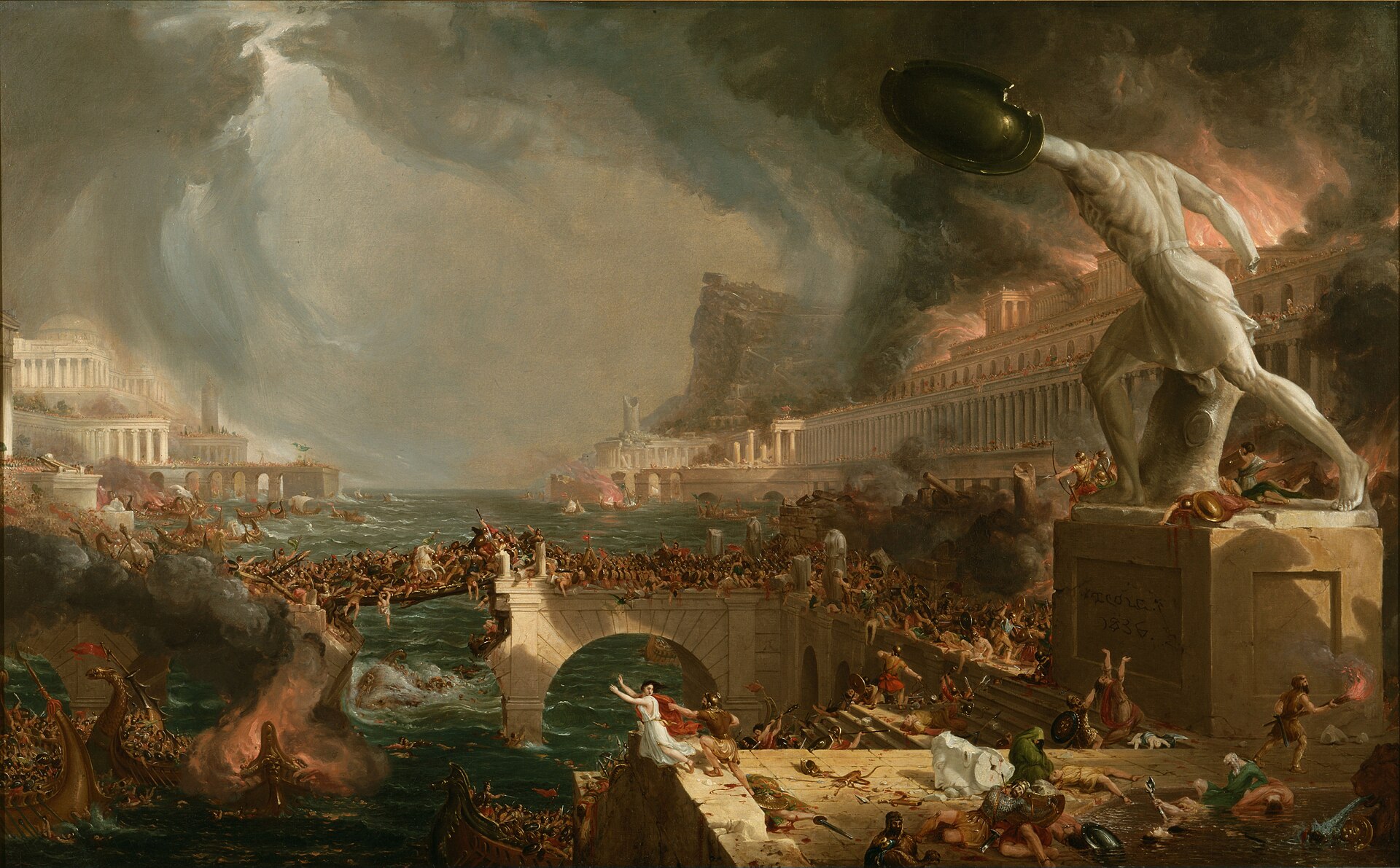 painting of the fall of a civilization Destruction, from The Course of Empire by Thomas Cole (1836) The concept of a liminal situation can also be applied to entire societies that are going through a crisis or a "collapse of order".[6] Philosopher Karl Jaspers made a significant contribution to this idea through his concept of the "Axial Age", which was "an in-between period between two structured world-views and between two rounds of empire building; it was an age of creativity where "man asked radical questions", and where the "unquestioned grasp on life is loosened".[6] It was essentially a time of uncertainty which, most importantly, involved entire civilizations. Seeing as liminal periods are both destructive and constructive, the ideas and practices that emerge from these liminal historical periods are of extreme importance, as they will "tend to take on the quality of structure".[6] Events such as political or social revolutions (along with other periods of crisis) can thus be considered liminal, as they result in the complete collapse of order and can lead to significant social change.[15] Liminality in large-scale societies differs significantly from liminality found in ritual passages in small-scale societies. One primary characteristic of liminality (as defined van Gennep and Turner) is that there is a way in as well as a way out.[6] In ritual passages, "members of the society are themselves aware of the liminal state: they know that they will leave it sooner or later, and have 'ceremony masters' to guide them through the rituals".[6] However, in those liminal periods that affect society as a whole, the future (what comes after the liminal period) is completely unknown, and there is no "ceremony master" who has gone through the process before and that can lead people out of it.[6] In such cases, liminal situations can become dangerous. They allow for the emergence of "self-proclaimed ceremony masters", that assume leadership positions and attempt to "[perpetuate] liminality and by emptying the liminal moment of real creativity, [turn] it into a scene of mimetic rivalry".[6] |
大規模な社会において 文明の崩壊を描く絵画 トーマス・コール『帝国の興亡』より「破壊」(1836年) 境界的な状況という概念は、危機や「秩序の崩壊」を経験している社会全体にも適用できる。[6] 哲学者カール・ヤスパースは「軸心時代」という概念を通じてこの考えに重要な貢献をした。それは「二つの構造化された世界観の間、二つの帝国建設の波の間 にある過渡期」であり、「人間が根本的な問いを投げかけ」、そして「人生に対する疑いようのない確信が揺らぐ」創造性の時代であった。[6] これは本質的に不確実性の時代であり、最も重要な点として、文明全体が巻き込まれた。境界的時期は破壊的であると同時に建設的でもあるため、こうした境界 的歴史的時期から生まれる思想や実践は極めて重要である。それらは「構造的性質を帯びる傾向」があるからだ。[6] したがって、政治的・社会的革命(その他の危機的時期と共に)は境界的と見なせる。それらは秩序の完全な崩壊をもたらし、重大な社会変革につながる可能性 があるからだ。[15] 大規模社会における境界性は、小規模社会の儀礼的な通過儀礼に見られる境界性とは大きく異なる。境界性(ヴァン・ジェネップとターナーの定義による)の主 な特徴の一つは、その境界に入る方法と、その境界から出る方法があることである[6]。儀礼的通過儀礼では、「社会構成員は、自らその境界状態を認識して いる。彼らは、遅かれ早かれその境界を離れることを知っており、儀式を導く『儀式司会者』がいる」。しかし、社会全体に影響を与える境界的な時期では、将 来(境界的な時期の後に何が起こるのか)はまったく不明であり、その過程を経験し、人々をそこから導き出すことができる「儀式の司会者」は存在しない。 [6] このような場合、境界的状況は危険になりうる。そこでは「自称儀式の達人」が現れ、指導的立場を主張し、境界的状態を永続させようと試みる。彼らは境界的 瞬間に内在する真の創造性を空洞化させ、それを模倣的競争の場へと変質させるのである。[6] |
| Depth psychology Jungians have often seen the individuation process of self-realization as taking place within a liminal space. "Individuation begins with a withdrawal from normal modes of socialisation, epitomized by the breakdown of the persona...liminality".[23] Thus "what Turner's concept of social liminality does for status in society, Jung [...] does for the movement of the person through the life process of individuation".[24] Individuation can be seen as a "movement through liminal space and time, from disorientation to integration [...] What takes place in the dark phase of liminality is a process of breaking down [...] in the interest of "making whole" one's meaning, purpose and sense of relatedness once more"[25] As an archetypal figure, "the trickster is a symbol of the liminal state itself, and of its permanent accessibility as a source of recreative power".[26] Jungian-based analytical psychology is also deeply rooted in the ideas of liminality. The idea of a 'container' or 'vessel' as a key player in the ritual process of psychotherapy has been noted by many and Carl Jung's objective was to provide a space he called "a temenos, a magic circle, a vessel, in which the transformation inherent in the patient's condition would be allowed to take place."[12] But other depth psychologies speak of a similar process. Carl Rogers describes "the 'out-of-this-world' quality that many therapists have remarked upon, a sort of trance-like feeling in the relationship that client and therapist emerge from at the end of the hour, as if from a deep well or tunnel.[27] The French talk of how the psychoanalytic setting 'opens/forges the "intermediate space," "excluded middle," or "between" that figures so importantly in Irigaray's writing".[28] Marion Milner claimed that "a temporal spatial frame also marks off the special kind of reality of a psycho-analytic session...the different kind of reality that is within it".[29] Jungians however have perhaps been most explicit about the "need to accord space, time and place for liminal feeling"[30]—as well about the associated dangers, "two mistakes: we provide no ritual space at all in our lives [...] or we stay in it too long".[31] Indeed, Jung's psychology has itself been described as "a form of 'permanent liminality' in which there is no need to return to social structure".[32] |
深層心理学 ユング学派は、自己実現の個別化プロセスが境界領域の中で起こるものと見なしてきた。「個別化は、ペルソナの崩壊に象徴される、通常の社会化の様式からの 離脱から始まる...境界領域」。したがって、「ターナーの社会的境界性という概念が社会における地位に対して行うことを、ユングは...人格の個別化と いう人生過程における動きに対して行う」のである。個別化は、「境界的な空間と時間を通じた、方向感覚の喪失から統合への動き」とみなすことができる。境 界の闇の段階では、自分の意味、目的、関連性を再び「全体としてまとめる」ために、崩壊の過程が起こる」[25] 原型的な人物として、「トリックスターは境界状態そのものの象徴であり、再創造の力の源として常にアクセスできる状態の象徴でもある」[26] ユング派の分析心理学も境界性の概念に深く根差している。心理療法という儀礼的プロセスにおける「容器」の重要性は広く指摘されており、カール・ユングの 目的は「テメノス、呪術的円、容器」と呼ぶ空間を提供し、「患者の状態に内在する変容がそこで起こり得るようにすること」にあった[12]。 しかし他の深層心理学も同様の過程を語る。カール・ロジャースは「多くのセラピストが指摘する『この世のものとは思えない』性質、クライアントとセラピス トの関係性において生じる一種のトランス状態のような感覚」を記述している。それはセッション終了時に深い井戸やトンネルから抜け出すような感覚だ。 [27] フランス人たちは、精神分析的設定が「イリガライの著作で極めて重要な役割を果たす『中間空間』、『排除された中間』、『間』を開く/形成する」と論じて いる。[28] マリオン・ミルナーは「時間的空間的枠組みもまた、精神分析セッションの特殊な現実性を区切る…その内部に存在する異なる種類の現実性」と主張した。 [29] しかしユング派は「境界的な感情に空間・時間・場所を与える必要性」[30]について最も明示的だったかもしれない——関連する危険性についても同様だ。 「二つの過ち:我々は人生に儀礼的な空間を全く提供しない[...]あるいはそこに長く留まりすぎる」。[31] 実際、ユング心理学そのものが「社会構造へ回帰する必要性のない『恒常的な境界状態』の一形態」と評されている[32]。 |
| Examples of general usage Liminal festivals Certain cultural and religious festivals create widespread periods of liminality. For example, Carnival in Brazil and Mardi Gras in New Orleans temporarily invert social norms and hierarchies, allowing participants to step outside everyday roles.[33] Similarly, Diwali in India marks a transition between darkness and light, symbolizing spiritual liminality.[34] Liminal spaces in ritual and pilgrimage Major religious pilgrimages such as the Hajj in Islam or the Kumbh Mela in Hinduism are periods of mass liminality, with participants leaving ordinary life and entering a sacred, transitional space.[35][36] Liminality in migration and borderlands Border crossings—whether literal (e.g., international borders, refugee camps) or figurative—create liminality for migrants and refugees who exist between countries, cultures, or legal statuses.[37][38] Digital/virtual liminality Online environments such as virtual reality spaces, internet forums, and social media can also be liminal, as users inhabit zones outside of physical reality and ordinary social constraints.[39] In rites  painting depicting the ceremonial aspect of the civil marriage process Liminal phase of a rite of passage: Albert Anker's Die Ziviltrauung ("The Civil Marriage"), 1887 Liminality is a characteristic feature of rites, where the transitional phase is intentionally created and marked by ceremony, unlike spontaneous liminal situations such as natural disasters.[40][41][42] Anthropologists have documented such phases in diverse cultures, including initiations,[43] funerals,[44] and periods of social inversion and protest.[45] The liminal phase can also be extended to more modern transitions, such as the interval after completion of university assignments until the receipt of a diploma.[46][47] Such "no man's land" periods function as social and psychological limbos, prompting reflection and transformation.[48] Ritual liminality covers diverse transitions: the period between engagement and marriage, the interval between death and burial, and other culturally institutionalized observances.[49][50] These moments often feature prohibitions and taboos even in liberal societies; for example, restrictions on sexual conduct during engagement.[51] Many rites involve transformational liminality: in proposals or public declarations, the space between question and answer is recognized as a liminal zone, wherein the future may diverge greatly.[52] Event theorists also note planned liminal experiences, such as ceremonies, festivals, and conferences, where "time out of time" and spatial detachment form core elements of collective meaning.[53][54] In time The temporal dimension of liminality can relate to moments (sudden events), periods (weeks, months, or possibly years), and epochs (decades, generations, maybe even centuries).[55] Examples Twilight serves as a liminal time, between day and night—where one is "in the twilight zone, in a liminal nether region of the night". The title of the television fiction series The Twilight Zone makes reference to this, describing it as "the middle ground between light and shadow, between science and superstition" in one variant of the original series' opening.[56] Noon and, more often, midnight can be considered liminal, the first transitioning between morning and afternoon, the latter between days.[57] Within the years, liminal times include equinoxes when day and night have equal length, and solstices, when the increase of day or night shifts over to its decrease. This "qualitative bounding of quantitatively unbounded phenomena" marks the cyclical changes of seasons throughout the year. Where the quarter days are held to mark the change in seasons, they also are liminal times.[58] New Year's Day, whatever its connection or lack of one to the astrological sky, is widely regarded as a liminal time.[59] Customs such as fortune-telling commonly make use of this transitional state.[60] In many cultures, actions and events on the first day of the year are believed to influence the year ahead, as reflected in practices like first-foot.[61] It is also considered a time particularly susceptible to hauntings by ghosts, understood as liminal beings—entities neither fully alive nor fully dead.[62] |
一般的な使用例 境界的な祭り 特定の文化的・宗教的祭りは、広範な境界状態の期間を生み出す。例えば、ブラジルのカーニバルやニューオーリンズのマルディグラは、一時的に社会的規範や 階層を逆転させ、参加者が日常の役割から外れることを可能にする。[33]同様に、インドのディワリは闇と光の間での移行を意味し、精神的境界状態を象徴 する。[34] 儀礼と巡礼における境界空間 イスラム教のハッジやヒンドゥー教のクンブ・メラといった主要な宗教的巡礼は、大規模な境界状態の期間である。参加者は日常を離れ、神聖な移行空間に入るのだ。[35] [36] 移住と国境地帯における境界性 国境越え——文字通りのもの(国際境界線、難民キャンプなど)であれ比喩的なもの——は、国や文化、法的地位の狭間に存在する移民や難民に境界性を生み出す。[37][38] デジタル/仮想的境界性 仮想現実空間、インターネットフォーラム、ソーシャルメディアなどのオンライン環境も境界的となり得る。ユーザーが物理的現実や通常の社会的制約の外側にある領域に身を置くためである。[39] 儀式における境界性 市民結婚式の儀式的側面を描いた絵画 通過儀礼の境界段階:アルベルト・アンカー『市民結婚式』(1887年) 境界性は儀礼の特徴であり、自然災害のような自発的な境界状況とは異なり、移行段階が意図的に創出され儀式によって刻印される。[40][41][42] 人類学者は、通過儀礼[43]、葬儀[44]、社会的逆転や抗議の時期[45]など、多様な文化におけるこうした段階を記録している。 境界の段階は、大学の課題完了から卒業証書受領までの期間など、より現代的な移行にも拡張できる[46][47]。こうした「無人の地」的期間は社会的・心理的な宙ぶらりんの状態として機能し、内省と変容を促す[48]。 儀礼的な境界性は多様な移行を包含する:婚約と結婚の間、死と埋葬の間、その他文化的に制度化された儀式である。[49][50] こうした瞬間は自由主義社会においてもしばしば禁止事項やタブーを伴う。例えば婚約期間中の性的行為に対する制約などである。[51] 多くの儀式は変容的境界性を伴う。求婚や公的宣言において、質問と回答の間の空間は境界領域として認識され、未来が大きく分岐し得る。[52] イベント理論家たちはまた、儀式、祭典、会議といった計画的な境界体験にも注目する。そこでは「時間を超越した時間」と空間的離脱が集団的意味の中核を成すのだ。[53][54] 時間において 境界性の時間的側面は、瞬間(突発的事象)、期間(数週間、数ヶ月、場合によっては数年)、そして時代(数十年、世代、おそらく数世紀)に関連しうる。[55] 例 黄昏は昼と夜の間の境界時間として機能する——人は「黄昏の領域、夜の境界的な下界」にいるのだ。テレビフィクションシリーズ『トワイライト・ゾーン』の タイトルはこれを参照しており、オリジナルシリーズのオープニングの一形態では「光と影の間、科学と迷信の間の中間領域」と説明されている。[56] 正午、そしてより頻繁に真夜中も境界的とみなせる。前者は午前と午後の間、後者は昼と夜の間の移行点である。[57] 年単位では、昼夜の長さが等しい分点や、昼または夜の増加が減少に転じる至点などが境界的時機にあたる。この「定量的に無限の現象に対する定性的な境界設定」が、年間を通じた季節の循環的変化を示す。季節の変わり目を示す四半期の日もまた、境界的な時間である。[58] 元日は、占星術的な天空との関連の有無にかかわらず、広く境界的な時間と見なされている。[59] 占いなどの習俗は、この移行状態を頻繁に利用する。多くの文化圏では、年の初日に起こす行動や出来事がその年の運勢に影響すると信じられており、ファース トフット(初出迎え)の習俗にその考えが反映されている。また、この時は特に幽霊に憑かれる危険性が高い時期とされ、幽霊は境界的な存在——完全に生きて いるわけでも完全に死んでいるわけでもない存在——と理解されている。 |
| In religion Judeo-Christian worship 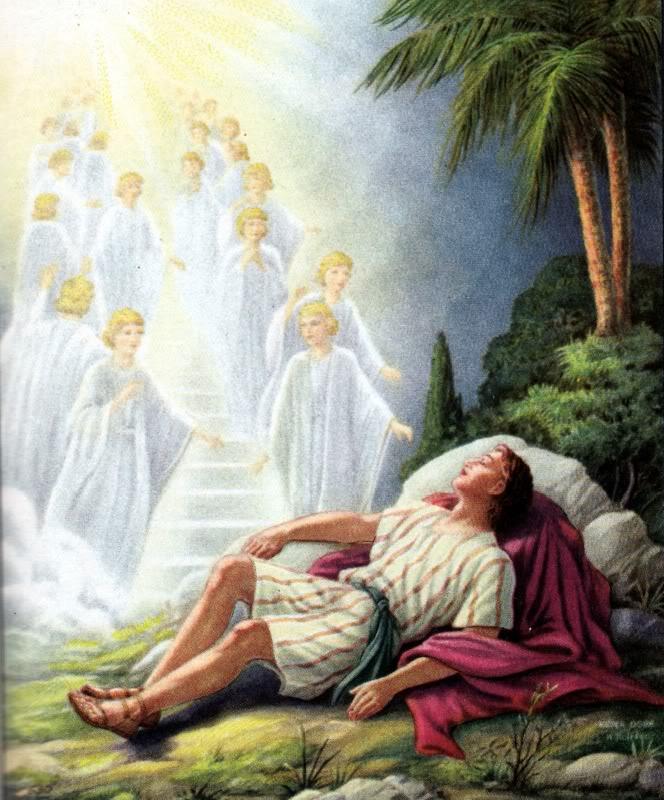 A painting of Jacob's Ladder to heaven A painting depicting Jacob's Ladder to heaven Liminal existence can be located in a separated sacred space, which occupies a sacred time. Examples in the Bible include the dream of Jacob (Genesis 28:12–19) where he encounters God between heaven and earth and the instance when Isaiah meets the Lord in the temple of holiness (Isaiah 6:1–6).[63] In such a liminal space, the individual experiences the revelation of sacred knowledge where God imparts his knowledge on the person. Worship can be understood in this context as the church community (or communitas or koinonia) enter into liminal space corporately.[63] Religious symbols and music may aid in this process described as a pilgrimage by way of prayer, song, or liturgical acts. The congregation is transformed in the liminal space and as they exit, are sent out back into the world to serve. Judeo-Christian ministry In Liminal Reality and Transformational Power,[64] Dr. Timothy Carson, curator of the Liminality Project,[65] co-founder of the Guild for Engaged Liminality[66] with Lisa Withrow and Jonathan Best, and co-founder The Liminality Press[67] with Lisa Withrow, explores the outer and inner aspects of liminality, addressing the history of the discipline with mythological and psychological underpinnings, and an application of the concepts to theology, Biblical hermeneutics, symbolism, and practical applications for those engaged in religious leadership. In Crossing Thresholds: A Practical Theology of Liminality,[68] Carson serves as co-author with Rosy Fairhurst, Nigel Rooms, and Lisa Withrow, as they define the aspects of liminality vis-à-vis its practical applications in religious life. The book includes a conceptual description of liminality as well as applications for hermeneutics, liturgy, ecclesiology, leadership, learning, faith formation, and pastoral care and crisis. In Leaning into the Liminal: A Guide for Counselors and Companions, [69] Carson utilizes a model informed by liminality – The Rites of Passage process – as a pan-theoretical resource for counselors, therapists, religious leaders, spiritual directors, and chaplains. It includes reflections on the role of the liminal guide, as well as contributions by seven other authors who address a variety of therapeutic models, healing the wounds of war, spiritual direction, and guiding through the end passages of life. Of beings Various minority groups can be considered liminal. In reality illegal immigrants (present but not "official"), and stateless people, for example, are regarded as liminal because they are "betwixt and between home and host, part of society, but sometimes never fully integrated".[6] Bisexual, intersex, and transgender people in some contemporary societies, people of mixed ethnicity, and those accused but not yet judged guilty or not guilty can also be considered to be liminal. Teenagers, being neither children nor adults, are liminal people: indeed, "for young people, liminality of this kind has become a permanent phenomenon...Postmodern liminality".[70] The "trickster as the mythic projection of the magician—standing in the limen between the sacred realm and the profane"[71] and related archetypes embody many such contradictions as do many popular culture celebrities. The category could also hypothetically and in fiction include cyborgs, hybrids between two species, shapeshifters. One could also consider seals, crabs, shorebirds, frogs, bats, dolphins/whales and other "border animals" to be liminal: "the wild duck and swan are cases in point...intermediate creatures that combine underwater activity and the bird flight with an intermediate, terrestrial life".[72] Shamans and spiritual guides also serve as liminal beings, acting as "mediators between this and the other world; his presence is betwixt and between the human and supernatural."[73] Many believe that shamans and spiritual advisers were born into their fate, possessing a greater understanding of and connection to the natural world, and thus they often live in the margins of society, existing in a liminal state between worlds and outside of common society.[73] |
宗教において ユダヤ・キリスト教の礼拝 天へと続くヤコブの梯子を描いた絵画 天へと続くヤコブの梯子を描いた絵画 境界的な存在は、聖なる時間を占める分離された聖域に位置づけられる。聖書における例としては、ヤコブが天と地の間に神と出会う夢(創世記28:12- 19)や、イザヤが聖なる神殿で主と出会う場面(イザヤ書6:1-6)が挙げられる。[63] このような境界空間において、個人は神が自らの知識を授ける聖なる啓示を体験する。 礼拝はこの文脈において、教会共同体(またはコミュニタス、コイノニア)が集団として境界領域に入る行為として理解できる。[63] 祈りや歌、典礼行為による巡礼と称されるこの過程では、宗教的象徴や音楽が補助的役割を果たす。会衆は境界領域で変容し、そこから退出する際、奉仕のため に再び世界へと送り出されるのである。 ユダヤ・キリスト教的奉仕 『境界的現実と変容の力』[64]において、境界性プロジェクト[65]のキュレーターであり、リサ・ウィズロー及びジョナサン・ベストと共に「実践的境 界性ギルド」[66]を共同設立し、リサ・ウィズローとの共著『境界性プレス』[67]の共同創設者であるティモシー・カーソン博士は、境界性の外面的・ 内面的側面を探求している。同書は、この学問分野の歴史を神話学的・心理学的基盤と共に考察し、その概念を神学、聖書解釈学、象徴学への応用を論じてい る。[67]の共同創設者であるティモシー・カーソン博士は、境界性の外面的・内面的側面を探求し、神話的・心理学的基盤に基づく学問の歴史を論じ、その 概念を神学、聖書解釈学、象徴論、そして宗教的指導に従事する者への実践的応用へと展開している。 『境界を越えて:リミナリティの実践神学』[68]では、カーソンはロージー・フェアハースト、ナイジェル・ルームズ、リサ・ウィズローと共に共著者とし て、宗教生活における実践的応用との関連でリミナリティの側面を定義している。本書は境界状態の概念的説明に加え、解釈学、典礼、教会論、指導力、学習、 信仰形成、牧会ケア及び危機対応への応用を包含している。 『境界へ寄り添う:カウンセラーと伴走者のためのガイド』[69]では、カーソンは境界性に着想を得たモデル——通過儀礼のプロセス——を、カウンセ ラー、セラピスト、宗教指導者、霊的指導者、チャプレン向けの汎理論的資源として活用している。これには境界領域のガイドの役割に関する考察に加え、7人 の寄稿者による多様な治療モデル、戦争の傷の癒やし、霊的指導、人生の終末期を導くことについての論考が含まれている。 存在について 様々な少数派集団は境界領域と見なされる。例えば、実際には不法移民(存在はするが「公式」ではない)や無国籍者は、「故郷と受け入れ先の狭間にあり、社 会の一員でありながら完全に統合されない」ため境界状態と見なされる。[6] 現代社会におけるバイセクシュアル、インターセックス、トランスジェンダーの人々、混血の人々、有罪か無罪か判断されていない被疑者も境界状態とみなせ る。 十代の若者も、子供でも大人でもないため境界的な存在だ。実際「若者にとって、この種の境界性は恒常的な現象となった…ポストモダン的境界性」である[70]。 「魔術師の神話的投影としてのトリックスター―神聖な領域と俗なる領域の境界(リメン)に立つ存在」[71]や関連する原型は、多くのポピュラー・カル チャーの有名人同様、こうした矛盾を体現している。このカテゴリーには、仮説上あるいはフィクションにおいて、サイボーグ、二種のハイブリッド、変身者も 含まれうる。アザラシ、カニ、海岸鳥、カエル、コウモリ、イルカ/クジラその他の「境界動物」も境界的とみなせる。「野鴨と白鳥が典型例だ…水中活動と鳥 の飛行を、中間的な陸上生活と組み合わせた中間的存在である」[72]。シャーマンや霊的指導者も境界的存在として機能し、「この世とあの世の仲介者」と なる。「その存在は人間と超自然の狭間に位置する」[73]。多くの人は、シャーマンや霊的助言者は生まれながらの運命を持ち、自然界への深い理解と繋が りを備えていると信じている。そのため彼らはしばしば社会の境界で生活し、世界と世界の狭間、通常の社会の外側に存在する境界状態にあるのだ[73]。 |
| In places "Liminal space" redirects here. For the Internet aesthetic, see Liminal space (aesthetic).  image of hotel room A hotel room is a liminal place, being an area that is only slept in for transient purposes and for a limited duration. The spatial dimension of liminality can include specific places, larger zones or areas, or entire countries and larger regions.[6] Liminal places can range from borders and frontiers to no man's lands and disputed territories, to crossroads to perhaps airports, hotels, and bathrooms. Sociologist Eva Illouz argues that all "romantic travel enacts the three stages that characterize liminality: separation, marginalization, and reaggregation".[74] In mythology and religion or esoteric lore liminality can include such realms as Purgatory or Da'at, which, as well as signifying liminality, some theologians deny actually existing, making them, in some cases, doubly liminal. "Between-ness" defines these spaces. For a hotel worker (an insider) or a person passing by with disinterest (a total outsider), the hotel would have a very different connotation. To a traveller staying there, the hotel would function as a liminal zone, just as "doors and windows and hallways and gates frame...the definitively liminal condition".[75] More conventionally, springs, caves, shores, rivers, volcanic calderas—"a huge crater of an extinct volcano...[as] another symbol of transcendence"[76]—fords, passes, crossroads, bridges, and marshes are all liminal: "'edges', borders or faultlines between the legitimate and the illegitimate".[77] Oedipus met his father at the crossroads and killed him; the bluesman Robert Johnson met the devil at the crossroads, where he is said to have sold his soul.[78] In architecture, liminal spaces are defined as "the physical spaces between one destination and the next."[79] Common examples of such spaces include hallways, airports, and streets.[80][81] In contemporary culture viewing the nightclub experience (dancing in a nightclub) through the liminoid framework highlights the "presence or absence of opportunities for social subversion, escape from social structures, and exercising choice".[82] This allows "insights into what may be effectively improved in hedonic spaces. Enhancing the consumer experience of these liminoid aspects may heighten experiential feelings of escapism and play, thus encouraging the consumer to more freely consume".[82] |
場所において 「境界領域」はここへ転送される。インターネット美学については境界領域(美学)を参照のこと。 ホテルの部屋の画像 ホテルの部屋は境界領域である。それは一時的な目的で、限られた期間だけ眠るための場所だからだ。 境界性の空間的次元には、特定の場所、より広範な区域や地域、あるいは国家全体や広域地域が含まれることがある[6]。境界的な場所は、国境や辺境から無 人地帯や係争地域、交差点、さらには空港、ホテル、トイレに至るまで多岐にわたる。社会学者エヴァ・イロウズは、あらゆる「ロマンチックな旅行は境界性を 特徴づける三つの段階——分離、周縁化、再統合——を体現する」と論じている。[74] 神話や宗教、秘教的伝承における境界性には、煉獄やダーアトといった領域が含まれる。これらは境界性を示すと同時に、一部の神学者によって実在を否定され るため、場合によっては二重の境界性を帯びる。「中間性」がこれらの空間を定義する。ホテル従業員(内部者)と、無関心で通り過ぎる者(完全な外部者)に とって、ホテルは全く異なる意味を持つ。宿泊する旅行者にとって、ホテルは境界領域として機能する。まさに「扉や窓、廊下や門が…決定的な境界状態を形作 る」ように。[75] より一般的な例では、泉、洞窟、海岸、河川、火山のカルデラ——「巨大な死火山の火口... [超越の象徴として]」[76]——浅瀬、峠、分かれ道、橋、沼地は全て境界的である:「『端』であり、合法と非合法の境界線あるいは断層線」[77]。 オイディプスは分かれ道で父と出会い殺害した。ブルースマンのロバート・ジョンソンは分かれ道で悪魔と出会い、そこで魂を売ったと言われる[78]。 建築学において境界空間は「一つの目的地から次の目的地への物理的空間」と定義される[79]。典型例として廊下、空港、街路が挙げられる[80][81]。 現代文化においてナイトクラブ体験(クラブ内でのダンス)を境界的枠組みで捉えると、「社会的転覆の機会、社会構造からの逃避、選択の行使の有無」が浮き 彫りになる。[82] これにより「快楽空間において効果的に改善可能な点への洞察が得られる。こうした境界的側面の消費者体験を強化することで、逃避や遊びの体験的感情が高ま り、消費者がより自由に消費するよう促される」[82]。 |
In folklore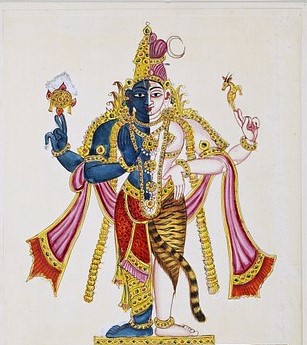 depiction of Harihara Harihara—the fused representation of Vishnu (Hari) and Shiva (Hara) from the Hindu tradition, existing in a liminal state of being There are a number of stories in folklore of those who could only be killed in a liminal space: In Welsh mythology, Lleu could not be killed during the day or night, nor indoors or outdoors, nor riding or walking, nor clothed or naked (and is attacked at dusk, while wrapped in a net with one foot on a cauldron and one on a goat). Likewise, in Hindu text Bhagavata Purana, Vishnu appears in a half-man half-lion form named Narasimha to destroy the demon Hiranyakashipu who has obtained the power never to be killed in day nor night, in the ground nor in the air, with weapon nor by bare hands, in a building nor outside it, by man nor beast. Narasimha kills Hiranyakashipu at dusk, across his lap, with his sharp claws, on the threshold of the palace, and as Narasimha is a god himself, the demon is killed by neither man nor beast. In the Mahabharata, Indra promises not to slay Namuci and Vritra with anything wet or dry, nor in the day or in the night, but instead kills them at dusk with foam.[83] The classic tale of Cupid and Psyche serves as an example of the liminal in myth, exhibited through Psyche's character and the events she experiences. She is always regarded as too beautiful to be human yet not quite a goddess, establishing her liminal existence.[84] Her marriage to Death in Apuleius' version occupies two classic Van Gennep liminal rites: marriage and death.[84] Psyche resides in the liminal space of no longer being a maiden yet not quite a wife, as well as living between worlds. Beyond this, her transition to immortality to live with Cupid serves as a liminal rite of passage in which she shifts from mortal to immortal, human to goddess; when Psyche drinks the ambrosia and seals her fate, the rite is completed and the tale ends with a joyous wedding and the birth of Cupid and Psyche's daughter.[84] The characters themselves exist in liminal spaces while experiencing classic rites of passage that necessitate the crossing of thresholds into new realms of existence. In ethnographic research In ethnographic research, "the researcher is...in a liminal state, separated from his own culture yet not incorporated into the host culture"[85]—when he or she is both participating in the culture and observing the culture. The researcher must consider the self in relation to others and his or her positioning in the culture being studied. In many cases, greater participation in the group being studied can lead to increased access of cultural information and greater in-group understanding of experiences within the culture. However increased participation also blurs the role of the researcher in data collection and analysis. Often a researcher that engages in fieldwork as a "participant" or "participant-observer" occupies a liminal state where he/she is a part of the culture, but also separated from the culture as a researcher. This liminal state of being betwixt and between is emotional and uncomfortable as the researcher uses self-reflexivity to interpret field observations and interviews. Some scholars argue that ethnographers are present in their research, occupying a liminal state, regardless of their participant status. Justification for this position is that the researcher as a "human instrument" engages with his/her observations in the process of recording and analyzing the data. A researcher, often unconsciously, selects what to observe, how to record observations and how to interpret observations based on personal reference points and experiences. For example, even in selecting what observations are interesting to record, the researcher must interpret and value the data available. To explore the liminal state of the researcher in relation to the culture, self-reflexivity and awareness are important tools to reveal researcher bias and interpretation.[citation needed] In higher education For many students, the process of starting university can be seen as a liminal space.[86] Whilst many students move away from home for the first time, they often do not break their links with home, seeing the place of origin as home rather than the town where they are studying. Student orientation often includes activities that act as a rite of passage, making the start of university as a significant period. This can be reinforced by the split of town and gown, where local communities and the student body maintain different traditions and codes of behaviour. This means that many university students are no longer seen as school children, but have not yet achieved the status of independent adults. This creates an environment where risk-taking is balanced with safe spaces that allow students to try out new identities and new ways of being within a structure that provides meaning.[87] This liminal period offers a unique window of psychological malleability: disconnected from the secure attachments of home yet not having formed relationships that reinforce their sense of self, individuals in this transitional state can be particularly susceptible to influence—both constructive and harmful.[88] |
民間伝承において ハリハラの描写 ハリハラ——ヒンドゥー教の伝統におけるヴィシュヌ(ハリ)とシヴァ(ハラ)が融合した表現であり、境界的な存在状態にある 境界空間でしか殺せない者に関する民話は数多く存在する。ウェールズ神話では、リューは昼も夜も、屋内も屋外も、騎乗時も歩行時も、着衣時も裸時も殺せな かった(そして夕暮れ時に、片足を釜に、もう片足を山羊に乗せ、網に包まれた状態で襲撃される)。同様にヒンドゥー教の聖典『バガヴァタ・プラーナ』で は、ヴィシュヌが半人半獅子の姿「ナラシンハ」として現れ、昼も夜も、地上でも空中でも、武器でも素手でも、建物内でも外でも、人間でも獣でも殺せない力 を得た悪魔ヒラニヤカシプを滅ぼす。ナラシンハは夕暮れ時に宮殿の敷居で、鋭い爪でヒラニヤカシプを膝の上に横たえて殺す。ナラシンハ自体が神であるた め、この悪魔は人間でも獣でもない存在によって倒されたのである。『マハーバーラタ』では、インドラはナムチとヴリトラを「乾いたものでも濡れたもので も、昼でも夜でもない」と誓いながら、夕暮れ時に泡で彼らを殺す。[83] キューピッドとプシュケの古典的物語は、プシュケの性格と彼女が経験する出来事を通じて示される、神話における境界領域の例として機能する。彼女は常に人 間には美しすぎるが、女神とは言い切れない存在と見なされ、境界的な存在を確立している。[84] アプルエウスの版本における死神との結婚は、ヴァン・ジェネップの境界儀礼の二大要素である結婚と死を包含している。[84] プシュケは処女ではなくなったが妻とも言い切れない境界領域に居座り、二つの世界の間を生きる。さらに、キューピッドと共に生きるための不死への移行は、 人間から女神へ、死すべき存在から不死の存在へと変容する境界通過儀礼として機能する。プシュケーがアンブロシアを飲み運命を確定させた時、儀礼は完結 し、物語は喜びに満ちた婚礼とキューピッドとプシュケーの娘の誕生で幕を閉じる。[84] 登場人物たちは、新たな存在領域への境界を越えることを必要とする古典的な通過儀礼を経験しながら、境界領域に存在している。 民族誌的研究において 民族誌的研究では、「研究者は...境界状態にある。自らの文化から切り離されつつも、受入文化に完全に同化していない」[85]——つまり文化に参加し つつも観察する立場にある。研究者は、他者との関係における自己と、研究対象文化における自身の位置付けを考慮しなければならない。 多くの場合、研究対象集団への参加度を高めることで、文化的情報へのアクセスが増し、その文化内での経験に対する集団内理解が深まる。しかし参加度が高ま ると、データ収集と分析における研究者の役割も曖昧になる。「参加者」あるいは「参与観察者」としてフィールドワークに従事する研究者は、往々にして境界 的な状態に置かれる。つまり文化の一部でありながら、研究者として文化から分離された状態だ。この「中間的」な境界状態は、研究者が反省性を用いてフィー ルド観察やインタビューを解釈する過程で、感情的に不安定で居心地の悪いものとなる。 一部の学者は、エスノグラファーは参加者の立場に関わらず、研究において境界的な状態に存在すると主張する。この立場の根拠は、研究者が「人間の道具」と して、データの記録と分析の過程で自身の観察と関わる点にある。研究者は往々にして無意識のうちに、個人的な基準点や経験に基づいて、何を観察するか、ど う記録するか、どう解釈するかを選択する。例えば、記録する価値のある観察対象を選ぶ段階でさえ、研究者は入手可能なデータを解釈し評価せざるを得ない。 文化に対する研究者の境界的状態を探るには、反省性と自覚が研究者の偏見や解釈を明らかにする重要な手段となる。[出典が必要] 高等教育において 多くの学生にとって、大学入学のプロセスは境界領域と見なされる。[86] 多くの学生が初めて家を離れる一方で、彼らはしばしば故郷とのつながりを断ち切らず、出身地を「家」と見なし、学んでいる町をそうは考えない。新入生オリ エンテーションには通過儀礼的な活動が含まれることが多く、大学生活の始まりを重要な時期とする。これは地域社会と学生団体が異なる伝統や行動規範を維持 する「タウン・アンド・ガウンの分離」によって強化される。つまり多くの大学生はもはや小中学生と見なされないが、独立した大人の地位もまだ獲得していな い。この環境では、リスクを取る行為と安全な空間がバランスを保ち、学生は意味を提供する構造の中で新たなアイデンティティや在り方を試すことができる [87]。この境界的な期間は心理的可塑性の特異な窓を提供する。すなわち、家庭という安全な愛着から切り離されつつも、自己意識を強化する人間関係をま だ形成していないこの過渡期にある個人は、建設的・有害な双方の影響に対して特に感受性が高まるのである[88]。 |
| In popular culture Novels and short stories Rant: An Oral Biography of Buster Casey by Chuck Palahniuk makes use of liminality in explaining time travel. Possession by A. S. Byatt describes how postmodern "Literary theory. Feminism...write about liminality. Thresholds. Bastions. Fortresses".[89] Each book title in The Twilight Saga speaks of a liminal period (Twilight, New Moon, Eclipse, and Breaking Dawn). In The Phantom Tollbooth (1961), Milo enters "The Lands Beyond", a liminal place (which explains its topsy-turvy nature), through a magical tollbooth. When he finishes his quest, he returns, but changed, seeing the world differently. The giver of the tollbooth is never seen and name never known, and hence, also remains liminal. Liminality is a major theme in Offshore by Penelope Fitzgerald, in which the characters live between sea and land on docked boats, becoming liminal people. Saul Bellow's "varied uses of liminality...include his Dangling Man, suspended between civilian life and the armed forces"[90] at "the onset of the dangling days".[91] In her short story collection, Tales From the Liminal (2021 Deuxmers[92]), S. K. Kruse[93] explores the potential transformative power of liminal times, places, and states of being. Charlotte Brontë's Jane Eyre follows the protagonist through different stages of life as she crosses the threshold from student to teacher to woman.[94] Her existence throughout the novel takes a liminal character. She can first be seen when she hides herself behind a large red curtain to read, closing herself off physically and existing in a paracosmic realm. At Gateshead, Jane is noted to be set apart and on the outside of the family, putting her in a liminal space in which she neither belongs nor is completely cast away.[95] Jane's existence emerges as paradoxical as she transcends commonly accepted beliefs about what it means to be a woman, orphan, child, victim, criminal, and pilgrim,[96] and she creates her own narrative as she is torn from her past and denied a certain future.[96] Faced with a series of crises, Jane's circumstances question social constructs and allow Jane to progress or to retract; this creates a narrative dynamic of structure and liminality (as coined by Turner).[96] Karen Brooks states that Australian grunge lit books, such as Clare Mendes' Drift Street, Edward Berridge's The Lives of the Saints, and Andrew McGahan's Praise "...explor[e] the psychosocial and psychosexual limitations of young sub/urban characters in relation to the imaginary and socially constructed boundaries defining...self and other" and "opening up" new "liminal [boundary] spaces" where the concept of an abject human body can be explored.[97] Brooks states that Berridge's short stories provide "...a variety of violent, disaffected and often abject young people", characters who "...blur and often overturn" the boundaries between suburban and urban space.[97] Brooks states that the marginalized characters in The Lives of the Saints, Drift Street and Praise are able to stay in "shit creek" (an undesirable setting or situation) and "diver[t]... flows" of these "creeks", thus claiming their rough settings' "liminality" (being in a border situation or transitional setting) and their own "abjection" (having "abject bodies" with health problems, disease, etc.) as "sites of symbolic empowerment and agency".[97] Brooks states that the story "Caravan Park" in Berridge's short story collection is an example of a story with a "liminal" setting, as it is set in a mobile home park; since mobile homes can be relocated, she states that setting a story in a mobile home "...has the potential to disrupt a range of geo-physical and psycho-social boundaries".[97] Brooks states that in Berridge's story "Bored Teenagers", the adolescents using a community drop-in centre decide to destroy its equipment and defile the space by urinating in it, thus "altering the dynamics of the place and the way" their bodies are perceived, with their destructive activities being deemed by Brooks to indicate the community centre's "loss of authority" over the teens.[97] In-Between: Liminal Stories is a collection of ten short stories and poems that exclusively focus on liminal expressions of various themes like memory disorder, pandemic uncertainty, authoritarianism, virtual reality, border disputes, old-age anxiety, environmental issues, and gender trouble. The stories, such as "In-Between", "Cogito, Ergo Sum", "The Trap", "Monkey Bath", "DreamCatcher", "Escape to Nowhere", "A Letter to My-Self", "No Man's Land", "Whither Am I?", and "Fe/Male",[98] apart from their thematic relevance, directly and indirectly link the possibilities and potential of liminality in literature for developing characters, plots, and settings. The experiences and expressions of the in-between states of living 'betwixt and between' in a transitional world that intricately changes the constants and perpetuities of human life are eminent in the stories that are associated with the theoretical concepts such as permanent and temporary liminality, liminal space, liminal entity, liminoid, communitas, and anti-structure. The significance of liminality in the short stories is emphasised by conceptualising the existence of the characters as "living not here, not there – but somewhere in a space between here and there".[98] Plays Rosencrantz and Guildenstern Are Dead, a play by Tom Stoppard, takes place both in a kind of no-man's-land and the actual setting of Hamlet. "Shakespeare's play Hamlet is in several ways an essay in sustained liminality ... only via a condition of complete liminality can Hamlet finally see the way forward".[99] In the play Waiting for Godot for the entire length of the play, two men walk around restlessly on an empty stage. They alternate between hope and hopelessness. At times one forgets what they are even waiting for, and the other reminds him: "We are waiting for Godot". The identity of 'Godot' is never revealed, and perhaps the men do not know Godot's identity. The men are trying to keep up their spirits as they wander the empty stage, waiting. Films and TV shows The Twilight Zone (1959–2003) is a US television anthology series that explores unusual situations between reality and the paranormal. The Terminal (2004), is a US film in which the main character (Viktor Navorski) is trapped in a liminal space; since he can neither legally return to his home country Krakozhia nor enter the United States, he must remain in the airport terminal indefinitely until he finds a way out at the end of the film. In the film Waking Life, about dreams, Aklilu Gebrewold talks about liminality. Primer (2004), is a US science fiction film by Shane Carruth where the main characters set up their time travelling machine in a storage facility to ensure it will not be accidentally disturbed. The hallways of the storage facility are eerily unchanging and impersonal, in a sense depicted as outside of time, and could be considered a liminal space. When the main characters are inside the time travel box, they are clearly in temporal liminality. Yet another example comes from Hayao Miyazaki's Princess Mononoke in which the Forest Spirit can only be killed while switching between its two forms. Photography and Internet culture Main article: Liminal space (aesthetic) 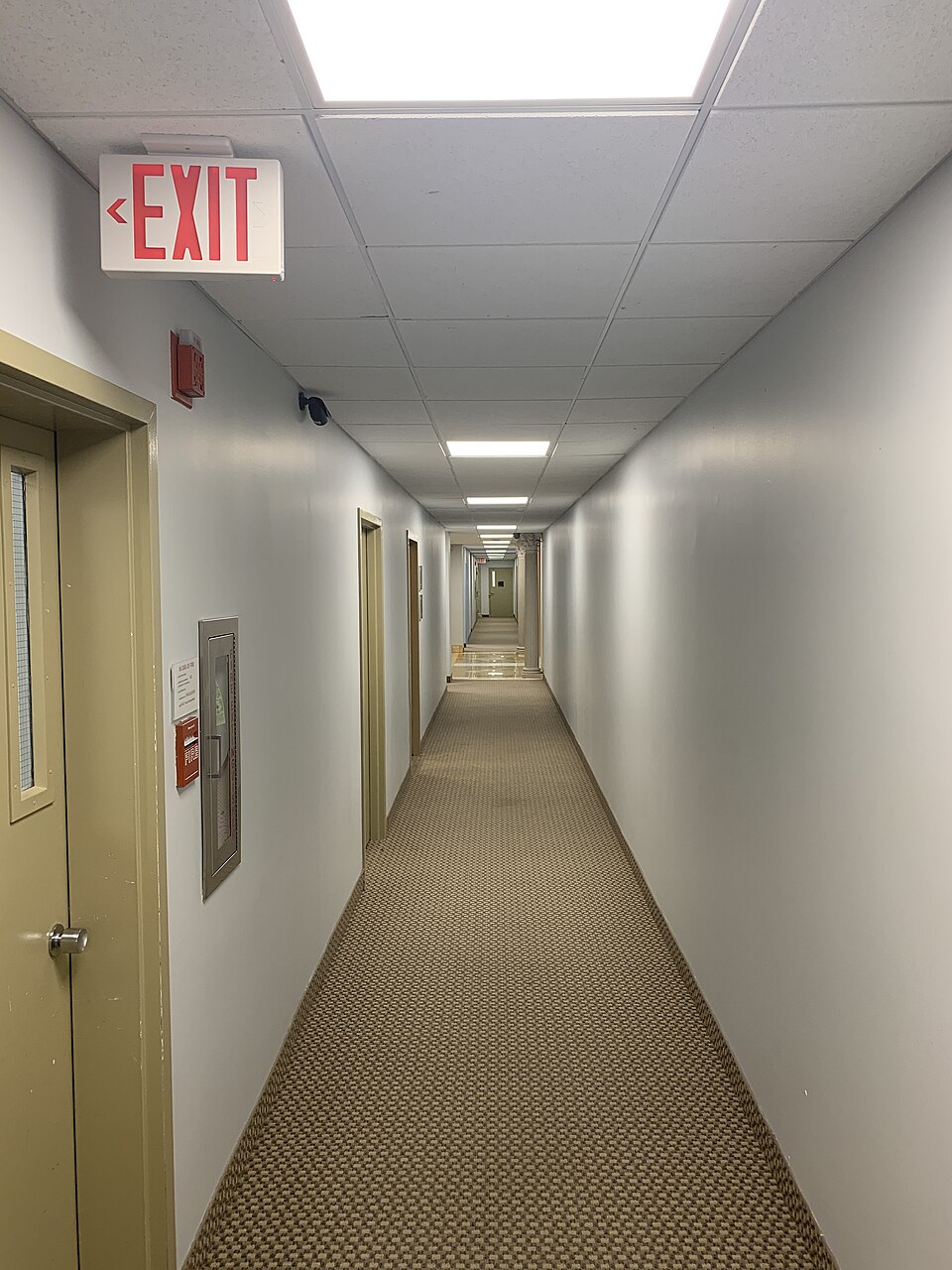 A white hallway lit by fluorescent lighting with an exit sign A white hallway lit by fluorescent lighting with an exit sign, an example of a "liminal space" In the late 2010s, a trend of images depicting so-called "liminal spaces" surged in online art and photography communities, with the intent to convey "a sense of nostalgia, lostness, and uncertainty".[100] The subjects of these photos may not necessarily fit within the usual definition of spatial liminality (such as that of hallways, waiting areas or rest stops) but are instead defined by a forlorn atmosphere and sentiments of abandonment, decay and quietness. Additionally, it has been suggested that the liminal space phenomenon could represent a broader feeling of disorientation in modern society, explaining the usage of places that are common in childhood memories (such as playgrounds or schools) as reflective about the passage of time and the collective experience of growing older.[101] The phenomenon gained media attention in 2019, when a short creepypasta originally posted to 4chan's /x/ board in 2019 went viral.[102] The creepypasta showed an image of a hallway with yellow carpets and wallpaper, with a caption purporting that by "noclipping out of bounds in real life", one may enter the Backrooms, an empty wasteland of corridors with nothing but "the stink of old moist carpet, the madness of mono-yellow, the endless background noise of fluorescent lights at maximum hum-buzz, and approximately six hundred million square miles of randomly segmented empty rooms to be trapped in".[103] Since then, a popular subreddit titled "liminal space", cataloguing photographs that give a "sense that something is not quite right",[104] has accrued over 500,000 followers.[105] A Twitter account called @SpaceLiminalBot posts many liminal space photos and it has accrued over 1.2 million followers.[106] Liminal spaces can also be found in painting and drawing, for example in paintings by Jeffery Smart.[107][108] Research indicates that liminal spaces may appear eerie or strange because they fall into an uncanny valley of architecture and physical places.[109] Music and other media Many videogames exist which are based on the aesthetic concept of liminal spaces. Examples include Superliminal and the video game adaptations of the Backrooms among many others. Liminal Space is an album by American breakcore artist Xanopticon. Coil mention liminality throughout their works, most explicitly with the title of their song "Batwings (A Limnal Hymn)" (sic) from their album Musick to Play in the Dark Vol. 2. In .hack//Liminality Harald Hoerwick, the creator of the MMORPG "The World", attempted to bring the real world into the online world, creating a hazy barrier between the two worlds; a concept called "Liminality". In the lyrics of French rock band Little Nemo's song "A Day Out of Time", the idea of liminality is indirectly explored by describing a transitional moment before the returning of "the common worries". This liminal moment is referred as timeless and, therefore, absent of aims and/or regrets. |
ポピュラー・カルチャーにおいて 小説と短編 チャック・パラニュークの『ラント:バスター・ケイシーの口述伝記』は、タイムトラベルの説明に境界性を利用している。A・S・バイアットの『憑依』は、 ポストモダン文学理論やフェミニズムが境界性についてどう記述するかを描く。境界線。要塞。要塞」[89]。『トワイライト・サーガ』の各巻タイトルは境 界的な時期を暗示している(『トワイライト』『ニュームーン』『エクリプス』『ブレイキング・ドーン』)。『幻の料金所』(1961年)では、ミロが呪術 的な料金所を通って「向こうの国」という境界領域(その逆転した性質を説明している)に入る。旅を終えた彼は変化し、世界の見方が異なる状態で戻る。料金 所の提供者は姿を見せず、名前も知られず、それゆえに境界的な存在のままである。ペネロペ・フィッツジェラルドの『沖合』では境界性が主要テーマであり、 登場人物たちは停泊した船の上で海と陸の間に生き、境界的な人間となる。ソール・ベローの「境界性の多様な用法... 『ぶら下がった男』における主人公が、民間生活と軍隊の狭間で宙吊り状態にあること」[90]、「ぶら下がった日々」[91]の始まりを例に挙げている。 S・K・クルーズ[93]は短編集『境界の物語』(2021年ドゥーメア社[92])で、境界的な時間・場所・存在状態が持つ変容の可能性を探求してい る。 シャーロット・ブロンテの『ジェーン・エア』は、主人公が学生から教師へ、そして女性へと門をくぐる人生の異なる段階を追う[94]。小説全体を通じた彼 女の存在は境界的な性格を帯びている。最初に目にするのは、大きな赤いカーテンの陰に身を隠して読書する姿だ。物理的に自らを閉ざし、パラコスミックな領 域に存在する。ゲーツヘッドでは、ジェーンは家族から隔てられ、外側に置かれていることが注目され、彼女は、属しているわけでも、完全に追放されているわ けでもない、境界的な空間に置かれている。[95] ジェーンの存在は、女性、孤児、子供、犠牲者、犯罪者、巡礼者であることの意味について、一般的に受け入れられている信念を超越していることから、逆説的 なものとして浮かび上がる。[96] 彼女は、過去から引き裂かれ、あるべき未来を否定される中で、独自の物語を作り上げていく。[96] 一連の危機に直面したジェーンの状況は、社会構造に疑問を投げかけ、ジェーンが進歩したり後退したりすることを可能にする。これにより、構造と境界性 (ターナーが造語)という物語のダイナミズムが生まれる。[96] カレン・ブルックスは、クレア・メンデスの『ドリフト・ストリート』、エドワード・ベリッジの『聖人たちの生涯』、アンドルー・マクガハンの『賛美』など のオーストラリアのグランジ文学は、「... 想像上のものであり、社会的に構築された境界、すなわち... ブルックスは、ベリッジの短編小説は「... さまざまな暴力的で、不満を抱き、しばしば卑しい若者たち」を描いており、その登場人物たちは郊外と都市の空間の境界を「... 曖昧にし、しばしば覆す」と述べている。[97] ブルックスによれば、『聖者たちの生涯』『ドリフト・ストリート』『賛美』に登場する周縁化された人物たちは、「クソみたいな状況」(望ましくない環境や 状況)に留まり、これらの「小川」の「流れ」を「そらす」ことで、荒れた環境の「境界性」(境界状況や過渡的環境にあること)と、自らの「卑俗さ」(健康 問題や疾病などを持つ「卑俗な身体」を持つこと)を主張している。流れ」を「そらす」ことで、こうした荒れた環境の「境界性」(境界状況や過渡的環境にあ ること)と、自らの「卑劣さ」(健康問題や疾病などを持つ「卑劣な身体」)を「象徴的な力と主体性の場」として主張していると述べている。[97] ブルックスは、ベリッジの短編集に収められた「キャラバン・パーク」が「境界的」な設定を持つ物語の例だと述べる。その舞台が移動式住宅団地であるため だ。移動式住宅は再配置が可能であることから、彼女は移動式住宅を舞台に設定することは「様々な地理的・物理的、心理的・社会的境界を破壊する可能性を秘 めている」と主張する。[97] ブルックスによれば、ベリッジの短編「退屈なティーンエイジャー」では、コミュニティ・ドロップインセンターを利用する青少年たちが設備を破壊し、その空 間に排尿して穢すことを決める。これにより「場所の力学と彼らの身体が認識される方法」が変容し、ブルックスは彼らの破壊的行為がコミュニティセンターが ティーンエイジャーに対して「権威を失った」ことを示していると見なしている。[97] 『境界の物語:リミナル・ストーリーズ』は、記憶障害、パンデミックの不確実性、権威主義、仮想現実、国境紛争、老いへの不安、環境問題、ジェンダーの混 乱といった様々なテーマの境界的表現に焦点を当てた十編の短編小説と詩のコレクションである。「境界」「我思う、故に我あり」「罠」「猿の風呂」「ドリー ムキャッチャー」 「エスケープ・トゥ・ノーウェア」「マイセルフへの手紙」「ノーマンズランド」「ウィザー・アイ・アム?」「フィー/メイル」といった作品群は、主題的な 関連性に加え、文学における境界状態の可能性と潜在性を、登場人物・筋書き・設定の発展に直接的・間接的に結びつけている。人間の生活の恒常性と永続性を 複雑に変容させる過渡的な世界において、『狭間』に生きる中間状態の経験と表現は、恒久的・一時的な境界性、境界空間、境界的実体、リミノイド、共同体、 反構造といった理論的概念と関連する物語において顕著である。短編小説における境界性の重要性は、登場人物の存在を「ここでもなく、あそこでもない――こ ことあそこの間の空間のどこかに生きている」と概念化することで強調される。[98] 戯曲 トム・ストッパードの戯曲『ローゼンクランツとギルデンスターンは死んだ』は、一種の無人地帯と『ハムレット』の実際の舞台の両方で展開する。「シェイク スピアの戯曲『ハムレット』は、持続的な境界性に関する随筆とも言える…完全な境界状態を経て初めて、ハムレットは進むべき道を見いだすのだ」[99]。 戯曲『ゴドーを待ちながら』では、全編を通じて二人の男が空虚な舞台を落ち着きなく歩き回る。彼らは希望と絶望の間を行き来する。時折、一方が待ち続ける 対象すら忘れかけると、もう一方がこう言い聞かせる: 「我々はゴドーを待っている」。『ゴドー』の正体は決して明かされず、おそらく男たち自身も知らない。彼らは空虚な舞台を彷徨いながら、待ち続ける中で気 力を保とうとしているのだ。 映画とテレビ番組 『トワイライト・ゾーン』(1959–2003)は、現実と超常現象の狭間にある異常な状況を探求するアメリカのテレビアンソロジーシリーズである。 『ターミナル』(2004年)は、主人公(ヴィクトル・ナヴォルスキー)が境界領域に閉じ込められる米国映画である。彼は母国クラコジアに合法的に帰国で きず、米国にも入国できないため、映画の終盤で脱出方法を見つけるまで空港ターミナルに無期限に留まらねばならない。夢をテーマにした映画『ウェイキン グ・ライフ』では、アクリル・ゲブルウォルドが境界領域について語る。『プライマー』(2004年)はシェーン・キャルース監督のアメリカSF映画で、主 人公たちがタイムマシンを保管施設に設置する。これは機械が誤って妨害されないようにするためだ。保管施設の廊下は不気味なほど変化がなく無機質で、ある 意味「時間の外」として描かれており、境界領域と見なせる。主人公たちがタイムトラベルボックス内にいる時、彼らは明らかに時間的境界状態にある。もう一 つの例は宮崎駿の『もののけ姫』で、森の精霊は二つの姿の間で移行している時だけ殺せる。 写真とインターネット文化 詳細記事: 境界空間(美学) 蛍光灯に照らされた白い廊下に出口の標識がある 蛍光灯に照らされた白い廊下に出口の標識がある。これは「境界空間」の一例だ 2010年代後半、いわゆる「境界空間」を描いた画像がオンラインのアートや写真コミュニティで流行した。その意図は「ノスタルジア、喪失感、不確かさ」 を伝えることにある。[100] これらの写真の主題は、空間的な境界性(廊下、待合室、休憩所など)の通常の定義に必ずしも当てはまらず、むしろ寂れた雰囲気や、放棄・衰退・静寂といっ た感情によって定義される。さらに境界空間現象は、現代社会における広範な方向感覚の喪失感を象徴する可能性が指摘されている。この解釈によれば、遊戯場 や学校など幼少期の記憶に共通する場所が用いられるのは、時間の経過と加齢という集合的体験を反映しているためだ。[101] この現象がメディアの注目を集めたのは2019年、4chanの/x/掲示板に投稿された短いクリーピーパスタが拡散した時である。[102] そのクリーピーパスタには黄色いカーペットと壁紙の廊下の画像が掲載され、「現実世界でノークリップで境界を越えると」 「バックルームズ」と呼ばれる空間へ侵入できると主張していた。そこには「古びた湿ったカーペットの悪臭、単調な黄色の狂気、蛍光灯が最大で唸るような無 限の背景ノイズ、そして約6億平方マイルに及ぶ無作為に区切られた空虚な部屋群に閉じ込められる」だけの、空虚な廃虚の廊下が広がっていた。[103] その後、「何かがおかしい」という感覚を与える写真を収集する「liminal space」という人気のサブレディットは、50万人以上のフォロワーを獲得した。[104][105] @SpaceLiminalBotというTwitterアカウントは多くの境界空間写真を投稿し、120万人以上のフォロワーを集めている。[106] 境界領域は絵画やドローイングにも見られる。例えばジェフリー・スマートの絵画がそうだ。[107][108] 研究によれば、境界領域が不気味さや奇妙さを感じさせるのは、建築物や物理的空間における不気味の谷に該当するためだ。[109] 音楽とその他のメディア 境界領域の美的概念を基にしたビデオゲームは数多く存在する。例としては『Superliminal』や『The Backrooms』のゲーム化作品などが挙げられる。 『Liminal Space』はアメリカのブレイクコアアーティスト、ザノプティコンのアルバムである。コイルは作品全体で境界性を言及しており、特にアルバム 『Musick to Play in the Dark Vol. 2』収録曲「Batwings (A Limnal Hymn)」のタイトルで顕著である。『.hack//Liminality』において、MMORPG「The World」の創始者ハラルド・ホーリックは現実世界をオンライン世界に持ち込もうとし、両世界に曖昧な境界線——「境界性」と呼ばれる概念——を生み出 した。 フランス人ロックバンド、リトル・ネモの楽曲「A Day Out of Time」の歌詞では、「日常の憂い」が戻ってくる前の過渡期を描写することで、境界性という概念が間接的に探求されている。この境界的な瞬間は時間を超 越したものとされ、したがって目的や後悔が存在しない状態と表現されている。 |
| Liminoid experiences In 1974, Victor Turner coined the term liminoid (from the Greek word eidos, meaning "form or shape"[12]) to refer to experiences that have characteristics of liminal experiences but are optional and do not involve a resolution of a personal crisis.[2] Unlike liminal events, liminoid experiences are conditional and do not result in a change of status, but merely serve as transitional moments in time.[2] The liminal is part of society, an aspect of social or religious rites, while the liminoid is a break from society, part of "play" or "playing". With the rise in industrialization and the emergence of leisure as an acceptable form of play separate from work, liminoid experiences have become much more common than liminal rites.[2] In these modern societies, rites are diminished and "forged the concept of 'liminoid' rituals for analogous but secular phenomena" such as attending rock concerts and other[110] liminoid experiences. The fading of liminal stages in exchange for liminoid experiences is marked by the shift in culture from tribal and agrarian to modern and industrial. In these societies, work and play are entirely separate whereas in more archaic societies, they are nearly indistinguishable.[2] In the past play was interwoven with the nature of work as symbolic gestures and rites in order to promote fertility, abundance, and the passage of certain liminal phases; thus, work and play are inseparable and often dependent on social rites.[2] Examples of this include Cherokee and Mayan riddles, trickster tales, sacred ball games, and joking relationships which serve holy purposes of work in liminal situations while retaining the element of playfulness.[2] Ritual and myth were, in the past, exclusively connected to collective work that served holy and often symbolic purposes; liminal rites were held in the form of coming-of-age ceremonies, celebrations of seasons, and more. Industrialization cut the cord between work and the sacred, putting "work" and "play" in separate boxes that rarely, if ever, intersected.[2] In a famous essay regarding the shift from liminal to liminoid in industrial society, Turner offers a twofold explanation of this sect. First, society began to move away from activities concerning collective ritual obligations, placing more emphasis on the individual than the community; this led to more choice in activities, with many such as work and leisure becoming optional. Second, the work done to earn a living became entirely separate from his or her other activities so that it is "no longer natural, but arbitrary."[2] In simpler terms, the industrial revolution brought about free time that had not existed in past societies and created space for liminoid experiences to exist.[2] Examples of liminoid experiences Sports Sporting events such as the Olympics, NFL football games, and hockey matches are forms of liminoid experiences. They are optional activities of leisure that place both the spectator and the competitor in in-between places outside of society's norms. Sporting events also create a sense of community among fans and reinforces the collective spirit of those who take part.[19] Homecoming football games, gymnastics meets, modern baseball games, and swim meets all qualify as liminoid and follow a seasonal schedule; therefore, the flow of sports becomes cyclical and predictable, reinforcing the liminal qualities.[19] Amateur treasure hunting has been described using liminal theory (King, 2024). Commercial flight One scholar, Alexandra Murphy, has argued that airplane travel is inherently liminoid—suspended in the sky, neither here nor there and crossing thresholds of time and space, it is difficult to make sense of the experience of flying.[111] Murphy posits that flights shift our existence into a limbo space in which movement becomes an accepted set of cultural performances aimed at convincing us that air travel is a reflection of reality rather than a separation from it.[111] |
リミノイド体験 1974年、ビクター・ターナーは、リミナル体験の特徴を持つが、任意であり、個人的な危機を解決するものではない体験を指すために、リミノイド(ギリ シャ語の「形」を意味するeidosに由来する[12])という用語を考案した。リミナル体験とは異なり、リミノイド体験は条件付きであり、地位の変化を もたらすものではなく、単に時間的な過渡的な瞬間として機能する。境界的体験は社会の一部であり、社会的または宗教的な儀式の側面であるのに対し、リミノ イド体験は社会からの脱却であり、「遊び」または「遊ぶ」ことの一部である。工業化の進展と、仕事とは別の、受け入れられる遊びの形態としてのレジャーの 出現に伴い、リミノイド体験は境界的儀式よりもはるかに一般的になった。[2] こうした近代社会では儀礼が衰退し、ロックコンサートへの参加など類比的だが世俗的な現象に対して「リミノイド的儀礼」という概念が構築された。 リミナル段階が衰退しリミノイド的体験に置き換わる現象は、文化が部族的・農耕的から近代的・工業的へ移行する過程で顕著である。これらの社会では労働と 遊びは完全に分離しているが、より原始的な社会では両者はほぼ区別がつかない[2]。過去には遊びは、豊穣や豊かさ、特定のリミナル段階の通過を促進する ための象徴的ジェスチャーや儀礼として労働の本質と密接に絡み合っていた。したがって労働と遊びは不可分であり、しばしば社会的儀礼に依存していたのであ る。[2] その例として、チェロキー族やマヤ族の謎かけ、トリックスター物語、神聖な球技、冗談を交わす関係性が挙げられる。これらは境界的な状況において、遊びの 要素を保ちつつ、仕事という神聖な目的を果たしていたのだ。[2] 儀礼と神話は、かつては神聖で象徴的な目的を果たす集団労働と密接に結びついていた。境界儀礼は成人式や季節の祝祭などの形で執り行われた。工業化は、仕 事と神聖なものとのつながりを断ち切り、「仕事」と「遊び」を、ほとんど、あるいはまったく交わらない別々の箱に入れたのである[2]。工業社会における 境界から境界的状態への移行に関する有名な論文の中で、ターナーはこの変化について二つの説明をしている。第一に、社会は集団の儀礼的な義務に関する活動 から離れ始め、共同体よりも個人をより重視するようになった。これにより、活動における選択肢が増え、仕事やレジャーなど多くの活動が任意のものとなっ た。第二に、生計を立てるために行う仕事は、他の活動から完全に切り離され、「もはや自然ではなく、恣意的」なものとなった。[2] 簡単に言えば、産業革命は、過去の社会には存在しなかった自由な時間をもたらし、リミノイド体験が存在する空間を創出したのである。[2] リミノイド体験の例 スポーツ オリンピック、NFLフットボールの試合、ホッケーの試合などのスポーツイベントは、リミノイド体験の一形態である。これらは、観客と競技者の双方を、社 会の規範の外側にある中間的な場所に置く、任意のレジャー活動である。スポーツイベントは、ファンの間にコミュニティ意識を生み出し、参加者の集団精神を 強化する。[19] ホームカミングフットボールの試合、体操競技会、現代の野球の試合、水泳大会は、すべてリミノイドとして適格であり、季節ごとのスケジュールに従ってい る。したがって、スポーツの流れは周期的で予測可能となり、リミナルな性質を強化する。[19] アマチュアのトレジャーハンティングは、リミナル理論を用いて説明されている(King, 2024)。 民間航空 ある学者、アレクサンドラ・マーフィーは、飛行機での移動は本質的にリミノイド的であると主張している。空中に浮遊し、ここでもあちらでもない、時間と空 間の境界を越える飛行体験は、理解するのが難しいと。[111] マーフィーは、飛行は私たちの存在を、移動が、航空旅行は現実からの分離ではなく現実の反映であると私たちに納得させることを目的とした、受け入れられた 一連の文化的パフォーマンスとなる、リムボ空間へと移行させると仮定している。[111] |
| Androgyny – Having both male and female characteristics Bardo – Buddhist Concept Cognitive dissonance – Mental phenomenon of holding contradictory beliefs Critical point (thermodynamics) – Temperature and pressure point where phase boundaries disappear Limbo – Theological concept Liminal being – Being that cannot be easily placed into a single category of existence Liminal deity – Gods of boundaries or transitions Limit situation – Situation with unordinary experiences Locus amoenus – Literary topos involving an idealized place of safety or comfort Phase transition – Physical process of transition between basic states of matter Transitioning (transgender) – Changing gender presentation to accord with gender identity Trance – Abnormal state of wakefulness or altered state of consciousness Entity – Something that exists in some identified universe of discourse Intermediate state (disambiguation) |
両性具有 – 男性と女性の両方の特徴を持つこと バルド – 仏教の概念 認知的不協和 – 矛盾する信念を抱く精神現象 臨界点(熱力学) – 相境界が消滅する温度と圧力の点 リンボ – 神学上の概念 境界的な存在 – 単一の存在カテゴリーに容易に分類できない存在 境界の神 – 境界や移行を司る神々 限界状況 – 異常な体験を伴う状況 楽園 – 理想化された安全や安らぎの場所を扱う文学的トポス 相転移 – 物質の基本状態間の移行を伴う物理的過程 移行(トランスジェンダー) – ジェンダー同一性に合致するようジェンダー表現を変えること トランス – 覚醒状態の異常または意識変容状態 実体 – 特定された言説の宇宙に存在する何か 中間状態 (曖昧さ回避) |
| Citations 01. "liminal", Oxford English Dictionary. Ed. J. A. Simpson and E. S. C. Weiner. 2nd ed. Oxford: Clarendon Press, 1989. OED Online Oxford 23, 2007; cf. subliminal. Turner, Victor (July 1974). "Liminal to Liminoid, in Play, Flow, and Ritual: An Essay in Comparative Symbology". Rice Institute Pamphlet - Rice University Studies. 60 (3). hdl:1911/63159. S2CID 55545819. Guribye, Eugene; Lie, Birgit; Overland, Gwynyth, eds. (2014). Nordic Work with Traumatised Refugees: Do We Really Care. Cambridge Scholars Publishing. p. 194. ISBN 978-1-4438-6777-1. "Liminality and Communitas", in "The Ritual Process: Structure and Anti-Structure" (New Brunswick: Aldine Transaction Press, 2008). Katznelson, Ira (11 May 2021). "Measuring Liberalism, Confronting Evil: A Retrospective". Annual Review of Political Science. 24 (1): 1–19. doi:10.1146/annurev-polisci-042219-030219. Thomassen, Bjørn (2009). "The Uses and Meanings of Liminality". International Political Anthropology. 2 (1): 5–27. Horvath, A.; Thomassen, B.; Wydra, H. (2009). "Introduction: Liminality and Cultures of Change". International Political Anthropology. 2 (1): 3–4. Szakolczai, A. (2009). "Liminality and Experience: Structuring transitory situations and transformative events". International Political Anthropology. 2 (1): 141–172. Barfield, Thomas (1997). The Dictionary of Anthropology. p. 477. 10. van Gennep, Arnold (1977). The rites of passage. Routledge & Kegan Paul. p. 21. ISBN 978-0-7100-8744-7. OCLC 925214175. Victor W. Turner, The Ritual Process (Penguin 1969) p. 155. Andrews, Hazel; Roberts, Les (2015). "Liminality". International Encyclopedia of the Social & Behavioral Sciences. pp. 131–137. doi:10.1016/B978-0-08-097086-8.12102-6. ISBN 978-0-08-097087-5. Victor Turner, "Betwixt and Between: The Liminal Period in Rites de Passage", in The Forest of Symbols (Ithaca, NY: Cornell University Press, 1967). Turner, Ritual p. 80 Thomassen, Bjørn (2006). "Liminality". In Harrington, A.; Marshall, B.; Müller, H.-P. (eds.). Routledge Encyclopedia of Social Theory. London: Routledge. pp. 322–323. Turner Ritual p. 81 Turner, Ritual p. 156 Peter Homas, Jung in Context (London 1979) p. 207 John, Graham St (2008). Victor Turner and Contemporary Cultural Performance. Berghahn Books. p. 127. ISBN 978-0-85745-037-1. Horvath, Agnes (2013). Modernism and Charisma. London: Palgrave Macmillan UK. doi:10.1057/9781137277862. ISBN 978-1-349-44741-1.[page needed] Carson, ed; The Lutterworth Press, 2019 The Lutterworth Press, 2022 Homans 1979, 207. Hall, quoted in Miller and Jung 2004, 104. Shorter 1988, 73, 79. Robert Pelton in Young-Eisendrath and Dawson eds. 1997, 244 Rogers 1961, 202. E. Hirsh, in Burke et al. eds. 1994, 309n Quoted in Casement 1997, 158. Shorter 1988, 79. Bly, 1991, 194. Homans 1979, 208. DaMatta, Roberto. "Carnivals, Rogues, and Heroes: An Interpretation of the Brazilian Dilemma." University of Notre Dame Press, 1991. Eck, Diana L. "India: A Sacred Geography." Harmony, 2012. Turner, Victor and Edith Turner. "Image and Pilgrimage in Christian Culture." Columbia University Press, 1978. Eck, Diana L. "India: A Sacred Geography." Harmony, 2012. Van Gennep, Arnold. "The Rites of Passage." University of Chicago Press, 1960. Malkki, Liisa H. "Purity and Exile: Violence, Memory, and National Cosmology among Hutu Refugees in Tanzania." University of Chicago Press, 1995. Boellstorff, Tom. "Coming of Age in Second Life: An Anthropologist Explores the Virtually Human." Princeton University Press, 2008. van Gennep, Arnold. The Rites of Passage. Chicago: University of Chicago Press, 1960. Szakolczai, Arpad. "Liminality and Experience: Structuring Transitory Situations and Transformative Events." International Political Anthropology, vol. 2, no. 1, 2009, pp. 142–172. Bell, Catherine. Ritual Theory, Ritual Practice. Oxford University Press, 1992. Herdt, Gilbert. Rituals of Manhood: Male Initiation in Papua New Guinea. University of California Press, 1982. Hertz, Robert. Death and the Right Hand. Collected Papers. Free Press, 1960. Gluckman, Max. Rituals of Rebellion in South-East Africa. Manchester University Press, 1954. Turner, Victor. The Ritual Process: Structure and Anti-Structure. Chicago: Aldine Publishing, 1969. Thomassen, Bjørn. "The Uses and Meanings of Liminality." International Political Anthropology, vol. 2, no. 1, 2009, pp. 5–27. Grimes, Ronald L. "Rite Out of Place: Ritual, Media, and the Arts." Oxford University Press, 2006. van Gennep, Arnold. The Rites of Passage. Chicago: University of Chicago Press, 1960; Turner, Victor. The Ritual Process: Structure and Anti-Structure. Chicago: Aldine Publishing, 1969. Douglas, Mary. "Purity and Danger: An Analysis of Concepts of Pollution and Taboo." Routledge, 1966. Bell, Catherine. "Ritual: Perspectives and Dimensions." Oxford University Press, 1997. St John, Graham. "Rave Culture and Religion." Routledge, 2004. Getz, D. Event Studies: Theory, Research and Policy for Planned Events. Oxford: Butterworth-Heinemann, 2007. Leach, Edmund. Culture and Communication: The Logic by Which Symbols Are Connected. Cambridge University Press, 1976. Thomassen, B. (2009). "The Uses and Meanings of Liminality." International Political Anthropology, 2(1), 5–27. Turner, Victor. The Ritual Process: Structure and Anti-Structure. Chicago: Aldine Publishing, 1969. Eliade, Mircea. The Sacred and the Profane: The Nature of Religion. Harcourt, 1957. Getz, D. Event Studies: Theory, Research and Policy for Planned Events. Oxford: Butterworth-Heinemann, 2007. HRAF (2025). “Marking the New Year around the world.” Human Relations Area Files. Scott, W. "Guy Mannering." Études écossaises, 11, 2007; Asano, T. (1979). “Divination among single Tokyo women.” Divination and Fortune-telling in Contemporary Japan. Sapiens, “Five New Year’s Rituals of Renewal: An anthropologist explores cultural new year celebrations.” Hansen, G. P. (2005). “Ghosts and Liminality.” The Trickster and the Paranormal. Carson, Timothy L (2003). Transforming Worship. Chalice Press. p. 61. ISBN 978-0-8272-3692-9. 2nd Edition, The Lutterworth Press, 2016 "The Liminality Project". www.theliminalityproject.org. Retrieved 2025-09-07. "Guild for Engaged Liminality – A Community Engaging Liminality as Interdisciplinary Reflective Practice through Art, Culture, Religion, Spirituality, and Society". www.engagedliminality.org. Retrieved 2025-09-07. "The Liminality Press | Publishing House for Liminality Studies". www.liminalitypress.com. Retrieved 2025-09-07. The Lutterworth Press, 2021 The Liminality Press, 2024 Kahane 1997, 31. Nicholas 2009, 25. Joseph Henderson in Jung 1978, 153. Takiguchi, Naoko (1990). "Liminal Experiences of Miyako Shamans: Reading a Shaman's Diary". Asian Folklore Studies. 49 (1): 1–38. doi:10.2307/1177947. JSTOR 1177947. Illouz 1997, 143. Richard Brown in Corcoran 2002, 211. Joseph Henderson, in Jung 1978, 152. Richard Brown in Corcoran 2002, 196 El Khoury, 2015, 217[full citation needed] Asuncion, Isabel Berenguer (13 June 2020). "Living through liminal spaces". INQUIRER.net. Matthews, Hugh (2003). "The street as a liminal space". Children in the City. Routledge. pp. 119–135. doi:10.4324/9780203167236-11. ISBN 978-0-203-16723-6. Huang, Wei-Jue; Xiao, Honggen; Wang, Sha (May 2018). "Airports as liminal space". Annals of Tourism Research. 70: 1–13. doi:10.1016/j.annals.2018.02.003. hdl:10397/77916. Taheri, Babak; Gori, Keith; O'Gorman, Kevin; Hogg, Gillian; Farrington, Thomas (2 January 2016). "Experiential liminoid consumption: the case of nightclubbing". Journal of Marketing Management. 32 (1–2): 19–43. doi:10.1080/0267257X.2015.1089309. S2CID 145243798. "Vritra". Encyclopedia of Religion. Macmillan Reference USA/Gale Group. 2006. Retrieved 2007-06-22. Peters, Jesse (2014). "Intra Limen: An Examination of Liminality in Apuleius' Metamorphoses and Giulio Romano's Sala di Amore e Psiche". CiteSeerX 10.1.1.840.7301. {{cite journal}}: Cite journal requires |journal= (help) Norris Johnson, in Robben and Sluka 2007, 76 Heading, David; Loughlin, Eleanor (2018). "Lonergan's insight and threshold concepts: students in the liminal space" (PDF). Teaching in Higher Education. 23 (6): 657–667. doi:10.1080/13562517.2017.1414792. S2CID 149321628. Rutherford, Vanessa; Pickup, Ian (2015). "Negotiating Liminality in Higher Education: Formal and Informal Dimensions of the Student Experience as Facilitators of Quality". The European Higher Education Area. pp. 703–723. doi:10.1007/978-3-319-20877-0_44. ISBN 978-3-319-18767-9. S2CID 146606519. Tredinnick, Bobby (2026). "NATSAP 2026 Clinically Integrated Transport". Interactive Youth Transport. NATSAP.org. Retrieved 24 February 2026. Byatt 1990, 505–06. Elsbree 1991, 66. Bellow 1977, 84. "Deuxmers - Tales from the Liminal". "S. K. Kruse". www.skkruse.com. Retrieved 2025-09-07. Brontë, Charlotte (1816–1855). Oxford Dictionary of National Biography. Vol. 1. Oxford University Press. 2017-11-28. doi:10.1093/odnb/9780192683120.013.3523. Clark, Megan (2017). "The Space In-Between: Exploring Liminality in Jane Eyre". Criterion: A Journal of Literary Criticism. 10. Gilead, Sarah (1987). "Liminality and Antiliminality in Charlotte Brontë's Novels: Shirley Reads Jane Eyre". Texas Studies in Literature and Language. 29 (3): 302–322. JSTOR 40754831. Brooks, Karen (1 October 1998). "Shit Creek: Suburbia, Abjection and Subjectivity in Australian 'Grunge' Fiction". Australian Literary Studies. 18 (4): 87–99. Mathew, Raisun (2022). In-Between: Liminal Stories. Authorspress. ISBN 978-93-91314-04-0.[page needed][self-published source?] Liebler, pp. 182–84 "Architecture: The Cult Following Of Liminal Space". Musée Magazine. 2 November 2020. Retrieved 2021-03-05. "How liminal spaces became the internet's latest obsession". TwoPointOne Magazine. 18 June 2021. Retrieved 2022-08-03. S, Michael L.; al (2020-04-30). "'The Backrooms Game' Brings a Modern Creepypasta to Life [What We Play in the Shadows]". Bloody Disgusting!. Retrieved 2021-03-05. "We will find where the Original Backrooms Photo was taken. But, we need your help. - YouTube". YouTube. 2020-10-30. Archived from the original on 2020-10-30. Retrieved 2021-03-05. "Liminal Spaces may be the most 2020 of all trends". Earnest Pettie Online. 2020-12-31. Retrieved 2021-03-05. "Will the mall survive COVID? Whatever happens, these artists want to capture them before they're gone | CBC Arts". CBC. Retrieved 2021-03-05. Pitre, Jake (2022-11-01). "The Eerie Comfort of Liminal Spaces". The Atlantic. Retrieved 2023-01-02. Kenyon, Nick (2022-03-02). "The Exhibition Spotlighting One Of Australia's Greatest Artists". Boss Hunting. Retrieved 2022-09-02. "Jeffrey Smart - 155 artworks - painting". www.wikiart.org. Retrieved 2022-09-02. Diel, Alexander; Lewis, Michael (1 August 2022). "Structural deviations drive an uncanny valley of physical places". Journal of Environmental Psychology. 82 101844. doi:10.1016/j.jenvp.2022.101844. S2CID 250404379. Illouz, Consuming p. 142 111. Murphy, Alexandra G. (October 2002). "Organizational Politics of Place and Space: The Perpetual Liminoid Performance of Commercial Flight". Text and Performance Quarterly. 22 (4): 297–316. doi:10.1080/10462930208616175. S2CID 145132584. |
引用 01. 「liminal」、オックスフォード英語辞典。J. A. シンプソン、E. S. C. ワイナー編。第 2 版。オックスフォード:クラレンドン・プレス、1989 年。OED オンライン オックスフォード 23、2007 年。参照:subliminal。 ターナー、ビクター (1974 年 7 月)。「リミナルからリミノイドへ、遊び、流れ、そして儀礼:比較象徴学におけるエッセイ」。ライス研究所パンフレット - ライス大学研究。60 (3)。hdl:1911/63159。S2CID 55545819。 Guribye, Eugene; Lie, Birgit; Overland, Gwynyth, eds. (2014). トラウマを抱えた難民に対する北欧の取り組み:我々は本当に気にかけているのか。ケンブリッジ・スカラーズ出版。194 ページ。ISBN 978-1-4438-6777-1。 「境界性と共同体」、『儀礼のプロセス:構造と反構造』 (ニューブランズウィック:アルディーン・トランザクション・プレス、2008年) に収録。 カッツネルソン、アイラ(2021年5月11日)。「リベラリズムの測定、悪との対峙:回顧」。『政治学年次レビュー』。24巻1号:1–19頁。doi:10.1146/annurev-polisci-042219-030219。 トマッセン、ビョルン(2009年)。「境界状態の用途と意味」『国際政治人類学』2巻1号:5–27頁。 ホルヴァート、A.;トマセン、B.;ヴィドラ、H.(2009)。「序論:境界状態と変革の文化」『国際政治人類学』2巻1号:3–4頁。 Szakolczai, A. (2009). 「境界性と経験:過渡的状況と変容的出来事の構造化」. 国際政治人類学. 2 (1): 141–172. Barfield, Thomas (1997). 人類学辞典. p. 477. 10. ヴァン・ジェネップ、アーノルド (1977). 『通過儀礼』. ラウトレッジ&キーガン・ポール. p. 21. ISBN 978-0-7100-8744-7. OCLC 925214175. ビクター・W・ターナー、『儀礼過程』 (ペンギン 1969) p. 155. アンドルー、ヘイゼル; ロバーツ、レス (2015). 「境界性」. 国際社会行動科学百科事典. pp. 131–137. doi:10.1016/B978-0-08-097086-8.12102-6. ISBN 978-0-08-097087-5. ヴィクター・ターナー、「その間、その狭間:通過儀礼における境界期」、『象徴の森』(ニューヨーク州イサカ、コーネル大学出版、1967年)。 ターナー、儀礼 p. 80 トマセン、ビョルン (2006)。「境界性」ハリントン、A.、マーシャル、B.、ミュラー、H.-P. (編)『ラウトレッジ社会理論事典』ロンドン:ラウトレッジ、322-323 ページ。 ターナー『儀礼』81ページ ターナー『儀礼』156ページ ピーター・ホマス『文脈におけるユング』(ロンドン、1979年)207ページ ジョン・グラハム・ストリート(2008)。『ビクター・ターナーと現代文化パフォーマンス』。ベルクハーン・ブックス。127ページ。ISBN 978-0-85745-037-1。 ホーヴァス、アグネス(2013)。『モダニズムとカリスマ』。ロンドン:パームグレイブ・マクミランUK。doi:10.1057/9781137277862。ISBN 978-1-349-44741-1。[ページ番号が必要] カーソン、編;ラッターワース・プレス、2019 ラッターワース・プレス、2022年 ホーマンズ 1979年、207頁。 ホール、ミラーとユング 2004年、104頁で引用。 ショーター 1988年、73頁、79頁。 ロバート・ペルトン、ヤング=アイゼンドラスとドーソン編 1997年、244頁 ロジャース 1961, 202. E. ハーシュ、バーク他編 1994, 309n ケイズメント 1997, 158 に引用。 ショーター 1988, 79. ブライ 1991, 194. ホーマンズ 1979, 208. ダマッタ、ロベルト。「カーニバル、悪党、そして英雄たち:ブラジルのジレンマに関する解釈」。ノートルダム大学出版、1991年。 エック、ダイアナ・L。「インド:神聖な地理」。ハーモニー、2012年。 ターナー、ビクター、エディス・ターナー。「キリスト教文化におけるイメージと巡礼」。コロンビア大学出版、1978年。 エック、ダイアナ L. 『インド:神聖な地理』ハーモニー、2012年。 ヴァン・ジェネップ、アーノルド。『通過儀礼』シカゴ大学出版局、1960年。 マルッキ、リーサ H. 『純潔と亡命:タンザニアのフツ難民における暴力、記憶、国家宇宙論』シカゴ大学出版局、1995年。 ボエルストルフ、トム『セカンドライフにおける成人期:人類学者が探る仮想的人間性』プリンストン大学出版局、2008年。 ヴァン・ジェネップ、アーノルド『通過儀礼』シカゴ:シカゴ大学出版局、1960年。 サコルチャイ、アルパド「境界性と経験:過渡的状況と変容的出来事の構造化」 国際政治人類学、第2巻第1号、2009年、142–172頁。 ベル、キャサリン。『儀礼理論、儀礼実践』。オックスフォード大学出版局、1992年。 ハード、ギルバート。『成人儀礼:パプアニューギニアにおける男性の通過儀礼』。カリフォルニア大学出版局、1982年。 ヘルツ、ロバート。『死と右手』 論文集。フリープレス、1960年。 グルックマン、マックス。『南東アフリカの反乱の儀礼』 マンチェスター大学出版、1954年。 ターナー、ビクター。『儀礼の過程:構造と反構造』 シカゴ:アルディーン出版、1969年。 トマセン、ビョルン。「境界性の用途と意味」 『国際政治人類学』 第 2 巻、第 1 号、2009 年、5-27 ページ。 グライムズ、ロナルド L. 『場違いな儀礼:儀礼、メディア、そして芸術』 オックスフォード大学出版局、2006 年。 ヴァン・ジェネップ、アーノルド。『通過儀礼』。シカゴ:シカゴ大学出版局、1960年。ターナー、ヴィクター。『儀礼過程:構造と反構造』。シカゴ:アルディーン出版、1969年。 ダグラス、メアリー。「純潔と危険:汚染とタブーの概念の分析」。ラウトリッジ、1966年。 ベル、キャサリン。「儀礼:視点と次元」。オックスフォード大学出版局、1997年。 セント・ジョン、グラハム。「レイヴ文化と宗教」。ラウトリッジ、2004年。 ゲッツ、D. 『イベント研究:計画的イベントのための理論、研究、政策』。オックスフォード:バターワース・ハイネマン、2007年。 リーチ、エドマンド。『文化とコミュニケーション:象徴が結びつく論理』。ケンブリッジ大学出版、1976年。 トマセン、B. (2009)。「境界性の用途と意味」 『国際政治人類学』 2(1)、5-27。 ターナー、ビクター。『儀礼の過程:構造と反構造』 シカゴ:アルディーン出版、1969年。 エリアーデ、ミルチャ。『聖と俗:宗教の本質』 ハーコート、1957年。 ゲッツ、D。『イベント研究:計画的イベントのための理論、研究、政策』 オックスフォード:バターワース・ハイネマン、2007年。 HRAF (2025)。「世界中の新年を祝う」 『人間関係エリアファイル』 スコット、W. 「ガイ・マネリング」『スコットランド研究』11号、2007年。浅野、T. (1979). 「東京の独身女性における占い」『現代日本における占いと占い術』 サピエンス「五つの新年再生儀礼:人類学者が探る文化的な新年祝祭」 ハンセン、G. P. (2005). 「幽霊と境界性」『トリックスターと超常現象』 カーソン、ティモシー・L (2003). 『変容する礼拝』チャリス・プレス. p. 61. ISBN 978-0-8272-3692-9. 第2版、ラッターワース・プレス、2016 「境界性プロジェクト」. www.theliminalityproject.org. 2025-09-07 参照. 「実践的境界性ギルド – 芸術、文化、宗教、精神性、社会を通じた学際的省察的実践として境界性に取り組むコミュニティ」. www.engagedliminality.org. 2025-09-07 参照. 「リミナリティ・プレス|リミナリティ研究のための出版社」www.liminalitypress.com. 2025年9月7日閲覧。 ラッターワース・プレス社、2021年 リミナリティ・プレス社、2024年 カハネ 1997, 31. ニコラス 2009, 25. Joseph Henderson in Jung 1978, 153. Takiguchi, Naoko (1990). 「Liminal Experiences of Miyako Shamans: Reading a Shaman's Diary」. Asian Folklore Studies. 49 (1): 1–38. doi:10.2307/1177947. JSTOR 1177947. イロウズ 1997, 143. リチャード・ブラウン in コークラン 2002, 211. ジョセフ・ヘンダーソン in ユング 1978, 152. リチャード・ブラウン in コークラン 2002, 196 エル・クーリ 2015, 217 [完全な引用が必要] アスンシオン、イザベル・ベレンゲル(2020年6月13日)。「境界領域を生き抜く」。INQUIRER.net。 マシューズ、ヒュー(2003)。「境界領域としての街路」。『都市の子供たち』。ラウトレッジ。pp. 119–135。doi:10.4324/9780203167236-11. ISBN 978-0-203-16723-6. Huang, Wei-Jue; Xiao, Honggen; Wang, Sha (2018年5月). 「境界空間としての空港」. Annals of Tourism Research. 70: 1–13. doi:10.1016/j.annals.2018.02.003. hdl:10397/77916. タヘリ、ババク; ゴリ、キース; オゴーマン、ケビン; ホッグ、ジリアン; ファリントン、トーマス (2016年1月2日). 「体験的リミノイド消費:ナイトクラブ利用の事例」. Journal of Marketing Management. 32 (1–2): 19–43. doi:10.1080/0267257X.2015.1089309. S2CID 145243798. 「ヴリトラ」. Encyclopedia of Religion. Macmillan Reference USA/Gale Group. 2006. 2007年6月22日取得。 ピーターズ、ジェシー (2014). 「イントラ・リメン:アプレイウスの『変身物語』とジュリオ・ロマーノの『愛とプシュケの間』における境界性に関する考察」. CiteSeerX 10.1.1.840.7301. {{cite journal}}: Cite journal requires |journal= (help) ノリス・ジョンソン、ロベンとスルカ編 2007, 76 ヘディング, デイヴィッド; ラフリン, エレノア (2018). 「ロナーガンの洞察と閾概念:境界領域にいる学生たち」 (PDF). 『高等教育における教授法』. 23 (6): 657–667. doi:10.1080/13562517.2017.1414792. S2CID 149321628. ラザフォード、ヴァネッサ; ピックアップ、イアン (2015). 「高等教育における境界領域の交渉:質的向上を促進する学生体験の公式・非公式的側面」. 『欧州高等教育圏』. pp. 703–723. doi:10.1007/978-3-319-20877-0_44. ISBN 978-3-319-18767-9. S2CID 146606519. トレディニック、ボビー (2026). 「NATSAP 2026 臨床統合型輸送」. インタラクティブ・ユース・トランスポート. NATSAP.org. 2026年2月24日閲覧. バイアット 1990, 505–06. エルズブリー 1991, 66. ベロー 1977, 84. 「ドゥエメール - 境界領域からの物語」. 「S. K. クルース」. www.skkruse.com. 2025年9月7日取得. ブロンテ, シャーロット (1816–1855). オックスフォード国家人物事典. 第1巻. オックスフォード大学出版局. 2017年11月28日. doi:10.1093/odnb/9780192683120.013.3523. クラーク、メーガン(2017)。「中間領域:『ジェーン・エア』における境界性を探る」。『クリテリオン:文学批評ジャーナル』。10巻。 ギリアド、サラ(1987年)。「シャーロット・ブロンテの小説における境界性と反境界性:『シャーリー』が『ジェーン・エア』を読む」。『テキサス文学言語研究』29巻3号:302–322頁。JSTOR 40754831。 ブルックス、カレン(1998年10月1日)。「シット・クリーク:オーストラリア『グランジ』小説における郊外、嫌悪、主体性」『オーストラリア文学研究』18巻4号:87–99頁。 マシュー、レイサン(2022)。『中間:境界の物語』オーサーズプレス。ISBN 978-93-91314-04-0。[ページ指定必要][自費出版ソース?] リーブラー、pp. 182–84 「建築:境界空間のカルト的追従」『ミュゼ・マガジン』2020年11月2日。2021年3月5日閲覧。 「境界空間がインターネットの最新ブームとなった経緯」『TwoPointOneマガジン』2021年6月18日。2022年8月3日閲覧。 S, Michael L.; al (2020-04-30). 「『The Backrooms Game』が現代のクリーピーパスタを現実化する[影で遊ぶものたち]」. Bloody Disgusting!. 2021-03-05 閲覧. 「オリジナルのバックルームズ写真がどこで撮影されたか見つけ出す。だが、君の助けが必要だ。 - YouTube「. YouTube. 2020年10月30日. 2020年10月30日にオリジナルからアーカイブ. 2021年3月5日閲覧. 」境界空間は、あらゆるトレンドの中で最も2020年らしいかもしれない". Earnest Pettie Online. 2020年12月31日. 2021-03-05 取得。 「ショッピングモールはCOVIDを生き延びられるか? 何が起ころうと、これらのアーティストは消える前にその姿を捉えたい | CBC Arts」。CBC。2021-03-05 取得。 ピトレ、ジェイク (2022-11-01)。「境界領域の不気味な安らぎ」。The Atlantic。2023-01-02 取得。 ケニオン、ニック (2022-03-02). 「オーストラリアの偉大な芸術家の一人をスポットライトで照らす展覧会」. Boss Hunting. 2022-09-02 取得. 「ジェフリー・スマート - 155 作品 - 絵画」. www.wikiart.org. 2022-09-02 取得. ディール、アレクサンダー; ルイス、マイケル (2022年8月1日). 「構造的逸脱が物理的な場所の不気味の谷を駆動する」. 環境心理学ジャーナル. 82 101844. doi:10.1016/j.jenvp.2022.101844. S2CID 250404379. Illouz, Consuming p. 142 111. マーフィー、アレクサンドラ G. (2002年10月). 「場所と空間の組織政治学:民間航空便の永続的なリミノイド的パフォーマティビティ」. Text and Performance Quarterly. 22 (4): 297–316. doi:10.1080/10462930208616175. S2CID 145132584. |
| General sources Barfield, Thomas J. The Dictionary of Anthropology. Oxford: Blackwell, 1997. Bellow, Saul. Dangling Man (Penguin 1977). Benzel, Rick. Inspiring Creativity: an Anthology of Powerful Insights and Practical Ideas to Guide You to Successful Creating. Playa Del Rey, CA: Creativity Coaching Association, 2005. Bly, Robert. Iron John (Dorset 1991). Burke, Carolyn, Naomi Schor, and Margaret Whitford. Engaging with Irigaray: Feminist Philosophy and Modern European Thought. New York: Columbia UP, 1994. Byatt, A. S. Possession; a Romance. New York: Vintage International, 1990. Carson, Timothy L. "Chapter Seven: Betwixt and Between, Worship and Liminal Reality." Transforming Worship. St. Louis, MO: Chalice, 2003. Casement, Patrick. Further Learning from the Patient (London 1997). Corcoran, Neil. Do You, Mr Jones?: Bob Dylan with the Poets and Professors. London: Chatto & Windus, 2002. Costello, Stephen J. The Pale Criminal: Psychoanalytic Perspectives. London: Karnac, 2002. Douglas, Mary. Implicit Meanings Essays in Anthropology. London [u.a.]: Routledge, 1984. Elsbree, Langdon. Ritual Passages and Narrative Structures. New York: P. Lang, 1991. Getz, D. 2007. Event studies: theory, research and policy for planned events. Burlington, MA:Butterworth-Heinemann. Gennep, Arnold Van. The Rites of Passage. (Chicago: University of Chicago), 1960. Girard, René. "To Double Business Bound": Essays on Literature, Mimesis, and Anthropology. Baltimore: Johns Hopkins UP, 1988. Girard, René. Violence and the Sacred. London: Athlone, 1988. Homans, Peter. Jung in Context: Modernity and the Making of a Psychology. Chicago: University of Chicago, 1979. Horvath, Agnes (November 2009). "Liminality and the Unreal Class of the Image-making Craft: An Essay on Political Alchemy". International Political Anthropology. 2 (1): 51–73. Horvath, Agnes; Thomassen, Bjorn (May 2008). "Mimetic Errors in Liminal Schismogenesis: On the Political Anthropology of the Trickster". International Political Anthropology. 1 (1). Illouz, Eva. Consuming the Romantic Utopia: Love and the Cultural Contradictions of Capitalism. UCP, 1997. Jung, C. G. Man and His Symbols. London: Picador, 1978. Kahane Reuven, et al., The Origins of Postmodern Youth (New York: 1997) King, A. R. (2024). "The pursuit of unattainable goals". Possibility Studies & Society, 1-18. doi:10.1177/27538699231225551. Liebler, Naomi Conn. Shakespeare's Festive Tragedy: the Ritual Foundations of Genre. London: Routledge, 1995. Lih, Andrew. The Wikipedia Revolution: How a Bunch of Nobodies Created the World's Greatest Encyclopedia. London: Aurum, 2009. Mathew, Raisun (2022). In-Between: Liminal Stories. Authorspress. Miller, Jeffrey C., and C. G. Jung. The Transcendent Function: Jung's Model of Psychological Growth through Dialogue with the Unconscious. Albany: State University of New York, 2004. Nicholas, Dean Andrew. The Trickster Revisited: Deception as a Motif in the Pentatech. New York: Peter Lang, 2009. Oxford English Dictionary. Ed. J. A. Simpson and E. S. C. Weiner. 2nd ed. Oxford: Clarendon Press, 1989. OED Online Oxford University Press. Accessed June 23, 2007; cf. subliminal. Quasha, George & Charles Stein. An Art of Limina: Gary Hill's Works and Writings. Barcelona: Ediciones Polígrafa, 2009. Foreword by Lynne Cooke. Ramanujan, A. K. Speaking of Śiva. Harmondsworth: Penguin, 1979. Robben, A. and Sluka, J. Editors, Ethnographic Fieldwork: An Anthropological Reader Wiley-Blackwell, 2012. Rogers, Carl R. On Becoming a Person; a Therapist's View of Psychotherapy. Boston: Houghton Mifflin, 1961. Shapiro, Andrew J. (2022). "On Power's Doorstep: Gays, Jews, and Liminal Complicity in Reproducing Masculine Domination". Men and Masculinities. 25 (5): 743–764. doi:10.1177/1097184X221098365. Shorter, Bani. An Image Darkly Forming: Women and Initiation. London: Routledge, 1988. St John, Graham (April 2001). "Alternative Cultural Heterotopia and the Liminoid Body: Beyond Turner at ConFest". The Australian Journal of Anthropology. 12 (1): 47–66. doi:10.1111/j.1835-9310.2001.tb00062.x. St John, Graham (ed.) 2008. Victor Turner and Contemporary Cultural Performance Archived 2010-05-07 at the Wayback Machine. New York: Berghahn. ISBN 1-84545-462-6. St John, Graham (June 2013). "Aliens Are Us: Cosmic Liminality, Remixticism, and Alienation in Psytrance". The Journal of Religion and Popular Culture. 25 (2): 186–204. doi:10.3138/jrpc.25.2.186. S2CID 194094479. St. John, Graham (2014). "Victor Turner". Oxford Bibliographies in Anthropology. Oxford University Press (OUP). doi:10.1093/obo/9780199766567-0074. ISBN 978-0-19-976656-7. John, Graham St (2015). "Liminal Being: Electronic Dance Music Cultures, Ritualization and the Case of Psytrance". The SAGE Handbook of Popular Music. 1 Oliver's Yard, 55 City Road London EC1Y 1SP: SAGE Publications. pp. 243–260. doi:10.4135/9781473910362.n14. ISBN 978-1-4462-1085-7. Szakolczai, A. (2000) Reflexive Historical Sociology, London: Routledge. Turner, "Betwixt and Between: The Liminal Period in Rites de Passage", in The Forest of Symbols Ithaca, NY: Cornell University Press, 1967 Turner, Victor Witter. The Ritual Process: Structure and Anti-structure. Chicago: Aldine Pub., 1969 Turner, Victor Witter. Dramas, Fields, and Metaphors: Symbolic Action in Human Society. Ithaca: Cornell UP, 1974. Turner, Victor. Liminal to liminoid in play, flow, and ritual: An essay in comparative symbology. Rice University Studies 1974. Turner, Victor W., and Edith Turner. Image and Pilgrimage in Christian Culture Anthropological Perspectives. New York: Columbia UP, 1978. Waskul, Dennis D. Net.seXXX: Readings on Sex, Pornography, and the Internet. New York: P. Lang, 2004. Wels, Harry; van der Waal, Kees; Spiegel, Andrew; Kamsteeg, Frans (2011). "Victor Turner and liminality: An introduction". Anthropology Southern Africa. 34 (1–2): 1–4. doi:10.1080/23323256.2011.11500002. Young-Eisendrath, Polly, and Terence Dawson. The Cambridge Companion to Jung. Cambridge, Cambridgeshire: Cambridge UP, 1997. |
一般文献 バーフィールド、トーマス・J. 『人類学辞典』オックスフォード:ブラックウェル、1997年。 ベロー、ソール. 『ぶら下がる男』(ペンギン、1977年)。 ベンゼル、リック. 『創造性を刺激する:成功する創造へと導く力強い洞察と実践的アイデアのアンソロジー』カリフォルニア州プラヤ・デル・レイ:創造性コーチング協会、2005年。 ブライ、ロバート『鉄のジョン』(ドーセット、1991年) バーク、キャロリン、ナオミ・ショア、マーガレット・ウィットフォード共著『イリガライとの対話:フェミニスト哲学と現代ヨーロッパ思想』(ニューヨーク:コロンビア大学出版、1994年) バイアット、A・S『ポゼッション:ロマンス』(ニューヨーク:ヴィンテージ・インターナショナル、1990年) カーソン、ティモシー・L. 「第七章:狭間と境界、礼拝と境界的現実」『礼拝の変容』セントルイス、ミズーリ州:チャリス、2003年。 キャセメント、パトリック。『患者からさらに学ぶこと』(ロンドン、1997年)。 コークラン、ニール。『ジョーンズさん、あなたは?:詩人と教授たちと共に歩んだボブ・ディラン』ロンドン:チャット&ウィンダス、2002年。ロンドン:チャット&ウィンダス社、2002年。 コステロ、スティーブン・J. 『蒼白の犯罪者:精神分析的視点』ロンドン:カーナック社、2002年。 ダグラス、メアリー。『暗黙の意味:人類学論集』ロンドン他:ラウトレッジ社、1984年。 エルズブリー、ラングドン。『儀礼的通過と物語構造』 ニューヨーク:P. Lang、1991年。 ゲッツ、D. 2007年。『イベント研究:計画的イベントのための理論、研究、政策』 マサチューセッツ州バーリントン:Butterworth-Heinemann。 ジェネップ、アーノルド・ヴァン。『通過儀礼』 (シカゴ:シカゴ大学)、1960年。 ジラール、ルネ。『ビジネスを倍増させる』:文学、ミメシス、人類学に関するエッセイ。ボルチモア:ジョンズ・ホプキンズ大学出版、1988年。 ジラール、ルネ。『暴力と聖なるもの』。ロンドン:アスローン、1988年。 ホーマンズ、ピーター。『文脈におけるユング:現代性と心理学の形成』。シカゴ:シカゴ大学、1979年。 ホーヴァス、アグネス(2009年11月)。「境界性とイメージ制作の非現実的な階級:政治錬金術に関するエッセイ」。国際政治人類学。2 (1): 51–73。 ホーヴァス、アグネス;トマセン、ビョルン(2008年5月)。「境界的分裂形成における模倣的誤謬:トリックスターの政治人類学について」『国際政治人類学』1巻1号。 イロウズ、エヴァ。『ロマンティック・ユートピアの消費:愛と資本主義の文化的矛盾』。UCP、1997年。 ユング、C・G。『人間とその象徴』。ロンドン:ピカドール、1978年。 カハネ・ルーベン他、『ポストモダンな若者の起源』(ニューヨーク:1997年) キング、A. R. (2024). 「達成不可能な目標の追求」. Possibility Studies & Society, 1-18. doi:10.1177/27538699231225551. リーブラー、ナオミ・コン。『シェイクスピアの祝祭的悲劇:ジャンルの儀礼的基盤』。ロンドン:ラウトレッジ、1995年。 リー、アンドルー。『ウィキペディア革命:無名の人々が世界最大の百科事典を創り上げた方法』。ロンドン:オーラム、2009年。 マシュー、レイサン (2022)。『中間:境界の物語』。オーサーズプレス。 ミラー、ジェフリー C.、C. G. ユング共著。『超越的機能:無意識との対話による心理的成長のユングのモデル』。オールバニ:ニューヨーク州立大学、2004年。 ニコラス、ディーン・アンドルー。『トリックスター再考:五書におけるモチーフとしての欺瞞』。ニューヨーク:ピーター・ラング、2009年。 オックスフォード英語辞典。J. A. シンプソン、E. S. C. ワイナー編。第 2 版。オックスフォード:クラレンドン・プレス、1989 年。OED オンライン オックスフォード大学出版局。2007 年 6 月 23 日アクセス。参照:サブリミナル。 クアシャ、ジョージ&チャールズ・スタイン。『リミナのアート:ゲイリー・ヒルの作品と著作』。バルセロナ:エディシオネス・ポリグラファ、2009年。リン・クックによる序文。 ラマヌジャン、A. K. 『シヴァについて語る』。ハーモンズワース:ペンギン、1979年。 ロベン、A.、スルーカ、J. 編、民族誌的フィールドワーク:人類学読本、ワイリー・ブラックウェル、2012年。 ロジャース、カール・R. 『人間になること:心理療法に関するセラピストの見解』。ボストン:ホートン・ミフリン、1961年。 シャピロ、アンドルー・J. (2022). 「権力の玄関口で:ゲイ、ユダヤ人、そして男性的支配の再現における境界的な共犯関係」 『男性と男らしさ』 25 (5): 743–764. doi:10.1177/1097184X221098365. ショーター、バニ。暗く形成されるイメージ:女性とイニシエーション。ロンドン:ラウトレッジ、1988年。 セント・ジョン、グラハム(2001年4月)。「オルタナティブ文化のヘテロトピアとリミノイド・ボディ:コンフェストにおけるターナーを超えて」。オー ストラリア人類学雑誌。12 (1): 47–66. doi:10.1111/j.1835-9310.2001.tb00062.x. セント・ジョン、グラハム(編)2008年。『ビクター・ターナーと現代文化パフォーマンス』 2010年5月7日、ウェイバックマシンにアーカイブ。ニューヨーク:ベルクハーン。ISBN 1-84545-462-6。 セント・ジョン、グラハム (2013年6月)。「エイリアンは私たちである:サイケトランスにおける宇宙的境界性、リミックス主義、疎外感」 『宗教とポピュラー・カルチャージャーナル』 25 (2): 186–204. doi:10.3138/jrpc.25.2.186. S2CID 194094479。 セント・ジョン、グラハム (2014). 「ビクター・ターナー」. 『オックスフォード人類学書誌』. オックスフォード大学出版局 (OUP). doi:10.1093/obo/9780199766567-0074. ISBN 978-0-19-976656-7。 John, Graham St (2015). 「境界的な存在:エレクトロニック・ダンス・ミュージック文化、儀礼化、そしてサイケトランス事例」. 『SAGE ポピュラー・ミュージック・ハンドブック』. 1 Oliver's Yard, 55 City Road London EC1Y 1SP: SAGE Publications. pp. 243–260. doi:10.4135/9781473910362.n14. ISBN 978-1-4462-1085-7. Szakolczai, A. (2000) 『反省的歴史社会学』 ロンドン: Routledge. ターナー、「その間、その狭間:通過儀礼における境界期」、『象徴の森』ニューヨーク州イサカ:コーネル大学出版、1967年 ターナー、ビクター・ウィッター。『儀礼の過程:構造と反構造』。シカゴ:アルディーン出版、1969年 ターナー、ビクター・ウィッター。ドラマ、フィールド、隠喩:人間社会における象徴的行動。イサカ:コーネル大学出版、1974年。 ターナー、ビクター。遊び、流れ、儀礼における境界から境界的状態へ:比較象徴学に関するエッセイ。ライス大学研究 1974年。 ターナー、ビクター・W、およびエディス・ターナー。キリスト教文化におけるイメージと巡礼:人類学的視点。ニューヨーク:コロンビア大学出版、1978年。 ワスクル、デニス・D. Net.seXXX:セックス、ポルノ、インターネットに関する読本。ニューヨーク:P. Lang、2004年。 ウェルズ、ハリー、ファン・デル・ワール、キース、スピーゲル、アンドルー、カムステーク、フランズ(2011)。「ビクター・ターナーと境界性:入 門」。人類学 南アフリカ。34 (1–2): 1–4. doi:10.1080/23323256.2011.11500002. ヤング=アイゼンドラス、ポリー、およびテレンス・ドーソン。ケンブリッジ・コンパニオン・トゥ・ユング。ケンブリッジ、ケンブリッジシャー:ケンブリッジ大学出版局、1997年。 |
| https://en.wikipedia.org/wiki/Liminality |
★
★コミュニタス[Communitas]
コミュニタス[Communitas] とは、ラテン語の名詞で、一般的に、人々が平等である非構造的な共同体、あるいは共同体そのものの精神を指す。また、文化人類学や社会科学における外来語 としても特別な意味を持つ。コミュニタスの人類学的用法定義者であるビクター・ターナーは、彼が社会的「構造」と「反構造」と呼んだものの相互作用に関心 を持っていた。リミナリティとコミュニタスは、いずれも反構造の構成要素である。[1]コミュニタスとは、コミュニティのすべての構成員が平等であり、通常は通過儀礼を通じて共通の経験を共有できる、構造化されていない状態を指す。コミュニ タスは、人々が共に境界性を経験する特徴である。この用語は、社会関係の様式を、共同生活の場と区別するために用いられる。構造とコミューニタスには複数 の区別がある。最もよく知られているのは世俗と神聖の異なる側面だ。あらゆる社会的地位には神聖な側面が存在する。この神聖性は通過儀礼において、地位の 変化を通じて獲得される。この神聖性の一部は、各段階で学ぶ一時的な謙虚さによって達成され、これにより人々はより高い地位に到達できるのだ。
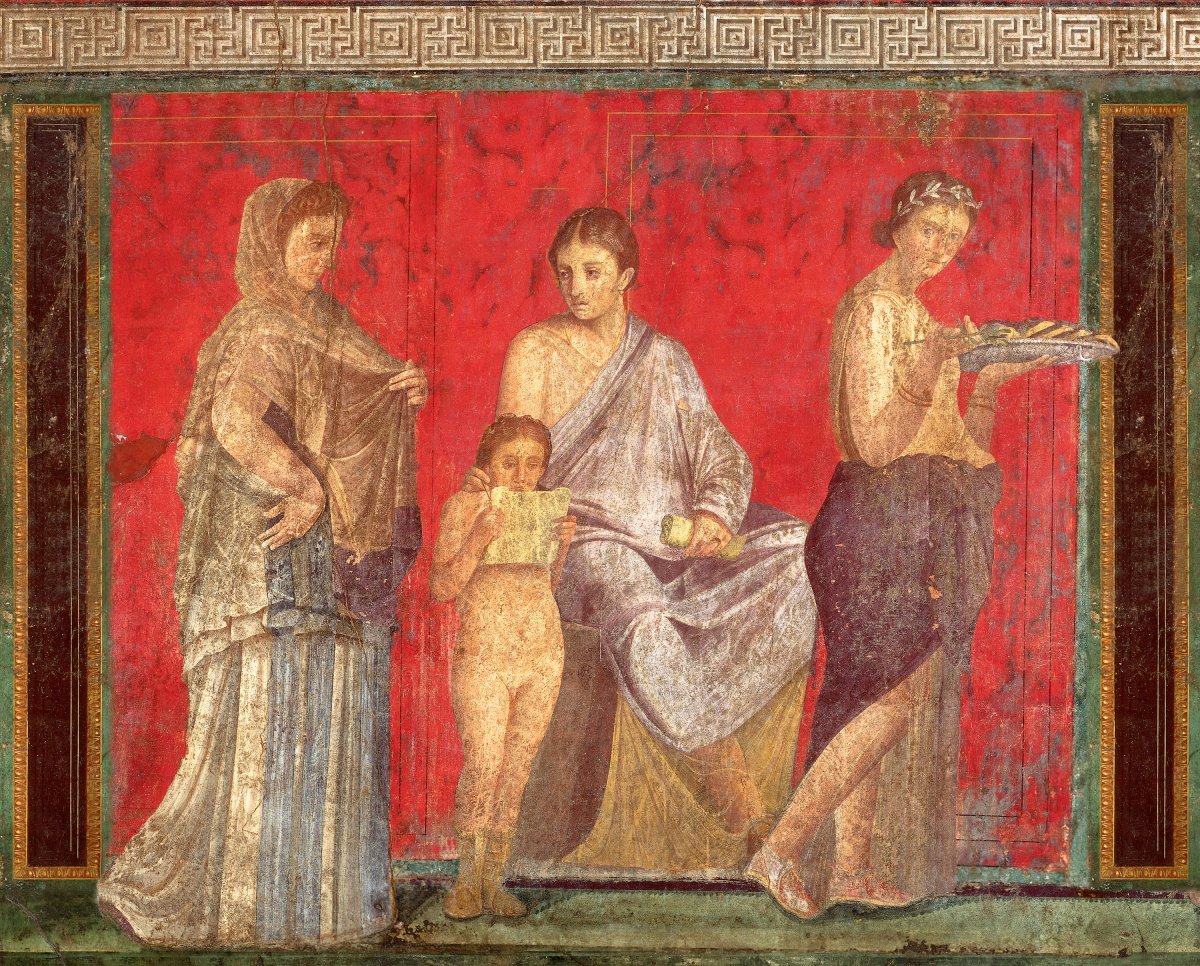
Initiation at the Villa of Mysteries, Pompeii, a rite of passage expressing communitas. ポンペイの神秘の館における入会の儀式。共同体意識を表す通過儀礼である。
| Communitas
is a Latin noun commonly referring either to an unstructured community
in which people are equal, or to the very spirit of community. It also
has special significance as a loanword in cultural anthropology and the
social sciences. Victor Turner, who defined the anthropological usage
of communitas, was interested in the interplay between what he called
social 'structure' and 'antistructure'; Liminality and Communitas are
both components of antistructure.[1] Communitas refers to an unstructured state in which all members of a community are equal allowing them to share a common experience, usually through a rite of passage. Communitas is characteristic of people experiencing liminality together. This term is used to distinguish the modality of social relationship from an area of common living. There is more than one distinction between structure and communitas. The most familiar is the difference of secular and sacred. Every social position has something sacred about it. This sacred component is acquired during rites of passages, through the changing of positions. Part of this sacredness is achieved through the transient humility learned in these phases, this allows people to reach a higher position. |
コミュニタス[Communitas]
とは、ラテン語の名詞で、一般的に、人々が平等である非構造的な共同体、あるいは共同体そのものの精神を指す。また、文化人類学や社会科学における外来語
としても特別な意味を持つ。コミュニタスの人類学的用法定義者であるビクター・ターナーは、彼が社会的「構造」と「反構造」と呼んだものの相互作用に関心
を持っていた。リミナリティとコミュニタスは、いずれも反構造の構成要素である。[1] コミュニタスとは、コミュニティのすべての構成員が平等であり、通常は通過儀礼を通じて共通の経験を共有できる、構造化されていない状態を指す。コミュニ タスは、人々が共に境界性を経験する特徴である。この用語は、社会関係の様式を、共同生活の場と区別するために用いられる。構造とコミューニタスには複数 の区別がある。最もよく知られているのは世俗と神聖の異なる側面だ。あらゆる社会的地位には神聖な側面が存在する。この神聖性は通過儀礼において、地位の 変化を通じて獲得される。この神聖性の一部は、各段階で学ぶ一時的な謙虚さによって達成され、これにより人々はより高い地位に到達できるのだ。 |
| Victor and Edith Turner Communitas is an acute point of community.[further explanation needed] It takes community to the next level and allows the whole of the community to share a common experience, usually through a rite of passage. This brings everyone onto an equal level: even if you are higher in position, you have been lower and you know what that is. Turner (1969, Pg.132; see also [2]) distinguishes between: existential or spontaneous communitas, the transient personal experience of togetherness; e.g. that which occurs during a counter-culture happening. normative communitas, which occurs as communitas is transformed from its existential state to being organized into a permanent social system due to the need for social control. ideological communitas, which can be applied to many utopian social models. Communitas as a concept used by Victor Turner in his study of ritual has been criticized by anthropologists such as John Eade and Michael J. Sallnow's book Contesting the Sacred (1991). At the heart of Turner’s theory is the notion that communitas involves a connection to the sacred, elicits powerful emotional experiences, and plays a key role in revitalizing social bonds and energies. In this sense, Turner’s work is closely linked to Durkheim’s The Elementary Forms of Religious Life. Although Turner does not directly reference Durkheim’s seminal work in The Ritual Process, it is clear that Durkheim's ideas on collective effervescence form a fundamental part of Turner’s argument. For instance, Turner states: “Spontaneous communitas is richly charged with affects, mainly pleasurable ones. Life in "structure" is filled with objective difficulties... Spontaneous communitas has something magical about it. Subjectively there is in it the feeling of endless power... Structural action swiftly becomes arid and mechanical if those involved in it are not periodically immersed in the regenerative abyss of communitas.”[3] Edith Turner, Victor's widow and anthropologist in her own right, published in 2011[4] a definitive overview of the anthropology of communitas, outlining the concept in relation to the natural history of joy, including the nature of human experience and its narration, festivals, music and sports, work, disaster, the sacred, revolution and nonviolence, nature and spirit, and ritual and rites of passage. |
ビクターとエディス・ターナー コミュニタスは、コミュニティの鋭い焦点である。コミュニティを次のレベルに引き上げ、通常は通過儀礼を通じて、コミュニティ全体が共通の経験を共有する ことを可能にする。これにより、誰もが平等な立場に立つことになる。たとえ高い地位にある者でも、かつては低い立場にいたことがあり、その感覚を知ってい るのだ。 ターナー(1969年、132ページ、 [2]も参照のこと)は、以下のように区別している。 実存的または自発的なコミュニタス、つまり一時的な一体感という個人的な体験。例えば、カウンターカルチャーの出来事の中で生じるもの。 規範的なコミュニタス。これは、社会的統制の必要性から、コミュニタスが実存的な状態から恒久的な社会システムへと組織化される過程で生じる。 イデオロギー的なコミュニタス。これは、多くのユートピア的な社会モデルに適用できる。 ビクター・ターナーが儀礼の研究で使用した概念としてのコミューニタス(共同体)は、ジョン・イードやマイケル・J・サルノウの著書『神聖なものへの異議申し立て』(1991年)などの人類学者によって批判されている。 ターナーの理論の中心にあるのは、コミューニタス(共同体)は神聖なものとのつながりを伴い、強力な感情的体験を引き起こし、社会的絆とエネルギーの活性 化に重要な役割を果たすという考え方である。この意味で、ターナーの研究はデュルケームの『宗教生活の初歩的形態』と密接に関連している。ターナーは『儀 礼過程』の中でデュルケームの画期的な研究を直接参照していないが、集団的熱狂に関するデュルケームの考えがターナーの議論の基礎を成していることは明ら かである。例えば、ターナーは次のように述べている。 「自発的な共同体は、主に快楽的な感情に満ちあふれている。構造」の中での生活は、客観的な困難に満ちている...自発的な共同体には、何か呪術的なもの がある。主体的には、そこには無限の力という感覚がある...構造的な行動は、その関係者たちが定期的に共同体の再生の深淵に没入しなければ、すぐに乾燥 して機械的になってしまう。 ヴィクターの未亡人であり、自身も人類学者であるエディス・ターナーは、2011年に[4]、コミューニタスの人類学に関する決定的な概要を発表し、人間 の経験とその物語、祭り、音楽とスポーツ、仕事、災害、神聖なもの、革命と非暴力、自然と精神、儀礼と通過儀礼など、喜びの自然史に関連してこの概念の概 要を述べた。 |
| Paul and Percival Goodman Main article: Communitas (book) Communitas is also the title of a book published in 1947 by the 20th-century American thinker and writer Paul Goodman and his brother, Percival Goodman. Their book examines three kinds of possible societies: a society centered on consumption, a society centered on artistic and creative pursuits, and a society which maximizes human liberty. The Goodmans emphasize freedom from both coercion by a government or church and from human necessities by providing these free of cost to all citizens who do a couple of years of conscripted labor as young adults. |
ポール・グッドマンとパーシバル・グッドマン 主な記事:コミュニタス(書籍 コミュニタスとは、20世紀のアメリカの思想家であり作家であるポール・グッドマンと、その弟であるパーシバル・グッドマンが1947年に出版した書籍の タイトルでもある。この書籍では、消費を中心とした社会、芸術的・創造的な追求を中心とした社会、そして人間の自由を最大限に高める社会という、3種類の 可能な社会について考察している。グッドマン兄弟は、政府や教会による強制、そして人間の必要から解放されることを強調している。その方法は、若年成人に 数年の徴用労働を義務付け、その見返りとして、すべての市民にこれらの必要を無償で提供することである。 |
| Roberto Esposito In 1998, Italian philosopher Roberto Esposito published a book under the name Communitas challenging the traditional understanding of this concept. It was translated in English in 2010 by Timothy Campbell. In this book, Esposito offers a very different interpretation of the concept of communitas based on a thorough etymological analysis of the word: "Community isn't a property, nor is it a territory to be separated and defended against those who do not belong to it. Rather, it is a void, a debt, a gift to the other that also reminds us of our constitutive alterity with respect to ourselves."[5] He goes on with his "deconstruction" of the concept of communitas: "From here it emerges that communitas is the totality of persons united not by a "property" but precisely by an obligation or a debt; not by an "addition" but by a "subtraction": by a lack, a limit that is configured as an onus, or even as a defective modality for him who is "affected", unlike for him who is instead "exempt" or "exempted". Here we find the final and most characteristic of the oppositions associated with (or that dominate) the alternative between public and private, those in other words that contrast communitas to immunitas. If communis is he who is required to carry out the functions of an office ― or to the donation of a grace ― on the contrary, he is called immune who has to perform no office, and for that reason he remains ungrateful. He can completely preserve his own position through a vacatio muneris. Whereas the communitas is bound by the sacrifice of the compensatio, the immunitas implies the beneficiary of the dispensatio."[6] "Therefore the community cannot be thought of as a body, as a corporation in which individuals are founded in a larger individual. Neither is community to be interpreted as a mutual, intersubjective "recognition" in which individuals are reflected in each other so as to confirm their initial identity; as a collective bond that comes at a certain point to connect individuals that before were separate. The community isn't a mode of being, much less a "making" of the individual subject. It isn't the subject's expansion or multiplication but its exposure to what interrupts the closing and turns it inside out: a dizziness, a syncope, a spasm in the continuity of the subject."[7] |
ロベルト・エスポジート 1998年、イタリアの哲学者ロベルト・エスポジートは、この概念の伝統的な理解に異議を唱える『コミュニタス』という本を出版した。この本は2010年 にティモシー・キャンベルによって英語に翻訳された。この本の中で、エスポジートは、この言葉の徹底的な語源分析に基づいて、コミュニタスの概念について 非常に異なる解釈を示している。「共同体とは、所有物でもなければ、それ以外の者たちから分離し、防衛すべき領域でもない。むしろそれは、空白であり、負 債であり、他者への贈り物であり、同時に、私たち自身に対する、私たちを構成する他者性を思い起こさせるものである」[5]。彼は、コミューニタスという 概念の「脱構築」を次のように続けている。 「ここから明らかになるのは、コミューニタスとは『所有物』によってではなく、まさに義務や負債によって結ばれた人々の総体であるということだ。それは 『加算』ではなく『減算』によって、すなわち欠如や限界によって形成される。それは『影響を受ける者』にとっては負担、あるいは欠陥的な様態として現れる が、『免除される者』や『免除された者』にとってはそうではない。」 ここに、公共と私的の対立(すなわちコミューナスとイミュニタスを対比させるもの)に付随する(あるいは支配する)対立の最終的かつ最も特徴的なものが現 れる。コミヌスとは、職務の遂行―あるいは恩恵の授与―を求められる者である。これに対し、イミュヌスとは職務を遂行する必要がなく、ゆえに恩知らずのま までいられる者を指す。彼は職務放棄(vacatio muneris)によって自らの立場を完全に維持できる。共同体(communitas)が補償(compensatio)の犠牲によって結びつけられる のに対し、免除(immunitas)は免除(dispensatio)の受益者を意味する。[6] したがって共同体は、個人がより大きな個人に基盤を置く団体としての身体とは考えられない。また共同体を、個人が互いに反映し合って初期の同一性を確認す る相互主観的な「承認」として解釈すべきでもない。それまで分離していた個人をある時点で結びつける集団的絆として捉えるべきでもない。共同体は存在様式 でもなければ、ましてや個人主体の「形成」でもない。主体の拡張や増殖ではなく、閉ざされた状態を断ち切り内側を裏返すもの——主体の連続性における眩 暈、失神、痙攣——への曝露である。」[7] |
| Rethinking Community Roberto Esposito’s Communitas represents just one contribution in a larger debate about the meaning of community, which centered around the question of the “European Community.” A series of philosophers questioned whether the closed, exclusionary, and identitarian models of community found in the traditions of Communitarianism in Anglo-American philosophy and Classical Social Theory, were suitable for our globalized world. Instead of abandoning the desire to belong in a community, each philosopher attempts to reconceptualize community in an open and inclusive manner. Jean-Luc Nancy is credited with starting this debate with his book The Inoperative Community,[8] followed by Maurice Blanchot’s The Unavowable Community,[9] Giorgio Agamben’s The Coming Community,[10] and Roberto Esposito’s Communitas.[11] Jean-Luc Nancy revised his theory of community in Being Singular Plural, and he delivered a series of reflections on the terms and motifs of this debate in The Disavowed Community.[12] Greg Bird provides an overview of this debate in Containing Community.[13] Rémi Astruc, a French scholar, also covers this debate in his essay "Nous? L'aspiration à la Communauté et les arts."[14] On the American side, see The Community of Those Who Have Nothing in Common by Alphonso Lingis and Miranda Joseph’s Against the Romance of Community.[15] For Christian perspectives, see Taylor Weaver's The Scandal of Community,[16] and Alan Hirsch’s The Forgotten Ways.[17] |
共同体の再考 ロベルト・エスポジートの『コミューニタス』は、「欧州共同体」という問いを中心に展開された共同体の意味に関する広範な議論における一つの貢献に過ぎな い。一連の哲学者たちは、英米哲学における共同体主義や古典的社会理論の伝統に見られる、閉鎖的で排他的、アイデンティティを重視する共同体のモデルが、 グローバル化した現代世界に適しているのかを疑問視した。コミュニティに属したいという欲求を放棄する代わりに、各哲学者はコミュニティを開放的で包摂的 な形で再概念化しようと試みた。ジャン=リュック・ナンシーは著書『機能しない共同体』[8]でこの議論を開始したとされ、続いてモーリス・ブランショの 『告白できない共同体』[9]、ジョルジョ・アガンベンの『来るべき共同体』[10]、そしてロベルト・エスポジートの『コミューニタス』が発表された。 [11] ジャン=リュック・ナンシーは『単数であり複数である存在』で共同体論を修正し、『否認された共同体』[12]においてこの議論の用語とモチーフに関する 一連の考察を展開した。 グレッグ・バードは『共同体の内包』[13]でこの議論を概観している。フランス人学者レミ・アストルクも論文「私たち?共同体への憧憬と芸術」でこの議 論を扱っている。[14] アメリカ側の論考としては、アルフォンス・リンジスの『共通点を持たない者たちの共同体』、ミランダ・ジョセフの『共同体ロマンへの反論』を参照せよ。 [15] キリスト教的視点については、テイラー・ウィーバーの『共同体のスキャンダル』、アラン・ハーシュの『忘れられた道』を参照せよ。[16] |
| References 01. Turner, V. (1974). Dramas, Fields, and Metaphors: Symbolic Action in Human Society. Cornell University Press. pp. 273-4. Olaveson, T. (2001). Collective Effervescence and Communitas: Processual Models of Ritual and Society in Emile Durkheim and Victor Turner. Dialectical Anthropology, 26, pp. 105. Smith, Philip; Riley, Alexander; Smith, Philip Daniel (2009). Cultural theory: an introduction (2 ed.). Malden, Mass.: Blackwell. p. 77. ISBN 978-1-4051-6907-3. Turner, Edith. 2012. Communitas: The Anthropology of Collective Joy. New York: Palgrave Macmillan. Stanford University Press Archived 2010-06-13 at the Wayback Machine : Communitas. The Origin and Destiny of Community by Roberto Esposito, translated by Timothy C. Campbell ESPOSITO, Roberto ([1998]2010). Communitas. The Origin and Destiny of Community, tr. by Timothy Campbell, Stanford: Stanford University Press, p.6 ESPOSITO, Roberto ([1998]2010). Communitas. The Origin and Destiny of Community, tr. by Timothy Campbell, Stanford: Stanford University Press, p.7 Nancy, Jean-Luc. 1991. The Inoperative Community. Minneapolis: University of Minnesota Press. This essay was first published in the French magazine Aléa, which was edited at that time by Christian Bourgois. Cf. Jean-Luc Nancy, La communauté désoeuvrée, Paris: Christian Bourgois, 1983. ; Blanchot, Maurice. 1988. The Unavowable Community, trans. Pierre Joris. Barrytown, NY: Station Hill 10. Agamben, Giorgio. 1993. The Coming Community, trans. Michael Hardt. Minneapolis: University of Minnesota Press Esposito, Roberto. 2010. Communitas: The Origin and Destiny of Community, trans. Timothy C. Campbell. Stanford, CA: Stanford University Press. Nancy, Jean-Luc. 2000. Being Singular Plural, trans. Robert Richardson and Anne O'Byrne. Stanford: Stanford University Press; Nancy, Jean-Luc. 2016.The Disavowed Community, trans. Philip Armstrong. New York: Fordham University Press. Bird, Greg. 2016. Containing Community: From Political Economy to Ontology in Agamben, Esposito, and Nancy. Albany, New York: State University of New York Press. Astruc, Rémi. 2015. Nous? L'aspiration à la Communauté et les arts, Versailles, RKI Press. Lingis, Alphonso. 1994. The Community of Those Who Have Nothing in Common, Indiana: Indiana University Press; Joseph, Miranda. 2002. Against the Romance of Community. Minneapolis: University of Minnesota Press. Weaver, Taylor M. 2021. The Scandal of Community: Pauline Factions and the Circulation of Grace. London: Bloomsbury Academic. 17. Hirsch, Alan. 2006. The Forgotten Ways: Reactivating the Missional Church. Grand Rapids, MI: Brazos Press. |
参考文献 01. ターナー、V. (1974). ドラマ、フィールド、隠喩:人間社会における象徴的行動。コーネル大学出版局。273-4 ページ。 オラベソン、T. (2001). 集団的熱狂と共同体:エミール・デュルケームとビクター・ターナーにおける儀礼と社会のプロセスモデル。弁証法的人類学、26、105 ページ。 スミス、フィリップ、ライリー、アレクサンダー、スミス、フィリップ・ダニエル (2009)。文化理論:入門 (第 2 版)。マサチューセッツ州、マルデン:ブラックウェル。77 ページ。ISBN 978-1-4051-6907-3。 ターナー、エディス。2012年。コミュニタス:集団的歓喜の人類学。ニューヨーク:パームグレイブ・マクミラン。 スタンフォード大学出版局 2010年6月13日ウェイバックマシンにアーカイブ:コミュニタス。コミュニティの起源と運命、ロベルト・エスポジート著、ティモシー・C・キャンベル訳 エスポジート、ロベルト([1998]2010)。コミュニティの起源と運命、ティモシー・キャンベル訳、スタンフォード:スタンフォード大学出版局、6 ページ。 エスポジート、ロベルト([1998]2010)。コミュニティの起源と運命、ティモシー・キャンベル訳、スタンフォード:スタンフォード大学出版局、7 ページ。 ナンシー、ジャン=リュック。1991。機能しないコミュニティ。ミネアポリス:ミネソタ大学出版。この論文は、当時クリスチャン・ブルゴワが編集してい たフランスの雑誌「アレア」で最初に発表された。参照:ジャン=リュック・ナンシー、La communauté désoeuvrée、パリ:クリスチャン・ブルゴワ、1983年。 ; ブランショ、モーリス。1988年。The Unavowable Community、ピエール・ジョリス訳。バリータウン、ニューヨーク:ステーション・ヒル 10. アガンベン、ジョルジョ。1993年。『来るべき共同体』、マイケル・ハート訳。ミネアポリス:ミネソタ大学出版局 エスポジート、ロベルト。2010年。『コミューニタス:共同体の起源と運命』、ティモシー・C・キャンベル訳。カリフォルニア州スタンフォード:スタンフォード大学出版局。 ナンシー、ジャン=リュック。2000年。『単数であり複数であること』ロバート・リチャードソン、アン・オバーン訳。スタンフォード:スタンフォード大 学出版局。ナンシー、ジャン=リュック。2016年。『否認された共同体』フィリップ・アームストロング訳。ニューヨーク:フォーダム大学出版局。 バード、グレッグ。2016年。『共同体を内包する:アガンベン、エスポジート、ナンシーにおける政治経済学から存在論へ』。ニューヨーク州オールバニ:ニューヨーク州立大学出版局。 アストルック、レミ。2015年。『私たち?共同体への憧れと芸術』 ヴェルサイユ、RKI プレス。 リンギス、アルフォンソ。1994年。『共通点のない者たちの共同体』 インディアナ:インディアナ大学出版局。ジョセフ、ミランダ。2002年。『共同体のロマン主義に反対して』 ミネアポリス:ミネソタ大学出版局。 ウィーバー、テイラー・M. 2021. 『共同体のスキャンダル:パウロ的派閥と恵みの循環』. ロンドン:ブルームズベリー・アカデミック. 17. ハーシュ、アラン. 2006. 『忘れられた道:宣教的教会の再活性化』. ミシガン州グランドラピッズ:ブラゾス出版. |
| Further reading Read the introduction from Roberto Esposito's book Communitas. The Origin and Destiny of Community : Introduction: Nothing In Common Turner, Victor. "Rituals and Communitas." Creative Resistance. 26 Nov. 2005 Eade & Sallnow, 'Contesting the Sacred' (1991) Carse, James P. "The Religious Case Against Belief", Penguin, New York, 2008 |
追加文献(さらに読む) ロベルト・エスポジートの著書『コミュニタス。共同体の起源と運命』の序文を読む。序文:共通点は何もない ターナー、ビクター。「儀礼とコミュニタス」『創造的抵抗』2005年11月26日 イード&サルノウ『神聖なものへの異議申し立て』(1991年 カーズ、ジェームズ・P. 『信仰に対する宗教的論拠』、ペンギン、ニューヨーク、2008年 |
| https://en.wikipedia.org/wiki/Communitas |
★
リンク
文献
その他の情報

Copyleft,
CC, Mitzub'ixi Quq Chi'j, 1996-2099