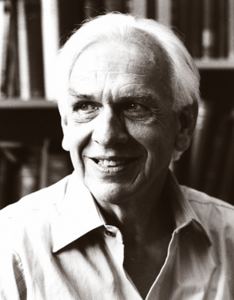
リチャード・ブラント
Richard Booker Brandt,
1910-1997
☆リ チャード・ブッカー・ブラント(1910年10月17日 - 1997年9月10日)は、道徳哲学において功利主義の伝統に立つアメリカの哲学者だった。リ チャード・B・ブラント(1935-1996)は、20世紀後半において最も影響力のある道徳哲学者の一人であり、ミシガン大学で17年間教鞭を執り、 1964年の着任時には哲学学科の学科長に就任した。学究生活において、彼はグッゲンハイム財団フェロー、カリフォルニア州スタンフォードにある行動科学 高等研究センターフェロー、全米人文科学基金上級フェローを務めた。米国哲学協会西部地区会長を歴任し、米国芸術科学アカデミー会員でもあった。多作な著 述家として、ブラントは約100編の論文と6冊の著書を執筆した。1974年にはオックスフォード大学でジョン・ロック記念講演を行うよう選ばれ、これが 1979年に出版された『善と正義の理論』の基礎となった。この著作は彼の倫理学における最高傑作と評されている。
ブ ラントの哲学的関心は主に倫理学と、知識の本質および起源にあった。また、倫理的価値観に影響を与えたり反映したりする点で、心理学や人類学にも強い関心 を抱いていた。これは特に1954年の著作『ホピ族の倫理:理論的分析』に顕著に表れており、アリゾナ州におけるホピ族への綿密な調査に基づいていた。ブ ラントは広範な学問分野から知見を汲み取る姿勢により、現代哲学の視野を拡大した。例えば現代心理学においては、動機付け理論、学習理論、精神療法理論な どを探求している。
ブ ラントの哲学的関心は主に倫理学と、知識の本質および起源にあった。また、倫理的価値観に影響を与えたり反映したりする点で、心理学や人類学にも強い関心 を抱いていた。これは特に1954年の著作『ホピ族の倫理:理論的分析』に顕著に表れており、アリゾナ州におけるホピ族への綿密な調査に基づいていた。ブ ラントは広範な学問分野から知見を汲み取る姿勢により、現代哲学の視野を拡大した。例えば現代心理学においては、動機付け理論、学習理論、精神療法理論な どを探求している。
ブ ラントの善と正しさに関する理論は、数十年にわたり発展を遂げ、その進化の様々な段階において数多くの論文と二冊の主要な著作に現れたが、それは現代に向 けて提示され、自らを推奨することを意図していた。1959年、彼は『倫理理論』において高く評価された規則功利主義の形態を提唱した。道徳的正誤の主要 理論である規則功利主義は、社会の道徳規則が広く受け入れられることで生じる利益——すなわち「福祉を最大化する」道徳体系(ブラントはこれが法と政府に 内在的な含意を持つと考えた)——を本質的な根拠として問題への解答を導く。道徳哲学の主要文献とされる本書はイタリア語、スペイン語、ポーランド語に翻 訳された。1979年に出版された第二の著作『善と正義の理論』において、ブラントは問いかけた。「なぜ哲学者は、人々がより明確に思考し、誤解を解くこ とを可能にする定義を積極的に導入すべきでないのか?」ブラントが信じた哲学者の明晰化機能の一つは、言葉のより正確で有用な定義を提供することである。 彼の考えでは、哲学者は機能(例えば立法を含む)の根底にある哲学的原理を評価し体系化することで有用な役割を果たし得る。「広い視野を持つことは」と彼 は述べた、「副次的な効果をもたらし得る――そうでなければ考えられなかった選択肢を示唆したり、問題を相対化することでジレンマを深刻に見えなくしたり する」
出典:https://findingaids.lib.umich.edu/catalog/umich-bhl-9837
| Richard Booker
Brandt (17 October 1910 – 10 September 1997)[1] was an American
philosopher working in the utilitarian tradition in moral philosophy. |
リチャード・ブッカー・ブラント(1910年10月17日 -
1997年9月10日)は、道徳哲学において功利主義の伝統に立つアメリカの哲学者だった。 |
| Education and career Brandt was originally educated at Denison University, a Baptist institution he was shepherded to by his minister father, and graduated in 1930 with majors in philosophy and classical studies.[2] In 1933 he earned another B.A., this time in the philosophy of religion, from Cambridge University.[3] He received his Ph.D. in philosophy from Yale University in 1936.[4][5] He taught at Swarthmore College before becoming Chair of the Department of Philosophy the University of Michigan in 1964, where he taught with Charles Stevenson and William K. Frankena and spent the remainder of his career.[6] The expressivist moral philosopher Allan Gibbard has mentioned his great intellectual debt to Brandt.[7] Brandt gave the John Locke Lectures at Oxford University in 1974-75, material that later appeared in A Theory of the Good and the Right (1979).[8] |
学歴と経歴 ブラントは当初、バプテスト系のデニソン大学で学んだ。牧師である父に導かれて入学し、1930年に哲学と古典学を専攻して卒業した[2]。1933年に はケンブリッジ大学で宗教哲学の学士号をもう一つ取得した。[3] 1936年にはイェール大学で哲学の博士号を取得した。[4][5] スワースモア大学で教鞭を執った後、1964年にミシガン大学哲学学科長に就任。チャールズ・スティーブンソンやウィリアム・K・フランケナと共に教鞭を 執り、その後の人生を同大学で過ごした。[6] 表現主義的道徳哲学者アラン・ギバードは、ブラントへの多大な知的負債を認めている。[7] ブラントは1974年から75年にかけてオックスフォード大学でジョン・ロック記念講義を行い、その内容は後に『善と正の理論』(1979年)として出版 された。[8] |
| Philosophical work Brandt wrote Ethical Theory (1959),[9] an influential textbook in the field. He defended a version of rule utilitarianism in "Toward a credible form of utilitarianism" (1963) and performed cultural-anthropological studies in Hopi Ethics (1954). In A Theory of the Good and the Right,[10] Brandt proposed a "reforming definition" of rationality, that one is rational if one's preferences are such that they survive cognitive psychotherapy in terms of all relevant information and logical criticism. He argued also that the morality such rational persons would accept would be a form of utilitarianism. Brandt believed that moral rules should be considered in sets which he called moral codes. A moral code is justified when it is the optimal code that, if adopted and followed, would maximise the public good more than any alternative code would. The codes may be society-wide standards or special codes for a profession like engineering.[11] |
哲学的著作 ブラントは『倫理理論』(1959年)[9]を著した。これは当該分野で影響力のある教科書である。彼は「信頼できる功利主義の形態に向けて」(1963 年)において規則功利主義の一形態を擁護し、『ホピ族の倫理』(1954年)では文化人類学的研究を行った。『善と正の理論』[10]において、ブラント は合理性の「改革的定義」を提案した。すなわち、個人の選好が、関連する全ての情報と論理的批判に基づく認知心理療法に耐え得るものである場合に、その個 人は合理的であるという定義である。彼はまた、そのような合理的な人格が受け入れる道徳は、功利主義の一形態であると論じた。 ブラントは、道徳的規範は彼が道徳規範と呼ぶ集合として考察されるべきだと考えた。道徳規範は、それが採用され遵守された場合に、他のいかなる代替規範よ りも公共の利益を最大化する最適な規範であるとき、正当化される。これらの規範は社会全体の基準でも、工学のような専門職向けの特殊な規範でもよい [11]。 |
| References 1. "Richard Booker Brandt - Oxford Reference". 2. Goldman, Alvin I., and Jaegwon Kim (1978), eds., Values and Morals, xiv. 3. Values and Morals, xiv 4. "Philosophy Prof. Emeritus Richard B. Brandt died Sept. 10". Archived from the original on 2015-06-07. Retrieved 2015-07-11. 5. Values and Morals, xiv 6. "Philosophy Prof. Emeritus Richard B. Brandt died Sept. 10". Archived from the original on 2015-06-07. Retrieved 2015-07-11. 7. Gibbard, Allan (1990). Wise Choices, Apt Feelings. Clarendon Press. viii. ISBN 0-19-824985-3. 8. "The John Locke Lectures | Faculty of Philosophy". 9. Richard B. Brandt (1959). Ethical Theory: The Problems of Normative and Critical Ethics. Prentice-Hall. 10. Richard B. Brandt (1979). A Theory of the Good and the Right. Clarendon Press. ISBN 0-19-824550-5. 11. Richard B. Brandt (1979). A Theory of the Good and the Right. Clarendon Press. ISBN 0-19-824550-5. |
参考文献 1. 「リチャード・ブッカー・ブラント - オックスフォード・リファレンス」 2. ゴールドマン、アルヴィン・I.、およびジェグウォン・キム(1978)、編、『価値観と道徳』、xiv頁 3. 『価値観と道徳』、xiv頁 4. 「哲学名誉教授リチャード・B・ブラント、9月10日に死去」 2015年6月7日にオリジナルからアーカイブされた。2015年7月11日に取得。 5. 『価値観と道徳』、xiv 6. 「哲学名誉教授リチャード・B・ブラント、9月10日死去」。2015年6月7日にオリジナルからアーカイブされた。2015年7月11日に取得。 7. アラン・ギバード (1990). 『賢明な選択、適切な感情』. クラレンドン・プレス. viii. ISBN 0-19-824985-3. 8. 「ジョン・ロック記念講演 | 哲学学部」. 9. リチャード・B・ブラント (1959). 『倫理理論:規範倫理学と批判倫理学の問題』. プレンティス・ホール. 10. リチャード・B・ブラント(1979)。『善と正の理論』。クラレンドン・プレス。ISBN 0-19-824550-5。 11. リチャード・B・ブラント(1979)。『善と正の理論』。クラレンドン・プレス。ISBN 0-19-824550-5。 |
| https://en.wikipedia.org/wiki/Richard_Brandt | |
| Rule utilitarianism |
規則功利主義 |
| Rule utilitarianism
is a form of utilitarianism that says an action is right as it conforms
to a rule that leads to the greatest good, or that "the rightness or
wrongness of a particular action is a function of the correctness of
the rule of which it is an instance".[1] Philosophers Richard Brandt and Brad Hooker are major proponents of such an approach. For rule utilitarians, the correctness of a rule is determined by the amount of good it brings about when followed. In contrast, act utilitarians judge an act in terms of the consequences of that act alone (such as stopping at a red light), rather than judging whether it faithfully adhered to the rule of which it was an instance (such as, "always stop at red lights"). Rule utilitarians argue that following rules that tend to lead to the greatest good will have better consequences overall than allowing exceptions to be made in individual instances, even if better consequences can be demonstrated in those instances. |
規則功利主義
とは、ある行為が最大の幸福をもたらす規則に合致する限り正しいとする功利主義の一形態である。あるいは「特定の行為の正誤は、その行為が具体例となる規
則の正しさによって決まる」と定義される[1]。哲学者リチャード・ブラントとブラッド・フッカーはこの立場の主要な提唱者である。 規則功利主義者にとって、規則の正しさは、それが守られた際に生み出す善の量によって決まる。これに対し、行為功利主義者は、行為そのものの結果(例えば 赤信号で停止すること)に基づいて行為を評価し、その行為が従うべき規則(「常に赤信号で停止せよ」など)に忠実であったかどうかを判断基準としない。規 則功利主義者は、個々の事例でより良い結果が得られる場合であっても、例外を認めるよりも、最大の善をもたらす傾向のある規則に従う方が、全体としてより 良い結果をもたらすと主張する。 |
| Mill's formulation In his 1863 book Utilitarianism, John Stuart Mill defends the concept of rights in terms of utility: "To have a right, then, is, I conceive, to have something which society ought to defend me in the possession of. If the objector goes on to ask, why it ought? I can give him no other reason than general utility."[2] Whether Mill was a rule utilitarian is a matter of controversy.[3] This passage from Utilitarianism seems to suggest that he was: In the case of abstinences indeed—of things which people forbear to do from moral considerations, though the consequences in the particular case might be beneficial—it would be unworthy of an intelligent agent not to be consciously aware that the action is of a class which, if practiced generally, would be generally injurious, and that this is the ground of the obligation to abstain from it. But Mill also argues that it is sometimes right to violate general ethical rules: ... justice is a name for certain moral requirements, which, regarded collectively, stand higher in the scale of social utility, and are therefore of more paramount obligation, than any others; though particular cases may occur in which some other social duty is so important, as to overrule any one of the general maxims of justice. Thus, to save a life, it may not only be allowable, but a duty, to steal, or take by force, the necessary food or medicine, or to kidnap, and compel to officiate, the only qualified medical practitioner.[2] Utilitarians can justify a system that goes, "Keep to the rules unless there is a strong reason for breaking them." in this utilitarian framework. |
ミルの定式化 1863年の著書『功利主義』の中で、ジョン・スチュワート・ミルは、権利の概念を功利の観点から擁護している。「権利を持つということは、つまり、社会 が私の所有を擁護すべき何かを持っているということだと私は考える。反対者が、なぜそうすべきなのかと問い続けるならば、私は一般的な功利以外の理由を与 えることはできない。」 [2] ミルが規則功利主義者であったかどうかは議論の余地がある。[3] 『功利主義』のこの一節は、彼が規則功利主義者であったことを示唆しているようだ。 実際、禁欲、つまり道徳的配慮から人々が控える行為については、その特定の事例では有益な結果をもたらすかもしれないが、その行為が、一般的に実践されれ ば一般的に有害となる類のものだということを意識的に認識せず、それを控える義務の根拠がそこにあることを認識しないことは、知的な行為者としては不適切 である。 しかしミルは同時に、一般的な倫理規則に違反することが時に正当化されるとも論じている: ...正義とは、特定の道徳的要請を指す名称である。それらは集合的に見れば、社会的有用性の尺度においてより上位に位置し、したがって他のいかなる要請 よりも優先的な義務を有する。ただし、特定の事例においては、他の社会的義務が極めて重要となり、正義の一般的格律のいずれかを覆す場合がある。したがっ て、人命を救うためには、必要な食料や医薬品を盗む、あるいは力ずくで奪うこと、あるいは唯一の有資格医療従事者を拉致し、診療を強制することが、許容さ れるだけでなく義務となる場合がある。[2] 功利主義者は、この功利主義的枠組みにおいて、「破る強い理由がない限り規則を守る」というシステムを正当化できる。 |
| Strong rule utilitarianism Strong rule utilitarianism (SRU) gives a utilitarian account for the claim that moral rules should be obeyed at all places and times. SRU does not deteriorate into act utilitarianism like weak rule utilitarianism, but it shares weaknesses with similarly absolutist moral stances (notably, deontological ones). A scenario (or thought experiment) used to clarify this problem (often attributed to Immanuel Kant) posits both 1. you know the location of some persons 2. a murderer asks you about their location in order to go and kill them. The moral convention is that lying is wrong, so the strong rule utilitarian says you should reveal their location. A more sophisticated SRU response is that 1. the above scenario is very improbable. i2. n the majority of situations, telling the truth leads to more trust and happiness. 3. if applied universally (à la Kant's categorical imperative), the rule against lying would create net utility. This position is most notably argued by John C. Harsanyi (in an essay included in "Utilitarianism and beyond", edited by A. Sen and B. Williams, Reprint 2010). Nevertheless, many disagree, claiming that (in this situation) telling the truth would result in needless death, would therefore be immoral, and that this scenario thus provides a counterexample contradicting SRU. |
強い規則功利主義 強い規則功利主義(SRU)は、道徳的規則があらゆる場所と時間において遵守されるべきだという主張に対して功利主義的な説明を与える。SRUは弱規則功 利主義のように行為功利主義に堕することはないが、同様に絶対主義的な道徳的立場(特に義務論的なもの)と弱点を共有している。この問題を明確にするため に用いられるシナリオ(あるいは思考実験)は(しばしばイマヌエル・カントに帰せられる)、以下の両方を前提とする。 1. あなたは特定の人の居場所を知っている 2. 殺人犯が彼らを殺すためにその居場所をあなたに尋ねる。 道徳的慣習として嘘は悪であるため、強規則功利主義者はその居場所を明かすべきだと主張する。より洗練されたSRUの反論は次の通りである。 1. 上記のシナリオは極めて起こり得ない。 2. ほとんどの状況では、真実を語る方が信頼と幸福を増す。 3. 嘘をつくことを禁じるルールを普遍的に適用すれば(カントの定言命法のように)、正味の効用は生じる。この立場はジョン・C・ハーサニィが最も顕著に主張している(A. センとB. ウィリアムズ編『功利主義とその先へ』所収論文、2010年再版)。 しかしながら、多くの反論がある。この状況では真実を告げることは不必要な死を招き、したがって非道徳的であり、このシナリオはSRU(真実を語る義務)に反する反例を提供するという主張である。 |
| Weak rule utilitarianism Weak rule utilitarianism (WRU) attempts to handle SRU counterexamples as legitimate exceptions. One such response is two-level utilitarianism; more systematic WRUs attempt to create sub-rules to handle the exceptions. But as David Lyons[4] and others have argued, this will necessarily tend to collapse into act utilitarianism. Rules will require as many sub-rules as there are exceptions, thus many exceptions will make the more-sophisticated rule computationally intractable. Rational agents will then satisfice that intractability by seeking outcomes that produce the maximum utility.[5] |
弱いルール功利主義 弱いルール功利主義(WRU)は、SRUの反例を正当な例外として扱うことを試みる。その一つの対応が二段階功利主義である。より体系的なWRUは、例外 を扱うためのサブルールを作成しようとする。しかしデイヴィッド・ライオンズ[4]らが論じたように、これは必然的に行為功利主義へと収束する傾向があ る。規則は例外の数だけ下位規則を必要とするため、例外が多ければ多いほど、より洗練された規則は計算上扱いにくくなる。すると合理的な主体は、最大効用 を生み出す結果を求めることで、その扱いにくさに妥協するようになる[5]。 |
| Act utilitarianism Brad Hooker Guideline Harm principle Prima facie right Proportionalism Richard Brandt Rule egoism Thought experiments in ethics |
功利主義 ブラッド・フッカー 指針 危害の原則 表面的権利 比例主義 リチャード・ブラント 規則利己主義 倫理学における思考実験 |
| References 1. Garner, Richard T.; Bernard Rosen (1967). Moral Philosophy: A Systematic Introduction to Normative Ethics and Meta-ethics. New York: Macmillan. p. 70. ISBN 0-02-340580-5. 2. Mill, John Stuart (1861). Utilitarianism. 3. Hooker, Brad (2003-12-31). "Rule Consequentialism". Stanford Encyclopedia of Philosophy. Archived from the original on 2007-06-09. Retrieved 2007-03-11. 4. Forms and Limits of Utilitarianism, 1965. 5. Allen Habib (2008), "Promises", in the Stanford Encyclopedia of Philosophy. |
参考文献 1. ガーナー、リチャード・T.、バーナード・ローゼン (1967). 『道徳哲学:規範倫理学とメタ倫理学への体系的な入門』. ニューヨーク:マクミラン. p. 70. ISBN 0-02-340580-5. 2. ミル、ジョン・スチュワート (1861)。『功利主義』。 3. フッカー、ブラッド (2003-12-31)。「規則帰結主義」。スタンフォード哲学百科事典。2007-06-09 のオリジナルからアーカイブ。2007-03-11 に取得。 4. 『功利主義の形態と限界』 1965年。 5. アレン・ハビブ (2008)、「約束」、『スタンフォード哲学百科事典』所収。 |
| Further reading Brad Hooker's entry on rule consequentialism in the Stanford Encyclopedia of Philosophy: [1] Brad Hooker, Ideal Code, Real World Oxford University Press, 2000, new edition 2002 Foundations of Morality at the Mises Institute Hazlitt, Henry (1964). The Foundations of Morality. Irvington-on-Hudson, NY: Foundation for Economic Education. Smart, J. J. C (October 1955). Extreme and Restricted Utilitarianism (Speech). The Victorian Branch of the Australasian Association of Psychology and Philosophy. |
追加文献(さらに読む) ブラッド・フッカーによるスタンフォード哲学百科事典の規則帰結主義の項目:[1] ブラッド・フッカー『理想の規範、現実の世界』オックスフォード大学出版局、2000年、新版2002年 ミゼス研究所における道徳の基礎ハズリット、ヘンリー(1964年)。『道徳の基礎』。アーヴィングトン・オン・ハドソン、NY:経済教育財団。 スマート、J. J. C(1955年10月)。『極端な功利主義と限定功利主義』(講演)。オーストラリア心理学・哲学協会ビクトリア支部。 |
| https://en.wikipedia.org/wiki/Rule_utilitarianism |
リ ンク
文 献
そ の他の情報
CC
Copyleft,
CC, Mitzub'ixi Quq Chi'j, 1996-2099