エクアドルの著名な先住民
Los pueblos indígenas más destacados de Ecuador
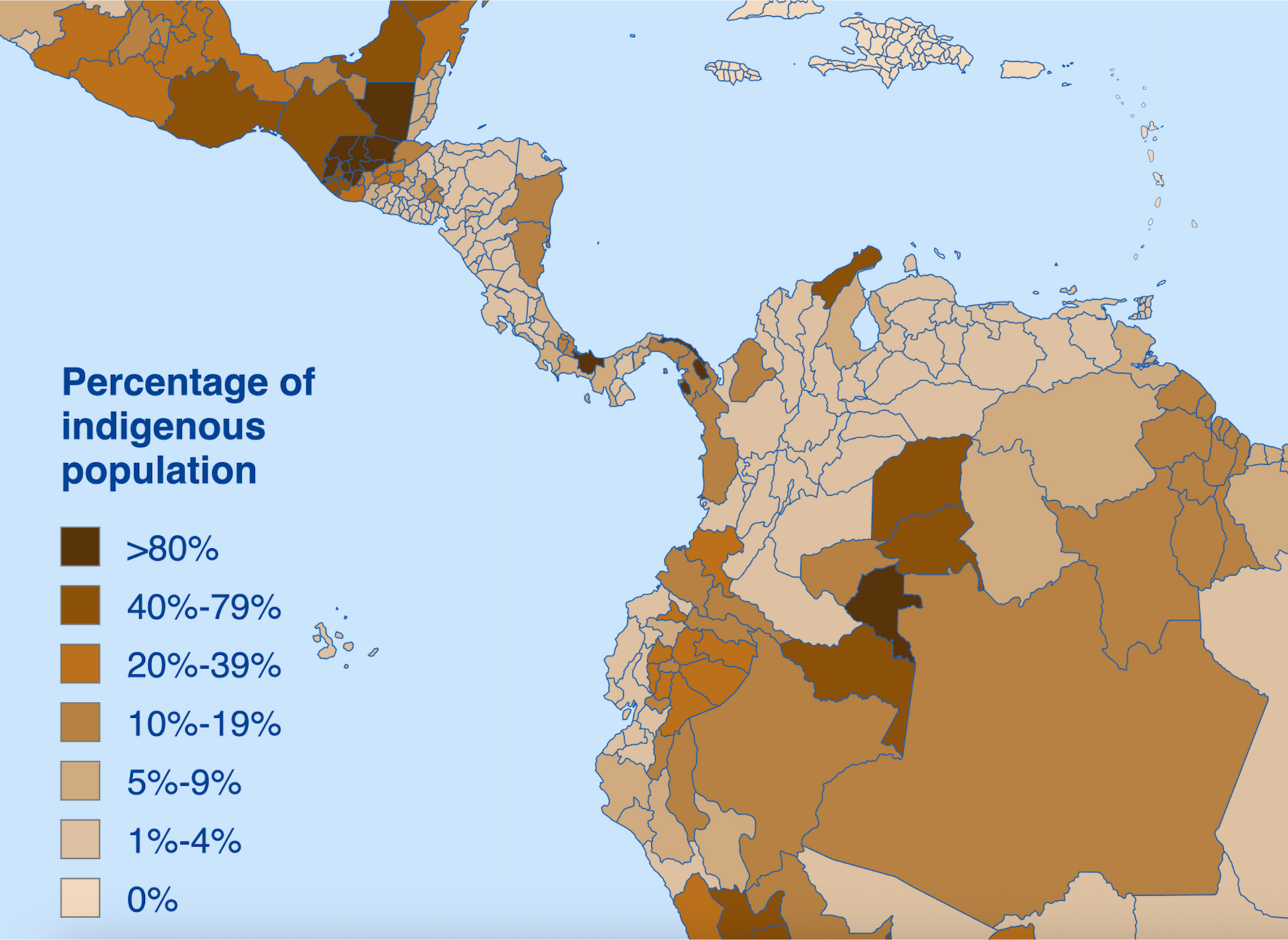
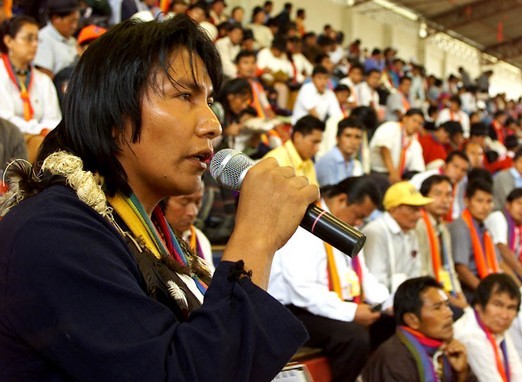
Percentage of indigenous population of the Northern South America/ Bartolo Ushigua, Zapara delegate at the 2nd CONAIE congress
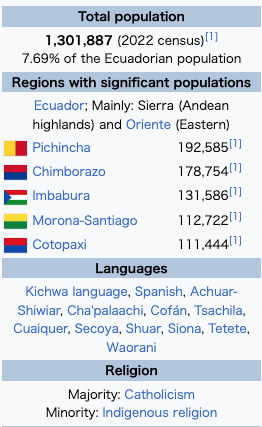
☆ エクアドルの先住民、またはエクアドル先住民(Indigenous peoples in Ecuador or Native Ecuadorians; スペイン語: Ecuatorianos Nativos)は、スペインによるアメリカ大陸植民地化以前にエクアドルに存在した人々のグループである。この言葉には、スペインによる征服時代から現 在に至るまでの子孫も含まれる。エクアドルの人口の7パーセントが先住民族であり、残りの70パーセントは先住民族とヨーロッパ人の混血であるメスティー ソである[3]。(→「エクアドルの先住民(Indigenous peoples in Ecuador)」)
☆ カルメン・ティウプル
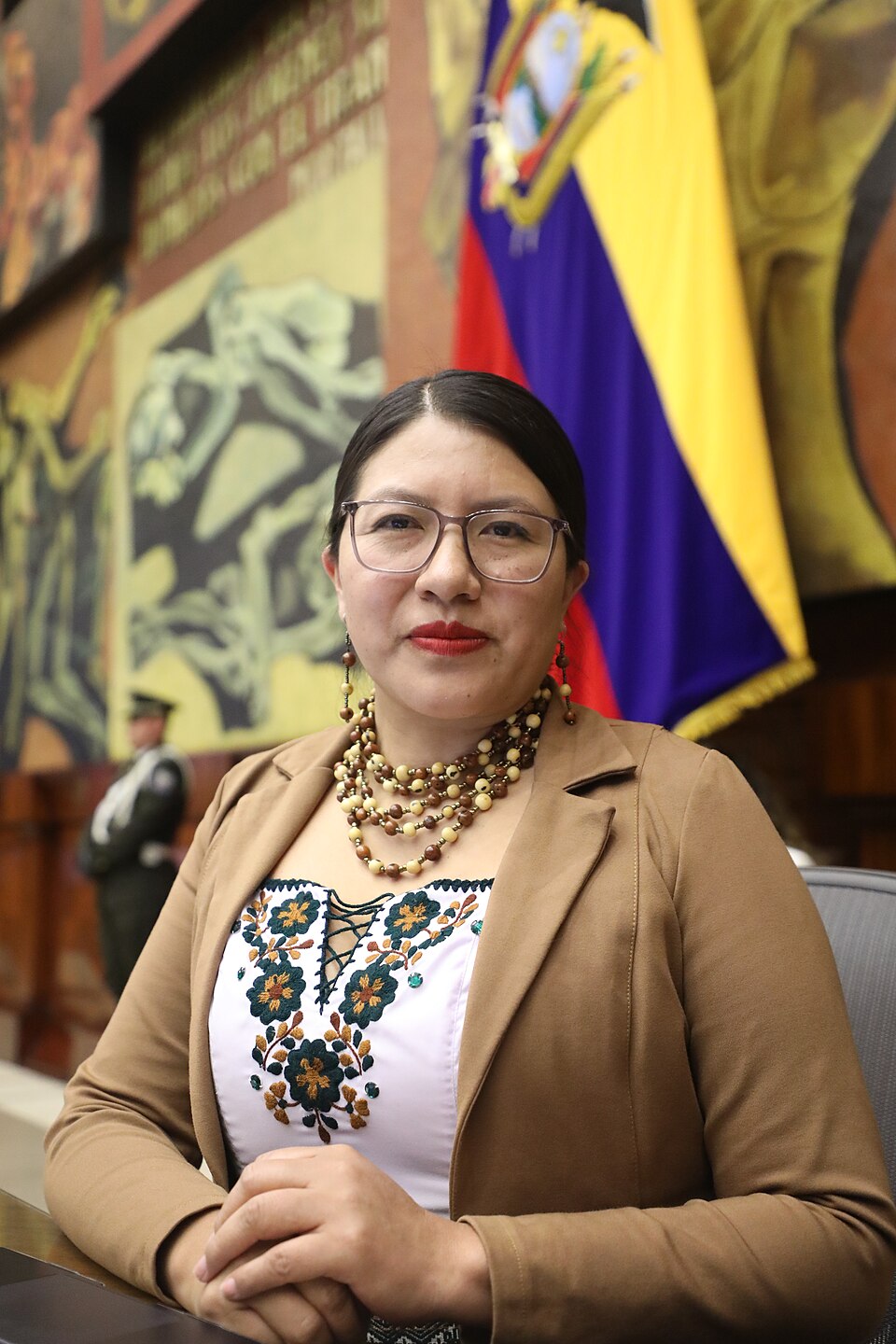
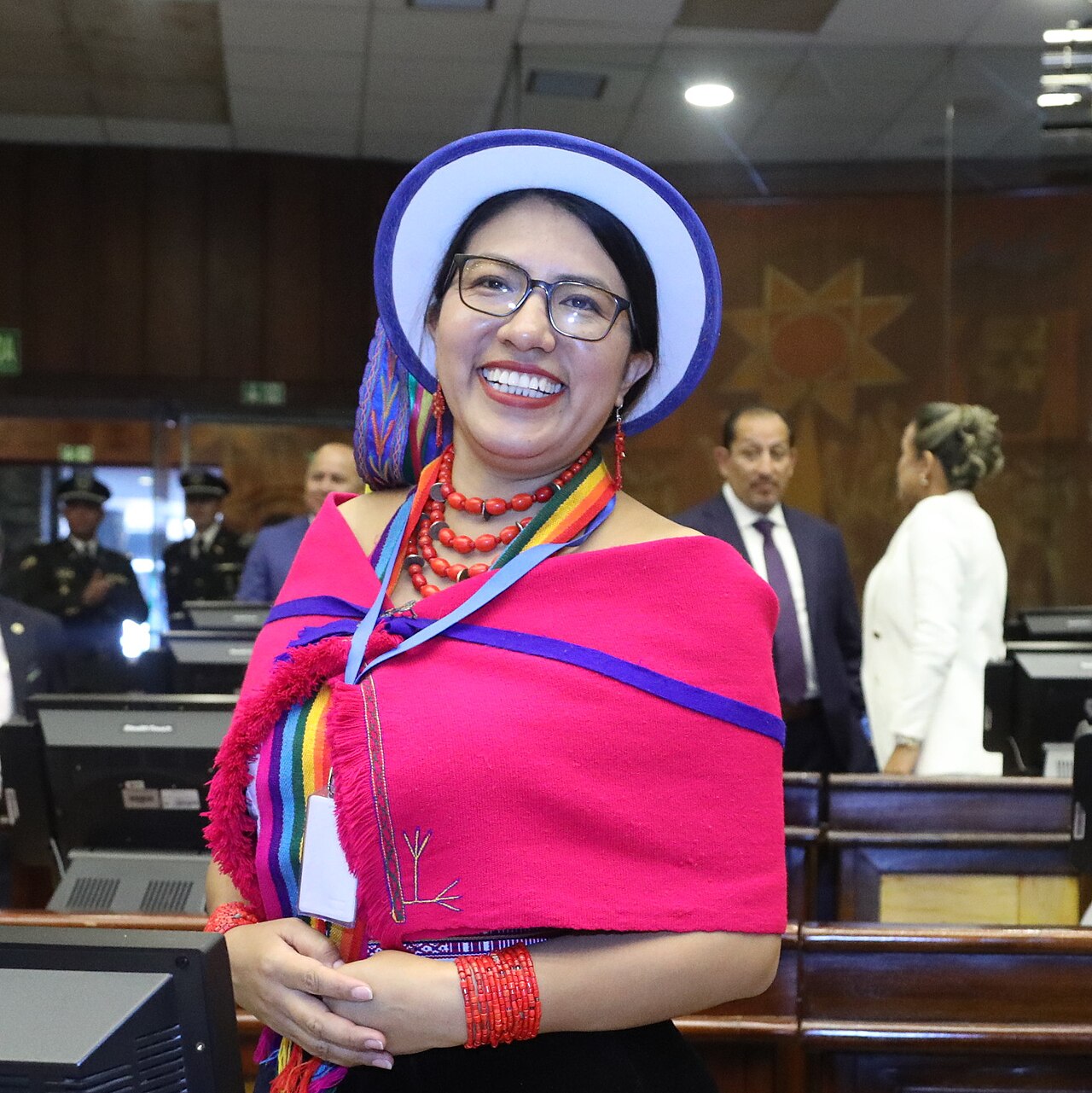
| Carmen Yolanda
Tiupul Urquizo
(Riobamba, 20 de octubre de 1985) es una ingeniera en administración de
empresas y política ecuatoriana. Actualmente es asamblesita de la
Asamblea Nacional del Ecuador y ejerce el cargo de Segunda
Vicepresidenta de la Asamblea junto a Mishel Mancheno, como primera
vicepresidenta y Niels Olsen, como presidente. Fue miembro del
movimiento Pachakutik hasta 2025, año en que fue expulsada de la
bancada por apoyar al gobierno de Daniel Noboa. |
カルメン・ヨランダ・ティウプル・ウルキソ(1985年10月20日、
リオバンバ生まれ)は、エクアドルの経営管理および政治のエンジニアである。現在はエクアドル国民議会の議員であり、ミシェル・マンチェノ第一副議長、
ニールス・オルセン議長に次ぐ第二副議長を務めている。2025年までパチャクティック運動のメンバーだったが、ダニエル・ノボア政権を支持したため党か
ら追放された。 |
| Biografía Tiupul proviene de la parroquia Cacha, de la ciudad de Riobamba.[1]Es ingeniera en Administración de Empresas y posee un diplomado en liderazgo que lo obtuvo en Chile.[2]Tiupul es partidaria y miembro de ECUARUNARI, que es una confederación de personas de nacionalidad kichwa del Ecuador.[3]En octubre de 2021 fue acusada y juzgada por la Corte de Justicia de liderar las protestas ecuatorianas de octubre de 2019. Fue declarada culpable y sentenciada a dos años de prisión y una multa equivalente a siete veces sus ingresos anuales con el tiempo se le concedió amnistía por estos delitos.[4] |
経歴ティウプルはリオバンバ市のカチャ教区出身である。[1]
経営学の学位を持ち、チリでリーダーシップのディプロマを取得している。[2]
ティウプルは、エクアドルのキチュワ民族の連合体であるECUARUNARIの支持者であり、そのメンバーでもある。2021年10月、2019年10月
にエクアドルで起きた抗議運動を主導したとして、司法裁判所により起訴され、裁判にかけられた。有罪判決を受け、2年の懲役と年収の7倍に相当する罰金が
科せられたが、その後、これらの罪について恩赦が与えられた。 |
| Carrera política Tiupul fue miembro de la Asamblea Nacional del Ecuador desde 2021 luego de ser electa en las elecciones legislativas de ese año por el movimiento Pachakutik (MUPP), el 14 de mayo de 2023 fue destituida debido al decreto de la muerte cruzada donde el presidente Guillermo Lasso decidió disolver el parlamento, en medio del juicio político en su contra. Tiupul fue elegida una vez más como asambleísta en las elecciones legislativas de 2023 luego de la muerte cruzada.[2] Como asambleísta de ese periodo legislativo voto a favor de la elección como presidente de la Asamblea del socialcristiano, Henry Kronfle junto con 9 de sus compañeros asambleístas del MUPP y fue miembro de la comisión de Transparencia, Participación Ciudadana y Control Social.[5]Propuso un proyecto de ley en febrero de 2024 que modificaría las leyes que permiten que las provincias ecuatorianas de Cañar, Morona Santiago, Azuay y Tungurahua se beneficien de la venta de hidroelectricidad creada en esos estados. El proyecto de ley de Tiupul argumentaba que la provincia de Chimborazo también debería tomar una parte debido a los ríos que pasan por la provincia de Chimborazo. [6] En agosto de 2024 se anunció que se postularía a la reelección como asambleísta en las elecciones legislativas de 2025.[2]Luego de las elecciones fue reelegida y durante ese periodo fue elegida como segunda vicepresidenta de la Asamblea, esto debido a un acuerdo entre el movimiento ADN, del presidente Daniel Noboa y de varios asambleístas del MUPP. También fue miembro de la Comisión sobre el Derecho al Trabajo y la Seguridad Social de la Asamblea Nacional.[7][8] En 2025 Tiupul y sus compañeros asambleístas del MUPP que llegaron a acuerdos con el gobierno de Noboa fueron expulsados de la bancada y del movimiento.[9] |
政治経歴 ティウプルは、2021年の議会選挙でパチャクティック運動(MUPP)から選出され、エクアドル国民議会の議員を務めていた。2023年5月14日、ギ ジェルモ・ラッソ大統領が自身に対する弾劾裁判の最中に議会解散を決定した「相互解散令」により、議員職を解任された。ティウプルは、死の十字令後の 2023年の議会選挙で再び議員に選出された。 その立法期間の議員として、彼女は社会キリスト教党のヘンリー・クロンフレを議会議長に選出することに賛成票を投じ、MUPPの同僚議員9名とともに、透 明性、市民参加、社会統制委員会の一員となった。[5]2024年2月、エクアドルのカーニャル州、モロナ・サンティアゴ州、アズアイ州、トゥングラワ 州が、これらの州で発電された水力発電の売上から利益を得ることを認める法律を改正する法案を提出した。ティウプル氏の法案は、チンボラソ州を流れる河川 があることから、同州も利益を得るべきだと主張していた。[6] 2024年8月、2025年の議会選挙で議員再選に立候補することが発表された。選挙の結果、彼女は再選され、その任期中に、ダニエル・ノボア大統領の ADN運動とMUPPの複数の議員との合意により、議会の第二副議長に選出された。また、国民議会の労働権・社会保障委員会委員も務めた。[7][8] 2025年、ティウプルとノボア政権と合意に達したMUPPの同僚議員たちは、党と運動から追放された。[9] |
| Referencias 1. Terán, Verónica (14 de mayo de 2025). «¿Quién es Carmen Tiupul, segunda vicepresidenta de la Asamblea Nacional?». GK. Consultado el 1 de noviembre de 2025. 2. «Pachacutik confirma la precandidatura de Tiupul para la Asamblea - La Prensa Ecuador». 14 de agosto de 2024. Consultado el 1 de noviembre de 2025. 3. Andes, Redacción Diario Los (1 de septiembre de 2024). «Elección de precandidatas Puruwa para las primarias de Pachakutik: COMICH busca la unidad». Diario Los Andes. Consultado el 1 de noviembre de 2025. 4. Admin (2 de octubre de 2021). «Carmen Tiupul fue sentenciada a dos años de prisión». Diario Los Andes. Consultado el 1 de noviembre de 2025. 5. dmontalvo (17 de noviembre de 2023). «Nueve legisladores no votaron por Henry Kronfle». Consultado el 1 de noviembre de 2025. 6. «Carmen Tiupul propone incluir a Chimborazo entre las provincias beneficiarias de la Ley 047». Asamblea Nacional del Ecuador. Consultado el 1 de noviembre de 2025. 7. Crónica, Diario (15 de mayo de 2025). «ADN logra la presidencia y primera vicepresidencia de la Asamblea para los próximos 2 años». DIARIO CRÓNICA. Consultado el 1 de noviembre de 2025. 8. Ecuarunari, Carmen Yolanda Tiupul Urquizo es miembro de la. «¿Quién es Carmen Tiupul Urquizo, legisladora de Pachakutik y segunda vicepresidenta de la Asamblea?». www.vistazo.com. Consultado el 1 de noviembre de 2025. 9. «CONAIE expulsó a 6 asambleístas de Pachakutik: ¿quiénes son? - La Prensa Ecuador». 19 de julio de 2025. Consultado el 1 de noviembre de 2025. |
参考文献 1. テラン、ベロニカ(2025年5月14日)。「国民議会の第二副議長、カル メン・ティウプルとは誰か?」GK。2025年11月1日アクセス。 2. 「パチャクティック、ティウプル氏の国民議会予備選挙立候補を承認 - ラ・プレンサ・エクアドル」。2024年8月14日。2025年11月1日閲覧。 3. アンデス、ロス・アンデス紙編集部(2024年9月1日)。「パチャクティック予備選挙の候補者プルワの選出:COMICHは結束を求める」。ロス・アン デス紙。2025年11月1日閲覧。 4. 管理者(2021年10月2日)。「カルメン・ティウプルは2年の懲役刑を言い渡された」。ロス・アンデス紙。2025年11月1日閲覧。 5. dmontalvo(2023年11月17日)。「9人の議員がヘンリー・クロンフレに投票しなかった」。2025年11月1日アクセス。 6. 「カルメン・ティウプル、チンボラソ州を法律047の受益州に含めることを提案」。エクアドル国民議会。2025年11月1日アクセス。 7. クリオニカ紙(2025年5月15日)。「ADNが今後2年間の議会議長および第一副議長を獲得」。DIARIO CRÓNICA。2025年11月1日閲覧。 8. Ecuarunari、カルメン・ヨランダ・ティウプル・ウルキソは、そのメンバーである。「カルメン・ティウプル・ウルキソとは、パチャクティックの議 員であり、議会の第二副議長である人物だ」。www.vistazo.com。2025年11月1日アクセス。 9. 「CONAIEがパチャクティックの6人の議員を追放:彼らは誰か? - ラ・プレンサ・エクアドル」。2025年7月19日。2025年11月1日アクセス。 |
| https://es.wikipedia.org/wiki/Carmen_Tiupul |
|
★Nina Pacari(ニーナ・パカリ)
| Nina Pacari
(Kichwa nina "fire", paqariy "to appear, dawn"), born as María Estela
Vega Conejo[1] (born 9 October 1961 in Cotacachi, Imbabura) is a Kichwa
politician, lawyer and indigenous leader from Ecuador. |
ニーナ・パカリ(キチュア語で「火」を意味する「ニーナ」と「現れる、
夜明け」を意味する「パカリイ」から成る)は、本名マリア・エステラ・ベガ・コネホ[1](1961年10月9日、インバブラ県コタカチ生まれ)であり、
エクアドルのキチュア系政治家、弁護士、先住民族指導者である。 |
| Biography Nina Pacari studied jurisprudence at the Central University of Ecuador in Quito, where she got to know other indigenous students and began to fight for indigenous rights and the defense of the Kichwa language. At the age of 24, she changed her Spanish name officially to the Kichwa Nina Pacari. Nina Pacari worked as a lawyer for the Federación de los pueblos Kichwa de la Sierra Norte del Ecuador (FICI), an organization in Imbabura which is now a member of ECUARUNARI. After that, she supported Kichwa communities as a lawyer in the Chimborazo Province. In 1989, she became a legal adviser of the indigenous confederation CONAIE, founded in 1986. In the uprising of 1990 she supported indigenous communities in Chimborazo and participated in the negotiations with the government. In 1994, she worked out an alternative draft against the draft law of president Sixto Durán Ballén, which was not realized due to the peasants' resistance. |
経歴 ニーナ・パカリはキトにあるエクアドル中央大学で法学を学んだ。そこで他の先住民学生と知り合い、先住民の権利とキチュワ語の保護のために闘い始めた。 24歳の時、スペイン語の名前を正式にキチュワ語のニーナ・パカリに変更した。 ニナ・パカリは、インバブラ県に拠点を置く組織「エクアドル北部山岳地帯キチュワ民族連盟(FICI)」の弁護士として活動した。同組織は現在、エクアド ル先住民連合(ECUARUNARI)の加盟団体である。その後、チンボラソ県で弁護士としてキチュワ共同体を支援した。 1989年には、1986年に設立された先住民連合体CONAIEの法律顧問となった。1990年の反乱ではチンボラソの先住民コミュニティを支援し、政 府との交渉に参加した。1994年にはシクスト・デュラン・バジェン大統領の法案に対抗する代替案を策定したが、農民の抵抗により実現しなかった。 |
| Political career In 1997, she was the representative of Chimborazo in the National Assembly and collaborated in the elaboration of the new constitution. In August 1998, she was the first indigenous woman to be elected to the Ecuadorian parliament, as a member of the newly established Pachakutik movement. In 2003, she became the foreign minister in the government of Lucio Gutiérrez, but soon after she resigned together with the agriculture minister Luis Macas because of the neoliberal policy of Gutiérrez. In May 2007, she was elected judge of the Constitutional Court of Ecuador.[2] +++++++++++++++++++ Es la primogénita de ocho hermanos, quien a su vez se encargó de la educación de todos.[1] Sus estudios primarios los realizó en la escuela Santísimo Sacramento de Cotacachi, sus estudios secundarios los recibió en el colegio Luis Ulpiano de la Torre el ciclo básico y el diversificado, en el Instituto Alfredo Pérez Guerrero de San Pablo de Lago.[1] Fue inscrita como María Estela, pero a la edad de 24 años cambió oficialmente sus nombres castellanos por los kichwas Nina Pacari (del kichwa nina "fuego", "luz", y paqariy "aparecer", "amanecer": "fuego del amanecer").[1][2] Estudió jurisprudencia en la Universidad Central del Ecuador en Quito, donde obtuvo el título de doctora en jurisprudencia, ahí conoció a otros estudiantes indígenas y ya comenzó a pugnar por los derechos de los indígenas y la defensa de la lengua kichwa. Nina Pacari colaboró como abogada en la Federación de los pueblos Kichwa de la Sierra Norte del Ecuador (FICI), una organización en Imbabura que ahora es miembro de ECUARUNARI. Después fue abogada de comunidades kichwas en la provincia de Chimborazo. En 1989 se hizo consejera jurídica de la confederación indígena CONAIE, fundada en 1986. En el levantamiento de 1990 apoyó a comunidades indígenas en Chimborazo y participó en las negociaciones con el gobierno. En 1994 elaboró un proyecto de ley agraria contra el proyecto del presidente Sixto Durán Ballén, que debido a la resistencia de los campesinos no fue realizado. En 1997 fue representante de la provincia de Chimborazo en la asamblea nacional y colaboró en la elaboración de la nueva constitución. En agosto de 1998 fue elegida al Congreso Nacional del Ecuador como primera mujer indígena, miembro del Movimiento Pachakutik. En el gobierno de Lucio Gutiérrez en 2003 fue la primera mujer indígena de América Latina en ocupar en ocupar un puesto como ministra de relaciones exteriores, pero dejó el gobierno junto con el ministro de agricultura Luis Macas. En mayo de 2007 fue elegida jueza del Tribunal Constitucional, hoy Corte Constitucional.[3] En 2017 hasta el día de hoy, ofrece sus conocimientos en la primera Escuela Itinerante de Derecho Kichwa del Instituto de Ciencias Indígenas Pacari, en donde pretende enseñar sobre su propio derecho.[4] Actualmente, Nina Pacari es docente de la maestría en Derecho Constitucional que se dicta en la Universidad Indoamérica.[5] https://es.wikipedia.org/wiki/Nina_Pacari |
政治経歴 1997年、彼女はチンボラソ州の国民議会議員となり、新憲法の制定に協力した。1998年8月、新設されたパチャクティック運動の一員として、エクアド ル議会に選出された初の先住民女性となった。 2003年、ルシオ・グティエレス政権で外務大臣に就任したが、グティエレスの新自由主義政策に反対し、農業大臣ルイス・マカスと共に間もなく辞任した。 2007年5月、エクアドル憲法裁判所の判事に選出された。[2] +++++++++++++++++ コタカチのサンティシモ・サクラメント校で初等教育を受け、ルイス・ウルピアーノ・デ・ラ・トーレ校の基礎サイクルとサン・パブロ・デ・ラゴのアルフレ ド・ペレス・ゲレーロ学院の多様サイクルで中等教育を受けた[1]。 彼女はマリア・エステラとして登録されていたが、24歳の時に正式にスペイン名をキチュワ・ニナ・パカリ(キチュワ語のnina「火」「光」、 paqariy「現れる」「夜明け」:「夜明けの火」から)に変更した[1][2]。 キトにあるエクアドル中央大学で法学を学び、法学博士号を取得。そこで他の先住民の学生と出会い、先住民の権利とキチュワ語の擁護のために闘い始める。 ニナ・パカリは、現在ECUARUNARIのメンバーであるインバブラの団体、エクアドル北部高地キチュワ族連合(FICI)で弁護士として働いた。その 後、チンボラソ県のキチュワ族コミュニティのための弁護士となる。 1989年、1986年に設立された先住民連合CONAIEの法律顧問となる。1990年の蜂起ではチンボラソの先住民コミュニティを支援し、政府との交 渉に参加した。1994年、シクスト・ドゥラン・バレン大統領の計画に反対する農地法を起草したが、農民の抵抗により実施されなかった。 1997年、チンボラソ州代表として国民議会に出席し、新憲法の起草に貢献した。1998年8月、パチャクティック運動のメンバーとして、初の先住民女性 としてエクアドル国民議会に選出された。 2003年のルシオ・グティエレス政権では、ラテンアメリカ初の先住民女性外相のポストに就いたが、ルイス・マカス農相とともに政権を去った。 2007年5月には憲法裁判所(現憲法裁判所)判事に選出された[3]。2017年から現在に至るまで、ラテンアメリカ初の先住民女性外相を務めている。 2017年から現在に至るまで、彼女は先住民科学パカリ研究所の第1回キチュワ法遍歴学校で知識を提供しており、彼女自身の法について教えるつもりである [4]。ニナ・パカリは現在、キチュワ法の教師である。 ニナ・パカリは現在、インドアメリカ大学の憲法修士課程で教鞭をとっている[5]。 https://es.wikipedia.org/wiki/Nina_Pacari |
| Works Las cultures nacionales en el estado multinacional ecuatoriano. Antropolgía, cuadernos de investigación 3 (noviembre de 1984): 113-22. Los indios y su lucha jurídico-política. Revista ecuatoriana de pensamientomarxista 12 (1989): 41-47. Levantamiento indígena. In Sismo étnico en el Ecuador: Varias perspecti-vas, edited by José Almeida et al., 169-86. Quito, Ecuador: CEDIME—Ediciones Abya-Yala, 1993. Taking on the Neoliberal Agenda. NACLA Report on the Americas 29, no. 5 (March–April 1996): 23-32 "The Political Participation of Indigenous Women in the Ecuadorian Congress: Unfinished Business"lInternational IDEA, 2002, Women in Parliament, Stockholm (http://www.idea.int). |
作品 エクアドルの多国籍国家における国民文化。Antropolgía, cuadernos de investigación 3 (November 1984): 113-22. インディオと法・政治的闘争. Revista ecuatoriana de pensamientomarxista 12 (1989): 41-47. 先住民の領土。In Sismo étnico en el Ecuador: Varias perspectivas, edited by José Almeida et al., 169-86. Quito, Ecuador: CEDIME-Ediciones Abya-Yala, 1993. 新自由主義的アジェンダに挑む。NACLA Report on the Americas 29, no.5 (March-April 1996): 23-32. 「エクアドル議会における先住民女性の政治参加:未完の事業」lInternational IDEA, 2002, Women in Parliament, Stockholm (http://www.idea.int). |
| References 1. NOT "Cornejo", see "Derecho Ecuador" del 25 de agosto de 2000 Archived 2011-07-09 at the Wayback Machine and "El Mercurio" del 21 de enero de 2011 Archived 2011-07-18 at the Wayback Machine 2. El TC elegido en plancha, El Comercio, 1 de junio de 2007. |
参考文献 1. NOT 「Cornejo」, 2000年8月25日付 「Derecho Ecuador」 Archived 2011-07-09 at Wayback Machineおよび2011年1月21日付 「El Mercurio」 Archived 2011-07-18 at Wayback Machineを参照のこと。 2. El TC elegido en plancha, El Comercio, 1 June 2007. |
| https://en.wikipedia.org/wiki/Nina_Pacari |
|
| List of Indigenous people of
Ecuador |
著名な先住民(エクアドル) |
| Diana Aguavil (born 1983),
Tsáchila leader Blanca Chancoso (born 1955), Otavalo leader and educator Camilo Egas (1889–1962), Mestizo, painter and educator Eugenio Espejo (1747–1795), Mestizo journalist, hygienist, lawyer, and satirical writer Amy Gende (born 1998), Tsáchila politician Cristina Gualinga (born 1939 or 1940), Quechua environmentalist and activist Helena Gualinga (born 2002), Quechua environmental and human rights Nina Gualinga (born 1993), Quechua environmental and indigenous rights activist Noemí Gualinga (born 1967 or 1968), Quechua leader in the Amazonian Ecuador Patricia Gualinga, Quechua women rights activist Oswaldo Guayasamín (1919–1999), Quechua painter and sculptor Leonidas Iza (c. 1982), Quechua-Panzaleo activist and indigenous leader Luis Macas (born 1951), Quechua politician and intellectual Eduardo Kingman (1913–1998), Mestizo painter Luis Macas (born 1951), Quechua anthropologist and politician Mincaye (c. 1935–2020), Hauo preacher and church elder Nina Pacari (born 1961), Quechua politician, lawyer and indigenous leader Delfín Quishpe (born 1977), Quechua singer and politician Antonio Vargas (1958–2025), Quechua politician |
ダイアナ・アグアビル(1983年生まれ)、チャチラ族の指導者 ブランカ・チャンコソ(1955年生まれ)、オタバロ族の指導者かつ教育者 カミロ・エガス(1889年–1962年)、メスティソ、画家かつ教育者 エウヘニオ・エスペホ(1747年–1795年)、メスティソのジャーナリスト、衛生学者、弁護士、風刺作家 エイミー・ゲンデ(1998年生まれ)、チャチラ族の政治家 クリスティーナ・グアリンガ(1939年または1940年生まれ)、ケチュア族の環境保護活動家 ヘレナ・グアリンガ(2002年生まれ)、ケチュア族の環境・人権活動家 ニーナ・グアリンガ(1993年生まれ)、ケチュア族の環境・先住民権利活動家 ノエミ・グアリンガ(1967年または1968年生まれ)、アマゾン地域エクアドルのケチュア族指導者 パトリシア・グアリンガ、ケチュア族女性権利活動家 オスワルド・グアヤサミーン(1919–1999)、ケチュア族の画家・彫刻家 レオニダス・イサ(1982年頃生まれ)、ケチュア・パンザレオ活動家、先住民指導者 ルイス・マカス(1951年生まれ)、ケチュア系政治家、知識人 エドゥアルド・キングマン(1913–1998)、メスティソ系画家 ルイス・マカス(1951年生まれ)、ケチュア系人類学者、政治家 ミンカイェ(1935年頃–2020年)、ハウオの説教師、教会長老 ニーナ・パカリ(1961年生まれ)、ケチュア系政治家、弁護士、先住民指導者 デルフィン・キシュペ(1977年生まれ)、ケチュア系歌手、政治家 アントニオ・バルガス(1958–2025)、ケチュア系政治家 |
| https://en.wikipedia.org/wiki/List_of_Indigenous_people_of_the_Americas |
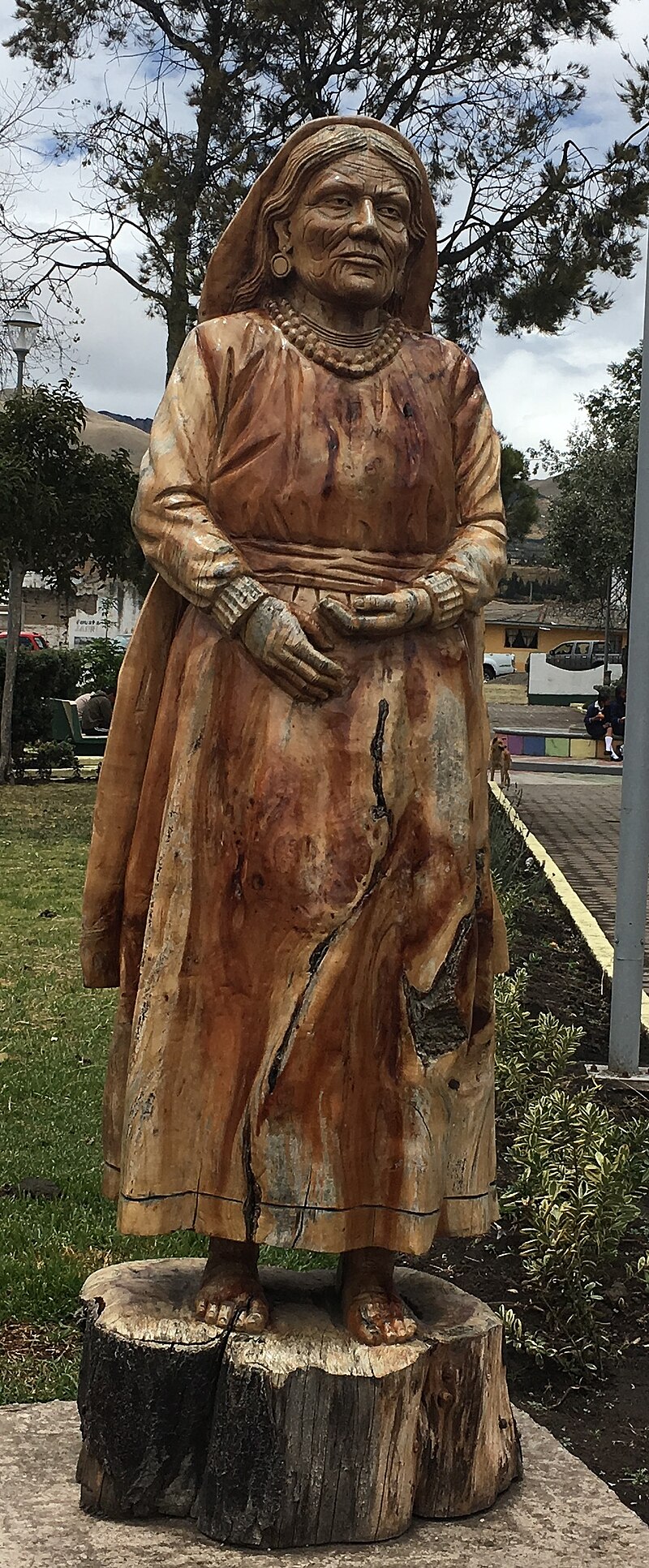
| Dolores Cacuango
(26 October 1881, Pesillo, Cayambe, Ecuador – 23 April 1971,
Yanahuayco[where?]), also known as Mamá Doloreс, was a pioneer in the
fight for indigenous and farmers rights in Ecuador.[1] She stood out in
the political arena and was one of the first activists of Ecuadorian
feminism,[citation needed] between the 1930s and 1960s. She founded the
Federación Ecuatoriana de Indios (FEI) in 1944 with the help of
Ecuador's Communist Party.[2] |
ドロレス・カクアンゴ(1881年10月26日、エクアドル・カヤンベ
県ペシージョ生まれ –
1971年4月23日、ヤナワコ[どこ?]没)は、ママ・ドロレスとしても知られ、エクアドルにおける先住民と農民の権利闘争の先駆者であった。[1]
彼女は政治の場で頭角を現し、1930年代から1960年代にかけてエクアドル女性運動の初期活動家の一人であった[出典必要]。1944年にはエクアド
ル共産党の支援を得て、エクアドル先住民連盟(FEI)を設立した[2]。 |
| Biography Dolores Cacuango was born in 1881 in San Pablo Urco on the Pesillo Hacienda near Cayambe, Ecuador, of parents of indigenous heritage. Her parents were peons, who worked in haciendas as unpaid laborers. Growing up, she had no access to education due to lack of resources. At the age of fifteen, she worked for the owner of the hacienda as a domestic servant and was struck by the disparity between the living conditions of the landlords and the peons.[2] Dolores never learned how to read or write. She learned Spanish in Quito, where she worked as a housemaid at a young age.[3] During her political life, she led many rebellions against the systemic abuse of the owners of haciendas (hacendados) and their administrators. She was a key figure in the indigenous struggle leading towards the Land Reform law in Ecuador, which was promulgated in October 1973. She had also promoted the foundation of bilingual schools; in 1946 she founded the first school of its kind in Ecuador, which taught in both Quechua and Spanish. One of the political influences of Caucango was an indigenous man called Juan Albamocho, who was a beggar. He used to sit near a lawyer's office while eavesdropping on their conversations, which led to him reporting the creation of a law protecting indigenous people to his local community in Cayambe. This prompted them to start using the law to defend themselves from the abuse of landowners and the church. In 1927, she married Luis Catucuamba. They lived in Yanahuayco, near Cayambe. The couple had nine children, eight of which died at a young age. The cause of death was bowel disease due to the lack of hygiene and sanitation in the area. The only child who lived to adulthood was Luis Catucuamba, who became an indigenous teacher in his homeland in 1946. In 1971, Dolores died. During her last years, she became paraplegic and lost a significant amount of weight, making her unable to visit local communities and organizations. |
伝記 ドロレス・カクアンゴは1881年、エクアドルのカヤンベ近郊ペシージョアシエンダのサン・パブロ・ウルコで、先住民の血を引く両親のもとに生まれた。両 親はペオン(無給労働者)で、アシエンダで働いていた。育ちながら、彼女は資源不足のため教育を受ける機会がなかった。15歳の時、アシエンダの所有者の 使用人として働き、地主とペオンの生活条件の格差に衝撃を受けた。[2] ドロレスは読み書きを学ぶことはなかった。彼女はキトでスペイン語を習得したが、それは幼い頃から家政婦として働いていたためである。[3] 政治活動では、アシエンダ所有者(アセンダード)とその管理人による組織的な虐待に対し、数多くの反乱を主導した。1973年10月に公布されたエクアド ルの土地改革法へとつながる先住民運動の重要人物でもあった。また二言語教育の推進者でもあり、1946年にはエクアドル初のケチュア語とスペイン語によ る教育を行う学校を設立した。 カウカンゴの政治的影響力の一つは、フアン・アルバモチョという名の先住民の物乞いだった。彼は弁護士事務所の近くに座り、彼らの会話を盗み聞きしてい た。そのおかげで、先住民を保護する法律が制定されたことを、彼は地元のカイアンベのコミュニティに報告した。これがきっかけで、彼らは地主や教会による 虐待から身を守るために、この法律を利用し始めたのだ。 1927年、彼女はルイス・カトゥクアンバと結婚した。二人はカヤンベ近郊のヤナワイコに住んだ。夫婦には9人の子供が生まれたが、そのうち8人は幼くし て亡くなった。死因は地域の衛生状態の悪さによる腸の病気だった。成人まで生き延びた唯一の子供はルイス・カトゥクアンバで、1946年に故郷で先住民教 師となった。 1971年、ドロレスは亡くなった。晩年は下半身不随となり、体重が大幅に減ったため、地域のコミュニティや組織を訪問できなくなった。 |
| Activism In 1930, Cacuango was among the leaders of the historic workers' strike at the Pesillo hacienda in Cayambe.[4] The strike was a milestone for indigenous and peasant rights,[5] and was later the subject of Jorge Icaza's novel Huasipungo (1934).[6] During the May 1944 Revolution in Ecuador, Cacuango personally led an assault on a government military base.[2] Along with fellow activist Tránsito Amaguaña, she founded the Indigenous Federation of Ecuador (FEI), one of the first primary organisations to position, demand and fight for indigenous rights.[7] While Cacuango never received a formal education, she helped establish the first bilingual Indian schools. Aware of the terrible conditions that the children of indigenous peoples suffered in the schools, she ultimately founded bilingual schools, taught in both Spanish and Quechua, the indigenous language. She established these schools in the Cayambe zone in 1945. Cacuango proposed that these schools teach the pupils to read in both languages. Her schools functioned for 18 years, but the military junta closed them in 1963, considering them as communist focos.[8] Cacuango was an outspoken Communist and was imprisoned for her activism.[2] |
政治活動 1930年、カクアンゴはカヤンベのペシージョアシエンダにおける歴史的な労働者ストライキの指導者の一人であった。[4] このストライキは先住民と農民の権利にとって画期的な出来事であり[5]、後にホルヘ・イカサの小説『ワシプンゴ』(1934年)の題材となった。[6] 1944年5月のエクアドル革命では、カクアンゴは個人的な指揮のもと、政府軍基地への襲撃を指揮した[2]。活動家のトラシント・アマグアナと共に、先 住民の権利を主張し要求し闘う最初の草の根組織の一つであるエクアドル先住民連盟(FEI)を設立した。[7] カクアンゴは正式な教育を受けたことはなかったが、最初の二言語教育を行うインディアン学校設立に貢献した。先住民の子どもたちが学校で苦悩する状況に置 かれていることを認識し、最終的にスペイン語と先住民言語ケチュア語の両方で教える二言語学校を設立した。1945年にカヤンベ地域にこれらの学校を開設 した。カクアンゴは、これらの学校で生徒に両言語での読解を教えることを提案した。彼女の学校は18年間機能したが、1963年に軍事政権によって「共産 主義の巣窟」と見なされ閉鎖された。[8] カクアンゴは公然たる共産主義者であり、その活動のために投獄された。[2] |
| Death and legacy Dolores Cacuango, or Mama Dulu, as she was known, died in 1971. Her son, Luis Catucuamba Cacuango (b. 1924), taught at the Yanahuaico Indigenous school from 1945 to 1963, until the schools were shut down by the junta.[2] In 1988, the Ministry of Education recognized the necessity of bettering the education of the indigenous people of Ecuador. The National Direction of Bilingual Intercultural Education was also created. The Aleiodes cacuangoi species of wasp is named after her.[9] On October 26, 2020, Google celebrated her 139th birthday with a Google Doodle.[10] In 2023, a new species of snake found in Ecuador and probably endemic to the country was named Tropidophis cacuangoae after her.[11] |
死と遺産 ドロレス・カクアンゴ、通称ママ・ドゥルは1971年に死去した。その息子ルイス・カトゥクアンバ・カクアンゴ(1924年生まれ)は、1945年から 1963年までヤナワイコ先住民学校で教鞭を執ったが、軍政によって学校が閉鎖されるまでであった。[2] 1988年、教育省はエクアドルの先住民の教育改善の必要性を認めた。 また、二言語間文化教育国家指導局が創設された。ハチの一種であるアレオデス・カクアンゴイ種は彼女にちなんで名付けられた。[9] 2020年10月26日、グーグルは彼女の139回目の誕生日をグーグル・ドゥードルで祝った。[10] 2023年、エクアドルで発見されおそらく同国固有の新種ヘビが、彼女にちなみトロピドフィス・カクアンゴエ(Tropidophis cacuangoae)と命名された。[11] |
| Tránsito Amaguaña María la Grande Micaela Bastidas India Juliana Bartolina Sisa |
トランシト・アマグアナ マリア・ラ・グランデ ミカエラ・バスティダス インディア・ジュリアナ バルトリナ・シサ |
| 1. Lucas, Kinnto. "INTERNATIONAL
WOMEN'S DAY-ECUADOR: Indian Women - Still a Long Way to Go". IPS.
Archived from the original on 2006-10-05. Retrieved 2009-10-20.
"INTERNATIONAL WOMen's DAY-ECUADOR: Indian Women - Still a Long Way to
Go". Archived from the original on October 5, 2006. Retrieved October
20, 2009. 2. Becker, Mark. "Cast of Characters." Indians and Leftists in the Making of Ecuador’s Modern Indigenous Movements. (retrieved 10 Aug 2011) 3. "The Historical and Contemporary Role of Women in Ecuadorian Society | Modern Latin America". library.brown.edu. Retrieved 2018-11-12. 4. Ness, Immanuel (2009-04-13). The International Encyclopedia of Revolution and Protest. ISBN 9781405184649. 5. Becker, Marc (2008). Indians and leftists in the making of Ecuador's modern indigenous movements. Durham: Duke University Press. ISBN 9780822381457. OCLC 246726784. 6. Marc., Becker (2013). Indigenous and Afro-Ecuadorians Facing the Twenty-First Century. Newcastle upon Tyne: Cambridge Scholars Publishing. ISBN 9781443869119. OCLC 893739594. 7. "Where Did the Women Go? Gender Inequalities in Ecuador's Ethno-Politics". Social Development Issues. 36. 2014. 8. Dolores Cacuango. Tributo a una líder indígena, El Universo, March 15, 2009 9. Shimbori, E. M; Shaw, S. R (2014). "Twenty-four new species of Aleiodes Wesmael from the eastern Andes of Ecuador with associated biological information (Hymenoptera, Braconidae, Rogadinae)". ZooKeys (405): 1–81. doi:10.3897/zookeys.405.7402. PMC 4023268. PMID 24843275. 10. "Dolores Cacuango's 139th Birthday". Google. 26 October 2020. 11. Vérité, Clément (January 6, 2023). "Découverte d'une nouvelle espèce de serpent nain probablement endémique à l'Équateur". Newsendip. De l'actu internationale. |
ルカーチ、キント。「国際女性デー-エクアドル:インディアン女性-ま
だ長い道のり」。IPS。2006年10月5日にオリジナルからアーカイブ。2009年10月20日に取得。「国際女性デー-エクアドル:インディアン女
性-まだ長い道のり」。2006年10月5日にオリジナルからアーカイブされた。2009年10月20日に取得。 2. ベッカー、マーク。「登場人物たち」。『エクアドル現代先住民運動の形成におけるインディアンと左派』。(2011年8月10日取得) 3. 「エクアドル社会における女性の歴史的・現代的役割|現代ラテンアメリカ」 library.brown.edu. 2018年11月12日閲覧。 4. ネス、イマニュエル (2009年4月13日). 『革命と抗議の国際百科事典』. ISBN 9781405184649. 5. ベッカー、マーク (2008). 『エクアドル現代先住民族運動形成におけるインディアンと左翼』. デュラム: デューク大学出版局. ISBN 9780822381457。OCLC 246726784。 6. マルク・ベッカー (2013). 『21世紀に直面する先住民とアフリカ系エクアドル人』. ニューカッスル・アポン・タイン: ケンブリッジ・スカラーズ出版. ISBN 9781443869119. OCLC 893739594。 7. 「女性たちはどこへ行ったのか? エクアドルの民族政治におけるジェンダー不平等」. 『社会開発問題』. 36. 2014. 8. ドロレス・カクアンゴ. 「先住民族の指導者への賛辞」, エル・ユニベルソ紙, 2009年3月15日 9. Shimbori, E. M; ショー, S. R (2014). 「エクアドル東部アンデス産アレオイドス属ウェスマエル新種24種と関連生物学的情報(膜翅目、ブラコニダエ科、ロガディナ亜科)」。『ZooKeys』 405号:1–81頁。doi:10.3897/zookeys.405.7402。PMC 4023268。PMID 24843275。 10. 「ドロレス・カクアンゴ生誕139周年」。Google。2020年10月26日。 11. Vérité, Clément (2023年1月6日)。「エクアドル固有種と思われる新種の小型ヘビを発見」。Newsendip。国際ニュース。 |
| https://en.wikipedia.org/wiki/Dolores_Cacuango |
リ ンク
文 献
そ の他の情報
CC
Copyleft,
CC, Mitzub'ixi Quq Chi'j, 1996-2099