家父長制
Patriarchy
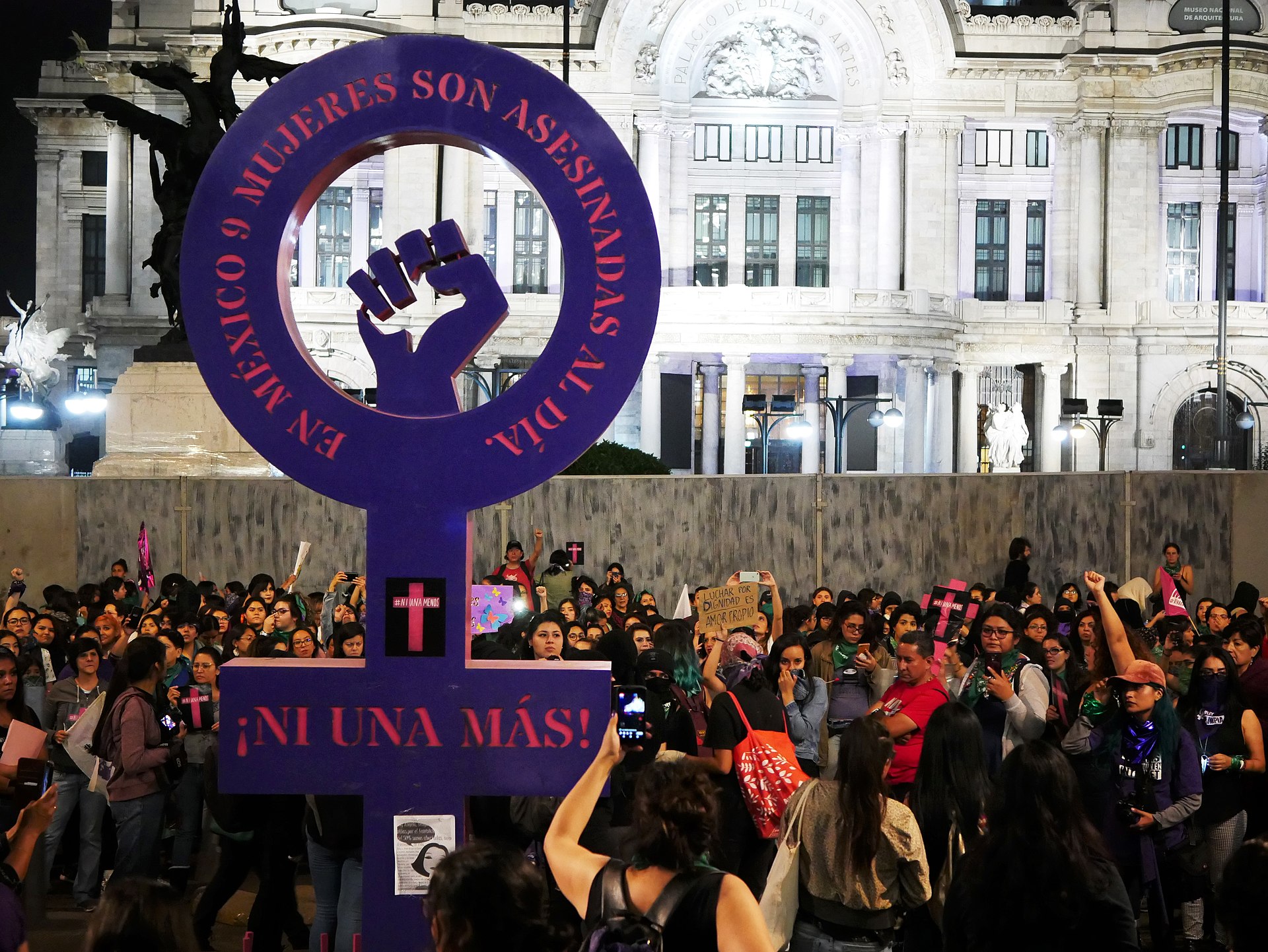
Protest on International Day for the Elimination of Violence against Women 2019 in Mexico City(ラテンアメリカにおけるフェミニズムより)
☆ 家父長制(Patriarchy)とは、支配的地位や特権的地位が男性によって占められている社会システムである。 家父長制という用語は、父親または最年長の男性、または複数の男性によって支配されている家族や一族を説明する人類学の分野と、男性集団が女性や子供を支 配しているより広範な社会構造を説明するフェミニスト理論の両方で使用されている。また、父系制とも関連している。家父長的イデオロギーは、男女間の不平 等を男女間の本質的な自然差異、神の戒律、またはその他の固定的な構造に帰する事によって、家父長制を説明し正当化しようとするものである。社会学者は、 家父長制の生物学的な説明を主に否定し、社会化の過程が主にジェンダーの役割を確立する責任があると主張する傾向にある。 それらは女性の差別の根拠である。 社会生物学者は、人間の性別による役割分担を他の霊長類の性別による行動と比較し、一部の者[誰?]は、性別による不平等は主に男女間の遺伝的および生殖 的な違いから生じると主張している。社会構築主義者はこの主張に異議を唱え、性別による役割分担や性別による不平等は権力の道具であり、女性に対する支配 を維持するための社会規範となっていると主張している。 歴史的に見ると、家父長制は、さまざまな文化の社会的、法的、政治的、宗教的、経済的な組織において、その存在を明らかにしてきた。現代社会のほとんど は、実際には家父長制である。
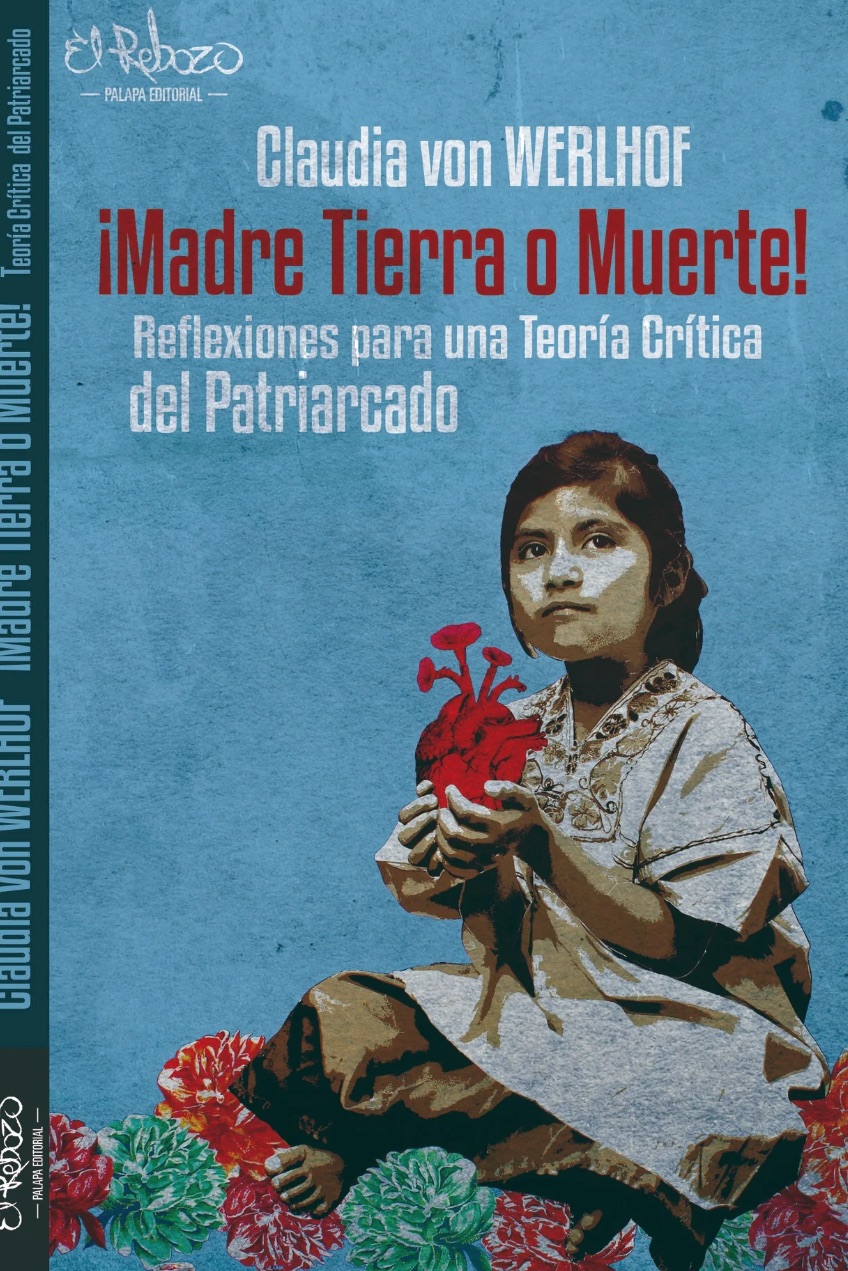
★西洋文明の放棄は、家父長制の放棄を意味する(von Werlhof 2015:159)
☆「ラテンアメリカの脱植民地化フェミニストたちが断固として主張するように、脱家父長制なしに脱植民地化(白人至上主義、ヘテロノーマティビティ、近代/植民地的ヘゲモニーの克服を含む)はありえない」アルトゥーロ・エスコバル(2018)
☆家父長制は[その体制を補完/保全する]社会科学や人類学の術語というよりも現今の性抑圧体制という敵を表現するインデックスであり反家父長制は闘争の言語あるいはスローガンと考えれば学生たちにはすっきりすると思います
|
Patriarchy Patriarchy is a social system in which positions of dominance and privilege are held by men.[1][2][3] The term patriarchy is used both in anthropology to describe a family or clan controlled by the father or eldest male or group of males, and in feminist theory to describe a broader social structure in which men as a group dominate women and children.[4][5][6] It is also related to patrilineality.[7][8][9] Patriarchal ideology acts to explain and justify patriarchy by attributing gender inequality to inherent natural differences between men and women, divine commandment, or other fixed structures.[10] Sociologists tend to reject predominantly biological explanations of patriarchy and contend that socialization processes are primarily responsible for establishing gender roles.[11] They are the basis of discrimination of women. [12] Sociobiologists compare human gender roles to sexed behavior in other primates and some[who?] argue that gender inequality comes primarily from genetic and reproductive differences between men and women. Social constructionists contest this argument, arguing that gender roles and gender inequity are instruments of power and have become social norms to maintain control over women. Historically, patriarchy has manifested itself in the social, legal, political, religious, and economic organization of a range of different cultures.[13] Most contemporary societies are, in practice, patriarchal.[14][15] |
家父長制 家父長制とは、支配的地位や特権的地位が男性によって占められている社 会システムである。[1][2][3] 家父長制という用語は、父親または最年長の男性、または複数の男性によって支配されている家族や一族を説明する人類学の分野と、男性集団が女性や子供を支 配しているより広範な社会構造を説明するフェミニスト理論の両方で使用されている。[4][5][6] また、父系制とも関連している。[7][8][9] 家父長的イデオロギーは、男女間の不平等を男女間の本質的な自然差異、神の戒律、またはその他の固定的な構造に帰する事によって、家父長制を説明し正当化 しようとするものである。[10] 社会学者は、家父長制の生物学的な説明を主に否定し、社会化の過程が主にジェンダーの役割を確立する責任があると主張する傾向にある。[11] それらは女性の差別の根拠である。[12] 社会生物学者は、人間の性別による役割分担を他の霊長類の性別による行動と比較し、一部の者[誰?]は、性別による不平等は主に男女間の遺伝的および生殖 的な違いから生じると主張している。社会構築主義者はこの主張に異議を唱え、性別による役割分担や性別による不平等は権力の道具であり、女性に対する支配 を維持するための社会規範となっていると主張している。 歴史的に見ると、家父長制は、さまざまな文化の社会的、法的、政治的、宗教的、経済的な組織において、その存在を明らかにしてきた。[13] 現代社会のほとんどは、実際には家父長制である。[14][15] |
| Terminology Patriarchy literally means "the rule of the father"[16][10] and comes from the Greek πατριάρχης (patriarkhēs),[17][18] "father or chief of a race",[19] which is a compound of πατριά (patria), "lineage, descent, family, fatherland"[20] (from πατήρ patēr, "father")[21] and ἀρχή (arkhē), "domination, authority, sovereignty".[22] Historically, the term patriarchy has been used to refer to autocratic rule by the male head of a family; however, since the late 20th century it has also been used to refer to social systems in which power is primarily held by adult men.[23][24][25] The term was particularly used by writers associated with second-wave feminism such as Kate Millett; these writers sought to use an understanding of patriarchal social relations to liberate women from male domination.[26][27] This concept of patriarchy was developed to explain male dominance as a social, rather than biological, phenomenon.[24] Overview Patriarchy is a social system in which men are the primary authority figures in the areas of political leadership, moral authority, and control of property.[28] Sociologist Sylvia Walby defines patriarchy as "a system of social structures and practices in which men dominate, oppress, and exploit women".[5] Social stratification along gender lines, with power predominantly held by men, has been observed in most, but not all societies.[14][24][25] |
用語 家父長制とは文字通り「父親による支配」を意味し[16][10]、ギリシャ語のπατριάρχης(patriarkhēs)に由来する[17] [18]「人種における父親または長老」[19]という言葉から来ている。これは、πατριά(patria)「家系、血統、家族、祖国」[20] (πατήρ(patēr)「父親」から派生)[ ἀρχή (arkhē)、「支配、権威、主権」[22] 歴史的には、家父長制という用語は、家族の男性家長による専制支配を指すために使用されてきた。しかし、20世紀後半以降は、主に成人男性が権力を握る社 会体制を指すために使用されるようにもなった 。この用語は、特にケイト・ミレットなどの第二波フェミニズムの活動家によって使用された。これらの作家は、家父長制的社会関係の理解を、男性支配から女 性を解放するために利用しようとした。[26][27] この家父長制の概念は、男性優位を生物学的な現象ではなく、社会的な現象として説明するために発展した。[24] 概要 家父長制は、 男性が政治的指導力、道徳的権威、財産の管理などの分野における主要な権威者である社会システムである。[28] 社会学者シルヴィア・ウォルビーは、家父長制を「男性が女性を支配、抑圧、搾取する社会構造と慣習のシステム」と定義している。[5] ほとんどの社会では、権力が主に男性によって握られている性別による社会階層化が観察されているが、すべての社会でそうであるわけではない。[14] [24][25] |
| History Pre-history Sexual division of labour Some preconditions for the eventual development of patriarchy were the emergence of increased paternal investment in the offspring, also referred to as fatherhood, and of a sexual division of labour. Several researchers have stated that the first signs of a sexual division of labour dates from around 2 million years ago, deep within humanity's evolutionary past.[29][30][31] It has been connected to an evolutionary process during a period of resource scarcity in Africa approximately 2 million years ago.[30][31] In the 2009 book Catching Fire: How Cooking Made Us Human,[29] British primatologist Richard Wrangham suggests that the origin of the division of labor between males and females may have originated with the invention of cooking,[32][33] which is estimated to have happened simultaneously with humans gaining control of fire between 1 and 2 million years ago.[34] The idea was early proposed by Friedrich Engels in an unfinished essay from 1876. Sex hierarchies Anthropological, archaeological and evolutionary psychological evidence suggests that most prehistoric societies were relatively egalitarian,[14] and suggests that patriarchal social structures did not develop until after the end of the Pleistocene epoch, following social and technological developments such as agriculture and domestication.[35][36][37] According to Robert M. Strozier, historical research has not yet found a specific "initiating event".[38] Historian Gerda Lerner asserts in her 1986 book The Creation of Patriarchy that there was no single event, and documents that patriarchy as a social system arose in different parts of the world at different times.[39] Some scholars point to social and technological events, notably the emergence of agriculture, about six thousand years ago (4000 BCE).[40][41] Marxist theory, as articulated mainly by Friedrich Engels in The Origin of the Family, Private Property and the State (1884), assigns the origin of patriarchy to the emergence of private property, which has traditionally been controlled by men. In this view, men directed household production and sought to control women in order to ensure the passing of family property to their own (male) offspring, while women were limited to household labor and producing children.[23][26][42] Lerner disputes this idea, arguing that patriarchy emerged before the development of class-based society and the concept of private property.[43] Domination by men of women is found in the Ancient Near East as far back as 3100 BCE, as are restrictions on a woman's reproductive capacity and exclusion from "the process of representing or the construction of history".[38] According to some researchers, with the appearance of the Hebrews, there is also "the exclusion of woman from the God-humanity covenant".[38][39] The archaeologist Marija Gimbutas argues that waves of kurgan-building invaders from the Ukrainian steppes into the early agricultural cultures of Old Europe in the Aegean, the Balkans and southern Italy instituted male hierarchies that led to the rise of patriarchy in Western society.[44] Steven Taylor argues that the rise of patriarchal domination was associated with the appearance of socially stratified hierarchical polities, institutionalised violence and the separated individuated ego associated with a period of climatic stress.[45] Ancient Western history A prominent Greek general Meno, in the Platonic dialogue of the same name, sums up the prevailing sentiment in Classical Greece about the respective virtues of men and women. He says:[46] First of all, if you take the virtue of a man, it is easily stated that a man's virtue is this—that he be competent to manage the affairs of his city, and to manage them so as to benefit his friends and harm his enemies, and to take care to avoid suffering harm himself. Or take a woman's virtue: there is no difficulty in describing it as the duty of ordering the house well, looking after the property indoors, and obeying her husband.— Meno, Plato in Twelve Volumes The works of Aristotle portrayed women as morally, intellectually, and physically inferior to men; saw women as the property of men; claimed that women's role in society was to reproduce and to serve men in the household; and saw male domination of women as natural and virtuous.[47][48][49] Not all of the great Greek thinkers believed that women were inferior. Aristotle's teacher Plato laid out his vision of the most just society in his work Republic. In it, Plato argues that women would have complete educational and political equality in such a society, and would serve in the military. The Pythagoreans also valued the participation of women, who were treated as intellectual equals. Lerner states that Aristotle believed that women had colder blood than men, which made women not evolve into men, the sex that Aristotle believed to be perfect and superior. Maryanne Cline Horowitz stated that Aristotle believed that "soul contributes the form and model of creation". This implies that any imperfection that is caused in the world must be caused by a woman because one cannot acquire an imperfection from perfection (which he perceived as male). Aristotle had a hierarchical ruling structure in his theories. Lerner claims that through this patriarchal belief system, passed down generation to generation, people have been conditioned to believe that men are superior to women. These symbols are benchmarks which children learn about when they grow up, and the cycle of patriarchy continues much past the Greeks.[50] Egypt left no philosophical record, but Herodotus left a record of his shock at the contrast between the roles of Egyptian women and the women of Athens. He observed that Egyptian women attended market and were employed in trade. In ancient Egypt, middle-class women were eligible to sit on a local tribunal, engage in real estate transactions, and inherit or bequeath property. Women also secured loans, and witnessed legal documents. Athenian women were denied such rights.[51] Greek influence spread, however, with the conquests of Alexander the Great, who was educated by Aristotle.[52] Modern Western history Although many 16th- and 17th-century theorists agreed with Aristotle's views concerning the place of women in society, none of them tried to prove political obligation on the basis of the patriarchal family until sometime after 1680. The patriarchal political theory is closely associated with Sir Robert Filmer. Sometime before 1653, Filmer completed a work entitled Patriarcha. However, it was not published until after his death. In it, he defended the divine right of kings as having title inherited from Adam, the first man of the human species, according to Judeo-Christian tradition.[53] However, in the latter half of the 18th century, clerical sentiments of patriarchy were meeting challenges from intellectual authorities – Diderot's Encyclopédie denies inheritance of paternal authority stating, "... reason shows us that mothers have rights and authority equal to those of fathers; for the obligations imposed on children originate equally from the mother and the father, as both are equally responsible for bringing them into the world. Thus the positive laws of God that relate to the obedience of children join the father and the mother without any differentiation; both possess a kind of ascendancy and jurisdiction over their children...."[54] In the 19th century, various women began to question the commonly accepted patriarchal interpretation of Christian scripture. Quaker Sarah Grimké voiced skepticism about the ability of men to translate and interpret passages relating to the roles of the sexes without bias. She proposed alternative translations and interpretations of passages relating to women, and she applied historical and cultural criticism to a number of verses, arguing that their admonitions applied to specific historical situations, and were not to be viewed as universal commands.[55] Elizabeth Cady Stanton used Grimké's criticism of biblical sources to establish a basis for feminist thought. She published The Woman's Bible, which proposed a feminist reading of the Old and New Testament. This tendency was enlarged by feminist theory, which denounced the patriarchal Judeo-Christian tradition.[56] In 2020, social theorist and theologian Elaine Storkey retold the stories of thirty biblical women in her book Women in a Patriarchal World and applied the challenges they faced to women today. Working from both the Hebrew Scriptures and the New Testament, she analysed different variations of patriarchy, and outlined the paradox of Rahab, a prostitute in the Old Testament who became a role-model in the New Testament Epistle of James, and Epistle to the Hebrews.[57] In his essay "A Judicial Patriarchy: Family Law at the Turn of the Century", Michael Grossberg coined the phrase "judicial patriarchy", stating that "The judge became the buffer between the family and the state", and that "Judicial patriarchs dominated family law because within these institutional and intraclass rivalries judges succeeded in protecting their power over the law governing the hearth."[58]: 290–291 Asian history In ancient Japan, power in society was more evenly distributed, particularly in the religious domain, where Shintoism worships the goddess Amaterasu, and ancient writings were replete with references to great priestesses and magicians. However, at the time contemporary with Constantine in the West, "the emperor of Japan changed Japanese modes of worship", giving supremacy to male deities and suppressing belief in female spiritual power in what feminist scholars in the field of religious studies have called a "patriarchal revolution."[59] In ancient China, gender roles and patriarchy were shaped by Confucianism. Adopted as the official religion in the Han dynasty, Confucianism has strong dictates regarding the behavior of women, declaring a woman's place in society, as well as outlining virtuous behavior.[60] Three Obediences and Four Virtues, a Confucian text, places a woman's value on her loyalty and obedience. It explains that an obedient woman is to obey their father before her marriage, her husband after marriage, and her first son if widowed, and that a virtuous woman must practice sexual propriety, proper speech, modest appearance, and hard work.[61] Ban Zhao, a Confucian disciple, writes in her book Precepts for Women that a woman's primary concern is to subordinate themselves before patriarchal figures, such as a husband or father, and that they need not concern themselves with intelligence or talent.[62] Ban Zhao is considered by some historians as an early champion for women's education in China; however, her extensive writing on the value of a woman's mediocrity and servile behavior leaves others feeling that this narrative is the result of a misplaced desire to cast her in a contemporary feminist light.[63] Similarly to Three Obediences and Four Virtues, Precepts for Women was meant as a moral guide for proper feminine behavior, and was widely accepted as such for centuries.[64] In China's Ming dynasty, widowed women were expected to never remarry, and unmarried women were expected to remain chaste for the duration of their lives.[65] Biographies of Exemplary Women, a book containing biographies of women who lived according to the Confucian ideals of virtuous womanhood, popularized an entire genre of similar writing during the Ming dynasty. Women who lived according to this Neo-Confucian ideal were celebrated in official documents, and some had structures erected in their honor.[66] In China's Qing dynasty, laws governing morality, sexuality, and gender-relations continued to be based on Confucian teachings. Men and women were both subject to strict laws regarding sexual behavior, however men were punished infrequently in comparison to women. Additionally, women's punishment often carried strong social stigma, "rendering [women] unmarriageable", a stigma which did not follow men.[67] Similarly, in the People's Republic of China, laws governing morality which were written as egalitarian were selectively enforced favoring men, with insufficient enforcement against female infanticide in various areas, while infanticide of any form was, by the letter of the law, prohibited.[68] |
歴史 先史時代 性別による分業父系制が最終的に発展するためのいくつかの前提条件として、父性とも呼ばれる子孫に対する父親の投資の増加と、性別による分業の発生が挙げられる。複数の 研究者は、性別による労働の分業の最初の兆候は、人類の進化の過去を遡ること約200万年前にさかのぼるとしている。[29][30][31] それは、約200万年前のアフリカにおける資源不足の期間中の進化の過程と関連付けられている。[30][31] 2009年の著書『Catching Fire: How Cooking Made Us [29] イギリスの霊長類学者リチャード・ワングハムは、男女間の労働の分業の起源は調理の発明に由来する可能性があることを示唆している。[32][33] 調理の発明は、人類が火を制御するようになった時期と同時期、100万~200万年前に起こったと推定されている。[34] この考えは、フリードリヒ・エンゲルスが1876年の未完の論文で早くも提唱していた。 性別による階層 人類学、考古学、進化心理学の証拠から、ほとんどの先史時代の社会は比較的平等主義的であったことが示唆されている。また、家父長制の社会構造は、農業や 家畜飼育などの社会・技術的発展を経て、更新世の終わりまで発展しなかったことが示唆されている。歴史研究では、特定の「開始事象」はまだ発見されていな い。[38] 歴史学者ゲルダ・ラーナーは、1986年の著書『家父長制の創出』で、単一の事象は存在せず、家父長制という社会システムが世界のさまざまな地域で異なる 時期に発生したことを主張している。[39] 一部の学者は、 特に、約6000年前(紀元前4000年)の農業の発生を指摘する学者もいる。[40][41] 主にフリードリヒ・エンゲルスが『家族・私有財産・国家の起源』(1884年)で明確にしたマルクス主義理論では、家父長制の起源は私有財産の発生に求め られる。私有財産は伝統的に男性によって管理されてきた。この見解では、男性は家計の生産を管理し、家族の財産を自分(男性)の子供たちに確実に継承させ るために女性を支配しようとした。一方、女性は家事労働と出産に限定されていた。[23][26][42] ラーナーは、家父長制は階級社会や私有財産の概念が発展する前に登場したと主張し、この考えに異議を唱えている。[4 3] 男性による女性の支配は、紀元前3100年まで遡る古代中近東でも見られ、女性の生殖能力に対する制限や、「歴史の表現や構築」からの排除も存在してい た。[38] 一部の研究者は、ヘブライ人の出現により、「神と人間との契約」から女性が排除されたとも主張している [38][39] 考古学者マリヤ・ギンブータスは、ウクライナのステップ地帯からエーゲ海、バルカン半島、南イタリアの初期農耕文化圏に侵入した墳丘墓を築く侵略者たちの 波が、西欧社会における家父長制の台頭につながる男性のヒエラルキーを確立したと主張している。[44] スティーブン・テイラーは、 家父長的支配の台頭は、社会的に階層化された政治体制、制度化された暴力、気候ストレスの時代に関連する分離した個体化された自我の出現と関連していると 主張している。[45] 古代西洋史 著名なギリシアの将軍メネモスは、同名のプラトンによる対話篇の中で、古典期ギリシアにおける男女それぞれの美徳に関する一般的な感情をまとめている。彼は次のように述べている。[46] まず、男性の徳について言えば、それは簡単に述べることができる。すなわち、男性の徳とは、自分の都市の事務を管理する能力があり、それを管理して友人を 利し敵を損じ、自らに害が及ばないように注意することである。あるいは、女性の徳について言えば、家事をきちんとこなし、屋内の財産を管理し、夫に従うこ とがその徳であると表現することに何ら困難はない。— メノン、プラトン著『十二巻本』 アリストテレスの著作では、女性は道徳的、知的、肉体的に男性より劣っていると描写され、女性は男性の所有物であると見なされ、社会における女性の役割は 子孫を残し、家庭内で男性に仕えることであると主張され、男性による女性の支配は自然で徳の高いものと見なされていた。[47][48][49] 偉大なギリシアの思想家のすべてが、女性が劣っていると信じていたわけではない。アリストテレスの師であるプラトンは、著書『国家』の中で最も公正な社会 のビジョンを提示している。その中でプラトンは、そのような社会では女性は教育と政治において完全な平等を享受し、軍務にも就くことができると主張してい る。ピタゴラス学派も女性の参加を重視しており、女性は知的にも同等に扱われていた。 ラーナーは、アリストテレスは女性は男性よりも冷たい血が流れていると考え、それが女性をアリストテレスが完璧で優れていると信じていた男性へと進化させ ない原因となっていると信じていたと述べている。メアリー・ホロウィッツは、アリストテレスは「魂が創造物の形やモデルを決定する」と考えていたと述べて いる。これは、この世に存在する不完全さの原因は女性にあるに違いないということを意味している。なぜなら、完全なもの(アリストテレスはそれを男性とみ なしていた)から不完全さを引き出すことはできないからだ。アリストテレスは、彼の理論において階層的な統治構造を提唱していた。ラーナーは、この家父長 制の信念体系が世代から世代へと受け継がれることで、人々は男性が女性よりも優れていると信じるように仕向けられてきたと主張している。これらのシンボル は、子供たちが成長する過程で学ぶ基準であり、家父長制のサイクルはギリシア人よりもずっと後の時代まで続いた。 エジプトは哲学的な記録を残していないが、ヘロドトスはエジプトの女性とアテネの女性の役割の対比に衝撃を受けたことを記録している。彼は、エジプトの女 性が市場に出かけ、商売に従事していることを観察した。古代エジプトでは、中流階級の女性は地方裁判所の陪席者となり、不動産取引を行い、財産を相続した り遺贈したりすることができた。女性は融資を受けたり、法的文書の証人となることもできた。アテナイの女性にはそのような権利は認められていなかった。 [51] しかし、アリストテレスに学んだアレクサンダー大王の征服により、ギリシャの影響力は広がった。[52] 西洋の近代史 16世紀から17世紀にかけての多くの理論家たちは、社会における女性の地位に関するアリストテレスの見解に同意していたが、家父長制家族を根拠に政治的 義務を証明しようとした者は1680年以降までいなかった。家父長制に基づく政治理論は、ロバート・フィルマー卿と密接に関連している。1653年以前の ある時期に、フィルマーは『家長論』を完成させた。しかし、この著作は彼の死後に出版された。この著作の中で、彼はユダヤ・キリスト教の伝統に従い、人類 最初の人間であるアダムから継承された権利として王の神聖な権利を擁護した(→ジョン・ロックは、王権神授的な家父長論を説いたフィルマーを批判して『統治二論』を書いた)。 しかし、18世紀後半には、家父長制を擁護する聖職者の考えは、知識人の間で疑問視されるようになっていた ディドロの『百科全書』は、「...理性は、母親にも父親と同等の権利と権威があることを示している。なぜなら、子供たちに課せられる義務は、母親と父親 の両方から等しく生じるものであり、両者は等しく子供たちをこの世に生み出す責任を負っているからだ。したがって、神の定めた正義の法は、子供たちの服従 に関して、父親と母親を区別することなく同等に扱う。両者とも、子供たちに対してある種の優位性と管轄権を有している...」[54] 19世紀になると、さまざまな女性たちがキリスト教の聖典の通説的な家父長的解釈に疑問を投げかけるようになった。クエーカー教徒のサラ・グリムケは、男 女の役割に関する聖書の節を偏見なく翻訳し解釈する男性の能力に懐疑的な見解を示した。彼女は、女性に関する節の代替となる翻訳と解釈を提案し、多くの節 に歴史的・文化的な批判を適用し、その戒めは特定の歴史的状況に当てはまるものであり、普遍的な命令として捉えるべきではないと主張した。[55] エリザベス・キャディ・スタントンは、グリムケによる聖書資料の批判を基に、フェミニスト思想の基礎を確立した。彼女は『The Woman's Bible』を出版し、旧約聖書と新約聖書のフェミニスト的解釈を提案した。この傾向は、家父長制的なユダヤ・キリスト教の伝統を非難するフェミニスト理 論によって拡大された。[56] 2020年、社会理論家で神学者のElaine Storkeyは著書『Women in a Patriarchal World』で、聖書に登場する30人の女性の物語を再話し、彼女たちが直面した課題を現代の女性たちに当てはめた。彼女はヘブライ語聖書と新約聖書の両 方から、家父長制のさまざまなバリエーションを分析し、旧約聖書の娼婦であったラハブが新約聖書のヤコブの手紙やヘブライ人への手紙で模範的人物となった という逆説を概説した。[57] マイケル・グロスバーグは論文「司法家父長制: 家族法の世紀末」という論文で、マイケル・グロスバーグは「司法家父長制」という言葉を造語し、「裁判官は家族と国家の緩衝材となった」と述べ、「司法家 父長制が家族法を支配したのは、これらの制度や同業者間の対立の中で、裁判官が家庭を管理する法律上の権力を守ることに成功したからだ」と述べている [58]: 290–291 アジアの歴史 古代日本では、社会における権力はより平等に分配されており、特に宗教の領域では、天照大神を崇拝する神道が存在し、古代の文献には偉大な巫女や魔術師に ついての言及が数多く見られる。しかし、西洋のコンスタンティヌス帝と同時代に、「日本の天皇は日本の信仰形態を変えた」ことにより、男性神が優位に立 ち、女性が持つ霊的な力の信仰は抑圧された。これは宗教学の分野におけるフェミニストの学者たちが「家父長制革命」と呼ぶものである。[59] 古代中国では、性別による役割と家父長制は儒教によって形作られた。儒教は漢王朝で公式の宗教として採用され、女性の行動について強い規定を設け、女性の 社会における立場を宣言し、徳のある行動の概要を示している。儒教のテキストである『三従四徳』では、女性の価値は忠誠心と服従心にあるとしている。従順 な女性は、結婚前には父親に従い、結婚後は夫に従い、未亡人となった場合は長男に従うべきであり、徳の高い女性は、性的な節度、適切な言葉遣い、慎み深い 身なり、勤勉さを実践すべきであると説明している。[61] 儒教の弟子である班昭は著書『女則』の中で、 女性の第一の関心事は、夫や父親といった家父長的人物に従属することであり、知性や才能を気にする必要はないと書いている。[62] 班昭は、中国における女性教育の初期の擁護者であると考える歴史家もいるが、女性の平凡さや従順な振る舞いの価値について彼女が書いた膨大な文章は、 、彼女を現代のフェミニストの光で照らそうとする見当違いの願望の結果であると感じる人もいる。[63] 『三従四徳』と同様に、『女性のための教訓』も、女性らしいふさわしい行動の道徳的な指針として意図されたものであり、何世紀にもわたって広く受け入れら れていた。[64] 中国の明朝では、未亡人は再婚を禁じられ、未婚の女性は生涯貞操を守ることが期待されていた。[65] 儒教の理想とする女性としての徳に従って生きた女性の伝記を収めた『模範的女性列伝』は、明朝時代に同様のジャンルの著作を広く普及させた。この儒教の新 学派の理想に従って生きた女性たちは公式文書で称賛され、中には彼女たちの名誉を称える建造物が建てられた者もいた。[66] 中国の清王朝では、道徳、性、男女関係を規定する法律は儒教の教えに基づくものであり続けた。男女ともに性的行動に関する厳格な法律の対象であったが、男 性は女性と比較すると罰せられることは少なかった。さらに、女性の処罰にはしばしば強い社会的汚名が伴い、「結婚できない女性にする」という汚名は男性に は付きまとうものではなかった。[67] 同様に、中華人民共和国では、平等主義として書かれた道徳を管理する法律は、男性に有利になるよう選択的に施行され、女児殺しに対する施行は不十分な地域 もあった。一方で、いかなる形態の幼児殺しも法律の文言上は禁止されていた。[68] |
| Social theories Further information: Sex differences in humans and Social construction of gender difference Sociologists[clarification needed] tend to reject predominantly biological explanations of patriarchy[69] and contend that socialization processes are primarily responsible for establishing gender roles.[11] According to standard sociological theory, patriarchy is the result of sociological constructions that are passed down from generation to generation.[70] These constructions are most pronounced in societies with traditional cultures and less economic development.[71] Even in modern, developed societies, however, gender messages conveyed by family, mass media, and other institutions largely favor males having a dominant status.[11] Although patriarchy exists within the scientific atmosphere,[clarification needed] "the periods over which women would have been at a physiological disadvantage in participation in hunting through being at a late stage of pregnancy or early stage of child-rearing would have been short".[72]: 157 During the time of the nomads, patriarchy still grew with power. Lewontin and others argue that such biological determinism unjustly limits women. In his study, he states women behave a certain way not because they are biologically inclined to, but rather because they are judged by "how well they conform to the stereotypical local image of femininity".[72]: 137 Feminists[who?] believe that people have gendered biases, which are perpetuated and enforced across generations by those who benefit from them.[72] For instance, it has historically been claimed that women cannot make rational decisions during their menstrual periods. This claim cloaks the fact that men also have periods of time where they can be aggressive and irrational; furthermore, unrelated effects of aging and similar medical problems are often blamed on menopause, amplifying its reputation.[73] These biological traits and others specific to women, such as their ability to get pregnant, are often used against them as an attribute of weakness.[72][73] Sociologist Sylvia Walby has composed six overlapping structures that define patriarchy and that take different forms in different cultures and different times:[5] 1. The household: women are more likely to have their labor expropriated by their husbands such as through housework and raising children 2. Paid work: women are likely to be paid less and face exclusion from paid work 3. The state: women are unlikely to have formal power and representation 4. Violence: women are more prone to being abused 5. Sexuality: women's sexuality is more likely to be treated negatively 6. Culture: representation of women in media, and popular culture is "within a patriarchal gaze". The idea that patriarchy is natural has, however, come under attack from many sociologists, explaining that patriarchy evolved due to historical, rather than biological, conditions. In technologically simple societies, men's greater physical strength and women's common experience of pregnancy combined to sustain patriarchy.[72] Gradually, technological advances, especially industrial machinery, diminished the primacy of physical strength in everyday life. Introduction of household appliances reduced the amount of manual labor needed in the households.[74][75] Similarly, contraception has given women control over their reproductive cycle.[76][relevant?] Feminist theory  "FIGHT PATRIARCHY" – a graffito in Turin Feminist theorists have written extensively about patriarchy either as a primary cause of women's oppression, or as part of an interactive system. Shulamith Firestone, a radical-libertarian feminist, defines patriarchy as a system of oppression of women. Firestone believes that patriarchy is caused by the biological inequalities between women and men, e.g. that women bear children, while men do not. Firestone writes that patriarchal ideologies support the oppression of women and gives as an example the joy of giving birth, which she labels a patriarchal myth. For Firestone, women must gain control over reproduction in order to be free from oppression.[39] Feminist historian Gerda Lerner believes that male control over women's sexuality and reproductive functions is a fundamental cause and result of patriarchy.[4] Alison Jaggar also understands patriarchy as the primary cause of women's oppression. The system of patriarchy accomplishes this by alienating women from their bodies. Interactive systems theorists Iris Marion Young and Heidi Hartmann believe that patriarchy and capitalism interact together to oppress women. Young, Hartmann, and other socialist and Marxist feminists use the terms patriarchal capitalism or capitalist patriarchy to describe the interactive relationship of capitalism and patriarchy in producing and reproducing the oppression of women.[77] According to Hartmann, the term patriarchy redirects the focus of oppression from the labour division to a moral and political responsibility liable directly to men as a gender. In its being both systematic and universal, therefore, the concept of patriarchy represents an adaptation of the Marxist concept of class and class struggle.[78] Lindsey German represents an outlier in this regard. German argued for a need to redefine the origins and sources of the patriarchy, describing the mainstream theories as providing "little understanding of how women's oppression and the nature of the family have changed historically. Nor is there much notion of how widely differing that oppression is from class to class."[79] Instead, the patriarchy is not the result of men's oppression of women or sexism per se, with men not even identified as the main beneficiaries of such a system, but capital itself. As such, female liberation needs to begin "with an assessment of the material position of women in capitalist society."[79] In that, German differs from Young or Hartmann by rejecting the notion ("eternal truth") that the patriarchy is at the root of female oppression.[79] Audre Lorde, an African American feminist writer and theorist, believed that racism and patriarchy were intertwined systems of oppression.[77] Sara Ruddick, a philosopher who wrote about "good mothers" in the context of maternal ethics, describes the dilemma facing contemporary mothers who must train their children within a patriarchal system. She asks whether a "good mother" trains her son to be competitive, individualistic, and comfortable within the hierarchies of patriarchy, knowing that he may likely be economically successful but a mean person, or whether she resists patriarchal ideologies and socializes her son to be cooperative and communal but economically unsuccessful.[39] Lerner, in her 1986 book The Creation of Patriarchy, makes a series of arguments about the origins and reproduction of patriarchy as a system of oppression of women, and concludes that patriarchy is socially constructed and seen as natural and invisible.[4] Some feminist theorists believe that patriarchy is an unjust social system that is harmful to both men and women.[80] It often includes any social, political, or economic mechanism that evokes male dominance over women. Because patriarchy is a social construction, it can be overcome by revealing and critically analyzing its manifestations.[81] Jaggar, Young, and Hartmann are among the feminist theorists who argue that the system of patriarchy should be completely overturned, especially the heteropatriarchal family, which they see as a necessary component of female oppression. The family not only serves as a representative of the greater civilization by pushing its own affiliates to change and obey, but performs as a component in the rule of the patriarchal state that rules its inhabitants with the head of the family.[82] Many feminists (especially scholars and activists) have called for culture repositioning as a method for deconstructing patriarchy. Culture repositioning relates to culture change. It involves the reconstruction of the cultural concept of a society.[83] Prior to the widespread use of the term patriarchy, early feminists used male chauvinism and sexism to refer roughly to the same phenomenon.[84] Author bell hooks argues that the new term identifies the ideological system itself (that men claim dominance and superiority to women) that can be believed and acted upon by either men or women, whereas the earlier terms imply only men act as oppressors of women.[84] Sociologist Joan Acker, analyzing the concept of patriarchy and the role that it has played in the development of feminist thought, says that seeing patriarchy as a "universal, trans-historical and trans-cultural phenomenon" where "women were everywhere oppressed by men in more or less the same ways […] tended toward a biological essentialism."[85] Anna Pollert has described use of the term patriarchy as circular and conflating description and explanation. She remarks the discourse on patriarchy creates a "theoretical impasse ... imposing a structural label on what it is supposed to explain" and therefore impoverishes the possibility of explaining gender inequalities.[86] |
社会理論 詳細情報: 人間における性差とジェンダー差の社会的構築 社会学者[要出典]は、家父長制の生物学的な説明を主に否定する傾向があり[69]、社会化のプロセスがジェンダーの役割を確立する上で主に責任があると している[11]。標準的な社会学理論によると、家父長制は世代から世代へと受け継がれる社会学的な構築の結果である[70]。これらの構築は、伝統的文 化を持つ経済発展の遅れた社会において最も顕著である[71]。しかし、現代の先進社会においても、 しかし、家族、マスメディア、その他の機関によって伝えられるジェンダーのメッセージは、支配的な地位にある男性を優遇する傾向が強い。[11] 家父長制は科学的な雰囲気のなかにも存在するが、[要出典]「妊娠後期や育児初期にあり、狩猟への参加が生理的に不利になるであろう期間は短い」 [72]:157 遊牧民の時代においても、家父長制は依然として力を増していった。ルウォンタンや他の人々は、このような生物学的決定論は不当に女性を制限していると主張 している。彼の研究では、女性が特定の行動を取るのは生物学的な傾向によるものではなく、「その地域における典型的な女性らしさのイメージにどれだけ適合 しているか」によって判断されるからだと述べている。[72]:137 フェミニスト[誰?]は、人々は性別による偏見を持っており、その偏見は、その恩恵を受けている人々によって世代を超えて永続化され、強制されていると信 じている。[72] 例えば、歴史的に、女性は月経期間中は合理的な判断を下すことができないと主張されてきた。この主張は、男性にも攻撃的で非理性的になりうる期間があると いう事実を覆い隠している。さらに、加齢や同様の医学的問題による無関係な影響が、しばしば更年期障害のせいにされ、その評判を増長している。[73] これらの生物学的な特徴や、妊娠能力など女性特有の他の特徴は、 妊娠能力など、女性特有の生物学的特徴は、しばしば弱さの属性として女性に不利に用いられる。[72][73] 社会学者シルヴィア・ウォルビーは、家父長制を定義する6つの重複する構造を構成し、それは異なる文化や時代によって異なる形態をとると述べている。[5] 1. 家庭:女性は家事や育児などを通じて、夫によって労働力を収奪される可能性が高い 2. 有給労働:女性は賃金が低く、有給労働から排除される可能性が高い 3. 国家:女性は公式な権力や代表権を持つ可能性が低い 4. 暴力:女性は虐待を受けやすい 5. セクシュアリティ:女性のセクシュアリティは否定的に扱われる可能性が高い 6. 文化:メディアや大衆文化における女性の表現は「家父長的な視線」の範囲内にある しかし、家父長制が自然なものであるという考え方は、多くの社会学者から批判を受けている。家父長制は生物学的なものではなく、歴史的な条件によって発展 したものであると説明されている。技術的に単純な社会では、男性の肉体的な強さと女性の妊娠の経験が組み合わさって家父長制を維持していた。[72] しかし、徐々に技術が進歩し、特に産業機械が発達したことで、日常生活における肉体的な強さの優位性が低下した。家電製品の導入により、家庭内での肉体労 働の必要性が減少した。[74][75] 同様に、避妊により、女性は自身の生殖周期をコントロールできるようになった。[76][関連性があるか? フェミニスト理論 「FIGHT PATRIARCHY(家父長制と闘え)」 - トリノの落書き フェミニスト理論家たちは、家父長制について、女性の抑圧の主な原因であるか、あるいは相互に作用するシステムの一部であるか、どちらかの観点から広範に 論じている。急進的自由主義フェミニストのシュラミス・ファイアストンは、家父長制を女性に対する抑圧のシステムと定義している。ファイアストンは、家父 長制は女性と男性の生物学的な不平等、例えば女性は子供を産むが男性は産まない、といったことによって引き起こされると考えている。ファイアストンは、家 父長制のイデオロギーが女性の抑圧を支えているとし、出産の喜びを例に挙げ、それを家父長制の神話と名付けている。ファイアストンにとって、女性が抑圧か ら自由になるためには、生殖をコントロールしなければならない。[39] フェミニストの歴史家ゲルダ・ラーナーは、男性による女性の性的な側面や生殖機能に対する支配が、家父長制の根本的な原因であり結果であると考えている。 [4] アリソン・ジャガーもまた、家父長制が女性の抑圧の主な原因であると理解している。家父長制のシステムは、女性を彼女たちの身体から疎外することで、これ を達成する。 対話型システム理論の専門家であるアイリス・マリオン・ヤングとハイディ・ハートマンは、家父長制と資本主義が相互に作用しあって女性を抑圧していると考 える。ヤング、ハートマン、およびその他の社会主義者やマルクス主義者のフェミニストたちは、女性への抑圧を生み出し再生産する資本主義と家父長制の相互 関係を説明する際に、「家父長資本主義」や「資本家父長制」という用語を使用している。[77] ハートマンによると、家父長制という用語は、抑圧の焦点を労働の分業から、ジェンダーとしての男性に直接的に責任のある道徳的および政治的責任へと転換さ せる。したがって、家父長制という概念は、体系的なものであり普遍的なものであるため、マルクス主義の階級および階級闘争の概念を適応したものである。 リンゼイ・ジャーマンは、この点において例外的な存在である。ジャーマンは、家父長制の起源と源泉を再定義する必要性を主張し、主流派の理論は「女性への 抑圧と家族のあり方が歴史的にどのように変化してきたかについてほとんど理解していない」と述べた。また、階級によって抑圧の度合いがどれほど異なるかに ついての概念もほとんどない」と主張した。[79] その代わり、家父長制は男性による女性抑圧や性差別そのものによるものではなく、男性はそうしたシステムの主な受益者とさえ見なされていない。そのため、 女性の解放は「資本主義社会における女性の物質的な立場を評価すること」から始めなければならない[79]。この点において、ヤングやハートマンとは異な り、ゲルマンは家父長制が女性の抑圧の根源であるという考え方(「不変の真理」)を否定している[79]。 アフリカ系アメリカ人のフェミニスト作家であり理論家でもあるオードラ・ローデは、 アフリカ系アメリカ人のフェミニストの作家であり理論家であるオードラ・ローデは、人種差別と家父長制は絡み合った抑圧のシステムであると信じていた。 [77] 母性倫理の文脈で「良き母親」について書いた哲学者のサラ・ラディックは、家父長制のシステムの中で子供を教育しなければならない現代の母親たちが直面す るジレンマについて述べている。彼女は、「良き母親」が息子を競争的で個人主義的、そして家父長制のヒエラルキーの中で快適に過ごせるように教育するの か、それとも、息子は経済的には成功するかもしれないが卑劣な人間になる可能性があることを承知の上で、家父長制のイデオロギーに抵抗し、息子を協調的で 社会的な人間に育てようとするのか、と問いかけている。 ラーナーは、1986年の著書『家父長制の創造』の中で、 女性に対する抑圧のシステムとしての家父長制の起源と再生産について一連の論争を展開し、家父長制は社会的に構築されたものであり、自然かつ不可視のものとして見なされていると結論づけている。 一部のフェミニスト理論家は、家父長制は男女双方にとって有害な不当な社会システムであると信じている。[80] それはしばしば、女性に対する男性優位を想起させるあらゆる社会的、政治的、あるいは経済的なメカニズムを含む。家父長制は社会構築物であるため、その現 象を明らかにし、批判的に分析することで克服することができる。 ジャガー、ヤング、ハルトマンは、家父長制のシステムは完全に覆されるべきであり、特に女性抑圧の必要不可欠な要素である異性家父長制家族は廃止されるべ きであると主張するフェミニスト理論家の一人である。家族は、その構成員に変化と服従を強いることで、より大きな文明の代表としての役割を果たすだけでな く、家長が家族を支配する家父長制国家の統治の構成要素としても機能している。[82] 多くのフェミニスト(特に学者や活動家)は、家父長制を解体する方法として、文化の再配置を求めている。文化の再配置は、文化の変化と関連している。それ は社会の文化的概念の再構築を伴うものである。[83] 家父長制という用語が広く使用されるようになる以前、初期のフェミニストたちは、男性優越主義や性差別という用語をほぼ同じ現象を指すために使用してい た。[84] 作家のベル・フックスは、新しい用語は、男性が女性に対して優位性と優越性を主張するイデオロギー体系そのものを特定するものであり、男性または女性が信 じ、行動する可能性があるのに対し、以前の用語は、男性だけが女性の抑圧者として行動することを暗示しているに過ぎない、と主張している。。[84] 社会学者のジョアン・アッカーは、家父長制の概念とそれがフェミニスト思想の発展に果たした役割を分析し、家父長制を「普遍的で歴史や文化を超越した現 象」と見なすことは、「女性はどこでも男性によって多かれ少なかれ同じ方法で抑圧されている」という「生物学的本質論に傾く」と述べている。[85] アンナ・ポラートは、家父長制という用語の使用は循環的で、記述と説明を混同していると述べている。彼女は、家父長制に関する議論は「理論的な袋小路を生 み出し、説明すべきものを構造的なレッテルで押し付ける」ため、ジェンダーの不平等を説明するという可能性を狭めてしまうと指摘している。[86] |
| Biological theories Main articles: Sex differences in humans and Social construction of gender difference Studies of male sexual coercion and female resistance in nonhuman primates (for example, chimpanzees[87][88]) suggest that sexual conflicts of interest underlying the patriarchy precede the emergence of the human species.[89] However, the extent of male power over females varies greatly across different primate species.[89] Among bonobos (a close relative of humans), for example, male coercion of females is rarely, if ever, observed,[89] and bonobos are widely considered to be matriarchal in their social structure.[90][91][92] There is also considerable variation in the role that gender plays in human societies, and there is no academic consensus on to what extent biology determines human social structure. The Encyclopædia Britannica states that "...many cultures bestow power preferentially on one sex or the other...."[93] Some anthropologists, such as Floriana Ciccodicola, have argued that patriarchy is a cultural universal,[94] and the masculinities scholar David Buchbinder suggests that Roland Barthes' description of the term ex-nomination, i.e. patriarchy as the 'norm' or common sense, is relevant.[95][clarification needed] However, there do exist cultures that some anthropologists have described as matriarchal. Among the Mosuo (a tiny society in Yunnan Province, China), for example, women exert greater power, authority, and control over decision-making.[69] Other societies are matrilinear or matrilocal, primarily among indigenous tribal groups.[96] Some hunter-gatherer groups, such as the !Kung of southern Africa,[14] have been characterized as largely egalitarian.[37] Some proponents[who?] of the biological determinist understanding of patriarchy argue that because of human female biology, women are more fit to perform roles such as anonymous child-rearing at home, rather than high-profile decision-making roles, such as leaders in battles. Through this basis, "the existence of a sexual division of labor in primitive societies is a starting point as much for purely social accounts of the origins of patriarchy as for biological."[72]: 157 [verification needed] Hence, the rise of patriarchy is recognized through this apparent "sexual division".[72][verification needed] Evolutionary biology An early theory in evolutionary biology, sometimes referred to as Bateman's principle, argues that females almost always invest more energy into producing offspring than males, and therefore, females are a limiting factor over which males of most species will compete. This idea suggests that females prefer males who control more resources that can help her and her offspring, which in turn causes an evolutionary pressure on males to be competitive with each other in order to gain resources and power.[97] Sociobiologist Steven Goldberg argues that social behavior is primarily determined by genetics, and thus that patriarchy arises more as a result of inherent biology than social conditioning. Goldberg contends that patriarchy is a universal feature of human culture. In 1973, Goldberg wrote, "The ethnographic studies of every society that has ever been observed explicitly state that these feelings were present, there is literally no variation at all."[98] Goldberg has critics among anthropologists. Concerning Goldberg's claims about the "feelings of both men and women", Eleanor Leacock countered in 1974 that the data on women's attitudes are "sparse and contradictory", and that the data on male attitudes about male–female relations are "ambiguous". Also, the effects of colonialism on the cultures represented in the studies were not considered.[99] Anthropologist and psychologist Barbara Smuts argues that patriarchy evolved in humans through conflict between the respective reproductive interests of males and females. She lists six ways it may have emerged:[89][further explanation needed] a reduction in female allies elaboration of male-male alliances increased male control over resources increased hierarchy formation among men female strategies that reinforce male control over females the evolution of language and its power to create ideology. Psychoanalytic theories While the term patriarchy often refers to male domination generally, another interpretation sees it as literally "rule of the father".[100] So some people[who?] believe patriarchy does not refer simply to male power over women, but the expression of power dependent on age as well as gender, such as by older men over women, children, and younger men. Some of these younger men may inherit and therefore have a stake in continuing these conventions. Others may rebel.[101][102][further explanation needed] This psychoanalytic model is based upon revisions of Freud's description of the normally neurotic family using the analogy of the story of Oedipus.[103][104] Those who fall outside the Oedipal triad of mother/father/child are less subject to male authority.[105] The operations of power in such cases are usually enacted unconsciously. All are subject, even fathers are bound by its strictures.[106] It is represented in unspoken traditions and conventions performed in everyday behaviors, customs, and habits.[100] The triangular relationship of a father, a mother and an inheriting eldest son frequently form the dynamic and emotional narratives of popular culture and are enacted performatively in rituals of courtship and marriage.[107] They provide conceptual models for organising power relations in spheres that have nothing to do with the family, for example, politics and business.[108][109][110] Arguing from this standpoint, radical feminist Shulamith Firestone wrote in her 1970 The Dialectic of Sex: Marx was on to something more profound than he knew when he observed that the family contained within itself in embryo all the antagonisms that later develop on a wide scale within the society and the state. For unless revolution uproots the basic social organisation, the biological family – the vinculum through which the psychology of power can always be smuggled – the tapeworm of exploitation will never be annihilated.[111] |
生物学説 主な記事:人間の性差とジェンダーの社会的構築 非ヒト霊長類(例えばチンパンジー[87][88])における男性の性的強要と女性の抵抗に関する研究は、家父長制の根底にある性的利害の対立が人類の出 現に先行していることを示唆している[89]。しかし、男性の女性に対する力の程度は、霊長類の種によって大きく異なる[89]。(ヒトの近縁種)では、 男性による女性の強制はほとんど観察されないか、あるいは観察されない[89]。また、ボノボは社会構造が母系制であると考えられている[90][91] [92]。 また、人間社会における性別の役割にもかなりのばらつきがあり、生物学が人間の社会構造をどの程度決定しているかについては学術的なコンセンサスは得られ ていない。ブリタニカ百科事典は、「多くの文化では、一方の性に権力が優先的に与えられる」と述べている[93]。フロリアーナ・チッコディコラ (Floriana Ciccodicola)などの一部の人類学者は、家父長制は文化の普遍的なものであると主張している[94]。また、男性性研究者のデビッド・ブッ チャー・バインダーは バインダーは、ロラン・バルトが「元指名(ex-nomination)」という用語について述べた内容、すなわち、家父長制を「規範」または「常識」と して捉えることは妥当であると示唆している。[95][要出典] しかし、一部の人類学者が「母系制」と表現する文化も存在する。例えば、モソ族(中国雲南省の少数民族)では、女性がより大きな権力、権限、意思決定に対 する支配力を有している。[69] その他の社会では、主に先住民族の部族グループの間で母系制または母方居住制が採用されている。[96] 狩猟採集民の中には、 平等主義的であると特徴づけられている。[37] 家父長制を生物学的に決定論的に理解する一部の支持者[誰?]は、人間の女性の生物学的な性質から、女性は戦いのリーダーのような注目度の高い意思決定の 役割よりも、匿名の育児のような役割を家庭で果たす方が適していると主張する。この根拠から、「原始社会における性別による労働の分業の存在は、家父長制 の起源を生物学的に説明するのと同様に、純粋に社会的に説明する上でも出発点となる」[72]:157[検証が必要] したがって、家父長制の台頭は、この明白な「 [72][検証必要] 進化生物学 進化生物学の初期の理論で、バトマンの原理と呼ばれることもあるものは、女性はほとんど常に男性よりも多くのエネルギーを子孫の生産に費やすと主張してお り、したがって、ほとんどの種のオスはメスを巡って競合する。この考え方は、女性は自分や自分の子孫を助けることのできるより多くの資源を管理する男性を 好むことを示唆しており、その結果、資源や権力を得るために互いに競争するよう男性に進化上の圧力がかかることになる。[97] 社会生物学者のスティーブン・ゴールドバーグは、社会行動は主に遺伝によって決定されるため、家父長制は社会的な条件付けよりもむしろ本来的な生物学の結 果として生じる、と主張している。ゴールドバーグは、家父長制は人類文化の普遍的な特徴であると主張している。1973年、ゴールドバーグは「これまで観 察されたあらゆる社会の民族誌的研究は、これらの感情が存在していたことを明確に述べている。文字通りまったく違いはない」と書いている。[98] ゴールドバーグは人類学者の間で批判を受けている。ゴールドバーグの「男女両方の感情」に関する主張について、エレノア・レオコックは1974年に、女性 の態度に関するデータは「乏しく矛盾している」とし、男女関係に関する男性の態度に関するデータは「あいまい」であると反論した。また、研究で取り上げら れた文化に対する植民地主義の影響は考慮されていなかった。[99] 人類学者で心理学者のバーバラ・スマッツは、父権制は男性と女性のそれぞれの生殖に関する利害の対立を通じて人間に進化したと主張している。彼女はそれが生じた6つの理由を挙げている。[89][さらなる説明が必要] 女性の同盟者の減少 男性同士の同盟の強化 男性による資源の支配の増加 男性間の階層形成の増加 女性に対する男性の支配を強化する女性の戦略 言語の進化とイデオロギーを創り出すその力 精神分析理論 家父長制という用語は、一般的に男性支配を指すことが多いが、別の解釈では、文字通り「父の支配」と解釈されることもある。[100] そのため、家父長制は単に女性に対する男性の権力ではなく、年齢や性別によって左右される権力の表現、例えば年配の男性が女性や子供、年下の男性に対して 持つ権力であると考える人もいる。これらの若い男性の中には、慣習を継承し、従ってその継続に利害関係を持つ者もいる。また、反抗する者もいるかもしれな い。[101][102][さらなる説明が必要] この精神分析モデルは、通常神経症的な家族についてフロイトがオイディプスの物語の類似性を用いて説明したものを修正したものである。[103][104] 母親/父親/子供のオイディプス・トライアドから外れる者は、男性の権威の影響を受けにくい。[105] このような場合の権力の行使は、通常は無意識のうちに行われる。父親でさえもその制約に縛られている。[106] それは、日常の行動、習慣、癖に見られる暗黙の伝統や慣習に表れている。[100] 父親、母親、長男の相続人の三角形の関係は、大衆文化のダイナミックで感情的な物語を頻繁に形成し、求愛や結婚の儀式においてパフォーマティビティとして 演じられる。。 父親、母親、そして長男の継承者という三角関係は、しばしば大衆文化のダイナミックで感情的な物語を形成し、求愛や結婚の儀式においてパフォーマティブに 演じられる。[107] 彼らは、例えば政治やビジネスなど、家族とは何の関係もない分野における権力関係を組織化するための概念モデルを提供する。[108][109] [110] この観点から論じると、急進的なフェミニストであるシュラミス・ファイアストンは、1970年の著書『性の弁証法』で次のように書いている。 家族は、後に社会や国家において大規模に展開されることになるすべての対立を、その内部に胎児として抱えている、とマルクスが観察したことは、彼自身が気 づいていたよりも深い意味があった。なぜなら、革命が社会の基本的な組織を根こそぎにしない限り、権力の心理学が常に密かに忍び込むことのできるつながり である生物学的な家族、つまり搾取の寄生虫は決して根絶されないからだ。[111] |
| Patriarchal models Biblical patriarchy Chinese patriarchy Domostroy Imperial House of Japan Pater familias Deme and genos Related topics Androcentrism Capitalist Patriarchy and the Case for Socialist Feminism La Cité antique (about anthropological patriachy) Correspondence principle (sociology) Family as a model for the state Family economics Feminism Gender role Hegemonic masculinity Heteropatriarchy Homemaker Male expendability Masculinity Nature versus nurture Patriarch (disambiguation) Patriarchate Patrician (ancient Rome) Patrilineality Patrilocal residence Phallocentrism Son preference Sociology of fatherhood The personal is political Tree of patriarchy Womb envy Comparable social models Androcracy Kyriarchy Male privilege Matriarchy Contrast Shared earning/shared parenting marriage |
家父長制モデル 聖書における家父長制 中国の家父長制 ドモストロイ 日本の皇室 家長 デメーとゲノス 関連トピック 男性中心主義 資本主義的父権制と社会主義的フェミニズムの主張 古代都市(人類学における家父長制について) 対応原理(社会学) 国家のモデルとしての家族 家族経済学 フェミニズム 性別による役割 支配的な男性らしさ 異性 異系 家事専業主婦 男性の消耗可能性 男性性 生得説対環境説 家長(曖昧さ回避) 家長制 古代ローマの貴族 父系 父系居住 男根中心主義 息子選好 父親学 個人的なことは政治的なこと 家父長制の系譜 子宮への嫉妬 比較的社会モデル アンドロクラシー キリアークシー 男性特権 母系制 対照 共稼ぎ・共同養育結婚 |
| https://en.wikipedia.org/wiki/Patriarchy |
|
| References 01. Lerner, Gerda (1986). The Creation of Patriarchy. Women and History, Volume 1. New York: Oxford University Press. pp. 238–239. ISBN 978-0-19-503996-2 – via Internet Archive. In its narrow meaning, patriarchy refers to the system, historically derived from Greek and Roman law, in which the male head of the household had absolute legal and economic power over his dependent female and male family members. [...] Patriarchy in its wider definition means the manifestation and institutionalization of male dominance over women and children in the family and the extension of male dominance over women in society in general. Walby, Sylvia (1989). "Theorising Patriarchy". Sociology. 23 (2): 213–234. doi:10.1177/0038038589023002004. JSTOR 42853921. S2CID 220676988. I shall define patriarchy as a system of social structures, and practices in which men dominate, oppress and exploit women. Hunnicutt, Gwen (2009). "Varieties of Patriarchy and Violence Against Women: Resurrecting 'Patriarchy' as a Theoretical Tool". Violence Against Women. 15 (5): 553–573. doi:10.1177/1077801208331246. ISSN 1077-8012. PMID 19182049. S2CID 206667077. The core concept of patriarchy [is a system] of male domination and female subordination [...] Although patriarchy has been variously defined, for purposes of this article, it means social arrangements that privilege males, where men as a group dominate women as a group, both structurally and ideologically man power![...] Henslin, James M. (2001). Essentials of Sociology. Taylor & Francis. pp. 65–67, 240. ISBN 978-0-536-94185-5. Green, Fiona Joy (2010). "Patriarchal Ideology of Motherhood". In O'Reilly, Andrea (ed.). Encyclopedia of Motherhood, Volume 3. Thousand Oaks, Calif.: SAGE Publications. pp. 969–970. ISBN 978-1-4129-6846-1. Malti-Douglas, Fedwa (2007). Encyclopedia of Sex and Gender. Detroit: Macmillan. ISBN 978-0-02-865960-2. Lockard, Craig (2015). Societies, Networks, and Transitions: A Global History (3rd ed.). Stamford, Conn.: Cengage Learning. p. 88. ISBN 978-1-285-78312-3. Today, as in the past, men generally hold political, economic, and religious power in most societies thanks to patriarchy, a system whereby men largely control women and children, shape ideas about appropriate gender behavior, and generally dominate society. Pateman, Carole (2016). "Sexual Contract". In Naples, Nancy A. (ed.). The Wiley Blackwell Encyclopedia of Gender and Sexuality Studies, Volume 5. John Wiley & Sons, Ltd. pp. 1–3. doi:10.1002/9781118663219.wbegss468. ISBN 978-1-4051-9694-9. The heyday of the patriarchal structures analyzed in The Sexual Contract extended from the 1840s to the late 1970s [...] Nevertheless, men's government of women is one of the most deeply entrenched of all power structures Macionis, John J. (2012). Sociology (13th ed.). Boston: Prentice Hall. p. 330. ISBN 978-0-205-18109-4 – via Internet Archive. The pattern found almost everywhere in the world is patriarchy ('rule of fathers'), a form of social organization in which males dominate females. 10. Ferguson, Kathy E. (1999). "Patriarchy". In Tierney, Helen (ed.). Women's Studies Encyclopedia, Volume 2 (revised and expanded ed.). Greenwood Publishing. p. 1048. ISBN 978-0-313-31072-0 – via Internet Archive. "patriarchy". Oxford Dictionaries. Archived from the original on 3 November 2018. Retrieved 4 January 2019. Harper, Douglas. "patriarchy". Online Etymology Dictionary. πατριάρχης. Liddell, Henry George; Scott, Robert; A Greek–English Lexicon at the Perseus Project. πατριά. Liddell, Henry George; Scott, Robert; A Greek–English Lexicon at the Perseus Project. πατήρ. Liddell, Henry George; Scott, Robert; A Greek–English Lexicon at the Perseus Project. ἀρχή. Liddell, Henry George; Scott, Robert; A Greek–English Lexicon at the Perseus Project. Cannell, Fenella; Green, Sarah (1996). "Patriarchy". In Kuper, Adam; Kuper, Jessica (eds.). The Social Science Encyclopedia (2nd ed.). Taylor & Francis. pp. 592–593. ISBN 978-0-41-510829-4 – via Internet Archive. Meagher, Michelle (2011). "Patriarchy". In Ritzer, George; Ryan, J. Michael (eds.). The Concise Encyclopedia of Sociology. John Wiley & Sons. pp. 441–442. ISBN 978-1-4051-8353-6. Hennessy, Rosemary (2012). "Patriarchy". In Harrington, A.; Marshall, B.L.; Muller, H. (eds.). Encyclopedia of Social Theory. Routledge. pp. 420–422. ISBN 978-1-13-678694-5. 20. Gardiner, Jean (1999). "Patriarchy". In O'Hara, Phillip A. (ed.). Encyclopedia of Political Economy, Volume 2: L–Z. Routledge. pp. 843–846. ISBN 978-0-41-518718-3 – via Internet Archive. Fitzpatrick, Tony; et al., eds. (2013). "Patriarchy". International Encyclopedia of Social Policy. Routledge. pp. 987 ff. ISBN 978-1-13-661004-2. Catalano, D. Chase J.; Griffin, Pat (2016). "Sexism, Heterosexism, and Trans* Oppression: An Integrated Perspective". In Adams, Maurianne; Bell, Lee Anne (eds.). Teaching for Diversity and Social Justice (3rd ed.). New York: Routledge. p. 187. doi:10.4324/9781315775852-8. ISBN 978-1-317-68869-3. "Can the patriarchy be matrilineal? An anthropologist calls for clarity | Santa Fe Institute". www.santafe.edu. Santa Fe Institute. 26 August 2019. Retrieved 4 June 2024. Fortunato, Laura (2 September 2019). "Lineal kinship organization in cross-specific perspective". Philosophical Transactions of the Royal Society B: Biological Sciences. 374 (1780) 20190005. doi:10.1098/rstb.2019.0005. ISSN 0962-8436. PMC 6664128. PMID 31303167. Lewis, Jone Johnson. "Patrilineal vs. Matrilineal Succession: How Does Inheritance Work?". ThoughtCo. Retrieved 4 June 2024. Sometimes, men in matrilineal societies were the ones who inherited, but they did so through their mother's brothers, and passed their own inheritances along to their sisters' children. Wrangham, Richard (2009). Catching Fire: How Cooking Made Us Human. Basic Books. ISBN 978-0-465-01362-3. Betuel, Emma (21 June 2020). "Why ancient men had to evolve from carousers to doting dads — or die". Inverse. Retrieved 11 December 2023. Alger, Ingela; Hooper, Paul L.; Cox, Donald; Stieglitz, Jonathan; Kaplan, Hillard S. (19 May 2020). "Paternal provisioning results from ecological change". Proceedings of the National Academy of Sciences. Vol. 117, no. 20. pp. 10746–10754. doi:10.1073/pnas.1917166117. ISSN 0027-8424. PMC 7245097. PMID 32358187. Bradt, Steve (1 June 2009). "Invention of cooking drove evolution of the human species, new book argues". The Harvard Gazette. Retrieved 11 December 2023. 30. Rehg, Jennifer (2010). "Review of 'Catching Fire: How Cooking Made Us Human'". The Councilor: A Journal of the Social Studies. 71 (1). Article 1. Herculano-Houzel, Suzana (2016). The Human Advantage: A New Understanding of How Our Brain Became Remarkable. The MIT Press. doi:10.7551/mitpress/9780262034258.001.0001. ISBN 978-0-262-03425-8.[page needed] Hughes, Sarah Shaver & Hughes Brady (2001). "Women in Ancient Civilizations". In Adas, Michael (ed.). Agricultural and pastoral societies in ancient and classical history. Temple University Press. pp. 118–119. ISBN 978-1-56639-832-9 – via Google Books. Eagly, Alice H. & Wood, Wendy (July 1999). "The Origins of Sex Differences in Human Behavior: Evolved Dispositions Versus Social Roles". American Psychologist. 54 (6): 408–423. Bibcode:1999AmPsy..54..408E. doi:10.1037/0003-066x.54.6.408. Archived from the original on 27 May 2012. Erdal, David; Whiten, Andrew (1996). "Egalitarianism and Machiavellian intelligence in human evolution". In Mellars, Paul; Gibson, Kathleen Rita (eds.). Modelling the early human mind. Cambridge McDonald Monograph Series. Cambridge Oakville, Connecticut: McDonald Institute for Archaeological Research, University of Cambridge. ISBN 978-0-9519420-1-7 – via Google Books. Strozier, Robert M. (2002). Foucault, Subjectivity, and Identity: Historical Constructions of Subject and Self. Detroit: Wayne State University Press. p. 46. ISBN 9780814329931 – via Internet Archive. Lerner, Gerda (1986). The Creation of Patriarchy. Women and History, Volume 1. New York: Oxford University Press. pp. 8–11. ISBN 978-0-19-503996-2 – via Internet Archive. Kraemer, Sebastian (1991). "The Origins of Fatherhood: An Ancient Family Process". Family Process. 30 (4): 377–392. doi:10.1111/j.1545-5300.1991.00377.x. PMID 1790784. Ehrenberg, 1989 Archived 3 December 2011 at the Wayback Machine; Harris, M. (1993) The Evolution of Human Gender Hierarchies; Leibowitz, 1983; Lerner, 1986; Sanday, 1981 Filerimos, Andreas (19 December 2024). The Dawn of Patriarchy. pp. 21–96. ISBN 979-12-210-8085-8. 40. Bryson, Valerie (2000). "Feminism: Marxist". In Kramarae, Cheris; Spender, Dale (eds.). Routledge International Encyclopedia of Women: Global Women's Issues and Knowledge, Volume 2. New York. p. 791. ISBN 978-0-415-92088-9 – via Google Books. Lerner, Gerda (1986). The Creation of Patriarchy. Women and History, Volume 1. New York: Oxford University Press. pp. 50–53. ISBN 978-0-19-503996-2 – via Internet Archive. But in a situation in which ecological conditions and irregularities in biological reproduction threatened the survival of the group, people would search for more reproducers — that is, women. Thus, the first appropriation of private property consists of the appropriation of the labor of women as reproducers. Aaby concludes: 'The connection between the reification of women on the one hand and the state and private property on the other is exactly the opposite of that posed by Engels and his followers. Without the reification of women as a historically given socio-structural feature, the origin of private property and the state will remain inexplicable.' If we follow Aaby's argument, which I find persuasive, we must conclude that in the course of the agricultural revolution the exploitation of human labor and the sexual exploitation of women become inextricably linked. Gimbutas, Marija (1992). "The end of Old Europe: the intrusion of Steppe Pastoralists from South Russia and the transformation of Europe". The Civilization of the Goddess: The World of Old Europe. San Francisco, California: Harper Collins. pp. 351–510. ISBN 978-0-06-250337-4 – via Google Books. Taylor, Steven (2005). "What's wrong with human beings?". The Fall: The Insanity of the Ego in Human History. Winchester: O Books. pp. 17–19. ISBN 978-1-905047-20-8 – via Google Books. W.R.M. Lamb (1967). "71E: Meno". Plato in Twelve Volumes. Vol. 3. Cambridge, Massachusetts: Harvard University Press. Retrieved 9 February 2015. Fishbein, Harold D. (2002). Peer prejudice and discrimination: the origins of prejudice (2nd ed.). Psychology Press. p. 27. ISBN 978-0-8058-3772-8 – via Google Books. Dubber, Markus Dirk (2005). The police power: patriarchy and the foundations of American government. Columbia University Press. pp. 5–7. ISBN 978-0-231-13207-7 – via Google Books. Bar On, Bat-Ami (1994). Engendering origins: critical feminist readings in Plato and Aristotle. SUNY Press. ISBN 978-0-7914-1643-3 – via Google Books. Forde, Steven (1997). "Gender and Justice in Plato". American Political Science Review. 91 (3): 657–670. doi:10.2307/2952081. JSTOR 2952081. Glenn, Cheryl (2010). Rhetoric retold: regendering the tradition from antiquity through the Renaissance. Carbondale: Southern Illinois University Press. pp. 30–31. ISBN 978-0-8093-2137-7. Lerner, Gerda (1986). "Symbols". The Creation of Patriarchy. Women and History, Volume 1. New York: Oxford University Press. pp. 199–211. ISBN 978-0-19-503996-2 – via Internet Archive.[page range too broad] 50. Ptahhotep, trans. John A. Wilson. Ancient Near Eastern Texts Relating to The Old Testament. James B. Pritchard, ed. Princeton University Press, 1950. p. 412 Bristow, John Temple (1991). What Paul Really Said About Women: an Apostle's liberating views on equality in marriage, leadership, and love. New York: HarperOne. ISBN 978-0-06-061063-0. Gordon, Schochet (2004). "Patriarchy and Paternalism". Europe, 1450 to 1789: Encyclopedia of the Early Modern World. Charles Scribner's Sons. ISBN 978-0-684-31200-2. Louis, Chevalier de Jaucourt (Biography) (February 2003). "Encyclopedie, Paternal Authority". Encyclopedia of Diderot & d'Alembert – Collaborative Translation Project. Retrieved 1 April 2015. Durso, Pamela R. (2003). The Power of Woman: The Life and writings of Sarah Moore Grimké (1st ed.). Macon, Ga.: Mercer University Press. pp. 130–138. ISBN 978-0-86554-876-3 – via Google Books. Castro, Ginette (1990). American Feminism: a contemporary history. New York University Press. p. 31 – via Internet Archive. Storkey, Elaine (2020). Women in a Patriarchal World; Twenty five empowering stories from the Bible (1st ed.). London, UK.: SPCK Publishing. p. 144. Gossberg, Michael (1985). "A judicial patriarchy: family law at the turn of the century". In Grossberg, Michael (ed.). Governing the hearth: law and the family in nineteenth-century America. Chapel Hill London: The University of North Carolina Press. pp. 289–307. ISBN 978-0-8078-6336-7 – via Google Books. See also: Gossberg, Michael (1985). "Crossing boundaries: nineteenth-century domestic relations law and the merger of family and legal history". American Bar Foundation Research Journal. 10 (4): 799–847. doi:10.1111/j.1747-4469.1985.tb00520.x. Ellwood, Robert (1986). "Patriarchal Revolution in Ancient Japan: Episodes from the "Nihonshoki" Sūjin Chronicle". Journal of Feminist Studies in Religion. 2 (2): 23–37. ISSN 8755-4178. JSTOR 25002039. 60. Adler, Joseph A. (Winter 2006). "Daughter/Wife/Mother or Sage/Immortal/Bodhisattva? Women in the Teaching of Chinese Religions". ASIANetwork Exchange. XIV (2). Largen, Kristin Johnston (2017). "A Brief Introduction to Confucianism". Finding God Among Our Neighbors: An Interfaith Systematic Theology. Minneapolis: Augsburg Fortress. pp. 61–88. doi:10.2307/j.ctt1ggjhm3.7. ISBN 978-1-5064-2330-2. JSTOR j.ctt1ggjhm3.7. Gao, Xiongya (2003). "Women Existing for Men: Confucianism and Social Injustice against Women in China". Race, Gender & Class. 10 (3): 114–125. JSTOR 41675091. Goldin, Paul R. (2005). "Ban Zhao in Her Time and in Ours". After Confucius: Studies in Early Chinese Philosophy. Honolulu: University of Hawaiʻi Press. pp. 112–118. ISBN 978-0-8248-2842-4. JSTOR j.ctt1wn0qtj.11. Bray, Francesca (1997). Technology and Gender: Fabrics of Power in Late Imperial China. Berkeley: University of California Press. ISBN 978-0-520-91900-6. OCLC 42922667. Lin, Yutang (2011) [1935]. My Country and My People. Oxford City Press. ISBN 978-1-84902-664-2. OCLC 744466115. Waltner, Ann (1981). "Widows and Remarriage in Ming and Early Qing China". Historical Reflections / Réflexions Historiques. 8 (3): 129–146. JSTOR 41298764. Ruskola, Teemu (1994). "Law, Sexual Morality, and Gender Equality in Qing and Communist China". The Yale Law Journal. 103 (8): 2531–2565. doi:10.2307/797055. JSTOR 797055. Jimmerson, Julie (Winter 1991). "Female Infanticide in China: An Examination of Cultural and Legal Norms". Pacific Basin Law Journal. 8: 33 – via eScholarship.org. Sanderson, Stephen K. (2001). The Evolution of Human Sociality. Lanham, Maryland: Rowman & Littlefield. p. 198. ISBN 978-0-8476-9534-8 – via Internet Archive. 70. Macionis, John J.; Plummer, Ken (2000). Sociology: A Global Introduction. Harlow: Prentice Hall. p. 347. ISBN 978-0-13-040737-5. Lewontin, Richard C.; Rose, Steven; Kamin, Leon J. (1984). "The determined patriarchy". Not in our genes: biology, ideology, and human nature. New York: Pantheon Books. pp. 132–163. ISBN 978-0-14-022605-8. OCLC 10348941. Coney, Sandra (1994). The menopause industry: how the medical establishment exploits women. Alameda, California: Hunter House. ISBN 978-0-89793-161-8 – via Internet Archive. "How the appliance boom moved more women into the workforce". Penn Today. 30 January 2019. de V. Cavalcanti, Tiago V.; Tavares, José (2008). "Assessing the "Engines of Liberation": Home Appliances and Female Labor Force Participation". The Review of Economics and Statistics. 90 (1): 81–88. doi:10.1162/rest.90.1.81. ISSN 0034-6535. JSTOR 40043126. S2CID 9870721. "Taming the Cycle: How Does the Pill Work?". Science in the News. Harvard Medical School. 15 March 2008. Retrieved 17 February 2021. Pierek, B. T. "A History of Patriarchy?". Leiden University. Gupta, Mayank; Madabushi, Jayakrishna S.; Gupta, Nihit; Gupta, Mayank; Madabushi, Jayakrishna S.; Gupta, Nihit (10 June 2023). "Critical Overview of Patriarchy, Its Interferences With Psychological Development, and Risks for Mental Health". Cureus. 15 (6) e40216. doi:10.7759/cureus.40216. ISSN 2168-8184. PMC 10332384. PMID 37435274. "Feminism | Definition, History, Types, Waves, Examples, & Facts | Britannica". www.britannica.com. 17 September 2024. Retrieved 25 October 2024. "Sylvia Walby: Six Structures of Patriarchy - ReviseSociology". revisesociology.com. 10 January 2017. Retrieved 25 October 2024. 80. Adam, Jamela (20 March 2023). Aldrich, Elizabeth (ed.). "When Could Women Open A Bank Account?". Forbes Advisor. Archived from the original on 4 October 2025. Retrieved 25 October 2024. It wasn't until 1974, when the Equal Credit Opportunity Act passed, that women in the U.S. were granted the right to open a bank account on their own. Technically, women won the right to open a bank account in the 1960s, but many banks still refused to let women do so without a signature from their husbands. Tong, Rosemarie; Botts, Tina Fernandes (2017). Feminist Thought: A More Comprehensive Introduction (Fifth ed.). New York. ISBN 978-0-8133-5070-7. OCLC 979993556.[page needed] Hartmann, Heidi. "The Unhappy Marriage of Marxism and Feminism". Capital and Class. 8: 1. "Lindsey German: Theories of Patriarchy (Spring 1981)". www.marxists.org. Retrieved 18 March 2020. David A. J. Richards (5 February 2014). Resisting Injustice and the Feminist Ethics of Care in the Age of Obama: "Suddenly ... All the Truth Was Coming Out". Routledge Research in American Politics and Governance. p. 143. ISBN 978-1-135-09970-1. Retrieved 11 February 2015 – via Google Books. Feminism, as I understand it, arises in resistance to the gender binary enforced by the patriarchy, an injustice that is as harmful to men as it is to women, as we can see in the long history of unjust wars, rationalized by patriarchy, in which men have fought and been killed and injured and traumatized. Tickner, Ann J. (2001). "Patriarchy". Routledge Encyclopedia of International Political Economy: Entries P-Z. Taylor & Francis. pp. 1197–1198. ISBN 978-0-415-24352-0 – via Google Books. Montiel, Aimée Vega (8 October 2014). "Violence against Women and Media: Advancements and Challenges of a Research and Political Agenda". UNESCO. Chigbu, Uchendu Eugene (2015). "Repositioning culture for development: women and development in a Nigerian rural community". Community, Work & Family. 18 (3): 334–350. doi:10.1080/13668803.2014.981506. S2CID 144448501. hooks, bell (2004). "Understanding patriarchy". The will to change: men, masculinity, and love. Washington Square Press. pp. 17–25. ISBN 978-0-7434-8033-8 – via Google Books. Patriarchy is a political-social system that insists that males are inherently dominating, superior to everything and everyone deemed weak, especially females, and endowed with the right to dominate and rule over the weak and to maintain that dominance through various forms of psychological terrorism and violence. Acker, Joan (1989). "The Problem with Patriarchy". Sociology. 23 (2): 235. doi:10.1177/0038038589023002005. S2CID 143683720. 90. Pollert, Anna (1996). "Gender and Class Revisited, or the Poverty of 'Patriarchy'". Sociology. 30 (4): 235. doi:10.1177/0038038596030004002. S2CID 145758809. Feldblum, Joseph T.; Wroblewski, Emily E.; Rudicell, Rebecca S.; Hahn, Beatrice H.; Paiva, Thais; Cetinkaya-Rundel, Mine; Pusey, Anne E.; Gilby, Ian C. (December 2014). "Sexually coercive male chimpanzees sire more offspring". Current Biology. 24 (23): 2855–2860. Bibcode:2014CBio...24.2855F. doi:10.1016/j.cub.2014.10.039. PMC 4905588. PMID 25454788. Thompson, ME (2014). "Sexual Conflict: Nice Guys Finish Last". Current Biology. 24 (23): R1125–R1127. Bibcode:2014CBio...24R1125T. doi:10.1016/j.cub.2014.10.056. PMID 25465331. Smuts, B (1995). "The evolutionary origins of patriarchy". Human Nature. 6 (1): 1–32. doi:10.1007/BF02734133. PMID 24202828. S2CID 17741169. Sommer, Volker; Bauer, Jan; Fowler, Andrew; Ortmann, Sylvia (2010). "Patriarchal Chimpanzees, Matriarchal Bonobos: Potential Ecological Causes of a Pan Dichotomy". Primates of Gashaka. Springer. pp. 469–501. ISBN 978-1-4419-7402-0 – via Internet Archive. Bosson, Jennifer Katherine; Vandello, Joseph Alan; Buckner, Camille E. (27 February 2018). The Psychology of Sex and Gender. SAGE Publications. p. 185. ISBN 978-1-5063-3132-4. Angier, Natalie (10 September 2016). "In the Bonobo World, Female Camaraderie Prevails". The New York Times. ISSN 0362-4331. Retrieved 7 May 2022. "Matriarchy". Encyclopædia Britannica. 2018. Retrieved 23 June 2018. Ciccodicola, Floriana (2012). Practicing anthropology in development processes: new perspectives for a radical anthropology. Roma: Edizioni Nuova Cultura. p. 160. ISBN 978-88-6134-791-5 – via Google Books. Buchbinder, David (2013). "Troubling patriarchy". Studying men and masculinities. Abingdon, Oxon, UK; New York, N.Y.: Routledge. pp. 106–107. ISBN 978-0-415-57829-5 – via Google Books. 100. Schlegel, Alice (1972). Male dominance and female autonomy: domestic authority in matrilineal societies. New Haven, Connecticut: HRAF Press. ISBN 978-0-87536-328-8. Buss, David Michael; Schmitt, David P. (May 2011). "Evolutionary psychology and feminism". Sex Roles. 64 (9–10): 768–787. doi:10.1007/s11199-011-9987-3. S2CID 7878675. Goldberg, Steven (1974). The inevitability of patriarchy. New York: W. Morrow. ISBN 978-0-688-05175-4. Leacock, Eleanor (June 1974). "Reviewed Work: The Inevitability of Patriarchy by Steven Goldberg". American Anthropologist. 76 (2): 363–365. doi:10.1525/aa.1974.76.2.02a00280. JSTOR 674209. Mitchell, Juliet (1974). "The cultural revolution". Psychoanalysis and feminism. New York: Pantheon Books. p. 409. ISBN 978-0-394-47472-4 – via Google Books. Eherenreich, Barbara (1992). "Life Without Father: Reconsidering Socialist-Feminist Theory". In McDowell, Linda; Pringle, Rosemary (eds.). Defining women: Social institutions and gender divisions. London: Polity/Open University. ISBN 978-0-7456-0979-9 – via Internet Archive.[page needed] Cockburn, Cynthia (1991). Brothers: male dominance and technological change. London Concord, Massachusetts: Pluto. ISBN 978-0-7453-0583-7. Lacan, Jaques (2001) [1977]. "The mirror stage as formative of the function of the I as revealed in psychoanalytic experience (1949)". In Sheridan, Alan (ed.). Écrits: a selection. London: Routledge. ISBN 978-0-415-25392-5 – via Google Books. Mulvey, Laura (2009). "The Oedipus myth: beyond the riddles of the Sphinx". Visual and other pleasures (2nd ed.). Houndmills, Basingstoke, Hampshire England New York: Palgrave Macmillan. pp. 177–200. ISBN 978-0-230-57646-9 – via Google Books. Butler, Judith (2000). Antigone's claim: kinship between life and death. New York: Columbia University Press. ISBN 978-0-231-11895-8 – via Internet Archive. Dalton, Penelope (2008). "Complex family relations". Family and other relations: a thesis examining the extent to which family relationships shape the relations of art (PhD thesis). University of Plymouth. hdl:10026.1/758. 110. Dalton, Pen (2001). "Theoretical perspectives" (PDF). The gendering of art education: modernism, identity, and critical feminism. Buckingham England Philadelphia, Pennsylvania: Open University. pp. 9–32. ISBN 978-0-335-19649-4. Archived from the original (PDF) on 3 February 2016. Retrieved 24 January 2018. Hofstede, Geert; Hofstede, Gert Jan (2005). Cultures and organizations: software of the mind. New York: McGraw-Hill. ISBN 978-0-07-143959-6 – via Google Books. Tierney, Margaret (1995). "Negotiating a software career: informal work practices and 'the lads' in a software installation". In Gill, Rosalind; Grint, Keith (eds.). The gender-technology relation: contemporary theory and research. London: Taylor & Francis. pp. 192–209. ISBN 978-0-7484-0161-1 – via Google Books. Roper, Michael (1994). Masculinity and the British organization man since 1945. Oxford New York: Oxford University Press. ISBN 978-0-19-825693-9 – via Google Books. Firestone, Shulamith (1970). The dialectic of sex: the case for feminist revolution. New York: Quill. ISBN 978-0-688-12359-8 – via Internet Archive. 116. "'Patriarchy Is Regaining Ground', Secretary-General Warns, while Women's, Girls' Rights Face Unprecedented Threat, as Commission Opens 2024 Session". |
参考文献 01. ラーナー、ゲルダ (1986). 『家父長制の創造』. 『女性と歴史』第1巻. ニューヨーク:オックスフォード大学出版局。pp. 238–239。ISBN 978-0-19-503996-2 – インターネットアーカイブ経由。狭義において、家父長制とは、ギリシャ・ローマ法に由来する歴史的制度を指す。この制度では、世帯主たる男性が、扶養下の 女性及び男性家族成員に対して絶対的な法的・経済的権力を有していた。[... より広い定義における家父長制とは、家族内における女性と子供に対する男性の支配の顕現と制度化、および社会全般における女性に対する男性の支配の拡大を 意味する。 ウォルビー、シルビア(1989)。「家父長制の理論化」。『社会学』23巻2号:213–234頁。doi: 10.1177/0038038589023002004. JSTOR 42853921. S2CID 220676988. 私は家父長制を、男性が女性を支配し、抑圧し、搾取する社会構造と慣行の体系と定義する。 Hunnicutt, Gwen (2009). 「父権制の多様性と女性に対する暴力:『父権制』を理論的ツールとして復活させる」. Violence Against Women. 15 (5): 553–573. doi:10.1177/1077801208331246. ISSN 1077-8012. PMID 19182049. S2CID 206667077. 家父長制の核心概念は、男性の支配と女性の従属というシステムである。[...] 家父長制は様々な定義がなされてきたが、本稿では、男性を集団として女性を集団的に支配する社会的仕組みを指す。構造的にもイデオロギー的にも、男性優位 の力である![...] ] ヘンズリン、ジェームズ・M. (2001). 『社会学の基礎』. テイラー&フランシス. pp. 65–67, 240. ISBN 978-0-536-94185-5. グリーン、フィオナ・ジョイ(2010)。「母性に関する家父長制イデオロギー」。オライリー、アンドレア(編)。『母性百科事典』第3巻。カリフォルニア州サウザンドオークス:SAGE出版。969–970頁。ISBN 978-1-4129-6846-1。 マルティ=ダグラス、フェドワ(2007)。『性とジェンダー事典』。デトロイト:マクミラン。ISBN 978-0-02-865960-2。 ロカード、クレイグ(2015)。『社会、ネットワーク、そして変遷: 世界史(第3版)。スタンフォード、コネチカット州:Cengage Learning。88頁。ISBN 978-1-285-78312-3。今日においても、過去と同様に、男性は概してほとんどの社会において政治的、経済的、宗教的権力を握っている。これ は家父長制というシステムによるもので、男性が女性や子供を大きく支配し、適切なジェンダーの行動に関する考え方を形作り、社会全体を支配する仕組みであ る。 ペートマン、キャロル (2016). 「性的契約」. ナンシー・A・ネイプルズ編『ワイリー・ブラックウェル ジェンダー・セクシュアリティ研究事典 第5巻』. ジョン・ワイリー・アンド・サンズ社. pp. 1–3. doi:10.1002/9781118663219.wbegss468. ISBN 978-1-4051-9694-9. 『性的契約』で分析された家父長制構造の全盛期は1840年代から1970年代後半まで続いた[...]。しかしながら、男性による女性支配はあらゆる権 力構造の中でも最も深く根付いたものの一つである マシオニス、ジョン・J.(2012)。『社会学』(第13版)。ボストン:プレンティス・ホール。p. 330。ISBN 978-0-205-18109-4 – インターネットアーカイブ経由。世界のほぼどこでも見られるパターンは、男性が女性を支配する社会組織の一形態である家父長制(「父親の支配」)である。 10. ファーガソン、キャシー E. (1999). 「家父長制」. ティアニー、ヘレン (編). 『女性学百科事典』第 2 巻 (改訂増補版). グリーンウッド出版。1048 ページ。ISBN 978-0-313-31072-0 – インターネットアーカイブ経由。 「家父長制」。オックスフォード辞書。2018年11月3日にオリジナルからアーカイブ。2019年1月4日取得。 ハーパー、ダグラス。「家父長制」。オンライン語源辞典。 πατριάρχης。リデル、ヘンリー・ジョージ;スコット、ロバート;ペルセウス・プロジェクトのギリシャ語-英語辞典。 πατριά。リデル、ヘンリー・ジョージ;スコット、ロバート;ペルセウス・プロジェクトのギリシャ語-英語辞典。 πατήρ。リデル、ヘンリー・ジョージ;スコット、ロバート;ペルセウス・プロジェクトのギリシャ語-英語辞典。 ἀρχή。リデル、ヘンリー・ジョージ;スコット、ロバート;ペルセウス・プロジェクトのギリシャ語-英語辞典。 キャネル、フェネラ;グリーン、サラ(1996)。「家父長制」。クーパー、アダム; クーパー、ジェシカ (編). 『社会科学百科事典 (第2版)』. テイラー・アンド・フランシス. pp. 592–593. ISBN 978-0-41-510829-4 – インターネットアーカイブ経由. ミーガー、ミシェル (2011). 「家父長制」. リッツァー, ジョージ; ライアン, J. マイケル (編). 『社会学コンサイス百科事典』. ジョン・ワイリー・アンド・サンズ. pp. 441–442. ISBN 978-1-4051-8353-6. ヘネシー、ローズマリー(2012)。「家父長制」。ハリントン、A.;マーシャル、B.L.;ミュラー、H.(編)。『社会理論百科事典』。ラウトレッジ。pp. 420–422。ISBN 978-1-13-678694-5。 20。ガーディナー、ジーン(1999)。「家父長制」。フィリップ・A・オハラ(編)。『政治経済学事典、第2巻:L–Z』。ラウトリッジ。843–846頁。ISBN 978-0-41-518718-3 – インターネットアーカイブ経由。 フィッツパトリック、トニー;他、編(2013)。「家父長制」. 『国際社会政策事典』. ラウトレッジ. pp. 987 ff. ISBN 978-1-13-661004-2. カタラーノ, D. チェイス J.; グリフィン, パット (2016). 「性差別、異性愛主義、トランス*抑圧:統合的視点」. アダムズ, モーリアン; ベル, リー・アン (編). 『多様性と社会正義のための教育』(第3版)。ニューヨーク:ラウトリッジ。187頁。doi:10.4324/9781315775852-8。 ISBN 978-1-317-68869-3。 「家父長制は母系制になり得るか?人類学者が明確化を求める|サンタフェ研究所」www.santafe.edu. サンタフェ研究所. 2019年8月26日. 2024年6月4日閲覧. Fortunato, Laura (2019年9月2日). 「種横断的視点における直系血縁組織」。王立協会紀要B:生物科学。374 (1780) 20190005。doi:10.1098/rstb.2019.0005。ISSN 0962-8436。PMC 6664128。PMID 31303167. ルイス、ジョン・ジョンソン。「父系継承と母系継承:相続はどのように機能するのか?」。ThoughtCo。2024年6月4日取得。母系社会では、男性が相続する場合もあったが、それは母方の兄弟を通じて行われ、自身の相続財産は姉妹の子孫に受け継がれた。 Wrangham, Richard (2009). 『火を捕まえる:調理が人類を人間たらしめた理由』. Basic Books. ISBN 978-0-465-01362-3. Betuel, Emma (2020年6月21日). 「古代の男性が酒宴好きから愛情深い父親へと進化せざるを得なかった理由 ― さもなければ死を免れなかった」. Inverse. 2023年12月11日閲覧。 アルガー、インゲラ; フーパー、ポール・L.; コックス、ドナルド; シュティーグリッツ、ジョナサン; カプラン、ヒラード・S. (2020年5月19日). 「生態学的変化がもたらした父性的な養育」. Proceedings of the National Academy of Sciences. Vol. 117, no. 20. pp. 10746–10754. doi:10.1073/pnas.1917166117. ISSN 0027-8424. PMC 7245097. PMID 32358187. ブラッド、スティーブ(2009年6月1日)。「新たな書籍が主張する、調理の発明が人類の進化を推進した」。ハーバード・ガゼット。2023年12月11日取得。 30. レグ、ジェニファー(2010)。「『火を捕まえる:調理が我々を人間たらしめた方法』の書評」。The Councilor: 社会科学ジャーナル。71 (1). Article 1. ヘルクラノ=フーゼル、スザナ(2016年)。『人間の優位性:我々の脳が非凡になった新たな理解』。MITプレス。doi: 10.7551/mitpress/9780262034258.001.0001。ISBN 978-0-262-03425-8。[ページ指定] ヒューズ、サラ・シェイバー&ヒューズ・ブレイディ(2001)。「古代文明における女性」。アダス、マイケル(編)。『古代および古典時代の農耕・牧畜 社会』。テンプル大学出版局。pp. 118–119。ISBN 978-1-56639-832-9 – Google Books経由。 イーグリ、アリス・H. & ウッド、ウェンディ (1999年7月). 「人間行動における性差の起源:進化した性質対社会的役割」. American Psychologist. 54 (6): 408–423. Bibcode:1999AmPsy..54..408E. doi:10.1037/0003-066x.54.6.408. 2012年5月27日にオリジナルからアーカイブ。 Erdal, David; Whiten, Andrew (1996). 「人間進化における平等主義とマキャベリ的知性」. In Mellars, Paul; Gibson, Kathleen Rita (eds.). 初期の人間の精神のモデル化. ケンブリッジ・マクドナルド・モノグラフ・シリーズ. ケンブリッジ・オークビル、コネチカット州: ケンブリッジ大学マクドナルド考古学研究所. ISBN 978-0-9519420-1-7 – Google Books 経由。 Strozier, Robert M. (2002). Foucault, 主体性、そしてアイデンティティ: 歴史的構築物としての主体と自己。 Detroit: Wayne State University Press. p. 46. ISBN 9780814329931 – インターネットアーカイブ経由。 ラーナー、ゲルダ(1986)。『家父長制の創造』。女性と歴史、第1巻。ニューヨーク:オックスフォード大学出版局。pp. 8–11。ISBN 978-0-19-503996-2 – インターネットアーカイブ経由。 クレーマー、セバスチャン(1991)。「父性の起源:古代の家族過程」『家族過程』30巻4号、377–392頁。doi:10.1111/j.1545-5300.1991.00377.x。PMID 1790784. エーレンベルク、1989年(2011年12月3日ウェイバックマシンにアーカイブ);ハリス、M.(1993)『人類のジェンダー階層の進化』;ライボウィッツ、1983年;ラーナー、1986年;サンデイ、1981年 Filerimos, Andreas (2024年12月19日). 『家父長制の夜明け』. pp. 21–96. ISBN 979-12-210-8085-8. 40. Bryson, Valerie (2000). 「フェミニズム:マルクス主義」. In Kramarae, Cheris; スペンダー、デイル(編)。『ラウトリッジ国際女性百科事典:グローバルな女性問題と知識、第2巻』。ニューヨーク。p. 791。ISBN 978-0-415-92088-9 – Google Books経由。 ラーナー、ゲルダ(1986)。『家父長制の創造』。女性と歴史、第1巻。ニューヨーク:オックスフォード大学出版局。pp. 50–53頁。ISBN 978-0-19-503996-2 – インターネットアーカイブ経由。しかし生態的条件や生物的再生産の不規則性が集団の存続を脅かす状況では、人々はより多くの再生産者、すなわち女性を求め る。したがって私有財産の最初の収奪とは、再生産者としての女性の労働の収奪である。アービーは結論づける:『女性を物象化することと、国家や私有財産と の関連性は、エンゲルスとその追随者たちが提示した見解とは正反対である。歴史的に与えられた社会構造的特徴としての女性の物象化がなければ、私有財産と 国家の起源は説明不可能なままである」と結論づけている。私が説得力があると思うアービーの議論に従えば、農業革命の過程で、人間の労働力の搾取と女性の 性的搾取が密接に結びつくようになったと結論づけなければならない。 Gimbutas, Marija (1992). 『旧ヨーロッパの終焉:南ロシアからの草原牧畜民の侵入とヨーロッパの変容』。『女神の文明:旧ヨーロッパの世界』。カリフォルニア州サンフランシスコ: ハーパーコリンズ。351-510 ページ。ISBN 978-0-06-250337-4 – Google Books 経由。 テイラー、スティーブン (2005)。「人間には何が問題なのか?」。The Fall: The Insanity of the Ego in Human History. ウィンチェスター: O Books. pp. 17–19. ISBN 978-1-905047-20-8 – Google Books 経由。 W.R.M. Lamb (1967). 「71E: メノン」. Plato in Twelve Volumes. Vol. 3. マサチューセッツ州ケンブリッジ: ハーバード大学出版局. 2015年2月9日取得。 フィッシュベイン、ハロルド・D.(2002)。『仲間からの偏見と差別:偏見の起源』(第2版)。サイコロジー・プレス。p. 27。ISBN 978-0-8058-3772-8 – Google Books経由。 ダバー、マーカス・ダーク(2005)。『警察権力:家父長制とアメリカ政府の基礎』。コロンビア大学出版局。5-7頁。ISBN 978-0-231-13207-7 – Google Books経由。 バー・オン、バット=アミ(1994)。『起源のジェンダー化:プラトンとアリストテレスの批判的フェミニスト読解』。SUNY出版局。ISBN 978-0-7914-1643-3 – Google Books経由。 フォード、スティーブン(1997)。「プラトンにおけるジェンダーと正義」。『アメリカ政治学レビュー』。91巻3号:657–670頁。doi:10.2307/2952081。JSTOR 2952081. グレン、シェリル(2010)。『修辞学の再解釈:古代からルネサンスまでの伝統におけるジェンダーの再構築』。カーボンデール:サザン・イリノイ大学出版局。pp. 30–31。ISBN 978-0-8093-2137-7。 ラーナー、ゲルダ(1986)。「象徴」 。家父長制の創造。女性と歴史、第 1 巻。ニューヨーク:オックスフォード大学出版局。199–211 ページ。ISBN 978-0-19-503996-2 – インターネットアーカイブ経由。[ページ範囲が広すぎる] 50. プタホテプ、翻訳:ジョン・A・ウィルソン。旧約聖書に関連する古代近東のテキスト。ジェームズ・B・プリッチャード編。プリンストン大学出版局、1950年。p. 412 ブリストウ、ジョン・テンプル (1991)。『パウロが実際に女性について語ったこと:結婚、リーダーシップ、愛における平等に関する使徒の解放的な見解』。ニューヨーク:HarperOne。ISBN 978-0-06-061063-0。 ゴードン、ショシェット(2004)。「家父長制とパターナリズム」。ヨーロッパ、1450年から1789年:近世世界の百科事典。チャールズ・スクリブナーズ・サンズ。ISBN 978-0-684-31200-2。 ルイ・ド・ジョークール(伝記)(2003年2月)。『百科全書、父権』。『ディドロとダルメバール百科事典』共同翻訳プロジェクト。2015年4月1日取得。 ダーソ、パメラ・R.(2003年)。『女性の力:サラ・ムーア・グリムケの生涯と著作』(初版)。ジョージア州メイコン:マーサー大学出版局。130–138頁。ISBN 978-0-86554-876-3 – Google Books経由。 カストロ、ジネット(1990)。『アメリカン・フェミニズム:現代史』ニューヨーク大学出版局。31頁 – インターネットアーカイブ経由。 ストーキー、エレイン(2020)。『家父長制世界における女性たち:聖書から学ぶ25の力強い物語』(初版)。英国ロンドン:SPCK出版。144頁。 ゴスバーグ、マイケル (1985). 「司法的父権制:世紀の変わり目の家族法」. ゴスバーグ, マイケル (編). 『家庭を統治する:19世紀アメリカの法と家族』. チャペルヒル・ロンドン: ノースカロライナ大学出版局. pp. 289–307. ISBN 978-0-8078-6336-7 – Google Books経由. 参照:ゴスバーグ、マイケル(1985)。「境界を越えて:19世紀の家庭関係法と家族史・法史の融合」。『アメリカ法曹協会研究ジャーナル』。10巻4号:799–847頁。doi:10.1111/j.1747-4469.1985.tb00520.x。 Ellwood, Robert (1986). 「古代日本における家父長制革命:『日本書紀』須津神伝のエピソード」. Journal of Feminist Studies in Religion. 2 (2): 23–37. ISSN 8755-4178. JSTOR 25002039. 60. Adler, Joseph A. (2006年冬号). 「娘/妻/母か、それとも聖者/不老不死者/菩薩か? 中国宗教の教えにおける女性」. ASIANetwork Exchange. XIV (2). Largen, Kristin Johnston (2017). 「儒教の簡潔な紹介」. 『隣人の中に神を見いだす:異宗教間体系神学』. ミネアポリス:アウグスブルク・フォートレス。pp. 61–88。doi:10.2307/j.ctt1ggjhm3.7。ISBN 978-1-5064-2330-2。JSTOR j.ctt1ggjhm3.7。 高雄雅(2003)。「男性のために存在する女性:中国における儒教と女性への社会的不公正」。『人種、ジェンダー、階級』。10巻3号:114–125頁。JSTOR 41675091。 ゴールドイン、ポール・R.(2005)。「彼女の時代と現代における班昭」。『孔子以後:中国初期哲学研究』。ホノルル:ハワイ大学出版局。pp. 112–118。ISBN 978-0-8248-2842-4。JSTOR j.ctt1wn0qtj.11。 ブレイ、フランチェスカ(1997)。『技術とジェンダー:帝国中国末期の権力構造』。バークレー:カリフォルニア大学出版局。ISBN 978-0-520-91900-6。OCLC 42922667。 林語堂(2011年)[原著1935年]。『我が国と我が民』。オックスフォード・シティ・プレス。ISBN 978-1-84902-664-2。OCLC 744466115。 ウォルトナー、アン (1981). 「明代及び清代初期中国における寡婦と再婚」. 『歴史的考察/歴史的省察』. 8 (3): 129–146. JSTOR 41298764. ルスコラ, テーム (1994). 「清代及び共産主義中国における法、性的道徳、及びジェンダー平等」. イェール・ロー・ジャーナル。103巻8号:2531–2565頁。doi:10.2307/797055。JSTOR 797055。 ジマーソン、ジュリー(1991年冬)。「中国における女児殺害:文化的・法的規範の検証」。『パシフィック・ベイシン・ロー・ジャーナル』。8: 33 – eScholarship.org経由。 サンダーソン、スティーブン・K.(2001)。『人間の社会性の進化』。メリーランド州ラナム:ローマン&リトルフィールド。p. 198。ISBN 978-0-8476-9534-8 – via Internet Archive. 70. マシオニス、ジョン・J.;プラマー、ケン(2000)。『社会学:グローバル・イントロダクション』。ハーロウ:プレンティス・ホール。p. 347. ISBN 978-0-13-040737-5. レウォンティン、リチャード・C.; ローズ、スティーブン; カミン、レオン・J. (1984). 「決定された家父長制」. 『遺伝子にないもの:生物学、イデオロギー、そして人間性』. ニューヨーク: パンテオン・ブックス. pp. 132–163. ISBN 978-0-14-022605-8. OCLC 10348941. コニー、サンドラ (1994). 『更年期産業:医療界が女性を搾取する方法』. カリフォルニア州アラメダ: ハンター・ハウス. ISBN 978-0-89793-161-8 – インターネットアーカイブ経由. 「家電ブームがより多くの女性を労働力に押し込んだ方法」. ペン・トゥデイ。2019年1月30日。 デ・ヴァル・カヴァルカンティ、ティアゴ・V.;タヴァレス、ホセ(2008)。「『解放のエンジン』を評価する:家電製品と女性の労働力参加」。経済統 計学レビュー。90 (1): 81–88。doi:10.1162/rest.90.1.81. ISSN 0034-6535. JSTOR 40043126. S2CID 9870721. 「周期を制御する:ピルはどのように作用するのか?」『Science in the News』ハーバード医科大学、2008年3月15日。2021年2月17日閲覧。 ピエレック、B. T. 「家父長制の歴史か?」ライデン大学。 Gupta, Mayank; Madabushi, Jayakrishna S.; Gupta, Nihit; Gupta, Mayank; Madabushi, Jayakrishna S.; Gupta, Nihit (2023年6月10日). 「家父長制の批判的概観、心理的発達への干渉、および精神的健康へのリスク」. Cureus. 15 (6) e40216. doi:10.7759/cureus.40216. ISSN 2168-8184. PMC 10332384. PMID 37435274. 「フェミニズム|定義、歴史、種類、波、例、事実|ブリタニカ」www.britannica.com. 2024年9月17日。2024年10月25日取得。 「シルビア・ウォルビー:家父長制の六つの構造 - ReviseSociology」. revisesociology.com. 2017年1月10日. 2024年10月25日取得。 80. アダム、ジャメラ (2023年3月20日). オルドリッチ、エリザベス (編). 「女性はいつ銀行口座を開設できたのか?」。フォーブス・アドバイザー。2025年10月4日時点のオリジナルからアーカイブ。2024年10月25日取 得。米国で女性が単独で銀行口座を開設する権利を認められたのは、1974年に平等信用機会法が成立してからのことだった。厳密には1960年代に女性が 銀行口座開設の権利を獲得したが、多くの銀行は依然として夫の署名なしでは女性の口座開設を認めなかった。 トン、ローズマリー; ボッツ、ティナ・フェルナンデス (2017). 『フェミニスト思想:より包括的な入門』(第5版). ニューヨーク. ISBN 978-0-8133-5070-7. OCLC 979993556.[ページ番号が必要] ハートマン、ハイジ。「マルクス主義とフェミニズムの不幸せな結婚」。『資本と階級』8巻1号。 「リンジー・ジャーマン:家父長制の理論(1981年春)」。www.marxists.org。2020年3月18日閲覧。 デイヴィッド・A・J・リチャーズ(2014年2月5日)。『オバマ時代に抗う不正義とフェミニストのケア倫理:「突然…真実がすべて明らかになっ た」』。Routledge Research in American Politics and Governance。143頁。ISBN 978-1-135-09970-1。2015年2月11日閲覧 – Google Books経由。フェミニズムとは、私の理解では、家父長制によって強制されるジェンダー二元制への抵抗として生じる。この不正義は、家父長制によって正 当化された長きにわたる不当な戦争の歴史に見られるように、男性にも女性と同様に有害である。その戦争で男性は戦い、殺され、負傷し、トラウマを負ってき たのだ。 ティックナー、アン・J.(2001年) . 「家父長制」. 『ラウトレッジ国際政治経済事典:P-Z項目』. Taylor & Francis. pp. 1197–1198. ISBN 978-0-415-24352-0 – Google Books経由. モンティエル、エイミー・ベガ (2014年10月8日) . 「女性に対する暴力とメディア:研究と政治アジェンダの進展と課題」. ユネスコ. チグブ、ウチェンデュ・ユージーン (2015) 。「開発のための文化の再位置づけ:ナイジェリア農村コミュニティにおける女性と開発」。コミュニティ、ワーク&ファミリー。18 (3): 334–350。doi:10.1080/13668803.2014.981506。S2CID 144448501。 フックス、ベル(2004)。「家父長制を理解する」。『変革への意志:男性、男らしさ、そして愛』。ワシントン・スクエア・プレス。pp. 17–25。ISBN 978-0-7434-8033-8 – Google Books経由。家父長制とは、男性が本質的に支配的であり、弱者と見なされるあらゆるもの、特に女性に対して優位にあると主張する政治社会システムであ る。男性は弱者を支配し統治する権利を与えられており、様々な形態の心理的テロリズムや暴力を通じてその支配を維持する。 アッカー、ジョーン(1989)。「家父長制の問題点」。Sociology. 23 (2): 235. doi:10.1177/0038038589023002005. S2CID 143683720. 90. ポラート、アンナ(1996)。「ジェンダーと階級の再考、あるいは『家父長制』の貧困」。Sociology. 30 (4): 235. doi:10.1177/0038038596030004002. S2CID 145758809. フェルドブラム, ジョセフ・T.; ブロブレスキー, エミリー・E.; ルディセル, レベッカ・S.; ハーン, ベアトリス・H.; パイヴァ、タイス; チェティンカヤ=ルンデル、マイン; プージー、アン・E.; ギルビー、イアン・C. (2014年12月). 「性的強制を行う雄チンパンジーはより多くの子孫を残す」. 現生生物学. 24 (23): 2855–2860. Bibcode:2014CBio...24.2855F. doi:10.1016/j.cub.2014.10.039. PMC 4905588. PMID 25454788. トンプソン, ME (2014). 「性的対立:善良な者は最後になる」. カレント・バイオロジー. 24 (23): R1125–R1127. Bibcode:2014CBio...24R1125T. doi:10.1016/j.cub.2014.10.056. PMID 25465331.Smuts, B (1995). 「家父長制の進化の起源」. Human Nature. 6 (1): 1–32. doi:10.1007/BF02734133. PMID 24202828. S2CID 17741169.Sommer, Volker; Bauer, Jan; Fowler, Andrew; オルトマン、シルビア (2010). 「家父長制のチンパンジー、母系社会ボノボ:パン・ディコトミーの潜在的な生態学的要因」. 『ガシャカの霊長類』. スプリンガー. pp. 469–501. ISBN 978-1-4419-7402-0 – インターネットアーカイブ経由.ボッソン、ジェニファー・キャサリン、ヴァンデロ、ジョセフ・アラン、バックナー、カミーユ E. (2018年2月27日). 『セックスとジェンダーの心理学』. SAGE Publications. p. 185. ISBN 978-1-5063-3132-4.アンギアー、ナタリー(2016年9月10日)。「ボノボの世界では、女性の友情が支配的だ」。ニューヨーク・タイ ムズ。ISSN 0362-4331。2022年5月7日取得。「母系社会」. ブリタニカ百科事典. 2018年. 2018年6月23日閲覧.チッコディコラ, フロリアナ (2012). 『開発プロセスにおける人類学の実践:急進的人類学のための新たな視点』. ローマ: エディツィオーニ・ヌオーヴァ・クルトゥーラ. p. 160. ISBN 978-88-6134-791-5 – Google Books経由.ブッフビンダー、デイヴィッド(2013)。「問題のある家父長制」。『男性と男らしさの研究』。英国オックスフォード州アビンドン、 ニューヨーク州ニューヨーク:ラウトリッジ。106-107頁。ISBN 978-0-415-57829-5 – Google Books経由。100. シュレーゲル、アリス(1972)。『男性の支配と女性の自律:母系社会における家庭内権威』。コネチカット州ニューヘイブン:HRAFプレス。ISBN 978-0-87536-328-8。 バス、デイヴィッド・マイケル; シュミット、デイヴィッド・P. (2011年5月). 「進化心理学とフェミニズム」. 『セックス・ロールズ』. 64 (9–10): 768–787. doi:10.1007/s11199-011-9987-3. S2CID 7878675. ゴールドバーグ、スティーブン(1974年)。『家父長制の必然性』。ニューヨーク:W. モロー。ISBN 978-0-688-05175-4。 リーコック、エレノア(1974年6月)。「書評:スティーブン・ゴールドバーグ著『家父長制の必然性』」。アメリカ人類学者。76 (2): 363–365. doi:10.1525/aa.1974.76.2.02a00280. JSTOR 674209. ミッチェル、ジュリエット(1974)。「文化革命」。精神分析とフェミニズム。ニューヨーク:パンテオンブックス。409 ページ。ISBN 978-0-394-47472-4 – Google Books 経由。 エーレンライク、バーバラ(1992)。「父親のいない人生:社会主義フェミニズム理論の再考」。マクダウェル、リンダ、プリングル、ローズマリー (編)。『女性を定義する:社会制度とジェンダーの区分』。ロンドン:ポリティ/オープン大学。ISBN 978-0-7456-0979-9 – インターネットアーカイブ経由。[ページが必要] コックバーン、シンシア(1991)。『兄弟:男性の支配と技術変化』。ロンドン、マサチューセッツ州コンコード:プルート。ISBN 978-0-7453-0583-7。 ラカン、ジャック (2001) [1977]。「精神分析の経験(1949 年)で明らかになった、自我の機能を形成する鏡像段階」。シェリダン、アラン(編)。『エクリ:選集』。ロンドン:ラウトリッジ。ISBN 978-0-415-25392-5 – Google Books経由。 マルヴィー、ローラ(2009)。「オイディプス神話:スフィンクスの謎を超えて」。『視覚的快楽とその他の快楽』(第2版)。ハウンドミルズ、ベージン グストーク、ハンプシャー、イングランド、ニューヨーク:パルグレイブ・マクミラン。pp. 177–200. ISBN 978-0-230-57646-9 – Google Books経由。 バトラー、ジュディス(2000)。『アンティゴネーの主張:生と死の間の親族関係』。ニューヨーク:コロンビア大学出版局。ISBN 978-0-231-11895-8 – インターネットアーカイブ経由。 ダルトン、ペネロペ(2008)。「複雑な家族関係」。『家族とその他の関係:家族関係が芸術の関係をどの程度形成するかを探る論文』(博士論文)。プリマス大学。hdl:10026.1/758。 110. ダルトン、ペン(2001)。「理論的視点」(PDF)。『芸術教育のジェンダー化:モダニズム、アイデンティティ、批判的フェミニズム』。バッキンガム (イングランド)、フィラデルフィア(ペンシルベニア州):オープン大学。pp. 9–32。ISBN 978-0-335-19649-4。2016年2月3日時点のオリジナル (PDF) 2016年2月3日。2018年1月24日取得。 ホフステード、ヘールト; ホフステード、ヘールト・ヤン (2005). 『文化と組織:心のソフトウェア』. ニューヨーク: マクグローヒル. ISBN 978-0-07-143959-6 – Google Books経由.ティアニー、マーガレット(1995)。「ソフトウェアキャリアの交渉:ソフトウェア導入現場における非公式な労働慣行と『仲間た ち』」。ギル、ロザリンド;グリント、キース(編)。『ジェンダーとテクノロジーの関係:現代理論と研究』。ロンドン:テイラー&フランシス。pp. 192–209。ISBN 978-0-7484-0161-1 – Google Books経由。ローパー、マイケル(1994)。『1945年以降の英国組織人における男らしさ』。オックスフォード・ニューヨーク:オックスフォード 大学出版局。ISBN 978-0-19-825693-9 – Google Books経由。ファイアストーン、シュラミット(1970)。性の弁証法:フェミニスト革命の主張。ニューヨーク:クイル。ISBN 978-0-688-12359-8 – インターネットアーカイブ経由。116. 「『家父長制が勢力を回復している』と事務総長が警告、女性と少女の権利が前例のない脅威に直面する中、委員会が2024年会期を開会」。 |
| Further reading Bourdieu, Pierre (2001). Masculine domination. Cambridge, UK: Polity Press. ISBN 978-0-7456-2265-1. Durham, Meenakshi G. (1999). "Articulating adolescent girls' resistance to patriarchal discourse in popular media". Women's Studies in Communication. 22 (2): 210–229. doi:10.1080/07491409.1999.10162421. Gilligan, Carol (1982). In a different voice: psychological theory and women's development. Cambridge, Massachusetts: Harvard University Press. ISBN 978-0-674-44544-4. :Cited in: Smiley, Marion (2004). "Gender, democratic citizenship v. patriarchy: a feminist perspective on Rawls". Fordham Law Review. 72 (5): 1599–1627. Keith, Thomas (2017). "Patriarchy, Male Privilege, and the Consequences of Living in a Patriarchal Society". Masculinities in Contemporary American Culture: An Intersectional Approach to the Complexities and Challenges of Male Identity. Routledge. ISBN 978-1-317-59534-2 – via Google Books. Light, Aimee U. (2005). "Patriarchy". In Boynton, Victoria; Malin, Jo (eds.). Encyclopedia of Women's Autobiography, Volume 2: K-Z. Greenwood Publishing Group. pp. 453–456. ISBN 978-0-313-32737-7 – via Internet Archive. Messner, Michael A. (2004). "On patriarchs and losers: rethinking men's interests". Berkeley Journal of Sociology. 48: 74–88. JSTOR 41035593. Pdf. Mies, Maria (2014). Patriarchy and accumulation on a world scale: women in the international division of labour. London: Zed Books Ltd. ISBN 978-1-78360-169-1. Smith, Bonnie G. (2004). Women's history in global perspective. Vol. 2. Urbana: University of Illinois Press. ISBN 978-0-252-02997-4 – via Google Books. Pateman, Carole (2018). The Sexual Contract (30th anniversary ed.). Stanford University Press. ISBN 978-1-5036-0827-6. Pilcher, Jane; Wheelan, Imelda (2004). 50 key concepts in gender studies (PDF). London Thousand Oaks, California: Sage. ISBN 978-0-7619-7036-1. Archived from the original (PDF) on 30 December 2016. |
追加文献(さらに読む) ブルデュー、ピエール(2001)。『男性的支配』。ケンブリッジ、英国:ポリティ・プレス。ISBN 978-0-7456-2265-1。 ダーラム、ミーナクシ・G.(1999)。「大衆メディアにおける家父長制的言説への少女たちの抵抗の表明」。『コミュニケーションにおける女性研究』。22巻2号 : 210–229. doi:10.1080/07491409.1999.10162421. ギリガン, キャロル (1982). 『異なる声で: 心理理論と女性の発達』. マサチューセッツ州ケンブリッジ: ハーバード大学出版局. ISBN 978-0-674-44544-4. :引用元: スマイリー、マリオン(2004)。「ジェンダー、民主的市民権対家父長制:ロールズに関するフェミニスト的視点」。『フォードハム・ロー・レビュー』。72 (5): 1599–1627。 キース、トーマス(2017)。「家父長制、男性の特権、そして家父長制社会に生きる結果」。現代アメリカ文化における男らしさ:男性アイデンティティの 複雑さと課題に対する交差的アプローチ。ラウトレッジ。ISBN 978-1-317-59534-2 – Google Books 経由。 ライト、エイミー U. (2005)。「家父長制」。ボイントン、ビクトリア、マリン、ジョー (編)『女性の自伝百科事典、第 2 巻:K-Z』グリーンウッド出版グループ。453-456 ページ。ISBN 978-0-313-32733-0。女性の自伝事典、第 2 巻:K-Z。グリーンウッド出版グループ。453-456 ページ。ISBN 978-0-313-32737-7 – インターネットアーカイブ経由。 メスナー、マイケル A. (2004)。「家長と敗者について:男性の利益の再考」。バークレー社会学ジャーナル。48: 74–88. JSTOR 41035593. Pdf. ミース、マリア (2014). 世界規模での家父長制と蓄積:国際分業における女性たち。ロンドン:Zed Books Ltd. ISBN 978-1-78360-169-1. スミス、ボニー G. (2004). グローバルな視点から見た女性史。第2巻。アーバナ:イリノイ大学出版局。ISBN 978-0-252-02997-4 – Google Books経由。 ペートマン、キャロル(2018)。『性的契約』(30周年記念版)。スタンフォード大学出版局。ISBN 978-1-5036-0827-6。 ピルチャー、ジェーン; ウィーラン、イメルダ (2004). 『ジェンダー研究の50の重要概念』(PDF). ロンドン・サウザンドオークス、カリフォルニア: セイジ. ISBN 978-0-7619-7036-1. 2016年12月30日にオリジナル(PDF)からアーカイブされた。 |
★Claudia von Werlhof (b.1943)
| Claudia von Werlhof
(born 17 May 1943[1]) is a German sociologist and political scientist.
She held the first professorship for women's studies in Austria, based
at the Institute for Political Science at the University of Innsbruck. |
クラウディア・フォン・ヴェルホフ[Claudia von Werlhof](1943年5月17日生まれ[1])は、ドイツの社会学者であり政治学者である。彼女はオーストリア初の女性学教授職をインスブルック大学政治学研究所に設置した。 |
| Life After graduating from high school in Cologne in 1963, Werlhof studied economics and sociology in Cologne and Hamburg. In 1968, she received her Diplom in economics and sociology. From 1968 to 70, she was awarded a doctoral scholarship from the Friedrich-Ebert-Stiftung in El Salvador and Costa Rica. In 1974, she received her doctorate in sociology at the University of Cologne. In 1974/75 she was a lecturer at the Department of Social Sciences at the University of Frankfurt am Main. From 1977 to 79, she did research in Venezuela. From 1975 to 1986, Werlhof worked as a research assistant at the Faculty of Sociology at Bielefeld University with a focus on development policy, where she helped to establish the practice area Women and Third World together with Veronika Bennholdt-Thomsen (de). In 1984, Werlhof habilitated in political science at the University of Frankfurt with a thesis on the woman question and agriculture policy in the Third World. She was a lecturer and visiting professor at various universities in Germany and abroad. In 1988, she was appointed full professor of Austrian political studies with a special focus on women's studies at the Institute for Political Science of the Faculty of Social and Economic Sciences at the University of Innsbruck. This was the first professorship for women's studies in Austria. Werlhof retired in 2011.[2] Claudia von Werlhof is the mother of a son.[3] |
生涯 1963年にケルンで高校を卒業後、ヴェルホフはケルンとハンブルクで経済学と社会学を学んだ。1968年に経済学と社会学のディプロムを取得した。 1968年から70年にかけて、エルサルバドルとコスタリカでフリードリヒ・エーベルト財団の博士課程奨学金を受けた。1974年、ケルン大学にて社会学 の博士号を取得した。1974年から75年にかけて、フランクフルト・アム・マイン大学社会科学部にて講師を務めた。1977年から79年まではベネズエ ラで研究活動を行った。 1975年から1986年まで、ヴェルホフはビーレフェルト大学社会学部で研究助手として開発政策を専門に研究し、ヴェロニカ・ベンホルト=トムセンと共 に「女性と第三世界」実践分野の設立に貢献した。1984年、ヴェルホーフはフランクフルト大学にて政治学のハビリテーションを取得した。論文のテーマは 第三世界における女性問題と農業政策であった。その後、国内外の複数の大学で講師や客員教授を務めた。1988年、インスブルック大学社会経済学部政治学 研究所に女性学を専門とするオーストリア政治学の正教授として着任した。これはオーストリア初の女性学教授職であった。ヴェルホフは2011年に退職した [2]。 クラウディア・フォン・ヴェルホフには息子が一人いる[3]。 |
| Work Claudia von Werlhof was involved in the women's movement from the very beginning. She is considered a co-founder of women's studies in the Federal Republic of Germany. Her research and publications have dealt with the theoretical and political questions of the women's movement and feminist theory. Together with Maria Mies and Veronika Bennholdt-Thomsen, she is a co-founder of ecofeminism and developed the feminist Bielefeld subsistence perspective, which took up the subsistence approach of Georg Elwert et al. and emphasized that subsistence production is not only an important component in developing countries, but also plays a major role in capitalist Societies of the Center: the domestic work of women reduces the reproductive costs of the male wage worker and thus subsidizes the capitalist sector.[4] They thus linked the debate on domestic work that was conducted in the women's movement in the 1980s, with the women's question, the Third World question, and later the ecological question,[5] and also refuted in empirical studies that subsistence producers in the Third World were gradually becoming wage workers. Instead, they argued, work was being pushed back into the domestic sphere, where women produce for low wages for the world market. The sociologists in Bielefeld called this process housewife-making.[4] They analysed that subsistence production, which serves the immediate creation and maintenance of life, is subject to a constant social devaluation process, which, according to Werlhof, is linked to the modern understanding of nature and is not gender-neutral. Subsistence economy as the creation of the basis of life not only would not disappear in traditional societies, but would be subordinated to the capitalist commodity economy. The devaluation of subsistence would go hand in hand with the devaluation of the people associated with it. Werlhof and her comrades-in-arms saw their approach as a critical theory of society; at the same time, they were concerned with changing this reality. Through subsistence perspective, they analyzed regionalization and appreciation of the subsistence-oriented supply economy even under globalized conditions, and thus the strengthening of women as subsistence producers. Per the authors, in the subsistence economy, there could also be money, trade and markets. "With its specific methodological reference, this approach opened the field for an international perspective of feminist research, which takes into account the residents of the Cologne women's shelter as well as Venezuelan peasant women or Indian homeworkers.[6] The Bielefeld subsistence perspective was further developed within and outside of scientific research, various groups and initiatives related to it, which led to the founding of the Institut für Theorie und Praxis der Subsistenz e.V. in Bielefeld in 1995.[7] Controversial debates about the subsistence approach were sparked in the women's movement. The social education worker Iman Attia, for example, accused eco-feminism and Werlhof's and her fellow campaigners' perspective on subsistence of mythologizing the housewife and mother, which only intensified the oppression they were trying to fight.[8] The authors' emphasis on the female subsistence economy stands in contrast to emancipation through participation in gainful employment,[9] which for von Werlhof and other representatives of the critical theory of patriarchy will not lead to emancipation but only to the perpetuation of patriarchal power relations. This also results in a contradiction between the classical women's studies represented by von Werlhof and the more recent approach of gender studies.[10] In further research work and publications, Claudia von Werlhof focused on criticism of globalization and civil society alternatives to globalization, which she describes as dissidence, and condensed them into a "theory-practice approach of a critical theory of patriarchy."[11] In 2007 she founded the association FIPAZ (Research Institute for Patriarchal Criticism and Alternative Civilizations) and in 2010 the association Planetare Bewegung für Mutter Erde (Planetary Movement for Mother Earth).[1] |
仕事 クラウディア・フォン・ヴェルホフは、女性運動の初期から関与していた。彼女はドイツ連邦共和国における女性学の共同創設者と見なされている。彼女の研究と著作は、女性運動とフェミニスト理論の理論的・政治的課題に取り組んできた。 マリア・ミースやヴェロニカ・ベンホルト=トムセンと共にエコフェミニズムの共同創設者であり、フェミニスト・ビーレフェルト生存論的視点を発展させた。 これはゲオルク・エルヴェルトらの生存論的アプローチを継承し、生存生産が発展途上国における重要な要素であるだけでなく、資本主義的な中心社会において も主要な役割を果たすことを強調した: 女性の家事労働は男性賃金労働者の再生産コストを削減し、それによって資本主義部門を補助しているのだ[4]。こうして彼女たちは、1980年代の女性運 動で展開された家事労働論争を、女性問題・第三世界問題・そして後の生態学的問題と結びつけた[5]。さらに実証研究を通じて、第三世界の自給生産者が次 第に賃金労働者へと移行しているという説を反駁した。むしろ労働は家庭領域へと押し戻され、そこで女性たちが低賃金で世界市場向けに生産していると主張し た。ビーレフェルトの社会学者たちはこの過程を「主婦化」と呼んだ[4]。彼らは、生命の即時的創造・維持に奉仕する自給生産が、絶え間ない社会的価値低 下過程に晒されていると分析した。ヴェルホフによれば、この過程は近代的自然観と結びついており、ジェンダー中立ではない。生活基盤の創造としての自給経 済は、伝統社会において消滅するどころか、資本主義的商品経済に従属させられる。自給の価値低下は、それに結びついた人々の価値低下と表裏一体である。 ヴェルホーフとその同志たちは自らのアプローチを社会批判理論と位置づけつつ、同時にこの現実を変革することに関心を寄せた。自給的視点を通じて、彼らは グローバル化した状況下においても、地域化と自給志向の供給経済の評価、ひいては自給生産者としての女性の地位強化を分析した。著者らによれば、自給経済 においても貨幣、交易、市場は存在し得る。このアプローチは、その特異な方法論的参照点によって、ケルン女性シェルターの居住者からベネズエラの農民女 性、インドの在宅労働者までを視野に入れる、フェミニスト研究の国際的視点を開拓したのである。[6] ビレフェルトの自給自足視点は、学術研究の内外で発展を続け、関連する様々なグループやイニシアチブが生まれた。これが1995年にビレフェルトで「自給 自足理論実践研究所(Institut für Theorie und Praxis der Subsistenz e.V.)」の設立につながった。[7] 女性運動内では生計アプローチを巡る論争が勃発した。例えば社会教育活動家イマン・アッティアは、エコフェミニズムやヴェルホーフらによる生計観が主婦と 母親を神話化していると批判した。これは彼女たちが闘おうとしていた抑圧をむしろ強化するだけだと主張したのである。[8] 著者らが女性のサバイバル経済を強調する姿勢は、有償労働への参加による解放[9]とは対照的である。フォン・ヴェルホフや父権批判理論の他の代表者たち によれば、有償労働への参加は解放ではなく、父権的権力関係の永続化をもたらすだけだという。これはフォン・ヴェルホフに代表される古典的女性学と、より 新しいジェンダー研究のアプローチとの間の矛盾にもつながる。[10] その後の研究活動と著作において、クラウディア・フォン・ヴェルホフはグローバリゼーション批判と、彼女が「異議申し立て」と表現するグローバリゼーショ ンへの市民社会的代替案に焦点を当て、それらを「父権批判理論の理論実践アプローチ」として体系化した。[11] 2007年には協会FIPAZ(家父長制批判と代替文明研究機関)を、2010年には協会プラネタレ・ベヴェグング・フュア・ムッター・エルデ(母なる地 球のための惑星的運動)を設立した。[1] |
| Controversy In February 2010, von Werlhof came under criticism when she brought up a conspiracy theory in an interview with Der Standard. According to this theory, the United States had a technology to trigger artificial earthquakes using HAARP, and the 2010 Haiti earthquake could have been caused by this.[12][13][14][15] Ferdinand Karlhofer, director of the Institute of Political Science at the University of Innsbruck, distanced himself from the conspiracy theory, which lacked any scientific basis, and spoke of "damage" to the Institute's reputation. Werlhof replied in an open letter that she had given an interview "personally and by no means on behalf of the Institute," and as a result, she could not have done any harm to the Institute. She also raised the question whether the "scientific understanding of the institute" was "guided by political interests."[16] |
論争 2010年2月、フォン・ヴェルホフは『デア・シュタンダート』紙のインタビューで陰謀論を提起したことで批判を受けた。この理論によれば、米国は HAARPを用いて人工地震を引き起こす技術を有しており、2010年のハイチ地震はこの技術によって引き起こされた可能性があるという。[12] [13][14][15] インスブルック大学政治学研究所所長のフェルディナント・カールホーファーは、科学的根拠を欠くこの陰謀論から距離を置き、研究所の評判に対する「損害」 について言及した。ヴェルホフは公開書簡で、インタビューは「個人的な見解であり、決して研究所を代表したものではない」と反論し、したがって研究所に損 害を与えることはなかったと主張した。さらに彼女は、「研究所の科学的見解が政治的利害に導かれているのか」という疑問を提起した。[16] |
| Publications (selection) Frauen, die letzte Kolonie. Zur Hausfrauisierung der Arbeit, mit Maria Mies und Veronika Bennholdt-Thomsen, Rowohlt Taschenbuch Verlag, Reinbek 1983, ISBN 3-499-12239-1 (und 1985, 1988 sowie 3. Aufl. Zürich 1992) Wenn die Bauern wiederkommen. Frauen, Arbeit und Agrobusiness in Venezuela, Edition CON, Bremen 1985, ISBN 978-3-88526-305-0 (zugleich Habilitationsschrift, Universität Frankfurt (Main) 1984) Männliche Natur und künstliches Geschlecht. Texte zur Erkenntniskrise der Moderne, Milena Verlag, Wien 1991, ISBN 3-900399-51-4 Was haben die Hühner mit dem Dollar zu tun? Frauen und Ökonomie, Frauenoffensive, München 1991, ISBN 3-88104-213-X Mutter-Los. Frauen im Patriarchat zwischen Angleichung und Dissidenz, Frauenoffensive, München 1996, ISBN 3-88104-274-1 Krieg ohne Grenzen. Die neue Kolonisierung der Welt, mit Maria Mies, Papyrossa Verlag, Köln 2004, ISBN 978-3-89438-286-5 West-End. Das Scheitern der Moderne als „kapitalistisches Patriarchat“ und die Logik der Alternativen, Papyrossa Verlag, Köln 2004, ISBN 978-3-89438-286-5 Über die Liebe zum Gras an der Autobahn. Analysen, Polemiken und Erfahrungen in der ‚Zeit des Bumerang‘, Christel Göttert Verlag, Rüsselsheim 2010, ISBN 978-3-939623-21-2 (und 2010) Vom Diesseits der Utopie zum Jenseits der Gewalt. Feministisch-patriarchatskritische Analysen – Blicke in die Zukunft?, Centaurus Verlag, Herbolzheim 2010, ISBN 978-3-86226-273-1 (Springer-Link) Die Verkehrung. Das Projekt des Patriarchats und das Gender-Dilemma, Promedia Verlag, Wien 2011, ISBN 978-3-85371-332-7 Articles Frauenarbeit, der blinde Fleck in der Kritik der Politischen Ökonomie, Beiträge zur feministischen Theorie und Praxis, no. 1, 1978. The failure of the "Modern World System" and the new paradigm of the "Critical Theory of Patriarchy": The "civilization of alchimists" as a "system war", in: Salvatore Babones, Christopher Chase-Dunn (Hrsg.): Routledge International Handbook of World-Systems Analysis, Routledge (Verlag) 2012, ISBN 978-0-415-56364-2, S. 172ff Herausgeberschaft Beiträge zur Dissidenz, Buchreihe (28 Bände), Peter Lang Verlag, Frankfurt/M. 1996–2015 Herren-Los. Herrschaft-Erkenntnis-Lebensform, mit Annemarie Schweighofer und Werner W. Ernst, Peter Lang Verlag, Frankfurt/M. 1996, ISBN 3-631-48801-7 Lizenz zum Plündern. Das Multilaterale Abkommen über Investitionen MAI, mit Maria Mies, EVA/Rotbuch Verlag, Hamburg 1998, ISBN 3-434-53017-7 Subsistenz und Widerstand. Alternativen zur Globalisierung, mit Veronika Bennholdt-Thomsen und Nicholas Faraclas, Promedia Verlag, Wien 2003, ISBN 978-3-85371-205-4 Bibliography Birgit Seemann: Vom Verhältnis von Staat und Kapital und Patriarchat (Claudia von Werlhof), in: Feministische Staatstheorie. Der Staat in der deutschen Frauen- und Patriarchtasforschung, Verlag Leske und Budrich, Opladen 1996, ISBN 978-3-8100-1675-1, S. 69ff Mathias Behmann et al. (Hrsg.): Verantwortung – Anteilnahme – Dissidenz : Patriarchatskritik als Verteidigung des Lebendigen. Festschrift zum 70. Geburtstag von Claudia von Werlhof, Peter Lang Verlag, Frankfurt a. Main 2013, ISBN 978-3-631-63979-5 |
出版物(抜粋) 女性、最後の植民地。Zur Hausfrauisierung der Arbeit, マリア・ミース、ヴェロニカ・ベンホルト・トムセンとの共著, Rowohlt Taschenbuch Verlag, Reinbek 1983, ISBN 3-499-12239-1 (and 1985, 1988 and 3rd edition Zurich 1992) 農民が戻ってくるとき Women, labour and agribusiness in Venezuela, Edition CON, Bremen 1985, ISBN 978-3-88526-305-0(1984年フランクフルト大学ハビリテーション論文。 男性の本性と人工的ジェンダー Texte zur Erkenntniskrise der Moderne, Milena Verlag, Vienna 1991, ISBN 3-900399-51-4. 鶏とドルは何の関係があるのか?女性と経済学, Frauenoffensive, ミュンヘン 1991, ISBN 3-88104-213-X 母なし。同化と反体制の間の家父長制における女性たち』フラウエンオフェンシブ社、ミュンヘン、1996年、ISBN 3-88104-274-1 国境のない戦争。世界の新しい植民地化、マリア・ミースとの共著、Papyrossa Verlag、ケルン 2004年、ISBN 978-3-89438-286-5 ウェスト・エンド。資本主義的家父長制」としてのモダニティの挫折とオルタナティブの論理, Papyrossa Verlag, Cologne 2004, ISBN 978-3-89438-286-5 高速道路脇の草の愛について。ブーメランの存在と時間」における分析、論争、経験, Christel Göttert Verlag, Rüsselsheim 2010, ISBN 978-3-939623-21-2(および2010年刊) ユートピアのこちら側から暴力の向こう側へ。フェミニスト-家父長制-批評的分析-未来への展望, Centaurus Verlag, Herbolzheim 2010, ISBN 978-3-86226-273-1 (Springer-Link) 逆転。家父長制のプロジェクトとジェンダーのジレンマ, Promedia Verlag, Vienna 2011, ISBN 978-3-85371-332-7. 論文 Frauenarbeit, der blinde Fleck in der Kritik der Politischen Ökonomie, Beiträge zur feministischen Theorie und Praxis, no.1, 1978. 現代世界システム」の失敗と「家父長制の批判理論」の新しいパラダイム:「システム戦争」としての「アルキミストの文明」, Salvatore Babones, Christopher Chase-Dunn (eds.): Routledge International Handbook of World-Systems Analysis, Routledge (publisher) 2012, ISBN 978-0-415-56364-2, pp. 編集 ディシダンスへの貢献』シリーズ(全28巻)、ピーター・ラング出版、フランクフルト、1996-2015年 Herren-Los. Herrschaft-Erkenntnis-Lebensforms, with Annemarie Schweighofer and Werner W. Ernst, Peter Lang Verlag, Frankfurt/M., 1996, ISBN 3-631-48801-7. 略奪へのライセンス 投資に関する多国間協定 MAI, マリア・ミースとの共著, EVA/Rotbuch Verlag, Hamburg 1998, ISBN 3-434-53017-7 自給自足と抵抗。グローバリゼーションへのオルタナティブ、ヴェロニカ・ベンホルト・トムセン、ニコラス・ファラクラス共著、プロメディア出版、ウィーン、2003年、ISBN 978-3-85371-205-4 書誌 Birgit Seemann: Vom Verhältnis von Staat und Kapital und Patriarchat (Claudia von Werlhof), in: Feministische Staatstheorie. Der Staat in der deutschen Frauen- und Patriarchtasforschung, Verlag Leske und Budrich, Opladen 1996, ISBN 978-3-8100-1675-1, p. 69ff Mathias Behmann et al. (eds.): Verantwortung - Anteilnahme - Dissidenz : Patriarchatskritik als Verteidigung des Lebendigen. Claudia von Werlhof生誕70周年記念出版, Peter Lang Verlag, Frankfurt a. Main 2013, ISBN 978-3-631-63979-5. |
| References 01. Deutsches Literatur-Lexikon, Band 130, S. 57 Ulla Bock: Pionierarbeit. Die ersten Professorinnen für Frauen- und Geschlechterforschung an deutschsprachigen Hochschulen 1984-2014, Campus Verlag, Frankfurt am Main 2015, ISBN 978-3-593-50301-1, S. 58f. (Claudia von Werlhof at Google Books). Gerti Seiser, Eva Knollmayer: Von den Bemühungen der Frauen in der Wissenschaft Fuss zu fassen (Band 3 der Materialien zur Förderung von Frauen in der Wissenschaft), hrsg. Bundesministerium f. Wissenschaft und Forschung, 1994, ISBN 978-3852240657; S. 567. Ulrike Schultz: Der Subsistenzansatz in Theorie und Praxis, in: Karin Fischer, Gerhard Hauck, Manuela Boatcă (Hrsg.): Handbuch Entwicklungsforschung, VS Verlag für Sozialwissenschaften, Wiesbaden 2016, ISBN 978-3-658-04790-0, S. 72f. doi:10.1007/978-3-658-04790-0 05. Andrea Baier: Subsistenzansatz: Von der Hausarbeitsdebatte zur „Bielfelder Subsistenzperspektive“, in: Ruth Becker, Beate Kortendiek (Hrsg.): Handbuch Frauen- und Geschlechterforschung, VS Verlag für Sozialwissenschaften, 2010, ISBN 978-3-531-17170-8, S. 75 Christa Müller: Parteilichkeit und Betroffenheit: Frauenforschung als politische Praxis, in: Ruth Becker, Beate Kortendiek (Hrsg.): Handbuch Frauen- und Geschlechterforschung, VS Verlag für Sozialwissenschaften, 2010, ISBN 978-3-531-17170-8, S. 341 Andrea Baier, in: Handbuch Frauen- und Geschlechterforschung (2010), S. 79 Iman Attia (1991): Wider die Verherrlichung des Weiblichen: Kritik des Ökofeminismus. In: Psychologie und Gesellschaftskritik 15 (3/4), S. 91–122. Anneliese Braun (2003): Auf der Suche nach einer feministischen Theorie des Wirtschaftens. In: Utopie kreativ 152: S. 543–554. 10. Veronika Bennholdt-Thomsen: Von Frauenforschung und Frauenstudien zu Gender Studies. In: Mathias Behmann et al. (Herausgeber): Verantwortung - Anteilnahme - Dissidenz : Patriarchatskritik als Verteidigung des Lebendigen. Festschrift zum 70. Geburtstag von Claudia von Werlhof, Peter Lang Verlag, Frankfurt a. Main 2013, ISBN 978-3-631-63979-5 Würdigungen, Claudia von Werlhof, in: Universitätsleben, Band 24, hrsg. Leopold-Franzens-Universität Innsbruck, S. 28 Kapitalismus, ein Zerstörungsprojekt, Interview mit Claudia von Werlhof, Irene Brickner, Der Standard/Printausgabe 13.2./14.2.2010 Hye, Hans Peter. "Krude Weltverschwörungstheorien". Der Standard (in Austrian German). Archived from the original on 2020-04-12. Retrieved 2020-04-12. Ortner, Christian (2010-02-18). "Für wen Lichtermeere leuchten". Die Presse (in German). Archived from the original on 2020-04-12. Retrieved 2020-04-12. 15. "Haiti, HAARP und Tesla: Wie Claudia von Werlhof die Frauenforschung demontiert". Scienceblogs (in German). 2010-02-14. Archived from the original on 2013-03-29. Retrieved 2020-04-12. 16. ""Erledigt": Claudia von Werlhofs Erdbebenverdacht". Der Standard (in Austrian German). Archived from the original on 2020-04-12. Retrieved 2020-04-12. |
参考文献 01 『ドイツ文学レキシコン』130巻57ページ ウッラ・ボック:先駆的な仕事。Die ersten professorinnen für Frauen- und Geschlechterforschung an deutschsprachigen Hochschulen 1984-2014, Campus Verlag, Frankfurt am Main 2015, ISBN 978-3-593-50301-1, p. 58f. (Claudia von Werlhof at Google Books). Gerti Seiser, Eva Knollmayer: Von den Bemühungen der Frauen in der Wissenschaft Fuss zu fassen (Volume 3 of Materialien zur Förderung von Frauen in der Wissenschaft), ed. Federal Ministry of Science and Research, 1994, ISBN 978-3852240657; p. 567. Ulrike Schultz: Der Subsistenzansatz in Theorie und Praxis, in: Karin Fischer, Gerhard Hauck, Manuela Boatcă (eds.): Handbuch Entwicklungsforschung, VS Verlag für Sozialwissenschaften, Wiesbaden 2016, ISBN 978-3-658-04790-0, p. 72f. doi:10.1007/978-3-658-04790-0 05 Andrea Baier: Subsistence Approach: From the Housework Debate to the 「Bielfeld Subsistence Perspective」, in: Ruth Becker, Beate Kortendiek (eds.): Handbuch Frauen- und Geschlechterforschung, VS Verlag für Sozialwissenschaften, 2010, ISBN 978-3-531-17170-8, p. 75. Christa Müller: Parteilichkeit und Betroffenheit: Frauenforschung als politische Praxis, in: Ruth Becker, Beate Kortendiek (eds.): Handbuch Frauen- und Geschlechterforschung, VS Verlag für Sozialwissenschaften, 2010, ISBN 978-3-531-17170-8, p. 341. Andrea Baier, in: Handbook of Women's and Gender Studies (2010), p. 79. イマン・アティア (1991): 女性美化に反対する: エコフェミニズム批判。Psychology and Social Criticism 15 (3/4), pp. Anneliese Braun (2003): 経済学のフェミニズム理論を求めて。In: Utopie kreativ 152: pp. 10 Veronika Bennholdt-Thomsen: From women『s studies and women』s studies to gender studies. In: Mathias Behmann et al: ヴェロニカ・ベンホルト・トムセン:女性学・女性研究からジェンダー研究へ。クラウディア・フォン・ヴァールホフ生誕70周年記念出版, Peter Lang Verlag, Frankfurt a. Main 2013, ISBN 978-3-631-63979-5 謝辞、クラウディア・フォン・ヴァールホフ、『大学生活』第24巻、インスブルック・レオポルトフランツ大学発行、28頁 資本主義、破壊のプロジェクト、クラウディア・フォン・ヴァールホフとのインタビュー、イレーネ・ブリックナー、『デア・スタンダード』誌/2010年2月13日/14日号 Hye, Hans Peter. 「粗野な世界の陰謀論」. Der Standard (in Austrian German). 2020-04-12に原文からアーカイブされた。 Ortner, Christian (2010-02-18). 「光の海が輝く人のために」. Die Presse (ドイツ語). 2020-04-12に原文からアーカイブされた。 15. 「ハイチ、HAARP、テスラ:クラウディア・フォン・ヴェルホフが女性学を解体する方法」. Scienceblogs (in German). 2010-02-14. archived from the original on 2013-03-29. retrieved 2020-04-12. 16. 「」終わった「: Claudia von Werlhof の地震疑惑」. Der Standard (in Austrian German)". 2020-04-12に原文からアーカイブされた。 |
| https://en.wikipedia.org/wiki/Claudia_von_Werlhof |
リ ンク
文 献
そ の他の情報
Copyleft, CC, Mitzub'ixi Quq Chi'j, 1996-2099

☆
 ☆
☆