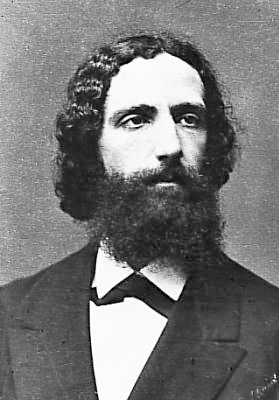
フランツ・ブレンターノ
Franz Clemens Honoratus
Hermann Josef Brentano, 1838-1917
☆フランツ・クレメンス・オノラトゥス・ヘルマン・ヨーゼフ・ブレンターノ[Franz Clemens
Honoratus Hermann Josef Brentano]
(/brɛnˈtɑːnoʊ/; ドイツ語発音: [bʁɛnˈtaːno]; 1838年1月16日 -
1917年3月17日)は、ドイツの哲学者かつ心理学者であった。彼の1874年の著作『経験的立場からの心理学』は、彼の代表作とされ、中世スコラ哲学
の概念である意図主義を現代哲学に再導入した功績がある。
もともとカトリックの司祭であったが、1873年に教皇無謬性の教義的定義が『永遠の牧者』で定められたことを理由に司祭職を退いた。その後、無宗派の教
授として活動し、その教えはブレントノ学派として集まった若い世代の哲学者たちを通じて、言語学、論理学、数学、実験心理学など幅広い分野の研究を触発し
た。
| Franz Clemens
Honoratus Hermann Josef Brentano (/brɛnˈtɑːnoʊ/; German: [bʁɛnˈtaːno];
16 January 1838 – 17 March 1917) was a German philosopher and
psychologist. His 1874 Psychology from an Empirical Standpoint,
considered his magnum opus, is credited with having reintroduced the
medieval scholastic concept of intentionality into contemporary
philosophy. Originally a Catholic priest, Brentano withdrew from the priesthood in 1873 due to the dogmatic definition of papal infallibility in Pastor aeternus. Working subsequently as a non-denominational professor, his teaching triggered research in a wide array of fields such as linguistics, logic, mathematics and experimental psychology through the young generation of philosophers who were gathered as the School of Brentano. |
フランツ・クレメンス・オノラトゥス・ヘルマン・ヨーゼフ・ブレンターノ
(/brɛnˈtɑːnoʊ/; ドイツ語発音: [bʁɛnˈtaːno]; 1838年1月16日 -
1917年3月17日)は、ドイツの哲学者かつ心理学者であった。彼の1874年の著作『経験的立場からの心理学』は、彼の代表作とされ、中世スコラ哲学
の概念である意図主義を現代哲学に再導入した功績がある。 もともとカトリックの司祭であったが、1873年に教皇無謬性の教義的定義が『永遠の牧者』で定められたことを理由に司祭職を退いた。その後、無宗派の教 授として活動し、その教えはブレンターノ学派として集まった若い世代の哲学者たちを通じて、言語学、論理学、数学、実験心理学など幅広い分野の研究を触発し た。 |
| Life Brentano was born at Marienberg am Rhein [de], near Boppard. He was son of Christian Brentano, brother of Lujo Brentano, and paternal nephew of Clemens Brentano and Bettina von Arnim, and of Gunda (née Brentano) and Friedrich von Savigny. His paternal grandfather was of Italian descent, and some of his ancestors are Sophie von La Roche and Johann Philipp Stadion, Count von Warthausen. He studied philosophy at the universities of Munich, Würzburg, Berlin (with Adolf Trendelenburg) and Münster. He had a special interest in Aristotle and scholastic philosophy. He wrote his dissertation in 1862 at Tübingen under the title Von der mannigfachen Bedeutung des Seienden nach Aristoteles (On the Several Senses of Being in Aristotle). His thesis advisor was Franz Jakob Clemens.[9] Subsequently, he began to study theology and entered the seminary in Munich and then Würzburg. He was ordained a Catholic priest on 6 August 1864. In 1866 he defended his habilitation thesis, Die Psychologie des Aristoteles, insbesondere seine Lehre vom Nous Poietikos (The Psychology of Aristotle, in Particular His Doctrine of the Active Intellect, published 1867), and began to lecture at the University of Würzburg. His students in this period included, among others, Carl Stumpf and Anton Marty. Between 1870 and 1873, Brentano was heavily involved in the debate on papal infallibility in matters of Faith. A strong opponent of such dogma, he eventually gave up his priesthood and his tenure in 1873. He remained, however, deeply religious[10] and dealt with the topic of the existence of God in lectures given at the Universities of Würzburg and Vienna.[11] In 1874 Brentano published his major work, Psychology from an Empirical Standpoint. From 1874 to 1895 he taught at the University of Vienna, Austria-Hungary. Among his students were Edmund Husserl, Sigmund Freud, Tomáš Masaryk, Rudolf Steiner, Alexius Meinong, Carl Stumpf, Anton Marty, Kazimierz Twardowski, and Christian von Ehrenfels and many others (see School of Brentano for more details). While he began his career as a full ordinary professor, he was forced to give up both his Austrian citizenship and his professorship in 1880 in order to marry Ida Lieben (Austro-Hungarian law denied matrimony to persons who had been ordained priests even if they later had resigned from priesthood), but he was permitted to stay at the university only as a Privatdozent. After the departure of Twardowski back to Lwów and the death of his wife in 1894, Brentano retired and moved to Florence in 1896, where he married his second wife, Emilie Ruprecht, in 1897. He transferred to Zürich at the outbreak of the First World War, where he died in 1917. |
人生 ブレンターノはライン川沿いのマリエンベルク(ボッパルト近郊)で生まれた。父はクリスティアン・ブレンターノ、兄はルヨ・ブレンターノ、父方の叔父はク レメンス・ブレンターノとベッティーナ・フォン・アルニム、またグンダ(旧姓ブレンターノ)とフリードリヒ・フォン・ザヴィニーであった。彼の父方の祖父 はイタリア系であり、祖先にはゾフィー・フォン・ラ・ロッシュやヨハン・フィリップ・シュタディオン・フォン・ヴァルトハウゼン伯爵らがいる。 彼はミュンヘン大学、ヴュルツブルク大学、ベルリン大学(アドルフ・トレンデレンブルクに師事)、ミュンスター大学で哲学を学んだ。特にアリストテレスと スコラ哲学に強い関心を抱いていた。1862年、テュービンゲン大学にて『アリストテレスにおける存在の多様な意味について』と題する博士論文を執筆し た。指導教官はフランツ・ヤコブ・クレメンスであった[9]。その後、神学を学び始め、ミュンヘン、次いでヴュルツブルクの司祭養成所に入所した。 1864年8月6日、カトリック司祭に叙階された。 1866年にはハビリテーション論文『アリストテレスの心理学、特に能動的知性論について』(1867年刊行)を提出し、ヴュルツブルク大学で講義を開始 した。この時期の教え子にはカール・シュトゥンプフやアントン・マルティらがいた。1870年から1873年にかけて、ブレンターノは教皇の信仰に関する 不可謬性論争に深く関与した。この教義に強く反対した彼は、1873年に司祭職と教授職を放棄した。しかし彼は依然として深い宗教心を持ち続け[10]、 ヴュルツブルク大学とウィーン大学での講義において神の存在という主題を扱った。[11] 1874年、ブレンターノは代表作『経験的立場からの心理学』を出版した。1874年から1895年まで、オーストリア・ハンガリー帝国のウィーン大学で 教鞭をとった。彼の教え子には、エドムント・フッサール、ジークムント・フロイト、トマーシュ・マサリク、ルドルフ・シュタイナー、アレクシウス・マイノ ン、カール・シュトゥンプフ、アントン・マルティ、カジミェシュ・トヴァルドフスキ、クリスティアン・フォン・エーレンフェルスなどがいた(詳細はブレン ターノ学派を参照)。彼は正教授としてキャリアをスタートしたが、1880年にアイダ・リーベンと結婚するために、オーストリア国籍と教授職の両方を放棄 せざるを得なかった(オーストリア・ハンガリー帝国では、司祭に叙階された者は、たとえ後に司祭職を辞めたとしても、結婚を禁じられていた)。しかし、彼 は大学に私講師としてのみ留まることが許された。トヴァルドフスキがルヴフに戻り、1894年に妻が死去した後、ブレンターノは1896年に引退してフィ レンツェに移住した。1897年には2番目の妻エミリー・ルプレヒトと結婚した。第一次世界大戦勃発時にチューリッヒに移り、1917年に死去した。 |
| Work Intentionality Main article: Intentionality Brentano is best known for his reintroduction of the concept of intentionality—a concept derived from scholastic philosophy—to contemporary philosophy in his lectures and in his work Psychologie vom empirischen Standpunkt (Psychology from an Empirical Standpoint). While often simplistically summarised as "aboutness" or the relationship between mental acts and the external world, Brentano defined it as the main characteristic of mental phenomena, by which they could be distinguished from physical phenomena. Every mental phenomenon, every psychological act has content, is directed at an object (the intentional object). Every belief, desire etc. has an object that they are about: the believed, the desired. Brentano used the expression "intentional inexistence" to indicate the status of the objects of thought in the mind. The property of being intentional, of having an intentional object, was the key feature to distinguish psychological phenomena and physical phenomena, because, as Brentano defined it, physical phenomena lacked the ability to generate original intentionality, and could only facilitate an intentional relationship in a second-hand manner, which he labeled derived intentionality. Every mental phenomenon is characterized by what the Scholastics of the Middle Ages called the intentional (or mental) inexistence of an object, and what we might call, though not wholly unambiguously, reference to a content, direction towards an object (which is not to be understood here as meaning a thing), or immanent objectivity. Every mental phenomenon includes something as object within itself, although they do not all do so in the same way. In presentation something is presented, in judgement something is affirmed or denied, in love loved, in hate hated, in desire desired and so on. This intentional in-existence is characteristic exclusively of mental phenomena. No physical phenomenon exhibits anything like it. We could, therefore, define mental phenomena by saying that they are those phenomena which contain an object intentionally within themselves. — Franz Brentano, Psychology from an Empirical Standpoint, edited by Linda L. McAlister (London: Routledge, 1995 [1874]), pp. 88–89. Brentano introduced a distinction between genetic psychology (genetische Psychologie) and descriptive psychology (beschreibende or deskriptive Psychologie):[12] in his terminology, genetic psychology is the study of psychological phenomena from a third-person point of view, which involves the use of empirical experiments (satisfying, thus, the scientific standards we nowadays expect of an empirical science).[6] (This concept is roughly equivalent to what is now called empirical psychology,[13] cognitive science,[13] or "heterophenomenology", an explicitly third-person, scientific approach to the study of consciousness.) The aim of descriptive psychology, on the other hand, is to describe consciousness from a first-person point of view.[6] The latter approach was further developed by Husserl and the phenomenological tradition.[14] |
仕事 意図主義 主な記事: 意図主義 ブレンターノは、彼の講義と著作『経験的立場からの心理学』において、意図主義という概念(スコラ哲学に由来する概念)を現代哲学に再導入したことで最も よく知られている。しばしば「対象性」や精神作用と外界の関係と単純化されるが、ブレンターノはこれを精神現象の主要な特徴と定義し、それによって物理現 象と区別できるとした。あらゆる精神現象、あらゆる心理作用は内容を持ち、対象(意図対象)に向けられている。あらゆる信念、欲望などは、それらが対象と するもの、すなわち信じられるもの、望まれるものを持つ。ブレンターノは「意図的非存在」という表現を用いて、思考における対象の地位を示した。意図的で あること、すなわち意図的対象を持つという性質こそが、心理現象と物理現象を区別する鍵となる特徴であった。なぜならブレンターノが定義したように、物理 現象は独自の意図性を生み出す能力を欠いており、二次的な方法で意図的関係を可能にするに過ぎず、彼はこれを派生的意図性と呼んだ。 あらゆる精神的現象は、中世のスコラ学者が対象の意図的(あるいは精神的)非存在と呼んだもの、そして我々が(完全には明確ではないが)内容への参照、対 象(ここでは物という意味ではない)への指向、あるいは内在的客観性と呼ぶかもしれないものによって特徴づけられる。あらゆる精神的現象は、その内部に対 象として何かを含む。ただしその包含の仕方は現象によって異なる。表象においては何かが表象され、判断においては何かが肯定または否定され、愛においては 愛され、憎しみにおいては憎まれ、欲望においては欲求される、といった具合である。この意図的非存在は、精神的現象にのみ特有の特性である。物理的現象に はこれに類するものはない。したがって精神的現象とは、その内部に対象を意図的に含む現象であると定義できる。— フランツ・ブレンターノ『経験的立場からの心理学』(リンダ・L・マカリスター編、ロンドン:ラウトリッジ、1995年[1874年])、88-89頁。 ブレンターノは、発生心理学(genetische Psychologie)と記述心理学(beschreibende または deskriptive Psychologie)の区別を導入した[12]。彼の用語では、発生心理学とは第三者の視点から心理現象を研究するものであり、経験的実験を用いる (したがって、現代の経験科学に求められる科学的基準を満たす)[6]。(この概念は、現在「経験心理学」[13]、「認知科学」[13]、あるいは「異 質現象学」と呼ばれるもの、つまり意識研究に対する明示的な第三者的・科学的アプローチに大体相当する。)一方、記述的心理学の目的は、第一人称的視点か ら意識を記述することである。[6] 後者のアプローチはフッサールと現象学的伝統によってさらに発展した。[14] |
| Theory of perception He is also well known for claiming that Wahrnehmung ist Falschnehmung ('perception is misconception') that is to say perception is erroneous. In fact he maintained that external, sensory perception could not tell us anything about the de facto existence of the perceived world, which could simply be illusion. However, we can be absolutely sure of our internal perception. When I hear a tone, I cannot be completely sure that there is a tone in the real world, but I am absolutely certain that I do hear. This awareness, of the fact that I hear, is called internal perception. External perception, sensory perception, can only yield hypotheses about the perceived world, but not truth. Hence he and many of his pupils (in particular Carl Stumpf and Edmund Husserl) thought that the natural sciences could only yield hypotheses and never universal, absolute truths as in pure logic or mathematics. However, in a reprinting of his Psychologie vom Empirischen Standpunkte (Psychology from an Empirical Standpoint), he recanted this previous view. He attempted to do so without reworking the previous arguments within that work but it has been said that he was wholly unsuccessful. The new view states that when we hear a sound, we hear something from the external world; there are no physical phenomena of internal perception.[15] |
知覚の理論 彼はまた「知覚は誤認である」と主張したことでよく知られている。つまり知覚は誤りだというのだ。実際、彼は外部感覚による知覚は、知覚される世界の事実 上の存在について何も教えてくれず、それは単なる幻想に過ぎない可能性があると主張した。しかし、我々は内部知覚については絶対的な確信を持てる。例え ば、音声を聞いたとき、現実世界にその音があるかどうかは完全に確信できないが、自分が確かに聞いているという事実は絶対的に確信できる。この「聞いてい る」という事実への自覚が内部知覚と呼ばれる。外部知覚、つまり感覚知覚は、知覚される世界についての仮説しか生み出せず、真実をもたらさない。したがっ て彼と多くの弟子たち(特にカール・シュトゥンプフやエドムント・フッサール)は、自然科学は仮説しか生み出せず、純粋論理学や数学のような普遍的・絶対 的真理を決して得られないと考えていた。 しかし、彼の『経験的立場からの心理学』の改訂版において、彼はこの以前の見解を撤回した。彼はその著作内の以前の議論を再構築せずにそうしようとした が、全く成功しなかったと言われている。新しい見解は、我々が音を聞くとき、我々は外部世界からの何かを聞いているというものである。内的知覚の物理的現 象は存在しない。[15] |
| Theory of judgment icon This section needs additional citations for verification. Please help improve this article by adding citations to reliable sources in this section. Unsourced material may be challenged and removed. (March 2010) (Learn how and when to remove this message) Brentano has a theory of judgment which is different from what is currently the predominant (Fregean) view. At the centre of Brentano's theory of judgment lies the idea that a judgment depends on having a presentation, but this presentation does not have to be predicated. Even stronger: Brentano thought that predication is not even necessary for judgment, because there are judgments without a predicational content. Another fundamental aspect of his theory is that judgments are always existential. This so-called existential claim implies that someone who is judging that S is P will be judging that some S that is P exists. (Note that Brentano denied the idea that all judgments are of the form: S is P [and all other kinds of judgment which combine presentations]. Brentano argued that there are also judgments arising from a single presentation, e.g. the planet Mars exists” has only one presentation.) In Brentano's own symbols, a judgment is always of the form: ‘+A’ (A exists) or ‘–A’ (A does not exist). Combined with the third fundamental claim of Brentano, the idea that all judgments are either positive (judging that A exists) or negative (judging that A does not exist), we have a complete picture of Brentano's theory of judgment. So, imagine that you doubt whether giraffes exist. At that point you have a presentation of giraffes in your mind. When you judge that giraffes do not exist, then you are judging that the presentation you have does not present something that exists. You do not have to utter that in words or otherwise predicate that judgment. The whole judgment takes place in the denial (or approval) of the existence of the presentation you have. The problem of Brentano's theory of judgment is not the idea that all judgments are existential judgments (though it is sometimes a very complex enterprise to transform an ordinary judgment into an existential one), the real problem is that Brentano made no distinction between object and presentation. A presentation exists as an object in your mind. So you cannot really judge that A does not exist, because if you do so you also judge that the presentation is not there (which is impossible, according to Brentano's idea that all judgments have the object which is judged as presentation). Kazimierz Twardowski acknowledged this problem and solved it by denying that the object is equal to the presentation. This is actually only a change within Brentano's theory of perception, but has a welcome consequence for the theory of judgment, viz. that you can have a presentation (which exists) but at the same time judge that the object does not exist. |
判断の理論 icon この節は検証可能な情報源を必要としている。信頼できる情報源をこの節に追加し、記事の改善に協力してほしい。出典のない記述は削除される可能性がある。(2010年3月)(このメッセージの削除方法と時期について) ブレンターノの判断論は、現在主流の(フレーゲ的な)見解とは異なる。ブレンターノの判断論の中心にあるのは、判断は表象の存在に依存するが、この表象は 述語化される必要はないという考えである。さらに強く言えば、ブレンターノは述語化は判断にとって必要でさえないと考えた。なぜなら、述語的内容を持たな い判断が存在するからである。彼の理論のもう一つの根本的な側面は、判断は常に存在論的であるということだ。このいわゆる存在論的主張は、SがPであると 判断する者は、PであるSが存在するとも判断していることを意味する。(なおブレンターノは、全ての判断が「SはPである」という形式(および提示を組み 合わせた他のあらゆる種類の判断)をとるという考えを否定した。ブレンターノは、単一の提示から生じる判断も存在すると主張した。例えば「火星は存在す る」という判断は一つの提示しか持たない。) ブレンターノ自身の記号体系では、判断は常に『+A』(Aは存在する)または『–A』(Aは存在しない)の形式をとる。 これにブレンターノの第三の根本的主張、すなわち全ての判断は肯定的(Aが存在すると判断する)か否定的(Aが存在しないと判断する)かのいずれかである という考えを組み合わせれば、ブレンターノの判断理論の全体像が明らかになる。例えばキリンの存在を疑う場合を考えてみよう。その時点で、キリンの表象が 心の中に存在する。キリンは存在しない、と断定するとき、それは「自分が持つ表象が実在するものを表していない」と断定していることになる。この判断を言 葉で発したり、別の形で述語化したりする必要はない。判断全体は、自分が持つ表象の存在を否定(あるいは承認)する行為の中で完結するのだ。 ブレンターノの判断論の問題点は、全ての判断が存在判断であるという考え自体ではない(ただし、通常の判断を存在判断に変換するのは時に非常に複雑な作業 となる)。真の問題は、ブレンターノが対象と表象の区別を全く行っていないことにある。表象は対象として君の心の中に存在する。だから君はAが存在しない とは本当に判断できない。なぜならそうすると同時に、表象が存在しないとも判断することになるからだ(これは不可能である。なぜならブレンターノの考えに よれば、あらゆる判断は、判断される対象をその表象として持つからだ)。カジミェシュ・トヴァルドフスキはこの問題を認め、対象と表象が同一ではないと否 定することで解決した。これは実際にはブレンターノの知覚理論内での変更に過ぎないが、判断理論にとって歓迎すべき帰結をもたらす。すなわち、表象(それ は存在する)を持ちつつ、同時にその対象が存在しないと判断できるという帰結である。 |
| Legacy The young Martin Heidegger was very much inspired by Brentano's early work On the Several Senses of Being in Aristotle. Brentano's focus on conscious (or phenomenal) intentionality was inherited by Carl Stumpf's Berlin School of experimental psychology, Anton Marty's Prague School of linguistics, Alexius Meinong's Graz School of experimental psychology, Kazimierz Twardowski's Lwów School of philosophy, and Edmund Husserl's phenomenology.[16] Brentano's work also influenced George Stout,[17] the teacher of G. E. Moore and Bertrand Russell at Cambridge University.[18] |
遺産 若いマーティン・ハイデガーは、ブレンターノの初期の著作『アリストテレスにおける存在のいくつかの意味について』に大きな影響を受けた。ブレンターノの 意識的(あるいは現象的)意図主義への焦点は、カール・シュトゥンプフのベルリン実験心理学派、アントン・マルティのプラハ言語学派、アレクシウス・マイ ノンクのグラーツ実験心理学派、カジミェシュ・トヴァルドフスキのルヴフ哲学派、そしてエドムント・フッサールの現象学に受け継がれた。[16] ブレンターノの著作は、ケンブリッジ大学で G. E. ムーアやバートランド・ラッセルを教えたジョージ・スタウト[17] にも影響を与えた。 |
| Bibliography Major works in German (1862) On the Several Senses of Being in Aristotle (Von der mannigfachen Bedeutung des Seienden nach Aristoteles (doctoral thesis)) (online) (1867) The Psychology of Aristotle (Die Psychologie des Aristoteles, insbesondere seine Lehre vom Nous Poietikos (habilitation thesis written in 1865/66)) (online) (1874) Psychology from an Empirical Standpoint (Psychologie vom empirischen Standpunkt) (online) (1924–25) Psychologie vom empirischen Standpunkt. Ed. Oskar Kraus, 2 vols. Leipzig: Meiner. ISBN 3-7873-0014-7[19] (1876) Was für ein Philosoph manchmal Epoche macht (a work against Plotinus) (online) (1889) The Origin of our Knowledge of Right and Wrong (Vom Ursprung sittlicher Erkenntnis) (1902 English edition online) (1911) Aristotle and his World View (Aristoteles und seine Weltanschauung) (1911) The Classification of Mental Phenomena (Von der Klassifikation der psychischen Phänomene) (1930) The True and the Evident (Wahrheit und Evidenz) (1976) Philosophical Investigations on Space, Time and Phenomena (Philosophische Untersuchungen zu Raum, Zeit und Kontinuum) (1982) Descriptive Psychology (Deskriptive Psychologie) Collected Works Sämtliche veröffentlichte Schriften in zehn Bänden (Collected Works in Ten Volumes, edited by Arkadiusz Chrudzimski and Thomas Binder), Frankfurt: Ontos Verlag (now Walter de Gruyter). 1. Psychologie vom empirischen Standpunkte — Von der Klassifikation der psychischen Phänomene (2008) 2. Untersuchungen zur Sinnespsychologie (2009) 3. Schriften zur Ethik und Ästhetik (2010) 4. Von der mannigfachen Bedeutung des Seienden nach Aristoteles (2014) |
参考文献 ドイツ語による主な著作 (1862) アリストテレスにおける存在の複数の意味について(博士論文) (オンライン) (1867) アリストテレスの心理学、特にヌース・ポイエティコスに関するその教えについて(1865/66年に執筆されたハビリテーション論文) (オンライン) (1874) 経験的観点からの心理学 (Psychologie vom empirischen Standpunkt) (オンライン) (1924–25) 経験的観点からの心理学。編者:オスカー・クラウス、全 2 巻。ライプツィヒ:マイナー社。ISBN 3-7873-0014-7[19] (1876) 哲学者が時に時代を画すもの(プロティノスに対する反論) (オンライン) (1889) 善悪の認識の起源 (1902年英語版オンライン) (1911) アリストテレスとその世界観 (1911) 精神現象の分類 (1930) 真実と明白性 (1976) 空間、時間、現象に関する哲学的考察 (1982) 記述心理学 (記述心理学) 全集 全出版物を10巻にまとめたもの (Collected Works in Ten Volumes, edited by Arkadiusz Chrudzimski and Thomas Binder), Frankfurt: Ontos Verlag (now Walter de Gruyter). 1. 経験的観点からの心理学 — 精神現象の分類について (2008) 2. 感覚心理学に関する研究 (2009) 3. 倫理と美学に関する著作 (2010) 4. アリストテレスによる存在の多様な意味について (2014) |
| Analytic psychology (Dilthey) Analytic psychology (Stout) Axiological ethics Anna von Lieben (his sister-in-law) Robert von Lieben (his nephew) List of Austrian scientists List of Austrians |
分析心理学(ディルタイ) 分析心理学(スタウト) 価値論的倫理学 アンナ・フォン・リーベン(彼の義理の妹) ロベルト・フォン・リーベン(彼の甥) オーストリアの科学者一覧 オーストリア人一覧 |
| References 01. Franz Brentano – Britannica.com E. B. Titchener, "Brentano and Wundt: Empirical and Experimental Psychology", The American Journal of Psychology, 32(1) (Jan. 1921), pp. 108–120. Robin D. Rollinger, Austrian Phenomenology: Brentano, Husserl, Meinong, and Others on Mind and Object, Walter de Gruyter, 2008, p. 7. Gestalt Theory: Official Journal of the Society for Gestalt Theory and Its Applications (GTA), 22, Steinkopff, 2000, p. 94: "Attention has varied between Continental Phenomenology (late Husserl, Merleau-Ponty) and Austrian Realism (Brentano, Meinong, Benussi, early Husserl)". 05. Robin D. Rollinger, Austrian Phenomenology: Brentano, Husserl, Meinong, and Others on Mind and Object, Walter de Gruyter, 2008, p. 114: "The fact that Brentano [in Psychology from an Empirical Standpoint] speaks of a relation of analogy between physical phenomena and real things existing outside of the mind obviously indicates that he is a realist and not an idealist or a solipsist, as he may indeed be taken to at first glance. Rather, his position is a very extreme representational realism. The things which exist outside of our sensations, he maintains, are in fact to be identified with the ones we find posited in the hypotheses of natural sciences." Huemer, Wolfgang. "Franz Brentano". In Zalta, Edward N. (ed.). Stanford Encyclopedia of Philosophy. ISSN 1095-5054. OCLC 429049174. Brentano, F., Sensory and Noetic Consciousness: Psychology from an Empirical Standpoint III, International Library of Philosophy and Scientific Method, Routledge & Kegan Paul, 1981. Biagio G. Tassone, From Psychology to Phenomenology: Franz Brentano's 'Psychology from an Empirical Standpoint' and Contemporary Philosophy of Mind, Palgrave Macmillan, 2012, p. 307. Franz Brentano at the Mathematics Genealogy Project 10. Boltzmann, Ludwig. 1995. Ludwig Boltzmann: His Later Life and Philosophy, 1900-1906: Book Two: The Philosopher. Springer Science & Business Media, p. 3 Brentano, F. C. 1987. On the Existence of God: Lectures Given at the Universities of Würzburg and Vienna (1868-1891). Springer Science & Business Media, The first published occurrence of the term is in Brentano's Vom Ursprung sittlicher Erkenntnis (The Origin of our Knowledge of Right and Wrong) published in 1889 (see Franz Brentano, Descriptive Psychology, Routledge, 2012, "Introduction"). Dale Jacquette (ed.), The Cambridge Companion to Brentano, Cambridge University Press, 2004, p. 67. Anna-Teresa Tymieniecka, Phenomenology World-Wide: Foundations — Expanding Dynamics — Life-Engagements A Guide for Research and Study, Springer, 2014, p. 18: "[Husserl] entrusts this analysis to a pure or phenomenological psychology whose links with Brentano's descriptive psychology are still clearly visible." 15. See Postfix in the 1923 edition (in German) or the 1973, English version (ISBN 0710074255, edited by Oskar Kraus; translated [from German] by Antos C. Rancurello, D. B. Terrell and Linda López McAlister; English edition edited by Linda López McAlister). Uriah Kriegel, "Phenomenal intentionality past and present: introductory, Phenomenology and the Cognitive Sciences 12(3):437–444 (2013). Liliana Albertazzi, Immanent Realism: An Introduction to Brentano, Springer, 2006, p. 321. Maria van der Schaar, G. F. Stout and the Psychological Origins of Analytic Philosophy, Springer, 2013, p. viii. 19. Franz Brentano Archiv Graz |
参考文献 01. フランツ・ブレンターノ – Britannica.com E. B. ティッチナー、「ブレンターノとヴント:経験的・実験的心理学」、『アメリカ心理学雑誌』32巻1号(1921年1月)、108–120頁。 ロビン・D・ロリンジャー、『オーストリアの現象学:ブレンターノ、フッサール、マイノン、その他、心と対象について』、ウォルター・デ・グルイター、2008年、7ページ。 ゲシュタルト理論:ゲシュタルト理論とその応用学会(GTA)の公式ジャーナル、22、シュタインコップフ、2000年、94ページ: 「注目は、大陸現象学(後期フッサール、メルロ=ポンティ)とオーストリアの現実主義(ブレンターノ、マイノン、ベヌッシ、初期フッサール)の間で変化し てきた」。 05. ロビン・D・ロリンジャー『オーストリアの現象学:ブレンターノ、フッサール、マイノン、その他による心と対象に関する考察』Walter de Gruyter、2008年、114ページ: 「ブレンターノが[『経験的立場からの心理学』において]物理現象と心外に実在する実物との類比関係について言及している事実は、彼が一見すると理想主義 者や独我論者と見なされかねないにもかかわらず、実際には実在論者であることを明らかに示している。むしろ彼の立場は極めて極端な表象的実在論である。我 々の感覚の外に存在するものは、自然科学の仮説に置かれているものと同一視されるべきだと彼は主張する。」 フューマー、ヴォルフガング。「フランツ・ブレンターノ」。ザルタ、エドワード・N.(編)。『スタンフォード哲学百科事典』。ISSN 1095-5054。OCLC 429049174。 ブレンターノ、F. 『感覚的・認識的意識:経験的立場からの心理学 III』国際哲学・科学方法論叢書、ラウトリッジ&キーガン・ポール、1981年。 ビアジオ・G・タッソーネ『心理学から現象学へ:フランツ・ブレンターノの「経験的立場からの心理学」と現代心哲学』パルグレイブ・マクミラン、2012年、p. 307。 数学系譜プロジェクトにおけるフランツ・ブレンターノ 10. ボルトツマン、ルートヴィヒ。1995年。ルートヴィヒ・ボルツマン:晩年の生涯と哲学、1900-1906:第二巻:哲学者。スプリンガー・サイエンス&ビジネス・メディア、p. 3 ブレンターノ、F. C. 1987. 『神の存在について:ヴュルツブルク大学及びウィーン大学における講義(1868-1891)』。スプリンガー・サイエンス&ビジネス・メディア、 この用語が初めて出版物に登場したのは、1889年に出版されたブレンターノの『道徳的認識の起源』(原題:Vom Ursprung sittlicher Erkenntnis)である(フランツ・ブレンターノ『記述心理学』ラウトリッジ社、2012年、「序論」参照)。 デール・ジャケット編『ブレンターノ研究のケンブリッジ・コンパニオン』ケンブリッジ大学出版局、2004年、 p. 67. アンナ=テレサ・ティミエンチェカ『世界現象学:基礎・拡大する力学・生活への関与 研究と学習のためのガイド』(Springer, 2014年)p. 18:「[フッサールは]この分析を純粋あるいは現象学的心理学に委ねている。その心理学は、ブレンターノの記述心理学との繋がりが依然として明瞭に見て 取れるものである。」 15. 1923年版(ドイツ語)の付録、または1973年英語版(ISBN 0710074255、オスカー・クラウス編、アントス・C・ランキュレロ、D・B・テレル、リンダ・ロペス・マカリスターによる[ドイツ語からの]翻 訳、リンダ・ロペス・マカリスターによる英語版編集)を参照せよ。 ウリア・クリーゲル「過去と現在の現象的意図主義:序論」『現象学と認知科学』12巻3号:437–444頁(2013年)。 リリアナ・アルベルターツィ『内在的現実主義:ブレンターノ入門』スプリンガー、2006年、321ページ。 マリア・ファン・デル・シャー『G. F. スタウトと分析哲学の心理学的起源』スプリンガー、2013年、viiiページ。 19. フランツ・ブレンターノ・アーカイブ・グラーツ |
| https://en.wikipedia.org/wiki/Franz_Brentano |
リ ンク
文 献
そ の他の情報
CC

Copyleft,
CC, Mitzub'ixi Quq Chi'j, 1996-2099