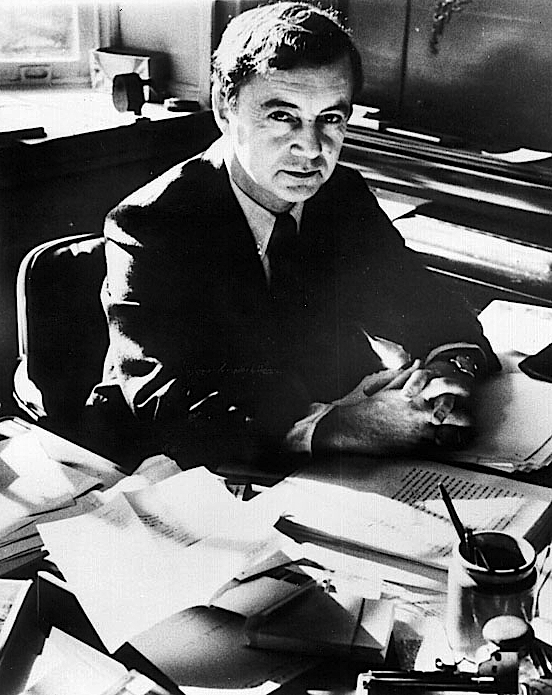

ゴフマンのフレンチ・コネクション
On French Connection between Jean-Paul & 'the little dagger'
解説:池田光穂
■ Virtual Goffman ■
現在では、そうではないのだろうが、よくアーヴィング・ゴ フマンや象徴的相互作用論の一般的解説を読んでいる と、象徴的相互作用論者としてゴフマンが解説することがしばしば見受けられる[Smith 2006:31]。
これは、ゴフマンが1940年代の後半にシカゴ大学社会学部ならびに大学院で教育を受けたことか らくる、教育を受けた=学派の一味であるというステレオタイプに起因するのではないかと思われる。
ゴフマンの生活史と彼の学問のスタイルの関係についてはイーヴ・ヴァンカン(Yves Winkin)の『アーヴィング・ゴフマン』[せりか書房](Les Moments et Leurs Hommes, 諸契機とそれらの人間たち)に詳しい。
私がゴフマンにしびれるのは、ゴフマンが人間の内面に立ち入るという研究的態度に対して禁欲ある いは意図的な無視・軽視というものがあるからに他ならない——ゴッフマンの自己(self)という概念には中味が全く存在しない。私はそれがニヒルでカッ コイイと思ってい る人間のひとりである——そう思っている僕の自己(my own self)とはなんだろうか? 従って、僕は「ゴフマンは象徴的相互作用論的な立場からはおよそ遠い位置にいたのではないのか?」と考える人間である。だ から私のゴフマンは、シン ボリックインタラクショニストではなく、実存主義者なのである。
この主張を傍証するデータは、先のヴァンカンの上掲書の解説で言っている次の2点である。
(1)ゴフマンはブルーマーの授業にそれほど惹かれなかったし、またブルーマー(Herbert George Blumer, 1900-1987)もゴフマンに 影響を与えたことはないと発言していることである(pp.46-7)。
(2)ゴフマンは、先行する社会学のビックネーム(マルクス、ウェーバー、デュルケーム、ジ ンメル)への言及よりもサルトルへのそれが5倍も多いという指摘である(ただしこれはヴァンカンではなくマッカネルが『セミオティカ』の追悼論文の中での 指摘、上掲書、p.182)
ゴフマンがサルトルにかぶれたのは、彼が『行為と演技』のもととなる学位論文を書いたパリである というのが、私の推測である。あるいは実存主義の洗礼をパリで受けたのだという仮説である。これを〈ゴフマンのフレンチ・コネクション〉と読んでおこう。
Behavior in Public Places, 1963 の中でも、のらりくらりとする態度が容認される文化の指標としてカフェがある社会をあげている。別の箇所では、パリの公道の規制のゆるやかさについて言及 する箇所がある。ゴフマンが学位論文の構想を練りながら、カフェで通りをゆく人たちを長時間ながめていたというのは、根拠のない夢想だろうか。また他なら ぬその場所が1968年5月18日には若者たちが沸騰する場所になったことも忘れてはならない。
だれか社会学者でゴフマンのフレンチコネクションについて言及した者はいないのか?(→D.マッ カネルはその第一人者だろう)
アラスデア・マッキンタイア『美徳 なき時代』に、サルトルとゴッフマンについての類似点と相違点についての言 及があった。
マッキンタイア(Alasdair MacIntyre, 1929- )によれば、ゴッフマンは、人間の自己(self)というのは徹頭徹
尾 Homo sociologus
というカテゴリーの圏外で生きることはできないと主張していたようにみえる。つまり、〈自己というものは無いのだ〉ということになる。
「この民主化された自己は、必然的な社 会的内容と必然的な社会的同一性とを一切もたないので、いかなるものでもありうるし、いかなる役割、いかなる見地も採りうる。なぜなら、その自己はそれ自 身においては無であるのだから。近代的自己が自分の行為と役割に対してもつこの関係は、もっとも明敏で知覚力のある理論家たちによって、一見すると二つの まったく異なった両立しないと見える仕方で概念化された。サルトル——ここでは1930年代と40年代のときの彼についてのみ話す——は、自己を、たまた まそれが引き受けている特定の社会的役割のいずれともまったく区別されたものとして描いた。アーヴィング・ゴッフマンはそれと対照的に、自己をその役割演 技に解消して、自己は役割という衣服がかけられている「掛けくぎ」以外の何ものでもないと論じた。サルトルから見れば、中心的誤りは、自己 をその役割と同 一視することである。それは、知的混乱と並んで道徳的自己欺瞞という重荷を伴う間違いである。ゴッフマンから見れば、中心的誤りは、役割演技による複雑な 表現を超えて、その彼方に実体のある自己が存在すると想定することだ。それは、人間の世界のある分野を「社会学から手つかずに」保ちたいと願う人々の犯し てきた間違いである」[p.40]。——マッキンタイア『美徳なき時代』篠崎訳、みすず書房。
「しかし、この二つの対照的に見える見 解には、最初の説明がそう思わせるよりずっと多くの共通性がある。一方で、社会についてのゴッフマンの逸話に富んだ記述では、識別可能なあの幽霊のよ うな 「私」、すなわちゴッフマンによって実体的な自己性を否定された心理的な掛けくぎが、依然として存在している。それは、しっかりと役割に組 み込まれた一つ の状況から別の状況へとつかの間のあいだ飛びかうのである。他方で、サルトルに とって自己のなす自己発見は、〈自己は「無」であり実体ではなく、絶え間な く開かれた一群の可能性である〉という発見として特徴づけられる。このように深いレヴェルでは、ある種の一致がサルトルとゴッフマンの表面 的な不一致の下 に横たわっている。つまり、彼らが一致している点とは他でもなく、まさに両者とも自己を完全に社会に対置されたものとして見ている点で ある。ゴッフマンに とっては、社会がすべてであるので、自己はそれゆえまったく無であり、社会的空間を何ら占めていない。サルトルにとっては、自己がどんな社 会的空間を占め ようとも、それはただ偶然にそうしているだけであって、それゆえ彼もアクチユアリティまた自己をまったく現実性のないものとして見ているのである」 [p.40]。——マッキンタイア『美徳なき時代』篠崎訳、みすず書房
ゴフマンの足跡[=くわしくは「伝記の幻 想」でパ ワーアップしました]
1945年 シカゴ大学大学院に入学。仕事と職業に関するEverett Hughesの授業の中ではじめて「全体的施設(total institution)」について聞く。
1949年 修士論文:ソープオペラ・ラジオ番組の聴取者の反応についての研究
1949年12月〜1951年5月(約18か月)シェットランド諸島Unst島に滞在し、 フィールドワーク:農業技術に興味をもつアメリカ人として振る舞う。
1951年5月 パリに移動、学位論文を仕上げる(パリ=マリノフスキーにおけるカナリア諸 島?)
1952年 当時23歳のAngelica Choateとシカゴで結婚(翌年息子トム出産): "Coolin the mark out: Some aspects of adaptation to failure," Phychiatry 15:451-63.
1953年 学位請求論文(Communication and Conduct in an Island Community.)申請に成功(ロイド・ウォーナー、エヴァレット・ヒューズの審査)/The Presentation of Self in Everyday Lifeのドラフト作成に着手、学位取得後、シカゴでエドワード・シルズのリサーチ・アシスタントになる。
1955年 ワシントンD.C.のSt. Elizabeth's hospitalでの観察開始。
1961年 『アサイラム』(「関心の中心は自己の構造について社会学的解釈 を展開すること」『アサイラム』p.v.)
1961年 『出会い
(Encounter)』
1963年 『公的な場所での
行動: 集まりの社会的組織化に関する覚書』
【参照文献】
Warner, William Lloyd. 1898-1970
Black Civilization, 1937
Yankee City Series 1941-1963
Hughes, Everett Cherrington. 1897-1982
French Canada Transition. 1943
Man and Their Works. 1958
Shils, Edward Albert, 1911-
Parsons, T and E.A. Shils., 1951. Toward a General Theory of Action.
■筆者のゴフマンへの関心やゴフマン理論についての指摘
【コメント】
1. 「人間が内的経験をもたないと言っているのではない。人間は内的経験をもつにきまって いる。しかし、例えば儀礼をおこなっているときの人の心の心的状態がどのようなものかと問うとしても、その経験がその場にいるすべての人にとって同じもの であると信じるのは難しいのだ」(ギアツ「(たぶん)文化の解釈」のことば)
ジョージ・サンタヤナ:epigraph「私には、中身は外見のために、顔は仮面のために、 あるいは情念は詩のため徳のために存在する、などと言うつもりは毛頭ない。自然には、何か他の物のために生ずるなどというものは一つもない。これらすべて の様相と産物は存在全体のなかに平等に包まれているのである」『自己提示』
★オリジナル・クレジット:ゴフマンのフレンチ・コネクション, On French Connection
between Jean-Paul & 'the little dagger', アービング・ゴッフマンは象徴的相互作用論者なのか?
◆ トータル・インスティテューション(全制的施設)の定義
「全制的施設 a total institution とは、多数の類似の境遇にある個々人が、一緒に、相当期間にわたって包括社会から遮断されて、閉鎖的で形式的に管理された日常生活を送る居住と仕事の場 所、と定義できよう。」(p.v) 『アサイラム』
☆Alasdair MacIntyre
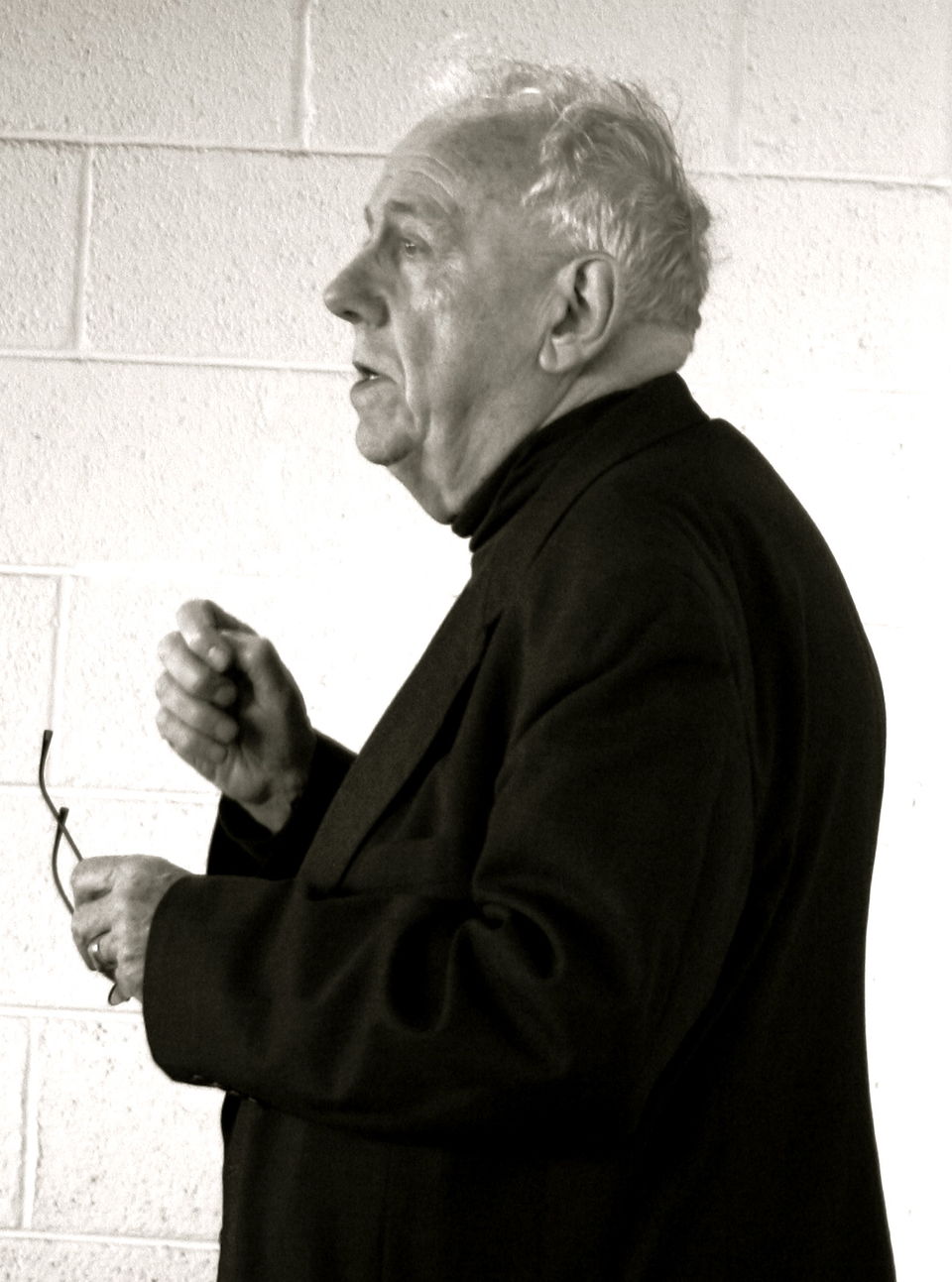
| Alasdair Chalmers MacIntyre[a]
(12 January 1929 – 21 May 2025) was a Scottish-American philosopher who
contributed to moral and political philosophy as well as history of
philosophy and theology.[2] MacIntyre's After Virtue (1981) is one of
the most important works of Anglophone moral and political philosophy
in the 20th century.[3] He was a senior research fellow at the Centre
for Contemporary Aristotelian Studies in Ethics and Politics (CASEP) at
London Metropolitan University, emeritus Professor of Philosophy at the
University of Notre Dame, and permanent senior distinguished research
fellow at the Notre Dame de Nicola Center for Ethics and Culture.[4]
During his lengthy academic career, he also taught at Brandeis
University, Duke University, Vanderbilt University, and Boston
University. |
アラスデア・チャルマーズ・マッキンタイア[a](1929年1月12
日 -
2025年5月21日)は、スコットランド系アメリカ人の哲学者である。道徳哲学、政治哲学、哲学史、神学の分野に貢献した[2]。マッキンタイアの『徳
のその後』(1981年)は、20世紀の英語圏における道徳哲学・政治哲学の最も重要な著作の一つである。彼はロンドン・メトロポリタン大学現代アリスト
テレス倫理政治学研究センター(CASEP)の上級研究員、ノートルダム大学名誉哲学教授、ノートルダム・デ・ニコラ倫理文化センター常任上級特別研究員
を務めた。長い学術経歴の中で、ブランダイス大学、デューク大学、ヴァンダービルト大学、ボストン大学でも教鞭をとった。 |
| Biography MacIntyre was born on 12 January 1929 in Glasgow, to Eneas and Greta (Chalmers) MacIntyre. He was educated at Queen Mary College, London, and had a Master of Arts degree from the University of Manchester, where his philosophy teacher was Dorothy Emmet and his fellow student was Herbert McCabe[5] and from the University of Oxford. He began his teaching career in 1951 at Manchester. He married Ann Peri, with whom he had two daughters, Jean and Toni.[6] He taught at the University of Leeds, the University of Essex and the University of Oxford in the United Kingdom, before moving to the US in around 1969. MacIntyre was something of an intellectual nomad, having taught at many universities in the US. He had held the following positions: Professor of History of Ideas, Brandeis University (1969 or 1970), Dean of the College of Arts and professor of philosophy, Boston University (1972), Henry Luce Professor, Wellesley College (1980), W. Alton Jones Professor, Vanderbilt University (1982), Professor of Philosophy, University of Notre Dame (1985), Professor of Philosophy, Vanderbilt University (1985), Visiting scholar, Whitney Humanities Center, Yale University (1988), McMahon-Hank Professor of Philosophy, Notre Dame (1989), and Arts & Sciences Professor of Philosophy, Duke University (1995–2000). He had also been a visiting professor at Princeton University and was president of the American Philosophical Association. In 2010, he was awarded the Aquinas Medal by the American Catholic Philosophical Association. He was a member of the American Academy of Arts and Sciences (elected 1985), the British Academy (1994), the Royal Irish Academy (1999), and the American Philosophical Society (2005). From 2000, he was the Rev. John A. O'Brien Senior Research Professor in the Department of Philosophy (emeritus since 2010) at the University of Notre Dame, Indiana, US. He was also professor emerit and emeritus at Duke University. In July 2010, he became senior research fellow at London Metropolitan University's Centre for Contemporary Aristotelian Studies in Ethics and Politics. After his retirement from active teaching in 2010, MacIntyre remained the senior distinguished research fellow of the Notre Dame de Nicola Center for Ethics and Culture,[7] where he retained an office. He continued to make public presentations, including an annual keynote as part of the de Nicola Center for Ethics and Culture's Fall Conference.[8] MacIntyre was married three times. From 1953 to 1963, he was married to Ann Peri, with whom he had two daughters. From 1963 to 1977, he was married to former teacher and now poet Susan Willans, with whom he had a son and daughter. From 1977 to his death, he was married to philosopher Lynn Joy, who is also on the philosophy faculty at Notre Dame. MacIntyre died on 21 May 2025 at a care facility in South Bend, Indiana, at the age of 96.[9][10][11] |
経歴 マッキンタイアは1929年1月12日、グラスゴーでイーニアスとグレタ(旧姓チャルマーズ)・マッキンタイアの間に生まれた。ロンドンのクイーン・メア リー・カレッジで学び、マンチェスター大学で文学修士号を取得した。同大学ではドロシー・エメットに哲学を学び、ハーバート・マッケイブ[5]と同級生 だった。またオックスフォード大学でも学んだ。1951年にマンチェスター大学で教職を開始した。アン・ペリと結婚し、二人の娘、ジーンとトニをもうけた [6]。イギリスではリーズ大学、エセックス大学、オックスフォード大学で教鞭を執った後、1969年頃にアメリカへ移った。マッキンタイアは知的な放浪 者とも言える存在で、アメリカの多くの大学で教えた。以下の職歴を持つ: ブランダイス大学、思想史教授(1969年または1970年) ボストン大学、芸術学部長、哲学教授(1972年) ウェルズリー大学、ヘンリー・ルース教授(1980年) ヴァンダービルト大学、W.アルトン・ジョーンズ教授(1982年) ノートルダム大学哲学教授(1985年)、 ヴァンダービルト大学哲学教授(1985年)、 イェール大学ホイットニー人文科学センター客員研究員(1988年)、 ノートルダム大学マクマホン・ハンク哲学教授(1989年)、 デューク大学文理学部哲学教授(1995年~2000年)。 また、プリンストン大学の客員教授を務め、米国哲学協会の会長も務めた。2010年には、アメリカカトリック哲学協会からアクィナス・メダルを授与され た。アメリカ芸術科学アカデミー(1985年選出)、英国アカデミー(1994年)、アイルランド王立アカデミー(1999年)、アメリカ哲学協会 (2005年)の会員であった。 2000年からは、米国インディアナ州ノートルダム大学哲学学部において、ジョン・A・オブライエン上級研究教授(2010年より名誉教授)を務めた。ま たデューク大学の名誉教授でもあった。2010年7月には、ロンドン・メトロポリタン大学現代アリストテレス倫理政治学研究センターの上級研究員となっ た。2010年に現役教職を退いた後も、マッキンタイアはノートルダム大学デ・ニコラ倫理文化センターの上級特別研究員[7]として在籍し、同センターに 研究室を保持した。デ・ニコラ倫理文化センター秋季会議における年次基調講演[8]を含む、公の場での発表活動を継続した。 マッキンタイアは三度の結婚歴がある。1953年から1963年まではアン・ペリと結婚し、二人の娘をもうけた。1963年から1977年までは元教師で 後に詩人となったスーザン・ウィランスと結婚し、息子と娘をもうけた。1977年から死去までは、ノートルダム大学の哲学学部教員でもあるリン・ジョイと 結婚していた。 マッキンタイアは2025年5月21日、インディアナ州サウスベンドの介護施設で96歳で死去した。[9][10][11] |
| Philosophical approach MacIntyre's approach to moral philosophy interweaves a number of complex strands. Although he largely aims to revive an Aristotelian moral philosophy based on the virtues, he claims a "peculiarly modern understanding" of this task.[12] This "peculiarly modern understanding" largely concerns MacIntyre's approach to moral disputes. Unlike some analytic philosophers who try to generate moral consensus on the basis of rationality, MacIntyre uses the historical development of ethics to circumvent the modern problem of "incommensurable" moral notions, whose merits cannot be compared in any common framework. Following Hegel and Collingwood, he offers a "philosophical history" (as opposed to analytical and phenomenological approaches) in which he concedes from the beginning that "there are no neutral standards available by appeal to which any rational agent whatsoever could determine" the conclusions of moral philosophy.[13] In his most famous work, After Virtue, he deprecates the attempt of Enlightenment thinkers to deduce a universal rational morality independent of teleology, whose failure led to the rejection of moral rationality altogether by successors such as Friedrich Nietzsche, Jean-Paul Sartre, and Charles Stevenson. He emphasizes how this overestimation of reason led to Nietzsche's utter repudiation of the possibility of moral rationality.[14] By contrast, MacIntyre attempts to reclaim more modest forms of moral rationality and argumentation which claim neither finality nor logical certainty, but which can hold up against relativistic or emotivist denials of any moral rationality whatsoever (the mistaken conclusion of Nietzsche, Sartre, and Stevenson). He revives the tradition of Aristotelian ethics with its teleological account of the good and of moral actions, as fulfilled in the medieval writings of Thomas Aquinas. MacIntyre himself recalls some factors that led him to this Thomistic shift.[15] American theologian Stanley Hauerwas is even more certain of this philosophical debt. He wrote, "the change in McIntyre's views of Aquinas' significance from After Virtue to Whose Justice? Which Rationality? no doubt is due to many factors, but surely Alasdair's regard for Herbert's reading of Aquinas had some effect".[16] This Aristotelian-Thomistic tradition, he proposes, presents "the best theory so far," both of how things are and how we ought to act.[citation needed] More generally, according to MacIntyre, moral disputes always take place within and between rival traditions of thought relying on an inherited store of ideas, presuppositions, types of arguments and shared understandings and approaches. Even though there is no definitive way for one tradition in moral philosophy to logically refute another, nevertheless opposing views can dispute each other's internal coherence, resolution of imaginative dilemmas and epistemic crises, and achievement of fruitful results.[17] |
哲学的アプローチ マッキンタイアの道徳哲学へのアプローチは、いくつかの複雑な要素を織り交ぜている。彼は主に美徳に基づくアリストテレス的道徳哲学の復興を目指しているが、この課題に対して「特異な現代的理解」を主張している。[12] この「特異な現代的理解」は主に、マッキンタイアの道徳論争へのアプローチに関わる。合理性を基盤に道徳的合意を生み出そうとする一部の分析哲学者とは異 なり、マッキンタイアは倫理学の歴史的発展を用いることで、共通の枠組みではその優劣を比較できない『共約不可能な』道徳観念という現代的問題を回避す る。ヘーゲルやコリングウッドに倣い、彼は「哲学的歴史」(分析的・現象学的アプローチとは対照的に)を提示する。その中で彼は最初から、「いかなる理性 的人間も道徳哲学の結論を決定するために訴えることのできる中立的な基準は存在しない」ことを認めている。[13] 彼の最も著名な著作『美徳のその後』において、彼は啓蒙思想家たちが目的論から独立した普遍的理性道徳を導き出そうとした試みを批判する。この試みの失敗 は、フリードリヒ・ニーチェ、ジャン=ポール・サルトル、チャールズ・スティーブンソンといった後継者たちによる道徳的合理性の全面的否定へとつながっ た。彼は、この理性の過大評価がニーチェの道徳的合理性の可能性に対する完全な否定を招いた点を強調する。[14] これに対しマッキンタイアは、最終性や論理的確実性を主張せず、あらゆる道徳的合理性を否定する相対主義や感情主義(ニーチェ、サルトル、スティーブンソ ンの誤った結論)に対抗し得る、より控えめな形態の道徳的合理性と論証を再構築しようとする。彼は、トマス・アクィナスの中世著作で完成された、善と道徳 的行為の目的論的解釈を伴うアリストテレス倫理学の伝統を復活させる。マッキンタイア自身、このトマス主義への転換に至った要因をいくつか回想している。 [15] アメリカの神学者スタンリー・ハウアーワスは、この哲学的負債についてさらに確信を持っている。彼はこう記した。「『徳のその後』から『誰の正義か?』へ のマッキンタイアのアクィナス観の変化は、疑いなく多くの要因によるものだが、アラスデアがハーバートのアクィナス解釈を評価したことが何らかの影響を与 えたことは確かだ」。[16] 彼が提案するこのアリストテレス=トマス主義の伝統は、 『理性とは何か?』におけるアキナスへの見解の変化は、確かに多くの要因によるものだが、アラスデアがハーバートのアキナス解釈を評価したことが何らかの 影響を与えたことは間違いない」と記している[16]。彼は、このアリストテレス=トマス主義の伝統こそが、物事のあり方と行動のあり方について「現時点 で最良の理論」を提示していると主張する[出典必要]。 より一般的に言えば、マッキンタイアによれば、道徳論争は常に、受け継がれた思想の蓄積、前提条件、議論の類型、共有された理解やアプローチに依存する、 対立する思想伝統の内外で起こる。道徳哲学において一つの伝統が別の伝統を論理的に反駁する決定的な方法はないが、それでも対立する見解は互いの内部整合 性、想像上のジレンマや認識論的危機の解決、実りある結果の達成について論争しうる。[17] |
| Major writings After Virtue (1981) Main article: After Virtue Probably his most widely read work, After Virtue was written when MacIntyre was already in his fifties. Up to then, MacIntyre had been a relatively influential analytic philosopher of a Marxist bent whose moral inquiries had been conducted in a "piecemeal way, focusing first on this problem and then on that, in a mode characteristic of much analytic philosophy."[18] However, after reading the works of Thomas Kuhn and Imre Lakatos on philosophy of science and epistemology, MacIntyre was inspired to change the entire direction of his thought, tearing up the manuscript he had been working on and deciding to view the problems of modern moral and political philosophy "not from the standpoint of liberal modernity, but instead from the standpoint of ... Aristotelian moral and political practice."[19] In general terms, the task of After Virtue is to account both for the dysfunction of modern moral discourse in modern society and to rehabilitate the alternative that is teleological rationality in Aristotelian virtue ethics. MacIntyre's philippic articulates a politics of self-defence for local communities who aspire to protect their traditional way of life from corrosive modern influences.[20] |
主要著作 『徳のその後』(1981年) 詳細な記事: 『徳のその後』 おそらく彼の最も広く読まれた著作である『美徳のその後』は、マッキンタイアがすでに50代になってから書かれた。それまでマッキンタイアは、マルクス主 義的傾向を持つ比較的影響力のある分析哲学者であり、その道徳的探究は「まずこの問題に焦点を当て、次にあの問題に焦点を当てるという、多くの分析哲学に 特徴的な方式で、断片的に」行われていた。[18] しかしトマス・クーンやイムレ・ラカトシュの科学哲学・認識論に関する著作を読んだ後、マッキンタイアは思考の方向性を全面的に転換する決意を固めた。執 筆中の原稿を破棄し、現代の道徳・政治哲学の問題を「自由主義的近代性の立場からではなく、むしろ……アリストテレス的道徳・政治実践の立場から」考察す ることを選んだのである。[19] 大まかに言えば、『美徳のその後』の課題は、現代社会における現代的道徳言説の機能不全を説明すると同時に、アリストテレス的美徳倫理学における目的論的 合理性という代替案を再評価することにある。マッキンタイアの痛烈な批判は、腐食的な現代的影響から伝統的な生活様式を守ろうとする地域共同体のための自 己防衛の政治学を提示している。 |
| Whose Justice? Which Rationality? (1988) Main article: Whose Justice? Which Rationality? MacIntyre's second major work of his mature period takes up the problem of giving an account of philosophical rationality within the context of his notion of "traditions," which had still remained under-theorized in After Virtue. Specifically, MacIntyre argues that rival and largely incompatible conceptions of justice are the outcome of rival and largely incompatible forms of practical rationality. These competing forms of practical rationality and their attendant ideas of justice are in turn the result of "socially embodied traditions of rational inquiry."[21] Although MacIntyre's treatment of traditions is quite complex he does give a relatively concise definition: "A tradition is an argument extended through time in which certain fundamental agreements are defined and redefined" in terms of both internal and external debates.[22] Much of Whose Justice? Which Rationality? is therefore engaged in the task of not only giving the reader examples of what MacIntyre considers actual rival traditions and the different ways they can split apart, integrate, or defeat one another (e.g. Aristotelian, Augustinian, Thomist, Humean) but also with substantiating how practical rationality and a conception of justice help constitute those traditions. Specifically, according to him, the differing accounts of justice that are presented by Aristotle and Hume are due to the underlying differences in their conceptual schemes.[23][24][25] MacIntyre argues that despite their incommensurability there are various ways in which alien traditions might engage one another rationally – most especially via a form of immanent critique which makes use of empathetic imagination to then put the rival tradition into "epistemic crisis" but also by being able to solve shared or analogous problems and dilemmas from within one's own tradition which remain insoluble from the rival approach.[26] MacIntyre's account also defends three further theses: first, that all rational human inquiry is conducted whether knowingly or not from within a tradition; second, that the incommensurable conceptual schemes of rival traditions do not entail either relativism or perspectivism; third, that although the arguments of the book are themselves attempts at universally valid insights they are nevertheless given from within a particular tradition (that of Thomist Aristotelianism) and that this need not imply any philosophical inconsistency.[citation needed] |
誰の正義か? どの合理性か? (1988) メイン記事: 誰の正義か? どの合理性か? マッキンタイアの成熟期の第二の主要著作は、『美徳のその後』においてまだ理論化が不十分だった「伝統」という概念の文脈の中で、哲学的合理性を説明する という問題を取り上げている。具体的には、マッキンタイアは、対立し、おおむね互換性のない正義の概念は、対立し、おおむね互換性のない実践的合理性の形 態の結果であると論じている。これらの競合する実践的合理性の形態とそれに伴う正義観は、さらに「社会的に体現された合理的な探究の伝統」の結果である [21]。マッキンタイアの伝統論は極めて複雑だが、比較的簡潔な定義は提示している。「伝統とは、内部および外部の議論を通じて、特定の基本的合意が定 義され、再定義される、時間を超えて展開される議論である」 [22] したがって『誰の正義か? どの合理性か?』の大部分は、マッキンタイアが実際の対立する伝統と見なすもの(例えばアリストテレス的、アウグスティヌス的、トマス主義的、ヒューム 的)の具体例を読者に示すだけでなく、実践的合理性と正義の概念がそれらの伝統をどのように異なる形で構成するかを実証する作業に費やされている。具体的 には、アリストテレスとヒュームが提示する正義の異なる解釈は、彼らの概念体系の根底にある差異に起因すると彼は主張する。[23] [24][25] マッキンタイアは、それらの伝統の共約不可能性にもかかわらず、異質な伝統同士が合理的に関わる様々な方法があると主張する。特に重要なのは、共感的な想 像力を用いて対立する伝統を「認識論的危機」に陥れる内在的批判の形式である。また、自らの伝統の内側から、対立するアプローチでは解決不能な共通あるい は類似の問題やジレンマを解決できる点も挙げられる。[26] マッキンタイアの論考はさらに三つの命題を擁護する。第一に、あらゆる合理的な人間の探究は、自覚的か否かを問わず、伝統の内側から行われる。第二に、対 立する伝統の共約不可能な概念体系は、相対主義や視点主義を必然的に導かない。第三に、本書の議論自体が普遍的に有効な洞察の試みであるにもかかわらず、 それらは特定の伝統(トマス主義的アリストテレス主義)の内部から提示されており、これは哲学的な矛盾を意味するものではない。[出典が必要] |
| Three Rival Versions of Moral Inquiry (1990) Three Rival Versions of Moral Inquiry was first presented by MacIntyre as part of the Gifford lecture series at the University of Edinburgh in 1988 and is considered by many the third part in a trilogy of philosophical argumentation that commenced with After Virtue. As its title implies, MacIntyre's aim in this book is to examine three major rival traditions of moral inquiry on the intellectual scene today (encyclopaedic, genealogical and traditional) which each in turn was given defence from a canonical piece published in the late nineteenth century (the Ninth Edition of the Encyclopædia Britannica, Friedrich Nietzsche's Genealogy of Morals and Pope Leo XIII's Aeterni Patris, respectively).[27] MacIntyre's book ultimately conducts a complex series of both interior and exterior critiques of the encyclopaedic and genealogical positions in an attempt to vindicate philosophical Thomism as the most persuasive form of moral inquiry currently on offer. His critique in chapter IX of Nietzsche's and Michel Foucault's genealogical mode as implicitly committed to an emancipatory and continuous notion of self which they cannot account for on their own terms has been of particular influence. The tradition-bound account of rational inquiry MacIntyre articulates and deploys throughout these lectures suggests reforms, which he explores in chapter X, both for the lecture as a genre and for the university as an institution, outlining the concept of a "postliberal university of constrained disagreement".[This quote needs a citation] To advance rational inquiry, MacIntyre argues that lectures ought to take account of the tradition-constituted roles both of lecturer and of student. Lecturers as members of explicitly articulated traditions should engage students, recognized as standing in various relationships to the lecturer's own and/or rival traditions, on material situated in the historically contextualised progress of the lecturer's home tradition. In support of such lectures and of tradition-bound inquiry on the research front, universities should become forums for growing and engaging rival traditions. For students, such forums would invite intentional formation within a tradition, and support learning how to profitably confront rival traditions through imaginative participation in them. For researchers, inquiry at the frontier must advance toward holistic, inter-disciplinary accounts, at once both theoretical and practical, undertaken together by members of communities of practitioners bound together in traditions. Such tradition-bound inquiry contributes to the advancement of researchers' host traditions on their own terms. Moreover, undertaking such inquiry in a reformed university setting would support encounters among host traditions and their rivals, and thus visibility as traditions both to themselves and to others through imaginative engagement with rival perspectives. The public hosting of such engagements at suitably-reformed universities, including opportunities for agreement from complementary perspectives and for sharpening differences, would support both adjudication among the mutual claims to rational superiority among rival traditions, and initiation of students into the skill sets required to profitably join and assess such encounters.[citation needed] |
道徳探究の三つの対立する形態(1990年) 『道徳探究の三つの対立する形態』は、マッキンタイアが1988年にエディンバラ大学ギフォード講座で発表したもので、『美徳のその後』から始まった三部 作の哲学的論証の第三部と広く見なされている。そのタイトルが示す通り、マッキンタイアがこの書で目指したのは、今日の知的領域における三つの主要な対立 する道徳探究の伝統(百科事典的、系譜学的、伝統的)を検証することである。それぞれは、19世紀後半に出版された規範的な著作(それぞれ『大英百科事 典』第9版、フリードリヒ・ニーチェの『道徳の系譜』、教皇レオ13世の『永遠の父』)によって擁護されたものである。[27] マッキンタイアの著書は最終的に、百科事典的立場と系譜学的立場に対する複雑な内外の批判を展開し、哲学的トミス主義を現在提示されている最も説得力のあ る道徳探究の形態として擁護しようとする。特に影響力があったのは、第9章におけるニーチェとミシェル・フーコーの系譜学的アプローチへの批判である。彼 らは自らの立場では説明できない解放的かつ連続的な自己概念に暗黙のうちにコミットしているという指摘だ。 マッキンタイアがこれらの講義を通じて展開する、伝統に縛られた理性探究の論述は、講義というジャンルと大学という制度の両方に対する改革を提案してい る。彼は第十章でこの改革を考察し、「制約された異議のポストリベラル大学」という概念を提示する。[この引用には出典が必要] 合理的な探究を推進するため、マッキンタイアは講義が講師と学生の双方が伝統によって構成される役割を考慮すべきだと主張する。明示的に表明された伝統の 成員である講師は、学生を、講師自身の伝統や対立する伝統との様々な関係性の中に立つ存在として認識し、講師の所属する伝統の歴史的文脈化における進展に 位置づけられた教材を通じて関与させるべきだ。こうした講義と研究分野における伝統に縛られた探究を支えるため、大学は対立する伝統を育み関与させる場と なるべきだ。学生にとって、こうした場は伝統内での意図的な形成を促し、対立する伝統への想像力ある参加を通じてそれらと有益に対峙する方法を学ぶことを 支援する。研究者にとって、フロンティアにおける探究は、伝統によって結ばれた実践者共同体のメンバーが共同で取り組む、理論的かつ実践的な包括的・学際 的説明へと進まねばならない。こうした伝統に根差した探究は、研究者の所属する伝統をその独自の基準で発展させる。さらに、改革された大学環境でこうした 探究を行うことは、所属する伝統と対立する伝統との出会いを支え、対立する視点との創造的関わりを通じて、伝統が自らと他者に対して可視化されることを促 す。適切に改革された大学において、補完的視点からの合意形成や相違点の明確化を含む、こうした対話を公に開催することは、対立する伝統間の合理的な優位 性を主張する相互の主張を裁定するとともに、学生がこうした対話に参加し評価するために必要なスキルセットを習得する契機となるだろう。[出典が必要] |
| Dependent Rational Animals (1999) While After Virtue attempted to give an account of the virtues exclusively by recourse to social practices and the understanding of individual selves in light of "quests" and "traditions," Dependent Rational Animals was a self-conscious effort by MacIntyre to ground virtues in an account of biology, according to the view of Aquinas.[28] MacIntyre writes the following of this shift in the preface to the book: "Although there is indeed good reason to repudiate important elements in Aristotle's biology, I now judge that I was in error in supposing an ethics independent of biology to be possible."[29] More specifically, Dependent Rational Animals tries to make a holistic case on the basis of our best current knowledge (as opposed to an ahistorical, foundational claim) that "human vulnerability and disability" are the "central features of human life" and that Thomistic "virtues of dependency" are needed for individual human beings to flourish in their passage from stages of infancy to adulthood and old age.[19] As MacIntyre puts it: It is most often to others that we owe our survival, let alone our flourishing ... It will be a central thesis of this book that the virtues that we need, if we are to develop from our animal condition into that of independent rational agents, and the virtues that we need, if we are to confront and respond to vulnerability and disability both in ourselves and in others, belong to one and the same set of virtues, the distinctive virtues of dependent rational animals[30] Engaging with scientific texts on human biology as well as works of philosophical anthropology, MacIntyre identifies the human species as existing on a continuous scale of both intelligence and dependency with other animals such as dolphins. One of his main goals is to undermine what he sees as the fiction of the disembodied, independent reasoner who determines ethical and moral questions autonomously and what he calls the "illusion of self-sufficiency" that runs through much of Western ethics culminating in Nietzsche's Übermensch.[31] In its place he tries to show that our embodied dependencies are a definitive characteristic of our species and reveal the need for certain kinds of virtuous dispositions if we are ever to flourish into independent reasoners capable of weighing the intellectual intricacies of moral philosophy in the first place. |
依存的な理性動物(1999年) 『美徳のその後』が美徳の説明を社会的慣行と「探求」や「伝統」という観点から個人自我を理解することにのみ依拠しようとしたのに対し、『依存的な理性動 物』はマッキンタイアがトマス・アクィナスの見解に従い、生物学の説明に基づいて美徳を根付かせようとした自覚的な試みであった。[28] マッキンタイアはこの転換について、同書の序文で次のように記している。「アリストテレスの生物学における重要な要素を否定する正当な理由は確かに存在す るが、生物学から独立した倫理学が可能だと考えた私の見解は誤りであったと、今や判断する。」[29] より具体的には、『依存的理性動物』は、歴史的根拠を欠いた基礎論的主張ではなく、現時点での最良の知見に基づき、「人間の脆弱性と障害」が「人間生活の 中心的特徴」であり、個々の人間が幼児期から成人期、老年期へと移行する過程で繁栄するためには、トマス主義的な「依存の徳」が必要であると、全体論的に 論じようとするものである。[19] マッキンタイアが述べるように: 我々の生存はおろか繁栄さえも、大抵は他者への負債である…本書の核心的主張はこうだ。動物的状態から自立した理性的存在へと発展するために必要な美徳 と、自己及び他者の脆弱性・障害に向き合い対応するために必要な美徳は、同一の美徳群に属する。すなわち依存的理性動物の特異な美徳である [30] マッキンタイアは、人間の生物学に関する科学文献や哲学的人類学の著作と向き合いながら、ヒトという種がイルカなどの他の動物と、知性と依存性の両面で連 続的な尺度上に存在すると指摘する。彼の主要な目的の一つは、倫理的・道徳的問題を自律的に決定する「肉体から切り離された独立した思索者」という虚構、 そして西洋倫理学の大半に貫かれニーチェの超人思想に至った「自立の幻想」を解体することにある。[31] その代わりに、彼は我々の肉体に根ざした依存性が我々の種の決定的な特徴であり、そもそも道徳哲学の知的複雑さを秤にかけることのできる独立した思考者へ と成長するためには、特定の種類の徳的傾向が必要であることを明らかにしようと試みる。 |
| Virtue ethics MacIntyre is a key figure in the recent surge of interest in virtue ethics, which identifies the central question of morality as having to do with the habits and knowledge concerning how to live a good life. His approach seeks to demonstrate that good judgment emanates from good character. Being a good person is not about seeking to follow formal rules. In elaborating this approach, MacIntyre understands himself to be reworking the Aristotelian idea of an ethical teleology. MacIntyre emphasizes the importance of moral goods defined in respect to a community engaged in a 'practice'—which he calls 'internal goods' or 'goods of excellence'—rather than focusing on the practice-independent obligation of a moral agent (deontological ethics) or the consequences of a particular act (utilitarianism). Before its recent resurgence, virtue ethics in European/American academia had been primarily associated with pre-modern philosophers (e.g. Plato, Aristotle, Thomas Aquinas). MacIntyre has argued that Aquinas' synthesis of Augustinianism with Aristotelianism is more insightful than modern moral theories by focusing upon the telos ('end', or completion) of social practice and of human life, within the context of which the morality of acts may be evaluated. His seminal work in the area of virtue ethics can be found in his 1981 book, After Virtue. MacIntyre intends the idea of virtue to supplement, rather than replace, moral rules. Indeed, he describes certain moral rules as 'exceptionless' or unconditional. MacIntyre considers his work to be outside "virtue ethics" due to his affirmation of virtues as embedded in specific, historically grounded, social practices.[32] |
徳倫理学 マッキンタイアは、徳倫理学への関心が近年高まる中で重要な人物である。徳倫理学は、道徳の中心的な問いを、いかにして善い人生を送るかに関する習慣と知 識に関わるものと見なす。彼のアプローチは、善い判断が善い性格から生まれることを示そうとする。善い人格であることは、形式的な規則に従おうとすること ではない。このアプローチを展開するにあたり、マッキンタイアは自らをアリストテレスの倫理的目的論の概念を再構築する者と位置づけている。 マッキンタイアは、道徳的主体の実践に依存しない義務(義務論)や特定行為の結果(功利主義)に焦点を当てるのではなく、「実践」に従事する共同体との関 係で定義される道徳的善——彼が「内的善」あるいは「卓越の善」と呼ぶもの——の重要性を強調する。近年の再興以前、欧米の学界における徳倫理学は主に前 近代哲学者(プラトン、アリストテレス、トマス・アクィナスなど)と結びつけられていた。マッキンタイアは、アキノのトマスがアウグスティヌス主義とアリ ストテレス主義を統合した理論は、行為の道徳性を評価する文脈として社会的実践と人間生活の「目的」(完成)に焦点を当てる点で、現代の道徳理論よりも洞 察に富むと論じた。彼の徳倫理学における画期的な著作は、1981年の『徳のその後』に見られる。 マッキンタイアは、徳の概念が道徳的規則を置き換えるのではなく補完するものであることを意図している。実際、彼は特定の道徳的規則を「例外なき」あるい は無条件のものと描写する。マッキンタイアは、徳が特定の、歴史的に根ざした社会的実践に埋め込まれていることを肯定していることから、自身の研究を「徳 倫理学」の外にあると見なしている。[32] |
| Politics See also: New Monasticism Politically, MacIntyre's ethics informs a defence of the Aristotelian 'goods of excellence' internal to practices against the modern pursuit of 'external goods', such as money, power, and status, that are characteristic of rule-based, utilitarian, Weberian modern institutions. He has been described as a 'revolutionary Aristotelian' because he attempted to combine historical insights from his Marxist past with those of Thomas Aquinas and Aristotle after MacIntyre's conversion to Catholicism. For him, liberalism and postmodern consumerism not only justify capitalism but also sustain and inform it over the long term. At the same time, he says that "Marxists have always fallen back into relatively straightforward versions of Kantianism or utilitarianism" (After Virtue, p. 261) and criticizes Marxism as just another form of radical individualism. He says about Marxists that "as they move towards power, they always tend to become Weberians." Informed by that critique, Aristotelianism loses its sense of elitist complacency; moral excellence ceases to be part of a particular, historical practice in ancient Greece and becomes a universal quality of those who understand that good judgment emanates from good character. In 1951 in student debates at Manchester, MacIntyre described himself as a Disraeli Tory but later was a member of the Communist Party of Great Britain (leaving in 1956), briefly of the Socialist Labour League, and later of the Socialist Review Group/International Socialists.[33] |
政治 関連項目:新修道院主義 政治的には、マッキンタイアの倫理観は、ルールに基づく功利主義的なヴェーバー的近代制度の特徴である、金銭、権力、地位などの「外部の善」の追求に対し て、実践に内在するアリストテレスの「卓越の善」を擁護するものである。彼は、カトリックに改宗した後、マルクス主義の過去から得た歴史的洞察と、トマ ス・アクィナスやアリストテレスの洞察を組み合わせようとしたことから、「革命的なアリストテレス主義者」と評されている。彼にとって、自由主義とポスト モダン的な消費主義は、資本主義を正当化するだけでなく、長期的にそれを維持し、影響を与えている。同時に、彼は「マルクス主義者は常に、比較的単純なカ ント主義や功利主義に後退してきた」と述べ(『美徳のその後』261ページ)、マルクス主義を過激な個人主義の単なる別の形態として批判している。彼はマ ルクス主義者について、「権力へと向かうにつれて、彼らは常にヴェーバー主義者になる傾向がある」と述べている。その批判を受けて、アリストテレス主義は エリート主義的な自己満足感を失い、道徳的卓越性は古代ギリシャの特定の歴史的慣習の一部ではなく、良識は良き人格から生まれることを理解する者たちの普 遍的な資質となった。 1951年、マンチェスターでの学生討論会で、マッキンタイアは自らをディズレーリ・トーリー党員と表現したが、後に英国共産党員(1956年に脱党)、短期間ながら社会主義労働連盟、そして後に社会主義レビューグループ/国際社会主義者となった。 |
| Religion MacIntyre converted to Catholicism in the early 1980s,[34] and subsequently conducted work against the background of what he calls an "Augustinian Thomist approach to moral philosophy."[35] In an interview with Prospect, MacIntyre explains that his conversion to Catholicism occurred in his fifties as a "result of being convinced of Thomism while attempting to disabuse his students of its authenticity."[36] Also, in his book Whose Justice, Which Rationality? there is a section towards the end that is perhaps autobiographical when he explains how one is chosen by a tradition and may reflect his own conversion to Catholicism.[37] Fuller accounts of MacIntyre's view of the relationship between philosophy and religion in general and Thomism and Catholicism in particular can be found in his essays "Philosophy recalled to its tasks" and "Truth as a good" (both found in the collection The Tasks of Philosophy) as well as in the survey of the Catholic philosophical tradition he gives in God, Philosophy and Universities.[38] |
宗教 マッキンタイアは1980年代初頭にカトリックに改宗した[34]。その後、彼が「道徳哲学に対するアウグスティヌス的トマス主義的アプローチ」と呼ぶも のを背景に研究を進めた[35]。『プロスペクト』誌のインタビューでマッキンタイアは、50代でのカトリック改宗について「トマス主義の正当性を学生に 否定させようとした結果、逆にその正当性を確信した」と説明している。また著書『正義は誰のものか、理性はどれか?』の終盤には、伝統に選ばれる過程を説 明した自伝的記述があり、彼自身のカトリック改宗を反映している可能性がある。[37] マッキンタイアの哲学と宗教(特にトマス主義とカトリック)の関係に関する見解の詳細は、論文「哲学の任務への回帰」と「善としての真理」(いずれも『哲学の任務』所収)ならびに『神、哲学、大学』におけるカトリック哲学伝統の概説に記されている。[38] |
| Works 1953. Marxism: An Interpretation. London, SCM Press. 1955. (edited with Antony Flew). New Essays in Philosophical Theology. London: SCM Press. 1958, 2004. The Unconscious: A Conceptual Analysis. Second edition. London: Routledge & Kegan Paul. 1959. Difficulties in Christian Belief. London: SCM Press. 1965. Hume's Ethical Writings. (ed.) New York: Collier. 1966, 1998. A Short History of Ethics. Second edition. London and New York: Routledge & Kegan Paul. 1967. Secularization and Moral Change. The Riddell Memorial Lectures. Oxford University Press. 1968, 1995. Marxism and Christianity. Second edition. London: Duckworth. 1969. (with Paul Ricoeur). The Religious Significance of Atheism. New York: Columbia University Press. 1970. Herbert Marcuse: An Exposition and a Polemic. New York: The Viking Press. 1970. Marcuse. Fontana Modern Masters. London: Collins. 1970. Sociological Theory and Philosophical Analysis (anthology co-edited with Dorothy Emmet). London and Basingstoke: Macmillan. 1971. Against the Self-Images of the Age: Essays on Ideology and Philosophy. London: Duckworth. 1972. Hegel: A Collection of Critical Essays. (ed.) Doubleday.[39][40] 1981, 2007. After Virtue. Third edition. University of Notre Dame Press. 1988. Whose Justice? Which Rationality? University of Notre Dame Press. 1990. Three Rival Versions of Moral Enquiry. The Gifford Lectures. University of Notre Dame Press. 1990. First Principles, Final Ends, and Contemporary Philosophical Issues. The Aquinas Lecture. Milwaukee: Marquette University Press. 1998. The MacIntyre Reader, Knight, Kelvin, ed. Notre Dame, IN: University of Notre Dame Press. 1999. Dependent Rational Animals: Why Human Beings Need the Virtues. Chicago: Open Court. ISBN 9780812694529 2001. (with Anthony Rudd and John Davenport). Kierkegaard After Macintyre: Essays on Freedom, Narrative, and Virtue. Chicago: Open Court. 2005. Edith Stein: A Philosophical Prologue, 1913–1922. Rowman & Littlefield Publishers. 2006. The Tasks of Philosophy: Selected Essays, Volume 1. Cambridge University Press. 2006. Ethics and Politics: Selected Essays, Volume 2. Cambridge University Press. 2006. "The End of Education: The Fragmentation of the American University". Commonweal, 20 October 2006 / Volume CXXXIII, Number 18. 2009. Alasdair MacIntyre's Engagement with Marxism: Selected Writings, 1953–1974, Blackledge, Paul and Neil Davidson, eds. Haymarket. 2009. God, Philosophy, Universities: A Selective History of the Catholic Philosophical Tradition. Lanham, MD: Rowman & Littlefield. 2009. "The Nature of The Virtues" in Living Ethics. Minch and Weigel, eds. 2016. Ethics in the Conflicts of Modernity: An Essay on Desire, Practical Reasoning, and Narrative. Cambridge: Cambridge University Press. ISBN 9781316629604 |
著作 1953. 『マルクス主義:解釈』. ロンドン:SCMプレス. 1955. (アントニー・フルーと共編). 『哲学的神学における新論考』. ロンドン:SCMプレス. 1958, 2004. 『無意識:概念分析』. 第二版. ロンドン:ラウトリッジ&キーガン・ポール. 1959. キリスト教信仰の難点。ロンドン:SCMプレス。 1965年。ヒュームの倫理学著作。(編)ニューヨーク:コリアー。 1966年、1998年。倫理学の短史。第二版。ロンドンおよびニューヨーク:ラウトレッジ&キーガン・ポール。 1967年。世俗化と道徳的変容。リデル記念講演。オックスフォード大学出版局。 1968年、1995年。マルクス主義とキリスト教。第2版。ロンドン:ダックワース。 1969年(ポール・リクールと共著)。無神論の宗教的意義。ニューヨーク:コロンビア大学出版。 1970年。ハーバート・マルクーゼ:解説と論争。ニューヨーク:バイキング・プレス。 1970年。マルクーゼ。フォンタナ・モダン・マスターズ。ロンドン:コリンズ。 1970年。社会学的理論と哲学的分析(ドロシー・エメットとの共編)。ロンドンおよびベージングストーク:マクミラン。 1971年。時代の自己イメージに抗して:イデオロギーと哲学に関するエッセイ。ロンドン:ダックワース。 1972年。ヘーゲル:批評エッセイ集。(編)ダブルデイ。[39] [40] 1981, 2007. 『美徳のその後』第三版。ノートルダム大学出版局。 1988. 『誰の正義?どの合理性?』ノートルダム大学出版局。 1990. 『道徳探究の三つの対立する見解』ギフォード講義。ノートルダム大学出版局。 1990. 『第一原理、最終目的、そして現代哲学の問題』. アクィナス講義. ミルウォーキー: マルケット大学出版局. 1998. 『マッキンタイア読本』, ナイト, ケルビン 編. ノートルダム, インディアナ州: ノートルダム大学出版局. 1999. 『依存的理性動物:人間が徳を必要とする理由』. シカゴ: オープンコート. ISBN 9780812694529 2001年(アンソニー・ラッド、ジョン・ダベンポートと共著)。『マッキンタイア後のキルケゴール:自由、物語、美徳に関するエッセイ』。シカゴ:オープンコート。 2005年。『エディス・スタイン:哲学的プロローグ、1913-1922』。ローマン&リトルフィールド出版社。 2006年。哲学の課題:選集、第1巻。ケンブリッジ大学出版局。 2006年。倫理と政治:選集、第2巻。ケンブリッジ大学出版局。 2006年。「教育の終焉:アメリカ大学の断片化」。コモンウィール、2006年10月20日 / 第CXXXIII巻、第18号。 2009. 『アラスデア・マッキンタイアのマルクス主義との関わり:選集、1953–1974年』, ポール・ブラックリッジ、ニール・デイヴィッドソン編. ヘイマーケット社. 2009. 『神、哲学、大学:カトリック哲学伝統の選集史』. メリーランド州ラナム: ローマン・アンド・リトルフィールド社. 2009. 「美徳の本質」『生きる倫理』収録。ミンチ、ワイゲル編。 2016. 『近代性の葛藤における倫理:欲望、実践的推論、物語に関する試論』。ケンブリッジ:ケンブリッジ大学出版局。ISBN 9781316629604 |
| Analytical Thomism | 分析的トマス主義 |
| References 1. "Christian Smith". Science of Generosity. Notre Dame, Indiana: University of Notre Dame. Retrieved 29 May 2019. 2. Kelvin Knight, The MacIntyre Reader, Notre Dame Press, 1998, "Interview with Giovanna Borradori," 255–256. 3. Lackey, Douglas P. (December 1999). "What Are the Modern Classics? The Baruch Poll of Great Philosophy in the Twentieth Century". The Philosophical Forum. 30 (4): 329–346. doi:10.1111/0031-806X.00022. 4. Research fellows, Notre Dame Center for Ethics and Culture, archived from the original on 7 January 2018, retrieved 21 May 2016. 5. "I first met John Ignatius — not yet Herbert — McCabe in Manchester in 1949 just before he began his Dominican novitiate and just before I began graduate study in philosophy at Manchester University /…/ We were both Dorothy Emmett's students, although neither of us held views anything like hers." in: My email interview with MacIntyre on 29 August 2016, published in Franco Manni, Herbert McCabe: Recollecting a Fragmented Legacy (Eugene OR – Wipf & Stocks, 2020), pp. 37-38 6. Hauerwas, Stanley (October 2007). "The Virtues of Alasdair MacIntyre". First Things. Archived from the original on 14 November 2016. Retrieved 16 June 2014. 7. "Permanent Senior Distinguished Research Fellows // De Nicola Center for Ethics and Culture // University of Notre Dame". Archived from the original on 7 January 2018. Retrieved 21 May 2016. 8. Fall Conference, Notre Dame Center for Ethics and Culture. 9. Kaczor, Christopher (22 May 2025). "Remembering Alasdair MacIntyre (1929–2025)". Word on Fire. Retrieved 22 May 2025. 10. Hallenius, Kenneth (23 May 2025). "de Nicola Center Mourns the Passing of Alasdair MacIntyre (1929–2025)". 11. "Alasdair MacIntyre, Philosopher Who Saw a 'New Dark Ages,' Dies at 96". The New York Times. 2 June 2025. Retrieved 4 June 2025. 12. After Virtue, (Notre Dame, IN: University of Notre Dame Press, 3rd edn, 2007) xii. 13. After Virtue, 3, xiii. 14. After Virtue, 257 15. "I did not see him [Herbert McCabe] again until the Fall of 1982, when I gave the Carlyle Lectures at Oxford on 'Some Transformations of Justice'. He attended every lecture and each of the seminars that followed each lecture. We also had long discussions in various pubs. I took very strong note of his criticisms, as I acknowledge in the Preface to Whose Justice? Which Rationality?, the book that resulted from the Carlyle Lectures in 1988 /…/ It is of course true that we [Herbert McCabe and I] acknowledged many of the same influences and came to be in substantial agreement on a range of central issues. We were both Dorothy Emmett's students, although neither of us held views anything like hers. We were both influenced by Elizabeth Anscombe and Peter Geach. But Herbert's preoccupations were those of a theologian, even if an unusually philosophically skilled theologian, whereas mine are those of an Aristotelian philosopher, even if I take Aquinas to be the most important interpreter of Aristotle. And we each drew on Wittgenstein's insights for our own purposes." (My Interview, cit.). "McCabe's remarkable achievement", notes MacIntyre, was "to understand Aquinas both in his own terms and in ours and so to overcome these difficulties". Foreword to Herbert McCabe, God Still Matters, London: Continuum, 2002, vii. 16. Stanley Hauerwas, "An Unpublished Foreword", New Blackfriars, Vol. 86 (May 2005), p. 292. 17. After Virtue, xii–xiii 18. The Tasks of Philosophy: Selected Essays, Vol. 1 (Cambridge: Cambridge University Press, 2006) viii 19. The Tasks of Philosophy: Selected Essays, Vol. 1, viii. 20. Blackledge, Paul; Knight, Kelvin (2011). Virtue and Politics: Alasdair MacIntyre's Revolutionary Aristotelianism. Ind. p. 31. ISBN 978-0-268-02225-9. 21. "Précis of Whose Justice? Which Rationality?" in MacIntyre Reader, ed. Kelvin Knight (Notre Dame, IN: University of Notre Dame Press, 1998) 107. 22. Whose Justice? Which Rationality? (Notre Dame, IN: University of Notre Dame Press, 1988) 12. 23. MacIntyre, A. (1991). "Précis of Whose Justice? Which Rationality?". Philosophy and Phenomenological Research. 51 (1): 149–152. doi:10.2307/2107828. JSTOR 2107828. 24. Annas, J. (1989). "Whose Justice? Which Rationality". Philosophy and Public Affairs. 18 (4): 388–404. JSTOR 2265479. 25. Mathie, W. (1988). "Whose Justice? Which Rationality?". Canadian Journal of Political Science. 21 (4): 873–875. doi:10.1017/S0008423900057814. JSTOR 3228938. 26. Whose Justice? Which Rationality?, 361–362. 27. De George, Richard T. (1991). "Three Rival Versions of Moral Enquiry: Encyclopaedia, Genealogy, and Tradition". Faith and Philosophy. 8 (4): 541–545. doi:10.5840/faithphil19918442. 28. MacIntyre says: “it is right to emphasise our [mine and Hebert McCabe’s] shared view that human agents are language using animals, something not taken seriously in the Neo-Thomist tradition”.(MacIntyre, in: My interview, cit.) 29. Dependent Rational Animals (Chicago: Carus Publishing, 1999) x 30. Dependent Rational Animals, 1, 5 31. Dependent Rational Animals, 127 32. MacIntyre, “On having survived the academic moral philosophy of the twentieth century”, lecture of March 2009 33. "Sects & New left disillusionment", The weekly worker. 34. Brian Davies reports that McIntyre said: "McCabe played a key part in his own acceptance of the Catholic faith", in: Brian Davies, Introduction, in The McCabe Reader, Brian Davies and Paul Kucharski (eds.), New York-London, Bloomsbury T&T Clark, 2016, Kindle Edition, loc. 103-10. 35. Solomon, David. "Lecture 9: After Virtue". Twentieth-century ethics. International Catholic University. Archived from the original on 11 January 2010. Retrieved 2 July 2007. 36. "Alastair MacIntyre", Prospect, November 2010, archived from the original on 25 January 2011, retrieved 13 November 2010. 37. Whose Justice, Which Rationality? 1988, pp. 393–95. 38. The Tasks of Philosophy: Selected Essays, Vol. 1 (Cambridge: Cambridge University Press, 2006); God, Philosophy and Universities (Plymouth, UK: Rowman & Littlefield Publishers, 2009) 39. Wachter, Joseph (1975). "Review of Hegel ? A Collection of Critical Essays. (Modern Studies in Philosophy.)". Hegel-Studien. 10: 396–398. ISSN 0073-1587. JSTOR 26596020. 40. Wood, Allen W. (December 1973). "Hegel: A Collection of Critical Essays. Edited by Alasdair MacIntyre. Garden City, New York: Doubleday and Company, 1972. Pp. viii, 350. $250, paper". American Political Science Review. 67 (4): 1366–1368. doi:10.2307/1956566. ISSN 0003-0554. JSTOR 1956566. |
参考文献 1. 「クリスチャン・スミス」. 『寛大さの科学』. インディアナ州ノートルダム: ノートルダム大学. 2019年5月29日閲覧. 2. ケルビン・ナイト編『マッキンタイア読本』ノートルダム出版, 1998年, 「ジョヴァンナ・ボラドーリとの対談」, 255–256頁. 3. ラッキー, ダグラス・P. (1999年12月). 「現代の古典とは何か? 20世紀の偉大な哲学に関するバルーク調査」. 『フィロソフィカル・フォーラム』. 30 (4): 329–346. doi:10.1111/0031-806X.00022. 4. ノートルダム倫理・文化センター研究員、2018年1月7日オリジナルからアーカイブ、2016年5月21日取得。 5. 「私が初めてジョン・イグナティウス(当時はまだハーバート・マッケイブではない)に出会ったのは1949年、マンチェスターでだった。彼がドミニコ会の 修練期に入る直前、そして私がマンチェスター大学で哲学の大学院研究を始める直前のことだ。…私たちは共にドロシー・エメットの教え子だったが、どちらの 意見も彼女の考えとは似ても似つかないものだった。」 2016年8月29日、マッキンタイアとのメールインタビュー。フランコ・マニ編『ハーバート・マッケイブ:断片的な遺産を回想する』(ユージーンOR – ウィップフ&ストックス社、2020年)37-38頁に掲載。 6. ハウアーワス、スタンリー(2007年10月)。「アラスデア・マッキンタイアの美徳」『ファースト・シングス』2016年11月14日アーカイブ版。2014年6月16日閲覧。 7. 「常勤上級特別研究員 // デ・ニコラ倫理文化センター // ノートルダム大学」2018年1月7日アーカイブ版。2016年5月21日閲覧。 8. 秋期会議、ノートルダム大学倫理・文化センター。 9. カッツォル、クリストファー(2025年5月22日)。「アラスデア・マッキンタイア(1929–2025)を追悼する」。『ワード・オン・ファイア』。2025年5月22日閲覧。 10. ハレニウス、ケネス(2025年5月23日)。「デ・ニコラ・センター、アラスデア・マッキンタイア(1929–2025)の逝去を悼む」。 11. 「『新たな暗黒時代』を予見した哲学者アラスデア・マッキンタイア、96歳で死去」『ニューヨーク・タイムズ』2025年6月2日。2025年6月4日閲覧。 12. 『徳のその後』(ノートルダム大学出版局、第3版、2007年)xii頁。 13. 『美徳のその後』、3、xiii頁。 14. 『美徳のその後』、257頁 15. 「彼[ハーバート・マッケイブ]に再び会ったのは、1982年秋にオックスフォードで『正義の変容』と題したカーライル講義を行った時だった。彼は全講義 と、各講義後に開かれたセミナーに毎回出席した。また様々なパブで長時間の議論を交わした。彼の批判は『正義は誰のものか?理性はどれか?』の序文で認め ている通り、1988年のカーライル講義を基にした同書において強く留意した。…我々[ハーバート・マッケイブと私]が多くの共通の影響を認め、一連の中 心的問題について実質的な合意に至ったのは当然のことだ。我々は共にドロシー・エメットの教え子だったが、彼女の見解に似た立場は取らなかった。エリザベ ス・アンスコムとピーター・ギアチの影響も受けていた。しかしハーバートの関心は神学者のものであり(哲学的素養が異常に高い神学者ではあったが)、私の 関心はアリストテレス派の哲学者のものだ(トマス・アクィナスをアリストテレスの最も重要な解釈者と見なしてはいるが)。そして我々はそれぞれ、ウィトゲ ンシュタインの洞察を自らの目的に活用したのである」(『マイ・インタビュー』より引用)。マッキンタイアは「マッケイブの驚くべき業績」とは「アキノを 彼自身の用語と我々の用語の両方で理解し、それによってこれらの困難を克服したこと」だと指摘している。ハーバート・マッケイブ『神は依然として重要であ る』序文、ロンドン:コンティニュアム社、2002年、vii頁。 16. スタンリー・ハウアーワス「未発表の序文」『ニュー・ブラックフライアーズ』第86巻(2005年5月)、292頁。 17. 『美徳のその後』xii–xiii 18. 『哲学の課題:選集』第1巻(ケンブリッジ:ケンブリッジ大学出版局、2006年)viii 19. 『哲学の課題:選集』第1巻、viii頁。 20. ブラックリッジ、ポール;ナイト、ケルビン(2011)。『美徳と政治:アラスデア・マッキンタイアの革命的アリストテレス主義』。インディアナポリス。31頁。ISBN 978-0-268-02225-9。 21. 「『誰の正義か? どの理性か?』の要旨」『マッキンタイア読本』ケルビン・ナイト編(ノートルダム大学出版局、1998年)107頁。 22. 『誰の正義か? どの理性か?』(ノートルダム大学出版局、1988年)12頁。 23. マッキンタイア, A. (1991). 「『誰の正義か? どの合理性か?』の要約」. 『哲学と現象学研究』. 51 (1): 149–152. doi:10.2307/2107828. JSTOR 2107828. 24. Annas, J. (1989). 「誰の正義か?どの合理性か?」. 『哲学と公共問題』. 18 (4): 388–404. JSTOR 2265479. 25. Mathie, W. (1988). 「誰の正義か?どの合理性か?」. カナダ政治学ジャーナル。21巻4号:873–875頁。doi:10.1017/S0008423900057814。JSTOR 3228938。 26. 『誰の正義か?どの合理性か?』361–362頁。 27. De George, Richard T. (1991). 「道徳探究の三つの対立する形態:百科事典、系譜学、伝統」. 『信仰と哲学』. 8 (4): 541–545. doi:10.5840/faithphil19918442. 28. マッキンタイアは言う:「人間という主体は言語を使う動物であるという我々[私とヘバート・マッケイブ]の共通の見解を強調するのは正しい。これは新トマス主義の伝統では真剣に受け止められていない」(マッキンタイア、私のインタビュー中、引用) 29. 『依存的理性動物』(シカゴ:カラス出版、1999年)x 30. 『依存的な理性動物』 1、5 31. 『依存的な理性動物』 127 32. マッキンタイア、「20 世紀の学術的道徳哲学を生き延びて」2009 年 3 月の講演 33. 「宗派と新左翼の幻滅」『ウィークリー・ワーカー』誌 34. ブライアン・デービスは、マッキンタイアが「マッケイブは、彼自身がカトリックの信仰を受け入れる上で重要な役割を果たした」と述べたと報告している。ブ ライアン・デービス、序文、The McCabe Reader、ブライアン・デービス、ポール・クチャースキー(編)、ニューヨーク・ロンドン、ブルームズベリー T&T クラーク、2016 年、Kindle 版、loc. 103-10。 35. ソロモン、デイヴィッド。「講義 9:美徳のその後」。20 世紀の倫理。国際カトリック大学。2010 年 1 月 11 日にオリジナルからアーカイブ。2007 年 7 月 2 日取得。 36. 「アラステア・マッキンタイア」、Prospect、2010年11月、2011年1月25日にオリジナルからアーカイブ、2010年11月13日取得。 37. 『誰の正義、どの合理性か?』1988年、pp. 393–95。 38. 『哲学の課題:選集 第1巻』(ケンブリッジ:ケンブリッジ大学出版局、2006年);『神、哲学、そして大学』(英国プリマス:ローマン・アンド・リトルフィールド出版、2009年) 39. ワクター、ジョセフ(1975年)。「ヘーゲル批判論文集(現代哲学研究)の書評」。『ヘーゲル研究』10: 396–398頁。ISSN 0073-1587。JSTOR 26596020。 40. ウッド、アレン・W.(1973年12月)。「ヘーゲル:批評論文集。アラズデアー・マッキンタイア編。ガーデンシティ、ニューヨーク:ダブルデイ・アン ド・カンパニー、1972年。viii, 350頁。250ドル、ペーパーバック」。『アメリカ政治学評論』。67巻4号:1366–1368頁。doi:10.2307/1956566。 ISSN 0003-0554。JSTOR 1956566。 |
| Further reading D'Andrea, Thomas D., Tradition, Rationality and Virtue: The Thought of Alasdair MacIntyre, Burlington, VT: Ashgate, 2006. Bielskis, Andrius, Towards a Post-Modern Understanding of the Political: From Genealogy to Hermeneutics, Basingstoke, New York: Palgrame-Macmillan, 2005. Borradori, Giovanna (2008). The American Philosopher : Conversations with Quine, Davidson, Putnam, Nozick, Danto, Rorty, Cavell, MacIntyre, Kuhn. Chicago: University of Chicago Press. ISBN 9780226066493. Horton, John, and Susan Mendus (eds.), After MacIntyre: Critical Perspectives on the Work of Alasdair MacIntyre, Cambridge: Polity Press, 1994. Knight, Kelvin, Aristotelian Philosophy: Ethics and Politics from Aristotle to MacIntyre, Cambridge: Polity Press, 2007. Knight, Kelvin, and Paul Blackledge (eds.), Revolutionary Aristotelianism: Ethics, Resistance and Utopia, Stuttgart: Lucius & Lucius, 2008. Lutz, Christopher Stephen, Reading Alasdair MacIntyre's After Virtue, New York: Continuum, 2012. Lutz, Christopher Stephen, Tradition in the Ethics of Alasdair MacIntyre: Relativism, Thomism, and Philosophy, Lanham, MA: Rowman and Littlefield, 2004. Murphy, Mark C. (ed.), Alasdair MacIntyre, Cambridge: Cambridge University Press, 2003. Myers, Jesse, "Towards Virtue: Alasdair MacIntyre and the Recovery of the Virtues", 2009 Nicholas, Jeffery L. Reason, Tradition, and the Good: MacIntyre's Tradition-Constituted Reason and Frankfurt School Critical Theory, UNDP 2012. Perreau-Saussine, Emile Department of Polis: PPSIS Faculty, All Academic Contacts: Alasdair MacIntyre: une biographie intellectuelle, Paris: Presses Universitaires de France, 2005. Seung, T. K., Intuition and Construction: The Foundation of Normative Theory, New Haven: Yale University Press, 1993. See chapter six: "Aristotelian Revival". Skinner, Quentin. "The Republican Ideal of Political Liberty", Machiavelli and Republicanism, edited by Gisela Bock, Quentin Skinner and Maurizio Viroli; New York: Cambridge University Press, 1990, pp. 293–309 (critique of MacIntyre's After Virtue) |
追加文献(さらに読む) D'Andrea, Thomas D., 『伝統、理性、そして徳:アラスデア・マッキンタイアの思想』, バーリントン, VT: アッシュゲート, 2006年. Bielskis, Andrius, 『政治のポストモダン的理解に向けて:系譜学から解釈学へ』, ベイジングストーク, ニューヨーク: パルグレイブ・マクミラン, 2005年. ボラドーリ、ジョヴァンナ(2008)。『アメリカの哲学者たち:クワイン、デイヴィッドソン、パトナム、ノジック、ダント、ロートリー、キャヴェル、マッキンタイア、クーンとの対話』。シカゴ:シカゴ大学出版局。ISBN 9780226066493。 ホートン、ジョン、スーザン・メンダス(編)、『マッキンタイアのその後:アラスデア・マッキンタイアの著作に対する批判的視点』、ケンブリッジ:ポリティ・プレス、1994年。 ナイト、ケルヴィン、『アリストテレス哲学:アリストテレスからマッキンタイアまでの倫理と政治』、ケンブリッジ:ポリティ・プレス、2007年。 ナイト、ケルビン、ポール・ブラックリッジ(編)、『革命的なアリストテレス主義:倫理、抵抗、ユートピア』、シュトゥットガルト:ルシウス&ルシウス、2008年。 ルッツ、クリストファー・スティーブン、『アラスデア・マッキンタイアの『美徳のその後』を読む』、ニューヨーク:コンティニュアム、2012年。 ラッツ、クリストファー・スティーブン、『アラスデア・マッキンタイアの倫理における伝統:相対主義、トミス主義、そして哲学』、マサチューセッツ州ラナム、ローマン・アンド・リトルフィールド、2004年。 マーフィー、マーク・C.(編)、『アラスデア・マッキンタイア』、ケンブリッジ、ケンブリッジ大学出版、2003年。 マイヤーズ、ジェシー、「美徳に向けて:アラスデア・マッキンタイアと美徳の回復」、2009年 ニコラス、ジェフリー・L. 『理性、伝統、そして善:マッキンタイアの伝統によって構成される理性とフランクフルト学派の批判理論』、UNDP 2012年。 ペロー・ソッサンヌ、エミール『ポリス学部:PPSIS 教員、全学術連絡先:アラスデア・マッキンタイア:知的な伝記』、パリ:プレス・ユニヴェルシテール・ド・フランス、2005年。 スン、T. K.、『直感と構築:規範理論の基礎』、ニューヘイブン:イェール大学出版、1993年。第6章「アリストテレスの復活」を参照。 スキナー、クエンティン。「政治的自由の共和主義的理想」、『マキャヴェッリと共和主義』、ギゼラ・ボック、クエンティン・スキナー、マウリツィオ・ヴィ ローリ編、ニューヨーク:ケンブリッジ大学出版局、1990年、pp. 293–309(マッキンタイアの『徳のその後』に対する批判) |
| Interviews with MacIntyre "The Illusion of Self-Sufficiency" in A. Voorhoeve, Conversations on Ethics (Oxford University Press, 2009). "Nietzsche or Aristotle?" in Giovanna Borradori, The American philosopher: Conversations with Quine, Davidson, Putnam, Nozick, Danto, Rorty, Cavell, MacIntyre, Kuhn (Chicago: University of Chicago Press, 1994) 137–152. "Alasdair MacIntyre on Education: In Dialogue with Joseph Dunne" in Journal of Philosophy of Education, 36(1), 2002. |
マッキンタイアへのインタビュー 「自立の幻想」A. フォールホーヴ編『倫理学の対話』(オックスフォード大学出版局、2009年)所収 「ニーチェかアリストテレスか?」ジョヴァンナ・ボラドーリ編『アメリカの哲学者たち:クワイン、デイヴィッドソン、パトナム、ノジック、ダント、ロートリー、キャヴェル、マッキンタイア、クーンとの対話』(シカゴ:シカゴ大学出版局、1994年)137–152頁。 「アラズデール・マッキンタイアの教育論:ジョセフ・ダンとの対話」『教育哲学ジャーナル』36巻1号、2002年。 |
| https://en.wikipedia.org/wiki/Alasdair_MacIntyre |
vte Ethics vte Aristotelianism vte Social philosophy Authority control databases Edit this at Wikidata |
■ Virtual Goffman ■
Copyleft, CC, Mitzub'ixi Quq Chi'j, 1996-2099
++
Copyleft,
CC, Mitzub'ixi Quq Chi'j, 1996-2099