body, cuerpo humano
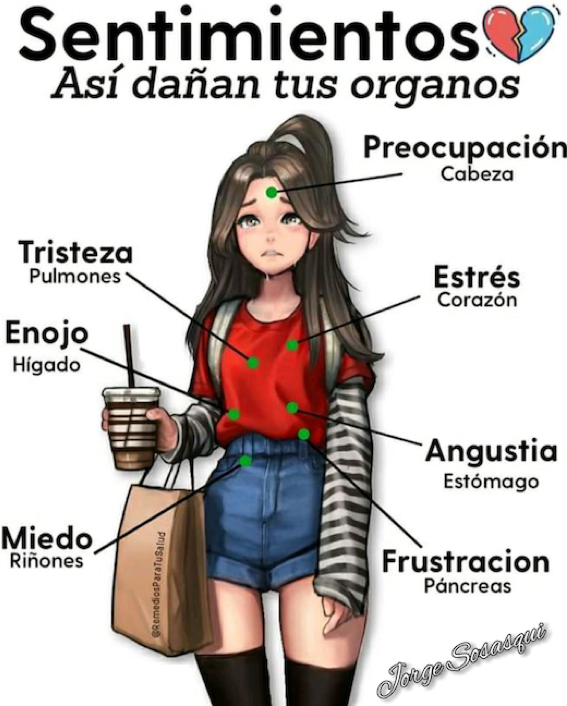
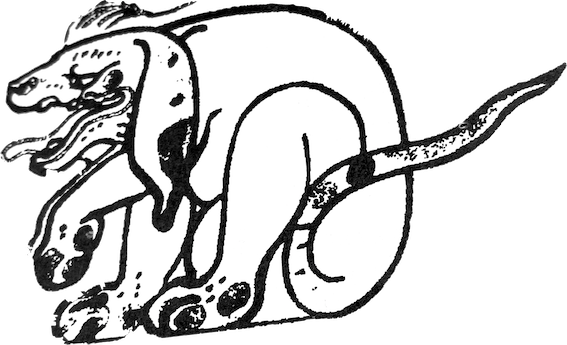
ラテンアメリカにおける身体症状と臓器の関連図
身体
body, cuerpo humano
ラテンアメリカにおける身体症状と臓器の関連図
解説:池田光穂
「身体とは、言説と権力の体制が自らの書
き込む場であり、法的で生産的な権力関係にとっての結節点あるいは結合手段である」(バトラー 2023:55)
身体とは、胴体あるいは〈からだ〉の多く
の部分を占める本体の部分ないしは全体のことである。ふつう私たちが、身体(しんたい、からだ)という
場合は、人間の身体を前提にして、動物の身体、あるいは自動車のボディのように筐体(きょうたい:箱型)ないしは中身のつまった筒体(きょうたい:筒型)
の部分を指し示す。身体はまた、頭部と切り離され、胴体の部分を言うことがあったり、心身二元論(しんしんにげんろん)のように、こころ(ハートあるいは
ブレイン)と切り離される人間の身体の胴体の部分をわけて見るという時の、こころ以外の部分をさすことがある。
では、身体観(body concept)とは、病 気観と同様、対象になった人た ちに共 有されている「身体」 に関する見方を説明し、かつその社会に含まれる「身体」の隠喩的な連関から構成さ れる論理の体系のことである。……(より詳しくは「身体観」を参照せよ)
自分たちの身体や心をどのように観て、ど のように感じ、そしてどのように考えるのかという観点については、その民族が慣れ親しんだ社 会や文化によってし ばしば共通点が見られる。
例えば、ラテンアメリカ人は対人関係にお ける自分自身の心の不安を「神経([西]nervio, [葡]nervo)」という実体に帰して周囲の人に病気であることを訴える。ジャワにおけるラター(latah)とは、突如として卑猥あるいは口汚い言葉 を吐く状態であるが、当人以外には好ましいものとは見なされていないが、かといって治療しなければならない病気とも見なされない。ジャワにおける社会対人 関係の慎み深さからみると、病理とされないことが不思議である。不躾なラターの状態は、ジャワの民族文化の中では寛容されている。肩凝りは、日本人や長期 滞在の在日外国人が持つ固有の身体表現である。そのため人および機械によってマッサージされることに、癒される経験を持つ人が多い。このことは、我々日本 人にとっては、何の疑いもなく経験・理解していることなので、発達成長の中でどのようにして私たちの共通の身体の経験や認識を形作るのか当事者の説明だけ では分かりにくい。しかし、日本在住が長ければ民族差を超えて共通の経験をもつことが可能になるために、この身体疲労表現は学習可能な身体経験なのであ る。それゆえこれらは参与観察を含む民族誌的考察が必要になる好例である。
☆体 液理論ないしは体液病理学(humoral theory, humoral pathology)
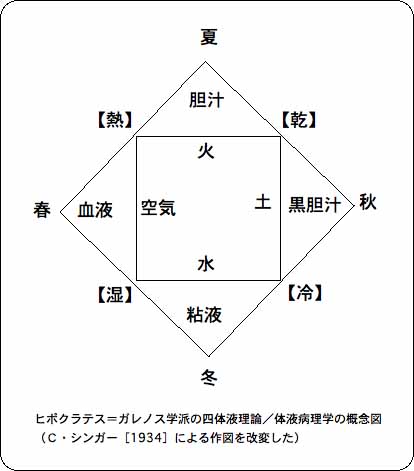
 体
液理論ないしは体液病理学(humoral theory, humoral
pathology)とは、広義には(1)身体の健康や病気の状態を、体液あるいは(身体の)構成要素の均衡や不調和
によって説明する理論である。身体を構成する諸要素は抽象化された実体でもあるが、必ずしも液状のものである必要はない。さまざまな民族
(民俗)医学のなかにこの種の病因論が見られる場合、体液理論という用語が使われる。これが文化人類学における一般的な用法である。紀元前5-4世紀の古
代ギリシャのヒポクラテス派の医学に起源を発し、紀元 2世紀のガレノス(Galenos)により集大成された医学理論をさす場合である[Smith
1979]。したがってこの医学は総称としてヒポクラテス・ガレノス学派と呼ばれることもある。古代ギリシャ・ローマの伝統によると、人間の身体は血液、
粘液、胆汁、黒胆汁の4つの液体的要素から成り立ち、人間の健康状態や気質は各人がもつ4つの要素のバランスと風土との関係のなかで決定すると考えられ
た。それゆえにこの理論は、四体液学説と呼ばれることもある。
体
液理論ないしは体液病理学(humoral theory, humoral
pathology)とは、広義には(1)身体の健康や病気の状態を、体液あるいは(身体の)構成要素の均衡や不調和
によって説明する理論である。身体を構成する諸要素は抽象化された実体でもあるが、必ずしも液状のものである必要はない。さまざまな民族
(民俗)医学のなかにこの種の病因論が見られる場合、体液理論という用語が使われる。これが文化人類学における一般的な用法である。紀元前5-4世紀の古
代ギリシャのヒポクラテス派の医学に起源を発し、紀元 2世紀のガレノス(Galenos)により集大成された医学理論をさす場合である[Smith
1979]。したがってこの医学は総称としてヒポクラテス・ガレノス学派と呼ばれることもある。古代ギリシャ・ローマの伝統によると、人間の身体は血液、
粘液、胆汁、黒胆汁の4つの液体的要素から成り立ち、人間の健康状態や気質は各人がもつ4つの要素のバランスと風土との関係のなかで決定すると考えられ
た。それゆえにこの理論は、四体液学説と呼ばれることもある。
人類学においては、アジアの医学の諸体系 を比較検討したC・レスリーらが、1970年代に 入って初めてこの医学の特徴を全体論と体液説に求めたことで、 その理論的研究が始まる。他方、同じ時期に開発人類学の調査において、M・ローガン(Michael H. Logan)が、中央アメリカにあるグアテマラのマヤ系先住民の中に、古代ギリシャ・ローマの体液理論によく似た現象を見つけた。それが熱/冷理論 (hot-cold theory)にもとづく身体観や病気・健康観であり、マヤ人のみならず広くメソアメリカと呼ばれる地帯に分布していた[Logan 1973,1977]。この場合の熱と冷という要素は温度による分類ではなく、抽象的に概念化されたものであり、個々の食物や薬物、体質のみならず病気あ るいは風土などの環境要因にもこの二元分類(dichotomy)を用いて説明するというものである[池田 2004:194-7]。ローガン[1973]は、この事実の報告を通して、保健プロジェクトにおける住民独自の健康概念の把握することの重要性を説いて いた。人びとの身体への関心や理解ぬきに、近代的な衛生概念を導入することは不可能だと考えたからである。
しかしながらこのユニークな現象への関心 は、それを応用することよりも、この理論の起源がどこに由来するのかということに向かっていった。15 世紀末以 降メソアメリカを含む新大陸はスペイン植民地となったが、宣教師たちによってもたらされた医学は、ヒポクラテス・ガレノス学派のそれであった。この事実が 後にしてG・フォスターをして様々な民族誌の比較や植民地時代における医学理論の伝播の検証を行わしめることになる。その結果、新大陸における熱/冷理論 が、もともと受け入れる素地のあった先住民の伝統の上に融合されたという考え[e.g. Madosen 1968]をフォスターは放棄し、新大陸の体液理論は、実は旧大陸由来の医学的伝統に他ならないと結論づけるようになる[Foster 1994]。新大陸の民俗医学を調査すれば、熱/冷理論のほかにも邪視(evil eye)など、フォスターの医学的伝統の伝播説を支持できるような類似の文化事象を発見することができる。だが彼の研究成果は、それほど多くの共感者を作 り出さなかった。彼の歴史的伝播論は、現地社会の文化を反映する体液理論[e.g. Lopez Austin 1974]という当時の多数派に支持されていた文化主義の命題にそぐわなかったからだ。その意味において、体液理論は非西洋医学の特性を担う表象として当 時すでにその硬直した学術的意義を担わされていたことになる。それゆえ研究者の関心は、社会的文脈に即した民族誌上の細かい検討よりも、医学理論が伝播し た結果であるのか、あるいは土地固有であるのかという二者択一の議論に限局されるようになっていった。
なお、グノーシス思想には、体液病理(な いしは四体液説)の考え方や、その思想的構成要素をみることが多い。
しかしながら人類学において体液理論が脚
光を浴びるようになる半世紀以上前に、近代医学は体
液理論という発想自体に再び光を投げかけようとしていた。そ の試みは生理学者のW・キャノン(Walter
Cannon)によるホメオスタシス理論やH・セリエ(Hans
Selye)のストレス学説などにみることができる。彼らは、身体を循環する体液のシステムの安定性維持のメカニズムや、体の一部分の損傷や心理的影響に
よって生理学システムの崩壊の神経化学的根拠を明らかにすることを通して、細菌という要素還元的な理論展開によりすでに成功を収めていた細菌病理学の後塵
を拝していた生理学の知的復権に成功した。これらの研究はブードゥー・デス(呪術による殺害)研究やレヴィ=ストロースの「呪術師とその呪術」や「象徴的
効果」論文(原著はともに1949年。『構造人類学』に所収)などの人類学的実証研究に刺激を与え、医学と文化人類学の架橋する知的貢献をもたらした。こ
れらの先駆的研究は文化表象と生理的心理的実体の間にある社会的な媒介の問題を取り扱っていたのである。
リンク
文献
その他の情報
★ブードゥー・デス(呪術による殺害 Voodoo death)
| Voodoo death,
a term coined by Walter Cannon in 1942 also known as psychogenic death
or psychosomatic death, is the phenomenon of sudden death as brought
about by a strong emotional shock, such as fear. The anomaly is
recognized as "psychosomatic" in that death is caused by an emotional
response—often fear—to some suggested outside force. Voodoo death is
observed in native societies, and concentration camps or prisoner of
war camps, but the condition is not specific to any particular
culture.[1] |
ヴードゥー死とは、1942年にウォルター・キャノンが提唱した用語で
あり、心因性死や心身症性死とも呼ばれる。これは恐怖などの強い精神的ショックによって引き起こされる突然死の現象である。この異常現象は「心身症的」と
認識される。死因は、何らかの示唆された外的要因に対する感情的反応——しばしば恐怖——によるものだからだ。ヴードゥー死は先住民社会や強制収容所、捕
虜収容所で観察されるが、特定の文化に特有の現象ではない。[1] |
| Cannon's work In 1942, Walter Bradford Cannon, MD, a forerunner of modern physiological psychology, published a work postulating that fear could cause a person's physical condition to deteriorate under psychological distress.[2] Citing examples of extraordinary deaths (and their extraneous circumstances) in aboriginal societies, Cannon posited that fear of supernatural consequences to broken societal taboos caused some deaths witnessed among the natives. What Cannon described has since been termed "bone-pointing syndrome", wherein an individual receives some sort of shock—often the breaking of a social/religious taboo—that he interprets as an ill omen for himself; his physical condition then deteriorates at a rapid rate, and he dies within a period as short as 24 hours after the initial shock.[2] Cannon discussed a Maori woman who learned that the fruit she had eaten came from a tapu (taboo) place; less than 24 hours later she was dead. Conversely, Cannon also shared the example of a young man who had fallen ill when the local witch doctor had pointed a bone at him, a societal taboo that meant a curse of death; however, when the perpetrator explained to the young man that the whole thing had been a mistake, and that no bone had been pointed at him at all, the young man's health returned instantly.[2] Cannon noted the similarities in each case: the individuals were both members of a society where beliefs in the supernatural are fiercely upheld, and both had suffered what they both believed to be some form of a curse as dictated within their personal beliefs; also, the individuals shared similar physical symptoms. And yet, in the case of the young man, once the cause for the psychological distress was removed, his mysterious illness disappeared. Cannon attributed these drastic physical repercussions to the workings of fear upon the mind which then leads to destruction of the physical condition.[2] |
キャノンの研究 1942年、現代生理心理学の先駆者であるウォルター・ブラッドフォード・キャノン医学博士は、恐怖が心理的苦痛下で人格の身体状態を悪化させるとする研 究を発表した[2]。先住民社会における異常な死(及びその外的状況)の事例を引用し、キャノンは社会タブー違反に対する超自然的な報復への恐怖が、先住 民の間で目撃された死の一因であると提唱した。キャノンが記述した現象は後に「骨指し症候群」と命名された。これは個人が何らかの衝撃(多くの場合社会 的・宗教的タブーの破り)を受け、それを自身への不吉な前兆と解釈する。その後、身体状態が急速に悪化し、最初の衝撃からわずか24時間以内に死亡する現 象である。[2] キャノンは、マオリ族の女性が食べた果物がタブー(禁忌)の場所から来たものだと知った事例を論じた。24時間も経たないうちに彼女は死んだ。逆にキャノ ンは、地元の妖術師が骨を向けたことで病に倒れた若者の事例も紹介している。これは死の呪いをもたらす社会的タブーだったが、加害者が「骨を向けたのは完 全な誤りで、実際には何も向けていなかった」と説明すると、若者の健康は即座に回復した。[2] キャノンは両事例の共通点を指摘した。両者とも超自然的信仰が強く根付く社会の成員であり、個人的な信念体系内で定義される「呪い」の一種による苦悩を共 に受けていた。さらに両者とも類似した身体症状を示していた。しかし若者の場合、心理的苦痛の原因が取り除かれると、その不可解な病は消え去った。キャノ ンはこうした劇的な身体的影響を、恐怖が精神に及ぼす作用が身体状態の破壊へと繋がる結果だと解釈した。[2] |
| Causes Cannon's explanation According to Cannon, the emotion of fear working on the mind, which he terms the "sympathetic" or "sympathico-adrenal" division of the nervous system, causes a fall in blood pressure as brought on by "a reduction of the volume of circulating blood".[2] Cannon explains the loss of blood volume by the constant injection of adrenaline into the small arterioles which constrict, preventing a proper flow of blood within the body and causing a drop in blood pressure. From there, the weak blood pressure prevents the sufficient circulation of the blood by damaging the heart and nerves responsible for the maintenance of the vessels which transport blood, thus making it harder for circulation to continue since the very organs necessary to maintain proper blood circulation are deteriorating. An accelerated heart rate then ensues, followed by rapid breathing. Added to these symptoms are the effects of no food or water in the person experiencing psychological distress: Cannon suggests that true shock, in the medical sense, could be the cause of death as a result of little food or water. States Cannon: "The combination of lack of food and water, anxiety, very rapid pulse and respiration, associated with a shocking experience having persistent effects, would fit well with fatal conditions reported from primitive tribes."[2] |
原因 キャノンの説明 キャノンによれば、恐怖という感情が精神に作用する。彼はこれを神経系の「交感神経」あるいは「交感神経・副腎」系と呼ぶ。この作用により「循環血液量の 減少」が引き起こされ、血圧が低下する。[2] キャノンは、細動脈へのアドレナリンの持続的注入によって血液量が減少すると説明する。これにより細動脈が収縮し、体内の適切な血液循環が妨げられ、血圧 が低下する。そこから、弱まった血圧は、血液を運ぶ血管の維持を担う心臓や神経を損傷することで、十分な血液循環を妨げる。こうして、適切な血液循環を維 持するために必要な器官そのものが衰えるため、循環の継続が困難になるのだ。その後、心拍数が加速し、急速な呼吸が続く。これらの症状に加え、精神的苦痛 を経験している人格が食物や水分を摂取していないことの影響も加わる。キャノンは、医学的な意味での真のショック状態が、食物や水分の不足によって死に至 る原因となり得ると示唆している。キャノンは次のように述べている。「食物と水分の欠乏、不安、非常に速い脈拍と呼吸、そして持続的な影響を伴う衝撃的な 体験の組み合わせは、原始部族から報告されている致命的な状態とよく一致する。」[2] |
| Modern explanations Since 1942, scientists have discovered many more of the processes involved in the effect of stress upon the body, such as the region of the brain called the amygdala. The series of events by which a sensory stimulus is introduced to the mind, and the amygdala processes the emotion of fear which follows is called the "vision-to-fear pathway", or the "auditory-to-fear pathway", depending on the stimulus. The generally recognized sequence of events, as enumerated by Esther M. Sternberg, MD, in 2002, stands as follows: various chemicals and electrical impulses are released that are transmitted by nerve fibers. Simultaneously, hormones are excreted from the brain, adrenal and pituitary glands in response to stress on the system. Cardiac arrhythmias are often the result of an overabundance of these hormones on the system.[3] In 1981, Wylie Vale, PhD, discovered corticotrophin, the brain's hypothalamic stress hormone, or CRH: this hormone secreted by the hypothalamus coordinates with "the brain stem adrenaline centers involved in initiation of the sympathetic response ... to cause a massive release of both adrenaline-like nerve chemicals and stress hormones. Together these might well cause illness, including loss of appetite, weakness, cardiac arrhythmias, and even vascular collapse that could result in death."[3] Martin A. Samuels, MD, elaborates further on still another process of death, stating that with the release of adrenaline and an increased heart rate, sometimes catecholamines, stress hormones, will build up, leading to calcium channels opening and remaining open, resulting in an overflow of calcium into the system, killing off cells.[4] |
現代的な説明 1942年以降、科学者たちはストレスが身体に及ぼす影響に関わる多くのプロセスを発見してきた。例えば、脳内の扁桃体と呼ばれる領域である。感覚刺激が 心に伝わり、扁桃体がそれに続く恐怖の感情を処理する一連の過程は、刺激の種類に応じて「視覚から恐怖への経路」あるいは「聴覚から恐怖への経路」と呼ば れる。2002年にエスター・M・スターンバーグ医学博士が列挙した、一般的に認められている一連の過程は以下の通りだ:様々な化学物質と電気的インパル スが放出され、神経線維によって伝達される。同時に、システムへのストレスに応答して、脳・副腎・下垂体からホルモンが分泌される。心不整脈は、システム におけるこれらのホルモンの過剰分泌が原因で生じることが多い。[3] 1981年、ワイリー・ベイル博士は脳下垂体刺激ホルモン(CRH)を発見した。これは脳の視床下部から分泌されるストレスホルモンである。このホルモン は「交感神経反応の開始に関与する脳幹アドレナリン中枢」と連携し、アドレナリン様神経化学物質とストレスホルモンの大量放出を引き起こす。これらが相 まって、食欲不振、脱力感、不整脈、さらには死に至る可能性のある血管虚脱などの病気を引き起こす可能性がある。[3] マーティン・A・サミュエルズ医学博士は、さらに別の死の過程について詳しく述べ、アドレナリンの放出と心拍数の増加に伴い、カテコールアミン、ストレス ホルモンが蓄積し、カルシウムチャネルが開いて開いたままになることで、カルシウムが体内に溢れ出し、細胞を死滅させることを指摘している。[4] |
| Parasympathetic over-activation Cannon believed that extreme emotional stress could be explained in terms of degree of sympathetic-adrenal excitation. However, an experiment performed by Curt Richter (1957) responded to Cannon's challenge with an animal model. Richter placed pre-stressed rats in closed turbulent water; the latency to drowning was then recorded. Most domestic lab rats lasted for hours while unexpectedly all of the wild rats died within 15 minutes. Richter monitored heart rate and determined whether the heart was in systole or diastole after death. He found out that heart rate slowed down prior to death and the heart was engaged with blood reflecting a state of diastole. This contradicted Cannons proposal that sympathetic adrenal over-activation is the result of death since a sympathetic over-arousal would increase both heart rate and blood pressure to severe degrees. Richter interpreted this that the rats died as a result of overstimulation of the parasympathetic nervous system, specifically the vagus nerve which regulates heartbeat. The lethal vagal effect was the psychological state of hopelessness.[5] Sudden prolonged immobility or faked death is an adaptive response exhibited by many mammalian species. Hofer(1970) demonstrated that several rodent species when threatened exhibited an immobility that was accompanied by a very low heart rate. For some of the rodents that heart rate reached below 50% of the baseline. Hofer distinguished between prolonged immobility and faked death phenomenon. Unlike the behavior of "hopelessness" described by Richter, the death-faking occurred with a sudden motor collapse during active struggling. Hofer interpreted the fear-inducing slowing of heart rate as a vagal phenomenon.[6] These data suggest that vagus contributes to severe emotional states and may be related to emotional states of immobilization, such as extreme terror. Unfortunately, this immobilization technique is potentially life-threatening for mammals (but not for reptiles). Mammals would undergo states of bradycardia or hypoxia as an over-activation of parasympathetic vagus system. The organs of the oxygen-hungry mammal are deprived of oxygen due to lack of blood flow, and the animal dies. |
副交感神経の過剰活性化 キャノンは、極度の精神的ストレスは交感神経・副腎興奮の程度で説明できると考えていた。しかし、カート・リヒター(1957年)が行った実験は、動物モ デルを用いてキャノンの主張に反論した。リヒターはストレスを与えたラットを閉じた乱流水槽に入れ、溺死までの潜時を記録した。飼育下の実験用ラットの大 半は数時間耐えたが、野生ラットは予想外にも全頭が15分以内に死亡した。リヒターは心拍数を監視し、死後に心臓が収縮期か拡張期にあるかを判定した。そ の結果、死前に心拍数が減速し、心臓が血液を保持した状態(拡張期状態)にあることを発見した。これは、交感神経の過剰な興奮は心拍数と血圧を著しく上昇 させるため、交感神経の過剰な活性化は死の結果であるとするキャノンの提案と矛盾していた。リヒターは、ラットは副交感神経系、特に心拍を調節する迷走神 経の過剰な刺激の結果として死亡したと解釈した。致命的な迷走神経の影響は、絶望という心理的状態であった。[5] 突然の長期の不動状態、あるいは死を装う行動は、多くの哺乳類が示す適応反応である。ホーファー(1970)は、いくつかの齧歯類が脅威にさらされると、 心拍数が非常に低下する不動状態を示すことを実証した。一部の齧歯類では、心拍数が基準値の 50% 以下に低下した。ホーファーは、長期の不動状態と死を装う現象を区別した。リヒターが記述した「絶望」の行動とは異なり、死を装う現象は、活発な抵抗の最 中に突然の運動機能の崩壊とともに発生した。ホーファーは、恐怖によって引き起こされる心拍数の低下を迷走神経現象と解釈した。[6] これらのデータは、迷走神経が深刻な感情状態に関与しており、極度の恐怖などの不動化という感情状態と関連している可能性があることを示唆している。残念 ながら、この不動化技術は哺乳類(爬虫類ではない)にとって生命を脅かす可能性がある。哺乳類は、副交感神経迷走神経系の過剰な活性化により、徐脈や低酸 素状態に陥る。酸素を必要とする哺乳類の臓器は、血流の不足により酸素を欠乏し、動物は死に至る。 |
| Critical evaluation Despite Cannon's general ignorance on the particulars of physiological breakdown, scientists in the intervening years since the publication of Cannon's work have generally agreed with his fundamental hypotheses concerning voodoo death. Criticisms that generally come against Cannon's work are directed at the hearsay nature of Cannon's case studies, but recent studies have discovered numerous examples of voodoo death in various societies.[7] To those who allege difficulty in the experimental process of validating Cannon's theory, Barbara W. Lex, in her 1974 article titled, "Voodoo Death: New Thoughts on an Old Explanation", states that "Voodoo death" can easily be observed without complicated experiments. She wrote: "Pupillary constriction, easily observable and indicative of parasympathetic activation ... the amount of saliva, of perspiration, degree of muscle tonicity and skin pallor in an individual are also discernible without complicated instruments."[8] There are those who contest the theories involving psychologically-induced body failure. David Lester, PhD, in 1972, contends that Cannon's evidence, particularly the evidence concerning animals, is anecdotal and irrelevant, and instead sets forth the concept of "death by suggestion", and supports "giving up-given up" complex set forth by George L. Engel, thus attributing the cause of death entirely to the psychological state of the individual in question rather than a psychological–physiological connection adduced by Cannon.[9] Going even further, Harry D. Eastwell, MD, in his 1982 article, "Voodoo Death and the Mechanism for Dispatch of the Dying in East Arnhem, Australia", rejects entirely the concept of "Voodoo death", stating that the deaths in cases reported by Cannon et al. were more likely due to dehydration rather than to any psychological response.[10] |
批判的評価 キャノンの生理的崩壊に関する詳細な知識の欠如にもかかわらず、彼の著作発表以降の科学者たちは、ヴードゥー死に関する彼の根本的な仮説に概ね同意してい る。キャノンの研究に対する批判は主に、彼の事例研究が伝聞に基づく性質にある点に向けられるが、近年の研究では様々な社会におけるヴードゥー死の事例が 数多く発見されている。[7] キャノンの理論を実証する実験過程の困難さを主張する者に対し、バーバラ・W・レックスは1974年の論文「ヴードゥー死:古い説明への新たな考察」にお いて、「ヴードゥー死」は複雑な実験なしに容易に観察可能だと述べている。彼女はこう記している:「副交感神経の活性化を示す瞳孔収縮は容易に観察可能で ある…唾液量、発汗量、筋緊張度、皮膚蒼白度といった身体的兆候も、複雑な器具を用いずとも判別できる」[8] 心理的要因による身体機能不全を主張する理論に異議を唱える者もいる。デイヴィッド・レスター博士は1972年、キャノンの証拠、特に動物に関する証拠は 逸話的で無関係だと主張し、代わりに「暗示による死」の概念を提唱。ジョージ・L・エンゲルが提唱した「ギビング・アップ複合体」を支持し、死因をキャノ ンが示した心理生理学的関連性ではなく、対象者の心理状態に完全に帰属させた。[9] さらに踏み込んで、ハリー・D・イーストウェル医学博士は1982年の論文「オーストラリア東アーネムにおけるヴードゥー死と瀕死者の処置メカニズム」 で、「ヴードゥー死」の概念を完全に否定している。キャノンらが報告した事例の死因は、心理的反応よりもむしろ脱水症状による可能性が高いと述べている。 [10] |
| Influence of this theory on modern science Fight or flight Deeply related to these cases of sudden death is what Cannon termed the "fight-or-flight response", what has been classified as a "neurophysiological-behavioral" response pattern. "Fight or flight" is a phrase used to describe the instinctual and physiological responses to strong emotion within animals as well as humans. Cannon associates the two emotions of rage and fear because of the similar effects the emotions will have upon the mind and body—rage will encourage the response to "fight", while fear will encourage "flight". The mind, when faced with one or both of these emotions in response to a perceived threat, will emit adrenaline, and heart rate will increase; however, sometimes the system is overwhelmed by the responses, and collapse ensues as brought about by the workings of stress hormones.[4] In the case of voodoo death, the "flight" response overpowers the system, but there is little to no possibility for action in the mind of the individual suffering from the perceived threat—considering the state of aboriginal tribes, the victims believe themselves to be suffering from a curse in which they are condemned to die, and so they believe themselves to be unable to act to save themselves.[11] New fields Cannon's theory concerning voodoo death opened research into various fields of psychological studies; since the publication of Cannon's work, scientists have discovered many disorders and the like related to psychosomatic responses to situations. Because of Cannon's postulation that the mind could bring about death, scientists have become open to the idea of the mind working on the body in a greater number of ways, leading to the development of psychosomatic medicine.[12] The advent of theories concerning voodoo death within the scientific field has also led to the development of a branch of psychology termed psychophysiology.[12] |
この理論が現代科学に与えた影響 闘争・逃走反応 これらの突然死の事例と深く関連しているのが、キャノンが「闘争・逃走反応」と呼んだものだ。これは「神経生理学的・行動学的」反応パターンに分類されて いる。「闘争・逃走」とは、動物や人間が強い感情に直面した際の本能的・生理的反応を表す言葉である。キャノンは怒りと恐怖という二つの感情を結びつけ る。なぜなら、これらの感情が心身に及ぼす影響が類似しているからだ——怒りは「闘争」反応を促し、恐怖は「逃走」反応を促す。心は、知覚された脅威への 反応としてこれらの感情のいずれか、あるいは両方と直面すると、アドレナリンを放出する。心拍数は増加する。しかし、時にこのシステムは反応に圧倒され、 ストレスホルモンの作用によって引き起こされる崩壊が生じる。[4] ヴードゥー死の場合、「逃走」反応がシステムを圧倒するが、脅威を感知した個人の精神には行動の可能性がほとんどない。先住民部族の状況を考慮すると、被 害者は呪いによって死を宣告されたと信じ、自らを救う行動が取れないと苦悩している。[11] 新たな分野 キャノンのヴードゥー死に関する理論は、心理学研究の様々な分野への研究を開拓した。キャノンの著作発表以来、科学者たちは状況に対する心身反応に関連す る多くの障害などを発見してきた。心は死をもたらしうるというキャノンの仮説により、科学者たちは心が身体に作用する多様な方法を受け入れるようになり、 心身医学の発展につながった。[12] 科学分野におけるヴードゥー死に関する理論の登場は、心理生理学と呼ばれる心理学の一分野の発展にもつながった。[12] |
| Notable cases Though cases within aboriginal societies are the most commonly cited when researchers such as Cannon set forth examples, similar cases of psychosomatic death have also been reported in other cultures. In his 1964 article, James L. Mathis, MD, describes a case of a previously healthy man who died from asthmatic attacks when his mother "cursed" him for going against her wishes. Mathis proposes that "fatal psychosomatic conditions" were the cause of this man's death, and thus a form of voodoo death.[13] In 1992, another scientist—Clifton K. Meador, MD—discussed the case of a man diagnosed with cancer who, along with his physicians and family, believed he was dying of cancer. In the autopsy after his death, however, the doctors discovered that his cancer was not at all the cause of his death. Meador deduces that the man's belief in his imminent death was the cause of his death itself.[14] |
注目すべき事例 キャノンら研究者が事例を提示する際、先住民社会内の事例が最も頻繁に引用されるが、他の文化圏でも同様の心因性死が報告されている。1964年の論文で ジェームズ・L・マシス医学博士は、母親の意向に背いたことを理由に母親から「呪い」をかけられた結果、喘息発作で死亡した健康な男性の事例を記述してい る。マティスは「致死的な心身症状態」がこの男性の死因であり、つまりヴードゥーによる死の一形態だと提唱している[13]。1992年には別の科学者、 クリフトン・K・ミードール医学博士が、癌と診断された男性の事例を論じた。この男性は医師や家族と共に、自分が癌で死にかけていると信じていた。しかし 死後の解剖で、医師たちは彼のがんが死因ではなかったことを発見した。ミードールは、この男性が死が差し迫っていると信じたことが、死そのものの原因だっ たと結論づけている[14]。 |
| Apparent death Broken heart syndrome Death by laughter List of unusual deaths Nocebo Stress (biological) Symptoms of victimization Syncope (medicine) The Man and the Snake Widowhood effect |
仮死状態 心破裂症候群 笑い死 珍しい死因の一覧 ノセボ ストレス(生物学的) 被害者症状 失神(医学) 男と蛇 未亡人効果 |
| Citations 1. Stumpfe, K.D. "The psychogenic death of Mr. J. A case report." pp. 263–73. 2. Cannon, Walter. "Voodoo Death." pp. 169–181. 3. Sternberg, Esther. "Walter B. Cannon and 'Voodoo' Death: A Perspective From 60 Years On." pp. 1564–1566. 4. Kirn, Timothy. "Voodoo death is brain's lethal response to fear." 5. Richter, C.P. (1957). "On the phenomenon of sudden death in animals and man". Psychosom. Med. 19 (3): 191–8. CiteSeerX 10.1.1.536.1405. doi:10.1097/00006842-195705000-00004. PMID 13432092. S2CID 41952151. 6. Hofer, M.A. (1970). "Cardiac respiratory function during sudden prolonged immobility in wild rodents". Psychosom. Med. 32 (6): 633–47. doi:10.1097/00006842-197011000-00008. PMID 5530023. S2CID 180291. 7. Lester, David. "Voodoo Death." pp. 1–18. 8. Lex, Barbara. "Voodoo Death: New Thoughts on an Old Explanation" pp. 818–823. 9. Lester, David. "Voodoo Death: Some New Thoughts on an Old Phenomenon." pp. 386–390. 10. Eastwell, Harry D. "Voodoo Death and the Mechanism for Dispatch of the Dying in East Arnhem, Australia." pp. 5–18. 11. Gomez, E.A. "Voodoo and sudden death: the effects of expectations on health." pp. 75–91. 12. Lane, R.D., Waldstein, S.R., Chesney, M.A, et al. "The Rebirth of Neuroscience in Psychosomatic Medicine, Part I: Historical Context, Methods, and Relevant Basic Science." pp. 117–134. 13. Mathis, James L. "Sophisticated Version of Voodoo Death." pp. 104–107. 14. Meador, CK (1992). "Hex death: voodoo magic or persuasion?". South Med J. 85 (3): 244–7. doi:10.1097/00007611-199203000-00004. PMID 1546347. |
引用文献 1. スタンプフェ、K.D.「J氏の心因性死:症例報告」pp. 263–73. 2. キャノン、ウォルター「ヴードゥー死」pp. 169–181. 3. スターンバーグ、エスター。「ウォルター・B・キャノンと『ヴードゥー』死:60年後の視点」pp. 1564–1566。 4. キルン、ティモシー。「ヴードゥー死は恐怖に対する脳の致死的反応である」 5. リヒター、C.P. (1957). 「動物と人間における突然死現象について」. Psychosom. Med. 19 (3): 191–8. CiteSeerX 10.1.1.536.1405. doi:10.1097/00006842-195705000-00004. PMID 13432092. S2CID 41952151. 6. ホーファー、M.A. (1970). 「野生齧歯類における突然の長時間の不動時の心臓呼吸機能」. Psychosom. Med. 32 (6): 633–47. doi:10.1097/00006842-197011000-00008. PMID 5530023. S2CID 180291. 7. Lester, David. 「ヴードゥー死」 pp. 1–18. 8. Lex, Barbara. 「ヴードゥー死:古い説明に対する新たな考察」 pp. 818–823. 9. Lester, David. 「ヴードゥー死:古い現象に対する新たな考察」 pp. 386–390. 10. イーストウェル、ハリー・D. 「ヴードゥー死とオーストラリア東アーネムにおける臨終者の送り出しの仕組み」pp. 5–18. 11. ゴメス、E.A. 「ヴードゥーと突然死:期待が健康に及ぼす影響」pp. 75–91. 12. レーン、R.D.、ウォルドスタイン、S.R.、 チェズニー、M.A. 他「心身医学における神経科学の再生、第一部:歴史的背景、方法論、関連基礎科学」pp. 117–134. 13. マティス、ジェームズ・L.「洗練されたヴードゥー死の形態」pp. 104–107. 14. Meador, CK (1992). 「呪いによる死:ヴードゥー呪術か、それとも説得か?」. South Med J. 85 (3): 244–7. doi:10.1097/00007611-199203000-00004. PMID 1546347. |
| General sources Cannon, Walter. "Voodoo Death". American Anthropologist, 44. 1942. 169–181. Eastwell, Harry D. "Voodoo Death and the Mechanism for Dispatch of the Dying in East Arnhem, Australia". American Anthropologist, 84.1. 1982. 5–18. Gomez, E.A. "Voodoo and sudden death: the effects of expectations on health". Transcultural Psychiatric Research Review, 19. 1982. 75–91. Lane, R.D., Waldstein, S.R., Chesney, M.A, et al. "The Rebirth of Neuroscience in Psychosomatic Medicine, Part I: Historical Context, Methods, and Relevant Basic Science". Psychosom Medicine, 71.2. 1 Feb 2009. 117–134. Lester, David. "Voodoo Death: Some New Thoughts on an Old Phenomenon". American Anthropologist, 74.3. 1972. 386–390. Lester, David. "Voodoo Death". Omega, 59.1. 2009. 1–18. Lex, Barbara W. "Voodoo Death: New Thoughts on an Old Explanation". American Anthropologist, 76.4. 1974. 818–823. Kirn, Timothy F. "Voodoo Death Is Brain's Lethal Response to Fear ". Clinical Psychiatry Jan 2004. Web. 15 Nov 2009. [1][dead link]. Mathis, James L. "Sophisticated Version of Voodoo Death". American Psychosomatic Society, 26. 1964. 104–107. Meador, Clifton K. "Hex Death: Voodoo Death or Persuasion". Southern Medical Journal, 85.3. 1992. 244–247. Sternberg, Esther. "Walter B. Cannon and 'Voodoo' Death: A Perspective from 60 Years On". Am J Public Health, 92.10. 2002. 1564–1566. Stumpfe, K.D. "The psychogenic death of Mr. J. A case report". Z Psychosom Med Psychoanal, 25.3. 1979. 263–273. Further reading "Scared to Death... Literally". Talk of the Nation. NPR. 26 October 2012. |
一般的な出典 キャノン、ウォルター。「ヴードゥーの死」。『アメリカ人類学者』、44号。1942年。169–181頁。 イーストウェル、ハリー・D。「オーストラリア東アーネムにおけるヴードゥーの死と瀕死者の送り出しの仕組み」。『アメリカ人類学者』、84巻1号。1982年。5–18頁。 ゴメス、E.A.「ヴードゥーと突然死:健康に対する予期の影響」『トランスカルチュラル精神医学研究レビュー』19巻、1982年、75–91頁。 レーン、R.D.、ウォルドスタイン、S.R.、チェズニー、M.A. 他「心身医学における神経科学の再生、第一部:歴史的背景、方法論、関連基礎科学」『心身医学』71巻2号、2009年2月1日、117–134頁。 レスター、デイヴィッド。「ヴードゥー死:古い現象に関する新たな考察」。『アメリカン・アンソロポロジスト』74巻3号。1972年。386–390頁。 レスター、デイヴィッド。「ヴードゥー死」。『オメガ』59巻1号。2009年。1–18頁。 レックス、バーバラ・W。「ヴードゥー死:古い説明に対する新たな考察」。『アメリカ人類学雑誌』76巻4号。1974年。818–823頁。 カークン、ティモシー・F. 「ヴードゥー死は恐怖に対する脳の致死的反応である」. 臨床精神医学 2004年1月. Web. 2009年11月15日. [1][リンク切れ]. マティス、ジェームズ・L. 「洗練されたヴードゥー死説」. アメリカ心身医学会誌, 26. 1964. 104–107. ミードール、クリフトン・K. 「呪いの死:ヴードゥー死か説得か」『サザン・メディカル・ジャーナル』85巻3号、1992年、244–247頁。 スターンバーグ、エスター. 「ウォルター・B・キャノンと『ヴードゥー』死:60年後の視点」『アメリカ公衆衛生ジャーナル』92巻10号、2002年、 1564–1566. Stumpfe, K.D. 「J氏の心因性死:症例報告」. Z Psychosom Med Psychoanal, 25.3. 1979. 263–273. 追加文献(さらに読む) 「文字通り、恐怖で死ぬ」. Talk of the Nation. NPR. 2012年10月26日. |
| https://en.wikipedia.org/wiki/Voodoo_death |
Copyleft, CC, Mitzub'ixi Quq Chi'j, 1996-2099
Copyleft,
CC, Mitzub'ixi Quq Chi'j, 1996-2099